Open Access
Research article
Reliability and validity of the Thai version of the PHQ-9
Manote Lotrakul*
1, Sutida Sumrithe
2and Ratana Saipanish
1Address: 1Department of Psychiatry, Faculty of Medicine, Ramathibodi Hospital, Mahidol University, Bangkok 10400, Thailand and 2Department of Family Medicine, Faculty of Medicine, Ramathibodi Hospital, Mahidol University, Bangkok 10400, Thailand
Email: Manote Lotrakul* - [email protected]; Sutida Sumrithe - [email protected]; Ratana Saipanish - [email protected] * Corresponding author
Abstract
Background: Most depression screening tools in Thailand are lengthy. The long process makes them impractical for routine use in primary care. This study aims to examine the reliability and validity of a Thai version Patient Health Questionnaire (PHQ-9) as a screening tool for major depression in primary care patients.
Methods: The English language PHQ-9 was translated into Thai. The process involved back-translation, cross-cultural adaptation, field testing of the pre-final version, as well as final adjustments. The PHQ-9 was then administered among 1,000 patients in family practice clinic. Of these 1,000 patients, 300 were further assessed by the Thai version of the Mini International Neuropsychiatric Interview (MINI) and the Thai version of the Hamilton Rating Scale for Depression (HAM-D). These tools served as gold-standards for diagnosing depression and for assessing symptom severity, respectively. In the assessment, reliability and validity analyses, and receiver operating characteristic curve analysis were performed.
Results: Complete data were obtained from 924 participants and 279 interviewed respondents. The mean age of the participants was 45.0 years (SD = 14.3) and 73.7% of them were females. The mean PHQ-9 score was 4.93 (SD = 3.75). The Thai version of the PHQ-9 had satisfactory internal consistency (Cronbach's alpha = 0.79) and showed moderate convergent validity with the HAM-D (r = 0.56; P < 0.001). The categorical algorithm of the PHQ-9 had low sensitivity (0.53) but very high specificity (0.98) and positive likelihood ratio (27.37). Used as a continuous measure, the optimal cut-off score of PHQ-9 ≥ 9 revealed a sensitivity of 0.84, specificity of 0.77, positive predictive value (PPV) of 0.21, negative predictive value (NPV) of 0.99, and positive likelihood ratio of 3.71. The area under the curve (AUC) in this study was 0.89 (SD = 0.05, 95% CI 0.85 to 0.92).
Conclusion: The Thai version of the PHQ-9 has acceptable psychometric properties for screening for major depression in general practice with a recommended cut-off score of nine or greater.
Background
Depressive illness constitutes a significant proportion of all disabilities caused by mental disorders and has signifi-cant public health and economic costs [1]. During the past two decades, health care professionals have made major
progress towards the treatment of depressive disorders. A few treatment approaches and guidelines have been devel-oped and proven to be effective. The situation is different, however, in developing countries where there are insuffi-cient resources for treating mental disorders. There has
Published: 20 June 2008
BMC Psychiatry 2008, 8:46 doi:10.1186/1471-244X-8-46
Received: 20 September 2007 Accepted: 20 June 2008
This article is available from: http://www.biomedcentral.com/1471-244X/8/46
© 2008 Lotrakul et al; licensee BioMed Central Ltd.
been little progress in improving treatment modalities [2]. In Thailand, most patients with mental disorders are often treated by general practitioners (GPs) because the number of psychiatrists in the country is still small. Moreover, peo-ple are reluctant to seek help from a psychiatrist, because of existing prejudices against psychiatric disorders. This has been reported in studies from several countries [3-5]. Thus, GPs in Thailand, as in many other countries, play an important role in taking care of patients with mental heath problems.
Depression is frequently unrecognized and undertreated in primary care, as it is often expressed in terms of somatic symptoms and anxiety rather than typical depressive symptoms [2,6]. The conditions are worse in developing countries where GPs are faced with high patient loads. A study in Thailand has shown that 72% of GPs see more than 50 patients a day, making it difficult for them to care for patients with mental illness effectively [7]. Because of this challenge, case-finding instruments may play a crucial role in assisting GPs in identifying depressive disorders in their patients.
During the last few years, a few depression screening ques-tionnaires have been developed in the Thai language. These include the Health-Related Self-Report (HRSR) scale [8], the Thai Depression Inventory (TDI) [9] and the Center for Epidemiological Studies Depression Scale (CES-D) [10]. Despite their good sensitivity and fair to good specificity, these questionnaires are too time-con-suming or too burdensome for routine use in primary care due to the large number of items on their lists. There is thus a need for a case finding questionnaire that is brief and easy to administer. Such a questionnaire can improve the recognition of depression in primary care.
Recently, the nine-item Patient Health Questionnaire (PHQ-9), which is derived from the Primary Care Evalua-tion of Mental Disorders (PRIME-MD), has been used as a reliable depression screening tool in primary care, with a demonstrated good sensitivity and specificity for depres-sive disorder. With only 9 items, the PHQ-9 is substan-tially shorter than most other depression screening measures. It comprises of 9 diagnostic symptom criteria upon which the diagnosis of DSM-IV major depressive disorder is based. With only 9 questions/items, the ques-tionnaire has the potential to serve as a dual-purpose instrument that establishes depressive disorder diagnoses using a categorical algorithm as well as grades the depres-sive symptom severity [11]. The PHQ-9 has been trans-lated into various languages. A number of studies on its validity and reliability as a diagnostic measure as well as its utility in assessing depression severity and in monitor-ing treatment response have been published [12-15]. However, till now, the PHQ-9 had not been translated
and validated in Thai language. The purpose of this study was to assess the reliability and validity of a Thai version of the PHQ-9 for screening for major depressive disorder in general practice.
Methods
Subjects and procedure
This study project was approved by the Ethics Committee on Human Experimentation of the Faculty of Medicine Ramathibodi Hospital. The patients were recruited between October 2006 and February 2007 from the out-patient clinic of the department of family medicine, Ram-athibodi Hospital, Bangkok. This clinic functions as a primary care clinic of the hospital.
Every fifth patients attending the outpatient clinic of the department was invited to participate in the study while they were waiting for consultation. Informed consents were obtained after the aims and the objectives of the study had been explained to the patients and they had agreed to participate in the study. The data were collected until 1,000 cases were obtained.
After completing the questionnaires, 300 of the patients were then assessed for their depressive illness by a research assistant. Convenience sampling was used to recruit the sample. The research assistant was a clinical psychologist who was trained to use the Thai version [16] of Mini Inter-national Neuropsychiatric Interview (MINI), and the Thai version [17] of Hamilton Rating Scale for Depression (HAM-D). She was unaware of the patients' PHQ-9 results, and interviewed the patients until a total of 300 responses were attained.
Measures
The Thai version of the PHQ-9 was translated from the original PHQ-9 [11]. We used the Thai version of the Mini International Neuropsychiatric Interview (MINI) [16] as the criterion standard for identifying the presence of major depressive disorder, and the Thai version of Hamil-ton Rating Scale for Depression (HAM-D) [17] as a gold-standard measure of symptom severity.
Patient Health Questionnaire (PHQ-9)
back-trans-lation. Ten patients attending the out-patient department were invited to complete and to give comments on the pre-final version. Final modifications and adjustments were made accordingly.
Unlike many other questionnaires, the original PHQ-9 uses simple statements without culture-specific phrases, so there were only a few problems in the translation. Among the problems we encountered was the translation of particular words or phrases such as 'feeling down', 'fidg-ety' and 'restless'. After some discussions, the investigators were able to find phrases in Thai that conveyed approxi-mately the same meanings.
Scores for each item in the PHQ-9 range from 0 (not at all), to 1 (several days), 2 (more than half of the days) and 3 (nearly every day), while summed scores range from 0 to 27. The PHQ-9 can be used as a screening tool with rec-ommended cut-off scores of ten or greater for the diagno-sis of major depression [11]. It can also be used to establish a diagnosis following a categorical algorithm. A major depressive disorder is diagnosed if 5 or more of the 9 symptoms have been present at least more than half the days of the past 2 weeks and 1 of these symptoms has been either depressed mood or anhedonia.
Mini International Neuropsychiatric Interview (MINI)
The MINI, version 5, is a standardized clinical diagnostic interview schedule for DSM-IV Axis-I disorders [19]. It can be reliably administered by lay interviewers who have appropriate training. The Thai version of MINI, which was translated from the MINI, version 5, was used in this study. In comparison with an interview done by a clini-cian, the Thai version of MINI showed a high sensitivity of 0.92 and specificity of 0.93 for the diagnosis of current major depressive episode [16]. The depression modules of the schedule were used in the study as the gold standard diagnostic tool.
Hamilton Rating Scale for Depression (HAM-D)
The HAM-D is a well accepted research tool for measuring the severity of depression and the response to treatment [20]. The Thai version of the HAM-D has good internal consistency (alpha coefficients = 0.74). Its concurrent validity, as compared to the Global Assessment Scale, is also satisfactory (Spearman's correlation coefficient = -0.82) [17].
Data analysis
The data obtained in this study was analyzed by the Statis-tical Package for the Social Science 10 (SPSS 10). The internal consistency of the PHQ-9 was measured by Cron-bach's alpha coefficient. For validity analysis, we deter-mined both criterion and convergent validity. Criterion validity tests a scale's performance in comparison to a
gold standard. The Thai version of MINI, which is used for the diagnosis of major depressive disorder was used as a criterion standard. Convergent validity is present when a scale behaves according to hypothesized relationships between the two tests that presumably measure the same construct. In this study we tested the association between PHQ-9 and the HAM-D.
We determined the criterion validity of PHQ-9 by assess-ing the psychometric properties of various cut-off scores and of the categorical algorithm of the PHQ-9. The fol-lowing test characteristics of the PHQ-9 compared with the MINI were calculated: sensitivity, specificity, predic-tive values and likelihood ratios. To determine the best cut-off score, the receiver operating characteristic (ROC) curve was constructed against the presence of major depressive disorder by the MINI. The area under the curve (AUC) was also calculated. To determine the convergent validity, Pearson's correlation coefficient was used to establish the relationship between the PHQ-9 and the HAM-D.
Results
We excluded from the study 76 of the 1,000 respondents who participated in the study and 21 of the 300 respond-ents who were further assessed by the MINI and the HAM-D due to incomplete data. The remaining 924 (92.4%) and 279 (93%) cases were included in our analysis.
The mean age of the 924 participants was 45.0 years (SD = 14.3). There were 681 females (73.7%) and 243 males (26.3%). Sixty per cent of them were married and 37.7% of them had graduated from secondary school. The socio-demographic characteristics of the 279 respondents who were further interviewed were not different from the pre-vious group.
The mean PHQ-9 score of the 924 subjects was 4.93 (SD = 3.75) with a range of 0 to 24. The median score was 4.0, with a skewness of 0.99 (SD = +0.08). Most of the partic-ipants (89.4%) had a low PHQ-score (score < 10). Only 1.9% scored 15 or higher (moderately severe depression) [11]. The mean PHQ-9 score of the 297 subjects who were assessed by the gold standard tools was 6.5 (SD = 4.29).
Reliability and item analysis
Validity analysis
The performance of the PHQ-9 against the diagnosis of major depressive disorder by the Thai version of the MINI as a criterion standard was examined. According to the MINI, 19 patients (6.8%) met the diagnosis of major depressive disorder. The mean PHQ-9 score for these patients was 13.21 (SD = 4.61) whereas the mean score for patients without the diagnosis of major depression was 6.01 (SD = 3.84).
The validity of the PHQ-9 as a diagnostic tool, using a cat-egorical algorithm, had a sensitivity of 0.53, a specificity of 0.98, a positive predictive value (PPV) of 0.67, a nega-tive predicnega-tive value (NPV) of 0.97, and a posinega-tive likeli-hood ratio of 27.37. It was suggested that the threshold for item 9 (suicidal ideation) be lower, from "more than half the days" to "several days", in order to raise the sensi-tivity of the questionnaire [11]. However, we found that this approach yielded poorer results. Although the sensi-tivity at the new threshold increased to 0.58, its specificity, positive predictive value (PPV), and positive likelihood ratio decreased to 0.96, 0.50 and 13.68, respectively.
Table 2 demonstrates the sensitivity, specificity, PPV, NPV and likelihood ratio of different PHQ-9 thresholds in diagnosing major depression. At the cut-off score of the
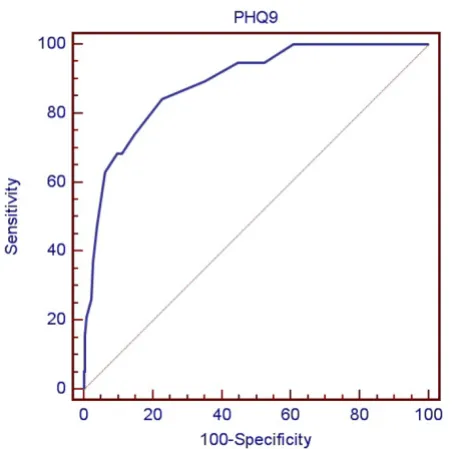
PHQ-9 of nine or greater, the sensitivity was 0.84 and the specificity was 0.77. This threshold had a PPV of 0.21 and a NPV of 0.99. The positive likelihood ratio was 3.71 at this cut-off point. The ROC curve illustrates that the PHQ-9 performed well in identifying patients with major depressive disorder (Fig 1). The area under the curve (AUC) in this study was 0.89 (SD = 0.05, 95% CI 0.85 to 0.92) which demonstrated a moderate accuracy [21].
To determine the convergent validity of the PHQ-9, the total score of PHQ-9 was correlated with the HAM-D. The Pearson's correlation coefficient between the PHQ-9 and the HAM-D was 0.56 (p < 0.001). This indicated a positive association of moderate strength between the two instru-ments.
[image:4.612.55.555.99.223.2]We divided the HAM-D score into 4 groups according to the severity of depression [22]. We hypothesized that sub-jects with major depression would have higher PHQ-9 scores compared to subjects with mild depression or no depression. As shown in the Table 3, the group of patients with major depression as diagnosed by the HAM-D had a mean PHQ score of 14, followed by mean PHQ scores of 10.05 and 8.14 in patients with moderate depression and mild depression, respectively. These differences among
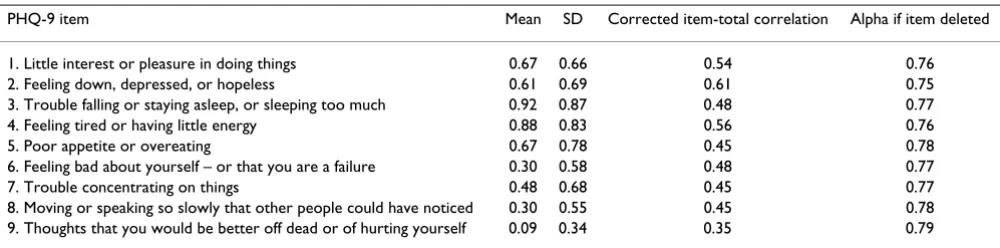
Table 1: PHQ-9 item level values and item-total correlations (n = 924)
PHQ-9 item Mean SD Corrected item-total correlation Alpha if item deleted
1. Little interest or pleasure in doing things 0.67 0.66 0.54 0.76
2. Feeling down, depressed, or hopeless 0.61 0.69 0.61 0.75
3. Trouble falling or staying asleep, or sleeping too much 0.92 0.87 0.48 0.77
4. Feeling tired or having little energy 0.88 0.83 0.56 0.76
5. Poor appetite or overeating 0.67 0.78 0.45 0.78
6. Feeling bad about yourself – or that you are a failure 0.30 0.58 0.48 0.77
7. Trouble concentrating on things 0.48 0.68 0.45 0.77
8. Moving or speaking so slowly that other people could have noticed 0.30 0.55 0.45 0.78
[image:4.612.54.557.585.729.2]9. Thoughts that you would be better off dead or of hurting yourself 0.09 0.34 0.35 0.79
Table 2: The performance of various PHQ-9 cut-off scores in detecting major depression
Cut-off score Sensitivity Specificity Positive predictive value Negative predictive value Likelihood ratio – positive
Likelihood ratio – negative
≥ 6 0.95 0.48 0.12 0.99 1.81 0.11
≥ 7 0.95 0.55 0.13 0.99 2.12 0.095
≥ 8 0.89 0.65 0.16 0.99 2.56 0.16
≥ 9 0.84 0.77 0.21 0.99 3.71 0.2
≥ 10 0.74 0.85 0.27 0.98 5.04 0.31
≥ 11 0.68 0.89 0.31 0.97 6.13 0.36
≥ 12 0.68 0.90 0.34 0.98 7.12 0.35
≥ 13 0.63 0.94 0.43 0.97 10.26 0.39
≥ 14 0.47 0.96 0.47 0.96 12.32 0.55
the four PHQ-9 severity subscales were statistically signif-icant (ANOVA: F = 31.91, df = 3, 275, p < 0.0001).
Discussion
The Thai version of PHQ-9 has several potential advan-tages. It is shorter than other diagnostic tools available in Thailand for identifying depression. It was primarily developed for use in primary care settings and is the only Thai questionnaire that has been tested in a primary care sample. With this instrument, both the presence of clini-cal depression and its degree of severity may be assessed. In primary care settings, the screening tool used for detect-ing the presence of depression alone may not be a reliable indicator of depression-related impairment. Instruments that can be used in both screening and scaling modes have a particular advantage in that their weaknesses can be compensated by each other [23].
The internal consistency of the PHQ-9 in this study (alpha coefficient = 0.79) was lower than in the studies from the
United State (alpha coefficient = 0.79–0.89) [12,13]. However, its reliability was within the acceptable range. For a self-report instrument to be reliable, it is suggested that Cronbach's alpha be at least 0.70 [24]. The low mean PHQ-9 score of 4.9 in our study, compared to the mean scores of 6.0–6.5 in the US sample [12], may reflect a pos-sible tendency in our patients to underreport symptoms via self-report questionnaire compared to the semi-struc-tured interview.
The patients in this study had high rates of endorsement of somatic symptoms, i.e. sleep problems, low energy, and poor appetite. This is consistent with results from our previous study of depressed Thai patients, in which patients mostly emphasized somatic symptoms when they first reported their symptoms [25]. A recent study from four different racial groups in the United Stated also showed similar findings. Interestingly, the US subjects had a higher mean score in somatic symptoms such as sleep problems (0.96 to 1.37) and low energy (1.24 to 1.41) compared to our Thai samples (0.92 for sleep prob-lems and 0.88 for low energy), whereas rates of endorse-ment of emotional symptoms such as anhedonia between our samples (0.67) and the US samples (0.56 to 0.89) were not very different. Our results support Kirmayer's argument [26] that subjects from countries that discour-age expression of emotional distress do not report more somatic symptoms than subjects from countries where expression of emotional distress is accepted or even encouraged.
Result of the PHQ-9 categorical algorithm for detecting major depressive episodes showed that it provided a high specificity. However, its sensitivity was poor (0.53), ren-dering this algorithm less useful for screening purposes than the cut-off score. On the other hand, its high positive likelihood ratio (LR+) of 27.4 may make it a suitable method for a diagnostic purpose.
When the PHQ-9 was examined as a continuous measure, its validity was supported by the AUC value which sug-gests a moderate accuracy of the questionnaire. The sensi-tivity at the cut-off value of 9 or greater was 0.84 and the specificity was 0.77. These values are within an acceptable range. Sensitivity of screening instruments is considered good when their range is 0.79–0.97 and when their
[image:5.612.58.284.88.313.2]specif-The Receiver Operating Characteristic (ROC) curve of the PHQ-9 versus the MINI for major depression diagnosis
Figure 1
The Receiver Operating Characteristic (ROC) curve of the PHQ-9 versus the MINI for major depression diagnosis.
Table 3: Relationship between PHQ-9 mean scores and depression severity by HAM-D
HAM-D score [22] N Mean PHQ-9 SD 95% CI
No depression (0–7) 210 5.42 3.73 4.92–5.93
Mild depression (8–12) 36 8.14 2.98 7.13–9.15
Moderate depression (13–17) 20 10.05 3.87 8.24–11.86
[image:5.612.53.553.656.729.2]icity is 0.63–0.86 [27]. The low specificity of the summed PHQ-9 score for diagnosing major depression is due to the fact that it is possible to diagnose the disorder without having either of the two cardinal symptoms of major depression. As such, the summed score does not match perfectly with the MINI, which is a structured diagnostic interview based on DSM-IV criteria [28].
The cut-off score at this point yielded the low PPV (0.21) and high NPV (0.99). Results form other studies of the PHQ-9 showed PPV ranging from 0.31 to 0.51 (depend-ing on the cut-off) [11]. The PPV is the probability of dis-ease if the patient's test is positive, while NPV indicates the probability that the patient is disease-free if the test is neg-ative. A low PPV may indicate lower specificity, or a lower disease prevalence in the population undergoing screen-ing, or a combination of these factors [29]. In this study, results may come from both low specificity (0.77) and low disease prevalence (6.8%).
We determined the convergent validity of the PHQ-9 in relation to the HAM-D. The satisfactory correlation between these two scales confirmed the validity of the PHQ-9. Recently, the PHQ-9 was also demonstrated to be sensitive to change and responsive to treatment outcomes over time and thus is a useful tool for monitoring treat-ment progress [14,30,31].
Our study had several limitations. First, the study was con-ducted in a university hospital; therefore, the respondents may not be representative of the actual primary care patients seen in a rural and remote area. That is, on aver-age, the depressive patients in the family practice clinic of Ramathibodi Hospital are less severe than the depressive patients attending primary care in remote area. This is because when they or their relatives think that their symp-toms are severe, they may go to the psychiatric out patients unit of Ramathibodi Hospital directly; whereas in a rural hospital, there is no psychiatric out-patient unit. In such a situation, all depressive patients have to attend the primary care unit of the hospital in the rural area, no mat-ter how severe they are. For this reason, the respondents at the Ramathibodi Hospital may not exactly represent the actual primary care patients seen at hospitals in rural and remote areas. However, these patients with severe symp-toms were only a small proportion of cases and our main objective of the study was to assess the ability of the tool to identify borderline cases of depression, which is a major problem in primary care settings. Second, there was a possibility that a proportion of participants might have underreported their depressive symptoms on both the PHQ-9 and the MINI clinical interview. Third, although the Thai version of the MINI performed well in a validity study, due to its highly structured instrument, it is still possible that it overestimated or underestimated the rate
of depression in this study. Despite its potential short-coming, however, the MINI was easy to understand because it was structured in simple, lay language. Thus few problems were encountered in the process of administer-ing the instrument. This was also the case in the study of Adewuya et al [32]. Fourth, the test-retest reliability of the PHQ-9 was not assessed. Generally, this type of reliability is used for measuring the stability of a scale over time, and it is usually assessed after a short period of time. Unfortu-nately, most of the participants only had follow up appointments at the hospital at least one month after they first took the test. This time period is too long to assess the test-retest reliability.
Caution should be exercised that, although the PHQ-9 is a valid and useful self-rating instrument for screening for depression, routine usage of the questionnaire, in isola-tion, may not improve the quality of care as anticipated. Results from a review have revealed that the routine employment of screening questionnaires for depression alone has minimal impact on clinician's detection, man-agement, and outcome of depression [33]. Moreover, in developing countries, new psychiatric cases identified by such instruments may be just an add-on burden to GPs whose workload is already heavy. Financial and institu-tional constraints in health care services should be taken into account before adopting such service delivery pro-grams in order to maintain successful care [34]. In a region where there is a shortage of GPs, besides the benefit of a case detecting tool, a structured approach that facili-tates an increased role of non-medical staff, patients, and family members may be more appropriate [35].
In summary, the Thai version of the PHQ-9 has acceptable psychometric properties for screening for major depres-sion in general practice with a recommended cut-off score of nine or greater. Due to the low PPV in this study, further clinical assessment is recommended if a test result is pos-itive. Because the categorical algorithm of the PHQ-9 yielded low sensitivity, it is less suitable for a screening purpose.
Abbreviations
The Patient Health Questionnaire 9: PHQ-9; the Mini International Neuropsychiatric Interview: MINI; the Hamilton Rating Scale for Depression: HAM-D; positive predictive value: PPV; negative predictive value: NPV; area under the curve: AUC; receiver operating characteristic curve: ROC curve.
Competing interests
Authors' contributions
ML conceived the study, designed the protocol, analyzed the data, and prepared the manuscript. SS participated in the study design, assisted in data collection, and gave sig-nificant comments on the manuscript. RS participated in the study design, coordinated among research assistants during the data collection process, and gave significant comments on the manuscript. All authors have read and approved the final version of the manuscript.
Acknowledgements
This study was supported by Grant 49086 from the Faculty of Medicine, Ramathibodi Hospital, Mahidol University, Bangkok, Thailand.
References
1. Ustun TB, Ayuso-Mateos JL, Chatterji S, Mathers C, Murray CJ: Glo-bal burden of depressive disorders in the year 2000. Br J Psy-chiatry 2004, 184:386-392.
2. Patel V, Araya R, Bolton P: Treating depression in the develop-ing world. Trop Med Int Health 2004, 9(5):539-541.
3. Adewuya AO, Oguntade AA: Doctors' attitude towards people with mental illness in Western Nigeria. Soc Psychiatry Psychiatr Epidemiol 2007, 42(11):931-936.
4. Griffiths KM, Nakane Y, Christensen H, Yoshioka K, Jorm AF, Nakane H: Stigma in response to mental disorders: a comparison of Australia and Japan. BMC Psychiatry 2006, 6:21.
5. Hickie AMI, Davenport TA, Luscombe GM, Rong Y, Hickie ML, Bell MI: The assessment of depression awareness and help-seek-ing behaviour: experiences with the International Depres-sion Literacy Survey. BMC Psychiatry 2007, 7:48.
6. Weiss MG, Raguram R, Channabasavanna SM: Cultural dimensions of psychiatric diagnosis. A comparison of DSM-III-R and ill-ness explanatory models in south India. Br J Psychiatry 1995, 166(3):353-359.
7. Lotrakul M, Saipanish R: Psychiatric services in primary care set-tings: a survey of general practitioners in Thailand. BMC family practice 2006, 7:48.
8. Kasantikul D, Karnjanathanalers N, Limsuwan N, Thongtang O, Vuth-iganond S, Khuangsirikul V, Tantipiwatanakul P, Theeramoke V: Health-related self-report (HRSR) scale: the diagnostic screening test for depression in Thai population. Journal of the Medical Association of Thailand 1997, 80(10):647-657.
9. Lotrakul M, Sukanich P: Development of the Thai Depression Inventory. Journal of the Medical Association of Thailand 1999, 82(12):1200-1207.
10. Kuptniratsaikul V, Chulakadabba S, Ratanavijitrasil S: An instrument for assessment of depression among spinal cord injury patients: comparison between the CES-D and TDI. Journal of the Medical Association of Thailand 2002, 85(9):978-983.
11. Kroenke K, Spitzer RL, Williams JB: The PHQ-9: validity of a brief depression severity measure. J Gen Intern Med 2001, 16(9):606-613.
12. Huang FY, Chung H, Kroenke K, Delucchi KL, Spitzer RL: Using the Patient Health Questionnaire-9 to measure depression among racially and ethnically diverse primary care patients. J Gen Intern Med 2006, 21(6):547-552.
13. Lee PW, Schulberg HC, Raue PJ, Kroenke K: Concordance between the PHQ-9 and the HSCL-20 in depressed primary care patients. Journal of Affective Disorders 2007, 99(1-3):139-145. 14. Lowe B, Schenkel I, Carney-Doebbeling C, Gobel C: Responsive-ness of the PHQ-9 to Psychopharmacological Depression Treatment. Psychosomatics 2006, 47(1):62-67.
15. Omoro SA, Fann JR, Weymuller EA, Macharia IM, Yueh B: Swahili translation and validation of the Patient Health Question-naire-9 depression scale in the Kenyan head and neck cancer patient population. International Journal of Psychiatry in Medicine 2006, 36(3):367-381.
16. Kittirattanapaiboon P, Khamwongpin M: The Validity of the Mini International Neuropsychiatric Interview (M.I.N.I.)-Thai Version 126. Journal of Mental Health of Thailand 2005, 13(3):126-136.
17. Lotrakul M, Sukanit P, Sukying C: The validity and reliability of the Hamilton Rating scale for depression, Thai version. Jour-nal of the Psychiatric Association of Thailand 1996, 41(4):235-246. 18. Beaton DE, Bombardier C, Guillemin F, Ferraz MB: Guidelines for
the process of cross-cultural adaptation of self-report meas-ures. Spine 2000, 25(24):3186-3191.
19. Sheehan DV, Lecrubier Y, Sheehan KH, Amorim P, Janavs J, Weiller E, Hergueta T, Baker R, Dunbar GC: The Mini-International Neu-ropsychiatric Interview (M.I.N.I.): the development and vali-dation of a structured diagnostic psychiatric interview for DSM-IV and ICD-10. The Journal of Clinical Psychiatry 1998, 59 Suppl 20:22-33;quiz 34-57.
20. Hamilton M: Development of a rating scale for primary depressive illness. Br J Soc Clin Psychol 1967, 6(4):278-296. 21. Streiner DL, Cairney J: What's under the ROC? An introduction
to receiver operating characteristics curves. Can J Psychiatry 2007, 52(2):121-128.
22. Bech P: Acute therapy of depression. The Journal of Clinical Psychi-atry 1993, 54 Suppl:18-27; discussion 28.
23. Nease DE Jr., Maloin JM: Depression screening: a practical strat-egy. The Journal of Family Practice 2003, 52(2):118-124.
24. Streiner DL, Norman GR: Scaling responses. In: Health Meas-uremant Scales: a practical guide to their development and use . 2nd ed. edition. Oxford , Oxford University Press; 1995:20-53. 25. Lotrakul M, Saipanit R, Theeramoke W: Symptoms of depression
in Thai patients. ASEAN Journal of Psychiatry ; 1996, 4(1):24-32. 26. Kirmayer LJ: Cultural variations in the clinical presentation of
depression and anxiety: implications for diagnosis and treat-ment. The Journal of Clinical Psychiatry 2001, 62 Suppl 13:22-8; dis-cussion 29-30.
27. Robins LN, Wing J, Wittchen HU, Helzer JE, Babor TF, Burke J, Farmer A, Jablenski A, Pickens R, Regier DA, et al.: The Composite International Diagnostic Interview. An epidemiologic Instru-ment suitable for use in conjunction with different diagnostic systems and in different cultures. Archives of General Psychiatry 1988, 45(12):1069-1077.
28. Stafford L, Berk M, Jackson HJ: Validity of the Hospital Anxiety and Depression Scale and Patient Health Questionnaire-9 to screen for depression in patients with coronary artery dis-ease. General Hospital Psychiatry 2007, 29(5):417-424.
29. Koksalan OK: Low positive predictive values and specificities of spoligotyping and mycobacterial interspersed repetitive unit-variable-number tandem repeat typing methods for performing population-based molecular epidemiology stud-ies of tuberculosis. Journal of Clinical Microbiology 2005, 43(6):3031; author reply 3031-2.
30. Chen TM, Huang FY, Chang C, Chung H: Using the PHQ-9 for depression screening and treatment monitoring for Chinese Americans in primary care. Psychiatr Serv 2006, 57(7):976-981. 31. Lowe B, Kroenke K, Herzog W, Grafe K: Measuring depression
outcome with a brief self-report instrument: sensitivity to change of the Patient Health Questionnaire (PHQ-9). Journal of Affective Disorders 2004, 81(1):61-66.
32. Adewuya AO, Ola BA, Afolabi OO: Validity of the patient health questionnaire (PHQ-9) as a screening tool for depression amongst Nigerian university students. Journal of Affective Disor-ders 2006, 96(1-2):89-93.
33. Gilbody S, House AO, Sheldon TA: Screening and case finding instruments for depression. Cochrane database of systematic reviews (Online) 2005:CD002792.
34. Cohen A, Kleinman A, Saraceno B: World mental health case-book: social and mental health programs in low-income countries. New York, Kluwer Academic/Plenum Publishers; 2002:x, 246.
35. McKenzie K, Patel V, Araya R: Learning from low income coun-tries: mental health. BMJ (Clinical research ed 2004, 329(7475):1138-1140.
Pre-publication history
The pre-publication history for this paper can be accessed here: