Economic Determinants of Inward FDI in BRICS
Countries: A Panel Data Analysis
Sonam Jakhar1
1
Assistant Professor, Department of Economics, Chaudhary BansiLal University, Bhiwani
Abstract: Foreign Direct Investment has become one of the most important economic flows in the global market. It has gained wide recognition as a striking measure of economic growth and development in both developed and developing countries. The role-played by FDI in Economic growth of an economy and living experience of BRICS economies drew the attention of researchers and policy makers to explore the FDI lead growth linkage and identify the push and pull factors of FDI destinations. The aim of this working paper is to examine the significance of relationship that the economic determinants like GDP, Trade openness, BOP, Currency Exchange rate and Inflation rate have on Foreign Direct Investments Inflows from 2000 to 2016 in the BRICS economies which are Brazil, Russia, India, China and South Africa. The research study employs a Panel Data Regression on UNCTAD data from 2000-2016. The empirical results show that while GDP, Exchange rate and inflation had been having a significant effect on inward FDI, balance of payment and trade openness had not been significant in attracting FDI to BRICS countries.
Keyword: BRICS, FDI, Economic Determinants, Panel data regression, Hausman Test
I. INTRODUCTION
In 2001, Jim O’Neill Chief Economist of the American bank, Goldman Sachs, in a report “Building Better Global Economic BRIC” first coined the phrase ‘BRIC’ which stands for Brazil, Russia, India, and China-the four of the fastest growing emerging economies of the world. Looking at the features like size of population, demographic dividend and rate of globalization, Goldman Sachs (GS) forecasted that these four countries had the growth potential to replace the European economy in terms of market size. However, ‘BRIC’ as an international forum was given shape with the first official meeting of the foreign ministers of Brazil, Russia, India, and China in New York on the margins of theUN General Assembly in September 2006. Later during April 2011, in its third summit, South Africa joined this forum and BRIC was replaced by “BRICS”. Since then it has become well-known worldwide, and researchers, investors, economists, politicians and many others have focused their attention on these five leading emerging economies of the world. BRICS countries together account for 43 percent of the world’s population, 46 percent of the global labor force, 20 percent of the earth’s landmass, and 25 percent of the world’s share of global gross domestic product.FDI is a key catalyst to overall economic growth of any country because the overseas firms bring technological knowhow and expertise to the host economies. To attract FDI the policymakers must facilitate the process, and become imperative to identify themajor determinants of the FDI, hence lot of research has been happening with respect to determinants of FDI which enable policy makers to understand the direction and scale of FDI flows.
II. REVIEW OF LITERATURE
Yunyun Duan (2010)in his work “Foreign Direct Investment in BRICS: A Sector Level Analysis compared the overall trends and industrial patterns of inward Foreign Direct Investment in the BRICS and explaining their determinants. The study found that in Brazil, Russia and India the territory sector receives the most inward FDI on average over the least and secondary sectors in the middle but China has a special industrial pattern of inward FDI, that is the secondary dominant the majority of the inward FDI and the primary territory sector receives only a bit. Narayanamoorthy, Vijayakumar and et., al., (2010) in their research paper, “Determinants of BRICS Countries-A Panel analysis”, examined the factors determining FDI inflows of BRICS countries using annual dataset from the period 1975 to 2007. The study employed panel data analysis and found that the selected variables market size, labor cost, infrastructure, currency value and cross capital formation are the potential determinants of FDI inflows of BRICS countries.
III. RESEARCH METHOD AND SOURCES OF DATA
For our analysis, based on the discussed literature review above, we are taking into consideration FDI inflows for the 5 BRICS economies –Brazil, Russian Federation, China, India and South Africa from 2000 – 2016. This study takes FDI inflows as the dependent variable and the independent variables that are expected to determine FDI inflows are carefully taken, based on literature and availability of database for the selected period. The paper used both pooled OLS and fixed effects – two panel data techniques – on the data of BRICS countries for the period 2000–2016, as available publicly on the online database of United Nations Conference on Trade and Development (UNCTAD) and World Bank.
A. In FDI inflow in BRICS
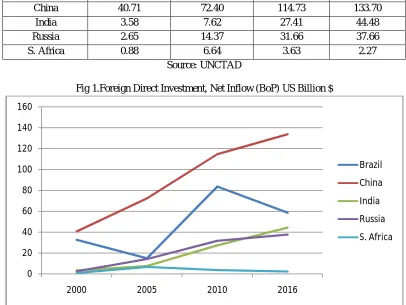
[image:3.612.102.510.401.496.2]The BRICS countries have been attract most of FDI during the last decades. Until 1984, Brazil was the major FDI recipient country among the BRICS, overtaken by China in 1985 and since then China continues to be a major destiny of FDI, especially in the automotive and consumer durables sectors. (Narayanamurthy 2011).Net Foreign Direct Investment inflows in current US Billion dollar are presented in table 1 and along with its graphical form in figure 1.
Table 1.Foreign Direct Investment, Net Inflow (BoP) US Billion $
Country Name 2000 2005 2010 2016
Brazil 32.77 15.06 83.74 58.68
China 40.71 72.40 114.73 133.70
India 3.58 7.62 27.41 44.48
Russia 2.65 14.37 31.66 37.66
S. Africa 0.88 6.64 3.63 2.27
Source: UNCTAD
Fig 1.Foreign Direct Investment, Net Inflow (BoP) US Billion $
0 20 40 60 80 100 120 140 160
2000 2005 2010 2016
Brazil
China
India
Russia
[image:3.612.102.508.427.732.2]B. Potential Variables Determining Fdi Inflows
1) Balance of Payments: IMF mentioned BOP as, “a statistical statement that systematically summarizes, for a specific time period, the economic transactions of an economy with the rest of the world. Transactions between residents and nonresidents consist of goods, services, income, financial claims, and those classified as transfers (such as gifts), which involve offsetting entries to balance, in an accounting sense”. It is expected that an appreciation of BOP leads to decrease in FDI inflows.
2) GDP: GDP can be defined as “an aggregate measure of production equal to the sum of the gross values added of all resident and institutional units engaged in production (plus any taxes, and minus any subsidies, on products not included in the value of their outputs)” OECD (1992). GDP reflects the market size existing in that country for MNEs, which can efficiently employ the resources to attain economies of scale by attracting higher FDI inflow in the country. It is expected to have a positive and significant impact on FDI flows.
3) Inflation: Inflation is often found to significantly impact inward FDI. A country which has a stable macroeconomic condition will receive more FDI inflows than a more volatile economy. Lower inflation is good for host economy and it brings constant inward FDI due to macroeconomic stability in the host country.
4) Exchange Rate: Exchange rate means the comparison of One country’s currency with another country’s currency with its equivalent value that are determined by numerous factors.US Dollar (USD) is used as common currency for calculating exchange rate as it is accepted as stable currency by most of the countries after second world war. As a currency depreciates, the purchasing power of the investors in foreign currency terms is enhanced, thus we expect a positive and significant relationship between the currency value and FDI inflows.
5) Trade openness: The various empirical studies suggest that trade (imports and exports) is a complement rather than substitute for FDI. Multinational enterprises (MNEs) have a tendency to invest in the trade markets with which they are well familiar. Much of FDI is generally assumed to be export oriented and may require the import of intermediate and capital goods. In both cases, volume of trade is enhanced and thus trade openness is generally expected to be a positive and significant determinant of FDI. Trade openness is reflected as ratio of the Export plus Import divided by GDP.
C. Research Questions and Hypothesis
The study examined the significance of relationship that the economic determinant – BOP, GDP, Inflation, Exchange Rate and Trade openness – have on the inflows of FDI in BRICS (Brazil, Russia, India, China, South Africa) Counties, from 2000 to 2016 by performing Panel Data Regression (pooled OLS and fixed effects) on UNCTAD data from the concerned time period. The research questions of this study are:
RQ 1: What is the nature of the relationship between BOP and FDI inflow in BRICS? RQ 2: What is the nature of relationship between inflation and FDI inflow in BRICS? RQ 3: What is the nature of relationship between exchange rate and FDI inflow in BRICS? RQ 4: What is the nature of relationship between GDP and FDI inflow in BRICS?
RQ 5: What is the nature of relationship between Trade openness and FDI inflow in BRICS?
The quest for the answers to these questions, with the support of literature review, led to thefollowing hypothesis: H1. The appreciation of the BOP leads to decrease in FDI inflows in BRICS.
H2. The relationship between inflation and FDI is positive in BRICS.
H3. The appreciation of the exchange rate leads to decrease in FDI inflows in BRICS. H4. The relationship between GDP and FDI inflow is positive in BRICS.
H5. The relationship between trade openness and FDI inflow is positive in BRICS.
IV. DATA ANALYSIS
Table 2: Summary Statistics Variable No. of
Observations
Mean Standard Deviation
Minimum Maximum VIF
FDI Inflow 85 38295.93 37206.040 311 135610
BOP 85 34746.45 97840.63 -104181 420569 2.41
Inflation 85 128.1118 45.05439 50.1 264 1.44
Exchange Rate 85 20.45186 19.56971 1.673 67.195 1.35
GDP 85 1922345 2467833 115748 1.14e+07 2.34
Trade Openness 85 46.34235 13.86933 21 729 1.32
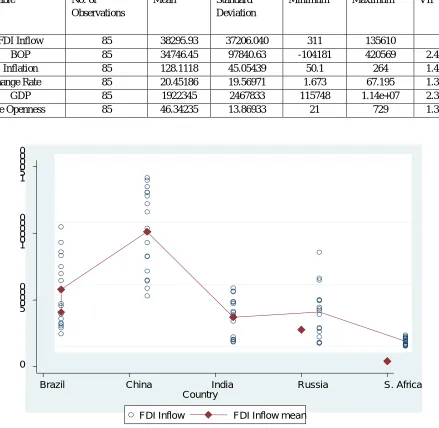
Figure 2: Heterogeneity across countries
A. Model Specification
The Hausman test was used to check whether fixed or random effect estimation is to be used. The test investigates the significance of an estimator against an alternative estimator. It helps the researcher to evaluate if a statistical model corresponds to the data. This test compares the fixed effects versus random effects under the null hypothesis that the individual effects are uncorrelated with the other independent variables in the model (Hausman 1978). If correlated (H0 is rejected), a random effect model produces biased estimators, violating one of the Gauss-Markov assumptions; so a fixed effect model is preferred. For this study the test favored the fixed effects over the random effects estimations. Breusch Test was applied to check for heteroskedasticity in the data. It was found that the data suffered from heteroskedasticity; hence robust standard errors were reported so as to relax the assumption. To test the hypotheses, following equation was estimated to test for the effects of the macroeconomic variables on inward FDI using fixed effects model:
FDI = β + β X + u
0 5 0 0 0 0 1 0 0 0 0 0 1 5 0 0 0 0
Brazil China India Russia S. Africa
Country
Here FDI is the dependent variable FDI at time t, namely BRICS FDI inflows, X is a set of other explanatory variables, such as BOP, Inflation, Exchange Rate, GDP and Trade openness. β And β are coefficients, i and t are indices for individual country and time; u is the error term.
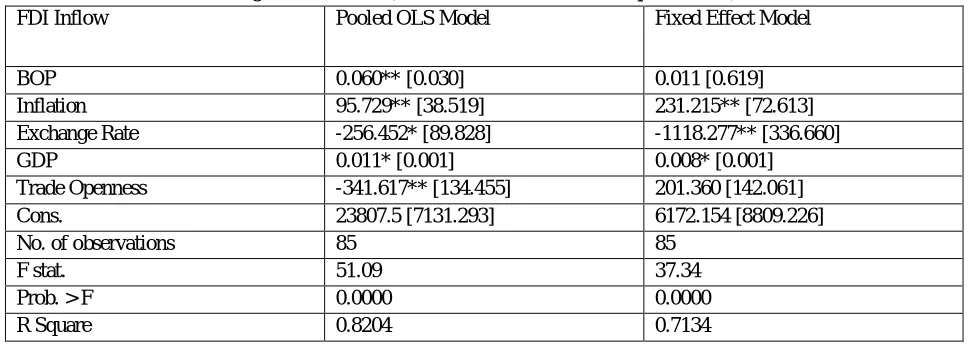
Table 3.Regression Results (Robust Standard Errors are in parentheses)
FDI Inflow Pooled OLS Model Fixed Effect Model
BOP 0.060** [0.030] 0.011 [0.619]
Inflation 95.729** [38.519] 231.215** [72.613] Exchange Rate -256.452* [89.828] -1118.277** [336.660]
GDP 0.011* [0.001] 0.008* [0.001]
Trade Openness -341.617** [134.455] 201.360 [142.061]
Cons. 23807.5 [7131.293] 6172.154 [8809.226]
No. of observations 85 85
F stat. 51.09 37.34
Prob. > F 0.0000 0.0000
R Square 0.8204 0.7134
* At 1% significant level. ** At 5% significant level
The results of the regression with Pooled OLS and fixed effects are presented in table 3. The results obtained from Fixed effect model shows that regression model with dependent variable FDI Inflows fits well with all independent variables as value of adjusted R2 is significant (0.71). High value of R2 also indicates that the explanatory variables included in the equation can explain most of the variation in the dependent variable. The F-value is also large with a p-value less than 0.001, thus the relation is highly significant and indicates that the explanatory variables together explain changes in the dependent variable and significant at 1 per cent. Thus, it can be concluded that macroeconomic variables together has a significant effect of Inward FDI. The coefficient of gross domestic product (GDP) is statistically significant at high level of 1%, inflation and currency exchange rate are significant at 5% level which shows that these determinants are potential determinants of FDI inflow where as BOP and trade openness are not significant which indicates that these might not be important determinant in this case.
The coefficient of inflation shows that foreign investors are highly sensitive to market stability as 1% increase in the variable leads to 231% increase in FDI inflow. The coefficient of GDP shows that if GDP increases by 1% then FDI inflow would increase by 0.008%and the coefficient of exchange rate shows that 1% appreciation in currency exchange rate would lead to decrease the FDI inflow by 1118%, thus having a remarkable significant effect. This study come to this eventuality that while GDP, Exchange rate and inflation had been having a significant effect on inward FDI, balance of payment and trade openness had not been significant in attracting FDI to BRICS countries.
Table 4.Hypothesis test result Hypothesis
No.
Hypothesis Statement Result
1 The appreciation of the BOP leads to decrease in FDI inflows in BRICS. Rejected
2 The relationship between inflation and FDI is positive in BRICS. Accepted
3 The appreciation of the exchange rate leads to decrease in FDI inflows in BRICS.
Accepted
4 The relationship between GDP and FDI inflow is positive in BRICS. Accepted
5 The relationship between trade openness and FDI inflow is positive in BRICS.
V. CONCLUSION AND POLICY IMPLICATIONS
In recent days, BRICS- the fast developing economies of the world having larger market potentials are expected to attract major inflow of FDI. However, relatively less research have been done on the factors attracting the FDI inflows towards these countries. So this study is an attempt to identify the potential factors determining the FDI inflows of BRICS countries from the period 2000 to 2016. The determinant factors include: BOP, Inflation, Exchange Rate, GDP and Trade Openness. The study finds that other than BOP and Trade openness (measured by the ratio of total trade to GDP) all other factors seem to be the significant determinants of FDI inflows in BRICS countries. The empirical studies have some policy implications also on how to improve investment climate in order to attract higher FDI inflows into BRICS countries that in turn will facilitate their economy in enhancement of Market potential, capital formation and Infrastructural development. Inflation (the Economic stability variable) and GDP are critical factors in attracting FDI, which enables to form appropriate policies for improving the performance of domestic economy and to maintain the stability of the currency of the host country to attract increased FDI. The benefit of trade openness in terms of their impact on FDI is not validated in this study. Thus, BRICS countries as developing nations have to indulge themselves on the path of economic reform and liberalization activities. The challenge for the BRICS countries are how to sustain their economic performance and trend in FDI inflow and how to form their policy and optimize their economic condition to attract more FDIs in future. BRICS countries will have desirable potential for FDI inflows as their large market size, low labor cost, and high growth potential will remain as the key determinants and attractions for years to come.
REFERENCES
[1] Agarwal, J. (1980) ‘Determinants of Foreign Direct Investment: A Survey’, Review of World Economics, Vol.116(4), pp.739-773.
[2] Asiedu, E. (2002) ‘On the determinants of foreign direct investment developing counties: is Africa different?’ World Development, Vol. 30 (1), pp.107-119. [3] Baltagi, B. (1995). ‘Econometric analysis of panel data’, Chichester, UK:Wiley.
[4] Baniak, A., Cukrowski, J. and Herczynski, J. (2002) ‘On determinants of foreign direct investment in transition economies’, CERGE-EI Working paper Series. [5] Bevan, A.A. and Estrin, S. (2004) ‘The determinants of foreign direct investment into European transition economies’, Journal of Comparative Economics,
Vol.32, pp.775-787.
[6] Buckley, P.J., Clegg, L.J., Cross, A.R., Xin, L., Voss, H., and Ping, Z. (2007) ‘The Determinants of Chinese Outward Foreign Direct Investment’, J. Int. Bus. Stud. 38, pp.499–518.
[7] Chakrabarti, A. (2001) ‘The determinants of foreign direct investment: sensitivity analyses of cross-country regressions’, KYKLOS, Vol.54 (1), pp. 89-114. [8] Culem, C. G. (1988). ‘The locational determinants of direct investments among industrialized countries’, European Economic Review, 32, pp.885–904. [9] Dunning, J.H. (1973) ‘The determinants of international production’, Oxford Economic Papers, Vol. 25.
[10] Dunning, J.H. (1988) ‘The Eclectic Paradigm of International Business: A Restatement and Extensions’, Journal of International Business Studies, VOl.19(1), pp. 1-31.
[11] Froot, K. A., and Stein. J. C. (1991) ‘Exchange Rates and Foreign Direct Investment: An ImperfectCapital Markets Approach’, Quarterly Journal of Economics, 106, pp.1191–1217.
[12] Gastanaga, V., Nugent, J. B. and Pashamova. B. (1998) ‘Host country reforms & FDI inflows: how much difference do they make?’Word Development, Vol. 26(7), pp.1299-1314.
[13] Hakro, A.N., and Ghumro, I. A. (2011) ‘Determinants of Foreign Direct Investment Flows to Pakistan’, The Journal of Developing Areas, Vol.44 (2), pp.217-242.
[14] Hausman, J. A. (1978) ‘Specification tests in econometrics’, Econometrica, Vol. 46, pp.1251- 71.
[15] Lankes, H.P. and Venables, A.J. (1996) ‘Foreign Direct Investment in Economic Transition: The Changing Pattern of Investments’, Economics of Transition, Vol.4, pp.331-347.
[16] Narayanamurthy, V., Perumal S., &Kode Chandra, S., R. (2010). ‘Determinants of FDI in BRICS Countries: A panel analysis’, Int. Journal of Business Science and Applied Management, Volume 5(3).
[17] Sahoo, P. (2006) ‘Foreign Direct Investment in South Asia: Policy, Trends, Impact and Determinants’, ADB Institute Discussion paper No. 56.
[18] Tsai, P.L. (1991) ‘Determinants of Foreign Direct Investment in Taiwan: An Alternative Approach withTime Series Data’, World Development, 19(2/3), pp.275-285.