ISSN: 1992-8645 www.jatit.org E-ISSN: 1817-3195
INTELLECTUAL MANAGEMENT OF THE EDUCATIONAL
PROCESS OF HIGHER EDUCATIONAL INSTITUTIONS ON
THE BASIS OF ONTOLOGICAL MODELING
1B.KUZENBAYEV, 2A. SHARIPBAY, 3A.MELNIKOV, 4 R.NIYAZOVA
1
Doctoral student, L.N. Gumilyov Eurasian National University, Astana, KAZAKHSTAN
2
Prof., L.N. Gumilyov Eurasian National University, Astana, KAZAKHSTAN
3
Prof., Chelyabinsk State University, Chelyabinsk, RUSSIA
4
Assoc. Prof., L.N. Gumilyov Eurasian National University, Astana, KAZAKHSTAN
E-mail: [email protected], [email protected],[email protected],[email protected]
ABSTRACT
In this paper we consider the intellectual control of the educational process of higher educational institutions on the basis of ontological modeling. Forming knowledge base and inference rules are constructed to control the organization. A brief overview of ontology language as the reporting mechanism and knowledge-sharing. A qualitative analysis of the subject area, which enabled to identify and formalize the basic concepts and the relationships between them; It proposed a methodological approach to building learning management system, which allows for knowledge-based approaches to the development of information systems in the area of educational process management. It determines how the domain of ontology specification.
Keywords: Ontology, Knowledge, Class, Query, The Knowledge Base, Subject Section, Systems Of
Management
1. INTRODUCTION
Management activities are in modern conditions,
as one of the most important factors in the functioning and development of the organization. Effective management is a valuable resource of the organization. Therefore, improving the efficiency of administrative activity becomes one of the areas of improvement of the activity of the enterprise as a whole. Using intelligent knowledge management allows flexible configuration of data storage schemes, to adapt the behavior of the information system and how to display information to the changing requirements of users. Managing the educational process of higher educational institutions (University PDL) made in order to prevent inconsistencies and ensure the planned release of bachelors, meeting the requirements of GOST standards.The aim of this study is to improve the efficiency of decision-making in the management of learning processes through the use of intelligent methods of management of educational process of higher
educational institutions on the basis of ontological modeling.
The methodology of solving the problem is based on the use of models and methods of knowledge representation, theories of artificial intelligence and expert methods of decision-making and general theoretical principles of control theory, decision theory and the theory of artificial intelligence. Complex application of proven methods and approaches to ensure scientific validity and adequacy of the proposed solutions.
2. WITH REGARD TO (A REVIEW OF SIMILAR WORKS)
ISSN: 1992-8645 www.jatit.org E-ISSN: 1817-3195 system. Recent advances in the direction of
propagation of the automation of processes of training , development of educational systems based on artificial intelligence theory based on the
scientific achievements of Popov E.V.[4],
Dovgyallo A.M.[5], and others.
Izvozchikov V.A. under the new
information technologies in teaching methodology and technology to understand the educational process using the latest e-learning and, above all,
computers. Maystrenko A.V.[6], the term
information technology (IT) understand the process of using a set of tools and methods for collecting, processing, and data (primary data) to produce a new quality of information on the state of an object, process or phenomenon (the information product).
3. STATEMENT OF THE PROBLEM
One of the important tasks in the development of such systems is the task of forming knowledge bases - the acquisition of knowledge from domain experts, their formalization and representation in a machine- readable form. The aim of ontological modeling is the creation of formalized models of electronic knowledge.
Goals of these models lie in the field of business, and may include:
• Implementation of process simulation with a view to their optimization;
• Quickly obtain inferences on the basis of a large amount of information to support decision-making;
• Ensuring accessibility to the perception of users of large volumes of complex structured information;
• The solution of a number of technical problems, especially in the field of integration of information systems.
4. DESCRIPTION OF OPERATION
Ontology plays a crucial role in the model to describe the knowledge, without which, according to experts, the entrance to any subject area is prohibited. Ontology design - a creative process, and, therefore, the potential applications of the ontology, as well as an understanding of the subject area developer and his point of view it will undoubtedly influence the decision-making [7]. Developed in this study is an ontological basis for intelligent management of educational process of the university. Built ontology will allow to carry out simulations and determine how various characteristics of objects and bottlenecks in the
management of the educational process of the university. Using these indicators, you can adjust the control of the educational process to best meet the needs and characteristics of the labor market. In the development of "PDL University" knowledge of the subject area decided to use the ontological approach.
After describing all the classes, properties, limitations, and domain objects, we get a complex hierarchy system, which is the basis for the construction of software systems, capable of performing certain operations on the intellectual level of the information contained in the ontology [8].
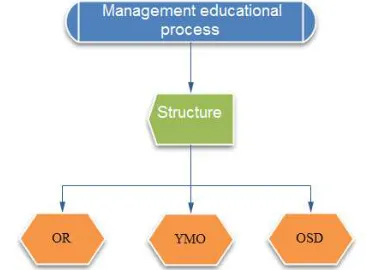
[image:2.612.324.507.304.439.2]Ontology management of educational process (Management_educational_process) consists of a class «Structure» ( Figure 1) .
Figure 1 - The structure of the domain "PDL University"
Class «Structure» contains the structure of the management of the educational process and the services they provide. Class «Structure» consists of three divisions: «OR», «YMO», «OSD».
Subclass «OR» is designed to organize the
monitoring and evaluation of educational
achievements of students, process management related to registration of educational achievements of students, the calculation of its academic rating, improvement of credit technology .
Subclass «OSD» for organizing the reception, verification, maintenance and storage of personal files of students, registration of documents on education.
Subclass «YMO» for the organization of teaching positions, recommendations, legal and reference documents on the organization and improvement of the educational process.
ISSN: 1992-8645 www.jatit.org E-ISSN: 1817-3195 institutions. Knowledge Base - the central part of
the expert system. It contains rules describing the relationship or phenomenon, techniques and knowledge to meet the challenges of the application of the system. Next, selected types of questions that should be answered knowledge base based on the ontology.
The main purpose of the expert system is to improve the decision making process for the management of educational process by developing and putting into practice the knowledge -oriented university management models and methods[9].
The main purpose of the functioning of the system of intellectual management of educational process at the university, as before, is to increase the level of education at the expense of effective and coordinated the organization of the provision of control options, analyze and adjust management decisions based on objective continuous monitoring of the results of quantitative and qualitative knowledge of teachers and employees. As one of the effective tools for assessing the level of knowledge are now automated test system control is urgent scientific problem of intellectualization of methodological and technological testing tools through the development and creation on their basis of expert decision support systems for the management of the educational process at the university .
So, information technology is a powerful tool for the solution of a university management tasks and their implementation is an irreversible process. For decision-making expert methods used in university management systems. Methods of expert assessments - are methods of organization of work with specialists, experts and processing of expert opinions.
There are quite a number of expert assessments processing methods. Mathematical and statistical methods of expert assessments are designed to improve the reliability of the results of the experts assessing the quality. They are divided into four sub- methods: ranking, immediate assessment of
the advantages and successive pairwise
comparisons.
Thus, virtually all the methods that are used to solve control problems in high schools require automation. Functions of information learning
management system (Learning Management
Systems - LMS) implemented in the following information systems (IS) system Oroksii Moscow Institute of Electronic Technology (MIET), IP Moscow State Industrial University (MDIU), the information-analytical complex (IAS) 'Dean "IAS control and evaluation of academic achievements of
students, IAS management training load Cherkassy
state technological University (CSTU), EC
Novgorod state University (NIU), corporate information environment of the Vladivostok state University of Economics and service.
Automated expert system for evaluating the university management system provides for work in 2 modes: mode of knowledge acquisition and consultation mode.
Access to these modes demarcated:
1. Knowledge acquisition mode should work on the QMS system experts, knowledge engineers, i.e those people who will define a set of rules for the system ( hereinafter, will be more clear )
2. In consultation mode, run those users who want to compare the features of 2 or more QMS systems used in education.
3. The system and the most qualified experts of the developer is allowed to both regimes.
Knowledge acquisition mode must contain the following modules:
1. Reference module. It defines the reference data to be used in the program. ( In the explanation of the other modules will be a link to the data that must be entered in this module, and an explanation of their necessity)
The module includes the following entries: a) a list of all the functions which are reflected in the circuit module 2
b) all possible qualitative characteristics within the rules
c) all possible relationships within the rules. After entering all the quality characteristics, they should be ranked in the range of [-1...1]. For example, if only three characteristics that are "better" corresponds to 1 "equivalent" - 0 , "worse" corresponds to -1 . There should be the possibility of adjusting the ranking, each time changing the list of all the qualitative characteristics or changes in the views of experts on this subject [10].
d) all of the possible criteria functions
2. The module construction of the scheme. The organization of the module construction of the scheme must be entered:
- For each function factor of significance for its QMS zfj (j = 1,2 ... kol_f), where j - function, kol_f - the number of functions in the system. For example, in Figure 5 functions (kol_f=5), "planning" is the first (j=1)
ISSN: 1992-8645 www.jatit.org E-ISSN: 1817-3195 Figure 3 functions in the document "Control» (l =
3), "HAI" is the third (k = 3).
It is necessary to determine for each considered QMS system (i.e for each student)
- The number of objects kol_o - The total number of documents kol_d
3. The module construction of inference rules. Each rule is constructed on the principle of production and has the form:
If <condition> then <inference> 4. MODULE formation issues. It should be organized to form a designer of questions on the criteria features.
Consultation mode in the following order.
- Asks the QMS system which universities will be compared;
- Implemented by entering an ontological model for each student;
- Ask all the questions on the criteria of functions for each student;
- Determine the balance on the system load documents;
- Calculation of the QMS system rating using inference rules.
At the heart of the functioning of the expert system is the use of knowledge, and their manipulation is performed on the basis of heuristic rules, formulated by experts. Expert systems give advice, analyze, perform classification, give advice and make the diagnosis. They focus on problem solving, usually requiring examination by a human expert. Unlike computer programs using a procedural analysis, expert systems solve problems in a narrow subject area (particular area of expertise) on the basis of deductive reasoning. Placed in the scientific problem predetermined the need for universal design of XML markup language.
Improving the quality of training as a key issue of the educational process at the present stage requires continuous work on improvement of methodological approaches to the category of quality as an integral characteristic determining a number of properties and functionality of the object, the participant of the educational process .
5. RESULTS
The projected ontology will form the basis of the knowledge base, which is part of the expert system for the formation of an automated information system. What is the knowledge base? There are many definitions of the term, but let's not claim to particular scientific depth, the next stop on satisfying us, the definition of: the knowledge base - a database plus metadata. Under Metadata is defined as rules of syntactic and semantic processing. Thus, the knowledge base, this is, firstly, information source, and secondly, the basis for building software systems (agent software) capable of processing the information. It is in this, and should seek ways of using knowledge in a particular subject area. Next, selected types of questions that should be answered knowledge base based on the ontology. For example: Evaluate the ability to view and edit the academic calendar? etc. Structured questions and answers give us the ability to create queries. Create a query gives us the opportunity to learn from the knowledge base of different information about the domain "PDL university". Query tab allows us to receive information from the project across all instances of classes that meet the criteria of interest. In order to create a query, select one or more classes, as well as one or more slots in the class. You can also save queries in a library for future use. The use of ontologies allows more accurately interpret the meaning of terms that appear in search queries, reducing the possible incomplete answer. The semantic representation of the query is specified based on the categorization of ontology, allowing the use of the relationship "system - subsystem", "whole - part".
[image:4.612.91.539.619.704.2]For a visual representation of queries in the following figure has been requested "Academic Calendar" (Figure 2).
ISSN: 1992-8645 www.jatit.org E-ISSN: 1817-3195
In future practical implementation of the theoretical approach presented to the circuit construction, its assessment and comparison with existing approaches from other groups.
6. CONCLUSION
The domain ontology is that part of the domain knowledge, with respect to which it is supposed immutability. Regarding the rest of the domain knowledge is assumed that it can vary, but should remain consistent with the domain ontology. An ontology defines the degree of harmonization, definitions specialist subject area.
Thus, the intelligent management of the
educational process of higher educational
institution must be based on the use of knowledge-based approaches. Ontological modeling makes it possible to organize, structure and reuse of accumulated knowledge and experience.
The developed ontology describes thesaurus domain, in particular, defines the concepts of the university structure, and describes the different types of users. Ontology is the basis for the development of the knowledge base for the management of educational process. Using the ontology editor Protege allowed, on the one hand, the use of international standards, and on the other - to provide a user-friendly interface in the design of the ontology. The resulting ontology can be combined with others, such as those described in other information systems of the university, as well as expanded by the accumulation of facts.
7. PERSPECTIVE
The developed technology allows you to use the experience and knowledge of experts to conduct expert interviews, process the obtained estimates , as well as save and accumulate knowledge about the subject area . This allows you to use the expert knowledge stored in the knowledge base for decision -making in the future , as a whole , providing a steady rise in the performance management process of educational process at the university.
REFERENCES
[1] Galeev I. Kh structure and functions of an
information resource "Information
Technologies and Society" / IH Halley OV Kolosov // layers control systems and machines . - 2005. - № 6. - p. 28-34
[2] Dovbysh A. Machinery otsіnka knowledge stu dentіv in sistemі keruvannya distantsіynim navchannyam / Dovbysh A.S., Lyubchak V.O., Petrov P.O. // Vіsn. Sum. Keep. the University . - 2007. - №7. p. 121-128.
[3] Sharonov N.V. Lingvotehnologii identification of knowledge in information systems: monograph
/ Kanisheva O.V., Sharonov N.V.
-Saarbrücken, Deutschland: LAP LAMBERT Academic Publishing, 2013. - 173 p.
[4] Popov E.V. Artificial Intelligence: In 3 Vol . : Handbook / ed. Popova E.V. - Moscow: Radio and Communications, 1990 - Bk. 1. The communication systems and expert systems - 464 p.
[5] Dovgyallo A.M. Training a new generation of systems / Dovgyallo A.M., EL // In Yushchenko's pr. Systems and machines. - № . - 1988. - p. 83-86.
[6] Maystrenko A. Information technology in science, education and engineering practic : Textbook / Maystrenko A.V., Maystrenko N.V. - Tambov: Publishing House of VPO "TSTU" , 2012. - 96 p.
[7] Solovyov V.D., Dobrov B.V., Ivanov V.V. Lukashevich N.V. Ontologies and thesauri: Textbook. - Kazan, Moscow: State University, Moscow State University. M.V. Lomonosov Moscow State University, 2006.
[8] Kuzenbayev B.A., Melnikov A.V., Kuzenbaeva A.A. The ontological model of the automated information system of the university. IV
International Scientific Conference
"Information Technologies and Systems - 2015" Chelyabinsk, Russia, (RISC) 25.02.05. p 177-179
[9] Sharipbayev A.A., Niyazova R.S., Kuzenbayev B.A. Expert assessment methods, quality and reliability of the automated control system of the educational process. VI International
Scientific Conference "Open semantic
intelligent systems engineering technology", Minsk: BSUIR, 2016. p.527-530