
Accepted
Article
This article has been accepted for publication and undergone full peer review but has not been through the copyediting, typesetting, pagination and proofreading process, which may lead to Received Date : 13-Nov-2015
Accepted Date : 13-Mar-2016 Article type : Research Papers
Rapid evolution and gene expression: A rapidly-evolving Mendelian trait that
silences field crickets has widespread effects on mRNA and protein
expression
Sonia Pascoal1*, Xuan Liu2, Tony Ly3, Yongxiang Fang2, Nichola Rockliffe2, Steve Paterson2, Sally L. Shirran4,Catherine H. Botting4, Nathan W. Bailey1
1 Centre for Biological Diversity, University of St Andrews, St Andrews, KY16 9TH, U.K.
2
Centre for Genomic Research, University of Liverpool, Liverpool, L69 7ZB, U.K.
3Centre for Gene Regulation and Expression, College of Life Sciences, University of Dundee,
Dundee, Dow St, Dundee, DD1 5EH, U.K.
4
School of Chemistry, Biomedical Sciences Research Complex, BMS Annexe, University of St.
Andrews, KY16 9ST, U.K.
*Corresponding authors: [email protected]; [email protected]; Tel: 01334
463367; Fax: 01334 463366
Accepted
Article
Keywords: Rapid evolution, wing mutation, Teleogryllus oceanicus, transcriptome, proteome
Running title: Rapid evolution and gene expression in crickets
A
BSTRACTA major advance in modern evolutionary biology is the ability to start linking phenotypic
evolution in the wild with genomic changes that underlie that evolution. We capitalised on a
rapidly-evolving Hawaiian population of crickets (Teleogryllus oceanicus) to test hypotheses
about the genomic consequences of a recent Mendelian mutation of large effect which
disrupts the development of sound-producing structures on male forewings. The resulting
silent phenotype, flatwing, persists because of natural selection imposed by an
acoustically-orienting parasitoid, but it interferes with mate attraction. We examined gene expression
differences in developing wing buds of wild-type and flatwing male crickets using RNA-seq
and quantitative proteomics. Most differentially expressed (DE) transcripts were
down-regulated in flatwing males (625 up vs. 1716 down), whereas up and down-down-regulated
proteins were equally represented (30 up and 34 down). Differences between morphs were
clearly not restricted to a single pathway, and we recovered annotations associated with a
broad array of functions that would not be predicted a priori. Using a candidate gene
detection test based on homology we identified 30% of putative Drosophila wing
development genes in the cricket transcriptome, but only 10% were DE. In addition to wing
related annotations, endocrine pathways and several biological processes such as
Accepted
Article
levels. Our results illuminate the breadth of genetic pathways that are potentially affected in
the early stages of adaptation.
I
NTRODUCTIONA question that has dominated evolutionary research since the Modern Synthesis is how
novel sequence variants arise within a genome and persist—or spread—under selection.
Debate centres on the degree to which effects of mutations are limited (i.e. modular), and
the mechanisms by which antagonistic fitness effects are counterbalanced (Stearns, 2010).
Such factors can potentially affect whether mutations become established, and their rate of
spread under selection. The development of high-throughput next generation sequencing
technology has made it easier to inform this debate, even in non-model organisms, by
dissecting the functional genomics of rapidly evolving mutations.
The rapidly evolving melanic form of the peppered moth Biston betularia provides a good
example. Peppered moths have been a fixture of evolutionary research examining the action
of natural selection for over a century and a half, but a description of the functional genetics
of the melanic form of this species was only published in 2011 (van't Hof et al., 2011; Cook &
Saccheri, 2013). Prior to this work, it was not unreasonable to predict that the genetic
mechanisms underlying development of melanic pigmentation might involve a component of
the well-characterised insect melanin synthesis pathway. Surprisingly, an assay testing linkage
between candidate melanisation genes and the melanic carbonaria phenotype in B. betularia
revealed this was not the case (van't Hof & Saccheri, 2010). Instead, the carbonaria
Accepted
Article
in other lepidopterans (van't Hof & Saccheri, 2010; van't Hof et al., 2011). Other examples of
rapid evolution are well-known from field studies (Grant & Grant, 2002; Charlat et al., 2007),
but few contemporarily evolving traits in nature are well characterized on a genomic level
(Stapley et al., 2010). Here we capitalise on a rapidly spreading mutant phenotype in wild
field crickets (Teleogryllus oceanicus) and use two complementary gene expression profiling
approaches to test the specificity of expression changes associated with strong selection and
rapid evolution.
In Hawaii, a mutant form of silent male crickets has recently arisen and rapidly spread in
several populations, apparently in response to pressure from an acoustically-orienting
parasitoid fly, Ormia ochracea (Zuk et al., 2006). The mutation, flatwing, is sex-specific and
affects male forewings. Females do not sing and their wings lack derived sound-producing
structures such as the scraper, the file, and resonators. Mutant males do not develop these
features or develop drastically reduced versions of them, and the differences between
morphs are detectable in juvenile stages (Fig. 1). While silence protects males from
parasitoid attack, it impedes their ability to attract females to reproduce. Flatwing males,
however, appear to behave as “satellites” towards the remaining calling males (Zuk et al.,
2006). This behaviour may have pre-dated the origin and spread of the mutation (Tinghitella
et al., 2009), and along with the willingness of females to accept silent males for mating
(Bailey et al., 2008) facilitated the mutation’s rapid spread. Despite appearing only a decade
ago, silent males now occur on two islands and have distinct forms that segregate as
Accepted
Article
Despite a rudimentary understanding of the Mendelian genetics of flatwing, nothing is
known about its molecular functional genetics. As was the case with the peppered moth,
several pathways suggest themselves as obvious candidates underlying the developmental
disruption causing flatwing. A substantial body of research on the developmental genetics of
wing morphogenesis and venation patterns has been conducted using Drosophila
melanogaster (Blair, 2007). Key regulatory genes in wing development and wing vein
formation have been identified, for example wingless, vestigial, rhomboid and EGFR
(epidermal growth factor receptor) (Baker, 1988; Sturtevant & Bier, 1995; Fuse et al., 1996;
Niwa et al., 2010; Molnar & de Celis, 2013). These comparatively well-characterised genes
and associated pathways provide candidates for investigating the genetic basis of altered
wing venation patterns in male T. oceanicus crickets.
We took a multi-level approach to analyse transcriptomic and proteomic variation in the
wing bud stage of wild-type versus mutant flatwing crickets. Despite the comparative rarity
of quantitative proteomics approaches in evolutionary biology, contrasting and combining
data from RNA and protein expression screens can increase the power to dissect and test
hypotheses about the molecular machinery underlying adaptive phenotypes. Our goal was
to qualitatively test the universality of effects on gene expression caused by the flatwing
mutation(s) in developing wing bud tissue. To do this, we i) characterized the wing bud
transcriptome and quantitatively compared gene expression profiles between wild-type and
flatwing male wing buds, ii) similarly accessed the wing bud proteome and quantitatively
compared protein expression patterns between wild-type and flatwing male wing buds iii)
established patterns of co-expression between the datasets levels to gain focused
Accepted
Article
information from D. melanogaster (Costello et al., 2009) to test predictions about wing vein
pathways implicated in the development of flatwing morphology in T. oceanicus. If relatively
conserved venation patterns across insect wings are determined by the expression of
conserved genes, we expected to be able to identify Drosophila candidates in our RNA-seq
dataset on the basis of homology. Secondly, we predicted that those genes should be
differentially expressed (DE) in developing flatwing males, as flatwing forewings resemble
the un-differentiated forewings of females. Our aim was not to characterise the causative
sequence mutation(s) underlying the phenotype. Rather, we tested the extent to which
molecular pathways associated with other phenotypes might be disrupted by flatwing.
M
ATERIALS ANDM
ETHODSCrickets
To examine wing bud differences between crickets carrying the flatwing mutation and
crickets carrying normal X chromosomes (wild-type), lines fixed for each phenotype were
produced for the Kauai population. To obtain homozygous lines for each morph, we
performed thirty replicates of each of two types of crosses. The first was a cross between a
Kauai female of unknown genotype with a wild type Kauai male (who was therefore know to
carry a single normal X chromosome). The second was a cross between a Kauai female of
unknown genotype and a flatwing Kauai male (who was therefore known to carry a single
mutant X chromosome). We screened wing phenotypes in the resulting male offspring,
which allowed us to identify 12 homozygous normal lines and 3 homozygous flatwing lines.
We haphazardly selected 3 of the homozygous wild-type lines to retain for a total of 3
Accepted
Article
Test crickets were reared in a common garden environment following established protocols
(e.g. Bailey & Macleod, 2014), in a growth chamber at ca. 25 oC with a 12:12 light:dark cycle. Crickets were reared in 16 L plastic containers, and cohorts developed together within these
containers to prevent mixing between developmental stages. All boxes were kept in the
same growth chamber, so all nymphs used in the experiment had experienced the same
acoustic environment. Wing buds were collected from juvenile male crickets (about 2
months) at the stage when they first become everted and freely articulated from the thorax
(Fig. 1). The number of instars varies in many insects, including grylline crickets (Esperk et al.
2007), and our interest was in patterns of gene expression in wing buds when they first
appear externally. To ensure that we sampled crickets that were all at the same stage of
wing bud development, i.e. when they were externally visible but not yet enlarged as in the
penultimate instar, we selected crickets at the second-before-the-final moult. This stage is
readily characterised by the features illustrated in Fig. 1. Excised wing buds were preserved
in RNALater at -20 oC until processing.
RNA extractions, library preparation and sequencing
Total RNA was extracted from cricket wing buds using the TRIzol plus RNA purification kit
(Life Technologies) with On-column PureLink DNase treatment during purification
(Invitrogen). Twelve wing bud tissue samples were analysed (6 biological replicates for each
morph, i.e. 2 replicates per line, with 3 crickets from the same line pooled per sample).
Samples were subjected to an initial QC measuring RNA concentration with a Qubit RNA
broad range kit. Sample integrity was also assayed using RNA pico chips on an Agilent
Accepted
Article
mouse and rat, using the manufacturer’s protocol. Samples were heated with baits at 68 oC for 10 minutes and allowed to cool for 5 minutes. The hybridization mixture was mixed with
prepared Ribo-Zero beads and left at room temperature for 5 minutes, then heated at 50 oC for 5 minutes and immediately placed on a magnet. The supernatant was collected and
purified with RNA clean beads.
Purified RNA was checked for depletion and used directly in the ScriptSeq protocol
(Epicentre), following the manufacturer’s instructions. Samples were fragmented at 85 oC for 5 minutes and placed on ice, then converted to cDNA and purified with Ampure XP beads.
The samples were PCR amplified for 14 cycles (barcodes were incorporated at this point) and
checked using Qubit (Invitrogen) and Bioanalyser (Agilent). Samples were multiplexed based
on concentration and average length. The quantity and quality of the final pool were
assessed again and subsequently qPCR using the Illumina Library Quantification Kit from
Kapa on a Roche Light Cycler LC480II, according to the manufacturer's instructions. The
template DNA was denatured according to the protocol described in the Illumina cBot User’s
guide and loaded at 9 pM concentration. To improve sequencing quality control, 1%
fragmented phage PhiX DNA was spiked-in to the libraries. The sequencing was carried out
on an Illumina HiSeq 2000 with version 3 chemistry generating 2×100 bp paired end reads.
RNA-seq data analysis
Initial processing and quality assessment
An in-house pipeline was used for initial processing and quality assessment of the sequence
data. Briefly, base calling and de-multiplexing of indexed reads was performed using CASAVA
Accepted
Article
to remove Illumina adapter sequences using Cutadapt version 1.2.1 (Martin, 2011). The
reads were further trimmed to remove low quality bases, using Sickle version 1.200 with a
minimum window quality score of 20. After trimming, reads shorter than 10 bp were
removed. The proportion of trimmed reads that were unpaired after trimming was generally
low (<1%), indicating that the data are of good quality.
De novo assembly of transcripts, transcript quantification and annotation of DE sequences
Transcriptome assembly was carried out using Trinity (Grabherr et al., 2011); read data were
normalized and assembled using a k-mer size of 25bp. Prior to assembly, the effect of K-mer
length (23 to 31 bp) was tested and digital normalization was applied to reduce redundancy
in the dataset and reduce the memory requirements of the assembly. Further assembly
quality was assessed using CEGMA (Parra et al., 2007) testing for the presence and
completeness of a set of 248 conserved eukaryotic genes (CEG).
RSEM (Li & Dewey, 2011) was used for quantifying transcript (genes and isoforms)
abundances. In RSEM, trimmed illumina reads were mapped to the de novo transcriptome
assembly using BOWTIE 2 (Langmead & Salzberg, 2012) and the mapping BAM files were
then used to generate raw counts for differential expression analysis. EdgeR (Robinson et al.,
2010) was subsequently used for identifying genes and isoforms differentially expressed
between wild-type versus flatwing, assuming a false discovery rate (FDR) threshold of 5%
and a fold change threshold of at least 1.5. Trinotate (Haas et al., 2013)
(trinotate.sourceforge.net/), a Trinity tool, was used to annotate the transcriptome and the
Accepted
Article
(http://www.blast2go.com) was used for additional DE list GO organization, KEGG (Kyoto
encyclopedia of genes and genomes) analysis and gene enrichment analysis using Fisher’s
exact test (FDR = 0.05).
Quantitative Proteomics
We confirmed that significant numbers of proteins could be identified from flight muscle
tissue using mass spectrometry-based proteomics methods before embarking on a
quantitative proteomics study; the methods and results are presented in the Supporting
Information. We used extra samples of biological replicates from the RNA-seq experiment to
perform an iTRAQ labelling experiment using nano-flow liquid chromatographic electrospray
ionization tandem mass spectrometry (nLC-ESI MS/MS). These samples comprised wing buds
collected from siblings of the juvenile males reared simultaneously in the same
conditions/experiment as in the RNA-seq experiment. Six samples (3 wild-type and 3
flatwing biological replicates with 3 crickets pooled per sample) were analysed, each labelled
with a different 8plex iTRAQ reagent (labels 113-118). Wing bud proteins were extracted by
homogenizing the tissue in 4% SDS HEPES-EDTA lysis buffer containing protease and
phosphatase inhibitors (Roche) at 95 oC (Ly et al., 2014). To assess protein quality, a portion
of the extracts were run on a NuPAGE® Novex® 4-12% Bis-Tris Protein Gel (Life Technologies)
(Fig. S2) and protein concentration was measured using Qubit and Nanodrop methods.
Subsequently, 100 µg of protein per sample was acetone precipitated and the resulting
pellets were solubilised, digested with trypsin and the resultant peptides reduced and
alkylated prior to iTRAQ labelling, following the manufacturer’s protocol (ABSciex iTRAQ
reagents). The combined iTRAQ labelled peptides were concentrated (SpeedVac,
Accepted
Article
acetonitrile) and sonicated. The pH was assessed and if necessary adjusted to 3.0 with 0.5 M
H3PO4.
The peptides were then separated by cation exchange chromatography on a PolySulfoethyl
A column (PolyLC, Columbia, MD). The column was washed with 100% Buffer Ascx (10 mM KH2PO4, 20% acetonitrile (MeCN), pH 3.0) at 1 mL min-1 for 22 min allowing the absorbance on the UV chromatogram to return to baseline. A gradient of 0-50% Bscx (10 mM KH2PO4,
20% MeCN, 500 mM KCl, pH 3.0) was applied for 20 min, 50-100% Bscx for 3 min, followed by 100% Bscx for a further 3 min to wash the column, before reequilibration in 100% Ascx for another 11 min. 0.5 mL fractions were collected every 30 sec. The chromatogram was
inspected and fractions pooled to give 7 fractions across the elution profile of similar peptide
concentration (Fig. S3) which were concentrated (SpeedVac, ThermoSavant) prior to
desalting. Fractions were resuspended in 0.1% TFA and desalted on C18 spin columns
(PepClean C18 spin columns, Thermo Scientific) using the manufacturer’s instructions,
eluting in 2x20 μL 70% MeCN. The elution solvent was removed (SpeedVac) and the
fractions resuspended in 20 μL loading buffer (98% H2O, 2% MeCN, 0.05% TFA) prior to mass
spectrometric analysis.
nLC-ESI-MSMS analysis
The peptides were then analysed by nLC-ESI MSMS using the instrument set up described in
the Supporting Information. Half of each desalted fraction volume (10 uL) was loaded onto
the nLC trap column and washed with loading buffer (98% H2O, 2% MeCN, 0.05% TFA) for 20
Accepted
Article
eluted with a gradient of increasing MeCN as described in the Supporting Information and
sprayed into the TripleTOF 5600 mass spectrometer and data collected as described in the
Supporting Information except that the rolling collision energy used was adjusted to the
preset iTRAQ settings, to give improved release of the reporter ions.
MS/MS data analysis
The MS/MS data was analysed using both the ProteinPilot search algorithm (ABSciex), using
the predefined iTRAQ8plex settings, plus the Mascot algorithm (Matrix Science) against the
NCBInr database Dec 2014. Species was restricted to metazoa, trypsin included as the
cleavage enzyme, iTRAQ8plex as a fixed modification on peptide N-termini and lysines,
methylthio as a fixed modification of cysteines and methionine oxidation and iTRAQ8plex on
tyrosine as variable modifications. Additionally, searches were performed against a wing bud
transcriptome database. For protein identification, at least one peptide above the identity
(95% confidence) threshold was required. For protein quantification analysis, however,
Mascot data was further filtered and only proteins with at least two peptides with ion scores
above the 95% confidence threshold were considered. Final quantifications were performed
manually using the Mascot results from searches against the filtered proteome data. Briefly,
before protein quantification, data were normalized for uneven admixture in two
consecutive steps. This normalization process assumes that most proteins are not DE and
that true DE proteins constitute a minority of the sampled proteins. Firstly, the measured
intensities for each sample (i.e., iTRAQ channel) were summed over all peptides. Each sum
was then divided by the highest sum to generate normalization ratios that were then used to
Accepted
Article
Secondly, a normalization factor by peptide was also calculated and proportions to the sum
of each peptide across all samples (i.e., iTRAQ channels) were therefore produced. Fold
changes and p values (obtained by Student’s t-test) were then calculated using the
normalized data for all peptides in a protein. To evaluate if proteins were differentially
expressed, a p-value threshold of 0.05 and a fold change larger than 1.5 or smaller than 0.67
were applied.
The proteome and DE protein annotations, KEGG analysis and gene enrichment analysis
were obtained using Blast2GO. Since the transcriptome assembly was used for protein
identification searches, transcript identifications were directly assigned into the
corresponding matching proteins. The comparison between RNA-seq and proteomics
datasets was therefore evaluated to estimate patterns of expression in the transcriptome
versus in the proteome.
Lastly, we implemented a candidate gene detection test to evaluate the hypothesis that
coding genes implicated in Drosophila wing development and venation also underlie similar
developmental processes in T. oceanicus, and that the flatwing mutation causes expression
levels of those genes in male wing buds to be disrupted. To do this, we capitalised on a
publically-available list of genes with documented involvement in Drosophila wing
development (n = 296) (http://www.sdbonline.org/sites/fly/aimorph/wing.htm). We then
searched for these genes in our T. oceanicus wing bud transcriptome, proteome and
Accepted
Article
expression profiles were consistent with disruption of any of these during the development
of flatwing morphology.
R
ESULTSWing bud transcriptome
Trimmed and normalized RNA-seq reads were assembled into 1,249,083 transcripts (639,586
“trinity genes” and 609,497 isoforms) with a mean sequence length of 1,212 bp and a size
range of 201 to 19,098 bp. About 16% of the genes have multiple isoforms (Tables S1-S6).
The CEGMA test for the presence and completeness of a set of 248 conserved eukaryotic
genes (CEG) showed that the large majority of the genes (98%) are present, but a smaller
proportion (79%) was complete, i.e. the full gene was contained within one assembled
sequence. From Trinotate, BLASTx of transcripts against the UniProt/SwissProt database
yielded 32,923 transcript annotations. From these, several known wing morphogenesis and
wing venation regulatory genes such as wingless, vestigial, snail, EGFR, rhomboid, hedgehog
and notch were identified and we therefore anticipated a good representation of these
annotations in the DE analysis.
Gene expression analysis
2341 differentially expressed assembled sequences were identified and are therefore
potentially involved in pathways leading to development of the flatwing phenotype (Fig. S1).
Accepted
Article
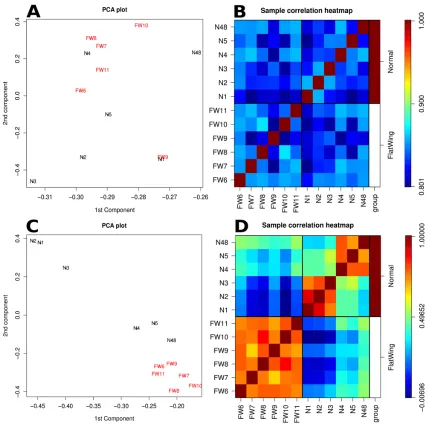
down-regulated whereas only 625 were up-regulated. Interestingly, PCA analysis and sample
correlation heat maps of the full dataset and of the DE genes only revealed greater variation
between wing bud transcriptomes of wild-type crickets than from mutant crickets. As
expected, considering DE data alone maximizes the differences between the two morphs
(Fig. 3).
The majority of the DE sequences are unknown but about 21% (502) had an available
annotation and 222 had associated gene ontologies. Most genes that would be predicted a
priori to be involved in development of the flatwing phenotype based on their known role in
wing venation in other insects, such as wingless, rhomboid and EGFR,were not DE in this
developmental stage of T. oceanicus flatwings. However, Dystrophin and Protocadherin Fat
1, involved in imaginal disc-derived wing vein morphogenesis/specification and
establishment of imaginal disc-derived wing hair orientation, were both up-regulated in
flatwing crickets. Also, the regulation of notch signalling was up-regulated and the hedgehog
receptor activity was down-regulated (both play an important role in Drosophila wing
development). Also of interest, several behavioural annotations were recovered. For
example, the protein white, involved in male courtship behaviour was up-regulated in
flatwings; vacuolar sorting-associated protein assigned to social behaviour was also
up-regulated, and an uncharacterized protein linked to flight behaviour, sperm aster formation
and cuticle pigmentation was down-regulated.
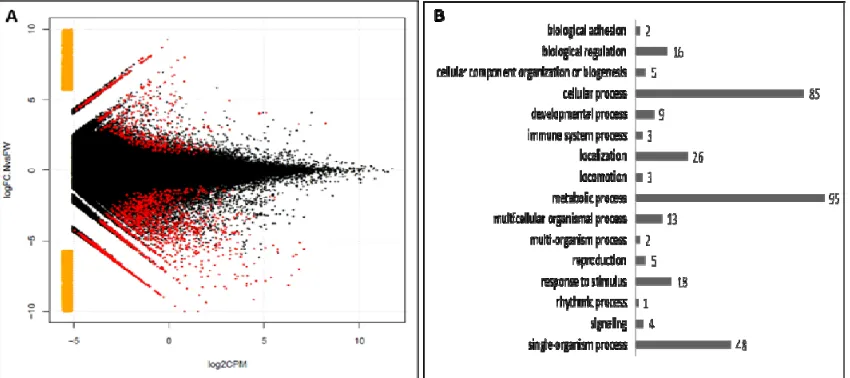
Focusing on GO terms only, biological processes such as response to stimulus, reproduction,
immune system process and localization were DE between wild-type and flatwing crickets.
Accepted
Article
and biological adhesion was consistently up-regulated in flatwing males (Fig. 2B, Table S7).
From KEGG analysis, enzymes present in steroid hormone biosynthesis, steroid degradation,
drug metabolism by cytochrome P450 and metabolism of xenobiotics by cytochrome P450
(Table S8) were down-regulated in flatwings and gene enrichment analysis (Fisher’s exact
test) mainly showed a down-regulation of transport activity in flatwings (Table S9).
Wing bud proteome
When the MS/MS data from the iTRAQ labelled peptides was merged and analysed using the
Mascot search algorithm against the NCBInr metazoan database, 113 protein families were
identified in the wing bud samples. However, to improve protein annotation and decrease
the number of unassigned peptides, a second search against the tissue-specific
transcriptome database was performed. Individual ions scores > 47 indicated identity or
extensive homology (p<0.05) and there were 1,032 peptide matches above identity
threshold and 2,514matches above homology threshold for 150,293 queries, which resulted
in the identification of 332 protein families. After further high-stringency filtering, i.e., where
proteins with at least 2 peptides above the 95% confidence level were retained, 156 proteins
identifications remained for protein quantification analysis. From these, 64 proteins were
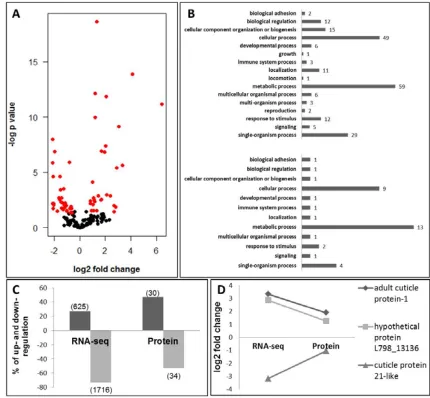
differentially expressed with 30 proteins being up-regulated and 34 proteins being
down-regulated in the flatwing crickets (Fig. 4A). The number of unassigned peptides, however,
only marginally decreased from the first to the second search (from 147,637 using the NCBI
Accepted
Article
Most DE protein annotations were related to muscle and cuticle/chitin metabolic processes
and structure and at the GO level; interesting GO annotations associated with DE proteins
included signalling, response to stimulus, localization and immune system process (Fig. 4B).
No functional enrichment was found but several KEGG pathways were present (Table S11),
and amino sugar (a main component of chitin) metabolism was down-regulated.
Transcriptome and proteome correlation
The number of sequences present in both the wing bud RNA-seq transcriptome and in the
proteome was limited. Nine DE assembled transcripts were identified in the wing bud
proteome and from these, only 5 (representing 3 different cuticle proteins) were
differentially expressed in both datasets. However, all of the latter showed the same
expression pattern in the transcriptome and in the proteome. Also, for these, the magnitude
of differential expression was more extreme at the transcriptome level than at the proteome
level (Fig. 4C-D). However, it is well know that the iTRAQ quantitation method tends to
suppress the degree of differential expression, due to the co-selection for fragmentation of
ions not showing differential expression with those showing differential expression within
the mass spectrometer (Shirran & Botting, 2010).
From the candidate gene detection test (Table 1), about 30% of the Drosophila wing
development genes were identified in the cricket wing bud transcriptome, but of these, only
10% were DE (the transcription factor Myb, the secreted proteins Hedgehog and Vein, the
Accepted
Article
Axin, Beta3 tubulin and Zipper). The proportion of genes by functional categories was similar
between T. oceanicus and D. melanogaster (Fig. S4). At the proteome level, however, only 3
candidate annotations (Rho, Talin and Beta3 tubulin) were present and none was DE. These
3 annotations were also present in the wing bud transcriptome and Beta tubulin was
additionally a DE transcript. Together, this strategy confirms that despite some of the
candidate annotations being represented in the transcriptome (but not in the proteome),
few known candidate wing development and wing venation genes appear to be differentially
expressed between wild-type and flatwing crickets at the wing bud stage studied here (Table
S12).
D
ISCUSSIONThe rapidly proliferating flatwing mutation in T. oceanicus is associated with a broad
spectrum of effects on mRNA and protein expression in developing male wing buds. These
included: (i) signatures of flatwing-associated effects on several biological processes; (ii)
evidence that endocrine disruption may contribute to the feminised wing phenotype; (iii)
prevalent down-regulation of transcript expression in flatwing males’ wing buds; (iv)
candidate genes for Drosophila wing morphogenesis represented, but mostly not
differentially-expressed, in the cricket transcriptome; (v) differences in patterns of gene
expression at the transcriptome versus proteome level, but commonality of some functional
Accepted
Article
Drosophila candidate analysis and flatwing gene expression profiling
We detected homologues for a considerable proportion of the Drosophila candidate gene
set for wing and vein development in the T. oceanicus wing bud transcriptome, despite the
evolutionary distance between these taxa. However, very few of these showed differential
expression. The necessary genetic machinery for wing and vein development appears to be
present and detectable, yet is not differentially expressed at this developmental
stage/tissue. Another explanation is that genes directing highly specialised male forewing
development in crickets are not well-characterised and are therefore less likely to be
represented in our candidate gene set and differentially expressed between morphs. In
contrast, genes we detected from the Drosophila candidate set may play a more conserved
role in insect wing development, and therefore show patterns of regulatory canalisation in T.
oceanicus males regardless of their morph. Further investigation using a more fine-grained
tissue-specific and developmental time course should clarify this. Additionally, doublesex,
involved in wing patterning in the butterfly Papilo polytes, was detectable in the wing bud
transcriptome but was not DE in this T. oceanicus tissue.
Our results suggest an interesting pattern of lower transcriptional variation in flatwing
crickets than in wild-type crickets, particularly when looking at the DE transcripts that
maximize differences between morphs (Fig. 3). This might reflect lower genetic variation in
genomic regions linked to the causal flatwing mutation(s) on the X chromosome after a
selective hard sweep during the rapid spread of the mutation in the wild (Pardo-Diaz et al.,
2015). Owing to the apparent recentness of the event, such a reduction in genetic diversity
in a large region of the genome might be expected to canalise expression levels of any genes
Accepted
Article
expression patterns across all transcripts recovered in the RNA-seq experiment, there was
no apparent difference between normal and flatwing males (Figs. 3a&b). This supports the
idea that no large-scale genomic features differ between the morphs, for example an entire
X chromosome which would comprise approximately 20% of a male’s genome (K. Klappert,
pers. comm.).
Gene expression analysis GO terms such as response to stimulus, reproduction, immune
system process and localization were differentially expressed between morphs and
particularly, locomotion, circadian rhythm and signalling were consistently down-regulated
in flatwings. Additionally, functional enrichment analysis mainly showed down-regulation of
transport activity and KEGG analysis recovered potential endocrine disturbance and reduced
metabolism of external substances. Curiously, from KEGG analysis of the DE proteins, the
metabolism of terpenoids and polyketides that can be involved in steroid production were
also down-regulated in flatwings and the production of the main component of chitin was
similarly decreased. The prevalence of transcriptomic down-regulation suggests gene
expression pathways are reduced or shut-down in flatwing males. The strong signature of
change in endocrine pathways suggests a genetic mechanism underlying this rapidly evolving
phenotype, given that flatwing males have female-like wings, though it is difficult to
disentangle whether DE of endocrine pathways is a leading or following effect of the
development of mutant wing morphology.
Some of the most interesting genomic functions we recovered were not related to wing
morphogenesis, but instead had annotations and GO terms associated with behavioural or
Accepted
Article
full range of phenotypic effects of a transcript or pathway, plus the additional caution that
functional information derived from e.g. Drosophila melanogaster studies will not
necessarily reflect the function of orthologues in distantly-related organisms, it remains
informative to examine enriched GO categories to develop hypotheses about the
relationship between a trait under selection, flatwing, and other traits whose expression
might impact the response to selection. For example, genes implicated in social and male
courtship behaviour were DE in flatwing males. Flatwing males require greater investment in
social behaviours, for example to encounter females using satellite tactics (Zuk et al., 2006;
Bailey et al., 2010) and to mitigate costly agonistic encounters (Logue et al., 2010).
Additionally, a recent study found that flatwing males show increased locomotion in
response to a lack of social cues in their environment (Balenger & Zuk, 2015) and locomotion
related annotations were also DE in flatwing males in this experiment. Flatwing males also
differ constitutively in the composition of their cuticular hydrocarbon (CHC) profiles, with
mutant males showing a shift in abundance of long vs. short-chained hydrocarbons
(Simmons et al. 2014).
Differences in reproductive phenotypes that have been documented in field and lab
experiments with flatwing males (e.g. Zuk et al., 2006; Bailey et al., 2010) could be
attributable to the effects of mating experience or plastic changes caused by the lack of
perception of song in the environment of flatwings. However, the fact that in the present
study, genes associated with reproductive, immunological and behavioural processes are
differentially expressed in non-reproductive tissues, in developing juveniles that can neither
reproduce nor perceive acoustic signals in their environment, implies either that there are
numerous constitutive differences in gene expression arising from associated effects of the
Accepted
Article
genomic ‘hitchhiking’, or extensive pleiotropy, or that these genes in fact have as-yet
undescribed functions directly involved in the development of male-specific wing venation.
Combining and contrasting ‘omic expression profiles
Transcriptome and proteome profiles of male wing buds provided valuable counterpoints to
one another. While many DE transcripts between wild-type and mutant crickets were
recovered, identification of DE proteins was limited by proteome coverage. Surprisingly,
however, the relative proportion of DE proteins was an order of magnitude higher than the
relative proportion of DE transcripts. This observed difference might reflect the canalization
and general abundance of proteins that physically build the different wing phenotypes, for
example chitin/structural proteins associated with variation in vein density, thickness and
positioning between the wing morphs. In contrast, the transcriptomic machinery necessary
to cause such proteomic differences might be more dynamic and stochastic, such that RNA
expression differences ultimately become buffered by the processes translating genotypic
variation into phenotypic variation.
Only 3 transcripts were DE in both the transcriptome and proteome datasets but for these,
the trend of expression was the same in each. One explanation is that, at the wing bud
stage, few DE genes are translated into DE proteins, perhaps due to post-transcriptional and
translational modifications. However, when transcript and associated protein were both DE
their expression patterns were consistent, thus these 3 proteins warrant further
investigation. Another technical explanation is that proteome coverage was not as deep as
Accepted
Article
and proteome datasets showed differential expression of response to stimulus, localization,
signalling and immune process, indicating that these biological processes might be
particularly important for the formation of flatwing vs. normal wing venation during
development. Also, KEGG endocrine pathways were down-regulated at both levels and chitin
production processes were reduced in flatwings.
Conclusion
Understanding the full spectrum of gene expression changes during rapid, adaptive
evolutionary events in the wild will be important for predicting the evolutionary pace and
direction of organisms subject to novel selection pressures (Pardo-Diaz et al., 2015). In T.
oceanicus, flatwing segregates as a single-locus trait (Tinghitella, 2008; Pascoal et al., 2014),
suggesting relatively simple genetic control. Accumulating evidence suggests that flatwing’s
rapid response to selection on several Hawaiian islands may be linked to the expression of
other traits, including plasticity in female responsiveness to acoustic signals (Bailey et al.,
2008, Bailey & Zuk 2008, Tinghitella et al., 2009), male reproductive tactics and morphology
(Bailey et al., 2010), immunity (Bailey et al., 2011), locomotion (Balenger & Zuk 2015), and
cuticular hydrocarbon profiles (Simmons et al., 2014). The overall complexity of biological
processes and molecular functions that we found to change either directly or indirectly as a
result of the flatwing mutation provides strong counterevidence against the hypothesis that
its molecular effects are restricted to only one or a handful of developmental modules. A
peculiar feature of this finding is that we detected such changes in a tissue, wing bud, in
which we would not have predicted a priori to observe differential expression of genes with
Accepted
Article
inherent limitations of functional information: the genes mentioned above might in fact play
pivotal roles in differentiating normal male wings from female wings in T. oceanicus, but
naturally such information will not be available from annotations derived from other species.
Our analysis of expression variation associated with flatwing is consistent with conceptions
of “universal pleiotropy” ((Fisher, 1930; Wright, 1968) reviewed in (Stearns, 2010; Paaby &
Rockman, 2013)), although the expression variation associated with flatwing need not be
strictly caused by pleiotropic effects of the causative mutation(s). Ultimately, the response
to selection of any mutation in any organism is determined by the complete sum of its
fitness effects, but our ability to predict factors that constrain or accelerate that response
will be sharpened with knowledge of the number and extent of such effects.
A
CKNOWLEDGEMENTS:
We are thankful to Richard Gregory for assistance during initial processing and quality
assessment of the RNA-seq data, Matt Fuszard for support uploading the T. oceanicus
transcriptome databases into Mascot, Jose Peregrina for advice on NuPAGE gels run, Kirsten
Klappert for estimating genome size of the crickets by flow cytometry and Michael G. Ritchie
for providing feedback that improved the manuscript. This work was funded by Natural
Environment Research Council grants (NE/I027800/1, NE/G014906/1, NE/L011255/1).
RNA-seq and bioinformatics was supported by the NERC Biomolecular Analysis Facility at the
University of Liverpool (NBAF717). The proteome analysis was supported by the Wellcome
Trust [grant number 094476/Z/10/Z] which funded the purchase of the TripleTOF 5600 mass
Accepted
Article
R
EFERENCES:
Bailey, N. & Macleod, E. 2014. Socially flexible female choice and premating isolation in field
crickets (Teleogryllus spp.). J. Evol. Biol.27: 170-180.
Bailey, N.W., Gray, B., Zuk, M. 2010. Acoustic experience shapes alternative mating tactics
and reproductive investment in male field crickets. Curr. Biol. 20: 845-849. Bailey, N.W., Gray, B., Zuk, M. 2011. Exposure to sexual signals during rearing increases
immune defence in adult field crickets. Biol. Letters.7: 217-220.
Bailey, N.W., McNabb J.R., Zuk, M. 2008. Preexisting behavior facilitated the loss of a sexual
signal in the field cricket Teleogryllus oceanicus. Behav. Ecol.19: 202-207. Bailey, N.W. & Zuk, M. 2008. Acoustic experience shapes female mate choice in field
crickets. Proc. R. Soc. B.275: 2645-2650.
Baker, N.E. 1988. Localization of transcripts from the wingless gene in whole Drosophila
embryos. Development103: 289-298.
Balenger, S.L. & Zuk, M. 2015. Roaming Romeos: male crickets evolving in silence show
increased locomotor behaviours. Anim. Behav.101: 213-219.
Blair, S.S. 2007. Wing vein patterning in Drosophila and the analysis of intercellular signaling.
In: Annual Review of Cell and Developmental Biology, pp. 293-319.
Charlat, S., Hornett, E.A., Fullard, J.H., et al. 2007. Extraordinary flux in sex ratio. Science317: 214-214.
Conesa, A., Gotz, S., Garcia-Gomez, J.M., Terol, J., Talon, M., Robles, M. 2005. Blast2GO: a
universal tool for annotation, visualization and analysis in functional genomics
Accepted
Article
Cook, L.M. & Saccheri, I.J. 2013. The peppered moth and industrial melanism: evolution of a
natural selection case study. Heredity110: 207-212.
Costello, J.C., Dalkilic, M.M., Beason, S.M., et al. 2009. Gene networks in Drosophila
melanogaster: integrating experimental data to predict gene function. Genome Biol.
10.
Esperk, T., Tammaru, T., Nylin, S. 2007. Intraspecific variability in number of larval instars in
insects. J. Econ. Entomol.100: 627-645.
Fisher, R.A. 1930. The Genetical Theory of Natural Selection. Clarendon Press, Oxford.
Fuse, N., Hirose, S., Hayashi, S. 1996. Determination of wing cell fate by the escargot and
snail genes in Drosophila. Development122: 1059-1067.
Grabherr, M.G., Haas, B.J., Yassour, M., Levin, J.Z., Thompson, D.A., Amit, I., et al. 2011.
Full-length transcriptome assembly from RNA-Seq data without a reference genome. Nat.
Biotechnol.29: 644-652.
Grant, P.R. & Grant, B.R. 2002. Unpredictable evolution in a 30-year study of Darwin's
finches. Science296: 707-711.
Haas, B.J., Papanicolaou, A., Yassour, M., Grabherr, M., Blood, P.D., Bowden, J., et al. 2013.
De novo transcript sequence reconstruction from RNA-seq using the Trinity platform
for reference generation and analysis. Nat. Protoc.8: 1494-1512.
Langmead, B. & Salzberg, S.L. 2012. Fast gapped-read alignment with Bowtie 2. Nat.
Methods.9: 357-359.
Li, B. & Dewey, C.N. 2011. RSEM: accurate transcript quantification from RNA-Seq data with
Accepted
Article
Logue, D.M., Abiola, I.O., Rains, D., Bailey, N.W., Zuk, M., Cade, W.H. 2010. Does signalling
mitigate the cost of agonistic interactions? A test in a cricket that has lost its song.
Proc. R. Soc. B.277: 2571-2575.
Ly, T., Ahmad, Y., Shlien, A., Soroka, D., Mills, A., Emanuele, M.J., et al. 2014. A proteomic
chronology of gene expression through the cell cycle in human myeloid leukemia
cells. Elife3: e01630
Martin, M. 2011. Cutadapt removes adapter sequences from high-throughput sequencing
reads. EMBnet.journal 17:10-12.
Molnar, C. & de Celis, J.F. 2013. Tay bridge is a negative regulator of EGFR signalling and
interacts with Erk and Mkp3 in the Drosophila melanogaster wing. Plos Genet.9. Niwa, N., Akimoto-Kato, A., Niimi, T., Tojo, K., Machida, R., Hayashi, S. 2010. Evolutionary
origin of the insect wing via integration of two developmental modules. Evol. Dev.12: 168-176.
Paaby A.B. & Rockman, M.V. 2013. The many faces of pleiotropy. Trends Genet.29: 66-73. Pardo-Diaz, C., Salazar, C., Jiggins, C.D. 2015. Towards the identification of the loci of
adaptive evolution. Methods Ecol. Evol.6: 445-464.
Parra, G., Bradnam, K., Korf, I. 2007. CEGMA: a pipeline to accurately annotate core genes in
eukaryotic genomes. Bioinformatics23: 1061-1067.
Pascoal, S., Cezard, T., Eik-Nes, A.,Gharbi, K., Majewska, J., Payne, E., et al. 2014. Rapid
convergent evolution in wild crickets. Curr. Biol.24: 1369-1374.
Robinson, M., McCarthy, D., Smyth, G. 2010. edgeR: a Bioconductor package for differential
expression analysis of digital gene expression data. Bioinformatics26: 139–140. Shirran, S.L. & Botting, C.H. 2010. A comparison of the accuracy of iTRAQ quantification by
Accepted
Article
Simmons, L.W., Thomas, M.L., Gray, B., Zuk, M. 2014. Replicated evolutionary divergence in
the cuticular hydrocarbon profile of male crickets associated with the loss of song in
the Hawaiian archipelago. J. Evol. Biol.27: 2249-2257.
Stapley, J., Reger, J., Feulner, P.G.D., Smadja, C., Galindo, J., Ekblom, R., et al. 2010.
Adaptation genomics: the next generation. Trends Ecol. Evol.25: 705-712.
Stearns, F.W. 2010. One Hundred Years of Pleiotropy: A Retrospective. Genetics186: 767-773.
Sturtevant, M.A. & Bier, E. 1995. Analysis of the genetic hierarchy guiding wing vein
development in Drosophila. Development121: 785-801.
Tinghitella, R.M. 2008. Rapid evolutionary change in a sexual signal: genetic control of the
mutation 'flatwing' that renders male field crickets (Teleogryllus oceanicus) mute.
Heredity100: 261-267.
Tinghitella, R.M, Wang, J.M., Zuk, M. 2009. Preexisting behavior renders a mutation
adaptive: flexibility in male phonotaxis behavior and the loss of singing ability in the
field cricket Teleogryllus oceanicus. Behav. Ecol.20: 722-728.
van't Hof, A.E., Edmonds, N., Dalikova, M., Marec, F., Saccheri, I.J. 2011. Industrial melanism
in British peppered moths has a singular and recent mutational origin. Science332: 958-960.
van't Hof, A.E. & Saccheri, I.J. 2010. Industrial melanism in the peppered moth is not
associated with genetic variation in canonical melanisation gene candidates. Plos One
5, e10889.
Vizcaíno, J., Deutsch, E., Wang, R., Csordas, A., Reisinger, F., Rios, D., et al. 2014.
ProteomeXchange provides globally co-ordinated proteomics data submission and
Accepted
Article
Wright, S. 1968. Evolution and the Genetics of Populations. Vol. 1. Genetics and Biometrical
Foundations. University of Chicago Press, Chicago.
Zuk, M., Rotenberry, J.T., Tinghitella, R.M. 2006. Silent night: adaptive disappearance of a
sexual signal in a parasitized population of field crickets. Biol. Letters.2: 521-524.
D
ATAA
CCESSIBILITY:
RNA-seq trimmed data: NCBI Bioproject ID PRJNA283744.
The mass spectrometry proteomics data have been deposited to the ProteomeXchange
Consortium (Vizcaíno et al. 2014) via the PRIDE partner repository with the dataset identifier
PXD002417 (gel chunks) and PXD002451 (iTRAQ).
A
UTHORC
ONTRIBUTIONS:
Conceived and designed the experiment: SP and NWB; Trancriptomics sample preparation
and sequencing: SP and NR; Transcriptomics bioinformatics and statistical analysis: SP, XL, YF
and SteveP; Proteomics sample preparation and MS/MS analysis: SP, CHB and SLS;
Accepted
Article
[image:30.612.73.553.160.319.2]T
ABLES:
Table 1. Candidate gene detection test. The number and percentage of Drosophila wing morphology gene annotations from the database
(http://www.sdbonline.org/sites/fly/aimorph/wing.htm) found through homology searches to be present in the T. oceanicus wing bud transcriptome, proteome and associated DE lists.
Drosophila Transcriptome DE transcripts Proteome DE proteins
Transcription factors 94 30 1 0 0
JAK-STAT pathway 3 1 0 0 0
EGF-R signalling 6 4 0 0 0
Secreted proteins 12 6 2 0 0
Receptors and cell surface 33 7 4 0 0
Neural differentiation 14 8 0 0 0
Other cytoplasmic proteins 69 23 3 3 0
Other proteins 65 13 0 0 0
All 296 92 10 3 0
% found in Drosophila gene set 31 3 -10* 1 0
*
Percentage in relation to all the searched candidates (3%) or in relation to just the candidates present in the T. oceanicus transcriptome (10%).
Accepted
[image:31.612.96.521.340.529.2]Article
Figure 1. The final three developmental stages in Teleogryllus oceanicus. The left two figures highlight developing wing buds in males of the final two nymphal instars (shaded grey). The smaller, medial wing buds develop into forewings while the larger, lateral wing buds develop into hindwings. The middle figure depicts a normal male. Note the forewing lateral axial inversion between the penultimate and adult stages. Principal structures of the adult male forewing include the scraper (yellow), harp (blue) and mirror (green). The figure to the right of centre is an adult flatwing male, with the reduced harp highlighted, and the far right shows an adult female for comparison. The top row of inset photographs are magnified details of exemplar wings (not to scale). The bottom row of inset photographs are exemplars of mounted right forewings for each of the three adult types. Contrast, brightness and intensity were adjusted for clarity in CorelDRAW v.12. Photo credits: Nathan W. Bailey, David G. Forbes and Sonia Pascoal.

![Conference de Monsieur Gaston E. Thorn President de la Commission des communautes europeennes a Club diplomatique. Geneve, 23 fevrier 1984 = Address [on 1980s crisis] by Gaston E. Thorn, President of the Commission, at the Diplomatic Club. Geneva, 23 Febr](data:image/gif;base64,R0lGODlhAQABAIAAAP///wAAACH5BAEAAAAALAAAAAABAAEAAAICRAEAOw==)