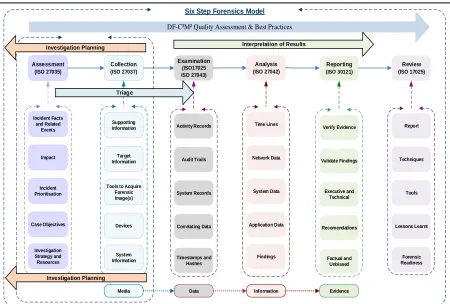
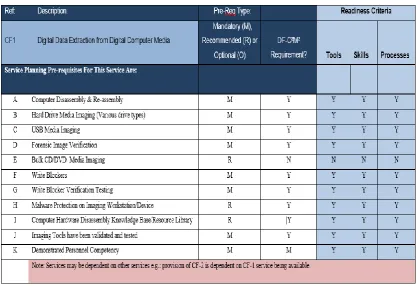
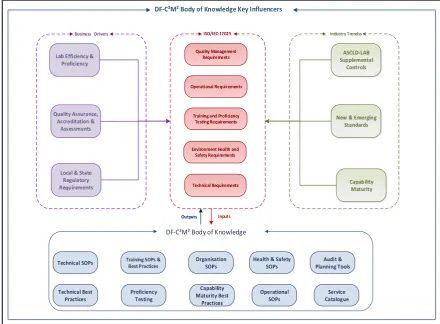
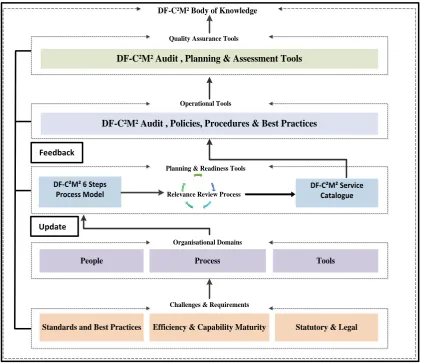
DF-C²M²
A Comprehensive Capability Maturity Model
for Digital Forensics Organisations
Ebrahim Hamad Salem Al Hanaee
MSc (Distinction) Information Technology (Zayed University, UAE, 2011)
MSc (Distinction) Computer Based Information System (Sunderland University, UK, 2000)
Computing Department
Lancaster University
United Kingdom
Submitted for the Degree of
Doctor of Philosophy
i
Declaration
I declare that this thesis has been written by myself, and the work reported herein is my own account of my research. The work reported in this thesis has not been previously submitted in substantially the same form for the award of a higher degree elsewhere.
ii
Acknowledgements
My first and foremost thanks and praises are due to Allah (God) Almighty who has helped me and provided me with faith, patience and commitment to complete this research.
I would like to express my sincere gratitude to my supervisor, Prof. Awais Rashid, for his unfailing support, encouragement and willingness to provide constructive feedback on my ideas – I could not have completed this thesis without him.
Special admiration and gratitude are due to my parents, wife, brothers and sisters whose prayers, love, care, patience, support and encouragement have always enabled me to perform to the best of my abilities.
iii
Abstract
The field of digital forensics has grown from an obscure area of interest amongst computer enthusiasts to become an emerging forensic scientific discipline of great significance in criminal investigations and civil litigations across the globe. The majority of digital forensic laboratories today are faced with ever-increasing legal and regulatory demands to meet internationally accepted rules regarding the admissibility of digital evidence, as well as being faced with various pending regulatory mandates requiring international accreditation of digital forensic facilities. These two major requirements, coupled with ever-increasing case backlogs and limited resources, have left many digital forensic labs to confront what initially seems to be an ‘insurmountable challenge’ to manage their caseloads, implement new regulatory requirements, and still find ways to improve overall efficiency and effectiveness.
Based on the Capability Maturity Model (CMM) paradigms, the Digital Forensics - Comprehensive Capability Maturity Model (DF-C²M²) was born out of the findings of this research and the scientific gap that exists in the current digital forensics standards, best practices, frameworks, and models. This model has been developed through consultations and interviews with digital forensics experts.
The DF-C²M² enables the measurement of maturity along three key organisational dimensions: people, processes, and tools, while enabling such an assessment to be tailored to a particular type of organisation, e.g., law enforcement or non-law enforcement. The inclusion of capability maturity across multiple key domains is designed to provide a more comprehensive capability maturity assessment of an organisation – across its three inter-dependants ‘influencer’ domains, when compared with other capability maturity models that focus on only specific domains such as processes, or on a sub-element of a domain.
The model has been tested and evaluated as a management support and Capability Maturity Assessment system within two labs. One of the labs is an ISO 17025 accredited digital forensic lab within a law enforcement agency, while the other one is a non-accredited lab within an academic institute.
The model will also serve as a stepping stone towards a timelier, more effective, and more efficient means of developing and implementing digital forensic standards and best practices moving forward.
iv
Table of Contents
Declaration ... i
Acknowledgements ... ii
Abstract ... iii
List of Tables ... xi
List of Figures ... xiii
CHAPTER 1: INTRODUCTION TO THE RESEARCH ... 1
1. 0 INTRODUCTION ... 1
1.1 BACKGROUND ... 5
1.1.1 General ISO Standard Limitations as they apply to Digital Forensics ... 6
1.1.2 Existing Digital Forensics Models ... 7
1.2 PROPOSED APPROACH ... 10
1.3 NOVEL ASPECTS ... 13
1.4 RESEARCH METHODOLOGY ... 14
1.4.1 Problem Identification and Motivation ... 14
1.4.2 Research Questions ... 15
1.4.3 Research Steps ... 16
1.5 OUTLINE OF THE THESIS ... 18
1.6 SUMMARY ... 19
CHAPTER 2: LITERATURE REVIEW ... 20
2.0 INTRODUCTION ... 20
2.1 DIGITAL FORENSIC STANDARDS & BEST PRACTISES ... 20
2.1.1 Digital Evidence & Forensics Best Practices Background ... 20
2.1.2 Handling and Preserving Digital Evidence: Standards and Guidelines ... 21
2.1.3 APCO Good Practice Guide... 23
2.1.4 The NIJ Guide ... 24
2.1.5 ADAM Principles ... 25
v
2.1.7 ISO/IEC 27037:2012 - Guidelines for Identification, Collection, Acquisition, and
Preservation of Digital Evidence ... 26
2.1.8 ISO 27041 Guidance on Assuring Suitability and Adequacy of Investigative Methods ... 27
2.1.9 ISO 27042 Guidance on the Analysis and Interpretation of Digital Evidence .... 27
2.1.10 ISO 27037, 27041, and 27042 Summary of Limitations ... 28
2.2 REVIEW OF DIGITAL FORENSIC MODELS ... 30
2.2.1 Kruse and Heiser ... 31
2.2.2 The US-DOJ (Forensic Process Model) ... 32
2.2.3 Casey (Yale) Model ... 33
2.2.4 Digital Forensic Research Workshop (DFRW -2001) ... 34
2.2.5 Computer Forensics Capability Maturity Model (CF-CMM) ... 35
2.2.6 Digital Investigations Capability Maturity Model (DI-CMM) ... 38
2.2.7 Common Limitations of Digital Forensic Models ... 39
2.3 ISO 17025 - UNDERSTANDING THE ORGANISATION, QUALITY, AND ISO 17025 RELATIONSHIP ... 40
2.3.1 ISO 17025 – People: Training, Certification, and Accreditation ... 41
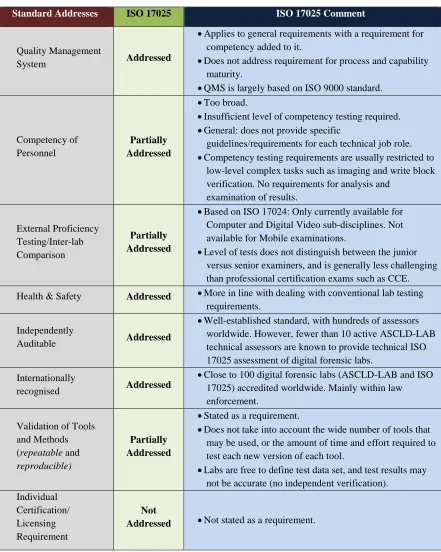
2.3.2 Summary of ISO 17025 Limitations ... 52
2.4 CAPABILITY MATURITY ... 57
2.4.1 Performance, Process Improvement, and Maturity ... 57
2.4.2 Quality and Capability Maturity Inter-Relationship ... 59
2.4.3 Critique of Capability Maturity Models ... 59
2.4.4 Capability Maturity Summary ... 65
vi
CHAPTER 3: DF-C²M² - PRACTITIONERS SURVEY, INTERVIEWS and
WORKSHOPS ... 70
3.0 INTRODUCTION ... 70
3.1 ONLINE SURVEY OF PRACTITIONERS ... 70
3.2 PRACTITIONER INTERVIEWS ON CHALLENGES, AND POSSIBLE SOLUTIONS ... 73
3.3 PARTICIPANT LABS DF-C²M² INTRODUCTORY WORKSHOPS ... 76
3.4 DF-C²M² - INTERVIEW AND QUESTIONNAIRES ... 78
3.5 LAB ASSESSMENTS ... 79
CHAPTER 4: DF-C²M² - PARTICIPATORY DESIGN ... 80
4.0 – INTRODUCTION ... 80
4.1 DESIGN AND DEVELOPMENT USING PARTICIPATORY DESIGN ... 81
4.1.1 Demonstration ... 82
4.1.2 The Assessment Process ... 82
4.1.3 Evaluation and Communication ... 83
4.2 PARTICIPATORY DESIGN WITHIN DSRP DESIGN STAGES ... 84
4.2.1 DF-C²M² Introductory Workshops and Reviews ... 84
4.2.2 DF-C²M² Assessment Tool Review Workshop ... 84
4.2.3 DF-C²M² Assessment Tool – Process and Objectives ... 85
4.3 PARTICIPANT EVALUATIONS OF THE MODEL ... 89
4.4 SUMMARY ... 89
CHAPTER 5: DF-C²M² - THE DIGITAL FORENSICS - COMPREHENSIVE CAPABILITY MATURITY MODEL ... 90
5.0 INTRODUCTION ... 90
5.1 ADDRESSING RESEARCH QUESTIONS ... 90
5.1.1 Key Phases of Research Using the DSRP ... 92
5.2 DF-C²M² DESIGN CONSIDERATIONS ... 93
5.3 TOTAL QUALITY MANAGEMENT (TQM) APPROACH TO ASSESSING THE DF-C²M² KEY ELEMENTS ... 94
vii
5.4.1 DF-C²M² Six Steps Forensic Process Model ... 99
5.5 DF-C²M² PLANNING AND ASSESSMENT USING THE DF-C²M² SERVICE CATALOGUE ... 105
5.5.1 DF-C²M² Service Catalogue Categories of Service ... 107
5.5.2 Understanding the DF-C²M² Service Catalogue - Impact vs. Complexity Ratings: ... 112
5.5.3 Service Catalogue Planning Process - Priority Levels ... 118
5.5.4. DF-C²M² Planning Process – Identifying Service Prerequisites ... 119
5.6 DF-C²M² - PEOPLE DOMAIN ... 121
5.6.1 DF-C²M² People Domain Outputs ... 125
5.7 DF-C²M² - TOOLS DOMAIN ... 132
5.7.1 DF-C²M² Tools Domain Outputs ... 134
5.7.2 Df-C²M² – The Body of Knowledge ... 135
5.8 SUMMARY ... 142
CHAPTER 6: DF-C²M²: DEVELOPMENT, ASSESSMENT TOOL & BODY OF KNOWLEDGE ... 143
6.0 INTRODUCTION ... 143
6.1 THE DF-C²M² BODY OF KNOWLEDGE ... 145
6.1.1 The Body of Knowledge Key Categories are: ... 146
6.2 ASSESSING DIGITAL FORENSICS CAPABILITY MATURITY VIA THE DF-C²M² ASSESSMENT TOOL ... 156
6.3 THE DF-C²M² ASSESSMENT TOOL ... 158
6.3.1 Introducing the DF-C²M² Assessment and Planning Tool ... 158
6.3.2 Key Maturity Levels ... 163
6.4 CONDUCTING THE READINESS ASSESSMENT ... 164
6.4.1 DF-C²M² and Achieving ISO 17025 Accreditation ... 169
6.5 DF-C²M² PEOPLE DOMAIN - ASSESSMENT TOOL ... 170
6.5.1 Assessing Competency of Digital Forensics Personnel ... 170
6.5.2 Assessing Competency of Cybercrime Investigation Personnel ... 175
viii
6.6. DF-C²M² PROCESS DOMAIN - ASSESSMENT TOOL... 181
6.6.1 Assessment Criteria for Use and Conformance with Best Practices ... 181
6.7 DF-C²M² TOOLS - ASSESSMENT TOOL ... 184
6.8 SUMMARY ... 188
CHAPTER 7: DF-C²M² - APPLIED ASSESSMENT AND EVALUATION RESULTS ... 190
7.0 INTRODUCTION ... 190
7.1 BACKGROUND ... 190
7.2 CONDUCTING AN ASSESSMENT USING DF-C²M² ASSESSMENT PROCESS .. 191
7.2.1 Guidelines for the DF-C²M² Readiness Assessment ... 192
7.3 UNDERSTANDING THE DF-C²M² ASSESSMENT PROCESS KEY ELEMENTS . 193 7.3.1 Review Organisation’s Service Offerings vs. the DF-C²M² Service Catalogue 193 7.3.2 Addressing Organisational Differences in the DF-C²M² for (Law Enforcement, Non-Law Enforcement) ... 196
7.3.3 DF-C²M² Reporting and Assessment Results ... 198
7.4 DF-C²M² ASSESSMENTS OF PARTICIPATING LABS... 200
7.4.1 Lab #1 Background ... 201
7.4.2 Lab #2 Background ... 202
7.4.3 DF-C²M² Lab Assessment and Feedback Process Outline ... 203
7.5 DF-C²M² LAB ASSESSMENTS ... 210
7.5.1 Summary of Findings and Observations – Combined Labs ... 210
7.5.2 Assessment Findings – Six Steps Model - Forensic Readiness ... 215
7.6 DF-C²M² ASSESSMENT OF THE PEOPLE DOMAIN - ASSESSING COMPETENCY OF DIGITAL FORENSICS PERSONNEL ... 234
7.6.1 People Domain - Lab Assessment and Findings using DF-C²M² ... 235
7.6.2 Digital Forensic Engineer Lab #1 – Sample Summary Report & Comments .... 240
7.6.3 Forensic Examiner - Sample Summary Report & Comments Lab #1 ... 244
7.6.4 People Domain Future Improvement ... 245
7.7 DF-C²M² ASSESSMENT OF THE PROCESS DOMAIN ... 247
ix
7.7.2 Process Domain - Health & Safety Assessment ... 252
7.7.3 Process Domain - Training Assessment ... 253
7.7.4 Process Domain – Lab Operations Assessment ... 253
7.7.5 Process Domain – Technical Processes Assessment... 254
7.7.6 Overall (Policies and Procedures) Assessment Summary – Lab #1 ... 254
7.7.7 Process Domain – Best Practices Assessment ... 254
7.8 TOOLS DOMAIN - ASSESSMENT OF VALIDATION PROCESSES FOR TOOLS 255 7.9 LABS ASSESSMENT SUMMARY AND RECOMMENDATIONS ... 260
7.9.1 Lab #1 ... 260
7.9.2 Lab #2 ... 262
7.10 DF-C²M² EVALUATION FEEDBACK ... 264
7.11 DF-C²M² STRENGTHS AND WEAKNESSES ... 267
7.12 SUMMARY ... 270
CHAPTER 8: CONCLUSION ... 271
8.0 INTRODUCTION ... 271
8.1 DF-C²M² AIMS AND OBJECTIVES... 271
8.2 MODULARITY & DESIGN GOALS ... 275
8.3 DF-C²M² EVALUATION ... 276
8.3.1 DF-C²M² Key Findings ... 278
8.3.2 Limitations and Lessons Learnt ... 283
8.3.2 Areas for Improvement ... 287
8.4 DF-C²M² FUTURE DIRECTIONS ... 288
x
APPENDIX A: EVALUATION FORM DEMOGRAPHIC DATA COLLECTED ... 296
APPENDIX B: PARTICIPANT CONSENT FORM ... 298
APPENDIX C: ONLINE SURVEY EXTRACT FINDINGS ... 299
APPENDIX D: EXTRACT OF INTERVIEW – LAB CHALLENGES ... 332
APPENDIX E: SAMPLE OF ASSESSMENT TOOL WORKSHEETS ... 333
APPENDIX F: DF-C²M² BODY OF KNOWLEDGE SAMPLE WORKFLOWS ... 344
APPENDIX G: EVALUATION FORMS AND FEEDBACK ... 351
APPENDIX H: CFTT /NIST SPECIFICATION DEVELOPMENT PROCESS ... 363
APPENDIX I: ETHICS APPROVAL ... 364
APPENDIX J: INDUSTRY BEST PRACTICES ... 366
xi
List of Tables
Table 1: The ISO 17025 limitations ... 52
Table 2: Process Maturity Ratings ... 64
Table 3: Mapping and quantifying digital forensics challenges ... 67
Table 4: Summary of participating labs ... 73
Table 5: Number of personnel by function in participating labs ... 73
Table 6: Assessment, audit, and interview participants ... 74
Table 7: Practitioner Involvement ... 87
Table 8: Sample service catalogue service table summary ratings ... 110
Table 9: Example DF-C²M² service catalogue – service description ... 111
Table 10: Sample service catalogue planning view for one service... 120
Table 11: Skill matrix rating – aligned to P-CMM ... 127
Table 12: Sample trainee skills matrix extract ... 128
Table 13: BoK key elements and their creation ... 138
Table 14: DF-C²M² body of knowledge - people, processes, and tools categories ... 147
Table 15: Sample extracts of LE readiness assessment criteria ... 161
Table 16: Process Maturity Ratings Matrix ... 163
Table 17: Process maturity level guide (Srinivasan & Murthy) ... 166
Table 18: DF-C²M² Tool: maturity level assessment ... 168
Table 19: Digital forensic engineer and examiner competency test areas ... 171
Table 20: DF-C²M² sample competency test criteria for digital forensic examiners ... 172
Table 21: DF-C²M² sample competency test criteria for digital forensic specialists ... 173
Table 22: DF-C²M² sample competency test criteria for cybercrime research analysts ... 176
Table 23: DF-C²M² cybercrime investigations – cyber security investigations ... 177
Table 24: Conformance with general best practices ... 182
Table 25: Conformance with technical speciality areas best practices ... 183
Table 26: Conformance with local legal and regulatory requirements ... 183
Table 27: Compliance criteria for validation of tools ... 185
Table 28: Compliance criteria for validation of methods ... 186
Table 29: Validation of tools - general ratings ... 187
Table 30: DF-C²M² review and assessment key milestones ... 203
Table 31: Summary view of service per lab as per DF-C²M² service catalogue categories ... 206
Table 32: DF-C²M² assessment ratings lab #1: service catalogue – computer forensics ... 208
Table 33: DF-C²M² assessment ratings for lab #1: service catalogue – mobile forensics ... 209
Table 34: Six steps model – 1. Assessment phase – lab #1 ... 216
xii
Table 36: Six steps model – 3. Examination phase – lab #1 ... 222
Table 37: Six steps model – 4. Analysis phase – lab #1 ... 225
Table 38: Six steps model – 5. Reporting phase – lab #1 ... 227
Table 39: Six steps model – 6. Review phase – lab #1 ... 229
Table 40: Overall DF-C²M² six steps model readiness process maturity assessment results – lab #1 vs. lab #2. ... 233
Table 41: People domain - digital forensic engineer – lab #1 ... 241
Table 42: Process domain: quality management system – lab #1 ... 249
Table 43: Tools domain - validation of tools assessment – Lab #1 ... 257
Table 44: Tools domain – supplemental standards used (international and national) ... 258
Table 45: Tools domain - validation of methods used ... 259
Table 46: Mapping digital forensic standards requirements to the DF-C²M² ... 280
xiii
List of Figures
Figure 1: DF-C²M² key elements ... 10
Figure 2: DF-C²M² key research steps ... 92
Figure 3: DF-C²M² domains and capability maturity key elements, challenges and objectives – TQM analysis ... 95
Figure 4: Six steps digital forensic lifecycle model ... 102
Figure 5: ISO 27000 series planned inter-relationships ... 103
Figure 6: A mapping of planned and future ISO standards within the DF-C²M six steps process model ... 104
Figure 7: Sample DF-C²M² impact vs. complexity planning ‘Magic Quadrant’ ... 117
Figure 8: TQM analysis of DF-C²M² people domain challenges ... 121
Figure 9: Sample skills matrix mapping: actual vs. required skills level ... 129
Figure 10: Skills comparison per job role ... 129
Figure 11: Process threads in the people CMM (source: P-CMM SEI) ... 130
Figure 12: TQM analysis of DF-C²M² tools domain challenges ... 132
Figure 13: DF-C²M² body of knowledge key influencers ... 136
Figure 14: DF-C²M² components design inter-relationship ... 137
Figure 15: Relating the C²M² six steps digital forensic (case Lifecycle) model to the DF-C²M² laboratory process overview ... 155
Figure 16: DF-C²M² Tool - organisation type - start menu ... 159
Figure 17: DF-C²M² assessment tool structure ... 165
Figure 18: Sample DF-C²M² assessment/compliance results dashboard ... 167
Figure 19: DF-C²M² Tool: readiness assessment results – six Steps process model - current vs. required ... 168
Figure 20: DF-C²M² Tool: readiness assessment – Six Steps process rating vs. assumed industry benchmark ... 169
Figure 21: DF-C²M² sample digital forensic training & career development progression plan 174 Figure 22: DF-C²M² sample cybercrime investigation specialist ratings ... 178
Figure 23: DF-C²M² cybercrime investigator career progression and training Guide ... 179
Figure 24: DF-C²M² Tool: maturity level assessment ... 198
Figure 25: DF-C²M² Tool: readiness assessment results - current vs. required ... 199
Figure 26: DF-C²M² Tool: readiness assessment – rating vs. industry benchmark ... 199
Figure 27: Lab #2 – Six steps model actual vs. required ... 232
1
CHAPTER 1: INTRODUCTION TO THE RESEARCH
1. 0 INTRODUCTION
Across the developed world, in instances where credible, irrefutable digital evidence is produced by the prosecution, it is not uncommon for defence attorneys to try to attack the credibility of the digital forensics examiner, their digital forensic laboratory processes, and their technical records, reports, and any related conclusions (Krause, 2010). ‘If doubt is cast on the initial collection and management of evidence, output from the other phases is moot’ (Tipton & Krause, 2007) as the evidence derived from such processes may later be challenged or questioned as being non-irrefutable by the courts and could adversely affect the outcomes of both civil and criminal cases that depend on such evidence.
In 2001 at the DFRW conference titled: A Roadmap for Digital Forensics – Big Computer Forensic Challenges”, Dr Eugene Spafford identified a gap that Academic research in support of government and commercial endeavours often focuses on technological results. “Research must address challenges in the procedural, social, and legal realms as well if we hope to craft solutions that begin to fully “heal” rather than constantly “treat” our digital ills” (Spafford, 2001 ). Spafford went on to identify what he believed to be the key components of a more holistic approach to research related to digital forensics.
Spafford listed the major challenges as being; keeping up with technology advances, the need for standardised analytical procedures and standardised terminologies within digital forensics, developing tools and methods that comply with legal/regulatory requirements, training and more intuitive tools to help address skills deficiencies. Spafford also called for greater accuracy and more reliability in Digital Forensics tools and methods.
2
The drive towards ISO 17025 accreditation has largely been motivated by regulatory requirements. Within the European Union Article 12 of Regulation (EC) No 882/2004 (EU Parliament, 2004), to be designated as a ‘recognised laboratory’, laboratories have to be accredited in accordance with EN ISO/IEC 17025 on general requirements for the competence of testing and calibration laboratories. Additionally, the EU states that there is a need to ‘… define commonly accepted minimum forensic science standards for the collection, processing, use and delivery of forensic data relating inter alia to data …., and to equip the Union to meet the new challenges that it is facing in the field of high tech and cybercrime’ (EU PARLIAMENT, 2004). Consequently, in the absence of any defined accreditation standards for digital forensics labs, ISO 17025 and similar standards are being adopted (rather than adapted) to address the need for standardisation and accreditation along with some well-intended best practices and country-specific legal requirements (where applicable). International standards such as ISO 17025 may be viewed by some organisations as a panacea to solving digital forensics process maturity, and improvement processes, however, their suitability and practicalities (shortcomings and pitfalls) as they are applied specifically to the discipline of digital forensics are often overlooked due the lack of a viable, reliable alternative.
3
ISO 17025 was designed as a quality management standard for testing and calibration laboratories and includes quality management, and competency and proficiency testing of personnel as its key elements. ISO 17025 is best suited to the testing of physical artefacts, where the results are generally empirical and categorised as either being positive or negative, and the testing methods for each type of test and artefact are very well-defined, subject to some variations, and not subject to multiple possible interpretations of the results. In contrast, Digital Forensics is a comparatively new and ever-developing scientific field with a variety of unique nuances, tools, methods, and means of interpretation of results where the goals of digital forensic examinations are often performed to help prove or disprove a hypothesis, and the findings may be subject to multiple interpretations.
In the absence of a bespoke alternative to address quality management, and competency and proficiency testing within digital forensic laboratories, ISO 17025 has been adopted as the ‘accepted’ or ‘de facto’ standard for digital forensic laboratories seeking international accreditation.
In parallel, international efforts towards global unification of cybercrime laws and conventions have made significant progress to date within the European Union (EU) and Gulf Cooperating Countries (GCC). However, trans-national criminal investigations and successful prosecutions would be ineffective without a framework of an internationally accepted digital forensic framework of standards (covering digital evidence handling, examination, analysis, and evidence exchange) that could easily be implemented across national boundaries and that would address the practicality, cost, and timeliness (relevance) requirements that law enforcement agencies are requesting.
The first international standards related to digital forensics such as ISO 27037:2012 and various draft international standards related to digital forensics analysis may in the future assist in addressing some of the areas for standardisation, but will still fall short of providing a more holistic and modular (extensible) framework that enables organisations to address their current and future requirements for an efficient, quality-driven digital forensic lab.
4
through which a digital forensic lab can effectively manage its required standards and regulatory requirements such as digital evidence handling, analysis of digital evidence, and business process-related frameworks such as business continuity. The ability to integrate all of these requirements into a unified framework, rather than a collection of separately managed ones, will enable more effective utilisation of resources, promote a better understanding of process inter-relationships, and allow the organisation to measure its capability across all domains and standards within a unified management framework.
Furthermore, whilst ISO standards (in general) are viewed as quality management improvements that will, in theory, lead to greater business efficiency and thereby maturity, none of the existing ISO standards attempt to address the pressing business and operational needs for establishing, measuring, and improving digital forensics capability maturity.
Although the perceived benefits of ISO accreditation may vary between labs, decision-makers, and practitioners, organisations today are evaluating how to streamline processes to achieve optimal process efficiency and throughput. These preceding items are the key factors that determine the long-term operational costs, case backlogs, quality improvement, capacity building, and overall customer satisfaction for these labs. ISO 17025 accreditation is often a secondary business driver or requirement for many digital forensic laboratories.
5
1.1 BACKGROUND
Of the many digital forensic models and frameworks developed to date, the majority of these have focussed on investigative processes, tools, or methods, and none provide digital forensic labs with a simple and yet rigorous mechanism to evaluate their process effectiveness or capabilities and plan a roadmap to improve in an easy and effective manner.
Digital forensic labs are facing a plethora of challenges related to technology changes, the constant need for skills to be updated and re-assessed, a mix of best practices, ad-hoc methods, and standards to follow.
“Digital forensic investigations are becoming more complex due to the increasing size of digital storage… new approaches for managing the case details of a digital forensics investigation must be developed” (Dampier T. a., 2010). In 2006 at the DFRWS conference, in the presentation “Challenges in Digital Forensics” (Lindsey, 2006) FBI Director Ted Lindsey identified several challenges in Digital Forensics. The key challenges presented by Lindsey related primarily to rapidly changing and new technologies, increased volume of evidence (due to increased device storage capacity, virtualization and the use of encryption and rise in anti-forensic (tools). These challenges could be summarised as “technological challenges” facing digital forensic investigations. Ironically, the majority of the challenges and concerns first voiced over a decade ago are still relevant and applicable to challenges today in digital forensics.
The result is that digital forensic labs are mostly left with costly piecemeal efforts in order to try and address their pressing legal, regulatory, technical, and business requirements independently with little opportunity for assessing their current posture and measuring their conformance with requirements, and lacking the ability to assess their maturity levels across all aspects of their business operations.
Presently, no framework/model exists that would allow a lab to assess its current posture regarding:
Regulatory and standards compliance,
6 What is it doing well?
What is it not ineffectively? and
Plan a roadmap to effectively address present issues.
In view of the vast array of challenges and backlogs faced by digital forensics laboratories, it can be argued that digital forensics capability maturity is now a necessary, overlooked aspect of digital forensics quality management that has been identified as an essential business and quality assurance requirement that merits further research and effort to establish a sustainable model and framework for implementing and managing it. Digital forensics capability maturity can be applied to a multitude of organisations, regardless of size, regulatory requirements, scope of services, and accreditation status.
1.1.1 General ISO Standard Limitations as they apply to Digital Forensics
ISO 17025 is a general standard of quality assurance for testing and calibration laboratories and as such, ISO 17025 does not consider various characteristics of digital forensics testing (examinations) including:
As a standard designed to test and calibrate laboratories, ISO 17025 has proven to be good at helping enforce a quality management system and basic competency management system within digital forensic labs, but it may be viewed by some as being costly (time and resources) to implement and maintain within a digital forensic laboratory in view of the additional processes and related overheads that would need to be implemented to be compliant. Requirements such as the need within ISO 17025 to define the documented test
methods used for a particular test (examination) within the test report and any measures of uncertainty simply do not easily translate to the discipline of digital forensics.
7
needs to be done to adapt ISO 17025 to what is practical and realistic for digital forensics.
Although ISO 17025 requires annual 1 proficiency testing of examiners for all types of tests conducted within a lab’s scope of accreditation - no external proficiency tests existed for mobile phone forensics until recently.
While ISO 17025 provides a foundation and a minimum set of requirements as a starting point that can be applied to digital forensic labs, it was not designed to address the vast majority of business, technical, and efficiency challenges of an active digital forensic lab. ISO 17025 does not factor in capability maturity requirements across the people, process and tools requirements, nor is it well-suited cater to for technical differences in processes, and interpretations of data when comparing between traditional scientific versus digital forensic examinations processes.
ISO 17025 is not a panacea to solving digital forensic standards, maturity and capability issues that it is sometimes misinterpreted to be, and more needs to be done to augment the current applied standards and enable organisations to effectively tackle and manage the capability maturity, and compliance issues that they face today.
1.1.2 Existing Digital Forensics Models
The majority of academic literature related to digital forensics generally focuses on newer investigative processes, steps, and tools, and does not address the issues of measuring and managing compliance, or decision support, nor does it address the need for capability maturity and methods for capability maturity assessments.
Within the past decade, several digital forensic investigation models have been published (Agarwal, Saurabh, & Gupta, 2011). Many of these models have been designed and proposed to address process methods and alternatives; these include:
Kruse and Heiser Model (Heiser, 2002).
Department of Justice (USDOJ) - Forensic Process Model (Justice U. D., 2004). Casey’s (Yale) Model (Casey, 2004).
DFRWS framework meta-model (DFRW, 2001). The Ciardhuain model (Ciardhuain, 2004).
8
Each of the above models defined a number of unique steps or stages related to digital evidence handling, examination, and storage. Some extended their model to cover elements of investigation, planning, review, and reporting, but none extended their models to look at issues related to capability maturity, efficiency, integration with international standards, or quality management processes. Each focussed on a specific technical aspect related to digital forensics, with none of the models or frameworks assessing digital forensics from a holistic quality management and technical perspective. Addressing technical issues (tools) in digital forensic models, without addressing non-technical issues related to other key domains such as People, and Processes including capability maturity, standards, and regulatory requirements seems to be a common pitfall of many of the digital forensic models and frameworks proposed to date.
The vast majority of research and development within the field of digital forensics has focussed on developments in technology. These research projects have tended to focus largely on addressing how to best extract and examine evidence from new technologies, or on training and certification. Very little, if any, of the current research has begun to look at efficiency, quality, integration with standards, shortcomings in present standards, and capability maturity within the scope of digital forensics – nor how to effectively measure compliance within the model across all elements (people, process and tools), in conjunction with related standards and best practices.
Two digital forensics-related models that explore, to some degree, the requirements for capability maturity are the Computer Forensics Capability Maturity Model (CF-CMM) (US Patent No. 2006/0069540 A1, 2006) and the Digital Investigations Capability Maturity Model (DI-CMM) (Kerrigan, 2013).
9
Essentially, the CF-CMM presents a method to categorise processes used internally within an organisation by looking at their forensic architecture and processes. It is designed for use within internal organisations that provide forensic services to internal customers and systems, and could be considered to be part of an organisation’s internal computer forensics readiness assessment. CF-CMM does not address other key aspects of digital forensics such as people, tools, and compliance and integration with standards and regulatory requirements.
The Digital Investigations Capability Maturity Model (DI-CMM) (Kerrigan, 2013) focuses, in contrast, on five generic groupings of tasks associated with digital investigations; namely: Pre-process, Acquisition and Preservation, Analysis, Presentation, and Post-process. The DI-CMM focusses on the broader subject of digital investigations from start (Pre-process) to completion (Post-process), an element of which (Analysis) may include examination of digital forensic artefacts, but it is not geared towards focussing exclusively on the specialist area of digital forensics or digital forensic labs.
Although the DI-CMM includes general overviews of three key elements – People, Process and Tools – it does not address the capability maturity requirements of each, nor does it provide any tools to measure and address any areas of deficiency within the organisation, or provide recommended approaches or plans for addressing any deficiencies.
10
1.2 PROPOSED APPROACH
The scope of the research was to examine three key organisational components of a digital forensic lab with the view of determining if the requirements for each area were adequately addressed at present. Areas for improvement, and tools to enable assessments and improvement in each key area were also identified during on-site assessments and reviews of the existing accredited lab. The three key organisational areas that were included within the scope of the research are: People, Process, and Tools.
This research proposes a comprehensive digital forensics capability maturity assessment and decision support model that addresses three key organisational sub-domains: People, Tools, and Process as shown in Figure 1, and integrates with existing digital forensics quality management standards ISO 17025 and best practices requirements.
Figure 1: DF-C²M² key elements
The Digital Forensics - Comprehensive Capability Maturity Model (DF-C²M²) provides a method to define, assess, and measure maturity levels and ISO 17025 compliance across the digital forensic lab, and a feedback and rating system to allow organisations to plan for improvement and (collectively) to benchmark their maturity level against other benchmarks.
11
The model addresses the capability maturity and quality management requirements of three key organisational domains: People, Process, and Tools, and their inter-relationships.
The DF-C²M² model is supported by a tool that enables an organisation to: Assess and measure its digital forensics capability and its maturity, Plan digital forensic services pertaining to People, Tools, and Processes,
Quickly utilise a knowledge base and repository of procedures, policies, forms, and validated test methods,
Determine skills requirements and personnel skills profiles, Implement training and corrective actions, and
Plan and monitor improvements.
The DF-C²M² tool provides a menu to allow the assessor to tailor assessment the requirements to suit a particular organisation type, e.g. a typical digital forensics laboratory as supported under ISO 17025/ASCLD-LAB scopes of accreditation within law enforcement (LE), and non-LE organisations, etc. For each organisation type, a Service Catalogue of planned or proposed services is provided. The idea for a Service Catalogue that lists services available and limitations was derived from a previous project, where as Director of a Police Station, the researcher had created a service catalogue was created for the public detailing services available to them and the requirements to use each service. For each the prerequisites for the delivery of each service were defined together with any applicable limitations are service level targets.
12
The DF-C²M² Service Catalogue covers a broad range of digital forensic-related services in several categories, namely:
Computer Forensics, Mobile Device Forensics, Digital Audio Forensics, Digital Video Forensics, Live and Network Forensics, Cybercrime Analysis services, and
Digital Evidence Handling Support services.
These categories of services cover the vast majority of services that the typical law enforcement digital forensics labs or units may be required to provide to the customer base. From a strategy and planning perspective, the Service Catalogue may also serve as a roadmap of which services a digital forensics lab would like to implement over e.g. a three-year plan, and identify which services from the list are essential to the unit’s goals, objectives, and success, and which services should be considered as optional. Based on the Service Catalogue, an organisation would be able to more effectively design a roadmap for implementing these services.
Furthermore, by identifying the process, tools, and skills requirements for each service, the organisation can more accurately determine the costs for implementing such services and the relative value of each planned service, and factor in the most pressing demands and requirements from the customer base.
13
1.3 NOVEL ASPECTS
The main contribution of this thesis is to develop a comprehensive digital forensics model (DF-C²M²) based on the Capability Maturity Model (CMM) paradigm. In addressing gaps within the current school of thought, and standards and frameworks related to digital forensics, the model enables the measurement of the level of maturity of an organisation with regards to digital forensics techniques, practices, tools, and processes.
The novel aspects of the DF - C²M² model are as follows:
The model would enable measuring maturity along three key organisational dimensions- people, processes, and tools - while enabling such an assessment to be tailored to a particular type of organisation, e.g., law enforcement (in support of criminal investigations) or non-law enforcement (in support of civil litigations and information security incident response) setting. Both law enforcement and non-law enforcement digital forensic laboratories would typically be geared towards different rules of evidence (Civil versus Criminal), and have their internal processes and designed to cater for such.
The model would provide a management support and evaluation tool supplemented by a knowledge base of standard operating procedures, workflows, tests, and technical guides, which would enable organisations to measure their digital forensics capability maturity and identify roadmaps for improvement.
The knowledge base includes a detailed services planning tool referred to as the Service Catalogue that would enable organisations to examine which services of the fifty-four defined services it needs to provide, how to prioritise implementation of the services, and understand the underlying prerequisite requirements (People, Process, and Tools) in order to effectively plan, enhance, or deliver the various services identified.
The model provides fully functional, ready-to-use planning and assessment tools, enabling digital forensic laboratories to implement the core accreditation requirements equivalent to ISO 17025 but adapted and designed to specifically suit the realm of digital forensics, with the benefit of industry practitioners’ acceptance and shared best practices.
14
1.4 RESEARCH METHODOLOGY
Due to the novel aspects of this research, and the need to conduct analysis of the use of existing standards and processes, the Design Science Research Process (DSRP) (Peffers, et al., 2006) was selected as the core research methodology. DSRP was found to be a more pragmatic research method and lends itself easily to understanding and measuring performance-related topics from personnel to processes. The selection of Design Science rather than alternatives such as Requirements Engineering (Nuseibeh & Easterbrook, 2000) was made on the basis that it is particularly suited to the task of creating a new process model.
In keeping with the core research and design ethos of ‘by practitioners for practitioners’ or participatory design (Murphy & Hands, 2012), the goal of the research methods was rooted in a comprehensive online survey of digital forensics experts in private labs and in law enforcement agencies as well as direct interviews with such experts, and assessments of both accredited and non-accredited digital forensic laboratories. Furthermore, the model would also draw upon the author’s practical experience of working in digital forensics labs or settings involving digital forensics.
1.4.1 Problem Identification and Motivation
One of the main objectives of this research is to assess, evaluate, and design a comprehensive digital forensics model based on the Capability Maturity Model (CMM) paradigm, which would allow for establishing a mature profession in the area of digital forensics. The overall goal/objective is to improve the quality and maturity of digital forensic labs, through the integration of capability maturity with other pressing business and regulatory requirements in the form of tools and guides.
15
determine capability maturity. The proposed model will be based on international standards and best practices, a defined code of conduct, and legal and ethical requirements as a best practice framework, based on detailed research and analysis of what has been attempted so far in the leading countries in this field.
1.4.2 Research Questions
In order to achieve the research objective, the following main seven research questions needed to be answered:
1- Does the current system of accreditation of digital forensic labs fully address all the requirements of digital forensics as a scientific discipline, and are these accreditation requirements suitable to digital forensics?
a. Are they practical and therefore sustainable?
b. Do they contribute towards the overall improvement of the lab processes and help organisations to achieve operational efficiency and measure capability maturity?
c. Beyond accreditation, does the present standard governing body offer value (return on investment) to the participating digital forensics labs, and a more effective way to pool collective knowledge and best practices from participating labs and practitioners?
d. What gaps exist within the current standards used, and what are the key strengths? How can these strengths be utilised in any emerging standard or comprehensive model?
e. Are the main digital forensic sub-disciplines such as mobile forensics, digital video forensics, and digital audio forensics adequately addressed within the standard? If not, how could these be addressed?
f. What areas (People, Processes, and Tools) are not being adequately addressed within the prevailing standard?
2. What business drivers and challenges are increasingly affecting accredited labs in the goals to address the standard’s requirements, whilst still being pressured with finding a most effective way to address the organisations’ business drivers and constraints?
16
4. By consensus, what would digital forensic practitioners and lab managers of new and established labs want to help them to improve their efficiency, knowledge, and budget utilisation?
5. Are the current skills assessment, career development, and progression plans adequately defined within accredited labs? Are organisations able to effectively plan and measure their return on training investments?
6. Would better planning for forensic services and incident response allow for faster gains for organisations if they had the foresight and knowledge of the main services and their prerequisite requirements? Would this enable labs not currently accredited to be able to gain accreditation sooner and at a lower cost?
7. Can this new alternative model cater to both existing and newly founded digital forensics labs?
1.4.3 Research Steps
The key research phases as defined within DSRP were expanded upon to produce a more concise sequence of steps applied during the research as listed below:
1. An initial problem definition and identification. 2. Defining objectives of the research.
3. Research existing standards, models, and best practices generally used in Digital Forensic Laboratories.
4. Research requirements for accreditation under ISO 17025/ASCLD-LAB and perceive the challenges of attaining and maintaining accreditation.
5. Designing initial DF-C²M² tools, methods, processes and project plan for assessments and research.
6. Conduct interviews, assessments and consultations with participating digital forensic practitioners, managers, and investigators.
7. Analyse feedback and findings.
8. Perform Current State Assessment, and SWOT analysis of current offerings, benefits and challenges.
9. Design DF-C²M², revised assessment tools, workflows, knowledge base goals and criteria.
17
11.Conduct an audit/assessment of an existing ISO 17025 digital forensic accredited lab against DF-C²M² requirements. Discuss and review findings with participating lab.
12.Plan and implement updates to the accredited lab to bring it in-line with DF-C²M² requirements.
13.Solicit feedback from participating lab.
14.Incorporate changes/updates as may be required into DF-C²M².
At each stage of this research, an effort was made to address the initial research questions stated previously. At each stage of the analysis and solution design process for each of the three key domains, the following questions were posed:
1. What are the present requirements and constraints?
2. What are the present difficulties and challenges affecting each element? 3. How can these challenges best be solved or more effectively managed? 4. How can Capability Maturity be integrated into each element? If so how? 5. Is the proposed solution practical, and cost-effective? If not, how can it made
18
1.5 OUTLINE OF THE THESIS
Chapter 1: Introduction to the research, and objectives. It provides a brief summary of the digital forensics environment and highlights the motivating factors behind this research. The contribution this thesis intends to make to the field is stated, and the methodology that will be employed and the limitations of this research are presented.
Chapter 2: Will provide a literature review used for this research, including interviews and questionnaires used. It will cover a review of applicable standards in existence, gaps within present standards, integrating multiple related standards into a cohesive system, and a detailed review of ISO 17205 as applied to digital forensics labs will be presented.
Chapter 3: Will provide details on the role of practitioners during this survey. It will cover the methods practitioners were engaged, the level of detail, basic demographics, participants labs, and introduced the lab assessments conducted.
Chapter 4: Will provide information on the participatory design elements of this research and key stages where participatory design was used as a means to solicit input, feedback and suggested improvements and into which stages this feedback was later incorporated to within this research.
Chapter 5: Will define the assessment tools, methods, and criteria used for this research. It will examine the criteria used to evaluate the present standards, based on the research questions defined in Section 1.4.2. The key components and objectives of the DF-C²M² will be defined with an analysis of the advantages and drawbacks.
Chapter 6: This chapter, addressing design and development, will describe the processes used for the design of the DF-C²M² and justifications for the inclusion and the addition of key elements. It will look at each section/module within the DF-C²M² and describe how each module fits into the overall DF-C²M² framework, and the various design and review stages.
19
This chapter will demonstrate how the DF-C²M² was updated to include the requirements for cybercrime investigation units, using the same core principles and methods defined in the earlier version of the DF-C²M², and how ISO 27037 requirements could easily be incorporated, thus providing a demonstration of the expandability of the model, and how interrelated units such as digital forensics and cybercrime investigation can both benefit from shared standards and best practices within the DF-C²M² framework.
The DF-C²M² evaluation section will define the participating practitioners and labs, their involvement, methods of review, assessment, and discussions, and feedback and suggestions on improvement of the DF-C²M².
Chapter 8: Conclusion: This chapter will highlight the pros and cons of the proposed DF-C²M², its limitations, and how these could be addressed. It will also look at the viability of implementing the model on a national scale within a given country, based on workshops with key stakeholders and regulators within that sample country.
1.6 SUMMARY
20
CHAPTER 2: LITERATURE REVIEW
2.0 INTRODUCTION
This chapter provides a necessary background a n d review of existing process models related to digital forensics. It provides a current state assessment of present models against the background of the present state of the art, and a review of existing challenges or ‘knowledge of the state of the problem’ areas as defined within the primary research methodology used.
This chapter presents a literature review of key elements that relate to the People, Processes, and Tools aspects of the proposed new digital forensics model. This chapter will present and discuss the quality management versus capability maturity requirements of typical labs, and the role of ISO 17025. It will present and assess current digital forensics standards, best practices, models, and frameworks versus the present and envisaged future challenges that a majority of digital forensic labs would face. It assesses the completeness of each model, and how they address the People, Processes, and Tools aspects of an organisation.
2.1 DIGITAL FORENSIC STANDARDS & BEST PRACTISES
2.1.1 Digital Evidence & Forensics Best Practices Background
Digital evidence or electronic evidence may be defined as ‘any probative information stored or transmitted in digital form that a party to a court case may use at trial’(Casey, Eoghan, 2004). Digital evidence encompasses any and all digital data that can establish that a crime has been committed or can provide a link between a crime and its victim or a crime and its perpetrator (Kozushko, 2003).
The most prevalent or most frequently referenced guides on digital evidence handling to date have been the Association of Chief Police Officers (APCO)’s Good Practice Guide for Computer-Based Electronic Evidence (APCO, 2013), and the Forensic Examination of Digital Evidence: A Guide for Law Enforcement (NIST, 2004).
21
traced back at least as far as the 18th century. In Omychund v Barker (1745) 1 Atk, 21, 49, 26 ER 15, 33, Lord Harwicke stated that no evidence was admissible unless it was ‘the best that the nature of the case will allow’. Within the United States, many courts apply the Federal Rules of Evidence to digital evidence (Committee on the Judiciary House of Representatives, 2010).
The following key aspects were examined and evaluated as part of this literature review:
2.1.2 Handling and Preserving Digital Evidence: Standards and Guidelines
The first concerted efforts to create a set of (de facto) standard or best practices for the handling and seizure of the history of digital evidence handling can be traced back to the FBI’s early initiatives in 1984 (Noblett, Pollitt, & Presley, 2000) . Principles for digital evidence handling are critical elements of the digital forensics evidence process and need to extend beyond implementation and adherence to these best practices within the digital forensics lab, but also to all crime scene units, investigators, incident response teams, and even to corporate organisations. To date, numerous best practices, guides, and standards such as ISO 27037 exist to address these requirements. While several digital forensics models and frameworks address these core requirements, few, if any, cover more advanced subjects that relate to digital evidence examination, analysis, and interpretation of results. It is noted that ISO 27037, 27040, and 27041 were recently released in June 2015, and were not part of the original literature review.
The rapidly evolving nature and sources of digital evidence require that new methods and models be developed to help address the acquisition, preservation, processing, and analysis of such evidence (US Patent No. 2006/0069540 A1, 2006). Challenges and the need to overcome them have spurred innovation and the development of a more scientific approach to digital forensics.
22
training program, handbooks and guides. In order to further develop standards for computer forensic science, the FBI convened a number of international conferences with other law enforcement-related entities in Baltimore in 1995, and in Australia in 1996, and then again in the Netherlands in 1997. The result of these conferences was the establishment of the Scientific Working Group on Digital Evidence (SWGDE) by the Federal Crime Laboratory Directors in 1998 to address computer forensics issues and standards (Pollitt, 2003). In 2002, this development was followed by Request for Comment (RFC) 3227, being categorised as a proposed Best Current Practices (BCP) for Digital Evidence and titled: Guidelines for Evidence Collection and Archiving, was released (Brezinski, 2002).
The SWGDE was formed in response to the increasing digital (versus analogue) evidence sources, and the need to help define best practices for handling and processing this new category of evidence (Pollitt, 2003). The origins of first attempts at helping to define digital forensics as a discipline can be attributed to the early efforts by the SWGDE.
To help illustrate some of the complexity that digital forensic labs face, it is interesting to note that until 2002, the SWGDE and the FBI continued to draft and create best practices or guides on digital evidence handling and processing. To date, the SWGDE has released over 34 best practices and guidelines on subjects related to digital evidence and forensics (SWGDE, 2014).
The Request for Comment (RFC) 3227, categorised as a proposed Best Current Practices (BCP) entitled Guidelines for Evidence Collection and Archiving, was released (Brezinski, 2002). Essentially, the SWGDE, RFC 3227, and FBI’s CART programme (FBI, n.d.) all essentially set the basis for digital evidence handling and seizure, and cover topics such as guiding principles during evidence collection, order of volatility, legal and privacy issues, collection steps, and preserving chain of custody.
Computer-23
Based Electronic Evidence used primarily in the United Kingdom and some commonwealth countries (APCO, 2012).
2.1.3 APCO Good Practice Guide
The APCO Good Practice Guide states that the guide is aimed at:
1. Digital crime scene first responders.
2. Providing guidelines for identification, secure acquisition, preservation, and transportation of digital evidence.
3. Investigators of both high-tech crimes, and crimes where potential digital evidence may be of probative value.
4. Digital evidence recovery staff. 5. External consulting witnesses.
The primary principles as stated in the APCO guide are:
1. ‘No action taken should change data held on a computer or storage media, which may later be required or relied upon in court’ (APCO, 2012).
2. APCO allows some room for situations where changes to data may likely occur as part of the examination process such as when accessing live data rather than a forensic image of that data. The person performing those tasks must be competent to do so, and be able to explain the reasons, relevance, and any implications related to their actions.
3. APCO requires well-documented contemporaneous notes by requiring that an audit trail of all processes executed be created to enable a third party to repeat these steps. ‘An audit trail or other record of all processes applied to computer-based electronic evidence should be created and preserved. An independent third party should be able to repeat those (documented) steps and achieve the same result’.
4. The investigating officer or person in charge is required to ensure that relevant law and the APCO principles are applied at all times.
24
2.1.4 The NIJ Guide
The NIJ Guide was designed to provide primarily government agencies and departments with best practices when dealing with and handling digital evidence, and to cover the entire investigation process, i.e. not just digital evidence handling and seizure (NIJ, 2012).
In the absence of any established international standards related to digital evidence handling, the NIJ and APCO guides have been used in many law enforcement and non-law enforcement digital evidence handling teams and digital evidence examination laboratories, with some teams implementing an amalgamation of both guidelines to address areas overlooked in one guide or the other. Whilst the digital forensic community embraced both as accepted best practices, others created other models such as an Advanced Data Acquisition Model (ADAM) (Adams R. B., 2012) related to digital evidence handling that addresses imbalances found in either one or both of the two best practices.
Regarding the fundamental principles as stated within the NIJ guide when dealing with digital evidence, the following general forensic and procedural principles should be applied:
1. No actions taken should affect the integrity of the evidence.
2. Personnel handling and examining digital evidence should have been trained specifically for that purpose.
25
2.1.5 ADAM Principles
ADAM’s key principles build upon the ACPO principles and stress the following overarching principles to be followed by digital forensic practitioners (Adams R. B., 2012):
1. Wherever possible, the original evidence should remain unchanged. If the nature of the examination does not allow for this, then the examiners should fully understand and be able to identify the effect that their actions (or the action of their tools) will have on the original data. These changes should be clearly identified and documented in all instances.
2. Detailed records (contemporaneous notes) of all activities from initial acquisition through analysis and reporting should be maintained by all parties involved in the digital investigation process life cycle.
3. Digital forensics practitioners, investigators, and handlers should be competent to perform the tasks assigned to them, and should not attempt to perform any tasks that are beyond their proven competencies and abilities.
4. Legal implications and rights of affected parties should be considered at all stages of the digital investigation life cycle in accordance with prevailing laws and codes of conduct such as EU Data Protection and Privacy laws.
5. Tasks performed on digital evidence should be in accordance with organisational policies and procedures.
6. Maintaining effective communication and associated records is considered to be vital in any digital forensic investigation.
2.1.6 APCO, NIJ, and ADAM Limitations
Of the available digital forensics models and best practises reviewed – related to digital forensics evidence handling; neither APCO, NIJ nor ADAM provide a means for assessing and therefore addressing related organisational elements related to People, Process, and Tools requirements. Likewise, by failing to address other organisational domains such as People, Process and Tools; neither enables an incumbent digital forensic laboratory to achieve nor measure capability maturity or performance management.
26
not enable or allow an organisation to measure or implement capability maturity across all elements of the digital forensic laboratory operations including digital evidence handling and seizure.
Emerging and recently released ISO standards related to Digital Forensics evidence handling, analysis and processing are reviewed in the sections that follow.
2.1.7 ISO/IEC 27037:2012 - Guidelines for Identification, Collection, Acquisition,
and Preservation of Digital Evidence
In October 2012, the International Standards Organisation (ISO) published the first standard related to digital evidence handling and preservation titled ISO/IEC 27037:2012 Guidelines for Identification, Collection, Acquisition and Preservation of Digital Evidence. Four and half years after it was first proposed at a meeting in Kyoto, ISO 27037 is the first internationally accepted, auditable and verifiable standard design to replace existing APCO and NIJ Best Practices (International Standards Organisation (ISO), 2012). These standards seek to address the lack of standards related to digital evidence handling as it relates to the ISO 27001 Information Security series of standards. The primary goal of ISO 27037 is to help ensure that personnel responsible for handling and acquiring digital evidence do so in a systematic manner that is consistent and legally acceptable (internationally), and is geared towards preservation and integrity of the digital evidence (International Standards Organisation (ISO), 2012).
This international standard also provides general guidelines for the collection of non-digital evidence that may be helpful in the analysis stage of the potential digital evidence. ISO 27037 may also serve to:
Help decision-makers to decide on the reliability of digital evidence presented before them.
27
2.1.8 ISO 27041 Guidance on Assuring Suitability and Adequacy of Investigative
Methods
Although only very recently released on the 15th June 2015, ISO 27041 was reviewed during the final preparation stages of this thesis, and the findings are summarised below.
This standard focuses on the suitability and adequacy of incident response investigative methods. It essentially provides a means for assisting an incident response team in assuring that the processes and tools used in incident response investigations (and subsequent examinations) are ‘fit for purpose’ and can be demonstrated as such.
It stresses the need for verification of tools and methods (as required under ISO 17025) but does not address the additional burden that the need for verification of tools and methods has on lab costs and personnel – often cited as major hindrances for digital forensic practitioners.
2.1.9 ISO 27042 Guidance on the Analysis and Interpretation of Digital Evidence
ISO 27042 focuses on the suitability of tools and processes related to the analysis and interpretation of results of digital evidence. Its key areas of focus relate to continuity of the chain of custody via reference to ISO 27037, validity of tools and processes via reference to ISO 27041, and traditional forensic science requirements such as reproducibility of results and repeatability. It is designed to enable independent auditability of processes, results, and findings, and incorporates elements from ISO17025 related to demonstrating the competency and proficiency of personnel.
28
2.1.10 ISO 27037, 27041, and 27042 Summary of Limitations
1. ISO 27037 does not sufficiently address organisational forensic readiness other than reference to having available tools. Adequate forensic readiness can significantly support the identification, collection, acquisition, and preservation process of digital evidence.
2. ISO 27037 does not provide sufficient guidelines nor requirements regarding the preservation and validation of online evidence for the acquisition and preservation of digital evidence from online sources such as social media. Likewise, it does not cater for evidence that may be provided by a third party such as a social networking service provider (via court issued subpoena), and does not address how the evidential integrity of such data should be validated and preserved.
3. ISO 27037 refers to suggested competency criteria for personnel, but no requirement for proficiency testing of personnel is specified; this should be required by such a standard given the importance of correct digital evidence identification, collection, and preservation procedures as required by the courts as witnessed in the cross-examination of digital forensics expert witness John Bradley (State of Florida v. Casey Marie Anthony , 2008).
4. ISO 27037 refers to the requirements for analysis of log files, etc. but provides no additional guidelines and requirements, and does not refer to related ISO standards specifically, such as ISO 27041 (Guidance on Assuring Suitability and Adequacy of incident investigative methods), ISO 27042 (Guidance on the Analysis and Interpretation of Digital Evidence).
29
6. ISO 27037, although a welcome addition to digital forensic laboratories policies and procedures, does not address the organisational People, Processes, and Tools requirements. It would enable an organisation to achieve ISO 27037 accreditation, but does not allow an organisation to measure or implement capability maturity across all elements of the digital forensic laboratory operations. The key advantage of ISO 27037 is that the standard has been published, which means that it has been accepted by over 160 nations, and that it provides a globally accepted auditable standard.
30
2.2 REVIEW OF DIGITAL FORENSIC MODELS
To determine if any existing digital forensic model or frameworks address capability maturity, and in order to identify any gaps in such model as they relate to the key People, Processes, and Tools elements of a digital forensics laboratory, a review of several digital forensic models and frameworks was performed.
When reviewing existing digital forensic models and digital forensic investigation frameworks, analysis of how they address the People, Processes, and Tools requirements of a digital forensic lab is crucial in helping to identify any gaps, and to determine if they would lend themselves easily to apply capability maturity measurement.
Essentially, digital forensics is a science and a process that can be modelled and structured with some reasonably established phases (Digital Forensic Research Workshop, 2001). In the paper An Approach for Managing Knowledge in Digital Forensics Examinations (Dampier, 2010), the author argued that the majority of digital forensic models and frameworks have focussed primarily on very specific processes, phases, or aspects of an investigation, such as complexity.
Within the past decade, several digital forensic investigation models were identified in a paper titled Systematic Digital Forensic Investigation Model (Agarwal, Saurabh, & Gupta, 2011). Many of these models have been designed and proposed; these include:
Kruse and Heiser Model (Heiser, 2002)
Department of Justice (US-DOJ) - Forensic Process Model (Justice U. D., 2004) Casey’s (Yale) Model (Casey E. , Digital Evidence and Computer Crime, 2004) DFRWS framework meta-model (DFRW, 2001)
Computer Forensics Capability Maturity Model (CF-CMM) Digital Investigation Capability Maturity Model (DI-CMM)