© 2019, IRJET | Impact Factor value: 7.211 | ISO 9001:2008 Certified Journal
| Page 3353
FABRIC DEFECT CLASSIFICATION USING MODULAR NEURAL NETWORK
Miss.Rupali N.Tirale
1, Dr.V.L Agrawal
2,
Prof.Y.P Sushir
31
Student, Electronic and Telecommunication of Padm. Dr. V.B Kolte College of Engineering, Malkapur (India)
2Professor,
Electronic and Telecommunication of HVPM’S College of Engineering and Technology (India)
3
Assistant Professor, Electronic and Telecommunication of Padm. Dr. V.B Kolte College of Engineering,
Malkapur (India)
---***---Abstract: In this paper a new classification algorithm isproposed for the Fabric Defect. In order to develop algorithm 164 different fabric images With a view to extract features from the images after image processing, an algorithm proposes (WHT)Wavelet Transform coefficients. The Efficient classifiers based on Modular neural Network (MNN). A separate Cross-Validation dataset is used for proper evaluation of the proposed classification algorithm with respect to important performance measures, such as MSE and classification accuracy. The Average Classification Accuracy of MNN Neural Network comprising of one hidden layers1 with 8 PE’s organized in a typical topology is found to be superior (92.65 %) for Training. Finally, optimal algorithm has been developed on the basis of the best classifier performance. The algorithm will provide an effective alternative to traditional method of fabric defect analysis for deciding the best quality fabric.
Keywords— MatLab, Neuro Solution Software, Microsoft
excel, WHT Transform Techniques
1. INTRODUCTION
In the manufacturing process, if the cost and just-in-time delivery represent the two lines of the right angle, the quality should be the hypotenuse that completes the right triangle of the process. It means that the quality is the most important parameter despite the increase in one or both of the other parameters (geometrical fact). Scientifically, a process quality control means conducting observations, tests and inspections and thereby making decisions which improve its performance. Because no production or manufacturing process is 100% defect-free (this applies particularly where natural materials, as textile ones, are processed), the success of a weaving mill is significantly highlighted by its success in reducing fabric defects.
For a weaving plant, in these harsh economic times, first quality fabric plays the main role to insure survival in a competitive marketplace. This puts sophisticated stress on the weaving industry to work towards a low cost first quality product as well as just-in-time delivery. First quality fabric is totally free of major defects and virtually free of minor structural or surface defects. Second quality fabric is fabric that may contain a few major defects and/or several minor structural or surface defects [1]. The non-detected fabric defects are responsible for at least 50% of the second quality
in the garment industry (this figure is the result of many years of practical experience), which represents a loss in revenue for the manufacturers since the product will sell for only 45%-65% the price of first Quality product, while using the same amount of production resources.
Although quality levels have been greatly improved with the continuous improvement of materials and technologies, most weavers still find it necessary to perform 100% inspection because customer expectations have also increased and the risk of delivering inferior quality fabrics without inspection is not acceptable. The key issue, therefore, is how and under what conditions fabric inspection will lead to quality improvement. To address this issue, we proposed this classification system.
The modern weaving Industry faces a lot of difficult challenges to create a high productivity as well as high-quality-manufacturing environment. Because production speeds are faster than ever and because of the increase in roll sizes, manufacturers must be able to identify defects, locate their sources, and make the necessary corrections in less time so as to reduce the amount of second quality fabric. This in turn places a greater strain on the inspection departments of the manufacturers. Due to factors such as tiredness, boredom and, inattentiveness, the staff performance is often unreliable. The inspector can hardly determine the level of faults that is acceptable, but comparing such a level between several inspectors is almost impossible. Therefore, the best possibility of objective and consistent evaluation is through the application of an automatic inspection system.
© 2019, IRJET | Impact Factor value: 7.211 | ISO 9001:2008 Certified Journal
| Page 3354
labor costs, the elimination of human error and/or subjective judgment, and the creation of timely statistical product data. Therefore, automated visual inspection is gaining increasing importance in weaving industry.
An automated inspection system usually consists of a based vision system. Because they are computer-based, these systems do not suffer the drawbacks of human visual inspection. Automated systems are able to inspect fabric in a continuous manner without pause. Most of these automated systems are offline or off-loom systems. Should any defects be found that are mechanical in nature (i.e., missing ends or oil spots), the lag time that exists between actual production and inspection translates into more defective fabric produced on the machine that is causing these defects. Therefore, to be more efficient, inspection systems must be implemented online or on-loom.
The Proposed method in this synopsis represents an effective and accurate approach to automatic defect detection. It is capable of identifying all five type defects. Because the defect-free fabric has a periodic regular structure, the occurrence of a defect in the fabric breaks the regular structure. Therefore, the fabric defects can be detected by monitoring fabric structure. Fourier Transform gives the possibility to monitor and describe the relationship between the regular structure of the fabric in the spatial domain and its Fourier spectrum in the frequency domain. Presence of a defect over the periodical structure of woven fabric causes changes in its Fourier spectrum. By comparing the power spectrum of an image containing a defect with that of a defect-free image, changes in the normalized intensity between one spectrum and the other means the presence of a defect.
The fabric defect could be simply defined as a change in or on the fabric construction. Only the weaving process may create a huge number of defects named as weaving defects. Most of these defects appear in the longitudinal direction of the fabric (the warp direction) or in the width-wise direction (the weft direction). The yarn represents the most important reason of these defects, where presence or absence of the yarn causes some defects such as miss-ends or picks, end outs, and broken end or picks. Other defects are due to yarn defects such as slubs, contaminations or waste, becoming trapped in the fabric structure during weaving process. Additional defects are mostly machine related, and appear as structural failures (tears or holes) or machine residue (oil spots or dirt). Because of the wide variety of defects as mentioned previously, it will be gainful to apply the study on the most major fabric defects. The chosen major defects are hole, oil stain, float, coarse-end, coarse-pick, double-end, double-pick, irregular weft density, broken end, and broken pick.
1.1 Defect Analysis
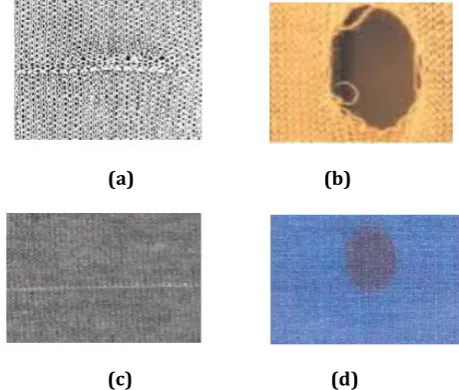
In this proposed work, we have dealt with four types of defect, which often occur in knitted fabrics in Bangladesh, namely color yarn, hole, missing yarn, and spot. All of the defects are shown in Fig. 1. All of them are discussed here below.
(a) (b)
[image:2.595.317.547.190.385.2](c) (d)
Figure 1: Different types of defect occurred in knitted fabrics.
(a) Bunching Up. (b) Hole. (c) Missing yarn. (d) Spot.
• Bunching Up: Fig. 1(a) shows the defect of Visible knots in the fabric are referred to as bunching up. They appear as beads and turn up irregularly in the fabric. Can build up resulting in a ‘cloudy’ appearance. More irregular the yarn, more pronounced is the ‘cloudy’ appearance.
• Hole: Fig. 1(b) shows the defect of hole. Hole appears in a shape, close to a circle of the color of the background, on a fabric of another color. Its size varies from small to medium. Background color is another issue. In some cases, background color can become close to fabric color.
• Missing Yarn: Fig. 1(c) shows the defect of missing yarn. Missing yarn appears as a thin striped shade of the color of fabric. It is usually long. It is of two types, namely vertical and horizontal
© 2019, IRJET | Impact Factor value: 7.211 | ISO 9001:2008 Certified Journal
| Page 3355
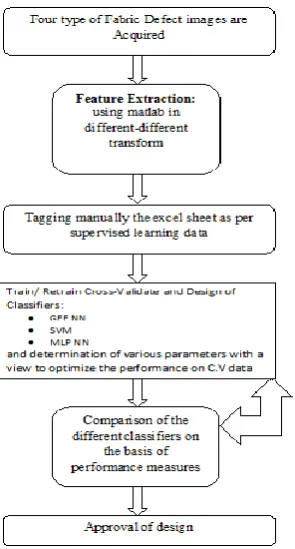
II.RESEARCHMETHODOLOGYFigure2.1: Methodology of work
It is characterization of four type of fabric defect images Using Neural Network Approaches.. Information procurement for the proposed classifier intended for the order of fabric defect images. The most essential unrelated highlights and in addition coefficient from the images will be removed .keeping in mind the end goal to separate highlights WHT transform will be utilized.
2.1Neural Networks
Following Neural Networks are tested:
Modular Neural Network (MNN)
Modular Neural Network is in fact a modular feed forward neural network which is a special category of MLP NN. It does not have full interconnectivity between their layers. Therefore, a smaller number of connection weights may be required for the same size MLP network with regard to the same number of processing elements. In view of these facts, the training time is accelerated. There have been many ways in order to segment a MNN into different modules. MNN processes its inputs with the help of numerous parallel connected MLPs and the outputs of these MLP are recombined to produce the results. This neural network is comprised of different sub modules and according to a specific topology; some structure is created within the topology in order to boost specialization of function in each sub-module.
[image:3.595.85.233.119.394.2]The following topology depicted in Fig.2.2 of the MNN has produced the best classification results.
Fig. 2.2: Topology of a Modular Neural Network
This topology is recommended on the basis of experimental evidences, testing and performance measures.
Learning Rules used:
Momentum
Momentum simply adds a fraction m of the previous weight update to the current one. The momentum parameter is used to prevent the system from converging to a local minimum or saddle point. A high momentum parameter can also help to increase the speed of convergence of the system. However, setting the momentum parameter too high can create a risk of overshooting the minimum, which can cause the system to become unstable. A momentum coefficient that is too low cannot reliably avoid local minima, and can also slow down the training of the system.
Conjugate Gradient
CG is the most popular iterative method for solving large systems of linear equations. CG is effective for systems of the form A= xb-A (1) where x _is an unknown vector, b is a known vector, and A _is a known, square, symmetric, positive-definite (or positive-indefinite) matrix. (Don’t worry if you’ve forgotten what “positive-definite” means; we shall review it.) These systems arise in many important settings, such as finite difference and finite element methods for solving partial differential equations, structural analysis, circuit analysis, and math homework.
Developed by Widrow and Hoff, the delta rule, also called the Least Mean Square (LMS) method, is one of the most commonly used learning rules. For a given input vector, the output vector is compared to the correct answer. If the difference is zero, no learning takes place; otherwise, the weights are adjusted to reduce this difference. The change in weight from ui to uj is given by: dwij = r* ai * ej, where r is the learning rate, ai represents the activation of ui and ej is the difference between the expected output and the actual output of uj. If the set of input patterns form a linearly independent set then arbitrary associations can be learned using the delta rule.
It has been shown that for networks with linear activation functions and with no hidden units (hidden units are found in networks with more than two layers), the error squared
U 1
U1 U2
© 2019, IRJET | Impact Factor value: 7.211 | ISO 9001:2008 Certified Journal
| Page 3356
vs. the weight graph is a paraboloid in n-space. Since the proportionality constant is negative, the graph of such a function is concave upward and has a minimum value. The vertex of this paraboloid represents the point where the error is minimized. The weight vector corresponding to this point is then the ideal weight vector.
Quick propagation
Quick propagation (Quickprop) [1] is one of the most effective and widely used adaptive learning rules. There is only one global parameter making a significant contribution to the result, the e-parameter. Quick-propagation uses a set of heuristics to optimise Back-propagation, the condition where e is used is when the sign for the current slope and previous slope for the weight is the same.
Delta by Delta
Developed by Widrow and Hoff, the delta rule, also called the Least Mean Square (LMS) method, is one of the most commonly used learning rules. For a given input vector, the output vector is compared to the correct answer. If the difference is zero, no learning takes place; otherwise, the weights are adjusted to reduce this difference. The change in weight from ui to uj is given by: dwij = r* ai * ej, where r is the learning rate, ai represents the activation of ui and ej is the difference between the expected output and the actual output of uj. If the set of input patterns form a linearly independent set then arbitrary associations can be learned using the delta rule.
It has been shown that for networks with linear activation functions and with no hidden units (hidden units are found in networks with more than two layers), the error squared vs. the weight graph is a paraboloid in n-space. Since the proportionality constant is negative, the graph of such a function is concave upward and has a minimum value. The vertex of this paraboloid represents the point where the error is minimized. The weight vector corresponding to this point is then the ideal weight vector. [10]
III.SIMULATION RESULTS
1) Computer Simulation
The MNN neural system has been simulated for 164 distinct images of four type of fabric defect images out of which 148 were utilized for training reason and 16 were utilized for cross validation.
[image:4.595.312.556.77.217.2]The simulation of best classifier along with the confusion matrix is shown below:
Figure.3.1: MNN1 neural network trained with MOM learning rule
2) Results
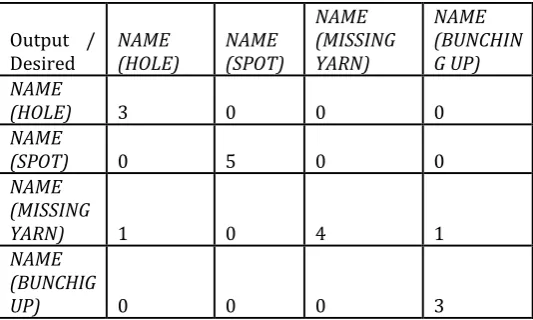
Table I: Confusion matrix on CV data set
Output /
Desired NAME (HOLE) NAME (SPOT)
NAME (MISSING YARN)
NAME (BUNCHIN G UP) NAME
(HOLE) 3 0 0 0
NAME
(SPOT) 0 5 0 0
NAME (MISSING
YARN) 1 0 4 1
NAME (BUNCHIN
G UP) 0 0 0 3
TABLE II: Confusion matrix on Training data set
Here Table I and Table II Contend the C.V as well as Training data set.
Output /
Desired NAME (HOLE) NAME (SPOT)
NAME (MISSING YARN)
NAME (BUNCHIN G UP) NAME
(HOLE) 3 0 0 0
NAME
(SPOT) 0 5 0 0
NAME (MISSING
YARN) 1 0 4 1
NAME (BUNCHIG
[image:4.595.298.565.502.662.2]© 2019, IRJET | Impact Factor value: 7.211 | ISO 9001:2008 Certified Journal
| Page 3357
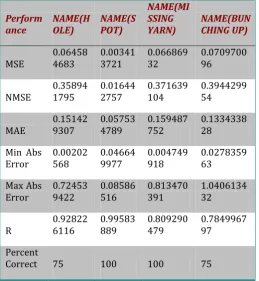
TABLE III: Accuracy of the network on CV data setPerform
ance NAME(HOLE) NAME(SPOT)
NAME(MI SSING
YARN) NAME(BUNCHING UP)
MSE 0.064584683 0.003413721 0.06686932 0.070970096
NMSE 0.358941795 0.016442757 0.371639104 0.394429954
MAE 0.151429307 0.057534789 0.159487752 0.133433828
Min Abs
Error 0.00202568 0.046649977 0.004749918 0.027835963
Max Abs
Error 0.724539422 0.08586516 0.813470391 1.040613432
R 0.928226116 0.99583889 0.809290479 0.784996797
Percent
Correct 75 100 100 75
TABLE IV: Accuracy of the network on training data set
Here Table III and Table IV Contain the C.V and Training result and show the 92.65% percent accuracy.
IV.CONCLUSION AND FUTURE WORK
From the results obtained it concludes that the MNN Neural Network with MOM (momentum) and hidden layer 1 with processing element 8 gives best results of 97.81% in Training while in Cross Validation it gives 87.05% so overall result is 92.65%.
V. ACKNOWLEDGMENT
We are very grateful to our Padm. Dr. V.B Kolte College of Engineering, Malkapur to support and other faculty and associates of ENTC department who are directly & indirectly helped me for these papers.
References
[1]J. Tou, R. Gonzalez, Pattern Recognition Principles. Massachusetts, USA: Addison-Wesley Publishing Company, 1981.
[2] R. Stojanovic, P. Mitropulos, C. Koulamas, Y.Karayiannis, S. Koubias, and G. Papadopoulos,“Real-time vision based system for textile fabric inspection,” Real-Time Imaging, vol. 7, no. 6, pp. 507-518, 2001.
[3] R. Saeidi, M. Latifi, S. Najar, and A. Saeidi, “Computer vision-aided fabric inspection system for on-circular knitting machine,” Textile Research Journal, vol. 75, no. 6, pp. 492-497, June 2005.
[4] A. Islam, S. Akhter, and T. Mursalin, “Automated textile defect recognition system using computer vision and artificial neural networks,” Proceedings World Academy of Science, Engineering and Technology, vol. 13, pp. 1-7, Jan. 2006.
[5] V. Murino, M. Bicego, and I. Rossi, “Statistical classification of raw textile defects,” in Proceedings of the 17th International Conference on Pattern Recognition (ICPR'04), pp. 311-314, 2004.
[6] Y. Karayiannis, R. Stojanovic, P. Mitropoulos, C. Koulamas, T. Stouraitis, S. Koubias, and G. Papadopoulos, “Defect detection and classification on web textile fabric using multiresolution decomposition and neural networks,” in Proceedings of the 6th IEEE International Conference on Electronics, Circuits and Systems, pp. 765-768, Sept. 1999, Cyprus.
[7] A. Kumar, “Neural network based detection of local textile defects,” Pattern Recognition, vol. 36, pp. 1645-1659, 2003.
[8] D. Karras, S. Karkanis, and B. Mertzios,“Supervised and unsupervised neural network methods applied to textile quality control based on improved wavelet feature extraction techniques,” International Journal on Computer Mathematics,vol. 67, pp. 169-181, 1998.
[9] C. Kuo, C. Lee, “A back-propagation neural network for recognizing fabric defects,” Textile Research Journal, vol. 73, pp. 147-151, 2003.
[image:5.595.39.293.437.624.2]© 2019, IRJET | Impact Factor value: 7.211 | ISO 9001:2008 Certified Journal
| Page 3358
fabric,” in Proceedings of SPIE Conference, vol. 3652, pp. 59-69, Jan. 1999, USA.
[11] E. Shady, Y. Gowayed, M. Abouiiana, S. Youssef, and C. Pastore, “Detection and classification of defects in knitted fabric structures,” Textile Research Journal, vol. 76, pp. 295-300, 2006.
[12] J. Campbell, C. Fraley, D. Stanford, F. Murtagh,and A. Raftery, “Model-based methods for textile fault detection,” International Journal of Imaging Systems and Technology, vol. 10, pp. 339-346, Jul. 1999.
[13] F. Cohen, Z. Fan, and Z. Attali, “Automated inspection of textile fabrics using textural models,” IEEE Transactions on Pattern Analysis and Machine Intelligence, vol. 8, pp. 803-808, Aug. 1991.
[14] J. Campbell, A. Hashim, T. McGinnity, and T.Lunney, “Flaw detection in woven textiles by neural network,” in Proceedings of the 5th Irish Neural Networks Conference, pp. 92-99, Sept. 1995, Ireland.
[15] K. Mak, P. Peng, and H. Lau, “A real-time computer vision system for detecting defects in textile fabrics,” in Proceedings of the IEEE International Conference on Industrial Technology (ICIT'05), pp. 469-474, 14-17 Dec. 2005, Hong Kong, China.
[16] M. Salahudin, M. Rokonuzzaman, “Adaptive segmentation of knit fabric images for automated defect detection in semi-structured environments,” in Proceedings of the 8th International Conference on Computer and Information Technology, pp.255-260, 2005, Bangladesh.
[17] Y. Shu, Z. Tan, “Fabric defects automatic detection using gabor filters,” in Proceedings of the 5th World Congress on Intelligent Control and Automation, pp. 3378-3380, 15-19 June 2004, China.
[18] M. Islam, S. Akhter, T. Mursalin, and M. Amin,“A suitable neural network to detect textile defects,” Neural Information Processing,SpringerLink, vol. 4233, pp. 430-438, Oct. 2006.
[19] A. Abouelela, H. Abbas, H. Eldeeb, A. Wahdan, and S. Nassar, “Automated vision system for localizing structural defects in textile fabrics,” Pattern Recognition Letters, vol. 26, pp. 1435- 1443, July 2005.