Copyright © 2019. Copyright of this paper is the property of the author(s). Permission is granted to reproduce copies of the works for purposes relevant to the IASDR conference, provided that the author(s), source and copyright notice are included on each copy. For other uses, please contact the author(s).
Manchester School of Art Manchester Metropolitan University 02-05 September 2019 International Association of Societies of
Design Research Conference 2019
DESIGN REVOLUTIONS
The Evolving Landscape of Design Research in the UK
Paul A. Rodgersa*; Francesco Mazzarellaa, Loura Conerneya a Imagination, Lancaster University, Lancaster, United Kingdom * [email protected]
ABSTRACT: This paper reports on the evolving landscape of design research in the UK over the last 12 years. Through a rigorous analysis of a sample of 379 design research projects funded by the Arts and Humanities Research Council (AHRC), this paper presents a detailed account of the evolution of AHRC-funded design research and how various factors – such as the financial value, project team size, collaborating organisations, and the geographical spread of design research in the UK – has changed in the period between 2002 and 2018. The paper examines the nature, scale, and diversity of UK-based design research and how it is increasingly interdisciplinary and collaborative. Furthermore, it shows the extent to which design researchers are dealing with significant social, cultural, economic, and environmental issues including those articulated in the United Nations (UN) Sustainable Development Goals (SDGs). Furthermore, whilst highlighting issues overlooked in contemporary forms of design research in the UK, the paper suggests other possible challenges for design research to focus on in the future in order to strengthen its contribution to activating social, cultural, economic and environmental change.
Keywords: design research; evolution; change; UN Sustainable Development Goals
1 Introduction
2
contributed to the substantial increase in the number of design PhD students in the UK and globally. The development of a more robust and outward-looking design culture has also seen the employment of research active design staff across higher education institutions and a range of advanced design research centres and teams, addressing complex challenges in areas such as climate change, health and wellbeing, and policies that benefit wider society.
2 The UK Design Research Landscape: A Brief History
As part of the first author’s on-going Arts and Humanities Research Council (AHRC) Design Leadership Fellowship, this paper explores the landscape of design research in the UK. Design education in this country can trace its roots back to the 1830s when art and design schools were established throughout the UK to train future generations of professionals to work in manufacturing and other industries (Press, 2011). Over the last 50 to 60 years, design research in the UK has undergone three main intellectual waves (Rodgers and Yee, 2016). The 1960s marked the ‘Design Science’ era where researchers largely adopted a scientific approach to studying design methods (Hubka and Eder, 1996) and contributed to what Rittel (1972) called the ‘first generation design methods’. This early phase of design research aimed at incorporating scientific methods and knowledge into the design process in order to optimise decisions (Bayazit, 2004). Two of the leading British design researchers of the time, Bruce Archer and John Chris Jones, were part of the organising committee of the formative Conference on Design Methods held at Imperial College in London in 1962. Archer later went on to establish the Industrial Design Research Unit at the Royal College of Art, which is seen as a milestone in the history of UK design research. The second wave arose in the 1970s as a reaction to the first-generation design methods movement, being criticised as simplistic and not able to tackle the complexity of real-world problems, defined by Rittel (1972) as ‘wicked’. The foundations of the Design Research Society (DRS) in 1976 widened debates on establishing design as a discipline in its own right. In the third and current wave, design is fully recognised as a discipline distinct from both the arts and the sciences. From this perspective, Cross (2006) articulated the “designerly ways of knowing, thinking and acting” that clearly contribute to the development of a design culture, while also
acknowledging the contributions to and from other disciplines.
The establishment of the Research Assessment Exercise – RAE (later renamed the Research Excellence Framework – REF) in 1986 and the foundation of the Arts and Humanities Research Council (AHRC) in 2005 contributed to the increase of funding opportunities for design researchers in the UK. Based on the results of REF, every year around £1.6 billion is allocated to higher education research institutes in the UK (Higher Education Funding Council for England, 2015). In recent years, the number of postgraduate design students has significantly increased, and research has become more valued both in teaching and professional practice. The growth of interaction, service, and social design as well as user-centred and participatory practices has required designers to possess research skills, apply design research methods, and be able to analyse data and synthesise and communicate their findings in effective and original ways (Rodgers and Yee, 2016). The current landscape of design research includes not only research ‘into’ (i.e. about) design, but also research ‘for’ and ‘through’ design (Frayling, 1993), cutting across disciplinary,
3
resulting in multi-layered outcomes, which are communicated in a multitude of formats (Rodgers and Yee, 2016).
Design research has evolved to respond to complex social, environmental, and cultural challenges such as those highlighted in the United Nations (UN) Sustainable Development Goals (SDGs). Therefore, design research has started to focus on addressing the global challenges we face, including those related to climate change, environmental degradation, poverty, inequality, health, education, prosperity, peace and justice (United Nations General Assembly, 2015). To tackle these issues, design research has evolved from a technical, product- and process-centric focus towards large-scale system-level changes (Ceschin and Gaziulusoy, 2016).
3 Analysis of 379 UK Design Research Projects
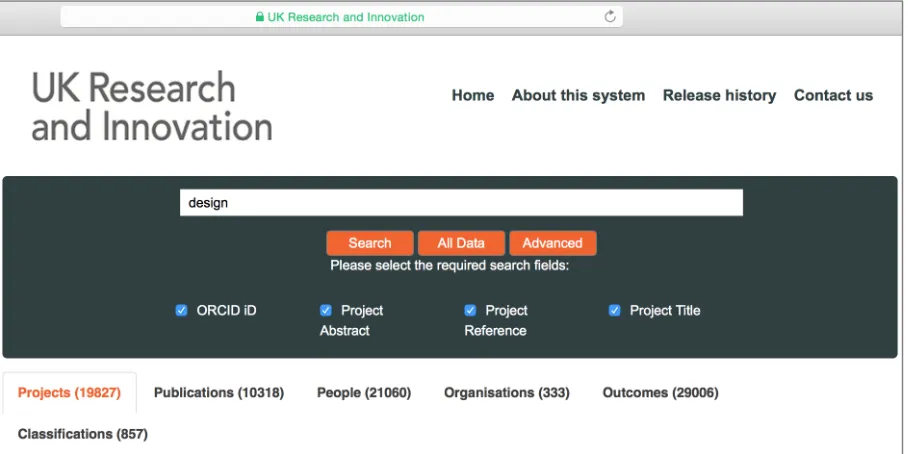
[image:3.595.74.528.326.553.2]In order to explore the evolving landscape of design research in the UK, we have collected data from the UK Research and Innovation (UKRI) Gateway to Research (GtR) repository. Through desk-based research on GtR, nearly 20,000 research projects were returned initially featuring the word ‘design’ in their title and/or abstract (Figure 1).
Figure 1. Initial results of the search for ‘design’ via the UKRI Gateway to Research returns 19,872 projects.
4
[image:4.595.73.527.110.375.2]to 2018 that shows the nature, scope, and diversity of the design research landscape in the UK (Rodgers, 2018).
Figure 2. Research proposal classification on Je-S.
Based on this sample, we have undertaken a manual process of analysis of the 379 design research projects through reviewing the data gathered from GtR using selected components of the ‘Design Research Conceptual Framework’ developed by the authors (Rodgers et al., 2019) as a priori elements to unpick the ‘designerly’ content of each project. These elements include the design research project start date, financial value, project team, partner
5
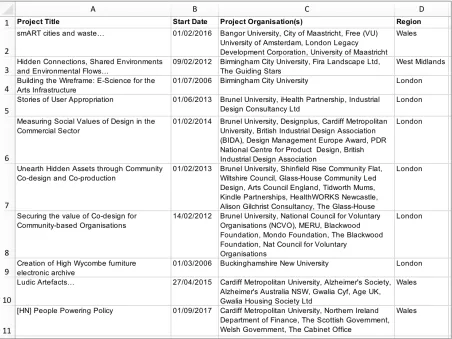
Figure 3. Snapshot of data exported from Gateway to Research (GtR).
6
Figure 4. The 17 UN Sustainable Development Goals.
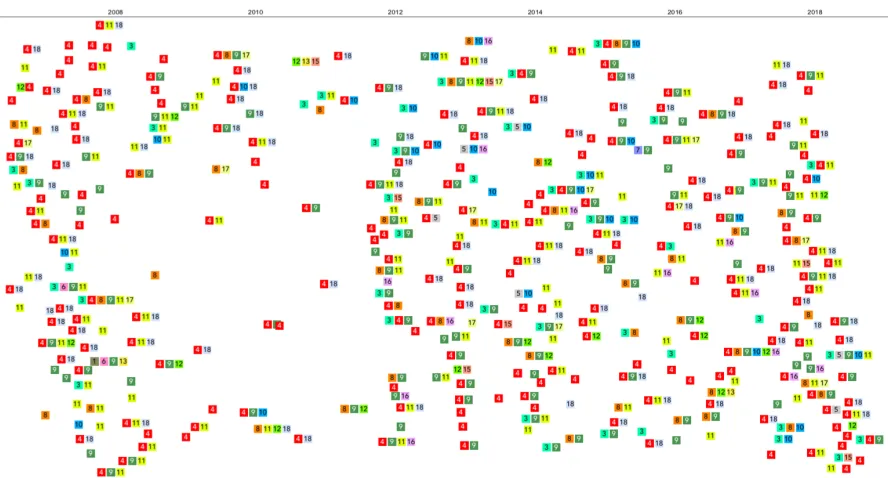
[image:6.595.202.395.445.744.2]Using the 17 UN Sustainable Development Goals as a priori codes for the process of thematic analysis, we have reviewed the abstracts of the 379 projects as reported on GtR and manually assigned each one of the projects to one or more of the SDGs, as shown in Figure 5.
7
4 Results
Through the above-mentioned process of analysis of the data gathered from GtR, we have mapped the evolution of UK design research over time, in relation to the number of funded projects, their financial value, the number of project investigators, the number and type of partner organisations, the geographical spread of the projects, as well as their contribution to addressing the UN SDGs. The findings from the data analysis are discussed in the following sections of this paper and illustrated in the accompanying figures.
4.1 Evolution of Number and Financial Value of Projects
[image:7.595.105.492.322.423.2]Figures 6 and 7 (below) provide clear evidence that design research in the UK has undergone alternative waves of decline and growth over the last twelve years. In general, the number of design research projects funded by the AHRC increased from 40 in 2006 to 45 in 2018. However, a 40% decline of funding is seen between 2007 and 2008, when the number of AHRC-funded design research projects decreased from 40 to 16. Moreover, the lowest numbers of AHRC-funded design research projects are 9 and 8 respectively in 2010 and 2011; whereas between 2011 and 2012 we see a 462% increase, while the highest peak was reached in 2018 when 45 projects received funding.
[image:7.595.74.527.589.750.2]Figure 6. Number of design research projects funded by the AHRC from 2006 to 2018.
Figure 7 shows that the cumulative financial value of the 379 design research projects drastically rose from £4.7 million in 2006 to £33.6 million in 2018 (a 715% increase). The design research total value of £33.6 million in 2018 was awarded across 45 projects. It is important to highlight that a large portion of this amount was given to 5 Research and
Development Cluster Partnerships, which have received over £5.5 million each and involve a high number of project investigators and partner organisations over a long period of time. Moreover, it is evident that in the period between 2008 and 2011 UK design research experienced a decline of funding from the AHRC, with the lowest cumulative value being £490,773 in 2011, followed by a steady increase of funding since 2012.
8
Overall, by analysing the two diagrams in parallel, it emerges that the number of funded projects and their cumulative financial value decreased from 2006 to 2011 and has doubled in the years since 2012. Although one may think that the highest financial value corresponds to the highest number of funded projects, a closer look at the two graphs shows some exceptions. For example, over £9.4 million was allocated in 2017 to support 35 projects, whereas the 44 projects funded in 2014 cumulatively received only £4.8 million. Hence, if we consider that the AHRC has awarded more funding for fewer projects in specific years, we might conclude that this suggests greater focus is being placed on specific research areas.
4.2 Evolution of Number of Project Investigators
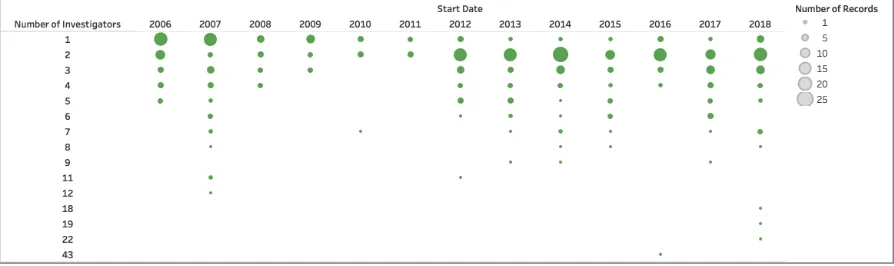
Figure 8 illustrates the evolution of the number of project investigators (i.e. principal investigator, co-investigators and researchers) that make up the teams of the 379 AHRC-funded design research projects between 2006 and 2018. It is evident that the majority (i.e.
[image:8.595.75.522.351.484.2]93%) of these design research projects are undertaken by teams of less than six people. Exceptionally, one project funded in 2016 involved a team of 43 investigators, while in 2018 three projects involved 22, 19, and 18 project investigators. Figure 8 also shows that a large number of projects (i.e. 21% of the total 379 analysed here) were led only by one principal investigator (without involving any co-investigators or researchers), especially in the early years (i.e. between 2006 and 2011).
Figure 8. Project team size by start year of the 379 design research projects.
Analysing the sample of 379 AHRC-funded design research projects against the broader context of the global design sector, the findings here reinforce a highlight of the recent Beazley Designs of the Year 2017 exhibition at the Design Museum in London that revealed that over 78% of the nominated projects were developed by small teams of less than 10 people.
4.3 Evolution of Number and Type of Project Partners
From Figure 9 it is evident that nearly half (45%) of the design research projects analysed here involve only one research organisation. Similar to the project team size (Figure 8), the majority of partner organisations involved in UK design research projects are undertaken by less than 5 organisations (80% of the 379 projects). However, Figure 9 shows some
9
[image:9.595.74.531.111.320.2]projects hints at greater awareness of design research relevance and applicability and therefore greater interdisciplinarity and collaboration.
Figure 9. Number of partner organisations by start date of the 379 design research projects.
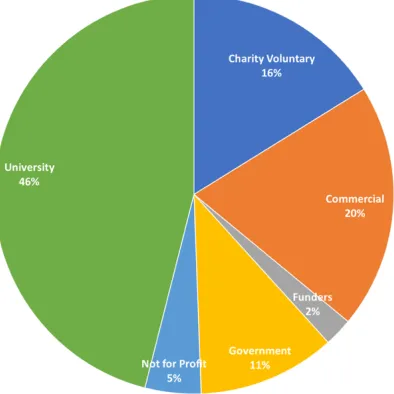
We have also examined the type of organisations involved as partners in the 379 design research projects, shown in Figure 10. Most of them are led by a research organisation (RO), which, in 97.6% of the cases, is a higher-education institution (HEI). However, eight projects are led by four cultural organisations (i.e. the Victoria and Albert Museum, the National Museum of Scotland, the Historic Royal Palaces, and the Science Museum), one project is led by a commercial partner (i.e. Connected Digital Economy Catapult), and one by a non-ministerial government department (i.e. the National Archives). Besides
higher-education institutions (HEIs), we have also identified five other types of organisations involved as partners in the 379 design research projects analysed here. These are predominantly commercial organisations (number = 279 e.g. Burberry), and charities (number = 225 e.g. Age UK), governmental bodies (number = 155 e.g. Scottish
Government), not-for-profit organisations (number = 63 e.g. UNESCO), and 32 funding bodies (number = 32 e.g. German Research Foundation).
[image:9.595.201.398.551.748.2]10
It is clear that the UK design research landscape is becoming more and more collaborative and interdisciplinary in nature. This is shown by the increasing number of project partners collaborating with teams of academic design researchers and emphasised by the growing diversity of types of organisations collaborating with higher-education institutions to address complex issues.
4.4 Evolution of Geographical Spread of Projects
This section reports on the geographical spread of the 379 design research projects over the last 12 years. It is evident from Figure 11 that while some regions – such as London,
[image:10.595.84.527.366.486.2]Scotland, the South West and the North West of England – have received AHRC funding almost every year from 2006 to 2018, funding has been rather discontinuous in other regions. Some barren periods have emerged from the analysis of the 379 AHRC-funded design research projects shown in Figure 11. In particular, while the North East and Wales regions experienced little-to-no AHRC funding from 2007 to 2011 and from 2007 to 2012 respectively, the East of England did not receive any funding in the period 2009 to 2010 nor between 2013 and 2016 inclusive. Moreover, Figure 11 clearly shows that the highest financial value across the period analysed here was awarded to London and Scotland in 2018. Interestingly, a high amount of funding (i.e. £4.7 million) was awarded to a research organisation in the Yorkshire and The Humber region, which had not received much financial support from the AHRC in the preceding period.
Figure 11. Geographical spread of the 379 design research projects across the UK over time.
Considering each of the 12 UKRI regions, Figure 12 (below) clearly shows that London is the region with the highest number of AHRC-funded projects (i.e. 85) in the period analysed here, followed by Scotland (where 53 projects received AHRC funding). Conversely, Northern Ireland and the East of England are the regions whose research organisations have held the lowest numbers of AHRC-funded design research projects (i.e. 9).
11
Figure 12. Number of design research projects funded across lead ROs in each of the twelve UKRI regions. The size of the rectangles represents the number of design research projects funded in each RO.
4.5 Evolution of Projects’ Focus on the UN Sustainable Development Goals
The thematic analysis of the 379 AHRC-funded projects, based on the UN Sustainable Development Goals, shows that design research is increasingly concerned with addressing a range of complex challenges. In addition to the 17 UN SDGs, we have added an 18th Goal
12
Figure 13. Spread of the 379 design research projects’ focus on the UN SDGs over time.
It is clear from Figure 13 that AHRC-funded design research projects are increasingly focusing on addressing issues related to the UN SDGs (e.g. quality education, sustainable cities and communities, quality education). In particular, we can see that since 2012 design research projects have much greater engagement with the UN SDGs. Figure 13 also shows that most of the 379 design research projects are associated with more than one UN SDG. Indeed, some projects are tackling two, three, and even four UN SDGs. Consequently, the total number of UN SDGs involved in design research projects here is almost double the number of projects. That is, 727 UN SDGs were assigned across the 379 design research projects. Therefore, it results that many AHRC-funded design research projects tackle complex issues often traversing several UN SDGs at the same time, covering areas such as healthcare, transport, decent work and economic growth, industry, and responsible
consumption and production. We can see that in recent years there has been an increase of AHRC-funded design research projects concerned with issues of good health and wellbeing and a decrease in research with a focus on preserving heritage. This suggests that design researchers are becoming less concerned with investigations focused on the past and seem to be taking a more active stance in implementing change in various sectors. This adds weight to the point made earlier regarding design research continually evolving as it
responds to ever-changing contexts. For instance, the increasing focus on UN SDG 3 “Good Health and Wellbeing” may be related to the UK design research’s community response to the ‘Strategic Plan for the Next Four Years’ set out by Public Health England in 2016 to achieve better outcomes in protecting and improving the nation’s health and wellbeing by 2020.
Figure 14 shows the sum of all the occurrences of each of the 17+1 UN Sustainable
13
Actions and Perceptions”. This project investigates the effectiveness of newly designed schools and the creation of suitable environments for teaching and learning. The UN SDG 9 “Industry, Innovation and Infrastructure” is the second most recurring goal among our sample of AHRC-funded design research projects. In fact, 17% of the 727 UN SDG
occurrences are concerned with challenges for industry, innovation and infrastructure. These projects aim at supporting inclusive and sustainable industrialisation, triggering innovation and creating resilient infrastructures. This is clearly exemplified by the “Design Innovation for New Growth (DING)” project, which uses design as a strategic tool for enabling growth and innovation in the creative economy of the Highlands and Islands. Another highly recurring goal is the UN SDG 11 “Sustainable Cities and Communities”; in fact, 15% of the total
occurrences related to projects dealing with sustainable living in cities and communities. This includes design research projects which aim at making cities and communities safe,
[image:13.595.146.452.284.567.2]inclusive, sustainable and resilient, places where everybody has access to basic services, such as housing, energy, and transportation.
Figure 14. Sum of occurrence of UN Sustainable Development Goals across the 379 design research projects.
5 Emerging Goals and Overlooked Issues
Figure 14 highlights that design research projects funded by the AHRC in the UK are not tackling some of the most significant issues we currently face in the world. In fact, there are clear gaps amongst some very complex issues that are currently being overlooked by AHRC-funded design research. These include projects that seek to eradicate poverty,
address hunger, foster gender equality, provide clean water and sanitation, supply affordable clean energy, and address important environmental issues on land and water.
14
only deals with UK-based design research projects funded by the AHRC and will therefore omit design research projects that reside beyond the remits of the AHRC or are developed in other countries. Second, the paper only covers the analysis of AHRC-funded design
research projects until the end of 2018 and may miss some projects funded between then and now. Nevertheless, we can conclude from the significant gaps and overlooked issues shown here that design research still has a long way to go towards tackling these and other complex global challenges to activate positive social, cultural, environmental and economic change.
6 Conclusions
This paper has presented the evolving landscape of design research as it responds to ever-changing demands. Contemporary forms of design research are increasingly
multidisciplinary, contributing new knowledge not only to the canon of the design discipline but also to other fields, including healthcare, business, computing, and engineering. Design research processes are increasingly collaborative, involving not only teams of design
researchers and practitioners, but also end-users, stakeholders, and researchers from other disciplines working in co-design processes, as well as industries and other types of non-commercial partners. In the paper we have provided a brief overview of the history of design research in the UK and discussed the establishment of a research culture grounded on ‘designerly ways of knowing’ that increasingly makes a significant contribution to address some of the most complex challenges we face in the world.
The paper provides a review of 379 AHRC-funded design research projects between 2006 and 2018 that exemplify the depth and breadth of the UK’s design research landscape. Through a thematic analysis of these projects, we have unpacked the evolution of the quantity of design research projects funded by the AHRC, their financial value, the size of their project teams, the number and type of partner organisations, the geographical spread of projects across the UK, and their contribution to addressing the UN Sustainable
Development Goals. The paper highlights that the number of design research projects funded by the AHRC drastically declined between 2010 and 2011, and sharply increased after 2012. We can conclude that this trend may be externally induced by the establishment of design as a priority area within the AHRC. The cumulative financial value of the 379 design research projects analysed here increased by over seven times from 2006 and 2018, perhaps due to internal drivers in design academia, such as the establishment of R&D cluster partnerships which involve large teams of investigators and numerous partner organisations. The sharpest decline of AHRC funding was witnessed between 2009 and 2011, perhaps as a consequence of the global financial crisis of 2008.
In terms of team size, it emerged that the majority of AHRC-funded design research projects are undertaken by teams of 6 or less individuals. Interestingly, almost all the projects started in 2010 and 2011 were led by only one principal investigator without involving any
15
England) have consistently received funding from the AHRC throughout the period analysed here. However, we have also identified some gaps of funding in other regions (i.e. the North East, Wales, and the East of England). Furthermore, while highlighting that London is the region with the highest number of projects funded by the AHRC across the period analysed here, the lowest number of funded projects were registered in Northern Ireland and the East of England. Given such disparities, the AHRC may need to work harder to achieve a more equitable spread of design research funding across the regions and research organisations in the UK whilst ensuring high quality research.
Finally, using the UN Sustainable Development Goals as a framework to analyse the 379 AHRC-funded projects shows that present-day design research is tackling a multitude of complex challenges. These are mostly related to issues of quality education, and more recently, an increasing number of research projects has been concerned with health and wellbeing perhaps as a result of the design research community responding to the strategic plan set out by Public Health England in 2016. We have also identified that a large number of the 379 AHRC-funded design research projects relate to heritage and preservation issues, although more recently design research appears to be less concerned with investigations focused on the past and is taking a more active approach towards present-day challenges. The analysis conducted here also shows that there are a number of serious global issues (such as poverty, hunger, gender inequalities, sanitation, energy, and land) that AHRC-funded design research in the UK, thus far, has largely ignored. Finally, as the role of design research continues to evolve, we hope that it will continue to lead on responses to the ever-changing social, cultural, economic and environmental contexts in which it is developed.
7 References
Rodgers, P.A. (ed.) (2018). Design Research for Change. Lancaster, UK: Lancaster University. Rodgers, P.A., Conerney, L & Mazzarella, F. (2019). Deconstructing Design Research, The Design
Journal, 22:sup1, 1287-1303.
Rodgers, P.A. & Yee, J.S.R. (2016). Design Research is Alive and Kicking… In Proceedings of DRS2016: Design + Research + Society – Future-Focused Thinking. 27-30 June 2016, University of Brighton, UK.
Bayazit, N. (2004). 40 Years of Design Research. Design Issues, 20 (1), pp. 16-29.
Ceschin, F. & Gaziulusoy, I. (2016). Evolution of Design for Sustainability: From Product Design to Design for System Innovations and Transitions. Design Studies, 47, pp. 118-163.
Cooper, R. (2014). Design Research, Exploring the Space, Moving from One Era to Another. The Design Journal, 17 (2), pp. 165-168.
Cooper, R. (2017). Design Research: Past, Present and Future, The Design Journal, 20 (1), pp. 5-11. Cross, N. (2006). Designerly Ways of Knowing. London, UK: Springer-Verlag.
Frayling, C. (1993). Research in Art and Design. Royal College of Art Research Papers, 1 (1), pp. 1-5. Higher Education Funding Council for England (2015). Research Excellence Framework 2014: The
Results. Retrieved February 11, 2019, from https://www.ref.ac.uk/ Hubka, V. & Eder, W. E. (1996). Design Science. London, UK: Springer-Verlag.
Press. M. (2011). All This ‘Useless Beauty’: The Hidden Value of Research in Art and Design. In Bate, K. (Ed.) The Public Value of the Humanities. London, UK: Bloomsbury.
Rittel, H. (1972). Son of Rittelthink, The DMG 5th Anniversary Report, Design Method Group Occasional Paper No. 1, pp. 143-147.
United Nations General Assembly (2015). Transforming Our World: The 2030 Agenda for Sustainable Development. Draft Resolution Referred to the United Nations Summit for the Adoption of the Post-2015 Development Agenda by the General Assembly at its Sixty-Ninth Session. UN Doc. A/70/L. 1 of 18 September 2016.
16
Paul A. Rodgers is Professor of Design at Imagination, Lancaster University.
He is also the Arts and Humanities Research Council (AHRC) Design Leadership Fellow in the UK. Paul is a co-founder of the Design Disruption Group which focuses on making positive change in health and social care.
Francesco Mazzarella is a Research Associate at Imagination, Lancaster
University working with the AHRC Design Leadership Fellow on ‘Design Research for Change’ projects. Francesco is also a Post-Doctoral Research Fellow at the Centre for Sustainable Fashion, exploring ways in which design activism can create counter-narratives towards sustainability in fashion.
Loura Conerney is Visualisation and Communication Officer at Imagination,
Lancaster University, responsible for all communication and data analytics work for the AHRC Design Leadership Fellow in the UK. Loura has extensive communications experience and has managed her own design studio for the past ten years.
Acknowledgement: The authors are grateful to the Arts and Humanities