PLAYFUL MEDIATION
OF PERCEPTION AND
ENGAGEMENT
Urban Space and Location-based Augmented
Reality Applications through the Lens of Play
by Gerald Martijn Munters
A thesis submitted to the Faculty of
Behavioural, Management and Social Sciences of the University of Twente in fulfilment of the requirements for the degree of Master of Science in
Philosophy of Science, Technology, and Society.
University of Twente, August 2017
Supervisor:
Dr. M.H. Nagenborg
“
Deai mo areba wakare mo aru nan te Dare ka ga kimeta kisetsu ni Mata ne to ookiku te wo futte Sayonara jya nai to tashikameta
Kotoba ni naranai kimochi wa Kono hanabira ni nosereba iin da yo
Tte kimi ga oshietekureta koto Ima demo chanto oboeteiru kara
”
“
In a season of partings and new greetings In such tradition made up by somebody I wave my hand well for future reunion
To confirm this isn’t farewell Feelings that can’t be worded
Can travel through these flower petals This you’ve told me
I still remember well
”
SCANDAL
SUMMARY
This thesis contributes to the comprehension of the influence of location-based augmented reality applications (LARA) on the perception of and engagement with urban space. Within the domain of playable city initiatives, initiatives geared towards urban engagement and social dialogue, and set against the technological focus of smart city rhetoric, the author aims to assess how LARA can foster deep relations between people themselves and urban space. Within the discourse of smart and playable cities, there has been comparatively little research done on how LARA influence one’s experiences of and engagement with urban space. As the use of both (non-)informational LARA is variously argued to result into both less urban engagement and more citizen engagement, an inquiry was deemed valuable. In particular, the following research question is addressed:
How do location-based applications, that use augmented reality on mobile phones in an urban environment, affect one’s perception of and engagement with urban space?
This thesis analyses the contemporary relation between play, LARA, and the city, the challenges to understanding the relation between virtual and non-virtual spaces, the new practices that emerge when using LARA, the ways LARA bring about new forms of mediation, and how to design LARA for urban engagement. To analyse our interactions with LARA and urban space a framework of play is developed that includes both an anthropological and artefactual concept of play anchored in three dimensions of
engagement, mediated, and networked play).
Play as a heuristic lens is deemed appropriate as play is involved in the interaction between people and their environment, is incorporated in contemporary everyday life, and can account for the performative capabilities of technologies in the construction of experiences and engagement. The hybridity of space facilitated by LARA is what demarcates LARA from other technologies. Urban space is connected, mobile, and social, and the boundaries between physical and virtual spaces has been blurred. New tensions between materiality, information, and augmentations in non-virtual spaces that emerge by the use of AR interfaces are discussed. The intertwinement of virtual and non-virtual spaces and entities affirms the dynamic relation between the two and explains how LARA mediate between these actual and potential levels of reality. The complementary virtual layers induced by LARA mediate (1) the way users relate to each other; (2) how certain spaces are experienced; and (3) how users understand a particular place.
These overcodings include pluralised forms of authorship of augmented space that promote certain actions and perceptions. This thesis suggests to distinguish between informational LARA that ‘read’ the world and non-informational LARA that constitute autonomous entities, thereby highlighting that what makes LARA, especially non-informational LARA that do not adhere to non-virtual equivalents, stand out. Each type entails different relations of mediation between the world and those who experience the world. Informational LARA adhere to a relation of augmentation, which includes both hermeneutic and
embodiment relations, whereas non-informational LARA adhere to a relation of engagement, which includes both alterity and embodimentrelations.
This thesis concludes that LARA affect our perception of and engagement with urban space in a variety of manners. The potentiality of LARA to position the augmentation and urban space on the same level highlights an important feature in developing LARA that stimulate urban engagement and citizen dialogue. Depending on the type of LARA different forms of mediation are established which may or may not have positive influences. Various design guidelines are presented to evoke thoughtful discussions to stimulate the development of LARA for meaningful play. Ideally, informational LARA bring people to unexpected places and support the contact between people by connecting people, both users and non-users, to a similar narrative. Non-informational LARA would, ideally, direct the attention of users to both the augmentation and urban space. The augmentations should ((in-)directly) connect with their environment and bring, thereby, urban space to the fore. When these connections are not centralised or when the focus is directed to external goals such as productivity or efficiency or elements of play (agôn, alea, mimicry, or ilinx), the development of a deep relation with urban space and urbanites is obstructed. Finally, one should remind oneself that the mediations are a unilateral process. It is in the interplay with LARA, people, and urban space that perception and engagement are influenced. When one is aware of this interplay, one can unravel the various elements within this hybrid space to design for particular forms of mediation.
|
|
vPREFACE – GOTTA CATCH ‘EM ALL!
Something with virtual worlds, games, and identity. That was my initial plan when I was searching far and wide for a thesis supervisor. After a long journey which took me along various offices, I finally ‘caught’ a rare supervisor in the person of Johnny Hartz Søraker. Soon thereafter, however, I had to trade him for another supervisor as Johnny decided that he would rather go to Google in Dublin than supervising me – which is, actually, the most rational choice. I decided to throw my idea into the garbage bin and develop a new and more sophisticated proposal in order to catch another rare supervisor. I ended up with Michael Nagenborg (or he ended up with me) writing about augmented reality, play, urban space, and Pokémon.i A unique combination if you ask me. I mean, who can say that he or she has
written a master’s thesis in which Pokémon, games, and augmented skeletons are prominently featured? I should probably thank Michael for allowing me to write about this crazy yet interesting topic of location-based augmented reality applications and urban space. Apart from the freedom and guidance he has given me during the process of writing, I would like to thank him for the fruitful meetings we have had. Every meeting provided me with inspiration and the necessary critical thoughts to improve my work. Especially the discussions about flying unicorns, shopping malls disguised as old villages, and bottles of Coke Zero that are engaged in a battle over space stimulated me to investigate the peculiarities of AR in urban space. I would also like to thank my second supervisor Nolen Gertz for his portion of nihilistic commentary. A big thank you to Nicola Liberati who gave valuable insights into postphenomenology and AR. Furthermore, I would like to thank my parents for their support in every way possible. I should also thank Boris, my cat, for allowing me to cuddle him to comfort myself and for being the furriest scarf around my neck while writing – my apologies to those I have skyped with and saw me being distracted by a living and purring scarf. Lastly, I would thank my grandfather Gerrit Kroes and grandmother Jannie Kroes in whose memory I have written this thesis. Your kindness and devotion has supported me during my years of studying at the University of Twente. During these years, you were always interested in the projects I did. Your support helped me to strengthen my belief and focus to use, develop, question, evaluate, and investigate technologies and technological developments. Thank you, grandpa and grandma, hereby a ‘Volle Vijf’.
Rests me to say, I hope you will enjoy reading this thesis and will, the next time you go and scan the city for virtual beings, consider how location-based augmented reality applications open up new forms of mediation that influence your way of perceiving and engaging with urban space.
Gerald Munters August 2017
|
|
viTABLE OF CONTENTS
CHAPTER 1││INTRODUCTION ... 1
CHAPTER 2││PLAY AND THE CITY ... 17
2.1││AN INQUIRY INTO PLAY ... 18
2.1.1││THE BASICS OF PLAY ... 18
2.1.2││TYPES AND ATTITUDES OF PLAY ... 20
2.1.3││EVERDAY LIFE AS PLAY ... 22
2.1.4││FROM PLAY TO GAMES, PLAYFULNESS, AND PLAYABILITY ... 23
2.1.5││DIMENSIONS OF PLAY AND LARA ... 24
2.2.1││CONTEMPORARY PLAY WITHIN URBAN SPACE ... 26
2.2.2││PLAY, THE CITY, AND AR ... 29
2.3││MEANINGFUL PLAY... 30
2.4││CONCLUSION ... 32
CHAPTER 3││AUGMENTED REALITY AND LOCATIVE MEDIA AND THE CITY………….34
3.1││LOCATIVE MEDIA AND AUGMENTED REALITY ... 35
3.1.1││TYPES OF LOCATION-BASED AUGMENTED REALITY APPLICATIONS ... 35
3.2││THE VIRTUAL, THE NON-VIRTUAL, AND THE CITY ... 37
3.2.1││VIRTUAL SIMULATION AND REPRESENTATION ... 38
3.2.2││VIRTUAL COMPLEMENTATION OF POTENTIALITIES ... 41
3.3││A PLAY WITH BOUNDARIES ... 44
3.3.1││BETWEEN LUDUS AND PAIDIA ... 44
3.3.2││SYNCHRONOUS PLAY OF TIME AND SPACE ... 45
3.3.3││TEMPORAL PLAY WITH NARRATIVES ... 45
3.4││CONCLUSION ... 46
CHAPTER 4││NEW MEDIATIONS OF RELATIONS BY LOCATION-BASED AUGMENTED REALITY APPLICATIONS……... 48
4.1││MEDIATED PLAY AND LARA ... 51
4.1.1││A COMMUNICATION OF PRESENCE AND PLAY ... 52
4.1.2││MEMORIALISING URBAN SPACE INTO URBAN PLACE... 53
4.1.3││URBAN SPACE AS A BACKGROUND OF PLAY ... 56
4.1.4││A SUBJECTIFICATION OF URBAN SPACE ... 57
4.2││NETWORKED PLAY AND LARA ... 59
4.2.1││BLINDED BY PLAY ... 60
4.2.2││PLAYFUL TACTICS ... 61
|
|
vii4.3││AR, URBAN SPACE, AND POSTPHENOMENOLOGY ... 63
4.4││CONCLUSION ... 67
CHAPTER 5││DESIGNING LARA FOR MEANINGFUL URBAN ENGAGEMENT ... 69
5.1││MEANINGFUL PLAY REVISITED ... 70
5.2││MAKE THE CITY PLAYABLE AGAIN! ... 71
5.3││DESIGNING FOR PLAYFULNESS: BETWEEN STIMULATION OF ENGAGEMENT AND DIRECTING PERCEPTION ... 72
5.3.1││NON-INFORMATIONAL LARA ... 73
5.3.2││INFORMATIONAL LARA ... 74
5.4││CONCLUSION ... 76
CHAPTER 6││CONCLUDING REMARKS ... 78
6.1││IMPLICATIONS ... 80
6.2││LIMITATIONS ... 82
6.3││FUTURE RESEARCH ... 84
6.4││AFTERWORD ... 85
CHAPTER 7││BIBLIOGRAPHY ... 86
|
|
viiiLIST
OF
FIGURES
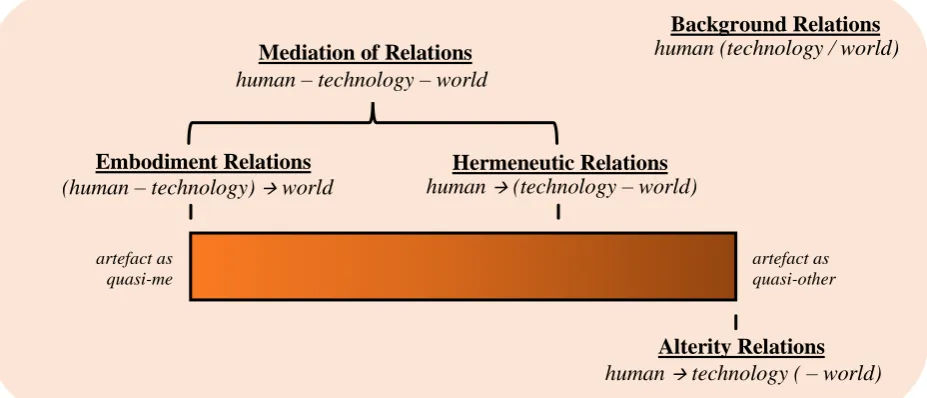
FIGURE 1. AFFILIATIONS BETWEEN IHDE’S HUMAN-TECHNOLOGY-WORLD RELATIONS. ... 14
FIGURE 2. SCHEME OF ROGER CAILLOIS’ FOUR TYPES AND TWO ATTITUDES OF PLAY. ADAPTED VERSION OF CAILLOIS, R., & HALPERIN, E.P. (1955, P. 74). PLEASE NOTE THAT IN EACH VERTICAL COLUMN THE ACTIVITIES ARE CLASSIFIED IN SUCH AN ORDER THAT THE ELEMENT OF PAIDIA DECREASES, WHILE THE ELEMENT OF LUDUS INCREASES. ... 21
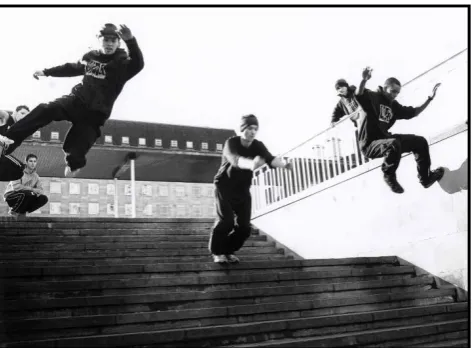
FIGURE 3. PRACTITIONERS OF PARKOUR IN ACTION. DAFFA ALLA, M. (2012). ... 27
FIGURE 4. PIECES OF BERLIN. BURKE, E., & MAHARAS, L. (2011). ... 28
FIGURE 5. URBANIMALS IN THE CITY OF BRISTOL. BLAKEMORE, P. (2015). ... 29
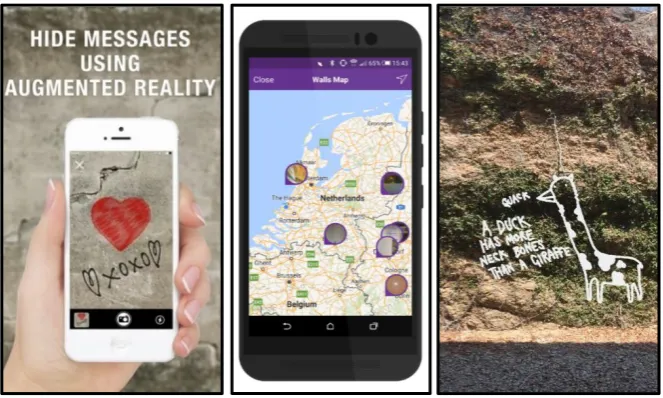
FIGURE 6. IMPRESSION OF WALLAME WITHIN URBAN SPACE. IMAGE COURTESY OF WALLAME LTD. (2015) ... 38
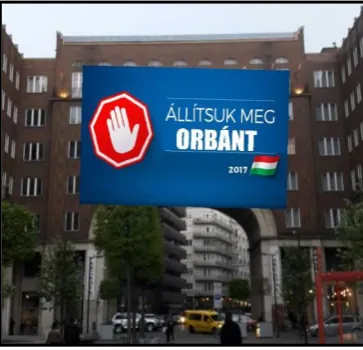
FIGURE 7. HIDDEN AR PROTEST MESSAGE IN BUDAPEST. (ALLITSUKMEG, 2017) ... 43
FIGURE 8. LAYAR ALLOWS ONE TO READ (LEFT) AND CONSTRUCT URBAN SPACE. IMAGE COURTESY OF LAYAR (LAYAR, 2009). ... 49
FIGURE 9. MAGIKARP UNEXPECTEDLY TURNING UP IN A FRYING PAN. E. MOORE (2016) ... 50
FIGURE 10. MEMORIALISING IMPORTANT INHABITANTS; CITY EVOLUTION; IMPORTANT EVENTS. IMAGE COURTESY OF STADSARCHIEF ROTTERDAM (2017). ... 53
FIGURE 11. BORDER MEMORIAL: FRONTERA DE LOS MUERTOS, MEXICO AND US BORDER CROSSING. J. C. FREEMAN AND M. SKWAREK (2011). ... 55
FIGURE 12. PERSONIFICATION AND USER-CENTRING OF URBAN SPACE IN LAYAR AND POKÉMON GO. IMAGE COURTESY OF LAYAR (LAYAR, 2009) AND NIANTIC (NIANTIC, 2016). ... 57
FIGURE 13. GENERAL DESIGN GUIDELINES (NON-)INFORMATIONAL LARA FOR URBAN ENGAGEMENT AND PLAYFULNESS. ... 75
FIGURE 14. SPECIFIC DESIGN GUIDELINES (NON-)INFORMATIONAL LARA FOR URBAN ENGAGEMENT AND PLAYFULNESS. ... 75
|
|
ixLIST OF ABBREVIATIONS
AR Augmented Reality
GIS Geographic Information System
GPS Global Positioning System
ICTs Information and Communication Technologies LARA Location-based Augmented Reality Application(s)
LBS Location-based Systems
CHAPTER 1
│
│
INTRODUCTION
“
We too often forget while living in cities that we can search for pleasure, that life can bemore than traversing spaces, that we can play, and that play is precisely what makes the world ours. So don’t wait for the app, the service, the cleverly designed instrument: Open
the door, get out on the street and play.
”
Miguel Sicart
Play and the City, 2016, p. 37.
INTRODUCTION
|
|
2ow to stimulate the integration of refugees in a new and unfamiliar environment? How to establish contact between two different cultures and understandings? Governments and municipalities in various countries in (Western) Europe were confronted with these particular challenges due to a rapid increase of refugees over the past few years (Hansen, 2016; von Beyme, 2016). Studies concerning these challenges report that (Syrian) refugees are facing problems to get in contact with locals, to overcome cultural presuppositions held by locals, and to understand and navigate their new environment (Hansen, 2016; Neuenhaus & Aly, 2017). Moreover, municipal decisions concerning the shelter of refugees in separated areas or the individualised language classes further complicate possible interactions between refugees and locals (Neuenhaus & Aly, 2017). Both in Germany and the Netherlands a variety of initiatives emerged to investigate possible ways to improve the connection between refugees and their urban environment and to develop a public understanding of both cultures so that locals and refugees are brought together. In Utrecht, a group of refugees played a selfie-based treasure hunt to explore the city (de Smale, 2015a, 2015b). The researchers aimed to stimulate refugees to explore the city of Utrecht in a safe and playful manner. The use of a location-based play as a way to establish a connection also resonates in the German Empathy Up project (Neuenhaus & Aly, 2017). To reach as many people as possible and to solve a disconnection between Germans and refugees, Neuenhaus and Aly developed an augmented reality (AR) application to tell a fictional narrative that intertwines German-Syrian cultural differences and commonalities with the physical arrangement of urban space. German players embark on a quest in “Syrdland” to carry out tasks to collect sufficient points so that they can return to ‘reality’. Tasks inform players about certain customs of both cultures and involve engagement with the physical arrangement of cities. A digital character called “Ziad” explains players about Syrian culture and the problems refugees are facing while integrating in Germany. Ultimately, Ziad directs the player to the final goal. While moving towards this goal, the German player is approached by a refugee who is similarly dressed as the digital character. This moment represents, according to Neuenhaus and Aly, the transition from AR to reality as both German and Syrian players meet in reality after an in-game encounter (ibid, p. 88). AR is used in this study to dissolve psychological barriers that can emerge between Germans and refugees by informing players about cultural differences. The developers allowed players to participate in a narrative that could not have been told in such a way before.
The promising use of AR to solve societal challenges such as integration seems to be more feasible as the field of AR applications comprises a growing sector with, according to market intelligence firm Tractica, a forecasted installed base growth from 292 million in 2015 to 2.2 billion in 2019 (Tractica, 2015). Statistics company Statista (2014) forecasted that, by the end of 2017, the majority of people use AR for gaming (987.7 million), information retrieval (361.3 million), or product visualisations (383.4 million). According to Tim Merel, managing director at AR consultancy firm Digi-Capitalist, the majority of the AR applications will be developed for mobile devices such as smartphones (Merel, 2017).
INTRODUCTION
|
|
3Merel states that smartphones solve four challenges for a widespread adoption of AR, namely mobile connectivity, an ecosystem of applications, all-day battery life, and cross-subsidisation (ibid, para. 17). In the Netherlands, four out of five people own a smartphone (Oosterveer, 2015). On a global level, more than half of the world’s population (55%, 4.42 billion) uses a smartphone (We Are Social & Hootsuite, 2017, slide 72). So, both AR and mobile phones show potential to support initiatives that stimulate integration or social dialogue, but is that all there is to say?
PROBLEM STATEMENT
The application of both AR and mobile phones to stimulate integration, urban engagement, and social dialogue is not undisputed. First of all, the use of both AR and mobile phones create a dichotomy between those who have access to them and those who do not have access to them. Another important issue with AR relates to control. To take over someone’s vision comes with great responsibility as one can literally decide which augmentations are visible to users (Wolf, Grodzinsky, & Miller, 2016). The aforementioned initiatives construct the world from a particular viewpoint and express particular ideas about, amongst others, culture and integration. Although the viewpoints within these studies were based on observations and interviews, developers could develop applications that advocate less founded or more controversial ideas. Users have to significantly trust companies and AR applications. Malicious applications can use the immersive feedback to deceive users about their environment (Roesner, Kohno, & Molnar, 2014). Companies could overflow users with advertisements or, even more pressing, hackers could compromise the augmentation and trick users into believing that these new augmentations are genuine (Abuloff, 2016). People with malicious intent can display false information or use augmentations to lure people to unsafe places (Roesner et al., 2014; Yuhas, 2016). Faulty applications can share the location of users or their vision as AR applications require access to various types of data. A first step to solve a selection of these issues is to balance the access that AR applications require for their functionality with the potential risk of such applications misusing the collected data. Individual applications could be designed such that they only have access to sensors and data that are required for their functionality. For instance, rather than granting applications access to the entire camera feed, one could only grant applications access to certain portions of a screen when an object or user is within that particular location (Roesner et al., 2014). Besides the faulty design or malicious intent of people, the augmentations themselves can bring about problems that move beyond individual use.
A major issue with these applications is that they can lead to a decontextualization of urban space. People are interacting with their environment via a screen that is positioned between users and other people (Wolf et al., 2016). A recent and popular example of AR within urban space that illustrates this decontextualization is Pokémon GO (Niantic, 2016). During the summer of 2016, Niantic launched
INTRODUCTION
|
|
4market has lost their interest in Pokémon GO (Niantic, 2016) – the novelty factor wore off due to a lack of features – the application introduced and popularised AR to the world (Arif, 2017; Hranleh, 2016).
Pokémon GO (Niantic, 2016) blurred the distinction between a separated game-environment and the physical world. The monsters are virtual entities incapable of physically influencing the physical environment. However, the way these virtual entities were positioned in a non-virtual environment had implications for how various players interacted with their environment. Rather than seeing their environment as dynamic and potentially dangerous, the environment had become a playground in which players solely focused on ‘catching them all’. Various players explicated that they did not thought of their location and simply wanted to catch Pokémon (CBS & Peterson, 2016). This, amongst others, resulted in people playing at the Holocaust Memorial Museum in Washington (Peterson, 2016). Other people played the game while driving which has resulted in more than 110,000 road accidents caused by both drivers and pedestrians in the United States in ten days (Borland, 2016). Consequently, municipalities have taken various measures such as placing warning signs and putting restrictions on places where one could catch Pokémon (BBC News, 2016; Kerr, 2016). A more unsettling consequence of Pokémon GO (Niantic, 2016) is the reinforcement of existing geographically-linked biases (Akhtar, 2016; Colley et al., 2017; Rosenblatt, 2016). As such, the application inexplicitly informs that (non)users who live in those areas are living in a part of the city that is not popular. AR then alters one’s understanding of the city as one is not portrayed as citizen, but as a visitor or inhabitant of the periphery. Despite of having the aim to establish connections between people and their environment, which were occasionally formed (Hicks-Logan, 2017), Pokémon GO did not necessarily resulted in more urban engagement. For the majority of players, urban space has become a backdrop in the game (Guarino, 2016; Hatchett, 2016). People passively follow where their device urges them to go. Applications such as Pokémon GO (Niantic, 2016) and Layar (Layar, 2009) seem to suggest that people are in a desperate need of a technology to experience the city. People passively ‘watch’ urban space rather than engaging with urban space as if it were a book that requires one to think for oneself. AR is then portrayed as a gadget to experience an exciting and fresh perspective of the city which, after a while, becomes familiar so that people start losing their interest and enthusiasm (Bayle, 2017). For better or worse, location-based applications transform a particular space into a new space that is framed by the application and device one uses in, for instance, a functional or playful way. These new representations give rise to new relations one can have with the world. By augmenting the non-virtual world with a virtual layer,
Pokémon GO (Niantic, 2016) negatively transformed the public space of, amongst others, transportation into a space of entertainment and play.
INTRODUCTION
|
|
5Moreover, the intertwinement of virtual and non-virtual environments becomes more prominent in urban spaces with the development of ‘smart city’ initiatives (de Waal, 2014; Mattern, 2014). The notion of AR suggests an interesting duality, namely a reality that is unenhanced and a reality that is enhanced. The discourse around AR portrays a world that is enhanced by a multitude of technologies or, said differently, a “reality, only better” (Wall, 2016, para. 6). For game designer Jane McGonigal, video games and virtual worlds are fulfilling needs of human beings that the real world is, in its current state, unable to satisfy (McGonigal, 2011). Feelings of heroic purpose, power, community, and complete focus and engagement with each moment can be almost constantly experienced when one is playing within a virtual world. This in contrast to the real world in which people might experience these feelings every now and then (ibid, p. 3). McGonigal describes how people, when facing problems within the virtual world, are, in contrast to the real world, not frustrated or depressed and this particular difference between virtual and non-virtual worlds describes that, as such, reality is broken (TED, 2010). Virtual worlds can improve reality in such a way that we, by means of enhancing reality, interact with the real world as one would do in a virtual world, for example, being motivated to clean the house or inspired to tackle that difficult problem you were facing. However, Pokémon GO (Niantic, 2016) distorted reality and reduced the engagement of people with their environment leading to inappropriate play and accidents (Borland, 2016; CBS & Peterson, 2016; Guarino, 2016; Hatchett, 2016). The opposite, the enhancement of virtual realms by non-virtual realms, is also subjected to this duality – virtual realms are then supplemented by non-virtual realms. From this point of view, the virtual world of Pokémon GO (Niantic, 2016) was enhanced by the non-virtual world as the narrative of Pokémon GO was placed within the real-world environment of its users. The physical world is then primarily considered as a backdrop of the game. In sum, LARA seem to further increase the division between those who have access to mobile devices and those who do not have access to them. People do not only have access to mobile devices, they also have access to an augmented world provided by AR. People can, consequently, be categorised based on whether they live in ‘just’ reality or in an augmented reality.
THE PLAYABLE CITY AS STEPPING STONE TO MEANINGFUL AR
INTRODUCTION
|
|
6Some temporarily divisions between users or nonusers could arise, however, these divisions are partly circumvented by either having public installations or stimulating the desire of people to work together with those who do not have access to the project. This use of AR and play resonates with the intentions of ‘playable city’ initiatives. The playable city, a notion that contrasts with so-called ‘smart cities’, focuses on interaction between people and bottom-up initiatives that allow visitors and residents to reconfigure places and services (Aurigi, Willis, & Melgaco, 2016; de Lange, 2015b).
Although the understanding of what a ‘smart city’ describes and defines is much debated, the general rhetoric of smart cities has been framed by, amongst others, governments and tech corporations, and includes computing technologies that make the city more efficient, predictable, and sustainable (Alfrink, 2015; KPN-Lokale-Overheid, 2015; Nam & Pardo, 2011). According to this rhetoric, cities are becoming smart when Information and Communication Technologies (ICTs) are applied to solve societal challenges, such as safety or sustainability. While the city is subject to a process of digitising by means of sensors, cameras, and interconnected digital infrastructures, citizen dialogue and the engagement of the city-dwellers with the urban environment are becoming more and more impeded (de Lange, 2015b; Vestergaard, Fernandes, & Presser, 2016). Using sensors and interconnected digital infrastructures to make the city more efficient and productive is not an unacceptable desire per se. Certainly, when one can move from point ‘A’ to point ‘B’ in an efficient manner is an important aspect of enjoying city life, as one does not want to spend three hours walking around the streets just to get from your house to your local grocery store. Moreover, walking around the streets is also more convenient when certain events are predictable so that you do not have to take all the various occurrences into consideration that might take place on your way home. That being said, once these conditions have been, to a certain extent, satisfied, there are dimensions beyond predictability and efficiency that make a city a place to live in, such as urban space itself or the interaction with other citizens (Alfrink, 2015). In contrast, the aim of playable cities is to initialise social dialogue and motivate residents and visitors to share and develop their experiences related to the urban space by using art installations and games. Apart from strengthening and creating relationships between city-dwellers themselves, relations between people and places are essential in playable city projects (de Lange, 2015b, p. 427; Gnat, Leszek, & Olszewski, 2016). A recent study by Michiel de Lange, co-founder of the Mobile City initiative, has indicated that the participation of the public and their relationship with the places in which various installations were placed improved by using artistic interventions (de Lange, 2015a).
INTRODUCTION
|
|
7Following these playable city initiatives, I use, within this thesis, the notion of play as a heuristic lens to identify and analyse the relations that are facilitated by LARA. I consider play as suitable to analyse digital technologies and their role in playful initiatives as play is both incorporated in contemporary everyday life and involved in the interaction between people and their environment (Goffman, 1959; Sicart, 2014, 2016). Digital and mobile technologies in playable city initiatives profoundly changed the appearance of urban space and influenced the way people interacted with one another and their environment by providing playful stimuli. Digital and mobile technologies should, therefore, be understood as (1) performative technologies in construction of experiences and engagement; (2) entities that have spatial capacities that both connect and separate daily practices; and (3) devices that have both potential and actual (virtual) space generating settings.
Play can be used, I believe, to address these characteristics of digital and mobile technologies. First, the performative and appropriative aspects of play demonstrate how digital technologies are used to construct experiences. Personalising mobile phones by means of character tokens, backgrounds, and dangles, for instance, illustrate a theatrical experience of oneself (Frissen, Lammes, de Lange, de Mul, & Raessens, 2015, p. 37). Second, play is often related to activities that both take place within and outside everyday life. Playable city initiatives have demonstrated that play can intertwine everyday life and separated playspaces by, amongst others, turning mundane objects into hubs of play. Rezone the game, for instance, connects the activity of urban planning with the separated playspace of a board game (de Lange, 2013). An AR layer of real-time information about a particular neighbourhood displays potential differentiations in real estate when users move and reposition buildings disguised as game pawns on a physical representation of their neighbourhood. Third, as devices that allow for pervasive games, digital and mobile technologies intertwine both virtual and non-virtual spaces. Thereby, a combined space is generated. Similar to play, digital technologies form both separated and integrated spaces. The mobile phone, for instance, connects one to a variety of people, while, at the same time, also disconnects one from one’s environment when one is listening to music through earphones (Ito, Okabe, & Anderson, 2009).
INTRODUCTION
|
|
8The use of play is, similar to the use of AR and mobile devices, not undisputed. In her book “Creating Capabilities: The Human Development Approach” (2001), political philosopher Martha Nussbaum
coins play as one of her ten basic capabilities that emphasise the “most important aspects of people’s quality of life” (p. 18). Nussbaum uses these capabilities to compare societies and assess them based on what each person is able to do. For Nussbaum, people should, next to nine other capabilities, be able to play. That is, people should “be able to laugh, to play, [and] enjoy recreational activities” (ibid, p. 34). According to Nussbaum, societies in which people can play are more preferable than societies in which people do not have the time or the capabilities to play. Although play is a desirable component of human life, not everyone can play. Even less people can play with AR. In its current state, only people who can afford mobile devices, AR headsets, or AR glasses can play with AR. This is, again, where playable city initiatives show a way to be as inclusive as possible. Installations are deployed in public space and a large number of projects can be enjoyed by a larger group without the necessity for everyone to own a mobile device. Said differently, projects use urban space as a playground in which people of various backgrounds and social status are, ideally, treated equally (Edirisinghe, Nijholt, & Cheok, 2017; "The Playable City," 2014). As such, people use play on multiple levels that move beyond a single application.
RESEARCH OBJECTIVES
INTRODUCTION
|
|
9Although it is clear that there are potential prospective uses of AR for citizen engagement and interaction, and even though scholars, technology companies, and municipalities have already explicated their interest in using playful initiatives for stimulating this engagement, there has been comparatively little research done on how AR can influence the experience of and engagement with urban space. When LARA can be used to support social dialogue, urban engagement, and integration, an investigation of how AR mediate the urban space around us and how AR can be applied to such meaningful relations between people themselves and urban space may be in order.
Within this analysis, my primary aims are to determine how LARA influence our perception of and engagement with urban space and how LARA can be applied such that a deep relation between citizens themselves and their environment can be established while avoiding the negative consequences such as division and decontextualization. These aims translate into the following main and secondary research questions:
How do location-based applications, that use augmented reality on mobile phones in an urban environment, affect one’s perception of and engagement with urban space?
• Play is used as a concept to counter the technocratic rhetoric of smart cities by fostering a deep relation between people themselves and their environment. However, what does the concept of play addresses and how does play relate to urban space? The first sub-question is concerned with how proponents of a playful culture that use play as a concept of interaction and engagement conceptualise play and what is understood as ‘playing the city’: What concept of play is proposed by proponents of a playful culture and how does play relate to urban space and AR?
• AR applications may initiate new experiences of or ways of engaging with urban space. The developed framework of play can be applied to identify meaningful applications of interaction and engagement with urban space. However, before one can address the normative position of LARA, one needs to understand the mediating role of AR applications in urban space. The second sub-question is concerned with the mediating role of informational AR applications:
How are LARA mediating the relation between virtual and non-virtual urban space?
INTRODUCTION
|
|
10• The previous sections elucidate how AR applications mediate and change perception of and engagement with urban space. Moreover, the section demonstrates how these changes and ways of interacting can be understood from the concept of play. The developed framework of play allows one to normatively assess AR applications in terms of meaningful experiences. The fourth sub-question is concerned with how playfulness initiated by AR applications connect with meaningful experiences: How can LARA be designed to mediate a meaningful interaction with urban space?
Virtual worlds provide a point of departure for understanding social and personal experiences, however, as the discussions move on, the particular technologies that bring these experiences forward become the backdrop of the discussion. They are addressed as the enabler of new possibilities or as a medium for pursuing other intentions. In both scenarios, the technology itself is reduced to a secondary condition for discussion. The aim is to make these secondary conditions visible and bring them to the fore of active inquiry by using insights from philosophy of technology. Before addressing the outline of this inquiry, I will briefly address some key notions and relations between concepts.
HOW TO UNDERSTAND AR AND WHAT DOES AR DO?
INTRODUCTION
|
|
11There are several categories of AR that each have their own objectives and mechanics. One can distinguish between marker-based AR and ‘markerless’ AR (Butchart, 2011). The first, also known as image recognition, uses the camera(s) on one’s device to read a marker that displays a particular pattern. The marker, usually a Quick Response (QR) code is sensed by the camera and interpreted by the processors to determine the position and the orientation of the marker such that the audio-visual augmentation is rendered in a natural manner. AR can also be used in absence of such markers. This type of AR uses a velocity sensor, an accelerometer or a Global Positioning System (GPS) embedded in the device used to collect and display data based on one’s location. The majority of the AR applications are markerless as most mobile devices, in particular smartphones, have integrated location detection systems (Reality-Technologies, 2016).
This thesis addresses and analyses a variety of LARA. These particular applications are selected based on the following criteria: (1) their popularity (past and present); (2) their appearance in other (empirical) studies; (3) their compliance with my notion of meaningful play (see chapter 2.3); (4) their artistic value or motivation of the developer; or (5) their particular mediation that presents different or peculiar interpretations. A more elaborative motivation for the two case studies of WallaMe (WallaMe-Ltd., 2015)and Layar (Layar, 2009) can be found in chapter 3 and 4 respectively.
ON URBAN SPACE AND CITIZENS AND PLAY AND MOBILE PHONES
The previous discussions around the concepts of play and AR have highlighted that different authors have different understandings of notions like urban space, virtual, AR, and play. I acknowledge these differences in understanding and address these dissimilarities when clear differences in meaning arise between my vision and the vision of the authors.
Throughout this study, I will use the term “urban space” in a loose sense to refer to the city environment. However, I am not merely discussing the physical structure of a city as such. In “The Production of Space” (1991), Lefebvre describes space as being created through social interactions.
Thus, urban space is not solely about a physical space created by planning and structuring, but also includes the result of various interactions. The social dimension accounts for the difference between places and non-places. Marc Augé (2008) states that "if a place can be defined as relational, historical and concerned with identity, then a space which cannot be defined as relational, historical and concerned with identity will be a non-place" (pp. 77-78).1 Both infrastructures required for transportation of people
(e.g. stations and motorways) and the modes of transportation (e.g. cars and trains) are considered as non-places by Augé (ibid, p. 121). The examples initiate a tension between Augé and Lefebvre as for Lefebvre these spaces of transition should be examined as concrete locations of everyday life rather than as gaps between. Moreover, an elaborative definition of non-places by Augé also states that non-places are not governed by any norms which does not correspond to some examples given by Augé.
INTRODUCTION
|
|
12To circumvent the problematic consequences of the elaborative definition (Arefi, 1999; Lemos, 2008), I use the broader understanding of non-places stated before to distinguish, from a social perspective, between places with an identity and places without an identity and complement Lefebvre's concept of social space. Chapter 4 investigates the interplay between places and non-places in more detail.
To address the users of LARA and their relation with urban space, I will use the term “citizen” in a loose sense in combination with the notions of “urbanites” and “city-dwellers”. I am aware that the notions of “citizen” and “urbanites” are not undisputed as they, amongst others, exclude visitors, refugees, or people living in towns (Bloemraad, 2006; Heater, 1990; Isin, Brodie, Juteau, & Stasiulis, 2008). When I discuss the users of LARA by means of these notions, I aim to address all the individuals within urban space. Thereby, I am not concerned whether they are visitors or inhabitants of a place. In this thesis, the concept of play is used for understanding how one’s experiences of and engagement with the world, in particular urban life, are affected by means of LARA. When thinking of what the term could refer to, several applications and situations come to mind. Play is, amongst others, used within economy (Easley & Ghosh, 2016), education (Villagrasa, Fonseca, Redondo, & Duran, 2014), and communication studies (Goffman, 1959). This study is in itself, however, not about play or games, but about playful engagement with and perception of urban space mediated by LARA. As a result, I explore the relevance of play and derivable notions, such as games and playfulness. This investigation will result into a framework of play that can be used for further analysis.
INTRODUCTION
|
|
13The interconnectedness of these networks, amongst others, has complicated matters concerning accountability and transparency as there is no clear boundary between those who survey and those who are surveyed (Klauser & Albrechtslund, 2014, p. 277). Besides blurring the distinction between actors, the constant localisation of people and objects, which provides users with place and practice specific services and information, can be used to organise and condition people and objects involved (Gilmore, 2015; Klauser & Albrechtslund, 2014; Lanzing, 2016). The latter point also refers to how LARA establish new forms of power-relations between the AR service provider and the user. I discuss this particular relation in chapter 2.1.5 in which the dimension of networked play is presented as one of the three dimensions of play related to digital technologies. Other aspects, including the normative dimensions of LARA concerning whether or not data should be gathered, how companies relate to one another, and how this relation affects the LARA themselves and the experiences of the user fall, despite their relevance and importance, outside the direct scope of the thesis. Furthermore, the role of screens in producing space, also known as urban materiality, which Klauser and Albrechtslund (2014) discuss, is not a central theme within this thesis (see also Verhoeff, 2012).
APPROACHES TO THE RELATION BETWEEN TECHNOLOGY, PERCEPTION, AND ENGAGEMENT
One can identify two boundary positions within the debate concerning the relation between technology and humans, respectively technological determinism, the interpretation that technology influences society such that society adapts to the arrangements technology requires and that technological developments are the result of an intrinsic mechanism (Winner, 1980, p. 122), and social constructivism, the conception that technology is a responsive process that is directed by social circumstances (Klein & Kleinman, 2002, p. 29). From this perspective, technologies do not have intrinsic properties, as they are defined by people. A knife can be a kitchen utensil, or a murder weapon.
INTRODUCTION
|
|
14Someone who experiences the world through a LARA, for instance, does not have the same experience as without the system. When interacting with the world through LARA, I can catch see unicorns in the city-park. As such, LARA profoundly shape how the world and I are present.
Ihde has categorised underlying forms of the interrelations to describe how one’s perception of the world is mediated by technologies, namely alterity and background relations and mediation of relations
(Verbeek, 2005, pp. 123-128). This categorisation of mediations is visualised in Figure 1 and ranges from the artefact as ‘quasi-me’, when an artefact can be seen as an extension of myself, to the artefact as ‘quasi-other’, an artefact with a level of independence. The first describes how I relate to the world by means of an artefact, which can be further divided into two categories, and the latter describes how I relate to the world via an artefact.
The situation in which one relates to an artefact as ‘quasi-me’ is what Ihde has labelled an
embodiment relation. The artefact becomes translucent and one experiences the world through the technology without directing one’s attention to the technology itself, for instance, eyeglasses or LARA. The hermeneutic relation also addresses experiences of the world via an artefact, however, in contrast to embodiment relations,one directs one’s attention to the thing itself. Rather than adjusting reality to one’s senses without changing the type of sensation, reality is transformed (or distorted) to something that can be experienced with one’s senses. For instance, a thermometer allows one to measure and ‘see’ temperature. On the other side of the spectrum, Ihde describes alterity relations: relations in which technology is seen as ‘other’, for instance, artificial intelligence. Background relations, in contrast to the other mediations, take place in a more marginal sense as they are not deeply experienced. Technologies, then, influence the context in which we experience in an unnoticed manner, for instance the barely noticeable hum of domestic appliances.
human (technology – world) Hermeneutic Relations (human – technology) world
Embodiment Relations
human – technology – world Mediation of Relations
human technology ( – world) Alterity Relations
human (technology / world) Background Relations
artefact as quasi-me
[image:24.595.65.529.276.475.2]artefact as quasi-other
INTRODUCTION
|
|
15Verbeek (2008a, pp. 391-392) proposes two other human-technology relations, namely cyborg and
composite relations, to expand Ihde’s framework. Cyborg relations address technologies that physically alter the human body, whereas composite relations address how technologies construct reality. Although the latter relation is a promising manner to conceptualise virtual worlds as constructing entities, it fails to address the relation between relation between people interacting with one another in this world (Søraker, 2012, p. 504). AR introduces virtual elements to one’s environment, however, in doing so, virtual entities are becoming both world and technologies, both mediating and constructing reality. AR facilitates a relation of augmentation that constructs a second field of attention (Verbeek & Rosenberger, 2015, p. 22). The relation of augmentation addresses both the embodiment relation to our environment and the hermeneutic relation to the information that AR provides (ibid). This specific relation, however, seems to primarily address informational LARA. Different forms of AR, especially those that do not provide an explanation of urban space, seem to adhere to another relation as one does not ‘read’ the world in LARA such as Pokémon GO (Niantic, 2016). Nicola Liberati (2016) describes these augmentations as autonomous and non-peripheral that demand the attention of users. The potentiality of AR to develop objects that are unrelated to objects in the non-virtual world, thereby embedding our environment with a new materiality, allows users to reach new parts of their environment (ibid, pp. 26, 27). I should state that, from a postphenomenological perspective, the technology is in itself hard to define as it comprises multiple micro-mediations including screens, devices, and cameras. The analysis within this thesis is informed by a postphenomenological approach, that is, I consider a postphenomenological stance to be competent of providing the constructive understanding of the role of technologies as mediations between reality and humans that I deem necessary to understand the role LARA and virtual entities play in everyday life. Furthermore, both AR and mobile phones inspire discourses in postphenomenology and urban life which are in line with the central question of my thesis. The asset of postphenomenology is that both the relation between human beings themselves and between human beings and objects are addressed. When addressing urban space and LARA from this perspective, one can say that we shape urban space and LARA, while urban space and LARA also shape us. The developed framework of play can expand the postphenomenological framework of relations by providing new insights that address how AR applications mediate one’s perception of and engagement with the world. The dimension of mediated play in particular encompasses the postphenomenological framework of mediated relations.
THESIS OUTLINE
INTRODUCTION
|
|
16to urban space and AR?”. The foundation of this chapter will be an extension of the four types and the
two attitudes of play presented by Caillois (2001). This analysis is complemented by an understanding of play as a hermeneutical concept by contrasting the works of Gadamer (1986, 1989) and Sicart (2014, 2016). As such, play is presented as neither exclusively human nor exclusively artefactual. Three dimensions of play are proposed to explain our engagement with LARA: the dimensions of engagement play, mediated play, and networked play. The developed understanding of the notion of play is used as an overarching methodology to identify and evaluate how play can be used as a mediator of perceptions and engagement, and to distinguish between meaningful and non-meaningful applications of play and AR in an urban environment. To clarify the relation between urban space and the notion of play, an overview of playful initiatives within urban space is provided.
In chapter 3, I classify locative AR media practices to interpret the technology in question. I will then establish an understanding of the relation between virtual and non-virtual realms by using the work of, amongst others, Baudrillard (1994), Deleuze (1994), and Kitchin and Dodge (2011) as readopted by literature within media studies. I analyse the role LARA have in mediating the relation between these dimensions and urban space to answer the second sub-question “how are LARA mediating the relation between virtual and non-virtual urban space?”. Ultimately, I portray virtual realms and augmentations
of physical space as complementary dimensions of physical space. This view moves beyond the interpretation of virtual as being unreal or representing a ‘better’ reality. Throughout the chapter, I use
WallaMe (WallaMe-Ltd., 2015) to explore the dimensions of AR in relation to each perspective. In the remainder of the chapter, I inquire how AR involves a play with boundaries.
In chapter 4, I discuss the mediation of urban space by LARA to answer the third sub-question “how do LARA allow for new ways of perceiving and engaging with urban space and how do the practices of play apply here?”. This chapter demonstrates, by discussing concrete practices that emerge from the use
of LARA on the dimensions of mediated and networked play, that LARA distinguish themselves by the ability to provide new means of materialisation. Due to their complexity, two types of LARA are distinguished, namely LARA that ‘read’ the world and LARA that constitute the world. Furthermore, a
relation of engagement is proposed to account for this distinction. Several AR applications are discussed to understand how urban space is reduced to a background and how, by re-appropriation, urban space is transformed from space to place.
The results from chapter 4 will be used in chapter 5 to provide guidelines for the practical design of LARA such that one can avoid reducing the city to the background of one’s attention, thereby providing an answer to the fourth and final sub-question “how can LARA be designed to mediate a meaningful interaction with urban space?”. These guidelines, which are based on the playfulness initiated by LARA
PLAY AND THE CITY
|
|
17CHAPTER 2
│
│
PLAY AND THE
CITY
“
The players are drawn into the play in such a way that they are unburdened, released from the strain of taking the initiative, and “play takes over,” as a pure self-display. But even though “the play’s the thing,” it still needs the players as those to whom it displays itself, whobegin by playing only to become played in the process.
”
Theodore Kisiel
The Happening of Tradition: The Hermeneutics of Gadamer and Heidegger, 1969, p. 371.
PLAY AND THE CITY
|
|
18o understand the relation between play, urban space, and AR, one needs to grasp what play, games, and playfulness refer to. This understanding is based on three sections. First, I will start my inquiry into play with the field-setting work of Johan Huizinga, complemented by the description and discussion of Miguel Sicart’s, Roger Caillois’, and Hans-Georg Gadamer’s2 notions
of game, play, and playfulness. After concluding with the presentation of an extended concept of play that includes both the artefactual and the anthropological dimensions of play, I will, in the second section, connect this concept to urban space. Finally, I will explain in the third section how play can be meaningfully applied to foster a deep relation between citizens themselves and their environment.
2.1
│
│
AN INQUIRY INTO PLAY
The classic works addressing play within the field of game studies are the starting point of this inquiry. As this study focuses on LARA, I highlight the relation between play and urban space.
2.1.1 ││THE BASICS OF PLAY
In his classic study “Homo Ludens: A Study of the Play-Element in Culture” (1992)3, historian Johan
Huizinga is concerned with the essence of play and reveals how play constitutes social practises that shape norms and values. Play is, for Huizinga, a free and meaningful activity that is being undertaken for its own sake and which is spatially and temporarily disconnected from everyday life (ibid). A self-governing system of absolute rules bounds the activity of play. Huizinga’s philosophical point of departure is the thought that play is related to meaning. When playing a game, the game itself makes sense to the player. In general, games presuppose players who are consciously aware of the objective they should accomplish and of the conditions under which these objectives can be completed. When one is pretending to be a police officer who is chasing a criminal, one obviously understands that one’s actions are only make-believe. Every ludic activity or experience can be, at least for Huizinga, identified by means of a reference to the various rules and means of play available to the player.4
Although the rules of play may vary, all plays take place in a confined space that is spatially and temporarily disconnected from everyday life: the magic circle (ibid, p. 10). The worlds created by play are temporary worlds within the physical world and the activities that emerge from playing are dedicated to the performance of activities separate from normal social practices (ibid). Unlike interpreted by some, the magic circle is not an inherent characteristic of playful activities (Egenfeldt-Nielsen, Smith, & Tosca, 2016; Stenros, 2014), but an emphasis of the player’s ability to initiate, or toveren (Dutch for “to enchant”), a circle around playful actions.
2 This section has been created based on the interpretations of Charles Byrum (1975) and Richard Detsch (1985) of Gadamer’s work in the context of philosophy of play. As such, I focus on the application of Gadamer’s notion of play in the context of game studies. The readopted interpretation of Gadamer’s is used as a heuristic to understand the artefactual dimension of play. 3 The original version of Homo Ludens was written in 1938 which, in turn, was based on his oration in 1933 which addressed “the boundaries of play and of work in culture” (Over de grensen van spel en ernst in de cultuur) (Caillois & Halperin, 1955). 4 Huizinga does not make, in contrast to other theorists of play, a clear distinction between play and games. The relevance of making this distinction is explained in chapter 2.1.4.
PLAY AND THE CITY
|
|
19French philosopher Roger Caillois (2001) criticised Huizinga’s definition of play as both too expansive and too restricted. On the one hand, the definition is too expansive as it falsely includes “the secret and mysterious” (ibid, p. 4), meaning religious practices or rituals. These may comply with Huizinga’s definition of play, but are not commonly called or considered as ‘play’. Conversely, the definition is too restricted as it falsely excludes non-rule-based games and games of chance (ibid, pp. 4-7). In order to include other types of play, Caillois extends the categories of play proposed by Huizinga, which posed that play is free, separated within the limits of time and space, and rule based, by arguing that play is also uncertain, unproductive and make-belief (ibid, pp. 9-10). The addition of play as being unproductive allows Caillois to circumvent Huizinga’s claim that play is not compatible with gaining material interests or profit5. Moreover, this addition excludes professional players, such as athletes or
those who play video games on a national or international level, from being players as they are considered as workers (ibid, p. 6). Similar to Huizinga, Caillois (2001) poses a strict opposition between everyday life, or ‘real’ life, and play or the real and the imaginary. This position is, however, contestable. In “Homo Ludens Revisited” (1968) Ehrmann, Lewis, and Lewis oppose the idea that play is a ‘luxury’
that stands apart from everyday life:
[I]f play as the capacity for symbolization and ritualization is consubstantial with culture, it
cannot fail to be present wherever there is culture. We realize then that play cannot be defined as a luxury. Whether their stomachs are full or empty, men play because they are men (Ehrmann
et al., 1968, p. 46).
The claim of both Caillois and Huizinga that play takes place in a separated realm apart from daily life is, according to Ehrmann et al., inconsistent with their argument that play is a ritual with cultural configurations or part of social structures (ibid). In chapter 3, I will argue that location-based play, in particular facilitated by LARA on mobile devices, erodes a clear and definitive boundary between ‘real’ everyday life and ‘unreal’ play. Another aspect of Caillois’ understanding of play that seems to be too radical is the idea that play is unproductive and involves a return to an ‘original’ or pre-defined state (Caillois, 2001, pp. 9-10). In contrast, Hans-Georg Gadamer (1986, 1989) understands play not as an activity that in some way or another goes back to an equilibrium, but rather displays itself through constantly being in motion.
In “Truth and Method” (1989), Gadamer aims to comprehend the nature of understanding by
establishing a philosophical hermeneutics that analyses the foundations for understanding. In doing so, he rejects the pursuit to ground such a foundation on any method (Detsch, 1985). As such, Gadamer insists on limiting the role of a method and prioritises the role of situated and relational activity. This situated and relational aspect of understanding can be clearly seen in Gadamer’s use of play (ibid).
PLAY AND THE CITY
|
|
20For Gadamer, play is a “to-and-fro movement”, a movement that “has no goal that brings it to an end; rather, it renews itself in constant repetition.” (Gadamer, 1989, p. 104). As such, Gadamer emphasises that play should not solely be understood as a disconnected and disinterested activity of a subject. Elements as intention, equipment, players, and spectators are drawn together within the act of playing a game. Said differently, the game in itself is independent from the subjectivity of those playing or watching the game. For Gadamer, play precedes a player, that is to say that the player merely shows the way a game, or artefact, is revealed (Detsch, 1985, p. 157). The involvement in a real game is characterised by an understanding that one is not playing a game, but that one is played by a game. For example, when playing a game of sports, the structure of play assimilates players into the game such that the “burden of taking the initiative” is removed (Gadamer, 1989, p. 105). Apart from the artefactual dimension of play, the to-and-fro movement seems to also refer to the leeway (Dutch: speling) between games, or artefacts, and players.6 Rather than being a unilateral process between player and a game, play
is a process that takes place in-between those who play and, from the standpoint of Huizinga and Caillois, that what is supposed to be being played. The to-and-fro movement draws players into the play – players may have the intention to participate in a game – then play takes over.
What distinguishes Gadamer from Huizinga and Caillois is that the former articulates, in terminology of philosopher Charles Byrum, a philosophy of play of ideas, where the latter two articulate a philosophy of play with ideas (Byrum, 1975, pp. 316-318). Play with ideas includes an anthropological stance that addresses the subjective role of human beings, whereas play of ideas refers to how ideas or artefacts can play with us in the interaction that takes place. As is demonstrated later, neither of these two concepts, play of ideas and play with ideas are, on their own, sufficient to explain the way play can be applied to understand the interaction between people and their environment. Hence, an account of play is needed that addresses both the anthropological and artefactual dimensions of play. While the artefactual dimension of play is based on Gadamer, the anthropological dimension of play is based on Caillois’ classification of types and attitudes of play.
2.1.2 ││TYPES AND ATTITUDES OF PLAY
Caillois distinguishes between four types and two attitudes of play. The four types of play are agôn
(competition), alea (chance), mimicry (simulation/imitation), and ilinx (vertigo) (Caillois, 2001, p. 12).
Agôn relates to activities of challenge and skill. Pokémon GO (Niantic, 2016), for instance, involves competitive elements such as catching all the monsters or defending as much gyms (special places within the game) as possible. For each player involved, the aim is to satisfy the desire to be superior and gain recognition for their ability to be superior (Caillois & Halperin, 1955, p. 66). The players have to be committed to the game as they can solely rely on their own capabilities and resources (ibid, p. 66).
PLAY AND THE CITY
|
|
21Alea, in contrast, relates to play that involve chance. The role of the player is passive as one cannot primarily rely on one’s own capabilities. Contrary to agôn, alea eliminates personal qualifications and skills. Examples of alea are casino games or games of dice. Agôn and alea each symbolise contrasting attitudes, however, both change, in one way or another, the world by making it ‘other’ (ibid, p. 68). Moreover, both aim to substitute the disorder of reality by a reality in which all the players are equal to another as all have the same possibilities and chance to prove their own skills (agôn) or to win (alea). The third type of play, mimicry, is different from the other two as mimicry allows one to substitute the disorder of reality by making oneself different (ibid, p. 68). Mimicry relates to the temporarily recognition of imaginative worlds in which one makes other people believe that one has become someone else. A prime example of this type of play is role-playing, for example, a child who pretends that he or she is a steam locomotive by imitating the sounds of the steam whistles. Mimicry is, similar to agôn, representative of a type of play that requires control and skill.
The fourth and final type of play coined by Callois is ilinx, which includes an attempt to temporarily destruct the reality by engaging in activities that lead to a confusion of the senses, such as expressive dance. Similar to alea, ilinx entails uncontrollable movements as the control resides outside the player. Each of these four types of play can range along an axis from paidia, the attitude of spontaneous and unstructured play, to ludus, rule-governed and structured play. Figure 2 provides an overview of the various possibilities mentioned by Caillois.
Agôn (competition) Alea (chance) Mimicry (simulation/imitation) Ilinx (vertigo) Paidia free play laughter dance solitaire
game of patience
rule-governed games
Ludus
races* athletics* combats* (* not regulated)
soccer boxing contests
head or tails
[image:31.595.75.530.426.614.2]betting roulette lotteries childish imitations masks illusions theatre spectacles children’s swings dance music skiing outdoor sports
Figure 2. Scheme of Roger Caillois’ four types and two attitudes of play. Adapted version of Caillois, R., & Halperin, E.P. (1955, p. 74). Please note that in each vertical column the activities are classified in such an order that the element of paidia
decreases, while the element of ludus increases.
By using this matrix of the four types and two attitudes of play, Caillois can construct and organise various types of play and variations of games.
PLAY AND THE CITY
|
|
22This is, however, where I disagree with Caillois as his attempt to describe societies based on four game categories seems highly selective and idealised. Moreover, as I will discuss in the following sections,
mimicry and ilinx are profoundly present in what Caillois would describe as ‘modern societies’ and both can be related to LARA. Furthermore, mimicry demonstrates how (urban) play is connected to social roles, norms, and values (Goffman, 1959).
2.1.3││ EVERDAY LIFE AS PLAY
Caillois’ four categories of play can be interpreted as metaphors for understanding interaction with other people in everyday life. The competitive element in economic liberalism can be seen as the element of
agôn present in life. The element of alea depicts life as fate or the unpredictable play of diverse determinants. These unanticipated moments are important for our self-understanding and social interactions (Giddens, 2004). Today, ilinx has a digital side as video games and virtual worlds deceive our senses while providing players with a sense of escapism. The metaphor of mimicry relates to how role-playing and being playful is present in daily life and illustrates how one’s location is of influence for one’s interactions. The work of sociologist Erving Goffman can be used to exemplify this carnivalesque understanding of life. In “The Presentation of Self in Everyday Life” (1959), Goffman
generalises a theory of performativity in everyday life to understand the importance of social interaction. I want to highlight this relation in particular as the way one is related to a particular environment, be it other people, artefacts, or one’s surroundings, influences how one acts. The phrase “[o]ne man in his time plays many parts.” in William Shakespeare’s “As You Like It” (Shakespeare, 1623, p. 194)