2006;
V
ol. 10: No. 33
Computerised cognitive behaviour therapy for depression and anxiety update
Computerised cognitive behaviour
therapy for depression and anxiety
update: a systematic review and
economic evaluation
E Kaltenthaler, J Brazier, E De Nigris, I Tumur,
M Ferriter, C Beverley, G Parry, G Rooney and
P Sutcliffe
HTA
Health Technology Assessment
NHS R&D HTA Programme
The National Coordinating Centre for Health Technology Assessment,Mailpoint 728, Boldrewood, University of Southampton, Southampton, SO16 7PX, UK.
Fax: +44 (0) 23 8059 5639 Email: [email protected]
http://www.hta.ac.uk ISSN 1366-5278
Feedback
The HTA Programme and the authors would like to know your views about this report.
The Correspondence Page on the HTA website (http://www.hta.ac.uk) is a convenient way to publish your comments. If you prefer, you can send your comments
to the address below, telling us whether you would like us to transfer them to the website.
We look forward to hearing from you.
How to obtain copies of this and other HTA Programme reports.
An electronic version of this publication, in Adobe Acrobat format, is available for downloading free of charge for personal use from the HTA website (http://www.hta.ac.uk). A fully searchable CD-ROM is also available (see below).
Printed copies of HTA monographs cost £20 each (post and packing free in the UK) to both public and
private sector purchasers from our Despatch Agents.
Non-UK purchasers will have to pay a small fee for post and packing. For European countries the cost is £2 per monograph and for the rest of the world £3 per monograph.
You can order HTA monographs from our Despatch Agents: – fax (with credit card or official purchase order)
– post (with credit card or official purchase order or cheque) – phone during office hours (credit cardonly).
Additionally the HTA website allows you either to pay securely by credit card or to print out your order and then post or fax it.
Contact details are as follows:
HTA Despatch Email: [email protected]
c/o Direct Mail Works Ltd Tel: 02392 492 000 4 Oakwood Business Centre Fax: 02392 478 555
Downley, HAVANT PO9 2NP, UK Fax from outside the UK: +44 2392 478 555 NHS libraries can subscribe free of charge. Public libraries can subscribe at a very reduced cost of £100 for each volume (normally comprising 30–40 titles). The commercial subscription rate is £300 per volume. Please see our website for details. Subscriptions can only be purchased for the current or forthcoming volume.
Payment methods
Paying by cheque
If you pay by cheque, the cheque must be in pounds sterling, made payable to Direct Mail Works Ltd
and drawn on a bank with a UK address.
Paying by credit card
The following cards are accepted by phone, fax, post or via the website ordering pages: Delta, Eurocard, Mastercard, Solo, Switch and Visa. We advise against sending credit card details in a plain email.
Paying by official purchase order
You can post or fax these, but they must be from public bodies (i.e. NHS or universities) within the UK. We cannot at present accept purchase orders from commercial companies or from outside the UK.
How do I get a copy of HTA on CD?
Please use the form on the HTA website (www.hta.ac.uk/htacd.htm). Or contact Direct Mail Works (see contact details above) by email, post, fax or phone. HTA on CDis currently free of charge worldwide.
The website also provides information about the HTA Programme and lists the membership of the various committees.
update: a systematic review and
economic evaluation
E Kaltenthaler,
1*
J Brazier,
1
E De Nigris,
1
I Tumur,
1
M Ferriter,
2
C Beverley,
1
G Parry,
1
G Rooney
1
and
P Sutcliffe
1
1
School of Health and Related Research (ScHARR),
University of Sheffield, UK
2
Department of Research and Development, Nottinghamshire Healthcare
NHS Trust, Rampton Hospital, Woodbeck, UK
* Corresponding author
Declared competing interests of authors:none
Published September 2006
This report should be referenced as follows:
Kaltenthaler E, Brazier J, De Nigris E, Tumur I, Ferriter M, Beverley C, et al.
Computerised cognitive behaviour therapy for depression and anxiety update: a systematic review and economic evaluation. Health Technol Assess2006;10(33).
Health Technology Assessmentis indexed and abstracted in Index Medicus/MEDLINE,
Excerpta Medica/EMBASE and Science Citation Index Expanded (SciSearch®)and
NHS R&D HTA Programme
T
he research findings from the NHS R&D Health Technology Assessment (HTA) Programme directly influence key decision-making bodies such as the National Institute for Health and ClinicalExcellence (NICE) and the National Screening Committee (NSC) who rely on HTA outputs to help raise standards of care. HTA findings also help to improve the quality of the service in the NHS indirectly in that they form a key component of the ‘National Knowledge Service’ that is being developed to improve the evidence of clinical practice throughout the NHS.
The HTA Programme was set up in 1993. Its role is to ensure that high-quality research information on the costs, effectiveness and broader impact of health technologies is produced in the most efficient way for those who use, manage and provide care in the NHS. ‘Health technologies’ are broadly defined to include all interventions used to promote health, prevent and treat disease, and improve rehabilitation and long-term care, rather than settings of care.
The HTA Programme commissions research only on topics where it has identified key gaps in the evidence needed by the NHS. Suggestions for topics are actively sought from people working in the NHS, the public, service-users groups and professional bodies such as Royal Colleges and NHS Trusts.
Research suggestions are carefully considered by panels of independent experts (including service users) whose advice results in a ranked list of recommended research priorities. The HTA Programme then commissions the research team best suited to undertake the work, in the manner most appropriate to find the relevant answers. Some projects may take only months, others need several years to answer the research questions adequately. They may involve synthesising existing evidence or conducting a trial to produce new evidence where none currently exists.
Additionally, through its Technology Assessment Report (TAR) call-off contract, the HTA Programme is able to commission bespoke reports, principally for NICE, but also for other policy customers, such as a National Clinical Director. TARs bring together evidence on key aspects of the use of specific
technologies and usually have to be completed within a short time period.
Criteria for inclusion in the HTA monograph series
Reports are published in the HTA monograph series if (1) they have resulted from work commissioned for the HTA Programme, and (2) they are of a sufficiently high scientific quality as assessed by the referees and editors.
Reviews in Health Technology Assessment are termed ‘systematic’ when the account of the search,
appraisal and synthesis methods (to minimise biases and random errors) would, in theory, permit the replication of the review by others.
The research reported in this monograph was commissioned and funded by the HTA Programme on behalf of NICE as project number 04/01/01.The protocol was agreed in March 2004. The assessment report began editorial review in September 2005 and was accepted for publication in December 2005. The authors have been wholly responsible for all data collection, analysis and interpretation, and for writing up their work. The HTA editors and publisher have tried to ensure the accuracy of the authors’ report and would like to thank the referees for their constructive comments on the draft document. However, they do not accept liability for damages or losses arising from material published in this report. The views expressed in this publication are those of the authors and not necessarily those of the
HTA Programme, NICE or the Department of Health. Editor-in-Chief: Professor Tom Walley
Series Editors: Dr Aileen Clarke, Dr Peter Davidson, Dr Chris Hyde, Dr John Powell, Dr Rob Riemsma and Dr Ken Stein Managing Editors: Sally Bailey and Sarah Llewellyn Lloyd
ISSN 1366-5278
© Queen’s Printer and Controller of HMSO 2006
This monograph may be freely reproduced for the purposes of private research and study and may be included in professional journals provided that suitable acknowledgement is made and the reproduction is not associated with any form of advertising.
Applications for commercial reproduction should be addressed to NCCHTA, Mailpoint 728, Boldrewood, University of Southampton, Southampton, SO16 7PX, UK.
Published by Gray Publishing, Tunbridge Wells, Kent, on behalf of NCCHTA.
Objectives: To evaluate computerised cognitive behaviour therapy (CCBT) for the treatment of anxiety, depression, phobias, panic and obsessive–compulsive behaviour (OCD). The software packages to be considered include Beating the Blues (BtB), Overcoming Depression: a five areas approach, FearFighter (FF), Cope and BT Steps. Other packages or programmes incorporating CCBT were also considered.
Data sources: Electronic databases from 1966 to March 2004. Evidence submitted by sponsors for CCBT products.
Review methods: A systematic review was performed to identify all studies describing trials of CCBT. The cost-effectiveness assessment included a review of the literature and the evidence submitted by sponsors for each of the products. A series of cost-effectiveness models was developed and run by the project team for the five CCBT products across the three mental health conditions.
Results: Twenty studies were identified in the clinical effectiveness review. The analysis of these results showed some evidence that CCBT is as effective as therapist-led cognitive behaviour therapy (TCBT) for the treatment of depression/anxiety and phobia/panic and is more effective than treatment as usual (TAU) in the treatment of depression/anxiety. CCBT also
appears to reduce therapist time compared with TCBT. When reviewing cost-effectiveness studies, only one published economic evaluation of CCBT was found. This was an economic evaluation of the depression software BtB alongside a randomised controlled trial (RCT), which found that BtB was cost-effective against TAU in terms of cost per quality-adjusted life-year (QALY) (less than £2000), however it contained weaknesses that were then addressed in the cost-effectiveness model developed for the study.
The results of the model for the depression software packages in terms of incremental cost per QALY compared with TAU and the chance of being cost-effective at £30,000 per QALY were for BtB £1801 and 86.8%, for Cope £7139 and 62.6% and for Overcoming Depression £5391 and 54.4%. The strength of the BtB software being that it has been evaluated in the context of an RCT with a control group. The subgroup analysis found no differences across the severity groupings. For phobia/panic software, the model showed an incremental cost per QALY of FF over relaxation was £2380. Its position compared with TCBT is less clear. When modelling OCD packages, using the practice-level licence cost meant that BT Steps was dominated by TCBT, which had significantly better outcomes and was cheaper. However, the cheaper PCT licence resulted in the incremental cost-effectiveness of BT Steps over relaxation being £15,581 and TCBT over BT Steps being £22,484.
Conclusions: The study findings are subject to substantial uncertainties around the organisational level for purchasing these products and the likely throughput. This is in addition to concerns with the quality of evidence on response to therapy, longer term outcomes and quality of life. The position of CCBT within a stepped care programme needs to be identified, as well as its relationship to other efforts to increase access to CBT and psychological therapies. Research is needed to compare CCBT with other therapies that reduce therapist time, in particular bibliotherapy and to explore the use of CCBT via the Internet. Independent research is needed, particularly RCTs, that examine areas such as patient preference and therapist involvement within
primary care. iii
Abstract
Computerised cognitive behaviour therapy for depression and
anxiety update: a systematic review and economic evaluation
E Kaltenthaler,
1*J Brazier,
1E De Nigris,
1I Tumur,
1M Ferriter,
2C Beverley,
1G Parry,
1G Rooney
1and P Sutcliffe
11School of Health and Related Research (ScHARR), University of Sheffield, UK
2Department of Research and Development, Nottinghamshire Healthcare NHS Trust, Rampton Hospital,
v
Glossary and list of abbreviations ... vii
Executive summary... xi
1 Aim of the review ... 1
2 Background ... 3
Description of underlying health problem ... 3
Current service provision ... 6
Description of new intervention ... 8
NICE guidance on CCBT ... 11
Software packages included in this review . 12 3 Effectiveness ... 15
Methods for reviewing effectiveness ... 15
Results ... 17
4 Economic analysis ... 35
Search and review of published literature ... 35
Review of submissions ... 35
Cost-effectiveness and cost–utility ... 37
Cost impact ... 52
5 Factors relevant to the NHS ... 53
6 Discussion ... 55
Main results ... 55
Assumptions, limitations and uncertainties ... 56
Need for further research ... 58
7 Conclusions ... 61
Cost-effectiveness ... 61
Acknowledgements... 63
References ... 65
Appendix 1 Electronic bibliographic databases searched ... 71
Appendix 2 Other sources consulted ... 73
Appendix 3 Search strategies used in the major electronic bibliographic databases .... 75
Appendix 4 Economic evaluations, quality of life and economic models methodological search filters used in Medline (Ovid) 1966 to March 2004 ... 79
Appendix 5 Excluded studies ... 81
Appendix 6 Evidence tables for depression/anxiety and phobia/panic studies ... 85
Appendix 7 OCD studies ... 135
Appendix 8 Calculated effect sizes ... 145
Appendix 9 Transition matrices ... 149
Appendix 10 Health state utility values .... 151
Appendix 11 Costs of interventions, methods and results ... 157
Appendix 12 Parameter values used in the economic models and their distributions ... 161
Health Technology Assessment reports published to date ... 169
Glossary and list of abbreviations
vii
Glossary
Bibliotherapy Cognitive behaviour therapy provided in a printed format, such as a book.
Cognitive behaviour therapy (CBT) refers to the pragmatic combination of concepts and techniques from cognitive and behaviour therapies common in clinical practice.
Computerised cognitive behaviour therapy CBT delivered via a computer interface or over the telephone with a computer-led response. The computer program is interactive, making appropriate responses to patient input.
Homework Tasks set for patients to complete in their own time. The tasks may be set either by the CCBT package or by the patients.
TCBT Therapist-led CBT delivered by a clinician. It can be delivered by a number of different clinically trained professionals, using different protocols and numbers of sessions, and be provided in a range of possible settings.
List of abbreviations
ACQ Agoraphobic Cognitions Questionnaire
ADIS Anxiety Disorders Interview Schedule
AfW Assembly for Wales
AIC academic in confidence
AR applied relaxation
ASQ Attributional Style Questionnaire
ATQ Automatic Thoughts Questionnaire
BAI Beck Anxiety Inventory
BAT Behavioural Assessment Test
BDI Beck Depression Inventory
BHS Beck Hopelessness Scale
BSQ Body Sensations Questionnaire
BtB Beating the Blues
CACBGT computer-augmented behavioural group therapy
continued Technical terms and abbreviations are used throughout this report. The meaning is usually clear from the context, but a glossary is provided for the non-specialist reader. In some cases, usage differs in the
viii
List of abbreviations
continued
CACBT computer-augmented behavioural therapy
CASP Critical Appraisal Skills Programme
CAVE Computer-aided Vicarious Exposure
CBGT cognitive behaviour group therapy
CBT cognitive behaviour therapy
CCBT computerised cognitive behaviour therapy
CEAC cost-effectiveness acceptability curve
CESDP Center for Epidemiologic Studies Depression Scale
CGI clinician global impression
CI confidence interval
CIDI Composite International Diagnostic Interview
CMHT community mental health team
CORE-OM Clinical Outcomes in Routine Evaluation – Outcome Measure
CRI Coping Responses Inventory
CSAG Clinical Standards Advisory Group
df degrees of freedom
DSM-IV Diagnostic and Statistical Manual of Mental Disorders-IV
EQ-5D EuroQol 5 Dimensions
ES effect size
ESb between-group effect size
ESEMeD European Study of the Epidemiology of Mental Disorders
ESw within-group effect size
FF FearFighter
FQ Fear Questionnaire
FU follow-up
GAD generalised anxiety disorder
GHQ General Health Questionnaire
HADS Hospital Anxiety and Depression Scale
HAM-D Hamilton Rating Scale for (or HRSD) Depression
HUI Health Utility Index
ICD-10 International Classification of Diseases-10
IPT interpersonal therapy
ITT intention-to-treat
IVR interactive voice response
LGE live graded exposure
MA Managing Anxiety
MADRS-SR Montgomery Åsberg Depression Rating Scale
MI Mobility Inventory for Agoraphobia
NA not applicable
NHS EED NHS Economic Evaluations Database
NICE National Institute for Health and Clinical Excellence
NR not reported
continued
ix
List of abbreviations
continued
ns not significant
NSF National Service Framework
OCD obsessive–compulsive disorder
ODIN Overcoming Depression on the Internet
OHE HEED Office of Health Economics Health Economic Evaluations Database
OPCS Office of Population Censuses and Surveys
PASA Purchasing and Supply Agency
PCT primary care trust
PD panic disorder
PDT psychodynamic therapy
PGI patient global impression
PMR progressive muscle relaxation
PSA probabilistic sensitivity analysis
PT Phobic Targets
PTSD post-traumatic stress disorder
QALY quality-adjusted life-year
QOLI Quality of Life Inventory
QWB Quality of Well-Being
RCT randomised controlled trial
SASS Social Adaptation Self-Evaluation Scale
SCID Structured Clinical Interview for DSM-IV
SD standard deviation
SF-12 Short Form 12
SF-36 Short Form 36
SPQ, SQ Spider Questionnaire
SRI serotonin reuptake inhibitor
SSRI selective serotonin reuptake inhibitor
ST supportive therapy
SUDS Subjective Units of Distress Scale
TA treatment acceptability
TAR technology assessment report
TAU treatment as usual
TCA tricyclic antidepressant
TCBT therapist-led cognitive behaviour therapy
TCS Treatment Credibility Scale
TH treatment helpfulness
TLP Therapeutic Learning Program
WARS Work and Adjustment Rating Scales
WLC waiting list control
WSA Work and Social Adjustment
YBOCS Yale–Brown Obsessive Compulsive Scale
All abbreviations that have been used in this report are listed here unless the abbreviation is well known (e.g. NHS), or it has been used only once, or it is a non-standard abbreviation used only in figures/tables/appendices in which case the abbreviation is defined in the figure legend or at the end of the table.
Note
Executive summary
xi
Background
Depression, anxiety, phobias and panic are common mental disorders usually treated within a primary care setting. Obsessive–compulsive disorder (OCD) is less common but, as with the other disorders, is associated with considerable occupational and interpersonal impairment. Medication is usually the first treatment offered, but is often associated with side-effects. There is substantial evidence to support the use of cognitive behaviour therapy (CBT) in the treatment of these disorders. However, access is limited owing to too few therapists, expense, waiting lists and patients’ reluctance to enter therapy. Computerised cognitive behaviour therapy (CCBT) is a self-help option that offers patients the potential benefits of CBT with less therapist involvement.
Description of proposed service
This report evaluates CCBT for the treatment of anxiety, depression, phobias, panic and OCD.
Objective
The overall aim of the review is to update the National Institute for Health and Clinical Excellence (NICE) guidance on the clinical and cost-effectiveness of CCBT delivered alone or as part of a package of care compared with current standard treatments for depression and anxiety (including phobias). In addition, OCD will be included in this review. The software packages to be considered include Beating the Blues (BtB), Overcoming Depression: a five areas approach, FearFighter (FF), Cope and BT Steps. Other packages or programs incorporating CCBT will also be considered. More specifically, the review of CCBT aims to:
● evaluate clinical effectiveness in terms of improvement in psychological symptoms ● evaluate effectiveness in terms of interpersonal
and social functioning
● evaluate effectiveness in terms of quality of life ● evaluate effectiveness in terms of preference,
satisfaction and acceptability of treatment
● evaluate cost-effectiveness in comparison with current standard treatments
● estimate the possible overall cost in England and Wales.
Methods
Clinical effectiveness
A systematic review of the literature was performed to identify all studies describing trials of CCBT delivered either alone or as part of a package and either via a computer interface or over the
telephone with a computer-led response. Databases were searched from 1966 to March 2004.
Cost-effectiveness
The cost-effectiveness assessment was in two parts. The first was a review of the literature and the evidence submitted by sponsors for each of the products. The second was the development of cost-effectiveness models of the five products across the three mental health conditions.
Results
Number and quality of studies
Clinical effectiveness
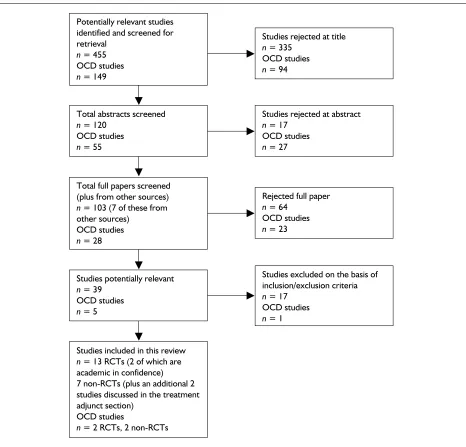
Twenty studies (including two academic in confidence) met the inclusion criteria for
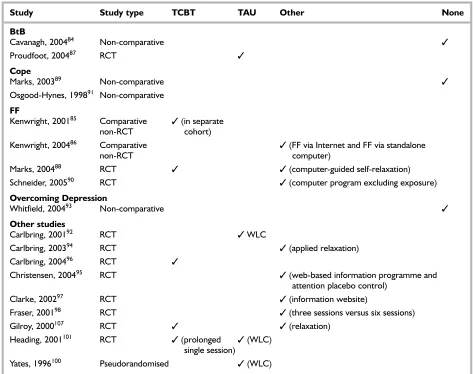
depression/anxiety and phobia/panic, ten of which included software packages and ten were other studies of CCBT. With regard to the included software package studies, four of the ten were RCTs. Of the ten other studies included in the review, nine were RCTs and one was a pseudorandomised trial. An additional two studies of CCBT as a treatment adjunct for therapist-led cognitive behaviour therapy (TCBT) were also identified.
Four studies of CCBT for OCD were identified, two of which were randomised controlled trials (RCTs), and all of which were studies of the included package, BT Steps.
Cost-effectiveness
xii
study was also included in the submission of Ultrasis for BtB. This was a cost-effectiveness analysis undertaken alongside a randomised clinical trial of BtB compared with treatment as usual (TAU). This study was well conducted and had good internal validity. It estimated the cost per quality-adjusted life-year (QALY) to be £1250. However, the assumed cost of intervention was based on unrealistically high throughput numbers, the derivation of QALYs was weak and the trial was limited to 8 months.
The other packages only submitted information on the costs of their products and this was used in the economic modelling.
Evidence of effectiveness
Clinical effectiveness
Depression/anxiety
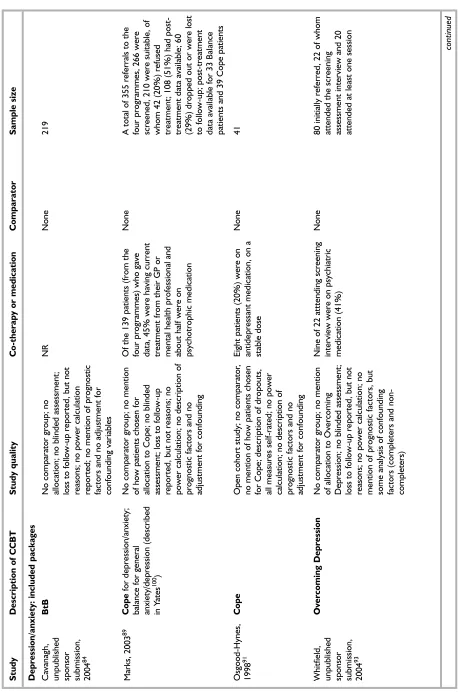
Ten studies of CCBT for depression were included in this review, six of the included software
packages and four other studies. Three studies of BtB were included, two for Cope and one for Overcoming Depression. Two of these were RCTs. One found BtB to be more effective than TAU. Both the Cope studies and the Overcoming Depression study had no comparator, but showed improvement in symptoms of depression from baseline.
Four other studies of depression were included in this review, three of which were RCTs and one was pseudorandomised. Two studies compared CCBT with an information website. One found CCBT to be ineffective, and one found both to be effective. The fourth study compared CCBT with a waiting-list control and found CCBT to be effective.
Phobia/panic
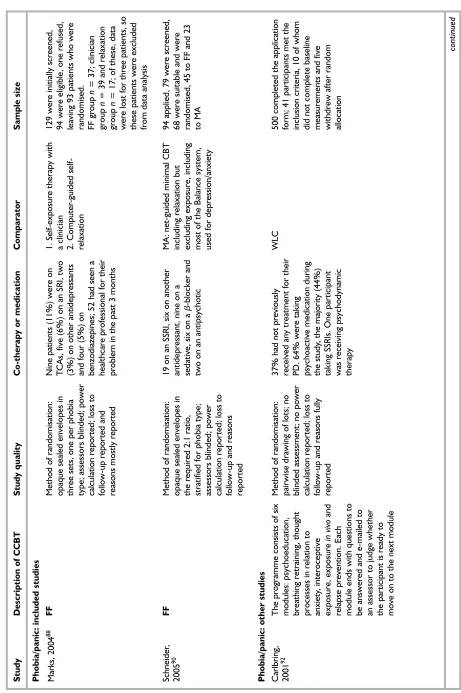
Ten studies of CCBT for phobia/panic were included in this review, including four for FF. Of these four, two were RCTs, one showing both FF and TCBT to be effective and both more effective than relaxation. The other FF RCT compared FF with another CCBT package and found both CCBT packages to be effective. The other two FF studies were non-randomised studies. One compared CCBT with an historical cohort receiving TCBT and found both to be effective and the other compared two delivery methods of FF (Internet versus clinic computer) and found that both groups improved.
With regard to the six other studies included for phobia and panic, all were RCTs. Three of these studies showed CCBT to be more effective than a waiting-list control, somewhat less effective than
relaxation and slightly less effective than TCBT. Of the final three studies, of Computer-aided Vicarious Exposure (CAVE) for treatment of spider phobia, one found both three and six sessions of CCBT to be effective, the second found TCBT (single session) to be more effective than CCBT (single session) and a waiting-list control, and the final study showed CCBT, TCBT and relaxation to be effective.
OCD
Four studies of OCD, all for BT Steps, were included in the review. One of these was an RCT using TCBT and relaxation as comparators. In this trial, TCBT was significantly more effective than BT Steps, although both groups improved significantly from baseline and both were more effective than relaxation. In the other RCT, schedule support was more effective than on-demand support. Finally, in the two non-comparative trials less than half of patients who completed treatment using BT Steps improved from baseline.
Therapist time
Three studies gave no information regarding therapist time. Two studies reported no direct contact, with all contact being via the Internet, and the other studies reported from 5 minutes to 115 ± 44 minutes.
Cost-effectiveness
Cost-effectiveness models were constructed of the five products. These models were based partly on sponsors’ submissions, but also on the advice of local experts and using evidence on key parameter values (such as throughput, utility values and costs) from other published sources. The results are presented as a series of incremental cost per QALY ratios and associated cost-effectiveness acceptability curves for each product under a range of purchasing scenarios.
Depression
The three products share the same basic model structure of a decision tree model comparing two arms: CCBT and TAU over an 18-month period. The BtB model was able to use the individual level results of the RCT and simply extend the benefits by another 10 months by making assumptions about relapse rates taken from the literature on CBT. The costs of the intervention were estimated using more realistic assumptions about likely throughput than the submission. For practice-based licences, the overall
intervention costs per patient were £219.30 for BtB, £195.86 for Cope (with practice-provided
Internet access and £170.30 without) and £72.64 for Overcoming Depression. For PCT-based licences the costs fell to £104.62, £110.53 and £66.64, respectively.
The results in terms of incremental cost per QALY compared with TAU and chance of being cost-effective at £30,000 per QALY for BtB were £1801 and 86.8%, for Cope were £7139 and £62.6%, and for Overcoming Depression were £5391 and 54.4%. It is difficult to compare across products, given that there have been no head-to-head comparisons and the main clinical studies were undertaken on different populations. However, the strength of BtB lies in the fact that it has been evaluated in the context of an RCT with a control group. For this reason there is less uncertainty around the cost-effectiveness of BtB. The subgroup analysis found no differences in cost-effectiveness across the severity groupings.
[Commercial-in-confidence information has been removed.]
Phobia/panic
FF was compared with TCBT and relaxation. TCBT is equivalent to standard therapist-led CBT and was designed to consist of six hourly sessions. Relaxation involved around 1 hour of contact time with a trained behavioural therapist. The
economic model is a four-cycle discrete-state Markov model lasting for 12 months and each cycle length is 3 months. The overall intervention cost of FF was £195.86 (with practice Internet access and £171.30 without) and £110.53 for a primary care trust (PCT) licence. The incremental cost per QALY of FF over relaxation was £2380. Its position compared with TCBT is less clear. Although one trial found TCBT to be more effective than FF, this difference was neither significant nor consistent across outcome measures. Assuming that this was a significant difference, the incremental cost per QALY of TCBT over FF was £17,608, but the probability of being cost-effective at £30,000 per QALY was just 61%. The main limitations of this model are that the effectiveness results were based on a small trial, the linkage of outcome to QALYs was indirect and the assumed throughput levels were uncertain.
OCD
Cost-effectiveness was assessed using a decision tree model with three arms: BT Steps, TCBT and relaxation. TCBT consisted of 11 weekly 1-hour sessions to negotiate self-exposure homework.
Relaxation therapy patients were asked to perform relaxation exercises on a daily basis for 10 weeks. The intervention cost of BT Steps per patient has been estimated to be £837.23 for a practice-based licence with practice access to the Internet and £719.49 with no access to the Internet in general practice. A PCT licence is much cheaper at £248.83, assuming that it can achieve the same levels of throughput per practice. Using the practice-level licence cost meant that BT Steps was dominated by TCBT, which had significantly better outcomes in one trial and was cheaper. However, the cheaper PCT licence resulted in BT Steps costing less than the more effective TCBT. At the lower cost the incremental cost-effectiveness of BT Steps over relaxation was £15,581 and of TCBT over BT Steps was £22,484. The cost-effectiveness of BT Steps depends crucially on the licence and the throughput achieved per licence.
Conclusions
Clinical effectiveness
There is RCT evidence to support the effectiveness of BtB and FF. There is no RCT evidence for Cope and Overcoming Depression. Evidence from the one RCT of BT Steps suggests that it is less effective than TCBT, but patients improved significantly from baseline.
● There is some evidence that CCBT is as effective as TCBT for the treatment of phobia/panic.
● There is some evidence that CCBT is more effective than TAU in the treatment of depression/anxiety.
● In studies reporting accurate estimates of therapist time, CCBT appears to reduce therapist time compared with TCBT and is therefore of use where access to TCBT is limited.
● CCBT is not as effective as TCBT in OCD.
Cost-effectiveness
Reviews
There was only one published economic evaluation of CCBT, which was an economic evaluation of BtB alongside an RCT. It concluded that BtB was cost-effective against TAU in terms of cost per QALY (less than £2000). It had a number of weaknesses that were
addressed in the model. The submissions contained some cost data, but no other
Executive summary
xiv
Depression
The results in terms of incremental cost per QALY compared with TAU and the chance of being cost-effective at £30,000 per QALY for BtB were £1801 and 86.8%, for Cope were £7139 and 62.6% and for Overcoming Depression were £5391 and 54.4%. The strength of BtB lies in the fact that it has been evaluated in the context of an RCT with a control group. The subgroup analysis found no differences across the severity groupings.
[Commercial-in-confidence information has been removed.]
Phobia/panic
The incremental cost per QALY of FF over relaxation was £2380. Its position compared with TCBT is less clear.
OCD
Using the practice-level licence cost meant that BT Steps was dominated by TCBT, which had significantly better outcomes and was cheaper. However, the cheaper PCT licence resulted in the incremental cost-effectiveness of BT Steps over relaxation being £15,581 and TCBT over BT Steps being £22,484.
These conclusions are subject to substantial uncertainties around the organisational level for purchasing these products and the likely
throughput. This is in addition to concerns with the quality of evidence on response to therapy, assumptions about longer term outcomes and quality of life.
Recommendations for research
Further research priorities include the following:
● The position of CCBT within a stepped care programme needs to be identified, as well as its relationship to other efforts to increase access to CBT and psychological therapies.
● Research is needed to compare CCBT with other therapies that reduce therapist time, in particular bibliotherapy.
● Further research is also needed to explore the use of CCBT via the Internet.
● Research needs to be carried out by
independent researchers. Research should be carried out by those who are not associated with commercial or product gains.
● Studies of CCBT should be RCTs and need to include an intention-to-treat analysis to take into account patients who drop out of trials. The reasons for withdrawal from trials need to be identified as these relate directly to patient preference.
● Patient preference should be addressed in the trial design. Two possibilities are the inclusion of qualitative research methods and the use of patient preference trials.
● Research is needed to determine the level of therapist involvement needed when using CCBT programs to produce optimal outcomes. ● Studies need to be undertaken within the GP
setting, as this is where most patients with anxiety, depression and phobias are treated. ● Efforts should be made to include patients with
T
he overall aim of the review was to update the National Institute for Health and Clinical Excellence (NICE) guidance on the clinical and cost-effectiveness of computerised cognitive behaviour therapy (CCBT) delivered alone or as part of a package of care as compared with current standard treatments for depression and anxiety (including phobias). In addition, obsessive–compulsive disorder (OCD) was included in this review. The software packages to be considered include Beating the Blues (BtB), Overcoming Depression, FearFighter (FF), Cope and BT Steps. Other packages or programs incorporating CCBT were alsoconsidered. More specifically, the review of CCBT aimed to:
● evaluate clinical effectiveness in terms of improvement in psychological symptoms ● evaluate effectiveness in terms of interpersonal
and social functioning
● evaluate effectiveness in terms of quality of life ● evaluate effectiveness in terms of preference,
satisfaction and acceptability of treatment ● evaluate cost-effectiveness in comparison with
current standard treatments
● estimate the possible overall cost in England and Wales.
1
Chapter 1
Description of underlying health
problem
At any one time approximately one in six people of working age has a mental health problem, most often anxiety or depression.1Most people with mental health problems who seek help are cared for by their GP together with the primary care team. For every 100 individuals who consult their GP with a mental health problem, nine will be referred to specialist services for assessment and advice or for treatment.1
The Office of Population Censuses and Surveys (OPCS) Psychiatric Morbidity Survey (1995)2 found prevalence rates (per 1000 population) for mixed anxiety and depression of 77 in England and 70 in Wales, for generalised anxiety disorder (GAD) of 31 in England and 40 in Wales, for a depressive episode of 21 in England and 24 in Wales, and for panic disorders of nine in England with no data reported for Wales. For all phobias, prevalence rates were 11 for England and ten for Wales. Prevalence rates for OCD were 11 for England and 26 for Wales. Estimates in Britain for community prevalence of anxiety disorders are 5%, with over two million sufferers. However, only a small minority actually undergo treatment.3
Depression
Depression is associated with long suffering, suicide, occupational impairment and impairment in interpersonal and family relationships.4It has been estimated that up to 50% of attenders at primary care level present with some symptoms of
depression, although depression is often
undiagnosed.5Patients may not seek treatment for depression for several reasons, including failure to recognise symptoms, underestimation of the severity, limited access to services or reluctance to see a mental healthcare specialist because of stigma. Patients may be unwilling to comply with taking medication or to comply with psychological therapies and for these reasons may also not seek treatment. GPs may not diagnose up to 50% of depression or anxiety disorders, particularly where the patient complains of somatic rather than psychological symptoms.6
There are two main depressive syndromes, major and minor.7A multinational study of depression found that the symptoms most commonly
reported from seven countries were insomnia, loss of energy and thoughts of suicide for major depression.8Table 1shows the criteria for a major depressive episode. A minor depressive episode, in contrast, is diagnosed when a patient has only three or four of the symptoms described in Table 1.
Two comprehensive guides frequently used for the diagnosis of mental disorders are the Diagnostic and statistical manual of mental disorders(DSM-IV),10 and the International statistical classification of diseases and related health problems – 10th revision (ICD-10).11DSM-IV was developed by the American Psychiatric Association, while the ICD-10 is the comparable European guide for diagnosis of mental disorders. Both are used by psychiatrists, psychologists, social workers and other mental healthcare providers to understand
3
Chapter 2
Background
TABLE 1 Diagnostic criteria for a major depressive episode9
1. Depressed mood or 2. Loss of pleasure or interest
3. At least four (or three if both 1 and 2 are present) additional symptoms:
● Increase or loss of appetite or significant weight gain or loss when not trying to lose weight ● Insomnia or hypersomnia
● Psychomotor retardation or agitation (observable by others) ● Fatigue or loss of energy
● Feelings of worthlessness or excessive/inappropriate guilt ● Diminished ability to think, concentrate or make simple decisions ● Recurrent thoughts of death, passive or active suicidal ideas
and diagnose mental health problems. DSM-IV lists over 200 mental health conditions and the criteria required to make an appropriate
diagnosis. According to the DSM-IV, an episode of major depression involves symptoms (see Table 1) being evident for at least 2 weeks. Other disorders with similar symptoms or subtypes of major depressive disorder include dysthymic disorder, bipolar disorder, bereavement, adjustment disorder with depressed mood, seasonal affective disorder, and postpartum depression.12
Women consistently have higher rates of
depression than men although this changes over the age of 55.13However, men have higher rates of suicide at all ages. The mean onset of major depression is in the late twenties. Deprivation is associated with higher prevalence rates of depressive symptoms in a community, with variations in prevalence related to indices of deprivation.14Although depression can occur at any point in a life cycle, many elderly patients with depression remain untreated. In examining a large cohort of depressed elderly patients in the
Longitudinal Aging Study Amsterdam, the
prognosis of late-life depression in the community was poor.15There is little evidence concerning the effectiveness of treatment for elderly people in primary care, especially in people with mild forms of depression. There is a need for studies
examining the efficacy of non-pharmacological treatment with elderly patients, since they frequently take more medication, which can lead to contraindications for antidepressant use.16 Depression is also associated with physical illness and some studies have shown that healthcare costs for depressed patients are substantially more than for non-depressed patients.14
Depression is associated with considerable economic burden. The early recognition and treatment of depression is important, since research has shown that the prognosis for disorders of depression is poor, with rates of relapse and recurrence being high.17
Anxiety
Anxiety disorders are recognised as one of the most prevalent diagnostic mental disorder groups.18Anxiety syndromes are frequent in primary care and are associated with a clinically significant degree of severity and substantial psychosocial disability.19The OPCS Surveys of Psychiatric Morbidity20define generalised anxiety disorder by four criteria including duration greater than 6 months, presence of free floating
anxiety, autonomic overactivity and an overall anxiety score of 2 or more (including heart racing, hands sweating, feeling dizzy and difficulty getting breath). Panic is diagnosed when criteria for phobic disorders are not met and the patient has had recent panic attacks, is anxiety free between attacks and has an overall panic score of 2 or more symptoms (frequency, duration and severity of symptoms are used in scoring).20
Symptoms of depression and anxiety more often than not coexist.14Studies of the prevalence of depression and anxiety disorders have shown that there is a high prevalence of co-morbidity of these two disorders.8One study of over 20,000
individuals in the USA18found 47.2% of those meeting lifetime criteria for major depression to have also met criteria for a comorbid anxiety disorder. 25.6% had a lifetime prevalence of simple phobia, 20.4% had agoraphobia, 13.6% had social phobia, 13.0% had panic disorder and 14.4% had OCD.18The average age of onset of any lifetime anxiety disorder (16.4 years) and social phobia (11.6 years) among those with major depression was much younger than the age of onset for major depression (23.2 years) and panic disorder.
Recognition of anxiety disorders by GPs is often poor and the proportion of patients who receive treatment is low. There are several well-defined anxiety disorders, the most frequent being agoraphobia, panic disorder and generalised anxiety disorder.19Women are more likely than men to develop anxiety disorders.21
Epidemiological studies suggest that women have a two to three-fold increase in the occurrence of panic disorder and GAD.21
One UK study22found the lifetime prevalence of panic to be 8.6% and well over half of this sample of 1000 patients had single or multiple additional psychiatric diagnoses. The amount of perceived disability suffered by individuals with panic is considerable.
Phobias
Phobias are separated by the OPCS Psychiatric Morbidity Survey20into four categories:
agoraphobia without panic disorder, agoraphobia with panic disorder, social phobias and specific (isolated phobias). All four categories are diagnosed if social impairment is present, if avoidant behaviour is a prominent feature and if there is an overall phobia score of 2 or more (scoring includes feeling nervous and anxious with the symptoms such as heart racing, hands
Background
sweating, feeling dizzy and difficulty getting breath, among others, and avoidance behaviour). There is often overlap between panic and phobias, with many people suffering from both. There is also considerable co-morbidity between disorders such as agoraphobia and panic disorder with depression.14Panic and agoraphobia alone form a considerable mental health burden, being the fifth most common problem seen in primary care settings.23Phobias frequently have their onset early in life and are considered to be risk factors for later development of major depression and alcoholism.24One study of phobias found that simple phobias often involve multiple fears.24The most prevalent specific fears identified in this study were of animals for women and of heights for men.
Many people avoid the panic associated with their phobias through avoidance behaviours, which can have a considerable impact on their quality of life. One study of social phobia found that people with social phobia reported low functioning on the Quality of Well-Being (QWB) scale and
dissatisfaction with many aspects of life.25Social phobia contributes to early behavioural difficulties and decreased academic performance, potentially leading to lower educational attainment and income.26Rates of reported lifetime prevalence of social phobia range from 0.5% to 16.0%.26
Changes in the diagnostic criteria have resulted in increased estimates in more recent years.
Variations in prevalence rates may also be due to the use of different survey instruments and methods used to identify cases.
Obsessive–compulsive disorder
OCD is classified as an anxiety disorder, but was not included in the previous review as it is clinically quite distinct from the other anxiety disorders. DSM-IV (1994)10defines obsessions as recurrent and persistent thoughts, impulses or images that are intrusive and inappropriate, and that cause marked anxiety or distress.
Compulsions are repetitive, purposeful and ritualistic behaviour or mental acts, performed in response to obsessional intrusion, to a set of rigidly prescribed rules. The behaviour must be aimed at reducing distress or preventing some feared outcome, and to reach criteria for OCD, the symptoms must impair a person’s occupation or social life and cause significant distress.
OCD is a heterogeneous syndrome, which overlaps with both anxiety and mood disorders.27The prevalence of OCD varies according to age and
gender, with around 50% of patients having onset in childhood or adolescence.28Six-month
prevalence rates have been estimated at 1.5%, with a lifetime prevalence of 2.2–3%.29,30Untreated OCD has a long duration with low 1-year recovery rates.
Since OCD is characterised by neuropsychiatric symptoms that involve many functions (e.g. language, thought, memory and movement), it is likely that several cerebral regions are involved in the psychophysiology of this complex disorder.27 Advances in neuroimaging techniques have suggested that an underlying dysfunction in OCD might be linked to the prefrontal cortex–basal ganglia–thalamic circuit, rather than to one brain region.27
A large variety of medications is used to treat OCD. Serotinergic agents [selective serotonin reuptake inhibitors (SSRIs)], including
clomipramine, have been found to be effective compared with other antidepressants; the specific involvement of serotonin [5-hydroxytryptamine (5-HT)] in the pathophysiology of OCD has been proposed.27Relapse rates are high when
medication is discontinued.31
Behavioural treatment for OCD involves exposure to whatever evokes obsessions and prevents avoidance or neutralisation of the resulting anxiety [exposure and ritual or response prevention (ERP)]. An example would be the patient touching something felt to be
contaminated with germs, then refraining from repeated hand washing. Over time, the levels of anxiety and discomfort are reduced. Cognitive methods have been combined with behavioural treatment, for example to combat compulsive rumination with thought-stopping. Cognitive therapy aims to correct the obsessional thoughts (such as exaggerated sense of harm and personal responsibility) by Socratic questioning, logical reasoning and hypothesis testing. Cognitive therapy can also challenge the negative automatic thoughts associated with the obsessions.
The success of combining pharmacological and behavioural treatment for OCD ranges between 30 and 50% improvement in symptoms in 50–85% of patients, although some residual symptoms are common.32One quantitative analysis of the relative efficacy of behavioural and
pharmacological treatments provided inconclusive results,33but additional studies have found ERP to be highly effective at reducing OCD symptoms.34
adjunct to ERP in the treatment of intrusive thoughts and ruminations, and in the prevention of relapse.35
Current service provision
As stated previously, the majority of people identified with depression are treated in the primary care setting. Drugs prescribed in primary care are usually either tricyclic antidepressants (TCAs) or SSRIs. However, antidepressants are often associated with unwanted effects such as dry mouth, drowsiness, blurred vision, constipation, urinary retention and sweating for TCAs, and gastrointestinal effects, anorexia and
hypersensitivity reactions among others for SSRIs.36 This can result in poor compliance. As there is a stigma attached to the use of
antidepressants some patients may be hesitant to use them. Benefits are not immediately apparent and can take several weeks to occur. Patients are also often unaware of the necessity for continued treatment over several months.
Some psychological therapies have been found to be as effective as antidepressants in treating mild to moderate depression. These include cognitive behaviour therapy (CBT), problem-solving
therapy, psychodynamic-interpersonal therapy and interpersonal therapy.14
Treatments recommended for anxiety include CBT, antidepressant drugs, relaxation and other coping strategies and behavioural
psychotherapy.37Panic disorders also benefit from CBT. Recommended treatments for phobias include combinations of cognitive treatments and exposure treatments.37SSRIs are considered by many to be the drug of choice in social phobia.38 In the OPCS Surveys of Psychiatric Morbidity in Great Britain,20one in eight people with a
neurotic disorder was receiving treatment. Among this group two-thirds were taking medication and half were having either therapy or counselling. Patients classified as having two or more neurotic disorders were three times more likely to have received some form of treatment than those with one disorder (30% compared with 10%). In the OPCS survey the groups most likely to be
receiving treatment were those classified as having a phobia (28%) or a depressive episode (25%). Those least likely to be receiving treatment were those with mixed anxiety and depressive disorder (9%). For patients with one or more neurotic disorders receiving treatment, 39% received
psychotherapy or psychoanalysis, 2% received sex, marital or family therapy, 2% received art, music or drama therapy, 5% received social skills training, 51% received counselling and 2%
received behaviour or cognitive therapy. Therefore 0.24% of all patients with a neurotic disorder receive either behaviour or cognitive therapy.
Although many patients with depression would prefer psychological therapy to drug treatment,14 the huge demand for these services compared with the resource of trained staff available means that they are not available to the majority of patients. Not all GPs possess the skills for mental health work, so services must often be obtained elsewhere. Finally, GPs may not be enthusiastic about the appropriateness of mental health services for patients and may therefore not refer patients who might benefit from these services. GPs interviewed for the Clinical Standards
Advisory Group (CSAG) study, concerned with the treatment of depression in the primary care setting in the UK, reported that NHS
psychological therapy services had waiting lists of as long as 18 months for some therapies. Waiting times for appointments with mental health specialists providing sessions in primary care were generally shorter, ranging from 2–3 weeks to up to 3 months.14The very long waiting lists may mean that this treatment is simply not available to the majority of patients. There is also often a lack of clear referral criteria and referral pathways from primary care to specialist mental health workers.14As with many mental health services, the provision of psychological therapy is patchy, uncoordinated, idiosyncratic, potentially unsafe and not fully integrated into management systems.39
The National Service Framework (NSF) for Mental Health1was developed to determine models of treatment and care for adults of working age up to the age of 65 years living in England. The NSF for Mental Health defines national standards for mental health, what they aim to achieve, how they should be developed and delivered and how performance should be measured. Standard 2 of the NSF for Mental Health states that any service user who contacts their primary healthcare team with a common mental health problem should have their mental health needs identified and assessed and be offered effective treatments, including referral to specialist services for further assessment, treatment and care if they require it. Standard 3 states that any individual with a common mental health problem should be able to make contact round the clock with the local
Background
services necessary to meet their needs and receive adequate care, and be able to use NHS Direct, as it develops, for first level advice and referral on to specialist helplines or to local services.
The House of Commons Select Committee on Health40investigated the delivery of general mental health services and the implementation of the NSF. The report states that there is clear evidence that there are considerable shortages in key mental health professions and that the NSF is unlikely to become a reality unless these shortages are addressed. One of the service gaps highlighted as currently inadequate was talking treatments such as counselling, psychodynamic
psychotherapy, interpersonal psychotherapy and cognitive therapy (including CBT) on the NHS. Although the report identified a shortage of psychologically based treatments in the NHS, there was little evidence to determine whether this was due to a shortage of professionals, a lack of awareness among those responsible for purchasing mental health services as to their benefits, or cost. More research in this area is recommended.
NICE is in the process of producing guidelines for the management of depression in primary and secondary care41and the management of panic disorder and GAD.42Both of these guidelines were published in December 2004. A guideline for OCD was published in November 2005.
Cognitive behaviour therapy
CBT is a psychotherapy commonly practised in the NHS. CBT refers to the pragmatic
combination of concepts and techniques from cognitive and behaviour therapies common in clinical practice.2The behaviour component of CBT is structured to solve problems and relieve symptoms by changing behaviour and the environmental factors that control behaviour. Graded exposure to feared situations is one of the most common behavioural treatment methods and is used in a range of anxiety disorders. Self-exposure therapy is exposure therapy that is administered by the patient, who exposes him or herself to situations of increasing difficulty. It is often used in the treatment of phobias.
The cognitive therapy component of CBT is also a structured approach. Techniques such as
challenging negative automatic thoughts and behavioural techniques such as activity scheduling and behavioural experiments are used with the main aim of relieving symptoms by changing maladaptive thoughts and beliefs.2Relaxation
training and social skills training are also used in CBT.43
The NSF for Mental Health states that CBT and interpersonal therapy have been found to be efficacious in the treatment of depression.2CBT has been identified as a major component of primary and secondary mental healthcare services. The NSF for Mental Health proposes national standards guided by ten principles, including service user involvement and evidence-based interventions.44There is strong evidence that CBT is effective in specialist settings, but the results from general practice have been equivocal.45A randomised controlled trial (RCT) compared treatment with non-directive counselling, CBT and usual GP care for patients with depression.45The study found counselling and CBT to be equally effective and superior to usual GP treatment for both depression and mixed anxiety/depression at 4 months. By 1 year the usual GP care group improved to be equivalent to the other two groups. Patients at 1 year expressed higher levels of satisfaction with the non-directive counselling treatment.
In another RCT of CBT, CBT was compared with imipramine, their combination or placebo for the treatment of panic disorder.46Combining
imipramine and CBT appeared to confer limited advantage over imipramine alone acutely, but more advantage by the end of the maintenance phase. Each treatment worked well immediately following treatment and during maintenance. CBT improvements remained durable in the follow-up phase.
A recent systematic review of brief psychological treatments for depression47 included CBT as well as interpersonal therapy (IPT), psychodynamic therapy (PDT) and supportive therapy (ST). The authors concluded that some forms of brief psychological treatments, particularly those derived from cognitive/behavioural models, were beneficial in the treatment of depression outside hospital settings.
A meta-analysis of treatment outcome for panic disorder48examined the effectiveness of pharmacological, cognitive behavioural and combined pharmacological and cognitive
behaviour treatments in 43 controlled studies that included 76 treatment interventions. Cognitive behavioural treatments yielded the highest mean effect size (ES = 0.68) relative to the other treatments. Dropout rates were also found to be
pharmacological treatments and 22% in combined treatments. Studies were selected on the basis that the patients had panic disorder with or without agoraphobia, and the studies used a control group and had random assignment to treatment. Studies that compared multiple or combination treatments were included as long as they had a control.
CBT is also effective in treating anxiety disorders with marked symptomatic anxiety (panic disorder, phobias and GAD).2In another RCT, patients meeting the criteria for GAD were randomised to CBT, analytical psychotherapy or anxiety
management training.49In this trial, CBT was found to be significantly more effective than analytical psychotherapy. Anxiety management was also significantly more effective, although at follow-up CBT improvement was superior.
The Evidence Based Clinical Practice Guideline Treatment choice in psychological therapies and counsellingstates that common therapy length for CBT in the NHS is from eight to 20 sessions.2 Therapy length of fewer than eight sessions is unlikely to be optimally effective for most moderate to severe mental health problems.2 Often 16 sessions or more are required for symptomatic relief. Recommendations from the guideline are that patient preference should inform treatment choice, particularly where the research evidence does not indicate a clear choice of therapy. The skill and experience of the therapist should also be taken into account. More complex problems and those where patients are poorly motivated require the more skilful therapist.2
Two recent papers50,51have challenged the
traditional length of time needed to obtain benefit from CBT. The RCT reported in these papers compared three groups: standard therapist contact of 6 hours, minimal therapist contact of 3 hours and bibliotherapy in 104 patients. The standard therapy group showed the greatest treatment efficacy, even though therapy was of notably shorter duration than the usual recommended length of therapy. There was significantly greater improvement in the standard treatment group compared with the bibliotherapy group on all end-point measures and on some end-point measures in the reduced therapy group.
In common with all psychological therapies, there are problems in the delivery of CBT, including too few therapists, expense, waiting lists and patients’ reluctance to enter therapy. As stated previously, only 0.24% of patients with a neurotic disorder
receive either behaviour or cognitive therapy.20 There have been calls for therapists to rethink the traditional emphasis on 9–5 working hours, face-to-face sessions, hourly appointments and appointment systems run through outpatient waiting lists,44as this approach does not currently meet patient needs. At present there appears to be insufficient evidence available on the
cost-effectiveness of CBT in comparison to alternative approaches to the management of depression.52
Description of new intervention
CCBT is one of several self-help therapies that aim to offer CBT to patients while using reduced amounts of therapist times. Stepped care is one approach in which a variety of self-help options is offered to appropriately screened patients.
Self-help therapies
There are currently problems with access to good mental healthcare due to staff shortages, patchy services, poor coordination between services and long waiting lists. Recent developments in psychological treatments have included problem solving, psychoeducation and self-help. These provide an alternative to the traditional therapist-led treatments.
Recent literature concerning the treatment of anxiety disorders using self-help, self-administered and minimal-contact interventions has shown that self-administered treatments seem most effective for motivated patients seeking treatments with simple phobias.53Minimal-contact therapies have demonstrated efficacy for a large number of anxiety diagnoses (e.g. specific phobia). Self-help therapies also appear efficacious for mild to moderate depression and anxiety disorders.54 Problem solving is a simple treatment that can be implemented by primary care staff, usually involving six sessions of treatment. Training is delivered to nurses in as little as four half-day sessions. Techniques include problem definition, choice of achievable goals, finding solutions and evaluation. There is evidence that problem solving can be of benefit in major depression.55,56
Psychoeducation involves eight weekly 2-hour sessions. The techniques include information, changing thoughts, activities and relaxation. Training includes a 2-day course, practice group, video assessment, follow-up meetings and ongoing quality control. Psychoeducation may be as
effective as problem solving.55,56
Background
Self-help is used to describe the use of materials to deliver treatment in a medium-based format such as via books, audiotapes or videotapes or
computers, and used by an individual for self-treatment.57Self-help usually forms an adjunct to therapy or may be a standalone treatment.
A recent systematic review of self-help treatments for anxiety and depression found that the available evidence is limited in both quantity and quality.58 The review concludes that these
treatments may have the potential to improve the overall cost-effectiveness of mental health service provision.
Bibliotherapy
Bibliotherapy is one form of self-help involving minimal contact with a therapist. It usually takes the form of cognitive behaviour methods in a written format. Bibliotherapy is a
self-administered therapy. It has been used for treating depression and anxiety.58,59Several studies have shown the efficacy of this treatment with a range of ages from children to older adults.60
Self-administered treatments, when used across a variety of disorders, seem more effective in comparison to no treatment.58,61Further research has shown that bibliotherapy, in comparison to therapist-administered treatments, is more effective for certain problems (assertion training, anxiety and sexual dysfunction) than for others (weight loss, impulse control and studying problems).62
Four meta-analyses of self-help59,62–64found that they are as effective as therapist-led cognitive behaviour therapy (TCBT). Self-help treatments appear to be most effective for skills-deficit training and the treatment of anxiety, depression and sexual dysfunction. In the meta-analysis of bibliotherapy for unipolar depression, it was found to be an effective treatment modality, and no less effective than either individual or group therapy.59 With regard to additional therapist input, there appears to be little effect on patient outcome over self-help alone.62–64However, anxiety treatments do appear to be more effective when there is additional therapist contact.62Self-help approaches are not suitable for patients not interested in using self-help, those with severe or major depression, and patients with visual, hearing or reading difficulties.57
The evidence on self-help therapies is limited and at present there is little evidence to suggest that one approach may be more effective than another.
A recently completed trial assessed the use of self-help therapies in primary care.54This RCT, called Psychological Health Assessing Self-Help
Education in Primary Care (PHASE), was a
multicentre study in the UK and compared the use of a self-help booklet based on CBT techniques and facilitated by practice nurses with ordinary care by GPs for mild to moderate anxiety and depression. The self-help intervention consisted of up to three appointments, two 1 week apart and the third 3 months later. Outcomes of interest included Clinical Outcomes in Routine Evaluation Outcome Measure (CORE-OM),
EuroQol-5Dimensions (EQ-5D), patient satisfaction and cost. In the intention-to-treat (ITT) analysis, patients treated with the self-help intervention attained similar clinical benefit for similar costs, but reported more satisfaction than those treated with ordinary GP care. Patients in the self-help group were more than twice as likely to achieve reliable and clinical change at 1 month compared with the ordinary care group, but this difference had disappeared by 3 months. Patients in the self-help group were also less likely to be referred to other services than those in the GP group.
Another trial, Self-Help in Anxiety and Depression (SHADE), involved the use of facilitated self-help using a manual with additional support from assistant psychologists in primary care settings within a stepped care framework. Preliminary results of this trial are now published.65 A Dutch RCT of patients with subthreshold depression explored the effects of minimal contact psychotherapy in primary care on the occurrence of new cases of major depression.66The authors report that 1 year after baseline, the incidence of major depressive disorder was significantly lower in the psychotherapy group compared with those receiving usual care.
Finally, a survey of CBT therapists’ attitudes towards structured self-help materials67found that self-help materials were used by 88.7% of
therapists who responded to the survey. The self-help materials were usually used as a supplement to individual therapy and delivered in paper-based formats.
Stepped care
Stepped care is a model of healthcare delivery that has been applied to a range of disorders.68In stepped care, more intensive psychological treatments are reserved for those patients who do not benefit from the simpler initial treatments.