Multidrug Delivery Systems with Single Formulation
——Current Status and Future Perspective
Tatsuya Okuda, Satoru Kidoaki*
Division of Biomolecular Chemistry, Institute for Materials Chemistry and Engineering, Kyushu University, Fukuoka, Japan. Email: *[email protected]
Received October 22nd, 2011; revised November 29th, 2011; accepted December 12th, 2011
ABSTRACT
Development of new way and system for multidrug delivery has recently attracted much attention and became one of major issue in drug delivery research. Although this research field is still immature compared to the single drug delivery system, intensive efforts have recently been devoted by researchers in order to realize more efficient, functional, and safe combination therapy using multiple drugs or agents. In this review article, we outline several targets in terms of application for biochemical modulation together with various concrete attempts of simultaneous and sequential delivery of multiple drugs or agents with single formulation. Finally, we will also summarize the possible contribution of bio-material sciences and nanobiotechnology for improvement of future multidrug delivery system.
Keywords: Multidrug Delivery System; Single Formulation; Combination Therapy; Biochemical Modulation
1. Introduction
Almost all diseases, especially intractable diseases such as cancer and human immunodeficiency virus infection, can- not cure by treatment with only one type of drug because of pathological complexity. The combinatorial use of mul- tiple drugs having different pharmaceutical action mecha- nism often redound to better outcome compared with mo- nochemotherapy, because the combination of adequately selected drugs might bring the synergistic or additive ef- fects at lower dose. Furthermore, the low dose combina- tion therapy may concurrently lead to suppression of se- vere adverse effect. Therefore, the combination therapy by multiple drug treatment has been commonly used in cli- nical chemotherapy.
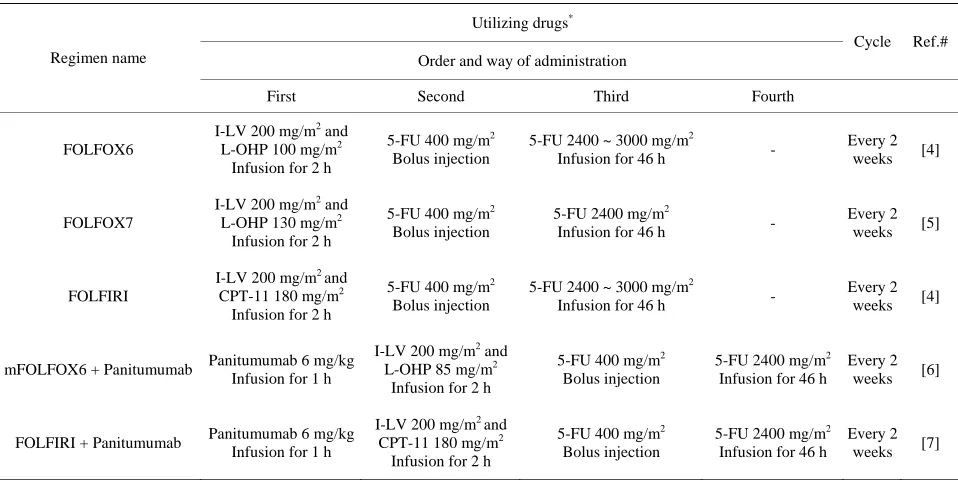
Biochemical modulation (BCM) is defined as one of a methodology of combination therapy that aimed to en- hance pharmacological effect and/or suppress serious side effect by taking advantage of modulator drug(s) to mo- difying pharmacokinetics of effector (main) drug [1,2]. In the BCM-based chemotherapy, the drugs are adminis- tered sequentially or simultaneously according to action mechanism of individual drugs. Since Bertino et al. re-ported in 1977 [3], the theory of BCM has attracted much attention especially in clinical medication and now con- structed a part of basis of current cancer chemotherapy. To date, several regimens have been developed and ap-
plied to clinical cancer chemotherapy by improving drug combination, administration dose, order, timing, and so on (Table 1). Refinement of BCM regimens has surely yielded better outcome of chemotherapy. Since most of regimens, however, need temporally controlled bolus in- jection, infusion, and continuous infusion, the patients are forced to restrain to the bedside for a long time. There- fore, the development of multi drug delivery systems (M DDSs) with single formulation that matched for BCM regimens has been expected.
The development of nanotechnology and subsequent fusion with biotechnology, i.e., the emergence of nano- biotechnology, has made significant impact on life sci- ence, especially medical and pharmaceutical sciences. In addition to development of nanobiotechnology, the rapid advances in materials science also contributes to impro- vement of quality of medicine. Although the excellent drugs often have some inconvenient natures and/or char- acters, such as low solubility, unfavorable biodistribution, and serious side effect, in return for its therapeutic poten- tial, several drug delivery systems (DDSs) based on ap- proaches in nanobiotechnology, such as liposomes [8], polymeric micelles [9,10], polymer particulate [11], and so on, have been developed so far. Some DDS formula- tions have already been reached to the market [12-15], and consequently the established DDSs, especially for cancer chemotherapy, have successfully improved not only therapeutic outcome of conventional drugs but also the patient’s quality of life.
*
Multidrug Delivery Systems with Single Formulation 51
Table 1. Representative BCM based regimens for clinical cancer chemotherapy.
Utilizing drugs*
Order and way of administration
Cycle Ref.# Regimen name
First Second Third Fourth
FOLFOX6
I-LV 200 mg/m2 and
L-OHP 100 mg/m2
Infusion for 2 h
5-FU 400 mg/m2
Bolus injection
5-FU 2400 ~ 3000 mg/m2
Infusion for 46 h -
Every 2 weeks [4]
FOLFOX7
I-LV 200 mg/m2 and
L-OHP 130 mg/m2
Infusion for 2 h
5-FU 400 mg/m2
Bolus injection
5-FU 2400 mg/m2
Infusion for 46 h -
Every 2 weeks [5]
FOLFIRI
I-LV 200 mg/m2 and
CPT-11 180 mg/m2
Infusion for 2 h
5-FU 400 mg/m2
Bolus injection
5-FU 2400 ~ 3000 mg/m2
Infusion for 46 h -
Every 2 weeks [4]
mFOLFOX6 + Panitumumab Panitumumab 6 mg/kg Infusion for 1 h
I-LV 200 mg/m2 and
L-OHP 85 mg/m2
Infusion for 2 h
5-FU 400 mg/m2
Bolus injection
5-FU 2400 mg/m2
Infusion for 46 h
Every 2 weeks [6]
FOLFIRI + Panitumumab Panitumumab 6 mg/kg Infusion for 1 h
I-LV 200 mg/m2 and
CPT-11 180 mg/m2
Infusion for 2 h
5-FU 400 mg/m2
Bolus injection
5-FU 2400 mg/m2
Infusion for 46 h
Every 2 weeks [7]
*
Abbreviated of drug names are respectively following, I-LV:Levofolinate; L-OHP: Oxaliplatin; CPT-11: Camptothecin 11; 5-FU: 5-Fluorouracil.
Although more functional and smart DDSs have been reported with recent remarkable advance of nanobiote- chnology, the development of the MDDSs that are suit- able for controlling of pharmacokinetics of multiple drugs have been still insufficient compared to DDSs for single drug delivery. Therefore, development of new modes and systems, which can effectively and functionally regulate release profiles of multiple drugs from a single formula- tion, is now important issue with significant interest in cur- rent and future DDS research. In past decade, many re- searchers have made huge effort to develop MDDS, and consequently various MDDSs, which can adopt for com- bination therapy, have been established. These attempts have been well summarized in some previous review ar- ticles that are described based on the types of formulation [16-18]. Meanwhile, we will especially focus on the MD DSs related to biochemical modulation (BCM), and re- view the recent attempts from this point of view in this article. The concrete examples of MDDS that can simul- taneously deliver multiple agents will be respectively in- troduced according to individual applications (Section 2). Several approaches for development of sequential multi- ple agent delivery from single formulation are shown in Section 3. Finally, some future perspectives and conclu- sions will given in Section 4.
2. Applications of MDDS for BCM-Based
Chemotherapies
2.1. Serious Side-Effect Reduction
Anticancer drugs often have intolerable side effects, such
as cardiotoxicity, myelosuppression, and gastrointestinal dysfunction. Although anticancer drugs bring enough the- rapeutic efficiency, there are many cases in which admi- nistration of anticancer drug is forced to withdraw due to serious adverse effect. For instance, doxorubicin (DOX) that is one of the most effective and widely used antican- cer drugs has crucial cardiotoxicity. Current major strate- gies to prevent heart injury caused by this drug are en- capsulation of DOX into carrier molecules, such as poly (ethylene glycol) (PEG) modified liposome and poly- meric micelles, or covalent conjugation to biocompatible polymer. These approaches have succeeded in suppres- sion of side effect and enhancement of therapeutic out- come, however, it seems that more active approach against drug-induced cardiomyopathy is needed for more safe and efficient cancer chemotherapy.
whereas it decreased cytotoxicity against endothelial cells and cardiomyocytes, with respect to free EPI treatment.
2.2. Modulation of Cancer Surviving Mechanism
A better understanding of cancer pathophysiology is very important on planning of chemotherapy. Mutated mo- lecules and up- or down-regulated molecules in cancer cells compared with normal cells must be good target of medication. Recently, several researches focused on these molecules as target of therapy have been actively pro- gressed.
It is well known that the tumor suppressor gene, p53, is mutated in a wide variety of human cancer cells. The translational product of p53 gene plays an important role as a transcription factor. There are many target genes related to cell cycle arrest, senescence, and apoptosis, under the regulation of p53. Since the p53 protects cells from several damages by regulating programmed cell death mechanism in the downstream of p53 pathway, the mutation of p53 promotes the surviving of cancer cells. Therefore, it is expected that the recovery of p53 func- tion lead to better outcome of cancer therapy. Wu et al. have reported that chemosensitivity of cancer against several anticancer drugs, such as DOX, cisplatin, pacli-taxel (PTX), and mytomycin C, have been enhanced by adenoviral transfection of wild-type p53 gene [21]. Wi-
radharma et al. have developed the MDDS focused on
this p53 mediated chemosensitizing mechanism [22]. In their co-delivery system of DOX and p53-encoding plasmid DNA (pDNA), the three blocks oligopeptide, Ac-(AF)6-H5-K15-NH2 (FA32), which can simultaneously assemble and form surface cationic core-shell structure at above the critical micelle concentration, was used as car-rier molecule. DOX was encapsulated into hydrophobic core and p53-encoding pDNA was complexed with cati-onic surface of FA32 via electrostatic interaction. The synergistic effect on suppression of Hep-G2 cell prolif-eration was observed by co-delivery of DOX and p53- encoding pDNA using FA32, whereas no synergism was observed by individual treatment of free DOX and FA32/p53-encoding pDNA complex.
Survivin is an unique apoptosis suppressor molecule, which suppress the programmed cell death by inhibit cas- pase family in several cell types [23,24]. Since survivin molecules are expressed in almost of all major cancer cells whereas are not expressed in other differentiated cells [25], it is one of another good target molecule on tumor chemotherapy. To date, many attempts have been made to offset survivin function in cancer cells by dominant-ne- gative mutant, antisense oligonucleotide (ASO), RNA in- terference, and so on. Recently, two successful examples of MDDS, in which abolishment of survivin function and anticancer drug treatment are combined, have been re- ported. Xiao et al. have constructed the liposomal co-de-
livery system of anticancer drug DOX and dominant ne- gative survivin mutant (Msurvivin T34A)-encoding pDNA [26]. This survivin mutant has antiproliferative potential and caspase-dependent apoptosis induction ability for tu- mor cells. In this system, DOX was loaded into internal aqueous phase of truncated bFGF peptide-modified cati- onic liposome taking advantage of pH gradient remote loading method, and then Msurvivin T34A-encoding pDNA was complexed with DOX-loaded cationic liposome via electrostatic interaction. This MDDS has achieved dose reduction of DOX to 3-fold lower level compared to free DOX treatment in vitro. Furthermore, significant tumor growth suppression effect was observed in the Lewis lung carcinoma-bearing C57BL/6 mice by co-delivery of DOX and Msurvivin T34A-encoding pDNA compared to lipo- somal DOX or lipoplex alone. Another example of MDDS related to the combination of anticancer drug treatment and survivin counteraction has been reported from Xu et
al [27]. In this system, the survivin-targeted RNAi en-
coding pDNA (iSur-pDNA)/protamine complexes and DCTX were encapsulated by folate-modified lipid-based envelope via the lipid film hydration technique. This newly constructed formulation showed lower cytotoxicity com- pared to commercially available liposomal transfection reagent and enhanced internalizing ability due to folate- modification. As the result of in vitro cytotoxicity eva- luation against for hepatocellular carcinoma cell line BEL 7402, the MDDS showed much higher cytotoxicity than the single treatment by DCTX or iSur-pDNA mono- loaded folate-modified lipid-based envelope. In addition, the cytotoxicity provided by co-delivery of DCTX and iSur-pDNA using the MDDS was also higher than the combination of free DCTX and iSur-pDNA mono-loaded folate-modified lipid-based envelope. These results sug- gest that the simultaneous delivery (i.e., the MDDS) is more effective on the combination of cancer chemother- apy and survivin targeted therapy.
2.3. Tumor Starving Therapy
The tumor growth and angiogenesis are closely related to each other. The primary tumors and metastatic tumors upregulate angiogenesis by secreting of several angioge- nesis related factors, such as vascular endothelial growth factor (VEGF), matrix metalloproteases (MMPs), and so on, and acquire nutrition needed for own growth from the induced neovessels. If suppression of the tumor-induced angiogenesis and/or disruption of neovessels that provide nutrition to tumor can be achieved, tumor growth inhibi- tion therapy will be realized. The angiogenesis-targeted cancer therapy is especially called as “Tumor starving the- rapy”, because nutrition supply to tumor is blocked by sup- pression of angiogenesis or disruption of neovasculature.
Multidrug Delivery Systems with Single Formulation 53
combrestatin A4 phophate, which is natural product iso- lated from the South African tree Combretum caffrum. CA4 acts as tubulin inhibitor in endothelial cells, and conse- quently induce neovascularture disruption. Owing to its ability, CA4 gets much attention as antivasculature (vas-cular disrupting) agents. Even though the single CA4 treat- ment shows some promising results in clinical trial, it is expected that the combination of CA4 and another drug(s) will redound superior therapeutic outcome [28].
Some groups have developed the MDDS aimed for co-delivery of CA4 and anticancer drug [29-31]. Wang et
al. have developed the MDDS, which can co-deliver CA4
and PTX [30]. In their system, nanocapsule that consists of mPEG2000-PLA2000 block copolymer was used as car- rier molecule. PTX was covalently conjugated to the ter- minal of PLA side via ester bond, and then CA4 was en- capsulated into hydrophobic core during nanocapsules formation. In the in vivo Matrigel plug assay, the dual loaded nanocapsule showed significant antiangiogenesis effect compared to treatment with single drug loaded na- nocapsule. Moreover, in the Lewis lung carcinoma tumor- bearing mice, the most significant tumor growth suppres- sion effect was observed by dual drug loaded nanocap- sule treatment. The improved co-delivery system of CA4
and DOX has been reported from Yang et al. [31]. The
cyclic pentapeptide, cyclic arginine-glycine-aspartic acid- tyrosine-lysine (cRGDyK), which is well known as rec-ognition motif for integrins, was conjugated to the PEG- side terminal of PEG-b-PLA block copolymer. Since expression of integrins, especially αvβ3 and αvβ5, are up- regulating in sprouting neovasculature as well as various cancer cells, the targeting ability to angiogenic endothe-lial cells and tumor have provided to this system by in-troducing RGD motif (cRGDyK). The cRGDyK-modi- fied nanomicelle system, in which DOX and CA4 were loaded by chemical conjugation and simultaneous encap- sulation, respectively, showed significantly enhanced up- take of the drugs by cancer and endothelial cells via re- ceptor-mediated endocytosis. Furthermore, in the in vivo experiment, this cRGDyk-modified and dual-loaded sys- tem achieved superior tumor growth inhibition, antine- ovasculature, and apoptosis induction compared to each single-drug loaded nanomicelles.
TNP-470 is a synthetic analogue of fumagillin with potent antiangiogenic ability [32]. Although TNP-470 has strong potency as anticancer drug, the use of TNP-470 is limited due to its dose limiting neurotoxicity. Since seri- ous adverse effect of TNP-470 is ascribed to its unfavor- able biodistribution characteristic and low solubility, the improvement of bioavailability has been achieved by conjugation to highly biocompatible N-(2-hydroxypro- pyl)methacrylamide (HPMA) copolymer [33]. In order to
acquire further therapeutic outcome, Segal et al. have
constructed the MDDS based on the HPMA-TNP-470 conjugate [34]. In this work, both alendronate (ALN) and
TNP-470 were covalently conjugated to HPMA copoly-mer via short peptide linker (Gly-Gly-Pro-Nle), which can be cleaved by cathepsin K specifically overexpressed in bone tissue. The drug ALN has not only bone targeting ability but also antitumor activity and antiangiogenic po- tential. Thus this co-delivery system utilizing HPMA copo- lymer-ALN-TNP-470 conjugate exerted passive/active- targeting ability and synergistic antineovasculature and
anticancer activity in vivo. The HPMA copolymer-ALN-
TNP-470 conjugate remarkably suppressed MG-63-ras human osteosarcoma growth in xenograft mice by 96%, whereas the only 45% growth inhibition was observed by combination treatment of free drugs. Simultaneously, im- munohistochemistry revealed 74% reduction of neovas- cularization in mice treated with HPMA copolymerALN- TNP-470 conjugate, meanwhile the dual treatment with free drugs showed only 39% reduction.
VEGF is one of glycoproteins, which is related to vas- culogenesis and angiogenesis. VEGF binds to vascular endothelial cells via specific VEGF receptor on cell sur- face, and induces cell mitosis, migration, and differentia- tion. Since many cancer cells are upregulating the pro- duction and secretion of VEGF for own survival and growth, suppression of the VEGF expression in tumor cells and overriding of the secreted VEGF will be good strate- gies for cancer therapy. In several clinical trials, addition of VEGF specific monoclonal antibody (Avastin), which can void VEGF function, to pre-existing combination che- motherapy has lead to better outcome.
As far as the MDDS for VEGF targeted combination therapy is concerned, the combination between conven- tional anticancer drug treatment and knock down of VEGF production by RNAi has been attempted [35,36]. For ins-
tance, Huang et al. have developed the MDDS of DOX
and VEGF targeted siRNA by using cationic polymer micelle that consists of stearic acid-grafted polyethyle-neimine (PEI-SA) [36]. Since the carrier molecule PEI- SA can spontaneously form micelle structure having hy- drophobic core and cationic hydrophilic shell, hydropho- bic PTX was encapsulated into core region and then and anionic siRNA was complexed with cationic PEI-SA po- lymer micelle via electrostatic interaction. In the in vitro experiment, dual-loaded PEI-SA micelles treatment showed significant reduction of VEGF production in Hep G-2 (human hepatocellular carcinoma) cells. At day 30 of post- intratumoral administration, remarkable tumor growth sup- pression (13.0% of control) by simultaneous delivery of DOX and VEGF targeted siRNA using PEI-SA micelles was observed, whereas siRNA or DOX single loaded PEI- SA micelles treatment displayed slightly lower effect (33.7% and 56.7% of control, respectively).
2.4. Multidrug Resistance Reversal of Cancer
survival ability of cancer cells under the treatment with structurally and functionally diverse anticancer drugs. Since MDR is a major obstacle in clinical cancer chemo- therapy, establishment of treatment strategies to overcome the cancer MDR is now becoming the great issue to be resolved for success of tumor therapy. The underlying me- chanism of cancer MDR has been intensively researched and revealed to date. MDR phenotype in various type of cancer is frequently associated with upregulation of the permeability-glycoprotein (P-gp). P-gp, encoded by the human multidrug resistance gene, MDR1, is a member of ATP-binding cassette (ABC) transporter superfamily, which can act as active efflux pump at plasma membrane. Can-cer cells possessing MDR ability are exerting chemore-sistance by reducing intracellular drug concentration uti- lizing the overexpressed P-gp. Therefore, P-gp has attracted much attention as a promising target for overcoming can- cer chemoresistance, and many researches about cancer chemotherapy that combined with P-gp targeted MDR reversal and conventional anticancer drug treatment have been intensively progressed. As far as P-gp-targeted MDR reversal is concerned, two strategies, i.e., inhibition of P-gp function by chemosensitizers, and MDR1 gene silencing utilizing ASO or RNAi, have been employed.
Chemosentitizers, such as verapamil (VRP), Elacridar, Tariquidar, and so on, mainly act as antagonist for P-gp and suppress drug efflux, and consequently recover che- mosensitivity of MDR cancer cells. Since required dose (2 µM - 6 µM) of VRP for P-gp inhibition is, however, significantly higher than the clinical dose for arrhythmia treatment and may induce cardiotoxicity, adoption of DDS, especially MDDS, to this system will be appropri-ate way to reduce unfavorable side effect and to enhance therapeutic outcome. Indeed, various liposomal or nano- particulate MDDSs that can co-deliver both chemosensi-tizer and anticancer drug have been reported. Wang et al. developed the liposomal MDDS, in which both VRP and DOX were simultaneously loaded into internal aqueous phase of Stealth liposomes (PEGylated liposomes) by pH- gradient remote loading method. [37]. This system had demonstrated high MDR reversal ability against the mul-tidrug resistant rat prostate cancer cell line (Mat-LyLu- B2 cells). Based on the preceding work, Wu et al. estab-lished improved liposomal MDDS possessing cancer-tar- geting ability [38]. In their system, transferrin (Tf), a li- gand for transferrin receptor frequently overexpressed in tumor and leukemia cells, was conjugated to surface of Stealth liposome. Tf-modified dual-loaded Stealth lipo-some (Tf-L-DOX/VRP) showed Tf-mediated targeting ability and high efficiency of MDR reversal to DOX-re- sistant K562 leukemia cells. The MDR reversal efficiency of Tf-L-DOX/VRP was 5.61 times superior to free DOX treatment, whereas non-targeted Stealth liposome treat- ment was almost equivalent to free DOX.
In the case of nanoparticulate MDDSs aimed for MDR reversal, various types of carriers, such as ionic polysac- charide microsphere [39], polyalkylcyanoacrylate nano- particle [40], nanoparticles consist of highly biocompati- ble polymers [41-43], and polymer-lipid hybrid nanopar- ticle [44,45], are utilized for dual-loading of chemosensi- tizer and anticancer drug. The successful example has been reported from Patil et al. [43]. In their system, PTX and tariquidar, the third generation P-gp inhibitor, were encapsulated into biotin-modified PLGA nanoparticle dur- ing preparation by oil-in-water emulsion solvent evapo- ration method. Dual loaded nanoparticles showed sig- nificantly higher cytotoxicity in vitro compared to PTX single-loaded nanoparticles. Enhanced cytotoxicity caused by dual loaded nanoparticles treatment had been in good agreement with increased PTX-accumulation in drug-re- sistant cancer cells. The remarkable tumor growth inhibi- tion was observed in drug-resistant tumor-bearing mice that treated with biotinylated nanoparticles encapsulating both PTX and tariquidar. Noteworthy, this therapeutic effect had been achieved at lower PTX dose that would be ineffective in the absence of tariquidar.
MDR1 gene silencing by ASO or siRNA are also at-tempted to suppress overexpression of P-gp and increase chemosensitivity of drug-resistant cancer [46,47]. For ex- ample, three agents (DOX, MDR1 and Bcl-2 targeted ASO) loaded Stealth liposome was prepared and applied to MDR reversal [46]. The distinctive feature of this system is that simultaneously aiming for suppression of DOX efflux by P-gp and enhancement of DOX-induced apoptosis. Three agents loaded liposomal MDDS achieved almost five-order reduction of IC50 value against for multidrug-resistant A2870/AD human ovarian carcinoma cells compared to free DOX treatment. The PEGylated liposome encapsu- lating DOX and ASOs showed significant tumor growth inhibition that correlated to enhanced apoptosis observed in tumor tissue of multidrug-resistant A2870 xenograft mouse model.
3. Sequential Multi-Agent Delivery by
Bulk System
Multidrug Delivery Systems with Single Formulation 55
with bulk matrices could be roughly classified into two categories, i.e., multilayered and composite system.
3.1. Multilayered System
The structural feature of this system is the multilayered structure that composed of hydrogels, polymer-form, po- lymer-film, and so on. In the multilayered systems, the release sequence of individual agents can control by la- mination of agent-loaded layer in adequate and required order. Exceptionally the monolayer system of alginate hydrogel, in which release order of VEGF and PDGF is controlled by difference of diffusibility from gel matrix, has been reported from Hao et al. [50].
Some multilayered systems have been reported to date [51-53]. For example, the two-layered heterogeneously loaded and crosslinked gelatin gel system was prepared for sequential delivery of two bone growth factors, BMP- 2 and IGF-I, by Raiche and Puleo [51]. In their system, the burst release of growth factors was suppressed by crosslink ratio of individual layer. Pluripotent C3H10T1/2 cells exhibited significantly higher levels of osteoblastic phenotype, such as alkaline phosphatase activity and mi- neralized matrix formation, at early phase through culti- vation on the two-layered gel matrix, which was release- able BMP-2 and IGF-I in appropriate order (i.e., BMP-2 followed sequentially by IGF-I or BMP-2 plus IGF-I). More practical use directed system has been developed by Strobel et al. [53]. In their system, titanium Kirschner wire (K-wire) commonly used for fracture treatment was multiply coated with poly(D,L-lactide) (PDLLA) by dip- ping method. To form multiple coating on the surface, K-wire was sequentially immersed into three solutions of PDLLA that individually included gentamicin (antibiot- ics), IGF-I, or BMP-2. Prevention of infections on wound region was also aimed in addition to the stimulation of bone healing in this system. The multilayer coated K-wire displayed distinctitve release profile: 1) a burst release of gentamicin; 2) a burst and sustained release of IGF-I; and 3) a slow sustained release of BMP-2.
3.2. Composite System
Composite systems are commonly constructed by doping particulate DDS into bulk materials, such as hydrogel, polymer-form, and so on. The agents should be delivered are separately incorporated into particulate DDS and bulk material, respectively. Or the agents are loaded respec- tively into different particulate DDSs, and the bulk mate- rial is used only as a support of doped particulate. In this system, release profiles of individual agents are controlled by diffusibility from bulk material and/or releasing prop- erty of the utilized particulate DDS.
Hasirci and co-workers have attempted to develop se- quential multi-agents delivery system for bone tissue en-
gineering utilizing composite system. They first reported the poly(4-vinyl pyridine) (P4VP)/alginate microsphere doped PLGA-form scaffold for sequential delivery of BMP-2 and BMP-7 [54]. In this system, the release pro- files of two growth factors can be controlled by P4VP/- alginic acid concentration at microsphere preparation. They also reported another BMP-2/BMP-7 sequential de- livery system [55]. Two different polymers, PLGA and poly(3-hydroxybutyrate-co-3-hydroxyvalerate) (PHBV), were used for preparation of fast- and slow-releasing na- nocapsules, respectively, and these nanoparticles having different release rate were loaded to the chitosan-based wet-spun fiber scaffold. In each system, the sequential delivery of BMP-2 and BMP-7 from single formulation synergistically enhanced osteogenic differentiation against rat bone marrow derived stem cells. On the other hand, the injectable sequential multi-agents delivery system, which consists of PLG microsphere loaded alginate hy- drogel, has been developed by Sun et al. [56]. In their system, two angiogenesis related growth factors, VEGF and PDGF, were respectively incorporated into alginate hydrogel and PLG microsphere for efficient neovascu- lalization on ischemic lesion site. The local concentra- tions of VEGF and PDGF on injected site reached peak level at week 2 and 4, respectively, and sustained PDGF release lasted to week 6. Sequential VEGF/PDGF deliv- ery significantly promoted angiogenesis and induced re- perfusion compared to single VEGF delivery or control.
3.3. Approaches for More Rigorous Temporal Release Control
The importance of sequential administration with pre-de- termined order and/or timing has been demonstrated in several systems, such as BCM-based cancer chemother-apy [3,57,58], bone regeneration [59], angiogenesis [60], and so on. According to these reports, it is expected that the precise control of release characteristics, especially administration order and timing, can be led more improved therapeutic outcome. However, all systems that developed to date have simultaneous releasing period. To realize more functional and effective combination therapy, more rig- orous temporally controlled sequential release system has to be developed. It seems that this is one of major issue should be attempted. To address this issue, some approa- ches have been reported.
respectively encapsulated into interior of MBG via hy- drogen bond and core of PBGL-g-PEG nanomicelle via hydrophobic interaction. At low pH condition, the inter- action between gentamicin and MBG surface was weak- ened with increasing of H+, and consequently gentamicin was quickly released, whereas the L-glutamate side chain was protonated and naproxen was stably encapsulated in PBGL-g-PEG nanomicelle core. Meanwhile, the opposite phenomenon was caused at high pH condition. The pH-con- trolled release of this system was realized due to opposite pH-dependency of release behavior of each material. The further functionalized dual-drug delivery system that can be response to both pH and temperature has been reported from Wei et al. [62]. In their system, pH-responsive chi- tosan/poly(vinyl alchol) hydrogel and pH/temperature dual responsive poly(L-glutamic acid)-b-poly(propylene oxide)
-b-poly(L-glutamic acid) (GPG) micelle were employed
and combined to encapsulate aspirin and DOX, respec- tively. With increasing pH value, the release rate of aspi- rin from chitosan/PVA hydrogel was accelerated, whereas DOX release from GPG micelle was facilitated with pH value lowering and/or temperature elevation.
Although the above-mentioned approaches are very interesting and useful from the standpoint of the rigorous release timing control, the temporal regulation is still insufficient. To address this issue, we have developed the multilayered nanofiber mesh system for time-programmed dual-drug delivery utilizing the sequential electrospinning method [63]. Electrospinning is a key technology that can easily fabricate nano-/micro-fiber mesh from various polymers. Since electrospun products have some distinc- tive properties such as high surface-area-to-volume ratio, flexible designability of morphology, and extracellular matrix-like structure, they have attracted much attention in the research fields of DDS and tissue engineering. The multilayered drug-loaded fiber mat that consists of bio- degradable PLCL was designed with the following con- struction from top to bottom: 1) the first drug-loaded mesh; 2) plain mesh act as barrier; 3) the second drug-loaded mesh; and 4) the basement plain mesh. In our system, to prevent simultaneous release of the second drug during the first drug release, the basement and barrier mesh were prepared as having enough thickness and the second drug loaded mesh was sealed between the basement and bar- rier mesh. The release suppression period of the second drug could be prolonged in the barrier mesh thickness dependent manner. Based on four-layered structure, intro- duction of the complete suppression period of the second- drug release at the end of the first-drug release was achie- ved by setting of barrier mesh with appropriate thickness, and subsequently the second-drug release was initiated and lasted. Moreover, since the release rate of individual drugs from electrospun fiber was accelerated with de- creasing of fiber diameter, the release profile of whole
system could be altered by controlling of fiber diameter. This is the first example of time-programmed dual-drug sustained release utilizing multilayered electrospun fiber mat formulation. Namely, we have successfully devel- oped the sequential MDDS that would be able to realize more functional and effective combination therapy.
4. Future Perspective
As we introduced and mentioned in preceding sections, huge efforts have been devoted by researchers to estab- lish the MDDSs with single formulation in the past dec- ade. With recent remarkable evolution of nanobiotech- nology and material sciences, not only exploitation of novel system but also improvement of pre-existing sys-tem have been actively atsys-tempted, and consequently vari- ous promising results have been demonstrated. However, it seems that there are still some rooms for further im- provement. Especially, the development of more efficient active targeting system, more functionalized system, and more rigorously time controlled multi-drug/agent release system would be important issue in current and future DDS research.
The development of novel ligand would be essentially important for development of more efficient active tar- geting system. The contribution of nanobiotechnology would be indispensable for exploring of novel targeting molecules by high-throughput screening. Since DNA ap- tamers, which has antibody-compatible specific binding ability for several kinds of antigen, has been found out day by day [64], DNA aptamers would be one of prom- ising molecule for more efficient active targeting. Fur-thermore, in recent years, development of multi-functional DDSs possessing not only drug delivery but also bioima- ging ability has attracted much attention in the research field of DDS. Supplementation of bioimaging capability is very useful attempt in terms of visualization of the the- rapeutic effect. Indeed, development of bioimaging com- patible MDDSs have been started [65-67]. The addition of extra function such as bioimaging has also been ex- pected.
Multidrug Delivery Systems with Single Formulation 57
release control. Concretely, smart material that can change own characteristics responded to various environmental stimuli such as temperature, pH, and so on, and nano- scale precise processing technology such as layering, alignment, and configuration will be extensively required. In addition, although pre-constructed bulk formulation is potentially possessing restriction on selection of admini-stration site, this issue will be circumvented by develop-ment of more flexible system such as injectable hydrogel that can perform in situ sol-gel phase transition or che- mical polymerization.
In conclusion, although development of MDDS with single formulation having simultaneous or precisely-con- trolled sequential delivery capability is still immature and challenging field in DDS research, it is expected that establishment of more improved and functional MDDS would expand the potential of combination therapy based on BCM. For realization of more efficient, functional, and safe BCM-based multiple medications with the MDDS, the contributions of biomaterials science and nanobio-technology to every steps of MDDS construction are es- sentially required. Moreover, since investigation and selec- tion of effective drug combinations is an important factor for BCM-based chemotherapy, strategic alliance among experts of different fields such as medical doctors, para- medics, biologists, and engineers, would be also needed. We have expected early realization of combination ther- apy by MDDS with single formulation in clinical medi- cation by synergistic cooperation of researchers.
REFERENCES
[1] D. S. Martin, R. L. Stolfi, R. C. Sawyer and C. W. Young, “Application of Biochemical modulation with a Thera- peutically Inactive Modulating Agent in Clinical Trials of Cancer Chemotherapy,” Cancer Treatment Report, Vol. 69, No. 4, 1985, pp. 421-423.
[2] B. Leyland-Jones and P. J. O’Dwyer, “Biochemical Modu- lation: Application of Labolatory Models to the Clinic,”
Cancer Treatment Report, Vol. 70, No. 1, 1986, pp. 219-
229.
[3] J. R. Bertino, W. L. Sawicki, C. A. Lindquist and V. S. Gu- pta, “Schedule-Dependent Antitumor Effects of Metho- trexate and 5-Fluorouracil,” Cancer Research, Vol. 37, No. 1, 1977, pp. 327-328.
[4] C. Tournigand, et al., “FOLFIRI Followed by FOLFOX6 or the Reverse Sequence in Advanced Colorectal Cancer: A Randomized GERCOR Study,” Journal of Clinical
Onco- logy, Vol. 22, No. 2, 2004, pp. 229-237.
doi:10.1200/JCO.2004.05.113
[5] F. Maindrault-Goebe, et al., “High-dose Intensity Oxali- platin Added to the Simplified Bimonthly Leucovorin and 5-Fluorouracil Regimen as Second-Line Therapy for Me- tastatic Colorectal Cancer (FOLFOX 7),” European Jour-
nal of Cancer, Vol. 37, No. 8, 2001, pp. 1000-1005.
doi:10.1016/S0959-8049(01)00068-5
[6] J. C. Bendell, et al., “Randomized Phase II Study of Peri-fosine in Combination with Capecitabine (P-CAP) versus Capecitabine Plus Placebo (CAP) in Patients with second- or Third-line Metastatic Colon Cancer (mCRC): Updated Results,” Gastrointestinal Cancers Symposium, Orland, 22-24 January 2010.
[7] M. Peeters, et al., “Randomized Phase III Study of Pani- tumumab (pmab) with FOLFIRI versus FOLFIRI Alone as Second-Line Treatment (tx) in Patients (pts) with Me- tastatic Colorectal Cancer (mCRC): Patient-Reported Out- comes (PRO),” Gastrointestinal Cancers Symposium, Or- land, 22-24 January 2010.
[8] V. Torchilin, “Recent Advances with Liposomes as Phar- maceutical Carriers,” Nature Reviews Drug Discovery, Vol. 4, No. 2, 2005, pp. 145-160. doi:10.1038/nrd1632
[9] Y. Kakizawa and K. Kataoka, “Block Copolymer Micelles for Delivery of Gene and Related Compounds,” Advanced
Drug Delivery Reviews, Vol. 54, No. 2, 2002, pp. 203-222.
doi:10.1016/S0169-409X(02)00017-0
[10] M. Yokoyama, “Polymeric Micelles as a New Drug Car- rier System and Their Required Considerations for Clini- cal Trials,” Expert Opinion on Drug Delivery, Vol. 7, No. 2, 2010, pp. 145-158. doi:10.1517/17425240903436479
[11] C. Amin, N. Mackman and N. S. Key, “Microparticles and Cancer,” Pathophysiology of Haemostasis and Thrombo- sis, Vol. 36, No. 3-4, 2008, pp. 177-183.
doi:10.1159/000175155
[12] H. Maeda, T. Sawa and T. Konno, “Mechanism of Tumor- Targeted Delivery of Macromolecular Drugs, Including the EPR Effect in Solid Tumor and Clinical Overview of the Prototype Polymeric Drug SMANCS,” Journal of Con-
trolled Release, Vol. 74, No. 1-3, 2001, pp. 47-61.
doi:10.1016/S0168-3659(01)00309-1
[13] N. D. James, et al., “Liposomal Doxorubicin (Doxil): An Effective New Treatment for Kaposi’s Sarcoma in AIDS,”
Clinical oncology, Vol. 6, No. 5, 1994, pp. 294-296.
doi: 10.1016/S0936-6555(05)80269-9
[14] S. de Marie, R. Janknegt, and I. A. Bakker-Woudenberg, “Clinical Use of Liposomal and Lipid-Complexed Am- photericin B,” The Journal of Antimicrobial Chemother- apy, Vol. 33, No. 5, 1994, pp. 907-916.
|doi:10.1093/jac/33.5.907
[15] M. Harries, P. Ellis and P. Harper, “Nanoparticle Albumin- Bound Paclitaxel for Metastatic Breast Cancer,” Journal
of clinical oncology, Vol. 23, No. 31, 2005, pp. 7768-
7771. doi:10.1200/JCO.2005.08.002
[16] F. Greco and M. J. Vicent, “Combination Therapy: Op- portunities and Challenges for Polymer-Drug Conjugates as Anticancer Nanomedicines,” Advanced Drug Delivery
Reviews, Vol. 61, No. 13, 2009, pp. 1203-1213.
doi:10.1016/j.addr.2009.05.006
[17] C.-M. J. Hu, S. Aryal and L. Zhang, “Nanoparticle-As- sisted Combination Therapies for Effective Cancer Treat- ment,” Therapeutic Delivery, Vol. 1, No. 2, 2010, pp. 323- 334. doi:10.4155/tde.10.13
[18] H. Zhang, G. Wang, and H. Yang, “Drug Delivery Sys- tems for Differential Release in Combination Therapy,”
Expert Opinion on Drug Delivery, Vol. 8, No. 2, 2011, pp.
[19] L. Santucci, et al., “Nitric Oxide Modulates Proapoptotic and Antiapoptotic Properties of Chemotherapy Agents: The Case of NO-Pegylated Epirubicin,” The FASEB Journal, Vol. 20, No. 6, 2006, pp. 765-767.
doi:10.1096/fj.05-4452fje
[20] G. Pasut, et al., “Polymer-Drug Conjugates for Combina- tion Anticancer Therapy: Investigating the Mechanism of Action,” Journal of Medicinal Chemistry, Vol. 52, No. 20, 2009, pp. 6499-6502. doi:10.1021/jm900804m
[21] Q. Wu, R. Kreienberg and I. B. Runnebaum, “Growth Suppression of Human Ovarian Carcinoma OV-MZ-2a and OV-MZ-32 Cells Mediated by Gene Transfer of Wild- Type p53 Enhanced by Chemotherapy in Vitro,” Journal
of Cancer Research and Clinical Oncology, Vol. 126, No.
3, 2000, pp. 139-144. doi:10.1007/s004320050023
[22] N. Wiradharma, Y. W. Tong and Y. Y. Yang, “Self-Assem- bled Oligopeptide Nanostructures for Co-Delivery of Drug and Gene with Synergistic Therapeutic Effect,” Biomate-
rials, Vol. 30, No. 17, 2009, pp. 3100-3109.
doi: 10.1016/j.biomaterials.2009.03.006
[23] S. Shin, et al., “An Anti-Apoptotic Protein Human Survi- vin Is a Direct Inhibitor of Caspase-3 and -7,” Biochemis- try, Vol. 40, No. 4, 2001, pp. 1117-1123.
doi:10.1021/bi001603q
[24] A. Chandele, V. Prasad, J. C. Jagtap, R. Shukla and P. R. Shastry, “Upregulation of Survivin in G2/M Cells and In- hibition of Caspase 9 Activity Enhances Resistance in Staurosporine-Induced Apoptosis,” Neoplasia, Vol. 6, No. 1, 2004, pp. 29-40.
[25] J. C. Reed, “The Survivin Saga Goes in Vivo,” The Jour-
nal of Clinical Investigation, Vol. 108, No. 7, 2001, pp.
965-969. doi:10.1172/JCI14123
[26] W. Xiao, X. Chen, L. Yang, Y. Mao, Y. Wei and L. Chen, “Co-Delivery of Doxorubicin and Plasmid by a Novel FGFR-Mediated Cationic Liposome,” International Jour-
nal of Pharmaceutics, Vol. 393, No. 1-2, 2010, pp. 119-
126. doi:10.1016/j.ijpharm.2010.04.018
[27] Z. Xu, Z. Zhang, Y. Chen, L. Chen, L. Lin and Y. Li, “The Characteristics and Performance of a Multifunc- tional Nanoassembly System for the Co-Delivery of Do- cetaxel and iSur-pDNA in a Mouse Hepatocellular Car- cinoma Model,” Biomaterials, Vol. 31, No. 5, 2010, pp. 916-922. doi:10.1016/j.biomaterials.2009.09.103
[28] G. M. Tozer, C. Kanthou and B. C. Baguley, “Disrupting Tumour Blood Vessels,” Nature Reviews Cancer, Vol. 5, No. 6, 2005, pp. 423-435. doi:10.1038/nrc1628
[29] Y.-F. Zhang, J.-C. Wang, D.-Y. Bian, X. Zhang and Q. Zhang, “Targeted Delivery of RGD-Modified Liposomes Encapsulating both Combretastatin A-4 and Doxorubicin for Tumor Therapy: In Vitro and in Vivo Studies,” Euro-
pean Journal of Pharmaceutics and Biopharmaceutics,
Vol. 74, No. 3, 2010, pp. 467-473. doi:10.1016/j.ejpb.2010.01.002
[30] Z. Wang and P. C. Ho, “A Nanocapsular Combinatorial Sequential Drug Delivery System for Antiangiogenesis and Anticancer Activities,” Biomaterials, Vol. 31, No. 27, 2010, pp. 7115-7123.
doi:10.1016/j.biomaterials.2010.05.075
[31] T. Yang, et al., “Targeted Delivery of a Combination The-
rapy Consisting of Combretastatin A4 and Low-Dose Do- xorubicin against Tumor Neovasculature,” Nanomedicine:
Nanotechnology, Biology, and Medicine, 2011, in press.
doi:10.1016/j.nano.2011.05.003
[32] D. Ingber, et al., “Synthetic Analogues of Fumagillin that Inhibit Angiogenesis and Suppress Tumour Growth,” Na- ture, Vol. 348, No. 6301, 1990, pp. 555-557.
doi:10.1038/348555a0
[33] R. Satchi-Fainaro, et al., “Targeting Angiogenesis with a Conjugate of HPMA Copolymer and TNP-470,” Nature
Medicine, Vol. 10, No. 3, 2004, pp. 255-261.
doi:10.1038/nm1002
[34] E. Segal, et al., “Targeting Angiogenesis-Dependent Cal-cified Neoplasms Using Combined Polymer Therapeu- tics,” PloS One, Vol. 4, No. 4, 2009, p. e5233.
doi:10.1371/journal.pone.0005233
[35] C. Zhu, et al., “Co-Delivery of siRNA and Paclitaxel into Cancer Cells by Biodegradable Cationic Micelles Based on PDMAEMA-PCL-PDMAEMA Triblock Copolymers,”
Biomaterials, Vol. 31, No. 8, 2010, pp. 2408-2416.
doi:10.1016/j.biomaterials.2009.11.077
[36] H.-Y. Huang, W.-T. Kuo, M.-J. Chou and Y.-Y. Huang, “Co-Delivery of Anti-Vascular Endothelial Growth Fac- tor siRNA and Doxorubicin by Multifunctional Polymeric Micelle for Tumor Growth Suppression,” Journal of Bio-
medical Materials Research Part A, Vol. 97, No. 3, 2011,
pp. 330-338. doi:10.1002/jbm.a.33055
[37] J. Wang, et al., “In Vitro Cytotoxicity of Stealth Lipo- somes Co-Encapsulating Doxorubicin and Verapamil on Doxorubicin-Resistant Tumor Cells,” Biological & Phar-
maceutical Bulletin, Vol. 28, No. 5, 2005, pp. 822-828.
doi:10.1248/bpb.28.822
[38] J. Wu, et al., “Reversal of Multidrug Resistance by Trans- ferrin-Conjugated Liposomes Co-Encapsulating Doxoru- bicin and Verapamil,” Journal of Pharmacy & Pharma-
ceutical Sciences, Vol. 10, No. 3, 2007, pp. 350-357.
[39] Z. Liu, X. Y. Wu and R. Bendayan, “In Vitro Investiga- tion of Ionic Polysaccharide Microspheres for Simulta- neous Delivery of Chemosensitizer and Antineoplastic Agent to Multidrug-Resistant Cells,” Journal of Pharma-
ceutical Sciences, Vol. 88, No. 4, 1999, pp. 412-418.
doi:10.1021/js9803353
[40] C. E. Soma, C. Dubernet, D. Bentolila, S. Benita and P. Couvreur, “Reversion of Multidrug Resistance by Co-En- capsulation of Doxorubicin and Cyclosporin A in Polyal- kylcyanoacrylate Nanoparticles,” Biomaterials, Vol. 21, No. 1, 2000, pp. 1-7. doi:10.1016/S0142-9612(99)00125-8
[41] X. Song, et al., “PLGA Nanoparticles Simultaneously Loaded with Vincristine Sulfate and Verapamil Hydro- chloride: Systematic Study of Particle Size and Drug En- trapment Efficiency,” International Journal of Pharma-
ceutics, Vol. 350, No. 1-2, 2008, pp. 320-329.
doi:10.1016/j.ijpharm.2007.08.034
[42] X. R. Song, et al., “Reversion of Multidrug Resistance by Co-Encapsulation of Vincristine and Verapamil in PLGA Nanoparticles,” European Journal of Pharmaceutical Sci-
ences, Vol. 37, No. 3-4, 2009, pp. 300-305.
doi:10.1016/j.ejps.2009.02.018
Multidrug Delivery Systems with Single Formulation 59
cle-Mediated Simultaneous and Targeted Delivery of Pa- clitaxel and Tariquidar Overcomes Tumor Drug Resis- tance,” Journal of Controlled Release, Vol. 136, No. 1, 2009, pp. 21-29. doi:10.1016/j.jconrel.2009.01.021
[44] H. L. Wong, R. Bendayan, A. M. Rauth and X. Y. Wu, “Development of Solid Lipid Nanoparticles Containing Ionically Complexed Chemotherapeutic Drugs and Che- mosensitizers,” Journal of Pharmaceutical Sciences, Vol. 93, No. 8, 2004, pp. 1993-2008. doi:10.1002/jps.20100
[45] H. L. Wong, R. Bendayan, A. M. Rauth and X. Y. Wu, “Si- multaneous Delivery of Doxorubicin and GG918 (Elacri- dar) by New Polymer-Lipid Hybrid Nanoparticles (PLN) for Enhanced Treatment of Multidrug-Resistant Breast Cancer,” Journal of Controlled Release, Vol. 116, No. 3, 2006, pp. 275-284. doi:10.1016/j.jconrel.2006.09.007
[46] R. I. Pakunlu, Y. Wang, M. Saad, J. J. Khandare, V. Sta- rovoytov and T. Minko, “In Vitro and in Vivo Intracellu- lar Liposomal Delivery of Antisense Oligonucleotides and Anticancer Drug,” Journal of Controlled Release, Vol. 114, No. 2, 2006, pp. 153-162.
doi: 0.1016/j.jconrel.2006.06.010
[47] X.-B. Xiong and A. Lavasanifar, “Traceable Multifunctio- nal Micellar Nanocarriers for Cancer-Targeted Co-Delive- ry of MDR-1 siRNA and Doxorubicin,” ACS Nano, Vol. 5, No. 6, 2011, pp. 5202-5213. doi:10.1021/nn2013707
[48] S. Sengupta, et al., “Temporal Targeting of Tumour Cells and Neovasculature with a Nanoscale Delivery System,”
Nature, Vol. 436, No. 7050, 2005, pp. 568-572.
doi:10.1038/nature03794
[49] H. Nie, Z. Dong, D. Y. Arifin, Y. Hu and C.-H. Wang, “Core/Shell Microspheres via Coaxial Electrohydrody- namic Atomization for Sequential and parallel Release of Drugs,” Journal of Biomedical Materials Research Part A, Vol. 95, No. 3, 2010, pp. 709-716.
doi:10.1002/jbm.a.32867
[50] X. Hao, et al., “Angiogenic Effects of Sequential Release of VEGF-A165 and PDGF-BB with Alginate Hydrogels after Myocardial Infarction,” Cardiovascular Research, Vol. 75, No. 1, 2007, pp. 178-185.
doi:10.1016/j.cardiores.2007.03.028
[51] A. T. Raiche and D. A. Puleo, “In Vitro EFfects of Com- bined and Sequential Delivery of Two Bone Growth Fac- tors,” Biomaterials, Vol. 25, No. 4, 2004, pp. 677-685. doi:10.1016/S0142-9612(03)00564-7
[52] R. R. Chen, E. A. Silva, W. W. Yuen and D. J. Mooney, “Spatio-Temporal VEGF and PDGF Delivery Patterns Blood Vessel Formation and Maturation,” Pharmaceuti-
cal Research, Vol. 24, No. 2, 2007, pp. 258-264.
doi:10.1007/s11095-006-9173-4
[53] C. Strobel, N. Bormann, A. Kadow-Romacker, G. Schmi- dmaier and B. Wildemann, “Sequential Release Kinetics of Two (Gentamicin and BMP-2) or Three (Gentamicin, IGF-I and BMP-2) Substances from a One-Component Po- lymeric Coating on Implants,” Journal of Controlled Re-
lease, Vol. 156, No. 1, 2011, pp. 37-45.
doi:10.1016/j.jconrel.2011.07.006
[54] F. B. Basmanav, G. T. Kose and V. Hasirci, “Sequential Growth Factor Delivery from Complexed microspheres for Bone Tissue Engineering,” Biomaterials, Vol. 29, No.
31, 2008, pp. 4195-4204.
doi:10.1016/j.biomaterials.2008.07.017
[55] P. Yilgor, K. Tuzlakoglu, R. L. Reis, N. Hasirci and V. Ha- sirci, “Incorporation of a Sequential BMP-2/BMP-7 De- livery System into Chitosan-Based Scaffolds for Bone Tissue Engineering,” Biomaterials, Vol. 30, No. 21, 2009, pp. 3551-3559. doi:10.1016/j.biomaterials.2009.03.024
[56] Q. Sun, et al., “Sustained Release of Multiple Growth Fac- tors from Injectable Polymeric System as a Novel Thera- peutic Approach towards Angiogenesis,” Pharmaceutical
Research, Vol. 27, No. 2, 2010, pp. 264-271.
doi:10.1007/s11095-009-0014-0
[57] J. A. MacDiarmid, et al., “Sequential Treatment of Drug- Resistant Tumors with Targeted Minicells Containing siRNA or a Cytotoxic Drug,” Nature Biotechnology, Vol. 27, No. 7, 2009, pp. 643-651. doi:10.1038/nbt.1547
[58] J. Jiangm, et al., “Sequential Treatment of Drug-Resistant Tumors with RGD-Modified Liposomes Containing siRNA or Doxorubicin,” European Journal of Pharmaceutics and
Biopharmaceutics, Vol. 76, No. 2, 2010, pp. 170-178.
doi:10.1016/j.ejpb.2010.06.011
[59] P. Yilgor, N. Hasirci and V. Hasirci, “Sequential BMP-2/ BMP-7 Delivery from Polyester Nanocapsules,” Journal
of Biomedical Materials Research Part A, Vol. 93, No. 2,
2010, pp. 528-536. doi:10.1002/jbm.a.32520
[60] J. E. Tengood, K. M. Kovach, P. E. Vescovi, A. J. Russell and S. R. Little, “Sequential Delivery of Vascular Endo- thelial Growth Factor and Sphingosine 1-Phosphate for Angiogenesis,” Biomaterials, Vol. 31, No. 30, 2010, pp. 7805-7812. doi:10.1016/j.biomaterials.2010.07.010
[61] W. Xia, J. Chang, J. Lin and J. Zhu, “The pH-Controlled Dual-Drug Release from Mesoporous Bioactive Glass/ Polypeptide Graft Copolymer Nanomicelle Composites,” European Journal of Pharmaceutics and Biopharmaceu- tics, Vol. 69, No. 2, 2008, pp. 546-552.
doi:10.1016/j.ejpb.2007.11.018
[62] L. Wei, C. Cai, J. Lin and T. Chen, “Dual-Drug Delivery System Based on Hydrogel/Micelle Composites,” Bio-
materials, Vol. 30, No. 13, 2009, pp. 2606-2613.
doi:10.1016/j.biomaterials.2009.01.006
[63] T. Okuda, K. Tominaga and S. Kidoaki, “Time-Program- med Dual Release Formulation by Multilayered Drug-Loaded Nanofiber Meshes,” Journal of Controlled Release, Vol. 143, No. 2, 2010, pp. 258-264.
doi:10.1016/j.jconrel.2009.12.029
[64] A. S. Barbas, J. Mi, B. M. Clary and R. R. White, “Ap-tamer Applications for Targeted Cancer Therapy,” Future
Oncology, Vol. 6, No. 7, 2010, pp. 1117-1126.
doi:10.2217/fon.10.67
[65] X.-B. Xiong and A. Lavasanifar, “Traceable Multifunc- tional Micellar Nanocarriers for Cancer-Targeted Co-De- livery of MDR-1 siRNA and Doxorubicin,” ACS Nano, Vol. 5, No. 6, 2011, pp. 5202-5213.
doi:10.1021/nn2013707
3, No. 3, 2011, pp. 842-856. doi:10.1021/am101196v [67] C.-C. Huang, W. Huang and C.-S. Yeh, “Shell-by-Shell
Synthesis of Multi-Shelled Mesoporous Silica Nano-
spheres for Optical Imaging and Drug Delivery,” Bioma-
terials, Vol. 32, No. 2, 2011, pp. 556-564.