The Heck reaction is considered to be one of the more useful strategies in organic synthesis for the construction of carbon-carbon bonds. First discovered by Heck in 1968 (1), the reac-tion involves the palladium-catalysed coupling of aryl or alkenyl halides with alkenes, see Scheme I. It has since been expanded to include organometallic reagents (such as Grignard, organolithium and organoselenium reagents), aryl triflates, aryl diazonium salts, and boronic acids and esters as substrates.
The reaction has been comprehensively reviewed (2–7); indeed, a literature search for the “Heck Reaction” showed 11 “hits” for the initial period to 1980, 69 for 1981–1990, 279 for 1990–1995, and from 1995 to May 1999 this figure has increased to 419 (8).
The mechanism of the Heck reaction has been the subject of intense study and the one that is generally accepted is depicted in Scheme II (3, 5–7). The catalytic cycle can be considered in four stages:
(a) oxidative addition, (b) co-ordination/insertion,
(c) b-hydride elimination/dissociation, and (d) regeneration of the Pd(0) species to com-plete the catalytic cycle.
Traditionally, the Heck coupling reaction has been catalysed by PdL4, PdCl2L2or Pd(OAc)2 with two equivalents of added ligand (L). Ligands employed in the Heck reaction include 1,10-phenanthroline derivatives (9, 10) and car-benes (11, 12), but mono- and bidentate phos-phines, such as PPh3or P(o-tolyl)3, are more
The Heck Reaction and Cinnamic Acid
Synthesis by Heterogeneous Catalysis
PALLADIUM ON CARBON CATALYST GIVES IMPROVED PRODUCTION
By Valerie M. Wall, Amihai Eisenstadt, David J. Ager
and Scott A. Laneman
NSC Technologies, Mount Prospect, Illinois, U.S.A.
The Heck reaction for the construction of carbon-carbon bonds, using palladium catalysts, is one of the most valuable strategies in organic chemistry and appears frequently in the literature, usually as homogeneous catalysis. In this review the progress made to date with this reaction is examined, together with the most discussed aspects of the Heck reaction, including a description of its mechanism and the conditions required for success. Some limitations to the homogeneous reaction are mentioned with reasons for proceeding with heterogeneous catalysts, in particular with palladium/carbon. Examples of various heterogeneous Heck reactions are presented and work that we are under-taking to develop methods for the production of cinnamic acids, useful as substrates for the synthesis of “unnatural” amino acids, is discussed. Finally, we present some results from our work using palladium/carbon catalysts for heterogeneous Heck reactions.
Scheme I
typical (4). The combined electronic and steric properties of the ligand affect both the stabil-ity of the intermediates as well as the activstabil-ity and selectivities of the palladium catalyst. For the homogeneous reaction, the presence of lig-ands is necessary on all complexes for oxidative addition to occur, except on the most reactive aryl iodides. It is noteworthy that the success of cyclopalladated, phosphine-free, nitrogen-based ligands in the Heck arylation has been reported (13); these ligands have thermal and air stabil-ity and in certain cases can deliver turnover num-bers in excess of one million.
Whatever the chosen combination of palla-dium complex and ligand, the catalytically active species is assumed to be the 14-electron com-plex Pd(0)L2(1 in Scheme II) (5, 6). Oxidative addition of the alkyl or aryl halide can then occur, at (a), to afford the trans-RPdXL2species,
2, followed by loss of one of the ligands to
cre-ate a vacant site where alkene co-ordination can occur, at (b). The co-ordinated alkene forms an unstable s-bonded complex, and the desired product is delivered after a b-hydride elimina-tion, at (c). One problem that can arise with couplings of unsymmetrical alkenes is that of regioselectivity. This factor is considered to be under steric control as the R group adds to the less substituted carbon of the double bond of the incoming alkene (3, 14). The regioselectiv-ity of the Heck reaction has been demonstrated
to be highly dependent on the alkene substituents and also on whether mono- or bidentate ligands are chosen (5, 15, 16). The factors contribut-ing to electronic control for a- or b-arylation have been described and are discussed below (15, 17).
The Role of the Counter Ion
The general mechanism of the Heck reaction as shown in Scheme II has been modified inde-pendently by Ozawa and Hayashi (18) and by Cabri and Candiani (5) to define the role played by the counter ion, X. Thus, the co-ordina-tion/insertion process (b) in Scheme II can be viewed as a combination of two separate path-ways: (i) and (ii), as shown in Scheme III. In pathway (i) of this model, X remains co-ordi-nated throughout the cycle. This can occur when X = halide and the alkene co-ordinates upon the dissociation of one of the other ligands (L). Alternatively, if the Pd-X bond is more labile, as in the case where X is triflate, OTf, the lig-ands remain bound, and alkene insertion occurs at the site vacated by X, which results in a cationic palladium complex (ii)a by pathway (ii). Further studies have indicated that the reac-tivities of the cationic complex (ii)a and the neutral complex (i)a are dependent upon the electronic nature of the alkene substrate. Electron-rich alkenes react faster with cat-ionic palladium complexes and conversely, the
Scheme II
General mechanism for thepalladium-catalysed Heck reaction (a) oxidative addition (b) co-ordination/insertion (c) b-hydride elimination/ dissociation and
reaction of electron-deficient substrates is faster when neutral palladium complexes are used (5, 15, 16). Also, the introduction of halide-remov-ing agents, such as AgNO3or TlOAc allows replacement of the strong Pd-X bond with a more labile one. The effect of the leaving group and of the alkene substituents on the coupling reaction has been elucidated by Cabri and Candiani by using the expanded co-ordina-tion/insertion cycle, see Scheme III (5).
Åkermark and co-workers have also investi-gated the effect of counter ions on the regio-selectivity of the Heck reaction (16). The reac-tion of a careac-tionic Pd species with electron-rich alkenes mainly results in a-substitution, whereas b-substitution is the predominant reaction with electron-poor substrates (16).
Reaction Conditions
and General Trends
Conventionally, the Heck reaction is performed by the combination of an appropriate alkenyl or aryl halide (Scheme I) with a slight excess of the alkene and a base, usually an amine in the pres-ence of the Pd(OAc)2/triarylphosphine cata-lyst system under an inert atmosphere. The most commonly employed base is triethylamine, but
a wide range of both organic and inorganic bases (NaOAc, NaHCO3and K2CO3), in addition to Proton Sponge®
(1,8-bis(dimethylamino)-naphthalene) and Ag(I)/Tl(I) salts, have been found effective (5). Common reaction tem-peratures are between 60 to 150ºC, though this range can vary considerably depending on the reactants: some reactions of aryl iodides can be carried out at room temperature, while aryl chlo-rides are essentially unreactive at temperatures below 120ºC. Most alkenyl and aryl halides, however, do react at room temperature under high pressure or with Jeffery’s phase-transfer conditions (vide infra). Tertiary phosphines are usually employed to maintain the stability of the catalyst. (It is noted, however, that these phos-phines can also react under the standard Heck conditions to form a phosphonium salt (19). In some cases, Pd-catalysed transfer of aryl groups from the triarylphosphine to the substrate is observed (3)).
Substrates/Substituents
Used in the Heck Reaction
Aryl, heterocyclic, benzylic, and vinylic iodides and bromides have been used as substrates (3, 4). A wide variety of substituents can be present
Scheme III
The two possible reaction pathways showing the part played by the counter ion, X. In pathway (i) if X = halide, the X remains co-ordinated to the palladium, and the ligand L dissociates;
in the aryl halide, but with two limitations: (a) halides in possession of b-hydrogens cannot be used as they undergo elimination, and (b) the utilisation of chloro- and fluoroarenes has not been generally successful since these com-pounds demonstrate considerably lower reac-tivities than do their iodo and bromo counter-parts (3, 5, 7). No examples of Heck reactions which use aryl or alkenyl fluorides as substrates have been documented to date, while tradi-tionally, chlorides (other than benzylic chlo-rides) require harsh conditions.
The Use of Aryl Chloride as Substrates
The use of aryl chlorides for industrial appli-cation would be attractive as they are readily available in bulk quantity and are much less expensive than the equivalent iodo and bromo compounds. Progress has recently been made in this area and it has been established that the Heck coupling of aryl chlorides can proceed, with yields of 70 to 85 per cent in the presence of sterically hindered, electron-rich phosphines, in particular P(t-Bu)3and P(cyclohexyl)3. The improved reactivities arise from the easier oxida-tive addition of the aryl chloride to the more electron-rich palladium centre (20). Other examples of the use of aryl chlorides have been given in a comprehensive review (21).Selective coupling catalysed by Pd(OAc)2 occurs at the iodo position when both bromo and iodo substituents are present (22). The bromo group can be subsequently reacted with additional alkene if a triarylphosphine is added to the Pd(OAc)2catalyst.
The utilisation of aryl and vinyl triflates as sub-strates in the Heck reaction is now becoming more frequent (5, 16, 18) and a selection of alternate reactants have also been evaluated. Coupling reactions with aryl diazonium salts can be achieved at room temperature; these include the reaction of endocyclic enecarba-mates with aryl diazonium salts in place of ArX (Ar = aryl), and allowed the production of some pyrrolidine alkaloids and a novel C-aryl aza-sugar (23).
The Heck reaction of various aryl bromides with secondary amines has been employed for
the preparation of aryl amines in high yield with sodium tert-butyrate as base. The palladium-catalysed P-C coupling reaction between selected aryl iodides and primary and secondary phos-phines has been described and yields for this novel route to water-soluble phosphines are as high as 98 per cent (24).
Solvents
A wide variety of solvents has also been inves-tigated for use in the Heck reaction. Among the more commonly used are dipolar aprotic sol-vents, such as DMF, DMSO, N-methylpyrroli-done (NMP) and acetonitrile. Other solvents which can be used are methanol, hexamethyl-phosphoramide, N,N-dimethylacetamide and even water. In particular, the coupling of cyclic alkenes and aryl iodides in high temperature water was investigated, the reactions being per-formed over 3 hours at 175 to 225°C and at pressures £100 bar (25).
When fluorinated palladium complexes are used as the catalyst, reactions can be performed in supercritical carbon dioxide and with lower catalyst loadings and temperatures (75 to 80ºC) than are usually required for the Heck reaction, giving yields of up to 96 per cent (26). One unusual line of study made use of vodka as the solvent and a commercial animal worm medi-cine as the base (27)!
Heck couplings can also be performed under phase-transfer conditions by the procedure devel-oped by Jeffery, where the addition of quater-nary ammonium salts, such as tetraalkylam-monium chloride, bromide or hydrogen sulfate caused an enhancement in both the reactivity and the selectivity compared to the standard Heck reaction (28–30). However, in general, the combination of catalyst/base/salt must be fine-tuned to obtain optimum conditions (31).
Products from the Heck Reaction
chiral building blocks (19).
The “unnatural” amino acid, 2,6-dimethyl-L -tyrosine, was synthesised via Heck coupling of the aryl component 3,5-dimethyl-4-iodo-phenyl acetate and 2-acetamidoacrylate in acetonitrile under reflux, to afford the coupling product in 85 per cent yield. An asymmetric hydrogena-tion followed by hydrolysis then gives the desired amino acid in 87 per cent yield (32).
Heterogeneous Catalysis
in Heck Coupling Reactions
As palladium has a high susceptibility to poi-soning, relatively large amounts of palladium (1–5 mol%) must be employed to achieve acceptable conversions. Thus, the use of het-erogeneous catalysis is a very attractive indus-trial alternative to homogeneous catalysis, due to the ease of recovery (filtration) and recycling of the metal.
Most examples of the Heck reaction in the lit-erature are of homogeneous catalysis and describe the use of organopalladium complexes (usually with phosphine ligands, as previously mentioned). However, in recent years, as indi-cated by the quantity of reports in the literature, there has been a growing interest in the het-erogeneous variant of the Heck reaction. There is still controversy as to the mechanism of this reaction: whether it is still homogeneous, even with a heterogeneous catalyst, and has just a simple dissolution of metal from the catalyst support. Examples of some systems, which have been used with varying degrees of success, are described below.
· The regiochemistry of the Heck reaction catalysed by a supported palladium reagent has previously been shown to depend on the char-acteristics of the support material: acidic sup-ports mainly resulting in linear product and basic materials predominantly giving branched prod-uct. Consequently, a catalyst system was devel-oped where the regioselectivity of the Heck ary-lation could be modified by the application of an electrical potential to the catalyst (palla-dium/graphite) (33).
· A palladium/porous glass catalyst has also been used for Heck couplings, with palladium
loadings of between 0.02 and 0.18 per cent (34). · Palladium catalysts supported on glass beads in ethylene glycol have also been successfully applied to the Heck reaction, with moderate yields (27 to 75 per cent) and very low levels of palladium leaching (35).
· Heterogeneous catalysts comprising poly-mer-supported palladium and clay-supported Pd-Ph2P-Si have been employed for the cou-pling reaction (17, 36). However, drawbacks to the Pd-Ph2P-Si systems include the large num-ber of steps required in the preparation and the use of costly phosphorus and silicon reagents. · A palladium-copper-exchanged montmoril-lonite K10 clay catalyst has been described, which can catalyse the preparation of stilbene from aryl halides and styrenes with yields as high as 93 per cent (37).
· Another polymer-bound palladium catalyst, (polymer)-phenyl-(1,10-phenanthroline)-pal-ladium(0), has been found to couple various substituted iodobenzenes and acrylamide suc-cessfully, to produce cinnamamides (38). This polymeric catalyst showed no decrease in activ-ity after 10 recycles. In one example, the poly-meric complex yielded the desired product, whereas the equivalent homogeneous system showed no reaction after 24 hours at 130ºC. · Another novel heterogeneous catalyst sys-tem, consisting of palladium-grafted molecular sieves, has proved very successful for C-C bond formation (39). For example, n-butyl acrylate and 4-bromoacetophenone were coupled to afford the cinnamic acid in 99 per cent yield after 60 minutes (120ºC) with a turnover num-ber (TON) of 5000 using 2 mol% of catalyst. · Other attempts include the use of a palla-dium species entrapped in various zeolites (40) and supported Pd(0)/MOxcatalysts, where MOx = MgO, ZnO, CaO, TiO2, SiO2and Al2O3(41). · A different approach has been taken by Novartis AG, where palladium-catalysed cou-pling occurred between terminal acetylenes and alkenes with aryl iodides which were linked to a polystyrene resin (42).
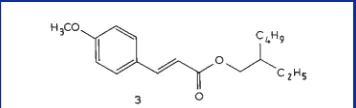
The preparation of commercially relevant com-pounds via the heterogeneous Heck reaction has been reported previously (44–46). For exam-ple, octylmethoxycinnamate, 3, see Figure 1, which is the UV-B filter used in sun screens, has been prepared in up to 92 per cent yield with a Pd/C catalyst. Homo- and hetero-substituted benzophenones, used as monomers and pharmaceutical intermediates, have also been prepared (46).
Our interest in the Heck reaction was to inves-tigate further the use of Pd/C as a catalyst for the preparation of a variety of products. Results and conditions for its use will be discussed in more detail.
Recent Studies into Palladium/Carbon
Catalysed Arylation Heck Coupling
Ongoing studies in our laboratory are focused on the heterogeneous Heck reaction for the for-mation of substituted cinnamic acids, which are used as substrates for the synthesis of unnatural amino acids by the use of phenylalanine ammo-nia lyase. There have been periodic references in the literature to the use of Pd/C for this Heck arylation, but reports of its use are still quite limited – in comparison to alternate homoge-neous and heterogehomoge-neous systems.
Our experiments are typically performed by the combination of the aryl bromide, an alkene and NaHCO3/NaOH in a solution of NMP/H2O
under nitrogen. The anti-oxidant, 2,6-di-t-butyl-4-methylphenol (BHT), is added to the reaction mixture to inhibit or hinder the polymerisation of the alkene, which occurs at temperatures above 70ºC; the temperature range required for successful reaction is ³ 100ºC (44, 46). The cat-alyst employed is 5 per cent Pd/C, used in a 1 per cent ratio to aryl bromide. The reaction is monitored by gas chromatography until the com-plete consumption of the aryl bromide has been detected. After removal of the catalyst by fil-tration, the isolation procedure for the prod-uct involves water dilution, acidification and finally filtration to afford the cinnamic acid prod-uct in 64 to 90 per cent yield.
2-Acetamidoacrylic acid has also been eval-uated as the alkene substrate in the heteroge-neous Heck reaction under similar conditions. However, in all of the experiments attempted to date, no evidence of the desired product has been detected, although this reaction has been successful under homogeneous conditions, see Scheme IV (32, 47).
A very strict nitrogen atmosphere is essential for the successful completion of the Pd/C catal-ysed arylation of acrylic acid. If air is not com-pletely excluded, the desired product will not be formed.
The aryl bromides employed in our studies to date have been 1- and 2-bromonaphthalene, 2-, 3- and 4-bromobenzonitrile, 4-chlorobromo-benzene and 2,4-difluorobromo4-chlorobromo-benzene with the alkene substrate being either acrylic acid or 2-acetamidoacrylic acid, see the Table. The main set of reactions are heterogeneous in nature using Pd/C, but in some cases the homogeneous vari-ant has been run for comparison purposes. The homogeneous catalyst systems which have been employed so far are palladium acetate with two equivalents of triphenylphosphine or, alternatively,
[image:6.521.62.240.73.127.2]dichlorobis(triphenylphosphine)-Scheme IV
2-Acetamidoacrylic acid undergoing a homogeneous Heck arylation reaction with added basepalladium(II). Our initial results have shown that similar yields can be obtained with either homogeneous or heterogeneous catalysts in the arylation of acrylic acid to cinnamic acids. The homogeneous system also successfully arylated 2-acetamidoacrylic acid in contrast to the het-erogeneous system, which was completely unre-active and investigations into the reason for this are presently being undertaken.
Conclusion
Since its discovery in 1968, the Heck reaction has progressively become an indispensable tool for the synthesis of carbon-carbon bonds. However, the suitability of the Heck reaction for
industrial purposes must be developed. The applicability of the reaction to asymmetric syn-thesis adds a further dimension to the study, and several inter- and intramolecular variants of asymmetric Heck reactions have been described. With the homogenous reaction, various levels of success have been reported in preparing a selection of natural products, depending on the chiral ligand used in the palladium complex.
Ongoing studies of the reaction by ourselves and others are aimed at the elaboration of this versatile reaction in regard to general reaction conditions and substrates, and of course the pal-ladium catalyst, where the mechanism of the heterogeneous reaction is still unknown.
Palladium Catalysed Arylation Heck Coupling Reactions
aAryl bromide Alkene Catalyst Yield,
per cent
1-Bromonaphthalene Acrylic acid Pd/C 70
Pd(OAc)2/PPh3 27
2-Acetamidoacrylic acid Pd/C NRb
2-Bromonaphthalene Acrylic acid Pd/C 79
Pd(OAc)2/PPh3 81
2-Bromobenzonitrile Acrylic acid Pd/C 90
3-Bromobenzonitrile Acrylic acid Pd/C 83
Pd(OAc)2/PPh3 68 (49)c
Pd(Cl)2(PPh3)2 84
2-Acetamidoacrylic acid Pd/C NRd
4-Bromobenzonitrile Acrylic acid Pd/C 64
Pd(OAc)2/PPh3 79
Pd(Cl)2(PPh3)2 87
4-Chlorobromobenzene Acrylic acid Pd/C 68
2,4-Difluorobromobenzene Acrylic acid Pd/C 76
a All reactions carried out in NMP according to described procedure unless otherwise stated b NR = No reaction
c Acetonitrile solvent, triethylamine as base d Acetonitrile solvent, tributylamine as base
1 R. F. Heck, J. Am. Chem. Soc., 1968, 90, (20), 5518
2 R. F. Heck, Acc. Chem. Res., 1979, 12, 146 3 R. F. Heck, Org. React., 1982, 27, 345
4 R. F. Heck, “Palladium Reagents in Organic Syntheses”, Academic Press, London, 1985 5 W. Cabri and I. Candiani, Acc. Chem. Res., 1995,
28, 2
6 A. de Meijere and F. E. Meyer, Angew. Chem., Int. Ed. Engl., 1994, 33, 2379
7 G. T. Crisp, Chem. Soc. Rev., 1998, 27, 427 8 SciFinder search on Heck couplings and the Heck
reaction, (May 26th 1999)
9 W. Cabri, I. Candiani, A. Bedeschi and R. Santi, J. Org. Chem., 1993, 58, 7421
10 W. Cabri, I. Candiani, A. Bedeschi and R. Santi, Synlett, 1992, 871
11 W. A. Herrmann, M. Elison, J. Fischer, C. Kocher and G. R. J. Artus, Angew. Chem., Int. Ed. Engl., 1995, 34, 2371
12 D. S. McGuinness, K. J. Cavell, B. W. Skelton and A. H. White, Organometallics, 1999, 18, 1596 13 M. Ohff, A. Ohff and D. Milstein, Chem.
Commun., 1999, 357
14 H. A. Dieck and R. F. Heck, J. Am. Chem. Soc., 1974, 96, 1133
15 C.-M. Andersson and A. Hallberg, J. Org. Chem., 1987, 52, 3529
16 M. Ludwig, S. Stromberg, M. Svensson and B. Åkermark, Organometallics, 1999, 18, 970 17 C.-M. Andersson, K. Korabelas and A. Hallberg,
J. Org. Chem., 1985, 50, 3891
18 F. Ozawa, A. Kubo and T. Hayashi, J. Am. Chem. Soc., 1991, 113, 1417
19 M. A. Schmidt, J. J. Talley, M. G. Scaros and P. K. Yonan, Chemical Industries, “Catalysis of Organic Reactions”, Decker, New York, 1995, 62, 105
20 A. F. Littke and G. C. Fu, J. Org. Chem., 1999, 64, (1), 10
21 V. V. Grushin and H. Alper, Chem. Rev., 1994, 94, 1047
22 J. E. Plevyak, J. E. Dickerson and R. F. Heck, J. Org. Chem., 1979, 44, (23), 4078
23 D. F. Oliveira, E. A. Severino and C. R. D. Correira, Tetrahedron Lett., 1999, 40, (11), 2083 24 O. Herd, A. Hebler, M. Hingst, M. Tepper and O. Stelzer, J. Organomet. Chem., 1996, 522, 69 25 L. U. Gron, Book of Abstracts, 215th ACS
National Meeting, Dallas, TX, March 29–April 2, 1998, INOR-269
26 N. Shezad, R. S. Oakes, A. A. Clifford and C. M. Rayner, Tetrahedron Lett., 1999, 40, 2221 27 A. S. Ross and T. E. Goodwin, Book of Abstracts,
211th ACS National Meeting, New Orleans, LA, March 24–28th, 1996, CHED-122
28 T. Jeffery, Tetrahedron Lett., 1985, 26, 2667 29 T. Jeffery, Synthesis, 1987, 70
30 T. Jeffery, J. Chem. Soc., Chem. Commun., 1984, 1287
31 T. Jeffery, Tetrahedron, 1996, 52, (30), 10113 32 J. H. Dygos, E. E. Yonan, M. G. Scaros, O. J.
Goodmonson, D. P. Getman, R. A. Periana and G. R. Beck, Synthesis, 1992, 741
33 S. A. Roberto and R. L. Augustine, Chemical Industries, “Catalysis of Organic Reactions”, Decker, New York, 1996, 68, 465
34 L. Jintong, A. W.-H. Mau and C. R. Strauss, Chem. Commun., 1997, 1275
35 L. Tonks, M. S. Anson, K. Hellgardt, A. R. Mirza, D. F. Thompson and J. M. J. Williams, Tetrahedron Lett., 1997, 33, (24), 4319
36 B. M. Choudhary, R. M. Sarma and K. K. Rao, Tetrahedron, 1992, 48, 719
37 R. K. Ramchandani, B. S. Uphade, M. P. Vinod, R. D. Wakharkar, V. R. Choudhary and A. Sudalai, Chem. Commun., 1997, 2071
38 Z. Zhuangyu, P. Yi, H. Honwen and K. Tsi-yu, Synthesis, 1991, 539
39 C. P. Mehnert, D. W. Weaver and J. Y. Ying, J. Am. Chem. Soc., 1998, 120, 12289
40 L. Djakovitch and K. Kohler, Book of Abstracts, RSC (Dalton) 9th Int. Symp. on Relations between Homogeneous and Heterogeneous Catalysis, University of Southampton, 20–24 July, 1998 41 M. Wagner and K. Kohler, Book of Abstracts,
RSC (Dalton) 9th Int. Symp. on Relations between Homogeneous and Heterogeneous Catalysis, University of Southampton, 20–24 July, 1998 42 S. Berteina, S. Wendeborn, W. K.-D. Brill and A.
De Mesmaeker, Synlett, 1998, (6), 676 43 C.-M. Andersson and A. Hallberg, J. Org. Chem.,
1988, 53, 235
44 A. Eisenstadt, R. Hasharon, Y. Keren and K. Motzkin, U.S. Patent 5,187,303; 1993
45 P. Gygax, U.S. Patent 5,457,226; 1995 46 A. Eisenstadt, Chemical Industries, “Catalysis of
Organic Reactions”, Decker, New York, 1998, 75, 415
47 M. Cutolo, V. Fiandanese, F. Naso and O. Sciacovelli, Tetrahedron Lett., 1983, 24, (42), 4603
Improved Adhesion of Platinum to Polymers
Poly(vinylidenefluoride) (PVDF), a polymer with piezoelectric properties, is extensively used in IR sensors, ultrasonic transducers, biomate-rials and microactuators. Electrodes attached to the PVDF are conventionally made of copper and aluminium as they adhere well to its surface. More suitable inert metals, such as platinum and gold, with higher work functions, which would prevent current leakage, have not been used because of their poor adhesion.
Now, researchers in Korea have devised a method to enhance the adhesion of PVDF to platinum (S. Han, S. C. Choi, W.-K.Choi, H.-J. Jung, S.-K. Koh, K. H. Yoon and H. K. Lee,
J. Mater. Sci. Lett., 1999, 18, (7), 509–513).
The surface roughness of PVDF sheets was increased when irradiated with Ar+ions in flow-ing oxygen at ~ 10–4Torr, and 1 keV potential. A platinum overlayer, ~100 nm thick, deposited by ion beam sputtering on the irradiated PVDF had greatly improved adhesion. The contact angle between irradiated PVDF and distilled water dropped from 70º to 31º.