
_____________________________________________________________________________________________________
*Corresponding author: E-mail: [email protected];
(Past name: British Journal of Pharmaceutical Research, PastISSN: 2231-2919, NLM ID: 101631759)
Antimicrobial Potential of Ethanol Extract and
Fractions of
Caesalpinia benthamiana
(Caesalpinaceae) Root on Some Organisms
Implicated in Oral Infections
Felix Oluwasola Olorunmola
1*, Oladokun Layiwola Oladeji
1,
Ayodeji Oluwabunmi Oriola
2and Simeon Kolawole Adesina
11Faculty of Pharmacy Drug, Research and Production Unit, Obafemi Awolowo University, Ile Ife,
220005, Osun State, Nigeria. 2Department of Pharmacognosy, Faculty of Pharmacy, Obafemi Awolowo University, Ile Ife, 220005, Osun state, Nigeria.
Authors’ contributions
This work was carried out in collaboration among all authors. Author FOO conceived and designed the study, wrote the protocol, carried out the analysis and wrote the initial draft of the manuscript. Author OLO managed the literature searches, prepared the plant sample for extraction and carried out microbiological aspect of the experiments under the supervision of authors FOO and SKA while author AOO was involved in the phytochemical analysis of the plant. All authors read and approved the final manuscript.
Article Information
DOI: 10.9734/JPRI/2019/v28i630219 Editor(s): (1) Dr. Jongwha Chang, University of Texas, College of Pharmacy, USA. Reviewers: (1) Ronald Bartzatt, University of Nebraska, USA. (2) Yongchun Zhu, Shenyang Normal University, China. (3) Mustafa Sevindik, Akdeniz University, Turkey. Complete Peer review History: http://www.sdiarticle3.com/review-history/49934
Received 26 April 2019 Accepted 08 July 2019 Published 31 July 2019
ABSTRACT
This study investigated the activities of ethanol root extract of Caesalpinia benthamiana (Baill) Herend. and Zarucchi. (Caesalpiniaceae) against some microbial isolates implicated in oral infections and determined the killing rate of the most active fraction. It also investigated the phytochemical properties of the root extract. This was with a view to providing scientific basis for the use of the root in the treatment of oral infections.
The plant root was collected from the wild, washed, air-dried, ground to powder and macerated using ethanol and water at ratio 7:3 (v/v) with constant shaking for 72 hours in a mechanical shaker. The filtrate was concentrated in-vacuo at 50°C using a rotary evaporator and freeze dried. The crude extract was screened for phytochemical and antimicrobial properties. The extract was further partitioned into fractions using different organic solvents in order of their polarity. The antimicrobial potential of the different fractions was determined using agar-well diffusion and agar dilution method respectively. Time-kill-assay of the most active fraction was carried out on each of the organisms namely, Staphylococcus aureus (NCIB 8588) clinical isolates of Streptococcus mutans, S. pyogenes, S. salivarius, Staphylococcus aureus and Candida albicans. The values obtained were subjected to inferential statistical analysis.
Phytochemical screening revealed the presence of flavonoids, tannins, terpenes, saponins, phenolics and phenolic glycosides and anthraquinones. The root extract showed appreciable activity against all the test organisms, with the ethyl acetate fraction demonstrating highest activity and lowest MIC (0.16 mg/mL) compared with the crude extract and the other fractions. The activity was also time and concentration dependent. At triple the MIC all cells of respective organisms were killed at 5 minutes as was the case with all the standard antibiotics and anti-fungi used as positive control.
It was concluded that C. benthamiana ethanol root extract was highly active against oral isolates with its ethyl acetate fraction being the most effective.
Keywords: C. benthamiana; antimicrobial; anticandidal; phytochemical; rate of kill.
1. INTRODUCTION
The oral cavity harbours a microbial community of very diverse microflora which inhabits various surfaces of the mouth. The organisms exist in a complex matrix of biofilm which may vary depending on the dietary constituents, illness
and oral hygiene and have been imply cated in oral infectious diseases [1]. The
Gram-positive organisms happen to be the early colonisers of the oral cavity. These organisms, essentially the S. mutans more efficiently metabolize sugars, carbohydrates, oral food residues and produce organic acids which result to demineralization of the enamel, thus resulting to dental caries [2,3]. The Streptococci and other related Gram-positive organisms serve as mutual precursors of root canal infections, odontogenic diseases, endocarditis and abscesses [4]. The acid produced by mutans streptococci cause decalcification of the teeth enamel thus resulting to caries. Prolonged accumulation of caries causes inflammation of the gingiva which manifest as gingivitis or periodontitis, in which case the inflammatory response result in loss of collagen attachment of the tooth to the bone and in loss of bone [1]. The acidic environment created, also promote the colonization and virulence of C. albicans, in the oral cavity especially in persons with immune impairment, resulting from organ transplant, HIV, cancer or chemotherapy [4]. C. albicans is the most common species of yeast isolated from patients with oral candidiasis [5]. The global need for
alternative prevention and treatment option and product for oral diseases that are safe, effective and economical comes from the rise in disease incidence, especially in developing countries, increased resistance, opportunistic infections in immunocompromised individuals, and financial considerations [6]. In addition, the reported toxicity and teeth staining of other agents used in the treatment of oral diseases, such as chlorhexidine, amine fluorides or products containing such agents continue to add impetus to the search for alternative products and natural phytochemicals isolated from plants used in traditional medicine [7].
as chewing stick for the treatment of tooth pain resulting from oral infections necessitated this study.
2. MATERIALS AND METHODS
2.1 Organisms Used for the Experiment
The standard strain used was S. aureus (NCIB 8588) maintained in the Microbiology Laboratory of the Drug Research and Production Unit, Faculty of Pharmacy, while the clinical isolates of oral bacteria and C. albicans were collected from the stock culture maintained in the
Laboratory of the Department of Microbiology and Parasitology, College of Health Sciences, Obafemi Awolowo University, Ile-Ife. The bacteria were first sub cultured in a nutrient broth (Fluka) and incubated at 37°C for 18 h while the C. albicans was sub cultured in a sabauraud dextrose agar (SDA) (Oxoid) and incubated at 25°C for 72 h. before use.
2.2 Collection of Plant Root
The root of C. benthamiana was collected in the forest along the agricultural farm road within the Obafemi Awolowo University campus in the month of March 2012. The plant was jointly identified and authenticated by Mr. Oladele of the Herbarium Section, Faculty of Pharmacy, O. A. U., Ile-Ife, (now in the Department of Forestry and Wild Life Management, Niger Delta University, Nigeria) and Prof. H. C. Illoh of the Department of Botany, Obafemi Awolowo University, Ile-Ife, Nigeria. Voucher specimen of the plant was deposited in the Herbarium with voucher number IFE - 11047.
2.3 Preparation and Extraction of
Bioactive Component of the Root Sample
The root of the plant was washed clean, air dried at room temperature and subsequently activated in the oven, regulated at 45°C and was ground into fine powder. Exactly 954 g of powdered sample was then soaked in ethanol and sterile distilled water in ratio 7:3 (v/v) for extraction. The mixture was put in the mechanical shaker and agitated intermittently for 72 hours. The extract was then filtered through Whatman No. 1 filter paper. The filtrate collected was concentrated in vacuo using rotary evaporator (Buchi) at 50°C to completely drive out the ethanol solvent. The remaining aqueous portion was finally lyophilized to obtain the extract. The weight of the dried crude extract was noted.
2.4 Qualitative Phytochemical Screening of the Root Extract
The phytochemical compounds in the root extract were qualitatively analyzed using the method of Trease and Evans [15] and Harborne [16]. The test included determination of the presence of saponin, terpene, alkaloid, flavonoid, phenol and phenolic glycosides and free anthraquinones in the root extract.
2.5 Preparation of Partitioned Fractions of the Crude Extract
Ten gram (10 g) of the dried ethanol root extract was dissolved in 120 mL of distilled water and partitioned between chloroform and water in a separating funnel. The aqueous layer was further partitioned with petroleum spirit, and later with ethyl acetate. The four fractions obtained (i.e. chloroform, petroleum spirit, ethyl acetate and aqueous fractions) were then concentrated, freeze-dried and weighed respectively. The dried fractions were stored in the refrigerator until required.
2.6 Antimicrobial Sensitivity Assay
fractions of the root extract at a concentration of 10 mg/mL and zones of clearance recorded for each experimental set up. The readings were carried out in triplicates.
2.7 Minimum Inhibitory Concentrations (MIC)
The MIC test was carried out for the extract and each of the fractions respectively, using the two-fold Agar dilution method of Russell and Furr, [17]; Irobi, et al. [18] to give a concentration range of 0.098 to 12.5 mg/mL for the extract and 0.04 to 5 mg/ml for the fractions. Two milliliters (2 mL) of individual concentration of the extract and the different fractions was introduced into 18 ml of sterile molten agar at 45°C, mixed gently and poured into a sterile Petri dish and allowed to solidify. Approximately 1 x 10⁶ cfu/mL of each organism was then streaked on the
pre-dried surface of the nutrient agar and later incubated at 37°C for 24 h. The C. albicans was streaked on the pre-dried surface of SDA and incubated at 25°C. The least concentration inhibiting growth of the organisms was taken as the MIC.
2.8 Time-kill Assay for the Test
Organisms
The rate of kill experiment was carried out on the most active fraction (ethyl acetate) as described by Balows et al. [19] with modifications. A 5 mL overnight broth culture of the test organism was centrifuged at 2000 rpm for 10 minutes. The broth supernatant was carefully decanted out and the organism washed twice with 5 mL normal saline for 10 minutes, at 2000 rpm respectively. The washed cells of each bacterial strain and C. albicans were first standardized to approximately 1x10⁶ cfu/mL and 1x10⁵ cfu/mL respectively. A 0.5 mL aliquot of standardized cells suspension was introduced into 4.5 mL of the ethyl acetate fraction solution at the test concentrations of 0.16 mg/mL, 0.32 mg/mL and 0.48 mg/mL respectively. Exactly 0.5 mL aliquot was introduced first into a recovery broth medium containing 3% “Tween 80” in order to wash off the residual effect of the agent on the cells. A 0.5 mL volume was serially diluted and plated out at intervals of 5, 10, 15, 20, 30, 40, 50 and 60 minutes and incubated for 24 hours at 37 oC. Controls of untreated cells were also set up alongside the experimental. Colony count was done after the incubation period to determine the viable count at the different time intervals and compared with the control. Decrease in
population of growth with time indicated killing by the fraction.
2.9 Statistical Analysis
All experiments were carried out in triplicates and the mean of the values was compared using the Student t-test at significant (p < 0.05) level. Data was analysed graphically using GraphPad PRISM.
3. RESULTS
The yield obtained from the powdered sample of the plant was 16.84 g (1.75%). The extract was dark in colour. Partitioning of 10 g of the ethanol crude extract yielded 0.953 g aqueous, 1.11 g ethyl acetate, 0.94 g petroleum spirit and 0.31 g chloroform fractions. The result presented in Table 1 shows the activities of the ethanolic root extract at 25 mg/mL concentrations. The zones of inhibition exhibited by the crude extract against the test bacterial strains ranged between 16.3 mm and 20.4 mm, while for the different fractions, the activities ranged between 20.6 – 23.7mm, 14.7 – 18.7 mm, 13.7 – 18.3 and 11.3 – 15.7 for ethyl acetate, petroleum spirit, aqueous and chloroform fractions respectively at a concentration of 10 mg/mL. Tetracycline and ampicillin gave zones of inhibition range of 21.3+0.33 – 24.0+0.58 mm, 22.3+0.89 – 24.0+0.33 mm respectively, for all the bacteria while Amphotericin B exhibited a zone of inhibition of 21.3+0.33 mm against the C. albicans.
The results of the minimum inhibitory concentration showed that the ethyl acetate fraction had an MIC of 0.16 mg/mL for all the organisms while the petroleum spirit fraction had an MIC range of 2.50 mg/mL - 5 mg/mL (Table 2). The aqueous fraction had an MIC range of 1.25 mg/mL - 5 mg/mL while chloroform fraction had a range of 0.31 mg/mL – 2.50 mg/mL. Thus, ethyl acetate fraction being the most potent, was used for further test to determine its killing rate on all the organisms.
5
Table 1. Antimicrobial activities of the partitioned fractions of the ethanolic root extract of C. benthamiana
Test microorganisms Mean zone of inhibition*
EtOH PSF CLF EAF AQF TET AMP APB
25 mg/mL 10 mg/mL 10 mg/mL 10 mg/mL 10 mg/mL 1 mg/mL 1 mg/mL 1 mg/mL
S. aureus (NCIB 8588) 20.4±0.33 15.7±0.33 18.7±0.33 23.7±0.33 18.3±0.33 23.3±0.67 24.3±0.89 - S. mutans (CI) 19.7±0.33 13.3±0.33 16.3±0.33 21.0±0.58 15.3±0.67 24.0±0.58 23.0±0.67 - S. pyogenes (CI) 18.3±0.33 13.7±0.33 15.7±0.33 21.0±0.58 15.3±0.33 23.7±0.67 24.0±0.33 - S. salivarius (CI) 20.3±0.33 11.3±0.33 14.7±0.33 20.6±0.33 13.7±0.33 21.3±0.33 22.3±0.89 - S. aureus (CI) 18.7±0.67 13.7±0.33 16.7±0.33 20.7±0.33 16.3±0.33 22.7±0.33 23.7±0.33 -
C. albicans (CI) 16.3±0.33 14.3±0.33 17.3±0.67 21.7±0.33 16.3±0.33 - - 21.3±0.33
*: Values are mean of three readings; EtOH: Ethanolic extract; PSF: Petroleum spirit Fraction; CLF: Chloroform Frac tion; EAF: Ethyl Acetate Fraction; AQF: Aqueous Fraction; TET: Tetracycline; AMP: Ampicillin; APB: Amphotericin B, Cl: Clinical isolate, NCIB: National Collection of Industrial Bacteria
Table 2. Minimum inhibitory concentration (MIC) of ethanolic extract and partitioned fractions of C. benthamiana
Test organisms Concentration (mg/mL)
EtOH PSF CLF EAF AQF TET AMP APB
25 mg/mL 10 mg/mL 10 mg/mL 10 mg/mL 10 mg/mL 10 mg/mL 10 mg/mL 10 mg/mL
S. aureus (NCIB 8588) 12.5 ND 0.63 0.16 1.25 0.039 0.039 -
S. mutans (CI) 12.5 2.5 2.5 0.16 5 0.039 0.039 -
S. pyogenes (CI) 12.5 5 0.63 0.16 1.25 0.039 0.039 -
S. salivarius (CI) 6.25 ND 2.5 0.16 2.5 0.039 0.039 -
S. aureus (CI) ND ND 0.63 0.16 1.25 0.039 0.039 -
C. albicans (CI) 3.13 ND 0.31 0.16 2.5 - - 0.078
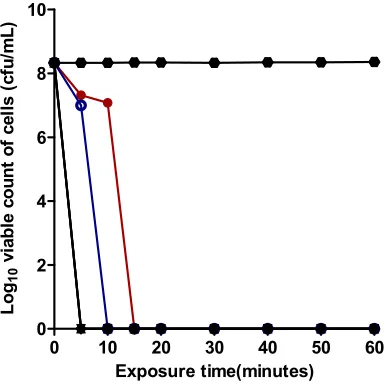
killed slightly increased to 19.41% while no viable count was observed at the end of 15 minutes of exposure time to the ethyl acetate fraction. At 2 x MIC (0.32 mg/mL), 16.36% of the organism were killed within 5 minutes, while no viable count was observed as time increased to 10 minutes. At concentration of 3 x MIC (0.48 mg/mL) all the organisms were killed within a short period of 5 minutes.
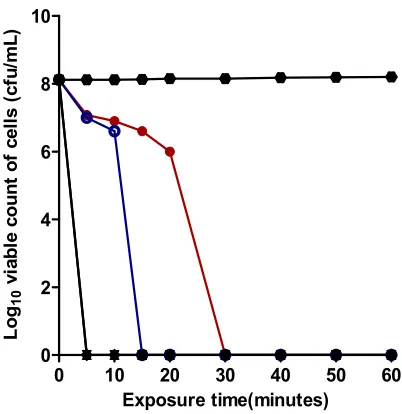
Fig. 2 shows the graph of the log of viable count of S. mutans at different test concentrations and time intervals. At 1 x MIC (0.16 mg/ml) 12.81% of the organism was killed at the end of 5 minutes. This rose slightly to 15.02% at 20 minutes period, while no viable count was observed at the end of 30 minutes. At 2 x MIC (0.32 mg/mL) 13.79% of the organism have been eradicated in 10 minutes, while a total kill was observed at the end of 15 minutes. When the organism was introduced to 3 x MIC (0.48 mg/mL) of the fraction no viable count was observed at the end of 5 minutes contact time.
The result also revealed that at 1 x MIC value 11.27% of S. pyogenes was killed within 5 minutes of exposure to the ethyl acetate fraction (Fig. 3). Not much increase in killing rate was noticed from this time up to the end of 30 minutes when 16.36% killing was achieved, while at the end of 40 minutes no viable count was observed. When the organism was exposed to 2 x MIC of the fraction, 12.97% was killed in five minutes, while at 10 minutes 18.79% of the cells were killed. The rate of killing increased to 21.45% at the end of 15 minutes, while 100% killing was achieved at the end of 20 minutes of contact with the organism. When the concentration was increased to 3 x MIC, total elimination of the organism was achieved at the end of 5 minutes of contact. Fig. 4 showed that at 1 x MIC concentration (0.16 mg/mL) 12.12% and 15.00% of S. salivarus was killed at the end of 5 and 10 minutes respectively. At the end of 15 minutes of exposure to the ethyl acetate fraction, the organism was totally eliminated. When the concentration was doubled (2 x MIC = 0.32 mg/mL) the time of total death reduced to 10 minutes. At 3 x MIC total elimination of the organism was achieved at 5 minutes of exposure.
The log of viable count of S. aureus (CI) against time (Fig. 5) at 1 x MIC (0.16 mg/mL) of the fraction revealed that 10.96% killing was achieved at 5 minutes, 15.02% at 10 minutes and 18.72% at 15 minutes while total elimination
was achieved at 20 minutes of exposure, At 2 x MIC (0.32 mg/mL) total elimination time dropped to 10 minutes. At 3x MIC (0.48 mg/mL), all the organisms were completely eliminated at the end of 5 minutes. The log of viable count of C. albicans against time at different test concentrations (Fig. 6) showed that no viable count was observed after exposure to the MIC of the fraction at 15 minutes, while at MIC x 2 concentration (0.32 mg/mL.), total elimination time was reduced to 10 minutes. However at a concentration of MIC x 3 (0.48 mg/mL) all the cells were killed at 5 minutes after the exposure of the organism to the fraction. For the standard anti-Candidal agent (Amphotericin B), all the organisms were killed at 5 minutes after exposure to its minimum inhibitory concentration.
4. DISCUSSION
crude extract and all the other partitioned fractions, thus suggesting that fractionation with ethyl acetate improves the antimicrobial activity of the plant. It should be noted also that the activity of the ethyl acetate fraction was
comparable with that of the standard antibiotics used.
The result of the minimum inhibitory concentration (MIC) (Table 2) showed that the
0 10 20 30 40 50 60
0 2 4 6 8 10
Exposure time(minutes)
L
og
10
v
ia
b
le
c
o
u
n
t
o
f
c
e
ll
s
(c
fu
/m
L
)
Fig. 1. The rate and extent of kill of S. aureus (NCIB 8588) by ethyl acetate fraction at 1 x MIC
( ), 2 x MIC ( ), 3 x MIC ( ), Tetracycline ( ), Ampicillin ( ) and Control ( ) Each point represent the mean log10 survival of bacterial cells at a particular time interval in the presence
of the fraction
0 10 20 30 40 50 60
0 2 4 6 8 10
Exposure time(minutes)
Lo
g10
v
ia
b
le
c
o
u
n
t
o
f
c
e
ll
s
(
c
fu
/m
L
)
Fig. 2. The rate and extent of kill of S. mutans (CI) by ethyl acetate fraction at 1 x MIC ( ), 2 x
MIC ( ) 3 x MIC ( ), Tetracycline ( ), Ampicillin ( ) and Control ( ). Each point of the represent the mean log10 survival of bacterial cells at a particular time interval in the presence
0 10 20 30 40 50 60 0
2 4 6 8 10
Exposure time(minutes)
L
o
g10
v
ia
b
le
c
o
u
n
t
o
f
c
e
lls
(
c
fu
/m
L
)
Fig. 3. The rate and extent of kill of S. pyogenes (CI) by ethyl acetate fraction at 1 x MIC ( ), 2
x MIC ( ), 3 x MIC ( ), Tetracycline ( ), Ampicillin ( ) and Control ( ). Each point represent the mean log10 survival of bacterial cells at a particular time interval in the presence
of the fraction
crude extract and three of the four fractions i.e. chloroform, ethyl acetate and water, showed significantly high activities and that purification with these solvents enhances the activities of the plant extract. It is also evident from this study that the potential effect of the different fractions against all the organisms followed the same trend, as there was a correlation between the MICs and the sensitivities of these fractions. This also agreed with the findings of previous authors [12] who carried out sensitivity tests on the whole plant extracts, using different solvents for extraction. The activity of a plant extract is considered significant if the MIC is less than 200 mg/ml [21]. In this study, the extract and three of the fractions have exhibited MIC values that are far lower than this value. It is an acceptable fact that a low MIC value of a medicinal plant is an indication of better antimicrobial agent. Furthermore, the highest activity and lowest MICs of the ethyl acetate fraction, suggested that it is the most active of all the fractions. In addition, the highest yield of fraction produced by the ethyl acetate solvent is a pointer to the fact that the putative compound(s) of the plant is (are) best extracted by this polar solvent. Majority of the organisms responsible for oral infections originated from the normal flora of the oral cavity. The control of the organisms focuses therefore on either reducing their population or rendering them a virulent. The killing rate therefore
becomes necessary in addition to the MIC of the most active fraction in this study.
its use as an analgesic as earlier reported by Mbagwu et al. [7]. The generally accepted definition of bactericidal activity in antibiotics is a reduction in the microbial population to 99% of the initial population of the organisms within the shortest period of time [22]. Thus the bactericidal activity of ethyl acetate fraction obtained from the ethanol root extract of C. benthamiana in this
study showed significant therapeutic potential and hence supports its use in folkloric remedies. The high degree of antimicrobial activity obtained from the result of this study is an indication that C. benthamiana is a good source of potent antimicrobial agent for the treatment and prevention of oral infections caused by these organisms and can also help in
0 10 20 30 40 50 60
0 2 4 6 8 10
Exposure time(minutes)
Lo
g10
v
ia
b
le
c
o
u
n
t o
f
c
e
lls
(
c
fu
/m
L
)
Fig. 4. The rate and extent of kill of S. salivarus (CI) by ethyl acetate fraction at 1 x MIC ( ), 2
x MIC ( ), 3 x MIC ( ), Tetracycline ( ), Ampicillin ( ) and Control ( ). Each point
represent the mean log10 survival of bacterial cells at a particular time interval in the presence
of the fraction
0 10 20 30 40 50 60
0 2 4 6 8 10
Exposure time(min.)
Lo
g10
v
ia
b
le
c
o
u
n
t
o
f
c
e
ll
s
(c
fu
/mL
)
Fig. 5. The rate and extent of kill of S. aureus (CI) by ethyl acetate fraction at 1 x MIC ( ), 2 x
MIC ( ), 3 x MIC ( ), Tetracycline ( ), Ampicillin ( ) and Control ( ). Each point represent the mean log10 survival of bacterial cells at a particular time interval in the presence
the reduction of dental caries. In addition, it serves as a support for the ethno medical claim of the use of the root as chewing stick for the treatment of tooth pain resulting from oral infections.
This study revealed the presence of flavonoids, tannins, terpenes, saponins, phenolics and phenolic glycosides and anthraquinones in the root extract of the plant (Table 3). These phytochemicals are known to have biological activities and hence, might have contributed to the observed activities noted in this study. Flavonoids are known to exhibit a wide range of biological activities including antimic
inflammatory, analgesic, cytostatic and antioxidant properties [23-25]. The ability of flavonoids to scavenge hydroxyl radicals, superoxide anion radicals and lipid peroxyradicals highlights many of its health promoting functions in organisms
important for the prevention of diseases associated with oxidative damage of membranes, proteins and DNA [26
conditions can be seen in dental caries, gingivitis, and oral candidiasis to mention a few. Tannins act via a different mec
flavonoids. Tannins act by iron deprivation or
0 0 2 4 6 8 10 L o g10 v ia b le c o u n t o f c e ll s (c fu /m L )
Fig. 6.The rate and extent of kill of
MIC ( ), 3 x MIC ( ), Amphotericin B (
mean log10 survival of bacterial cells at a particular time interval
the reduction of dental caries. In addition, it serves as a support for the ethno medical claim of the use of the root as chewing stick for the treatment of tooth pain resulting from oral
This study revealed the presence of flavonoids, tannins, terpenes, saponins, phenolics and phenolic glycosides and anthraquinones in the of the plant (Table 3). These phytochemicals are known to have biological activities and hence, might have contributed to the observed activities noted in this study. Flavonoids are known to exhibit a wide range of biological activities including antimicrobial, anti-inflammatory, analgesic, cytostatic and
25]. The ability of flavonoids to scavenge hydroxyl radicals, superoxide anion radicals and lipid peroxyradicals highlights many of its health promoting functions in organisms which are important for the prevention of diseases associated with oxidative damage of membranes, proteins and DNA [26-28]. These conditions can be seen in dental caries, gingivitis, and oral candidiasis to mention a few. Tannins act via a different mechanism to flavonoids. Tannins act by iron deprivation or
specific interactions with vital proteins such as enzymes in microbial cells [29]. Motal
reviewed the importance of tannins for the treatment of inflamed or ulcerated tissues as seen in gingivitis, caries and plaque. Saponins are considered a key ingredient in traditional Chinese medicine [31]. Saponins produce inhibitory effect on inflammation (Just
Phenolic glycosides are an important class of naturally occurring drugs whose actions help in the treatment of congestive heart failure. Plants containing phenolic glycosides are used to treat cardiac infections like endocarditis. Some of the causative organisms of endocarditis e.g. aureus, enterococcus spp. have their origin in the oral cavity. Plants containing phenolic glycosides are also useful in the treatment of chest pains, tooth ache and cough among the “Yoruba” tribe of south western Nigeria [33]. All these observations cited on the action of phytochemicals support the use of benthamiana root as a traditional remedy for oral diseases as its therapeutic effects can be attributed to the actions of its phytochem constituents. Such compounds can be exploited for the development of oral antimicrobial drug of natural origin, for the treatment of oral infectious diseases.
10 20 30 40 50 60
Exposure time(minutes)
The rate and extent of kill of C. albicans (CI) by ethyl acetate fraction at 1 x MIC ( ) 2 x
, Amphotericin B ( ) and Control ( ). Each point represent the
survival of bacterial cells at a particular time interval in the presence of the fraction specific interactions with vital proteins such as enzymes in microbial cells [29]. Motal et al., [30] reviewed the importance of tannins for the treatment of inflamed or ulcerated tissues as seen in gingivitis, caries and plaque. Saponins are considered a key ingredient in traditional Chinese medicine [31]. Saponins produce flammation (Just et al., [32]. Phenolic glycosides are an important class of naturally occurring drugs whose actions help in the treatment of congestive heart failure. Plants containing phenolic glycosides are used to treat rditis. Some of the causative organisms of endocarditis e.g. S. have their origin in the oral cavity. Plants containing phenolic glycosides are also useful in the treatment of chest pains, tooth ache and cough among the tribe of south western Nigeria [33]. All these observations cited on the action of phytochemicals support the use of C. root as a traditional remedy for oral diseases as its therapeutic effects can be attributed to the actions of its phytochemical Such compounds can be exploited for the development of oral antimicrobial drug of for the treatment of oral infectious
Table 3. Phytochemical screening of the root
extract of C. benthamiana
Secondary metabolite Proportion
Saponin ++
Terpene ++
Alkaloid -/+
Flavonoid +++
Phenolics and phenolic glycoside +++
Anthraquinone +
Key: +++ = Highly present; ++ = Present; + = fairly present; +/ - = Trace; - = Absent
5. CONCLUSION
The result of this work showed that ethanol root extract of C. benthamiana demonstrated appreciably high activities on the oral isolates (S. mutans, S. pyogenes, S. salivarius, S. aureus and C. albicans) and the type organism (S. aureus NCIB 8588) employed in this study, with the Ethyl acetate fraction being the most active. This provided a scientific basis for the acclaimed traditional use of its root as chewing stick for the maintenance of oral hygiene, prevention of dental caries and the treatment of tooth pain resulting from oral infections. It is interesting to note also, that the ethanol root extract is highly effective against bacteria and fungi (C. albicans) alike. This is an added advantage in the activity of this plant. It is recommended that further work on the ethyl acetate fraction of the ethanol root extract of C. benthamiana be carried out with the hope of developing an effective antimicrobial oral rinse from the plant.
CONSENT
It is not applicable.
ETHICAL APPROVAL
It is not applicable.
ACKNOWLEDGEMENT
We wish to acknowledge the contribution of Mr. Olarinde Olaniran of the Department of Microbiology and Parasitology, College of Medicine, Obafemi Awolowo University, Ile-Ife, for assisting in providing some of the tested isolates.
COMPETING INTERESTS
Authors have declared that no competing interests exist.
REFERENCES
1. Loesche W. Dental caries and periodontitis: Contrasting two infections that have medical implications. Infectious Disease Clinics of North America. 2007; 21(2):471–502.
2. Nishimura J, Sait T, Yoneyama H, Sai L,
Okimura K, Isogai E. Biofilm formation by Streptococcus mutans and related
bacteria. Advances in Microbiology. 2012; 2:208-215
3. Carroll KC. Bacteriology. In Jawetz, Melnick and Adelberg’s Medical Microbiology, 26th ed. USA: The McGraw-Hill Companies, Inc.; 2013
4. Zadik Y, Burnstein S, Derazne E, Sandler V, Ianculovici C, Halperin T. Colonization of Candida: Prevalence among tongue-pierced and non-pierced immuno-competent adults. Oral Dis. 2010;16(2): 172–5.
5. Cannon RD, Chaffin WL. Oral colonization by Candida albicans. Crit. Rev. Oral Biol. Med. 1999;10:359–383.
6. Badria FA, Zidan OA. Natural products for dental caries prevention. Journal of Medicinal Food. 2004;7(3):381–384. 7. Prabu GR, Gnanamani A, Sadulla S.
Guaijaverin-a plant flavonoid as potential antiplaque agent against Streptococcus mutans. Journal of Applied Microbiology. 2006;101(2):487–495.
8. Cox PA. The ethno-botanical approach to drug discovery: Strength and limitation. 1994; ed. Prance GT. 1994;25-40.
9. African Flowering Plants Database (AFPD)-Base de Donnees des Plantes a Fleurs D'Afrique; 2008.
10. Verger P. Awon ewe Osanyin (Yoruba Medicinal Leaves). University of Ife. 1997; 1-55.
11. Mbagwu HOC, Anene RA, Adeyemi OO. The analgesic, antipyretic and anti-inflammatory properties of Mezoneuron benthamianum. Nigerian Ot J. Hosp. Med. 2007;17(1):35-41.
12. Dickson RA, Houghton PJ, Hylands PJ, Gibbons S. Antimicrobial, resistance-modifying effects, antioxidant and free radical scavenging activities of Mezoneuron benthamianum Baill., Securinega virosa Roxb. & Wlld. and Microglossa pyrifolia Lam. Phytotherapy Research. 2006;20(1):41-5.
benthamianum, Heliotropium indicum and Flabellaria paniculata on Candida species. Journal of Microbiology Research. 2012; 2(1):18-23.
14. Binutu OA, Cordell GA. Gallic acid
derivatives from Mezoneuron
benthamianum leaves Pharmaceutical Biology. 2000;38(4):284–286.
15. Trease GE, Evans WC. Test book of pharmacognosy. 15th ed. London; Saunders Publishers; Saunders, London. 2002;2(4):214-393.
16. Harbone JB. Phytochemical methods: A guide to modern techniques of plant analysis. 3rd ed. Chapman and Hall London. 1998;60-6.
17. Russell AD, Furr JR. Microbial susceptibility and resistance to biocides. ASM News. 1997;63:481–487.
18. Irobi ON, Moo-Young M, Anderson WA. Antimicrobial activity of Annatto (Bixa orellana) extract. International Journal of Pharmacy. 1996;34:87–90.
19. Balows A, Hausler WJ, Hermann KL, Isenberg HD, Shadamytt J. Manual of clinical microbiology. 5th ed. Washington (DC): American Society for Microbiology; 1991.
20. Rogers AH, editor. Molecular Oral Microbiology. Caister Academic Press; 2008.
[ISBN 978-1-904455-24-0]
21. Sufferedini IB, Paciencia MLB, Varella AD, Younes RN. Antibacterial activity of Brazilian Amazon plant extracts. Braz J Inf Dis. 2006;10(6):400-2.
22. Pankey GA, Sabath LD. Clinical relevance of bactericidal mechanisms of action in the treatment of Gram-positive bacterial infections. Clin Infect. Dis. 2004;38:864-870.
23. Hodek P, Trefil P, Stiborova M, Flavonoids- potent and versatile biologically active compounds interacting
with cytochrome P450. Chemico- Bio-logical Inter. 2002;139(1):1-21.
24. Sevindik M. Investigation of antioxidant/ oxidant status and antimicrobial activities of Lentinus tigrinus. Adv Pharmacol Sci; 2018.
Available:https://doi.org/10.1155/2018/171 8025
25. Sevindik M. The novel biological tests on various extracts of Cerioporus varius. Fresen Environ Bull. 2019;28(5):3713-3717.
26. Ferguson LR. Role of plant polyphenols in genomic stability. Mutat. Res. 2001;475: 89–111.
27. Sevindik M. Investigation of oxidant and antioxidant status of edible mushroom Clavariadelphus truncatus. The Journal of Fungus. 2018;9(2):165-168.
28. Mohammed FS, Akgul H, Sevindik M, Khaled BMT. Phenolic content and biological activities of Rhus coriaria var. zebaria. Fresen Environ Bull. 2018;27(8): 5694-5702.
29. Scalbert A. Antimicrobial properties of Tannins. Phytochem. 1991;30:3895-3883. 30. Motal MLR, Thomas G, Barbosa-Fillo GM.
Effects of Anacadium occidentale stem back extract on in vivo inflammatory models. J. Ethnopharmacol. 1985;95(2-3): 139-142.
31. Liu J, Henkel T. Traditional chinese medicine (TCM). are polyphenols and saponins the key ingredients triggering biological activities? Curr. Med. Chem. 2002;9:1483-1485.
32. Just MJ, Recio MC, Giner RM, Cueller MJ, Manez S, Bilia AR, Rios JL. Anti-inflamatory activity of unusual lupine saponins from Bupleurium fruitcescens. Planta Medica. 1998;64:404-407.
33. Ikeda Y, Fujii Y, Nakaya I, Yamazak M. Quantitative HPLC analysis of cardiac glycosides in Digitalis purpurea leaves. J. Nat. Prod. 1995;58(60):897–901.
© 2019 Olorunmola et al.; This is an Open Access article distributed under the terms of the Creative Commons Attribution License (http://creativecommons.org/licenses/by/4.0), which permits unrestricted use, distribution, and reproduction in any medium, provided the original work is properly cited.
Peer-review history:



![Crystal structure, Hirshfeld surface analysis and physicochemical characterization of bis[4 (dimethylamino)pyridinium] di μ chlorido bis[dichloridomercurate(II)]](data:image/gif;base64,R0lGODlhAQABAIAAAP///wAAACH5BAEAAAAALAAAAAABAAEAAAICRAEAOw==)