Caustic Hydrogen Peroxide Treatment of Effluent from Cassava
Processing Industry: Prospects and Limitations
Olayinka Omotosho
1, Anthony Amori
2,*1 Agricultural and Environmental Engineering Unit, Institute of Agricultural Research and Training, Obafemi Awolowo University, Ibadan, Oyo State, Nigeria
2
Mechanical Engineering Department, School of Engineering, Federal Polytechnic Ilaro, Ilaro, Ogun State, Nigeria
Received 01 April 2014; received in revised form 21 May 2014; accepted 15 December 2014
Abstract
Cassava has been described as a major part of diet in most African countries. Its processing usually requires the release of polluted effluent which has been found to be toxic, carcinogenic as well as mutagenic to some extent. In this study, the treatment process comprised of a combination of peroxide oxidation at caustic range and filtration which ensured that the key pollutant, Cyanide was converted to cyanate. Metal and other non-metal pollutants were filtered off with the aid of a graded sand filter after undergoing hydroxide formation and precipitation. Results from the study shows that an optimum dosage of 0.3mg/l was adequate for Cyanide destruction and hydroxide precipitation reactions. A comparison of the effluent from the treatment process with FEPA standards for waste water discharge shows that most of the pollutant parameters were within acceptable limits after the treatment with the exception of PO4 and BOD5. However when compared with Canadian Water Quality Guidelines for Irrigation the only parameter outstanding was the BOD5. As a result of the inadequacy of the process in handling the phosphate and biological load content of the wastewater, It is proposed that an additional treatment method such as sorption using activated carbon or use of a combined baffle flocculation and aeration techniques will be appropriate if the water is to be discharged safely into water courses or even for irrigation purposes.
Keywords: cyanate, peroxide, wastewater, effluent, cyanide destruction, cassava.
1.
Introduction
Cassava (Manihot esculenta Crantz) is a very important component of diet for Africans and Nigerians in particular. A research conducted by [1] showed that over 30% of the respondents claimed that they eat cassava more than four times a week. There are instances where people eat cassava more than twice daily in Nigeria. From results of research carried out by [2], it was observed that cassava is the most important crop in Nigeria after maize.
Cassava processing as an industry provides employment and revenue for over 30% of nation’s informal sector. Industrial effluent has a hazardous effect on water quality, habitat quality, and complex effects on flowing waters [3]. Wastewaters by nature are unavoidable by-products of processing activity this implies whatever processing procedures are used for preparing products, there will always be an aqueous liquid as by-product. About 75% of cassava tubers harvested in Africa is processed through fermentation process necessitates the release of large volumes of highly poisonous and polluted wastewater [4]. Cassava processing effluent is often times considered as a significant contributor to environmental pollution and nuisance [5].
* Corresponding author. E-mail address: [email protected]
Urban wastewater treatment has received less attention compared to ‘water supply & treatment.’ Water scarcity coupled
with the bursting seams of our cities and towns have taken a toll on our health and environment [6]. The increasing global concern on environment demands that wastewater and solid waste should be properly managed in order to minimize and possibly eliminate their potential harm to public health and the environment. However in many areas of the world, especially in the developing countries, the environmental issues are the same [7-8]. There is the need for wastewater from agricultural processing activities to be treated before they are discharged into the water courses or open fields in order to reduce potential environmental hazards [9-10]. The uncontrolled disposal to the environment of municipal, industrial and agricultural liquid, solid, and gaseous wastes constitutes one of the most serious threats to the sustainability of human civilization by contaminating the water, land, and air and by contributing to global warming. [11].
One of the by-products of cassava processing is the effluent which like most of other industrial effluents require proper disposal. Cassava processing effluent has a high polluting strength, if allowed to move freely within the soil tends to pollute the soil and subsequently contaminate groundwater [12]. The recent encouragement by Nigerian government in the area of cultivation of cassava for industrial, export and domestic purposes has resulted in corresponding increase in production and processing thereby increasing the amount of cassava effluent and its discharge to the environment.
It has been observed that clean water demand and supply is one major source of concern in most parts of the world especially in Africa [13]. Research has shown that even though Africa has 5 trillion cubic meters of fresh water resources available annually, only 3.8% of this supply has been developed, leaving 300 million African people without access to safe drinking water [14]. This situation has been noted to be endemic in most parts of sub Saharan Africa particularly, Sudan, Chad, Niger and Nigeria where the majority of their populations are resident in the rural areas and are dependent on seasonal water supply sources such as rivers, streams and ponds. It is therefore important to protect the available fresh water sources from contamination because once ground water becomes contaminated, it can take years or decades for it to clean itself naturally. It is also a well-known and established fact that water bodies, rivers, lakes, dams and estuaries are continuously subject to dynamic change with respect to the geological age, geochemical characteristics and anthropogenic influences as stated by [15]. In view of the foregoing, it is essential to take good care of effluent discharge from cassava processing operations in order to prevent pollution of both surface and groundwater sources which have been observed to be the major sources of water supply in most Nigerian communities.
In Nigeria, high volume of cassava effluent is produced daily and carelessly drained onto roads, streets, rivers and agricultural lands, thereby, constituting serious environmental hazard. Not only does the effluent result in a strong stench, it sometimes results in loss of aquatic life due to its toxic nature. More recently, the problem of effluent from processing operation and their disposal has gained public recognition. Cassava effluent if allowed running freely along soil surfaces contaminate surface water as it percolates into underground water and sub soil with serious adverse effect on human, fauna and flora [16-17]. Adult Female catfish, Clarias gariepinus, showed signs of gill and liver damage as a result of exposure to cassava effluent [18]. Histopathological examination conducted by [19] on gill, kidney and liver of fingerlings of the Nile Tilapia, Oreochromis noliticus treated with cassava effluents indicated damage. Cassava effluent causes anomalies in cell division process and chromosome aberration induction in Allium cepa root meristem which could be as a result of heavy metals-cyanide interaction in cassava waste waters [20]. Indiscriminate discharge of untreated or partially treated wastewaters directly or indirectly into aquatic bodies may render water resources unwholesome and a hazardous to man and other living system [21-22].
High levels of pollutants in river water systems causes an increase in biological oxygen demand (BOD), chemical oxygen demand (COD), total dissolved solids (TDS), total suspended solids (TSS), toxic metals such as Cd, Cr, Ni and Pb and faecal coliform and hence make such water unsuitable for drinking, irrigation and aquatic life.
The importance of water to all lives cannot be overemphasized as it forms greater percentage of all biomass. Water is also a vital resource, which human activities depended upon in the areas such as agriculture, industry, transportation, domestic uses etc. [24]. However, water represents the most abused, poorly managed and polluted resource by human activities [25]. The continuous disposal of industrial effluents on land, which has limited capacity to assimilate the pollution load, leads to groundwater pollution [26]. This if it continues unabated could pose serious environmental problems in the future. Pollutants like nitrates have been known to cause diseases like blue baby syndrome (methemoglobinemia) in infants, causing mortality. According to [27] nitrogenous and phosphate pollutants can contribute to algal blooms and eutrophication in water bodies.
The FAO has listed Nigeria among nations that are technically unable to meet their food needs from rain fed production at low level of inputs, between 2000 and 2025 therefore more efforts should be made at increasing food production through irrigation, to this end investment in irrigation to supplement rain fed agriculture has become necessary to alleviate food insecurity for the teeming population of Nigeria thus methods of preserving the limited available water should be diligently investigated.
Municipal governments and industries are therefore confronted with an urgent need to develop safe and feasible alternative practices for wastewater management. However, installation of waste treatment facilities falls short of the primary objective of most industrial concerns hence, waste treatment plants are viewed as an imposed necessity, which is usually installed only when compelled.
2.
Objective of Study
The study was carried out to investigate the possibility of employing a combination of filtration and oxidation using Hydrogen peroxide in treatment of the process wastewater from cassava processing industry. The optimum dosage of oxidant (hydrogen peroxide) to be used was to be determined through the experiment and the water quality both at the beginning and end would be compared with Federal Environmental Protection Agency’s interim discharge standards for all classes of industries
and Canadian water quality guideline for irrigation. The research is aimed at investigating the possibility of harnessing and reuse of the huge volume of water used in cassava processing activity for irrigation purposes as well as other agricultural uses.
3.
Study Area
The study was carried out in the Department of Agricultural and Environmental Engineering of the University of Ibadan which is situated in Ibadan, Oyo state lying within the coordinates 70 22’ N Latitude and 30 58’ E of the Greenwich meridian. The expanse of land normally referred to as the metropolitan area lies within the portion between the Latitudes 70 15’ and 70 30’North of the equator, and Longitudes 30 45’ and 40 00’ East of the Greenwich meridian. The study area falls within this
River. This stream serves as the industry’s effluent discharge point. The industry can be described as being uncoordinated as
majority of its process waste are discharged indiscriminately by dumping into the adjacent land and river this leads to serious pollution issues, loss of aquatic life and subsequently a disruption of the eco-balance. Samples of wastewater were also collected from two other processing industries Old Ife Road and Mokola areas within the metropolitan area for initial comparative study.
4.
Characteristics of Effluent
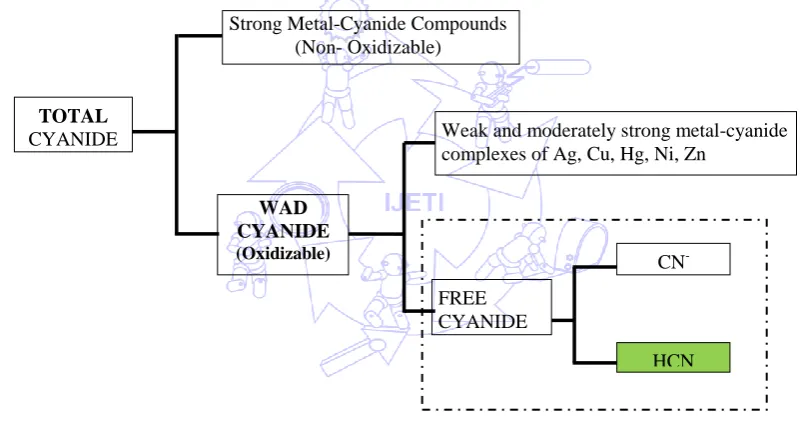
Cassava processing effluent is the bye product of both fermentative and non-fermentative processing of cassava. Various authors have confirmed that this waste water is acidic (between 4.3-4.9) and contains a substantial dose of cyanide in form of Hydrogen Cyanide [28-29]. Cyanide has been observed to be an extremely strong chelating agent, reacting readily with transition metal ions, forming very stable complexes, which are extremely resistant to oxidation. The Total Cyanide (CNTotal) has been classified into Strong Metal-Cyanide Complexes and Weak Acid Dissociable Cyanide (CNWAD). The CNWAD is further classified into the free cyanide (CNFree) and weak and moderately strong metal-cyanide complexes of silver, Copper, Mercury Nickel and Zinc as shown in figure 1. The Strong Metal-Cyanide Compounds (Non-Oxidizable cyanides) are majorly non-labile metal-cyanides complexes, typically iron-cyanide complexes (Fe[CN]6 2- or 3-), or cobalt. Only oxidizable cyanides can be treated using peroxide or other oxidants.
Fig. 1 Cyanide compounds classification
Past research efforts have investigated and reported various physical, chemical, catalytic, photocatalytic, electrolytic, ultrasonic and biological methods for the removal of cyanide or metal-complexed cyanide in aqueous solutions [30-33].
5.
Materials and Methods
Wastewater was collected from cassava processing industry in opaque (black) containers and then stored in ice (about 40C) to ensure the integrity of the wastewater at point of collection is maintained, the wastewater sample was then transported to facility where test was to be carried out, an initial test was carried out to determine the concentration of metal and non-metal content of the wastewater.
The pH of the wastewater sample was determined using the Hanna microprocessor pH meter (Model no pH 212). The electrode of the pH meter was carefully standardized with a buffer solution of pH range from 4 to 9 and dried with tissue paper. The electrode was then dipped into a beaker containing a small amount of sample and the beaker shaken gently. Values from the pH meter were read off and recorded. The initial pH of the wastewater sample was recorded as 4.7.
TOTAL CYANIDE
WAD CYANIDE (Oxidizable)
Weak and moderately strong metal-cyanide complexes of Ag, Cu, Hg, Ni, Zn
Strong Metal-Cyanide Compounds (Non- Oxidizable)
FREE CYANIDE
-During the Hydrogen peroxide treatment process, the wastewater was kept at temperature of 500 C to ensure faster rate of reaction without any form of catalyst addition (some authors advocate the use of catalysts like copper at a temperature of 250 C for a period of about 3 hrs for cyanide treatment) it was then taken to and maintained at an alkaline range of 10(to avoid release of hydrogen cyanide (HCN) gas during the process due to the presence of Hydrogen Cyanide in the wastewater) by the addition of NaOH purchased from Merck. H2O2 at 50% concentration purchased from Merck was added to the caustic wastewater at the different dosages (0.1, 0.2, 0.3, 0.4 and 0.5mg/l) the samples were then left for a period of 90 minutes to ensure reasonable level of oxidation and cyanide destruction. Then the pH was reduced to a slightly acidic range of 5 by adding 1 Molar HCl and left to stand for another 90 minutes to ensure better oxidation of compounds like nitrates which are usually oxidized at acidic to neutral range. The pH correction was then carried out by adding 0.5M NaOH until the pH was between the ranges of 6.9-7.2.
The cyanide destruction stage of the treatment is an oxidation process; a reaction in which cyanide is converted to cyanate which is 1000 times less toxic than Cyanide and water as shown in equation 1 below.
CN-+H2O2 CNO- + H2O (50oC) (1)
The metal hydroxide formation resulting from the increase in oxidation state(due to Hydrogen peroxide oxidation) of the metal content of the wastewater and the presence of precipitating agent (NaOH) in aqueous state as shown in equation 2 led to the formation of metal hydroxide precipitates as well as other oxidized starch material in the wastewater. Metals hydroxides like Ni, Fe, etc were precipitated during the alkaline state of the reaction.
M + nNaOH M(OH)n + H2 (2)
The Sodium hydroxide reacted with the metallic nitrate compounds (Cu, Fe etc,) of the waste water to produce precipitates as shown in the reaction below, thereby reducing the nitrate content of the wastewater.
M(NO3)n(aq) + nNaOH(aq) M(OH)n (s) + nNaNO3(aq) (3)
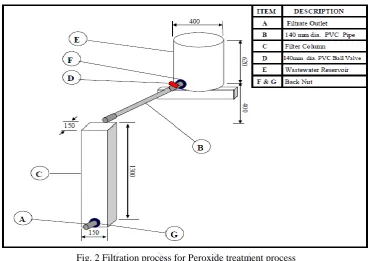
After the treatment the water is passed through a filter column an intermediate filter column constructed from transparent plastic (Perspex) material of 4mm thickness. The column dimensions were 0.15m length, 0.15m breath and 1.4m height. The filter column was filled with graded sand of 0.005-0.2mm diameter range thereby making it a single medium filter. The filter sand was collected from the water channel with laminar and quiescent flow. The sand was then filtered using a 2mm sieve and washed in water using a 0.005mm sieve. This was to allow particles below 0.005mm pass through thereby leaving the required sand sizes. The filtration process was under gravity flow as the influent (wastewater) was supplied at the top while the effluent (filtrate) was received at the bottom of the filter column (Figure 2). 30 litres of the treated wastewater sample was subjected to a filtration process which was done at a rate of 1.0 x 10⁻² l/s to remove solid particles present in the wastewater.
(4)
where DOo = Dissolved oxygen found in the sample on the initial day.
DOd = dissolved oxygen found in the dilution of the sample after titration on the final day.
Fig. 2 Filtration process for Peroxide treatment process
The cyanide content of the wastewater was measured using titrimetric method at the initial stage of treatment and after the treatment by collecting 10 ml of the sample into a measuring cylinder. The sample was then diluted to 250 ml (each) for the titrations and put in a conical flask. 0.5 ml of the indicator solution was added. The pH was adjusted by adding 4 ml of NaOH solution and shaken thoroughly. The mixture was titrated with standard AgNO3 solution to the first change in colour from a colourless to canary yellow. A distilled water blank containing the same amount of NaOH solution and indicator as in the sample was titrated. The same amount of indicator was used for all the titrations to give the best result. The titration was done painstakingly because of high limit of sensitivity and indistinct colour change reflected in high blank values. As the end point was reached, the blank titrations decreased and precise values were obtained accordingly. The CN (mg/L) was calculated using the equation below:
(5)
where A = volume of AgNO3 for titration of sample, B = volume of AgNO3 for titration of blank.
The Efficiency of wastewater decontamination (Di) for the process is a measure of the reduction in the toxicity of the wastewater as a result of the treatment process. This was calculated using the formula:
Di = x 100
(6)
Statistical analysis of the of the results from the peroxide decomposition process was done using a 2-way Analysis of Variance method without replication having five Treatments (Peroxide Dosage) and 16 Blocks (Parameters). The ANOVA method tested if there was no significant difference between the results from varying concentration of hydrogen peroxide as well as decontamination level for the different tested parameters. The null hypothesis (H0) was set to test if there was a significant difference in the means of the treatments and parameters while the alternative parameter (Hi) was that there was a significant difference in means between treatments and that of the parameters. This calculation was computed using the embedded Analysis Toolkit add-in available in the Microsoft Excel application package and the result displayed in tabular form.
6.
Results and Discussion
After addition of the hydrogen peroxide a progressive reduction in levels of pollution was observed for the period of reaction however a comparison of the level of reactions at the different hydrogen peroxide dosage levels showed that after the 3 hour reaction time the concentrations of contaminants showed a progressive drop as dosage increased up to 0.3mg/l when the reduction in concentration became almost constant showing that the peroxide oxidation and hydroxide precipitation was almost at the chemical peak. This trend shows that a continuous addition of hydrogen peroxide at a dosage above 0.3mg/l might actually have very little economic effect when it comes to waste treatment as most of the pollutant levels had dropped to an equilibrium level.
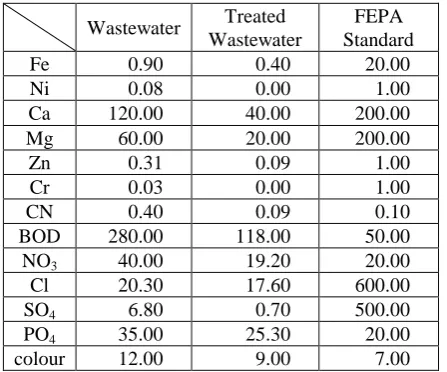
Table 1 Comparison of Initial and Final parameter of wastewater with FEPA Standard
Wastewater Treated Wastewater
FEPA Standard
Fe 0.90 0.40 20.00
Ni 0.08 0.00 1.00
Ca 120.00 40.00 200.00
Mg 60.00 20.00 200.00
Zn 0.31 0.09 1.00
Cr 0.03 0.00 1.00
CN 0.40 0.09 0.10
BOD 280.00 118.00 50.00
NO3 40.00 19.20 20.00
Cl 20.30 17.60 600.00
SO4 6.80 0.70 500.00
PO4 35.00 25.30 20.00
colour 12.00 9.00 7.00
All parameters are in mg/l except colour which is in Lovibond Units
Comparison of wastewater parameters with FEPA interim standard on discharge for all classes of industry (Table 1) shows that the wastewater parameters were above the FEPA standards for Cyanide, Biochemical Oxygen Demand (BOD5), Nitrate (NO3), Phosphate (PO4) and Colour. This shows that the wastewater is highly toxic and susceptible to heavy metal complexation due to the high cyanide content, the foul odour is also characteristic of the high BOD5 and SO4 values while the phosphate values is a precursor to eutrophication of receiving water body.
Table 2 Comparison of Initial and Final parameter of wastewater with Canadian Irrigation Standard
(All parameters are in mg/l except colour which is in Lovibond Units)
Wastewater Treated Wastewater
Canadian Irrigation Std.
Fe 0.90 0.40 -
Ni 0.08 0.00 0.10
Ca 120.00 40.00 100.00
Mg 60.00 20.00 200.00
Zn 0.31 0.09 5.00
Cr 0.03 0.00 0.10
CN 0.40 0.09 0.20
BOD 280.00 118.00 2.00
NO3 40.00 19.20 47.00
Cl 20.30 17.60 100.00
SO4 6.80 0.70 5.00
PO4 35.00 25.30 -
colour 12.00 9.00 -
Table 3 Efficiency of wastewater decontamination at different dosage levels after 3 hours contact time
Percentage Hydrogen Peroxide Dosage (mg/l) Decontamination (%) 0.10 0.20 0.30 0.40 0.50
Fe 33.33 50.00 55.56 55.56 55.56
Ni 37.50 62.50 100.00 100.00 100.00
Ca 18.33 58.33 66.67 66.67 66.67
Mg 25.00 46.67 66.67 83.67 85.00
Zn 35.48 61.29 70.97 77.42 83.87
Cr 66.67 100.00 100.00 100.00 100.00
CN 0.00 50.00 77.50 80.00 82.50
BOD 32.14 46.43 57.86 57.50 57.14
NO3 7.91 11.86 24.11 24.90 28.85
Cl 6.90 11.33 13.30 15.27 16.75
SO4 69.12 82.35 89.71 90.00 91.18
PO4 6.90 10.34 12.76 12.76 13.10
Colour 8.33 25.00 25.00 25.00 25.00
A close observation of the wastewater parameters shows a very high level of BOD5 content which accounts for the low dissolved oxygen content and consequently offensive odour; however parameters like Fe, Ca and Zn showed almost complete decontamination during the treatment process as a result of the metal hydroxide precipitation. The colour index of the water was still very high after the treatment which may still be accommodated for irrigation purposes but when it comes to discharge to water course there is usually need to control water colour therefore peroxide treatment may be grossly inadequate this fact also supporting the need for further treatment before safe and environmentally friendly discharge can be carried out.
Results from Table 3 shows that the hydrogen peroxide was able to effect a total decontamination of the chromium and nickel content of the wastewater, however the calcium, iron and colour decontamination had reached the maximum value at a dosage of 0.3mg/l. Contaminants like phosphate, nitrate, chloride, sulphate and colour showed a relatively low decontamination level during the treatment process. Cyanide decontamination however showed a continuous increase as hydrogen Peroxide concentration increased showing that the Cyanate production was active and dependent on the concentration of the Cyanide in the wastewater and the concentration of the Peroxide used in the treatment process.
difference in the means of values for the different dosages this means that statistically are not the same and there is a marked difference in the level of decontamination each time the concentration of the hydrogen peroxide was altered. The result also indicates that even at the same concentration the rate of decontamination is statistically different for each of the respective parameters being investigated.
Table 4 ANOVA Table for the Treatment Process
Source of Variation SS Df MS F P-value F crit Decision
Parameter 45269.09 12 3772.42 33.32 3.65E-19 1.96 Significant Dosage 11327.10 4 2831.78 25.01 3.14E-11 2.57 Significant
Error 5434.68 48 113.22 - - - -
Total 62030.87 64 - - - - -
7.
Conclusions
The parameters of wastewater treated using the hydrogen caustic peroxide method showed significant reduction in cyanide toxicity level which is one of the important characteristics of cassava processing wastewater. During the treatment process cyanide was converted to cyanate which is about 1000 times less toxic than cyanide, these cyanide destruction reduces the heavy metal complexation tendencies of the cyanide content of the wastewater. The study shows that treatment of wastewater using this method can be carried out at an optimum dosage of 0.3mg/l, above this dosage results show very little difference in wastewater decontamination level and may amount to waste of reagent. The effluent from treatment process when compared with discharge and irrigation standards show that a number of parameters like PO4, BOD5 and colour still require special attention as they did not meet the requirement of the standards.
8.
Recommendations for Further Study
Although hydrogen peroxide oxidation process offers a promising treatment method, the result shows that there is need for additional treatment process which could be a physico-chemical one like adsorption activated carbon or use of a use of a combined baffle flocculation and aeration techniques will be appropriate if the water is to be discharged safely into water courses or even for irrigation purposes. Investigation could be carried out on the result of combining this peroxide treatment method with any of the above mentioned physico-chemical treatment processes.
References
[1]T. P. Phillips, D. S. Taylor, L. Sanni, M. O. Akoroda, “A cassava industrial revolution in Nigeria; the potential for a new industrial crop,” The Global Cassava Development Strategy, IFAD/ FAO, Rome, 2004.
[2]F. I. Nweke, D. S. C. Spencer and J. K Lynam, “The Cassava Transformation: Africa’s best kept secrete,” Michigan State University Press, East Lansing, USA, 2002.
[3]J. N. Ethan, W. M. Richard, and G. K. Michael, “The effect of an industrial effluent on an urban stream benthic community: water quality vs. habitat quality,” Environmental Pollution, vol. 123, no. 1, pp. 1-13, 2003.
[4]A. Wesby, “Importance of fermentation in cassava processing,” Acta. Hortic, vol. 380, pp. 249-255, 1991.
[5]A. O. Ubalua, “Cassava wastes: treatment options and value addition alternatives,” African Journal of Biotechnology, vol. 6, no. 18, pp. 2065-2073, 2007.
[6]S. C.Jhansi, M. S. Campus, S. K. Mishra, “Wastewater Treatment and Reuse: Sustainability Options,” The Journal of Sustainable Development, vol. 10, no. 1, pp. 1-15, 2013.
[8]O. B. Shittu, I. O. Okonko and I. Akpan, “A Comparative study on the Bioremediation Potentials of Grounded seeds of Moringa oleifera and Latex exudates of Calotropis Procera (Sodom Apple),” Nigerian Journal of Microbiology, vol. 30, pp. 1419-1024, 2007.
[9]Y. Mijinyawa and N.S. Lawal, “Treatment Efficiency and Economic Benefit of Zartech Poultry Slaughter House Wastewater Treatment Plant, Ibadan Nigeria,” Scientific Research and Essay, vol. 3, no. 6, pp. 219-223, 2008. [10]T. A. Ewemoje, O. A. Omotosho and O. P. Abimbola, “Life Cycle Assessment of hatchery production process to
point-of-lay of a poultry system in a developing country,” Conference proceedings from NIAE conference, Ilorin, Nigeria, 2011.
[11]S. C. Jhansi, M. S. Campus, S. K. Mishra “Wastewater Treatment and Reuse: Sustainability Options,” The Journal of Sustainable Development, vol. 10, no. 1, pp. 1-15, 2013.
[12]A. F. Ogundola and M. O. Laiasu, “Herbicidal effects of effluent from processed cassava on growth performances of chromolana odorata weeds population,” Afri. J. Biotech, vol. 6, pp. 685-690, 2007.
[13]P. Behr, “Looming Water Crisis,” CQ Global Researcher, vol. 2, pp. 27-56, 2008.
[14]N. Ford, “Seeking water solutions for Africa,” African Business, pp. 30, 2008 http://www.allbusiness.com/government/ international-organizations/8888959-1.html. accessed September, 2010.
[15]A. Ako Ako, G. E. T. Eyong, J. Shimada, K. Koike, T. Hosono, K. Ichiyanagi, A. Richard, B. K. Tandia, G. E. Nkeng and N. N. Roger “Nitrate contamination of groundwater in two areas of the Cameroon Volcanic Line Banana Plain and Mount Cameroon area,” Appl Water Sci vol. 4, pp. 99-113, 2014.
[16]FAO, “Food and Agriculture Organisation production year book, Thailand,” Office of Agricultural Economics, 2000. [17]A. F. Ogundola and M. O. Laiasu, “Herbicidal effects of effluent from processed cassava on growth performances of
chromolana odorata weeds population,” Afri. J. Biotech, vol. 6, pp. 685-690, 2007.
[18]O. K. Adeyemo, “Haematological and histopathologgical effects of cassava effluent in Clarias gariepinus,” Afr. J. Biomed. Res., vol. 8, pp. 179-183, 2005.
[19]J. M.Wade, E. Omoregie and Ezenwaka, “Toxicity of cassava (Manihot esculanta Crantz) effluent on the Nile tilapia, Oreochromis noliticus (L) under laboratory conditions,” J. Aquat. Sci., vol. 17, pp. 89-94, 2002.
[20]D. I. Olorunfemi, G. E. Okoloko, A. A. Bakare and A. Akinboro, “Cytotoxic and Genotoxic Effects of Cassava Effluents Using Allium cepa Assay,” Research Journal of Mutagenisis, vol. 1, no. 1, pp. 1-9, 2011.
[21]A. R. G. Kumar, “Anapase-telophase aberration assay of fertilizer factory effluent in Allium cepa,” L.J. Cytol. Genet, vol. 9, pp. 131-135, 2008.
[22]O. O. Fawole, T. A. Yekeen, A. A. Ayandele, A. Akinboro, M. A. Azeez, and S. O Adewoye, “Polluted Alamuyo River: Impacts on surrounding wells, microbial attributes and toxic effects on Allium cepa root cells,” Asian J. Biotechnol., vol. 7, pp. 450-458, 2008.
[23]B. Ikhajiagbe, O. Kekere, O. Omoregbee and F. I. Omokha, “Microbial and Physiochemical Quality of Effluent Water from a Brewery in Benin City, Midwestern Nigeria,” Journal of Scientific Research & Reports vol. 3, no. 3, pp. 514-531, 2014. [24]J. A. Awomeso, A. M. Taiwo, A. M. Gbadebo and J. A. Adenowo, “Studies on the Pollution of Waterbody by Textile
Industry Effluents in Lagos, Nigeria,” Journal of Applied Sciences in Environmental Sanitation, vol. 5, no. 4, pp. 353-359, 2010.
[25]S. O. Fakayode, “Impact of industrial effluents on water quality of the receiving Alaro River in Ibadan, Nigeria,” Ajeam-Ragee, vol. 10, pp. 1-13, 2005.
[26]S. Mukherjee and P. Nelliyat, “Groundwater pollution and emerging environmental challenges of industrial effluent irrigation: A case study of Mettupalayam Taluk,” Tamilnadu. MPRA Paper 6474, University Library of Munich, Germany, 2006.
[27]A. Ako Ako, G. E. T. Eyong, J. Shimada, K. Koike, T. Hosono, K. Ichiyanagi, A. Richard, B. K. Tandia, G. E. Nkeng and N. N. Roger, “Nitrate contamination of groundwater in two areas of the Cameroon Volcanic Line (Banana Plain and Mount Cameroon area,” Appl Water Sci, vol. 4, pp. 99-113, 2014.
[28]O. P. Oviasogie, and C. L. Ndiokwere, “Fractionation of Lead and Cadmium in Refuse Dump Soil Treated with Cassava Effluent,” Journal of Agric and Environment, vol. 9, pp. 10-15, 2008.
[29]A. P. Uzoije and N. Egwuonwu, (2011) Quality of the Cassava Mill Effluent Polluted Eutric-Tropoflavent Soil,” Research Journal of Environmental Sciences vol. 5, no. 4, pp. 342-353, 2011.
[31]T. I. Mudder, M. M. Botz and A. Smith, “Chemistry and Treatment of Cyanidation Wastes,” 2nd ed., Mining Journal Books Limited, London, UK, 2001.
[32]M. M. Botz, “Cyanide treatment methods. The Cyanide Guide,” (Mudder T I, ed.). A Special Edition of the Mining Environmental Management, vol. 9, pp. 28-30.2001.
[33]A. J. Saterlay, Q. Hong, R. G. Compton and J. Clarkson, “Ultrasonically enhanced leaching: Removal and destruction of cyanide and other ions from used carbon cathodes,” Ultrasonics Sonochemistry, vol. 7, pp 1-6, 2000.