CrossMark
Published by DiscoverSys
ABSTRACT
Introduction: Women readiness and self-efficacy for pregnancy and childbirth is an important issue which usually assessed by using CBSEI-32 but currently no evaluation is ever conducted nor Indonesian version of this instrument ever developed to enhance subject understanding. Therefore, this study aimed to develop the Indonesian Language version of CBSEI (childbirth self-efficacy inventory) instrument.
Method: A quantitative study was conducted by involving 73 pregnant mothers in their trimester III either as the primigravida or as multigravida. The selected respondents are those who lived in the working area or visited several health care centres in the area between July-August 2018. The content validity was tested by using Aiken V analysis and the construct validity was assessed using Kaiser-Meyer-Olkin (KMO) and Bartlett’s test. Finally, the reliability test was conducted using Alpha Cronbach.
Result: Analysis revealed that the Aiken V value of the instrument was in the range of 0.67-1 for the outcome expectancy and 0.75-1 for efficacy expectancy. 16 items in outcome expectancy showed KMO value > 0.5 with MSA value between 0.648-0.957. Meanwhile, 16 questions in efficacy expectancy also had KMO value > 0.5 with a MSA range between 0.798-0.937 respectively. The average values of the instrument validity for the outcome expectancy and efficacy expectancy were 0.740 and 0.726 respectively. Finally, Alpha Cronbach value for both outcome expectancy and efficacy expectancy was 0.94.
Conclusion: According to the analysis, it can be concluded that CBSEI-C32 in Indonesia language version was valid and reliable instrument to be applied in pregnant mother in Indonesia.
Keywords: content validity, construct validity, CBSEI-32, self-efficacy, pregnant mothers
Cite This Article: Kartini, F., Emilia, O., Dasuki, D., Prabandari, Y.S. 2019. Developing Indonesian version of childbirth self-efficacy inventory (Cbsei)-C32. Bali Medical Journal 8(3): 679-686. DOI:10.15562/bmj.v8i3.1538
Developing Indonesian version
of childbirth
self-efficacy inventory (
Cbsei
)-C32
Farida Kartini,1* Ova Emilia,2 Djaswadi Dasuki,3 Yayi Suryo Prabandari4
INTRODUCTION
For a woman, childbirth might be a spiritual expe-rience that can be very joyful or very frightening.1
Satisfaction in the childbirth process has a good impact on the life quality of women. In contrast, any problems during this process would result in mater-nal trauma. Matermater-nal trauma during childbirth is almost always associated with bad experiences such as psychological pressure and trauma for infants.2
Therefore, a pleasant experience in labour is very important. Mother satisfied with the childbirth process will have positive and pleasant maternal experiences.3 Therefore, self-control becomes an
important factor related to women’s satisfaction in childbirth.4 Mothers with a good self-control tend
to be able to lower pain perception during in child-birth process. Also, a good self-efficacy relates to enhancement in maternal satisfaction during such process.5
Maternal efficacy refers to the self-ability of a mother in terms of ability and self-perception to be competent and effective.6 Self-confidence could
improve self-efficacy but low self-confidence often correlates with maternal fear toward labour process which would result in anxiety. Furthermore, fear strongly correlates with efficacy as well as causes low efficacy.7 Low efficacy in mother would result in low
self-confidence and there is increasing tendency of this condition in recent decade. Therefore, there is a need to improve the efficacy of mothers in child-birth, to better prepare the mother and enhance maternal confident in facing the childbirth.
The childbirth self-efficacy inventory (CBSEI) is an instrument that can measure the mother efficacy in facing childbirth. The instrument was developed by Nancy Lowe which consists of the subscales for active stage/first stage and second stage of child-birth.8 The short form of CBSEI was developed by
Wan Yim Ip in China9 in which it covers a part of
CBSEI developed by Lowe. The footage is divided into 16 items of outcome expectancy second stage
and 16 items of efficacy expectancy second stage. Assessment was conducted with consideration that after collecting the data, the respondents were not able to distinguish between the questions for the outcome expectancy and for efficacy expectancy for the active/first stage or second stage of childbirth.9
In this study, this short form was used with assump-tion that the mother would not answer too many questions with the same question items. Based on the experience in the field during childbirth process, mothers could not distinguish the stages in child-birth, unless the mother has a medical background 1School of Midwifery Universitas
‘Aisyiyah Yogyakarta, Indonesia 55292
2Departments of Biostatistics, Epidemiology, and Population Health, Faculty of Medicine, Public Health and Nursing Universitas Gadjah Mada Yogyakarta, Indonesia, 55281
3Department of Maternal, Child and Reproductive Health; Faculty of Medicine, Public Health and Nursing Universitas Gadjah Mada Yogyakarta, Indonesia, 55281 4Department of Behavioral, Environment and Social Health; Faculty of Medicine, Public Health and Nursing Universitas Gadjah Mada Yogyakarta, Indonesia, 55281
*Correspondence to:
Farida Kartini; School of Midwifery Universitas ‘Aisyiyah Yogyakarta, Indonesia, 55292;
Received: 2019-06-27 Accepted: 2019-11-21 Published: 2019-12-01
Volume No.: 8
Issue: 3
First page No.: 679
P-ISSN.2089-1180
E-ISSN.2302-2914
such as nurse, midwife or doctor. Based on the research conducted on 100 women in Australia, similar finding was obtained where the moth-ers could not distinguish between first stage and second stage of childbirth.10 In contrast, a Swedish
study on 406 pregnant women aged 35-42 weeks of pregnancy reported that the mothers could distin-guish the two stages in childbirth.11
The problem of the low efficacy among mothers in facing childbirth occurs in almost all parts of the world, including Indonesia. To reduce the trauma occurred during the childbirth among mothers, it is necessary to have an assessment of the self-efficacy of mothers facing the childbirth. By recognizing the level of maternal efficacy, it is possible to devise an appropriate intervention for the mothers to improve their efficacy. Assessing the mother efficacy requires a proper instrument. However, until recently, there has been no study officially assessing the efficacy instrument in Indonesian language version.
This research aimed to develop CBSEI instru-ments in Indonesian language version. With the existence of the CBSEI in Indonesian language version, it is expected that the health care person-nel who assisting childbirth are able to use this instrument for every pregnant woman in facing the childbirth.
METHODS
This study used a quantitative approach to eval-uate the validity of research instruments, i.e. the Chinese CBSEI (childbirth self-efficacy inventory) in a short form called as CBSEI-C32.9 CBSEI-C32
only assesses the maternal efficacy at the second stage of childbirth (second time). The data for questionnaire validity test were collected from the trimester-III pregnant women who either primi-gravida or multiprimi-gravida and lived in the working area or visited the health centres of Kasihan I and II, Wirobrajan health centre, Jetis health centre and Tegalrejo health centre between July-August 2018. The location was selected because of their simi-larity in maternal characteristics. The number of pregnant women used was approximately 4.5 times higher than the number of items in one form of questionnaire with a total 73 mothers in a trimes-ter-III pregnancy. The criteria for pregnant women are generally healthy women with normal preg-nancy. For those with multigravida, the previous childbirth must be normal and singleton. Sampling technique was conducted using the sampling quota.
Data collection was conducted by providing a CBSEI-C32 questionnaire consisting of a ques-tionnaire for outcome expectancy and efficacy
expectancy, each of which contained 16 questions. Before the questionnaire was given, an explanation about the objective was delivered to every subject as well as their participation in this research. Then, the mothers were asked for their willingness to be a respondent in this research and signed an inform consent form. All subjects had 20 minutes to fill the questionnaire which then submitted immediately to the researchers.
Questionnaires translation
Before translation, a formal request for permission was delivered to Wan Yim Ip. CBSEI-C32 has been written in two languages: Chinese and English. CBSEI-C32 in English language was translated into Indonesian language by the expert. The results of the translation were then assessed by distributing it to 8 mothers who had given birth with a purpose to check whether there were any confusing words for them. None of the 8 mothers stated that they had any difficulties in understanding the words in the questionnaire. Thus, the trial was declared sufficient. Then, the questionnaire was again translated into English by an independent English language insti-tution without knowing the original CBSEI-C32 instrument. The result then was compared to the original English version of CBSEI-C32. It was found that there was no substantial differences and the questionnaire was considered ready to be used.
Data Analysis
Initially, the data was analysed using univari-ate analysis to describe the characteristics of the respondents. The test used was the Aiken V test and the construct validity was conducted using the values of Kaiser-Meyer-Olkin (KMO) and Bartlett’s test. In addition, reliability test was conducted using Cronbach Alpha value.
RESULTS
The baseline characteristics of the subjects of this study include age, occupation, education level, grav-ida (number of pregnancies) and parity (number of births). Table 1 summarizes the characteristics of the respondents.
Table 1 showed that most of respondents or 64 mothers (87.7%) were regarded as having low risks of pregnancies based on their age. Meanwhile, 41 respondents (56.2%) were unemployed mothers and most of the respondents or 63 subjects (86.3%) have higher level of education. Regarding the parity, the percentage of nullipara and multipara was considered comparable in this study.
Table 1 The baseline characteristics of research subjects
Characteristics Frequency (person) Percentage (%)
Age
High risk age 9 12.3
Non-risky age 64 87.7
Occupation
Unemployed 41 56.2
Employed 32 43.8
Educational Level
Basic 10 13.7
Higher level 63 86.3
Parity
Nullipara 37 50.7
Multipara 36 49.4
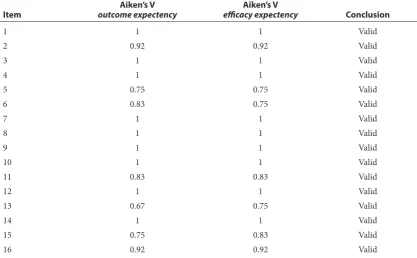
Table 2 Index of Aiken’s V Questionnaries item
Item outcome expectencyAiken’s V efficacy expectencyAiken’s V Conclusion
1 1 1 Valid
2 0.92 0.92 Valid
3 1 1 Valid
4 1 1 Valid
5 0.75 0.75 Valid
6 0.83 0.75 Valid
7 1 1 Valid
8 1 1 Valid
9 1 1 Valid
10 1 1 Valid
11 0.83 0.83 Valid
12 1 1 Valid
13 0.67 0.75 Valid
14 1 1 Valid
15 0.75 0.83 Valid
16 0.92 0.92 Valid
Table 3 Feasibility evaluation of outcome expectancydata
Characters KMO Bartlett’s test No. item MSA
Outcome expectancy 0.888 0.000 1 0.922
2 0.857
3 0.910
4 0.957
5 0.852
6 0.913
Table 3 Continue
Characters KMO Bartlett’s test No. item MSA
8 0.831
9 0.892
10 0.908
11 0.948
12 0.909
13 0.648
14 0.886
15 0.875
16 0.860
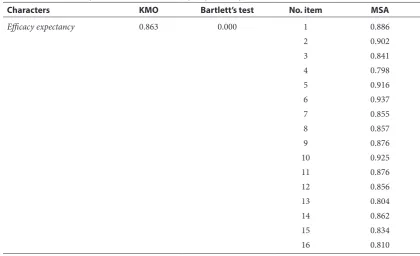
Table 4 Feasibility assessment of efficacy expectancydata
Characters KMO Bartlett’s test No. item MSA
Efficacy expectancy 0.863 0.000 1 0.886
2 0.902
3 0.841
4 0.798
5 0.916
6 0.937
7 0.855
8 0.857
9 0.876
10 0.925
11 0.876
12 0.856
13 0.804
14 0.862
15 0.834
16 0.810
Table 5 Validity analysis of CBSEI-C32 construct
Outcome expectancy efficacy expectancy
No. item Loading factor Remark No. item Loading factor Remark
1 0.850 Valid 1 0.873 Valid
2 0.797 Valid 2 0.764 Valid
3 0.832 Valid 3 0.763 Valid
4 0.860 Valid 4 0.769 Valid
5 0.695 Valid 5 0.872 Valid
6 0.616 Valid 6 0.581 Valid
7 0.808 Valid 7 0.688 Valid
8 0.766 Valid 8 0.758 Valid
9 0.745 Valid 9 0.747 Valid
efficacy expectancy. The values indicate that, in terms of contents, the modified version of CBSEI have high content validity.
Table 3 showed the results of the feasibility test of outcome expectancy in which the Kaiser-Meyer-Olkin (KMO) test value to all 16 items was more than 0.5 which indicate the validity of the instru-ments. The lowest and the highest value of MSA (Measures of sampling adequacy) was 0.648 and 0.957, respectively and the instruments were considered valid for construct analysis.
Table 4 showed the test on the feasibility for 16 items of question of efficacy expectancy instru-ments using the test of KMO. The result showed that the value was > 0.5 which indicate the instru-ments were valid. The lowest and highest values of MSA were 0.798 and 0.937, respectively. It means that the item of efficacy expectancy was valid for construct analysis.
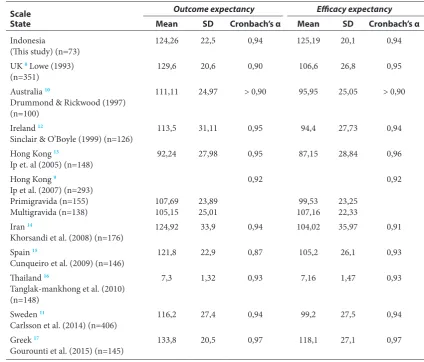
Table 5 showed the results of the test on the construct validity. The findings indicated that all items of CBSEI-C32 were valid. On average, the Table 6 The comparison of the mean value and value of Alpha Cronbach’s sub-scale CBSEI
stage II in the childbirth between the current research and previous researches Scale
State
Outcome expectancy Efficacy expectancy
Mean SD Cronbach’s α Mean SD Cronbach’s α
Indonesia
(This study) (n=73) 124,26 22,5 0,94 125,19 20,1 0,94
UK 8 Lowe (1993)
(n=351) 129,6 20,6 0,90 106,6 26,8 0,95
Australia 10
Drummond & Rickwood (1997) (n=100)
111,11 24,97 > 0,90 95,95 25,05 > 0,90
Ireland 12
Sinclair & O’Boyle (1999) (n=126) 113,5 31,11 0,95 94,4 27,73 0,94
Hong Kong 13
Ip et. al (2005) (n=148) 92,24 27,98 0,95 87,15 28,84 0,96
Hong Kong 9
Ip et al. (2007) (n=293) Primigravida (n=155)
Multigravida (n=138) 107,69105,15 23,8925,01
0,92
99,53
107,16 23,2522,33
0,92
Iran 14
Khorsandi et al. (2008) (n=176) 124,92 33,9 0,94 104,02 35,97 0,91
Spain 15
Cunqueiro et al. (2009) (n=146) 121,8 22,9 0,87 105,2 26,1 0,93
Thailand 16
Tanglak-mankhong et al. (2010) (n=148)
7,3 1,32 0,93 7,16 1,47 0,93
Sweden 11
Carlsson et al. (2014) (n=406) 116,2 27,4 0,94 99,2 27,5 0,94
Greek 17
Gourounti et al. (2015) (n=145) 133,8 20,5 0,97 118,1 27,1 0,97
Table 5 Continue
Outcome expectancy efficacy expectancy
No. item Loading factor Remark No. item Loading factor Remark
11 0.716 Valid 11 0.779 Valid
12 0.768 Valid 12 0.738 Valid
13 0.439 Valid 13 0.550 Valid
14 0.792 Valid 14 0.674 Valid
15 0.646 Valid 15 0.676 Valid
values of instrument validity for the outcome expec-tancy and for efficacy expectancy were 0.740 and 0.726, respectively.
Alpha Cronbach values showed that the instruments of CBSEI-C32 (CBSEI second stage) consisting of the outcome expectancy and efficacy expectancy were highly reliable. Thus, this instru-ment was valid to be used to assess the mother effi-cacy in facing the childbirth.
DISCUSSION
Women maturity to get pregnant is closely related to their readiness to face the childbirth. Most of the third trimester pregnant women as the respondents in this research were pregnant women in the range of ages without any risks for pregnancy, i.e. in the age between 20-35 years old. Thus, it is assumed that in facing childbirth, mothers are relatively well prepared. Mother’s preparedness is expected to have an impact on reducing maternal anxiety in facing the childbirth. This notion is supported by Handayani et al. that found a significant correla-tion between the age of the mother and the level of anxiety before childbirth.18 In contrast, Ramie et.al
found no correlation between those factors.3
Most of pregnant women in this study have higher educational level. This fact was further expected to enhance maternal ability to understand and filters information regarding pregnancy and childbirth and reduces the tendency of anxiety in facing the childbirth. Wanda et al. stated that the educational level of pregnant women was inversely associated with anxiety. The higher the level of education of pregnant women, the milder the severity of their anxiety.19 In another study, it was
found that the level of education was not related to the satisfaction of respondents undergoing the childbirth.3
In contrast to the aforementioned finding, most of our respondents were unemployed (56.2%). Previous studies found that the occupation of preg-nant women was associated with the level of anxi-ety. Furthermore, Wanda et al. found that whether 12 working pregnant women had anxiety levels in the panic category, 6 of unemployed trimester preg-nant mothers had the highest level anxiety.19
Maternal parity is also associated with the level of maternal efficacy. Mothers who have had expe-rience in childbirth, tend to have higher level of efficacy compared to mothers without any previous experience of giving birth.7 Therefore, previous
experience also regarded as one of important factors that affects maternal self-efficacy.20
CBSEI-C32 is a short-form CBSEI developed by Wan Yim Ip. CBSEI-C32 is the part of CBSEI
which developed by Lowe (1993) but focused only on CBSEI at the second stage (second time). In this research, CBSEI at the active labour stage (first time) was not assessed as not all mothers could distinguish between first stage and second stage of childbirth.9
As a research instrument, the modified version of CBSEI-C32 needs to be assessed to determine its validity for use. The feasibility of an instrument is expressed by the level of its validity and reliability.21
According to the results of validity tests on CBSEI instruments, a high validity and reliability were obtained in this study.
The first phase to test the validity and reliabil-ity of CBSEI-C32 instruments was by evaluating whether the words or terms on the instrument could be understood by the respondents. Then the language was checked. The instrument was origi-nally in English and was translated into Indonesian. The results of the translation were then consulted to the experts prior to be distributed to the respon-dents. The checking was carried out by asking the opinions of 8 mothers as the respondents who had been pregnant and giving birth to provide the input on their understanding about the CBSEI-C32 questionnaire. The eight mothers stated that they understood about the questions and sentences in the instrument and found that the sentences were easy to understand. The purpose of translating the instrument was to see the relevance of the instru-ment to the concept and local culture.11
CBSEI-C32 is an instrument in form of ques-tionnaire with answer using scores in the range of 1-10. For the instrument of outcome expectancy (OE), the answer range started from 1 = not helpful at all to 10 = very helpful. For efficacy expectancy (EE), it started from 1 = not sure at all to 10 = very sure. The total scores for each of CBSEI-C32 OE and EE were 160.9
The content validity test was conducted by asking for expert opinion (Midwife) and the result showed a high index of Aiken above 0.6 which indicate that the content the instrument was valid. Azwar et.al stated that the Aiken’s index V> 0.30 means that the item was declared valid.22 This fact strengthens
our finding regarding the content evaluation of CBSEI-C32 that we used.
validity of this CBSEI instrument were reported by Carlsson et al. who obtained KMO values started from 0.925 to 0.93823 risks of subsequent
childbear-ing were compared across four modes of delivery. Hazard ratios (HRs. Viewed from a loading factor that was also above 0.5, the CBSEI-C32 instrument was declared valid.
The MSA value for each item also yielded a fairly high correlation. The MSA values for OE CBSEI-C32 were in the range of 0.648 to 0.957 and for EE it ranged from 0.748 to 0.937. Thus, the 16 items on OE and 16 items on EE used to measure constructs have met the criteria as the constructors.
Instrument reliability test showed a high result of 0.942 for CBSEI-C32 outcome expectancy and 0.938 for efficacy expectancy. This figure explained that CBSEI-C32 instruments have had the high reliability. This result was also supported by the results of previous studies suggesting that CBSEI instruments are reliable instruments to assess the efficacy of mothers in facing the childbirth.9,11 Also,
the results of previous studies conducted in several countries, including UK, Australia, Ireland, Hong Kong, Spain, Greece, Iran, Sweden, and Thailand showed that CBSEI had considerably high reliabil-ity values (Table 6).
CONCLUSION
The CBSEI-C32 has been successfully translated into the Indonesian language version and has high validity and reliability, so it can be used to predict the efficacy of the mother during the childbirth. By knowing the mother’s efficacy level, it can be used as a reference in providing midwifery care to mothers in facing and undergoing the childbirth according to the mother needs.
CONFLICT OF INTEREST
All authors declared that there is no conflict of interest regarding the publication of this article.
ETHIC APPROVAL
This study has been approved by research ethic committee with letter number KE/FK/0348/ EC/2018
RESEARCHER CONTRIBUTION
All researchers contributed to the design of this research (FK, OE, DD, and YSP). The first researcher (FK) collected data and performed the statistical analysis. The four researchers interpreted, discussed
FUNDING
This study was funded by the scholarship from Ministry of Higher Education and Research.
ACKNOWLEDGEMENT
The authors would like to acknowledge the contri-bution from Universitas Aisyiyah Yogyakarta for providing the opportunities and material and immaterial support for this research. Authors also acknowledge the support from Ministry of Higher Education and Research in providing scholarship for funding, the three midwives as the expert panels, eight mothers who willing to provide input and responses for the clarity of the research instru-ments, and all of the respondents.
REFFERENCES
1. Kuswandi L. Hypnobirthing A Gentle Way To Give Birth. Jakarta: Pustaka Bunda; 2014.
2. Creedy DK, Shochet IM, Horsfall J. Childbirth and the Development of Acute Trauma Symptoms : Incidence and Contributing Factors. 2000;(June):104-111.
3. Ramie A, Afiyanti Y, Pujasari H. Kontrol Diri dan Efikasi Diri Meningkatkan Kepuasan Ibu Menjalani Proses Persalinan. J Ners. 2014;9(1, April):97-103.
4. Goodman P, Mackey MC, Tavakoli AS. Factors related to childbirth satisfaction. 2004:212-219.
5. Christiaens W, Bracke P. Assessment of social psycho-logical determinants of satisfaction with childbirth in a cross-national perspective. BMC Pregnancy Childbirth. 2007;7(26):1-12. doi: 10.1186/1471-2393-7-26
6. Rahayuningsih FB, Hakimi M, Haryanti F, Anganthi NRN.
Pengaruh Pelatihan Persiapan Masa Nifas, Pengetahuan, Dukungan Sosial Dan Efikasi Diri Ibu Nifas Terhadap
Kualitas Hidup Ibu Nifas. Disertasi UGM; 2015.
7. Schwartz L, Toohill J, Creedy DK, Baird K, Gamble J, Fenwick J. Factors associated with childbirth self-efficacy in Australian childbearing women. 2015:1-9. doi: 10.1186/ s12884-015-0465-8
8. Lowe NK. Maternal Confidence for Labor : Development of the Childbirth Self-Efficacy Inventory. 1993:141-149. 9. Ip W, Chung TKH, Tang CSK. The Chinese Childbirth
Self-Efficacy Inventory : the development of a short form. 2007. doi: 10.1111/j.1365-2702.2006.01919.x
10. Drummond J. Childbirth confidence : validating the child-birth self-eÃcacy inventory ( CBSEI ) in an Australian sample. 1997:613-622.
11. Carlsson I, Ziegert K, Nissen E. Psychometric properties of the Swedish childbirth self-efficacy inventory (Swe-CBSEI). 2014:1-11.
12. Sinclair M, Dase M, Rm RNT. The Childbirth Self-Ef ® cacy Inventory : a replication study. 1999;30(6):1416-1423. 13. Ip W, Chan D. Chinese version of the Childbirth
Self-efficacy Inventory. 2005:625-633.
14. Khorsandi M, Ghofranipour F, Faghihzadeh S, Hidarnia A, Bagheban AA, Aguilar-vafaie ME. Iranian version of childbirth self-efficacy inventory. 2008:2846-2855. doi:
10.1111/j.1365-2702.2008.02385.x
15. Cunqueiro MJ, Comeche MI, Docampo D.
Childbirth Self-Efficacy Inventory: psychometric testing of the Spanish version. 2009:2710-2718. doi:
10.1111/j.1365-2648.2009.05161.x
17. Gourounti K, Kouklaki E, Lykeridou K. Childbirth effi-cacy: Validating the childbirth self-efficacy inventory in a Greek sample of pregnant women. Midwifery. 2015. doi:
10.1016/j.midw.2015.03.013
18. Handayani R. Faktor-Faktor yang Berhubungan den-gan tingkat Kecemasan Menjelang Persalinan pada Ibu Primigravida Trimester III di Wilayah Kerja Puskesmas Lubuk Buaya Padang Tahun 2012. Ners J Keperawatan. 11(1):62-71.
19. Wanda, Asri K, Bidjuni H, Kallo V. Hubungan Karakteristik Ibu Hamil Trimester III dengan Tingkat Kecemasan dalam Menghadapi Persalinan di Poli KIA Puskesmas Tuminting.
J Keperawatan. 2014;2(2).
20. Bandura A. Overview of Social Cognitive and Self Efficacy Theories. 10 October 2016.
21. Azwar S. Reliabilitas Dan Validitas. Yogyakarta: Pustaka Pelajar; 2018.
22. Goal, Lumban P, Muhammas K, Masrukan. Pengembangan Instrumen Penilaian Karakter Percaya Diri Pada Mata Pelajaran Matematika Sekolah Menengah Pertaman. J
Educ Res Eval. 2017;6(1):63-70.
23. Elvander C, Dahlberg J, Andersson G, Cnattingius S. Mode of delivery and the probability of subsequent childbearing: a population-based register study. BJOG. 2015;122(12):1593-1600. doi: 10.1111/1471-0528.13021