
R E S E A R C H
Open Access
Advancing the application of systems thinking in
health: a realist evaluation of a capacity building
programme for district managers in Tumkur, India
Nuggehalli Srinivas Prashanth
1,2*, Bruno Marchal
2, Narayanan Devadasan
1, Guy Kegels
2and Bart Criel
2Abstract
Background:Health systems interventions, such as capacity-building of health workers, are implemented across districts in order to improve performance of healthcare organisations. However, such interventions often work in some settings and not in others. Local health systems could be visualised as complex adaptive systems that respond variously to inputs of capacity building interventions, depending on their local conditions and several individual, institutional, and environmental factors. We aim at demonstrating how the realist evaluation approach advances complex systems thinking in healthcare evaluation by applying the approach to understand organisational change within local health systems in the Tumkur district of southern India.
Methods:We collected data on several input, process, and outcome measures of performance of thetalukas
(administrative sub-units of the district) and explore the interplay between the individual, institutional, and contextual factors in contributing to the outcomes using qualitative data (interview transcripts and observation notes) and quantitative measures of commitment, self-efficacy, and supervision style.
Results:Thetalukasof Tumkur district responded differently to the intervention. Their responses can be explained by the interactions between several individual, institutional, and environmental factors. In atalukawith committed staff and a positive intention to make changes, the intervention worked through aligning with existing opportunities from the decentralisation process to improve performance. However, commitment towards the organisation was neither crucial nor sufficient. Committed staff in two othertalukaswere unable to actualise their intentions to improve organisational performance. In yet anothertaluka, the leadership was able to compensate for the lack of commitment.
Conclusions:Capacity building of local health systems could work through aligning or countering existing relationships between internal (individual and organisational) and external (policy and socio-political environment) attributes of the organisation. At the design and implementation stage, intervention planners need to identify opportunities for such triggering alignments. Local health systems may differ in their internal configuration and hence capacity building programmes need to accommodate possibilities for change through different pathways. By a process of formulating and testing hypotheses, making critical comparisons, discovering empirical patterns, and monitoring their scope and extent, a realist evaluation enables a comprehensive assessment of system-wide change in health systems.
Keywords:Capacity building, District health system, Organisational commitment, Realist evaluation, Self-efficacy, Systems thinking, Programme theory
* Correspondence:[email protected]
1
Institute of Public Health, #250, 2 C Main, 2 C Cross, Girinagar I Phase, Bangalore 560 085, Karnataka, India
2
Institute of Tropical Medicine, Nationalestraat 155, 2000 Antwerp, Belgium
© 2014 Prashanth et al.; licensee BioMed Central Ltd. This is an Open Access article distributed under the terms of the Creative Commons Attribution License (http://creativecommons.org/licenses/by/2.0), which permits unrestricted use, distribution, and reproduction in any medium, provided the original work is properly credited. The Creative Commons Public Domain Dedication waiver (http://creativecommons.org/publicdomain/zero/1.0/) applies to the data made available in this article, unless otherwise stated.
Multilingual abstract
Please see Additional files 1 and 2 for translations of the abstract into Kannada and Hindi languages.
Introduction
A capacity-building intervention that targets district health management teams is complex given that its im-plementation involves various actors with different ob-jectives, roles, and power. Further, the setting in which it intervenes is complex since district health systems are constantly evolving in response to national policies, the local socio-political environment, and internal dynamics within the healthcare institutions [1-3]. Realist evalu-ation can help to make sense of the complex nature of change that is expected in a scenario such as a district level capacity-building intervention. In this paper, we aim to demonstrate how the realist evaluation approach helps in advancing complex systems thinking in health-care evaluation. We do this by comparing the outcomes of cases which received a capacity-building intervention for health managers and explore how individual, institu-tional, and contextual factors interact and contribute to the observed outcomes.
People at the core of health systems
People are at the core of health systems capacity [4]. One of the characteristics of a well-performing health system is a robust human resources management system that ensures the right conditions to achieve and matain performance of the health workforce, which in-cludes health managers. Health worker performance is closely related to their management capacity, but not limited to capacity alone; performance of health staff is determined by a variety of factors related to motivation, organisational dynamics and culture, and environmental factors including socio-economic and political factors [5-7]. These determinants of performance are con-stantly changing. From a complex adaptive systems per-spective, capacity and performance could be viewed as emergent characteristics of a district health system that has many constantly self-adjusting and inter-dependent components [8].
From a realist perspective, it is not merely the imple-mentation of programmes, but people, who change things. A programme is expected to work through pro-viding new resources to one or more actors (agents) within this system. In response to the new resources in-troduced into the system by the programme, a change in the actors’behaviour or their interactions with systemic elements could create a new way of doing things and thus
result in the programme outcome. This “new way of
doing things”is expected to result in better performance and hence better health services. While programmes could be designed to change behaviour of people through
introducing new knowledge, skills, or ideas, we see that in complex adaptive systems, the response of the people and the systems is neither straightforward nor easily predictable.
Building capacity and improving performance
Capacity building programmes are one of the most com-monly used strategies to improve performance of health workers, especially in low- and middle-income countries [1]. However, the connection between capacity building and performance is not straightforward; capacity build-ing is described as bebuild-ing multi-dimensional, spannbuild-ing indi-vidual, teams, institutional, and health system dimensions. Experience from action research in several Indian settings has shown that the more we seek strengthening of systemic capacity, the more complex it seems to be and the harder it is to achieve, being rooted in organisational and the pre-vailing socio-cultural factors, while implementation of new skills and introduction of tools seem to be relatively less time-consuming and rooted in more technical domains [9]. In view of this multi-dimensional nature of health worker capacity (and performance), the implementation of capacity building interventions in district health systems is complex; improved performance may occur in some settings and not in others. Further, the transition from indi-vidual capacity to organisational capacity is not straightfor-ward; several organisational factors play a role in realising the individual capacity of health managers. The dispar-ity in results can be due to a variety of factors, including (but not limited to) the context and the actors’ percep-tions of the intervention and their responses to it, their interactions with each other, their organisation, and their environment.
Complex adaptive systems: implications for programme evaluation
The conceptualisation of district health systems as a complex adaptive system has implications for evaluating healthcare interventions. In this view, districts are sensi-tive to (dynamic) contextual factors as well as their ini-tial conditions, which accounts for the often differing outcomes of the same policy or programme. On the other hand, policies or programmes may produce similar outcomes through different organisational configurations within the same district [10]. The literature on programme evaluation as well as on complex adaptive systems urges evaluation researchers and practitioners to adopt research designs that allow the consideration of unanticipated ef-fects, adopting more flexible designs, capitalising on pat-terns and regularities emerging in the observations, and adopting an iterative manner of inquiry [2,11]. Studies that embrace complex adaptive systems thinking and theory-driven methods inherently allow for these as-pects as they invariably involve several cycles of
observations and analysis, especially in the complex healthcare settings. In public health, programme evaluation has embraced complexity. The recently re-vised Medical Research Council guidance for the as-sessment of complex interventions, for instance, calls for a closer examination of the causal mechanisms and theory-building to contribute to developing more effective interventions, and provide insight into how findings might be transferred across settings and pop-ulations [12,13]. However, flexible research designs for understanding change in response to interventions in a complex adaptive system may have trade-offs in terms of generating knowledge that has external valid-ity beyond the intervention being studied. In this paper, we present a case for using realist evaluation (explained below) to explain change within complex adaptive systems such as a district health system, while broadening the transferability of results [14].
Realist evaluation and complexity
The realist evaluation approach engages with complexity by taking an open systems approach to social systems [15]. The number of interacting agents, components, and forces that influence people and organisations in a given system is high, outcomes are sensitive to initial conditions, and thus outcomes are likely to show high variability. The realist approach to this complexity is to view reality as being stratified, with several layers of ex-planations to be found for the empirical observations. This provides a possibility to hypothesise and refine our explanations of why some phenomena occur [15,16]. In the realist view, there are many possible behav-ioural choices that people manifest (or not) in specific conditions, which results in the outcome. An evalu-ation using the realist approach thus begins by seek-ing an explanation for why the outcome of interest occurs in some places and not in others, keeping in mind that programmes work through people and their choices. Programmes facilitate agents to make choices and interact in new ways by providing physical or symbolic resources [17].
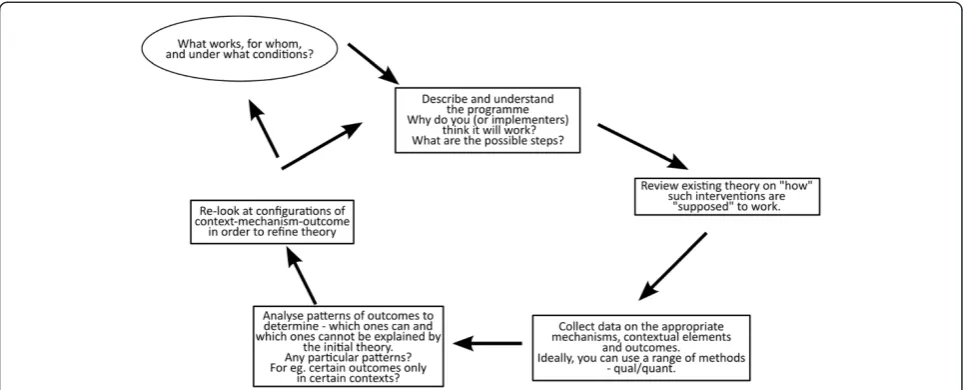
In order to understand the relationship between inter-vention, context, and outcome, realists use the concept of mechanisms, which are the “… underlying entities, processes, or[social]structures which operate in particu-lar contexts to generate outcomes of interest”[16]. In the case of complex adaptive systems, several latent mecha-nisms could be present within the system, which can be triggered by the intervention in the presence of specific contextual elements and result in the observed outcomes [18]. In practice, realists use the context-mechanism-outcome (CMO) relationship as a tool for empirical investigation and analysis. It allows for developing an ex-planatory theory of why the intervention worked for
some and did not for others (Figure 1). Theoretical ex-planations of this kind are referred to as middle-range theories, explanations which“…involve abstraction…but [are]close enough to observed data to be incorporated in propositions that permit empirical testing” [16,19]. It should be noted that in the literature, middle range the-ory and programme thethe-ory are increasingly used inter-changeably. In this paper, for reasons of clarity, we will use the term programme theory.
In a realist approach, the evaluation begins with for-mulating a programme theory (integrating the assump-tions of the programme designers and implementers with the existing wider knowledge or evidence on the topic and insight regarding the contextual factors that could affect the outcome). The programme theory is tested through empirical studies and a refined theory that explains why the intervention worked for some and not for others is the end point of the evaluation. This could be the starting point for a next study. Such cycles allow for fine-tuning of the programme theory and ul-timately to accumulation of insight.
The seeking of an explanation for the patterns (or demi-regularities, which are somewhat predictable pat-terns or pathways of programme functioning) seen in some cases (and not in others) is the hallmark of a real-ist evaluation [14,21,22]. This addresses one of the fea-tures of complexity in social systems, wherein orderly patterns could be seen at the systems level, but often not at the individual level, due to reiterative positive and negative feedback loops among some components (and not in others) [23]. The foundations of realist evalu-ation within critical realisma, and its evolution as a scientific evaluation method are described by Pawson [14]. Its potential as an evaluation approach for com-plex health systems problems has gained interest over the last decade [24-28].
In this paper, we use a case study approach to explore how a capacity building intervention implemented in two different places in a district (both nested systems within the larger complex system of the district) evolved over time, using a realist evaluation, in order to under-stand how and why observed outcomes occurred. In line with the realist evaluation approach, cases were purpos-ively selected to allow testing of the programme theory propositions and to improve our understanding of why programmes work for some and not for others [15]. We then use the multipolar framework to summarise how the capacity-building intervention could have led to organisational change in a district health system. The multipolar framework, inspired by Champ et al. [29], is a heuristic tool that has been used to explain organisa-tional change in healthcare organisations in high-income settings with recent application in low- and middle-income country settings [22,30].
Study setting
This study is based on a capacity building intervention in Tumkur district, which is one of the 30 districts in Karnataka state in southern India; Tumkur had a popu-lation of 2.67 million in 2011 [31]. It is an average dis-trict with respect to health and development indicators; it ranked 15th in the human development index ranking of the (then) 27 districts of Karnataka in 2005 [32]. In Karnataka, poor health outcomes in maternal health have been attributed to systemic failures in managing health services and responding to critical problems ser-vice delivery [33]. Karnataka, like many other Indian states, lacks a management cadre within the health ser-vices. In Tumkur, as in all the other districts of the state, doctors with specialisation in one of the clinical special-ities and several decades of experience in hospital set-tings are appointed as health managers of districts and sub-districts without formal or in-service management training [34-37].
The district health system in Karnataka is composed of several sub-systems calledtalukas.They are the polit-ical and administrative sub-units of the districts. In 2011, the taluka population in Tumkur district ranged from 168,039 in Koratagere to 598,577 in the Tumkur taluka. Talukahealth management teams are under the charge of aTalukahealth officer (THO). An administra-tive medical officer (AMO) is in charge of the hospital, while the THO has the operational responsibility for the Primary Health Centres (PHC). The THO, AMO, and
other members of the talukahealth management team
hold monthly review meetings of the taluka in which the block programme managersband senior nursing staff participate.
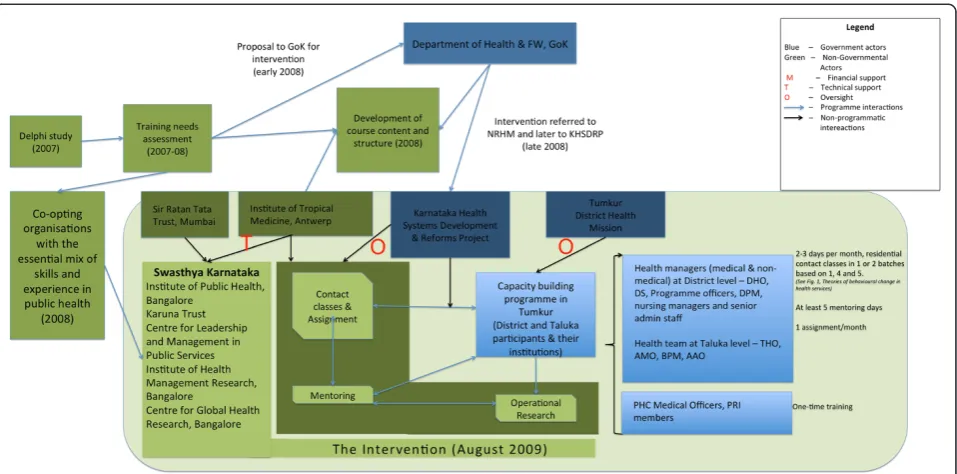
A consortium of five non-governmental organisations partnered with the state government to organise a capacity building programme for health managers of Tumkur district. The programme consisted of periodic contact classes spread over 18 months (August 2009 to January 2011), periodic mentoring visits to participants’ workplace (till December 2011), and assignments to help participants apply the knowledge and skills discussed in the classroom teaching. The aim was to bring about or-ganisational change at the district level through improv-ing the performance of health managers with respect to planning and supervision of health services. The inter-vention identified capacitated health managers as the agency through which organisational improvement could be achieved. People were seen as being at the centre of organisational change. A much shorter intervention, con-sisting of a one-time five-day of contact classes for all the 162 medical officers of the primary health centres of Tumkur district (all supervised by the health managers trained under the main intervention) and a facilitated discussion with Panchayati Raj Institution representa-tives (PRI), was also conducted. PRI representarepresenta-tives are members of the elected bodies of the local govern-ments at village and sub-district levels. The compo-nents of the intervention and the various actors involved are shown in Figure 2. A detailed description of the inter-vention and its implementation has been presented elsewhere [38,39].
In this paper, our purpose is to describe the complex-ity of a capaccomplex-ity-building intervention at the district level and illustrate the utility of the realist approach in ad-vancing the practice of systems thinking in complex settings.
Figure 1The realist evaluation cycle showing the steps in a realist evaluation study.Figure based on steps described by Pawson and Tilley [20].
Methods The realist cycle
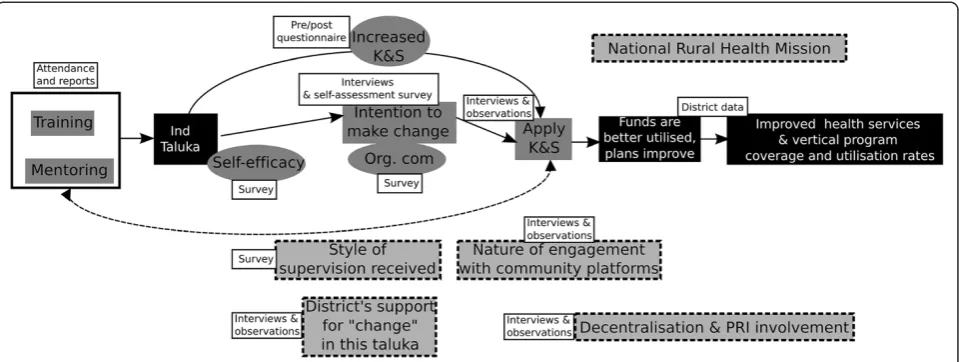
A realist evaluation begins with developing the initial theory. A programme theory is best considered as an ex-planatory pathway, connecting the inputs of the inter-vention to the expected outcomes, taking into account possible contextual factors and mechanisms [40]. The refining of the programme theory, starting from the initial programme logic of the designers, to a refined programme theory incorporating insight from literature, design of the programme, and its implementation con-text, is explained elsewhere [41]. Our refined programme theory was aimed at explaining the differences intaluka outputs following the intervention, accounting for differ-ences in the individual characteristics of the health man-agers, institutional factors within the two taluka health services and the differing environmental factors. The re-fined programme theory of the intervention that guided the choice of data and the analysis is shown in Figure 3.
Case selection
In the second step, cases were selected purposively. We assessed the performance of the 10 talukas of Tumkur district from 2009 to 2012, focusing on performance as-pects that could be logically connected to the capacity building intervention (using the programme theory of the intervention as a guide). We scannedtaluka perform-ance with a focus on those showing least and most im-provement; we chose one positive and one negative outlier (contrasting case selection) for the analysis presented in
this paper. Figure 4 shows thetalukasof Tumkur, includ-ing thetalukahospital and the PHCs.
Data collection
In realist evaluation, the choice of data to be collected is guided by the programme theory. First, we collected data on the intensity of the programme implementation: par-ticipation in classroom activities, frequency of mentoring visits, and retention of mentoring interest. The mentors seem to have preferred talukas based on their own as-sessment of interest shown for mentoring by thetaluka team. Hence, retention of mentor interest has been chosen as a proxy for thetaluka’s commitment towards the vision for change as articulated by the intervention. It was assessed on the basis of frequency of mentoring visits and observation notes of the mentors, and scored into high, moderate, and low. Second, we assessed intermediate outputs (self-efficacy, organisational commitment, style of supervision, and expression of intention of taluka man-agers to make changes) using data from a survey of health managers in Tumkur.
Organisational commitment along with self-efficacy has been described as being crucial to performance and is considered as a key mechanism explaining human agency in various settings [42,43]. The three-component construct of organisational commitment by Meyer and Allen describes the nature of commitment of people to their organisations along three dimensions: affective com-mitment (emotional attachment to the organisation; a feel-ing of belongfeel-ingness), normative commitment (a feelfeel-ing of Figure 2Tumkur capacity building intervention: structure of the intervention, actors, and their roles.Government actors are shown in blue and non-governmental actors are shown in green. M stands for financial support,Tfor technical support andOfor oversight.
being obliged to the organisation), and continuance com-mitment (a feeling of being in the organisation because of a lack of alternatives) [44]; the three different dimensions of commitment co-occur. Self-efficacy was measured using a 10-item scale based on the Bandura scale [45] and degree of supportive nature of supervision was measured using a Likert scale questionnaire adapted from a tool by Oldham and Cummings and the Michigan Organizational Assess-ment Package [46,47]. The tools used have been described earlier and published elsewhere [39].
To assess the distal outputs of the intervention, we collected annualised data on budget utilisation, provision of 24/7 PHC services, coverage rates of institutional de-livery, delivery by caesarean section (CS), completion of three antenatal care visits, and immunisation. We also assessed changes in infant mortality rate and stillbirth rate from 2008 to 2012. Stillbirths and infant mortality reported in all the facilities of the taluka were used to calculate the rates. These quantitative data were supple-mented with qualitative data collected through inter-views with health managers and observations. In-depth interviews were conducted with 21 health managers of Tumkur who participated in the intervention, their su-periors at state level (n = 2), and their subordinates (PHC health staff and co-workers; n = 4). Participant ob-servation of monthly and annual review meetings at the taluka and district level was carried out to understand the organisational dynamics and the differences in inter-pretation and implementation of state policy.
Analysis
All interviews were transcribed and entered into NVivo 10 (QSR International Ltd., Australia), together with the
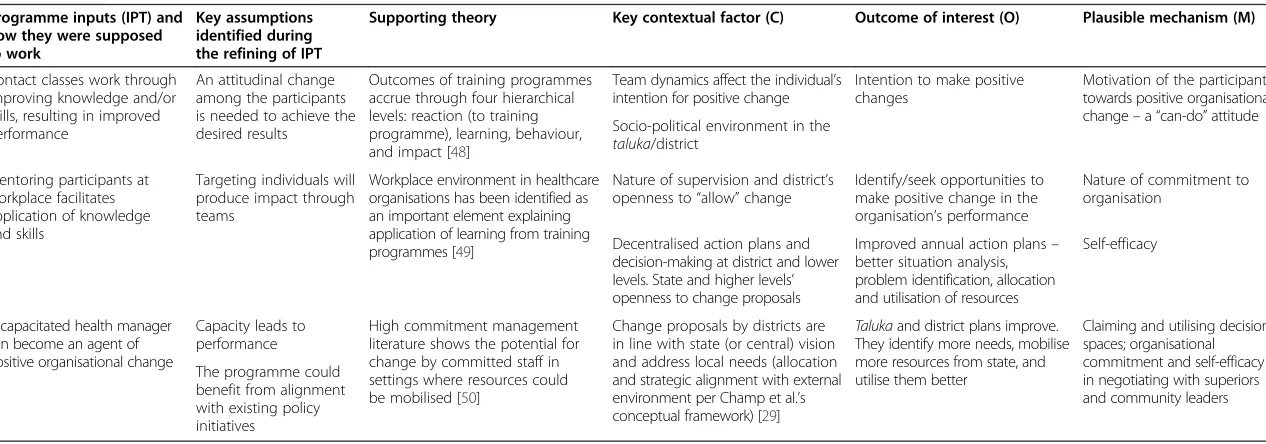
observation notes. During the analysis, we used the CMO as a heuristic tool (Table 1). These hypothetical CMO frames were based on the refined programme the-ory of the intervention, as described elsewhere [41]. Ini-tial codes reflected the programme theory elements of intervention, actors, context, mechanism, and outcomes, and new codes emerged. The quantitative data, including measurements of organisational commitment, self-efficacy, and style of supervision provided were integrated into the analysis and this helped in triangulating emerging findings. In this way, each case was analysed.
We then compared the two talukas to further test
whether the refined programme theory explained the differences in the outcomes. We supplemented these two contrasting case studies with demi-regularities from comparable settings in the othertalukas. We focused on the internal dynamics within the taluka teams (micro-context) and the interaction of these teams with the immediate taluka environment (meso-context) and the larger policy environment at the district, state, and above (macro-context). We also described the organisational configurations of the two cases using the multipolar framework.
Results Outcomes
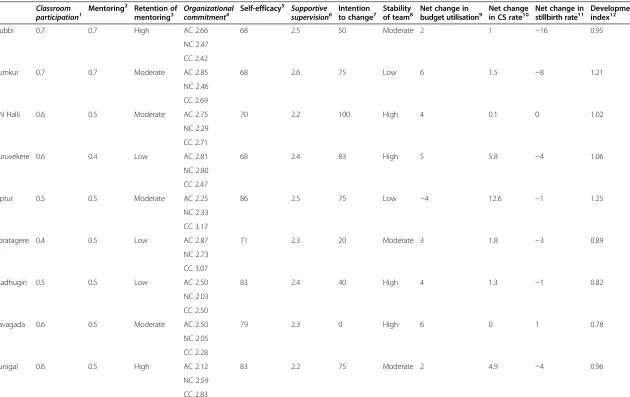
The responses of the talukasto the intervention varied, as shown in Table 2. The aggregated budget utilisation rate for Tumkur districtcincreased marginally, from 83% in 2009 to 85% in 2012. However, this conceals a variety of responses attalukalevel. In Figure 5, the net annual change in utilisation (the net change in the proportion of available funds timely spent between two years) Figure 3The refined programme theory of the intervention showing possible intermediate steps between intervention inputs and expected outcomes.Data collected for the intermediate steps are shown. Grey boxes with stippled border show contextual elements identified as having an influence on the intervention outcomes during the refining of the programme theory. Unshaded boxes indicate the source of data. Boxes shaded black indicate outcomes. Intermediate steps are shown in boxes shaded grey with no border.
Figure 4Government health facility map of Tumkur showing the 10talukas, the hospitals (secondary care) and PHCs.Green ovals show PHCs; Red polygons show secondary care facilities.
Table 1 Identifying context-mechanism-outcome frames based on the programme theory of the intervention
Programme inputs (IPT) and how they were supposed to work
Key assumptions identified during the refining of IPT
Supporting theory Key contextual factor (C) Outcome of interest (O) Plausible mechanism (M)
Contact classes work through improving knowledge and/or skills, resulting in improved performance
An attitudinal change among the participants is needed to achieve the desired results
Outcomes of training programmes accrue through four hierarchical levels: reaction (to training programme), learning, behaviour,
and impact [48]
Team dynamics affect the individual’s
intention for positive change
Intention to make positive changes
Motivation of the participant towards positive organisational
change–a“can-do”attitude
Socio-political environment in the
taluka/district
Mentoring participants at workplace facilitates application of knowledge and skills
Targeting individuals will produce impact through teams
Workplace environment in healthcare organisations has been identified as an important element explaining application of learning from training
programmes [49]
Nature of supervision and district’s
openness to“allow”change
Identify/seek opportunities to make positive change in the
organisation’s performance
Nature of commitment to organisation
Decentralised action plans and decision-making at district and lower
levels. State and higher levels’
openness to change proposals
Improved annual action plans–
better situation analysis, problem identification, allocation and utilisation of resources
Self-efficacy
A capacitated health manager can become an agent of positive organisational change
Capacity leads to performance
High commitment management literature shows the potential for change by committed staff in settings where resources could
be mobilised [50]
Change proposals by districts are in line with state (or central) vision and address local needs (allocation and strategic alignment with external
environment per Champ et al.’s
conceptual framework) [29]
Talukaand district plans improve. They identify more needs, mobilise more resources from state, and utilise them better
Claiming and utilising decision spaces; organisational commitment and self-efficacy in negotiating with superiors and community leaders The programme could
benefit from alignment with existing policy initiatives
Prashanth
et
al.
Health
Research
Policy
and
Systems
2014,
12
:42
Page
8
o
f
1
9
http://ww
w.health-po
licy-systems
.com/content
Table 2 Assessment of exposure to intervention, key intermediate mechanisms (commitment and efficacy), and outcomes of the 10talukasof Tumkur Classroom
participation1 Mentoring
2 Retention of
mentoring3 Organizationalcommitment4 Self-efficacy
5 Supportive
supervision6 Intentionto change7 Stabilityof team8 Net change inbudget utilisation9 Net changein CS rate10 Net change instillbirth rate11 Developmentindex12
Gubbi 0.7 0.7 High AC 2.66 68 2.5 50 Moderate 2 1 −16 0.95
NC 2.47
CC 2.42
Tumkur 0.7 0.7 Moderate AC 2.85 68 2.6 75 Low 6 1.5 −8 1.21
NC 2.46
CC 2.69
CN Halli 0.6 0.5 Moderate AC 2.75 70 2.2 100 High 4 0.1 0 1.02
NC 2.29
CC 2.71
Turuvekere 0.6 0.4 Low AC 2.81 68 2.4 83 High 5 5.8 −4 1.06
NC 2.80
CC 2.47
Tiptur 0.5 0.5 Moderate AC 2.25 86 2.5 75 Low −4 12.6 −1 1.25
NC 2.33
CC 3.17
Koratagere 0.4 0.5 Low AC 2.87 71 2.3 20 Moderate 3 1.8 −3 0.89
NC 2.73
CC 3.07
Madhugiri 0.5 0.5 Low AC 2.50 83 2.4 40 High 4 1.3 −1 0.82
NC 2.03
CC 2.50
Pavagada 0.6 0.5 Moderate AC 2.50 79 2.3 0 High 6 0 1 0.78
NC 2.05
CC 2.28
Kunigal 0.6 0.5 High AC 2.12 83 2.2 75 Moderate 2 4.9 −4 0.96
NC 2.59
CC 2.83
Prashanth
et
al.
Health
Research
Policy
and
Systems
2014,
12
:42
Page
9
o
f
1
9
http://ww
w.health-po
licy-systems
.com/content
Table 2 Assessment of exposure to intervention, key intermediate mechanisms (commitment and efficacy), and outcomes of the 10talukasof Tumkur (Continued)
Sira 0.7 0.9 High AC 1.80 68 2.2 100 Moderate 6 8.3 2 0.81
NC 2.00
CC 2.67
1
Average of degree of classroom participation of all participants from ataluka, based on assessment of attendance and classroom activity (assessed by observation notes) expressed on a scale of 0 to 1.
2
Average of degree of mentoring received based on attendance of participants at mentoring sessions (0 to 1.0).
3
Qualitative assessment of thetaluka’s ability to retain interest of the mentor expressed as high, moderate, and low.
4
Three dimensions of organisational commitment: Affective commitment (AC), normative commitment (NC), and continuance commitment (CC).Individual commitment measures for each of these three dimensions were computed and the averages of these were calculated bytaluka. Commitment scores are on a scale of 0 to 5.
5
Self-efficacy scores expressed on a scale of 0 to 100.
6
Style of supervision largely assessing supportive nature of supervision (1 to 5; 1 being most supportive and 5 being most authoritative).
7
Percentage of ever-trained members in thetaluka, who expressed intention to make changes based on the capacity building programme.
8
Stability of team assessed based on turnover of health managers in thetalukateam from 2009 to 2013 expressed as high, moderate, and low. High indicates stable teams (low turnover).
9
The net change in percentage budget utilization from 2009 to 2012. Budget utilisation for each of the PHCs in thetalukawas obtained.
10
The net change in proportion of caesarean sections (CS) among total deliveries from 2009 to 2012. CS attalukahospitals is at present very low and efforts are on to improve emergency obstetric care attaluka
hospitals through ensuring facilities to perform CS.
11
The net change in stillbirth rate (of the total live births in thetaluka) from 2009 to 2012. Negative change indicates a fall in stillbirth rate.
12
The socio-economic development index for thetaluka. Scores less than 1 are considered very poor and suchtalukashave been designated“backward”[51]. The tools for measuring organizational commitment, self-efficacy, and supportive supervision notes on their validity in Indian settings are discussed elsewhere [39].
Prashanth
et
al.
Health
Research
Policy
and
Systems
2014,
12
:42
Page
10
of
19
http://ww
w.health-po
licy-systems
.com/content
from 2010 to 2012, is shown. While sometalukas, like Pavagada, improved their utilisation rate, others, like Madhugiri, reduced their spending rates. Yet others, like Turuvekere, showed wide changes from one year to another, while net change from 2012 to 2009 was only marginal.
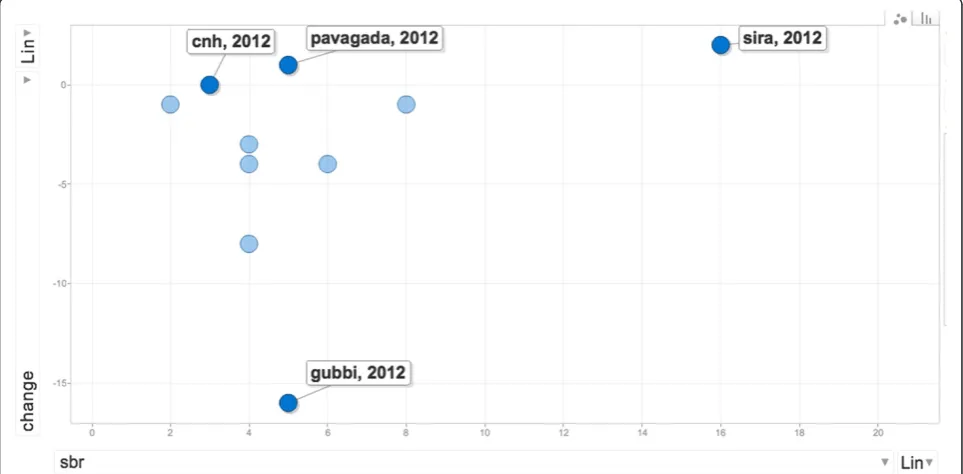
In Figure 6, the stillbirth rate in 2012 is plotted by taluka, against net change in stillbirth rate from 2009 to 2012. We use the net change in stillbirth rates as a proxy indicator of performance. Stillbirth was chosen because of the emphasis in the intervention on using planning (through good annual situation analyses and problem Figure 5Annual change in utilization rate of selectedtalukasof Tumkur district from 2010 to 2012.The net change (from the previous year) in the aggregate budget utilization rates of all facilities in thetalukasare shown for CN Halli, Tumkur, Sira, Gubbi, and Madhugiritalukas. The District figures are for utilization rates of budget allocated for disease control programmes and other functions managed at the district level.
Figure 6Stillbirth rates in 2012 bytalukashown against net change in this indicator from 2009 to 2012.Gubbi, Sira, Pavagada, and CN Halli stillbirth rates are labelled.
identification) and supportive supervision in improving maternal and child health outcomes. Such variability could result from several factors, including existing re-form processes that promote institutional deliveries, and improvements in the functioning of the health services (including the capacity building intervention). Besides such interventions, which influence all talukas to the same degree, context-specific socio-political factors and organisational factors, which are of interest in our evalu-ation lie, within thetalukahealth services and could in-fluence performance. We shall use the variability in the talukalevel outcomes to purposively choosetalukasand examine if the hypothesised explanations from the re-fined programme theory could explain these differences.
In Table 2, the various individual, team, and institu-tional factors that we assessed based on the programme theory are shown. The factors chosen are a mix of indi-vidual and organisational contextual factors (intervention exposure, socio-economic development index of taluka, mentoring interest and supervision received, and team sta-bility), mechanisms of human agency at the individual level (intention to change, organisational commitment, and self-efficacy), and proxy measures of outcomes logically related
to improvements in the talukas expected from the
intervention as well as more distant taluka outcomes determined by several other factors. The talukas varied in their participation in classroom and mentoring ac-tivities, in view of transfer in and out of health man-agers in the talukaor absenteeism (either by choice or due to priority work at the taluka). Higher participa-tion in the intervenparticipa-tion did not always result in an intention to make changes at the workplace (e.g., Gubbi and Tumkur with highest participation and only moderate expressions of intention for positive change); nor did ex-pressions of such intentions always result in improved out-comes (e.g., CN Halli with a 100% of the team expressing intent but showing negligible change over the three years in the outcomes).
We purposively present the summary of the analysis of
two contrasting cases – Gubbi and CN Halli – among
the 10 talukas to illustrate how the CMO lens derived from our refined programme theory can be used to understand and explain how the outcomes in these cases could have come about and what could be the possible contribution of the intervention in these outcomes. We present the summary of the analysis of the empirical data in the form of observed outcome (O) in relation to mechanisms (M) and contextual conditions (C).
Gubbi
Gubbi’s stillbirth rate decreased the most among all thetalukasin Tumkur; the improvements in proportion of CS performed and budget utilisation were modest (Table 2). Health managers from Gubbi participated actively in the
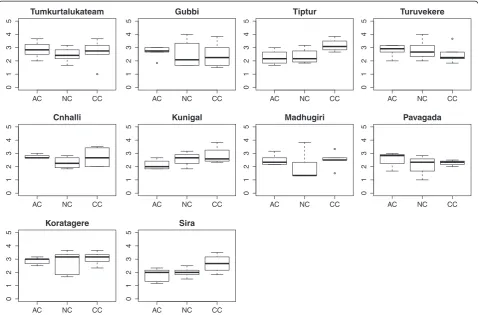
intervention and retained the mentors’ interest. They showed relatively higher affective commitment than many othertalukas(Figure 7). Only half of the health managers expressed an intention to make changes.
From the interviews and observations at Gubbi, the main theme emerging was commitment. The interest shown by the THO and the AMO towards improving services is evident from the interviews. The THO was given temporary charge of heading the team while sim-ultaneously being the medical officer of a nearby PHC. Yet, he felt that he could mobilise greater support to im-prove services in the taluka by motivating like-minded people. He felt that being a health manager is an oppor-tunity to bring about changes.
“In my taluka for example, I think we can make big change. It is not that everybody in my taluka wants to make changes. Only one-third of them are motivated to make changes. And that is enough. I think I can make a lot of improvement by motivating these people.”
–Talukahealth manager from Gubbi (g1)
Such positive assessment of motivation of PHC staff as a strategy towards improving services was not shared widely in the othertalukas.
Both the AMO and the THO saw the intervention as an opportunity to benefit from the recent efforts to de-centralise the preparation of action plans to talukaand PHC level. They felt that the decentralisation of plan-ning under the National Rural Health Mission (NRHM)d was an opportunity to address specific problems at the PHCs.
“More resources mean more opportunities to make change. If they slowly give more and more power to us at taluka level, we can make many more improvements. Right now, very little is possible at taluka level.”
–Talukahealth manager from Gubbi (g2)
“NRHM has given block programme managers. This will improve plan preparation and monitoring. They are young and enthusiastic, but they need to some guidance and I think I can provide that.”
–Talukahealth manager from Gubbi (g1)
This general pattern of commitment at Gubbi is also seen in the Tumkur taluka, with a relatively high affective commitment, albeit with a higher turnover of staff.
The Gubbi pattern could be summarised as follows: in a decentralised taluka health system, committed health managers can make use of their increased management capacity to identify opportunities for improving their health services performance.
Chikkanayakanahalli (CN Halli)
While Gubbi is situated close to the district headquarter town of Tumkur, CN Halli is further away, but with a similar level of socio-economic development (Table 2). CN Halli showed hardly any change in most outcomes, in spite of a high intention among the health managers to make improvements in the taluka. CN Halli also had lower turnover rates of taluka level health managers. The level of affective commitment was comparable to that at Gubbi, but continuance commitment was rela-tively higher.
CN Halli is amongst the most remotetalukas. With a limited private sector, it is not a favoured choice of posting for doctors. For several months, the function of THO and AMO was taken up by the same person. Thetalukalevel staff showed commitment towards the services and took
pride in working in a remote taluka with very limited human resources. However, during discussions about decentralised planning expressed by this taluka’s health managers, the dominant theme was frustration.
“What PIPe? What decentralisation? I sent so many requirements for staff and proposals for improvement. Only thing I got is more work, less staff and zero solutions. On one hand, I have to answer the local ZPf members’complaints and on the other hand, I have to just keep implementing plans and schemes coming from above. Nothing can be done without more staff.”
–Health manager from CN Halli (cnh1)
While the decentralised planning brought about by NRHM was perceived as an opportunity in Gubbi, in CN Halli the respondents expressed frustration. This was also evident in several meetings at thetalukalevel, where a lack of power to make changes at thetalukaand district level, for instance in recruitment of human resources and pur-chase of critical equipment, was often raised.
AC NC CC
012345
Tumkurtalukateam
AC NC CC
012345
Gubbi
AC NC CC
012345
Tiptur
AC NC CC
012345
Turuvekere
AC NC CC
012345
Cnhalli
AC NC CC
012345
Kunigal
AC NC CC
01
2
345
Madhugiri
AC NC CC
012345
Pavagada
AC NC CC
012345
Koratagere
AC NC CC
01234
5
Sira
Figure 7Boxplots of three dimensions of organisational commitment in the 10talukasof Tumkur district.The three dimensions of commitment are based on Meyer and Allen [44]. AC is affective commitment, NC is normative commitment, and CC is continuance commitment. Individual commitment measures for health managers were computed separately for AC, NC, and CC. For eachtaluka, box plots of the scores for each of these were plotted.
“NRHM has just brought more and more responsibilities, but no powers. For everything, we have to wait for a visit from the secretary or commissioner. More money means more work and more statements of expenditure and paperwork.”
–PHC health worker from CN Hallitalukaat a review meeting (cnh2)
Similar frustrations about increased paperwork and responsibilities were found in the thematic analysis of in-terviews and observation notes from Pavagada, another poorly staffed, and the most remotetalukain Tumkur.
“The increased money with NRHM is good. But it’s not merely money. We need committed people who can stay in such a remote area. I am from this area and I live and work here. People who come here hardly stay beyond a few months. They either get frustrated or seek transfers.”
–Health manager from Pavagada (P1)
The recent reforms towards giving greater powers to the elected representatives were seen as a threat to their functioning. Thetalukahealth staff felt that channelling the frustrations of the PHC staff upwards was their role much more than managing conflicts and frustra-tions or building amicable relafrustra-tionships with the elected representatives.
“Nothing much can be done without giving powers at taluka level and PHCs. I cannot even appoint a Group D staff. Where is decentralisation in this?”
–a PHC staff from CN Hallitaluka
“What more can I do? I communicate promptly to my superior all the problems and I am still waiting for the solutions. In the[capacity building]programme they are saying, find local solutions. With so little staff, how much local solutions can I find? People just don’t want to work here. I handle two responsibilities at the same time…”
–Health manager from CN Halli (cnh1)
The pattern of CN Halli is also seen at the Pavagada taluka, which is also severely under-staffed, with a small group of health managers with comparatively lower levels of affective commitment. The improvements of the Pavagada taluka were poor, in contrast to the Sira taluka, which is also geographically remote and socio-economically poor, yet showing a remarkable vision in
the taluka team to operationalize emergency obstetric facilities in the hospital, a dire need in this remote re-gion. The Sira taluka, unlike Pavagada and CN Halli, was much more dominated by a continuance commit-ment rather than affective commitcommit-ment.
“We felt that we have to do it. So many mothers were just being referred to Tumkur. The delivery load is high and for several months, we had only one obstetrician, but somehow we managed. I know how the pressure is at the district hospital, so having LSCS facility at Sira decreases the burden at the district hospital. It’s not easy, but somehow it is happening.”
–Sira health manager (s1)
The pattern of CN Halli could be summarised as follows: Health managers working in poorly resourced talukas, in spite of their improved management capaci-ties and intentions to make change, get frustrated by the lack of facilitating action from above.
Discussion
Health system interventions need to take into account the subunits of the local health system in which they intervene. In this case, eachtalukacan be conceived as a sub-system with a particular organisational context but a similar macro-context, exposed to the same inter-vention. In such cases, the realist evaluation approach helps to formulate specific CMO-based propositions that can be tested through comparing contrasting cases. This allows for building explanations on how organisa-tional change occurred in some settings and not in others. The process of testing and refining the CMOs al-lows for an understanding of the conditions through which such interventions could work in a complex local health system.
Explaining change: contribution of the intervention While the training programme (the intervention) in-cluded all health managers in the district, their actual participation was variable. This depended on several fac-tors at the level of the participant (their interest and mo-tivation), distance between the taluka and the district headquarters, the staff turnover rate, and the
responsive-ness of the implementers to the taluka teams. Many
of these factors are related to each other, sometimes counterintuitively. For example, remote talukaslike CN Halli and Pavagada had a relatively low turnover, while more sought-aftertalukaslike Tiptur and Tumkurtaluka had a higher turnover. Capacity building interventions that seek to strengthen local health systems ought to take into account such existing variations within the sub-systems at the design stage.
Health system strengthening interventions seek to strengthen core systemic functions of the local health system. The capacity building intervention sought to improve performance through improving planning and supervision. The contribution of such improvement (if any) ought to be framed against several other activities at the PHC, taluka, and district levels. For example, the provision of secondary level obstetric care at the taluka hospital includes developing the capacity of the facility to conduct CSs; this has been the policy focus in Karnataka for several years. In addition to the state government’s pressure to implement this, health man-agers also face the pressure of the community and local elected representatives to operationalize CS facil-ities attalukahospitals. However, in spite of favourable environmental conditions at thetalukalevel, effectively ensuring this requires a strong managerial vision and leadership; this was observed only in sometalukas. This illustrates that, in a district health system influenced by several policies and environmental factors, it may be difficult to disentangle the contribution of the interven-tion to the observed outcomes. However, by choosing intermediate and distal outcomes at various levels (indi-vidual and institutional) that are most sensitive to the intervention inputs, it is possible to identify talukas where the intervention could have contributed to the outcome by seeking alignments with existing conditions and the characteristics of the people and teams in these talukas.
Capacity-building interventions could work through identifying such existing alignments between local ac-tors’ needs, policy, and practice, and by strengthening conditions for the same. As the CN Halli case shows, in spite of favourable policy, community pressure, and a committed team at CN Halli, the frustrations of health managers resulting from previous negative experience with decentralised planning altered their choices and collective agenda-setting against actualis-ing CSs in their hospital. In contrast, health managers of Sira taluka showed relatively low levels of affective commitment and self-efficacy, but frustration was low. With the participation of elected representatives and through effective leadership by the AMO, the CS facil-ity was organised. Thus, in a taluka considered to be poorer than CN Halli in terms of socio-economic de-velopment indicators, the proportion of deliveries con-ducted by CS increased by 8.3% between 2009 and 2012. Further thematic analysis of talukas that resem-ble some of the characteristics of our cases (such as the case of Pavagada discussed under the CN Halli case summary above) or are contrasting with our cases in some respects, could strengthen our findings and allow validation of these findings in future studies in similar settings.
From individual change to systemic change
Although the capacity building intervention was imple-mented at the district level across alltalukas, the expos-ure to the programme, the response to the intervention (attitudes towards change and intentions), the internal individual and organisational dynamics, and the out-comes, varied. These factors determine why programmes implemented at the district level may or may not achieve their expected outcomes, especially in those healthcare institutions where the conditions necessary for such a change do not exist. However, despite this potential for variation, formulating hypotheses in the form of CMO propositions and testing these empirically can help iden-tify patterns of response to intervention. The resulting CMO configurations can then be refined further by test-ing them in other cases of the district to arrive at an ex-planatory theory that elucidates what worked, for whom, and under what conditions.
Capacity building interventions work through people and the choices they make. Many individual attributes, such as organisational commitment and self-efficacy, have been reported as mechanisms that explain human agency [42,44,52]. However, the talukahealth system is more than a group of individuals with varying commit-ment or efficacy measures. The change in the organisa-tion comes about through the interacorganisa-tion among these participants, governed by rules and norms within their organisation (the organisational culture and their activ-ities that result in the organisational outputs), and the interaction between the organisation as a whole with the external environment. These relationships between the internal and external components of the organisation have been brought together in the multipolar framework for assessing performance of healthcare organisations, shown in Figure 8. The multipolar framework is based on Parsons’ theory of social action and inspired by the work of Champ et al. [29,30,53].
The observed changes in thetalukascould be seen as having occurred through shifting or triggering of any of the six alignments in the multipolar framework. The taluka management team is responsible for managing not only the four core functions (the boxes in Figure 8), but also the alignments (the arrows in Figure 9) between the functions. The local configuration of these functions, and the management team’s response to tensions be-tween these functions explains the variation in the out-comes of the capacity building programme.
The capacity building intervention sought to alter the outputs (service production) through increasing know-ledge and skills to develop annual action plans and supervision functions. An analysis of the programme theory of the intervention indicates that the designers of the intervention sought to bring about these changes through instilling a can-do attitude among the health
managers. This could be seen as trying to strengthen the allocation and operational alignments in the multipolar framework (Figure 8 and Figure 9). However, in the con-text of a health system that is undergoing decentralisa-tion to the district levels, and where participadecentralisa-tion of elected representatives within formal structures of the health service is being increasingly pushed for by the na-tional and state policy, the contextual alignment could dominate in sometalukas, as was the case in CN Halli. However, a committed leadership at the taluka level could counter the negative perceptions of participation of elected representatives prevailing within the health service. In such cases (as in Gubbi; see Figure 9), the
legitimisation and strategic alignments could be trig-gered where the capacity building programme was seen as an opportunity to translate existing commitment to-wards the organisation into an improvement in its per-formance. The overall performance of the talukais the result of how the alignments between the four poles are perceived locally and managed. The capacity building
programme thus acts upon the taluka performance
through imparting skills and vision to managers, who then balance or counter the emerging alignments. How-ever, it must be emphasised that in our study, the in-sights from the evaluation were not periodically fed back into the system to enable the local actors (implementers Figure 8The multipolar performance assessment framework based on Sicotte et al. [29].The framework consists four poles and six alignments.
Figure 9The alignments that the intervention sought to influence to improve performance are shown in green.The alignments that explain the responses of the cases are shown in red.
of the intervention and the recipient health managers) to benefit from or reflect on these. Realist evaluation could also be used as an entry-point for action research on local change, wherein the CMO frames being consid-ered or the refined programme theory could be shared periodically with local actors. Furthermore, such discus-sions and sharing with local actors could be further used to refine or validate the middle-range theory emerging from the evaluation.
Realist evaluation and systems thinking
Realist evaluation adopts a generative perspective on causality, according to which change occurs as a result of the interaction between actors within a specific con-text [54-56]. A programme theory that is constructed along these lines can be tested in a reiterative manner and allows for comparison across cases. The resulting insight, in the form of a refined programme theory, in-forms policymakers, managers, and funders on what works, for whom, in which conditions, and how. A real-ist evaluation of an intervention provides an explanatory theory on why the intervention worked for some and not for others through a process of adjudication between rival explanations. By employing the classical apparatus of the scientific method– “formulating hypotheses, mak-ing critical comparisons, discovermak-ing empirical patterns, and monitoring their scope and extent” –realist evalu-ation enables a comprehensive assessment of system-wide change [15].
Limitations
The output of a realist evaluation is a programme theory or a middle-range theory (not a universal overarching theory), which provides a plausible explanation for the outcomes of the intervention; it cannot make predict-ive statements about the intervention. However, such middle-range theories form the basis for improving our understanding of complex interventions and help in im-proving design and implementation of such programmes in future.
In this paper, outliers have been purposively selected based on outcomes that are logically connected to the intervention inputs. The explanation that we provide suffers from a possible confirmation bias. Ideally, a full realist evaluation needs to refine the middle-range the-ory through several iterations of cases selected based on diversity of outcomes. This will strengthen the explana-tory power of the middle-range theory.
In an open systems world, there is no end to the ex-planatory possibilities and role of other mechanisms that can be put forth and tested. Hence, a major limitation of our evaluation is the number of such rival explanatory theories that can be practically put to test. While ac-knowledging this practical limitation, it may be said that
a critical mass of realist evaluations will strengthen the explanatory power of the middle-range theories tested by these evaluations [15].
Endnotes
a
Critical realism is a philosophical position in social sciences that approaches causation within the social realm as being possible through rationally choosing from rival theories, thus advancing the ‘explanatory power’of theories. According to Pratschke (2003), in critical real-ism,“the‘black-box’of causation could be approached by understanding the gaps in the ‘generative mechanisms’ which may subsequently be explained by positing the existence of additional mechanisms at a deeper or more fundamental level”[57].
b
Block programme managers (BPM) are a new cadre of health managers created under the National Rural Health Mission (NRHM). These are young and typically recent graduates from management courses. BPMs oper-ate at the taluka level. Similar cadres of non-medical health managers were created at the district and state levels as well.
c
This was calculated by computing an average of per-centage utilization rates of budgets of all facilities in the taluka/district.
d
The National Rural Health Mission (NRHM) is a flag-ship programme of the Indian government to strengthen government health services through greater financial al-location and human resources. Under the NRHM, there was an induction of new cadres of health workers and health managers from village level upwards to PHC, taluka, district, and state levels. Decentralised planning and increased participation of elected representatives in formal structures within health services were key fea-tures of NRHM.
e
PIP stands for programme implementation plan. The PIP is the annual action plan instituted by the NRHM. As per the NRHM, the PIP is an instrument for decen-tralised planning.
f
ZP stands for Zilla Panchayat, the local governments at the district level.
Additional files
Additional file 1:Abstract in Kannada. Additional file 2:Abstract in Hindi.
Abbreviations
AMO:Administrative medical officer; CMO: Context mechanism outcome; CS: Caesarean section; NRHM: National rural health mission; PHC: Primary health centre; PRI: Panchayati Raj Institutions; THO:Talukahealth officer.
Competing interests
Published: 26 Authors’contributions
NSP, GK, and BC conceived and designed the study. NSP developed the tools, collected data, and prepared the analysis. NSP wrote the first draft of the current manuscript with contributions from BM and BC. All authors reviewed and commented on the first draft. All authors read and approved the final manuscript.
Acknowledgements
We are thankful to the health managers of Tumkur for their participation in the evaluation study. We sincerely thank the District Health Officer of Tumkur for his help and support. We also sincerely thank the health workers in the PHCs across Tumkur who participated in the study. We would like to thank several interviewees at the state NRHM office, officials at the Karnataka Health Systems Development and Reforms Project, Bangalore, and the office of the Directorate of Health Services of the Karnataka government. Arupa Das, Bheemaray Manganawar, and Kuruvila Daniel contributed to data entry and discussions and we thank them for this. We also thank Werner Soors for inspiring reviews of literature on mechanisms in the HealthInc newsletters. We also sincerely thank Taghreed Adam for helpful comments and discussions on the scope of the paper and Jean Macq for critical inputs on the formulation of the paper.
Funding
This supplement was coordinated by the Alliance for Health Policy and Systems Research, World Health Organization. The publication of the supplement and the associated capacity building and dissemination activities were carried out with the aid of a grant from the International Development Research Centre, Ottawa, Canada.
NSP received financial support from Sir Ratan Tata Trust (SRTT), Mumbai (vide SRTT grant ID Health-IPH-20100122), and from the Belgian Directorate for Development Cooperation (DGD) (DGD FA3 (II) grant 2011–2013). SRTT and DGD financed various aspects of the capacity-building programme. SRTT provided financial support for research expenses in the form of travel, accommodation, and training of data collectors. NSP is the recipient of a PhD grant under the DGD funding that provides a monthly stipend and a bench fee. SRTT and DGD had no role in the study design, collection, management, analysis, and interpretation of data, or writing of the report and the decision to submit the report for publication. The ultimate authority over each of these activities is the responsibility of the corresponding author in consultation with the last author.
Received: 15 December 2013 Accepted: 4 June 2014
References
1. LaFond AK, Brown L, Macintyre K:Mapping capacity in the health sector: a conceptual framework.Int J Health Plann Manage2002,17:3–22. 2. McDaniel RR, Lanham HJ, Anderson RA:Implications of complex adaptive
systems theory for the design of research on health care organizations. Health Care Manage Rev2009,34:191–199.
3. Adam T, de Savigny D:Systems thinking for strengthening health systems in LMICs: need for a paradigm shift.Health Policy Plan2012, 27(Suppl 4):iv1–iv3.
4. WHO:Working Together for Health: The World Health Report 2006.Geneva: World Health Organization; 2006:237.
5. Dieleman M, Gerretsen B, van der Wilt GJ:Human resource management interventions to improve health workers’performance in low and middle income countries: a realist review.Heal Res policy Syst2009,7:7. 6. Mbindyo P, Gilson L, Blaauw D, English M:Contextual influences on health
worker motivation in district hospitals in Kenya.Implement Sci2009,4:43. 7. Rowe A, Desavigny D, Lanata C, Victora C:How can we achieve and
maintain high-quality performance of health workers in low-resource settings?Lancet2005,366:1026–1035.
8. Plsek PE, Greenhalgh T:Complexity science: the challenge of complexity in health care.Br Med J2001,323:625–628.
9. Potter C, Brough R:Systemic capacity building: a hierarchy of needs. Health Policy Plan2004,19:336–345.
10. Sturmberg JP, O’Halloran DM:Understanding health system reform–a complex adaptive systems perspective.J Eval Clin Pract2012,18:202–208. 11. Patton MQ:Developmental Evaluation: Applying Complexity Concepts to
Enhance Innovation and Use.New York: Guilford Press; 2010.
12. Moore G, Audrey S, Barker M, Bond L, Bonell C, Cooper C, Hardeman W, Moore L, O’Cathain A, Tinati T, Wight D, Baird J:Process evaluation in complex public health intervention studies: the need for guidance. J Epidemiol Community Health2014,68(2):101–102.
13. Craig P, Dieppe P, Macintyre S, Michie S, Nazareth I, Petticrew M: Developing and evaluating complex interventions: the new Medical Research Council guidance.Br Med J2008,337:a1655–a1655.
14. Pawson R:The Science of Evaluation: A Realist Manifesto.1st edition. London: Sage Publications; 2013:216.
15. Pawson R:Evidence-based policy: the promise of realist synthesis. Evaluation2002,8:340.
16. Wong G, Greenhalgh T, Westhorp G, Buckingham J, Pawson R:RAMESES publication standards: realist syntheses.BMC Med2013,11:21. 17. Pawson R, Tilley NN, Clarke A:Realistic Evaluation.1st edition. London: Sage
Publications Ltd.; 1997:256.
18. Bunge M:How does it work? The search for explanatory mechanisms. Philos Soc Sci2004,34:182–210.
19. Astbury B, Leeuw FL:Unpacking black boxes: mechanisms and theory building in evaluation.Am J Eval2010,31:363–381.
20. Pawson R, Tilley N:Realist evaluation.InDPRN Thematic Meeting 2006 Report on Evaluation.Utrecht, The Netherlands: Development policy review Network; 2008:35.
21. Jagosh J, Pluye P, Wong G, Cargo M, Salsberg J, Bush PL, Herbert CP, Green LW, Greenhalgh T, Macaulay AC:Critical reflections on realist review: insights from customizing the methodology to the needs of participatory research assessment.Res Synth Methods2013, 5(2):131–141.
22. Marchal B:Why do Some Hospitals Perform Better than Others? A Realist Evaluation of the Role of Health Workforce Management in Well-Performing Health Care Organisations.Antwerp: Faculty of Medicine and Pharmacy, Vrije Universiteit Brussel & Institute of Tropical Medicine; 2011:227.
23. Kernick D:Complexity and Healthcare Organization: A View from the Street. 1st edition. London: Radcliffe Publishing Ltd.; 2004:400.
24. Prashanth NS, Marchal B, Criel B:Evaluating healthcare interventions: answering the“How”question.Indian Anthropol2013,43:35–50. 25. Marchal B, Van Belle S, De Brouwere V, Witter S:Studying complex interventions:
reflections from the FEMHealth project on evaluating fee exemption policies in West Africa and Morocco.BMC Health Serv Res2013,13:469.
26. Marchal B, van Belle S, van Olmen J, Hoeree T, Kegels G:Is realist evaluation keeping its promise? A review of published empirical studies in the field of health systems research.Evaluation2012,18:192–212. 27. Sheikh K:Unlocking the potential of qualitative enquiry into health
policy and systems. InSecond Global Symposium Health Systems Research. Beijing: World Health Organization; 2012:23. Available at http://hsr2012. healthsystemsresearch.org/images/stories/media/1102/3%20Kabir%20Sheikh. pdf (Accessed June 17, 2014).
28. Westhorp G:Using complexity-consistent theory for evaluating complex systems.Evaluation2012,18:405–420.
29. Sicotte C, Champagne F, Contandriopoulos AP, Barnsley J, Béland F, Leggat SG, Denis JL, Bilodeau H, Langley A, Brémond M, Baker GR:A conceptual framework for the analysis of health care organization’s performance. Health Services Management Research1998,11(1):24–48. Retrieved from http://www.ncbi.nlm.nih.gov/pubmed/10178368.
30. Marchal B, Hoerée T, da Silveira VC, Van Belle S, Prashanth NS, Kegels G: Building on the EGIPPS performance assessment: the multipolar framework as a heuristic to tackle the complexity of performance of public service oriented health care organisations.BMC Public Health2014, 14:378.
31. Anil Kumar TK:Census of India 2011: provisional population totals paper 1 of 2011 India Series 1.New Delhi, India: Office of the Registrar General & Census Commissioner; 2011. Available at: http://censuskarnataka.gov.in/ Provisional%20Population%20Totals,%20Paper%201%20of%202011,% 20Karnataka.pdf (Accessed 17 June 2014).
32. Government of Karnataka:Investing in Human Development: Karnataka Human Development Report 2005.Bangalore: Department of Planning and Statistics, GoK; 2005.
33. George A:Persistence of high maternal mortality in Koppal district, Karnataka, India: observed service delivery constraints.Reprod Health Matters2007,15:91–102.
34. Devadasan N, Elias MA:Training Needs Assessment for District Health Managers. Bangalore.Bangalore: Institute of Public Health; 2008:78. Prashanthet al. Health Research Policy and Systems2014,12:42 Page 18 of 19 http://www.health-policy-systems.com/content/12/1/42
Available at https://docs.google.com/file/d/0Bxp4UKSObSs9ODlhNjQwNjct MGNlNC00MjhlLWJmY2QtMGVmN2I3YmY2YWE2.
35. Sathyanarayan TN, Babu GR:Creating a public health cadre in India: the development of a framework for interprofessional and inter-sector collaboration.J Interprof Care2011,25:308–310.
36. Balabanova D, Mckee M, Mills A:Good Health at Low Cost 25 Years On. What Makes a Successful Health System.London: London School of Hygiene & Tropical Medicine; 2011:369.
37. Das GM, Desikachari BR, Shukla R, Somanathan TV, Padmanaban P, Datta KK: How might India’s public health systems be strengthened? Lessons from Tamil Nadu.Econ Polit Wkly2010,xlv:46–60.
38. Hoeree T, Prasad V, Jiang L, Pongsupap Y:External Evaluation of the Tumkur Training Course.Bangalore: Institute of Public Health; 2012:50.
39. Prashanth NS, Marchal B, Hoeree T, Devadasan N, Macq J, Kegels G, Criel B: How does capacity building of health managers work? A realist evaluation study protocol.BMJ Open2012,2:e000882.
40. Lipsey MW, Pollard JA:Driving toward theory in program evaluation: more models to choose from.Eval Program Plann1989,12:317–328. 41. Prashanth NS, Marchal B, Kegels G, Criel B:Evaluation of a
capacity-building programme of district health managers in india: a
contextualised theoretical framework.Front. Public Health2014, 2:89 doi: 10.3389/fpubh.2014.00089.
42. Bandura A:Self-efficacy mechanism in human agency.Am Psychol1982, 37:122–147.
43. Meyer JP, Paunonen SV, Gellatly IR, Goffin RD, Jackson DN:Organizational commitment and job performance: it’s the nature of the commitment that counts.J Appl Psychol1989,74:152–156.
44. Meyer JP, Allen NJ:A three-component conceptualization of organizational commitment.Hum Resour Manag Rev1991,1:61–89. 45. Bandura A:Guide for constructing self-efficacy scales.InSelf-Efficacy Beliefs
Adolesc.Edited by Pajares F, Urdan TC. Charlotte, NC: Information Age Publishing; 2006:307–337.
46. Oldham GR, Cummings A:Employee creativity: personal and contextual factors at work.Acad Manag J1996,39:607–634.
47. Cammann C, Fichman M, Jenkins G, Klesh J:The Michigan Organizational Assessment Package.Ann Arbor, MI: University of Michigan Survey Research Center; 1978.
48. Kirkpatrick DL, Kirkpatrick JD:Evaluating Training Programmes: The Four Levels. 2nd edition. San Francisco, CA: Berrett-Koehler Publishers, Inc.; 1998:289. 49. Clarke N:Workplace learning environment and its relationship with
learning outcomes in healthcare organizations.Hum Resour Dev Int2005, 8:185–205.
50. Marchal B, Dedzo M, Kegels G:A realist evaluation of the management of a well-performing regional hospital in Ghana.BMC Health Serv Res2010, 10:24.
51. Government of Karnataka:Report of the High Power Committee for Redressal of Regional Imbalances.Bangalore: Government of Karnataka; 2004. 52. Marchal B, Dedzo M, Kegels G:Turning around an ailing district hospital: a
realist evaluation of strategic changes at Ho Municipal Hospital (Ghana). BMC Public Health2010,10:787.
53. Parsons T:Social Systems and the Evolution of Action Theory.New York, NY: The Free Press; 1977.
54. Stame N:Theory-based evaluation and types of complexity.Evaluation 2004,10:58.
55. De Souza DE:Elaborating the Context-Mechanism-Outcome configuration (CMOc) in realist evaluation: a critical realist perspective.Evaluation2013, 19:141–154.
56. Greenhalgh T, Humphrey C, Hughes J, Macfarlane F, Butler C, Pawson R: How do you modernize a health service? A realist evaluation of whole-scale transformation in London.Milbank Q2009,87:391–416.
57. Pratschke J:Realistic models? Critical realism and statistical models in the social sciences.Philosophica2003,71:13–39.
doi:10.1186/1478-4505-12-42
Cite this article as:Prashanthet al.:Advancing the application of systems thinking in health: a realist evaluation of a capacity building programme for district managers in Tumkur, India.Health Research Policy and Systems201412:42.
Submit your next manuscript to BioMed Central and take full advantage of:
• Convenient online submission
• Thorough peer review
• No space constraints or color figure charges
• Immediate publication on acceptance
• Inclusion in PubMed, CAS, Scopus and Google Scholar
• Research which is freely available for redistribution
Submit your manuscript at www.biomedcentral.com/submit


![Figure 8 The multipolar performance assessment framework based on Sicotte et al. [29]](https://thumb-us.123doks.com/thumbv2/123dok_us/657824.1561854/17.595.58.537.478.704/figure-multipolar-performance-assessment-framework-based-sicotte-et.webp)
