[Bhat* et al., 4(5): May, 2017]
ISSN: 234-5197
Impact Factor: 2.715
I
NTERNATIONAL
J
OURNAL OF
R
ESEARCH
S
CIENCE &
M
ANAGEMENT
DESIGN OF FLOATING POINT MULTIPLIER BASED ON BOOTH ALGORITHM
USING VHDL
Ms. Anuja A. Bhat* & Prof. Rutuja Warbhe
*Department of EXTC, B. D. College of Engineering,SewagramWardha,RTMNU, INDIA
Department of Electrical Engineering , D.Y.P.I.T, Pimpri, Pune,SPPU,INDIA
DOI: 10.5281/zenodo.580860
Keywords
:
Booth Algorithm, Floating Point Multiplier,Xilinx.Floating Point Subtractor, VHDL.Abstract
In this paper, high Speed, low power and less delay 32-bit IEEE 754 Floating PointSubtractor andMultiplierispresented using Booth Multiplier. Multiplication is an important fundamental function in many Digital Signal Processing (DSP) applications such as Fast Fourier Transform (FFT). Since multiplication dominates the execution time of most DSP algorithms, so there is a need of high speed multiplier. The main objective of this researchis to reduce delay, power and to increase the speed.The coding is done in VHDL, synthesis and simulationhas been done using Xilinx ISE simulator. The modules designed are 24-bit Booth Multiplier for mantissa multiplication in Floating Point Multiplier, 32-bit Floating Point Subtractor and 32-bit Floating Point Multiplier. The Computational delay obtained by Floating Point Subtractor, booth multiplier and floating point multiplier is 16.180nsec, 33.159nsec and 18.623nsec respectively.
Introduction
The fundamental and the core of all the digital signal processors (DSPs) are its multipliers, and the speed of the DSPs is mainly determined by the speed of its multiplier.Multipliers are key components of many high performance systems such as microprocessors, FIR filters, digital signal processors, etc. Performance of a system is generally determined by the performance of the multiplier because the multiplier is generally the slowest element in the system. Since multiplication dominates the execution time of most DSP application so there is need of high speed multiplier. Complex number operations are the backbone of many digital signal processingalgorithms, which mostly depend on extensive number of multiplication. Complex multiplication is of immense importance in Digital Signal Processing (DSP) and Image Processing (IP).To implement the hardware module of Discrete Fourier Transformation (DFT), Discrete Cosine Transformation (DCT), Discrete Sine Transformation (DST) and modern broadband communications; large numbers of complex multipliers are required.
Booth Algorithm
Multiplication is an important fundamental function in arithmetic operation.Signed multiplication is a careful process. With unsigned multiplication there is no need to take the sign of the number into consideration. However in signed multiplication the same process cannot be applied because the signed number is in a 2’s compliment form which would yield an incorrect result if multiplied in a similar fashion to unsignedmultiplication.That’s where Booth’s algorithm comes in.Booth’s algorithm preservesthe sign of the result.
[Bhat* et al., 4(5): May, 2017]
ISSN: 234-5197
Impact Factor: 2.715
I
NTERNATIONAL
J
OURNAL OF
R
ESEARCH
S
CIENCE &
M
ANAGEMENT
There are 2 methods that you should know before attempting Booth’s algorithm. Rightshiftcirculant and right-shift arithmetic.
Right-shift circulant (RSC), is simply shifting the bit, in a binary string, tothe right 1 bit position and take the last bit in the string and append it to the beginning ofthe string.
Example: 10110
after right-shift circulant now equals – 01011
Right-shift arithmetic (RSA), is where you add 2 binary number togetherand shift the result to the right 1 bit position.
Example: 0100 +0110 result = 1010
Now shift all bits right and put the first bit of the result at the beginning of the new string:
result 1010
shift 11010
According to Booth’s multiplication algorithm among the two input binary numbers the one with minimum number of bit changes is considered as multiplier and the other as a multiplicand in order to reduce the time taken for calculating the multiplication product.
The steps for performing booth multiplication are as follows: Let the multiplicand be ‘B’ and multiplier be ‘Q’.
Assume initially value of ‘A’ and ‘Q-1’ is zero. The main step is to check last two bits.
There will be iterations according to the number of multiplier.
For example, if the multiplier is of 2-bit then 2 Iterations will be done, for 4-bit multiplier 4 iterations are done, and so on.
Now, the algorithm starts, first the last two digits are checked and if the two bits are “00” or “11” the only Arithmetic Right Shift is done.
And if the last two bits are “01”, then A is added with B, and result is stored into A. If the last two bits are “10”, then A is subtracted from B, and result is stored into A. Finally, the result obtained is coded in binary form which gives the desired output. In this way multiplication of any two numbers is performed using booth algorithm.
Example :-
Multiply 14 * -5 using 5-bit numbers. 14 in binary: 01110
-14 in binary : 10010
5 in binary : 00101 -5 in binary : 11011
Result : -70 in binary : 11101 11010 (10-bit result).
Module Designed
Floating Point Subtractor (Fps)
[Bhat* et al., 4(5): May, 2017]
ISSN: 234-5197
Impact Factor: 2.715
I
NTERNATIONAL
J
OURNAL OF
R
ESEARCH
S
CIENCE &
M
ANAGEMENT
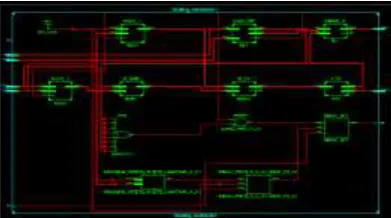
Fig 1: Flowchart of floating point subtractor
Performing Floating Point Addition Result = X - Y = (Xm * 2^Xe) - (Ym * 2^Ye)involves the following steps :
1. Align binary point
Initial result exponent : the larger of Xe, Ye
Compute exponent difference : Ye – Xe
If Ye >Xe Right shift Xm that many positions to form Xm 2 ^Xe-Ye
If Xe> Ye Right shift Ym that many positions to form Ym 2^Ye – Xe
2. Compute sum of aligned mantissas
i.eXm*2^Xe-Ye - Ym or Xm-Xm*2^Ye-Xe
3. If normalization of result is needed, then a normalization steps follows
Left shift result, decrement result exponent (eg. if result is 0.001xx..) or
Right shift result, increment result exponent (eg. if result is 10.1xx..)
Continue until MSB of data is 1
4. Check result exponent
If larger than maximum exponent allowed return exponent overflow
If smaller than minimum exponent allowed return exponent underflow
If result mantissa is 0, may need to set the exponent to zero by a special step to return a proper zero.
Example :
X=2345.125 =100100101001.001represented as:
Y=0.75 =0.11represented as:
[Bhat* et al., 4(5): May, 2017]
ISSN: 234-5197
Impact Factor: 2.715
I
NTERNATIONAL
J
OURNAL OF
R
ESEARCH
S
CIENCE &
M
ANAGEMENT
Xe>Ye initial result exponent = Ye= 10001010 = 138base10
Xe - Ye = 10001010 - 01111110 = 00000110 = 12base 10
Shift Ym 12base10postions to the right to formYm= 0.00000000000110000000000
Xm -Ym=1.00100101001001000000000-0.00000000000110000000000 =1. 00100101001111000000000
Result is
If the exponents differ by more than 24,the smaller number will be shifted right entirely out of the mantissa field,producing a zero mantissa.
-The sum will then equal the larger number.
-Such truncation errors occur when the numbers differ by a factor of more than 2^24,which is approximately 1.6*10^7.
-Thus,the precision of IEEE single precision floating point arithmetic is approximately 7 decimal digits.
Negative mantissa are handled by first converting to 2`s complement and then performing the addition.
-After the addition is performed,the result is converted back to sign-magnitude form.
When adding numbers of opposite sign,cancelltion may occur,resulting in a sum which is arbitrarily small,or even zero if the numbers are equal in magnitude.
-Normalization in this case may require shifting bye the total number of bits in the mantissa,resulting in alarge loss of accuracy.
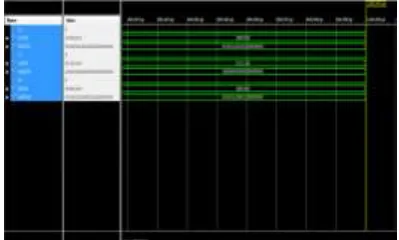
Fig 2 : Simulation results of floating point subtractor
Booth multiplier_24bit
If 00 then P= Arithmetic Right Shift If 11 then P= Arithmetic Right Shift If 01 then P=P+S
0 01111110 10000000000000000000000
[Bhat* et al., 4(5): May, 2017]
ISSN: 234-5197
Impact Factor: 2.715
I
NTERNATIONAL
J
OURNAL OF
R
ESEARCH
S
CIENCE &
M
ANAGEMENT
Example :4*4
m=4=0100 m=- 4 =1100 r=4=0100 r=-4=1100 A= 0100 0000 0
S= 1100 0000 1 P= 0000 0100 0
perform the loop 4 times : P= 0000 0100 0
Right shift P= 0000 0100 0 P= 0000 0010 0
Right shift P= 0000 0010 0 P=0000 0001 0
P=P+S= 1100 0001 0 Right shift P= 1100 0001 0 P=0110 0000 1
P=P+S= 0010 0000 0
Right shift P=0001 0000 0
The product is 0001 0000 which is 16
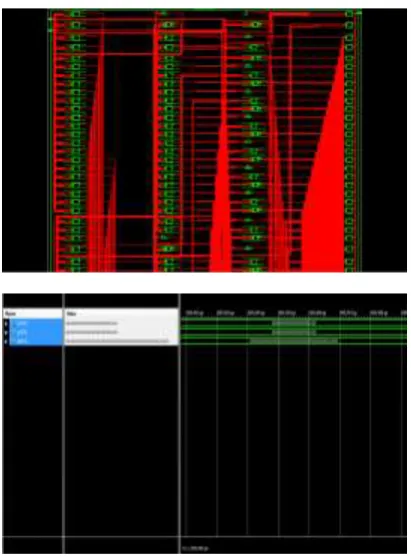
Fig : Simulation results of BOOTH multiplier
Floating Point Multiplier (Fpm)
[Bhat* et al., 4(5): May, 2017]
ISSN: 234-5197
Impact Factor: 2.715
I
NTERNATIONAL
J
OURNAL OF
R
ESEARCH
S
CIENCE &
M
ANAGEMENT
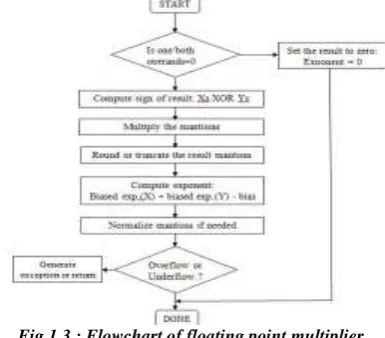
Fig 1.3 : Flowchart of floating point multiplier
Performing Floating Point Multiplication Result = X * Y = (-1)^Xs (Xm * 2^Xe) * (-1)^Ys(Ym * 2^Ye) involves the following steps :
1. If one or both operands is equal to zero,return the result as zero,otherwise: 2. Compute the sign of the result Xs XOR Ys
3. Compute the mantissa of the result :
• Multiply the mantissas : Xm * Ym
• Round the result to the allowed number of mantissa bits` 4. Compute the exponent of the result:
Result Exponent =biased exponent (X) + biased exponent (Y) –bias
5. Normalize if needed, by shifting mantissa right,incrementing result exponent. 6. Check result exponent for overflow/underflow:
• If larger than maxmimum exponent allowed return exponent overflow • If smaller than minimum exponent allowed return exponent underflow •
Example :
X=2345.125 =100100101001.001represented as:
Y=0.75 =0.11represented as:
S= 0 XOR 0 = 0
Xe + Ye = 10001010 + 01111110 = 00001010
0 10001010 00100101001001000000000
[Bhat* et al., 4(5): May, 2017]
ISSN: 234-5197
Impact Factor: 2.715
I
NTERNATIONAL
J
OURNAL OF
R
ESEARCH
S
CIENCE &
M
ANAGEMENT
= 01010110000000000000000 Result is
Rounding occurs in floating point multiplictation when the mantissa of the product is reduced from 48 bits to 24 bits.
-The least significant 24 bits are discarded.
Overflow occurs when the sum of the exponents exceeds 127, the largest value which is defined in bias -127 exponent representation.
-When this occurs,the exponent is set to 128(E=255) and the mantissa is set to zero indicating + or – infinity.
Underflow occurs when the sum of the exponents is more negative than -126,theost negative value which is defined in bias -127 exponent representation.
-when this occurs,the exponent is set to -127(E=0). -If M=0,the number is exactly zero.
-If M is not zero,then a denormalized number is indicated which has an exponent of -127 and a hidden bit of 0. -The smallest such number which is not zero is 2^-149.This number retains only a single bit of precision in the rightmost bit of the mantissa.
Fig : Simulation results of floating point multiplier
Conclusion
The modules designed are 24-bit Booth Multiplier for mantissa multiplication in Floating Point Multiplier, 32-bit Floating Point Subtractor and 32-32-bit Floating Point Multiplier. The Computational delay obtained by Floating Point Subtractor, booth multiplier and floating point multiplier is 16.180nsec, 33.159nsec and 18.623nsec respectively.
References
[1] RizalafandeCheIsmail ,RazaidiHussin , “High Performance Complex Number Multiplier Using Booth-Wallace Algorithm ”, ICSE2006 Proc. 2006, Kuala Lumpur, Malaysia.
[2] PrabirSaha , Arindam Banerjee , Partha Bhattacharyya , AnupDandapat , “ High Speed ASIC Design of Complex Multiplier Using Vedic Mathematics ” , Proceeding of the 2011 IEEE Students' Technology Symposium 14-16 January, 2011, lITKharagpur .
[3] Rajashri K. Bhongade, SharadaG.Mungale, KarunaBogawar , “ Vhdl Implementation and Comparison
of Complex Mul-tiplier Using Booth’s and Vedic Algorithm ” , COMPUSOFT, An international journal of advanced computer technology, 3 (3), March-2014 (Volume-III, Issue-III) .
[4] L P. Thakare , Dr. A Y. Deshmukh , “Area Efficient Complex Floating Point Multiplier For Reconfigurable FFT/IFFT Processor Based On Vedic Algorithm ”, Science Direct / 7th International
[Bhat* et al., 4(5): May, 2017]
ISSN: 234-5197
Impact Factor: 2.715
I
NTERNATIONAL
J
OURNAL OF
R
ESEARCH
S
CIENCE &
M
ANAGEMENT
Conference on Communication, Computing and Virtualization 2016
[5] RajashriBhongade ,S.G.Mungale , KarunaBogavar , “Performance Evaluation of High Speed Complex
Multiplier Using Vedic Mathematics ”,International Journal of Innovative Research in Advanced Engineering (IJIRAE)Volume 1 Issue 1 (April 2014).
[6] Laxman P. Thakare , A. Y. Deshmukh , Gopichand D. Khandale , “VHDL Implementation of ComplexNumber Multiplier Using Vedic Mathematics ”, Springer 2014.
[7] Gopichand D. Khandale , Laxman P. Thakare , Dr. A. Y. Deshmukh , “Performance Evaluation of Complex Multiplier Using Advance Algorithm ”, International Journal of Electronics and Computer Science Engineering 1018 Available Online at www.ijecse.org ISSN- 2277-1956.