2157
Energy Efficient Routing For Manet Using
Optimized Hierarchical Routing Algorithm
(Ee-Ohra)
S. Vinod Kumar, Dr. V. Anuratha
Abstract: Certain particular combinations of traits make routing in ad hoc networks exciting. The confined energy capacity of mobile computing devices has introduced energy conservation to the leading edge of concerns for enabling mobile communications. This is a particular difficulty for mobile ad hoc networks where devices are expected to be deployed for lengthy durations of time with restricted ability for recharging batteries. Such expectancies call for the conservation of energy in all components of the cellular device to help enhancements in device lifetime. Mobile Ad hoc Networks encompass mobile nodes with constrained battery energy. The vital trouble for routing in mobile ad hoc network is the way to choose a strong path with longer lifetime on account that mobility and strength drain of a node reasons common course failure. This route failure causes common direction discovery which influences the overall performance of the routing protocol. The direction failure additionally will increase computational overhead of the nodes. Hence, in this paper, we introduce Energy Efficient – Optimized Hierarchical Routing Algorithm (EE-OHRA), to offer higher and extra stable strength based routing route for comparable node’s characteristics in a network environment. The related node discovery set of rules is planned in that network, which is carried out to select the routing node for the precise direction with similar or related nodes with its ability, and characteristics. It is simple to provide predictable packet transmission in a specific direction. The theoretical evaluation and simulation consequences shows that our proposed optimized EE-OHRA reduces general energy consumption, reduces end-to-end put off, increases packet shipping ratio and achieves maximum network lifetime.
Keywords: Energy Efficiency, Hierarchical Routing, Energy Optimization, Clustering, AODV, Sensor Nodes.
————————————————————
I. INTRODUCTION
Mobile Ad-hoc network (MANET) is an infrastructure-less network that is series of independent nodes that actions with some pace and operate with none vital administration. These nodes are battery energyed that's the simplest source of energy. MANET is broadly used for many industrial in addition to home purposes like rescue operations, information and device networks, conflict fields and so on In many of these programs it isn't always possible to installation network infrastructure and consequently the network is depend most effective on nodes battery strength. In such type of applications it's far vital to manage conversation route between the nodes for max time period in order that the nodes can actively participate in communique method [1]. Thus, MANET gets large studies interest and lots of routing algorithms are developed. The most popular method which is used to differentiate mobile ad hoc network routing protocols is how routing information is obtained, stored and maintained by means of mobile nodes, through the use of this MANET routing protocols can be divided into proactive routing, reactive routing and hybrid routing [2]. Network lifetime is a time at which first node inside the network is runs out of energy to participate in communication procedure. Thus in such an environment we are able to take following measures to extend network lifetime [8]:
1. Monitor the energy intake of nodes so that nodes will now not die because of energy exhaustion.
2. Distributing the workload of nodes in the course of the network to avoid intake of battery energy of single node.
3. Avoid minimal energy route for conversation.
To put into effect these kinds of measures in a single protocols sincerely a critical trouble. Many researchers proposed various techniques to house above point out properties in their paintings.
II. EXISTING METHODOLOGY
In the method of increasing the network lifetime, the energy conscious routing plays an essential function, and there are positive answers that advanced in advance for the same. In the present methodology, the focal point is on growing a strength efficient multicast algorithm for MANETs. In the present answer, the issue is that the facts packets transmitted from source to the group destinations the usage of a node, and such nodes relies on the path with higher performance of residual battery energys and relay capacities. The other goal of the present thought is to decrease the process overhead to pick out possible multicast routes between source and vacation spot. In regard to this, the depicted model is concluding the routes from destination to source that is novel that compared to different present day fashions. OLSR is a proactive routing protocol for MANET. The fundamental advantage of this protocol, compared to the alternative proactive protocols, is the minimization of broadcasting manages messages in the network. This advantage is due to the election of a pacesetter for each organization of nodes, and most effective these group leaders have the right to broadcast manipulate messages in the entire network. These institution leaders are referred to as MPR (MultiPoint Relays). Two fundamental algorithms shape the OLSR protocol: the MPR election algorithm and the status quo topology set of rules of the network.
2.1. System Concept
In the existing method, a development of the OLSR protocol to decide on extra stable and sustainable paths in the network. We modified the MPR choice metric and the metric of topology status quo to pick strong MPRs and sustainable paths. For this, it has two concepts:
i) The SND concept (Stability of NoDes). ii) The FND concept (Fidelity of NoDes).
2158 mobility is not the simplest element that influences at the
paths’ balance. A node that consumes its energy more than appropriate threshold will not be capable of make contributions into the routing operation and the trails bypass through it'll be damaged. In addition to this constraint, it's far higher to path facts thru the nodes which have greater residual energy to increase the life of the network. In this paper, we will enlarge our answer provided in [2] to keep in mind the constraint of residual energy, and we call the new protocol STA OLSR (STAble OLSR).
Calculation of SND
In the prevailing technique, the SND calculation is achieved by the following capabilities:
1. NMF, Node Mobility Function: calculates the degree of mobility primarily based at the Bienaym-Chebyshev inequality [7].
2. 2- NEF, Node Energy Function: calculates the residual energy of a node.
Calculation of FND
In the OLSR protocol, the nodes trade Hello messages among them. In this existing methodology and the use of those messages, each node might also estimate the new idea FND.
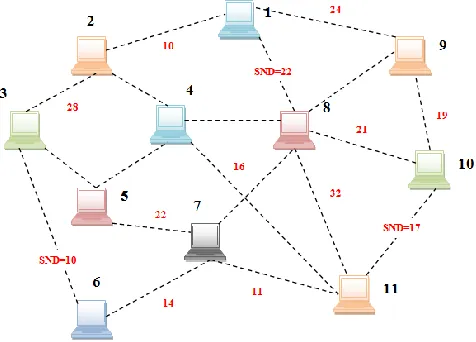
Fig 1: - Example of calculating the Fidelity of NoDes
We explain this estimation with the aid of the example of Figure 1. The network graph in Figure 1 represents an ad hoc network where the weights of edges are the SND values and the weights of vertices are the FND values. In the case of OLSR, for instance, the FND is the diploma of reachability. In the case of our inspiration, it's far the diploma of reachability with handiest the stable nodes. For example, in Figure 1, the node eight has hyperlinks with two nodes: the node 3 with SND equal to 2.3 and the node 2 with SND identical to 1.6. The node eight chooses the node 2 as the maximum solid (minimum SND) wherein it offers it a token. Similarly, the node 7 gives its token to the node 2. We finish that the constancy FND of the node 2 is equal to two.
III. PROPOSED WORK
The movable nodes are normally having a difference to each different available node in network surroundings due to the fact its nodes characteristics and capability is unique.
One of the mobile nodes must perform the unpredictable packet sharing to its next neighboring node, for the reason that strength stage of a node is changed, therefore the ones nodes want to growth its communique price else reduce its communique price from source node to a vacation spot node, the multipath routing is also no longer easy to offer the lesser fee of packet transmission of particular node. This makes to enhance strength usage and limit its network lifetime. Energy Efficient – Optimized Hierarchical Routing Algorithm (EE-OHRA), approach is used to present an stepped forward or even energy relying direction for communication of comparable node characteristics in that network structure. The associated node discovery set of rules is constructed in a mobileular environment, that's used to discover the routing node for a selected course with comparable or similar nodes for its potential, and pleasant, this helps to offer a predictable packet transmission particularly direction. This minimizes the energy consumption and will increase the life of the network.
Fig 2: - Proposed Work Structure
The above shape of the proposed technique defined about the movable node conduct is analyzed and monitors the energy level with a transmission rate of each node. The optimized energy path assigning technique is used to distinguish similar capability nodes are chosen for routing, and multiple functionality nodes are rejected for routing, also to provide Better and strong energy based routing route for similar nodes. The related node discovery set of rules is designed and carried out to discover comparable nodes handiest for communication, to increase the network lifetime, and decrease energy intake.
3.1. Analyze the Node Behaviour
The Node support is measured as a crucial unit for preserving system hyperlink in an unformed shape together with MANET. Because all mobile nodes in the ad hoc network environment are impartial of the surroundings also which can be accomplished its own choice in communique. Regard as many models for carrying out the node character like,
Supportive Mode, Self-Centered Mode, Breakdown Mode.
2159 Regard as one node desires to share data packets with the
other node in a MANET, after which another node starts to ship a request to the subsequent neighbor for sequential way. Since the circumstance is a node breakdown, then the neighbor node is not capable to transmit, so carry out the course discovery procedure to its similarly next nodes in that course. Therefore the route does isn’t diagnosed many of the sender and destination node alongside the neighboring nodes. A breakdown node that relays the path finding request packet to the next node, except it, deny to transmitting the information packets to following the hyperlink available direction. OP Optimized Path, rN related node, nB node behavior.
Optimized Path = rN + nB …… (1)
A supportive node may be breakdown whilst the energy level of a node reaches lesser for ultimate energy restriction as the scenario. The breakdown node have to be transformed right into a supportive node by using enhancing its energy utilization and whether or not the packet transmission price additionally has a restriction indicated. The processing node else breakdown node can change into a crash node while this node travels out of the coverage restriction, and its strength level may be very low. And the energy level of every node reaches a lesser residual energy indicated. The breakdown node need to recover into supportive, at the same time as the node comes into the range of packet sharing with acknowledgment to this manner. eL energy level, tR transmission rate.
Node Behavior = eL + tR ……. (2)
The mobile nodes in MANETs possess a high chance of failure over the years and also the conduct of mobile node safety relies upon on time slot allocation. Consequently, the evolution of node traits does no longer suggest via all nodes carry out, similar system or no longer. Therefore, describe some nodes in a direction having comparable characteristics along with transmission charge, and energy intake that incorporates each separate time utilization hold metrics traits for calculating the transmission charge of nodes. IeN initial energy of a node, CeN Energy consumption of a node.
Energy Level = IeN – CeN ……… (3)
Analyze the nonlinear optimization technique for classifying nodes into the breakdown and normal nodes, which can be used sequential danger price, investigation for identifying the breakdown nodes.
3.2. Energy Efficient – Optimized Hierarchical Routing Algorithm (EE-OHRA)
In the proposed work, Energy Efficient Route assigning is a technique that is launched to provide sure the method ability of minimum energy utilization. The spontaneous packet forwarding technique works like an ad hoc network is analyzed for communique except the approach doesn’t apprehend the green course carried out for packet transmission. The present energy approach is not operating in keeping with speaking approach, speaking manner depends on gift extra energy node selected depending packet sharing. Moderately, this continues to region green paths and selects the single route based on a better transmission fee and minimal strength utilization. It entails that as an alternative to a single course, a packet sharing would use definitely diverse routes on the totally varied time
period, and therefore any character course must now not gain strength minimally. This is faster to answer angrily to mobile nodes which are travelling alongside the network surroundings, and the minimum verbal exchange traffic. PeU path energy usage.
CeN = CeU * PeU ……… (3)
This energy efficient routing scheme needs to separate the same characteristics of the node, and varied traits of a node within the network. The similar trends of nodes are high-quality selected for packet transmission. The distinct traits of nodes are recognized and removed from routing path, the same nodes have more or less same strength level, so it supports for packet transmission often. It gives the higher and strong routing course higher and solid energy based totally routing route for the use of best a similar nodes. The mobileular nodes are movable in nature for achieving a super packet sharing from supply node to a vacation spot node in a wi-fi sensor network, which might be consistent for energy usage, and additionally it finally keeps the maximum residual energy for in addition packet transmission. This method is carried out to decrease the needless consumption of strength. The strength is wasted due to the fact the maximum of the nodes are breakdown previously in a mobile network, and especially the node’s energy is a bit used in packet transmission. Whether any mobile node in connection need to breakdown else obtainable at the inactive circumstance, then the entire connection is breakdown else whole meeting of packet transmission is failed except in present approach every nodes energy usage is approximately ability.
Where N - dsmN normal node minus dissimilar node, and SmN similar nodes.
nB = (IeN1 + IeN2 + … + IeN(n) – CeN * PeU + rT ……. (4)
dsmN – IeN (min) ……. (5) nR = N – dsmN ……. (6)
A latest path finding is used to guarantee for improve network lifespan even as deciding on the higher path. The overload of verbal exchange is minimized via the usage of the direction locating procedure. This proposed present judge the lifespan of the route as a parameter for route finding technique. The present method is used to enhance the packet transmitting and receiving, each with a lesser ratio of packet loss. Whether node connections wreck down is minimized. Then to the restarting of the verbal exchange process is minimized, and then the energy utilization is maximized. Mobile shape, whether or not no right respond packet is everyday with the aid of target node, then the source node isn't capable of forward the subsequent information in a network environment, to the target node, and remain for the precise respond packet. For that scenario supply node is able to ahead a statistics packet by using latency in network process is extended.
Algorithm: - EE-OHRA
Step1: To analyze the every node characteristics, & capability.
Step 2: For each node initiate communication with its neighbor node
Step 3: Node place in random location
Step 4: Separate the similar and dissimilar character of the node
Step 5: if {node==similar}
2160 Step 7: else
Step 8: if {node==dissimilar} Step 9: node get breakdown
Step 10: Not permit to perform the communication Step 11: To discover similar nodes
Step 12: end if Step 13: end for
3.3. Related Node Discovery Algorithm
The proposed technique is used to calculate the extra amount of established packet is simple. While the intermediate node transmits information packets, it counts the amount of copy of the newly created facts packets alongside the ultimately instantaneous. Whether the intermediate nodes should not take note of any retransmission of statistics packets for that second, it considers failure within the packet forwarding of its declaration and consequently, it transmits the packet again and again. Depending on the amount of facts packet normal inside the intermediate node, an easy management method in particular positioned inside the alteration comes to a decision the range of Transmission. For that situation, the controlling machine uses vital scheme. Awaiting the amount of statistics packets common via the intermediate nodes should not pass above its variety, the time hole is a minimum stage. Otherwise, the intermediate need to transmit records packets with a gap of most degree, at the same time as the most amounts of packets is common.
SmN = N – dsmN ……. (7)
The associated nodes only chosen for routing by way of the use of the related node discovery set of rules, it is designed and used to discover the nodes the ones traits are comparable for communique and energy saving. It provides the optimized energy efficient routing route from the supply node to the destination node. It increases network lifetime and decreases energy intake.
Algorithm: - Node Discovery Algorithm
Step 1: Determine node transmission rate, and energy usage.
Step 2: for each search energy efficient node. Step 3: if {Node Residual Energy==high} Step 4: That node maintains a stable energy Step 5: It supports to obtain energy-efficient path Step 6: else
Step 7: if {Node Residual Energy ==low}.
Step 8: Those nodes are detected, and removed From routing path.
Step 9: End if.
Step 10: Increase network Lifetime, and reduce energy consumption
Step 11: End for
To reveal the energy degree and the transmission charge of every node, this surely measure the node conduct as green manner; it analyzes the residual strength of every node and the verbal exchange speed with achievement ratio. The facts packets are transmitted and obtained higher compared with the preceding technique. Optimized energy efficient course assigning technique, is used to classify the same characteristics of the node, and assorted characteristics of nodes, it best used to perform communication use comparable characteristics of nodes. Related node discovery algorithm, it consists of 2 bytes; the
similar form of nodes positioned a most network lifetime and minimum strength consumption.
IV. RESULTS AND DISCUSSION
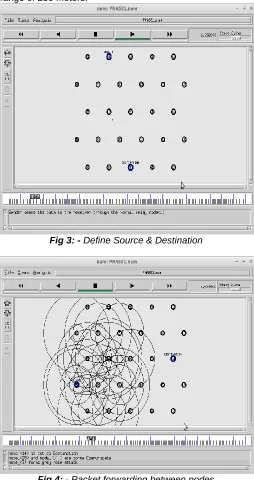
We have performed the performance assessment of our paintings the usage of Network Simulator-2 simulator. The Energy Efficient – Optimized Hierarchical Routing Algorithm (EE-OHRA) technique is simulated with the Network Simulator device (NS 2.34). In our simulation, 100 mobile ad-hoc nodes are positioned in a 1000m * 1000m rectangular location for forty one ms simulation time. Each Mobile node goes random way a number of the network at a exceptional speed. All nodes have the same transmission range of 250 meters.
Fig 3: - Define Source & Destination
Fig 4: - Packet forwarding between nodes
2161 the network. The related node discovery set of rules is
deliberate to discover comparable nodes, and carry out verbal exchange. It reduces energy intake and improves network lifetime.
End-to-end delay: The average delay of the packet transmission from the source to the destination. The unit is milliseconds (ms).
Fig 5: - Average Delay
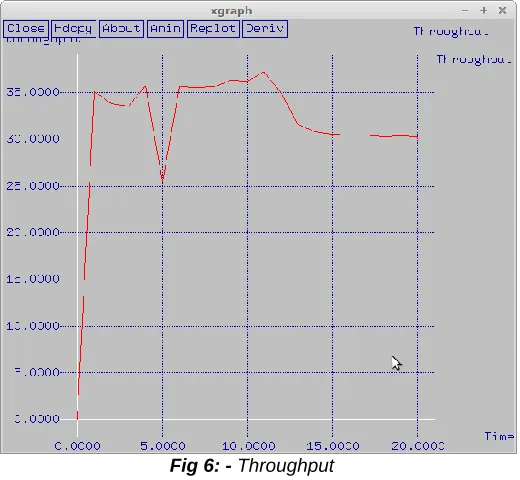
Throughput: An average transmission rate of data packets. The unit is kilo bits per second (kpbs).
Fig 6: - Throughput
Packet Delivery Ratio: The number of packets which are received by destination node per number of sent packets which are sent by source node.
Fig 7: - Packet Delivery Ratio
V. CONCLUSION
In this paper Energy Efficient EE-OHRA route discovery for mobile ad hoc networks is the version that designed to cope with the problems pertaining to curtailing the intake of energy and maximizing the course lifetime. As our proposed course discovery procedure considers the life of the course because the metric at the same time as choosing the route, the routing failure is minimized. This reduces the variety of route discovery method and additionally the computation overhead of every node concerned in direction discovery technique which affects the general overall performance of routing protocol. Our destiny work includes the safety for the proposed algorithm to discover the course with longer lifetime and without any malicious nodes which impacts the overall performance.
VI. REFERENCES
[1] Taha, A., Alsaqour, R., Uddin, M., Abdelhaq, M., Saba, T.:Energy efficient multipath routing protocol for mobile ad-hoc network using the fitness function. IEEE Access 5, 10369–10381 (2017). [2] He, J., Yang, O.: Globally-aware allocation of
limited bandwidth in multipath routing based on queueing performance. In: Wireless Communications and Networking Conference (WCNC), IEEE, pp. 1–6. IEEE (2017)
[3] Thirukrishna, J.T., Karthik, S., Arunachalam, V.P.: Revamp energy efficiency in homogeneous wireless sensor networks using optimized radio energy Algorithm (OREA) and energy-aware distance source routing protocol. Fut. Gener. Comput. Syst. 81, 331–339 (2017)
[4] Udhayamoorthi, M., Manimegalai, P., Karthik, S.: Consistent and energy competent routing protocol for mobile ad hoc networks. ARPN J. Eng. Appl. Sci. 12(21), 6058–6066 (2017)
[5] N. Kamal, A study of energy efficiency of multicast routing protocols for manet, 2013.
2162 [7] Ramon Sanchez-Iborra ; Maria-Dolores Cano,
"JOKER: A Novel Opportunistic Routing Protocol", IEEE Journal on Selected Areas in Communications, Vol.34, No.5, pp.1690-1703, 2016.
[8] Ali Mohamed E. Ejmaa ; Shamala Subramaniam ; Zuriati Ahmad Zukarnain ; Zurina Mohd Hanapi, "Neighbor-Based Dynamic Connectivity Factor Routing Protocol for Mobile Ad Hoc Network", IEEE Access, Vol.4, pp.8053-8064, 2016.
[9] Tran The Son ; Hoa Le Minh ; Graham Sexton ; Nauman Aslam, "Self-adaptive proactive routing scheme for mobile ad-hoc networks", IET Networks, Vol.4, No.2, pp. 128-136, 2015.
[10] Zhinan Li ; Yinfeng Wu, "Smooth Mobility and Link Reliability-Based Optimized Link State Routing Scheme for MANETs", IEEE Communications Letters, Vol.21, No.7, pp. 1529-1532, 2017. [11] N. Boddu, R. Vatambeti, and V. Bobba, ―Achieving
Energy Efficiency and Increasing the Network Life Time in MANET through Fault Tolerant Multi-Path Routing‖, International Journal of Intelligent Engineering and Systems, Vol. 10, No. 3, pp. 166-172, 2017.
[12] S. Ghode and K. Bhoyar, ― NEMA: Node Energy Monitoring Algorithm for Zone Head Selection in Mobile Ad-Hoc Network using Residual Battery Energy of Node‖, In: Proc. of the IEEE International Conference on Wireless Communications, Signal Processing and Networking, pp. 2054-2059, 2016. [13] G. Walikar and R. Biradar, ―Reliable and Energy
Efficient Hybrid Multicast Routing in Mobile Ad Hoc Networks‖, In: Proc. of International Conference on Signal Processing, Communication, Energy and Embedded System, pp. 27-36, 2016.
[14] M. Yoshimachi and Y. Manabe, ―Battery Energy Management Routing Considering Participation Duration for Mobile Ad Hoc Networks‖, Journal of Advances in Computer Networks, Vol. 4, No. 1, pp. 13-18, 2016.
[15] Forouz Ghaffarizadeh and Ahmad Khademzadeh, ―Improving Quality of Service Routing in Mobile Ad Hoc Networks Using OLSR‖, Journal of Advances in Computer Engineering and Technology, Vol.1, No.1, pp. 51-58, 2015.
[16] Shayesteh Tabatabaei and Mohammad Teshnehlab, ―Increasing Durability Path in Mobile Ad hoc Networks using Fuzzy-Based Routing Algorithm‖, Research Journal of Engineering & Technology, Vol. 1, No, 2, pp. 23-30, 2015.