Journal of Agriculture, Food Systems,
and Community Development
Volume 1, Issue 4
Spring-Summer 2011
Published online at www.AgDevJournal.com
New Leaf Associates, Inc.
ISSN 2152-0801 (online only)
Special Topic:
Advisory Committee Laura Brown, University of Wisconsin Cooperative
Extension (USA)*
Kate Clancy, Minnesota Institute for Sustainable Agriculture (USA)
Nevin Cohen, The New School (USA)* David Conner, University of Vermont (USA)* Cornelia Butler Flora, Iowa State University (USA) Julia Freedgood, American Farmland Trust (USA)* Gilbert W. Gillespie, Cornell University (Retired)
(USA)*
R. Bruce Gregory, Farmer, Mitchell Bay Farm & Nursery (USA)*
Shermain Hardesty, University of California (USA)* John Ikerd, University of Missouri, Columbia
(Emeritus) (USA)†
Anupama Joshi, National Farm to School Network/Occidental College (USA)* Larry Lev, Oregon State University (USA) Fred Magdoff, University of Vermont (Emeritus)
(USA)
Ken Meter, Crossroads Resource Center (USA)* †
Joseph McIntyre, Ag Innovations Network (USA)* †
Rich Pirog, Iowa State University (USA) Ken Robinson, Clemson University (USA)
John Smithers, University of Guelph (Canada) G. W. (Steve) Stevenson, University of
Wisconsin-Madison (USA)
Dawn Thilmany McFadden, Colorado State University (USA)
Mark Winne, Community Food Security Coalition (USA)
Larry Yee, Fairhaven Strategy Group (USA) Rami Zurayk, American University of Beirut
(Lebanon)* †
*Also serve on editorial committee. † Also write a regular column.
Editorial Committee Paivi Abernethy, University of Waterloo (Canada)
Mahbubul Alam, Ehime University (Japan)
Kristy Apostolides, Mediterranean Agronomic Institute of Chania (Greece)
Mary Margaret Barth, Responsible Source, UIUC (USA)
Sandip Banerjee, Hawassa University (India) Herb Barbolet, Simon Fraser University, Centre for
Sustainable Community Development (Canada) Ricky Martin Bates, Penn State University (USA) Molly K. Bean, The Ohio State University (USA) Anne C. Bellows, University of Hohenheim (Germany) Rachelle Bostwick, Farmer, Earthkeeper Farm (USA) Rebecca Briggs, Biodynamic Farming and Gardening
Association (USA)
Marcia Caton Campbell, Center for Resilient Cities (USA)
Megan Carney, U.C.–Santa Barbara (USA) Christine C. Caruso, City Univ. of New York (USA) Gina Cavallo Collins, Farmer, Victory Farms, Inc.
(USA)
Sean Connelly, Alberta Social Economy Research Alliance Centre for Sustainable Community Development (Canada)
Hendrik deWilde, The Gabriola Commons (Canada) Michael L. Dougherty, University of Wisconsin–
Madison (USA)
Leslie Duram, Southern Illinois University (USA) Patti Taranto Erickson, Salisbury University (USA) Ayman Ekram Fahim, Suez Canal University (Egypt) Anna Fedman, Univ. of California–Berkeley (USA) Melissa Fernandez Arrigoitia, London School of
Economics (UK)
Rok Fink, Univerza v Ljubljani (Slovenia)
Danielle Nicholas Fisher, Farmer, Eagle Ridge Ranch, Bozeman, MT (USA)
Nancy Franz, Iowa State University College of Human Sciences (USA)
Lynn Fredericks, FamilyCook Productions (USA) Hanna Garth, Univ. of California–Los Angeles (USA) Stephan Goetz, Northeast Regional Center for Rural
Development (USA)
Carol Goland, Ohio Ecological Food and Farm Association (USA)
Sheila L. Gray, Washington State Univ.–Lewis County Extension (USA)
Angela Gordon Glore, AmeriCorps/VISTA (USA)
Leslie Hossfeld, University of North Carolina– Wilmington (USA)
Susanne Howard, Missouri State University (USA) Guiping Hu, Iowa State University (USA) Lauren Hunter, Coop. Extension, Univ. of
Idaho-Blaine County (USA)
Valerie Imbruce, Bennington College (USA) George Irwin, Green Living Technologies (USA) Douglas Jack, Food Producer, Sustainable
Development Corp. (Canada)
Matthew James, Garifuna Seafood Collective (Belize) Hugh Josephs, Tufts University (USA)
Joel Kimmons, Centers for Disease Control and Prevention (USA)
Franz Klingender, Canada Agriculture Museum (Canada)
Jasenka Gajdoš Kljusurić, Prehrambeno Biotehnoloski Fakultet (Croatia)
Fiona Knight, Private food system consulting practice (Canada)
Uma Koirala, Tribhuvan University (Nepal) Jane Kolodinsky, University of Vermont (USA) John D. Lee, Farmer, Allandale Farm, Inc. (USA) Kristi Lekies, The Ohio State University (USA) Dale Levering, LCC International University
(Lithuania)
Charles Levkoe, University of Toronto (Canada) Matt Lobley, University of Exeter (UK) Bohdan Lojka, Czech University of Life Sciences
(Czech Republic)
Uford A. Madden, Florida A&M University (USA) Lisa Markowitz, University of Louisville (USA) Derek Masselink, Masselink Environmental Design
(Canada)
Mike McDonald, Florida Gulf Coast University (USA) Jesse C. McEntee, Cardiff University (UK) Laura McGough, University of Maryland, Baltimore
County (USA)
Jesse C. McEntee, Cardiff University (UK) Bethann G. Merkle, Missoula Urban Demonstration
Project (USA)
Bernadette Montanari, Univ. of Kent, Canterbury (UK) Vicki Morrone, Michigan State University (USA) Heidi Mouillesseaux-Kunzman, Cornell Univ. (USA) Phil Mount, University of Guelph (Canada) Scot Nelson, University of Hawaii at Manoa (USA) Kim L. Niewolny, Virginia Tech (USA) Kimberly Norris, University of Maryland (USA)
Lydia Oberholtzer, Penn State University (USA)Fernando Ona, Indiana University (USA) Aleck Ostry, University of Victoria (Canada) Isidro Ovando-Medina, Center of Biosciences, Univ. of
Chiapas (Mexico)
Tapan B. Pathak, University of Nebraska (USA) Mary Peabody, Northeast Regional Center for Rural
Development (USA)
Francois Pelatan, AMAP Dordogne (France) Jan Perez, University of California–Santa Cruz (USA) Greg Pillar, Queens University of Charlotte (USA) William A. Powers, Nebraska Sustainable Agriculture
Society (USA)
Madeleine Pullman, Portland State University (USA) Md. Masud Parves Rana, Rajshahi University
(Bangladesh)
Taylor Reid, Michigan State University (USA) Kristin A. Reynolds, The New School, New York
(USA)
David Richey, Lane Council of Governments (USA) Antonio Roman-Alcalá, Alemany Farm (USA) Natalie R. Sampson, Univ. of Michigan, School of
Public Health (USA)
Valerie M. Scopaz, VMS Planning Services (USA) Uma i Shankari, Rashtriya Raithu Seva Samithi, a
farmers’ organization (India)
Peggy Smith-Eppig, Maryland Agricultural Education Foundation (USA)
Christopher Sneed, The University of Tennessee Extension–Blount County (USA)
Lois Stanford, New Mexico State University (USA) Garry Stephenson, Oregon State University (USA) Bill Swanson, Valentine Hill Farm (USA)
Diana Vergis Vinh, Public Health Department, Seattle (USA)
Jessy Van Wyk, Cape Peninsula University of Technology (South Africa)
Gerald W. Warmann, South Dakota State Univ. (USA) Sue D. Weant, Partners for Family Farms (USA) E. Christian Wells, University of South Florida (USA) Melissa White Pillsbury, Maine Organic Farmers and
Gardeners Association (USA)
Niki Whitley, North Carolina A&T State Univ. (USA) Mollie Woods, Michigan State University (USA) Jen Wrye, Carleton University (USA)
Steve Young-Burns, PastureLand Cooperative and freelance food writer (USA)
Lorna Zach, University of Wisconsin (USA)
The Journal of Agriculture, Food Systems, and Community Development is published quarterly (Summer, Fall, Winter, Spring) by New Leaf Associates, Inc., ISSN 2152-0801 (online only). Corporate office: 295 Hook Place, Ithaca, NY 14850 USA Online subscriptions: Farmer/Student/Sole Proprietor/Retiree: US$39; Agency/Nonprofit Staffperson: US$49; Faculty/Consultant/Corporate Employee: US$69; Institutional Library: US$239–US$693 (based on FTE students).
Copyright © 2011 by New Leaf Associates, Inc. All rights reserved. The publisher assumes no responsibility for any statements of fact or opinion expressed in these published papers. No part of this publication may be reproduced, stored, transmitted, or disseminated in any form or by any means without prior written permission from New Leaf Associates, Inc. For permission to reuse material from JAFSCD, please go to www.copyright.com or contact the Copyright Clearance Center, Inc. (CCC), 222 Rosewood Drive, Danvers, MA 01923 USA, +1-978-750-8400. CCC is a not-for-profit organization that provides licenses and registration for a variety of uses.
Volume 1, Issue 4 / Spring/Summer 2011
Contents /
Volume 1, Issue 4 / Spring-Summer 2011
In This Issue:
Small and Midscale Food Value Chains: A State of the Art/ Duncan Hilchey 1Commentary
Agricultural Development Is Economic Development: Kentucky State Parks Local Food Purchasing
Case Study / Robert R. Perry 3
Columns
The Economic Pamphleteer: Essential Principles of Sustainable Food Value Chains / John Ikerd 15
Views from the Food System Frontier: The Signs of a New Mainstream / Joseph McIntyre 19
Metrics from the Field: Breaking Our Chains / Ken Meter 23
Special Topic Call: Small and Midscale Food Value Chains
Midscale Food Value Chains: An Introduction / G. W. Stevenson, Kate Clancy, Robert King,
Larry Lev, Marcia Ostrom, and Stewart Smith 27
Access to Information and Farmer’s Market Choice: The Case of Potato in Highland Bolivia /
Nadezda Amaya and Jeffrey Alwang 35
Value Chains for Sustainable Procurement in Large School Districts: Fostering Partnerships / David S. Conner, Andrew Nowak, JoAnne Berkenkamp, Gail W. Feenstra,
Julia Van Soelen Kim, Toni Liquori, and Michael W. Hamm 55
Using a Supply Chain Analysis To Assess the Sustainability of Farm-to-Institution Programs /
Gail Feenstra, Patricia Allen, Shermain Hardesty, Jeri Ohmart, and Jan Perez 69
Corbin Hill Road Farm Share: A Hybrid Food Value Chain in Practice / Nevin Cohen and
Dennis Derryck 85
Money and Mission: Moving Food with Value and Values / Adam Diamond and James Barham 101
Acting Collectively To Develop Midscale Food Value Chains / Larry Lev and G. W. Stevenson 119
Food Value Chain Development in Central New York: CNY Bounty / Becca B. R. Jablonski,
Javier Perez-Burgos, and Miguel I. Gómez 129
Informal and Formal Mechanisms of Coordination in Hybrid Food Value Chains / J. Dara Bloom and
C. Clare Hinrichs 143
Increasing Farm Income and Local Food Access: A Case Study of a Collaborative Aggregation, Marketing, and Distribution Strategy That Links Farmers to Markets / Michele C. Schmidt, Jane M. Kolodinsky,
The Potential of an “Agriculture of the Middle” Model in the Context of EU Rural Development /
Áine Macken-Walsh 177
Open Call
Agricultural Economic Development at the Rural-Urban Interface: Community Organization, Policy, and
Agricultural Change / Jeff S. Sharp, Doug Jackson-Smith, and Leah Smith 189
Out in the Cold About COOL: An Analysis of U.S. Consumers’ Awareness of Mandatory
Country-of-Origin Labels for Beef / Katie L. Allen, Courtney Meyers, Todd Brashears, and Scott Burris 205
Book Reviews
John Ikerd’s Revolution of the Middle...and The Pursuit of Happiness /
I
NT
HISI
SSUED
UNCANH
ILCHEYSmall and midscale food value chains: A state of the art
Published online 10 September 2011
Citation: Hilchey, D. L. (2011). Exploring and furthering food value chains [Editorial]. Journal of Agriculture, Food Systems, and Community Development, 1(4), 1–2. http://dx.doi.org/10.5304/jafscd.2011.014.019
Copyright © 2011 by New Leaf Associates, Inc.
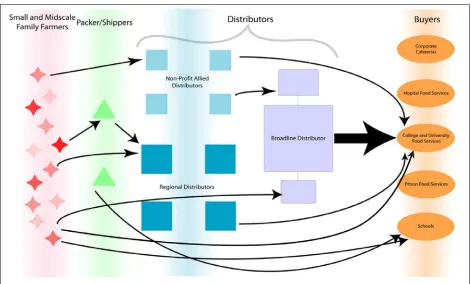
n this issue of JAFSCD we present the state of the art in small and medium-sized food value chains — primarily from a North American perspective, but also with perspectives from Europe and South America. Values-based food supply chains (value chains) are strategic alliances between farms, ranches, and other supply chain partners who deal in sufficient volumes of high-quality, differentiated food products and distribute rewards equitably across the supply chain. As Stevenson and colleagues remind us, in FVCs, farmers and ranchers are treated as strategic partners, not as interchangeable — and exploitable — input suppliers. Ideally, all partners in these business alliances recognize that creating maximum value for the product depends on significant interdependence, collaboration, and mutual support.
There have been a number of influential initiatives working to develop and extend the concept of value chains in the last 10 years; especially notable are the Center for Integrated Agricultural Systems (at the University of Wisconsin) and the Agriculture in the Middle research group. The latter is led by a thoughtful group of land grant faculty and staff as well as consultants, all of whom have pioneered many of the principles and practical strategies highlighted and built upon in this issue. We hope it will stimulate further applied research and programming — and we encourage further manuscript submissions that build on this critical body of work.
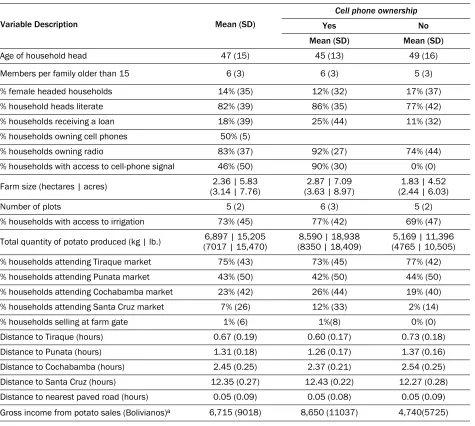
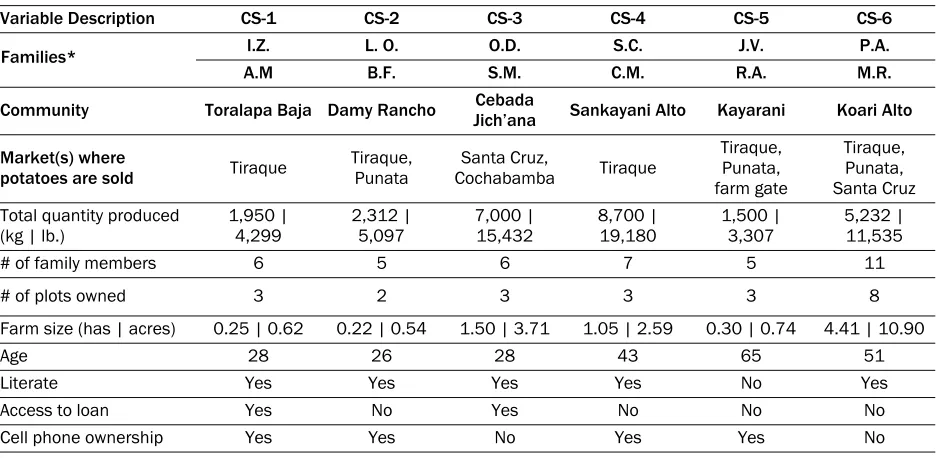
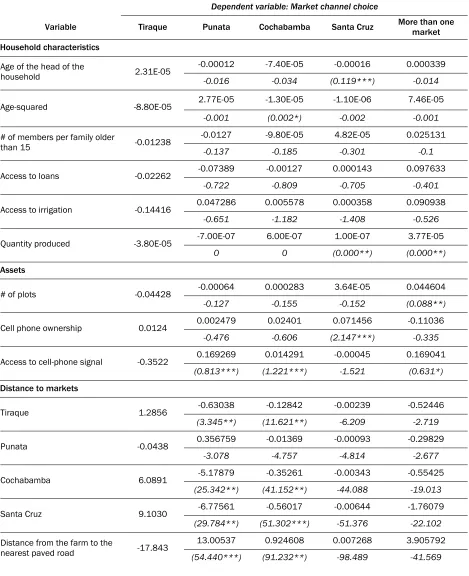
This issue begins with a reflective essay by University of Kentucky’s Bob Perry describing his experiences in trying to develop a local food service program for Kentucky State Parks. This is followed by JAFSCD’s regular columnists John Ikerd, Joseph McIntyre, and Ken Meter, who offer creative and provocative insights on principles of food value chains and emerging regional food systems business opportunities. We accepted a wide range of papers that cover the range of emerging food value chains, from a cutting-edge multifarm CSA focused on food insecure neighborhoods in New York City, to the revolution of Bolivian potato markets made possible by expanding cell phone technology.
Our special topic call papers lead off with Steve Stevenson, Larry Lev, and their colleagues, along with
AdamDiamond and JamesBarham, and with ÁineMacken-Walsh, whoset the stage for the expansion of midscale food value chains in North America and Europe. Michele Schmidt and fellow researchers and
BeccaJablonski and her colleagues provide case studies of small-scale food value chains in the Northeast U.S., while DaraBloom and Clare Hinricks, and Nevin Cohen and Dennis Derryck, explore hybrid versions of the concept. Institutional food value chains are the focus of research by teams led by Gail Feenstra and by DavidConner. Nadezda Amaya and Jeffrey Alwang round out the food value chain paper with a focus on emerging parity in Bolivian supply chains due to use of cell phones.
Our two open call papers for this issue include a study of consumer awareness of county-of-origin labeling by
KatieAllen with her co-authors, and a study of agriculture economic development at the rural-urban fringe by JeffSharp and colleagues at Ohio State and Utah State. Finally, Fred Kirshenmann of the Leopold Center for Sustainable Agriculture reviews the latest book from the always thought-provoking and challenging John Ikerd, Revolution of the Middle...and The Pursuit of Happiness.
With this issue we complete our first full volume of JAFSCD. (We are catching up with reality by calling this our “spring-summer 2011” issue; our first issue took longer to complete than we expected, and thus while have published four issues this year, they will now align better with the seasons.) We are pleased with the progress of the Journal over the last year and look forward to many issues and volumes to come! Our greatest admiration and appreciation goes out to the over 150 members of JAFSCD Editorial Committee, which includes our advisors, reviewers, and columnists. Please visit the JAFSCD About page at www.AgDevJournal. com/about.html to peruse the lists of these generous volunteers who are contributing not only to the Journal but to the literature and the profession as well.
Agricultural development is economic development:
Kentucky State Parks local food purchasing case study
Robert R. Perry, University of Kentucky
Submitted 8 April 2011 / Accepted 2 May 2011 / Published online 21 July 2011
Citation: Perry, R. (2011). Agricultural development is economic development: Kentucky State Parks local food purchasing case study. Journal of Agriculture, Food Systems, and Community Development, 1(4), 3–13.
http://dx.doi.org/10.5304/jafscd.2011.014.010
Copyright © 2011 by New Leaf Associates, Inc.
Introduction
In April 2004 I was appointed director of food service for the Kentucky (KY) State Park system and charged with improving its 21 restaurant operations — qualitatively, physically, and finan-cially. Kentucky’s state park system is one of the largest in the nation, especially in its number of food service operations. The operations included 17 full-service resort park restaurants scattered widely across the state in primarily rural areas, as well as three state employee cafeterias located in Frankfort and the café at the KY Artisan Center in Berea.
Having been a chef for over 25 years and been brought up in a gardening family, it was the quality of the food that was most important to me. Sourcing locally produced foods was just beginning to become prominent and is now the most
signifi-cant trend in the restaurant industry. I knew that procuring locally grown foods would result in not only better quality food and thus more sales at the park restaurants, but also help to improve the farm economy of Kentucky that was and still is in tur-moil following the elimination of the tobacco pro-gram. With the KY State Park system’s annual food purchases averaging around US$5,000,000, buying directly from farmers within the state would be a huge boost to the state’s economy in general and the farm economy in particular.
This is a personal account of my experience trying to localize a large and widely dispersed institutional food service operation. It began as does this paper with produce, especially tomatoes, and herein I explain how I was able to break through decades of bureaucracy to buy directly from Kentucky farm-ers. The sections on proteins include the benefits to the farmers of selling to the parks, as well as an examination of the volume of beef and pork used by the parks and the impact it could have had on Kentucky’s economy. While there have been sev-eral new diary operations come into existence
since, the trials and tribulations I went through in buying local dairy and eggs are still applicable today. The section on value-added foods highlights the prohibitive cost of local production and pack-aging for the restaurant industry. Local foods and on-farm dinners were a novelty in 2004, but our experiments with them
extended the potential use of local foods, and especially value-added items.
I only held this position for two years, and in a very po-litically charged environment.1
The conclusion looks at the action taken when my tenure in this position ended and looks at the potential impact these programs could still have on farms and the economy in Kentucky and beyond. The lessons I learned are not limited to parks, but are applicable to all types of restaurants and food service
operations, both public and private and including schools, hospitals, colleges and universities.
Produce Purchasing
The first project I undertook was to implement the purchase of locally grown produce for all 21 opera-tions directly from the farmers at the back doors of all the operations. The Kentucky Department of Agriculture (KDA) had been trying to gain access to the park system for KY farmers for years with-out success, and I was quickly told by the with-outgoing park’s long-time purchasing director that this would be impossible for a wide variety of reasons. Undaunted, I called the KDA and set up a meeting to discuss the possibilities.
1 In 2006 Kentucky elected the first Republican governor in 36
years, which resulted in the first significant turnover of appointed and senior managemant positions in decades. To say that the existing systems, policies, and employees were mired in bureaucracy and dated would be a massive understatement.
I also contacted the two most prominent nongov-ernment advocacy groups in the state, Partners for Family Farms (PFF) and Community Farm Alliance (CFA). PFF administered the “Restaurant Rewards” program that provided rebates directly to restaurants that purchased certified Kentucky
Proud agricultural prod-ucts.2 CFA is a well
organ-ized advocacy group that lobbies on behalf of farm-ers and seeks to expand markets and programs associated with sustainable and local farming. CFA is supported primarily by members’ dues and foun-dation grants and has a wide network across the state. These two groups provided a wealth of con-nections, information, sup-port, advice, and later, publicity for this project.
There were two major obstacles to overcome in the purchasing process: what price to offer and how to actually pay the farmers. Since food purchases for these operations are made with taxpayer dollars, certain statutes and regulations apply, primarily concerned with getting the best value for the taxpayers, i.e., price. Fortu-nately produce and seafood were exempt from any bid requirement or contract because of price and supply volatility.
Pricing for produce was established by construct-ing a weekly price for all seasonal produce based on an average price from several existing approved commercial vendors. In this way, the cost of the local produce would not exceed the price already being paid, and would fluctuate with the seasonality of the items. We made the price list available to the farmers near every KY State Parks operation. We expected these prices to be slightly below farmer’s market prices, and substantially above wholesale or
2 Each restaurant could receive up to US$1,000 per month
based on a 20% rebate.
The Kentucky Department of
Agriculture had been trying
to gain access to the park
system for KY farmers for years
without success, and I was quickly
auction prices. Comparing the prices we calculated this way with both the reported auction and farm-ers’ market prices by the New Crops Opportunity Center at the University of Kentucky bore this theory out.3
Payment to local farmers can be notoriously slow throughout the restaurant industry, and there was a concern that trying to get an invoice paid through the state’s system would mirror this problem, or be worse. Paying in cash at the back door was not an option as none of the operations was allowed to keep a petty cash fund. This problem was solved with by developing a direct payment option. Farm-ers were required to register with
the KDA’s Kentucky Proud program and fill out a simple information sheet at the location they desired to sell to that included their busi-ness information and a bank account number where funds could be transferred. Payment was
allowed to be authorized at each park, rather than requiring approval from the park’s central office in Frankfort, as the average dollar transaction fell well below the small purchase authority of each tion. Produce was delivered directly to each opera-tion, weighed, entered on that week’s price sheet, and signed by both the farmer and the chef. The price sheet was then sent to the operation’s busi-ness office for approval and submitted for pay-ment. This was really little extra burden on existing purchasing procedures, especially for the large parks that employ a dedicated purchaser and stock clerk.
This produce program began in August 2004 and met with moderate success even though it began near the end of the growing season and none of the farmers had anticipated this additional market. Total purchases for the first year still exceeded US$6,000 even in this short time frame.
3 The New Crops Opportunity Center is now the Crop
Diversification & Biofuel Research & Education Center and can be accessed at http://www.uky.edu/Ag/CDBREC/
An enormous amount of press coverage also resulted from the initial effort to purchase local produce. Many of the state’s newspapers featured articles, including a lead editorial in the Lexington Herald Leader. The agricultural press coverage was extensive, including an interview for a statewide radio program. Regional and national magazines also picked up the story in both the popular and trade press. The two largest audiences came from an article in Organic Gardening and an interview on the NPR program “The Splendid Table.”
Following the successful launch of this program, I began to participate in a series of meetings during
the winter with farmers across the state and with staff from the
KDA and the UK Coopera-tive Extension service to explain the program and answer questions about it. The response was enthusias-tic, and several farmers made comments about the ease of getting into the program during the launch phase. One grower commented that he made as much profit selling bell peppers to a park restaurant as he had selling his entire crop to a co-op. Some farm-ers even brought seed catalogs to the meetings wanting to know specifically what varieties of pro-duce the chefs would like.
As all local purchasing must be based necessarily on establishing relationships, many of these meet-ings were held at state park facilities and included the chef of the operation whenever possible. The chefs were also enthusiastic about the program and most reported great success starting it and the high quality produce they received. Total purchases for 2005 were approximately US$21,500. While this was less than we had hoped for, this was the first full growing season for the program and Kentucky also experienced a major drought throughout most of the state that year.
Beef
asking about selling directly to the park system as well. This brought on an entirely new set of hurdles to overcome, first and foremost the existing regu-lation that these items be bid on an “all state agen-cies” contract to try and get the lowest price for all state government-run operations, including schools, hospitals, justice facilities, and parks. The park’s small purchase authority only allowed pur-chases from a single vendor of up to US$5,000 outside of the contract for any commodity, an amount that would be quickly reached with meat and dairy purchases. The answer was to seek a regulatory change to exempt the park’s meat and dairy purchases from this contract and treat them like produce and seafood.
Several meetings were held in spring and summer 2005 with representatives from the departments of Parks, Commerce, Agriculture, and Finance. It was determined that it was within the secretary of finance’s authority to change the regulation gov-erning meat and dairy purchases to include them in the exemption for produce and seafood. I was told by attorneys for the Finance Cabinet that we could not specify “Kentucky Grown” products, as that would be a violation of parts of the Interstate Commerce Act, but could specify “locally grown” in the regulation.4 Therefore, one of the questions
asked was how to define “local purchasing” of meat and dairy. My answer was that products would be purchased directly from and delivered by the farmers themselves, and since many of the parks were located along the state’s borders, this would not preclude purchases from nearby farms in neighboring states or any farmer willing to make direct deliveries. Having successfully satisfied the legalities of changing the regulation, the next step was to put it before the legislative committee that approves regulatory changes in this area. This regulation change was approved unanimously after the second reading by that committee and went into effect in October 2005. An unanticipated
4 The state of KY was acting as a “market participant” and
therefore not in violation of the dormant Commerce Clause doctrine, as discussed at http://www.agdevjournal.com/ attachments/115_JAFSCD_Laws_on_Locally_Grown_Food_ Corrected_10-10.pdf
aspect of this regulation was that it allowed the park system’s operations to seek the best price for fresh meat and dairy products from all vendors, in the same manner that private-sector operations do rather than adhering to the all-state agencies con-tract with a single large nationwide food service company.
Around this time another meeting was held with several of the state’s meat and dairy farmers who were interested in selling directly to the park operations. All these farmers were already retailing their own products in some manner and wanted to expand their operations. Most of the beef farmers faced the same problem: they could sell all the steaks they could cut at a premium, but had trouble selling the roasts and ground beef. It was then that I realized that the parks’ usage of beef cuts would match perfectly with the cuts the farmers were having trouble selling, but in a slightly different and more beneficial form to the farmers.
The parks’ restaurants had always featured a popu-lar Sunday lunch buffet that included a roast beef carving. Originally this was a “Steamship” beef roast, which is an entire hindquarter of beef, roasted and carved bone-in. In recent years this cut had been changed to a boneless top round or in-side round. While easier to handle, cook, and carve, it does not have the flavor of a joint of meat cooked on the bone and was definitely not as attractive at the end of a buffet line.
an entire year. Using this spreadsheet, cattle farmers could have theoretically worked out a feed and slaugh-tering schedule almost to the day needed by the park restaurants. With a guaranteed market to dispose of two-thirds of a carcass, local cattlemen could have safely increased their throughput and built their businesses selling the most desired and profitable cuts
directly. My hope was that as they began to create economies of scale, their finer cuts of beef would then become affordable for parks to serve as well, further promoting their products. Coincidentally, some of the parks are located in close geographic clusters and there were cattle farmers near each cluster who were interested in selling directly to their nearby parks, without any competition between them.
There were short-term and long-term economic benefits for doing this — besides offering an excellent product to the parks’ guests. The short-term benefit was in helping to build the local farmer’s “brand” or name by serving their products to large numbers of guests who patronized the parks’ restaurants and by using table tents and signage to make it known where the meat came from. A significant method of product promotion is to seek “marketing impressions” by getting the product or the name in front of the consumer. One of the best examples of this is in NASCAR racing sponsorship. The cars are so emblazoned with product names it is impossible not to see one no matter what camera shot is shown on television. You also see product placement in movies and television shows, and the companies pay enormous fees for this service. Placing the farms’ names in front of the state parks’ 1,800,000 customers per year provided a lot of free marketing impressions to promote their products. It was hoped this would
encourage customers to seek out the farms’ prod-ucts for their own use at home. Still, there is no better way to convince someone of the superior quality of locally produced, sustainable food than to put it in their mouth, and the volume of sales at the state park restaurants could have done just that.
The long-term goal was to build a brand for “KY Beef” in general that would help all cattle farmers by increasing the demand for their products locally, and hopefully foster further development in on-farm, pasture finishing and local processing of cat-tle and the job creation and economic benefits this would have fostered. As table 1 shows, it would have taken 782 head cattle just to provide the needed steamship roasts in 2005, more than all the cattle being finished and USDA-processed locally combined at that time.
Forall this to work though, the ugly business of price had to be dealt with, especially since it was the public taxpayers’ money. The parks’ restau-rants, however, operated on a retail business model, unlike the remainder of government food service operations, which operated on an institu-tional model where money was budgeted per person/per meal. The two beef farmers I worked with from the beginning were able to price their
5 At an average of 60 pounds each, this equates to 782 cattle
needed for just this cut.
Table 1. KY State Parks Beef Usage, 2005(All prices in US$)
Cuts
Burgers Steamships Total Cuts
Total Poundage 23,245 93,8015 117,046
Commodity Cost/Lb. $2.32 $2.01
Total $53,928 $188,540 $242,468
Local Cost/Lb. $2.75 $3.00
Total $63,924 $281,403 $345,327
Cost Difference $9,995 $92,863 $102,858
Annual Sales $12,000,000 Annual Customer Count 1,800,000 Overall Food Cost increase < 1%
hamburger patties at a very nominal US$0.15 increase per patty above the commodity patty that was on contract. The price difference was easily offset simply by increasing the menu price by the same amount or slightly more as any private-sector
restaurant would do. The price difference to switch back to using steamships from local farmers was approximately US$1.00 per pound and the differ-ence could have been addressed in the same way, to slightly raise the price of the Sunday buffet, per-haps even as nominally as US$0.30 per person since one steamship of beef can service 200 cus-tomers on a buffet with multiple proteins.6
As the figures in table 1 show, if this program were fully implemented, it would have returned
US$345,327 annually (shaded cell) to local beef farmers and therefore the local economy, not including the increased business for small local meat processors. The increase in overall food cost would have been less than 1% (US$12M ÷ US$102,858) which could have been more than offset by a modest increase in menu prices as dis-cussed above. Systemwide, this would have repre-sented an increased cost of US$0.06 per customer, a small price to pay for real agricultural and eco-nomic development in a park system that required a US$30,000,000 annual taxpayer subsidy.
What the above figures and discussion does not account for is the actual difference in quality with
6 A steamship weighing 60 lbs X US$1.00 per pound price
increase ÷ 200 customers = US$0.30 per customer increase
regard to price; it is not comparing apples to apples. The locally pro-duced beef in this program was pasture finished, free of added antibiotics, ster-oids and hor-mones (ASH), and was “dry aged,” all attrib-utes that usually command much higher prices than commodity beef of any grade. High-end steak houses dry age individual cuts of beef to improve flavor and then charge accordingly. Local farmers and restaurants generally do not have this ability and can only dry age the entire carcass at the proc-essor for a similar result. This means that even the hamburger patties are dry aged, something few other commercial or private operations offer.
Pork
While there were several sustainable cattle farmers across the state, sustainable pork farmers were nonexistent at the time. However, the quantity of pork purchased by the park system could have provided a large, stable market and served as a catalyst encouraging more farmers to go back into pork production, especially pastured and woodland production systems for heirloom breeds that command higher prices.
As table 2 indicates, the park restaurants went through an incredible amount of fresh pork in 2005, totaling US$410,606 at commodity prices, potentially an even larger economic impact than beef. When direct marketing pork it is usually the shoulders (Boston butts) that are the hardest to sell, much like roasts when direct marketing beef. This market would have easily overcome that problem as the park restaurants served a large quantity of barbecue made from the shoulders as well as the hams. In beef, where the grind is also hard to sell, ground pork seasoned as sausage was also high-volume item. Not represented in this ta-Table 2. KY State Parks Pork Usage, 2005 (all prices in US$)
Cut 5 oz Chops Cutlets Country Ribs Boneless Loins Boston Butts
Lbs./year 9,866 4,706 15,031 23,282 19,945
Price $2.09 $2.03 $1.82 $1.72 $0.92
Totals $20,619 $9,553 $27,356 $40,045 $18,349
Spareribs Pit Ham Sausage Bacon
Lbs./year 22,176 34,586 30,665 68,998
Price $1.54 $2.10 $1.38 $2.11
Totals $34,151 $72,630 $42,318 $145,586
ble are the value-added products like country hams and city (deli) hams, of which the park restaurants also used a large quantity. These products could have provided income not only for the farmers raising the pigs, but also for the small local proces-sors, especially those with the facilities and exper-tise to make the value-added products.
On a positive note, the market for pastured pork has exploded in Kentucky in the last couple of years, and there are numerous farms now produc-ing several heirloom breeds on pasture. The state parks could still help these
farmers immensely by insti-tuting a program for pur-chasing local pork, although developing the model would be much more difficult than that for beef, as the com-modity prices for pork are artificially low and the price differential would be much greater than that with local beef.
Poultry
The use of local, sustainably raised poultry was not explored during this time frame as there were no
poul-try processors in the state the working with small-scale farms. Kentucky now has three poultry proc-essors working exclusively with small farms, the newest of which is capable of processing 2,500 birds per day, including air chilling and retail pack-aging. It is doubtful that state park restaurants could use locally raised poultry due to the higher cost of raising poultry sustainably on small-scale farms together with the higher processing cost.
Dairy
There were only two opportunities to add local dairy products to the park system — ice cream and cheese — and both were considered. One dairy farm in south central Kentucky had found success building a replica barn as a sandwich shop and ice cream parlor and making gourmet ice creams fla-vored with local fruits. They marketed the
opera-tion as an agritourism venue by offering farm tours for school kids and regular folks. While they made ice cream on the premises, they had to sell their milk to a commercial processor and buy mixed commodity milk back to make the ice creams that might or might not have contained any of their own milk. We discussed their desire to install pasteurization equipment to cut out this middle step that would have made their ice creams more affordable and to process fluid milk.
They would only have been able to supply a few nearby parks with ice cream or milk because they did not have any type of distri-bution system in place, which would have increased the price further, and the major distributors were not interested in working with them. However, Western Kentucky University (WKU) in Bowling Green was also interested in pur-chasing fluid milk at that time, as they were trying to foster a Farm to College program. WKU would have been an excellent market for them, as they were only a few miles up the road with a large student popu-lation and several large dining venues with consid-erable volume during the school year. The nearby state parks could have completed their market year; the parks peak season is during the summer months when the dining operations at WKU are abridged.
Another dairy producer had begun to produce an incredible variety of high quality cow’s milk cheeses in a plant built on their farm. Distribution was not a problem for them as they shipped regu-larly with FedEx and built the cost into their prod-uct. Also, they only sold the cheeses in blocks and did not have slicing equipment. The prices for their cheeses were also out of reach for day-to-day operations in the park restaurants, but we were able to bring in some diary products to the state park
Western Kentucky University would
have been an excellent market for
milk and ice cream producers,
with considerable volume during
the school year. The nearby
state parks could have completed
their market year, with their
peak season during the
operations for special events as described in the section on KY Proud Dinners.
The diary making ice creams has since partnered with another nearby dairy that built an on-farm fluid milk processing plant. The ice-cream-making dairy delivers its raw milk to the other for essing and gets it back in bulk for ice cream proc-essing and in retail fluid milk packaging, which they have in a regional grocery chain’s dairy cases. The cow’s milk cheese maker is still going strong and continues to develop new cheeses. Since that time there are now also several other cow cheese makers using milk from sustainable dairies, two goat cheese producers, and soon a sheep’s milk cheese processor will start production.
Eggs
There were a number of farms offering pastured eggs across the state that easily could have sold their eggs to the state park operations, but price was the factor. When the word really started to get out that park restaurants were seeking local prod-ucts, I had this email exchange with an egg pro-ducer (edited for privacy) that illustrates the situation.
---Original Message--- From: The Chicken Lady
Bob,
The county (cooperative extension) agent gave me your email address and said you could get me a price list for eggs. I've emailed the chef at the local park and told him about my farm fresh free range eggs. Most of my customers are in
Louisville and I'm looking for more. I can supply several dozen eggs each week if need be. I need to have an idea of how much I can get for them.
Thank you, The Chicken Lady
--- From: Bob Perry
Subject: RE: Price List for eggs
Below are recent prices we paid for fresh eggs, a food service case is 12 dozen. The chef can tell you how many they use in a week.
1/27/05 -- 7.50 per case----0.052 each 2/01/05 -- 10.50 per case----0.072 each 2/15/05 -- 10.80 per case----0.075 each --- From: The Chicken Lady
Subject: RE: Price List for eggs
Bob, no offense but, save your time. We were hoping that quality had more value than that. As much as we would like to see Kentucky institutions support Kentucky raised produce, these prices would put all of us out of work. We can get a tax
deduction for giving them to non-profits that give us more value than these prices. --- From: Bob Perry
That is one of the biggest problems I face in trying to bring KY products into the parks. I know you can sell at much greater prices to white tablecloth restaurants that can then upcharge their customers to cover the costs. Our customers in parks are not that sophisticated...yet, and are primarily families on vacation looking for value in dining, especially w/ several kids in tow. I know you can also sell to individuals who know and appreciate your product...and can afford it.
Don't give up hope, I have only started on this project for parks and we have a long way to go...Bob
In addition to my naïveté at the beginning of this initiative, this email exchange shows that trying to match the price between locally produced farm goods and commercially produced items is nearly impossible. The quality and wholesomeness of the products must be considered when determining the difference in price between commercially produced products and sustainably produced local products. Recent work in food value chains and case studies about ag of the middle7 show great promise in
scal-ing up sustainable farm products without losscal-ing these qualities.
Value-Added Products
On-the-farm and community-kitchen production of value-added products such as jams, jellies, BBQ sauces, and salsa were more difficult but not impossible to bring into the parks food service operations. There was a US$5,000 small purchase authority that allowed operations to buy food up to that amount from individual sellers without violat-ing the model purchasviolat-ing code. This came into play with most value-added products, as categories of these fell under the grocery contract awarded by a competitive bid process. These products are part of the “market basket” purveyors bid on, not separate commodities. It would have taken a regulatory change or exemption to facilitate large-scale usage of these type items in the park system, similar to the way local meat and dairy was exempted.
Cost again is a major factor with value-added products; it is hard for local producers to reach an economy of scale to come anywhere close to prices for commercial products. One problem for many products is package size, as it is cost prohibitive for the small farmers to put their products into the portion-control packaging many operations prefer to use. This could have been overcome by buying the product in bulk and then spooning it into portion-control food service containers in the operations as they did with ketchup and other
7http://www.agofthemiddle.org/
condiments. Locally made BBQ sauce is a good product to illustrate this point.
I received a sample of a BBQ sauce made with locally produced honey that I thought was very good. The producers had won several contests with their sauce and they sought to have their local park restaurant purchase and use it. I asked that first they contact the KDA to certify their sauce as a “KY Proud” product to assure that it was indeed made with locally produced agricultural products. When this was done they called the park’s chef and offered to sell their product in a gallon size, at US$24.00 each. The chef called me and asked what to do; he had tested their sauce and liked it, but could not see where he could afford to use it in the quantity he needed. Commercial BBQ sauce was US$4.00 a gallon and there was no way to increase the price of the BBQ menu items to cover that much of an increase in sauce price.
I did not get to resolve this situation before leaving the parks department, but feel certain I could have worked out a compromise. Inasmuch as value-added products would benefit from the marketing impressions on the menus as described above in the discussion of beef, the state parks also operate many gift shops. If the producer were willing to work with a price that would allow for use in the restaurant, they would also be able to sell at a bet-ter price for retail resale in the gift shops. Shelf stable value-added agricultural products are big sellers in gift shops, and the parks have millions of shoppers every year who would represent a large market for these products. The ability of shoppers to taste before purchasing and the panache of a local product on the menu would be a big plus for both the producers and the restaurants.
KY Proud Dinners
Like Dorothy in her ruby slippers,
economic development folks
at the federal, state, and
local levels need to realize
that the power to significantly
affect the economy is right
under their feet in the
form of their farmers’ boots.
number, or a sit-down multicourse meal, the idea was to incorporate as many local products as pos-sible to showcase Kentucky agriculture’s diversifi-cation since the demise of tobacco as the state’s number-one crop.
While it was difficult to incorporate more expen-sive food items into existing menus of ongoing restaurants, it is much easier to control food costs with catered functions. We
knew in advance the exact number of people to prepare for, and the cost per person could be calculated based on the total cost of the food. This allowed the bill to reflect the normal profit margin as it would have been with commercial food products. I found that the cost to the customer was only slightly higher, but the quality of the food more than made up for the addi-tional cost, besides the pres-tige for the host by offering a local menu.
These dinners were very successful but required some creativity for produce during the off season. This was accomplished through the creative use of value-added products to add a flavor of KY Proud to commercial foodstuffs when locally grown or raised items could not be found. These functions also allowed the use of specialty cheeses and ice creams as mentioned above, since price was not as much of a factor and the extra effort required for delivery could be worked out in advance. Some-times delivery was taken care of by personnel trav-eling around the state in their normal duties at no additional cost.
What was a growing trend at the time is now de rigueur for top chefs and restaurants. Chefs Collaborative, Slow Food and other organizations have really pushed the issue in recent years, and as demand has grown from restaurants and the
gen-eral public, farmers have responded by further diversifying their operations to provide more of both quality and quantity.
Conclusion: Agricultural Development Is Economic Development
Upon my untimely departure from this position in early 2006, Community Farm Alliance was able to shepherd the passage of a bill to establish a prefer-ence for locally grown prod-ucts that would require all state agencies (including the park restaurants) to continue to pursue the projects I had started.8 It was a valiant
effort but the language in the bill fell short, and since it was enacted little has been done to promote local pur-chasing. In fact, succeeding management reversed every single initiative started dur-ing my tenure and put the restaurants back on a cookie-cutter, low-end chain restaurant format where every park cooks the exact same menu from an approved purchasing list.
Kentucky’s Economic Development Cabinet states that its purpose is “to support and promote eco-nomic development within the state, primarily by attracting new industries to the state, assisting in the development of existing industries, and assist-ing communities in preparassist-ing for economic devel-opment opportunities.”9 Like Dorothy in her ruby
slippers, economic development folks at the fed-eral, state, and local level need to realize that the power to significantly affect the economy is right under their feet in the form of their farmers’ boots. The monthly Department of Labor report on the number of jobs is always defined as “nonfarm” jobs, as if self-employed farmers and their hired help do not contribute anything worth calculating in the overall national economy. However these
on-farm jobs could greatly affect the economy, especially in rural areas where jobs are the scarcest. For every farmer or farm employee who can return to a farm full-time or even part-time, it opens up their previous nonfarm job to someone else. Indirect effects of these onfarm jobs would be even more rural jobs in the support businesses and the economic multiplier effect of the direct farm income and wages that are spent locally. This job re-creation does not take require tax breaks and credits or massive inputs of taxpayer money for infrastructure improvements to support a new factory. It only takes a stable market for the food that the farms can produce.
If the KY State Park restaurant operations only purchased beef, pork and produce as outlined here, the initial annual economic impact directly to KY
farmers would be well over US$1,000,000 without any additional tax dollars being spent. If other city, county, and state facilities followed suit, it would create a multimillion dollar, stable market for locally grown products that would truly foster the diversification and sustainability of Kentucky’s family farms.
T
HEE
CONOMICP
AMPHLETEERJ
OHNI
KERDEssential principles of sustainable food value chains
Citation: Ikerd, J. (2011). Essential principles of sustainable food value chains. Journal of Agriculture, Food Systems, and Community Development, 1(4), 15–17. http://dx.doi.org/10.5304/jafscd.2011.014.001
Copyright © 2011 by New Leaf Associates, Inc.
alues-based food chains include alliances of various types among farmers, processors, distributors, and other participants in food production and distribution. “Food value chains” are distinguished from conventional “food supply chains” in that relationships among participants are not solely, or even primarily, economic. Ironically, the formation of value chains is typically motivated
by a quest for greater economic efficiency in the production and distribution of sustainably produced foods. However, economic efficiency cannot be allowed to take priority over the essential ecological, social, and economic principles of sustainability.
The essential ecological principles of sustainability include holism, diversity, and interdependence.
Interde-V
Why did I name my column “The Economic Pamphleteer”? Pamphlets historically were short, thoughtfully written opinion pieces and were at the center of every revolution in western history. Current ways of economic thinking aren’t working and aren’t going to work in the future. Nowhere are the negative
consequences more apparent than in foods, farms, and communities. I know where today’s economists are coming from; I have been there. I spent the first half of my 30-year academic career as a very conventional free-market, bottom-line agricultural economist. I eventually became convinced that the economics I had been taught and was teaching wasn’t good for farmers, wasn’t good for rural communities, and didn’t even produce food that was good for people. I have spent the 25 years since learning and teaching the principles of a new economics of sustainability. Hopefully my “pamphlets” will help spark a revolution in economic thinking.
John Ikerd is professor emeritus of agricultural economics, University of Missouri, Columbia. He was raised on a small dairy farm in southwest Missouri and received his BS, MS, and Ph.D. degrees in agricultural economics from the University of Missouri. He worked in private industry for a time and spent 30 years in various professorial positions at North Carolina State University, Oklahoma State University, University of Georgia, and the University of Missouri before retiring in 2000. Since retiring, he spends most of his time writing and speaking on issues related to sustainability with an emphasis on economics and agriculture. Ikerd is author of Sustainable Capitalism; A Return to Common Sense; Small Farms Are Real Farms; Crisis and Opportunity:Sustainability in American Agriculture; and, just published, A Revolution of the Middle. More background and selected writings are
pendent relationships among the diverse elements of healthy natural ecosystems make the ecological wholes something more than the sum of their parts. The essential social principles of sustaina-bility include trust, kindness, and courage. Relation-ships defined by contracts, regulations, or eco-nomic interests are not sustainable. People in sustainable relationships must have the courage to trust and to care about others in a world where such things are often considered idealistic and naïve. The essential economic principles of sustainability include value,
efficiency, and sovereignty. Sustainable economic enterprises must produce things of economic value, efficiently. They must make their own decisions and accept responsibility for their actions if they are to maintain economic viability.
The economy is a part of society and society is a part of nature. The three are also interdependent, in that each affects and is affected
by the others. Thus, the same basic principles apply to all human relationships with nature and within society, which include economic relationships. Sustainable economic relationships must also reflect the principles of societies and natural ecosystems. Sustainable social relationships must also reflect the principles of economies and ecosystems. Sustainable relationships with nature must reflect the principles of societies and economies. Sustainable food value chains must have ecological, social, and economic integrity.
Rather than focusing on the economic bottom line, food value chains must focus on the triple bottom line: the ecological, social, and economic bottom lines. All economic value ultimately is derived from nature and society. However, economic value is inherently individualistic. It makes no economic sense to invest in anything solely for the good of society as a whole or for the benefit of future generations. So, sustainable food value chains must
renew and regenerate the productivity of natural and human resources, even when there is no economic incentive to do so.
Triple-bottom-line management has become a popular buzz word in the business world. How-ever, a triple bottom line that gives priority to the economic bottom line will not have the capacities for renewal and regeneration necessary for economic sustainability. Furthermore, nature and society, as living systems, are always changing and evolving.
Ever-changing government policies, market opportunities, production technologies, and public expectations are all consequences of such changes. Meeting the challenges of sustainability ultimately will require a radical rethinking and redesign of the entire food system. Sustainable food value chains must be responsive as well as renewing and regenerating.
Obviously, sustainable food value chains must be able to survive the short run if they are to thrive in the long run. Food production is a risky business. For example, the food system is affected at all levels by biological organisms that are inherently self-making, dynamic, evolving, and thus never precisely predictable. Therefore sustainable food chains must be able to withstand unexpected shocks; they must be resistant. When their resistance breaks down, as after natural disasters and major economic setbacks, they must be able to bounce back; they must be resilient. In the most severe cases, they must have a fall-back strategy or “plan B”; they must have built-in redundancy. Sustainable food value chains must be resistant, resilient, and redundant.
The essential characteristics of sustainable food value chains include renewal, regeneration, responsiveness, resistance, resilience, and redundancy — the six Rs of sustainable systems.
Sustainable food value chains
must have ecological, social,
and economic integrity.
Food value chains must
focus on the triple bottom line:
Food value chains that embody the principles of ecological, social, and economic integrity will have all these essential characteristics of sustainable systems. However, maximum economic efficiency conflicts with each of these essential characteristics of sustainability.
The Panarchy theory of ecological systems dynamics was developed in the 1970s to describe the natural behavior of
ecological systems.1 It purports
to explain the natural evolution of natural ecosystems. This ecological theory applies to social and economic systems as well, as economies and
societies are subsets of nature. As ecosystems naturally evolve toward greater efficiency, they also evolve toward increasing “complexity,” meaning an increasing number of more highly specialized functions. As systems become more
complex, the internal dependencies among the
specialized functions increase, which is referred to as increasing “connectivity.” Increasing complexity and connectivity increase the efficiency of systems by synchronizing activities and removing
redundancies both within and among the various systems functions.
However, as the dependencies are increased and redundancies are removed, ecosystems lose their resistance and resilience and their ability to respond to change. Internal dependencies allow the
1 Homer-Dixon, T. (2009, March/April). Our Panarchic
future. World Watch Magazine, 22(2). (Excerpted from The upside of down: Catastrophe, creativity, and the renewal of civilization, by T. Homer-Dixon, 2006, Washington, DC: Island Press.) Excerpt retrieved fromhttp://www.worldwatch.org/node/6008
consequences of outside shocks to spread through the entire system more quickly than for less “connected” systems. Lacking redundancy, effi-cient systems lose their ability to repel or bounce back from unexpected shocks or to respond to fundamental changes in their environment. Consequently, highly efficient systems are also highly vulnerable to collapse.
As food value chains move toward greater economic efficiency, they face the increasing risks associated with greater complexity and connectivity. Increased economic efficiency will reduce the resistance, resilience, and redundancy needed for sustainability. As invest-ments become more narrowly focused on economic returns, such systems also will lose their capacities for renewal and regeneration, as well as the responsiveness needed for radical redesign of the food system. The need for greater economic efficiency is real, but efficiency must be balanced with the need for ecological, social, and economic integrity. Food value chains that give priority to economic efficiency may be profitable for a time, but they will not be sustain-able over time. Sustainsustain-able food value chains must function in harmony and with balance among the essential ecological, social, and economic principles of sustainability.
The six Rs of
sustainable systems are
renewal,
regeneration,
responsiveness,
resistance,
resilience, and
V
IEWS FROM THEF
OODS
YSTEMF
RONTIEREmerging trends, dilemmas, and opportunities in the changing global food system
J
OSEPHM
CI
NTYREThe signs of a new mainstream
Published online 30 June 2011
Citation: McIntyre, J. (2011).The signs of a new mainstream. Journal of Agriculture, Food Systems, and Community Development, 1(4), 19–17.
http://dx.doi.org/10.5304/jafscd.2011.014.004
Copyright © 2011 by New Leaf Associates, Inc.
few weeks ago, I got an invitation that made me stop and take note. Our local Chamber of Commerce — long an advocate for traditional economic development —
was wondering if their efforts to develop new entrepreneurs and businesses should consider focusing on small agriculture and value-added food products. They asked a number of people,
including representatives from the Farm Bureau, the Wine Commission, and the local chapter of the Business Alliance for Local Living Economies,1 to
talk about trends in agriculture into the future.
Over the course of several meetings, the stories and perspectives presented by participants began to merge into a description of a “New Mainstream” food system, a term popularized by the California NGO Roots of Change in their Vivid Picture project2 and that has been developing largely under
the radar over the past 20 years.
The “New Mainstream” food system is a system based first on a thriving demand for local
1http://www.livingeconomies.org/
2 http://rootsofchange.org/content/activities-2/vivid-picture-project
A
Joseph McIntyre is president of Ag Innovations Network, a California-based nongovernmental organization that focuses exclusively on developing and facilitating collaborations between interests in the food system to promote change in practices and policies. Trained as both an economist and an organization development professional, he works with food system leaders on complex change initiatives.
Disclosures: Mr. McIntyre has served as a paid facilitator for the Making Good Food Work Conference and received honoraria for moderating at both the Take Acton Impact Investing and Social Capital Markets conferences.
tion (or regional production, depending on your definition of local). As an example of this interest, a soon-to-be-released feasibility study conducted by Community Alliance with Family Farmers3 for a
regional aggregation and marketing center demon-strated that in one northern California county, fully 49% of grocers were already purchasing some local fruits, vegetables, meats, and value-added goods — and 95% were interested in doing so. The LOHAS (Lifestyles of Health and Sustainability) consumer market segment (estimated by the Natural Market-ing Institute to be US$300 billion annually and growing at 16% annually, French & Rogers, 2010) is driving demand for local and healthy foods toward a critical tipping
point where every retail outlet will feel it must have at least some products aimed at these buyers.
This increase in demand is being mirrored by an increase in supply from both long-time producers, who are flexing to meet new market demands, and new entrepreneurial
pro-ducers, who see an opportunity to marry their values with new products and approaches to food and farming. Both trends were discussed at the Chamber meetings. Our local dairy industry, long a mainstay of both agriculture and agriculture leadership, has, like most of the American dairy industry, been under tremendous price pressure. One of the most successful responses has been to convert to organic production and to artisan cheese production aimed at the regional market. Mean-while, the number of community supported agriculture (CSA) farms, ranches producing locally raised meat, and specialty foods operations has been growing steadily.
I walked away from the last meeting at the Chamber realizing that we are close to turning an important corner in our thinking about food systems. The idea that building robust local food
3http://caff.org
economies is a way to satisfy consumer demand, preserve culture, land, and environmental values, and generate sustainable economic development is getting traction in places where we might least expect it. Driven both by increased awareness of food issues as described by chefs (Bittman, Oliver, Waters, and others), commentators (Berry, Pollan, Roberts), and health leaders (Nestle, Michelle Obama), and the undeniable growth of local/ regional food economies, it is clear that what was just a niche is becoming something else.
This shift is being accelerated by an evolving approach to creating regional food systems. Where
in the past we have had philosophical discussions of how such a system might look and how to accomplish it, increasingly the focus is on opera-tionalizing new business models and new efforts. The recent Making Good Food Work Conference4 in
Detroit is a great data point on this shift. The conference brought together, by application, on-the-ground alternative food system project teams who wanted to partici-pate in a three-day intensive planning and collaboration effort designed to refine their business models, create effective marketing plans, identify funding sources, and give them new business management skills. This was strictly a work session where the projects were competing for cash prizes awarded based on merit and intended to be capital to fuel implementation. This action focus is new and drew significantly from the work of Start-Up Weekend,5 a model for launching
new start-up businesses through a balance of competition and cooperation in a highly focused three-day event.
Connecting the good food community with the entrepreneurial start-up world is an important
4http://www.makinggoodfoodwork.com/ 5http://startupweekend.org/
We are close to turning an
important corner in our thinking
signal. This marriage promises to bring new tools and efficiencies into food systems based on inte-gration of Internet-based information sharing. We are seeing this on two
fronts. On the supply side, one of the most interesting projects that was developed at the Making Good Food Work Conference was the “Coordinated Production Planning Tools for Whole-sale & Institutional Buyer,” an extensible database-driven tool with a web inter-face to better match local production with the needs of buyers. This is just one of many efforts to make it easier for buyers and sellers to reconnect in local
markets using both simple tools like Google Maps overlays or more complex software services. On the demand side, the development of the boutique mobile restaurant is just one example of a New Mainstream business model. Across the United States we are seeing mobile noodle businesses, mini-cupcake purveyors, and specialty ethnic food providers, who are combining the restless creativity of a new generation of entrepreneurs, savvy marketing using social media, and strong demand for unique hand-crafted foods.
Investor interest in these new food and farming businesses is strong; indeed, it may be a case of too
much money chasing too few good ideas. At the 2010 Social Capital Markets6 conference, an entire
track was devoted to food system investment opportunities. Both the Take Action Impact Investing7 and the
Agriculture 2.0
conferences8 are focused
on connecting investors with new food system opportunities.
So perhaps after all it was not so surprising to get a call from the Chamber of Commerce. The drum-beat of real change in the way we grow, distribute, and consume food is all around us. In fact it has gone from being a distant beat, easy to ignore, to a persistent and compelling rhythm that reaches even the distant corners of food system discourse. A New Mainstream is coming and the signs are all around us.
Reference
French, S., & Rogers, G. (2010, Spring). Understanding the LOHAS consumer: The rise of ethical
consumerism. LOHAS Journal, 11(1). Available at http://www.lohas.com/Lohas-Consumer
6http://socialcapitalmarkets.net/ 7http://impactinvestingconference.com/
8http://www.iirusa.com/agriculture20/agriculture20.xml
The drumbeat of real change in
the way we grow, distribute,
and consume food has gone
from being a distant beat to
a persistent and compelling
M
ETRICS FROM THEF
IELDBlending insights from research with insights from practice
K
ENM
ETERBreaking our chains
Published online 10 July 2011
Citation: Meter, K. (2011). Breaking our chains. Journal of Agriculture, Food Systems, and Community Development, 1(4), 23–25. http://dx.doi.org/10.5304/jafscd.2011.014.008
Copyright © 2011 by New Leaf Associates, Inc.
ith all due respect to my professional colleagues who expertly address supply chains on other pages of this issue, I want to step back to consider whether we might break the “chains” that inhibit our conversation about food.
I am concerned that our laudable goals of provid-ing accurate measurements and establishprovid-ing new business practices may interfere with our chance to take advantage of this historic opportunity to get the food systems we deserve. The way we frame the discussion may only lead us to replicate the problems we seek to address. This is not an issue of political correctness; it is a matter of obtaining the proper results.
Privately, I have discussed this with respected colleagues. I’ve pointed out that the “chain” meta-phor is problematic for many of the communities where I work. First of all, it is a linear concept, and linear constructs tend to be less flexible, and less inclusive, than those that describe circles. Second, some