Dissertations UMSL Graduate Works
12-1-2011
The Effects of Positive Behavior Interventions and
Supports (PBIS) on Middle Level Students
Michael Raymond Havener University of Missouri-St. Louis
Follow this and additional works at:https://irl.umsl.edu/dissertation Part of theEducation Commons
This Dissertation is brought to you for free and open access by the UMSL Graduate Works at IRL @ UMSL. It has been accepted for inclusion in
Dissertations by an authorized administrator of IRL @ UMSL. For more information, please [email protected].
Recommended Citation
Havener, Michael Raymond, "The Effects of Positive Behavior Interventions and Supports (PBIS) on Middle Level Students" (2011).
Dissertations. 404.
BY
MICHAEL R. HAVENER Ed. S., Webster University, 2006
M. Ed., University of Missouri-St. Louis, 1997 B.S., University of Missouri-Columbia, 1994
DISSERTATION
Submitted in partial fulfillment of the requirements for the degree of Doctor of Education
in the graduate School of the University of Missouri-St. Louis, 2011
Many theories regarding school discipline have been developed and implemented. In this study, various discipline models are discussed and analyzed. One particular model that claims to significantly reduce discipline referrals is Positive Behavior Interventions and Supports (PBIS). The primary purpose of this study was to determine if PBIS is effective in reducing discipline referrals in a particular Midwest suburban 6-8 middle school. In addition, the referrals were analyzed to determine if there was a significant change in the academic achievement in the Missouri Assessment Program (MAP) math and communication arts test scores after implementation of PBIS in 2008-2009.
The population in this study was approximately 600 students attending a suburban Midwestern grade 6-8 middle school with fifty-nine (59) teachers and two (2)
administrators. Behavior referral data for the 2009-2010 and 2010-2011 academic years was compared to the 2008-2009 academic year to determine if there was a significant difference in the number of referrals since the program was initiated. In addition, the referrals were analyzed by using a frequency count to determine if conclusions can be drawn from the types of referrals. A comparison of academic achievement, using the Missouri Assessment Program (MAP) was also used to compare the pre and post initiation of PBIS.
A t test and an analysis of variance revealed significant effects were only shown for the behavior referral data. The null hypothesis was rejected resulting in acceptance of the alternative hypothesis stating that a significant decrease in behavior referrals
occurred. This information provides evidence that PBIS should continue to be
Acknowledgements
Without my family’s constant support, encouragement, and understanding, it would not have been possible for me to achieve my educational goals. My wife, Laura, has been an inspiration and motivation in completing my degree. I would like to thank the rest of family as well. Payton, Adam, Blake, Amanda, and Sam, follow your dreams and you can accomplish anything.
I would also like to thank the other members of my dissertation committee: Dr. Carole Murphy (advisor), Dr. Kathleen Brown, Dr. Rick Burns, and Dr. Charles Fazzaro. Their insight, feedback, and advice were influential and essential throughout the
dissertation writing process.
Finally, I would like to thank my parents Art and Donna Havener. They provided a home full of love and encouragement, while maintaining high expectations. Thank you for providing this support and helping me accomplish the goals I set.
Dedication
This dissertation is dedicated to my father, Arthur Lee Havener Sr. His
encouragement and support throughout my life has been an inspiration. He has sacrificed much, throughout his life, so his children could become who they are today. His hard work, motivation, dedication, and love for his family will never be forgotten.
Table of Contents
Page
Acknowledgements ... iii
Dedication ... iv
Chapter 1: Introduction and the Problem ...1
Introduction ...1
The Problem ...2
Statement of the Problem ...3
Hypothesis ...3
Assumptions ...4
Limitations ...4
Summary ...6
Chapter 2: Review of the Literature ...8
Introduction ...8
Stimulus-Response Theory ...9
Choice Theory ...10
Other Philosophies on Behavior Theory ...14
Positive Behavior Interventions and Supports ...18
Summary ...24
Chapter 3: Methods and Procedures ...27
Introduction ...27 Problem ...28 Method ...29 Hypothesis ...30 Data ...30 Procedures ...32
Procedures for Analyzing Data ...33
Chapter 4: Results...35
Behavior Referrals ...35
Missouri Assessment Program (MAP) Results ...51
Conclusion ...56
Chapter 5: Conculsions ...57
Restatement of the Problem ...57
Review of Methodology ...58
Summary of Results ...58
Conclusions and Recommendations ...63
Future Study ...65
References ...67
Appendix ...70
Appendix A: Sample Discipline Referral Form ...70
Appendix B: Superintendent Approval of Study ...71
Appendix C: IRB Exemption Approval ...72
Appendix D: Permission to use RtI Pyramid Graphic ...73
Appendix E: 2008-2009 Random Sample 7th Grade ...74
Chapter 1
Introduction and the Problem
Introduction
Historically, educators have been confronted with a great challenge in how to effectively manage disruptive student behaviors in classrooms. This challenge continues today. The goal is to ensure that classroom behavior management systems, including best practices that ensure a positive learning environment for all students, are in place and functioning properly. Research has shown that students in schools with fewer discipline referrals tend to have higher academic achievement than students in comparable schools with higher discipline (http://www.pbis.org/pbis_newsletter/volume_3/issue1.aspx, retrieved December 13, 2010). Regarding appropriate student behavior, it is often difficult for schools to determine whether suspensions and/or expulsions are worth the trade-off; students spending additional time out of class, when time spent in class helps students academically and also to feel part of the school culture (Skiba and Sprague, 2008). The scope of the problem is vast. For example, The Dignity in Schools
Campaign (DSC) noted that, "each year, more than three million students are suspended and over 100,000 are expelled nationally (www.dignityinschools.org, 2010)."
Lastly, some researchers believe that in schools at-risk students are making little or no effort to learn because they do not believe that schools can satisfy their needs. According to the American Academy of Pediatrics Policy Statement, "Suspension and expulsion may exacerbate academic deterioration, and when students are provided with no immediate educational alternative, student alienation, delinquency, crime, and
substance abuse may ensue" (Taras, 2003, p. 1206). Unless schools eliminate boss-management tactics and provide alternative delivery models, school districts will remain in a constant struggle to provide all students an education free of distraction.
The Problem
In response to the need for more effective discipline strategies, William Glasser (1992), Rudolph Dreikur (Burns, 2010), Jacob Kounin (1970), Fred Jones (1987) are some noted researchers who offer their opinions regarding meeting the challenges of today's school discipline problems. Glasser's (1992) research focuses on the
implementation of choice theory, rather than the often practiced stimulus-response management theory. Stimulus-response theory focuses on explicit rules, rewards, and negative consequences for addressing inappropriate behaviors. According to stimulus-response theory, human behavior is caused by external events; however, the major
premise of Glasser's theory is that all human behavior is generated by what goes on inside the behaving person.
Contemporary research offers another alternative for creating school climates of high academic and behavioral expectations. This approach is known as Positive
Behaviors Interventions and Supports (PBIS) (2010). While stimulus-response theory and choice theory are both controversial for different reasons, stimulus-response because of its inflexibility and choice theory because of its disregard for external stimuli, PBIS suggests a balanced proactive approach. Skiba and Sprague (2008) state that ―this
approach is based on the assumption that when educators across the school actively teach, expect, and acknowledge appropriate behavior, the proportion of students with serious behavior problems decreases and the school’s overall climate improves (p. 41).‖
Statement of the Problem
The primary purpose of this study was to assess the effects of Positive Behavioral Interventions and Support (PBIS) on student behavior in a particular suburban Midwest middle school by determining if there is a statistically significant difference in the number of discipline referrals from 2008-2009 academic year when PBIS was initiated and the 2010-2011 academic year when PBIS was fully implemented.
In addition, the referrals were analyzed to determine if: (1) the types of behavioral referrals have changed since the implementation of PBIS, and (2) there was a significant change in the academic achievement of Missouri Assessment Program (MAP) after the full implementation of PBIS in 2008-2009.
Research Hypothesis
H1: Implementing the Positive Behavioral Intervention and Support (PBIS) technique in a particular suburban Midwest middle school setting will show a statistically significant decrease in the number of referrals.
Ancillary Hypotheses
H2: There will be a significant change in the types of behavioral referrals. H3: There will be a statistically significant increase in student academic
Assumptions
The following assumptions were made relative to this study: 1. the data will be complete,
2. the referrals will give accurate information, and
3. there will be some transfer of students which may impact the numbers (attrition).
4. that there was not a Hawthorn Affect.
Limitations of the Study
Due to school imposed organizational time constrictions, the data for this study are limited to that of students at one Midwest suburban middle school. Certain
modifications and budgetary factors could limit the results of this study to other schools.
Definition of Terms
For the purposes of this study the following terms will apply:
Disruptive student - One that exhibits negative behavior or behavior not deemed appropriate for an environment conducive for learning (Glasser, 1992).
Boss-teacher - A classroom teacher that wants and demands total authority in the classroom setting (Glasser, 1992).
Assessment - numerous methods, strategies and measures for determining student proficiency on stated curriculum expectations; measurement of student learning
against the level of performance expected and defined by curricular grade level/course standards (http://kirkwoodschools.org/upload/4c475194784d6.pdf)
Benchmarks - (1) An assessment that measures a student’s progress toward meeting stated expectations and standards (a ―benchmark assessment‖)
(www.kirkwoodschools.org, 2010). (2) An expressed ―step‖ or level of expectation along a learning continuum (achieving ―the benchmark‖)
(http://kirkwoodschools.org/upload/4c475194784d6.pdf ).
Curriculum- the document that articulates the content to be learned by students and the expected performance students will attain to demonstrate proficiency.
(http://kirkwoodschools.org/upload/4c475194784d6.pdf )
Expulsion- procedural removal of a student, for a longer period of time, typically involving a decision by the superintendent and school board (Skiba and Sprague, 2008).
Feedback- criterion based information that is essential to share with students about their performance, which details what they have done well and where improvement is possible or necessary (http://kirkwoodschools.org/upload/4c475194784d6.pdf ).
Grade Level Standards- published by Missouri as Grade Level Expectations
(GLEs) and End of Course Expectations (CLEs)
(http://kirkwoodschools.org/upload/4c475194784d6.pdf).
Instruction- the mixed and varied methodologies teachers employ to guide, support and reinforce student learning and mastery of curriculum content
Objective- precise, measurable learning outcome (http://kirkwoodschools.org/upload/4c475194784d6.pdf).
Positive Behavior Interventions and Supports (PBIS) – a proactive approach including teaching expected behavior and acknowledging appropriate behavior, in order to decrease inappropriate behaviors (2010).
Program Evaluation- the process of analyzing student performance data and determining program (curriculum) strengths and weaknesses before entering into a curriculum revision process (http://kirkwoodschools.org/upload/4c475194784d6.pdf ).
Reporting- communication systems (between and among students, parents,
teachers, community) used to provide feedback regarding student learning and mastery (http://kirkwoodschools.org/upload/4c475194784d6.pdf).
Standards-defined learning, including skills, processes and knowledge, that students are to attain in a given content area in a given grade level or course
(http://kirkwoodschools.org/upload/4c475194784d6.pdf).
Suspension- Relatively short term removal of students from school for a disciplinary infraction (Skiba and Sprague, 2008).
Summary
Over the decades, many programs regarding school discipline have been developed and implemented. Some programs are built on the foundations of others, while others are very different (Burns, 2010). According to Skiba and Sprague (2008), "in today's climate, principals seem to face a tough choice between keeping their school safe and ensuring that all students have continued educational opportunity." Positive Behavior Interventions and Supports (PBIS) involve more than consequences; it is a
proactive, systems-based approach that includes teaching appropriate behavior as well as providing positive feedback when appropriate. In this study, various discipline models are discussed and analyzed in order to establish a theoretical framework for determining if PBIS has contributed to a statistically significant decrease in the number of behavior referrals in a Midwest suburban middle school.
Chapter 2 Review of the Literature
Introduction
From Stimulus-Response theory to Positive Behavior Interventions and Supports (PBIS), a substantial amount of research exists on an array of discipline methods that have been used in American schools. In Clement’s (2010) article, she writes that ―a benchmark study in the perceived problems of beginning teachers. . . listed classroom discipline as the number one problem of new teachers (p. 42).‖ Over a century later, classroom management continues to be a fear of new teachers entering the classroom as well as a concern for veteran teachers.
In our current education system, administrators are feeling the pressure and a need to search for best practices encompassing both safety and improving student achievement (Skiba and Sprague, 2008). Evaluating programs is a vital part of the change process. In order to understand which systemic processes are working in schools, thorough analysis of past and current practices is necessary. This chapter is a review of research on discipline approaches including Stimulus-Response theory, Choice theory, and Positive Behavior Interventions and Supports. Although each of these theories is unique, they do have one common core; each theory suggests that appropriate behavior can and should be taught explicitly, whether it is through external stimuli or triggering internal motivation.
Stimulus-Response Theory
Descartes (Burns, 2010) presented stimulus-response behavior theory
approximately three hundred years ago when he stated, ―Bodily action is thus the final outcome of a reflex arc that begins with external stimuli—as, for example, when a soldier sees the enemy, feels fear, and flees.‖ Alfie Kohn (1993) explains that ―rewards were in use long before a theory was devised to explain and systematize their practice (p. 4).‖ In his book, Punished by Rewards he discusses many behavior theorists’ work including Pavlov and Skinner.
Kohn (1993) suggests that ―there are two major varieties of learning theory: classical conditioning (identified with Pavlov’s dogs) and operant, or instrumental, conditioning (identified with Skinner’s rats)‖ (p. 5). Classical conditioning involves two things that are not necessarily associated with each other. By repeatedly presenting the artificial stimulus followed by the natural one, a response may be conditioned (Kohn, 1993). Unlike classical conditioning, operant conditioning demonstrates how a response may still be elicited when the stimulus follows the action rather than preceding it (Kohn, 1993). For example, if a student is given a piece of candy for good behavior, the good behavior is apt to happen again.
The stimulus-response approach utilizes consistent application of praise and reward components to positively affect student behavior and achievement (Canter, 1976); however, two important parts of stimulus response theory, coercion and extrinsic
rewards, are not dependable practices, according to researched cited in studies by author Kohn (Brandt, 1995). Kohn argued that research in social psychology finds that the more a person is rewarded for doing something, the less interest that person will tend to have in
what he or she was rewarded to do (Brandt, 1995); furthermore, Kohn stated (Brandt, 1995), ―There are at least 70 studies showing that extrinsic motivators—including A's, sometimes praise, and other rewards—are not merely ineffective over the long haul but counterproductive with respect to the things that concern us most: desire to learn,
commitment to good values, and so on (p. 14).‖ Extrinsic rewards are artificial attempts to manipulate behavior which offers children no reason to continue acting in this desired way when there are no longer ―goodies‖ to be gained (Brandt, 1995). As a result, the rewards motivate students to get rewarded; they fail to inspire students to engage in a commitment to high quality work.
When stimulus-response theory is used to manage students, educators and pupils become adversaries. "Bossing" rarely leads to consistent hard work and seldom to high quality work (Glasser, 1992). In boss-managed schools, educators set the standards without consulting with students, and they rarely compromise. The boss, or educator, tells the students how the work is to be done and will not ask for input. The end product is graded and often students settle for just ―getting by.‖ Finally, when the students resist this method, the boss uses coercion to gain compliance (Glasser, 1992).
Stimulus-response theory fails to recognize internal motivation which is a critical component of behaviorism. This missing piece of stimulus-response theory led researchers, such as Glasser (1992), to philosophize other ideas about behaviorism and motivation.
Choice Theory
According to Gough’s (1987) interview of Glasser - ―Stimulus-Response psychology has never worked in the past and it won’t work now. We can’t do anything to people, or really even for people, to get them to produce more (p. 656).‖ Studies have
shown that in most schools there are students who neither work nor follow the rules (Gough, 1987). When educators encounter such resistance they usually resort to punishment, such as detention, suspension, and corporal punishment.
Educators might fail to recognize that these coercive measures, intended to ensure compliance, stand in the way of achieving the quality that is essential if the school is to become a place of academic productivity. As they continue to use these sanctions, less control is obtained as the educator uses punishment and an adversarial environment results between the student and the educator. As soon as this occurs, the student naturally resists and the power struggle begins; education is quickly forgotten (Glasser, 1992). Under the choice theory; however, the educator will engage the students into discussions of the quality of work to be done and allow time needed to complete the work (Glasser, 1992); furthermore, students are asked to inspect and evaluate their own work for quality or actions in disciplinary issues (Glasser, 1992). Under this management system the educator is a facilitator, providing students with the best tools and work place, as well as a non-coercive and non-adversarial environment which results in a healthy education experience.
Glasser (1992) believes that ―all of our motivation comes from within ourselves‖ (p. 41). When the choice theory principles are put into practice, the educator is
concerned with the individual needs. Students begin to realize that the educator is not their opponent or boss and they will experience gratification from higher quality work or behavior (Gough, 1987). According to choice theory, only then, will students be
motivated to work and behave. The theory places responsibility for behavior in the hands of the students. Choice theory contends that all humans are born with five basic needs
built into their genetic structure: survival, love, power, fun, and freedom. Similar to Maslow’s hierarchy of needs (1943), which include the needs of physiological safety, love, esteem, and self-actualization, throughout a person's life, he/she must attempt to live in a way that will best satisfy one or more of these needs (Glasser, 1992); however, personal experience shows, at-risk students are not working in today's schools because they perceive that school will not satisfy these internal needs. Choice theory is valued in education because educators understand how students function and with this they may attempt to reach the needs of their students more effectively.
Glasser's (1992) five identified basic needs fall into two basic categories: physiological and psychological. The physiological need is survival, which includes breathing, digestion, and blood pressure regulation; however, educators are primarily concerned with the psychological needs which include love and belonging, power, freedom, and fun.
According to the choice theory, fulfilling the need of belonging is crucial in that students feel that they are an integral part of the school, class, team or group, and are valued as a person (Gough, 1987). If a student feels no sense of belonging in school or involvement, then the student will pay little attention to academic subjects; therefore, the child may exhibit behavior problems in order to obtain the attention for which they are searching.
Although belonging is an important part of the student’s educational process, the need for power is just as important. Glasser believes the need for power is the core of almost all school problems (Gough, 1987). If students do not believe that they are being heard when they speak, the need for power cannot be satisfied. Next, the need for
freedom (moving and choosing) is reflected in school when students complain of not being trusted or of having too many rules and little input with respect to class activities. The final need, fun, is very important for the sense of belonging and wanting to be part of the school/class; furthermore, if students have a sense of belonging and a sense of
personal importance in class, the fun will easily follow.
Glasser (1992) believes that implementing choice theory in education is the cornerstone to solving discipline problems. In schools, the theory is designed to help students fulfill their basic needs. Discipline problems may not occur in classrooms in which students’ needs are satisfied. By incorporating concepts of choice theory, educators help their students feel a sense of importance in their classrooms and feel accepted and significant.
Students’ underlying motivations are in some instances an attempt to satisfy one or more of the five basic needs (Glasser, 1992). The brain takes in information and chooses the behaviors that will satisfy the students’ needs. When the students are educated to assume responsibility for this process, they can take charge of their lives by controlling their behaviors. Students begin to create pleasurable memories from a positive educational experience and as a result, each creates what is best called a quality world (Glasser, 1992).
For most students, their quality world is composed of pictures or perceptions as to what they have best enjoyed in their lives and at school. These perceptions become standards for what they would like to enjoy repeatedly. Recent personal experience has shown, if educators attempt to manage their students without knowing about the child's quality world, the lessons will lose their effectiveness.
The importance of this concept in education is that motivation is driven by what is in their quality world. If something is not pictured in their quality world, they will not expend the effort to pursue it. A reason that many students are not successful in school is that they do not have a visual of school work in their quality world. Unless educators can begin to manage students so that they believe school belongs in this quality world and can satisfy their needs, the problems in today's schools will continue (Glasser, 1992).
In attempting to create criteria that educators could follow in order to enter a student’s quality world, Glasser (1992) interviewed several students. The results from Glasser’s (1992) interview include:
Students tell me that a good teacher is deeply interested in the students and in the material being taught. They also say that such a teacher frequently conducts class discussions and does not lecture very much. Almost all of them say that a good teacher relates to them on their level; the teacher does not place herself above them, and they are comfortable talking with her (p. 69).
Other Philosophies on Behavior Theory Lee Canter: Assertive Discipline
Originally developed by Lee Canter in the early 1970s and later reformed by Marlene Canter, assertive discipline centers on positive rewards (Malmgren, Paul, & Trezek, 2005). Positive rewards systems have maintained a prominent classroom
management method, as they existed prior to Canter’s assertive discipline and continue to be developed as part of the current Positive Behavior Interventions and Supports model. Canter and Canter (1992) elucidate the problems of discipline when stating:
All too often, teachers are confronted with students’ who talk when asked to be quiet; who dawdle when asked to work; who argue and talk back when asked to follow directions. The result: invaluable teaching time is lost, student
achievement and self-esteem drop, and teacher frustration increases (p. 6).
Assertive discipline includes the following principles: (1) Behavioral expectations must be communicated to all students; (2) Adults must set limits for students; (3)
Positive reinforcement and support are essential; (4) Responsible behavior must be taught explicitly (Canter & Canter, 1992). Many of these statements are common threads
among various behavior theories; however, providing positive reinforcement is the most controversial and not favored by all behavioral psychologists.
Rudolf Dreikur: Logical consequences
Dreikur’s work, similar to earlier writings of Adler, focuses on discipline as self-control, based on social interest and logical consequences; however, it does not include a positive reward system (Malmgren, Paul, & Trezek, 2005). The beliefs do include that self-controlled students are able to show initiative, make reasonable decisions, and
assume responsibility in ways that benefit both themselves as well as others around them. When looking at social interests he refers to students’ efforts to make the classroom comfortable and productive, based on understanding that such classrooms better meet their personal needs. When discipline is necessary, it is best in a democratic classroom, one in which the educator and student work together to make decisions about how the classroom will function.
Dreikur (Burns, 2010) believes that good discipline cannot occur in an autocratic or permissive classroom. The problem with an autocratic classroom is that the educator
is in a position of perceived power, making all decisions, which he/she then imposes on students. This leaves no opportunity for the students to direct their own learning or practice skills of taking initiative and being responsible. Also, in a permissive classroom, the educator fails to require that students comply with rules, conduct themselves in a humane manner, or endure consequences for their actions and behaviors. When a student is unable to gain a sense of belonging in the class, he/she often turns to the goal of
attention, power, revenge, and inadequacy. This is evidenced by students talking out, interrupting others, making comments under their breath, lying, or withdrawing from the class activities which may result in making no effort to learn. (Malmgren, Paul, & Trezek, 2005)
Jacob Kounin: Effective Lesson Planning
Kounin’s (1970) ideas encompass classroom management with a focus on the educator’s lesson planning and implementation. Kounin (1970) uses a term ―with-it-nes,‖ meaning the educator should know what is going on in all parts of the classroom at all times. Kounin (1970) emphasizes the term momentum when educators are able to start lessons with dispatch, keeping lessons moving ahead, making transitions efficiently, and bringing lessons to a satisfactory end (Kounin, 1970). When a student’s behavior interferes with the classroom, causing a ―ripple effect,‖ the educator must stop the behavior before it becomes a greater classroom disturbance. Also, the educator with good behavior management skills is able to attend to two or more events simultaneously, keeping a handle on situations. These can be avoided by having variety in lessons, monitoring classrooms environments, and being aware of the progress of each student. It
is widely accepted that making instructional activities enjoyable and challenging will help in avoiding boredom and loss of interest.
Fred Jones: Positive Classroom Discipline
Jones’ (Burns, 2010) research has some similarities with the other behavioral theorists, specifically with Canter’s Assertive Discipline; however he clarifies and extends a few key points. For example, Jones (1987) points out the difference between reinforcers and rewards, when he refers to, ―A reinforce‖ as anything that anyone will work for. A reward offered by a teacher but spurned by an uninterested student is not a reinforcer.
Jones also promotes the Say, See, Do Teaching method that calls for frequent student response to educator input. This method keeps students actively alert and
involved in the lessons. Looking at the arrangement of the classroom will likely improve the teaching time and help the overall classroom environment. The use of body language is another area Jones states that can be a highly effective discipline skill available to educators. This includes eye contact, physical proximity, body carriage, facial
expressions, and gestures. The limits placed on students are not so much through rules as through understated interpersonal skills. Incentives are also available when students work hard but must be rewarded in the form of favorite activities that can be earned by all members of the group. Jones (1987) uses the slogan, ―be positive, be brief, and be gone,‖ (Burns, 2010) as the best method of help.
Positive Behavior Interventions and Supports (PBIS)
Although PBIS seems to be a recent development in schools across the United States (early 1990s), Kohn (1993) writes about many parallels of PBIS. For example, the first public school in New York City, in the early part of the nineteenth century, used positive reinforcement. Students could earn toys by trading in tickets they had earned for good behavior. According to Kohn (1993), Thorndike’s theory, from the late 1800s, states ―that behavior leading to a positive consequence will be repeated (pg. 4).‖ In the 1970s, Lee and Marlene Canter included positive supports in their book titled Assertive Discipline. Shortly after, Fred Jone’s (1987) wrote Positive Classroom Discipline and integrated many of these same ideas about rewarding good behavior.
Positive Behavior Interventions and Supports is a school-wide systems approach for discipline that was developed from research in the area of special education
(www.pbis.org/school/primary_level/faqs.aspx, retrieved January 17, 2011). According to Jones, ―the PBIS stresses the word, ―proactive‖ because discipline management at most school sites is currently reactive. It stresses the word ―positive‖ because most discipline management is now punitive. And it stresses the word ―system‖ because so many school sites lack any real system for discipline
(http://www.fredjones.com/pbis/toolsandpbis.html retrieved January 17, 2011).‖
The premise of PBIS is to establish a climate of academic excellence, respect, and safety for all students. It is not a ―one-size-fits-all‖ approach; rather, it takes into account that schools have unique needs and interventions should be differentiated accordingly. Alter, Borgmeier, Rosenberg, & Scott (2010) highlight this point when writing that ―the strength of PBS is its flexibility to include a wide-range of interventions as they best suit
the needs of students.‖ Positive Behavior Interventions and Support provides a
framework for schools to follow for consistency. One of the most well known visuals for PBIS is the ―Pyramid of Interventions‖ shown in Figure 2.1.
Figure 2.1
As shown in Figure 2.1, PBIS includes support for three tiers of intervention. The base of the pyramid, also known as tier 1, depicts supports needed for the general
population of the school. These supports are known as universals. Examples of
universals include setting clear expectations for students, teaching appropriate behaviors to all students, and reinforcing positive behaviors with rewards/praise. The second tier of the pyramid represents supports and interventions needed for targeted groups of students that fit into this tier. These supports and interventions may include small group
Retrieved December 15, 2010 from http://www.pbis.org/school/default.aspx From OSEP Technical Assistance Center on Positive Behavioral Interventions and Supports Effective School-wide
instruction or re-teaching of appropriate behaviors. The third and final tier of the pyramid is reserved for students with the greatest need. These students may have gifted or special needs and could receive one-on-one instruction and various interventions to help them be successful.
Positive Behavior Interventions and Supports consist of seven guiding principles. In order to successfully lay the foundation for PBIS in a school, these core principles must be included in the vision for the school. The seven principles of PBIS include (www.pbis.org, 2010).:
1. Teach Appropriate Behavior to Children
PBIS values the belief that all students can learn appropriate behavior; therefore, it is necessary to allot time in the school day for teaching the expected behaviors for various locations.
(http://www.pbis.org/school/primary_level/default.aspx, retrieved December 13, 2010). For example, a lesson should be designed for teaching students how to appropriately act in the hall, cafeteria, classroom, bus, etc.
2. Intervene Early
Instead of waiting for students to fail or receive consequences, PBIS advises being proactive with common language, common practices, and in providing consistency involving both positive and negative consequences. When tier 1 universals are not helping students to be successful, it is necessary to evaluate tier 2 or tier 3 supports and interventions.
3. Use of a multi-tier model of service delivery
One aspect of the framework is it is designed to support the various levels of learners based on need. It is important to complement learning styles with appropriate resources and interventions. Use of a multi-tier service delivery model ensures that instruction is differentiated to meet the needs of all learners and academic success is achievable for all.
(http://www.pbis.org/school/primary_level/default.aspx, retrieved December 13, 2010). This differentiation may include depth, pace, instructional delivery model, and/or seeking more intense services.
Benard writes (2005):
During the last decade, research on successful programs for youth at risk of academic failure has clearly demonstrated that high expectations--with concomitant support--is a critical factor in decreasing the number of students who drop out of school, and in increasing the number of youth who go on to college. Teachers who teach to a broad range of learning styles and multiple intelligences communicate that the school values the unique strengths and intelligences of each individual.
(http://www.ncrel.org/sdrs/areas/issues/students/atrisk/at6lk11.htm, retrieved December 20, 2010).
4. Use research-based and scientifically-validated interventions
With the expectations of state and federal policy on accountability, it is imperative that schools are using research-based and scientifically-validated interventions to ensure all students are getting what they need to be successful in
school. (http://www.pbis.org/school/primary_level/default.aspx, retrieved December 13, 2010)
5. Monitor student progress to inform intervention
Numerous assessment tools are currently being marketed for the purpose of progress monitoring. Although the tools are similar in nature, companies are continuously investigating ways to enhance their product to beat out competitors. For example, some assessments are used solely for evaluating a student’s
progress, while others are diagnostic and provide practice in areas where the student is struggling. Examples of these assessments include Tungsten, Acuity, and STAR software programs.
6. Use data to make decisions
Data-driven decision making is a common phrase that has been used in education over the last decade. With technology providing quick access to immense amounts of information, it is no surprise that data has become a major part of the educational world. Many components of PBIS are plausible, due to the help of technology. Databases and software allow educators to make informed decisions about interventions, while using many sources for reference.
7. Use assessment for three different purposes
According to the report at www.pbis.org (2010), three types of data are used in schools following the framework of PBIS: (1) number of office referrals and comparison of referrals by day, (2) discipline information based on time of day, location, and type of behavior, and (3) data including progress monitoring
scores to ensure interventions are providing the desired results. This data shows patterns of student behavior that may trigger proactive interventions.
According to Benard (1995):
Successful schools share certain characteristics: an emphasis on academics, clear expectations and regulations, high levels of student participation, and alternative resources such as library facilities, vocational work opportunities, art, music, and extracurricular activities One of the most significant findings is that the longer students attend these successful schools, the more their problem behaviors decrease. In unsuccessful schools, the opposite is true--the longer students attend them, the more they exhibit problem behaviors
(http://www.ncrel.org/sdrs/areas/issues/students/atrisk/at6lk11.htm, retrieved December 20, 2010).
When providing clear expectations for student behavior, it is essential to communicate these expectations to all stakeholders. This can be in written, verbal, or modeling forms of communication. Students need to know that a productive learning environment where distractions are minimized is the expectation for all members of the learning community.
There are several ways in which high standards can be communicated. One of the most effective ways is through building personal relationships
(http://www.ncrel.org/sdrs/areas/issues/students/atrisk/at6lk11.htm, retrieved December 20, 2010). Benard (1995) states: ―the literature on resiliency repeatedly confirms the protective power of firm guidance, challenge, and stimulus--plus loving support. Schools
also communicate expectations in the way they structure and organize learning
(http://www.ncrel.org/sdrs/areas/issues/students/atrisk/at6lk11.htm, retrieved December 20, 2010).
Summary
Traditional stimulus-response management in schools has been proven ineffective in the educational process. According to stimulus-response theory, humans react to external stimuli. Boss-management, which relies on coercion and punishment, turns students and educators into adversaries. Contrary to the belief of stimulus-response theory, choice theory claims that individual behaviors are reflections of internal
motivation (Gough, 1987). In addition, choice theory argues that students attempt to stay in control of their lives by satisfying their basic needs. By incorporating the concepts of choice theory in the classroom, the educator becomes a lead educator, who utilizes problem solving and persuasion to modify student behavior. These strategies can help students to satisfy their needs as they work to learn. Many researchers believe stimulus-response theory is not best practice because it fails to account for internal motivation; furthermore, choice theory is too focused on internal motivation and fails to encompass student behavior as a result of external stimuli. While researchers argue extreme points regarding the theories of stimulus-response and choice theory, PBIS utilizes a rewards system, prompted by either internal or external stimuli, to reinforce appropriate
behaviors. PBIS includes more than rewards; it is a framework that emphasizes teaching appropriate behaviors as well. Lemov (2010) recognized the importance of this part when he wrote, ―all too often teachers have not taken the time to teach their students, step
by step, what successful learning behavior looks like, assuming instead that students have inferred it in previous classrooms (pg. 146).‖
Building relationships with students, staff, parents, and community members is a vital role of an educator. Any established guidelines/system that does not allow for some type of flexibility will not meet the needs of every student. Knowing your students and working in every way possible to assure the best possible environment for the best possible learning to take place are key components to a successful school or district. Glasser (1998) writes:
Students need to form satisfying relationships with loving, patient teachers, who may be the only reliable source of love they have. Good teachers know how to give students what they need, and it doesn’t take that much time. In the end, it saves time because the students buckle down and go to work (pg. 251). Regardless of the method of discipline, communicating clear expectations is a common theme among behavior theories. Students must know exactly what is appropriate and be taught the expected behaviors.
DuFour, DuFour, Eaker, Karhanek (2004) wrote, ―Saying we believe all kids can learn is a pleasant affirmation, but is only when teachers can articulate exactly what each student is expected to know and be able to do that the learning for all becomes possible (p. 21)‖. In order to have clear and effective communication, a solid relationship between the student and educator must exist. According to Robert Marzano (2007), ―If the relationship between the teacher and the student is good, then everything else that occurs in the classroom seems to be enhanced (p. 150).‖ It is crucial to take time to know your students and personalize learning, as many behavioral concerns arise when
there is a disjoined teacher-student relationship (Marzano, 2007). While the stimulus-response theory lends itself to an autocratic school system, teacher-student relationships play a critical role with both Choice Theory and the PBIS framework.
Chapter 3
Methods and Procedures Introduction
In order to meet the diverse learning needs of all students and promote a learning environment free from distraction, school administrators must set clear expectations for student behavior and enforce the expectations with consistency. The outcome for encouraging such an environment should be a positive impact on student achievement. This study was designed to evaluate whether one specific type of school reform, Positive Behavior Interventions and Supports (PBIS), is effective and worthwhile in a Midwest suburban grades 6-8 middle school.
The Problem
Many schools are using out-dated methods for discipline, including but not limited to, control theory and zero-tolerance policies. The American Academy of Pediatrics (2003) explains that the American Bar Association (ABA) does not recommend a ―one-punishment-fits-all approach (p. 1206)‖, and the ABA policy statement follows that ―professionals need to advocate that the educational system provide, through its own system and through community partnerships, an environment and a range of resources that support students and decrease the likelihood that students will engage in behaviors regarding disciplinary action (p.1206).‖ It is evident that school administrators continue to face a difficult dilemma, as they search for ways to engage students and cultivate a safe learning community. This study is an analysis of one particular school-wide behavior framework, PBIS, to determine whether it is an effective system for decreasing behavior referrals and increasing student achievement. PBIS is a
decision making framework, not a program nor a curriculum
(http://www.pbis.org/school/what_is_swpbs.aspx, retrieved June 30, 2011). It does not prescribe specific teaching practices; rather, PBIS provides goals and flexibility for adapting to meet the needs of the individual school.
This study is designed to evaluate whether one specific type of school reform, Positive Behavior Interventions and Supports (PBIS), is effective in a Midwest, suburban, middle school of students in sixth, seventh, and eighth grades. In this chapter, the
methodology used to collect the data to answer the questions if PBIS will decrease the number of behavior referrals is discussed, as well as the ancillary question if there is a decrease in behavioral referrals will it result in an increase in MAP scores.
Method
In 2004, a suburban Midwest school district’s central office began discussing research on Response to Intervention (RtI). The elementary administrators in the district were anxious to begin the planning stages for PBIS, which is the behavior portion of RtI. After listening to the elementary administrators’ positive comments about the
implementation of PBIS, the two middle school principals in the district decided to present the ideas to their own staff and also begin the planning process for
implementation.
During the 2008-2009 school year, a Midwest grades 6 – 8 suburban middle school began training 59 staff members on Positive Behavior Interventions and Supports. Faculty meetings, held once a month, and four staff development days during the school year were used for training. Through this training, it was determined that the middle school would fully implement PBIS at the beginning of the 2009-2010 school year;
therefore, the data collected from the 2008-2009 school year is known as the control group and the data collected for the 2009-2010 includes the experimental group. Data were also collected from the first semester of the 2010-2011 school year, to see if any other generalizations might be concluded.
The data used in this study included the number of office behavior discipline referrals by student. Office behavior discipline referrals can be written by any staff member in the school building including teachers, support staff, counselors, and/or administrators. These behavior referrals are intended to be used when the interventions tried in the classroom have not been effective in stopping the problem behavior.
Office behavior referrals are submitted to one of two administrators’ mailboxes in the main office. The principal and assistant principal each work with different teams on referrals. For example, the principal works with one team of sixth grade and both teams of seventh grade; the assistant principal works with the other team of sixth grade and eighth grade. Each year, the exact assignments change, as the seventh grade
administrator loops with the students to eighth grade. Once office discipline referrals are submitted, the appropriate administrator talks with the student and administers a
consequence, using the student handbook discipline as a guide. In this study, a frequency count was completed to help determine if there was a significant difference in average number of referrals per student per year and/or in types of referrals.
Re-statement of the Problem
The primary purpose of this study was to assess the effects of Positive Behavioral Interventions and Support (PBIS) on student behavior in a particular suburban Midwest grades 6-8 middle school by determining if there is a statistically significant difference in
the number of discipline referrals from 2008-2009 academic year when PBIS was initiated and the 2010-2011 academic year when PBIS was fully implemented.
In addition, the referrals were analyzed to determine if there was a significant change in the academic achievement in of the percent of students scoring proficient or advanced on the Missouri Assessment Program (MAP) test scores after the full
implementation of PBIS in 2008-2009.
Questions
This research seeks to answer one primary and two ancillary questions. Does the implementation of Positive Behavior Interventions and Supports result in: (1) a
significant decrease in the number of behavior referrals and (2) a significant increase in student achievement in a suburban middle school setting?
Re-statement of the Hypothesis
The following null hypothesis was tested in this study to answer the research question: Ho1: There will be no significant difference in the number of behavior referrals as
a result of the implementation of PBIS.
Ancillary Hypothesis
H2: H2: There will be a significant change in the types of behavioral referrals.
H3: There will be a statistically significant increase in student academic achievement on the MAP after the implementation of PBIS in 2008-2009.
Data
The subjects of this study include students attending a Midwestern, suburban middle school, grades six, seven, and eight, during the 2008-2009, 2009-2010, and 2010-2011 school years. The student population includes approximately 600 students from a variety of socio-economic and ethnic backgrounds. The teaching staff consists of approximately 59 certified staff members with limited turnover. Ages of subjects range from 11-14 years old. Enrollment is stable and is shown by grade level in the tables below:
Table 3.1 – Enrollment Numbers
6th Grade 7th Grade 8th Grade
2008-2009 191 214 187
2009-2010 217 197 209
2010-2011 204 222 205
Table 3.2 – Number of Students by Ethnicity
White Black
Multi-Racial
Hispanic Asian
2008 - 2009 420 130 18 12 12
2009-2010 461 112 25 6 19
Table 3.3 – Number of Students with IEPs, F & R Lunch, &/or Gifted Education
IEP Free & Reduced Lunch Gifted
2008-2009 118 107 107
2009-2010 106 106 112
2010-2011 101 120 114
Data Collection
Infinite Campus and Tableau are the two student information systems used to generate demographics and collect student referral and achievement data. The data collection for each student includes age, number of discipline referrals, gender, ethnicity, meal purchase price, and Missouri Assessment Program (MAP) scores for
communication arts and math. This information was entered into administrative assistant by an administrative assistant. The student discipline forms include the following
information: name, date, teacher, offense, location of offense, level of infraction, and consequence given (see appendix A). A frequency count was used to determine whether a pattern existed for types of behavior infractions.
Procedures
Before this study took place the superintendent was asked for permission, via face-to-face communication and e-mail (see appendix B), to have this study conducted in his district. IRB exempt was applied for and obtained (see appendix C) prior to
collection of archival data.
The following is the procedure used for discipline by the Midwestern, suburban middle school in this study:
1. Student demonstrates inappropriate behavior,
2. The teacher/administrator removes student from environment, 3. A discipline referral is completed and submitted to the appropriate
administrator,
4. the student/administrator conference, 5. consequences are assigned,
6. parent(s) are contacted,
7. team counselor, school resource officer, and/or educational support counselor may be contacted for additional support, depending on the situation,
8. and all pertinent discipline information is entered into the computer system (Infinite Campus).
Some students might be required to attend a discipline hearing with the assistant superintendent of the school district. After discussing the behavior infraction details with the student and school administrator, she may decide to suspend the student additional days. If the student is suspended additional days, he/she is required to attend the district alternative school (VISTA).
Procedures for Analyzing Data
This is a quantitative study with non-equivalent comparison groups from the 2008-2009, 2009-2010, and 2010-2011 school years. In addition to testing the data consisting of the entire population, a random sample was collected to determine whether specific cohorts (grade levels) of students had a change in the number of behavior referrals due to PBIS. This sample was identified with the use of the TI-84 Texas Instrument calculator random number generator.
The information for this study was analyzed through statistical testing including a
t test and analysis of variance. The t test was administered to determine whether there was a significant difference in the number of referrals per student from 2008-2009 to the 2009-2010. The analysis of variance was used to determine whether PBIS had a
significant effect on the mean number of referrals over the three years of the study. In addition, frequency counts were considered to more closely look at subgroups including gender, ethnicity, meal purchase type, residence type, month of referral, and types of referrals. Through this testing, a determination was made to examine whether a significant change in the number of referrals occurred over the three years of the study and/or whether student achievement results have changed significantly from the 2008-2009 school year to the 2008-2009-2010 school year.
Summary
A three-year span of Midwest, suburban 6 – 8 middle school students was
evaluated based on the following: number of discipline referrals by month and year, type of discipline infraction, demographic information about students receiving the referral, as well as MAP scores from the 2008-2009 school year compared to the 2009-2010 school year.
A t test and an analysis of variance were applied to the data and the data analyzed to test the hypotheses. This information will help administrators determine if Positive Behavior Interventions and Supports (2010) is a worthwhile approach for minimizing inappropriate student behaviors and distractions in the classroom. It will also help
support the hypothesis that a decrease in inappropriate behaviors will result in an increase in student academic achievement.
Chapter 4 Data
This three-year study is a comparison of discipline referrals of students enrolled in a Midwest suburban grades 6-8 middle school during the 2008-2009 school year (control group) to the students enrolled in the same middle school during the 2009-2010 and 2010-2011 school years (experimental groups). In addition, the study is an evaluation to determine whether the implementation of the Positive Behavior Interventions and
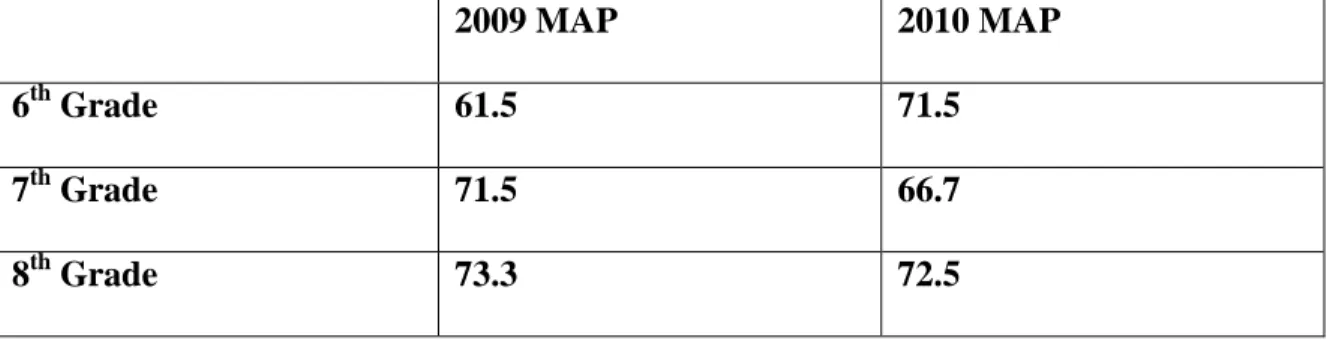
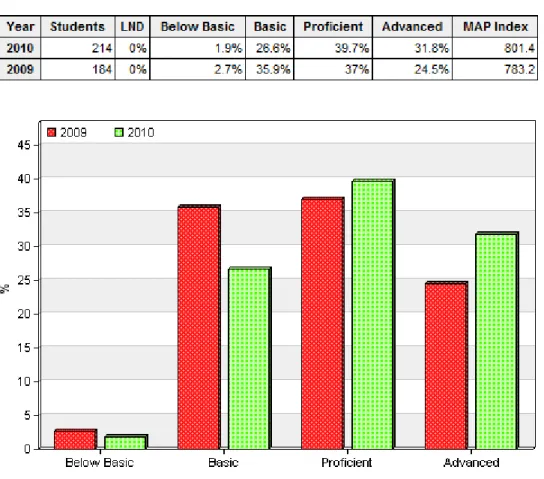
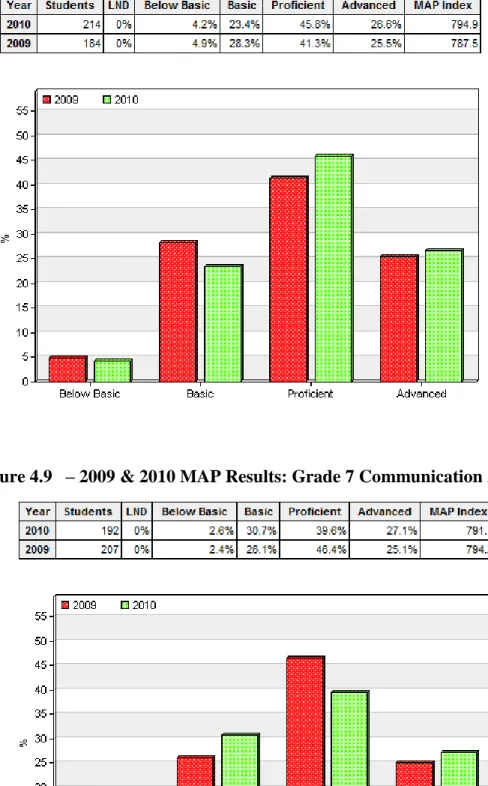
Supports (PBIS) initiative, at the start of the 2009-2010 school year, had a significant effect on: (1) the number of behavior referrals and (2) academic achievement relative to the Missouri Assessment Program (MAP) mathematics and language arts test scores after implementation of PBIS in 2008-2009. The data examined includes the number of behavior referrals for students enrolled in sixth, seventh, and eighth grade during from the fall of 2008 to the spring of 2011. In addition, the data includes Missouri Assessment Program (MAP) data for the 2008-2009 and 2009-2010 school years. Also displayed in tabular form are data pertaining to the number of referrals by grade level, gender,
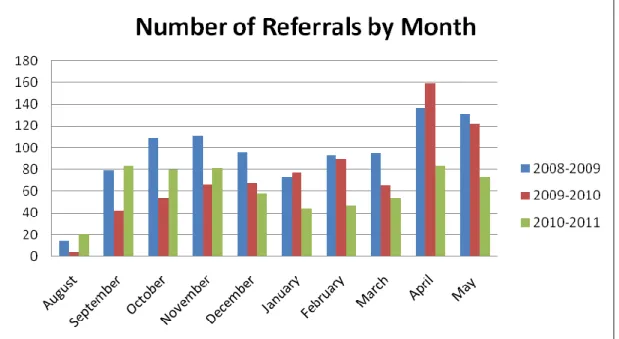
ethnicity, lunch program, residence, month, and level of infraction. When appropriate, the data is graphically displayed.
The measures of central tendency and variance are from the results of subjecting the data to a two-sample t test and an ANOVA. The results of these tests are employed in Chapter 5 to inform the conclusions about the implementation of PBIS and suggest implications for educational practice.
In this chapter, the data is displayed in various ways including the number of referrals by: grade level, gender, ethnicity, lunch program, residence, month, and level of infraction. The measures of central tendency and variance, results from a two-sample t
test and an analysis of variance are also incorporated in order to help draw conclusions about the implementation of Positive Behavior Interventions and Supports and suggest implications for educational practice.
Behavior Referrals Table 4.1 – Summary Data for Behavior Referrals
Year 1 (control) 2008-2009 Year 2 2009-2010 Year 3 2010-2011 N = 592 Mean: 1.563 N = 623 Mean: 1.199 N = 631 Mean: .983 Median: 0 Median: 0 Median: 0 Mode: 0 Mode: 0 Mode: 0 Range: 0 – 25 Range: 0 – 23 Range: 0 – 18
Standard Deviation: 3.45 Standard Deviation: 3.08 Standard Deviation: 2.41
Total # of Referrals: 938 Total # of Referrals: 746 Total # of Referrals: 623
Table 4.1 shows the total number of students enrolled in the school (N) each year, as well as the average number of referrals per student during each year of the study. Mobility is relatively stable with approximately 95 to 97% of the students remaining
constant from year to year. The enrollment increases over the three years, while the average number of behavior referrals decrease. The range of data each year decreases each year, showing that the student receiving the most behavior referrals does not receive as many as the student with the highest number of behavior referrals the previous year. For example, during the 2008-2009 academic year, the student with the highest number of behavior referrals had twenty-five (25) incidents; whereas, during the 2010-2011 academic year, the student with the highest number of behavior referrals only had eighteen (18). The standard deviation also decreases each year, demonstrating that the data from the 2010-2011 academic year is closer to the mean than in previous years. From year one to year three, the standard deviation decreased by one, meaning PBIS had an effect on the whole group.
The total number of behavior referrals and the average number of referrals per student decreased each year from the start of the study. In the 2008-2009 school year, there were 938 referrals and in 2010-2011 there were 623 referrals resulting in a
difference of 315 referrals. A t test was administered to compare the average number of behavior referrals per student from the year before implementation (2008-2009) of
Positive Behavior Interventions and Supports to the end of the 2nd year of implementation (2010-2011), and resulted in a p-value of .00067. With α = .05, the results indicate that there is a significant difference between the number of referrals per student during 2008-2009 compared to 2010-2011. In other words, there were significantly fewer referrals in the 2010-2011 academic year than in 2008-2009.
Table 4.2 – ANOVA Test Results Sum of Squares df Mean Square Fisher F-value Significance (p) Between Groups 105.735 2 52.868 5.858 .003 Within Groups 16,732.579 1,854 9.025 Total 16,838.315 1,856
An analysis of variance statistical test, comparing the means from the three years of the study, showed an F-value of 5.858 with a p-value of .003. Since the p-value is small, it is unlikely the differences in mean vales are due to random sampling. Rather, there is a significant difference in the mean number of behavior referrals each year.
As shown in the summary Table 4.1, the median and mode were zero for all three years. This result shows that, in all three years of the study, a majority of students did not receive any behavior referrals. Table 4.3 shows the number of students receiving zero
(0), one (1) to three (3), or more than three (3) referrals for each of the three school years in the study.
Table 4.3 – Number of Students Receiving: 0; 1 – 3; or 4 or more Behavior Referrals
2008 – 2009 2009-2010 2010-2011
0 382 435 445
1 – 3 126 128 129
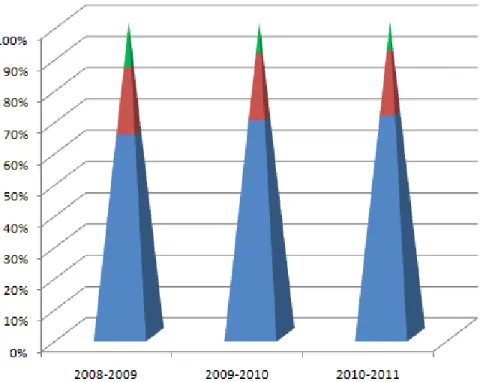
Table 4.3 shows that while the overall enrollment increased over the three year period, the number of students receiving more than three referrals decreased. Figure 4.1 provides a pyramid visual of the percentage of students receiving zero, one to three, or more than three referrals for each of the three school years in the study.
Figure 4.1 - Percent of Students by Number of Behavior Referrals
Figure 4.1 highlights the percentage of students receiving zero, one to three, or more than three referrals in the given school years; furthermore, it shows that the percentage of students receiving more than three referrals in a school year decreased by about 5% from the 2008-2009 school year to the 2010-2011 school year. The percentage of students receiving zero referrals increased by approximately 5% from the 2008-2009 school year to the 2010-2011 school year.
Behavior Referrals by Grade Level
The 2008-2009 sixth grade class, which is the same group as the 2010-2011 eighth grade class, was the only group of students who were included in all three years of this study. Below, Table 4.4 and 4.5 show an increase in the number of behavior referrals from the 2008-2009 school year to the 2009-2010 school year for this cohort of students. The tables also show that there was a decrease in the number of behavior referrals for this class from the 2009-2010 academic year to the 2010-2011 school year. The eighth graders from the 2008-2009 academic year have the most referrals for any grade and during any year of the study.
Table 4.4 - Number of Referrals by Grade Level
6th Grade 7th Grade 8th Grade
2008-2009 196 260 482
2009-2010 271 296 179
2010-2011 139 243 241
Table 4.5 - Percentage of Referrals by Grade Level
6th Grade 7th Grade 8th Grade
2008-2009 21% 28% 51%
2009-2010 36% 40% 24%
Behavior Referrals by Ethnicity
As noted in Chapter 3, the racial make-up of the middle school in this study is approximately as follows: 73% White; 18% Black; 4% Multi-racial; 3% Asian; and 2% Hispanic. Table 4.6 displays the distribution of behavior referrals by ethnicity. From the 2008-2009 to 2010-2011 school year, the percentages of behavior referrals by ethnicity grow closer to the actual racial make-up of the school. It should also be noted that during the 2008-2009 school year, 60% of black students received at least one office referral, while 26% of white students enrolled received at least one office referral.
Table 4.6 – Percentage of Referrals by Ethnicity
Black White
Multi-Racial
Hispanic Asian
2008-2009 60% 34% 4% 2% 0%
2009-2010 57% 36% 4% 2% 1%
2010-2011 48% 45% 5% 2% 0%
As shown in Table 4.6, over 90% of the referrals are written for students who are white or black. Referrals for students who are Asian, Hispanic, or Multi-Racial are consistent and remain low. Reasons for this might be due to the resources provided for some of these students. Specifically, students who are ―English as a Second Language‖
(ESL) learners and have a mentor who meets with them individually to discuss expectations pertaining to either academics or behavior.
White and black are the two most prominent ethnicity categories in the study. In Table 4.7 the data is displayed in subgroups showing the number of behavior referrals from these subgroups. Included in parenthesis is the number of students enrolled in the school for the subgroup. For example, in 2008-2009, there were 314 behavior referrals from black females and 72 black females enrolled in the school.
Table 4.7 – Number of Referrals by Subgroup (# of students enrolled)
2008-2009 2009-2010 2010-2011
Black Females 314 (72) 237 (68) 139 (66)
Black Males 244 (59) 192 (45) 160 (54)
White Females 59 (208) 42 (218) 70 (210)
White Males 251 (214) 225 (239) 215 (251)
Despite stable or a slight increase in enrollment for the subgroups in Table 4.3, it is apparent that every subgroup had fewer referrals in 2010-2011 than in 2008-2009. The exception is the white female group who had almost double the referrals from 2009-2010 to the 2010-2011 school year.
Referrals by Meal Purchase
Table 4.8 shows the breakdown of the percentage of the student populations who qualify for free or reduced lunch, as well as the percentage of behavior referrals
submitted for students who are part of the free and reduced lunch program.
Table 4.8 - Percent of Students Enrolled Who Qualify for the Free and Reduced Lunch Program Compared to the Percent of Behavior Referrals from Students Who Qualify for the Free and Reduced Lunch Program
% of Students Qualifying for Free & Reduced Lunch
% of Behavior Referrals from Students Qualifying for Free & Reduced Lunch
2008-2009 18% 46%
2009-2010 17% 44%
2010-2011 19% 56%
Table 4.8 presents that there are approximately 20% of students enrolled in the study school who qualify for free or reduced lunch and about 50% of the behavior referrals in the study school are for students who qualify for free or reduced lunch. The percentage of students qualifying for free or reduced lunch increased over the three years in the study. In addition, the percentage of behavior referrals for students qualifying for free or reduced lunch increased.
Referrals by Residence Type
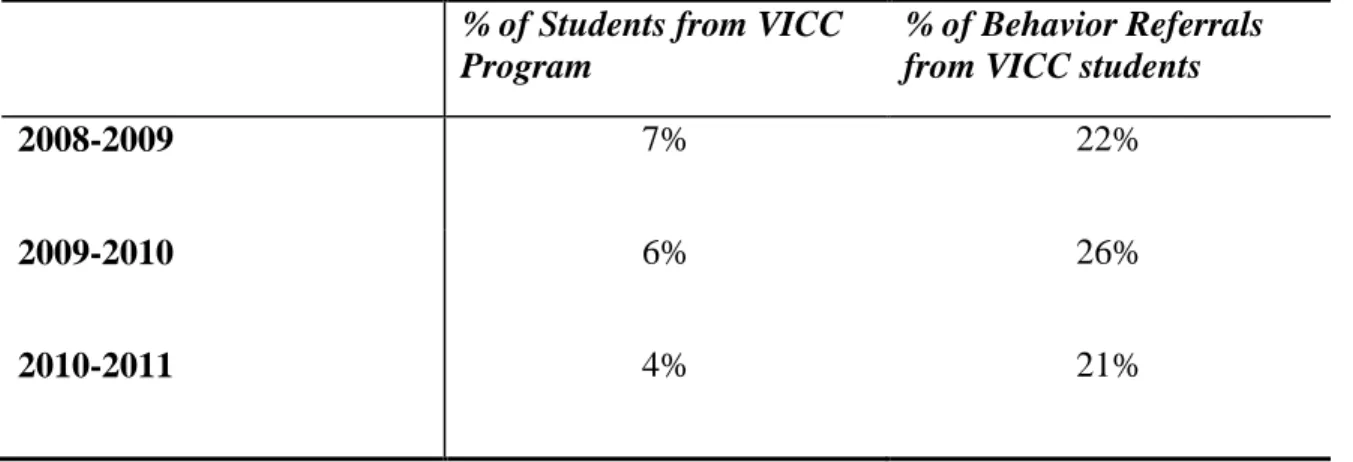
The school used for this study participates in the Voluntary Interdistrict Choice Corporation (VICC) program. This partnership allows students living in a specific area of St. Louis City to enroll in this St. Louis County school. The following table shows the percentage of students in the study middle school who are part of the VICC program, as well as the percentage of behavior referrals from students who are part of the VICC program.
Table 4.9 - Percent of Students in VICC Program Compared to Percent of Behavior Referrals from VICC students
% of Students from VICC Program
% of Behavior Referrals from VICC students
2008-2009 7% 22%
2009-2010 6% 26%
2010-2011 4% 21%
Table 4.9 presents that roughly one-quarter of behavior referrals are written for students who participate in the VICC program. Students participating in the VICC program account for approximately one-twentieth of the overall enrollment. The
percentage of students participating in the VICC program decreased over the three years in the study, due to district enrollment capacity.