TABLE OF CONTENTS
1.0 GENERAL ... 1
1.1 Applicability ... 1
1.2 Definitions ... 1
1.3 Forms and Agreements ... 9
2.0 BASIC UNDERSTANDINGS ... 10
3.0 PROCESS OVERVIEW ... 11
3.1 Simplified Process – Radial Distribution Circuit ... 12
3.1.1 Simplified Process – Networks ... 14
3.2 Pre-Application Reports ... 16
3.3 Expedited Process ... 17
3.4 Standard Process ... 20
3.4.1 Group Study Process ... 24
3.5 Time Frames ... 26
3.6 Interconnection Application and Facility Construction Time Frame Management ... 28
3.6.1 Initial Withdrawal Process (one time event within 2-3 months after DPU Order, D.P.U. 11-75-E issued on March 13, 2013) ... 28
3.6.2 On-Going Interconnecting Customer Time Frame Compliance ... 28
3.7 Force Majeure ... 31
3.8 Time Frame Notification ... 31
3.9 Application Fee Refund ... 32
3.10 Fee Schedules ... 32
Figure 1 - Schematic of Massachusetts DG Interconnection Process ... 34
Figure 2 - Simplified Interconnection to Networks ... 41
Table 1- Simplified Process Radial Distribution Circuit Time Frame ... 43
Table 2 - Expedited Process Time Frames ... 45
Table 3 - Standard Process Time Frames ... 47
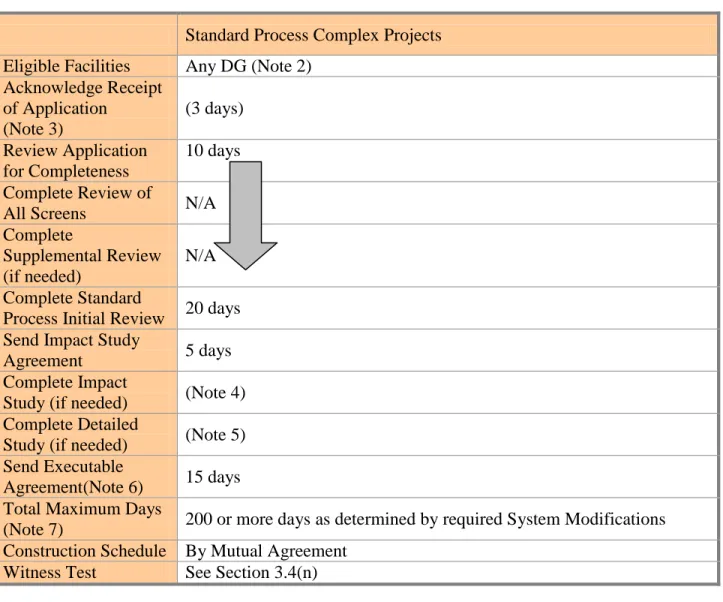
Table 4 - Standard Process Complex Projects Time Frames ... 49
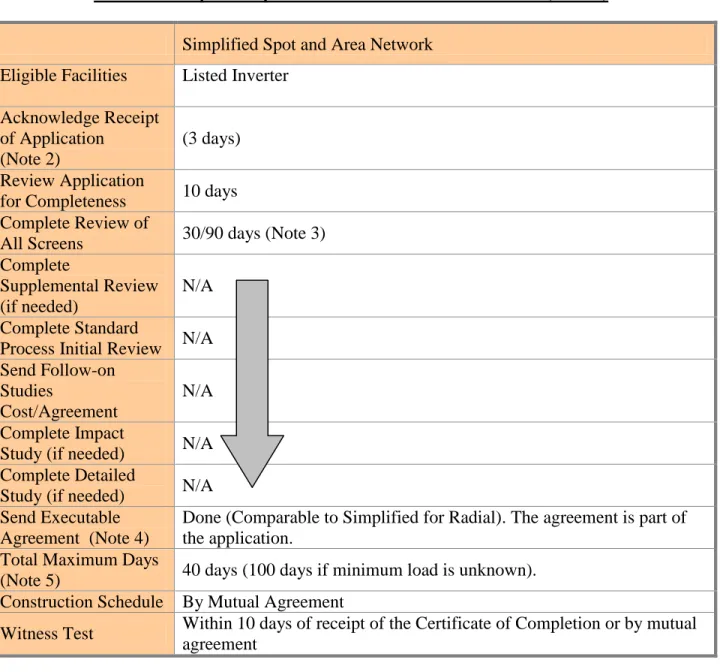
Table 5 - Simplified Spot and Area Network Time Frames... 51
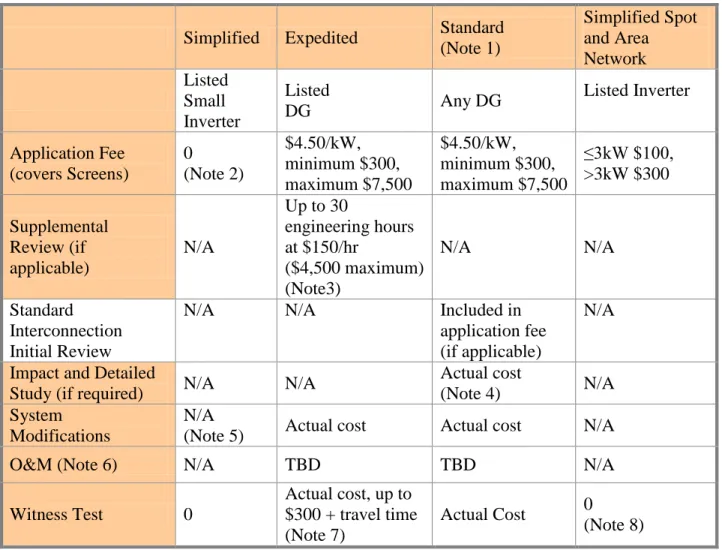
Table 6 - Fee Schedules... 54
4.0 INTERCONNECTION REQUIREMENTS ... 55
4.1 General Design Considerations ... 55
4.1.1 Transient Voltage Conditions ... 55
4.1.2 Noise and Harmonics ... 56
4.1.3 Frequency ... 56
4.1.4 Voltage Level ... 56
4.1.5 Machine Reactive Capability ... 56
4.2 Protection Requirements for New or Modified Facility Interconnections with the EPS 57 4.2.1 General Requirements ... 57
Issued by: Craig Hallstrom Filed: May 13, 2015 President Effective: June 1, 2015
4.2.3 Protection Requirements ... 58
4.2.4 Protection System Testing and Maintenance ... 62
4.2.5 Protection Requirements – Momentary Paralleling of Standby Generators ... 64
4.2.6 Protection System Changes... 64
5.0 RESPONSIBILITY FOR COSTS OF INTERCONNECTING A FACILITY ... 64
5.1 Review and Study Costs ... 64
5.2 Interconnection Equipment Costs ... 65
5.3 System Modification Costs ... 65
5.4 Separation of Costs ... 65
5.5 Normal Payment Procedure ... 66
5.6 Security and Creditworthiness ... 66
6.0 OPERATING REQUIREMENTS ... 66
6.1 General Operating Requirements ... 66
6.2 No Adverse Effects; Non-interference ... 66
6.3 Safe Operations and Maintenance ... 67
6.4 Access ... 67
6.4.1 Company and Interconnecting Customer Representatives ... 67
6.4.2 Company Right to Access Company-Owned Facilities and Equipment ... 67
6.4.3 Right to Review Information ... 68
7.0 DISCONNECTION ... 68
7.1 Temporary Disconnection ... 68
7.2 Permanent Disconnection ... 69
8.0 METERING, MONITORING, AND COMMUNICATION ... 70
8.1 Metering, Related Equipment and Billing Options ... 70
8.2 Additional Monitoring and Communication requirements ... 72
9.0 DISPUTE RESOLUTION PROCESS ... 72
9.1 Good Faith Negotiation ... 72
9.2 Mediation/Non-binding Arbitration ... 73
9.3 Department Adjudicatory Hearing ... 74
10.0 CONFIDENTIALITY STATEMENT ... 75
11.0 INSURANCE REQUIREMENTS ... 75
11.1 General Liability ... 75
11.2 Insurer Requirements and Endorsements ... 77
11.3 Evidence of Insurance ... 78
11.4 Self Insurance ... 78
12.0 Assignment ... 79
Exhibit A - Simplified Process Interconnection Application ... 1
Exhibit B - Generating Facility Expedited/Standard Pre-Application Report Form ... 1
Exhibit C - Expedited/Standard Process Interconnection Application ... 1
Exhibit D - Supplemental Review Agreement ... 1
Exhibit F - Detailed Study Agreement ... 1
Exhibit G - Interconnection Service Agreement ... 1
Exhibit H - Agreement Between the Company and the Company's Retail Customer ... 1
Exhibit I - Landowner Consent Agreement ... 1
Issued by: Craig Hallstrom Filed: May 13, 2015
1.0 GENERAL
1.1 Applicability
This document (“Interconnection Tariff”) describes the process and requirements for an Interconnecting Customer to connect a power-generating facility to the Company’s Electric Power System (“Company EPS”), including discussion of technical and operating requirements, metering and billing options, and other matters, except as provided under the applicable ISO-NE tariff, and/or under the Qualifying Facility regulations in 220 CMR 8.04.
The procedure for momentary paralleling to the Company EPS with back-up generation is described within Section 4.0 Interconnection Requirements.
If the Facility will always be isolated from the Company’s EPS, (i.e., it will never operate in parallel to the Company’s EPS), then this Interconnection Tariff does not apply.
1.2 Definitions
The following words and terms shall be understood to have the following meanings when used in this Interconnection Tariff:
“Affected System” shall mean any neighboring EPS not under the control of the Company (i.e., a municipal electric light company or other regulated utility). “Affiliate” shall mean a person or entity controlling, controlled by or under common control with a Party.
“Anti-Islanding” shall mean a description of the ability of a Facility to avoid unintentional islanding through some form of active control technique. “Interconnection Application” shall mean the notice (which will serve as the Notice of Intent to Interconnect under 220 C.M.R. §§ 8.00 et seq. when required) provided by Interconnecting Customer to the Company in the form shown in Exhibits A and C which initiates the interconnection process.
“Area EPS” shall mean the Company EPS. This term is used in the Institute of Electrical and Electronics Engineers (IEEE) Standard 1547-2003, “IEEE Standard for Interconnecting Distributed Resources with Electric Power Systems” (“IEEE Standard 1547-2003”).
“Authorization to Interconnect” shall mean an official written notification provided by the Company to the Interconnecting Customer, authorizing the
Interconnecting Customer to activate and operate the Facility subject to the terms of the Interconnection Service Agreement.
“Business Day” shall be defined as the next working day, not including Saturday, Sunday or a legal holiday, after a request or application has been received by the Company.
“Certificate of Completion” shall mean the form required as proof that the installed Facility has been inspected by the local electrical wiring inspector or other jurisdictional authority.
“Class I Net Metering Facility” shall mean a plant or equipment that is used to produce, manufacture, or otherwise generate electricity and that is not a transmission facility and that has a design capacity of 60 kilowatts or less.
“Class II Net Metering Facility” shall mean an Agricultural Net Metering Facility, Anaerobic Digestion Net Metering Facility, Solar Net Metering Facility, or Wind Net Metering Facility with a generating capacity of more than 60 kilowatts but less than or equal to one megawatt; provided, however, that a Class II Net Metering Facility that is a Net Metering Facility of a Municipality or Other Governmental Entity may have a generating capacity of more than 60 kilowatts but less than or equal to one megawatt per unit.1
“Class III Net Metering Facility” shall mean an Agricultural Net Metering
Facility, Anaerobic Digestion Net Metering Facility, Solar Net Metering Facility, or Wind Net Metering Facility with a generating capacity of more than one megawatt but less than or equal to two megawatts; provided, however, that a Class III Net Metering Facility that is a Net Metering Facility of a Municipality or Other Governmental Entity may have a generating capacity of more than one megawatt but less than or equal to two megawatts per unit.
“Common Study Area” shall mean a discrete portion of the Company EPS where the operation of multiple Interconnecting Customers’ Facilities may have cumulatively adverse EPS impacts. The Company shall determine if applications fall within a
Common Study Area. A Common Study Area may include, but is not limited to, an area that: (1) is fed from a common substation transformer, or (2) is bounded by a circuit.
1
Any terms used herein but not defined shall have the meaning as ascribed in the Company’s Net Metering Tariff, as amended or superseded from time to time.
Issued by: Craig Hallstrom Filed: May 13, 2015 “Company” shall mean NSTAR Electric Company d/b/a Eversource Energy, as applicable.
“Company EPS” shall mean the electric power system owned, controlled or operated by the Company used to provide distribution service to its Customers. “Compliance Documentation” shall mean and include any documentation required to determine that the Interconnecting Customer is in compliance with requirements of the Tariff, including the applications, exhibits and agreements attached thereto, and such documentation includes, as applicable: final as-built one-line diagrams, photos, witness test results, local wiring inspection approval, completed Certificate of Completion, certified relay test results, printout of inverter settings, insurance certificates, P-rate agreement, Exhibit H (retail
customer agreement), landowner agreement, easements for system modifications, and, if the Facility is net metering, a completed Schedule Z, a net metering cap allocation from the System of Assurance, and, for a Facility that is included in the public net metering cap, certification from the Department that the Host Customer and all off-takers qualify as a municipality or other governmental entity.
“Conditional Approval to Interconnect” shall mean an official written notification provided by the Company to the Interconnecting Customer approving of the proposed system design of a proposed Facility and authorizing the
Interconnecting Customer to test but not commence commercial operation of that Facility subject to the terms of the Exhibit A, Simplified Process Interconnection Application and Service Agreement.
“Customer” shall mean any person, partnership, corporation, or any other entity whether public or private who obtains distribution service at a Customer delivery point and who is a customer of record of the Company for its own electricity consumption.
“Department” shall mean the Massachusetts Department of Public Utilities. “Detailed Study” shall mean the final phase of engineering study, if necessary, conducted by the Company to determine substantial System Modifications to its EPS, resulting in project cost estimates and a construction schedule for such modifications that will be required to provide the requested interconnection service.
“DG” shall mean Distributed Generation.
“Expedited Process” shall mean, as described in Section 3.3, process steps for Listed Facilities from initial application to final written authorization, using a set of technical screens to determine impact on the Company EPS.
“Facility” shall mean a source of electricity owned and/or operated by the Interconnecting Customer that is located on the Customer’s side of the PCC, and all facilities ancillary and appurtenant thereto, including interconnection
equipment, which the Interconnecting Customer requests to interconnect to the Company EPS.
“FERC” shall mean Federal Energy Regulatory Commission.
“Force Majeure Event” shall mean any event that is beyond the reasonable control of the affected Company or Interconnecting Customer, and that the affected Company or Interconnecting Customer is unable to prevent or provide against by exercising commercially reasonable efforts, including the following events or circumstances, but only to the extent they satisfy the preceding requirements: acts of war or terrorism, public disorder, insurrection, or rebellion; floods, hurricanes, earthquakes, lightning, storms, and other natural calamities; explosions or fire; strikes, work stoppages, or labor disputes; embargoes; and sabotage. For the treatment of Force Majeure see Section 3.7.
“Good Utility Practice” shall mean any of the practices, methods and acts engaged in or approved by a significant portion of the electric utility industry during the relevant time period, or any of the practices, methods and acts which, in the exercise of reasonable judgment in light of the facts known at the time the decision was made, could have been expected to accomplish the desired result at a reasonable cost consistent with good business practices, reliability, safety and expedition. Good Utility Practice is not intended to be limited to the optimum practice, method, or act to the exclusion of all others, but rather to be acceptable practices, methods, or acts generally accepted in the region.
“Group” shall mean all proposed Facilities studied as part of a Group Study or those Facilities’ applicants (as determined by the context). The order of applicants within a Group shall be determined on the basis of the date the applicants’ applications were deemed complete by the Company. The application completion date for the Group shall be defined as the earliest application completion date of any active application in the Common Study Area (excluding applications that have progressed through a Preceding Study).
Issued by: Craig Hallstrom Filed: May 13, 2015 Preceding Study within a Common Study Area, as provided in Section 3.4.1. The Group Study shall be performed once the Preceding Study is completed, instead of each application undergoing Impact Studies sequentially.
“Impact Study” shall mean the engineering study conducted by the Company under the Standard Process to determine the scope of the required modifications to its EPS and/or the Facility to provide the requested interconnection service. “In-Service Date” shall mean the date on which the Facility and System Modifications (if applicable) are complete and ready for service, even if the Facility is not placed in service on or by that date.
“Interconnecting Customer” shall mean the entity that owns and/or operates the Facility interconnected to the Company EPS, with legal authority to enter into agreements regarding the construction or operation of the Facility.2
“Interconnection Service Agreement” shall mean an agreement for
interconnection service, the form of which is provided in Exhibit G, between the Interconnecting Customer and the Company. The agreement also includes terms and conditions, attachments describing the Facility, system modifications,
payment terms and construction schedule (if applicable) and any amendments or supplements thereto entered into by the Interconnecting Customer and the Company.
“Interconnection Tariff” shall mean these Standards for Interconnection of Distributed Generation. The Interconnection Tariff is a regulatory document enforced by the Department.
“Islanding” shall mean a situation where electrical power remains in a portion of an electrical power system when the Company’s transmission or distribution system has ceased providing power for whatever reason (emergency conditions, maintenance, etc.). Islanding may be intentional, such as when certain segregated loads in an Interconnecting Customer or Customer’s premises are provided power by a Facility after being isolated from the Company EPS after a power failure. Unintentional Islanding, especially past the PCC, is to be strictly avoided.
2
An entity which owns the Facility interconnected to the Company EPS solely as part of a financing arrangement, which could include the acquisition of the tax credits related to the Facility, but is neither the Customer nor the operator of that Facility, shall not be considered the Interconnecting Customer hereunder.
“ISO-New England, Inc. (“ISO-NE”)” shall mean the Independent System Operator established in accordance with the NEPOOL Agreement and applicable FERC approvals, which is responsible for managing the bulk power generation and transmission systems in New England.
“Isolated” shall mean the state of operating the Facility when electrically
disconnected from the Company EPS on the Interconnecting Customer’s side of the PCC.
“Landowner” shall mean the owner of real property where the Facility is sited. In cases where the Landowner is not the Customer or Interconnecting Customer, a Landowner Consent Agreement will be required (see Exhibit I).
“Local EPS” shall mean the premises within which are contained the Facility. This term is used in the IEEE Standard 1547-2003.
“Listed” shall mean a Facility that has successfully passed all pertinent tests to conform with IEEE 1547.1.
“Metering Point” shall mean, for meters that do not use instrument transformers, the point at which the billing meter is connected. For meters that use instrument transformers, the point at which the instrument transformers are connected. Nameplate, design, or generation “capacity” or “rating” shall mean the maximum continuous power output (AC) listed by the manufacturer. “NEPOOL” shall mean New England Power Pool.
“Net Metering” shall mean the process of measuring the difference between electricity delivered by the Company and electricity generated by a Class I, Class II, or Class III Net Metering Facility and fed back to the Company.
“Network Distribution System (Area or Spot)” shall mean electrical service from an EPS consisting of one or more primary circuits from one or more substations or transmission supply points arranged such that they collectively feed secondary circuits serving one (a spot network) or more (an area network) Interconnecting Customers.
“Non-Islanding” shall mean the ability of a Facility to avoid unintentional islanding through the operation of its interconnection equipment.
Issued by: Craig Hallstrom Filed: May 13, 2015 “On-Site Generating Facility” shall mean a class of Interconnecting Customer-owned generating Facilities with peak capacity of 60 kW or less, as defined in 220 C.M.R. § 8.00.
“Parallel” shall mean the state of operating the Facility when electrically connected to the Company EPS (sometimes known as grid-parallel).
“Parties” shall mean the Company and the Interconnecting Customer, and “Party” shall mean either the Company and/or Interconnecting Customer, as determined by context.
“Point of Common Coupling (PCC)” shall mean the point where the
Interconnecting Customer’s local electric power system connects to the Company EPS, such as the electric power revenue meter or Company’s service transformer. The PCC shall be specified in the Interconnection Service Agreement.
“Point of Delivery” shall mean a point on the Company EPS where the
Interconnecting Customer makes capacity and energy available to the Company. The Point of Delivery shall be specified in the Interconnection Service
Agreement.
“Point of Receipt” shall mean a point on the Company EPS where the Company delivers capacity and energy to the Interconnecting Customer.
“Pre-Application Report” shall mean, as described in Section 3.2, a non-binding report of certain information specific to a proposed Facility interconnection location provided to the Interconnecting Customer by the Company prior to the Application.
“Preceding Study” shall mean any study that is required by the Company to be completed prior to commencing the Group Study process for the remaining applicant(s) in a
Common Study Area. A Preceding Study shall be deemed to have commenced upon execution of the relevant Impact Study Agreement(s) and the initial payment of the study costs. A Preceding Study shall be deemed to be complete upon issuance of the final Impact or Group Study report.
“Public Facility” shall mean any Facility (1) that is owned or operated by a municipality or other governmental entity; or (2) that is sited on land of a municipality or other governmental entity; or (3) which for purposes of Net Metering qualifies as a Net Metering Facility of a Municipality or Other Governmental Entity.
“Qualifying Facility” shall mean a generation Facility that has received certification as a Qualifying Facility from the FERC in accordance with the Federal Power Act, as amended by the Public Utility Regulatory Policies Act of 1978, as defined in 220 C.M.R. § 11.04.
“Radial Distribution Circuit” shall mean electrical service from an EPS consisting of one primary circuit extending from a single substation or transmission supply point arranged such that the primary circuit serves Interconnecting Customers in a particular local area.
“Screen(s)” shall mean criteria by which the Company will determine if a proposed Facility’s installation will adversely impact the Company EPS in the Simplified and Expedited Processes as set forth in Section 3.0.
“Simplified Process” shall mean, as described in Section 3.1, process steps from initial application to final written authorization for certain inverter-based
Facilities of limited scale and minimal apparent grid impact.
“Solar Facility” shall mean a facility for the production of electrical energy that uses sunlight to generate electricity and is interconnected to the Company EPS. “Standard Process” shall mean, as described in Section 3.4, process steps from initial application to final written authorization for Facilities that do not qualify for Simplified or Expedited treatment.
“Supplemental Review” shall mean additional engineering study to evaluate the potential impact of the Facility on the Company EPS so as to determine any requirements for processing the application through the Expedited Process. “System Modification” shall mean modifications or additions to distribution-related Company facilities that are integrated with the Company EPS for the benefit of the Interconnecting Customer.
“Time Frame” shall mean each step in the pertinent interconnection process with a Company or Interconnecting Customer obligation of completion within the relevant Business Days in this Interconnection Tariff beginning on the next Business Day following the completion of the prior step and concluding with the applicable deliverable in this Interconnection Tariff. The Company shall report annually to the Department on its compliance with all Time Frames as provided in Department order D.P.U. 11-75-F.
Issued by: Craig Hallstrom Filed: May 13, 2015 the Company’s transmission or distribution system has ceased providing power for whatever reason (emergency conditions, maintenance, etc.).
“Witness Test” shall mean the Company’s right to witness the commissioning testing and/or Company-required Interconnecting Customer-owned
communication system. Commissioning testing is defined in IEEE Standard 1547-2003.
1.3 Forms and Agreements
The following documents for the interconnection process are included as Exhibits:
1) Interconnection Service Agreement for Expedited and Standard Process (Exhibit G) referencing Attachments 1 – 7 (Attachments 1-7 to be developed and included as appropriate for each specific Interconnection Service Agreement) as follows: Attachment 1: Description of Facilities, including demarcation of Point of Common
Coupling
Attachment 2: Description of System Modifications
Attachment 3: Costs of System Modifications & Payment Terms Attachment 4: Special Operating Requirements, if any
Attachment 5: Agreement between the Company and the Company’s Retail Customer (to be signed by the Company’s retail Customer where DG installation and interconnection will be placed, when retail Customer is not the owner and/or operator of the distributed generation facility -- Exhibit H)
Attachment 6: Landowner Consent Agreement (to be signed by the Landowner where the DG Facility will be located when the Landowner is neither the Customer nor Interconnecting Customer --Exhibit I)
Attachment 7: System Modifications construction schedule 2) Application forms
a) Simplified Process (Facilities meeting the requirements of Section 3.1) application form and service agreement (Exhibit A)
b) Pre-Application Report Form (Exhibit B)
3) Supplemental Review Agreement for those projects which have failed one or more screens in the Expedited Process (Exhibit D)
4) Impact Study Agreement under the Standard Process (Exhibit E)
5) Detailed Study Agreement for the more detailed study under the Standard Process which requires substantial System Modifications (Exhibit F)
6) Agreement Between the Company and the Company’s Retail Customer (Exhibit H) 7) Landowner Consent Agreement (Exhibit I)
8) Schedule Z – Additional Information Required for Net Metering Service
2.0 BASIC UNDERSTANDINGS
Interconnecting Customer intends to install a Facility on the Interconnecting Customer’s side of the PCC that will be connected electrically to the Company EPS and operate in parallel,
synchronized with the voltage and frequency maintained by the Company during all operating conditions. It is the responsibility of the Interconnecting Customer to design, procure, install, operate, and maintain all necessary equipment on its property for connection to the Company EPS. The Interconnecting Customer and the Company shall enter into an Interconnection Service Agreement to provide for parallel operation of an Interconnecting Customer’s Facility with Company EPS. A form of this agreement is attached as Exhibit G to this Interconnection Tariff. If the Interconnecting Customer is not the Customer, an Agreement between the Company and the Company’s Customer must be signed and included as an attachment to the Interconnection Service Agreement; a form of this agreement is attached as Exhibit H. If neither the Interconnecting Customer nor the Customer is the Landowner, then a Landowner Consent Agreement must be signed and included as an attachment to the Interconnection Service Agreement, unless the Company, in its sole discretion, waives this requirement; see Exhibit I. The interconnection of the Facility with the Company EPS must be reviewed for potential impact on the Company EPS under the process described in Section 3.0 and meet the technical
requirements in Section 4.0, and must be operated as described under Section 6.0. In order to meet these requirements, an upgrade or other modifications to the Company EPS may be
necessary. Subject to the requirements contained in this Interconnection Tariff, the Company or its Affiliate shall modify the Company EPS accordingly. Unless otherwise specified, the
Company will build and own, as part of the Company EPS, all facilities necessary to
interconnect the Company EPS with the Facility up to and including terminations at the PCC. The Interconnecting Customer shall pay all System Modification costs as set forth in Section 5.0.
Issued by: Craig Hallstrom Filed: May 13, 2015
frequency, and phase characteristics of the service to be supplied, the capacity available, and the suitability of the proposed equipment for operation at the intended location. Attempting to operate a generator at other than its nameplate characteristics may result in unsatisfactory performance or, in certain instances, injury to personnel and/or damage to equipment. The Interconnecting Customer will be responsible for ascertaining from the Company, and the Company will diligently cooperate in providing, the service characteristics of the Company EPS at the proposed PCC. The Company will in no way be responsible for damages sustained as a result of the Interconnecting Customer’s failure to ascertain the service characteristics at the proposed PCC.
The Facility should operate in such a manner that does not compromise, or conflict with, the safety or reliability of the Company EPS. The Interconnecting Customer should design its equipment in such a manner that faults or other disturbances on the Company EPS do not cause damage to the Interconnecting Customer's equipment.
Authorization to Interconnect will be provided once the Interconnecting Customer has met all terms of the interconnection process as outlined below.
This Interconnection Tariff does not cover general distribution service needed to serve the
Interconnecting Customer. Please refer to the Company’s Terms and Conditions for Distribution Service. This Interconnection Tariff does not cover the use of the distribution system to export power, or the purchase of excess power unless covered under 220 C.M.R. §§ 8.00 et seq.
3.0 PROCESS OVERVIEW
There are three basic paths for interconnection of the Interconnecting Customer’s Facility in Massachusetts. They are described below and detailed in Figures 1 and 2 with their
accompanying notes. Tables 1 - 6, respectively, describe the Time Frames and fees for these paths. Unless otherwise noted, all Time Frames in the Interconnection Tariff reference Company Business Days.
Prior to submitting an Application through either the Expedited or Standard Process, all
Interconnecting Customers with Facilities that are 500kW or greater must request and receive a Pre-Application Report from the Company. If the Pre-Application is not received within the applicable Time Frame, the Interconnecting Customer can file its Application. The
Pre-Application Form is located in Exhibit B and the Pre-Pre-Application Report process is described in more detail in Section 3.2.
1) Simplified – This is for Listed inverter-based Facilities with a power rating of 15 kW or less single phase or 25 kW or less three-phase depending on the service configuration, and located on radial EPSs under certain conditions. A Listed inverter-based Facility located on a spot network EPS with a rating less than 1/15 of the Interconnecting
Customer’s minimum load or on an areas network EPS with a rating less than 1/15 of the Interconnecting Customer’s minimum load and 15 kW or less would also be eligible. 2) Expedited – This is for Listed Facilities that pass certain pre-specified screens on a radial
EPS.
3) Standard – This is for all facilities not qualifying for either the Simplified or Expedited interconnection processes on radial and spot network EPSs, and for all Facilities on area network EPSs.
All proposed new sources of electric power without respect to generator ownership, dispatch control, or prime mover that plan to operate in parallel with the Company EPS must submit a completed application and pay the appropriate application fee to the Company with which it wishes to interconnect. The application will be acknowledged by the Company, and the Interconnecting Customer will be notified of the application’s completeness. Interconnecting Customers who are not likely to qualify for Simplified or Expedited Process may opt to go directly into the Standard Process path. Interconnecting Customers proposing to interconnect on area networks will have their Interconnection Applications reviewed under the Simplified Process or the Standard Process, depending on the proposed Facility type and/or size as described in the Interconnection Tariff. All other Interconnecting Customers must proceed through a series of screens to determine their ultimate interconnection path. Interconnecting Customers who are not sure whether a particular location is on a radial circuit, spot network, or area network should check with the Company serving the proposed Facility location prior to filing an application and the Company will verify the circuit type.
3.1 Simplified Process – Radial Distribution Circuit
This process is for Interconnecting Customers using Listed single-phase inverter-based Facilities with power ratings of 15 kW or less at locations receiving single-phase secondary service from a single-phase transformer, or using Listed three-phase inverter-based Facilities with power ratings of 25 kW or less at locations receiving three-phase secondary service from a three-phase
transformer configuration, and requesting an interconnection on radial EPSs where the aggregate generating Facility capacity is less than 15% of feeder/circuit annual peak load and, if available, line segment. This is the fastest and least costly interconnection path.
The Simplified Process for Radial Distribution Circuits is as follows: a) Application process:
i) Interconnecting Customer submits a Simplified Process application filled out properly and completely (Exhibit A).
Issued by: Craig Hallstrom Filed: May 13, 2015
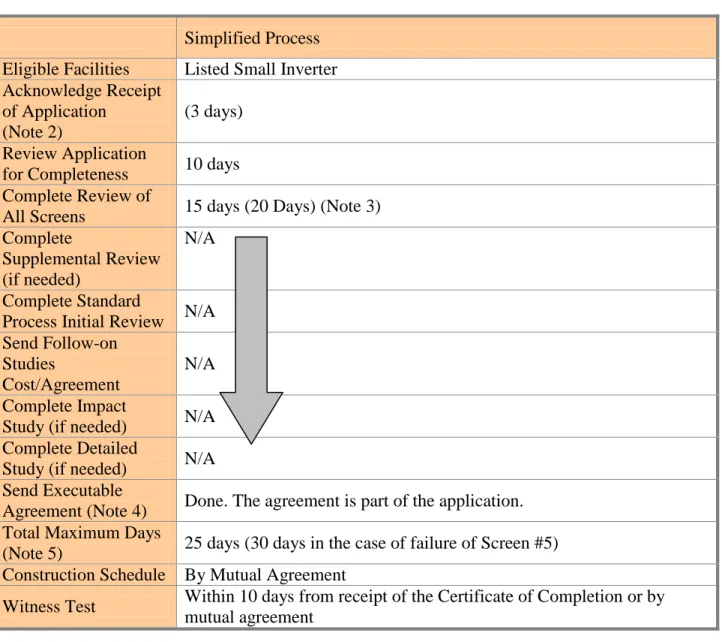
ii) Company acknowledges to the Interconnecting Customer receipt of the application within 3 Business Days of receipt.
iii) Company evaluates the application for completeness and notifies the
Interconnecting Customer within 10 Business Days of receipt that the application is or is not complete and, if not, advises what is missing.
b) Company completes review of all screens. When the Company verifies Facility equipment passes Screens 1, 2, 3, 4, and 5 in Figure 1 if a radial EPS, the project shall follow the Simplified Process. If a Facility fails Screen #5 in Figure 1, the Facility shall not be automatically evaluated under the Expedited Process. The Company shall have 20 Business Days to review an application where the Facility has failed screen #5 in Figure 1.
c) If approved, the Company signs the application approval line and sends to the Interconnecting Customer. In certain rare circumstances, the Company may require the Interconnecting Customer to pay for minor System Modifications. If so, a
description of work and an estimate will be sent back to the Interconnecting Customer for approval. The Interconnecting Customer would then approve via a signature and payment for the minor System Modifications. If the Interconnecting Customer
approves, the Company performs the System Modifications. Then, the Company signs the application approval line and sends to the Interconnecting Customer. The
Company signature on the application approval line constitutes a Conditional Approval to Interconnect.
d) Upon receipt of the signed application, the Interconnecting Customer installs the Facility. Then the Interconnecting Customer arranges for inspection of the completed installation by the local electrical wiring inspector, or other authority having
jurisdiction, and this person signs the Certificate of Completion. If the Facility was installed by an electrical contractor, this person also fills out the Certificate of Completion.
e) The Interconnecting Customer returns the Certificate of Completion to the Company (refer to Attachment 2 of the Simplified Process Application for the Certificate of Completion).
f) Following receipt of the Certificate of Completion, the Company may inspect the Facility for compliance with its standards by arranging for a Witness Test. The Company is obligated to complete this Witness Test within 10 Business Days of the receipt of the Certificate of Completion. If the Company does not inspect in 10 Business Days or by mutual agreement of the Parties, the Witness Test is deemed waived.
g) Assuming the wiring inspection, all Compliance Documentation and/or Witness Test are satisfactory, the Company notifies the Interconnecting Customer in writing that interconnection is authorized and issues the Authorization to Interconnect. If the wiring inspection, Compliance Documentation and/or Witness Test are not
satisfactory, the Company has the right to disconnect the Facility, and will provide information to the Interconnecting Customer describing clearly what is required to receive the Authorization to Interconnect. The Company shall issue the Authorization to Interconnect within 5 Business Days from the Interconnecting Customer’s
satisfaction of the connection requirements (i.e. the wiring inspection, all Compliance Documentation, and the Witness Test) and the Company’s installation of the required meter, whichever occurs later. The Interconnecting Customer has no right to operate in parallel until they have received the Authorization to Interconnect.
If the Interconnecting Customer does not substantially complete construction within 12 months after receiving the Conditional Approval to Interconnect from the Company, the Company will require the Interconnecting Customer to reapply for interconnection. Notwithstanding the foregoing, the Interconnecting Customer’s obligation to complete construction within 12 months is subject any claim of Force Majeure made by the Interconnecting Customer in accordance with, and subject to the limitations of, Section 3.7.
3.1.1 Simplified Process – Networks
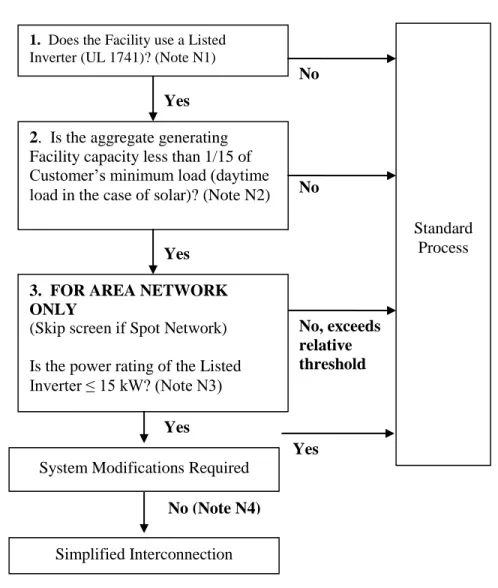
This process is for Interconnecting Customers using Listed inverter-based Facilities where the aggregate generating Facility capacity is less than one fifteenth of the Interconnecting
Customer’s minimum load and requesting an interconnection on a Spot or Area Network. For Interconnecting Customers interconnecting on an Area Network, the power rating of the Listed inverter must be 15 kW or less. This is the fastest and least costly interconnection path for interconnection on a network.
The Simplified Process for Networks is as follows: a) Application process:
i) Interconnecting Customer submits a Simplified Process application filled out properly and completely (Exhibit A).
ii) Company acknowledges to the Interconnecting Customer receipt of the application within 3 Business Days of receipt.
iii) Company evaluates the application for completeness and notifies the Interconnecting Customer within 10 Business Days of receipt that the
Issued by: Craig Hallstrom Filed: May 13, 2015
b) Company completes review of all applicable screens in Figure 2. For proposed facilities on a Spot Network, Screen 3 is not required for the review and should be bypassed. When the Company verifies Facility equipment passes all
applicable Screens in Figure 2, the project shall follow the Simplified Process. The determination of minimum load is critical when connecting to network distribution systems. If the Interconnecting Customer minimum load is known, the Company shall have 30 Business Days to review an application. If there is no existing meter or the existing metering in place cannot be used to determine the minimum load, then a meter capable of recording minimum loads must be installed at the Interconnecting Customer’s expense. In such cases, the Company may install an interval meter to measure 3 months of continuous customer load capturing the annual minimum load. Notwithstanding the foregoing, if the Interconnecting Customer has another type of power monitoring equipment installed at the Facility that is capable of providing minimum loads satisfactory to the Company, an interval meter would not be required. In addition, if the Company has another type of power monitoring equipment that can be installed, either at the Facility or off-site, that is capable of providing minimum loads, an interval meter will not be required. The maximum time the interval metering (or other Company approved monitoring equipment) will be used to measure the minimum load is 9 months from the point of the time the analysis was commenced. The Company can remove the interval meter at the
Interconnecting Customer’s expense if the Interconnecting Customer requests its removal provided the interval meter is not required for the rate the Customer takes service on when the generation Facility is installed.
c) If approved, the Company signs the application approval line and sends to the Interconnecting Customer. In certain rare circumstances, the Company may require the Interconnecting Customer to pay for minor System Modifications. If so, a description of work and an estimate will be sent back to the Interconnecting Customer for approval. The Interconnecting Customer would then approve via a signature and payment for the minor System Modifications. If the
Interconnecting Customer approves, the Company performs the System
Modifications. Then, the Company signs the application approval line and sends to the Interconnecting Customer. The Company signature on the application approval line constitutes a Conditional Approval to Interconnect.
d) Upon receipt of the signed application, the Interconnecting Customer installs the Facility. Then the Interconnecting Customer arranges for inspection of the completed installation by the local electrical wiring inspector, or other authority having jurisdiction, and this person signs the Certificate of Completion. If the Facility was installed by an electrical contractor, this person also fills out the Certificate of Completion.
e) The Interconnecting Customer returns the Certificate of Completion to the Company (refer to Attachment 2 of the Simplified Process Application for the Certificate of Completion).
f) Following receipt of the Certificate of Completion, the Company may inspect the Facility for compliance with its standards by arranging for a Witness Test. The Company is obligated to complete this Witness Test within 10 Business Days of the receipt of the Certificate of Completion. If the Company does not inspect in 10 Business Days or by mutual agreement of the Parties, the Witness Test is deemed waived.
g) Assuming the wiring inspection, all Compliance Documentation and/or Witness Test are satisfactory, the Company notifies the Interconnecting Customer in writing that interconnection is authorized and issues the Authorization to Interconnect. If the wiring inspection, Compliance Documentation and/or Witness Test are not satisfactory, the Company has the right to disconnect the Facility, and will provide information to the Interconnecting Customer describing clearly what is required to receive the Authorization to Interconnect. The
Company shall issue the Authorization to Interconnect within 5 Business Days from the Interconnecting Customer’s satisfaction of the connection requirements (i.e. the wiring inspection, all Compliance Documentation, and the Witness Test) and the Company’s installation of the required meter, whichever occurs later. In addition, the Interconnecting Customer will be required to have a load monitoring system in place to prevent the 1/15th minimum load from being exceeded
pursuant to Section 6.3 and to provide annual test results of the system pursuant to Section 6.4.3.The Interconnecting Customer has no right to operate in parallel until they have received the Authorization to Interconnect.
If the Interconnecting Customer does not substantially complete construction within 12 months after receiving the Conditional Approval to Interconnect from the Company, the Company will require the Interconnecting Customer to reapply for interconnection.
3.2 Pre-Application Reports
Prior to submitting an Interconnection Application through either the Expedited or Standard Process (see Sections 3.3 and 3.4), all Interconnecting Customers with Facilities that are 500kW or greater must request and receive a Application Report from the Company. The Pre-Application Form is located in Exhibit B. The Pre-Pre-Application Report is optional at the election of the Interconnecting Customer for those Facilities that are less than 500kW. There is no fee for either a mandatory or optional Pre-Application Report.
Issued by: Craig Hallstrom Filed: May 13, 2015 Following the submission for either a mandatory or optional Pre-Application Report, the Company shall provide the Report within 10 Business Days. The Pre-Application Report produced by the Company is non-binding, and the Interconnecting Customer must still successfully apply to interconnect to the Company’s EPS.
The Company shall provide the following information for the proposed Facility interconnection location in the Pre-Application Report:
1) Circuit voltage at the substation; 2) Circuit name;
3) Circuit voltage at proposed Facility;
4) Whether Single or three phase is available near site; 5) If single phase – distance from three phase service; 6) Aggregate connected Facilities (kW) on circuit;
7) Submitted complete applications of Facilities (kW) on circuit that have not yet been interconnected;
8) Whether the Interconnecting Customer is served by an area network, a spot network, or radial system;
9) Identification of feeders within ¼ mile of the proposed interconnection site through a snap-shot of GIS map or other means; and
10) Other potential system constraints or critical items that may impact the proposed Facility. 3.3 Expedited Process
Other Interconnecting Customers not qualifying for the Simplified Process or not in the Standard Process must pass a series of screens before qualifying for Expedited interconnection.
Depending on whether one or more screens are passed, additional steps may be required. The Expedited Process is as follows:
a) Application process:
i) Interconnecting Customer submits an Expedited/Standard application filled out properly and completely (Exhibit C).
ii) Company acknowledges to the Interconnecting Customer receipt of the application within 3 Business Days of receipt.
iii) Company evaluates the application for completeness and notifies the Interconnecting Customer within 10 Business Days of receipt that the application is or is not complete and, if not, advises what is missing.
b) Company then conducts a complete review of all screens, which includes applying the screening methodology (Screens 1 through 10 in Figure 1). The Company reserves the right to conduct internal studies if necessary and at no additional cost to the Interconnecting Customer, such as but not limited to: protection review, aggregate harmonics analysis review, aggregate power factor review and voltage regulation review. Likewise, when the proposed interconnection may result in reversed load flow through the Company’s load tap changing transformer(s), line voltage regulator(s), control modifications necessary to mitigate the effects may be made to these devices by the Company at the Interconnecting Customer’s expense or the Facility may be required to limit its output so reverse load flow cannot occur or to provide reverse power relaying that trips the Facility.
c) As part of the Expedited Process, the Company will assess whether any System Modifications are required for interconnection, even if the project passes all of the applicable Screens. If the needed modifications are minor, that is, the
requirement can be determined within the time allotted through the application fee and any internal studies, then the modification requirements, reasoning, and costs for these minor modifications will be identified and included in the executable Interconnection Service Agreement.
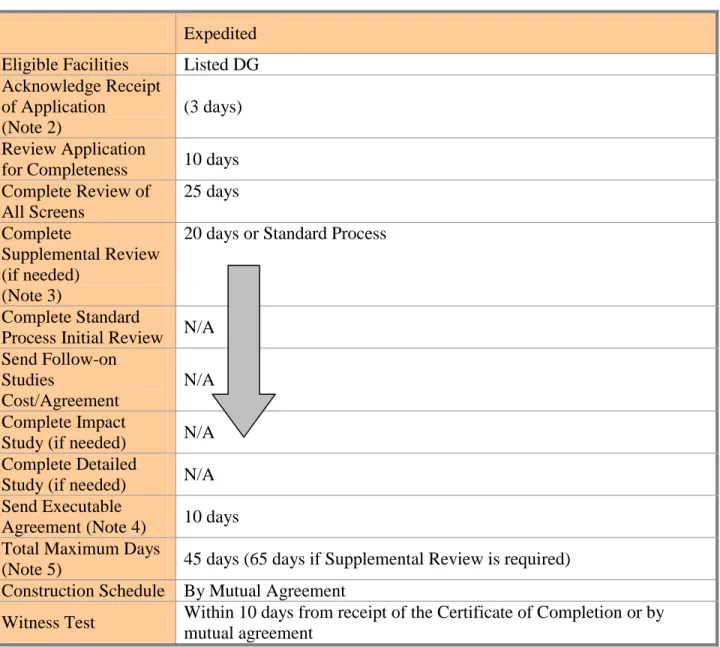
If the requirements cannot be determined within the time and cost allotted in the initial review and any internal studies, the Company may require that the project undergo a Supplemental Review that determines System Modifications, but does not require review of the Supplemental Review Screens A-C as described in Figure 1, Note 8. The Company will provide a Supplemental Review Agreement (Exhibit D). The time allocated for Supplemental Review is a maximum of 30 hours of engineering time. In all cases, the Interconnecting Customer will pay for the cost of
modifications as discussed in Section 5.0.
d) Assuming all applicable Screens are passed and System Modifications have been determined in accordance with Section 3.3(c) above, if applicable, the Company sends, within 10 Business Days, the Interconnecting Customer an executable Interconnection Service Agreement, which will include a quote for any required System Modifications and/or reasonable Witness Test costs, and a construction schedule for any required System Modifications.
Issued by: Craig Hallstrom Filed: May 13, 2015 elect to go directly to an Impact Study in the Standard Process. If the
Interconnecting Customer executes the Supplemental Review Agreement, the Company will conduct the review within 20 Business Days. If the Supplemental Review determines the requirements for processing the application through the Expedited Process including any System Modifications, then the Company will offer an executable Interconnection Service Agreement that identifies System Modification requirements, reasoning, and costs for these modifications as defined in Section 5.0, as well as a construction schedule for such modifications. If the Supplemental Review does not determine the requirements, it will include a proposed Impact Study Agreement as part of the Standard Process which will include an estimate of the cost of the study. Even if a proposed project initially fails a particular Screen in the Expedited Process, if Supplemental Review shows that it can return to the Expedited Process then it will do so. Supplemental Review includes up to 30 hours of engineering time.
f) If an Interconnection Application fails the Supplemental Review, the Company shall provide, in writing, the specific Screen(s) that the Application failed,
including the technical reason for failure, and the data and the analysis supporting the Supplemental Review the Company shall provide the Interconnecting
Customer the option to participate in a Supplemental Review results meeting. Within 5 Business Days of the Interconnecting Customer’s request for a Supplemental Review results meeting, the Company shall contact the Interconnecting Customer and offer to convene a meeting at a mutually
acceptable time to review the Supplemental Review screen analysis and related results to determine what modifications, if any, may permit the Facility to be connected safely and reliably without requiring the Interconnection Application to be reviewed in the Standard Process, including conducting an Impact Study. g) The Company will provide the Interconnecting Customer with an Interconnection
Service Agreement for signature. Time Frames for signing the Interconnection Service Agreement are specified in Section 3.6.2. Once the Interconnecting Customer signs and returns the Interconnection Service Agreement, it is then counter-signed and dated by the Company.
h) If the Interconnecting Customer executes the Interconnection Service Agreement, the Interconnecting Customer will pay costs associated with System
Modifications in accordance with the time frames specified in Section 3.6.2. i) Interconnecting Customer completes installation and, upon receipt of payment in
full, the Company completes System Modifications, if required, within the mutually agreed upon Time Frame provided in the System Modifications construction schedule in the Interconnection Service Agreement.
j) Interconnecting Customer sends Certificate of Completion to Company. See Attachment 2 of the Interconnection Application.
k) Following receipt of the Certificate of Completion, the Company may inspect the Facility for compliance with standards by arranging for a Witness Test. The Company is obligated to complete this Witness Test within 10 Business Days of the receipt of the Certificate of Completion, and if required, Company-approved Witness Test procedure. If the Company does not inspect in 10 Business Days or by mutual agreement of the Parties, the Witness Test is deemed waived.
l) Assuming the wiring inspection, all Compliance Documentation and/or Witness Test are satisfactory, the Company notifies the Interconnecting Customer in writing that interconnection is authorized and issues the Authorization to Interconnect. If the wiring inspection, Compliance Documentation and/or Witness Test are not satisfactory, the Company has the right to disconnect the Facility, and will provide information to the Interconnecting Customer describing clearly what is required to receive the Authorization to Interconnect. The
Company shall issue the Authorization to Interconnect within 5 Business Days from the Interconnecting Customer’s satisfaction of the connection requirements (i.e. the wiring inspection, all Compliance Documentation, and the Witness Test) and the Company’s installation of the required meter, whichever occurs later. The Interconnecting Customer has no right to operate in parallel until they have
received the Authorization to Interconnect.
m) An Interconnecting Customer’s Interconnection application may only be moved from the Expedited Process to the Standard Process if the application fails a Screen in Figure 1 or 2 or the Supplemental Review of an application that failed a Screen in Figure 1 or 2 exceeds 30 hours of engineering time, or the
Interconnecting Customer elects to go directly to the Standard Process. 3.4 Standard Process
The Standard Process has the longest maximum time period and highest potential costs. There are three ways to enter the Standard Process:
a) Interconnecting Customers may choose to proceed immediately to the Standard Process. Application process:
i) Interconnecting Customer submits an Expedited/Standard Application filled out properly and completely (Exhibit C).
Issued by: Craig Hallstrom Filed: May 13, 2015 iii) Company evaluates the application for completeness and notifies the
Interconnecting Customer within 10 Business Days of receipt that the application is or is not complete and, if not, advises what is missing. b) Based upon the results of the initial and Supplemental Reviews, Interconnecting
Customers may be required to enter the Standard Process.
c) Based on the results of the Screens in Figure 2 for networks, Interconnecting Customers may be required to enter the Standard Process.
The Standard Process is as follows:
a) The Company will conduct an initial review, which may include if requested, a scoping meeting/discussion with the Interconnecting Customer to review the
application. From the initial review, the Company will provide pertinent information such as:
The available fault current at the proposed location;
The existing peak loading on the lines in the general vicinity of the Facility;
The configuration of the distribution lines;
If the application is subject to the Pre-Application Report requirement in Section 3.2, the Pre-Application Report may, as necessary, be discussed at the initial review.
b) Company provides an Impact Study Agreement, including a cost estimate for the study. Where there are other potentially Affected Systems, and no single Party is in a position to prepare an Impact Study covering all potentially Affected Systems, the Company will coordinate but not be responsible for the timing of any studies required to determine the impact of the interconnection request on other potentially Affected Systems. The Interconnecting Customer will be directly responsible to the potentially Affected System operators for all costs of any additional studies required to evaluate the impact of the interconnection on the potentially Affected Systems. To the extent any studies or System Modifications are required, all associated agreements will be between the Affected System operator and the Interconnecting Customer. The Time Frames in Tables 1 through 5 will be affected if ISO-NE determines that a system Impact Study is required. This will occur if the Interconnecting Customer’s Facility is, or group of facilities are, equal to or greater than 5 megawatts (“MW”) and may occur if the Interconnecting Customer’s Facility is greater than 1 MW.
c) Once the Interconnecting Customer executes the Impact Study Agreement and pays pursuant to the terms thereof, the Company will conduct the Impact Study.
d) If the Interconnecting Customer has not yet selected the generation equipment, the Interconnecting Customer has the right to ask the Company to perform an Impact Study for up to three options of the same generation type and location. However, the cost of the Impact Study will increase in accordance with the complexity of the requested options. Also, the Time Frame for the Impact Study will revert to a mutually agreed upon duration but not to exceed an additional one-third of the allowable Time Frame for each additional option.
e) If the Company determines, in accordance with Good Utility Practice, that the System Modifications to the Company EPS are not substantial, the Impact Study will
determine the scope and cost of the modifications as defined in Section 5.0. If the Company determines, in accordance with Good Utility Practice, that the System Modifications to the Company EPS are substantial, the Impact Study will produce an estimate for the modification costs (within ±25%) and a Detailed Study Agreement and cost for Interconnecting Customer’s approval.
f) Within the Standard Process are extended Time Frames applicable to Complex Facility Interconnection Applications that will require extensive System
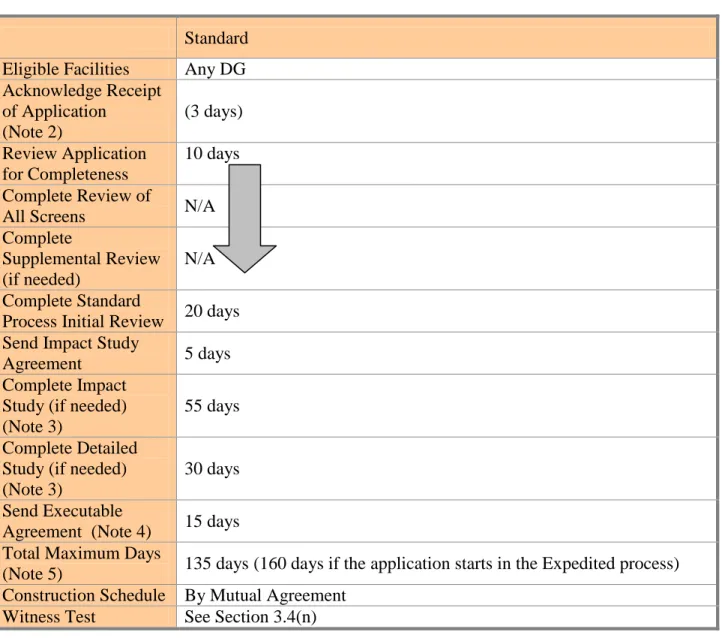
Modifications. The Company will inform the Interconnecting Customer within 20 days following the commencement of the Impact study whether the Interconnection Application shall be treated as a Complex Project under the Standard Process. g) At the conclusion of the Impact Study, an Interconnecting Customer may request and
sign an Interconnection Service Agreement. If an Interconnecting Customer chooses to sign an Interconnection Service Agreement following the conclusion of the Impact Study, the Interconnecting Customer agrees to be bound by the ±25% System
Modification costs identified in the Impact Study (see 3.4(a)-(e) above). The Company will not be required to provide a construction schedule until after it completes the Detailed Study.
h) Once the Interconnecting Customer executes the Detailed Study Agreement and pays pursuant to the terms thereof, the Company will conduct the Detailed Study.
i) Upon completion of any necessary studies and in the event that the Interconnecting Customer did not exercise the early Interconnection Service Agreement option above, the Company shall send the Interconnecting Customer an executable Interconnection Service Agreement, which will include a quote for any required System
Modifications and reasonable Witness Test costs as well as a construction schedule. j) The Company will provide the Interconnecting Customer with an Interconnection
Issued by: Craig Hallstrom Filed: May 13, 2015
signs and returns the Interconnection Service Agreement, it is then counter-signed and dated by the Company.
k) If the Interconnecting Customer executes the Interconnection Service Agreement, the Interconnecting Customer will pay costs associated with System Modifications in accordance with the time frames specified in Section 3.6.2.
l) The Interconnecting Customer completes installation and the Company, upon receipt of payment in full, completes any required System Modifications within the mutually agreed upon Time Frame provided in the construction schedule in the Interconnection Service Agreement or Detailed Study as applicable.
m) Interconnecting Customer sends Certificate of Completion to Company. See Attachment 2 of the Interconnection Application.
n) Company inspects completed installation for compliance with requirements. The Company shall require a Witness Test of the Facility as approved by the Company. The Interconnecting Customer will provide a proposed Witness Test and all requisite supporting documentation for review by the Company once the Interconnecting Customer has completed the installation of the Facility. Once all requisite information has been provided by the Interconnecting Customer, the Company shall have 8
Business Days to approve the Interconnecting Customer’s proposed Witness Test. The Company shall then inform the Interconnecting Customer when it has approved the Witness Test procedures. Once the Witness Test has been approved by the Company, the Interconnecting Customer will call the Company to arrange for the Witness Test. The Company is obligated to complete this Witness Test within 10 Business Days or by mutual agreement upon receipt of the Interconnecting Customer’s proposed Witness Test.
o) Assuming the wiring inspection, all Compliance Documentation and/or Witness Test are satisfactory, the Company notifies the Interconnecting Customer in writing that interconnection is authorized and issues the Authorization to Interconnect. If the wiring inspection, Compliance Documentation and/or Witness Test are not
satisfactory, the Company has the right to disconnect the Facility, and will provide information to the Interconnecting Customer describing clearly what is required to receive the Authorization to Interconnect. The Company shall issue the Authorization to Interconnect within 5 Business Days from the Interconnecting Customer’s
satisfaction of the connection requirements (i.e. the wiring inspection, all Compliance Documentation, and the Witness Test) and the Company’s installation of the required meter, whichever occurs later. The Interconnecting Customer has no right to operate in parallel until they have received the Authorization to Interconnect.
3.4.1 Group Study Process
a) This section shall be in effect for a period of 12 months commencing June 1, 2015 (the “Pilot Period”). Any duties or obligations of either the Company or an
Interconnecting Customer associated with a Group Study that arise during the Pilot Period shall remain in effect after the Pilot Period, subject to the Company’s Interconnection Tariff and Terms and Conditions for Distribution Service in effect from time to time.
b) As appropriate, the Company shall require that an Interconnecting Customer within the Common Study Area participate in the Group Study whenever a Group exists. The Company shall invite all potential Group members to a Group Study scoping meeting to discuss the feasibility of the Group Study after the initial or screening reviews have been completed for all potential Group members. The application receipt and review, and all screening reviews, for each potential Group member is subject to the applicable Time Frames set forth in the Tariff, Tables 1 to 5, as applicable. The Company may also, in its sole judgment, conduct a study for an Interconnecting Customer separate from the Group Study to the extent warranted by Good Utility Practice.
c) If any Interconnecting Customer within the Common Study Area wishes to continue in the application process outside of a Group or are removed from a Group because of non-conformance with Time Frames or other Group Study Process requirements, that Interconnecting Customer’s’ Facility shall be studied after the completion of the Group Study (or the study of the individual applicant that chose to remain within the Group), even if the Interconnecting Customer that was removed from the Group applied before the remaining Group member(s).
d) Each member of the Group shall pay a percentage of the Group Study cost on the basis of applied capacity (in MW AC of aggregated system design capacity for each applicant’s Facility).3
If a member ceases to belong to the Group, any contributions to the Group Study cost from that member shall be non-refundable. Time Frames for completion of Group Studies shall be by mutual agreement.
3
Any scope and costs of ISO New England studies shall be considered to be separate from the scope and costs of a Group Study. Each Facility included in the Group may be subject to additional ISO-NE requirements, compliance with which is the responsibility of the Interconnecting Customer.
Issued by: Craig Hallstrom Filed: May 13, 2015
e) The Company may reassess study costs subsequent to a change in composition of the Group and any increase in Group Study costs must be paid by the remaining Group members.
f) A Group Study may only commence after completion of the Preceding Study that was in-process when the Group was formed and all members of the Group have met the prerequisites for commencement of an Impact Study. The Preceding Study is the Impact Study that was in process when the Group was formed, so the Time Frame for the Preceding Study is the same Time Frame applicable for the underlying Impact Study. Thereafter, the Time Frames are by mutual agreement with the parties. No Time Frame extensions shall be allowed for any Group member unless all Group members agree to the extension in writing. Should any Group member not comply with its Time Frame requirements, the member shall be removed from the Group. g) The Group Study shall be performed such that System Modifications (whether shared
or individual) and associated costs shall first be determined for the entire Group, along with the allocated costs for each member of the Group. Generally, subsequent to studying the impacts and System Modification requirements of the entire Group, the same study approach shall be performed in iterations for the Group with the latest applicant in the Group removed from consideration. However, if all Group members mutually agree in the scoping meeting, the Company may limit the scope of the Group Study to particular iterations of the composition of the Group.
h) Once all iterations of the Group Study are complete, the Group Study report shall be distributed to the Group, and the Group member(s) shall decide whether to proceed through the remainder of the interconnection process. Earlier applicants within the Group shall have precedence over later applicants if earlier applicants are able to modify their applications that obviate the need for significant distribution
modifications for their modified projects. To the extent that a change to the Group composition requires additional studies, the remaining Group member(s) shall pay their cost, and the completion date of the revised study shall be re-estimated by the Company.
i) Cost allocations shall be assessed on the basis of applied capacity (in MW AC of aggregated system design capacity for each applicant’s Facility) for the portion of System Modifications associated with the Group Study that benefit multiple Group member(s). This shall pertain to both Detailed Study and construction costs. The cost for Detailed Studies and System Modifications that are not common shall be the sole responsibility of the Group member(s) for whom the System Modifications are required. The Company shall not commence any work on Detailed Studies associated with common System Modifications until full payment is received from all affected Group member(s) for the studies. The Company shall not commence any work on
construction associated with common System Modifications until full payment is received from all affected Group member(s) for the System Modifications. System Modifications costs associated with the Group Study shall be subject to section 5.3 of the Interconnection Tariff.
j) The Group Study shall not be binding upon any member. To the extent that any Interconnecting Customers are no longer part of an on-going Group Study or submit applications after an on-going Group Study has commenced, the on-going Group Study shall be considered a Preceding Study.
k) A group of facilities on a common bus may be subject to additional requirements, including without limitation ISO-NE operating procedure OP-14. If the ISO-NE maintains that a group of facilities must be set up as a single modeled generator, each member of the group (i.e., each individual generator) must comply with these
requirements. To the extent permitted under applicable ISO-NE requirements, group members may arrange for an alternative means of performing the duties required under OP-14. In all cases, it will be the group members’ responsibility to determine what the individual ISO-NE requirements are, and the most efficient means to comply with those requirements (i.e., individually or collectively).
3.5 Time Frames
The Company and Interconnecting Customer will meet Time Frames for each step in the
pertinent interconnection process. The Time Frames provided in this tariff represent a Company or Interconnecting Customer obligation of completion within the relevant Business Days in the Tariff beginning with the next Business Day following the completion of the prior step and concluding with the applicable deliverable in the tariff. All steps with a Time Frame represent a regulatory obligation of the Company where applicable and an Interconnecting Customer
obligation to ensure maintaining their place in the interconnection process. Time Frames are subject to Force Majeure as provided in Section 3.7 and Parties’ extensions as described in Section 3.6.2.
Unless otherwise noted, all Time Frames in the Interconnection Tariff reference Company Business Days. In addition, in the event information has been requested of the Interconnecting Customer, all application time keeping shall commence the next Business Day following receipt of information from the Interconnecting Customer.
If an Interconnecting Customer requests a project change during the interconnection process prior to the execution of the Interconnection Service Agreement, and if the Company determines
Issued by: Craig Hallstrom Filed: May 13, 2015
Interconnection Application with associated fees and the revised project shall be placed at the end of the project queue. If the Company determines the change results in “moderate”
alterations to the project, the Interconnecting Customer will be required to resubmit their Interconnection Application with all updated information. For proposed changes with “moderate” impacts on the project, the Company shall determine whether additional fees are required. While the Interconnecting Customer will not have to reapply and start the
Interconnection Application process over, the Company will reset the Study Time Frame to the beginning, but endeavor to complete the Study earlier than that allotted time. “Significant” and “moderate” shall be defined by the Company-specific technical standards.
If the Interconnecting Customer requests that the Company study “significant” alternative equipment or changes the capacity of the interconnecting Facility that requires Company restudying, subsequent to an executed Interconnection Service Agreement, the Company and Interconnecting Customer will determine a mutually agreed to Time Frame and applicable fees/costs covered by the Interconnecting Customer. “Significant” shall be defined by the Company-specific technical standards.
Table 1 lays out the maximum Time Frames allowed under the Simplified Process. Table 2 lays out the maximum Time Frames allowed under the Expedited Process. Table 3 lays out the maximum Time Frames allowed under the Standard Process.
Table 4 lays out the maximum Time Frames allowed under the Standard Process for Projects deemed to be Complex Projects.
The Time Frame for each step is stopped when awaiting information from Interconnecting Customers. Any delays caused by Interconnecting Customer will interrupt the applicable Time Frame.
For the Expedited and Standard processes, if the Interconnecting Customer does not initiate construction within twelve (12) months of signing the Interconnection Service Agreement, the Company may require the Interconnecting Customer to provide evidence that the project is moving toward construction. In the event that the Interconnecting Customer cannot provide such evidence, the Company reserves the right to require additional study or require the
Interconnecting Customer to reapply for interconnection. Situations that could trigger
enforcement of this time limit are: (1) material changes on the distribution circuits (e.g., load changes, circuit reconfiguration) or (2) a second application for interconnection received by the Company on a circuit from the same substation. The same rights of the Company to require the Interconnecting Customer to reapply for interconnection pertains if the Interconnecting
Customer, after initiating construction, does not complete construction within twenty-four months. Notwithstanding these maximum Time Frames, the Company shall endeavor to meet the Interconnecting Customer’s needs. However, the Company will be required to retain the