Education Theses, Dissertations and Projects School of Education
2012
The Effect of Select Programmatic Characteristics
on First-Time Pass Rate of the Board of
Certification Examination
Matthea S. HungerfordGardner-Webb University
Follow this and additional works at:http://digitalcommons.gardner-webb.edu/education_etd Part of theHigher Education Commons, and theSports Sciences Commons
This Dissertation is brought to you for free and open access by the School of Education at Digital Commons @ Gardner-Webb University. It has been accepted for inclusion in Education Theses, Dissertations and Projects by an authorized administrator of Digital Commons @ Gardner-Webb University. For more information, please [email protected].
Recommended Citation
Hungerford, Matthea S., "The Effect of Select Programmatic Characteristics on First-Time Pass Rate of the Board of Certification Examination" (2012).Education Theses, Dissertations and Projects.Paper 59.
By
Matthea S. Hungerford
A Dissertation Submitted to the
Gardner-Webb University School of Education in Partial Fulfillment of the Requirements
for the Degree of Doctor of Education
Gardner-Webb University 2012
ii
This dissertation was submitted by Matthea S. Hungerford under the direction of the persons listed below. It was submitted to the Gardner-Webb University School of Education and approved in partial fulfillment of the requirements for the degree of Doctor of Education at Gardner-Webb University.
A. Doug Eury, Ed.D. Date
Committee Chair
Kirk Armstrong, Ed.D. Date
Committee Member
Kelly Taylor, Ed.D. Date
Committee Member
Frances B. Burch, Ph.D. Date
iii
The Effect of Select Programmatic Characteristics on First-Time Pass Rate of the Board of Certification Examination. Hungerford, Matthea, 2012: Dissertation, Gardner-Webb University, Athletic Training Education Program/Athletic Training Program
Design/Athletic Training Education/BOC Examination
This study was designed to examine the progression of Board of Certification (BOC) Domain content within athletic training courses and the introduction of Domain content within the curriculum of the Athletic Training Education Program (ATEP) on first-time pass rate of the BOC exam for 2010 graduates. The researcher also gauged the
perceptions of athletic training education program directors and instructional faculty regarding importance of specific ATEP characteristics on preparing students for success on the BOC examination.
Invited study subjects included all Commission on Accreditation of Athletic Training Educated accredited ATEP directors and associated instructional faculty. Participants were e-mailed a study introduction and link to the survey. The researcher-developed survey gathered data outlining program specifics, BOC examination results, perceptions of ATEP characteristics, and institutional demographics. Pearson Product correlation analyses were utilized to determine relationships between school units where Domains were introduced and 1) percentage first-time success on the BOC and 2) average
individual Domain score. Simultaneous Multiple Regression Analysis was applied to the data to identify optimal timing of introduction of each Domain. Strength of perceptions among respondents was established utilizing Chi square analysis Goodness of Fit, and Kendall’s W. Pearson Product correlation analyses were also utilized to determine relationships between the independent variables of 1) ranking of importance of ATEP components on first-time success on the BOC and 2) successful implementation of ATEP components in the institution’s ATEP with the dependent variables of 1) percentage first-time success on the BOC and 2) average individual Domain score. Multiple Step-Wise Forward Regressions were then applied to the significant factors. All qualitative
responses provided in the survey data were coded utilizing an interpretive method of data coding. Overall descriptive statistics were computed on all survey items.
With the results of this study, it was established that neither the sequence nor timing of Domain content had a measurable influence on first-time success on the BOC
examination with correlations and multiple regressions demonstrating no significant results. The highest ranked ATEP component in regard to importance on first-time BOC success and successful implementation was Learning Over Time with a mode of
“strongly agree” for each. The ranking of Qualifications of Instructors demonstrated predictive power for overall first-time pass percent on the BOC. Qualification of Instructors, Ratio of Instructors to Students, Sequencing of Content within Courses, and Sequencing of Courses each correlated positively to at least 1 of the average Domain scores. These findings suggest that perceptions of importance of ATEP components and actual implementation of ATEP components are more influential on BOC success than sequence or timing of Domain content.
iv
Chapter 1: Introduction ...1
Statement of the Problem ...1
Purpose of the Study ...2
Overview of Methodology ...5
Delimitations ...5
Definition of Terms...6
Summary ...7
Chapter 2: Literature Review. ...9
Current Minimum Standards of CAATE Accredited Undergraduate ATEPs. ...9
Board of Certification Examination ...12
Factors Directly Influencing Success on the Board of Certification Examination ...16
Factors Directly Influencing Success on Other Allied Health Profession Certification/Licensure Examinations ...19
Curriculum Design and Theory ...26
Research Questions ...35 Summary ...37 Chapter 3: Methods ...38 Introduction ...38 Design Statement ...39 Subjects ...39 Instruments ...40 Procedures ...41 Statistical Analyses ...42 Chapter 4: Findings ...44 Introduction ...44
Subject Pool and Demographic Statistics ...45
ATEP Structure ...47
BOC Results...49
Quantitative Perceptions ...52
Qualitative Perceptions ...62
Summary ...80
Chapter 5: Conclusion, Recommendations, and Discussion ...84
Restatement of the Problem ...84
Discussion of Results ...90
Limitations ...121
Implications for Practice ...122
Implications for Future Research ...128
Summary ...129
References ...131
Appendices A Program Director Survey of Athletic Training Education Program Structure and Perceptions of Impactful Programmatic Characteristics on First-time Success on the BOC Examination...136
v
C Program Director Introductory Letter with Informed Consent ...146
D Instructional Faculty Introductory Letter with Informed Consent ...148
Tables 1 NATA Content Areas ...10
2 CAATE Subject Areas ...10
3 Distribution of BOC Examination Questions in Athletic Training Domains ...15
4 Survey Items in Perceptions Construct Area ...41
5 Summary of Subjects (N) from Overall Survey and Individual Construct Areas ...45
6 Mode of Reported ATEP Domain Entry ...48
7 Domain Distribution by Year...49
8 Descriptive Statistics of First-Time Passing Percents and Domain Average on BOC ...50
9 Results of Pearson Correlation Analyses ...51
10 Coefficients Table for Simultaneous Multiple Regression of BOC Results and Domain Entry ...52
11 Summary Statistics for Kendall’s W on Close-ended Perceptions Items ...53
12 Frequency of Domain Introduction by Respondents ...54
13 Frequency Ratings on Importance of ATEP Components on First-Time BOC Success ...55
14 Frequency of Ratings on Successful Implementation of ATEP Components ...56
15 Results of Pearson Correlations Between Important ATEP Components and BOC Scores ...57
16 Results of Pearson Correlations Between Successful ATEP Components and BOC Scores ...58
17 Coefficients Table for Step-wise Multiple Regression of Domain IV Score ...60
18 Coefficients Table for Step-wise Multiple Regression of Domain VI Score ...62
19 Important ATEP Factors as Reported by Respondents...72
20 Ideal Domain Sequence Versus Reported Domain Sequence ...92
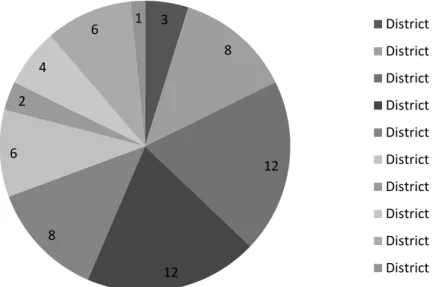
Figures 1 Survey Subjects by NATA District...46
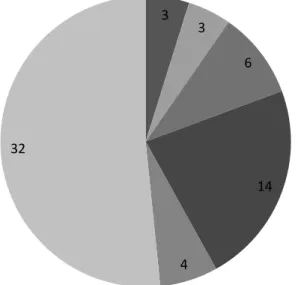
2 Length of CAATE Accreditation for Survey Subjects ...47
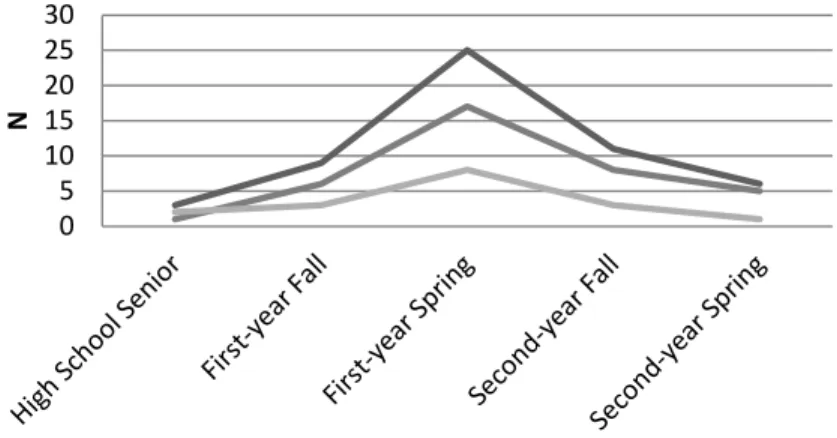
3 Timing of Admittance for Baccalaureate ATEPs ...48
4 Length of Baccalaureate ATEP with Mean First-time BOC Pass Percent ...50
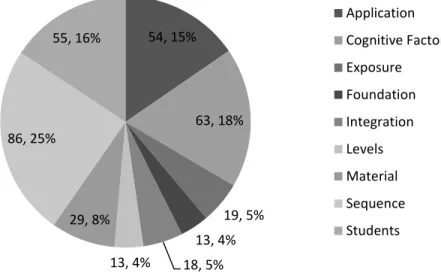
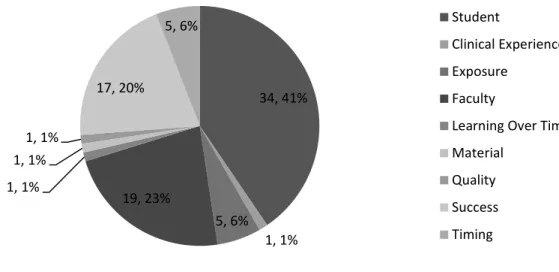
5 Coded Items for Order of Domain Entry Beneficial for BOC Exam Success ....63
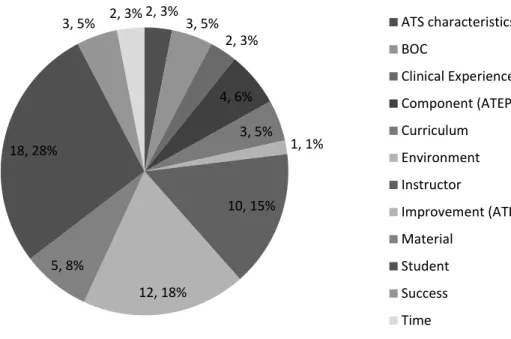
6 Neutral Coded Responses for Factors Important to First-time Success on the BOC ...67
7 Important Coded Responses for Factors Important to First-time Success on the BOC ...67
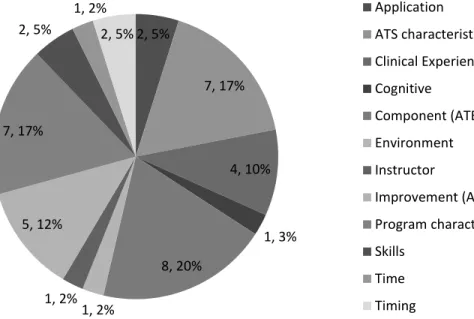
8 Neutral Coded Responses for ATEP Components Implemented Successfully ..73
9 Responses Coded as ATEP Strengths ...74
10 Comments Coded as ATEP Weaknesses ...75
Chapter 1: Introduction Statement of the Problem
In order to legally practice as an athletic trainer in 46 of the United States, one must be certified by the Board of Certification (BOC) and obtain state licensure for practice (BOC, 2010b). Currently, the only way to become eligible to sit for this exam is to complete an accredited athletic training educational program (ATEP) (NATABOC, 2004c). Many researchers in recent years have attempted to identify specific factors that indicate the ability to pass the certification examination on the first attempt. These factors include overall GPA (Harrelson, Gallaspy, Knight, & Leaver-Dunn, 1997;
Middlemas, Manning, Gazzillo, & Young, 2001), athletic training GPA, academic minor GPA, ACT composite score, number of semesters of university enrollment (Harrelson et al., 1997), gender (Draper, 1989; Harrelson et al., 1997; Middlemas et al., 2001),
fraternity/sorority affiliation, academic minor, teaching/non-teaching track (Harrelson et al., 1997), number of clinical hours (Draper, 1989; Middlemas et al., 2001; Turocy, Comfort, Perrin, & Gieck, 2000), route to certification eligibility (i.e., internship vs. curriculum) (Draper, 1989; Middlemas et al., 2001; Starkey & Henderson, 1995), learning style (Draper, 1989), previous allied health and athletic training experiences, age, and type of sport experience (Turocy et al., 2000). However, the only factors that have a strong relationship to successfully passing the BOC exam are academic in nature, specifically GPA (Draper, 1989; Harrelson et al., 1997; Middlemas et al., 2001). What is missing from research literature concerns the structured environment in which the
students study, established by both the accreditation agencies and institutional guidelines under the supervision of the athletic training program director. This lack has also been
recognized by current researchers in the field. Studies from Middlemas as well as Starkey and Henderson stated that “specific didactic requirements” (Middlemas et al., 2001, p. 140) and “various academic models and departmental structures,” (Starkey & Henderson, 1995, p. 62) respectively, needed to be further researched in an effort to determine outlying factors that effect the candidate’s outcome on the BOC examination.
Although programs must be accredited by the Commission on Accreditation of Athletic Training Education (CAATE), which requires courses to include content as outlined in the CAATE’s Standards, with influence from the National Athletic Trainers’ Association’s (NATA) Educational Competencies and the BOC’s Role Delineation Study (RDS) (BOC, 2005; CAATE, 2008b; NATA), each program has institutional autonomy to design the curriculum differently. In addition to the NATA’s Educational
Competencies having influence in course content, each student must demonstrate mastery in each identified skill set (NATA, 2006). These competencies are based on the
relevance and criticality of an athletic trainer’s role in delivering healthcare to the patient population. Moreover, the frequency of services provided by athletic trainers is based on the most recent Role Delineation Study. From these bodies of knowledge, entry-level ATEPs structure courses to meet the Educational Competencies with content spanning the six Domains of athletic training (as established by the Fifth Edition Role Delineation Study).
Purpose of the Study
Since the CAATE and the NATA choose not to mandate the entire educational process, accredited programs have institutional and programmatic autonomy to create course progressions and decide when to implement the progression within the college
experience. Course progression refers to the sequencing of the athletic training specific courses with implementation being when the course sequence begins within the degree. In establishing the content in these courses, program directors must ensure that each competency is both being taught and being evaluated throughout the curriculum structure. These competencies are linked to specific Domains of professional practice established through the BOC’s Role Delineation Study. The current Fourth Edition Educational Competencies are based on the Fifth Edition Role Delineation Study which outlines six Domains of Athletic Training. Through outlining sequencing of competencies in courses, program directors are simultaneously sequencing Domain content throughout the
curriculum. When structuring curriculum content, programs are to demonstrate the concept of Learning Over Time which has been defined by the CAATE as “the process by which professional knowledge and skills are learned, integrated, and
evaluated…[involving] initial formal instruction and evaluation of knowledge and skill” over an adequate length of time “to allow for practice and integration of discrete
knowledge and skill into demonstration of comprehensive clinical (actual or simulated) proficiency” (CAATE, 2008b, p. 18). In order for students to develop mastery of the professional skills needed to enter clinical practice, the Domain content needs to be introduced early enough so practice within the educational environment can be performed.
Although each program is unique, all ATEPs have one common goal – to prepare competent, entry-level athletic trainers equipped to impact both the profession and patient population in a positive manner. The profession as a whole has deemed the BOC
is well known that program directors and students alike seek to achieve a high first-time pass rate on the exam for both future success and prestige. Dodge, Walker, and Laursen (2009) stated, “If the program is truly preparing their students for entry-level practice, the program should have a satisfactory passing rate on the BOC exam” (p. 50). The CAATE has taken steps to move this ultra-subjective “satisfactory” rate to a quantifiable number. A major change in the working draft of the 2012 CAATE Standards is the inclusion of BOC pass rates into the outcomes section and mandated publication of institutional BOC pass rates (CAATE, 2011). The current version states that ATEPs “must meet or exceed a 3-year aggregate of 50 percent first time passing rate on the BOC exam” (CAATE, 2011, p. 17) and publish institutional pass rates compared to the national average, number of students who attempted the exam, percentage of first-time pass rates and overall pass rate for the 3-year time period (CAATE, 2011). With this new accreditation standard looming on the horizon, it is even more pivotal to identify program-specific
characteristics influencing success on the BOC pass rate.
This study was designed to examine the progression of BOC Domain content within athletic training courses and the introduction of Domain content within the
curriculum of the ATEP on first-time pass rate of the BOC exam for 2010 graduates. The researcher believed that the ideal Domain progression would be Immediate Care (Domain III), Prevention (Domain I), Clinical Evaluation and Diagnosis (Domain II), followed by Treatment, Rehabilitation and Reconditioning (Domain IV), Organization and
Administration (Domain V) and Professional Responsibility (Domain VI) without regard to order for the last three Domains. It was also hypothesized that earlier implementation of Domain content within course progression would result in higher first-time success
rate of the overall BOC examination. In addition to objective data gathered, the researcher gauged the perceptions of athletic training education program directors and instructional faculty regarding importance of specific ATEP characteristics on preparing students for success on the BOC examination.
Overview of Methodology
Invited study subjects included all CAATE-accredited ATEP directors and associated instructional faculty. Participants were e-mailed a study introduction and link to the survey instrument which split into the appropriate program director or instructional faculty veins upon selection of role within the ATEP. The researcher-developed
surveys aimed to gather data outlining program specifics, BOC examination results, perceptions of ATEP characteristics, and institutional demographics. Pearson Product correlation analyses were utilized to determine strength and direction of relationships between a school unit where a Domain is introduced and 1) percentage first-time success on the BOC and 2) average individual Domain score. Establishing correlational
significance laid the groundwork for utilizing a multiple regression analysis to identify optimal timing of introduction of each Domain within the ATEP structure. Strength of perceptions among both program directors and instructional faculty were established utilizing Chi square analysis. All qualitative responses provided in the survey data were coded utilizing an interpretive method of data coding (Miles & Huberman, 1994). Finally, overall descriptive statistics were computed on all survey items.
Delimitations
The scope of this study was delimited to:
entry-level athletic training education programs (both baccalaureate and entry-entry-level master programs).
Data collected pertaining to the BOC examination was delimited to:
1. ATEPs that have been accredited and in good standing with the CAATE
during 2009-2010 academic year.
2. ATEPs who received an Individual School Report from the BOC for the
2010-2011 testing year.
3. Information from the 2010 Individual School Report pertaining to the 2010-2011 testing year.
Definition of Terms
For the purpose of this study, the following operational definitions were used: 1. Course Progression: the sequencing and timing of a course within a degree
program.
2. Didactic Knowledge: information pertinent to athletic training gained by the student in a classroom setting, normally ATEP required courses.
3. Domains: knowledge required to practice as an athletic trainer as identified by the BOC’s Fifth Edition Role Delineation Study, divided into six practice Domains (Domain I – Prevention; Domain II – Clinical Evaluation and Diagnosis; Domain III – Immediate Care; Domain IV- Treatment, Rehabilitation and Reconditioning; Domain V – Organization and Administration; Domain VI – Professional Responsibility).
4. Good Standing: an ATEP not on any type of probationary status with the CAATE.
5. Learning Over Time– “the process by which professional knowledge and skills are learned, integrated, and evaluated” involving “initial formal instruction and evaluation of knowledge and skill…followed by a time of sufficient length to allow for practice and integration of discrete knowledge and skill into a demonstration of comprehensive clinical (actual or simulated) proficiency” (CAATE, 2008b, p. 18).
6. Individual School Report: document sent to institutions from the BOC at the conclusion of a testing year summarizing examination outcomes for the institution. This report is only sent to institutions having five or more students sit for the certification examination during one testing year (L. Horst, personal communication, October 4, 2005).
7. School Unit: unit of measure that the institution uses to divide a school year (e.g. semester, trimester, quarter).
8. School Year: two semesters, three trimesters, or three quarters. 9. Sequencing: the order of courses and/or Domains.
10.Testing Year: begins with the BOC exam offered in April and concludes with the BOC exam offered in February of the following year.
11.Timing: the school unit in which a course is taught.
Summary
Athletic training education lies in the crossroads of two ever-changing fields: medicine and education. This provides a unique dynamic that three interested bodies (the BOC, the CAATE, and the NATA) strive to guide into best practice. Juggling the CAATE’s Standards, the NATA’s Competencies, and the BOC’s Role Delineation Study
along with any institutional guidelines in an effort to ultimately produce quality entry-level athletic trainers is a daunting task. Multiple factors come into play in this fluid dynamic. It was the researcher’s aim to capture a snapshot current programmatic structure in order to identify possible strengths, trends, and direction for overall improvement of athletic training education.
Chapter 2: Literature Review
This review discusses current minimum standards set forth by the Commission on Accreditation of Athletic Training Education (CAATE) for professional athletic training educational programs (ATEPs), the Board of Certification (BOC) examination, factors directly influencing success on the BOC examination, factors directly influencing success on other allied health profession certification/licensure examinations, and curriculum design and theory.
Current Minimum Standards of CAATE Accredited ATEPs
The current “Standards for the Accreditation of Entry-Level Athletic Training Education Programs” were developed by the CAATE with input from the American Academy of Family Physicians, American Academy of Pediatrics, American Orthopaedic Society for Sports Medicine, and NATA (CAATE, 2008a; CAATE, 2008b). The
Standards outline all minimum requirements for accredited ATEPs, including
sponsorship, personnel, resources, operational policies, health and safety, student records, outcomes, curriculum and instruction, clinical education, and administering and
maintaining accreditation (CAATE, 2008b). This section focuses on summarizing the educational/class and timeline requirements as established in the Standards.
The curriculum must include emphasis on instructional subject areas as outlined by NATA’s Athletic Training Educational Competencies and the current BOC Role
Delineation Study which is further discussed in later sections (CAATE, 2008a; CAATE, 2008b). The competencies are divided into 12 content areas listed below in Table 1 (NATA, 2009). Each area is further subdivided into cognitive competencies,
psychomotor competencies, and clinical proficiencies (NATA, 2006). The competencies are “designed to delineate a standardized educational content required by an entry-level
Athletic Trainer” (CAATE, 2008a, p. 1) and should be reflected in the classroom, clinical education, and clinical experiences (CAATE, 2008b).
Table 1
NATA Content Areas
Risk management and injury prevention Therapeutic exercise
Pathology of injuries and illnesses General medical conditions and disabilities
Assessment and evaluation Nutritional aspects of injury and illness
Acute care of injury and illness Psychosocial intervention and referral
Pharmacology Health care administration
Therapeutic modalities Professional development and responsibilities
In addition to the competency content areas, the Standards outline “core” subject areas around which the curriculum should be centered (CAATE, 2008b). The areas may be taught as combined courses or individual classes. The Standards include twenty subject areas as listed in Table 2.
Table 2
CAATE Subject Areas
Assessment of injury/illness Pathology of injury/illness
Exercise physiology Pharmacology
First aid and emergency care Professional development and
responsibilities General medical conditions and
disabilities Psychosocial intervention and referral
Health care administration Risk management and injury/illness
prevention
Human anatomy Strength training and reconditioning
Human physiology Statistics and research design
Kinesiology/biomechanics Therapeutic exercise and rehabilitative
techniques
Medical ethics and legal issues Therapeutic modalities
Nutrition Weight management and body composition
In addition to classroom instruction, a minimum of two academic years of clinical experience with course credit is required (CAATE, 2008b). The clinical experience must
count for course credit, be assessed frequently throughout the experience, and “follow a logical progression that allows for increasing amounts of clinically-supervised
responsibility” (CAATE, 2008b, p. 10) that is mirrored in the didactic courses and acquirement of psychomotor skills. Clinical experiences provide direct patient care in which the student is given opportunity to integrate psychomotor, cognitive and
foundational behaviors of professional practice, effectively combining classroom
instruction with practical, hands-on experience (CAATE, 2008b). Each of these aspects focus on a different component of understanding/competence of skills needed to practice as a professional in athletic training. Psychomotor aspects include the ability to
physically perform the required skill and/or proper manipulation of a device.
Demonstration of comprehension of science, theory, and techniques incorporated in the Proficiency is included under the cognitive umbrella. Lastly, the foundational behaviors include professional and ethical components inherent in athletic training professional practice (NATA, 2006).
The aim of clinical education is not solely focused on the integration of didactic knowledge to applied skill and clinical decision-making. It is designed for an athletic training student (ATS) to observe and begin to understand the role of an athletic training as a “healer” contributing to individual lives and society as a whole, seeing how athletic trainers establish and maintain necessary relationships both professionally and personally. It also allows the students to begin to attain “the essential knowledge and skills needed to provide athletic training services to patients of differing ages and genders and work, and lifestyle circumstances and needs” (NATA, 2006, p. i). The CAATE recommends for these experiences to begin early in the ATEP. Within the minimum recommendation of 2
years, ATSs should have varying exposure including but not limited to gender, level of risk, protective equipment, and addressing the continuum of care, all of which should meet the Domains of athletic training (CAATE, 2008b). The clinical experience must be under the direct supervision of a qualified clinical instructor or approved clinical
instructor with a minimum of 1-year work experience in his/her respective field. It is recommended that no more than eight students be assigned for direct supervision by a clinical instructor or approved clinical instructor (CAATE, 2008b). At least 75% of the clinical experience must take place under direct supervision of a certified athletic trainer in a clinical setting of an athletic training room with exposure to athletic practice and competition. The other year may be completed in a clinic, hospital, other health care facility, or continued in an athletic training room (CAATE, 2008b).
Board of Certification Examination
State legislature regulates the practice of athletic training in 48 states (with the exception of California and Alaska), with 46 states requiring an individual to successfully pass the National Athletic Trainers’ Association Board of Certification examination in order to practice as an athletic trainer (BOC, 2010b). The BOC is responsible for development, administration, and evaluation of the certification examination for athletic trainers (NATABOC, 2004c).
Overall the first step in the development of the BOC examination was to conduct a Role Delineation Study (NATABOC, 2004c) which defines “the primary
responsibilities of the entry-level ATC credential holder, the essential tasks the ATC credential holder performs, and the knowledge and skill the ATC credential holder must possess in order to provide athletic training services in a competent manner”
(NATABOC, 2004a, p. 1). This was achieved through a BOC-appointed committee, consisting of subject-matter experts, who began the process by defining six Domains of athletic training including Prevention; Clinical Evaluation and Diagnosis; Immediate Care; Treatment, Rehabilitation, and Reconditioning; Organization and Administration; and Professional Responsibility. The study then further subdivides these areas into distinct tasks, knowledge, and skills essential to practicing as an athletic trainer (NATABOC, 2004c). Following the completion of the Role Delineation, a validation survey was developed with a rating system for importance, criticality, and relevance of the Domains (and individual subdivisions) for entry-level athletic trainers. The survey for the Fifth Edition Role Delineation Study was sent out to approximately 5,000 actively-practicing, certified athletic trainers (NATABOC, 2004c) with approximately one third of these choosing to respond (NATABOC, 2004a). The results were
comparable to ratings of the committee, therefore the study was determined to be a relevant assessment of the profession (NATABOC, 2004c). The first Role Delineation Study was conducted in 1982 with a new study being conducted approximately every five years (NATABOC, 2004c).
The specific development of a BOC examination begins with a test blueprint developed from the Role Delineation survey results. This blueprint outlines the content included in each test. The survey results, relating to importance, criticality, and relevance of the Domains and tasks, are used as a baseline in determining the percentage of
questions from each content area to be included in the examination (NATABOC, 2004c). Questions are then developed following the outline of the test blueprint. Practicing athletic trainers, athletic training educators, and allied health professionals trained in
writing, reviewing, editing, and validating questions are responsible for question
development (NATABOC, 2004c). Each question developed is validated by at least two verifiable references and at least three other content-area specialists. During this process each question is assigned to a content area, rated for cognitive level, and validated regarding appropriateness for an entry-level athletic trainer (NATABOC, 2004c). Once the questions make it through this process, each one is sent for psychometric and editorial review. Following this review, the resulting question is qualified to be entered into the BOC computerized test bank and is considered eligible for inclusion on BOC
examinations (NATABOC, 2004c). A draft examination is created by random selection of questions from the test bank while ensuring that the correct number of questions from each content area is included. The BOC examination committee reviews the draft to verify technical accuracy, to guard against duplication of questions, and to identify any possible problematic areas within the test (NATABOC, 2004c).
Historically, the exam consisted of three parts, the Written examination consisting of a multiple choice exam, the Practical examination, consisting of various essential clinical skills, and the Written Simulation examination consisting of clinical scenarios to demonstrate the ability to engage in successful clinical decision-making. These individual tests were designed to assess different aspects of a candidate’s knowledge. Each
component of the certification examination had a unique design and an individual scoring system (NATABOC, 2004c).
Currently the examination is a computer-based test with a singular pass point, including multiple choice, alternative items (drag and drop, multi-select, etc), and
based on the given scenario (BOC, 2009). The computer-based exam was first
administered in May/June 2007 (CASTLE Worldwide, 2008). The BOC examination is a timed, 4-hour test administered at contracted testing sites during five 2-week testing periods throughout the year (February, March/April, May/June, July/August, and November) (BOC, 2010a; CASTLE Worldwide, 2008). The examination questions for the 2010-2011 testing year cover six Domains of athletic training as derived by the Fifth Edition Role Delineation Study (BOC, 2010a; NATABOC, 2004b). The following table provides the breakdown for the associated percent of test questions devoted to the individual content areas (BOC, 2010a).
Table 3
Distribution of BOC Examination Questions in Athletic Training Domains
Domain Area Percent of Total Questions
Prevention 16%
Clinical Evaluation and Diagnosis 23%
Immediate Care 18%
Treatment, Rehabilitation and
Reconditioning 23%
Organization and Administration 11%
Professional Responsibility 9%
The BOC uses the Modified Angoff Technique, one of the most defensible criterion-referenced methods, to set the passing point (BOC, 2009). This technique utilizes pooled judgments from content experts who utilize the following question to weigh each test item individually: “What is the probability that a ‘minimally acceptable’ candidate will answer this item correctly?” (BOC, 2009, p. 3). Following this, the
probability of the question being answered correctly is multiplied by the number of questions in the test to establish the minimum acceptable score. This pooled judgment is then coupled with a statistical adjustment for testing error resulting in the passing point
for the individual examination (BOC, 2009). The passing point has been established as a score of 500 on a scale of 200-800 possible points (BOC 2009; BOC 2010a).
The process to ensure a content-valid examination includes annual reviews of the BOC examinations as well as performing statistical analysis of previous test versions (NATABOC, 2004c). Annual reviews are performed in an effort to ensure the
examinations remain a consistent measure of the candidates’ abilities. Statistical analysis of previous test versions is performed to determine any inappropriate or problematic questions. These questions are either revised or removed from the test bank. Newly developed test questions are used to replace any items deemed inappropriate or problematic (NATABOC, 2004c).
Factors Directly Influencing Success on the Board of Certification Examination
In attempts to identify specific factors that directly affect success on the BOC examination, several factors have been identified by various researchers, the most prevalent of which being academic achievement. Harrelson et al. (1997) found GPA to have significant relationship to all three sections of the BOC examination. The study design was longitudinal in nature, covering 52 graduates from a sole institution spanning from 1978 to 1992, enrolled in the ATEP for a minimum of 4 semesters with a minimum GPA of 2.5 on a 4.0 scale. The researchers reviewed student files, and supplemental telephone surveys when needed, to gain the following information: overall GPA, athletic training GPA, academic minor, academic minor GPA, fraternity/sorority affiliation, ACT composite score, sex, teaching/nonteaching track, and number of semesters of university enrollment (Harrelson et al., 1997).
candidate’s success. The set, in rank order, is as follows: overall academic GPA, athletic training GPA, academic minor GPA, ACT composite score, and number of semesters of university enrollment. The power of this composite set greatly decreased with increased attempts (Harrelson et al., 1997). A study performed by Middlemas et al. (2001) found similar results in a national study. From the April/June 1998 offering of the BOC examination, 270 first-time candidates were included in the subject group providing release of exam results as well as a data form including sex, overall GPA, number of clinical education hours and internship or curriculum route to certification. GPA was found to be a significant positive correlation with scores on all three sections and was connected to whether the candidate passed the entire examination. Results demonstrated that none of the other factors provided significant correlation to success on the BOC examination as a whole or individual section scores (Middlemas et al., 2001).
Contrary to the GPA results above, an older study by Draper (1989) found that GPA only correlated with success on the written section of the examination when
comparing students with ≥ 3.5 (on a 4.0 scale) to students with < 3.5 GPA. This research utilized candidates for the January 1988 offering of the then BOC examination; 14 of the 16 exam sites agreed to pass out the research information to candidates upon completion of the examination. The research format included completion of the Babich and Randol “Learning Styles Inventory” and a copy of the exam scores. Out of the 372 candidates who took the research packet, 102 completed all portions and were retained for the study. This information provided the researchers with other factors including personal learning style, social learning style, preference for oral examination, route to eligibility, and number of clinical hours worked (> 2,000/ < 2,000 hours). No relationship was found
between success on the overall BOC examination or individual sections and any of these factors (Draper, 1989).
In similar research, Turocy et al. (2000) looked at like factors including
demographic profile, years of athletic training experience, length of time to meet clinical experience requirements, years of experience of endorsing athletic trainer, number of clinical hours, type of sport experience, sex of athletics in each clinical assignment, type/level of clinical assignments, and level of autonomy experience in each clinical assignment (Turocy et al., 2000). Specific to comparison to the Draper (1989) study, her study found that neither the number of clinical hours nor the type of sport experience influenced BOC outcomes (Turocy et al., 2000). However, Turocy et al. (2000) differed from Draper (1989) showing that there was a higher passing rate for candidates with approximately 400 hours above the hour requirement, with respect to route to eligibility, than those who logged greater than 400 hours above requirement or those that met the hour requirement. This data was gathered from 269 first-time candidates from the June and November offerings of the 1993 BOC examination (Turocy et al., 2000).
The final study simply explored the relationship between routes of eligibility and success on the BOC examination. The researchers obtained their data through the testing agency that maintained the BOC records for the 1992-1993 BOC examination test dates. A total of 3675 first-time candidates were assessed with 1443 coming from a curriculum route and 2232 from internship programs. The findings of Starkey and Henderson (1995) showed that curriculum candidates were more successful than internship candidates. This finding is contrary to the previously discussed studies but is backed up by the BOC Annual Report from the 2003 testing year (NATABOC, 2004a).
As has been discussed in the above paragraphs, multiple attempts at determining a consistent predictor for BOC examination success have been made. Factors have been identified, but as Harrelson (1997) confessed, no one variable could independently predict the outcome of the overall exam or the individual sections. Studies from Middlemas et al. and Starkey and Henderson stated that “specific didactic
requirements”(Middlemas et al., 2001, p. 140)and “various academic models and departmental structures,”(Starkey & Henderson, 1995, p. 62) respectively, needed to be further researched in an effort to determine outlying factors that effect the candidate’s outcome on the BOC examination. Additionally all of the research presented was conducted under the paper-based, 3-section examination format with no current research performed on the computer-based examination.
Factors Directly Influencing Success on Other Allied Health Profession Certification/Licensure Examinations
First-time passing rates of other allied health care certification/licensing examinations are significantly higher than the BOC first-time passing rate (43.3%) (Johnson, 2010). Both nursing and physical therapy students have significantly higher passing rates, boasting an approximate first-time passing rate of 85% (Turocy et al., 2000). When considering these numbers, the question arises as to what these professions have found to be predictive of success on their respective examinations. Multiple studies have been performed in the field of nursing. Some of these studies are discussed as well as studies in physical therapy and with medical students.
Nursing. Similarly to athletic training, the overall main predictive power found in multiple nursing studies lies in academic factors. Academic factors have been found to be predictive of success on the National Council Licensure Examination for Registered
Nurses (NCLEX-RN) (Feldt & Donahue, 1989; Foti & DeYoung, 1991; Horns,
O'Sullivan, & Goodman, 1991; Jenks, Selekman, Bross, & Paquet, 1989; Lengacher & Keller, 1990) and State Board Examinations (SBE) (Dell & Halpin, 1984; Feldt & Donahue, 1989; Yocom & Scherubel, 1985). Foti and DeYoung (1991) found several factors to be predictive of success on the NCLEX-RN in their study of 298 graduated nursing students from a singular program spanning from 1985 to 1988.
One of the highest was the Mosby AssessTest which is a standardized examination administered for its NCLEX-RN predictive power. Other significant predictors include overall GPA, major GPA, National League for Nursing (NLN) Baccalaureate Achievement Test, and verbal SAT score. Science GPA and quantitative SAT score were both found to be insignificant (Foti & DeYoung, 1991). Another study incorporating the Mosby AssessTest led by Jenks also found it to be predictive (Jenks et al., 1989). This was also a university-based research design covering 1984-1987 with 407 of 499 graduating seniors participating in the study. Data obtained through student records included the following independent variables: transfer GPA, transfer credit, previous university science GPA, level of previous university attended, theory grades for clinical nursing courses, age at graduation, sex, and raw score on Mosby AssessTest.
These independent variables were analyzed by Pearson Product Moment
Correlation Coefficients (to determine magnitude and direction of relationship), stepwise regression analysis (to determine amount of variance could be explained), and
discriminate analysis (to determine what percentage of students could be correctly identified as ‘pass’ or ‘fail’ based on the combination of independent variables) against the dependent variable of the NCLEX-RN score. This research team found the first five
clinical nursing course GPA to be significant but discounted the influence of transfer GPA, science GPA, number of transfer credits, age, sex, and type of institution (Jenks et al., 1989). The study assessed the students multiple times and found the best correlation to be found when the student was assessed in the graduating semester. However, almost 81% of students were accurately identified as either pass or fail for the NCLEX-RN at the completion of the junior year (Jenks et al., 1989).
In looking at predicting pass/fail on the NCLEX-RN as well as additionally looking at predicting the specific score, a study led by Horns found differences in factors from previous studies (Horns et al., 1991). GPA, race, final clinical class grade and NLN scores were all significant in predicting pass/fail whereas 67% variance in predicting the NCLEX-RN score was explained by admission GPA, race, second clinical class grade, adult health nursing grade, final clinical class grade and percentile rank for NLN
examination (Horns et al., 1991). In a more focused 2-year study of 146 graduates from a community college in Florida, Lengacher and Keller (1990) delved into specific course predictors. Stepwise multiple regression tests and correlation coefficient analyses demonstrated that psychiatric nursing/gerontology clinical class grade, medical/surgical theory grade, medical surgical clinical class grade, final semester theory course grade and the Basics Two NLN test were predictive. Within these factors, the grades from the theory classes held more predictive power than the clinical course grades (Lengacher & Keller, 1990). This is interesting considering that nursing is a hands-on profession and the curriculum is established so that skills are taught and applied in clinical class.
Another study looking at NCLEX-RN success obtained data through 155 student transcripts including: high school rank, ACT subtest and composite score, grade code
(psychology, sociology, general chemistry I/II, biology, zoology, microbiology,
anatomy), science and cumulative GPA after third semester, and nursing GPA. Criterion variables studied included: nursing GPA, NCLEX-RN score, dichotomous criterion (0 = fail, 1 = pass) for analysis of NCLEX-RN success, and dichotomous criterion (0 = withdrawn, 1 = completion) for program completion. The researchers found the following significant factors as predictors specific to NCLEX-RN success: ACT
composite score, high school percentile rank, first-semester chemistry grade, and nursing GPA. In this same study the SBE factors were analyzed and first year GPA, GPA
entering the nursing program, cumulative college GPA, GPA in social science courses, ACT subset scores, SAT verbal and quantitative scores, and grades in physics and physiology all had positive correlations (Feldt & Donahue, 1989) . Dell and Halpin (1984) researched predictors of success in a nursing program as well as predicting success on the SBE for 456 students in a singular program during 1970-1974. Predictive factors for the SBE include SAT score, high school GPA, NLN Pre-nursing Examination, and college GPA (Dell & Halpin, 1984). Yocom and Scherubel (1985) obtained an extensive list of academic factors from graduates of a baccalaureate nursing program including grades for all prerequisite courses and GPA of pre-admission courses, sophomore, junior, and senior course work, upper-division liberal arts/science courses and total course work. Other information obtained through student records included race, prior school attended, number of credit hours prior to admission, and previous academic degree. Out of these factors, several proved predictive for the SBE including
pre-admission college liberal arts GPA, cumulative GPA, and cumulative clinical theory GPA. Cumulative clinical theory GPA was found to be more predictive than cumulative
clinical practicum GPA (Yocom & Scherubel, 1985) similar to the findings by Lengacher and Keller (1990). Science GPA held no correlation (Yocom & Scherubel, 1985) which was a similar finding to studies previously discussed (Foti & DeYoung, 1991; Jenks et al., 1989) but differed from Feldt and Donahue (1989).
Overall, each study identified academic factors as being predictive of success on the NCLEX-RN, the State Board Exams, and on success within the nursing program. In most cases differing factors were found such as science GPA, SAT score, or a NLN examination score. But the unifying factor of each being based on academic performance holds true for all the studies discussed.
Physical Therapy. Research in physical therapy has also shown an academic trend for predictive performance in clinical skills (Balogun, 1988), in predicting
academic success in a physical therapy program (Balogun, 1988; Balogun, Karacoloff, & Farina, 1986), and in predicting success on the physical therapy licensing examination (Roehrig, 1988). Whereas academic coursework has not been shown to be predictive of clinical performance in nursing, occupational therapy, or medical school, a study by Balogun showed it to be true for physical therapy (Balogun, 1988). In his study of 42 graduates of a singular physical therapy program he obtained data through student records including the following: pre-professional GPA, essay score, interview ratings, pre-professional faculty ratings, mean allied health professions admission test, scores on comprehensive written, and oral-practical exam. He found the admission interview and pre-professional GPA to be factors in predicting clinical performance.
Academic success in physical therapy was also explored and pre-professional GPA and mean Allied Health Professions Admission Test score were found to be
predictive, but the interview held no predictive power. Both the admission essay and faculty ratings held no predictive significance in the study (Balogun, 1988). In an earlier study Balogun et al. (1986) found that GPA was the most powerful predictor of academic performance in a physical therapy program for the study’s 83 female graduates.
Cumulative pre-professional GPA, scores on Allied Health Professional Admission Test score, essay score, pre-professional faculty recommendation scores, ratings by physical therapist after a 70-hour clinical rotation, and personal interview ratings were correlated with GPA at the end of the 2-year professional program. Fifty-one percent of the variance in academic achievement was accounted for with GPA and admission essay alone (Balogun et al., 1986). Roehrig (1988) looked specifically at predictors of licensing examination success including ACT composite and subset scores, prerequisite GPA, non-prerequisite GPA, scores from preadmission letters of
recommendation, and admission interview scores. Hierarchical multiple regression analyses to determine the optimal combination and weightings of the independent variables to best predict scores on the licensing examination demonstrated that ACT, GPA, admission interview, and recommendation scores all held significant predictive value (Roehrig, 1988).
Medicine. The National Board of Medical Examiners provides the board
examinations during medical school. One longitudinal study looking at predictive factors for this examination found that for the National Board of Medical Examiners Part I, the review course final created by the university faculty, and overall academic performance were significant in predicting success. The Medical College Admissions Test was the only other factor considered, but it was found to hold no significant value for predicting
National Board of Medical Examiners Part I, medical school performance, or
performance on the review course final (Hyde, Krug, & Dearner, 1987). In a study led by Nowacek, the results only partially supported these findings (Nowacek, Pullen, Short, & Blumner, 1987). He found the Medical College Admissions Test to hold no predictive power for medical school academic achievement, but that it did hold predictive power for the National Board of Medical Examiners Part I. One reason for this might be the large sample size of 974 students spanning several years (1978-1984) (Nowacek et al., 1987).
In a study looking at medical residents from 14 regionally diverse emergency medicine residency programs, achievement on a multiple choice examination to measure ultrasound proficiency was investigated through the collection of a wide variety of factors. Variables assessed included the following: number of ultrasound scans
performed, presence of a formal ultrasound rotation, presence of a structured ultrasound rotation, number of hours of didactic training, and percentage of ultrasound training taught by emergency physicians. An increase in test score with an increase in number of residency years, number of scans performed, and presence of clinical ultrasound rotation was discovered through utilizing Chi square tests, Kruskal-Wallis tests, and post-hoc Mann-Whitney U tests with bonferroni adjustment to determine within-group differences. Interestingly there was no difference in test score in relationship with number of hours spent in ultrasound didactic learning (Costantino, Satz, Stahmer, & Dean, 2003) which might suggest that practical application of skill instills a deep-seeded learning that outweighs time spent undergoing didactic instruction.
Seemingly contradictory results were found in a study of a singular medical school looking at number of times a task was performed, perceived confidence level, and
simulator test score. Candidates participated in a 1-day educational session, filled out a 25-point questionnaire tabulating prior experience and confidence, and completed a scored simulation experience. A significant correlation was found between number of times a task was performed and the perceived level of confidence. When simulator test scores were added into the correlation, no significant relationship was found. The researcher therefore concluded that “little correlation [exists] between students’ clinical experience and their results in final examinations” (Morgan & Cleave-Hogg, 2002, p. 537).
Curriculum Design and Theory
According to the Commission on Accreditation of Athletic Training Education (CAATE), programs are to demonstrate Learning Over Time (LOT) when structuring curriculum content. The concept of LOT has been defined by the CAATE as “the process by which professional knowledge and skills are learned, integrated, and
evaluated…[involving] initial formal instruction and evaluation of knowledge and skill” over an adequate length of time “to allow for practice and integration of discrete
knowledge and skill into demonstration of comprehensive clinical (actual or simulated) proficiency” (CAATE, 2008b, p. 18). Carr, Ploeger, and Drummond (2007) performed a literature review specific to LOT. According to the study, “the challenge to LOT is making a smooth transition from the classroom to actual clinical practice [which includes a] sequential and progressive nature” (Carr et al., p. 21). Additionally his review of literature identified the concepts related to LOT as “progression, synthesis, integration, reflection, and critical thinking” (Carr et al., 2007, p. 21). This review helped the authors develop their own definition of LOT which is “the logical progression of skill and
knowledge acquisition, synthesis, integration, and evaluation, which requires reflection and critical thinking” (Carr et al., 2007, p. 25). Therefore, the literature review specific to curriculum development and theory is centered around these core concepts.
Psychological theorist, Jerome Bruner (1966), stated in his book Toward a Theory of Instruction that “learning is so deeply ingrained in man that it is almost involuntary” (p. 113). Therefore, students are wired to learn; educators just need to create an
environment conducive to learning. In order to do that, an understanding of learning and the components of learning is required. Other psychological theorists such as Jean Piaget and Lev Vygotsky have expanded the view of learning to recognize “that people
construct new knowledge and understandings based on what they already know and believe” (Bransford, Brown, & Cocking, 1999, p. 10). As educators, it is important to recognize “incomplete understandings, the false beliefs, and naïve renditions” already present in a learner in order to “build on these ideas in ways that help each student achieve a more mature understanding” (Bransford et al., 1999, p. 10). Research has shown that using this information as a starting point to guide new instruction results in enhanced learning (Bransford et al., 1999). Teachers being able to recognize what knowledge a student brings with them can also help that student start to recognize personalized knowledge in order to “build upon it, improve it, and make decisions in the face of uncertainty” (Bransford et al., 1999, p. 120).
One educational lens that may help when considering students’ prior learning as a vital piece in the attainment of novel information is the constructivist viewpoint. The four principles of constructivism follow. (1) Current knowledge exists from past constructions. (2) We gain constructions through two means, assimilation or
accommodation. Piaget, a leader in constructivist theory, defines assimilation as a “logical framework or scheme we use to interpret or organize information” (Fosnot, 1989, p. 19). Piaget further depicts accommodation as occurring when a current
framework/scheme is deemed inadequate to explain new experiences and must be altered to include the new and old information in a higher-order framework/scheme (Fosnot, 1989). (3) Learning is more organic than mechanic. (4) New learning becomes meaningful through reflection and “resolution of cognitive conflict” (Fosnot, 1989, p. 20). Already in this brief introduction of constructivism, we see several core concepts of Learning Over Time: acquisition of knowledge, synthesis, integration, reflection, and critical thinking.
A closely related concept to constructivism is the idea of scaffolding, referenced by several theorists such as Jerome Bruner. The educational idea of scaffolding shares much of the same characteristics of physical scaffolding utilized in construction. Some adjectives utilized to describe/define scaffolding include temporary, adjustable,
indispensable for higher-level work, connects multiple points, and systematic support, to name a few (Dempsey, Halton, & Murphy, 2001; Keefe & Walberg, 1992). Additional characteristics of educational scaffolding include supporting reflective learning
(Dempsey et al., 2001), problem solving, higher order thinking, and bridging from current ability to increasing levels of competence (Keefe & Walberg, 1992). Scaffolding can have a minimalistic approach provided by a teacher or peer (Keefe & Walberg, 1992), or a more immersive approach of an apprenticeship model (Bransford et al., 1999). Whatever approach is taken, the ultimate goal, as stated by Jerome Bruner, is to transform a spectator into a participant (Bransford et al., 1999). This approach is
pertinent to athletic training, especially with the emphasis on application of knowledge through clinical education.
An important limitation inherently exists within the concept of scaffolding. This limitation as described by Lev Vygotsky is the “zone of proximal development”
(Bransford et al., 1999; Keefe & Walberg, 1992). The zone of proximal development is described as “a bandwidth of competence”(Bransford et al., 1999, p. 68) in which “the student cannot proceed by [him/herself], but can do so when guided by a teacher” (Keefe & Walberg, 1992, pp. 37-38). If the student is left to learn within this area without proper support/guidance, learning will fail. It is important to “first assess whether the student has the background knowledge to profit from the instruction” (Keefe & Walberg, 1992, p. 38). In an unrelated text, cognitive psychologist Robert Gagne (1977) supports the importance of guidance in learning; he states “as a minimum, guidance of thinking informs the learner of the goal of the activity, the general form of the solution; this amount of guidance appears to be required if learning is to occur at all” (p. 163). This requires focus on both the learner and the environment, which does not happen by chance. In order for a teacher to accomplish this, he/she must merge content area expertise with pedagogical knowledge to create “cognitive roadmaps to guide the assignments they give students, the assessments they use to gauge student progress, and the questions they ask in the give-and-take of classroom life” (Bransford et al., 1999, p. 230).
One important component of this ‘give-and-take’ life is the teacher’s ability to “understand in a pedagogically reflective way; they must not only know their own way around a discipline, but must know the ‘conceptual barriers’ likely to hinder others”
(McDonald & Naso as quoted in Bransford et al., 1999, p. 144). Therefore, experts in a field do not automatically equate to experts in a classroom. However, the general goal of athletic training education programs is to prepare competent, entry-level athletic trainers. The curriculum outline provided by the NATA’s Athletic Training Educational
Competencies are based on the current BOC Role Delineation Study (CAATE, 2008a; CAATE, 2008b) which is created by “experts” in athletic training content and validated by the common body of athletic trainers (including all levels of expertise from novice to accomplished) (NATABOC, 2004c). The curriculum content within athletic training relies on input from experts in order to help provide the foundation for expertise; therefore, it is relevant to delve into the characteristics of an expert.
Experts have not only attained a “rich body of knowledge about subject matter” (Bransford et al., 1999, p. 9) but have connected and structured the knowledge around core principles which helps condition the information into an applicable format aiding not only comprehension but promoting transfer of knowledge to novel
situations/problems/contexts (Bransford et al., 1999). According to Miller, experts ability to recall vast amounts of information seemingly instantaneously relies on the ability to “chunk” information into meaningful patterns (as cited in Bransford et al., 1999, pp. 20-21). Once these internal patterns are established, it is only a matter of time before meaningful patterns are recognized in a variety of situations (increasing transfer) (Bransford et al., 1999) which contributes to an expert’s “ability to use their
knowledge…[that] has been implicitly organized as a result of considerable experience for rapid, efficient and effective use” (Eraut, 2004, p. 254). This automatic and fluent retrieval of pertinent information is one of the hallmarks of experts, allowing conscious
thought to be directed to the novel portions of the task (Bransford et al., 1999).
Automatic patterns are not restricted to thought processes. Routinization of both thought processes and psychomotor activities “frees practitioners’ attention for
monitoring what are often rapidly changing situations and for taking a more meta-like perspective on their action ” to where “even when there is no emergency, experienced people typically prefer to do many things quickly and smoothly if they are confident of their own proficiency” (Eraut, 2004, p. 261). Whereas thought processes may be difficult to observe, psychomotor skills demonstrate that “performance exhibited by a novice and an expert differ most apparently in the observable degrees of precision, smoothness, and timing” (Gagne, 1977, p. 211). Relevant points for curriculum design include centering curriculum around the “core concepts” of a domain, providing bridges for meaningful organization of material within and across domains, and creating internal structure of information, which is more important than a surface treatment of a vast amount of material (Bransford et al., 1999).
This research also suggests that providing students with experiences to observe, participate, learn, and practice both cognitive and psychomotor skills in a way that promotes recognition of meaningful patterns is vital to a successful program (Bransford et al., 1999). An approach to curriculum, designed to meet these suggestions, must show integration of theory and practice, cognitive knowledge and psychomotor skills, with a “both/and” mindset essential for positive change (Clapton et al., 2006). This approach of merging learning and practice can be seen throughout nursing and education curricula and research studies (Allsopp, DeMarie, Alvarez-McHatton, & Doone, 2006; Clapton et al., 2006; Grealish & Smale, 2011) and has been included in athletic training
requirements through the clinical education component.
Within education it is important to start with simpler steps and work toward more complex entities (Billett, 2002; Gagne, 1977; Keefe & Walberg, 1992). One method to accomplishing this goal includes “front-loading” curriculum with theory prior to
application/integration of skills. However this has been shown to be ineffective in regard to overall student success (Clapton et al., 2006; Grealish & Smale, 2011). Students do need sequence of content/material, but it needs to include application/integration of psychomotor skills. Introduction of psychomotor skills must also incorporate the concept of sequencing. Students engaging in application of psychomotor skills need to have “sequenced access to activities…which moves from those where imperfect performance has negligible consequences through to activities that have high levels of criticality and where mistakes carry significant consequences” (Billett, 2002, p. 32). This opportunity to apply the skills through an active process helps to cement what the student has learned cognitively (Bransford et al., 1999).
Physical practice not only provides internal physiological cues that help increase smoothness and precision (Gagne, 1977) but also demonstrates structural change in the brain, specifically with practice in a complex environment (Bransford et al., 1999). Individual motor skills are often parts of a larger procedure, of which a procedure is “an intellectual skill, often a rule determining sequence (a sequential rule), with which certain subordinate rules are also associated” (Gagne, 1977, p. 214). This again demonstrates the “both/and” approach to facilitating learning. Practice needs to focus on individual skills, promoting precision and timing, and also the overall procedure which is considered a cognitive activity. When the individual components demonstrate proficiency, the student
can focus on the cognitive aspect of the procedure without getting bogged down by perfecting both cognitive and psychomotor aspects. Practicing the procedure without competence of the individual skills does not promote overall proficiency (Gagne, 1977). In regard to the acquisition of motor skills, how much practice a student participates in is more important than the distribution of practice (Gagne, 1977). Robert Gagne (1977) makes a very important point in defining practice when he states,
By ‘practice’ is meant the repetition of the procedure (1) with intent on the part of the learner to achieve an improved performance, and (2) with ‘feedback’ which provides information to the learner. Repetition of the motor act without these two conditions is not normally meant by the word ‘practice’; learning under such negative conditions is essentially nil. (p. 217)
Feedback needs to visibly show the otherwise invisible cognition and focus on
understanding rather than recall (Bransford et al., 1999). According to Gagne (1977), learning is not complete until a student is provided feedback, which provides what he terms a “reinforcing event.” Ideally, “such an event provides the learners with
information concerning the correctness and often with the degree of correctness, of their performances” (Gagne, 1977, p. 297).
A revealing form of assessment evaluates the ability of a student to transfer learned cognitive and psychomotor skills to a novel situation/problem (Bransford et al., 1999). Multiple strategies exist for supporting positive transfer of knowledge/skills. A foundational step involves identifying the pertinent knowledge and strengths that a student brings with them to any learning situation which is inherent in a constructivist viewpoint (Bransford et al., 1999). If the requisite knowledge a student has attained is
not adequate, successful transfer will not occur (Bransford et al., 1999). Therefore in some instances remedial instruction may be necessary before proceeding. During instruction of content, providing examples, practice, and instruction within multiple contexts and demonstrating wide application promotes flexible transfer (Bransford et al., 1999; Gagne, 1977). Balancing specificity of applied principles, as well as broad
generalizations also aids in successful transfer (Bransford et al., 1999). The instruction and learning should demonstrate a cumulative nature which “ultimately results in the establishment of capabilities that make it possible for the individual to solve a great variety of novel problems” (Gagne, 1977, p. 152). If adaptability of knowledge and skills to new problems is an overall goal, it makes sense that Gagne viewed problem solving as “the final step in a sequence of learning that extends back through the many prerequisite learnings that must have preceded it” (Gagne, 1977, p. 164).
A student may not always recognize which information is relevant to a
problem/situation/context. External feedback as well as personal reflection are important tools to help overcome this deficit (Bransford et al., 1999). Reflection has been identified in the athletic training LOT definition as well as a strategic component of the
constructivist approach. Educational reformer, John Dewey, is widely cited in reference to reflection in an educational context. He believed that the two components intrinsic to reflective learning were “(1) a state of doubt, hesitation, perplexity, mental difficulty, in which thinking originates, and (2) an act of searching, hunting, inquiring, to find material that will resolve the doubt, settle and dispose of the perplexity” (as quoted in Dempsey et al., 2001, p. 632). A closely related strategy is Kolb’s loop concept which “suggests that experience is acted upon through reflective observation, which in turn acts as the basis on
which active experimentation followed by feedback produces change in practice behaviors” (Dempsey et al., 2001, p. 632). The goal of utilizing reflection in personal practice and learning is to create entry-level practitioners who are “conscious, proactive and responsive” (Dempsey et al., 2001, p. 635) rather than rote, rehearsed, and robotic.
All of the information provided thus far feeds into what is considered the “hallmarks” of the educated: “breadth of knowledge, integration of disciplines with a deep understanding of the structure of thinking within them, and insight into the connections and dialects among subjects” (Fosnot, 1989, p. 6). With all of this information, educators are faced with a daunting task of facilitating and structuring information and curriculum in an effective, efficient, and enjoyable manner. It would be nice if an ideal sequence existed for all students, but this is not the case (Bruner, 1966; Cooper, Braye, & Geyer, 2004; Gagne, 1977). In effect the “ideal” sequence includes “many tracks leading to the same general goal” (Bruner, 1966, p. 71) with “continual adaptation and exploration” of learning strategies (Cooper et al., 2004, p. 187) while recognizing “that a degree of uncertainty and unpredictability is a necessary and healthy part of any functioning complex system” (Cooper et al., 2004, p. 186).
Research Questions
The BOC exam’s purpose is to determine which candidates have the essential knowledge and skill to practice as competent, entry-level athletic trainers. The validity of the exam has been established and meets criteria for high reliability for a certification examination (NATABOC, 2004c). However, the passing rate of this exam is hovering near or below 50% of all first-time test takers for the national passing rate for other allied health care certification/licensing examinations (Johnson, 2010; Turocy et al., 2000).