Early Generation Selection of Bread Wheat (Triticum aestivum L.)
Genotypes for Drought Tolerance
By
Kwame Wilson Shamuyarira
BSc Agriculture (Crop and Horticultural Science, University of Fort Hare)
A dissertation submitted in partial fulfilment of the requirements for the degree of Master of Science (MSc) in Plant Breeding
African Centre for Crop Improvement
School of Agricultural, Earth and Environmental Sciences College of Agriculture, Engineering and Science
University of KwaZulu-Natal Pietermaritzburg Republic of South Africa
Dissertation Abstract
Wheat (Triticum aestivum L.) is the third most important cereal crop after rice and maize globally. Dryland wheat production in South Africa is challenged by recurrent drought leading to low profitability for farmers. Development of drought tolerant wheat genotypes presents the most sustainable strategy to mitigate the effects of drought stress associated with climate change. In an attempt to develop drought tolerant wheat genotypes, the wheat research group at the University of KwaZulu-Natal (UKZN) in collaboration with the Agricultural Research Council-Small Grain Institute (ARC-SGI) developed a breeding population and advanced it to the F2 generation. The breeding population was developed through crosses involving selected promising parents with local drought susceptible cultivars. The F2 families need to be advanced to the F3 generation and selected for genetic advancement with regards to drought tolerance and important agronomic traits. Therefore, the overall objective of this study was to select superior drought tolerant bread wheat families at the F3 generation for further screening in advanced generations. The specific objectives of the study were: 1) to undertake early generation selection of wheat genotypes for drought tolerance and agronomic traits for genetic advancement, 2) to determine the combining ability effects and the mode of gene action that controls yield and yield components in selected wheat genotypes under drought-stressed and non-stressed conditions, and 3) to assess the association between yield and yield-components in wheat and identify the most important yield-components to improve grain yield and drought tolerance.
Seventy-eight genotypes consisting of 12 parents and their 66 F3 families were evaluated using a 13 x 6 alpha-lattice design with two replications in two contrasting water regimes under greenhouse and field conditions in the 2017/2018 growing season. The following agronomic traits were assessed: number of days to heading (DTH), days to maturity (DTM), plant height (PH), productive tiller number (TN), spike length (SL), spikelets per spike (SPS), kernels per spike (KPS), thousand kernel weight (TKW), fresh biomass (BI) and grain yield (GY). Highly significant differences (P<0.05) were observed for the assessed traits among the genotypes under the two water regimes. Variance components and heritability estimates among agronomic traits and yield showed high values for days to heading and fresh biomass under drought stress. Genetic advance values of 29.73% and 37.61% were calculated under drought-stressed and non-stressed conditions, respectively, for fresh biomass. The families LM02 x LM05, LM13 x LM45, LM02 x LM23 and LM09 x LM45 were relatively high yielding in both stressed and non-stressed conditions and are recommended for genetic advancement. The above data were subjected to combining ability analysis to discern best combiners. Significant general combining ability (GCA) effects of parents were observed for DTH, PH and
SL in both the greenhouse and the field under drought-stressed and non-stressed conditions. The specific combining ability (SCA) effects of progenies were only significant for DTH under all testing conditions. The heritability of most traits was low (0 < h2 < 0.40) except for SL which showed moderate heritability of 0.41 under drought-stressed condition. The GCA/SCA ratio was below one for all the traits indicating the predominance of non-additive gene action. Low negative GCA effects were observed for DTH, DTM and PH on parental line LM17 in a desirable direction for drought tolerance. High positive GCA effects were observed on LM23 for TN and SL, LM04 and LM05 (for SL, SPS and KPS), LM21 (TKW), LM13 and LM23 (BI) and LM02, LM13 and LM23 for GY. Families LM02 x LM05 and LM02 x LM17 were the best performers across the test conditions.
Significant correlations (P<0.05) were observed between GY with PH, TN, SL, KPS, TKW and BI under both drought-stressed and non-stressed conditions. Partitioning of correlation coefficients into direct and indirect effects revealed high positive direct effects of KPS and BI on GY under drought-stressed conditions. Among all the assessed traits, BI had significant simple correlations of 0.75 and 0.90, and high direct effects of 0.76 and 0.98 with grain yield under drought-stressed and non-stressed conditions, in that order. The top yielding genotypes such as LM02 x LM05, LM02 x LM23 and LM13 x LM45, showed high mean values for KPS, TKW and BI. The overall association analyses indicated that the latter three traits had significant influence on grain yield performance and are useful for selection of drought tolerant breeding populations of wheat.
Overall, the present study identified promising families including LM02 x LM05, LM02 x LM23, LM09 x LM45 and LM13 x LM45 that have drought tolerance and suitable agronomic traits. These families can be advanced using the single seed descent selection method for further characterisation of end-use quality traits and comparison with local checks or commercial cultivars.
Declaration
1. I, Kwame Wilson Shamuyarira, declare that:
2. The research reported in this dissertation, except where otherwise indicated is my original research.
3. This dissertation has not been submitted for any degree or examination at any other university.
4. This dissertation does not contain other persons data, pictures, graphs or other information, unless specifically acknowledged as being sourced from other persons. 5. This dissertation does not contain other persons' writing, unless specifically
acknowledged as being sourced from other researchers. Where other written sources have been quoted, then:
a. Their words have been re-written, but the general information attributed to them have been referenced
b. Where their exact words have been used, then their writing have been placed in italics and inside quotation marks and referenced.
6. This dissertation does not contain text, graphics or tables copied and pasted from the Internet, unless specifically acknowledged, and the source being detailed in the dissertation and in the reference’s sections.
Signed
……….. Kwame Wilson Shamuyarira
As the candidate’s supervisors, we agree to the submission of this dissertation: ………
Prof. Hussein Shimelis (Supervisor)
……… Prof. Toi J. Tsilo (Co-Supervisor)
Acknowledgements
• First of all, I would like to thank Prof. Hussein Shimelis, my supervisor, for the advice and guidance in this entire research. You taught me the need to pay attention to details and to aim for excellence in my research.
• I would like to thank Prof. Toi Tsilo for his advice and support which were critical in the carrying out of this research.
• This work would not have been possible without the financial support of the National Research Foundation (NRF) through the Agricultural Research Council-Small Grain Institute (ARC-SGI) which is sincerely appreciated.
• I am heavily indebted to Dr. Learnmore Mwadzingeni who was a regular guide in every aspect from the beginning to the end of this research which would not have come to completion without his guidance and support.
• Sincere thanks and respects go to Dr. Terence Tapera for his assistance in data analysis and review of manuscripts which were essential in improving the output of this research.
• I would like to thank the African Centre for Crop Improvement (ACCI) technical staff including Mr. Ian Doidge, Mrs. Susan Van der Merwe and Mr. Shadreck Munatsi for their assistance during field and greenhouse experiments.
• I am grateful to Mrs. Rowelda Donelly and Mrs. Lyndre Anderson for their administrative support through the entire research period.
• I would like to extend my deepest gratitude to Dr. Cousin Musvosvi, Isack Mathew, Admire Shayanowako, Marylyn Christian and Sibusiswangaye Mdluli for their motivation which kept me going.
• A heartfelt thanks go to the 2017 ACCI and AGRA cohort for their support in difficult moments and the experiences that we shared together. Special thanks go to Happy Daudi for all her assistance.
• Finally, I want to thank my parents for their love, dedication and support through this research. Most importantly, I thank God who has always been a constant guide and protector in my life.
Dedication
This work is dedicated to the wheat farmers in the dryland regions of South Africa, with a hope that one day drought tolerance work documented in this dissertation will benefit them.
Table of Contents
Dissertation Abstract ... i Declaration ... iii Acknowledgements ... iv Dedication ... v Table of Contents ... vi List of Tables ... xi Abbreviations ... xiii Introduction to Dissertation... 1 Background of study ... 1 Rationale of study ... 3Overall research objective ... 4
Specific objectives ... 4
Hypotheses ... 4
Outline of dissertation ... 5
References ... 5
CHAPTER 1 Literature Review ... 9
Abstract ... 9
1.1 Introduction ... 10
1.2 Production and economic value of wheat ... 10
1.3 Reproductive stages of wheat ... 11
1.4 Constraints to wheat production ... 12
1.4.1 Biotic stresses ... 12
1.5 Drought stress ... 14
1.5.1 The effects of drought on wheat production and productivity ... 14
1.5.2 Terminal drought stress and its effects on wheat production ... 15
1.6 Drought tolerance ... 18
1.7 Genetic diversity and analysis for drought tolerance in wheat ... 19
1.8 Genetic gains in wheat breeding for drought tolerance ... 19
1.9 Breeding for drought tolerance in wheat ... 20
1.10 Inheritance of drought tolerance ... 21
1.11 Early generation selection ... 22
1.12 Screening of wheat genotypes for yield under drought stress ... 23
1.13 Correlation and path analysis ... 23
1.14 Combining ability and gene action ... 25
1.15 Conclusions ... 26
References ... 27
CHAPTER 2 Early Generation Selection of Wheat Genotypes for Drought Tolerance and Agronomic Traits ... 40
Abstract ... 40
2.1 Introduction ... 41
2.2 Materials and methods ... 43
2.2.1 Plant materials ... 43
2.2.2 Study sites ... 44
2.2.3 Data collection ... 45
2.2.4 Data analysis ... 46
2.3.1 Analysis of variance ... 47
2.3.2 Yield and agronomic performance ... 49
2.3.3 Variance components, heritability estimates and genetic advance .. 51
2.4 Discussion ... 53
2.5 Conclusions ... 55
References ... 56
CHAPTER 3 Combining Ability Analysis for Yield and Agronomic Traits among F3 Lines of Wheat under Drought-stressed and Non-stressed Conditions ... 63
Abstract ... 63
3.1 Introduction ... 64
3.2 Materials and methods ... 66
3.2.1 Plant materials ... 66 3.2.2 Study sites ... 66 3.2.3 Data collection ... 66 3.2.4 Data analysis ... 66 3.3 Results ... 67 3.3.1 Analysis of variance ... 67
3.3.2 Mean performance of genotypes for agronomic traits ... 67
3.3.3 Combining ability analysis across test environments ... 71
3.3.4 Combining ability analysis for individual environments ... 73
3.3.5 GCA effects of parental lines ... 75
3.3.6 SCA effects of families ... 77
3.3.7 Variance components ... 80
3.4.1 Analysis of variance ... 82
3.4.2 Mean grain yield and agronomic performance of parents and families ... 82
3.4.3 Analysis of variance based on combining ability ... 83
3.4.4 General combining ability effects ... 83
3.4.5 Specific combining ability effects ... 84
3.4.6 Gene action ... 85
3.5 Conclusions ... 85
References ... 86
CHAPTER 4 Correlation and Path Coefficient Analyses of Yield and Yield Components in Drought Tolerant Bread Wheat Populations ... 100
4.1 Introduction ... 101
4.2 Materials and methods ... 102
4.2.1 Plant materials ... 102
4.2.2 Study sites ... 102
4.2.3 Data collection ... 103
4.2.4 Data analysis ... 103
4.3 Results ... 103
4.3.1 Pearson’s correlation coefficients ... 103
4.3.2 Path coefficient analysis under drought stressed condition ... 105
4.3.3 Path coefficient analysis under non-stressed condition ... 106
4.4 Discussion ... 107
4.5 Conclusions ... 109
References ... 110
Implications of findings of this study for future drought tolerance breeding in wheat ... 115 References ... 115
List of Tables
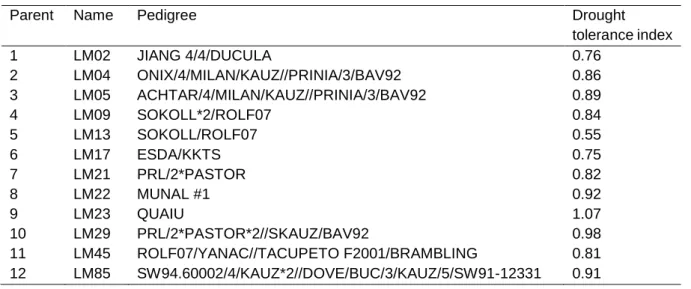
Table 0.1 Outline of dissertation ... 5 Table 2.1 List of wheat parents used for the half diallel analysis. ... 44 Table 2.2 Monthly weather data during the field trial at Ukulinga, Pietermaritzburg
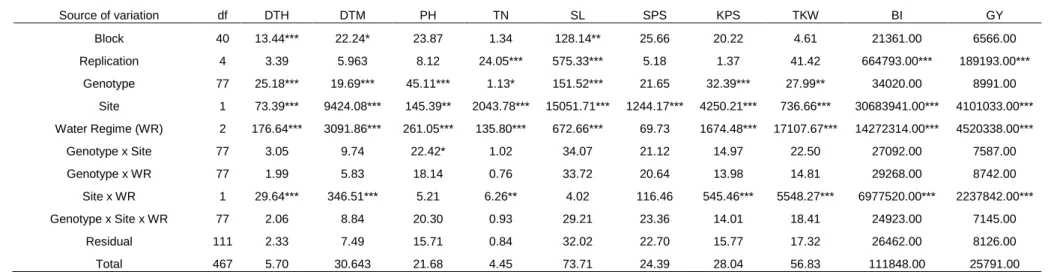
(2017/2018) ... 45 Table 2.3 Mean squares and significant tests from combined analysis of variance
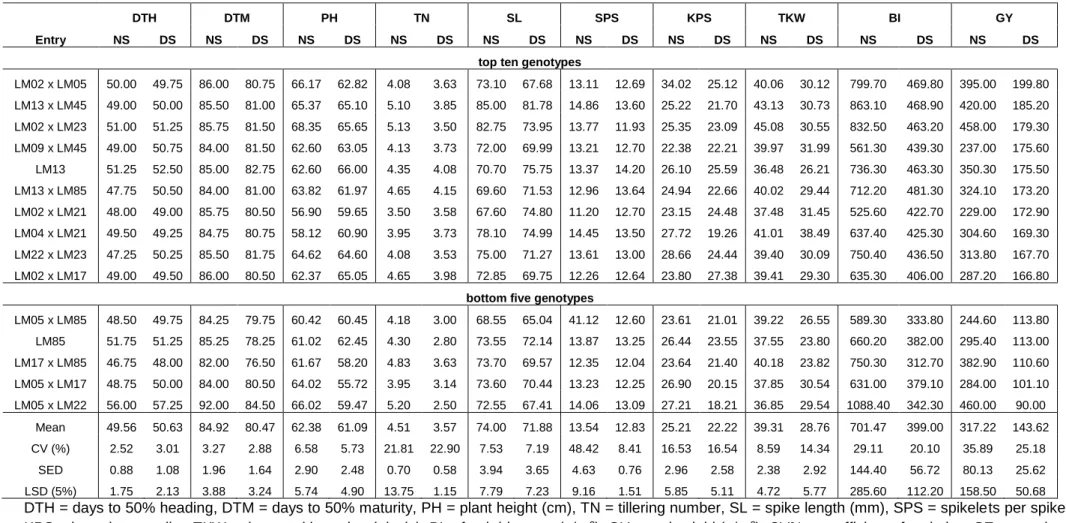
involving ten phenotypic traits of 78 wheat genotypes evaluated in two sites, under two water regimes and two replications. ... 48 Table 2.4 Mean values of the ten best genotypes and five bottom genotypes for ten
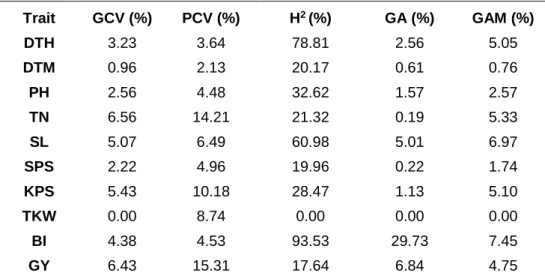
quantitative traits of 12 parents and their 66 F3 families ... 50 Table 2.5 Genetic parameters for morphological characters and yield components in 78
wheat genotypes under drought stressed conditions. ... 52 Table 2.6 Genetic parameters for morphological characters and yield components in 78
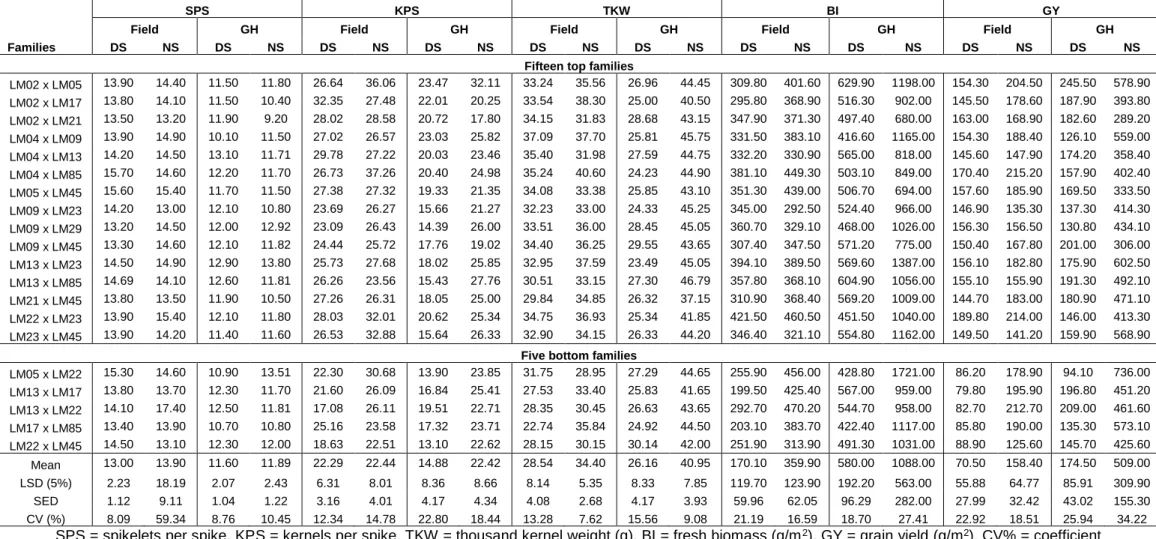
wheat genotypes under non-stressed conditions. ... 52 Table 3.1 Mean performance for 10 agronomic traits of 15 top performing families and
five bottom families selected through evaluations of 78 genotypes in two testing sites under drought-stressed and non-stressed conditions. ... 69 Table 3.2 Mean squares and significant tests for general and specific combining ability
for 12 parental lines and their 66 F3 families evaluated across drought-stressed and non-drought-stressed conditions. ... 72 Table 3.3 Mean squares and significant tests in each test site and drought condition of
the general and specific combining ability effects for 10 traits of 12 parental lines and their 66 F3 families. ... 74 Table 3.4 General combining ability effects of 12 parental lines evaluated under
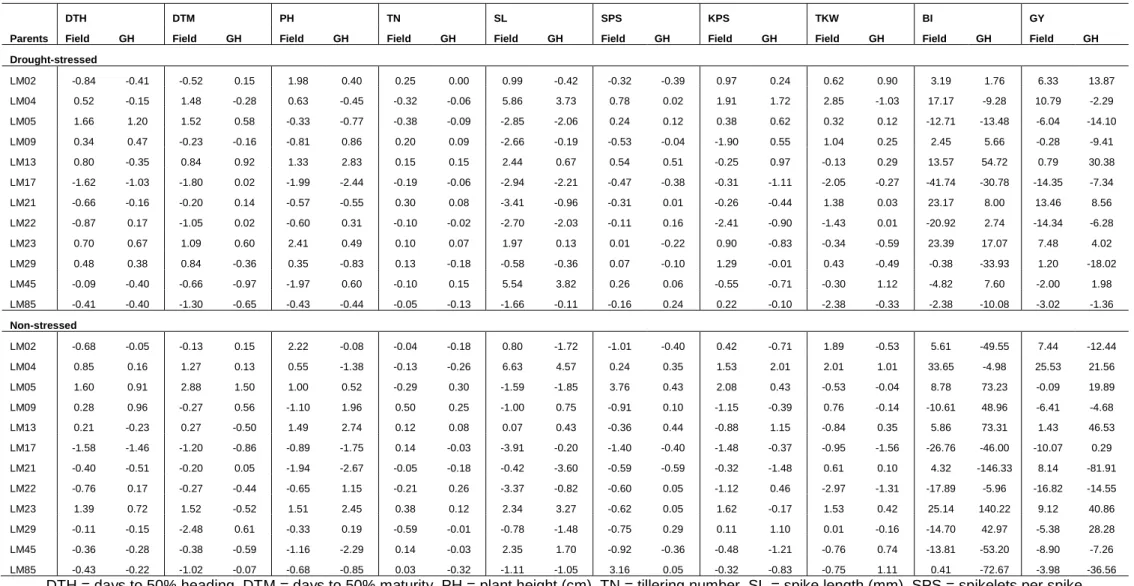
drought-stressed and non-drought-stressed conditions in two sites... 76 Table 3.5 Specific combining ability effects of 15 F3 families obtained from a 12x12
half-diallel cross tested under drought-stressed and non-stressed conditions in the field and greenhouse sites. ... 78
Table 3.6 Variance components based on combining ability and heritability for 10 traits of 12 parents and 66 F3 families evaluated under drought-stressed and non-stressed conditions under field and greenhouse conditions. ... 81 Table 4.1 Correlation coefficients of nine agronomic traits with grain yield in 12 parental
lines and 66 F3 families under drought-stressed (below diagonal) and non-stressed (above diagonal) conditions. ... 104 Table 4.2 Direct (bold face values) and indirect effects of nine agronomic traits on grain
yield of 12 parental lines and 66 F3 families under drought-stressed conditions. ... 105 Table 4.3 Direct (bold face) and indirect effects of nine agronomic traits on grain yield of
Abbreviations
ARC-SGI Agricultural Research Council-Small Grain Institute
BI Fresh biomass
CIMMYT International Maize and Wheat Improvement Center CV Coefficient of variation
DTH Days to heading
DTM Days to maturity
ENSO El Nino Southern Oscillation
GA Genetic advance
GAM Genetic advance as percentage of mean GCA General combining ability
GCV Genotypic coefficient of variation
GY Grain yield
H2 Broad sense heritability KPS Kernels per spike
LSD Least significant difference
PCV Phenotypic coefficient of variation
PH Plant height
QTL Quantitative trait loci SCA Specific combining ability
SL Spike length
SPS Spikelets per spike
SSA Sub-Saharan Africa
TN Productive tiller number UKZN University of KwaZulu-Natal
Introduction to Dissertation
Background of study
Wheat (Triticum aestivum L., AABBDD, 2n = 6x = 42) is the third most important staple cereal crop after maize (Zea mays L.) and rice (Oryza sativa L.) vital for global economies (Cakmak et al., 2017). Wheat provides approximately 20% of the carbohydrate and protein requirement of the world’s population (Flister and Galushko, 2016). The global significance of wheat is attributed to its market share in the value chains of diverse food and industrial products (Fones and Gurr, 2015). Population growth and rapid urbanization is likely to reduce agricultural lands for crop production. This implies that to meet the global demand for wheat, higher productivity is expected on a relatively small land area using high performing and quality wheat varieties that meet market demands (Alexander et al., 2015).
The level of wheat production in sub-Saharan Africa (SSA) is low or steadily declining. Consequently, regional demands for wheat is met through substantial imports (Negassa et al., 2013). The mean wheat yields in SSA average 2.0 t/ha compared with the potential yield of the crop reaching up to 10 t/ha (Negassa et al., 2013; Dube et al., 2018). The yield gap in SSA is attributed to an array of production constraints such as drought and heat stress, poor agronomic management practices, pests and diseases and unavailability of improved varieties (Waddington et al., 2010). In South Africa, wheat production has declined due to increased drought incidence associated with climate change (Dube et al., 2016). The impact of recurrent droughts will continue to influence wheat production in South Africa and other countries in SSA.
Drought stress is the major constraint to wheat productivity in dryland regions of South Africa (Dube et al., 2016). It is projected that due to climate change, drought duration and severity will continue to increase and affect crop production and productivity in dryland areas (Nezhadahmadi et al., 2013; Schlaepfer et al., 2017). Drought affects the growth process and development of wheat during the entire crop cycle (Vurukonda et al., 2016). However, wheat is highly sensitive to drought stress during anthesis to grain filling stages (Farooq et al., 2014). Yield losses at these stages are associated with reduced grain number and weight. According to Griffiths et al. (2015), grain number and grain weight are the two most important parameters that determine the final grain yield in wheat. Drought occurrence during anthesis reduces development of floral structures causing pollen sterility and delaying initiation of grain formation resulting in poor grain set (Dong et al., 2017). During grain filling, drought decreases transportation of photo-assimilates to the young grain leading to poorly formed and shrivelled
grain (Farooq et al., 2015). Therefore, to limit yield reduction due to terminal drought stress, adoption of drought tolerant cultivars is a vital component of dryland wheat production. Drought tolerant wheat genotypes enhance grain yield productivity under dryland production systems. Drought tolerance is a polygenic trait influenced by many minor genes (Budak et al., 2015). The occurrence, intensity and duration of drought is subject to genotype x environment interaction necessitating selection for drought tolerant genotypes across representative test environments (Langridge and Reynolds, 2015). For successful development and deployment of drought tolerant genotypes, promising wheat genetic resources that possess adequate genetic variation for drought tolerance must be available to breeders (Jansky et al., 2015). Centers of diversity and gene banks are excellent sources for germplasm collection for germplasm that can be used in plant breeding programs (Ghimiray and Vernooy, 2017). In the case of wheat, the International Maize and Wheat Improvement Centre (CIMMYT) holds the largest wheat germplasm collection and targets development of drought tolerant germplasm that is accessible globally to plant breeders (Manes et al., 2012).
Evaluation of germplasm collected from gene banks under local conditions is necessary to identify genotypes that will be valuable for local breeding programs (Mwadzingeni et al., 2016a). After evaluation, selected genotypes are subjected to genetic analysis to determine their usefulness in developing locally adapted drought tolerant lines. To determine their genetic value, selected genotypes can be crossed using a suitable mating design and evaluated based on the performance of their progenies. Diallel analysis is the most suitable mating design for estimating the general combining ability (GCA) of parental lines and specific combining ability (SCA) of families obtained from crosses (Jocic et al., 2015). The combining ability estimates are essential in identifying the best parents that can be used in well-designed crosses to develop drought tolerant lines. Furthermore, the diallel mating design is useful in assessing the nature and magnitude of gene action for complex traits such as drought tolerance (Musembi et al., 2015).
Information on combining ability and gene action is valuable in determining the selection strategy involving crosses and families. In plant breeding of self-pollinating crops including wheat, early generation selection is a selection strategy that is valuable in minimizing costs associated with advancing many breeding populations. Early generation selection involves selection of highly performing families during the F3 to F5 generations for genetic advancement (Clement et al., 2015). This method limits the loss of valuable genes present in superior families at advanced generations (Singh and Sharma, 2016). The success of early generation selection is dependent on the presence of additive gene action for targeted traits (Fasahat et al., 2016). Early generation selection is achieved by selection of families obtained from
crosses of good general combiners which indicate prevalence of additive gene action (Singh et al., 2016). In addition, the traits of interest should be highly heritable and have a high selection response for effective selection (Ahmad et al., 2017). Conversely, the presence of non-additive gene action indicates non-fixable genetic variation and selection will need to be delayed to advanced generations (Hussain et al., 2017).
Grain yield remains the target trait for selection to improve drought tolerance in wheat. Typically, an ideal wheat cultivar should possess high yield potential that is acceptable to the farmer and value chains (Ataei et al., 2017). Yet, yield is influenced by many agronomic traits and yield components that are inter-related and have different contributions to final grain yield. As such, Abdolshahi et al. (2015) identifies indirect selection for grain yield using yield components as the most efficient way to increase productivity under drought stress. Assessing yield components aids in identifying the key traits that influence yield under drought stress and simplifies selection of drought tolerant genotypes (Senapati et al., 2018).
Yield components have a direct or indirect influence on grain yield. Therefore, identification of the direct and indirect effects of traits increases the selection efficiency in wheat breeding programs (Shukla et al., 2015). Simple correlation analysis and path coefficient analysis are techniques that can be used to determine trait associations. Employing both techniques in selection for drought tolerance will hasten genetic improvement through targeted selection of key traits. According to Silva et al. (2016), use of correlated traits with high heritability values increases genetic gains in plant breeding programs. Several reports indicate that major yield increases in different regions globally has been a result of the increase of a few components that were correlated to grain yield (Qin et al., 2015; Mansouri et al., 2018; Valvo et al., 2018). Therefore, use of different selection strategies and techniques to develop drought tolerant wheat genotypes offers the most sustainable option to increase wheat productivity in South African dryland regions.
Rationale of study
Wheat in South Africa is the second most important cereal crop after maize in terms of both agricultural land area coverage and harvestable yields (Nalley et al. 2018). Wheat production in dryland regions of South Africa is mostly under low agricultural input systems which are highly constrained with recurrent droughts worsened by increasing variability of precipitation patterns due to climate change. As a result, South African wheat productivity has declined over the years due to drought stress in dryland growing areas, among other production constraints. Breeding for drought tolerance is one of the sustainable measures that can be adopted to increase crop production levels under both marginal and optimum moisture
conditions. In response to this need, the Agricultural Research Council - Small Grains Institute (ARC-SGI) initiated a wheat breeding program involving initial germplasm collection of drought tolerant wheat lines from CIMMYT. This material underwent rigorous selection for drought tolerance using phenotypic traits and proline analysis (Mwadzingeni et al., 2016b). The population structure and association mapping of the same material was conducted to identify genetic markers for use in marker-assisted selection (Mwadzingeni et al., 2017). Twelve genotypes were selected and crossed using a half-diallel mating design to produce F1 families which were advanced to F2 generation for combining ability analysis (Mwadzingeni et al., 2018). The F3 seeds obtained from Mwadzingeni et al. (2018) need to be subjected to continuous selection for variety recommendation and release. As part of this initiative, the present study subjected the F3 lines to early generation selection for genetic advancement of promising lines to F4 generation. Early generation selection is a selection strategy employed in plant breeding programs to identify promising genotypes for further genetic advancement and release. Early generation selection aids in reducing the cost of running plant breeding projects by considerably reducing the amount of genetic material handled in later generations.
Overall research objective
The study aimed to identify and select superior drought tolerant F3 bread wheat families among available South African wheat germplasm for targeted genetic advancement at later generations.
Specific objectives
i. to undertake early generation selection of wheat genotypes for drought tolerance and agronomic traits for genetic advancement.
ii. to determine the combining ability effects and the mode of gene action that controls yield and yield components in selected wheat genotypes under drought-stressed and non-stressed conditions.
iii. to assess the association between yield and yield components in wheat and identify the most important components to improve grain yield and drought tolerance.
Hypotheses
i. Early generation selection is effective in identifying superior drought tolerant families for genetic advancement.
ii. Additive gene action is predominant in governing yield and yield components in wheat under drought-stressed and non-stressed conditions.
iii. Yield components are associated with grain yield in bread wheat under drought-stressed and non-drought-stressed conditions.
Outline of dissertation
The dissertation consists of four chapters in accordance with the number of objectives (Table 0.1). The dissertation is written in the form of discrete research chapters, each following the format of a stand-alone research paper followed by a general overview and implications of findings from the study. This is the dominant dissertation format adopted by the University of KwaZulu-Natal. Consequently, there are some overlaps and unavoidable repetitions of references and some introductory information between chapters. The referencing style used in this dissertation is based on the Journal of Crop Science referencing system.
Table 0.1 Outline of dissertation
Chapter Title
- Introduction to dissertation 1 Literature review
2 Early generation selection of wheat genotypes for drought tolerance and agronomic traits
3 Combining ability analysis for yield and agronomic traits among F3 lines of wheat under drought-stressed and non-stressed conditions
4 Correlation and path coefficient analyses of yield and yield-components in drought tolerant bread wheat populations
- General conclusions and recommendations References
Abdolshahi, R., M. Nazari, A. Safarian, T. Sadathossini, M. Salarpour and H. Amiri. 2015. Integrated selection criteria for drought tolerance in wheat (Triticum aestivum L.) breeding programs using discriminant analysis. Field Crops Research 174: 20-29. Ahmad, M., M. Iqbal, B.A. Khan, Z.U. Khan, K. Akbar, I. Ullah, M. Shahid and A. Rehman.
2017. Response to selection and decline in variability, heritabilty and genetic advance from F2 to F3 generation of tomato (Solanum Lycopercicum). International Journal of Plant Research 7: 1-4.
Alexander, P., M.D. Rounsevell, C. Dislich, J.R. Dodson, K. Engström and D. Moran. 2015. Drivers for global agricultural land use change: the nexus of diet, population, yield and bioenergy. Global Environmental Change 35: 138-147.
Ataei, R., M. Gholamhoseini and M. Kamalizadeh. 2017. Genetic analysis for quantitative traits in bread wheat exposed to irrigated and drought stress conditions. Phyton, International Journal of Experimental Botany 86: 228-235.
Budak, H., B. Hussain, Z. Khan, N.Z. Ozturk and N. Ullah. 2015. From genetics to functional genomics: improvement in drought signaling and tolerance in wheat. Frontiers in Plant Science 6: 1012.
Cakmak, I., L. Guilherme, A. Rashid, K. Hora, A. Yazici, E. Savasli, M. Kalayci, Y. Tutus, P. Phuphong and M. Rizwan. 2017. Iodine biofortification of wheat, rice and maize through fertilizer strategy. Plant and Soil 418: 319-335.
Clement, J., G. Constable, W. Stiller and S. Liu. 2015. Early generation selection strategies for breeding better combinations of cotton yield and fibre quality. Field Crops Research 172: 145-152.
Dong, B., X. Zheng, H. Liu, J.A. Able, H. Yang, H. Zhao, M. Zhang, Y. Qiao, Y. Wang and M. Liu. 2017. Effects of drought stress on pollen sterility, grain yield, abscisic acid and protective enzymes in two winter wheat cultivars. Frontiers in Plant Science 8: 1008. Dube, E., W. Kilian, L. Mwadzingeni, N.Z. Sosibo, A. Barnard and T.J. Tsilo. 2018. Genetic
progress of spring wheat grain yield in various production regions of South Africa. South African Journal of Plant and Soil 1: 1-7.
Dube, E., R. Mare-Patose, W. Kilian, A. Barnard and T.J. Tsilo. 2016. Identifying high-yielding dryland wheat cultivars for the summer rainfall area of South Africa. South African Journal of Plant and Soil 33: 77-81.
Farooq, M., M. Hussain and K.H. Siddique. 2014. Drought stress in wheat during flowering and grain-filling periods. Critical Reviews in Plant Sciences 33: 331-349.
Farooq, S., M. Shahid, M. Khan, M. Hussain and M. Farooq. 2015. Improving the productivity of bread wheat by good management practices under terminal drought. Journal of Agronomy and Crop Science 201: 173-188.
Fasahat, P., A. Rajabi, J. Rad and J. Derera. 2016. Principles and utilization of combining ability in plant breeding. Biometrics and Biostatistics International Journal 4: 1-24. Flister, L. and V. Galushko. 2016. The impact of wheat market liberalization on the seed
industry’s innovative capacity: an assessment of Brazil’s experience. Agricultural and Food Economics 4: 11.
Fones, H. and S. Gurr. 2015. The impact of Septoria tritici Blotch disease on wheat: An EU perspective. Fungal Genetics and Biology 79: 3-7.
Ghimiray, M. and R. Vernooy. 2017. The importance and challenges of crop germplasm interdependence: the case of Bhutan. Food Security 9: 301-310.
Griffiths, S., L. Wingen, J. Pietragalla, G. Garcia, A. Hasan, D. Miralles, D.F. Calderini, J.B. Ankleshwaria, M.L. Waite and J. Simmonds. 2015. Genetic dissection of grain size and grain number trade-offs in CIMMYT wheat germplasm. Plos One 10: e0118847.
Hussain, A., Z.U. Zafar, H.U.R. Athar, J. Farooq and S. Ahmad. 2017. Inheritance Pattern of Fiber Related Traits under Normal and Hypoxia Conditions in Cotton (Gossypium Hirsutum L.). Journal of Natural Fibers 14: 50-62.
Jansky, S.H., J. Dawson and D.M. Spooner. 2015. How do we address the disconnect between genetic and morphological diversity in germplasm collections? American Journal of Botany 102: 1213-1215.
Jocic, S., D. Miladinovic and Y. Kaya. 2015. Breeding and genetics of sunflower. Sunflower. Elsevier. p. 1-25.
Langridge, P. and M.P. Reynolds. 2015. Genomic tools to assist breeding for drought tolerance. Current Opinion in Biotechnology 32: 130-135.
Manes, Y., H. Gomez, L. Puhl, M. Reynolds, H. Braun and R. Trethowan. 2012. Genetic yield gains of the CIMMYT international semi-arid wheat yield trials from 1994 to 2010. Crop Science 52: 1543-1552.
Mansouri, A., B. Oudjehih, A. Benbelkacem, Z.E.A. Fellahi and H. Bouzerzour. 2018. Variation and relationships among agronomic traits in durum wheat [Triticum turgidum (L.) Thell. ssp. turgidum conv. durum (Desf.) MacKey] under South Mediterranean growth conditions: stepwise and path analyses. International Journal of Agronomy 2018: 1-11. Musembi, K.B., S.M. Githiri, G.C. Yencho and J. Sibiya. 2015. Combining ability and heterosis
for yield and drought tolerance traits under managed drought stress in sweetpotato. Euphytica 201: 423-440.
Mwadzingeni, L., H. Shimelis, E. Dube, M.D. Laing and T.J. Tsilo. 2016a. Breeding wheat for drought tolerance: progress and technologies. Journal of Integrative Agriculture 15: 935-943.
Mwadzingeni, L., H. Shimelis, D.J.G. Rees and T.J. Tsilo. 2017. Genome-wide association analysis of agronomic traits in wheat under drought-stressed and non-stressed conditions. Plos One 12: e0171692.
Mwadzingeni, L., H. Shimelis, S. Tesfay and T.J. Tsilo. 2016b. Screening of bread wheat genotypes for drought tolerance using phenotypic and proline analyses. Frontiers in Plant Science 7: 1276.
Mwadzingeni, L., H. Shimelis and T.J. Tsilo. 2018. Combining ability and gene action controlling yield and yield components in bread wheat (Triticum aestivum L.) under drought-stressed and nonstressed conditions. Plant Breeding 137: 502-513.
Nalley, L., B. Dixon, P. Chaminuka, Z. Naledzani and M.J. Coale. 2018. The role of public wheat breeding in reducing food insecurity in South Africa. PloS one 13: e0209598. Negassa, A., B. Shiferaw, J. Koo, K. Sonder, M. Smale, H. Braun, S. Gbegbelegbe, Z. Guo,
D. Hodson and S. Wood. 2013. The potential for wheat production in Africa: analysis of biophysical suitability and economic profitability. CIMMYT, Mexico, D.F. Mexico.
Nezhadahmadi, A., Z.H. Prodhan and G. Faruq. 2013. Drought tolerance in wheat. The Scientific World Journal 2013: 1-12.
Qin, X., F. Zhang, C. Liu, H. Yu, B. Cao, S. Tian, Y. Liao and K.H. Siddique. 2015. Wheat yield improvements in China: past trends and future directions. Field Crops Research 177: 117-124.
Schlaepfer, D.R., J.B. Bradford, W.K. Lauenroth, S.M. Munson, B. Tietjen, S.A. Hall, S.D. Wilson, M.C. Duniway, G. Jia and D.A. Pyke. 2017. Climate change reduces extent of temperate drylands and intensifies drought in deep soils. Nature Communications 8: 14196.
Senapati, N., P. Stratonovitch, M.J. Paul and M.A. Semenov. 2018. Drought tolerance during reproductive development is important for increasing wheat yield potential under climate change in Europe. Journal of Experimental Botany 2018.
Shukla, S., K. Singh, R.V. Patil, S. Kadam, S. Bharti, P. Prasad, N.K. Singh and R. Khanna-Chopra. 2015. Genomic regions associated with grain yield under drought stress in wheat (Triticum aestivum L.). Euphytica 203: 449-467.
Silva, T.N., G.V. Moro, F.V. Moro, D.M.M.D. Santos and R. Buzinaro. 2016. Correlation and path analysis of agronomic and morphological traits in maize. Revista Ciência Agronômica 47: 351-357.
Singh, M., L. Singh and S. Srivastava. 2016. Combining ability analysis in Indian mustard (Brassica juncea L. Czern and Coss). Journal of Oilseed Brassica 1: 23-27.
Singh, T. and A. Sharma. 2016. Early generation selection for yield and its related traits in soybean [Glycine max (L.) Merrill.]. Legume Research 39: 343-348.
Valvo, P.J.L., D.J. Miralles and R.A. Serrago. 2018. Genetic progress in Argentine bread wheat varieties released between 1918 and 2011: Changes in physiological and numerical yield components. Field Crops Research 221: 314-321.
Vurukonda, S.S.K.P., S. Vardharajula, M. Shrivastava and A. SkZ. 2016. Enhancement of drought stress tolerance in crops by plant growth promoting rhizobacteria. Microbiological Research 184: 13-24.
Waddington, S.R., X. Li, J. Dixon, G. Hyman and M.C. De Vicente. 2010. Getting the focus right: production constraints for six major food crops in Asian and African farming systems. Food Security 2: 27-48.
CHAPTER 1
Literature Review
Abstract
This review mainly focuses on highlighting the effect of biotic and abiotic stresses on wheat production and productivity. It emphasized on terminal drought stress and the response of wheat to drought stress. The review covers breeding methods that have been used to improve drought tolerance in wheat. It further discussed on the breeding strategies that can be employed to increase selection efficiency and genetic gains for drought tolerance in wheat. The application of early generation selection in improving selection efficiency is highlighted in the end.
1.1 Introduction
Bread wheat (Triticum aestivum L, 2x=6x=42, AABBDD) is an allopolyploid species that supports more than one billion people worldwide, both as a food and industrial crop (Xu et al., 2017). It belongs to the family Poaceae, and together with maize, rice, sorghum and barley it forms the most economically important cereal crops globally. The genus Triticum is genetically diverse and consists of different species, including durum wheat (T. durum Desf, 2n=4x=28) and emmer wheat (T. dicoccum Schrank ex Schübler, 2n=4x=28). Other wild relatives include the species T. dicoccoides and Aegilopes tauschii. Among these, bread wheat is the most widely cultivated constituting 95% of global wheat production followed by durum wheat which makes up the other 5% (Arzani and Ashraf, 2017). Bread wheat is mainly used to prepare bread, biscuits and cakes, whereas durum wheat is used for making pasta products (Pauly et al., 2013). Bread wheat is also used for industrial purposes where it is processed into starch and gluten to make natural adhesives, cosmetics, plastic films and processed food products such as pet food and aquaculture feed (Balandrán-Quintana et al., 2015). A very small proportion of wheat is used as animal feed with the amount being determined by the price of other feed grains (Carver, 2009).
Wheat species have different ploidy levels, which include diploid (2n=2x=14), tetraploid (2n=4x=28) and hexaploid (2n=6x=42) (Goncharov, 2005). Bread wheat is believed to be originated from hybridization between the tetraploid T turgidum (2n=4x=28, AABB) and Ae. tauschii (2n=14, DD) (Hirosawa et al., 2004; Salse et al., 2008; Brenchley et al., 2012). Triticum turgidum is in turn proposed to have been a product of hybridization between T. urartu (2n=14, AA), contributor of the AA genome and an unknown species, which was the contributor of the BB genome (Salse et al., 2008). In addition to its polyploid nature, T. aestivum has a large and complex genome size of 17 gigabase (Brenchley et al., 2012). This polyploid nature partially contributes to its wide adaptability to a wide range of climatic conditions, which has led to its success as a global food security crop (Marcussen et al., 2014).
1.2 Production and economic value of wheat
Wheat production is well distributed throughout the world with the major producing countries being China and India (Singh et al., 2017; Zulauf 2017). Global wheat production covers around 215 million hectares, with an annual production of around 630 million tonnes (Salim et al., 2017). Wheat production in Africa is low compared to other regions and is mainly concentrated in North Africa where it has historically been an important crop (Galati et al., 2014). The major producers of wheat in Africa include Egypt, Morocco, Ethiopia and South Africa (FAOSTAT, 2017)
The socio-economic value of wheat has increased in the last 50 years in sub-Saharan Africa (SSA) (Awika, 2011). The growth in the importance of wheat has been driven by several factors which include growing incomes, urbanization and the growing population in SSA (Mason et al., 2012). Its consumption is increasing at a faster rate in SSA than any other cereal or food grain (Mason et al., 2012). However, a very small area in Africa is yet used for wheat production (Ray et al., 2013). The per capita growth rate of wheat consumption in SSA is the highest in the world and wheat imports in the region are projected to increase by 23.1 million tons by 2050 (Weigand 2011). The rise in imports is mainly due to low wheat production levels in the region, which remain far below the demand for wheat and wheat products (Shiferaw et al., 2011). According to Gianessi (2014), 70% of the wheat consumed in SSA is imported at an annual cost of about US $5 billion dollars a year. Therefore, there is need for import substitution through regional production and trade.
1.3 Reproductive stages of wheat
The reproductive stage is one of the most important stages of plant development, which is essential for their survival and ability to reproduce (Kane et al., 2005). For reproduction to be successful, the initiation of the reproductive stage should occur when the environmental conditions are suitable for efficient reproduction (Kim et al., 2009). In wheat, the reproductive stage is very crucial because it has major impact on the final yield by determining the duration of spike formation and influencing the grain filling period (Royo et al., 2017). Spike development in wheat takes place inside the leaf sheath and once it is complete the spike emerges out of the leaf sheath (Gol et al., 2017). When the spike has emerged, the wheat plant will have entered its reproductive stage.
The initiation of reproduction in wheat is influenced mainly by two environmental factors which are temperature and day length (Reynolds et al., 1996). Therefore, these two factors are important in the adaptation of wheat to different environments and allow them to adjust and cope with unfavorable environments (Klaimi and Qualset, 1973). Wheat can be classified into two groups based on whether it requires vernalization for initiation of flowering or not. Vernalization is defined as “the acquisition or acceleration of the ability to flower by a chilling treatment” (Chouard, 1960). Plants that require a period of vernalization to flower are classed as winter wheat, whereas those that can flower without experiencing a cold spell are classed as spring wheat (Larsen, 2012). The vernalization temperatures required by winter wheat are proposed to be below 10oC (Salunkhe and Deshpande, 2012). The duration of the cold spell is very important and should be long enough to ensure sufficient vernalization (Li et al., 2013). However, the duration of vernalization required varies among cultivars (Goncharov, 2004). Winter wheat is planted in autumn and develops to the tillering stage before it experiences
winter temperatures, which induces vernalization, whereas the spring wheat is planted in summer after the risk of frost (Rincón et al., 2016).
Flowering plants can be classified into either long day plants or short-day plants depending on whether short or long days trigger the transition from the vegetative to the reproductive stage of growth (Brambilla et al., 2017). In wheat, flowering is hastened during longer days and delayed when days are short (Zhao et al., 2016). The effect of daylength on the flowering time in wheat differs greatly among cultivars and is dependent on the interaction of the genotype with the environment (Klaimi and Qualset, 1973; Zikhali et al., 2017). Sensitivity to photoperiod is high in some cultivars, which are termed “photoperiod sensitive cultivars” and low in “photoperiod insensitive cultivars” (Zhao et al., 2016).
Wheat is an autogamous species exhibiting about 1% cross pollination (Hucl and Matus-Cadiz, 2001; Singh et al., 2010), with some cultivars showing greater tendency to outcross than others (Waines and Hegde, 2003). The self-pollinating nature of wheat is brought about by its floral biology where the receptivity of the stigmas and the maturation of the pollen occur during the same period which ensures that the stigmas are usually pollinated by pollen from anthers within the floret (Gustafson et al., 2005). The wheat flower is also cleistogamous, delaying the protrusion of the anthers outside the floret and thus promoting self-fertilization (Muqaddasi et al., 2017). In addition, production of pollen in wheat is very low to allow high outcrossing, a common feature in self-pollinating crops, and is estimated to be about 2.5% that of a maize flower (De Vries, 1971).
1.4 Constraints to wheat production
1.4.1 Biotic stresses
There are a variety of challenges that wheat farmers face. Biotic stresses such as pests and diseases are a major problem to many wheat growers around the world. The occurrence of pests and diseases varies with some having a wide occurrence than others. Some cause serious damage to crop production, while others cause relatively minimal damage (McIntosh, 1997). Among these, the major stresses are fungal diseases including leaf rust, stem rust, stripe rust, kernel bunt, powdery mildew and spot blotch. (Kazi et al., 2013). Of all the diseases, the rusts have a global presence and are prevalent in regions that have warm and humid conditions (Figueroa, 2018). In Africa and the Middle East, the Ug99 race of stem rust is the most devastating and has caused large yield losses with major epidemics occurring in southern Ethiopia since 2013 (Zhang et al., 2017). Aphid species are also economically important pests and cause crop damage by either directly feeding on the plant or as vectors of plant viruses (Aradottir et al., 2017). In South Africa, the Russian Wheat Aphid is the most
damaging and economically important pest especially in the summer rainfall areas (Botha et al., 2017). Of the viral diseases spread by aphids, barley yellow dwarf virus vectored by the wheat aphid Sitobion avenae is growing in importance (Tanguy and Dedryver, 2009; Kazi et al., 2013) especially in Central Europe (Honek et al., 2017) and China (Xin et al., 2014). 1.4.2 Abiotic stresses
Wheat is affected by several abiotic stresses, which reduce yield significantly. According to Cramer et al. (2011), abiotic stress can be defined as “environmental conditions that reduce growth and yield below optimum levels”. These stresses include drought, salinity, poor soil nutrition, extreme temperatures and toxins introduced by human activity such as herbicides, chemical fertilizers and heavy metal build up in soils (Jenks and Hasegawa, 2008; Kumar, 2013). In a survey covering 19 developing countries including three in Africa, the major abiotic stresses that affected wheat production were heat stress and low rainfall (Kosina et al., 2007). Heat stress greatly compromises the potential yield of wheat compared to other crops as it is generally cultivated as a winter crop in sub-Saharan Africa (Adhikari et al., 2015). Higher temperatures reduce the number of days to anthesis and maturation thus limiting the time that the plant can intercept light for photosynthesis leading to low production of photosynthetic assimilates required for grain filling (Asseng et al., 2015). According to Gibson and Paulsen (1999), high temperatures can decrease wheat yields by 3% to 5% per 1oC increase in temperature above 15oC for plants grown under controlled conditions. The intensity of the heat stress and the period of exposure to heat stress determines the level of damage on the development of the wheat crop. Extremely high temperatures and prolonged exposure to heat stress can cause permanent damage to the crop and yield loss (Zampieri et al., 2017). High temperatures also lead to increased levels of evapotranspiration, which induces or increases the severity of drought stress.
Water is an essential element involved in all metabolic processes of the plant and is required for normal plant growth and development (Shakirova et al., 2016). In agriculture, availability of enough soil moisture for crop growth during the growing season is critical to ensure optimum productivity. When available soil moisture diminishes below the water requirements of plants coupled with evapotranspiration rates that exceed the rate of water uptake, drought stress sets in (Jaleel et al., 2009). Thus, when drought stress occurs, plant growth and development is compromised.
The frequency and occurrence of drought events is set to increase in the future due to the effects of climate change (El-Hendawy et al., 2017). The impact of climate change is acknowledged as the major cause of the changing precipitation patterns in the world. Among
the phenomenon impacting on climate change, the El Niño southern oscillation (ENSO) causes changes in climatic patterns globally (Chen and Tam, 2010). The ENSO has grown in influence over the last three decades and strong events have led to devastating effects on major cereal production due to decreased precipitation (Rosenzweig et al., 2001). Indirectly, less precipitation has impacted agricultural productivity by reducing water supply for irrigation purposes thereby increasing the severity of stress episodes on crop growth (Hao et al., 2015). As a result, semi-arid regions which already face critical water shortages remain the most vulnerable to increased incidence of drought stress (Nawaz et al., 2015).
Exposure of semi-arid regions in under-developed countries mainly in Africa and Asia to drought reduces production and profitability of crops such as wheat under dryland conditions (Daryanto et al., 2016). At the same time, due to increased demand, more food should be produced in the face of reduced water supplies and unpredictable precipitation patterns on deteriorating arable lands with poor and unproductive soils (Mickelbart et al., 2015). This presents a devastating picture of attempting to raise agricultural productivity under worsening moisture conditions. Therefore, the focus of this review is to discuss the effects of drought stress and how breeding drought tolerant cultivars can alleviate yield loss in wheat.
1.5 Drought stress
The negative impact of drought on crop production is extensive and affects many areas of the world (Nakashima and Suenaga, 2017). Drought is projected to increase the pressure on global food production than in the past (Daryanto et al., 2017). Yield is influenced by the variable levels of water deficit during the crops’ development (Langridge and Reynolds, 2015). Drought affects crops at all stages of plant development by inhibiting crop growth, decreasing the rate of photosynthesis, disturbing reproductive development, reducing grain filling and inducing premature leaf senescence (Munné-Bosch and Alegre, 2004; Abebe et al., 2010; de Oliveira et al., 2013). Due to drought being an environmental stress, it rarely occurs in isolation, but occurs in combination with other abiotic stresses or factors, like high temperature and a low relative humidity, which increases its severity on the crop development (Zandalinas et al., 2017).
1.5.1 The effects of drought on wheat production and productivity
Wheat is a very susceptible crop when exposed to drought. All growth stages of wheat are highly prone to drought stress. Early season drought affects wheat development by reducing germination and vigor, which are necessary for good crop establishment (Bayoumi et al., 2008). Dhanda et al. (2004) reported of more than 50% reduction in percentage germination, root and shoot length on wheat seedlings subjected to osmotic stress. Drought stress also
delays the emergence of wheat seedlings and reduces the length of the coleoptile (Rauf et al., 2007). As a result, seedling establishment and growth is reduced, and development of a good root system is compromised (Blum, 1996). In a study by Guedira et al. (1997), it was observed that seminal roots that developed two days after germination were extremely sensitive to dehydration and did not resume their growth when sufficient water was made available and although new roots replaced them upon rehydration, the new root system was less developed than the one that was destroyed.
Susceptibility to drought stress increases as seed progresses from germination to seedling stage with seed embryos showing a high resistance to drought stress (Blum et al., 1980; Blum, 1996). Blum et al. (1980) reported that the ability of wheat seedlings to tolerate drought stress is greatly diminished when the first leaf emerges from the coleoptile. As the plant continues to develop, drought stress will reduce the leaf area of a plant, which eventually reduces transpiration (Duan et al., 2017). This reduction in leaf area corresponds to a reduced capacity of the plant to carry out photosynthesis, which negatively affects final grain yield.
Drought occurring from seedling stage to maturity reduces tiller development and increases the death of tillers (Wang et al., 2017). However, if water conditions improve before maturity, yield recovery is observed due to increased number of grains per spike and improved grain weight (Nagarajan and Nagarajan, 2009). The extent of the recovery is largely dependent on the duration of the stress, with longer periods of stress leading to poorer yield recovery (Blum et al., 1990; El Hafid et al., 1998). Sarto et al. (2017), reports that drought stress that occurs at the stem elongation stage reduces the number of spikes produced resulting in lower yields. However, the plant compensates the loss of spikes by transporting all synthesized assimilates to the remaining fertile tillers. When optimum moisture returns at later growth stages after drought stress occurs at the vegetative stage, late tillers can develop which can significantly enhance the final yield of the crop (Mogensen et al., 1985). In a study conducted by Talukder et al. (1987), late tillers contributed 39% of the final yield, thus compensating for the yield loss from undeveloped normal tillers.
1.5.2 Terminal drought stress and its effects on wheat production
Among all forms of drought stress, end of season or terminal drought is most damaging to wheat development and causes variability in wheat yield (de Oliveira et al., 2013). This is because the major developments in reproduction have a direct bearing on the yield that is achieved by the crop. Terminal drought causes loss of yield by reducing the grain filling rate and duration (Ahmadi and Baker, 2001; Nawaz et al., 2013; Ebadi and Eghbali, 2017), the grain weight (Nawaz et al., 2013), the number of grains per spike (Denčić et al., 2000; Nawaz et al., 2013) and increasing pollen sterility (Lonbani and Arzani, 2011; Webster, 2014).
Decrease in chlorophyll content during drought stress has also been observed during terminal drought (Lonbani and Arzani, 2011), which affects the photosynthetic rate of the plant and production of photo-assimilates required during grain filling, resulting in lower yields (Sayar et al., 2008).
When drought stress occurs during flowering, there is a delay or inhibition of flower development (Saini and Westgate, 1999). The number of florets formed, and the resulting seed set is much lower in wheat plants subjected to drought than those under well-watered conditions (Westgate et al., 1996). It was observed by Dorion et al. (1996) that if wheat plants experience water stress during meiosis in pollen mother cells, the grain set can be reduced by 40 to 50%. Reduction in seed sets as high as 89% in some cultivars have been reported (Briggs et al., 1999). The reduction in grain set leads to a lower grain yield per spike, although there may be increases in individual grain weight (Saini and Aspinall, 1981). This reduction in grain set is attributed to an increase in pollen sterility. The reduced viability of mature pollen grains under water stress cannot be reversed upon improved soil water conditions and is thus considered as the major cause of grain loss in wheat under drought (Ji et al., 2010).
The development of the grain from the fusion of the gametes to the growth and development of the endosperm are sensitive to water stress and are critical in achieving good yields in cereals (Barnabás et al., 2008). Saini and Westgate (1999) divided kernel development in wheat into three phases viz. “Phase 1” or “lag phase” characterized by a rapid gain in kernel fresh weight, “Phase 2” is the grain filling period identified by an increase in dry matter accumulation and “Phase 3”, which is associated with the maturation of the grain. These phases do not have an abrupt end in their cycle but overlap into each other.
The capacity of grain to store assimilates is determined by cell division and cell enlargement, which largely occur during early grain development (Nicolas et al., 1984). According to Gleadow et al. (1982), the final size of the grain is influenced by the rate of increase of the endosperm cell number with more endosperm cells indicating the availability of more sites for starch deposition. Therefore, the occurrence of drought stress during early grain development will negatively affect cell division leading to a lower number of endosperm cells, which translates into a substantial yield reduction (Saini and Westgate, 1999). Furthermore, in a study conducted by Fábián et al. (2011), drought stress limited the expansion of endosperm cells thereby reducing the amount of water available to the developing grain. This led to high yield reduction due to depressed kernel growth and starch accumulation.
Starch, which makes up more than 80% of the endosperm dry weight constitutes the major part of the grains volume and contributes most to the final weight of the grain (Li et al., 2015). The starch is made up of two types of granules; the A-type granules which are larger and
lenticular in shape and B-type granules which are smaller and spherical (Brooks et al., 1982). The A-type granules are formed first, a few days after endosperm formation, followed by the formation of the B-type granules a few days later (Bechtel et al., 1990). According to Brooks et al. (1982), the size of the A-type granules and the number of the B-type granules are reduced when wheat is subjected to drought stress after anthesis. Fábián et al. (2011) argued that the reduced number of B-type starch granules signifies that endosperm cell division has stopped leading to the sink capacity of the wheat kernel being reduced. The authors further stated that plants subjected to stress fail to recover the number of B-type granules even after watering and show less B-type granules in mature grain than well-watered plants.
At the end of the lag phase, the sink potential will have been determined and grain filling begins (Saini and Westgate, 1999). Grain filling is the major determinant of the final grain weight (Xie et al., 2015). The major source of carbohydrates that make up the final weight of the grain are from photosynthesis (Evans and Rawson, 1970). The other source of carbohydrates for grain rowth are assimilates stored in the stem or other plant parts before and after anthesis (Kobata et al., 1992). As a result, large grain yield losses that are observed when drought stress coincides with grain filling are mainly caused by reduced starch accumulation leading to a reduction in grain weight (Barnabás et al., 2008).
Grain filling rate and duration are the key components of final yields of cereal crops (Yang and Zhang, 2006). Grain filling duration is the time from heading to physiological maturity (Talbert et al., 2001). Longer grain filling durations are associated with high yields in wheat (Hunt et al., 1991). When compared to rice, it has been noted that wheat is more sensitive to a shorter grain filling duration (Yang and Zhang, 2006). Drought stress has been implied to shorten the grain filling period in wheat, leading to lower yields (Farooq et al., 2014). According to Semenov et al. (2009), drought stress hastens crop maturity before the end of grain filling is reached, thus reducing translocation of assimilates to the grain. Altenbach et al. (2003) also reports that drought reduces the time for starch accumulation in spring wheat. Wardlaw and Willenbrink (2000) further noted that the decline in the kernel size of wheat subjected to drought stress is mainly a result of shortening of the grain filling period.
A high grain filling rate reflects rapid accumulation of dry matter in wheat grains (Xie et al., 2015). Madani et al. (2010) reported that drought stress can lower the grain filling rate and the allocation of dry matter to grain when it occurs after anthesis resulting in a significant loss of grain yield. However, there have been some reports that mild water stress during grain filling increases the rate of grain filling and promotes remobilization of stored assimilates from other plant organs to the grain (Yang and Zhang, 2006). Therefore, if the grain filling period is reduced, compensation of grain yield can be achieved by increasing the grain filling rate
(Duguid and Brule-Babel, 1994). As a result, Bruckner and Frohberg (1987) proposed that obtaining high grain filling rates should be the objective of plant breeding programmes aiming to achieve higher grain yields in areas that experience a shorter growing season due to terminal drought stress in wheat.
1.6 Drought tolerance
To cope with drought stress, plants have developed a variety of mechanisms at morphological, physiological, biochemical, cellular and molecular levels (Nezhadahmadi et al., 2013; Fang and Xiong, 2015). Tolerance to drought in plants can be grouped into four groups namely drought escape, dehydration avoidance, drought tolerance and drought recovery (Fang and Xiong, 2015).
Drought escape is achieved when a plant completes its life cycle early before the effects of terminal drought set in (Franks, 2011). Therefore, most scientists do not consider escape as a form of drought tolerance (Fischer and Maurer, 1978) since the plant does not experience any drought stress. Early maturing varieties which flower early and have a shorter grain filling period have been shown to produce higher yields when late season drought occurs than late maturing varieties in some studies (Fischer and Maurer, 1978; van Ginkel et al., 1998). This better performance is realized by early maturing varieties because they flower earlier and make use of available moisture to achieve better seed set and higher seed mass (Kooyers, 2015). However, earliness is associated with a compromise on the yield potential of a crop due to reduced time for photo-assimilate production and grain filling (Zaharieva et al., 2001). Dehydration avoidance refers to the plants ability to cope with drought by avoiding dehydration through either increasing water uptake to keep up with rapid water loss or conserving water through reduced water loss (Chirino et al., 2011; Aslam et al., 2015). Increased water uptake can be achieved if a crop has a deep and large root system. However, based on a study by Ehdaie et al. (2012), the positive response of a large root system to drought is only achieved when there is enough soil moisture that can be accessed by the roots during the grain filling period to enhance grain growth and yield. On the other hand, crops conserve water by employing a variety of mechanisms. These include increasing leaf cuticle thickness (Griffiths and Paul, 2017), stomata closure, leaf area reduction (Sarto et al., 2017) and leaf rolling (Farooq et al., 2014) to reduce the rate of water loss through transpiration.
Drought tolerance occurs at the tissue or cellular level by stabilizing and protecting cellular and metabolic function (Tuinstra et al., 1997). According to Griffiths and Paul (2017), this is achieved by the accumulation of osmo-protectants and production of anti-oxidants that aid in cellular protection during periods of water stress to maintain homeostasis. Stay green
properties of a variety also has a strong bearing on the level of drought tolerance of a plant (Farooq et al., 2014). Osmo-protectants can be categorized into three groups according to (Szegletes et al., 2000; Singh et al., 2015) that include amino acids (e.g. proline and ectoine), sugars and polyols (e.g. trehalose, sorbitol and mannitol) and ammonium compounds (e.g. glycine betahine and b-alanine betahine). However, the extent to which these osmo-protectants precisely influence the response of plants to drought stress remains unclear (Mwadzingeni et al., 2016a).
1.7 Genetic diversity and analysis for drought tolerance in wheat
Agricultural scientists are faced with the challenge of improving crop production and ensuring food security for a rapidly increasing population in a world that is being increasingly threatened by water scarcity (Assouline et al., 2015; Merchuk-Ovnat et al., 2016). This can be achieved by crop improvement through plant breeding efforts to produce drought tolerant cultivars (Merchuk-Ovnat et al., 2016). There has been a drive to produce drought tolerant cultivars over the last thirty years for semi-arid areas with limited success being achieved (Monneveux et al., 2012). Although some success has been achieved, progress has been very slow, especially relative to the funding and effort put in by plant breeders and researchers from other fields (Mwadzingeni et al., 2016a).
Successful crop improvement relies on the presence of sufficient genetic variability from which selections are made. Higher variability leads to more efficient selection. To choose an appropriate breeding strategy that will lead to improvement of target characters, evaluation of variability among available germplasm is required (Singh et al., 2012). This is necessary because the loss of genetic diversity can hinder progress in breeding of better performing cultivars that are tolerant to abiotic stresses and adapted to different environments (Allen et al., 2017). One of the simple ways used to broaden genetic variation is hybridization of genotypes within a crop species. According to Mwadzingeni et al. (2017), there is still sufficient genetic variability within elite wheat cultivars that can be used for drought tolerance improvement. This is supported by the continued success in achieving genetic gains in plant breeding programs under drought stressed environments (Manes et al., 2012).
1.8 Genetic gains in wheat breeding for drought tolerance
Breeders have sought to increase genetic gains in wheat as they seek to improve performance under drought stress in target environments (Langridge and Reynolds, 2015). Success has been achieved in increasing genetic gains with reports of improved performance in various yield trials. According to Manes et al. (2012), increases of yield around 1% per annum has been observed in low yielding environments affected by drought stress around the world.
Lantican et al. (2001), reported that greater success due to genetic gains showed that the yield increases that have been achieved in marginal environments exceeded those achieved in optimum growth conditions after the Green Revolution period. This success that has been achieved can be attributed to the setup of breeding platforms which allow exchange of genetic resources and provide free information on yield trials by the International Maize and Wheat Improvement Center (CIMMYT) (Reynolds et al., 2015).
1.9 Breeding for drought tolerance in wheat
Drought tolerance is a complex trait which is controlled by many genes located on quantitative trait loci (QTLs). The expression of these genes is influenced by environmental factors and stage of plant development (Kosova et al., 2014). To further add to this complexity of drought tolerance screening, the variability in the occurrence and duration of drought is high (Lopes et al., 2014).
Selection for drought tolerance should produce crops that not only can survive drought, but those that can give optimum yield under drought conditions (Fleury et al., 2010). A drought tolerant genotype should perform significantly better than the average of other genotypes in an environment where yield is limited by water deficit at some stage of crop development (Quarrie et al., 1999). As such, a proper selection strategy should be adopted to achieve better results in breeding for drought tolerance. Richards et al. (2010) argued that the best environment in which to select for drought tolerance is in well-watered conditions as this is more efficient and has been proved to increase yields under drought conditions. However, Tester and Langridge, (2010) highlights the need for selection under stressed conditions to increase yields in low yielding areas. Therefore, selection of genotypes under both stressed and non-stressed environments simultaneously, is likely to be more efficient in identifying genotypes that perform well under drought without a major yield penalty in optimum conditions. Selection for drought tolerance under stress can be done in the field or in greenhouses. Evaluating for drought tolerance under field conditions remains the most effective way to screen for drought tolerance (Negin and Moshelion, 2017). This is because field conditions represent the natural conditions in which the crop is grown and give a more reliable picture of the performance of the genotypes under production conditions (Hall, 2000). Selection in the field under natural drought conditions is challenging due to the unpredictable nature of drought response, therefore screening can be done in rain out shelters (Farooq et al.,