Identifying Individual Dierences in the Neural
Correlates of Language Processing Using fMRI
WEBER, SARAH
How to cite:
WEBER, SARAH (2017) Identifying Individual Dierences in the Neural Correlates of Language Processing Using fMRI, Durham theses, Durham University. Available at Durham E-Theses Online:
http://etheses.dur.ac.uk/12509/ Use policy
The full-text may be used and/or reproduced, and given to third parties in any format or medium, without prior permission or charge, for personal research or study, educational, or not-for-prot purposes provided that:
• a full bibliographic reference is made to the original source
• alinkis made to the metadata record in Durham E-Theses
• the full-text is not changed in any way
The full-text must not be sold in any format or medium without the formal permission of the copyright holders. Please consult thefull Durham E-Theses policyfor further details.
Identifying Individual Differences in the Neural Correlates
of Language Processing Using fMRI
Sarah Weber
Thesis submitted for the degree of Doctor of Philosophy
Department of Psychology
Durham University
Table of contents
Statement of Copyright and Declaration 4
Acknowledgements 5
Thesis Abstract 6
1. Chapter 1: General Introduction 7
1.1. Localization of anguage functions in clinical contexts 7
1.2. Localization of language functions in healthy subjects 9
1.3. The dual stream model of language processing 11
1.4. Brain lateralization in language processing 13
1.5. Structural and functional connectivity within the language network 14
1.6. Verbal ability and language-related activity and connectivity 18
1.7. The current thesis 20
1.8. References 24
2. Chapter 2: Neural Correlates of Semantic and Syntactic
Integration During Sentence Processing 31
2.1. Abstract 31 2.2. Introduction 32 2.3. Methods 40 2.4. Results 48 2.5. Discussion 52 2.6. References 60 2.7. Appendix 67
3. Chapter 3: Revisiting the Ambiguous Relationship Between
Language Ability and Brain Activity 68
3.1. Abstract 68 3.2. Introduction 69 3.3. Methods 76 3.4. Results 82 3.5. Discussion 94 3.6. References 105 3.7. Appendix 112
4. Chapter 4: Degrees of Left-Lateralization Across Different Language
Processes and Relationship with Verbal Ability 117
4.1. Abstract 117 4.2. Introduction 118 4.3. Methods 128 4.4. Results 137 4.5. Discussion 145 4.6. References 155
5. Chapter 5: General Discussion 164 5.1. Brain activity and functional connectivity during sentence
comprehension 164
5.2. Relationships between brain activity and verbal ability 166
5.3. Brain lateralization in language processing 169
5.4. The role of the IFG in language processing 171
5.5. Implications of paradigm characteristics in clinical language
5.6. Implications of the relationship between verbal ability and
brain activity 174
5.7. Limitations of the thesis 176
5.8. Conclusions 178
Statement of Copyright
The copyright of this thesis rests with the author. No quotation from it should be published without the author's prior written consent and information derived from it should be
acknowledged.
Declaration
I confirm that no part of the material presented in this thesis has previously been submitted for a degree in this or in any other institution. If material has been generated through joint work, this has been indicated where appropriate. All other sources have been referenced, and quotations suitably indicated.
The empirical work presented in this thesis is currently under review or in preparation for submission to peer-reviewed journals:
Weber, S., Hausmann, M., Kane, P., & Weis, S. (in preparation). Nerual Neural Correlates of Semantic and Syntactic Processing During Sentence Comprehension.
Weber, S., Hausmann, M., Kane, P., & Weis, S. (in preparation). Revisiting the Ambiguous Relationship Between Language Ability and Brain Activity. Weber, S., Weis, S., Kane, P., & Hausmann, M. (under review). Brain Lateralization
Acknowledgements
My special thanks go to my supervisors, Dr Susanne Weis and Dr Markus Hausmann, for their constant support, time, energy and advice. Thank you for always having an open ear for my ideas and concerns, for giving me a lot of freedom as well as guidance, and for your optimism and encouragement when I needed it.
I want to thank my friends and fellow Ph.D. students from Durham University for providing a sympathetic ear and lots of encouragement especially in the write-up phase, and for much-needed distractions during coffee mornings and Thursday dinners.
I would also like to thank my friends at the University of York. I was so lucky to have had your continuing support, reassurance and advice throughout my Ph.D. and I am grateful for all the fun times on National Trust outings, brunches, bake-offs and Pub nights. In particular, a huge thank you goes to my great friend Mark Hymers – I could not have done this Ph.D. without you! Thank you for your endless patience, compassion and
encouragement, and for being on my side in countless fights with Matlab, Python and Bash.
Last but not least, I want to thank my entire family, especially my Mama, my sister Jana, and my Oma, for their loving support, for passionately sharing my excitement as well as frustrations along the way, for cheering me on and always believing in me.
Identifying Individual Differences in the Neural Correlates of Language Processing Using fMRI
Sarah Weber
Mapping language functions in the brain is of profound theoretical and clinical interest. The aim of the current Ph.D. project was to develop an fMRI paradigm to assesses different language processes (i.e., phonological, semantic, sentence processing) and m odalities (listening, reading, repetition) in a stimulus-driven manner, keeping non-linguistic task demands to a minimum. Cortical activations and functional connectivity patterns were largely in line with previous research, validating the suitability of the paradigm for localizing different language processes. The first empirical chapter of the thesis investigated sentence comprehension in listening and reading, which elicited largely overlapping activations for the two modalities and for semantic and syntactic integration in the left anterior temporal lobe (ATL). Functional connectivity of the left ATL with other parts of the cortical language network differed between the modalities and processes. The second empirical chapter explored individual differences in brain activity in relation to verbal ability. Results supported the notion of more extended as well as stronger activations during language processing in individuals with higher verbal ability, possibly reflecting enhanced processing. The third empirical chapter further investigated individual differences in brain activity, focusing on lateralization in activity as a fundamental principle of how language processing is functionally organized in the brain. Degrees of left-lateralization differed significantly between language processes and were positively related to behaviorally assessed language lateralization. Furthermore, the results provided new evidence supporting a positive relationship between left-lateralization and verbal ability. The thesis concludes with a discussion of the significance of the results with regard to general principles of brain functioning and outlines potential clinical implications.
Chapter 1
General Introduction
The localization of language functions in the brain has been a matter of great interest for more than a hundred years (Broca, 1861; Lichtheim, 1885; Wernicke, 1874). Since the first investigations, extensive knowledge about the neural bases of language processing has been accumulated, particularly since the emergence of neuroimaging techniques. However, despite great advances, there are still many unanswered questions and contradictory results concerning the localization of language processing in the brain. Finding consensus between different neuroimaging studies has been complicated by several factors. First, language processing is a multidimensional concept, comprising a wide range of subcomponents and processing modalities. Second, neuroimaging studies on language processing typically investigate language processing in a specific task context that require a variety of cognitive functions to be performed in addition to (and interacting with) the linguistic component of the task. Both of these issues make it difficult to compare different studies and to reliably localize language processing in the brain. Third, even within a single study, individuals’ neural responses to the stimuli and the task differ slightly with regard to the exact location and strength. These differences can arise from situational factors, such as attention or motivation, but also from more stable inter-individual differences, such as verbal ability.
1.1 Localization of language functions in clinical contexts
Historically, the localization of language in the brain has raised great interest in clinical contexts. Specifically, localizing different language functions (and in fact other cognitive
functions) in the brain is an essential part of preoperative assessments in different neurological patient groups, such as brain tumor patients (Giussani, Roux, Ojemann, Sganzerla, Pirillo, & Pagano, 2010). While aiming at removing as much affected tissue as necessary during surgery, it is crucial to spare tissue that controls critical cognitive functions, such as those related to language processing. Currently, electrocortical stimulation mapping (ESM) is seen as the “gold standard” for localizing language functions prior to surgery (Giussani et al., 2010). With this technique, patients perform language tasks while a small electrical current is applied to different parts of the brain, disrupting neural activity in this area. If the area is critically involved in language processing, stimulation results in speech arrest or errors. ESM is typically performed immediately before surgery and has been shown to reliably localize cortical language areas, minimizing the risk of postoperative impairments (Haglund, Berger, Shamseldin, Lettich, & Ojemann, 1994). However, ESM also has distinct disadvantages, including stress on the patient, any risks inherent to invasive procedures, the lack of longer-term presurgical planning possibilities, and the restriction of investigations to brain areas that are exposed during surgery (Bookheimer, 2007; McDermott, Watson, & Ojemann, 2005; Roux, Boulanouar, Lotterie, Mejdoubi, LeSage, & Berry, 2003; Tieleman, Deblaere, van Roost, van Damme, & Achten, 2009; Vlieger, Majoie, Leenstra, & den Heeten, 2004). The search for a non-invasive alternative to ESM has led clinicians and researchers to explore the usefulness of functional magnetic resonance imaging (fMRI) for preoperative language assessm ents. Comparing localization results acquired with the two techniques has revealed great variance in the degree of agreement, depending on the tasks used, comparison methods, and patient groups (Giussani et al., 2010).
One of the problems in fMRI - ESM comparisons is that the two techniques employ
different measures of neural activity. fMRI measures relative differences in blood flow, indicating which areas of the brain are engaged to a greater extent during performance of one task as opposed to another. Therefore, fMRI activations reveal brain areas that are involved in performing a certain task, but they do not give any information about the areas’
essentiality to perform the task. That is, damage to or resection of this area would not necessarily affect task performance. ESM on the other hand indicates brain areas that are absolutely crucial for performing the task in question (Garrett, Pouratian, & Liau, 2012; Giussani et al., 2010; Vlieger et al., 2004). Furthermore, preoperative assessments with ESM and fMRI usually employ different language tasks. For ESM, object naming is the standard task of choice (Bookheimer, 2007; Garrett et al., 2012; for examples see Roux et al. 2003; Rutten, Ramsey, van Rijen, Noordmans, & van Veelen, 2002). For preoperative fMRI, on the other hand, a great variety of paradigms has been used in different studies. The importance of a suitable language paradigm for the effectiveness of preoperative fMRI has long been acknowledged (McDermott et al., 2005; Roux et al., 2003) and some authors have postulated that any preoperative language assessment should comprise different language processes, such as sublexical as well as lexical processing (Garrett et al., 2012). Indeed, it has been shown that a combination of different tasks enhances the predictive value of fMRI assessments, as indicated by ESM concordance (FitzGerald et al., 1997; Roux et al., 2003).
1.2 Localization of language functions in healthy subjects
The role of fMRI paradigms in the localization of language functions in the brain has been recognized in healthy participants as well. Some authors have criticized extreme variability of cortical activations reported in the language literature (Fedorenko & Kanwisher, 2009; Lindenberg, Fangerau, & Seitz, 2007). Discussing results from meta-analyses and reviews, the authors asserted that there is little agreement between fMRI studies with respect to brain areas involved in different language functions. However, other researchers have explained this variability by pointing out important differences between single localization studies (Friederici, 2011; Grodzinsky, 2010). These authors have concluded that a fairly clear localization of different language functions across fMRI studies can be obtained, as long as differences in tasks, type of stimuli, and control conditions are taken into account. Indeed, direct comparisons of language paradigms that use the same stimuli but in the
context of different tasks, have repeatedly shown significant task effects (e.g., Davis, Zhuang, Wright, & Tyler, 2014; Yang & Zevin, 2014). Specifically, comparing active tasks, such as linguistic decision tasks, with passive listening or reading of the same stimuli, typically results in additional or stronger activations, particularly in frontal brain regions (e.g., Noesselt, Shah, & Jäncke, 2003; Plante, Creusere, & Sabin, 2002; Wright, Randall, Marslen-Wilson, & Tyler, 2011). Thus, frontal activations in such active tasks might not primarily reflect linguistic processing, which would be present in both, active tasks and passive listening/reading. Instead, frontal activations in active task paradigms may predominantly be driven by non-linguistic, domain-general cognitive demands (e.g., working memory, decision making) (e.g., Fiebach, Schlesewsky, Lohman, Von Cramon, & Friederici, 2005; Grodzinsky & Friederici, 2006), which are absent or reduced in passive listening and reading paradigms compared to active tasks.
Of course, the large variety in language paradigms is not only a result of specific task instructions, but also a reflection of the multidimensionality of language processing. Natural language processing comprises a multitude of different language functions, such as phonology, semantics, and sentence processing, and can take place in different modalities, such as listening, speaking, reading, and writing. Comparisons of language processing in different modalities have shown considerable concurrence of results, apart from obvious differences in sensory brain areas, such as occipital areas for reading when compared to listening (Carpentier et al., 2001; Constable et al., 2004; Jobard, Vigneau, Mazoyer, & Tzourio-Mazoyer, 2007). The overlapping activations for different language functions across modalities have been interpreted in the light of “supramodal” or “amodal” language processing systems that act relatively independently of perceptual or motor systems (Jobard et al., 2007; Lindenberg & Scheef, 2007).
In contrast to modality comparisons, comparisons of different language processes typically show effects in a variety of brain areas in the fronto-temporal language network. This can
be demonstrated with, for example, directed attention paradigms, which present the same stimuli and the same task across conditions (e.g., same-different judgements, error detection tasks), but selectively direct attention to, for example, phonological, semantic or syntactic features of the stimuli (e.g., Gitelman, Nobre, Sonty, Parrish, & Mesulam, 2005; Heim, Eickhoff, & Amunts, 2008; McDermott, Petersen, Watson, & Ojemann, 2003; Rogalsky & Hickok, 2009). Alternatively, passive language processing paradigms keep domain-general cognitive demands to a minimum, and manipulate the type of linguistic processing in a bottom-up manner by presenting different stimuli (e.g., stimuli that elicit semantic processing and stimuli that do not allow for semantic processing, such as words versus pseudowords) (e.g., Hagoort, Indefrey, Brown, Herzog, Steinmetz, & Seitz, 1999; Humphries, Binder, Medler, & Liebenthal, 2006; Mechelli, Gorno-Tempini, & Price, 2003). Both of these paradigms typically result in differential activations for different language processes, despite considerable overlap, especially when contrasted with a low-level baseline such as rest.
1.3 The dual stream model of language processing
Several researchers have summarized findings from neuroimaging data, often in combination with patient data, to develop models that describe different subcomponents of language processing and their neural basis. A widely-accepted model of speech processing is the dual stream model developed by Hickok and Poeppel (2004, 2007). The model proposes two processing streams in the brain that are involved in language processing. A ventral pathway for sound-to-meaning mapping is described to be responsible for identifying the semantic content of speech, leading to speech comprehension. A dorsal pathway, on the other hand, is responsible for sound-to-articulation mapping and plays an important role in the interface between the phonological information of speech and the respective motor representations. The latter processes are crucial in speech production, for example in repetition tasks, but also in speech perception, particularly in situations where the focus is on sublexical rather than lexical aspects of speech (e.g. in phoneme discrimination tasks).
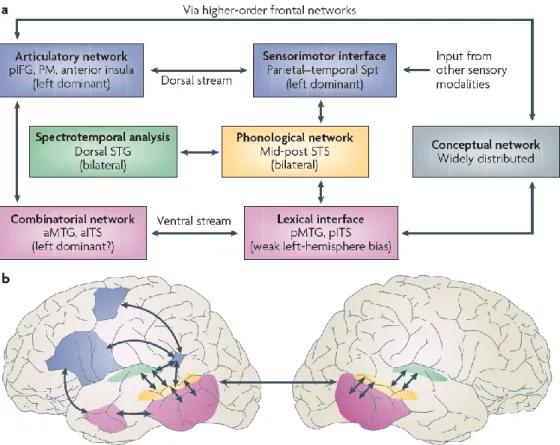
Figure 1: Dual stream model for speech processing (from Hickok & Poeppel, 2007, p. 395)
Sound-to-meaning-mapping and sound-to-articulation-mapping each comprise several levels of processing, taking place in different parts of the fronto-temporo-parietal language network. These brain areas are thought to exchange information generated at different stages of speech perception and production, although these stages are not necessarily organized in a serial manner. The initial stages of auditory perception are shared between the ventral and the dorsal stream, starting with a spectrotemporal analysis of speech stimuli in the auditory cortex. The speech signal is then forwarded to the phonological network, comprising the middle and posterior superior temporal sulcus. Here, sound-based representations of speech on the level of phonemes are generated, resulting in sublexical representations of speech (e.g., in the form of syllables). These representations are further processed in the ventral or the dorsal stream, depending on task requirements and situational demands (i.e., focus on semantic processing or phonological processing).
For semantic processing of speech stimuli (i.e., sound-to-meaning mapping), phonological representations are used to access higher-level conceptual representations within the ventral stream, running along the temporal lobe. A lexical interface in the posterior temporal lobe combines phonological information with lexical representations that are distributed across different areas of the cortex. Subsequently, a combinatorial network in the anterior temporal lobe (ATL) is engaged to integrate conceptual information into a wider context, for example during sentence comprehension.
For sound-to-articulation mapping on the other hand, the dorsal stream is engaged, consisting of parietal and frontal regions. A sensorimotor interface, located in the Spt (Sylvian-parietal-temporal) area, maintains phonological information in working memory and links it to established motor representations of the speech sound. The Spt area closely interacts with the inferior frontal gyrus and premotor cortex during preparatory stages of articulation and during phonologically demanding speech perception (e.g., conscious segmentation or recoding of speech).
1.4 Brain lateralization in language processing
The dual stream model (Hickok & Poeppel, 2007) diverges from the traditional focus on the left hemisphere for language processing (Broca, 1861, Wernicke, 1874). While the dorsal stream is described to be strongly left-lateralized, the ventral stream is considered to be organized more bilaterally, with varying degrees of left-lateralization for different language processes. During the first stages of speech processing, parallel ventral pathways in the left and right hemisphere are thought to serve different functions in lower-level auditory perception. Specifically, the right auditory cortex is hypothesized to integrate speech sounds over a long timescale (~150-300 ms), corresponding to information on the syllable level, such as word stress and tonal information. In contrast, analysis of speech sounds on a short timescale (~20-50 ms) is thought to take place bilaterally. Analyses on short timescales include information on the level of single speech segments, such as rapid acoustic changes (e.g., the difference between “pets” and “pest”). Segmental and suprasegmental analyses
are proposed to take place in parallel streams and are subsequently integrated in order to serve as input for semantic processing.
For phonological processing in the superior temporal sulcus (STS), the dual stream model suggests bilateral but asymmetric involvement of the STS, without specifying the exact differences between the left and the right hemisphere (Hickok & Poeppel, 2004; 2007). However, the left STS has repeatedly been shown to be involved in processing phonetic and phonological information (e.g., Rimol, Specht, Weis, Savoy, & Hugdahl, 2005; Turkeltaub & Coslett, 2010), whereas the right STS appears to be sensitive to characteristics of the human voice and emotional prosody in speech (Specht, 2014).
For subsequent steps of lexical-semantic processing in posterior temporal cortex, the dual stream model suggests a general left hemisphere advantage but proposes capacities in the right hemisphere as well. In contrast, for high-level combinatorial computations in the ATL, for example during sentence comprehension, the model proposes a strong left-hemisphere dominance.
Recent reviews of neuroimaging studies investigating different components of language processing, confirmed the lateralization pattern proposed by the dual stream model (Hickok & Poeppel, 2007), introducing a “lateralization gradient” within the ventral stream (Specht, 2013, 2014). Lower-level auditory processing was shown to elicit bilateral activations with differential sensitivities of the left and the right hemisphere, as described by Hickok and Poeppel. Higher-level language processes, from lexical to sentence processing, were shown to result in increasingly stronger left-lateralization of brain activity.
1.5 Structural and functional connectivity within the cortical language network
In comparison to activations associated with different language processes, connectivity between the brain areas involved has received less attention in the literature. Saur and colleagues have tested the predictions of the dual stream model (Hickok & Poeppel, 2007), with regard to brain areas involved as well as structural and functional connectivity between these areas (Saur et al., 2008; Saur et al., 2010). Networks within the ventral and the dorsal
processing streams were investigated with two tasks that were hypothesized to engage the sound-to-meaning pathway and the sound-to-articulation pathway, respectively. Sound-to-meaning mapping was investigated with sentence comprehension (contrasting sentence listening to pseudosentence listening, i.e., strings of pseudowords that contain syntactic but no semantic information). Sound-to-articulation mapping was investigated with pseudoword repetition (contrasted with word repetition). Pseudoword repetition requires increased phonological-articulatory processing, caused by the lack of an existing articulatory-motor template in long-term memory for novel pseudowords compared to a direct access of motor representations for existing words (Hickok, 2009; Hickok & Poeppel, 2007).
As expected, sentence comprehension primarily engaged parts of the ventral stream along the temporal lobe, and additional (inferior) frontal regions, ascribed to cognitive control functions, for example when accessing grammatical rules. Pseudoword repetition activated parts of the dorsal stream, namely the left superior temporal gyrus and left frontal areas. In line with predictions of the dual stream model (Hickok & Poeppel, 2007), activations within the ventral stream were bilateral but stronger in the left hemisphere, while activations in the dorsal stream were restricted to the left hemisphere. Peaks of these activations (all located in the left-hemisphere) were used as seed regions for Diffusion Tensor Imaging (DTI), revealing structural connections within the comprehension and the repetition network. For seed regions derived from sentence comprehension peaks, analyses confirmed a ventral pathway, connecting temporal and frontal brain regions, running through the extreme capsule with contributions from the middle and inferior longitudinal fasciculi. Fiber tracking from pseudoword repetition seeds, revealed connections of inferior frontal and premotor areas with superior temporal areas through the superior longitudinal fasciculus and the arcuate fasciculus, thus confirming a dorsal pathway. In contrast, the frontal operculum was connected with temporal regions not via the dorsal stream but via the ventral pathway (i.e., extreme capsule). Saur et al. (2008) interpreted this connection to be a route for monitoring processes that are crucial when repeating novel phoneme combinations.
Saur et al. (2010) combined DTI data with results from directed partial correlation analyses of fMRI time series data. This method allowed for the investigation of functional connectivity during speech processing while exploring fiber tracts that were most likely to mediate these interactions. As in Saur et al. (2008), the ventral stream was investigated with semantic processing, contrasting sentence listening with pseudosentence listening. Functional connectivity for sentence comprehension was most prominent between the posterior middle temporal gyrus and frontal/premotor areas, mediated through the extreme capsule. The direction of this connectivity was hypothesized to go from posterior temporal regions, where semantic concepts are stored, to frontal regions, where concepts are selected and integrated. In accordance with the dual stream model (Hickok & Poeppel, 2007), these connections were found bilaterally, with stronger connections in the left hemisphere.
The dorsal stream was investigated with a contrast measuring phonological processing, namely pseudosentence listening contrasted with listening to temporally reversed pseudosentences (in which phonetic information is disrupted). Functional connectivity was most prominent between the left posterior superior temporal gyrus (STG) and left frontal/premotor areas, mediated through the arcuate fasciculus. This interaction was interpreted as motor simulations of incoming speech sounds aiding in effortful phonological processing. Additional connectivity of the left posterior STG with frontal/premotor areas was found to be realized through a ventral pathway (i.e., extreme capsule), which Saur et al. (2010) interpreted as a control mechanism for the dorsal sensory-motor loop.
Other investigations of language processing pathways have also focused on dorsal and ventral fiber tracts. For example, Friederici (2011, 2012) has developed a sentence comprehension model, describing fronto-temporal connections involved in semantic and syntactic processing (see Figure 2). In contrast to the dual stream model, Friederici’s model describes two ventral and two dorsal streams, involved in different subcomponents of sentence comprehension. As in the dual stream model (Hickok & Poeppel 2007), speech
analysis is hypothesized to start in the auditory cortex which forwards the signal to the anterior and posterior STG. From the temporal lobe, two ventral pathways project to the different parts of the frontal lobe. The anterior STG is connected to the frontal operculum and ultimately BA 44 via the uncinate fascicle. More posterior parts of the temporal lobe are connected to BA 45 and BA 47 via the extreme capsule. The former stream supports the processing of higher-order syntax and grammatical relations whereas the latter serves semantic associations between words within a sentence.
In addition to this stimulus-driven bottom-up processing of speech, Friederici’s model also describes mechanisms of top-down control that are executed in parallel. These processes are hypothesized to be realized through a dorsal pathway connecting frontal areas, especially BA 44, with parietal and temporal regions where semantic and syntactic integration takes place. The input from frontal areas aids these integrative processes by offering predictions with regard to remaining incoming sentence elements based on syntactic rules and templates used for phrase structure building.
Thus, Friederici (2012) proposed a language network with two ventral streams, one for semantic processing, previously described as sound-to-meaning mapping (Hickok & Poeppel, 2007), and one for syntactic processing. With respect to dorsal pathways , the model acknowledges the sound-to-motor mapping stream connecting temporal areas and premotor areas. In addition, Friederici postulated a second dorsal stream between temporal cortex and Broca’s area for complex syntactic processing. Hence, according to the model, syntactic processing involves ventral as well as dorsal connections. During sentence comprehension, these two structurally as well as functionally distinguishable streams closely interact to integrate the different types of information and enable contextual processing. The necessity of interactions between the different streams has previously been described (Weiller, Bormann, Saur, Musso, & Rijntjes, 2011), particularly for situations of natural language processing (Saur et al. 2008).
1.6 Verbal ability and language-related activity and connectivity
The vast majority of neuroimaging studies on language processing, such as the ones discussed above, involve group analyses, which average language-related activity across participants. Therefore, findings are usually a good indication of the approximate locations in the brain that are involved in certain language processes for the majority of individuals . However, there is of course individual variation in the neural responses to language stimuli and tasks, which are not only determined by circumstantial factors (e.g., motivation, alertness) but also by more stable differences between subjects. One of the factors that seems to be linked to neural responses to language tasks, is verbal ability. Brain activations have repeatedly been shown to vary with a range of verbal ability measures. However, despite the clear indication of a relationship between verbal ability and brain activity, the direction of this relationship is still unclear. Some studies have found positive correlations (e.g., Szenkovits, Peelle, Norris, & Davis, 2012), others have found negative correlations (e.g., Prat, Mason, & Just, 2012), and many have found a mixture of positive and negative relationships (e.g., Prat, Keller, & Just, 2007; Van Ettinger-Veenstra, Ragnehed, McAllister,
Lundberg, & Engström, 2012). A variety of explanations has been offered for positive as well as negative correlations. Most prominently, increased activity with higher verbal ability has been interpreted as adaptive recruitment of additional neural resources during language processing or deeper processing of language stimuli (e.g., Prat & Just, 2010; Van Ettinger-Veenstra, McAllister, Lundberg, Karlsson, and Engström, 2016). On the other hand, decreased activity with higher verbal ability has been explained with neural efficiency, that is individuals with higher ability requiring fewer neural resources to adequately perform language tasks (e.g., Prat, Mason, & Just, 2011; 2012).
Apart from contradictory findings regarding the direction of a relationship between verbal ability and brain activity, it is also unclear where in the brain activity varies with ability. Correlations have been found in a variety of cortical areas in the left (Van Ettinger-Veenstra et al., 2016; Welcome & Joanisse, 2012) and in the right hemisphere (Van Ettinger-Veenstra et al., 2012; Prat et al., 2011; 2012), thus, areas that have traditionally been associated with language processing, as well as their right-hemisphere homologues. Occasionally, verbal ability has also shown to be related to activity in brain areas that have traditionally been associated with cognitive control functions rather than linguistic processes (Prat et al., 2011; 2012). The large variation in results might partially be attributable to differences in the fMRI language paradigms and measurements of verbal ability used in the different studies. For example, one could hypothesize that paradigms with high domain-general cognitive demands (e.g., selection and inhibition processes in word decision tasks) or verbal ability measures that heavily rely on non-linguistic processes (e.g., verbal working memory), show greater correlations in brain areas of the cognitive control network. Given the wide range of tasks and ability measures used in the current literature, it is difficult to draw any conclusions about the exact nature of the relationship. Even less is known about the relationship between verbal ability and functional connectivity between different brain areas during language processing. Some studies have found increased connectivity with higher verbal ability but evidence is sparse (Prat et al., 2007).
Verbal ability has not only been linked to the strength of activations in different brain areas as described above, but also to asymmetries in brain activity (e.g., Everts et al., 2009; Mellet et al., 2014). Language processing has repeatedly been shown to engage the left hemisphere more than the right hemisphere in the vast majority of subjects (Rasmussen & Milner, 1977; Knecht et al., 2000), leading researchers to discuss potential benefits of a strong left-lateralization for language processing, for example with regard to processing efficiency or performance (e.g., Hirnstein, Hausmann, Güntürkün, 2008). While there is increasing evidence for a positive relationship between verbal ability and left-lateralization in brain activity, the strength of this relationship varies greatly between studies, and some fail to find any significant correlation (Knecht et al., 2001; Powell, Kemp, & García-Finaña, 2012). Variation in results regarding the strength of a potential relationship might partly stem from differences between studies with respect to the methods used to calculate degrees of lateralization and with regard to the way that language processing was assessed, with the majority of studies operationalizing language lateralization with only one specific language task, despite indications that different language processes might be differentially lateralized (Buchinger, FlöeI, Lohmann, Deppe, Henningsen, & Knecht, 2000; Hund-Georgiandis, Lex, & Von Cramon, 2001; Stroobant, Buijs, & Vingerhoets, 2009). Systematic investigations of brain lateralization across different language functions might shed some light on patterns of language lateralization and clarify relationships with verbal ability.
1.7 The current thesis
The first aim of the current Ph.D. project was the development of an fMRI paradigm that allowed for the localization of different language functions in the brain in a task-independent manner. This was achieved by choosing a bottom-up, stimulus-driven approach which employed different language stimuli that triggered differential linguistic processes. In order to investigate language processing in different modalities, stimuli were presented in a passive listening task, a silent reading task, and a repetition task. Non-linguistic, domain-general cognitive demands (e.g., working memory, decision making, executive control)
were kept at a minimum. This approach allowed for the localization of language processes in a context that was more similar to natural language processing in everyday communication settings than paradigms that require the active manipulation in task-driven language processing contexts. Thus, activations derived from the current paradigm should reflect linguistic processes to a greater degree than domain-general cognitive processes. Three well-accepted subcomponents of language processing were chosen as the focus of the paradigm, namely phonological, semantic, and sentence processing (Hickok & Poeppel, 2007). These processes were investigated by manipulating the absence/presence of specific linguistic characteristics in the language stimuli in the different conditions. First, phonological processing was assessed by comparing stimuli with phonological information (i.e., pseudowords) with perceptual control stimuli containing lower-level auditory/visual/ motor information but no phonological information. Second, semantic processing was assessed by comparing stimuli with phonological and lexical-semantic information (i.e., words) with stimuli containing only phonological information (i.e., pseudowords). Third, sentence processing was assessed by comparing stimuli with phonological, lexical-semantic, and syntactic and sentence-level semantic information (i.e., sentences) with stimuli containing only phonological and lexical-semantic information (i.e., words). Furthermore, sentences were contrasted with scrambled sentences and pseudosentences to assess processing of syntactic structure and sentence-level semantics, respectively.
The second aim of the Ph.D. project was the investigation of individual differences in the neural correlates of language processing and relationships with verbal ability. The question of how differences in ability are reflected in brain activity (and in lateralization of activity) has been of great interest to scientists across various cognitive domains (Neumann, Lotze, & Eickhoff, 2016). However, potential links between ability and brain activity might not be specific to any given cognitive domain but rather follow the same principle across domains (e.g., increased neural efficiency with higher ability; increased lateralization with higher ability). Therefore, studying the relationship between verbal ability and language-related
brain activity might shed some light on the general principles of functional brain organization for higher cognitive domains.
The first empirical chapter of the current thesis (Chapter 2) will investigate the neural basis of sentence processing across modalities (i.e., listening and reading), with a particular focus on semantic and syntactic integration processes. Despite extensive research on sentence processing, the neural correlates of semantic and syntactic integration are still not fully understood. This is partly caused by a focus on semantic/syntactic complexity, typically comparing complex sentences with less complex sentences. This approach is problematic for two reasons. First, complexity (especially syntactic complexity) is often manipulated by increasing domain-general demands, such as working memory, rather than linguistic demands (Fiebach et al., 2005). Second, using easy sentences as a control condition subtracts all basic sentence processing components that are present in easy and complex sentences (Hagoort & Indefrey, 2014; Rodd, Vitello, Woollams, & Adank, 2015). In contrast, the paradigm of the current study investigated semantic and syntactic processes during sentence comprehension in a task-independent manner, assessing basic cognitive processes required in everyday-language processing. As part of this investigations, cortical activations as well as functional connectivity associated with sentence processing will be explored.
The second empirical chapter (Chapter 3) will focus on individual differences in brain activity, studying links between language-related activity and verbal ability. Specifically, we aimed to test whether inconsistencies in previous studies can partly be explained by their focus on different language processes, modalities and verbal ability measurements in the different studies. Therefore, we investigated sentence comprehension in listening and reading, and phonological processing in repetition, as well as two different measures of verbal ability (i.e., verbal IQ and verbal fluency).
The third empirical chapter (Chapter 4) investigated the relationship between verbal ability and lateralization of brain activity during language processing. As a basis for this
investigation, patterns of brain lateralization were studied across different language processes and different modalities. The majority of previous studies restricted their investigation of language lateralization to one particular subcomponent (e.g., semantic processing), typically in the context of one particular task (e.g., synonym judgement). This approach ignores the multitude of processes and modalities involved in natural language processing and neglects the possibility that different language proces ses and modalities might be differentially lateralized (Buchinger et al., 2000; Hund-Georgiandis et al., 2001; Stroobant et al., 2009). This can, in turn, affect relationships between language lateralization and verbal ability. Chapter 4 also discusses the relationship between language lateralization as assessed with fMRI and well-established behavioral paradigms (i.e., a dichotic listening paradigm and a visual half-field task).
Altogether, the results of the current thesis will allow for a systematic investigation and comparison of different language processes and modalities in a relatively task-independent manner, and will shed some light on individual differences in the neural correlates of language processing in relation to verbal ability.
1.8 References
Bookheimer, S. (2007). Pre-surgical language mapping with functional magnetic resonance imaging. Neuropsychology review, 17(2), 145-155.
Broca, P. (1861). Remarks on the seat of the faculty of articulated language, following an observation of aphemia (loss of speech). Bulletin de la Société Anatomique, 6, 330-57. Buchinger, C., Flöel, A., Lohmann, H., Deppe, M., Henningsen, H., & Knecht, S. (2000).
Lateralization of expressive and receptive language functions in healthy volunteers. NeuroImage, 11(5), S317.
Carpentier, A., Pugh, K. R., Westerveld, M., Studholme, C., Skrinjar, O., Thompson, J. L., ... & Constable, R. T. (2001). Functional MRI of language processing: dependence on input modality and temporal lobe epilepsy. Epilepsia, 42(10), 1241-1254.
Constable, R. T., Pugh, K. R., Berroya, E., Mencl, W. E., Westerveld, M., Ni, W., & Shankweiler, D. (2004). Sentence complexity and input modality effects in sentence comprehension: an fMRI study. Neuroimage, 22(1), 11-21.
Davis, S. W., Zhuang, J., Wright, P., & Tyler, L. K. (2014). Age-related sensitivity to task-related modulation of language-processing networks. Neuropsychologia, 63, 107-115. Everts, R., Lidzba, K., Wilke, M., Kiefer, C., Mordasini, M., Schroth, G., ... & Steinlin, M.
(2009). Strengthening of laterality of verbal and visuospatial functions during childhood and adolescence. Human brain mapping, 30(2), 473-483.
Fedorenko, E., & Kanwisher, N. (2009). Neuroimaging of language: why hasn't a clearer picture emerged?. Language and Linguistics Compass, 3(4), 839-865.
Fiebach, C. J., Schlesewsky, M., Lohmann, G., Von Cramon, D. Y., & Friederici, A. D. (2005). Revisiting the role of Broca's area in sentence processing: syntactic integration versus syntactic working memory. Human brain mapping, 24(2), 79-91.
FitzGerald, D. B., Cosgrove, G. R., Ronner, S., Jiang, H., Buchbinder, B. R., Belliveau, J. W., Rosen, B.R., & Benson, R. R. (1997). Location of language in the cortex: a
comparison between functional MR imaging and electrocortical stimulation.American Journal of Neuroradiology, 18(8), 1529-1539.
Friederici, A. D. (2011). The brain basis of language processing: from structure to function. Physiological reviews, 91(4), 1357-1392.
Friederici, A. D. (2012). The cortical language circuit: from auditory perception to sentence comprehension. Trends in cognitive sciences, 16(5), 262-268.
Garrett, M.C., Pouratian, N., & Liau, L.M. (2012). Use of Language Mapping to Aid in Resection of Gliomas in Eloquent Brain Regions. Neurosurgery Clinics of North America, 23(3), 497-506.
Gitelman, D. R., Nobre, A. C., Sonty, S., Parrish, T. B., & Mesulam, M. M. (2005).
Language network specializations: an analysis with parallel task designs and functional magnetic resonance imaging. Neuroimage, 26(4), 975-985.
Giussani, C., Roux, F. E., Ojemann, J., Sganzerla, E. P., Pirillo, D., & Papagno, C. (2010). Is preoperative functional magnetic resonance imaging reliable for language areas mapping in brain tumor surgery? Review of language functional magnetic resonance imaging and direct cortical stimulation correlation studies. Neurosurgery, 66(1), 113-120.
Gough, P. M., Nobre, A. C., & Devlin, J. T. (2005). Dissociating linguistic processes in the left inferior frontal cortex with transcranial magnetic stimulation. Journal of
Neuroscience, 25(35), 8010-8016.
Grodzinsky, Y. (2010). The picture of the linguistic brain: How sharp can it be? Reply to Fedorenko & Kanwisher. Language and linguistics compass, 4(8), 605-622.
Grodzinsky, Y., & Friederici, A. D. (2006). Neuroimaging of syntax and syntactic processing. Current opinion in neurobiology, 16(2), 240-246.
Haglund, M. M., Berger, M. S., Shamseldin, M., Lettich, E., & Ojemann, G. A. (1994). Cortical localization of temporal lobe language sites in patients with
Hagoort, P., & Indefrey, P. (2014). The neurobiology of language beyond single words. Annual Review of Neuroscience, 37, 347-362.
Hagoort, P., Indefrey, P., Brown, C., Herzog, H., Steinmetz, H., & Seitz, R. J. (1999). The neural circuitry involved in the reading of German words and pseudowords: a PET study. Journal of cognitive neuroscience, 11(4), 383-398.
Heim, S., Eickhoff, S. B., & Amunts, K. (2008). Specialisation in Broca's region for semantic, phonological, and syntactic fluency?. Neuroimage, 40(3), 1362-1368.
Hickok, G. (2009). The functional neuroanatomy of language. Physics of life reviews, 6(3), 121-143.
Hickok, G., & Poeppel, D. (2004). Dorsal and ventral streams: a framework for
understanding aspects of the functional anatomy of language. Cognition, 92(1), 67-99. Hickok, G., & Poeppel, D. (2007). The cortical organization of speech processing. Nature
Reviews Neuroscience, 8(5), 393-402.
Hirnstein, M., Hausmann, M., & Güntürkün, O. (2008). The evolutionary origins of functional cerebral asymmetries in humans: does lateralization enhance parallel processing?. Behavioural brain research, 187(2), 297-303.
Humphries, C., Binder, J. R., Medler, D. A., & Liebenthal, E. (2006). Syntactic and semantic modulation of neural activity during auditory sentence
comprehension. Journal of cognitive neuroscience, 18(4), 665-679.
Hund‐Georgiadis, M., Lex, U., & von Cramon, D. Y. (2001). Language dominance assessment by means of fMRI: contributions from task design, performance, and stimulus modality. Journal of Magnetic Resonance Imaging, 13(5), 668-675.
Jobard, G., Vigneau, M., Mazoyer, B., & Tzourio-Mazoyer, N. (2007). Impact of modality and linguistic complexity during reading and listening tasks. Neuroimage, 34(2), 784-800.
Knecht, S., Dräger, B., Deppe, M., Bobe, L., Lohmann, H., Flöel, A., ... & Henningsen, H. (2000). Handedness and hemispheric language dominance in healthy
Knecht, S., Dräger, B., Flöel, A., Lohmann, H., Breitenstein, C., Deppe, M., ... &
Ringelstein, E. B. (2001). Behavioural relevance of atypical language lateralization in healthy subjects. Brain, 124(8), 1657-1665.
Lichtheim, L. (1885). On aphasia. Brain, 7, 433-484.
Lindenberg, R., Fangerau, H., & Seitz, R. J. (2007). “Broca’s area” as a collective term?. Brain and language, 102(1), 22-29.
Lindenberg, R., & Scheef, L. (2007). Supramodal language comprehension: role of the left temporal lobe for listening and reading. Neuropsychologia, 45(10), 2407-2415.
McDermott, K. B., Petersen, S. E., Watson, J. M., & Ojemann, J. G. (2003). A procedure for identifying regions preferentially activated by attention to semantic and phonological relations using functional magnetic resonance imaging.Neuropsychologia, 41(3), 293-303.
McDermott, K. B., Watson, J. M., & Ojemann, J. G. (2005). Presurgical language mapping. Current Directions in Psychological Science, 14(6), 291-295.
Mechelli, A., Gorno-Tempini, M. L., & Price, C. J. (2003). Neuroimaging studies of word and pseudoword reading: consistencies, inconsistencies, and limitations. Journal of cognitive neuroscience, 15(2), 260-271.
Mellet, E., Zago, L., Jobard, G., Crivello, F., Petit, L., Joliot, M., ... & Tzourio-Mazoyer, N. (2014). Weak language lateralization affects both verbal and spatial skills: An fMRI study in 297 subjects. Neuropsychologia, 65, 56-62.
Neumann, N., Lotze, M., & Eickhoff, S. B. (2016). Cognitive Expertise: An ALE Meta‐
Analysis. Human brain mapping, 37(1), 262-272.
Noesselt, T., Shah, N. J., & Jäncke, L. (2003). Top-down and bottom-up modulation of language related areas–An fMRI Study. BMC neuroscience, 4(1), 13.
Plante, E., Creusere, M., & Sabin, C. (2002). Dissociating sentential prosody from sentence processing: activation interacts with task demands. NeuroImage, 17(1), 401-410.
Powell, J. L., Kemp, G. J., & García-Finaña, M. (2012). Association between language and spatial laterality and cognitive ability: an fMRI study. Neuroimage, 59(2), 1818-1829.
Prat, C. S., Keller, T. A., & Just, M. A. (2007). Individual differences in sentence
comprehension: a functional magnetic resonance imaging investigation of syntactic and lexical processing demands. Journal of cognitive neuroscience, 19(12), 1950-1963. Prat, C. S., & Just, M. A. (2010). Exploring the neural dynamics underpinning individual
differences in sentence comprehension. Cerebral cortex, 21(8), 1747-1760.
Prat, C. S., Mason, R. A., & Just, M. A. (2011). Individual differences in the neural basis of causal inferencing. Brain and language, 116(1), 1-13.
Prat, C. S., Mason, R. A., & Just, M. A. (2012). An fMRI investigation of analogical mapping in metaphor comprehension: the influence of context and individual cognitive capacities on processing demands. Journal of Experimental Psychology: Learning, Memory, and Cognition, 38(2), 282.
Rasmussen, T., & Milner, B. (1977). The role of early left‐brain injury in determining lateralization of cerebral speech functions. Annals of the New York Academy of Sciences, 299(1), 355-369.
Rimol, L. M., Specht, K., Weis, S., Savoy, R., & Hugdahl, K. (2005). Processing of sub-syllabic speech units in the posterior temporal lobe: an fMRI study. Neuroimage, 26(4), 1059-1067.
Rodd, J. M., Vitello, S., Woollams, A. M., & Adank, P. (2015). Localising semantic and syntactic processing in spoken and written language comprehension: An Activation Likelihood Estimation meta-analysis. Brain and language, 141, 89-102.
Szenkovits, G., Peelle, J. E., Norris, D., & Davis, M. H. (2012). Individual differences in premotor and motor recruitment during speech perception. Neuropsychologia, 50(7), 1380-1392.
Rogalsky, C., & Hickok, G. (2009). Selective attention to semantic and syntactic features modulates sentence processing networks in anterior temporal cortex. Cerebral Cortex, 19(4), 786-796.
Roux, F. E., Boulanouar, K., Lotterie, J. A., Mejdoubi, M., LeSage, J. P., & Berry, I. (2003). Language functional magnetic resonance imaging in preoperative assessment of language areas: correlation with direct cortical stimulation. Neurosurgery, 52(6), 1335-1347.
Rutten, G. J. M., Ramsey, N. F., Van Rijen, P. C., Noordmans, H. J., & Van Veelen, C. W. M. (2002). Development of a functional magnetic resonance imaging protocol for intraoperative localization of critical temporoparietal language areas. Annals of neurology, 51(3), 350-360.
Saur, D., Kreher, B. W., Schnell, S., Kümmerer, D., Kellmeyer, P., Vry, M. S., Umarova, R., Musso, M., Glauche, V., Abel, S., Huber, W., Rijntjes, J., & Weiller, C. (2008). Ventral and dorsal pathways for language. Proceedings of the National Academy of Sciences, 105(46), 18035-18040.
Saur, D., Schelter, B., Schnell, S., Kratochvil, D., Küpper, H., Kellmeyer, P., Kümmerer, D., Klöppel, S., Glauche, V., Lange, R., Mader, W., Feess, D., Timmer, J., & Weiller, C. (2010). Combining functional and anatomical connectivity reveals brain networks for auditory language comprehension. Neuroimage, 49(4), 3187-3197.
Specht, K. (2013). Mapping a lateralization gradient within the ventral stream for auditory speech perception. Frontiers in human neuroscience, 7, 629.
Specht, K. (2014). Neuronal basis of speech comprehension. Hearing research,307, 121-135.
Stroobant, N., Buijs, D., & Vingerhoets, G. (2009). Variation in brain lateralization during various language tasks: A functional transcranial Doppler study. Behavioural brain research, 199(2), 190-196.
Tieleman, A., Deblaere, K., Van Roost, D., Van Damme, O., & Achten, E. (2009). Preoperative fMRI in tumour surgery. European radiology, 19(10), 2523-2534.
Turkeltaub, P. E., & Branch Coslett, H. (2010). Localization of sublexical speech perception components. Brain and language, 114(1), 1-15.
Van Ettinger-Veenstra, H., McAllister, A., Lundberg, P., Karlsson, T., & Engström, M. (2016). Higher Language Ability is Related to Angular Gyrus Activation Increase During Semantic Processing, Independent of Sentence Incongruency. Frontiers in human neuroscience, 10.
Van Ettinger-Veenstra, H., Ragnehed, M., McAllister, A., Lundberg, P., & Engström, M. (2012). Right-hemispheric cortical contributions to language ability in healthy
adults. Brain and language, 120(3), 395-400.
Vlieger, E. J., Majoie, C. B., Leenstra, S., & den Heeten, G. J. (2004). Functional magnetic resonance imaging for neurosurgical planning in neurooncology. European
radiology, 14(7), 1143-1153.
Weiller, C., Bormann, T., Saur, D., Musso, M., & Rijntjes, M. (2011). How the ventral pathway got lost–and what its recovery might mean. Brain and language,118(1), 29-39. Welcome, S. E., & Joanisse, M. F. (2012). Individual differences in skilled adult readers
reveal dissociable patterns of neural activity associated with component processes of reading. Brain and language, 120(3), 360-371.
Wernicke, C. (1874). Der aphasische Symptomencomplex: eine psychologische Studie auf anatomischer Basis. Cohn.
Wright, P., Randall, B., Marslen-Wilson, W. D., & Tyler, L. K. (2011). Dissociating linguistic and task-related activity in the left inferior frontal gyrus. Journal of Cognitive
Neuroscience, 23(2), 404-413.
Yang, J., & Zevin, J. (2014). The impact of task demand on visual word recognition. Neuroscience, 272, 102-115.
Chapter 2
Neural Correlates of Semantic and Syntactic Processing
During Sentence Comprehension
2.1 Abstract
Sentence comprehension has repeatedly been shown to activate the left anterior temporal lobe (ATL), but the role of posterior temporal and frontal brain regions has been under debate. Furthermore, the degree to which semantic and syntactic processes during sentence comprehension are topographically separable, is not clear. In addition, functional connectivity of different brain areas during sentence comprehension, and during semantic and syntactic processing specifically, are less well understood than assoc iated activations. The current study investigated activations and functional connectivity during semantic and syntactic processing during sentence comprehension in listening and reading, using a passive listening and a silent reading paradigm. Functional MRI data were acquired while twenty-two healthy adult participants were presented with words, sentences, pseudosentences and scrambled sentences. As expected, sentence comprehension activated the left ATL in listening and reading. This area of activation was shared by semantic and syntactic processes. However, functional connectivity of the left ATL with left temporal, parietal and bilateral frontal regions varied for the two modalities, and for semantic and syntactic processing. The results suggest that the left ATL functions supramodally and integrates semantic as well as syntactic information, but shows differential interactions with other brain areas, depending on the processing modality and the language process involved.
2.2 Introduction
Sentence comprehension relies on the semantic and syntactic integration of single words into a meaningful entity. Despite the complexity of the cognitive processes involved, sentence comprehension normally requires relatively little conscious effort and takes place more or less automatically in everyday language processing. Studying sentence comprehension therefore offers a possibility to investigate the complex cognitive processes inherent in language processing, while using stimuli and task situations that are relatively close to natural language processing.
Functional neuroimaging studies on language processing have shown that sentence comprehension can engage a wide range of brain areas, with activations being most prominent in left-hemispheric frontal and temporal regions (Price, 2010; Price 2012; Specht, 2014; Vigneau et al., 2006). Accordingly, well-established models of language processing have ascribed a dominant role in particular to the left temporal lobe in sentence comprehension. For example, the dual stream model of language processing (Hickok & Poeppel, 2007) proposes a “combinatorial network” in the left anterior temporal lobe (ATL) that is involved in the semantic and syntactic integration of single words into a coherent sentence. The combinatorial network is hypothesized to receive input from a “lexical interface”, which is located in the posterior temporal lobe and is engaged in processing word-level meaning. The model also proposes functional interactions between the left ATL and the left inferior frontal gyrus (IFG). While Hickok and Poeppel do not specify a potential role of the left IFG in sentence processing, they discuss the implication of this region in working memory processes during speech comprehension.
Friederici (2012) also stresses the importance of the left temporal lobe for sentence comprehension. However, in contrast to the dual stream model (Hickok & Poeppel, 2007), Friederici’s model of sentence processing has suggested the posterior rather than the anterior part of the left temporal lobe as an area of semantic and syntactic integration. The ATL, on the other hand, is thought to be involved in initial, lower-level syntactic processes, in which word category information is used to make local connections between words (e.g.,
determiner-noun phrases). In order to process more complex syntax (e.g., sentences with embedded clauses that require reordering of words), the left ATL is hypothesized to interact with the left posterior IFG. For semantic processing during sentence comprehension (e.g., assignment of thematic roles – who does what?), Friederici has suggested an involvement of anterior as well as posterior parts of the left temporal lobe and the left angular gyrus.
Thus, the dual stream model (Hickok & Poeppel, 2007) as well as Friederici’s sentence comprehension model (2012) both propose a brain area that is dedicated to semantic and syntactic integration of words during sentence comprehension. However, the location of this integration area differs between the two models, with the left anterior
temporal lobe proposed in the dual stream model, and the left posterior temporal lobe proposed in Friederici’s model. Furthermore, Friederici ascribes to this integration area a final stage of sentence comprehension in which semantic and syntactic information interact with each other and with broader contextual information (e.g., world knowledge), after being processed separately and in distinct brain areas in previous processing steps. In contrast, the dual stream model describes the combinatorial network in the left ATL as an area of both, semantic as well as syntactic integration processes, without discussing potential topographical differences or interactions between the two types of information.
2.2.1 Neural correlates of semantic integration and syntactic integration
Two recent meta-analyses provide evidence for separability of semantic and syntactic processes in left frontal and temporal brain areas, despite considerable overlap of activations for the two processes. Hagoort and Indefrey (2014) analyzed fMRI and PET studies that have investigated effects of semantic or syntactic demand during sentence comprehension by contrasting sentences with high versus low semantic/syntactic demand. Effects of semantic as well as syntactic demand were found in bilateral IFG, left posterior middle temporal gyrus (pMTG), and to a lesser degree in more anterior left temporal areas and the right temporal lobe. Direct comparisons of semantic and syntactic effects showed significantly greater activity for semantic demand in the anterior left IFG and left pMTG, and
significantly greater activity for syntactic demand in the posterior left IFG. Another meta-analysis (Rodd, Vitello, Woollams, & Adank, 2015) included fMRI studies on semantic and syntactic demand that used different types of language stimuli, ranging from single words, over sentences, to narratives. Results confirmed the overlap of activations for semantic and syntactic demand in the left IFG, as well as the preference of the anterior left IFG for semantic processing, and the posterior left IFG for syntactic processing. In the temporal lobe, Rodd et al., (2015) found significantly greater effects of semantic demand compared to syntactic demand in the left mid STG and left pITG. The left pMTG showed activation for syntactic processing but not semantic processing, contradicting Hagoort and Indefrey (2014) who found a preference of the pMTG for semantic rather than syntactic processing. Thus, the exact role of subregions in the left temporal lobe in semantic and syntactic processing remains unclear.
Neither of the two meta-analyses reported any effects of semantic or syntactic demand in the ATL, despite its well-established involvement in semantic and sentence processing (Hickok & Poeppel, 2007; Specht, 2014). Both meta-analyses discuss a potential underestimation of effects in this area due to artefact problems with fMRI measurements in the ATL (Visser, Jefferies, & Ralph, 2009). An alternative explanation for the lack of reliable ATL activations in the two meta-analyses is the choice of studies that were included. All of those studies investigated effects of semantic or syntactic demand by comparing more demanding stimuli to less demanding stimuli. This means that basic cognitive processing steps, which are present even in the less demanding condition, will be subtracted in comparisons of the two conditions. The authors therefore concluded that brain areas involved in, for example, basic sentence comprehension, may not be depicted in the results of the two meta-analyses (Hagoort & Indefrey, 2014; Rodd et al., 2015). The focus of the meta-analyses on effects of semantic and syntactic demand might also explain the involvement of the inferior frontal gyrus that was found, despite propositions that its role in language comprehension might be more limited than previously thought (Grodzinsky, 2000; Adank, 2012). Hagoort and Indefrey (2014) as well as Rodd et al. (2015) both discuss the
possibility that IFG recruitment may reflect cognitive demand associated with processing complex stimuli in general, independent of their linguistic nature, or with cognitive demands imposed by the tasks rather than the stimuli. This view is consistent with suggestions that confounding effects of working memory load, rather than syntactic processes per se, might be responsible for left IFG activations during some sentence comprehension tasks (Grodzinsky & Friederici, 2006; Sakai, Hashimoto, & Homae, 2001; Stromswold, Caplan, Alpert, & Rauch, 1996), a suggestion that has received empirical support when manipulating syntactic complexity and working memory independently (Fiebach, Schlesewsky, Lohman, Von Cramon, & Friederici, 2005). Furthermore, even complex syntactic processing has been shown to engage the left ATL rather than the left IFG when investigated in the context of natural language processing rather than active, experimental manipulation (Brennan, Nir, Hasson, Malach, Heeger, & Pylkkänen, 2012). Other authors have ascribed left IFG activity during sentence comprehension to cognitive control functions and conflict resolution (Novick, Trueswell, & Thompson-Schill, 2005).
In contrast to investigations of semantic and syntactic demand, other studies have researched semantic and syntactic processing by manipulating the presence/absence of semantic and syntactic information in sentences (Humphries, Binder, Medler, & Liebenthal, 2006; Vandenberghe, Nobre, & Price, 2002). For example, semantically random sentences, in which all content words are replaced with randomly chosen, semantically unrelated words, allow for the syntactic combination of words but not for their integration into a larger semantic entity. Therefore, comparing normal sentences with semantically random sentences allows for the investigation of semantic integration. On the other hand, scrambled sentences, in which the position of words in a sentence is randomly reordered, allow for the semantic combination of words based on their coherence in meaning, but the syntactic structure of the sentence is disrupted. Therefore, comparing normal sentences with scrambled sentences allows for the investigation of syntactic integration. In these comparisons, syntactic integration has been associated with activations in the left ATL