VOLUME 1 ISSUE 3 SEPTEMBER 2013 ISSN 2050-4381
Reducing alcohol-related harm in disadvantaged men:
development and feasibility assessment of a brief
intervention delivered by mobile telephone
IK Crombie, DW Falconer, L Irvine, B Williams, IW Ricketts,
G Humphris, J Norrie, P Rice and PW Slane
disadvantaged men: development
and feasibility assessment of a brief
intervention delivered by
mobile telephone
IK Crombie,
1
* DW Falconer,
1
L Irvine,
1
B Williams,
2
IW Ricketts,
3
G Humphris,
4
J Norrie,
5
P Rice
6
and PW Slane
7
1
School of Medicine, University of Dundee, Dundee, UK
2
Nursing, Midwifery and Allied Health Professions (NMAHP) Research Unit,
University of Stirling, Stirling, UK
3
School of Computing, University of Dundee, Dundee, UK
4
School of Medicine, University of St Andrews, St Andrews, UK
5
Centre for Health Care Randomised Trials, University of Aberdeen, Aberdeen, UK
6
NHS Substance Abuse Services, Stracathro Hospital, Brechin, UK
7
The Erskine Practice, Arthurstone Medical Centre, Dundee, UK
*Corresponding author
Declared competing interests of authors:none
Disclaimers:This report contains transcripts of focus groups and interviews conducted in the course of the research. Quotes from the transcripts contain language that may offend some readers.
Published September 2013
DOI: 10.3310/phr01030
This report should be referenced as follows:
Crombie IK, Falconer DW, Irvine L, Williams B, Ricketts IW, Humphris G,et al.Reducing alcohol-related harm in disadvantaged men: development and feasibility assessment of a brief intervention delivered by mobile telephone.Public Health Res2013;1(3).
ISSN 2050-4381 (Print) ISSN 2050-439X (Online)
This journal is a member of and subscribes to the principles of the Committee on Publication Ethics (COPE) (www.publicationethics.org/). Editorial contact: [email protected]
The full PHR archive is freely available to view online at www.journalslibrary.nihr.ac.uk/phr. Print-on-demand copies can be purchased from the report pages of the NIHR Journals Library website: www.journalslibrary.nihr.ac.uk
Criteria for inclusion in thePublic Health Researchjournal
Reports are published inPublic Health Research(PHR) if (1) they have resulted from work for the PHR programme, and (2) they are of a sufficiently high scientific quality as assessed by the reviewers and editors.
Reviews inPublic Health Researchare termed‘systematic’when the account of the search, appraisal and synthesis methods (to minimise biases and random errors) would, in theory, permit the replication of the review by others.
PHR programme
The Public Health Research (PHR) programme, part of the National Institute for Health Research (NIHR), evaluates public health interventions, providing new knowledge on the benefits, costs, acceptability and wider impacts of non-NHS interventions intended to improve the health of the public and reduce inequalities in health. The scope of the programme is multi-disciplinary and broad, covering a range of interventions that improve public health. The Public Health Research programme also complements the NIHR Health Technology Assessment programme which has a growing portfolio evaluating NHS public health interventions.
For more information about the PHR programme please visit the website: www.phr.nihr.ac.uk/ This report
The research reported in this issue of the journal was funded by the PHR programme as project number 09/3001/09. The contractual start date was in March 2010. Thefinal report began editorial review in January 2012 and was accepted for publication in January 2013. The authors have been wholly responsible for all data collection, analysis and interpretation, and for writing up their work. The PHR editors and production house have tried to ensure the accuracy of the authors' report and would like to thank the reviewers for their constructive comments on the final report document. However, they do not accept liability for damages or losses arising from material published in this report.
This report presents independent research funded by the National Institute for Health Research (NIHR). The views and opinions expressed by authors in this publication are those of the authors and do not necessarily reflect those of the NHS, the NIHR, NETSCC, the PHR programme or the Department of Health. If there are verbatim quotations included in this publication the views and opinions expressed by the
interviewees are those of the interviewees and do not necessarily reflect those of the authors, those of the NHS, the NIHR, NETSCC, the PHR programme or the Department of Health.
© Queen's Printer and Controller of HMSO 2013. This work was produced by Crombieet al. under the terms of a commissioning contract issued by the Secretary of State for Health. This issue may be freely reproduced for the purposes of private research and study and extracts (or indeed, the full report) may be included in professional journals provided that suitable acknowledgement is made and the reproduction is not associated with any form of advertising. Applications for commercial reproduction should be addressed to: NIHR Journals Library, National Institute for Health Research, Evaluation, Trials and Studies Coordinating Centre, Alpha House, University of Southampton Science Park, Southampton SO16 7NS, UK.
Published by the NIHR Journals Library (www.journalslibrary.nihr.ac.uk), produced by Prepress Projects Ltd, Perth, Scotland (www.prepress-projects.co.uk).
Epidemiology and Biostatistics, UCL Institute of Child Health, UK
NIHR Journals Library Editor-in-Chief
Professor Tom Walley Director, NIHR Evaluation, Trials and Studies and Director of the HTA Programme, UK
NIHR Journals Library Editors
Professor Ken Stein Chair of HTA Editorial Board and Professor of Public Health, University of Exeter Medical School, UK
Professor Andree Le May Chair of NIHR Journals Library Editorial Group (EME, HS&DR, PGfAR, PHR journals)
Dr Martin Ashton-Key Consultant in Public Health Medicine/Consultant Advisor, NETSCC, UK
Professor Matthias Beck Chair in Public Sector Management and Subject Leader (Management Group), Queen’s University Management School, Queen’s University Belfast, UK
Professor Aileen Clarke Professor of Health Sciences, Warwick Medical School, University of Warwick, UK
Dr Tessa Crilly Director, Crystal Blue Consulting Ltd, UK
Dr Peter Davidson Director of NETSCC, HTA, UK
Ms Tara Lamont Scientific Advisor, NETSCC, UK
Dr Tom Marshall Reader in Primary Care, School of Health and Population Sciences, University of Birmingham, UK
Professor William McGuire Professor of Child Health, Hull York Medical School, University of York, UK
Professor Geoffrey Meads Honorary Professor, Business School, Winchester University and Medical School, University of Warwick, UK
Professor Jane Norman Professor of Maternal and Fetal Health, University of Edinburgh, UK
Professor John Powell Consultant Clinical Adviser, NICE, UK
Professor James Raftery Professor of Health Technology Assessment, Wessex Institute, Faculty of Medicine, University of Southampton, UK
Dr Rob Riemsma Reviews Manager, Kleijnen Systematic Reviews Ltd, UK
Professor Helen Roberts Professorial Research Associate, University College London, UK
Professor Helen Snooks Professor of Health Services Research, Institute of Life Science, College of Medicine, Swansea University, UK
Please visit the website for a list of members of the NIHR Journals Library Board: www.journalslibrary.nihr.ac.uk/about/editors
Abstract
Reducing alcohol-related harm in disadvantaged men:
development and feasibility assessment of a brief
intervention delivered by mobile telephone
IK Crombie,
1* DW Falconer,
1L Irvine,
1B Williams,
2IW Ricketts,
3G Humphris,
4J Norrie,
5P Rice
6and PW Slane
71School of Medicine, University of Dundee, Dundee, UK
2Nursing, Midwifery and Allied Health Professions (NMAHP) Research Unit, University of Stirling,
Stirling, UK
3School of Computing, University of Dundee, Dundee, UK 4School of Medicine, University of St Andrews, St Andrews, UK
5Centre for Health Care Randomised Trials, University of Aberdeen, Aberdeen, UK 6NHS Substance Abuse Services, Stracathro Hospital, Brechin, UK
7The Erskine Practice, Arthurstone Medical Centre, Dundee, UK
*Corresponding author [email protected]
Background:Socially disadvantaged men suffer substantial harm from heavy drinking. Brief alcohol interventions are effective in reducing consumption when delivered via health care. There is a need for tailored brief interventions for disadvantaged men who seldom attend health care.
Objectives:(1) To investigate the best ways to recruit and retain disadvantaged men in a study aimed at reducing the frequency of heavy drinking. (2) To identify the type of content and timing of the delivery that is most likely to engage disadvantaged young to middle-aged men in an intervention delivered by text messages. (3) To determine whether or not the intervention is likely to be an acceptable way to influence the frequency of heavy drinking.
Design:A three-phase study involving the development of the recruitment strategy and the intervention, an assessment of the feasibility of a randomised controlled trial, and a post-study evaluation.
Setting:Community-based study, conducted in Dundee, UK.
Participants:Disadvantaged men aged 25–44 years who had two or more episodes of heavy drinking (≥8 units in a single session) in the preceding month. Two recruitment strategies were employed: recruitment through general practice (GP) registers and recruitment through a community outreach strategy.
Interventions:Focus groups explored drinking motives and behaviours of the target group. The intervention also drew on reviews of the literature on: alcohol brief interventions, text message studies, communication theory and behaviour change theories and techniques. The intervention group received 36 text messages with images sent over a 28-day period.
Main outcome measures:The outcome measures evaluated the likely success of a full trial: recruitment of the participants; construction and delivery of a theoretically and empirically based intervention that successfully engages disadvantaged men; potential for the intervention to influence binge drinking.
Results:The focus group analyses identified that personal experience and knowledge of the harmful effects of alcohol was widespread. Furthermore, there was a discrepancy between frequent binge drinking and perceived social expectations and duties. This could usefully be targeted in the intervention. Theoretically and empirically based behaviour change strategies were successfully rendered in attractive, colourful, brief text messages. Both recruitment strategies (GP registers and community outreach) proved successful and a total of 67 men were recruited, exceeding the target of 60. The participants were at high risk of harm because of frequent episodes of heavy binge drinking. Baseline interviews established that those recruited through community outreach drank substantially more and had more frequent binge drinking sessions than those recruited through GP registers. Retention at follow-up was 96%. Extensive process evaluation was conducted. The evaluation showed that 95% of text messages were successfully delivered to participants' telephones. Furthermore, there was a high level of engagement with text messages which sought responses. Most men replied to these texts, often giving carefully structured personal responses. Analyses of the responses indicated a high level of engagement with key components of the behaviour change strategy. Post-trial evaluation showed high levels of satisfaction with the intervention.
Conclusions:This study has shown that disadvantaged men can be recruited and retained in an alcohol intervention trial. A theoretically and empirically based intervention was successfully delivered by text message. Furthermore, the messages were well received and elicited the types of response intended. A full trial of the intervention, incorporating a cost-effectiveness study, should be carried out.
Study registration:This study is registered as ISRCTN10515845.
Contents
. . . .
List of abbreviations. . . .
Scientific summary. . . .
Chapter 1 Structure of the report
Introduction
The chapters of the report Chapter 2 Research objectives
Introduction
Research questions of the full-scale trial of the novel intervention Research questions of the feasibility study
Ethical approval
User group representatives Protocol amendments Chapter 3 Introduction
Alcohol and brief interventions
Intervention delivery by mobile telephone
Behaviour change interventions and disadvantaged people Recruitment
The need for the feasibility study
Chapter 4 Understanding drinking motives and behaviours
Introduction Methods Results Discussion Conclusion
Chapter 5 Developing the text messages
Introduction
Design features of published alcohol brief interventions Design features of published text message studies Behaviour change theories
Conclusions from the literature review Constructing a logical sequence of messages Design decisions
Basis for the intervention Improving the messages Discussion
Chapter 6 Recruitment strategies
Introduction Methods Results Discussion xi xiii 1 1 1 3 3 3 3 3 4 4 5 5 6 6 6 7 9 9 9 10 16 18 19 19 19 19 20 22 22 23 23 26 28 31 31 31 33 36
Chapter 7 Randomisation and baseline characteristics
Introduction Methods Results
Comparison of subjects recruited by the two sampling strategies Discussion
Chapter 8 Retention strategy
Introduction
Developing a retention strategy
Application of recommended retention strategies Summary
Chapter 9 Outcome assessment
Introduction Methods Results Discussion
Chapter 10 Novel methods for process evaluation
Introduction Research questions Methods Results Discussion Conclusion
Chapter 11 Post-trial assessment
Introduction Aims Methods Results Discussion
Chapter 12 Summary and conclusions
Main findings
Does the feasibility study indicate that a full trial should be conducted? Modifications to the full randomised controlled trial
Acknowledgements References
Appendix 1 Study protocol
Appendix 2 Letter of invitation, participant information leaflet and consent form 37 37 37 38 40 43 49 49 49 50 51 53 53 53 53 56 59 59 59 59 61 69 70 71 71 71 71 71 75 79 79 84 85 87 89 101 115
Appendix 3 Screening questionnaire
Appendix 4 Baseline questionnaire
Appendix 5 Follow-up questionnaire
Appendix 6 Post-trial assessment
121 123 129 135
List of abbreviations
DMQ Drinking Motives Questionnaire FAST Fast Alcohol Screening TestGP general practice/general practitioner HAPA health action process approach MI motivational interviewing MMS Multimedia Messaging Service RDS respondent-driven sampling
RSOD risky single occasion drinking SIMD Scottish Index of Multiple
Deprivation
SMS Short Message Service TPB theory of planned behaviour TTM transtheoretical model
All abbreviations that have been used in this report are listed here unless the abbreviation is well known (e.g. NHS), or it has been used only once, or it is a non-standard abbreviation used only in figures/tables/appendices, in which case the abbreviation is defined in the figure legend or in the notes at the end of the table.
Scienti
fi
c summary
Background
Alcohol-related morbidity and mortality present a major public health challenge. The cost of alcohol to society has been estimated at more than £55B per year in England and more than £3.5B per year in Scotland. People who are socially disadvantaged are at a markedly higher risk of developing alcohol-related diseases. Brief interventions delivered to middle-aged men in health-care settings are effective in reducing alcohol consumption. However, this approach may not work with disadvantaged young to middle-aged men who are seldom in contact with health services. Thus, there is a need to develop alternative methods of delivering brief interventions to this high-risk group. Given the scale of the current problem, the delivery methods need to be able to reach large numbers of individuals at low cost.
The mobile telephone is an attractive method to deliver interventions to large numbers of people. This approach is well suited to young to middle-aged men because ownership of mobile telephones is high in this group. Text messaging has been used to modify adverse health behaviours and to increase health-care uptake. Recent systematic reviews suggest that brief interventions by mobile telephone can influence behaviour. The aim of this study was to develop and test the feasibility of a brief intervention delivered by mobile telephone. The intervention was intended to reduce the frequency of binge drinking among young to middle-aged disadvantaged men.
Research questions
1. What are the best ways to recruit and retain disadvantaged men in a study aimed at reducing the frequency of heavy drinking?
2. What is the type of content and timing of the delivery that is most likely to engage disadvantaged young to middle-aged men in an intervention delivered by text messages?
3. Is the intervention likely to be an acceptable way to influence frequency of heavy drinking?
Methods
Ethical approval for all aspects of the study was obtained from the East of Scotland Research Ethics Service (reference number 09/S1401/78). To inform the design of the recruitment strategies and the intervention, six focus groups were carried out,five with men and one with women. Focus group participants were purposively recruited from several venues in areas of high deprivation. Focus group discussions were digitally recorded and transcripts were analysed using framework analysis. Three researchers were involved in the analysis to ensure reliability of interpretation and coding.
The feasibility of a full trial was assessed by carrying out all the stages of a double-blind randomised controlled trial. The study group comprised disadvantaged men aged 25–44 years living in the community. Men were included in the study if they had two or more episodes of heavy drinking (≥8 units in a single session) in the preceding month. Exclusion criteria were: men currently attending care at an Alcohol Problem Service; and men who would not be contactable by mobile telephone for any part of the intervention and follow-up period.
Two recruitment strategies were tested: letters of invitation from general practices (GPs) and
respondent-driven sampling (RDS). Participants were randomised to the intervention or control group using a web-based randomisation system provided by the Glasgow Clinical Trials Unit. Randomisation was
stratified by recruitment strategy and restricted with a block size of four. On completion of the baseline questionnaire participants were sent: an initial £10 gift voucher; a £5 gift voucher for each week of the study; and a £10 voucher for completing the outcome assessment.
The intervention was a series of 36 Short Message Service (SMS) and Multimedia Messaging Service (MMS) messages delivered by mobile telephone. The content of the intervention text messages was derived from seven types of literature: alcohol brief interventions; text message interventions; two psychological models [theory of planned behaviour and the transtheoretical model (TTM)], motivational interviewing, communication theory and reviews of specific behaviour change techniques. The texts were organised according to the stages of the TTM. The text messages emphasised the credibility of the source (University of Dundee), used the informal style and abbreviations of everyday text messages and made frequent use of humour. A variety of techniques were employed to increase message effectiveness: tailoring of messages; use of gain-framed texts; pairing of messages; and inclusion of questions to promote interactivity. The messages were constructed to take advantage of the conventional pattern of heavy weekend drinking. Messages were designed to tap into three windows of opportunity: before weekend drinking; after a heavy drinking episode; and mid-week sobriety. The control group received 34 SMS and MMS messages on general health promotion, which did not incorporate behaviour change techniques.
Baseline and follow-up interviews were conducted by telephone, with the interviewer blind to treatment status. Questions on alcohol consumption were taken from the US Behavioral Risk Factor Surveillance System. This enabled total consumption and frequency of binge drinking to be measured. In addition, the frequency of drinking substantially in excess of the conventional binge drinking level (i.e.≥16 units in a session) was recorded. The Fast Alcohol Screening Test (FAST) was used to determine hazardous drinking because it is short and thus suitable for telephone use. Questions on refusal skills were taken from the Drinking Refusal Self-efficacy Questionnaire. The Readiness to Change Questionnaire was used to measure the stage of intention to reduce consumption. Questions were also asked on knowledge of harms of alcohol, benefits of moderate drinking, the current definition of binge drinking and whether or not participants perceived their current drinking to be harmful.
Extensive process evaluation was undertaken. The delivery of the intervention was assessed from data captured by the computer system which monitored intervention delivery. The frequency of responses to these questions provided a measure of engagement with the intervention and assessed retention in the study. Content analysis of the responses given provided a method to ascertain the nature of engagement with components of the behaviour change intervention. Interviews with a subsample of men were conducted post trial to investigate the reported acceptability and impact of the study.
Results
Focus group analysis found that explanations for current drinking patterns, and the way these have changed over time, appear rooted in shifts in three interacting conceptual areas: private purpose (the individual's personal reasons for drinking); social roles (expectations, duties and sanctions on drinking); and concrete experience (of the adverse effects of excess drinking). The set of social expectations stem from recognition of the person's wider social roles and responsibilities (employee, husband/partner, parent) and abilities (self-discipline/control, ability to tolerate alcohol, judge limits and resist social pressure).
Drinking motives had changed significantly from when the men were younger. This was accompanied by a shift from‘freedom to’enjoy the pleasures of alcohol to‘freedom from’life stresses through the use of alcohol. Personal experience and knowledge of the harmful effects of alcohol was detailed and widespread. There was often a marked discrepancy between an individual's drinking habits and the intended aims of drinking. Thus, brief interventions could highlight the mismatch between being drunk, and success in socialising, working,‘doing good turns’ and feeling good about oneself.
Both recruitment strategies (GP and RDS) proved successful, and 67 men were recruited, exceeding the target of 60 participants. Recruitment by RDS required priorfieldwork to establish suitable venues for recruitment. Flexible recruitment strategies involving multiple attempts at contact at different times of the day and days of the week were essential.
There were substantial differences between the men recruited by the two methods. The men recruited by RDS were more likely to be unemployed and less likely to be married than those recruited through GPs. They also drank more than twice as much as the men recruited through GP practices (139.5 units per month vs 65.5 units per month;p= 0.003) and had many more binge drinking days (57% of RDS-recruited men had overfive binge drinking days per month compared with 17% of GP-recruited men;p= 0.002). Consequently, these men were also much more likely to have frequent episodes (more than one per month) where they forgot what they had done following a binge drinking session (54% of RDS-recruited men vs 6% of GP-recruited men; p= 0.001).
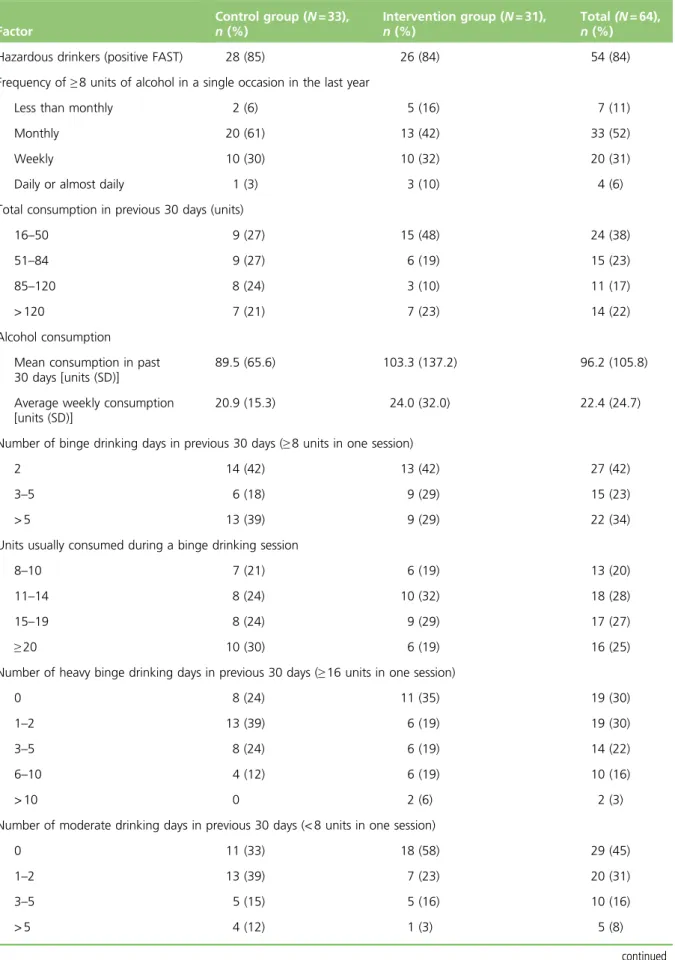
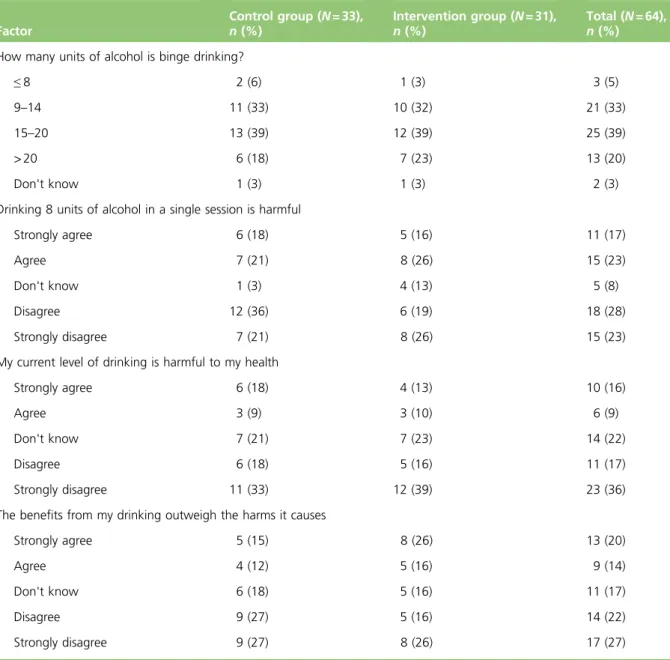
At baseline the participants were spread across the age range 25–44 years, almost four-fifths were in the lowest two deprivation deciles and over half only had school-level qualifications. Most men (84%) were classified as hazardous drinkers (positive FAST). The common pattern of alcohol consumption was one of occasional heavy drinking episodes interspersed between periods of complete abstinence. The men all had regular binge drinking sessions, with one-third having six or more binge drinking sessions per month. More than two-thirds of the men had binge drinking sessions at which they consumed more than twice the conventional binge drinking level (8 units of alcohol in a session). However, more than three-quarters of participants had at least 21 alcohol-free days per month, so that average weekly consumption was modest. Few men (5%) knew the conventional definition of binge drinking and most were unaware that this level of drinking is harmful. Although most men were drinking hazardously, only 25% believed their drinking to be harmful. The Readiness to Change Questionnaire showed that most men (61%) were in the
pre-contemplation stage and few were taking action to cut down.
At the 3-month follow-up, 64 of 67 men (96%) completed the outcome interview. The reasons for the high follow-up rate could include a friendly initial contact, incentives for participation, or the humorous
non-nagging intervention. Although not powered to detect effectiveness, the results of the feasibility study are compatible with the intervention being effective. The men in the intervention group reported a larger reduction in the frequency of binge drinking (the primary outcome of the full trial). The reduction in the frequency of binge drinking days was accompanied by an increase in the frequency of moderate drinking days. Consistent with this, the Readiness to Change Questionnaire showed that more men in the
intervention group had moved out of the pre-contemplation stage and more were taking action to cut down. Extensive process evaluation was carried out. Ninety-five per cent of the SMS text messages were delivered to the participants' telephones. There was a high level of engagement with the text messages which sought responses. Most men (88%) had replied to at least one response-seeking text message, with more than half (53%) replying to at least seven of the nine texts which sought a response. Many of the replies were carefully structured personal messages. For example, a question about what participants would do if they spent less on alcohol elicited the response:‘saving that money would help me take my girlfriend out for a meal now and then’. Asked about reasons for drinking less, one man replied: ‘I really wanna stay out of trouble and not become the person I can be after a few too many’. At the end of the study most men (94%) felt that taking part in the study was worthwhile. They also reported that they told friends and family about the study: 95% to at least one person, 40% tofive or more people. A post-trial evaluation showed high levels of satisfaction with the study. Opportunities to improve the recruitment strategy and the intervention were identified.
Conclusions
This feasibility study has demonstrated the feasibility of all stages of a trial of a theory-based intervention delivered by text messages. Theflexible recruitment strategies meant the target sample size of individuals from a hard-to-reach group was exceeded. The intervention, tailored to the target group and delivered through a medium familiar to the participants, promoted high levels of engagement. Loss to follow-up was very low.
A very high proportion of the men were classed as hazardous drinkers and thus would be referred for brief interventions. A common pattern of drinking involved occasional episodes of very heavy drinking
interspersed with periods of abstinence. This is likely to be causing substantial harm. Men recruited through the RDS were most at risk because they binge drink much more frequently and consume much larger amounts. Such men are likely to be missed by health service-based interventions.
The interactive nature of the intervention was successful in engaging participants. This feasibility study has identified a new and very useful tool for process evaluation in assessing complex interventions delivered electronically. Content analysis of responses to text messages measured the extent of engagement with components of the behaviour change strategy, identified ambiguity in messages and highlighted gaps in the intervention and areas for improvement. The process measures showed that the men engaged seriously with the text messages. They also showed that key components of the behaviour change strategy had the desired impact on the participants.
In summary, this study has successfully tested the feasibility of all aspects of a behaviour change
intervention study which used text messages to deliver a brief alcohol intervention to disadvantaged men in early mid-life. As the target group has been little studied and the design and delivery of the intervention posed interesting challenges, the study provided the opportunity to make a series of important empirical and methodological advances. This study design has demonstrated the potential to recruit, engage and modify drinking behaviour among disadvantaged young to middle-aged men. We recommend that a full trial of the intervention be carried out to assess the effectiveness of the intervention. We further recommend that a cost-effectiveness study be incorporated into the trial to determine whether or not the approach is truly a low-cost method of reaching large numbers of disadvantaged men.
Study registration
This study is registered as ISRCTN10515845.
Funding
Chapter 1
Structure of the report
Introduction
This study assessed the feasibility of a randomised controlled trial to determine the impact of a novel intervention delivered by text message on drinking behaviour among disadvantaged young to middle-aged men. This was achieved by carrying out all of the stages of a pragmatic randomised controlled trial, with a particular focus on how well each stage was conducted. The aim of this close scrutiny was to identify whether or not a full trial would succeed and what improvements could be made to the conduct and likely effectiveness of the trial. The study was conducted in three phases.
Phase 1 comprised six focus groups to develop the recruitment strategy, to optimise the design of the text messages and images and to determine the most acceptable sequence for their delivery. Five focus groups were conducted with men and one focus group with women. The focus groups explored drinking behaviour and attitudes and beliefs about drinking, its benefits and harms. Thefindings from this phase were also used to help develop the intervention.
Phase 2 involved the planned recruitment of 60 participants who were randomised to receive either the alcohol intervention or general health promotion messages. This phase was conducted in a series of distinct steps. As the target group was disadvantaged young to middle-aged men, recruitment to the study was given careful attention. The intervention was a series of interactive text messages and images designed using messaging theory, social cognition models, motivational interviewing (MI) and systematic reviews of interventions to tackle alcohol problems. The intervention was delivered to mobile telephones using a programmed computer system. Participants were followed up for 3 months to assess retention, willingness to respond to text messages and to complete thefinal assessment of drinking behaviour. The aim of this assessment was to determine whether or not the outcomes could be readily measured on the participants. Although the feasibility study was not powered to detect changes in drinking behaviour, it could give an indication of whether or not the intervention might be effective in a full trial.
Phase 3 involved interviews with 20 participants to assess the acceptability of the intervention, the impact it had on their willingness to moderate their drinking and factors that might limit their ability to drink less. The aim was to assess the acceptability of all aspects of the study and to identify opportunities to improve the intervention.
The chapters of the report
This report is laid out as a series of 12 chapters which provide a forensic analysis of the design, conduct and outcome of the feasibility study.Chapter 2begins with an outline of the research objectives of the feasibility study.Chapter 3identifies the motivation for the study and then explores the main design challenges which needed to be addressed. This is followed by eight chapters which provide a description of the series of interlinked substudies which were conducted to meet the aims of the feasibility study. Each chapter is self-contained, comprising an introduction, methods and results sections, together with a discussion which summarises the mainfindings and assesses their significance in the light of previous research. This approach is appropriate because each substudy had a distinct purpose and a specific set of methods. Combining methods or discussion sections into single chapters would lose the close relationship between methods, results and discussion which is essential for a full forensic evaluation. The individual substudies are:
l Chapter 4, Understanding drinking motives and behaviours l Chapter 5, Developing the text messages
l Chapter 6, Recruitment strategies
l Chapter 7, Randomisation and baseline characteristics l Chapter 8, Retention strategy
l Chapter 9, Outcome assessment l Chapter 10, Process evaluation l Chapter 11, Post-trial assessment.
Chapter 12, Summary and conclusions, has three linked aims. It presents a concise synthesis of the main
findings from the whole feasibility study, together with their implications for future research. It then assesses the extent to which the feasibility study met its aims. Finally, it makes recommendations for modifications to the protocol which will improve the conduct and outcome of the proposed full trial.
Chapter 2
Research objectives
Introduction
The overall objective of this feasibility study was to develop and test the feasibility of an intervention delivered by text messages to reduce the frequency of heavy drinking among young to middle-aged disadvantaged men. This involved conducting all the stages of a randomised controlled trial. The intervention has been developed from brief interventions that have been successful when delivered face to face, but is delivered by a series of text messages and images. This provides a method for reaching large numbers of people at low cost. If the development and feasibility testing are successful, the intervention will be tested in a full-scale randomised controlled trial in a further study for which new funding will be sought.
Research questions of the full-scale trial of the novel intervention
Prior to the feasibility study it was thought that the research questions for the full trial would focus on the effectiveness of the intervention, and on the behavioural antecedents of reduced heavy drinking. Specifically it would investigate whether or not a brief intervention delivered by mobile telephone could:
1. reduce the frequency of heavy drinking by disadvantaged men 2. increase awareness of the harms of excessive drinking
3. increase intentions to avoid becoming drunk 4. increase self-efficacy for refusing drinks.
These questions were to be reassessed in the light of thefindings of this feasibility study.
Research questions of the feasibility study
The feasibility study was concerned with the practical issues of recruitment and intervention development and delivery. Successful completion of all these stages is a prerequisite for a full trial of a complex
intervention to reduce the frequency of heavy drinking among young to middle-aged disadvantaged men. The specific questions were:
1. What are the best ways to recruit and retain disadvantaged men in a study aimed at reducing the frequency of heavy drinking?
2. What is the type of content and timing of the delivery of a series of text messages and images that is most likely to engage young to middle-aged men?
3. Is the intervention likely to be an acceptable way to influence the frequency of heavy drinking?
Ethical approval
Ethical approval for all aspects of the study was obtained from the East of Scotland Research Ethics Service (reference number 09/S1401/78).
User group representatives
Two men, one a reformed heavy drinker, the other a continuing heavy drinker, were recruited to the Research Group. They attended steering group meetings, where they shared their views on drinking cultures, and the attitudes, beliefs and experiences of drinkers. They were thefirst to raise two important issues: the prevalence of very heavy binge drinking and the fact that many drinkers in the target age range, 25–44 years, will have suffered, or know someone who has suffered, serious harm from alcohol. They also advised on the construction of the intervention text messages and stressed the importance of
phrasing texts in appropriate language. This helped ensure that the interventions were acceptable and the outcomes were relevant and measurable.
Protocol amendments
The intended sample size was exceeded (67 participants instead of 60). This occurred in recruitment of participants through primary care. Invitation letters were sent out in batches and all men who were eligible and willing to take part were included in the study. Recruitment from thefinal batches of letters led to more men being recruited than intended.
The intervention was modified in the light of findings from the focus groups. MI was added because it provided a convenient technique for presenting components of the intervention. The transtheoretical model (TTM) was added to the intervention design because it offered a logical framework for designing and sequencing of messages. This approach was appropriate because it was anticipated that most participants would be in the pre-contemplation stage.
The number of text messages which was sent was increased from the proposed 28 to 36 for two reasons: (1) texts were inserted which asked participants to respond to specific questions that probed key components of the behaviour change strategy; and (2) some messages were sent in pairs, with the second one sent a few minutes after thefirst. These devices promoted increased thinking time, a technique used in MI.
The protocol proposed that a post-trial evaluation be conducted to identify ways to improve the study. This was expanded to include an extensive process evaluation of thefidelity of delivery of the intervention. It also assessed the extent of engagement of the study participants with the main behaviour change components of the intervention. The aim of these evaluations was to provide a series of detailed recommendations to improve the acceptability and impact of the intervention.
Chapter 3
Introduction
T
he morbidity and mortality caused by alcohol are a major public health challenge. The prevalence of alcohol misuse and its cost to society has risen substantially over the last 20 years.1It is currently estimatedat more than £55B per year in England1and more than £3.5B per year in Scotland.2These costs occur
through lost productivity, increased health-care and other public sector costs, and through crime and social disruption. In 2009–10, there were over 1 million hospital admissions in England for alcohol-related conditions.3Thesefigures included 177,400 admissions for mental and behavioural disorders and 43,100 for
liver disease which were solely due to alcohol. A total of 6584 deaths were due to alcohol, of which two-thirds were due to liver disease. The cost of alcohol to the NHS in England is £2.7B (at 2006–7 prices). The major costs of alcohol to society come from social disruption, crime and costs to the economy. Alcohol was associated with more than 500,000 crimes in England in 2006–7. It was a contributory factor in up to 1 million assaults and 125,000 instances of domestic violence.4Some 17 million working days are
lost each year because of drinking.
Alcohol-related harms are not evenly distributed in the population. People who are socially disadvantaged are at a substantially higher risk of developing alcohol-related diseases.5,6Tackling the culture of drinking
among this group in order to prevent alcohol-related problems in later life is a priority for research. This introduction reviews the main issues to be addressed for the design and delivery of a brief alcohol intervention to disadvantaged young to middle-aged men.
Alcohol and brief interventions
Extensive evidence shows that brief interventions delivered in health-care settings are effective in reducing alcohol consumption.7–10These interventions were developed for middle-aged and older men attending
health care. However, the group who binge drink most frequently are young to middle-aged disadvantaged men.11Existing brief intervention studies mainly recruit through health-care settings. However, men aged
25–44 years are seldom in contact with health services. They will therefore not be reached by current initiatives to tackle excessive drinking delivered through health-care settings, so alternative approaches are needed. Targeting this group would lead to reductions in heavy drinking before chronic health harms develop. It would also prevent the accidents, violence, social disruption and criminal activities associated with episodes of heavy drinking. This group may be receptive to brief interventions; one recent survey reported that among current drinkers, 32% of men aged 25–44 years felt the need to cut down on their drinking.11
Thus, there is a need to develop brief interventions which are appropriate for disadvantaged young men. Brief interventions are commonly based on models from social psychology, such as the theory of planned behaviour (TPB).12Many of the interventions use MI,13,14a person-centred technique which encourages
individuals to identify possible inconsistencies between what they do (get drunk) and what they want to achieve (socialise,find a partner). Recent reviews have identified theoretical constructs and specific behaviour change techniques which should form part of behaviour change interventions.15,16
A further requirement for brief interventions is to reach large numbers of individuals. Traditional face-to-face interventions are limited in the numbers of individuals they can reach.17Over 8 million people in England
have an alcohol misuse disorder.18In England, 26% of men aged 25–44 years exceed the recommended
limit of 21 units per week.3In Scotland, over 30% of men aged 25–44 years binge drink each week.11
Given the scale of current problems there is a pressing need for interventions which can be delivered to large numbers of individuals at low cost.
Intervention delivery by mobile telephone
The mobile telephone is an attractive method to deliver interventions to large numbers of people at very low cost. This approach is well suited to young to middle-aged men because their ownership of mobile telephones is high. Text messaging has been used to modify adverse health behaviours19,20and to increase
health-care uptake.21,22Recent systematic reviews suggest that brief interventions by mobile telephone are
beneficial.23,24However, none of the primary studies to date has addressed alcohol and none were directed at
disadvantaged men.
Delivering a brief intervention by mobile telephone text messages faces the challenge that the texts are limited to 160 characters (including spaces and punctuation). The challenge for this study was to incorporate the components of behaviour change theory and specific behaviour change techniques in a series of text messages which would be effective with disadvantaged men. Unfortunately, little can be learned from previous text message intervention studies as few of them have been based explicitly on theories of behaviour change.16
Behaviour change interventions and disadvantaged people
Two recent extensive reviews provide a consistent and deeply worrying assessment of the current situation on social disadvantage.25,26Health behaviour varies substantially by socioeconomic status, with
disadvantaged individuals being more likely to have adverse health behaviours and to suffer poorer health outcomes.25There is a marked social class variation in the uptake of preventive services, with the most
disadvantaged being the least likely to take them up. Few intervention studies have addressed the impact of interventions on socially disadvantaged groups. There is some evidence that disadvantaged individuals are harder to recruit and retain in research studies. Available studies on behaviour change are often of poor methodological quality. Most evidence is available from studies of smoking cessation, which show that success rates are lower in individuals from disadvantaged areas. Nonetheless, there is evidence that interventions can be effective in disadvantaged individuals. The recent reviews concluded that there is an urgent need for high-quality studies of interventions targeted at groups of low socioeconomic status.
Recruitment
Participation rates in research studies have been falling over the last 30 years.27,28Several studies have found
that many trials struggle to recruit their intended sample sizes.29,30There is now considerable interest in
strategies to increase recruitment rates.31,32As people from deprived areas are more difficult to recruit to
research studies,33–35the recruitment strategy for trials targeting this group needs to be designed with
particular care. Relying solely on recruitment through health care, the traditional method for trials of brief interventions,8,9,36may not succeed as the target group is healthy and seldom in contact with health services.
Thus, alternative recruitment strategies may be needed.
Respondent-driven sampling (RDS) was developed to survey hard-to-reach groups, particularly those who engage in stigmatised or illegal behaviours.37,38RDS was designed to overcome the limitations of other
techniques such as snowball sampling and key informant sampling. The technique assumes that the target population is distributed through a number of socially networked groups, making it suitable for a group behaviour such as drinking. It has been extensively and successfully used with injecting drug users and groups at high risk of human immunodeficiency virus infection.39
The need for the feasibility study
The intervention used in this project has multiple components and thus is a complex intervention. The Medical Research Council framework for complex interventions recommends that the feasibility of all aspects of the trial be piloted and that the causal mechanism by which the intervention will work be tested in advance of a formal trial.40The methods of recruitment to the trial and the retention of participants should
also be piloted. This feasibility study was designed to test all components of a full trial from recruitment to outcome measurement. Finally, the potential effectiveness of the intervention would be assessed through an extensive process evaluation.
Chapter 4
Understanding drinking motives
and behaviours
Introduction
There is a pressing need for an intervention to tackle harmful drinking in disadvantaged young to
middle-aged men which can be rolled out nationally. Although it might be possible to translate existing brief interventions9for delivery by text message, this would be problematic for two important reasons. The
drinking motives, attitudes and beliefs of disadvantaged young to middle-aged men have not been well studied, and may differ from those of men in general. The proposed delivery medium, mobile telephone text message, is markedly different from face-to-face interventions and may not lend itself to the same intervention techniques.
The aim of this phase of the study was to explore these issues to ensure the optimal content for a brief intervention which would exact the greatest behavioural change. Several questions were investigated. To what extent are drinking motives in young to middle-aged disadvantaged men similar to those presumed in brief interventions? Specifically, is drinking influenced by positive alcohol expectancies, social norms and refusal self-efficacy? How are the harms of alcohol perceived and how might these best be used to motivate behaviour change? Could drinking be influenced by other, as yet unknown, factors? How could appropriate interventions be tailored to be delivered by mobile telephone to this target group? What style and content of text message might be effective in reducing the frequency of binge drinking?
Methods
The exploratory nature of the research questions, coupled with a need to identify the breadth of views and experience rather than their frequency, suggested that a qualitative method was most appropriate.41,42This
phase of the study comprisedfive focus groups with disadvantaged men and one with female partners of heavy-drinking disadvantaged men. This chapter presents only thefindings relevant to the drinking motives, attitudes and beliefs of disadvantaged young to middle-aged men. Two further sets offindings from this phase are presented separately inChapter 5. These are the results from the women's focus group and the men's views on a draft set of text messages.
Sampling
In accordance with best practice for qualitative research we sought to implement a maximum variation sampling strategy which would achieve diversity in key variables for which views and experience around alcohol would likely differ.43Research elsewhere has suggested that the profile of drinking behaviours varies
by age; consequently, within our age group (25–44 years) we sought to ensure individuals were represented in both the 25–35 years and 36–44 years age bands. In addition, we sought to include a number of individuals who may be aged between 44 and 60 years in order to obtain their views on past behaviour (with the experience of hindsight).
Recruitment
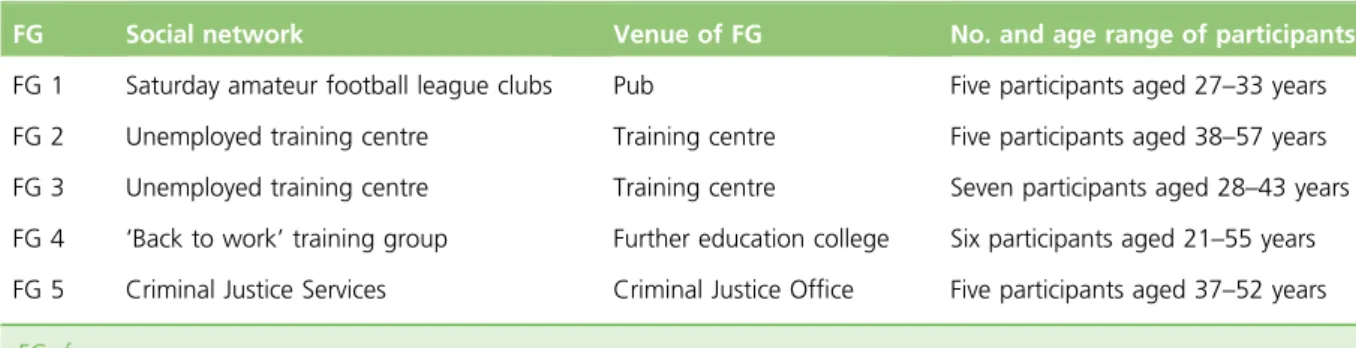
We purposively sampled from a variety of social venues likely to represent the target group of interest to the study. Venues included Saturday amateur football league clubs, public houses, an employment training centre and a further education college (Table 1). Systematic reviews have shown that the provision of monetary incentives can significantly increase recruitment to research studies.44,45Consequently, men
agreeing to take part were given a £10 gift voucher and travel expenses. They found the experience rewarding because a prestigious organisation (the university) was interested in their lives and believed what
they had to say was valuable. Many said it was therefore something they could share with pride in their social network.
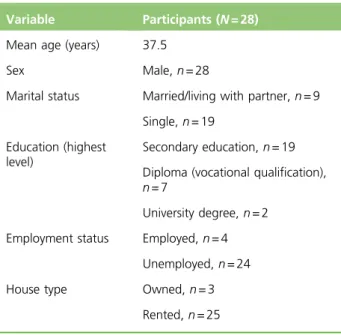
Thus, 28 men aged 21–57 years living in areas of high deprivation were recruited to the study. Deprivation was measured using the Scottish Index of Multiple Deprivation (SIMD),46which is similar to the English Index
of Multiple Deprivation. Individual-level socioeconomic position was also assessed from brief questionnaires on current socioeconomic and demographic characteristics. Summary characteristics of participants are shown inTable 2.
Data collection and analysis
Data were collected using a focus group approach. It was clear that much drinking reflected a social practice influenced in part through group norms and sets of social expectancies. Consequently, enabling men to talk as a group would enable identification of these expectancies, attitudes and values.47A topic guide was
constructed based on a background search of relevant literature in the area. However, conversations were not limited to these areas. All participants were informed of the confidential nature of the research. All groups were audio-recorded and transcribed. Analysis was conducted by three members of the research team (JC, DWF and BW) using the framework approach.48Pseudonyms have been used in direct quotations
to protect participant identity.
Results
The majority of the older men in the study believed that their drinking behaviours, motives and desire to change were significantly different from when they were younger. Explanations for current drinking patterns, and the way these change over time, appear rooted in shifts in three interacting conceptual areas: private purpose, social roles and concrete experience. At the heart of this shift is what might be termed the‘mature drinker’role. This consists of a set of social expectations stemming from recognition of the person's wider social roles and responsibilities (employee, husband/partner, parent), abilities (self-discipline/ control, ability to tolerate alcohol, judge limits and resist social pressure) and life experiences to date. Private purpose and social roles
Ourfindings suggest that alcohol consumption behaviours vary in accordance with two parallel drivers: private purpose and public role. Private purpose refers to an individual's personal reasons for and against particular forms of alcohol consumption. While these purposes may sometimes be made public, they are generally tacit. Public role highlights the social role of alcohol in many individuals' lives. As with any role it brings a set of social expectations and duties which must be followed if sanctions are to be avoided. Private purpose may be seen to be a driver of private drinking, while social drinking may be influenced by both private purpose and social role.
TABLE 1 Summary of focus group membership
FG Social network Venue of FG No. and age range of participants FG 1 Saturday amateur football league clubs Pub Five participants aged 27–33 years FG 2 Unemployed training centre Training centre Five participants aged 38–57 years FG 3 Unemployed training centre Training centre Seven participants aged 28–43 years FG 4 ‘Back to work’training group Further education college Six participants aged 21–55 years FG 5 Criminal Justice Services Criminal Justice Office Five participants aged 37–52 years
Private purpose
All participants clearly identified a range of benefits from alcohol consumption. Predominant among these were reward, relaxation and release. Most men regarded alcohol as having a range of sensory benefits leading to an inherent enjoyment of the experience.
I think just enjoying it. I think as I've got older I just go out to actually have a pint. . . it's actually enjoying it, enjoying a pint of [name of Irish stout], enjoying the ale. You know going into the supermarket and buying the two bottles and thinking right, I might have one of those this week. . . Just enjoying the actual drink for the taste of it and yeah.
Jim, aged 31 years The positive experiential nature of alcohol meant that it was frequently used as a personal reward. There was a sense that they had earned and therefore deserved the experience. However, although this would suggest that there may be social rules indicating when alcohol was legitimate, i.e. deserved (and thus conversely when it was not), we could notfind instances in the data when alcohol was not consumed because it was seen as not deserved. This suggests that drinking as a reward may not so much determine whether or not drinking takes place but rather how one feels about it; the‘well-deserved drink’may convey greater satisfaction and pleasure simply because it feels deserved and symbolises an individual's achievements.
Social, but also for me at home it's sometimes a reward. Like if you've had a shit day or you've been working non-stop, it's sometimes good to like have a drink at the end of the night and it's not because you even want one it's because you feel like you deserve something.
Eddie, aged 33 years A related but slightly different motive for alcohol consumption among this age group wasrelaxation.
Normally when I drink it's because I feel good about myself. And that way, I could relax at the end of the week, have a drink, knowing that the family is all as it should be. I'd have a drink, not to celebrate, but to relax.
Harry, aged 50 years
TABLE 2 Summary of sociodemographics of focus group participants
Variable Participants (N= 28) Mean age (years) 37.5
Sex Male,n= 28
Marital status Married/living with partner,n= 9
Single,n= 19 Education (highest
level)
Secondary education,n= 19
Diploma (vocational qualification),
n= 7
University degree,n= 2
Employment status Employed,n= 4 Unemployed,n= 24
House type Owned,n= 3 Rented,n= 25
However, alcohol-related relaxation was rarely, if ever, associated with alcohol alone; instead, relaxation related to a number of what might be termed‘alcohol plus’scripts (i.e. groups of associated behaviours that combine to provide relaxation). Key ingredients in these scripts included alcohol itself, a core activity (watching television, playing pool, darts) and company (existing friends or meeting new people). Location was frequently cited but on closer examination this appeared to be predominantly as a means to access and facilitate these ingredients.
The concept of relaxation suggested a motive that could be engaged in by almost anyone; it represented the pursuit of something positive as much as the removal of anything negative. However, for some men alcohol consumption was sometimes motivated by the latter rather than the former. In these cases alcohol served for some as an emotionalrelease, which would distract or take the edge off perceived problems. It therefore came to be seen by men as an established coping device for stressful times, a means of achieving‘freedom from’, even if it did not permanently solve, the problem.
You're not worried about money at the end of the night. You're just worried about getting legless and just forgetting about all your problems.
Brian, aged 31 years
Ifind it a good release. . . I'll just go out and have a laugh and maybe take my head away from things that are going on at the time.
Simon, aged 27 years
Social roles
While some older men used alcohol as a form of release and thus a way of achieving‘freedom from’ (the stresses and problems of everyday life), for many more it was seen also as a means of achieving‘freedom to’ –it facilitated the achievement of personal attributes and fulfilling public social roles that they otherwise would not have had the self-confidence to attempt:‘it can help people, shy people actually come out of their shell, ken.’
However, all quotes relating to this were notable in that they referred to their view ofotherpeople's reliance on alcohol to achieve this, or to their own but in earlier years. Using alcohol to improve social confidence and fulfil other social roles and identities was therefore either less important for older men, or was something they were reluctant to admit to personally.
In addition to enhancing one's ability to achieve a valued social identify and fulfil a public role, it became apparent that the social nature of drinking in the pub environment was in fact a social role characterised by a set of expectations, duties and potential sanctions (Box 1). These included expectations to drink alcohol (rather than soft drinks) and to pay one's fair share of rounds. There was evidence of significant disapproval of individuals not conforming, giving rise to a felt pressure to conform and drink.
Shifting purpose and role– the importance of age
Participants frequently generated a narrative looking back to earlier times in their lives; in addition, they sometimes compared their own motives, experiences and behaviours to other contemporary younger drinkers. Through these comparisons it became clear that they perceived a very significant shift in both the social role expectations and duties, and the private purpose motives for drinking. Consequently, there was a move towards what might be termed the‘mature drinker’. Indeed, these were sufficiently
consistent as to suggest that there may broader agreement on the existence of younger and mature drinker roles. This shift is shown inTable 3.
There was a general view that older drinkers were less likely to be drinking in order to get drunk and more likely to drink for general relaxation, social company, reward and as a means of escaping from daily pressures. In addition, older drinkers saw themselves as more able to know their limits and more likely to be
able to‘hold’their drink. Some felt that they had more money to drink now that they were older while others found thatfinance was a major obstacle. Consequently, these drivers meant that more mature drinkers might well consume greater volumes of alcohol but be drunk less frequently.
Although these issues suggested that greater quantities of alcohol might frequently be consumed, there were multiple examples of explanations of changes in drinking behaviour rooted in the adoption of multiple
BOX 1 Alcohol and‘roles’
Fulfilling a social role/achieving valued identity
I know a lot of people that go out, just to have a drink, to look for women, ken what I mean. A lot of the guys that are sober couldn’t chat a woman up unless they’ve had something inside them
Martyn, aged 38 years I’d say I would probably drink more while I was in the pub, but I probably drink more often at home . . . Whereas when you’re at home, you’re kind of, you’re not as going hell for leather because you’re sitting having a quiet drink rather than having a social piss-up so to speak
Simon, aged 27 years The drinking role
Expectation to drink alcohol
I’ve been in a pub for a glass of orange. I couldn’t sit all day and do that
Martyn, aged 38 years Well I’m going to have to say never on that one. That’s how it was. Never. If you go out, pub’s there, that’s it. You have a pint. There’s no way I could ever have walked into a pub and just ordered a coke
Arran, focus group 2 Duty to pay your share of rounds
If we’re in the pub we’re on the rounds, so everybody has pretty much the same amount to drink
Bob, aged 31 years And if you’re the fastest drinker, you’re buying rounds and you don’t want to see anybody with an empty glass so as soon as someonefinishes, the person goes‘it’s your round’
Simon, aged 27 years
Ifind that every time I go in the pub it’ll be like‘what you having mate’and then that’s me in that round Simon, aged 27 years Sanctions and disapproval for transgression
You get the odd people maybe say‘oh, you lightweight’or stuff like that
John, aged 27 years Certain people go out and spend their money and then have to end up borrowing off their pals so they can keep going, you know what I mean. They do it all the time. I get it all the time.‘You’ve got money with you‘cos I’ve spent mine.’It’s always the same people
new social roles which competed and were sometimes incompatible with their past drinking behaviours. These provided a new and perhaps wider‘perspective’on the role and impact of alcohol in their lives:
Yeah because maybe if you're seeing a lassie, you’ll maybe get a bottle of wine and a DVD or have a glass of wine with my tea most nights or a couple of beers maybe watching the Champions League. You've got a different perspective on drink because you’re older.
Simon, aged 27 years A commonly reported shift was with regard to their obligations within family roles and relationships. This included both partners and children:
But you do, even like when kids come on the scene, if you’ve got your partner, you split up, you get your bairn one week, you get the bairn weekends. That changes yourself as well. That’s like me, I get [inaudible] every weekend, so I don’t go out. I go out every Wednesday, that’s when I got out.
Fred, aged 34 years More frequently expressed were their current identities and obligations as employees. When they were younger such responsibilities were not of concern, but now they constrained what the men could do:
With my job and responsibilities, I can’t just go out, I’m not working in a warehouse like I was when I was 18 where you can just do what you want the next day, it doesn’t matter. But now, during the week, it just can’t happen, with my job the next day, I just couldn’t function properly.
Jim, aged 31 years There was recognition that the adoption of these wider life roles and responsibilities were appropriate and to be expected as part of the process of becoming more mature. They were not expressed in pejorative forms and there was little sense of nostalgia about what they were losing in terms of past drinking behaviour.
TABLE 3 Shifts in motives and expectations from the younger to the‘mature’drinker
Drinking motive
Age→
The young drinker The‘mature’drinker Private purpose Freedom to:
l Simply get drunk for its own sake
l Have greater social skills
l Improve self-confidence
l Be free from social and personal constraints
Freedom from:
l As reward for hard work
l Life's stresses–a tool for distraction
Social role Expectation:
l To drink socially
l To pay one's way
Similar expectation:
l To drink socially
l To pay one's way
Increased expectation regarding:
l Ability to‘hold’drink
l Ability to judge limits
l Ability to resist/less concerned about social pressure and ignore social sanction
l Respect other social roles and commitments (e.g. parent, partner, employer)
l Respect others' decisions not to drink or to drink excessively–acknowledgement of risk and life experience or events
Consequently, even among those older men who were still drinking significantly there was a willingness to publicly express their intention to change as these new roles emerged for them:
Well I don’t want to be, my ideal at some point would be to settle down and have some sort of family unit that my focus was on them, and go for the occasional night out with the boys and the odd couple of pints. But certainly not drink socially the way we drink now and I wouldn’t want to be drinking to that extent when I get older. I’m not saying I might, what I want and what will happen might be two different things but certainly, for the picture of where I want my life to go I don’t want to be still having the nights out the way I have them just now in say 5–10 years’time. I would rather want my focus to be somewhere more important.
Simon, aged 27 years Awareness of consequences and the importance of concrete personal
experience over abstract risk
High levels of alcohol consumption among the older men do not appear to be rooted in a lack ofawareness
of the consequences of drink. There was ample evidence, and graphic examples, of the consequences including hangovers, significantfinancial cost, changed character, poor health and violence with its associated implications.
Underpinning many of the consequences was recognition that during the drinking process their usual selves, with their typical motives, intentions, values and self-discipline diminish, culminating with a complete disappearance and a lack of awareness or memory of anything that occurred:
Your judgement could be all wrong.
Martyn, aged 38 years
You forget a lot, you don’t ken what you’ve done. You lose your identity as well because you don’t know what you’ve done.
Derek, aged 28 years
Yeah me, I have. Quite a few years ago. I was out with a mate, a friend of mine and ended up having quite a few drinks and the next thing I knew I woke up in hospital.
Jeff, aged 40 years
I woke up in Orkney Street in Govan and I thought‘How did I get here?’
Brian, aged 31 years Consequently, while alcohol had been described as facilitating the achievement of social roles and valued personal identity in their earlier years through improved social confidence (‘freedom to’), alcohol now frequently proved to be an obstacle to achieving such an identity (partly because that valued identity had changed as new domestic, work and even the mature drinker role had been adopted). Ultimately, it was seen to change one's character and desired behaviours:
I think it hampers your personality on all points, and that’s not always a good thing. I mean, you can say things you regret or those feelings that have been sitting on your mind or your boss, maybe you shouldn’t say something if you’re at a work night out, or a girl, that you’d maybe regret the next day, when you've left a text or a comment on a social network site or anything. And you’re like, this seemed like a good idea at the time . . . [laughter]
Tony, aged 28 years
My dad said to me at one point, he says, I always know when you’re back on the drink or drugs, you’re an obnoxious little shit.
. . . she just says‘I don’t like you when you drink, I don’t like your attitude and the way you are.’She says I get quite aggressive.
Jim, aged 31 years The most common seemingly powerful consequences of alcohol consumption for participants were in relation to aggression and physical violence. Many participants knew of others who had been in trouble with the police (including assault and murder), while others had personal experience:
Yeah. I’ve been arrested and put in the cells overnight and stuff like that. I’ve been in quite a fewfights because of it, so.
Ben, aged 38 years
When I used to drink, if I drank whisky, it just made me drowsy. I’d get a heavy hangover and I’d probably startfighting with somebody.
Graeme, aged 43 years Although there was widespread awareness of a range of negative consequences from alcohol
consumption, it was interesting to note that explanations for changes in participants' drinking were rooted in past personal experience of these issues rather than knowledge of their more abstract existence and risk. The most important of these appeared to be the impact on the person's children, although multiple causes were often seen to combine.
The main reason for me is one, no more criminal record. Two, I’ve got two children that I haven’t seen for two years now. And obviously the money as well. And health. My brother’s only 40 and he drinks and he had a stroke last year, so that’s a bit worrying when you’ve got heart problems in the family as well, so I thought, I’ll stop as well, so.
Ben, aged 38 years Other reported triggers to changing included thefinancial impact, e.g. falling behind in paying bills, and personal health events. Although most examples related to the individual's own personal experience of a substantive problem, a few individuals did indicate that it was the observed experience of a close friend or relative which had prompted their change in drinking. In earlier discussions regarding consequences of excessive drinking, participants frequently reported the consequences that they had observed in other people; however, observations only appeared to motivate actual reported change in the participant when it was someone close to them. This suggested that in some instances vicarious experience may prompt change, or at least intentions to change consumption patterns.
Discussion
Men reported a significant change in their drinking motives from when they were younger. This stemmed from a shift in the private purpose and social roles facilitated by alcohol use. Alcohol was now predominantly used as a form of reward, relaxation and release from life pressures. Patterns of consumption were also influenced by obligations to a range of competing social roles including parent, partner and employee that had not been extant when younger. Knowledge of the negative experiences of alcohol was detailed and widespread. However, reported changes in behaviour appeared rooted in concrete personal or vicarious experience of these issues rather than more abstract ri