LEBANESE AMERICAN UNIVERSITY
The Relationship between Self-Esteem and Academic Performance
of Children Aged Between Nine and Twelve
By
Juliana Munir Saridar
A thesis submitted in partial fulfillment of the requirements for
the degree of Master of Arts in Education
School of Arts and Sciences
April 2017
© 2017
Juliana Munir Saridar All Rights Reserved
v
Dedication page
To my past… to the gift of NOW-My Present…. to my future…
To the ones who loved me to the best of their abilities and knowledge…
To the One whose Love for me is Unconditional…
vi
ACKNOWLEDGEMENT
I would first like to thank my Thesis Advisor Dr. Mahmoud
Natout Assistant Professor of Education, at Lebanese American
University (LAU) Beirut. The door to Dr. Natout’s office was always
open whenever I had a question about my research or writing. He
consistently allowed this paper to present me, and to be the reflection of
my own thoughts, yet gently and smoothly Dr. Natout never ceased to
steer me in the right direction whenever he thought I needed it.
I would also like to thank the experts who were involved in my thesis:
-
Dr. Mona Nabahani, Associate Professor of Education, Education
Management
-
Dr. Rima Bahous, Associate Professor of Education, Linguistics
and TESOL,
Thank you Dr. Nabhani and Dr. Bahous for your constant and consistent
availability to support, to give advice, and to encourage me. Without
your passionate involvement and input, my thesis could not have been
successfully conducted!
I would also like to acknowledge Layla Itani, the editor from the LAU
Writing Center as the second reader of this thesis, I am gratefully
vii
indebted to you Layla for you very valuable participation and feedback
on this thesis!
Finally, I must express my very profound gratitude to my husband and to
both my angels for providing me with unfailing support and continuous
encouragement throughout my years of study and through the process of
researching and writing this thesis. This accomplishment would not have
been possible without them. Thank you!
Thank you mom for pushing me to pursue my thesis, thank you for never
giving up on me!
Dad I finally did it! I can see you on a cloud, smiling…
“Then you will know the truth
And the truth shall set you free”
viii
The Relationship between Self-Esteem and Academic Performance
of Children Aged Between Nine and Twelve
Juliana Munir Saridar ABSTRACT
Since the literature is indecisive about the correlation between self-esteem and academic achievement, this study aimed at trying to clarify and further investigate the relationship between self-esteem and academic performance within the Lebanese context. The proposed correlational study tried to determine whether the level of children’s self-esteem is significantly related to academic performance. Consequently, it is a quantitative method of research in which there were two quantitative variables to be assessed: Self-Esteem and Academic Achievement. Non-random, purposive sampling was used for this study. Participants were students enrolled in a private academic institution from grades 4, 5, and 6. The Rosenberg Self-Esteem Scale (RSE) was administered to all students; each one had a personal confidential ID, and had to enter his/her ID on line so he/she can complete the Rosenberg survey. Results showed consistency in the percentages of self-esteem scale and academic performance. Students with high academic performance scored high on the RSE. Students with medium academic performance scored medium on RSE. However, data showed insignificant results regarding low academic averages with comparison/correlation to high, medium, and low self-esteem.
Keywords: Self-Esteem, Self-Regard, Self-Perception, Academic Achievement, Academic Performance, Rosenberg Self-Esteem Scale, Students.
ix
Table of Contents
Introduction ... 1
1.1 Background of the Study ... 1
1.2 The Statement of the Study ... 4
1.3 Purpose of the Study ... 6
1.4 Research Context ... 8
1.5 Significance of the Study ... 9
1.6 Thesis Division ... 10
Literature Review ... 11
2.1 Self Esteem ... 12
2.1.1 Definition ... 12
2.1.2 Differentiation (self-esteem and other terms) ... 17
2.1.3 Tools for measuring self esteem ... 19
2.1.4 More about RSE ... 22
2.1.5 Self-esteem in educational settings ... 24
2.2 Academic Achievement: ... 27
2.3 Correlation between Self Esteem & Academic Achievement ... 29
2.4 Lebanon as a culture ... 36
Methodology ... 39
3.1 Method ... 40
3.2 Sampling ... 41
3.2.1 Justifying the age group ... 42
3.2.2 Some insights on the group who took the test ... 44
3.3 Instruments ... 45
3.4 Data analysis ... 46
3.5 Reliability and Validity ... 48
3.6 Ethical considerations ... 50
Findings ... 51
4.1 Percentages of self-esteem and academic achievement ... 52
4.2 High self-esteem in relation to academic achievement ... 56
4.3 Medium self-esteem in relation to academic achievement ... 58
4.4 Low self-esteem in relation to academic achievement ... 60
4.5 Analysis ... 62
Discussion ... 64
Conclusion ... 72
6.1 General Conclusion ... 73
6.2 Limitations ... 76
6.3 Suggestions for Future Research ... 77
6.4 Recommendations for parents and educators on building self-esteem ... 78
References ... 81 Appendices ... 88 Appendix A ... 88 Appendix B ... 90 Appendix C ... 91 Appendix D ... 93 Appendix E ... 94
x
Table of Figures
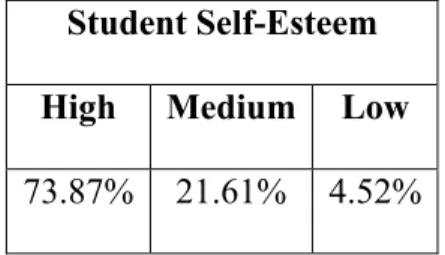
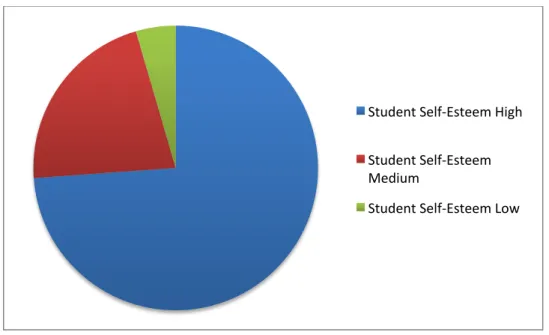
Percentage of students with high, medium, and low self-esteem ... 53
Percentage of students with high, medium, and low on academic achievement ... 55
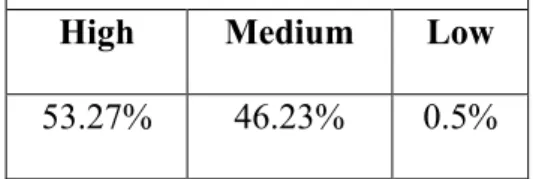
Students with high self esteem as a variation of academic achievement ... 57
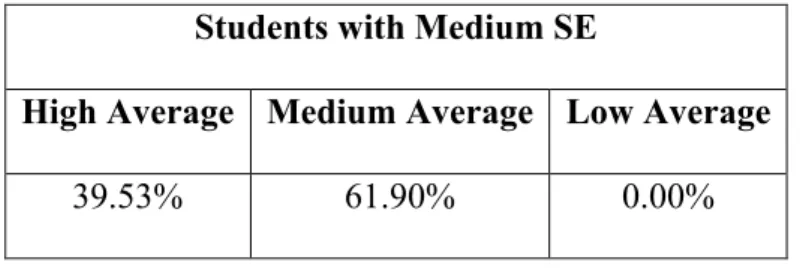
Students with medium self esteem as a variation of academic achievement ... 59
1
Chapter One
Introduction
1.1
Background of the Study
Once upon a time, there was a little girl who believed that having magical abilities would allow her to wonder about God, life, nature, animals, and people. And as soon as she entered school, those questions were silenced by the stress of performing/achieving according to certain standards. With time, this girl lost her sparkles, her zest for living, and her passion for asking and wondering; and as she was not able to achieve, she stopped believing in her abilities. She felt that she mattered, only if she was able to score high. And one day at the age of 10, she realized that she’s missed her sparkles, she’s missed her magical abilities, and she’s simply missed her-self! She decided to take back control over her life and over her-self. She started studying, focusing, and achieving, and she went back to asking and wondering and searching. All she wanted was to gain back her self-respect and to achieve happiness. This girl from the past is “Me”. I am currently a school counselor and a graduate student, and I have promised myself one day to help as many students as I can in developing and maintaining a solid self-esteem while working on their academics to their utmost capabilities without losing their inner joy. As a school counselor, in order for me to efficiently help students, I decided to conduct this current study and to research more the impact of self-esteem on academic performance.
2
The term self-esteem is one of the oldest terms in the field of psychology. An American Psychologist and Philosopher W. James developed it in 1890 and defined it as “a personal judgment of worth living along a dimension with positive and negative ends” (as cited in Fleming & Courtney, 1984).
Self-esteem is how we assess ourselves. It is how we identify our worth to the world, and how valuable we think we are to others. Self-esteem impacts our trust in others, our relationships, our work, our academic performance, and almost every part of our lives. Positive self-esteem allows being in control of our lives and perceiving mistakes as a learning opportunity to grow, without the fear of being rejected. Negative self-esteem invades us with feelings of unworthiness, incapability, and incompetency.
Academic performance is key for children’s development. In our fast changing society and world, with the development of science and technology, humans have reached a significant level of education and have set high goals for their children. Nowadays, it seems that, in many life’s transitions, academic record is required as it speaks for the individual himself, as an example: for scholarship and for further studies, good academic result is the main recommendation.
There is a considerable amount of research studying the relationship between esteem and academic performance in children’s lives. Research assumed that esteem is highly correlated with academic performance in such a way that low self-esteem correlates positively with low academic achievement, and high self- self-esteem correlates positively with high academic achievement (Gaskin-Butler & Tucker,1995; Hale, 2001; Osborne, 1997; Osborne & Walker, 2006). However, much of the research
3
has been inconsistent on whether positive self-esteem improved academic achievement or vice versa (Gaskin-Butler & Tucker, 1995).
4
1.2
The Statement of the Study
Directionality of self-esteem’s influence, if any, is a point of contention amongst researchers. The role of self-esteem in an academic setting has been especially influential in American schools, according to Baumeister, Campbell, Krueger, and Vohs (2003), under the assumption that increasing self-esteem will lead to improvement in academic performance (p. 10). Baumeister et al. (2003) find that this is a plausible assumption to make, albeit contentious in its causal determination. It is reasonable, they state, that people with higher self-esteem are more willing to engage in the learning process and have the confidence to take on tasks even in the face of failures or setbacks. Despite many studies that illustrate a positive correlation between self-esteem levels and academic achievement, without establishing causality, they “generally point to a weak and ambiguous relationship between them” that requires stronger evidence (p. 11). In a subsequent article for Scientific American, Baumeister, Campbell, Krueger, and Vohs (2005) take a harsher stand, declaring that the “myth” of enhancing self-esteem for the sake of improving academic performance or vice-versa has been exploded due to a lack of supporting research. All does not hold this view. Branden (1994), for example, states that “self-esteem has profound consequences for every aspect of our existence”, and Patching and Hinduja (2007) find that poor relationships in school affect a child’s self-esteem which in turn impacts their academic performance (as cited in Yousef & Bellany, 2015, p. 468).
In a three-wave study of students in the 8th to 12th grade, Ross and Broh (2000) find that previous academic achievement impacts self-esteem as well as perceptions of self-control. Notably, however, Ross and Broh (2000) find that while sense of personal
5
control has a positive influence on subsequent academic achievement, higher self-esteem has no influence one way or the other. This contrasts with the research of Booth and Gerard (2011), who find that higher self-esteem is an indicator of better academic achievement in the near future. In a study involving 172 6th grade students equally divided between the UK and North America, Booth and Gerard (2011) find that higher self-esteem at the beginning of the scholastic year is demonstrably linked to higher achievement at the end of the following term. A notable consideration made by the researchers in the aforementioned study is that, while the work of Baumeister et al. (2003) expose the inconclusive results of studies on the directional influence of self-esteem, research on the impact of self-esteem on behavior is confounded by comparing results across cultures, which are divergent in their interpretations of self-esteem. Comparing the results of studies from different cultures is further complicated by the varying definitions of self-esteem amongst academics themselves, along with the extent to which self-efficacy is related to esteem in their studies.
Since the literature is indecisive about the correlation between self-esteem and academic performance, the current study aims at trying to clarify and further investigate the relationship between self-esteem and academic performance within the Lebanese context.
6
1.3
Purpose of the Study
The proposed correlational study determines whether the level of children’s self-esteem is significantly related to academic performance — within the context of a Lebanese educational institution.
The existing body of recent work by Sarouphim (2011), Ayyash-Abdo and Alamuddin (2007), Ayyash-Abdo and Sanchez-Ruiz (2012), and El-Hassan (2004) has laid the groundwork for study on constructs of self within a Lebanese educational and cultural context. Fairly comparing their conclusions by way of review is obstructed by divergence in focus, age groups and tools of measurement. Ayyash-Abdo and Alamuddin (2007) test for subjective well being within university student populations, while Sarouphim’s (2011) study of early adolescents examines self-esteem and depression comparisons between gifted and ungifted students, and finally El-Hassan’s (2004) study of school students focuses on self-concept across a wider age group (10-20 years old). This divergence does, however, allow for furthering the existing literature by filling gaps in the research while acknowledging beforehand the cultural specificities highlighted in their work.
With the divergence of studies in mind and the disparity in their findings, the proposed study looks to build on the point of convergence: That higher self-esteem is a desirable and necessary trait for human development that is fostered within the classroom environment. From this point, a study into the correlation between self-esteem and aggregated academic achievement is to be quantifiably assessed within a Lebanese educational institution in order to address the discrepant findings of existing literature. The proposed study is aiming at
7
-‐ Examining the different key factors that link self-esteem to academic performance,
-‐ and exploring mechanisms that are responsible for students’ success and failure. Consequently, the study aims at answering the following research questions:
RQ1: Is there a statistically significant correlation between self-esteem and academic performance in Lebanon?
RQ2: If self-esteem and academic performance are strongly related, how is this relationship defined?
8
1.4
Research Context
The current study took place within the context of a Lebanese educational institution. Brumana High School (BHS), founded in 1873, is located in Bumana, Metn area, Mount Lebanon. BHS is a private Lebanese British High school that offers Lebanese Program (LP), International Program (IP) and International Baccalaureate (IB). BHS is a Quaker coeducational day and boarding school that seeks excellence in character building, sports, arts and academics. The moto of the school is ‘I Serve’ coming from the Quaker philosophy that greatness starts when serving others. The school is considered to be a child-centered community where the child is the primary focus and educators seek to empower children towards becoming independent learners, critical thinkers and knowledge seekers. The school caters for around 1,200 students aged between 3-18 years, with 46 different nationalities. There are 113 staff who teach, giving a staff student ratio of 1:10. The school has a solid policy of accepting staff and students on the basis of merit, regardless of religion, nationality, race or gender, and the staff and students are of different religious creeds, mainly Christian or Muslim. The school gives primary focus on differentiated learning being well aware that children come from different backgrounds, have different capacities and multiple intelligences. Thus, they learn differently. The school believes in exhausting its resources to cater for different students’ needs and scaffold them until they become independent.
9
1.5
Significance of the Study
Teachers, parents, and therapists have focused efforts on boosting self-esteem, on the assumption that high self-esteem will cause many positive outcomes and benefits— an assumption that is critically questioned here. Baumeister et al. (2003)state that self-esteem is literally defined by how much value individuals place on themselves and is, therefore, a self-assigned perception that does not carry any definitional requirement of accuracy (p. 2). Given the subjective reality in self-reporting levels of self-esteem, it is therefore only relevant to research if one can demonstrate that the perceptions individuals hold regarding their self-worth have consequences on future behavior or outcomes.
Despite existing literature being inconclusive as to the influence of self-esteem on academic achievement, as is indeed true of the directionality of that influence, researchers and policy makers do agree on the desirability of positive self-esteem as a student attribute, and promote programs attuning teachers to enforcing an environment that enhances both academic achievement as well as a positive sense of self (Booth & Gerard, 2011; Helm, 2007). Thomson (2012) states that an effective educator needs to be aware of the “simple fact that children go to school for a living. School is their job, their livelihood, their identity” (p. 164), and that, therefore, special recognition of school’s critical role in shaping a person’s self-concept is mandated.
10
1.6 Thesis Division
The thesis is composed of six main chapters, each with its respective headings and subheadings. Chapter one, titled the introduction, incorporates the background, statement, the purpose, and significance of the proposed study. A definition of self-esteem and its distinction from other incorrectly interchangeable words is provided in chapter two, which is the literature review. Chapter two also includes tools for measuring self-esteem, an elaborated section of the tool used in this study, and self- esteem in educational settings. After completing those sections, academic achievement is introduced and a review of correlational studies conducted between self-esteem and academic achievement was provided. Chapter two concludes with a section on Lebanon as a culture. Chapter three, the methodology section, guides the readers into detailed descriptions of sampling, instruments, data analysis, validity and reliability, and ethical considerations. Chapter four displays the findings of the study, and chapter five provides the discussion of those findings. Finally, chapter six, the conclusion, incorporates a general conclusion, limitations, suggestions for future research, and recommendations for parents and educators on enhancing children’s self-esteem.
In summary, this chapter includes a background of the study whereby I drew upon my personal experience, statement of the study, which points out to the indecisiveness of research on the actual relationship between self-esteem and academic achievement, and the purpose of the study, which is whether the level of children’s self-esteem is significantly related to academic performance in Lebanese educational systems. Finally, it included the significance of the study’s results.
11
Chapter Two
Literature Review
Having completed the introduction, where the background, purpose, statement, and significance of the study were highlighted, the following section reviewed the literature about various aspects included in this study, beginning with an extended definition of self-esteem, the different tools of measuring it, and a review that discusses self-esteem in academic settings. Academic achievement was then defined. After those key terms have been established, a correlation between them based on different resources was presented; concluding with the Lebanese context pertaining to self-esteem.
12
2.1 Self Esteem
2.1.1 Definition
Self-esteem is about a personal conclusion that every individual makes regarding his aptitude to face life's challenges, his ability to understand and solve problems, and his right to pursue happiness and earn respect. Self-esteem is a crucial significant predictor of many outcomes, such as academic performance and behavior. According to Branden (1994), “self-esteem is the sum of self-confidence and respect”. Personal experiences in someone's life are major contributors in self-esteem development. P o s i t i v e a n d n e g a t i v e e x p e r i e n c e s i n l i f e develop certain attitudes toward the “self”, which can be either favorable by developing positive feelings of self-worth, or unfavorable by developing negative feelings of self-worth.
According to Rosenberg (1965), self-esteem refers to feeling worthy in general terms, to the evaluative aspects of a person's self-concept, and it is defined by Rosenberg (1965) as "a favorable or unfavorable attitude toward the self”(p. 15). As a psychosocial quality, self-esteem impacts our trust in others, capacity to foster meaningful relationships, and occupational performance when faced with environmental stressors or peer evaluation (Eisenbarth, 2012). People with high self-esteem claim to be particularly popular (Battistich, Solomon, & Delucchi, 1993). They also rate their interpersonal relationships as being of higher quality compared with people with low self-esteem (Keefe & Berndt, 1996, as cited in Baumeister et al. 2003, p.17).
It is important to note that the term self-esteem includes self-worth, self-regard, self-respect, and self –integrity.
13
In Maslow’s ubiquitous pyramidal hierarchy of needs, self-esteem is depicted as a primary human motivator. To Maslow, personal growth and self-actualization necessitate the existence of inner self-respect as well as esteem from significant others (Tay & Diener, 2011, p. 365). Branden (1994) affords self-esteem a similar importance as a basic human need, and assigns three intrinsic qualities to it:
• As a basic human need, self-esteem is essential to not only healthy development, but survival itself.
• Self-esteem is an inherent phenomenon that automatically arises from within an individual’s consciousness and belief system.
• A person’s thoughts, behaviors and emotions occur in parallel to developing self-esteem.
Self-esteem is the degree to which our “value” as a person is assessed. It is both a trait and a state (Davey, 2005). As a trait, self- esteem has many levels and is different from one person to another. As a state, it varies based on different situations and circumstances (Davey, 2005). Self-esteem is defined as the judgment a person has about him/herself, the job he/she does, a n d h i s / h e r achievements. It is how a person thinks others view him/her and it is the purpose he/she has in life (Obidigbo, 2006). Emler (2001) stated that self-esteem includes a person’s strengths and weakness, social status, and how that person relates to others, as well as his/her ability to be resilient. In the words of Coleman (2006), self –esteem is a person’s opinion about him/herself, which can be positive (favorable or high), neutral or negative (unfavorable or low). It is
14
important to note that everyone has a perception of his/her self- worth (which can be accurate/realistic or inaccurate/unrealistic).
Self-esteem varies with accomplishment. Coopersmith (1967) stated that self-esteem affects the way we think and feel about ourselves. Lefton (2007) proposed that people who have an unstable, inconsistent self-esteem are more prone to be affected by positive and negative life situations than people with more stable and secure self-esteem. Self-esteem is also related to how people approach their day-to-day lives (Obidigbo, 2006). Therefore, people who feel positive about themselves are more likely to be happy, healthy, successful, and productive. They are more likely to handle stressful tasks; they tend to sleep better at night and tend to have less health problems (Obidigbo, 2006; Onyekuru & Obidigbo, 2012). Low self-esteem impacts negatively people’s perception towards their lives; it makes people dreadful and unrealistic about goals and risks. Low self-esteem distorts people’s self-image and leads to low academic and work performance (Emler, 2001). Symptoms of low self-esteem can include feeling tired most of the time, lacking motivation to accomplish things, being bored and unsatisfied with life, perceiving yourself as having little or no abilities and/or possible opportunities, focusing on the negatives, resigning and giving up easily, setting unrealistic expectations, fearing change, among others (Emler, 2001).
Subsequently, when you feel worthless, helpless and unable to do anything to change your state you start developing feelings of self-pity, which provide you with an excuse to avoid taking on any responsibility for your life. You often feel a lack of assertiveness and feel the constant need to be in a relation in order to be worthy. This is the attitude of a typical underachiever. According to Feldman (2009), people with high self-esteem are healthy and happy individuals. They tend to have better intelligence, so
15
they produce better because they feel good about themselves. Someone with low self-esteem can put on a “show” by over compensating. That person always appears happy; he/she is a highly competitive perfectionist who repeatedly reminds others of his/her successes. However, deep down inside that person lives in fear, anxious that his/her true identity will be exposed. That person suffers from strong identity problems and inclines to be “burnt out”. That person could go to the other extreme and act as though he/she simply “doesn’t care”. Finally, that person tends to blame everyone else for his/her own problems (Onyekuru, 2009).
Self-esteem is self-belief in one’s ability to think; it’s the assurance of one’s ability to manage basic difficulties of life; it’s one’s confidence in the right to be successful and happy; self-esteem is one’s perception of being worthy, deserving, and having full right claiming his/her needs and wants, accomplishing his/her values, and enjoying the outcomes of his/her efforts (Hooks, 2003). Self-esteem embraces all these traits. However, and most importantly, self-esteem is a private perception/judgment of one’s self and a feeling of significance based upon externally imposed criteria (Alford, 1997), such as societal perceptions or assumptions, family values, and/or previous experiences of success or failures in different aspects of life. Self-esteem can include a positive or negative inclination toward oneself. Rosenberg (1965) described self-esteem as “a favorable or unfavorable attitude toward the self”.
Self-esteem is heterogeneous in its categorization and often combined with related terms of self-worth. The terms self-efficacy, self-concept and self-esteem are commonly used interchangeably or are incorrectly confused with each other. Bandura’s (1997) authoritative definition of self-efficacy is the level of confidence an individual has in their ability to execute certain tasks or achieve specific outcomes (as cited in Lane
16
et al., 2004, p. 247). Self-concept is the “overarching view of oneself as a physical, social, spiritual, or moral being” (Snow & Anderson, 1987, as cited in Woods & Jeffrey, 2002).
17
2.1.2 Differentiation (self-esteem and other terms)
The capacity for combining relatable terms, such as efficacy and self-concept, in the study of self-esteem leads to disparity amongst researchers attempting to quantifiably analyze its influence. A clearer line between self-efficacy and self-esteem can be illustrated by differentiating the type of data researchers look to measure. Studies into self-efficacy look to measure the confidence individuals have in their own completion of tasks, as opposed to self-esteem that would encompass a comparative examination of how individuals rate their own abilities to those of others (Bandura, 1997; Pajares, 1996). Studies highlighted that students’ need for achievement and recognition, is related to different cultural and societal attributions (Graham & Weiner, 1996; Weiner, 1986). Those attributions can be categorized into three scopes:
1) Source/Locus of control: Motivation can be intrinsic or extrinsic. For example, if a student says that he/she did well on a test because he/she is “good in math”, he/she is attributing their success to an internal ability. However, if the student attributes his/her success in the test because the teacher was flexible, then, he/she is associating their success to an external factor – the teacher.
2) Stability: Some attributions are related to either a specific task performed in a specific time or series of tasks performed throughout a longer period of time. An unstable attribution will be related to the students’ lack of effort. A stable attribution will be related to an external factor outside the student ability to perform.
18
3) Controllability: a) It is when a student believes the challenging task was responsible for his/her own failure (uncontrollable factor); b) when the student believes that his/her own failure are related to a factor that they can control. Moreover, most people assume that self-esteem is the same as self-confidence. Despite the fact that self-esteem and self-confidence are related, they are not the same. Self -confidence may appear on a specific task, and it disappears as soon as the task is over; however, low-self -esteem becomes more of a character trait. In Latin, esteem actually means ‘to estimate’. So self-esteem means how you estimate yourself. A person with low self-esteem finds it difficult to answer yes to the following questions:
• Do I feel I deserve to be loved? • Do I think I’m a good person? • Do I deserve to be happy?
Consequently, it is invaluable to understand the distinction between self-esteem and other mistakenly, interchangeable words in order to fully comprehend the purpose of this study.
19 2.1.3 Tools for measuring self esteem
Different tools exist to measure self-esteem depending on the sample and the context. In some instances, self-esteem can be measured as the introduced self, which is the conduct displayed to others according to certain evaluations. In other instances, self-esteem can be measured as the experienced/accomplished self, which is the self as experienced by the individual (Savin-Williams & Jaquish, 1981). Essentially all present instruments of self-regard, regardless of whether by definition or of methodological comfort, expect that self-assessment is a private, subjective matter, not open to estimation by outer conduct or through surmising made by others (Savin-Williams & Jaquish, 1981).
Due to the fact that this study focuses on the experienced self, only tools that measure this category will be explored.
According to Hosogi, Okada, Fujii, Noguchi, and Watanabe (2012), an assortment of techniques is utilized for assessing experienced self-regard. However, looking at criteria utilized is imperative when translating the aftereffects of research on self-regard.
Rosenberg Self-Esteem Scale and Janis-Field Feeling of Inadequacy Scale are used for grown-ups, cases. However, these scales are for the most part dynamic and present challenges when utilized for youthful youngsters. On the other hand, evaluation techniques are produced for more youthful youngsters, which incorporate Coopersmith Self-Esteem Inventory, Pope's 5-Scale Test of Self-Esteem for kids, and Kid-KINDL (Hosogi et al., 2012).
Below is a brief explanation of three instruments/scales that can be utilized in measuring self-esteem.
20
First, Coopersmith self-esteem inventory characterized self-esteem as positive and negative mentalities toward oneself. The inventory views self-regard as a declaration of endorsement or objection to one-self, and a measure of the degree to which one trusts that he/she is gifted, effective, and that his/her life has significance and esteem.
Second, Pope's 5-scale trial of self-regard for kids characterized self-regard as the evaluative sentiments one holds for oneself, and the feeling that one has essential worth. It stated that self-regard is assessed as the contrast between the real self and the perfect self. Self-regard is high when the real self and perfect self are in understanding, and self-regard is low when real self and perfect self are discrepant. Pope's 5-Scale Test of Self-Esteem for Children consists of 60 items and they both assess self-regard on a 5 grade scale measurement: Global Scale, academic scale, body scale, family scale, and social scale. The test contains 24 questions covering six zones: Physical wellbeing, passionate prosperity, self-regard, family, companions, and school (Hosogi et al., 2012). Third, Ziller social self-regard scale trusted that self-regard is the individual's impression of his value, which comes to fruition from a content of self-other introduction. The scale called attention to a few issues with past investigates concerning self-regard, including the truths that 1) the social way of the self-framework was not adequately underlined, 2) they were of an expressive sort, and 3) they, to a great extent, included a verbal self-report (Hosogi et al., 2012).
There are innumerable self-regard measures but then no firm group of proof with which to legitimize them (Demo, 1985). In order to assess those methods, Demo (1985) executed a primary paradigm utilized to assess a solid relationship among them. An examination of the cases demonstrates that the methods and standard deviations on
21
every self-regard are not fundamentally the same. However, the Rosenberg Self-Esteem scale (RSE) along with the Coopersmith Self-Esteem inventory (SEI) demonstrated noteworthy convergent legitimacy (Demo, 1985). In addition, Rosenberg self-esteem scale was the first to join surveys into research on self-esteem (Savin-Williams & Jaquish, 1981).
Consequently, for the purposes of this study, the RSE is going to be administered in order to measure the experienced self-esteem demonstrated by the participants.
22 2.1.4 More about RSE
In this section, the terms self-esteem, self-regard, and self-respect are being used interchangeably.
An ordinarily acknowledged meaning of self-regard is Rosenberg's (1965) origination of a worldwide self-regard: "the assessment which the individual makes and generally keeps up with respect to himself; it communicates a state of mind of endorsement or dissatisfaction". To best evaluate these mentalities of self-respect he developed the self-report Rosenberg Self-Esteem Scale, a standout amongst the most every now and again utilized measures of self-regard (Wells & Marwell, 1976). Rosenberg's self-esteem scale involves inquiries regarding 10 unique items, and evaluations are made utilizing a four-level scale (Hosogi et al., 2012).
According to Huang and Dong (2012), the Rosenberg Self-Esteem Scale (RSE) was initially developed to provide a one-dimensional self-evaluation record to assess comprehensive self-esteem in adolescents. However, it has also been passed on to other age groups because of its confirmed success and usefulness. According to Gray-Little, Williams, and Hancock (1997), the main advantages of the RSE are:
• The language is simple, grade 5 reading level • The scale can be completed in few minutes
• The content of the RSE scale is related to the construct
• The RSE has been translated to many languages, and adapted to different
cultures (p.444).
Participants of the RSE are asked to rate 5 positive and 5 negative statement-items on a Liker scale: example of a positive statement: “I feel I have a number of good
23
qualities”; example of a negative statement “At times I think I am no good at all.” High RSE scores reflect high self-esteem. The RSE can strike positive and negative aspects of self-esteem based on the positive and the negative statement- items. Research has recorded the impact of wording on the dimensionality of the RSE. The most suitable model of RSE was the one with a global self-esteem factor, a factor linked with positive and negative statement-items (Huang & Dong, 2012).
24 2.1.5 Self-esteem in educational settings
In the world we live in, we tend to compare ourselves to those around us, which leads to shed light on our insecurities and imperfections. This often makes us feel negative towards ourselves as we lose sight of the worth of our own individuality and then feel inadequate and unsatisfied (Onyekuru & Obidigbo, 2010).
Early years are crucial in founding our self-esteem and our family is a major key player in the development of our self-esteem. Parents with high self-esteem can
positively nurture and impact their children’s self-esteem. People develop their self-esteem during their school years. This period is an important factor in their sense of worth, because if they get to develop high self-esteem during this time. They are generally less likely to engage in self-damaging behaviors such as alcohol (drug) abuse and crime. Our own usual personality and the messages that we receive from everyone around us about how we should act and feel have a great impact on our self-esteem (Kokenes, 1978).
According to Hosogi et al. (2012), the development of a youngster's self-regard is intensely affected by the environment in which he or she is raised. Parents of youngsters with low regard were portrayed as well by such features as low self-esteem and emotional instability; in addition, they impacted negatively their child’s environment physically, emotionally and mentally, showing little care towards their child, and responded to him/her in an extreme manner.
Zakeri and Karimpour (2011) elaborate on how “acceptance-involvement” and “psychological autonomy-granting” styles are important positive tellers of the self-esteem. Parents who deal with their children with more tolerance and acceptance and use
25
less control, help their children develop high self-esteem. Those parents are usually warm, affectionate, supportive, and involved in their children’s day to day life.
Utilizing Coopersmith Self-Esteem Inventory, Kokenes (1978) directed an examination of youngsters from grades four to eight and found that self-regard is most reduced in grade six. As children grow, contrasts are likewise liable to emerge in the variables that contain self-regard and the importance doled out to each of these components.
Hosogi et al. (2012) also claim that many reviews show a connection between low self-regard and an assortment of psychological and emotional issues in the lives of grown-ups. A conceivable clarification is that those adults were not able create satisfactory self-regard as youngsters, which kept them from embracing a compelling methodology for managing stress, prompting to the onset of mental issues.
Self-regard can be enhanced if schools cooperate to make a shelter outside of the home where children feel acknowledged.
According to research, parenting styles are an important external factor that can influence children’s self- esteem.
Self-esteem impacts children’s motivation in order to be successful at school, especially in certain areas of instruction such as physical education. Educators have the role of facilitating the development of children’s self-esteem at schools as it may after all be a very important educational goal. Self-esteem is a multidimensional aim of education. Other aims, such as achievement, are important; however, helping children develop a healthy self-esteem is a total moral education for building good character traits and qualities (Bruno & Njoku, 2014).
26
Helping children to build their self-esteem is a primary educational priority, and, by not doing so, educators risk to put those children in failing situations. Low self-esteem is truly an obstacle to achievement; it certainly is something to be overcome if not cured. If so, educators should make every effort to create a school environment in which the social bases of self-esteem are readily available to all children (Ferkany, 2008).
Finally, according to Zakeri and Karimpour (2011), it is important to note that how a teacher and a parent behave with a child in certain situations will directly impact whether or not a child will develop a healthy self-esteem.
It is therefore the duty of the teacher/parent to note the following: early years are important in developing one’s self-esteem, and family is a crucial factor in the development of individual self-esteem. Parents who have high self -esteem will positively impact the development of their children’s self-image. Moreover, how children build their self-esteem during their time at school will define their sense of worth. Children, who develop high self-esteem during this time, are mostly less likely to be involved in destructive behavior, such as alcohol, drug abuse, and crime. As a result, our own character, the perception society has about us, and societal expectations from us about how we should act and feel can affect our self-esteem (Zakeri & Karimpour, 2011).
27
2.2 Academic Achievement:
Presently, as teachers, we frequently review students’ work using invalid criteria like how we were evaluated. Lacking education in legitimate appraisal and reviewing standards and practices is a reason why numerous educators keep on invalidly evaluating students’ work (Allen, 2005).
Estimations of academic achievement, found all through the literature research, are displayed as per the introduced model of academic achievement (York, Gibson & Rankin, 2005). The model proposed by York, Gibson and Rankin (2005) elucidates that academic achievement, which is a term used interchangeably with academic success and student success is defined as a combination of fulfillment, procurement of aptitudes and abilities, industriousness, fulfillment of learning targets, and vocation achievement.
These discoveries propose that regardless of reports that have supported for more nitty-gritty perspectives of the term, the greater part of distributed experts proceed to barely measure academic accomplishment as school accomplishment; all the more particularly, operationalized as evaluations or potentially GPA (Kuh, Kinzie, Buckley, Bridges, & Hayek, 2006).
Therefore, York et al. (2005), obviously, found that academic success same as academic achievement, including learning goals, and obtaining of abilities and capabilities were much of the time measured as components of academic success.
Nonacademic variables are frequently utilized as criteria for doling out evaluations since a few educators consider the results of evaluations more vital than the estimation of clear correspondence of data and the interpretability of the evaluations (Brookhart, 1993).
28
Notwithstanding direction on the most proficient method to survey and grade utilizing sound standards of estimation, research suggests that pre-service instructors require hands-on involvement in evaluating understudies and how to function with coordinating educators who survey and grade in routes not the same as those scholarly by the pre-service educators (Barnes 1985; Lomax 1996).
According to Allen (2005), as instructor teachers, we have to provide reviews to our students that precisely convey students' accomplishment of substance information learned in our courses, and not how hard they work or how regularly they go to our classes.
29
2.3 Correlation between Self Esteem & Academic Achievement
Literature has been indecisive on the correlation between self-esteem and academic achievement. This section presents a summary of prominent research done in this regard.In their review of causal relationships between self-esteem and positive outcomes, Baumeister et al. (2003) claim that subjective experience of being told that one is competent/attractive/lovable or not creates the impression that self-esteem rises when one excels at an activity or gains acceptance to a social group, while dropping when one fails (p. 2). Baumeister et al. (2003) go on to say that the ubiquitous manner in which we all experience this phenomenon in our lives subjectively strengthens the assumed impression that one’s level of self-esteem is not only a result of the outcome, but that the correlation of this impression is bidirectional in that our levels of self-esteem then cause life’s successes and failures.
In a recent study, Bandura (1997) finds that students scoring high on self-efficacy tests with respect to both task ability as well as “managing peer pressure for detrimental conduct” are more likely to attain higher academic achievement and engage in socially rewarding experiences (p. 1206). High self-esteem, on the other hand, offers up a wider spectrum. Baumeister et al. (2003) conduct an in depth review of the various assumed benefits of boosting self-esteem, pointing to the inconsistent means with which it is measured, and its heterogeneous categorization; whereby respondents include those who “frankly accept their good qualities along with narcissistic, defensive, and conceited individuals” (p. 1).
30
McCabe, Blankstein and Mills (1999) find that high interpersonal sensitivity — whereby students with lower peer-integration suffer from separation anxiety and fragile inner-selves — is strongly linked to the maladaptive development of social problem solving; with both factors associated with social and academic self-esteem and strong predictors of depressive symptomatology (p. 600). In another study of 687 Turkish undergraduates, Koruklu (2014) finds that self-esteem is positively correlated with social-problem solving (p. 486). Studies pointing to an impact of self-esteem on social integration add a new dimension to the relevance of validating this subjective construct (Korukly, 2014; McCabe et al., 2007). That is to say that, even if correlational studies contentiously fail to find links between esteem and academic achievement, self-esteem is worthy of study in its own right as literature supports its role in the mental health of people as societal beings. According to Jagacinski and Strickland (2000), social comparisons are greatly important to performance-focused students, as they depend on comparing their achievements to others in order to distinguish whether they are successful or not (as cited in Kandemir, 2014, p. 92). It could then be argued that poor social development at the school level would translate negatively in terms of occupational success, but again the literature diverges. For example, self-esteem is significantly related to organizational citizenship behavior — the social and psychological context that serves as a catalyst for task activities and processes, such as helping others with their work or endorsing organizational objectives — but not to academic performance, according to Khaola (2014, p. 128).
Thomas and Gadbois (2007) posit that students with low self-esteem are more likely to develop self-handicapping as a proactive strategy in order to externalize failure
31
and internalize success. Following on Jagacinski and Strickland’s (2000) findings that students compare their achievements to their peers by way of evaluating their own worth, students with low esteem take a conscious decision to engage in self-handicapping in order to shield themselves from expected poor achievements by comparison (as cited in Thomas & Gadbois, 2007, p. 102). An example of externalizing failure would be to blame sickness on poor results, while commending oneself on being smart for doing well without studying for an exam is an example of internalizing success (p. 103). In either case, Thomas and Gadbois (2007) assert that this conscious preemptive measure is intended to mask their own abilities to others as a manner of coping with their own negative self-evaluation. Midgley et al. (1996), as cited in Thomas & Gadbois, 2007, p. 119, find that, by the eighth grade, students employ self-handicapping strategies when their focus is on demonstrating ability compared to other students, as opposed to those whose focus is on developing competence; with the former group strongly correlated with poor academic grades.
If unaddressed, such defensive strategies continue to fester post-adolescence, such that individuals do not develop healthy coping mechanisms when faced with stressors ubiquitous within a society where “individuals are widely considered to be only as worthy as their ability to achieve” (Convington, 2000, p. 181). In a study of 507 students in two Turkish universities, Yazuver (2015) finds that female students possess higher self-handicapping tendencies than their male counterparts. An unexpected result since Yazuver (2015) cites the Western studies of Kimble, Kimble and Croy (1998) and Rhodewalt and Davidson (1986), which claim male students are more likely to resort to self-handicapping (p. 886). Tan and Tan (2014) find that even “high-ability” female
32
students in Singapore have lower self-esteem than their male counterparts and “put ceilings on their own achievements having internalized the gender stereotypical view that their achievements are less important than to boys” (p. 619). While the relation of self-esteem to self-handicapping is not the focus of my proposed study, highlighting its disparity across literature is indicative of culture-specific gender differences between Western and Eastern populations as pertains to self-esteem; suggesting that self-esteem can throw up correlations that will vary from those deemed insignificant by Baumeister et al. (2003; 2005).
Both Sarouphim (2011) and Ayyash-Abdo and Alamuddin (2007) point to cultural differences between Lebanese and Western study population, be it either on the grounds of gender-equality or collectivist orientation respectively. A comparable result is found in Alkhateeb and Abushijab’s (2014) study on 2nd generation Arab-American elementary students in the United States. While it is worth mentioning that their study indicates a strong positive and statistical correlation between self-esteem and academic achievement, the more pertinent finding is that scores closely matched those of Caucasian counterparts and “sex-differences were not statistically significant” (p. 807). By contrast, El-Hassan’s (2004) study on 392 Lebanese school students finds that there are no statistically significant differences on total self-concept (herein differentiated from self-esteem) scores between genders. Cross-culture research is not in agreement, with Samuels and Griffore (1979) asserting that there are contradictions between studies of sex-related differences in self-esteem. In that, some research has found no difference between male and female respondents, while other studies have found for higher levels of self-esteem in one gender or the other (p. 33).
33
The development of self-esteem is by no means limited to peer relationships in school, with both parents and educators playing a role in its enforcement. Demirbilek and Otrar (2014) find that students, who were part of a complete family unit, exhibited higher levels of self-esteem than those who lived with a single or divorced parent. Differential treatment by teachers towards high-performing students may play a role in the development of self-esteem, considering that self-worth is affected by individuals’ perception of how they are evaluated by others (Coopersmith, 1967; Thomas & Gadbois, 2007). Teachers may afford more attention to students they deem more promising, while controlling for the perceived negative attitudes of low-performance students. However, Prihadi and Hairul (2011) control for the potential impact of deferential treatment by conducting a study on schools that only enrolled students with high-performance. In their study of 800 high-school students, the researchers find that, when students are treated with the same “perceived teachers’ expectancy”, internalized “locus of control” plays a dominant role in developing students’ self-esteem (p. 118). While Prihadi and Hairul (2011) maintain that perceived teachers’ expectancy does play a role in forming the self-esteem of students subjected to differential treatment, their work also acknowledges an internalized component to the development of self-worth.
The correlation between stress, depression and self-esteem is not surprising. Besides acting as a positive force in the maintenance of meaningful relationships, recent literature also finds that self-esteem acts as a protective buffer to the individual; whereby those with high self-esteem are more likely to develop coping strategies when faced with stressful events, and those with low self-esteem are more likely to display symptoms of depression and stressor-avoidance when faced with the same challenges (Eisenbarth,
34
2012; Tan & Tan, 2014, p. 150). Sarouphim (2011) accounts for an expected gender difference in scores by citing Lebanon’s patriarchal societal reality; whereby gender inequalities persist and puberty signals more freedom for males within the community while impacting females in the opposite direction (p. 27). If self-esteem is found to correlate with academic performance, the impact of gender inequality should be of national concern, considering that there are more female students than male counterparts within academic establishments at both the school and university level (World Bank, 2013).
A gender component is relevant to findings and ties into divergence of results found in cross-cultural studies. Whereas Booth and Gerard’s (2011) cross-Atlantic research does not find for gender disparity, a study by Joshi and Srivastava (2009) of 400 adolescent Indian students reflects differences in self-esteem attribution between eastern and western cultures. Specifically, Joshi and Srivastava’s (2009) comparative study of urban and rural students yielded no significant differences with regard to self-esteem when controlling for socio-economic factors, whereas higher achievement predictably favored urban students. More pertinent is the finding that there exist significant differences between genders from both communities. While female respondents from either communities scored far lower than their male counterparts in terms of self-esteem, girls significantly outscored boys on academic achievement. The confusion over the relationship between self-esteem and academic achievement may be due to the context in which the connection is viewed (Sanders-Phillips, 1989). That is to say that, while self-esteem is often related to self-efficacy, it variably includes other components vested in socio-economy, cultural expectations of gender roles, and
35
reinforcement of peers towards their societal contribution. In the case of female adolescent students in India, it could be argued that while they have low self- esteem tied into their cultural background, their higher valuation of academic studies results in higher self-efficacy.
Given the anecdotally promoted image of Lebanon as a bridge between Eastern and Western civilization, due attention to the role of gender on self-esteem’s direc tional influence on actual achievement must be given.
36
2.4 Lebanon as a culture
In a 2011, pioneering study investigating gender differences in self-esteem amongst 242 gifted and non-gifted students in Lebanon, Sarouphim (2011) finds that Lebanese adolescents (aged 12-14) demonstrate an average degree of global self-esteem and self-concept when tested with the Rosenberg Scale that are similar to scores in developed Western countries (p. 36). Sarouphim’s results are consistent with those of Ayyash-Abdo and Alamuddin (2007, p. 278). It is important to note that both studies and data collection took place during periods of instability and distress in the country. Ayyash-Abdo and Alamuddin (2007) suggested that Lebanese youth had acquired “buffer mechanisms” (as cited in Sarouphim, 2011, p. 37), and internalized traits such as resilience, which will help them overcome challenging times while keeping their sanity and emotional stability. An unexpected result of Sarouphim’s (2011) study is the inconsistency of differences found between gifted and non-gifted students (p. 37); and further study is warranted. As to the impact of gender on valuation of self-worth, Sarouphim (2011) finds that “analyses indicated that boys had significantly higher scores on RSE”(p. 35), with significantly higher reported levels of stress and depressive tendencies in females.
As a broad statement, Lebanese culture orientation is collectivist, aligning itself more with east Asian countries than Western counterparts where a wealth of studies exist on the correlation of self-esteem and social/academic/occupational performance (Ayyash-Abdo & Alamuddin, 2007, p. 268). There is a need for more data across cultures to validate generalizable empirical findings trending in Western countries, on account of cultural dimensions “mediating the process and the outcome of subjective
37
well-being” (p. 266). In their study of 689 Lebanese university students, Ayyash-Abdo and Alamuddin (2007) find that respondents who report being bilingual score significantly higher on the Rosenberg Self-Esteem scale than those who use Arabic only; suggesting that the monolingual respondents are more typically aligned with Lebanese collectivist cultural identity than those exposed to another language that “shapes people’s social inference and value judgements” (p. 280). In a subsequent article, Ayyash-Abdo and Sanchez-Ruiz (2012) also affirm that studies point to bilingualism and tri-lingualism as being associated “with better communication skills, self-image, creative abilities, curriculum achievement, and employment opportunities”(p. 194).
Moreover, Baumeister et al. (2003) contend that, in order for levels of self-esteem to be properly corresponded with varying outcomes, researchers should not limit themselves to specific outcomes (p. 6). By way of example, it is insufficient to simply measure self-reported esteem scores against a particular academic subject such as mathematics. Many individuals may consider mathematics irrelevant to their self-worth evaluation or be disinterested in the topic. Baumeister et al.(2003) instead suggest that studies should either identify specific fields on interest with which to correlate performance and self-esteem levels, or aggregate respondents’ performance or behaviors into bundles; combining all academic subjects into one score for example.
In conclusion, there exists a gap in literature when it comes to self-esteem and academic achievement in the Lebanese context. Very few sources exist. Subsequently, this study will try to examine the correlational relationship between self-esteem and overall academic performance of children aged nine to twelve, hoping to highlight key factors that could be responsible for one’s success or failure.
38
Having presented the literature review, which assimilated different research on academic achievement and self-esteem, with definitions, common misconceptions, tools for measurement, correlations, and context, the following section discusses the
39
Chapter Three
Methodology
After providing a review of the literature, it is empirical to present the methodology of the study. This chapter covers the methodology section, which is a step-by-step guide justification and explanation of how the study was carried out. Starting with the method, a justification of the type of research was provided. Then the sampling process was presented, as well as the instrument used to carry out the study. The methodology also includes a section on data analysis and one for reliability and validity. Finally, ethical considerations taken to perform this study are mentioned.
40
3.1 Method
This correlational study is a quantitative method of research in which there were two quantitative variables from the same group of subjects. In a correlational study, we try to determine if there is a relationship between the two variables, which in this case are academic performance and self-esteem. Consequently, a correlational research, as causal-near research, is a case of what is now and then called associational research. In associational research, the connections between at least two quantitative factors are considered with no control of factors by utilizing a relationship coefficient (Fraenkel & Wallen, 2009). A noteworthy motivation behind using correlational research in this study is to clear up our comprehension of essential marvels by recognizing connections among factors (Fraenkel & Wallen, 2009). Those factors are academic achievement and self-esteem.
41
3.2 Sampling
According to Fraenkel and Wallen (2009), the specimen for a correlational review, as in a review, ought to be chosen deliberately and, if conceivable, haphazardly. Therefore, the initial phase in choosing a specimen, obviously, is to recognize a suitable populous, one that is significant and from which information on each of the factors of intrigue can be gathered. The base satisfactory specimen measure for a correlational review is considered by most specialists to be no fewer than 30. Information got from a specimen less than 30 may give a wrong gauge of the level of relationship. Tests bigger than 30, are a great deal more inclined to give significant outcomes (Fraenkel & Wallen, 2009). For that reason, for the purposes of this study, the sample chosen was 199 students from elementary grades 4, 5, and 6 from a Lebanese British school located in Lebanon.
Non-random, purposive sampling was used for this study. A purposive sample consists of individuals who have special qualifications of some sort or are deemed representative on the basis of prior evidence (Fraenkel & Wallen, 2009). For the current study, students’ special qualifications were the fact that they belonged to grades 4, 5, and 6. Any students in that particular age group or grade level participated in this study regardless of gender, ethnicity, socioeconomic status, level of self-esteem, or level of academic performance.
42 3.2.1 Justifying the age group
The proposed study intends to examine the correlation of self-esteem with academic performance amongst 4th to 6th graders, an age group that is less studied in the existing literature compared to pubescent and adolescent populations. The choice of age group is justified by recent studies that find for self-esteem’s significant role at an early academic stage.
As part of a University of Washington study, Cvencek, Greenald and Meltzoff (2016) have developed a test The Preschool Implicit Association Test (PSIAT) assessing 234 5-year old children in order to ascertain whether self-esteem is established strongly enough to be measured within such a young age group (p. 51). The necessity to develop their own PSIAT instrument falls down to the dependence of existing self-esteem tests on the respondents’ cognitive and verbal sophistication to understand concepts of ‘self’ when being assessed by adult researchers (p. 50). Cvencek et al.’s (2016) study not only finds that self-esteem is strongly established in children by the age of 5, but is more
“systematically related to other fundamental parts of children’s personality, such as in-group preferences and gender identity” (p. 56). In a study involving 172 6th grade students equally divided between the UK and North America, Booth and Gerard’s (2011) find that higher self-esteem at the beginning of the scholastic year is demonstrably linked to higher achievement at the end of the following term; by which age students have already developed a sense of self.
Considerations towards gender are also taken into account when selecting respondents. In a study of 4000 students between the grades of 6-to-8 in rural United States, Smokowski, Evans, Cotter, and Guo (2013) find that being female was associated
43
with lower levels of self-esteem. Their research accounts for this by way of the “maturational deviance hypothesis”: that early puberty is a deviation from the norm and the ensuing stress leads to internalized disorder (p. 510). Since girls go through puberty earlier than boys, a period that coincides with the age group, Smokowski et al. (2013) surveyed puberty amounts to a confounded variable in their study. Sarouphim’s (2011) study of 12-14 year olds similarly accounts for expected gender difference in her scores by citing Lebanese society’s patriarchal nature; whereby puberty translates to more freedom for males within the community while impacting females in the opposite direction (p. 27). Contrastingly, Samuels and Griffore’s (1979) study of multi-ethnic preschoolers between the ages of 4 and 5 in Michigan finds that there are no differences in self-esteem levels between genders at this age. This may either be explained as absence of fully developed gender identity at this young age or by the unsuitability of the measurement tool itself used (Coopersmith BRF in this case) for the age group, as posited by the aforementioned work of Cvencek et al. (2016).
Thus, it is important to measure self-esteem at an age when students do have the cognitive and verbal sophistication to understand the concept of self, as well as being at an age when social and gender identities are more established. In selecting an age group that is old enough to possess cognitive and verbal acuity in identifying matters of self-concept, while mitigating for gender exacerbation that become prominent during ages of puberty for one gender and not the other at an older age, it is the intention of my research to study on the relevance of self-esteem to students younger than the age that the available literature has studied.