E-ISSN: 2321–9637
Volume 2, Issue 1, January 2014
International Journal of Research in Advent Technology
Available Online at: http://www.ijrat.org
91
COMPUTATIONAL DECISION MAKING
SYSTEM UNDER COGNITIVE THEORY
FRAMEWORK
Dr. Tarun Chopra
Associate Professor, Govt. Engineering College Bikaner, (India)-334004 [email protected]
ABSTRACT: A complete fault diagnosis system requires not only the identification of the various types of abrupt and incipient faults, but also robustness against signal blackout due to communication channel failure and sensor malfunctioning. The problem of identification of abrupt and incipient faults has been attempted in the previous work of the corresponding author. Hence, the design of decision making system should now focus towards further improvement of results in the proposed framework of epistemological decision making and to ensure that misclassification are not due to noise, sensor failure etc.
Keywords: Fault Diagnosis, Benchmark Process Control System
I. INTRODUCTION
If decision making involved in fault diagnosis is deliberated at epistemological level; then the aim of investigation for the Computational system undertaking a decision is to acquire error-free knowledge [1]. Thus, the act of decision making involves conflict between:
The desire to obtain new knowledge by extracting information from data or evidence about the system or process under inquiry, and
The desire to avoid error.
The decision making strategy adopted by the fault diagnosis system should consider the benefit of acquiring information versus introducing measurement error into system knowledge. Further, it is expected to revise its beliefs by judging the truth of informationally valuable hypotheses. It should avoid rejecting important hypotheses simply on the basis of the probability of truth and error, and should be indifferent to the truth or error of a hypothesis it regards as informationally unimportant.
II. PROPOSED METHODOLOGY
In this work, decision making for fault diagnosis for the DAMADICS problem has been considered under the framework of cognitive decision theory [2]. The guiding principle for this purpose is the premise that a rational epistemic computational system always prefers the decision that maximizes the expected epistemic utility. The objective here is to ascertain that the misclassifications in the results are at least not due to the noise, sensor failure etc.
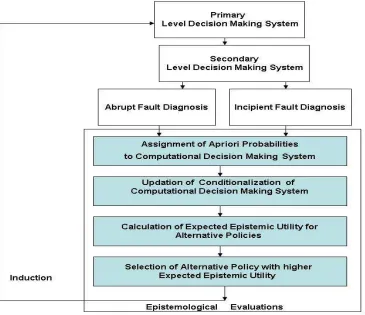
The computational decision making system contemplates a set of mutually exclusive and jointly exhaustive possible states on the basis of all possible outcomes. On the basis of decisions obtained at primary and secondary level stage in relation to normal, abrupt and incipient fault conditions, a priori probabilities are assigned to the computational decision making system, as shown in Figure 1. The system adopts a particular probability distribution as credence function. Here, the epistemological decisions under evaluation are decisions of adopting a particular credence function.
92 Figure 1: Proposed Framework for Epistemological Evaluations
In the pursuit of acquiring error-free knowledge, epistemic utility of taking a decision in a given scenario is evaluated and analyzed under the framework of Cognitive Decision theory. Expected Utility Function helps in evaluating the degree of fit between the truth and the belief states of the computational decision making system. Hence, in any given epistemic predicament, that alternative policy (i.e., epistemologically rational action) is selected which maximizes the value of this function.
If proposed framework is employed in fault diagnosis system, then with sufficient experience, the proposed methodology for perception based decision making in fault diagnosis is expected to be able to diagnose the fault correctly even at primary level with considerable accuracy. This will save considerable computational effort and precious time. This analysis will be highly useful for fine tuning of the Primary Decision Making Process.
E-ISSN: 2321–9637
Volume 2, Issue 1, January 2014
International Journal of Research in Advent Technology
Available Online at: http://www.ijrat.org
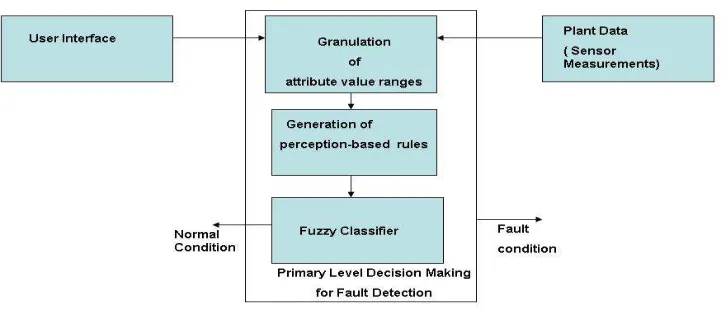
[image:3.595.115.476.125.280.2]93 Figure 2: Simplified Perception Based Decision Making System
III. APPLICATION OF PROPOSED METHODOLOGY
The proposed methodology for assignment of A Priori Probabilities to Computational Decision Making System is now applied on the data set considered to demonstrate its efficacy. Decision making steps under cognitive theory framework are discussed in this section.
For the purpose of illustration the results are now considered from epistemic point of view. In this section, following notations have been used for sake of brevity:-
N: Normal F: Fault A: Abrupt Fault I: Incipient Fault
Experts’ opinion on the basis of the historical data base of the plant suggests that the a priori probability of occurrence of fault in a sugar plant is about 20 % and the projected reliability of primary decision making system including sensors is 90%.
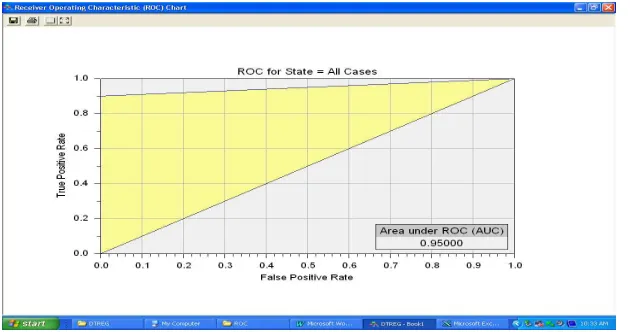
As the epistemic aim of investigation for the computational system undertaking a decision is to acquire error-free knowledge ,hence, this system will prefer zero false positive rate so that misclassified cases do not come into consideration even at the cost of slightly less accuracy. Here, Receiver Operating Characteristics (ROC) is chosen for the purpose of analysis. It is also known as a Relative Operating Characteristic curve because it is a comparison of two operating characteristics {True Positive Rate (TPR) & False Positive Rate (FPR)} as the criterion changes. ROC is way to cost/benefit analysis of diagnostic decision making and provides tool to select possibly optimal models and to discard suboptimal ones. A ROC space is defined by FPR and TPR as x and y axes respectively, which depicts relative trade-offs between true positive (benefits) and false positive (costs). The diagonal divides the ROC space. Points above the diagonal represent good classification results, points below the line poor results.
94 Figure 3: ROC for Abrupt Fault
[image:4.595.155.442.351.526.2]Similarly, for incipient faults at zero false positive rate, the true positive rate is about 0.80 as shown in Figure 4
Figure 4: ROC for Incipient Fault
For the entire spectrum of faults , this rate is 0.90 as shown in Figure 5.
[image:4.595.143.458.571.737.2]E-ISSN: 2321–9637
Volume 2, Issue 1, January 2014
International Journal of Research in Advent Technology
Available Online at: http://www.ijrat.org
95 IV. RESULTS
This rationale is used for assigning 90% (0.90) reliability of the proposed decision making system. Thus, the following probabilities may be assigned at Primary Level Decision Making System corresponding to normal and fault condition respectively:-
p(N) = 0.8 *0.9 = 0.72 p(F) = 0.2*0.9 = 0.18
Also, the following probabilities may be assigned for misclassified state of operation taking into account the fact that there are 10% misclassified cases among both the categories, due to unreliability of primary decision making system/ sensor:-
p(N’) = 0.8 *0.1 = 0.08 p(F’) = 0.2*0.1 = 0.02
At Secondary Level Decision Making System for confirmation of normal condition, from the results earlier obtained by authors, one case was wrongly classified as faulty out of data set of twenty with misclassification error as 5%.Hence, the probabilities of output at this stage may be assigned as:-
p(N N) = 0.684 p(NF) = 0.036
There are fourteen types of abrupt fault cases out of the possible nineteen types of faults considered. Hence, the probability of the normal condition being classified as abrupt fault condition and the probability of it being classified as incipient fault condition can be calculated respectively as :-
p(NFA) = 0.036*14/19 = 0.0285 p(NFI) = 0.036*5/19 = 0.0075
Similarly, for confirmation of Fault Condition at Secondary Level Decision Making System, the results obtained earlier have an associated misclassification error of about 1% for abrupt fault and about 15% for incipient faults.
The following probabilities of output may hence be assigned at this stage:-
96
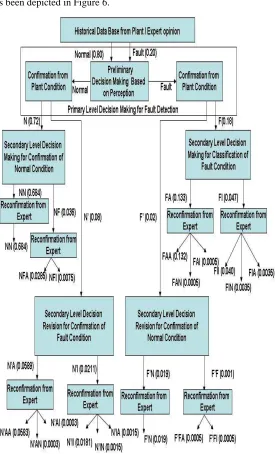
[image:6.595.150.425.143.597.2]This assignment has been depicted in Figure 6.
Figure 6: Assignment of A priori Probabilities
V. DISCUSSION
After observing the results of fault diagnosis the Computational System reassesses the degrees of belief as to whether or not the fault diagnosis system is functioning properly. It decides the process of reassessment in advance and the selection of credence distribution in the event of observing normal condition or fault condition (abrupt or incipient).
E-ISSN: 2321–9637
Volume 2, Issue 1, January 2014
International Journal of Research in Advent Technology
Available Online at: http://www.ijrat.org
97 REFERENCES
[1] Heredia G.A., Bejar O.M. and Mahtani R., “Sensor And Actuator Fault Detection In Small Autonomous Helicopters”, Mechatronics 2008, Vol. 18, N.2, pp. 90-99.