University of South Carolina
Scholar Commons
Theses and Dissertations
2017
Utility of the Modified Early Warning System Score
in Early Sepsis Identification
Lisa E. Hart
University of South Carolina
Follow this and additional works at:https://scholarcommons.sc.edu/etd Part of theNursing Commons
This Open Access Dissertation is brought to you by Scholar Commons. It has been accepted for inclusion in Theses and Dissertations by an authorized administrator of Scholar Commons. For more information, please [email protected].
Recommended Citation
Utility of the Modified Early Warning System Score in Early Sepsis Identification
By
Lisa E. Hart
Bachelor of Science
University of South Carolina, 2004
Bachelor of Science
University of South Carolina, 2013
________________________________________________
Submitted in Partial Fulfillment of the Requirements
For the Degree of Doctor of Nursing Practice in
Nursing Practice
College of Nursing
University of South Carolina
2017
Accepted by:
Stephanie Burgess, Major Professor
Sabra Smith Custer, Committee Member
Abbas Tavakoli, Committee Member
Robin Traufler, Committee Member
Dedication
I dedicate this project to my mom and dad, Debbi and Mark Julian, for being my constant
source of support and love throughout my life. My mom was unable to see me fulfill this
dream, however all that she taught me led me to this point. Her constant devotion, love
and dedication to our family were more than anyone could ask. To my dad, thank you for
supporting me every step of the way through this journey and constantly offering your
love and support. Next, I would like to send my utmost love and thanks to my loving and
dedicated husband, Aaron Hart. I would not have completed this journey without you
standing next to me and being my constant motivator, friend and husband. Words cannot
express how grateful I am to have you walk this journey with me and stand next to me at
the finish line. Finally I would like to give thanks to God, in which none of this would be
Acknowledgement
I would personally like to acknowledge my Chair, Dr. Stephanie Burgess,
Associate Dean for Nursing Practice & Clinical Professor at the College of Nursing,
University of South Carolina and committee members Dr. Abbas Tavakoli, Clinical
Associate Professor at the College of Nursing, University of South Carolina and Sabra
Smith Custer, DNP, APRN. FNP-BC. I would like to send a special thank you to Robin
Traufler, MSN, ACNP for providing her expertise for this project. I would like to send a
special thank you to Toriah Caldwell, APRN, FNP-BC, Kate Chappell, APRN, PNP-BC,
Dr. Ashley Sirianni, DNP, FNP-BC and the entire USC College of Nursing for always
encouraging me and being a constant source of support and resource throughout this
journey. I would like to send a special thank you to the staff at Augusta University who
supported this project while implementing this system into their triage process to better
Abstract
The purpose of this quality improvement project is to improve outcomes for
patients presenting to the emergency department with sepsis, realizing that time is a key
factor. The appraised evidence indicates that early recognition and prompt treatment
improve outcomes and decrease mortality. The evidence further highlights that use of an
early warning system, like the Modified Early Warning Score, can assist nurses and
providers with recognizing deterioration more quickly and lead to a reduction in time to
interventions. Between January 2016 and March 2017, the author conducted a
retrospective chart review to compare time to antibiotic administration and lactate
measurement and blood cultures before and after implementation of the MEWS in an
urban emergency department. The author randomly selected a total of (n=130) patients to
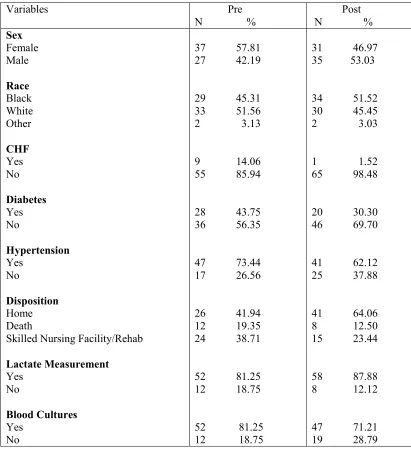
conduct a retrospective chart review. There were demographic differences between the
pre-implementation group and post-implementation group in regards to patients with
CHF, diabetes and hypertension with fewer patients having CHF, diabetes and
hypertension. In the pre-implementation group 14.06% of patients had CHF, 73.44% had
hypertension, and 43.75% had diabetes. In the post-implementation group only 1.52%
had a history of CHF; 62.12% with hypertension; and 30.30% with diabetes. There were
differences between the two groups in regards to disposition status. The
pre-implementation group had more deaths (19.35%) compared with the post-pre-implementation
group (12.5%) and more patients were discharged home in the post-implementation
two groups. Lactate measurements were obtained in 81.25% of patients in the
pre-implementation group compared with 87.88% in the post-pre-implementation group. Blood
cultures were drawn in 81.25% of patients in the pre-implementation group compared
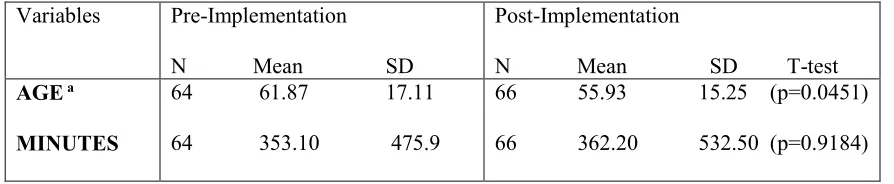
with 71.21% in the post-implementation group. The mean age for the pre-implementation
group was 61.68 with standard deviation of 17.11 (95% CI: 57.41, 65.96) and for
post-implementation the mean age was 55.93 with standard deviation of 15.25 (95% CI 52.19,
59.68). There was no statistically significant difference in means in minutes between the
two groups. The mean in minutes for antibiotic administration was 353.10 for the
pre-implementation group and 363.20 for the post-pre-implementation group. This project did not
demonstrate statistically significant differences after implementation of the MEWS score
as supported by the literature, however clinical significance was identified with
improvements in time in minutes to antibiotic administration at the 3-hour, 6-hour and
greater than 8-hour marks.
Table of Contents
Dedication ... iii
Acknowledgment ... iv
Abstract ...v
Chapter 1: Introduction ...1
1.1 The Description of the Clinical Problem ...1
1.2 Scope of the Clinical Problem ...2
1.3 Discussion of Practice Innovation/Best Practices to Address the Problem ...4
1.4 Statement of the Problem ...6
1.5 Project Questions ...8
1.6 Definitions...8
1.7 Chapter Summary ...11
Chapter 2: Literature Review ...13
2.1 Introduction ...13
2.2 Search Methodology ...13
2.3 Analysis...15
2.4 Early, Goal-Directed Therapy ...16
2.5 Sepsis Bundles ...22
2.6 Early-Warning Systems ...35
2.7 Antibiotic Administration ...46
2.9 Blood Culture Draws ...62
2.10 Physiological Deterioration ...65
2.11 Respiratory Rate...65
2.12 Synthesis ...66
2.13 Summary ...67
2.14 Recommendations ...69
2.15 Implications...71
2.16 Implications for Practice ...71
2.17 Implications for Clinical Education ...72
2.18 Implications for Policy ...72
2.19 Summary ...73
Chapter 3: Design ...75
3.1 Introduction ...75
3.2 Design ...76
3.3 Instruments ...77
3.4 Sample...77
3.5 Setting ...77
3.6 Procedures ...78
3.7 Outcomes Measured...79
3.8 Data Analysis Methods ...80
3.9 Theoretical Framework ...80
3.10 Strategies to Reduce Barriers and Increase Supports ...81
Chapter 4: Results ...84
4.1 Description of the Sample ...84
4.2 Analysis of the Research Question ...84
4.3 Conclusion ...87
4.4 Summary ...89
Chapter 5: Discussion ...90
5.1 Recommendations for Practice ...90
5.2 Recommendations for Policy ...91
5.3 Recommendations for Education ... 92
5.4 Recommendations for Research ...93
5.5 Limitations ... 94
5.6 Conclusion ...95
References ... 96
Appendix A: Johns Hopkins Evidence Model and Guidelines ...105
Appendix B: MEWS Scale ...108
Appendix C: Michigan Quality Improvement Consortium (2008) ...109
Chapter 1 Introduction 1.1 The Description of the Clinical Problem
Sepsis is the 12th leading cause of death according to the CDC (CDC, 2015).
Estimates show that there are 750,000 cases of sepsis annually, with a 28%-50%
mortality rate (Picard, O’Donoghue, Young-Kershaw, & Russell, 2006; Turi & Von Ah,
2013). In 2013, mortality for septicemia rose by 17% while mortality for other diseases
including heart disease, respiratory failure and stroke decreased (Schorr, 2016). Emanuel
Rivers, vice chairman and research director at Henry Ford’s Hospital states, “even the
most recent studies continue to show that one in four to five patients admitted with sepsis
still die in the hospital. This is the highest mortality of any disease admitted to the
hospital” (Frieden, 2015).
Although healthcare professionals agree on improving treatment protocols,
disagreement on interventions and implementation barriers have prevented widespread
reforms. Early recognition and treatment of severe sepsis greatly improves patients’
survivability of sepsis (Vanzant & Schmelzer, 2010). However, despite continued
evidence to support improved outcomes, compliance to established evidence-based
guidelines and resistance to implementation remains a problem (Vanzant & Schmelzer,
2010; Turi & Von Ah, 2013; Tromp et al, 2010). The literature shows that a primary
barrier to early goal directed therapy for sepsis was the healthcare professional’s ability
to identify signs and symptoms and, therefore, protocols and sepsis bundles are not
Munger, 2011; Bruce et al., 2015; Tromp et al., 2010). The Surviving Sepsis Campaign
as well as numerous studies point to early recognition and intervention as the key to
improved outcomes, reduced mortality and prevention of complications (SSC, 2015;
Birriel, 2013; Wira, Dodge, Sather, & Dziura, 2014; Turi & Von Ah, 2013; Wawrzeniak,
Loss, Moraes, De La Vega, & Victorino, 2015). In an evolving healthcare climate, using
evidence-based research and guidelines is imperative to improve sepsis management. The
purpose of this quality improvement project is to improve outcomes for patients
presenting to the Emergency Department with sepsis, realizing that time is a key factor.
The project will compare the time for initiating the Sepsis Bundle using the Modified
Early Warning Score (MEWS) versus the current method of triaging the patient for sepsis
without using a MEWS score. (See Appendix B). Measure outcomes include time in
minutes as well as actual blood levels for obtaining lactate levels and blood cultures and
time in minutes for the administration of antibiotics. The guidelines recommend
initiating the Sepsis Protocol within three hours of presentation to the Emergency
Department any patient with a MEWS score of > 4.
1.2 Scope of the Clinical Problem
Sepsis continues to yield high mortality rates and poor outcomes despite treatment
advances. Sepsis is the number one cause of death in non-coronary intensive care units,
and mortality is greater than lung cancer, breast cancer, and colon cancer combined
(AACN, 2016). Sepsis is the sixth most common reason for hospitalizations each year
and incidence of sepsis continues to rise each year and is expected to increase 8%-13%
annually (Consortiums of Universities for Global Health, 2015). While hospitalizations
hospitalizations have risen each year (Consortiums of Universities for Global Health,
2015). Patients discharged from the hospital after treatment of sepsis have poorer
outcomes post-hospitalization. The one-year post-discharge mortality rate for septic
patients remains 7%-43% and patients that survive continue to have impaired cognitive
function, poor pulmonary function and functional disabilities (Gauer, 2013; Consortiums
of Universities for Global Health, 2015).
Notwithstanding the human costs of sepsis, the financial burden is crippling as
well. Sepsis remains the most expensive hospital problem totaling $15-$20 billion in
hospital costs each year, and Medicare is the primary payer covering 58.1% of septic
patients (Elixhauser, Friedman, & Stranges, 2011). As a result, the Centers for Medicare
and Medicaid (CMS) and The Joint Commission began monitoring sepsis measures and
outcomes in 2015 (Schorr, 2016). In April 2015, CMS instituted the Sepsis Bundle
Project: Early Management Bundle, Sever Sepsis/Septic Shock (“SEP-1”) measures
focusing on early recognition and treatment of sepsis in an effort to reduce mortality
(Joint Commission, 2015). In October 2015, CMS required all hospitals to utilize and
report SEP-1 measures (Schorr, 2016). These reporting measures include measurement of
lactate levels, obtaining blood cultures, administration of broad spectrum antibiotics,
fluid resuscitation, vasopressor administration for persistent hypotension, reassessment of
volume status and perfusion and repeat lactate measurement (The Joint Commission,
2015). The first four measures should be implemented within the first three hours of
presentation with the last measures occurring within six hours of presentation. The
high quality sepsis care in support of the Institute of Medicine’s aims for quality
improvement” (AHRQ, 2014).
In 2017, non-compliance with these measures will result in a reduction in
reimbursement. With the evolving changes in the healthcare reform, reimbursement, and
regulatory compliance changes from CMS, this should be an incentive for all hospitals
and organizations to utilize quality measures. According to CMS (2015), to avoid a
reduction in Annual Payment Determination in 2017, it is a federal requirement for all
hospitals to collect and report data on the SEP-1 measures.
1.3 Discussion of Practice Innovation/Best Practices to Address the Problem
The treatment of sepsis and septic shock has seen drastic advancements in the last
fifteen years due to initiation of protocols based on early goal-directed therapy or
“EGDT”. In 2001, Rivers et al. (2001) published a study, which examined the use of
EGDT in severe sepsis and septic shock patients in the emergency department.
Investigators focused on hemodynamic support and improved oxygen delivery (Rivers et
al., 2001). The results indicated that early treatment improved mortality (Rivers et al.,
2001). Burney et al. (2012) found similar results. Moreover, others found that early
recognition and initiating EGDT reduced sepsis mortality (Wira, Dodge, Sather, &
Dziura, 2014; Turi & Von Ah, 2013; Wawrzeniak, Loss, Moraes, De La Vega, &
Victorino, 2015).
In 2002, a group of international experts including the Society of Critical Care
Medicine, European Society of Critical Care Medicine and the International Sepsis
Forum created the “Surviving Sepsis Campaign” (SSC) in order to “reduce mortality
the definitions on sepsis, severe sepsis and septic shock, which were established during a
sepsis definitions conference (SSC, 2015). The SSC created bundles to assist clinicians in
earlier recognition and treatment based on EGDT guideline criteria, such as early fluid
resuscitation, lactate measurement and antibiotic therapy (Birriel, 2013). The SSC also
developed a screening tool to improve early sepsis recognition, which they claim is the
hallmark for reducing mortality (Birriel, 2013). Since the conception of the SSC
guidelines, studies demonstrate that the SSC guidelines reduce sepsis mortality (Nguyen
et al., 2007; Westphal et al., 2011; Wawrzeniak et al., 2015; Wira et al., 2014).
In 2016, The Third International Consensus Definitions Task Force for Sepsis and
Septic Shock developed new sepsis recommendations, definitions for sepsis,
management, and identification tools (Society for Critical Care Medicine, 2016, Seymour
et al., 2016). The Surviving Sepsis Campaign adopted the new definitions but added that
redefining sepsis does not change the primary focus of early recognition and early
treatment (SSC, 2016).
Based on the Rivers et al. (2001) study, the updated SSC guidelines, and
mandatory reporting requirement of SEP-1 measures, many hospitals have implemented
treatment protocols and bundles aimed at decreasing mortality and costs and improve
overall outcomes (Turi & Von Ah, 2013).
However, compliance with the bundles remains sporadic across institutions due to
multiple barriers, with early recognition being a primary barrier (Turi & Von ah, 2013;
Stoneking, Denninghoff, DeLuca, Keim, & Munger, 2011). The Institute of Medicine
(IOM), the Surviving Sepsis Campaign and the Department of Health of Human Services
and costs (Department of Health and Human Services, 2014). Other studies found similar
results (Bruce, Maiden, Fedullo, & Kim, 2015; Gaieski, Edwards, Kallan, & Carr, 2014).
In an effort to improve recognition and early intervention, hospitals have implemented
screening tools and warning systems to improve assessment of septic patients. Studies
have shown that use of a triage-based warning system can reduce time to interventions
and improve outcomes (Hayden et al., 2016). Physiological deterioration precedes
clinical deterioration in sepsis and early warning systems have been shown to be effective
in identifying physiological deterioration earlier (Corfield, Lees, Houston, Dickie, Ward,
& McGuffie, 2014). The Institute for Healthcare Improvement reports the use of early
warning systems allows nurses to identify changes and potential life-threatening events
more quickly and activate the rapid response team for earlier intervention (IHI, 2016).
The Modified Early Warning System (“MEWS”) assigns a numerical value to certain
physiological components including heart rate, respiratory rate, temperature and level of
consciousness, allowing earlier identification of patient deterioration (Corfield, Lees,
Zeally, Houston, Dickie, Ward, & McGuffie, 2014; Race, 2015). Studies suggest early
warning systems like MEWS improve early recognition in septic patients (Corfield, Lees,
Zeally, Houston, Dickie, Ward, & McGuffie, 2014; Race, 2015).
1.4 Statement of the Problem
Sepsis can occur at any point during a hospital stay, however the emergency
department is the entry point for more than half of all severe sepsis patients (Rivers,
McIntyre, Morro, & Rivers, 2005; Wira et al., 2014). Studies show that sepsis patients
entering the emergency department are not treated as aggressively, thereby increasing
The purpose of this quality improvement project is to improve outcomes for
patients presenting to the Emergency Department with sepsis, realizing that time is a key
factor. The project compared the time for initiating the Sepsis Bundle using the MEWS
score versus the current method of triaging the patient for sepsis. Measure outcomes
included time in minutes as well as actual blood levels for obtaining lactate levels and
blood cultures and time in minutes for the administration of antibiotics.
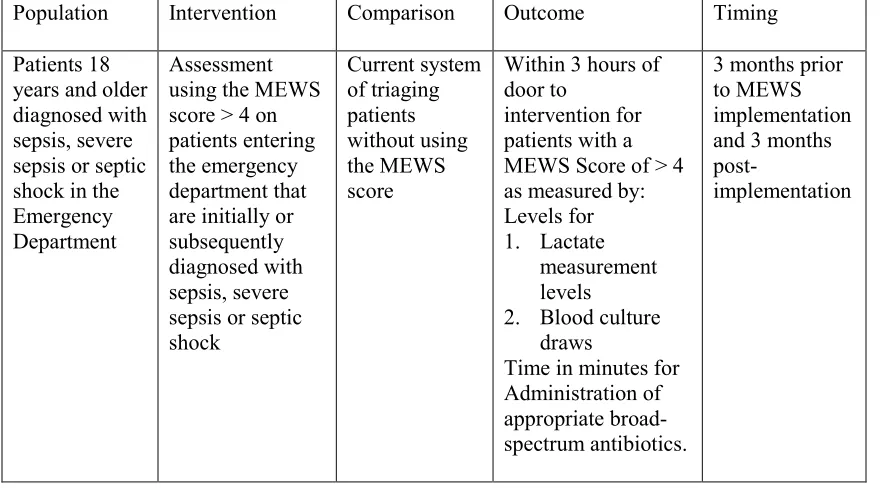
The population (P) are adults 18 years and older that present to emergency
departments. The intervention (I) is utilizing the MEWS score to help assess acuity of
patients presenting to the emergency department with sepsis. The comparison (C) is the
current system of triaging patients without the use of the MEWS score system. The
outcome (O) is earlier identification and treatment of patients that present to the
emergency department with sepsis. The goal is to improve door to intervention time for
patients with a MEWS score of > 4.
Table 1.1 Evidence Based Practice Clinical Question
Population Intervention Comparison Outcome Timing
Patients 18 years and older diagnosed with sepsis, severe sepsis or septic shock in the Emergency Department
Assessment using the MEWS score > 4 on patients entering the emergency department that are initially or subsequently diagnosed with sepsis, severe sepsis or septic shock Current system of triaging patients without using the MEWS score
Within 3 hours of door to
intervention for patients with a MEWS Score of > 4 as measured by: Levels for 1. Lactate
measurement levels
2. Blood culture draws
Time in minutes for Administration of appropriate broad- spectrum antibiotics.
3 months prior to MEWS implementation and 3 months
1.5 Project Questions
This project was guided by the following clinical questions:
Does the use of the modified early warning system improve intervention times for
lactate measurement, blood cultures and antibiotic administration?
Can decreasing time to intervention for sepsis patients improve outcomes for
sepsis patients?
Does the Modified Early Warning System Score (MEWS) improve recognition of
sepsis patients and improve outcomes of sepsis patients?
1.6 Definitions
Sepsis mortality can range from 25% to 30% for severe sepsis to as much as 70%
for septic shock (Gauer, 2013). Early recognition and intervention within the first six
hours of presentation can greatly reduce mortality (Gauer, 2013). Numerous studies
indicate that early, broad-spectrum antibiotic therapy improves outcomes in sepsis
patients (Vanzant & Schmelzer, 2010). According to Vanzant and Schmelzer (2010),
early antibiotic administration is key to decreasing mortality, however, assessing fluid
status and perfusion are vital components. Lactate measurement is a good indicator of
tissue hypoxia and impaired perfusion in septic patients (Levinson, Casserly, & Levy,
2011). The obtainment of blood cultures assists clinicians in prescribing appropriate
antibiotics based on infectious cause. Gaieski et al. (2010) found that decreasing time
from presentation to administration of appropriate antibiotics improves outcomes and
decreases mortality. In order to expedite antibiotic administration, the literature
sepsis (Turi & Von Ah, 2013; Bruce et al., 2015; Tromp et al., 2010). Using the MEWS
score can assist the triage nurse in recognizing sepsis earlier and alerting the provider.
1. Adults are eighteen years of age or older.
2. Broad-spectrum antibiotics are those antibiotic medications used to treat both
gram-positive and gram-negative bacteria.
3. Blood culture draws are diagnostic tests used to determine if a patient has
bacteremia and, if so, conduct susceptibility testing for narrowing antibiotic
therapy.
4. Bundle is a group of care practices that when utilized together have a greater
effect on outcomes than if the practices were utilized individually (SSC, 2015).
5. Emergency Department is a point of entry for patients in the hospital.
6. Lactate Measurement is a diagnostic test used to diagnose sepsis-induced
hypoperfusion. A lactic level greater than 2mmol is elevated and indicative of
early tissue hypoperfusion with a level greater than 4mmol suggestive of septic
shock (SSC, 2016).
7. Modified Early Warning System (MEWS) is a physiological score monitored by
nurses and used to prevent delay in interventions of critically ill patients (AHRQ,
2016).
8. Mortality rate is defined as the number of deaths per 1,000 people that die from
sepsis, septic shock, and/or severe sepsis.
9. Protocols are sets of guidelines that can be customized by organizations that are
implemented to improve outcomes. Protocols must follow the standards set by the
10.Provider is defined as a doctor of medicine (M.D.), doctor of osteopathic
medicine (D.O), advanced practice registered nurse (APRN) or physician assistant
(P.A).
11.Sepsis is “the presence (probable or documented) of infection together with
systemic manifestations of infection” (Dellinger et al., 2012)
12.Severe Sepsis is “sepsis plus sepsis-induced organ dysfunction or tissue
hypoperfusion” (Dellinger et al., 2012).
13.Septic shock is “sepsis-induced hypotension persisting despite adequate fluid
resuscitation” (Dellinger et al., 2012).
14.Sepsis-induced hypoperfusion is “infection-induced hypoperfusion, elevated
lactate or oliguria” (Dellinger et al., 2012).
15.Sepsis-induced hypotension is systolic blood pressure less than 90mmHg or a
MAP less than 70mmHg, or a systolic blood pressure drop of greater than
40mmHg from baseline
16. Staff is defined as licensed healthcare employee within the emergency
department that is involved in direct patient care including physicians, advanced
practice registered nurses, physician assistants, nurse managers, registered nurses
and licensed practical nurses.
17.Systemic inflammatory response syndrome (SIRS)” is presence of the
temperature lower than 36° C (97°F) or higher than 38°C (100°F); heart rate over 120 beats per minute; respiratory rate over 20 breaths per minute; arterial CO2
less than 32mm Hg; white blood cell lower than 4,000 or higher than 10,000
18.Time is defined as the time from documentation by APRN/PA/Physician of
severe sepsis or septic shock or when clinical criteria are met for diagnosis to a
specific intervention.
19.Triage is defined as the process of sorting patients into the following care
categories: immediate, urgent, and non-urgent (Merriem-Webster, 2016). The
process is completed routinely upon entry to the emergency department and
consists of a brief clinical assessment, including vital signs, to determine a time
and sequence in which patients should be seen (Robertson-Steele, 2006).
1.7 Chapter Summary
Although significant gains have been achieved in sepsis treatment, sepsis remains
a deadly and expensive problem plaguing the healthcare system. Guidelines from the
SSC provide evidence-based recommendations for improved recognition and treatment of
sepsis through the use of three and six hour bundles (Schorr, 2016). Studies suggest early
recognition and intervention is key to reducing mortality and improving outcomes. The
emergency department remains a primary access point for patients with sepsis and
therefore, emergency room healthcare providers are pivotal in identifying signs and
symptoms of sepsis. In order to improve recognition, the use of early warning systems
such as the modified early warning system (MEWS) can assist healthcare professionals
such as nurses and advanced practice registered nurses (APRNs) to assess and initiate
early intervention of sepsis. The MEWS score has been shown to improve recognition of
sepsis. With earlier recognition, providers can reduce time in minutes for lactate
quality improvement project is to improve outcomes for patients who present to the
Chapter 2 Literature Review 2.1 Introduction
Mortality rates for sepsis have continued to increase despite current medical
advances. Early, goal-directed therapy has been utilized in ICU settings since 2001;
however, mortality rates remained high, equaling the rates of the 1970s (Jones, Focht,
Horton & Kline, 2007). Prior to 2001, research primarily focused on treatment of sepsis
in intensive care units (ICU), yet it is estimated that as much as 50% of sepsis patients
initially present to the emergency department (Jones, Focht, Horton & Kline, 2007). In
reviewing this data, researchers began to study the impact of early treatment beginning at
presentation to the emergency department. This literature review encompasses current
and past research focused on the impact of early treatment of sepsis initiated in the
emergency department and the use of early warning scores in sepsis patients. The purpose
of this chapter is to analyze and synthesize the literature for the efficacy of early onset
assessment and treatment for sepsis in the emergency department.
2.2 Search Methodology
Evidence-based research is essential to optimize patient outcomes and ensure care
processes and treatments advance with the continuous evolution of healthcare. To that
end, healthcare clinicians must possess the skills to critically appraise evidence and
differentiate between reliable and unreliable evidence (Melnyk & Fineout-Overholt,
2011). A literature search was conducted to review current and past literature regarding
protocols and early recognition and treatment of sepsis in emergency departments. The
purpose of this quality improvement project is to improve outcomes for patients who
present to the Emergency Department with sepsis.
A systematic literature review was conducted to identify evidence that supports
utilization of the MEWS score or other early-warning systems, use of sepsis bundles
using early, goal-directed therapy in septic patients, and early recognition. This study
used a comprehensive search of databases accessed through the University of South
Carolina’s online databases to identify evidence.
The following databases were utilized: CINAHL, PUBMED, Cochrane Library,
Joanna Briggs Institute EBP Database as well as Google Scholar Internet search. These
databases were searched to identify studies focused on sepsis bundles, early recognition,
improved outcomes with early-warning systems, and early, goal-directed therapy and
other interventions. The following search terms were utilized: sepsis or septic shock or
severe sepsis and early goal directed therapy and bundles or protocols and emergency department or emergency services or early-warning systems or modified early-warning
systems and emergency services or emergency department or early recognition and sepsis
or septic shock or severe sepsis or barriers to implementation of protocols and sepsis and
resuscitation The Google Scholar search focused on early-warning systems and sepsis”, to focus on the use of warning systems specifically with sepsis. Google search also
included keywords sepsis,severe sepsis and protocols; sepsis bundle; early goal-directed
therapy; antibiotics and sepsis and severe sepsis. Exclusion criteria included those studies not utilizing early, goal-directed therapy, studies involving patients under 18 years of age,
evidence-based studies on sepsis bundles and early recognition and treatment after the creation of
the Surviving Sepsis Campaign (“SSC”). The database search and search engine results
generated significant data from articles listed in the evidence table (see Appendix D).
The foundation for evidence-based practice and research is the use of a
hierarchical system for classifying evidence (Burns, Rohrich, & Chung, 2011). For this
review, studies are rated using the Johns Hopkins Evidence Level and Quality Guide (See
Appendix A). The studies included are all of good to high quality based on the guide,
which indicates they have reasonably consistent generalizable results with sufficient
sample size, clear aims and objectives, definitive conclusions, and consistent
recommendations with a basis in scientific evidence as described in the evidence table
(Dearholt & Dang, 2014). Levels of evidence are ranked from highest to lowest as
follows: experimental study/randomized controlled trial (RCT) or meta-analysis of RCT;
quasi-experimental study; non-experimental study, qualitative study, or meta-synthesis;
opinion of nationally recognized experts based on research evidence or expert consensus
panel (systematic review, clinical practice guidelines); and opinion of individual expert
based on non-research evidence. This evidence includes case studies; literature review;
organizational experience, e.g., quality improvement and financial data; clinical
expertise, or personal experience (Johns Hopkins Medicine, 2016).
2.3 Analysis
The research has been analyzed to identify improved outcomes with early,
goal-directed therapy; sepsis bundle and protocols; improved outcomes with early recognition;
use of early-warning systems in sepsis identification and early interventions outlined in
2.4 Early, Goal-Directed Therapy
In 2001, Rivers et al. (2001) published a landmark study evaluating the efficacy
of early, goal-directed therapy in the emergency department. Rivers and colleagues
(2001) state imbalances between systemic oxygen delivery and demand cause global
tissue hypoxia leading to septic shock. They further state “transition to serious illness
occurs during the ‘golden hours’ when definitive recognition and treatment provide
maximal benefit in terms of outcome” (Rivers et al., 2001, pg. 1368). The researchers
conducted a randomized, controlled trial wherein patients who entered an urban
emergency department with severe sepsis or septic shock were randomly assigned to
receive either the six-hour, early, goal-directed therapy or standard therapy (Rivers et al.,
2001).
A total of 288 patients were evaluated, with N=263 patients enrolled in the study
and 236 completed the initial six-hour period (Rivers et al., 2001). The authors found the
mean arterial pressure was lower in the standard therapy group; however; all patients met
the goal MAP of greater than 65 mmHg (Rivers et al., 2001). Results indicated mixed
venous oxygen saturation (SvO2) greater than 70% was met by 60.2% of patients in the
control group compared with 94.9% in the early therapy group. Hemodynamic goals,
including MAP, central venous pressure and urine output, were met by 86.1% of the
standard group versus 99.2% of the early therapy group (Rivers et al., 2001). Those in the
standard group were found to have lower SvO2, greater base deficit, increased heart rate,
and lower MAP (Rivers et al., 2001). Rivers et al. (2001) looked at the Acute Physiology
and Chronic Health Evaluation (APACHE II) and Multiple Organ Dysfunction Score
levels of patients in the ICU. The APACHE II and MODS scores, those assigned to the
standard therapy group, had significantly higher scores compared with those in the early
therapy group (Rivers et al., 2001). In-hospital mortality rates showed a significant
increase in the standard therapy group as well as the 28-day and 60-day mortality rates
(Rivers et al., 2001). There were no significant differences overall between the groups in
total fluid volume, use of inotropic agents and use of healthcare resources (Rivers et al.,
2001). The authors concluded that the use of early, goal-directed therapy improved short
and long-term outcomes in patients with severe sepsis and septic shock and they
recommended future studies on quality and timing of treatment earlier in the disease
process (Rivers et al., 2001). This study was limited by its partially blinded design
creating bias among the standard therapy group (Rivers et al., 2001). Rivers and
colleagues were rated a level A based on their level of quality through application of the
Johns Hopkins Evidence-Based Practice Scale criteria (see Appendix A).
Following the Rivers and colleagues (2001) study, others continued to examine
the efficacy of EGDT. Jones, Focht, Horton and Kline (2007) sought to examine the
effectiveness of EGDT on mortality and morbidity in patients presenting to the
emergency department. The authors assert, “an effectiveness trial determines if a
treatment does more good than harm when delivered under real world conditions” (Jones,
Focht, Horton, & Kline, 2007, pg. 430). The authors performed a prospective
before-and-after study to assess a change in mortality before-and-after EGDT intervention was implemented in
an emergency department compared with mortality rates prior to implementation (Jones,
The authors included N=157 patients, 79 in the before phase and 77 in the after
phase between August 1, 2004 and October 31, 2006 (Jones, Focht, Horton & Kline,
2007). The authors found a 9% absolute reduction in mortality and 33% relative
reduction between the two groups; however, the difference in the Kaplan-Meier survival
estimate (p=0.13) was not significant for the two groups (Jones, Focht, Horton & Kline,
2007). Intensive care unit length of stays and hospital length of stays were longer in the
after group at 1.8 days and 1.2 days, respectively (Jones, Focht, Horton & Kline, 2007).
The post-intervention group received higher volumes of crystalloid infusions and
vasopressors, but there was no significant increase (p=0.21) in packed red blood cell
transfusions or dobutamine administration (0.61) between the two groups (Jones, Focht,
Horton & Kline, 2007).
The authors acknowledge the patients in the before phase had a lower severity of
illness and the study does not allow extrapolation of the data to determine the
effectiveness of specific protocol components (Jones, Focht, Horton & Kline, 2007). The
authors also acknowledge a possible Hawthorne effect triggering increased awareness by
clinical staff resulting in earlier response to physiological changes (Jones, Focht, Horton
& Kline, 2007). Antibiotic administration times decreased significantly in the
intervention group from 142 minutes to 99 minutes and patients received corticosteroids
40% of the time as opposed to 6% in the before phase (Jones, Focht, Horton & Kline,
2007). Other limitations are present in this study. First, the design was not random,
although the aim was not to replicate the original EGDT study (Jones, Focht, Horton &
Kline, 2007). Secondly, the small sample size does not allow for inferences about
Kline, 2007). Furthermore, the authors stipulate inclusion bias may be present in both
groups, either from being misdiagnosed or not treated with EGDT in the after-phase
(Jones, Focht, Horton & Kline, 2007). Other treatments not studied as part of EGDT,
such as antibiotic treatment and steroids may have an effect on overall improved
outcomes (Jones, Focht, Horton & Kline, 2007). Jones and colleagues (2007) were rated
a level B based on their level of quality through application of the Johns Hopkins
Evidence-Based Practice Scale criteria (see Appendix A).
Rusconi et al. (2015) analyzed current research to evaluate the effectiveness of
early, goal-directed therapy in reducing mortality of severe sepsis and septic shock. Five
studies with a total of N=4,033 patients were included in the review (Rusconi et al.,
2015). The reviewers reduced the risk of bias by including only randomized controlled
trials in their review (Rusconi et al., 2015).
The five studies included in the review were assessed for heterogeneity using the
I2 statistic based on criteria in the Cochrane Handbook for Systematic Reviews of Interventions version 5.1.0 (Rusconi et al., 2015). Data were analyzed using Review Manager 5.3 software and DerSimonian and Laird random effects method was used to
pool the data (Rusconi et al., 2015). The authors used risk ratio (RR) with 95%
confidence intervals for reporting dichotomous data (Rusconi et al., 2015).
The studies represented data from various countries including the United States,
China, New Zealand, Finland, England and Republic of Ireland (Rusconi et al., 2015).
The settings ranged from single-academic-tertiary-level care emergency departments to
multicenter trials across tertiary and non-tertiary urban and rural hospitals (Rusconi et al.,
amongst the five studies reviewed (Rusconi et al., 2015). All of the studies included
compared EGDT with usual care, and all purported to use the original EGDT protocol
outlined in the Rivers’ study (Rusconi et al., 2015). In-hospital mortality was
significantly lower in two of the studies reviewed, with one study finding a 16-point
decrease in mortality (Rusconi et al., 2013). The other three did not find a significant
difference in mortality between the EGDT group versus the usual care group (Rusconi et
al., 2015). These studies found a three point or less percentage difference between the
two groups regarding mortality. Overall, the authors did not find a reduction in mortality
between the two groups with RR 0.93, 95% CI (0.77 - 1.11), P=0.42 and moderate
heterogeneity between studies (I2=48%) (Rusconi et al., 2015).
The results preclude drawing any definitive conclusions regarding EGDT
effectiveness and the authors noted that treatments varied widely among the five studies
and between the two groups (Rusconi et al., 2015). It is possible that “usual care” has
incorporated some aspects of EGDT in the 14 years separating some of the studies
(Rusconi et al., 2015). The authors also noted that in original EGDT studies, the patients
were older with more co-morbidities and higher lactate levels (Rusconi et al., 2015). The
authors concluded that EGDT has positive effects on outcomes of septic patients but
further research is needed on which elements of the treatment protocol are more effective.
Like trauma, acute myocardial infarction and stroke, sepsis should be recognized and
treated quickly in order to improve outcomes (Rusconi et al., 2015). Rusconi et al.
(2015) concluded that rapid identification and early intervention are shown to be key in
level B based on their level of quality through application of the Johns Hopkins
Evidence-Based Practice Scale criteria (See Appendix A).
Wira, Dodge, Sather and Dziura (2014) performed a meta-analysis of studies in
which protocolized hemodynamic optimization was administered in the emergency
department to determine if there is a significant reduction in mortality. To reduce
publication bias, the authors also searched for published abstracts related to sepsis and
among critical care and emergency medicine (Wira, Dodge, Sather, & Dziura, 2014). The
authors structured the analysis on QUOROM and MOOSE recommendations for
scientific reviews (Wira, Dodge, Sather, & Dziura, 2014). A total of twenty five studies
and abstracts were identified, representing N=9597 from various emergency departments
(Wira, Dodge, Sather, & Dziura, 2014).
The studies were analyzed using Fisher’s exact test and two-tailed p-value for
statistical significance of the primary outcome of short-term mortality with a p-value
<0.05 being significant (Wira, Dodge, Sather, & Dziura, 2014). The reviewers used the
Comprehensive Meta-Analysis version 2.0 for meta-analysis (Wira, Dodge, Sather, &
Dziura, 2014). All of the studies analyzed used “hemodynamic optimization pathways”
with MAP thresholds for vasopressor initiation and all but one study used mixed central
or venous oxygen saturation monitoring (Wira, Dodge, Sather, & Dziura, 2014). Of the
fifteen published studies, N=1795, the mortality rate amongst those patients who received
protocolized hemodynamic optimization was 25.7% compared with 44.3% of those in
control groups (Wira, Dodge, Sather, & Dziura, 2014). Among the ten abstracts, N=4236,
analyzed, the mortality rate was 25.8% for patients receiving protocolized hemodynamic
study reviewed found a lower mortality rate in those patients that received goal-directed
therapy when compared to control groups, and the pooled data from the 25 studies of
9,597 patients found a 15.8% reduction in mortality (Wira, Dodge, Sather, & Dziura,
2014).
This review had a number of limitations, with one being heterogeneity. The
studies included did not all have clear, identifiable strategies of which patients to target
for EGDT, and it is unclear whether those with severe sepsis benefited from EGDT or a
reduction in mortality was seen only in those with septic shock (Wira, Dodge, Sather, &
Dziura, 2014). Another limitation to this analysis was that only one study was a
randomized control trial; the others were before-after designs, which subjects them to
selection bias, patient variability, and incomplete data (Wira, Dodge, Sather, & Dziura,
2014). Wira, Dodge, Sather, and Dziura (2014) were rated a level B based on their level
of quality through application of the Johns Hopkins Evidence-Based Practice Scale
criteria (see Appendix A).
2.5 Sepsis Bundles
With the continued evidence supporting EGDT therapy, focus shifts to
implementation of the Surviving Sepsis Campaign’s (SSC) recommended 6-hour
resuscitation bundle, focusing on early management of sepsis. Current research illustrates
a reduction in mortality post-implementation of protocols and bundles. Westphal et al.
(2011) conducted research focusing specifically on mortality rates post-implementation
of an early detection protocol. Westphal and colleagues (2011) highlighted the fact that
“there was a great delay in detection of the first signs of sepsis and in the proper
study design of two hospitals in Brazil (Westphal et al., 2011, pg. 77). Analysis was
conducted using the Number Cruncher Statistical System version 2000 and Power
Analysis Software, version 2000 or Statistical Package for Social Sciences, version 13.0
(Westphal et al., 2011). A total of N=102 patients were found to meet inclusion criteria in
phase I, before implementation, and N=115 met criteria in phase II, after implementation
(Westphal et al., 2011). The authors found that the time to identification of first signs of
sepsis and detection of sepsis was longer in phase I than phase II (34 hours vs. 11 hours,
respectively) (Westphal et al., 2011). The 28-day mortality rates were significantly lower
in phase II (48% vs. 24.3%) (Westphal et al., 2011).
The authors also found in-hospital mortality decreased from 61.7% to 36.5%
post-implementation and they found those who did not survive had a longer time between first
signs of sepsis and detection by staff (Westphal et al., 2011). Westphal and colleagues
(2011) concluded: “active, systematic surveillance for sepsis-related clinical signs can
result in early suspicion and diagnosis…leading to prompt treatment and, most
impressively, to reduced mortality.” (pg. 78). This study supports the idea that an
early-warning system focused on early identification promotes effective management of severe
sepsis and septic shock (Westphal et al., 2011).
This study was limited by the small sample size and the biases present between
the two groups may reduce the degree of certainty of the results (Westphal et al., 2011).
The authors did not control for confounding variables in the two groups and selection
bias may be present in phase II due to the active surveillance technique utilized
quality through application of the Johns Hopkins Evidence-Based Practice Scale criteria
(See Appendix A).
Other studies illustrating the utility of sepsis bundles and protocols point out the
impact nurses can have on improving time to treatment and reducing mortality. Bruce,
Maiden, Fedullo, and Kim (2015) conducted a retrospective chart review of adult patients
admitted to two emergency departments with severe sepsis or septic shock. The study
evaluated the impact of a nurse-initiated bundle in the emergency department on time to
antibiotics, compliance with 3-hour SSC bundle outcomes and in-hospital mortality rate
(Bruce, Maiden, Fedullo, & Kim, 2015). Patients included in the study were 18 years and
older with an ICD-9 code for severe sepsis and septic shock between September 2011 and
May 2012 for a sample size N=195 (Bruce, Maiden, Fedullo, & Kim, 2015). Analysis
was conducted using SPSS software, version 21.0(Bruce, Maiden, Fedullo, & Kim,
2015).
The study found no statistically significant differences in the pre-and
post-protocol groups regarding patient characteristics, with the exception of lower systolic
blood pressure (< 90mmHg) in the pre-protocol group compared with post-protocol
(47.5% vs. 22.4%, respectively, p=0.003,) (Bruce, Maiden, Fedullo, & Kim, 2015).
Regarding compliance, there was high compliance with lactate measurement, blood
culture draws and antibiotic administration, with lactate measurement having a
statistically significant improvement between pre-and post-protocol groups (83.9% vs.
98.7%, p=0.003). Antibiotic administration was relatively unchanged between the two
groups; however, time to initial administration decreased between pre-and post-protocol
difference in compliance with fluid resuscitation (p=0.139), hospital length of stay
(p=0.762), or in-hospital mortality rates (p=0.838) (Bruce, Maiden, Fedullo, & Kim,
2015). The authors found five predictors of increased in-hospital mortality: 1) respiratory
dysfunction, 2) CNS dysfunction, 3) UTI, 4) vasopressor administration, 5) body weight
(Bruce, Maiden, Fedullo, & Kim, 2015).
Emergency nurses are critical in triaging and identifying patients with sepsis and
using a nurse-initiated bundle, with standard orders, can reduce time to antibiotic
administration and fluid resuscitation (Bruce, Maiden, Fedullo, & Kim, 2015). Close
collaboration with the multidisciplinary team is crucial in ensuring timely initiation of
medical interventions (Bruce, Maiden, Fedullo, & Kim, 2015).
This study had several limitations. First, a power analysis was not completed for
sample size, and the sample size was relatively small, therefore, small changes in
mortality rate could not be determined and generalizability would be difficult for this
study (Bruce, Maiden, Fedullo, & Kim, 2015). Nurses’ understanding of the education
was not evaluated and it is unknown to what extent the education altered behaviors.
Selection bias was a concern as well as it is unknown how many patients without sepsis
triggered the protocol and conversely how many patients with severe sepsis and septic
shock did not trigger the protocol (Bruce, Maiden, Fedullo, & Kim, 2015). Lastly, the
study was based on the SSC 2008 guidelines instead of 2012, which affected the fluid
resuscitation recommendation for patients with lactate measurement greater than
4mmol/L and those with hypotension (Bruce, Maiden, Fedullo, & Kim, 2015). Bruce,
through application of the Johns Hopkins Evidence-Based Practice Scale criteria (see
Appendix A).
Another study, focusing on nurses’ role in recognition and treatment of septic
patients, illustrated similar results with compliance with the 6-hour sepsis bundle (Tromp
et al., 2010). The authors focused on identifying the importance of nurses in
implementing SSC bundles. Tromp and colleagues (2010) noted “nurses are often the
first to triage a patient, and they have an important role in recognizing patients’ signs and
symptoms.” (pg. 1465). However, the role of nurses is not mentioned in the SSC
guidelines nor has it been fully utilized (Tromp et al., 2010).
For this study, the authors conducted a prospective before- and- after intervention
study, where they reviewed a newly developed nurse-driven bundle (Tromp et al., 2010).
Training was provided to the staff about sepsis and feedback about staffs’ performance
was given before and after the protocol was introduced (Tromp et al., 2010). The primary
outcome measure was compliance with the bundle and completion of individual
elements. “The theory behind care bundles is that when several evidence-based
interventions are grouped together in a single protocol, it will improve patient outcomes.”
(Tromp et al., 2010, pg. 1468). The study was not powered to show significance on
length of stay and mortality rate; however, these were secondary outcome measures
(Tromp et al., 2010).
The study included N=825 patients presenting with sepsis to the emergency
department with no statistically significant difference in patient characteristics. In 731
cases, information on six elements was available, with increases in compliance in all six
et al., 2010). There was a significant improvement in completion of three of the six
elements after period two and a significant improvement in four of six elements in period
three. Lactate measurement improved from 23% to 80% (95% CI, 3.9 (3.0-5.2), chest
x-ray improved from 67% to 83% (95% CI, 1.9 (1.3-2.7), urinalysis and culture improved
49% to 67% (95% CI, 1.5 (1.2-1.9) and antibiotic administration within three hours
improved from 38% to 56% (95% CI, 1.4 (1.2-1.7)(Tromp et al., 2010). Appropriate
inclusion of patients into the bundle improved from period two to period three from 71%
to 82%, respectively, and the compliance rate was 88% for all six elements in patients
included in the bundle. The mortality rate decreased from 6.3% to 5.5%, but the decrease
was not statistically significant and there was no change in hospital length of stay (Tromp
et al., 2010).
The study suggests that use of a nurse-driven bundle accompanied with training
and feedback improves early recognition and treatment (Tromp et al., 2010). Tromp and
colleagues (2010) state the use of a simple and inexpensive implementation program can
improve quality of care. The ability to recognize sepsis with the use of bundle elements
results in better compliance and better outcomes (Tromp et al., 2007). The authors point
out “giving the nurses a greater responsibility in the recognition and treatment of patients
with sepsis, the care for these patients obtained a more multidisciplinary character and
our study demonstrates that this was associated with an improvement in quality of care”
(Tromp et al., 2010, pg. 1465).
This study had several limitations. The study was uncontrolled and in a single
center which decreases its generalizability. The implementation program was also
sepsis screening criteria are sensitive but not specific which leads to over-diagnosis and
treatment; however, 82% of patients were diagnosed with an infection, indicating a lower
rate of false-positives (Tromp et al., 2010). Tromp et al. (2010) were rated a level B
based on their level of quality through application of the Johns Hopkins Evidence-Based
Practice Scale criteria (see Appendix A).
Vanzant and Schmelzer (2011) focused on research identifying bundle
components and early detection tools to help initiate treatment earlier in severe sepsis and
septic shock. Vanzant and Schmelzer (2011) acknowledged early recognition and
treatment greatly improve survival rates of severe sepsis and administration of
broad-spectrum antibiotics within one hour of recognition is paramount to survival. They
further state, “early initiation of medical interventions (e.g. fluid resuscitation) is essential
for maintaining blood flow through the microcirculation to prevent organ damage”. The
authors highlight that “early sepsis detection also has implications for triage, because
triage is used to categorize a patient’s acuity level and resource requirements, to
determine treatment priorities” (Vanzant & Schmelzer, 2011). The authors reviewed
current research focusing on detection of sepsis and found multiple strategies to be used
for early detection. Vanzant and Schmelzer (2011) noted that research illustrates the use
of serum lactate measure as a strong indicator of the degree of hypoperfusion and a
strong predictor of progression of septic shock, allowing earlier identification of
deterioration in patients. They found that mortality rate increased as serum lactate
measurements increased and that those in which lactate measurement decreased within
the first 24 hours of recognition had significantly lower mortality rates than those in
assist in earlier detection and treatment (Vanzant & Schmelzer, 2011). The research
illustrated the use of screening tools improves early detection and earlier initiation of
evidence-based treatment to improve outcomes. The authors concluded emergency nurses
are in a vital position to assess and recognize sepsis timely and therefore improve
outcomes (Vanzant & Schmelzer, 2011). Vanzant and Schmelzer (2011) were rated a
level B based on their level of quality through application of the Johns Hopkins
Evidence-Based Practice Scale criteria (see Appendix A).
Turi and Von Ah (2013) conducted a systematic review focused on
implementation of early, goal-directed therapy bundles using the guidelines outlined in
the Surviving Sepsis Campaign: For Septic Patients in Emergency Departments. The review noted that the Surviving Sepsis Campaign has incorporated elements of early
goal-directed therapy in order to reduce mortality and morbidity of sepsis patients (Turi
& Von Ah, 2013).
The authors focused their review on two distinct subheadings: “Operational and
System Issues” and “Implementation of Specific Components of the SSC Guidelines”
(Turi & Von Ah, 2013). The authors noted that identification of sepsis is a major barrier
to implementing guidelines in the emergency department (Turi & Von Ah, 2013) Three
of the seven studies included in this review found recognition of sepsis either delayed or
prevented treatment of sepsis among patients entering the emergency departments (Turi
& Von Ah, 2013). Sepsis can be difficult to identify and noticeable vital sign changes
often accompany a swift decline in patient status (Baldwin et al., 2008 as cited in Turi &
physicians in emergency departments do not initially recognize sepsis and therefore
diagnosis is made late in disease progression, leading to delays in treatment.
Secondly, the authors focused on specific components of the guidelines. The
authors found five of the seven studies reported the use of central venous catheter
insertion for hemodynamic monitoring and four of the seven studies found monitoring
occurred 43.8%-82.9% of the time (Turi & Von Ah, 2013). Mean arterial pressure was
monitored in five of the studies and blood cultures were obtained in three of the seven
studies, and three of the seven studies found improvement in time to antibiotic
administration (Turi & Von Ah, 2013). None of the studies noted antibiotic
administration within the first hour, which is a key component of the SSC guidelines
(Turi & Von Ah, 2013). Five of the seven studies reported lactate measurements; but,
they were not obtained the majority of the time (Turi & Von Ah, 2013).
The authors found collaboration, preplanning, and education between emergency
department and intensive care staff improved implementation of early, goal-directed
guidelines (Turi & Von Ah, 2013). Further, the literature noted higher success rates in
emergency departments utilizing physician and nurse education and training prior to
implementation (Turi & Von Ah, 2013). The review found sepsis identification remains a
significant barrier to timely therapy and prompt diagnosis (Turi & Von Ah, 2013).
Therefore it is recommended that nurses and physicians are educated on early signs and
symptoms of sepsis in order to prevent treatment delays (Turi & Von Ah, 2013). Turi
and Von Ah (2013) were rated a level B based on their level of quality through
application of the Johns Hopkins Evidence-Based Practice Scale criteria (see Appendix
Burney et al. (2012) assessed and identified barriers to implementation of sepsis
bundles. The authors provided clear and convincing evidence through other studies of the
benefits of early treatment and recognition through the use of sepsis bundles (Burney et
al., 2012). The authors noted that “time of initiation, rather than choice of monitoring
modalities, played the biggest role in improving outcomes. The benefit of bundles
appeared to be lost if they were initiated late in the course of the disease” (Burney et al.,
2012, pg. 513). The purpose of this study was to implement a sepsis quality improvement
project in an emergency department aimed at reducing mortality, improving time to
recognition and treatment, and enhancing communication (Burney et al., 2012). The
authors used a cross-sectional design to survey full-time staff nurses and physicians in a
single, urban emergency department from November 1, 2010, to December 31, 2010
(Burney et al., 2012). The data was analyzed using the PASW/SPSS version 18.0
software, using descriptive statistics for baseline knowledge and attitudes (Burney et al.,
2012).
A total of N=85 of nurses and physicians responded to the survey, with a response
rate of 43% among all nurses, 57% among attending physicians, and 38% among
residents (Burney et al., 2012). The authors found delays in diagnosis, delays in
treatment, and poor recognition at triage were the greatest barriers identified (Burney et
al., 2012). Other barriers noted were lack of access to central venous pressure and oxygen
saturation measurement, lack of space in ER, and an insufficient number of nursing staff
needed to carry out protocol (Burney et al., 2012). It was noted that 89.5% of nurses and
86% of physicians stated a written protocol similar to those for acute coronary syndrome
15.8% of nurses acknowledged timely reporting of abnormal vital signs and 85% of
nurses were “somewhat” or “not at all” familiar with SIRS criteria (Burney et al., 2012).
Less than half of physicians surveyed (43.2%) reported they “hardly ever” ordered a
lactate measurement and the nurses surveyed reported a lactate greater than 8.3mmol/L
instead of 4mmol/L, was significant for sepsis (Burney et al., 2012, pg. 515). Surveyed
nurses also reported a lack of knowledge regarding the correlation between lactate
measures and sepsis (Burney et al., 2012).
The authors noted the importance of focusing education for nurses on prompt
identification of sepsis and the need to take swift action to initiate treatment (Burney et
al., 2012). The authors underscored the importance that nurses are essential in
recognizing sepsis and alerting physicians to initiate early treatment (Burney et al., 2012).
Burney and colleagues (2012) discovered identifying patients with sepsis was a
significant obstacle to implementation of sepsis bundles. Furthermore, previous literature
noted missed recognition of patient deterioration at triage and delays in diagnosis were
commonly cited barriers to bundle implementation (Burney et al., 2012).
A few limitations to this study were present. First, the study utilized a voluntary
survey design, leading to selection bias. Second, the survey tool was not validated and
was developed solely for this study and therefore the results may not be reproduced.
Burney et al. (2012) were rated a level B based on their level of quality through
application of the Johns Hopkins Evidence-Based Practice Scale criteria (see Appendix
A).
Burrell, McLaws, Fullick, Sullivan, and Sindhusake (2016) conducted a study on
mortality and improve outcomes in New South Wales. The authors discovered 34% of
clinical units did not have guidelines or protocols for sepsis management and failure to
recognize and report sepsis has been regularly reported (Burrell et al., 2016). The study
promoted a SEPSIS KILLS bundle emphasizing blood culture draws, lactate
measurement, antibiotic administration within an hour of triage, and a fluid bolus of
20ml/kg (Burrell et al., 2016). The authors discovered utilizing guidelines for early
recognition and treatment can improve outcomes and expedite treatment
recommendations in emergency departments, especially if assessed at triage (Burrell et
al., 2016).
A total of 97 emergency departments participated in this study. Data was obtained
using an online sepsis database to include age, triage time, date, triage category, vital
signs, serum lactate, time and date of antibiotic administration, and time of fluid
resuscitation (Burrell et al., 2016). A prospective and retrospective chart review was
conducted to collect data, allowing emergency departments to monitor time to antibiotics
and fluid resuscitation in real time (Burrell et al., 2016).
A total of 13,657 patient records were analyzed for in-hospital mortality and
sepsis severity and patients were classified using the Australian Triage Scale (ATS)
(Burrell et al., 2016). There was a significant reduction in age of patients from 2009 to
2013 (67.3 to 64.8 years; p <0.0001). During the same time period, the authors found an
increase in patients categorized as ATS 1 “see immediately” and ATS 2 “see within 10
minutes” from 2.3% to 4.2% for ATS 1 (p<0.001) and 40.7% to 60.7% for ATS 2
(p<0.001) (Burrell et al., 2016). Antibiotic administration within one hour increased from
first hour improved from 10.3% to 27.5% (p<0.001) (Burrell et al., 2016). Mortality
decreased from 19.3% to 14.1% (p<0.0001) over the four-year study period (Burrell et
al., 2016). The authors discovered mortality for patients with severe sepsis (lactate >
4mmol/L or systolic blood pressure < 90mmHg) was 19.7% (p<0.0001) and these
patients were more likely to die than those with uncomplicated sepsis (lactate < 4mmol/L
and systolic blood pressure > 90mmHg) (Burrell et al., 2016). In patients with lactate
level of > 4mmol/L, the mortality rate was 24.9% and in those with normal blood
pressure and elevated lactate, the mortality rate was 21.2% (Burrell et al., 2016). The
authors found an increase in mortality in patients with uncomplicated sepsis admitted to
the ward (3.2% in 2009-2011 to 6.2% in 2013, p=0.047) (Burrell et al., 2016). There was
no significant change in mortality for patients with severe sepsis admitted to the ICU
(23.4% to 16%, p=0.145) (Burrell et al., 2016). Although the authors encountered
problems with high turnover in the emergency department and management of antibiotic
regimens, the study found improvement in time to treatment and reduced mortality when
utilizing a sepsis toolkit based on the SSC guidelines (Burrell et al., 2012).
The authors noted several limitations to the study including the prolonged run-in
period. The authors noted difficulty with the voluntary nature of data collection, resulting
in inconsistent submission and lack of strict diagnostic criteria (Burrell et al., 2016).
Limited resources across emergency departments led to implementation of pathways but
lack of data submission (Burrell et al., 2016). Burrell et al. (2016) were rated a level B
based on their level of quality through application of the Johns Hopkins Evidence-Based
2.6 Early-Warning Systems
Early detection of patient deterioration improves patient outcomes, reduces
intensive care admissions, and decreases mortality (Race, 2015). By assigning numerical
values to certain physiological parameters, identification of patients at risk for critical
illness and increased mortality can be made earlier before patient deterioration occurs
(Corfield et al., 2014). The idea that physiological decline precedes clinical decline led to
the development of early-warning scores and tools to improve recognition (Corfield et al.,
2014).
Despite the limited data on the accuracy and reliability of early-warning scores,
specifically the Modified Early-Warning Score (MEWS), research on the use, accuracy
and reliability of these tools has increased over the last ten years.
In 2014, Corfield et al., conducted a prospective, observational study to evaluate
the utility of the National Early Warning Score (NEWS) in 20 Scottish emergency
departments. The authors sought to “determine whether a single NEWS on ED arrival is
a predictor of outcome, either in-hospital death within 30 days or intensive care
admission within 2 days, in patients with sepsis” (Corfield et al., 2014). This study
provides evidence that an EWS can help predict necessity for hospital admission and
mortality risk (Corfield et al., 2014). Complete data was obtained on 3,890 patients and
of those patients, only those who presented with or developed signs of sepsis prior to
leaving the ER were included; patients without a full set of initial observations were
excluded leaving a final sample size of N=2003 (Corfield et al., 2014). The primary