University of South Carolina
Scholar Commons
Theses and Dissertations
2017
Involvement Of Men In Responsible Parenthood
In Croatia, India, And Mexico: Major Factors,
Correlates, And National Policy
Salima Kasymova
University of South Carolina
Follow this and additional works at:https://scholarcommons.sc.edu/etd
Part of thePublic Health Education and Promotion Commons
This Open Access Dissertation is brought to you by Scholar Commons. It has been accepted for inclusion in Theses and Dissertations by an authorized administrator of Scholar Commons. For more information, please [email protected].
Recommended Citation
INVOLVEMENT OF MEN IN RESPONSIBLE PARENTHOOD IN CROATIA
,
INDIA,
ANDMEXICO
:
MAJOR FACTORS,
CORRELATES,
AND NATIONAL POLICYby
Salima Kasymova Doctor of Medicine
Tajik State Medical University, 1997 Master of Public Health
University of Wisconsin - La Crosse, 2005
Submitted in Partial Fulfillment of the Requirements For the Degree of Doctor of Philosophy in Health Promotion, Education, and Behavior The Norman J. Arnold School of Public Health
University of South Carolina 2017
Accepted by:
Katrina M. Walsemann, Major Professor Deborah L. Billings, Committee Member James F. Thrasher, Committee Member
Gary Barker, Committee Member
ACKNOWLEDGEMENTS
I would like to thank Dr. Katrina Walsemann and Dr. Deborah Billings for their mentorship and support. I particularly appreciate their time and wisdom, which they generously shared with me throughout my PhD program. I am also eternally thankful to Dr. James Thrasher and Dr. Gary Barker for providing guidance and fruitful feedback on my dissertation. I am grateful to Promundo for allowing me to use the IMAGES data. This dissertation was made possible through love, care, and encouragement of my
amazing mother and incredible sister. To them I owe my greatest thanks. Finally, I would like to acknowledge the funders of my dissertation research: Open Society Institute and Department of Health Promotion, Education, and Behavior at the University of South Carolina.
iv
ABSTRACT
For this research I explored the association between men's gender attitudes and their endorsement of paternity leave policies as a way to begin to understand the determinants of men’s support of paternity leave policies.In addition, in order to understand factors that influencing paternal involvement, I examined the association between men’s gender attitudes and their actual involvement in caregiving among a sub-sample of fathers. I also explored whether men's leave-taking when their child was born mediated the association between their gender attitudes and involvement in child care. Considering the importance of national policy documents for promotion men’s participation in childcare, I also documented national policy efforts undertaken by governments of Croatia, India, and Mexico from 1995 through 2014 to increase paternal involvement. This 20-year time period was selected because it coincides with the timeframe of adoption and
implementation of the International Conference on Population and Development Programme of Action.
I found that more egalitarian gender attitudes were positively associated with
childcare, albeit only in Croatia. Moreover, I found that fathers' leave taking when their child was born was not significantly correlated with their involvement in child care in any of the countries, thus, it could not serve as a mediator of the association between men's gender attitudes and paternal involvement.
For my policy analysis, I reviewed 33 national policy documents from Croatia, India, and Mexico. I found that from 1995 to 2014, the governments of all three countries acknowledged the importance of paternal involvement in the majority of analyzed documents. Paternal involvement was referenced in various types of policy documents including national policies, acts/laws, plans, programs. However, I found that the ways in which paternal involvement was addressed in the policy documents notably varied across countries. The majority of the policy documents from Croatia (9 of 11 policies) had the potential to affect men's involvement in childcare. At the same time, more than half of the policy documents from Mexico (9 of 13 policies) and India (7 of 9 policies) failed to recognize the importance of men in childcare work.
vi
TABLE OF CONTENTS
ACKNOWLEDGEMENTS... iii
ABSTRACT... iv
LIST OF TABLES... viii
LIST OF FIGURES... x
LIST OF ABBREVIATIONS... xi
CHAPTER 1 INTRODUCTION...1
1.1STATEMENT OF THE PROBLEM...1
1.2 RESEARCH PROJECT...3
1.3 AIMS, HYPOTHESES, AND RESEARCH QUESTIONS...6
CHAPTER 2 BACKGROUND AND SIGNIFICANCE...8
2.1 BENEFITS OF MEN'S PATERNITY LEAVE USE AND MEN'S CHILDCARE GIVING...8
2.2 GLOBAL PERSPECTIVE ON PATERNITY LEAVE POLICIES AND MEN'S CAREGIVING PRACTICES ...9
2.3 COUNTRY CONTEXTS...21
2.4 MAJOR GLOBAL AGREEMENTS AND CONVENTIONS ON GENDER EQUALITY...24
2.5 REVIEW OF THE RESULTS OF PREVIOUSLY CONDUCTED ASSESSMENTS OF POLICY EFFORTS MADE TO PROMOTE PATERNAL INVOLVEMENT...26
CHAPTER 3 RESEARCH DESIGN AND METHODS...33
3.1 OVERVIEW OF RESEARCH DESIGN...33
3.3 RESEARCH METHODS FOR MANUSCRIPT II...38
CHAPTER 4 RESULTS...45
4.1 MANUSCRIPT I:MEN'S INVOLVEMENT IN CHILDCARE IN CROATIA,INDIA, AND MEXICO:DO GENDER ATTITUDES MATTER?...46
4.2 MANUSCRIPT II:INCREASING MEN'S INVOLVEMENT IN RESPONSIBLE PARENTHOOD:NATIONAL POLICY IN CROATIA,INDIA, AND MEXICO...91
CHAPTER 5 SUMMARY, IMPLICATIONS, AND RECOMMENDATIONS...123
5.1 MANUSCRIPT I...125
5.2 MANUSCRIPT II...128
5.3 CONCLUSION...131
viii
LIST OF TABLES
Table 2.1 Socio-economic indicators of Croatia, India, and Mexico ...23
Table 2.2 Major global agreements and conventions on gender equality and their recommendations ...24
Table 2.3 Treaty actions undertaken in Croatia, India, and Mexico in relation to the major gender equality global agreements and conventions ...26
Table 3.1 Keywords used in textual analysis of policy documents ...42
Table 3.2 Definitions of key categories of type of documents ...44
Table 4.1 Socio-economic indicators of Croatia, India, and Mexico ...55
Table 4.2 Analytic sample sizes for each hypothesis ...59
Table 4.3 GEM Scale items ...60
Table 4.4 Cronbach's α for each sample ...61
Table 4.5 Monthly income cut-points by country...61
Table 4.6 The percentage of respondents with missing data on any of the analytic variables, by sample...62
Table 4.7 Characteristics of Croatian, Indian, and Mexican men by partner status, IMAGES, 2010 ...65
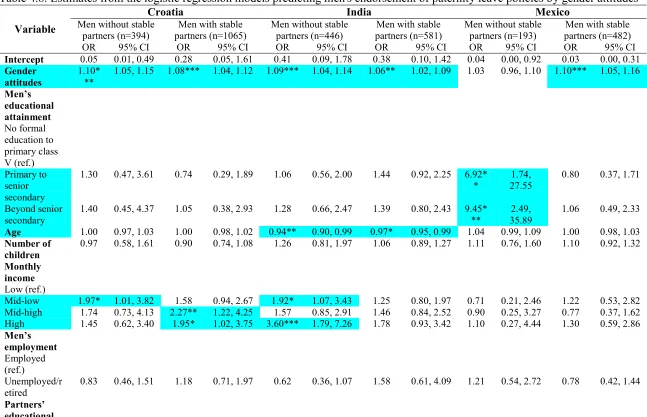
Table 4.8 Estimates from the logistic regression models predicting men's endorsement of paternity leave policies by gender attitudes ...68
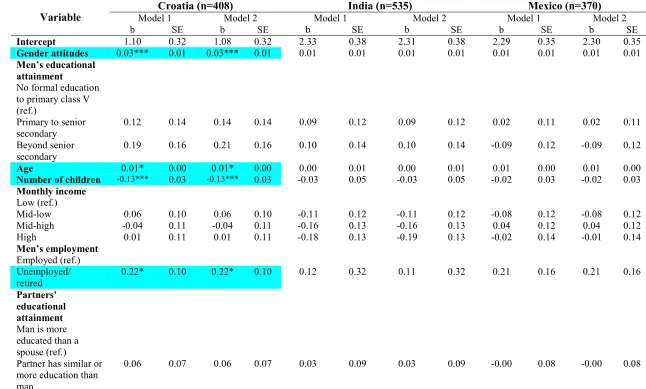
Table 4.10 Estimates from the regression models predicting involvement in childcare of fathers with stable partners by gender attitudes and the mediated
effect of fathers' leave taking ...71
Table 4.11 Socio-economic indicators of Croatia, India, and Mexico ...96
Table 4.12 Keywords used in the textual analysis of policies ...99
x
LIST OF FIGURES
LIST OF ABBREVIATIONS
GDP... Gross Domestic Product GEM Scale ... Gender Equitable Men Scale ICPD ...International Conference on Population and Development ICPD PoA ……….International Conference on Population and Development
CHAPTER
1
INTRODUCTION
1.1 Statement of the problem
In September 1994, representatives of governments, intergovernmental organizations, UN agencies, and non-governmental organizations met in Cairo, Egypt at the
International Conference on Population and Development (ICPD) to discuss and come to a consensus on a new approach to address problems related to population and
development. At the conclusion of the conference, 179 countries adopted the ICPD Programme of Action (ICPD PoA) (UNFPA, n.d.a). This Programme of Action focused on addressing the needs of women and men through sustainable development, health, education, equality and empowerment of women. ICPD recommended actions included men taking responsibility for their social and family roles through the implementation of special efforts that “emphasize men’s shared responsibility and promote their active involvement in responsible parenthood” (Male responsibilities and participation section, para. 4.27) (United Nations, 1995a). Subsequently, the importance of men’s involvement in unpaid work, including childcare, was emphasized in other globally recognized
Evidence suggests that paternal involvement is important for mothers’, fathers’, and children's well-being. For example, when men are involved in childcare, women are able to earn more money and experience greater equality in the division of household
responsibilities (Baxter, 2000; Drago, 2011; Johansson, 2010). Benefits from being involved in childcare for men range from greater longevity, life satisfaction, better physical and mental health to lower rates of sickness-related work absences, alcohol abuse, and substance abuse (Bratberg & Naz, 2009; Eggebeen & Knoester, 2001; Månsdotter, Lindholm, & Winkvist, 2007; Månsdotter, Backhans & Hallqvist, 2008; Månsdotter & Lundin, 2010). Finally, with increased involvement of men in childcare, children experience more favorable health outcomes, including lower rates of infant mortality and better physical and mental health (Bronte-Tinkew, Carrano, Horowitz, & Kinukawa, 2008; Dex & Ward, 2007; Dubowitz, et al., 2001; Flouri & Buchanan, 2003a; Flouri & Buchanan, 2003b; Lamb, 2010; Tanaka, 2005).
Since the creation of the ICPD PoA, in order to remove some institutional and cultural barriers that prevent fathers from fully engaging with their children and promote paternal involvement, governments adopted paternity leave and gender equality
reconciliation policies. In addition, numerous studies have examined men’s perceptions of paternity leave policies, determinants of paternal involvement, and national policy efforts implemented with aim to promote men's involvement in childcare (Baird &
focused on countries with major developed economies1. Thus, there is a skewed and only partial understanding of the impact of men's involvement in childcare globally. As pointed out by Richter and colleagues (2011) "we simply do not know enough about men’s [fathering] experiences in the majority [of the] world" (p. 69). There is a great need for research in all regions of the world, given significant cultural, historical, and socioeconomic differences in how patriarchy is expressed.
1.2 Research project
Manuscript I
For Manuscript I, I explored how men perceive paternity leave policies and what personal characteristics are correlated with paternal involvement in childcare in Croatia, India, and Mexico. This research is guided by the gender attitudes model, which posits that parents' gender attitudes determine how they divide childcare responsibilities. Gender attitudes can be defined as a socially constructed script, which shape different behaviors, activities, values, roles, and personality characteristics for women and men. An individual makes decisions and determines his or her own behavior based on their gender attitudes (Baber & Tucker, 2006; Corrigall & Konrad, 2006; Davis & Greenstein, 2009; Gaunt, 2006). Gender attitudes range from traditional to egalitarian. The gender attitudes model suggests that traditional gender role attitudes emphasize men's roles as breadwinner and decision maker and women's roles as homemaker and caregiver. In contrast, egalitarian gender attitudes allow less gender-differentiated divisions of labor outside and inside the home, which result in more egalitarian power relations between women and men (Gaunt, 2006; Katz-Wise, Priess & Hyde, 2010; Rogers & Amato, 2000;
1 Countries with major developed economies include: Canada, Japan, France, Germany, Italy, United
Trachtenberg, Anderson & Sabatelli, 2009).
In this paper, I explored the association between men's gender attitudes and their endorsement of paternity leave policies as a way to begin to understand the determinants that predict men’s support of paternity leave policies. This is significant because results of this research can inform the development of more effective policies aimed at
increasing men’s involvement in childcare and support for paternity leave policies. In addition, among a sub-sample of fathers, I explored the association between men’s gender attitudes and their actual involvement in caregiving. Because men who hold more egalitarian gender attitudes are often more willing to take paternity leave and because paternity leave taking increases the likelihood that men will be involved in childcare, I considered whether taking paternity leave mediated the association between men's gender attitudes and involvement in child care.
Manuscript II
Rostgaard, 2002).
For this study, I analyzed several types of national policy documents including (1) laws/acts, (2) policies, (3) plans, and (4) programs. I applied the symbolic and material policy typology (Howlett, 2000; Hood, 1986) to characterize policy documents from Croatia, India, and Mexico. According to Anderson (2000), application of symbolic and material policy typology "directs our attention beyond [the] formal policy statement" (p. 15) by postulating that policy documents can be classified as either symbolic or material depending on the benefits they allocate to their target populations. Symbolic policies include statements of intent for social betterment (e.g., empower families for shared parenting) without outlining any specific actions. These policies bring attention to an issue and may influence other policies; however, they have little real material impact on their beneficiaries and do not necessarily lead to implementation of any interventions or changes in societal conditions or behaviors. Material policies, in contrast, provide tangible resources, material benefits, and substantive power to their beneficiaries. These policies result in actual implementation of relevant interventions that have the potential to change societal conditions (Anderson, 2000; Anderson, 2010; Birkland, 2005; Howlett, 2000; Place, et al., 2015).
Research contexts
Gender Inequality Index2 scores. For example, in 2015 Croatia was one of the high ranked countries in terms of gender equality, the country’s Gender Inequality Index score was 0.141, ranking it 31 out of 159 countries (UNDP, 2016a). Conversely, India was among the lowest ranked countries on the Gender Inequality Index; country's score was only 0.530, ranking it 125 out of 159 countries (UNDP, 2016b). Finally, Mexico was among the middle ranked countries on the Gender Inequality Index with a score of 0.345, ranking it 73 out of 159 countries (UNDP, 2016c). However, despite these differences the governments of Croatia, India, ad Mexico have made public commitments to achieve the ICPD PoA goals and objectives (UNFPA, n.d.b.; UNFPA, n.d.c.; UNFPA, n.d.d.).
1.3 Aims, hypotheses, and research questions
Manuscript I
Specific aims of the study were to:
Specific Aim 1.1. Determine if men’s gender attitudes are associated with their endorsement of paternity leave policies in Croatia, India, and Mexico.
Specific Aim 1.2. Determine if men’s gender attitudes are associated with their involvement in childcare in Croatia, India, and Mexico.
Specific Aim 1.3. Examine if men’s leave taking when their child was born mediate the association between their gender attitudes and caregiving involvement.
I tested the following hypotheses:
Hypothesis 1: Men’s gender attitudes would be positively correlated with their endorsement of paternity leave policies.
2 The Gender Inequality Index measures gender inequalities in three aspects of human development:
Hypothesis 2: Among fathers, gender attitudes would be positively correlated with involvement in caregiving.
Hypothesis 3: Among fathers, paternity leave taking after their child’s birth would mediate the association between gender attitudes and involvement in caregiving.
Manuscript II
Specific aim of the study were to:
Specific Aim 2.1. Ascertain whether and how recommendations from the major global agreements and conventions related to promotion of men’s involvement in childcare were addressed in the national policy documents of Croatia, India, and Mexico.
The research questions associated with this specific aim were as follows:
Research Question 2.1.a. Was the promotion of men’s involvement in childcare addressed in the national policy documents of Croatia, India, and Mexico? If so,
CHAPTER 2
BACKGROUND AND SIGNIFICANCE
At the beginning of this chapter I briefly review the main benefits of paternity leave use and men’s involvement in childcare. I also review the major predictors of men’s support for paternity leave policies and men’s involvement in childcare. The reviewed studies are mostly conducted in countries with major developed economies. Special attention is given to results of previous studies on predictors of men’s involvement in childcare in Croatia, India, and Mexico. In addition, I provide brief information about major global agreements and conventions on gender equality as well as about Croatia, India, and Mexico. Finally, I review the results of the previous assessments of paternity leave polices and policy efforts made for promotion involvement of men in child care at the global level and in Croatia, India, and Mexico.
2.1 Benefits of men's paternity leave use and men's childcare giving
mother's future earnings increase on average 7% (Johansson, 2010). Moreover, there is a positive association between paternity leave use and equitable share of the housekeeping roles as well as a reduced level of conflicts over household division of labor (Almqvist, Sandberg & Dahlgren, 2011; Estes, Noonan & Maume, 2007; Hook, 2010; Kotsadam & Finseraas, 2011). Finally, studies suggest that paternity leave use and men’s involvement in childcare is positively associated with fathers’ longevity (Månsdotter, Lindholm, & Winkvist, 2007; Månsdotter & Lundin, 2010) and life satisfaction (Eggebeen & Knoester, 2001). Taking into consideration these benefits, numerous initiatives and programs have been implemented throughout the world to advocate for greater availability and use of paternity leave policies as well as to promote greater involvement of fathers in childcare.
2.2 Global perspective on paternity leave policies and men’s caregiving practices
2.2.1 Predictors of men's paternity leave use and male involvement in childcare
The literature on determinants of paternity leave use and men’s involvement in childcare proposes a set of explanatory variables including individual factors (father, mother and child characteristics), co-parental relationship factors and contextual factors and these variables is discussed below, one domain at a time.
Individual factors
(Dušanić & Promundo, 2012; Guzmán, 2007; Ishii-Kuntz, 2012; Mena & Rojas, 2010; NICHD Early Child Care Research Network, 2000; Rojas Martínez, 2006; Sullivan, Billari & Altintas, 2014; Velásquez, 2006). Other studies, however, have found the opposite results; fathers from the youngest age group are not likely to take paternity leave (Reich, 2011) and are less involved in childcare (Kulik & Sadeh, 2015; Murshid, 2016; Saraff & Srivastava, 2010) than fathers from the oldest age category.
Several reasons may explain these inconsistent findings regarding age, including the different ways of measuring age across studies. For instance, Reich (2011) divided respondents into three age groups. ICRW and Promundo (2011) had four age groups, whereas Lapuerta et al. (2011) and Rojas Martínez (2006) compared two age groups. Moreover, researchers have examined different age ranges across studies. For example, the research by ICRW and Promundo (2011) focused on fathers aged 18 to 59 years, whereas Ishii-Kuntz (2012) focused on fathers aged 25 to 45 years. Another possible explanation of inconsistent findings is that age may have the opposite effect on the fathers' willingness to take paternity leave versus be involved in childcare. On the one hand, in comparison to younger fathers, older fathers may be more financially stable and educationally prepared to assume fatherhood responsibilities. They may also be more likely to have access to paternity leave at their jobs. Conversely, younger fathers may hold less stereotypical views about paternal behaviors and have more physical energy for engagement in childcare. Thus, age appears to be an inconsistent predictor of fathers' paternity leave use and their involvement in childcare and the policy and economic contexts may help to explain the directionality of effects of this variable.
paternity leave taking and involvement in childcare. For example, several studies have found a positive association between paternity leave taking and fathers’ education
(Brandth & Kvande, 2002; Haas & Hwang, 2008; ICRW & Promundo, 2011; Lappegard, 2008; Lapuerta et al., 2011; Månsdotter, Fredlund, Hallqvist & Magnussonn, 2010; Nepomnyaschy & Waldfogel, 2007; Reich, 2011) and income (Lappegård, 2012; Månsdotter et al., 2010). Numerous studies also found a positive association between fathers’ education and income and their involvement in childcare (Craig & Mullan, 2011; Dušanić & Promundo, 2012; Flouri, 2005; Garcia & Oliveira, 2005; García-Mainar, Molina & Montuenga, 2011; González, Miret & Trevińo, 2010; Guzmán, 2007; Jayakody & Phuong, 2012; Juhari, Yaacob & Talib, 2013; Kah, 2012; Kulik & Sadeh, 2015;
Murshid, 2016; Sullivan, et al., 2014). At the same time, results from other studies suggest that fathers with lower incomes and lower educational attainment are more involved in caregiving (Garcia & Oliveira, 2005; ILO, 2012; Jesmin & Seward, 2011; Seward, Yeatts, Zottarelli, & Fletcher, 2006) and more inclined to take paternity leave (Escot et al., 2012).
The observed inconsistent findings may be because fathers’ SES affects their parenting practices through several mechanisms, which sometimes work in opposite ways. For instance, fathers with higher levels of education may have a greater willingness to assume more childcare responsibilities. They also tend to be in more stable work situations and be financially able to compensate for income losses associated with
their families may feel that they have fulfilled fatherhood responsibilities and therefore, be less inclined to participate in childcare. Hence, a complex set of contextual factors should be considered during interpretation of the directionality of the SES variables effect on fathers' inclination to take paternity leave and involvement in childcare.
Employment and time spent in paid employment are other important determinants of paternity leave taking and paternal involvement. Fathers who work full-time or on a permanent contract are more likely to take paternity leave in comparison to their peers who work less than full-time, are self-employed, or who are on a temporary contract (Escot, Fernández-Cornejo & Poza, 2014; Geisler & Kreyenfeld, 2011; Månsdotter et al., 2010; Reich, 2011; Sundström & Duvander, 2002; Valarino & Gauthier, 2016;
Whitehouse, Diamond & Baird, 2007). Moreover, fathers who work fewer hours per week spend more time in child caregiving activities (Hewitt, Baxter & Mieklejohn, 2012; ICRW & Promundo, 2011; Ishii-Kuntz, 2012; NICHD Early Child Care Research
Network, 2000; Saraff & Srivastava, 2010). Finally, previous research has consistently shown that paternity leave utilization positively affects their subsequent levels of childcare involvement (Haas & Hwang, 2008; Huerta, Adema, Baxter, Han, Lausten, …Waldfogel, 2013; Jesmin & Seward, 2011; Meil, 2013; Nepomnyaschy & Waldfogel, 2007; Tanaka & Waldfogel, 2007; Seward, Yeatts, Amin & DeWitt, 2006; Seward et al., 2006). Thus, full- and part-time employment as well as paternity leave utilization are consistent factors that determine the level of men's involvement in childcare.
knowledge, skills and abilities (Oakes & Rossi, 2003), tends to have greater power that places him/her in a stronger position to negotiate parental leave taking and division of household labor. A number of studies support this hypothesis: men are more likely to take paternity leave and assume more childcare responsibilities when their female partner is similarly or more highly educated (Fagan & Barnett, 2003; García-Mainar et al., 2011; Geisler & Kreyenfeld, 2011; González et al., 2010; Haas & Hwang, 2008; Lappegard, 2008; Naz, 2010; Saraff & Srivastava, 2010; Sundström & Duvander, 2002), employed full-time or in high status occupations (Escot et al., 2012; Gaertner, Spinrad, Eisenberg & Greving, 2007; Garcia & Oliveira, 2005; González et al., 2010; Lammi-Taskula, 2008; Lappegard, 2008; Liu, Wu & Zou, 2016; Meteyer & Perry-Jenkins, 2010; Naz, 2010; Reich, 2011; Seward et al., 2006; Seward, et al., 2006; Sundström & Duvander, 2002) and earning more money (García-Mainar et al., 2011; González et al., 2010; Ishii-Kuntz, 2012; Lappegard, 2008; Lappegård, 2012; Månsdotter et al., 2010; Naz, 2010; NICHD Early Child Care Research Network, 2000; Seward et al., 2006; Sundström & Duvander, 2002).
their masculinity regardless of employment status and level of income of their parenting partners.
Thus, mothers' education is a consistent predictor of paternal involvement across both countries with major developed economies as well as countries with emerging and
developing economies. At the same time, more research in countries with emerging and developing economies is needed to explore the impact of mothers' employment status and level of income on fathers' involvement in childcare.
Child characteristics. Fathers are more likely to take paternity leave upon the birth of their first child, but are less likely to take it upon the birth of subsequent children
(Lappegard, 2008; Nepomnyaschy & Waldfogel, 2007; Sundström & Duvander, 2002). Moreover, having fewer children in the family encourages fathers to spend more time with each child (Gaertner et al., 2007; Juhari et al., 2013; Kulik & Sadeh, 2015). Fathers also appear to be more involved with their sons than with their daughters
The mixed results around paternal involvement by child gender may be due to the influence of other child characteristics, like the child’s age, temperament, and emotional or behavioral problems on the association between child's gender and paternal
involvement. For example, Flouri (2005) found that during early and middle childhood, fathers were more likely to be involved with their sons than with their daughters;
however, during the adolescent period there were no gender differences in fathers’ level of involvement. There is also evidence that fathers’ engagement in caregiving is greater when a child is temperamentally easy or has no emotional or behavioral problems (Flouri, 2005; Goldberg et al., 2002; Manlove & Vernon-Feagans, 2002). Hence, the child's gender appears to be an inconsistent predictor of fathers' involvement in caregiving and other child's characteristics (e.g., age, temperament, emotional and behavioral problems) may affect the level of paternal involvement.
Co-parental relationship factors
Conceptual models developed by Doherty, Kouneski & Erickson (1998) and Belsky (1984) suggest that stable, well-functioning marital relations provide important support for fathers in their parenting roles. Available research conducted in countries with major developed economies and countries with emerging and developing economies has confirmed that higher marital satisfaction and marital intimacy is associated with greater level of paternal involvement (Goldberg, et al., 2002; Juhari et al., 2013; NICHD Early Child Care Research Network, 2000).
Contextual factors
Arrangements of national maternity/paternity/parental leave policies play an
they affect fathers' leave-taking and it was found that in both countries with major developed economies and countries with emerging and developing economies men are less likely to take unpaid or low paid leave (Han & Waldfogel, 2003; Huerta et al., 2013; Jesmin & Seward, 2011; Seward et al., 2006). Whereas, provision of a personal, non-transferable parental leave entitlement and flexible parental leave schemes increase the likelihood of fathers' leave-taking (Huerta et al., 2013; ILO, 2014; OECD, 2011).
Some studies have also compared the levels of paternal involvement across different countries. For example, several studies have compared gender differences in the time allocation to childcare across European countries and the researchers found that fathers from Nordic countries (e.g., Denmark) assume more childcare responsibilities than fathers from other European countries (Craig & Mullan, 2011; García-Mainar et al., 2011). Evidence also suggests that the status of women in the society and societal values regarding fatherhood, masculinity and gender roles may influence fathers' time
investment in childcare. For instance, Gauthier and DeGusti (2012) examined the association between the level of paternal involvement and four gender equality
Lithuania), fathers are less involved in childcare in comparison to fathers from countries with high economic development and a low to medium number of paid work hours (e.g., Finland, Norway, Sweden).
Thus, available literature suggests that the compensation level of
maternity/paternity/parental leave policies play an important role for fathers’ leave-taking in both countries with major developed economies and countries with emerging and developing economies. In addition, countries' economic development, number of hours of paid work, and the status of women in the society affect the level of paternal
involvement.
2.2.2 Predictors of men's support for paternity leave policies
paternity leave policies is any different in countries with emerging and developing economies.
2.2.3 Main limitations of available literature
To date, available research related to men’s support for paternity leave policies and men’s involvement in childcare suffers several limitations. First, the majority of available studies have been conducted in countries with major developed economies. There is lack of information about men's views on paternity leave policies and fathers’ involvement in child care within countries with emerging and developing economies. Second, the majority of available research conducted in countries with emerging and developing economies have used scales, which have been validated only among populations from countries with major developed economies (Shwalb, Shwalb & Lamb, 2013). Third, there are only a few studies that explored determinants of paternal involvement across different countries, however, more research within and between regions is needed. Results of comparative studies, which focus on the differences and similarities of paternal involvement determinants between countries with major developed economies and countries with emerging and developing economies or between societies with different heritages would enhance available fathering literature (Shwalb, et al., 2013).
2.2.4 Studies on predictors of paternity leave use and men’s involvement in
childcare in Croatia, India, and Mexico
Evidence suggests that Croatian fathers spend more time and pay more attention to their sons than to their daughters. They also enjoy joint activities with sons more than with daughters. In addition, fathers, who perceive greater social support from their social networks, report more positive emotions towards their children, closer monitoring of children's activities, and more frequent use of positive disciplinary methods (Borić et al., 2011).
India. The majority of studies in India have explored the impact of the father's, mother's and child's characteristics on paternal involvement and they mostly focused on middle-class fathers from urban areas. Available literature suggests that fathers who work fewer hours per week or hold secure government positions tend to be more involved in caregiving (Saraff & Srivastava, 2010; Sriram, 2011a). Saraff and Srivastava (2010) also found a link between fathers' age and their involvement in childcare; older fathers assume more childcare responsibilities than younger fathers. Other significant predictors of father involvement include men’s experiences of being fathered and perceived support from peer groups (Saraff & Srivastava, 2010; Sriram, 2011a). Lastly, fathers with traditional gender attitudes exhibit a lower level of involvement in caregiving as opposed to fathers with egalitarian gender attitudes (Saraff & Srivastava, 2010).
that the gender of a child influences the degree of father's involvement in caregiving; though, available information is mixed. For instance, Chaudhary (2013) pointed out that paternal involvement with girls is quite marginal. At the same time, Saraff and Srivastava (2010) found that fathers are more likely to be involved with their daughters than with their sons, whereas, Larson et al., (2001) found no significant differences in fathers’ involvement with daughters and sons.
Mexico. The research on men’s involvement in childcare in Mexico is mostly conducted among more educated, urban-based fathers and results suggest that men’s unemployment, urban residency, high education level and low-income level predict their active participation in childcare (Garcia & Oliveira, 2005; Guzmán, 2007; ILO, 2012). Available information about the association between men’s age and their involvement in childcare is inconsistent. Several studies found that younger fathers tend to assume more child caring responsibilities than older fathers (Guzmán, 2007; Mena & Rojas, 2010; Rojas Martínez, 2006; Velásquez, 2006), whereas Garcia and Oliveira (2005) found that middle-aged fathers (age 30-39) participate more in looking after their children as compared to their younger (age 20-29) and older (age 40-49) counterparts. They also found that fathers' position within the kinship structure was an important factors for their involvement in childcare and fathers who were household heads had greater participation in childcare in comparison to their counterparts who did not hold such positions.
Taylor & Behke, 2005), but this association may depend upon fathers' SES. In
comparison to lower SES fathers, higher SES fathers appear to have equal aspirations for both their daughters and sons and they actively participate in the upbringing and
education of their children, regardless of their child’s gender (Rojas Martínez, 2006; Taylor & Behke, 2005).
In sum, the available literature on predictors of men’s involvement in childcare in Croatia, India, and Mexico is limited. Research on men’s involvement in childcare is mostly focused on educated fathers from urban areas of Croatia, India, and Mexico. Moreover, I was unable to locate any research in these countries that focused on the predictors of fathers' leave taking in the event of having a child and men’s attitudes toward paternity leave policies.
2.3 Country contexts
The countries included in this research were purposefully selected due to the limited number of empirical studies related to men’s involvement in childcare previously conducted in these countries and a desire to capture lessons learned from a range of contexts (Table 2.1). Brief descriptions of each country contexts is discussed below.
country. According to UNDP (2016a), in 2015, 92% of Croatian women have reached at least a secondary level of education in comparison with 96% of their male counterparts. Moreover, women's labor force participation rate was 46.4%, whereas, for men this rate was 58.7%. In addition, 15.2% of parliamentary seats were held by women. In 2015, Croatia was one of the higher ranked countries in terms of gender equality; the country’s Gender Inequality Index score was 0.141, ranking it 31 out of 159 countries (UNDP, 2016a).
India is a country located in South Asia. It consists of 29 states and 7 union territories. Independence was granted to India in 1947. As of July 2016, the total estimated population of India was 1,266,883,598. The ethnic composition of the population includes 72% Indo-Aryan, 25% Dravidian, and 3% Mongoloid and other. India has the world’s fourth-largest economy and as per the World Bank (n.d.a.) classification, India is lower-middle-income country. The country's major social and economic concerns include inequity in all dimensions, including gender, region, and caste. Approximately 30% of the country’s population lives below the poverty line, but the poverty rates in the poorest states of India are about 3 to 4 times higher than more advanced states (CIA, 2016; World Bank, n.d.a; World Bank, n.d.b). According to UNDP (2016b), in 2015 12.2% of parliamentary seats were held by women in India; 35.3% of women and 61.4% of men have reached at least secondary level of education. Labor force participation rate for women and men was 26.8% and 79.1% accordingly. The 2015 Gender Inequality Index score was only 0.530, ranking it 125 out of 159 countries.
123,166,749. More than half of the population is Mestizo (62%), approximately one fourth (21%) is predominantly Amerindian, 7% is Amerindian, and the remaining 10% identifies as other. The major economic and social concerns of the country are low wages, inequitable income distribution, drugs, and high rates of violence. As per the World Bank (n.d.a.), Mexico is classified as an upper-middle-income country. It is
estimated that more than half of the country’s population (52.3%) lives below the poverty line. Other ongoing economic and social problems include underemployment and few advancement opportunities for the indigenous population, who live mainly in the impoverished southern states (CIA, 2016).
According to UNDP data (2016c), in 2015 56.1% of Mexican women and 59% of Mexican men have reached at least a secondary level of education. The labor force participation rate for women was 45.4%, whereas the labor force participation rate for men was 79.5%. In addition, 40.6% of parliamentary seats were held by women. In 2015, Mexico was one of the middle ranked countries in terms of gender equality; the Gender Inequality Index value was 0.345, ranking it 73 out of 159 countries (UNDP, 2016c).
Table 2.1. Socio-economic indicators of Croatia, India, and Mexico
Croatia Mexico India Total population (2016)¹ 4,313,707 123,166,749 1,266,883,598 Location¹ Southeastern
Europe America North South Asia At least secondary level of education
(2014)²
Women 92.0% 56.1% 35.3% Men 96.0% 59.0% 61.4% Labor force participation (2014)²
Women 46.4% 45.4% 26.8% Men 58.7% 79.5% 79.1% Proportion of seats held by women
in national parliaments (2014)²
15.2% 40.6% 12.2% Gender Inequality Index out of 159
countries (2015)²
Country's classification by income³ High Upper-middle Lower-middle
Sources: 1 - CIA, 2016; 2- UNDP, 2016a, b, c; 3- World Bank, n.d.a.
2.4 Major global agreements and conventions on gender equality
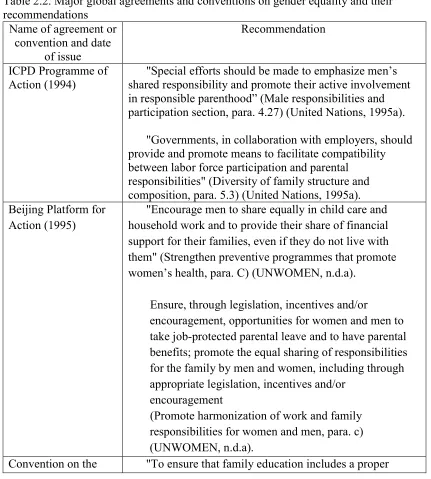
The importance of promotion of involvement of fathers in childcare and provision of paternity leave is emphasized in several major global agreements and conventions and information about their relevant recommendations is summarized Table 2.2.
Table 2.2. Major global agreements and conventions on gender equality and their recommendations
Name of agreement or convention and date
of issue
Recommendation
ICPD Programme of Action (1994)
"Special efforts should be made to emphasize men’s shared responsibility and promote their active involvement in responsible parenthood” (Male responsibilities and participation section, para. 4.27) (United Nations, 1995a).
"Governments, in collaboration with employers, should provide and promote means to facilitate compatibility between labor force participation and parental
responsibilities" (Diversity of family structure and composition, para. 5.3) (United Nations, 1995a). Beijing Platform for
Action (1995)
"Encourage men to share equally in child care and household work and to provide their share of financial support for their families, even if they do not live with them" (Strengthen preventive programmes that promote women’s health, para. C) (UNWOMEN, n.d.a).
Ensure, through legislation, incentives and/or
encouragement, opportunities for women and men to take job-protected parental leave and to have parental benefits; promote the equal sharing of responsibilities for the family by men and women, including through appropriate legislation, incentives and/or
encouragement
(Promote harmonization of work and family responsibilities for women and men, para. c) (UNWOMEN, n.d.a).
Elimination of All Forms of
Discrimination against Women (1979)
understanding of maternity as a social function and the recognition of the common responsibility of men and
women in the upbringing and development of their children" (Article 5b) (UNWOMEN, n.d.b).
States Parties shall take all appropriate measures to eliminate discrimination against women in all matters relating to marriage and family relations and in particular shall ensure, on a basis of equality of men and women: The same rights and responsibilities as parents, irrespective of their marital status, in matters relating to their children. (Article 16d) (UNWOMEN, n.d.b).
Convention on the Rights of the Child (1989)
"Ensure recognition of the principle that both parents have common responsibilities for the upbringing and development of the child" (Article 18, para. l) (United Nations Human Rights, 1989).
Declaration and Programme of Action of the World Summit for Social
Development (1995)
Promote equal partnership between women and men in family and community life and society, emphasize the shared responsibility of men and women in the care of children … and emphasize men’s shared responsibility and promote their active involvement in responsible parenthood. (Commitment 5, para. g) (United Nations, 1995b).
"Promoting social support, including good quality child care and working conditions that allow both parents to reconcile parenthood with working life" (Enhanced social protection and reduced vulnerability, 39b) (United Nations, 1995b).
"Encouraging men to take an active part in all areas of family and household responsibilities, including the sharing of child-rearing and housework" (Enhanced quality of work and employment, 56e) (United Nations, 1995b)
Sustainable
Development Goals (2015)
"Recognize and value unpaid care and domestic work through the provision of public services, infrastructure and social protection policies and the promotion of shared responsibility within the household and the family as
n.d.a)
Information on treaty actions (i.e. signature3, ratification4, succession5, accession6 and adoption7) undertaken by the Governments of Croatia, India, and Mexico in relation to the major global gender equality agreements and conventions is summarized in Table 2.3. Table 2.3. Treaty actions undertaken in Croatia, India, and Mexico in relation to the major gender equality global agreements and conventions*
Country Name of agreement or convention
Croatia India Mexico ICPD Programme of Action Signator Signator Signator Beijing Platform for Action Signator Ratification Signator Convention on the Elimination of All
Forms of Discrimination against Women
Succession Ratification Ratification
Convention on the Rights of the Child Succession Accession Ratification Declaration and Programme of Action
of the World Summit for Social Development
Adoption Adoption Adoption
Sustainable Development Goals Adoption Adoption Adoption *Sources: ICPD Beyond 2014, n.d.; UNFPA, n.d.b; UNFPA, 2010; United Nations, 1995b; United Nations. n.d.b; United Nations, 2005; United Nations Treaty Collection, n.d.a; United Nations Treaty Collection, n.d.b.
2.5 Review of the results of previously conducted assessments of policy efforts made
to promote paternal involvement
Most available research has compared the generosity of statutory leave entitlements for fathers in the case of a birth of a child (in terms of leave duration and available
3 "‘Signature’ of a treaty is an act by which a State provides a preliminary endorsement of the instrument.
While signing does not commit a State to ratification, it does oblige the State to refrain from acts that would defeat or undermine the treaty’s objective and purpose. " (UNICEF, n.d., page 2).
4 "‘Ratification’ is an act by which a State signifies an agreement to be legally bound by the terms of a
particular treaty"(UNICEF, n.d., page 2).
5 Succession refers to the transfer of international obligations, which were signed and ratified by the
predecessor state (Yugoslavia) to the successor state (Croatia).
6 "'Accession’ is an act by which a State signifies its agreement to be legally bound by the terms of a
particular treaty. It has the same legal effect as ratification, but is not preceded by an act of signature" (UNICEF, n.d., page 1).
7
financial support for leave-takers) across countries with major developed economies (Baird & O'Brien, 2015; Dearing, 2016; Earle, et al., 2011; Haas & Rostgaard, 2011; Lin & Rantalaiho, 2003; O'Brien, 2009; Ray, et al., 2009; Waldfogel, 2001; Wüst, 2009), although some research has taken a more global approach. For example, the International Labor Organization (ILO) reviewed national maternity, parental, and paternity laws and practices across the world. According to the ILO (2014), in 2013, paternity leave (a statutory entitlement of fathers, which allows them to be absent from work for a period of time after their child is born) was provided only in 78 out of 167 countries, and in 70 of the 78 countries which provide this entitlement, paternity leave was paid. At the same time, in 2013 parental leave (a statutory entitlement of parents, which allows them to be absent from work after initial early paternity and maternity leaves) was governed by the legislations of only 66 out of 167 countries, and in 36 out of the 66 countries that provided this entitlement, parental leave was paid. Thus, in 2013 more than half of the countries in the world did not have any statutory parental or paternity policies for parents. Some private employers in these countries allowed their staff members to take a leave in the event of having a child, but it was not mandated. According to the ILO (2014) parental and paternity leaves and especially paid parental and paternity leaves were less available in the less industrialized parts of the world.
quota8, universal coverage, additional leaves and flexible leave options9) offered in Sweden, Norway, Iceland, Finland, and Denmark. They found that introduction of the father's quota and increasing the amount of father's quota have resulted in substantial positive changes in fathers' paternity leave taking in Iceland, Sweden, and Norway. Introduction of flexible leave options (as in Denmark) and gender equality incentives (as in Finland) had no impact on fathers' paternity leave taking. Hence, available literature on efforts aimed to promote involvement of fathers in childcare varies in quantity across countries and in many countries with emerging and developing economies no relevant research has been conducted.
2.5.1 Review of the results of previous assessments of policy efforts made to promote
paternal involvement in Croatia, India, and Mexico
Available literature about national policy efforts aimed to promote paternal involvement in Croatia, India, and Mexico is limited and is mostly focused on the countries' leave entitlements for fathers and recommendations for promotion of men’s involvement in childcare.
Croatia. There is no statutory entitlement for paternity leave in Croatia, however, parents are entitled to paid maternity and parental leaves. Currently, fathers are entitled to the non-mandatory part of maternity leave. In addition, fathers are eligible to a paid parental leave (Dobrotić, 2015). Although Croatian men are eligible for leave in the case of a birth of a child, the majority of them do not exercise their right to take this leave
8 Father’s quota is a period of leave that can be taken by fathers only on a use-it-or-lose-it basis.
9 Flexible leave options allow fathers to take part-time leave, for example one day per week or take leave in
(Brajša-Žganec, Franc, Merkaš, Radačić, Šerić & Šikić-Mićanović, 2011; Ministry of Foreign Affairs and European Integration of the Republic of Croatia, 2010; UNDP Croatia, 2007; UNICEF, 2011). According to Nestić, Rubil, Stubbs, and Tomić (2013), the low interest of Croatian fathers to take paternity leave is related to existing traditional gender role stereotypes. In order to promote involvement of fathers in childcare, UNICEF (2011) suggested focusing on implementation of policies that reconcile work and family life (e.g., National Policy for the Promotion of Gender Equality 2011–2015, Act on Maternity and Parenting Rights and Allowances, etc.). Brajša-Žganec et al., (2011) also recommended increasing awareness of parents about maternity/parental leave
entitlements.
India. There is no statutory paternity leave in India, but male government and public sector employees with less than two surviving children are eligible for a 15-day paid paternity leave (Barker, Greene, Siegel, Nascimento, Segundo, ... Pawlak, 2010; ICRW & Promundo, 2011; United Nations, 2012). In addition, several multinational organizations as well as local private companies offer 3 to 15 day paternity leave for male employees when their child is born. Information about how many men exercised their rights for paternity leave is unknown. Moreover, no research has been conducted in order to understand the impact of paternity leave policy (Barker et al., 2010; Sriram, 2011b; United Nations 2005). According to UNICEF (2009) India’s existing paternity leave entitlements fail to consider the fathers' role in childrearing and it is limited in its efficacy because the leave can only be used twice during a father’s lifetime. Furthermore, the existing paternity leave policy mostly benefits the middle class10 and not those working
10 As per the Deutsche Bank Research (2010), the middle class in India comprises less than 30% of the total
in the informal sector.
Regarding the involvement of men in childcare, some literature acknowledges that Indian fathers are more involved in caregiving now than in the past (Roopnarine & Suppal, 2000; United Nations, 2005). However, in spite of Indian Government’s efforts, mothers and other female family members are still the primary child caregivers in the majority of Indian families (Chaudhary, 2013). Therefore, Saraff and Srivastava (2008) recommended conducting more actions to remove cultural barriers and encourage men to be more involved in traditional female childcare tasks (e.g., feeding the child, etc.). According to Barker et al. (2010) there is also a need to develop and implement paternity leave policies and encourage fathers’ participation during antenatal visits and childbirths. Finally, available literature suggests that sometimes women's rights groups in India have opposed using public funds to promote the engagement of men in childcare or to fund paternity leave due to two major reasons. First, women's rights groups are concerned that fathers will not use the paternity leave time for childcare provision. Second, they are concerned about limited available public funds for women empowerment activities. Therefore, available literature recommends strengthening relationships with these groups (Barker et al., 2010).
childcare responsibilities than their older counterparts (Guzmán, 2007; Mena & Rojas, 2010; Rojas Martínez, 2006; Velásquez, 2006).
Available literature suggests that in order to promote men's caregiving it is necessary to scale up implementation of fatherhood preparation courses, information campaigns, and interventions with alternative gender messages aimed at boys and adolescent males. For example, the Instituto Nacional de la Mujer funded and conducted several national information campaigns, which targeted men with messages that “doing housework would not make them less manly” (Barker, 2008). Other relevant efforts include awareness-raising workshops on Affective Paternity and Maternity, national competitions for
children (e.g., "How I See my Dad") and information campaigns, such as “Reconstructing Masculinity, Responsible Parenthood,” and Fatherhood Fairs (Figueroa & Franzoni, 2008; United Nations, 2006). Taking into consideration the importance of the work environment for paternal involvement, Barker and Verani (2008) also suggested that national efforts should target trade unions and workplaces. Finally, like in India, women's rights groups in Mexico have sometimes opposed activities to promote paternity leave and men's engagement in gender equality; therefore, available literature suggests enhancing relationships with these groups (Barker et al., 2010).
2.5.2 Main limitations of available literature
to underpin these studies. Finally, little research has been conducted outside of
CHAPTER
3
RESEARCH DESIGN AND METHODS
3.1 Overview of Research Design
The proposed research applies mixed methods. The gender attitudes model and symbolic and material policy typology framework provide a conceptual foundation for this research. Manuscript I focused on exploring how men perceive paternity leave policies and identifying the personal characteristics that are correlated with paternal involvement in childcare in Croatia, India, and Mexico. This research was guided by the gender attitudes model. For Manuscript II, I explored where and how recommendations from the major agreements and conventions related to promotion of men's involvement in childcare were addressed in the relevant national policy documents of Croatia, India, and Mexico. The process of data analysis for Manuscript II was guided by the symbolic and material policy typology framework.
3.2 Research methods for Manuscript I
Gender attitudes model
The gender attitudes model posits that parents' gender attitudes determine how they divide childcare responsibilities. Gender attitudes can be defined as a socially constructed script, which shape different behaviors, activities, values, roles, and personality
Gender attitudes range from traditional to egalitarian. The gender attitudes model suggests that traditional gender role attitudes emphasize men's roles as breadwinner and decision maker and women's roles as homemaker and caregiver. In contrast, egalitarian gender attitudes allow less gender-differentiated divisions of labor outside and inside the home, which result in more egalitarian power relations between women and men (Gaunt, 2006; Katz-Wise, Priess & Hyde, 2010; Rogers & Amato, 2000; Trachtenberg, Anderson & Sabatelli, 2009).
Data
I used data from the International Men and Gender Equality Survey (IMAGES). IMAGES is considered the most comprehensive random household survey on attitudes and practices of men on a variety issues, including fatherhood, caregiving, and gender attitudes. Data were collected in Croatia, India, and Mexico among men ages 18 to 59 in 2010. In each country, the survey was carried out by a local research partner in
coordination with two globally recognized non-governmental organizations, Promundo and the International Center for Research on Women (Barker, et al., 2011; Contreras, et al., 2012; Promundo & ICRW, n.d.).
In Croatia, IMAGES was administered in urban (Zagreb) and rural areas (Osjecko-baranjska and Vukovarsko-srijemska counties). In India, data were collected among men who resided in two metropolitan areas: Delhi and Vijayawada (state of Tamil Nadu). Finally, in Mexico, data were collected in three urban areas in different regions of Mexico: Monterrey (north), Querétaro (central), and Xalapa (coastal).
was pre-tested in each country. To ensure consistency and comparability of questions across settings, double-back translation of the questionnaires (i.e., translation of the translated questionnaires back into the original language) was conducted (Barker, et al., 2011; Contreras, et al., 2012).
To test my hypotheses, I constructed three separate samples for each country: men without stable partners, men with stable partners, and fathers with stable partners. To test hypothesis 1, I assessed the association between gender attitudes and support of paternity leave policies among men with and without stable partners. To test hypotheses 2 and 3, I examined the association between gender attitudes and fathers’ involvement in childcare among fathers with stable partners. I did not test Hypotheses 2-3 among fathers without stable partners given that they comprised a very small number of fathers11 and I was concerned about statistical power.
Measures and specification of variables
Dependent variables
Endorsement of paternity leave policies
Respondents were asked the following: "Do you think paternity leave should be guaranteed by law?" The variable was dichotomized as 1="Yes" vs. 0="No" or "Do not know".
Fathers' involvement in childcare
The variable was constructed from the respondents' answers about their involvement in the daily care of a child. Responses ranged from 1="Always partner" to 5="Always me". This variable was used as a continuous variable with higher values representing
11 The total number of fathers without partners Croatia, India, and Mexico was 9, 17, and 6 fathers
greater involvement in caregiving.
Independent variable
Men's gender attitudes were measured using the Gender Equitable Men (GEM) scale – a validated tool to assess gender norms cross-culturally (C-Change, FHI 360 & USAID, 2011). The scale was developed by Pulerwitz and Barker (2008) and tested with
adolescents and youth living in low-income neighborhoods in Rio de Janeiro, Brazil. Since then, the GEM scale has been used to measure gender attitudes in more than 20 countries including India (Contreras, et al., 2012; Verma, et al., 2006), Ghana, Tanzania (Shattuck, et al., 2013), China (PATH, 2012), Canada (Nelson, Thach & Zhang, 2014), Bosnia and Herzegovina (Dušanić & Promundo, 2012), Chile, Mexico, Croatia, Rwanda (Contreras, et al., 2012), Kenya, Uganda, Ethiopia (C-Change, et al., 2011), and
Bangladesh (Sayem & Nury, 2013).
The gender attitudes variable was constructed based on participants' responses to 14 items that were administered across all three countries. Each scale item was scored using a 3-point scale, where 1 = agree, 2 = partially agree, and 3 = do not agree. The items were summed and used as a continuous variable. The summed scores ranged from 14 to 42; higher scores represented more egalitarian gender attitudes, whereas lower scores represented traditional gender attitudes.
Mediator
Fathers' leave taking when their child was born
Fathers were asked "Did you take leave the last time you had a child". This variable was dichotomized as 1=took unpaid and/or paid leave vs. 0=did not take leave.
Age was a continuous variable. Men’s educational attainment was categorized as no-formal education to primary class V education (reference group), primary to senior secondary education, and beyond senior secondary education. I categorized monthly income as low (reference group), mid-low, mid-high and high. Men's employment was dichotomized as employed versus unemployed/retired. Number of children at the time of the interview was a continuous variable. A family's main source of income was defined based on respondents’ answer to the question “Who provides the main source of income in your home?” The variable was dichotomized as 1= respondent provided the main source of income and 0=otherwise (i.e. the main source of income is provided by a spouse, government, family assistance, etc.). Finally, the following two variables were included in the models estimated on men or fathers with stable partners. Partners’ educational attainment was defined using respondents' answers to the question "Do you and your partner have the same level of education or do you have more schooling or does she have more schooling?". The variable was coded as 1 if the respondent was less educated than parenting partner or both respondent and his partner had the same level of education and 0 if the respondent was more educated than the parenting partner. Partners’ employment was dichotomized as employed/student/studying and working versus
unemployed/retired/on leave.
Analysis plan
variables, I examined the range and mean. Next, for hypotheses testing I estimated a series of regression models separately for each country.
My first set of analyses focused on the association between gender attitudes and support for paternity leave policies among men, regardless of parenting status
(Hypothesis 1). I estimated two models: an unadjusted logistic regression model (Model 1) and a logistic regression model with controls (Model 2). These models were stratified by partner status. My second set of analyses aimed to understand (1) if men's gender attitudes were associated with their involvement in childcare (Hypothesis 2), and (2) if men's paternity leave taking when a child was born mediated the association between men's gender attitudes and their involvement in childcare (Hypothesis 3). For testing Hypothesis 2, I estimated the association between men's gender attitudes and their involvement in childcare after adjustment for controls (Model 1). Model 2 tests Hypothesis 3 by including leave taking to estimate the extent to which leave taking mediated the association between men's gender attitudes and involvement in childcare.
3.3 Research methods for Manuscript II
Content analysis
According to Weber (1990), content analysis is a research method that applies a set of procedures in order to make valid inferences from the text. It is a flexible and pragmatic method for developing and extending existing knowledge and in case of my research knowledge about policy efforts aimed to promote involvement of men in childcare. Content analysis can be used for various purposes including describing trends in
focus of societal, institutional, group or individual attention (Weber, 1990).
Currently, researchers use three distinct approaches to interpret the content of text data: conventional, directed and summative. The main distinctions among these approaches are origins of codes, coding schemes, and threats to trustworthiness. In the case of conventional content analysis the categories and the themes for categories are derived from the data. This approach is usually applied when available literature or existing theory on a phenomenon is limited. At the same time, summative content
analysis focuses on comparisons and counting of key words or content in text with aim to understand the underlying meanings of the words or the content. Researchers usually apply this approach for analysis of specific content of textbooks or manuscript types in a certain journal (Hsieh & Shannon, 2005). I conducted the content analysis with
application of the directed approach, which is usually applied when available literature or existing theory on a phenomenon is incomplete and would benefit from additional
research.
Application of the directed approach to content analysis begins with the development of an initial coding scheme based on existing theory or previous research prior to
beginning the data analysis. For my research the symbolic and material policy typology framework guided the process of initial coding. The major advantage of the directed approach to content analysis is that it allows for validation and/or extension of existing theoretical frameworks and prior research results (Hsieh & Shannon, 2005).
Data collection procedures
In India and Mexico, a bill should be approved by both Chambers of government and subsequently signed into a law/act by the president (Federal Research Division of the Library of Congress, n.d.; Parliament of India, n.d.). Whereas, in Croatia, a bill has to pass the House of Representatives and be approved by the president, after which it becomes a law/act (Voncina, et al., 2006). In Croatia, India, and Mexico, national policies, programs, and plans should comply with the countries' constitution and laws/acts.
A national policy includes a government's decisions and actions that are to be undertaken in order to address a matter of concern and achieve specific goals within a society. The policy also outlines priorities and the roles and responsibilities of different groups (Anderson, 2000; WHO, n.d.a.). Depending on a policy's matter of concern, it is drafted by a relevant statutory body of the government. For instance, gender equality policies are developed under the auspices of the Parliamentary Committee for Gender Equality in Croatia, the National Women's Institute in Mexico, and the Ministry of Women and Child Development in India.
Finally, the national plan is defined as a "roadmap" that sets national goals and objectives for the country. The plan determines strategic frameworks as well as roles and responsibilities of different sectors and stakeholders for accomplishing the established goals and objectives (UNPEI, n.d.). In India, the Government carries out the planning process through National Five-Year Plans, whereas; in Mexico new political
specific strategies and activities that are designed to be implemented for accomplishing the Plans' goals and objectives.
Sample. From May to October 2015, I searched for national policies from Croatia, India, and Mexico using the following strategies: (1) Google search using the keywords: “policy”, “gender”, “children”, “Croatia”, “India”, and “Mexico”; (2) a focused internet search of online resources of government institutions (e.g., National Women's Institute of Mexico, Chamber of Deputies of Mexico, Ministry of Health and Family Welfare of India, Planning Commission of the Government of India, Office of the Ombudsman for Children of Croatia, Narodne novine12, and others) in each country; (3) a review of the CEDAW State and CEDAW Shadow reports from Croatia, India, and Mexico; (4)
consultations with doctoral committee members; and (5) consultations with experts in the three countries. In order to identify experts from these countries, I asked my committee members to recommend experts who would be helpful during data collection. I also contacted experts from Croatia, India, and Mexico who have published research focused on paternity leave and fathers’ involvement in childcare. In addition, I contacted experts who work with national and international institutions in promoting men's involvement in childcare in Croatia, India, and Mexico. For each person I contacted, I explained the goals of my study and asked them to suggest policy documents related to these goals. Once I became aware of a policy, I used Google search engine to find and retrieve policies. When I was not able to find a policy, I contacted the relevant
ministry/government institution and requested the policy document.
12 Narodne novine is the official gazette of the Republic of Croatia, which publishes acts, laws, regulations,
Inclusion and exclusion of policy documents. Inclusion criteria were national policy documents that were approved or modified by the Governments/Parliaments of Croatia, India, and Mexico between 1995 and 2014. This 20-year time period was selected because it coincides with the timeframe of adoption and implementation of the ICPD Programme of Action. I excluded state, local, and workplace/organizational policies. I developed a table in Excel where I recorded the key information I extracted from all identified national policy documents that were ratified or modified between 1995 and 2014 in each country. Key information included the title of the policy, date of
approval/modification, justification for inclusion or exclusion of the policy from the analysis, relevant part/s of the document where references to paternal involvement were included, and the internet link for the document. I then reviewed key information from the table. Based on exclusion and inclusion criteria, I categorized each of the identified policy documents as either “included” or “excluded”.
I evaluated all identified policy documents for inclusion in three phases. In the first phase, I reviewed 91 identified documents to confirm that they were national policy documents of Croatia, India, and Mexico that were approved or modified between 1995 and 2014. In the second phase, I searched the text of 76 policy documents to retrieve sentences that included keywords relevant to this study. Table 3.1 outlines the keywords used for the text review.
Table 3.1. Keywords used in textual analysis of policy documents
English* Croatian Spanish Father Otac Padre
Fathers Očevi Padres Fatherhood Očinstvo Paternidad Man, male Muškarac Hombre Men, males Muškarci Hombres