ISSN(Online): 2320-9801 ISSN (Print): 2320-9798
I
nternational
J
ournal of
I
nnovative
R
esearch in
C
omputer
and
C
ommunication
E
ngineering
(An ISO 3297: 2007 Certified Organization)
Vol. 3, Issue 4, April 2015
Evolutionary Load Forecasting using Artificial
Neural Network
Syeda Samreen Saba1, Nilajkar.R.M2
M.Tech (D.E), Dept. of ECE, GMIT, Davangere, India1
HOD, Dept. of ECE, GMIT, Davangere, India2
ABSTRACT: The anticipated effort targets to predict the load by utilizing Artificial Neural Networks (ANN). Short term load forecasting acts an important character for the economic, planning and reliable action of power systems. Consequently, numerous statistical techniques have been conventionally projected for these forecasting, but it have become tiring to build an exact functional model. This tiring task can be decreased by using ANN. ANN is a machine which is devised to model in fashion which the human brain does a particular task. The main intension of the anticipated effort is to build a NN model known as an Elman recurrent network on the flat form of MATLAB to simulate the load prediction. We also evaluate the results attained by weather and a non-weather sensitive model.
KEYWORDS:Elman recurrent network, Short term load forecasting (SLTF), weather sensitive and non-weather sensitive.
I. INTRODUCTION
Steep raise of power system networks and upturn in their complexity, different features are influential in electric power generation, demand or load management. Load forecasting in the precarious feature for profitable operation of power systems. Prediction of forthcoming loads is crucial for infrastructure development, network planning and soon. Load forecasting could be categorized in three classes, as short-term, medium term and long term load forecasting. Short term load covers hourly to weekly load, which are habitually essential for day to day economic operations.
II. RELATED WORK
Many aspects or parameters which can be endogenous or exogenous variables affects the short term load forecasting. The variables involves
The particular hour and its very previous hours are endogenous on the other side variable include the parameters like rainfall, temperature, humidity and wind speed. Other various factors also contribute to affect the SLTF. Which include Consumer type, Seasonal effects, Day of the week, Holidays and many more.
III. PROPOSED ALGORITHM
ISSN(Online): 2320-9801 ISSN (Print): 2320-9798
I
nternational
J
ournal of
I
nnovative
R
esearch in
C
omputer
and
C
ommunication
E
ngineering
(An ISO 3297: 2007 Certified Organization)
Vol. 3, Issue 4, April 2015
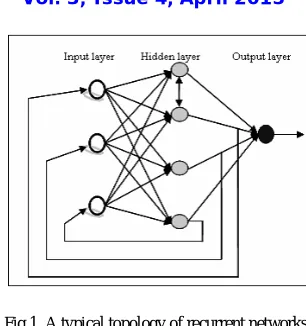
Fig 1, A typical topology of recurrent networks.
IV. DATA COLLECTION AND PRE PROCESSING
Data collection is a vital task of any kind of research study. Insufficient or inaccurate data can influence the results of a study and eventually lead to skewed results.In this, the actual load data was taken. Weather conditions impacts the load extremely. Thus the correlation between weather conditions and load consumption is overwhelmingly needed, specifically in locality where noteworthy weather condition changes are experienced.
A. Data Storage
Data storage can be carried out in different ways. The techniques utilized to implement storing data are external techniques like database management system (DBMS) or Microsoft excel and other conventional method. Data collected is stored in Microsoft Excel sheets in this work. These sheets are then imported into mat lab software by using the command as “xlsread”.
B.Data Pre-processing
The raw or pre-processed weather and load data is stored in the excel sheet. Nevertheless, this data is being normalized former to giving them to the network for training or prediction attempt. Data scaling is crucial due to the circumstance that neural networks are repeatedly vulnerable to raw data, it’s tremendously vital that data are scaled (classically values between -1 and 1,or 0 and 1,) to escape convergence problems.
C. Data scaling
The data scaling is made in order to advance interpretability of network model weights and uniform scaling matches originally the significance of variables. The equation shown below have undoubtedly been used and to normalize the load data and weather data.
V.
D. Bad data detection and replacement
Without the exception, few bad data were found in the overall load data. The bad data was replaced by taking average of previous hour and the very next hour load data.
E. Alignment of the Input Vector (IV) of prediction models
ISSN(Online): 2320-9801 ISSN (Print): 2320-9798
I
nternational
J
ournal of
I
nnovative
R
esearch in
C
omputer
and
C
ommunication
E
ngineering
(An ISO 3297: 2007 Certified Organization)
Vol. 3, Issue 4, April 2015
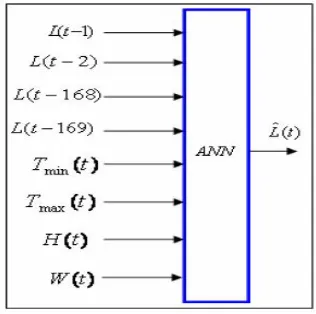
Fig 2 Alignment of the input vectors (non-weather sensitive) network model
VI.
Fig 3. Alignment of the input vector (weather sensitive) network model
V. SIMULATION RESULTS
Differences between developed weather sensitive as well as non-weather sensitive models are evaluated. Along with it, the subsequent performance measure hired: mean percentage error (MPE) and mean square error (MSE) to estimate the performance of network models. The actual error in kWis also compared.
A.Network architectural design for the ER model
ISSN(Online): 2320-9801 ISSN (Print): 2320-9798
I
nternational
J
ournal of
I
nnovative
R
esearch in
C
omputer
and
C
ommunication
E
ngineering
(An ISO 3297: 2007 Certified Organization)
Vol. 3, Issue 4, April 2015
B. Elman recurrent non weather sensitive model
The weather data is not used in this model i.e. the weather data is omitted as it is non-weather sensitive model. The simulation results, corresponding error, and network performance for the non-weather model is shown below in Figure 2 (a), (b), and (c) respectively.
2(a) Simulated results
2 (b): The associated actual error (kW)
2(c) Training
C. Elman recurrent weather sensitive model
ISSN(Online): 2320-9801 ISSN (Print): 2320-9798
I
nternational
J
ournal of
I
nnovative
R
esearch in
C
omputer
and
C
ommunication
E
ngineering
(An ISO 3297: 2007 Certified Organization)
Vol. 3, Issue 4, April 2015
3(a) Simulated results
3 (b): The associated actual error (kW)
3(c) Training
V. CONCLUSION AND FUTURE WORK
ISSN(Online): 2320-9801 ISSN (Print): 2320-9798
I
nternational
J
ournal of
I
nnovative
R
esearch in
C
omputer
and
C
ommunication
E
ngineering
(An ISO 3297: 2007 Certified Organization)
Vol. 3, Issue 4, April 2015
REFERENCES
1. Vinutha H D, K C Gouda and Chandan K N, “Electric load forecasting using a Neural Network Approach”, International Journal of
Computer Trends Technology (IJCTT), Vol. 11 No. 06 May 2014
2. Samsher Kadir Sheikh, M. G. Unde, “Short -term load forecasting using ann technique ”, International Journal of Engineering Sciences &
Emerging Technologies, Vol. 1, Issue 2, Feb 2012
3. Hesham K. Alfares and Mohammad Nazeeruddin, “Electric load forecasting: literature survey and classification of methods”,
International Journal of Systems Science, 2002, volume 33, number 1, pages 23-34
4. Text Book “Soft Computing techniques and its application” by Chaturvedi
5. http://www.mathworks.in/products/availability/index
6. http://en.wikipedia.org/wiki/Forecasting
7. http://www.researchgate.net/topic/backpropagation
BIOGRAPHY
1. Syeda Samreen Sabais a Research student in the Electronics and CommunicationDepartment, G.M Institute of Technology, Davengere, India. She is about to receive Master of Technology (M.Tech)degree with the specialization in Digital Electronics. Her research interests are Artificial Neural Networks (ANN), Load forecasting.