
Page 1 of 7
Online Sequential Extreme Learning Machine: A New
Training Scheme for Restricted Boltzmann Machines
1BERGHOUT Tarek
1Laboratory of Automation and Manufacturing Engineering, University of Batna 2, Batna 05000, Algeria;
Abstract: The main contribution of this paper is to introduce a new iterative training algorithm for restricted
Boltzmann machines. The proposed learning path is inspired from online sequential extreme learning
machine one of extreme learning machine variants which deals with time accumulated sequences of data with
fixed or varied sizes. Recursive least squares rules are integrated for weights adaptation to avoid learning rate
tuning and local minimum issues. The proposed approach is compared to one of the well known training
algorithms for Boltzmann machines named “contrastive divergence”, in term of time, accuracy and
algorithmic complexity under the same conditions. Results strongly encourage the new given rules during
data reconstruction.
Keywords: restricted Boltzmann machine; contrastive divergence; extreme learning machine; online
sequential extreme learning machine; autoencoders; deep belief network; deep learning
1. Introduction
Restricted Boltzmann machine (RBM) is the first types of neural networks used for unsupervised learning.
RBM is a shallow neural network with just two layers, the visible layer and the hidden layer. In RBM network,
each node from the visible layer is connected to every node in the hidden layer. An RBM is considered
restricted because no two nodes in the same layer are sharing connections[1]. In the forward pass, the RBM
iteratively takes a set of inputs and translate them into a set of number that encodes the input. In the
backward pass it takes those set of numbers back to form the reconstructed input. Both forward and backward
movements are known as Gibbs sampling[2].
At the visible layer and after several samplings processes, the reconstructed input is compared to the original
input to determine the quality of the results. A well trained network will be able to perform the backward
translation with a high degree of accuracy. In both steps weights and biases are iteratively tuned to allow the
RBM to decides which features are the most important when detecting patterns[3].
Page 2 of 7
Generally RBMs are trained using contrastive divergence (CD) algorithm which is often consume more
computational costs due to the need of huge number of hidden nodes[2]. Besides, hyper-parameters such as
learning rate, number of Gibbs sampling, number of hidden neurons and number of iterations vary from an
application to another and needs more human intervention.
In this work and since extreme learning machine (ELM) is widely used for single-batch training in a variety of
application due to its fast training and accuracy [4][5], the contribution of the current experiments is to
introduce a new fast and accurate iterative training algorithm for RBMs by involving ELM theories for both
offline [6]and online learning[7] paradigms. The proposed algorithm experimentally compared to CD
algorithm in term of time and accuracy and the results proves the credibility of the new adopted training
scheme.
This work is organized as follow: in section 1, a brief description about the used training rules of basic online
sequential ELM (OS-ELM) is presented. Section 3 introduces the given rules to the RBM. Section 4, illustrates
with examples the circumstances of the comparative study. Section 5, is the conclusion of this work.
2. Basic OS-ELM
For any given dataset of
n
driven mini-batches of training inputs and targets{
X T
k, }
k nk=1 where:1 2 3 ( )
{ ,
,
,....,
}
k i k
X
=
x x x
x
andT
k=
{ , , ,....,
t t t
1 2 3t
i k( )}
, OS-ELM for a single hidden layer feedforward neuralnetwork (SLFN) has given following training steps in tow different phases[7]:
➢ The initial phase:
• Randomly generated hidden nodes weights and biases
( , )
w b
from any probabilistic distribution.• Activate the hidden layer
H
of the initial mini-batch using any activation functionG
as addressed inequation (1).
• Determine the initial output weights
using formula (3) and covariance matrix in formula (2).➢ The update phase :
• Calculate the hidden layer for any new mini-batch using (1).
• Update the output weights using (4) depending on the prediction error in formula (5), the updated
covariance matrix in formula (6) and the updated gain matrix in formula (7).
1 ( 1 )
k k
H + =G w X + +b (1)
1
0 ( 0 0)
T
Page 3 of 7 T
0 0 0 0
β = P H T (3)
T k+1 k k+1 k+1 k+1
β = β - P H e (4)
1 1 1
k k k k
e+ =T+ −H + (5)
1 1 1
T
k k k k k
P+ =P −K +H +P (6)
1
1 1
1
T k
k k
k T
k k
P H K
H P H+ + +
+
= (7)
The superscripts
( )
−1 and( )
Trefers to the Moore-Penrose pseudo-inverse of a matrix and the transpose of the
matrix respectively.
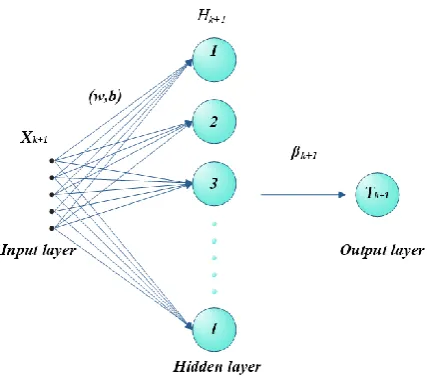
Figure 1 addresses the architecture of a SLFN based on the new notations of OS-ELM.
Figure: 1. Architecture of SLFN based OS-ELM.
3. Proposed approach
In the new given rules of RBM the visible layer is mapped using random parameters generated independently
from the training data. The input weights will be tuned each time in a single Gibbs sampling using Sherman
Page 4 of 7
For the same unlabeled data:
{ ,
1 2,
3,....,
( )}
1n
k i k k
X
=
x x x
x
= , the RBM can be trained also in two distinctivephases, the initial phase and sequential phase. In the initial phase, the RBM is initialized the same as basic
OS-ELM. The difference between basic OS-ELM and the RBM is that the same input weights are the ones whose
must be updated during the sequential phase. So, equations (4) and (5) must be changed to (8) and (9) to fit the
unsupervised training paradigm.
1 1 1 1
T k k k k k
w+ =w −P+ H +e + (8)
1
( )
1 1 1
T
T w
k k k k
e
+=
X
+−
H
+ − (9)Unlike old training rules of RBM which use the input weights for reconstruction and their transpose for
reconstruction as shown in equation (10)[8], the new given rules for RBM uses the same tuned weight for
extraction and their transpose of pseudo inverse for feature reconstruction as shown previously in equation
(9). And since the updated weights are determined after activating the hidden layer, there is no need to use
the activation function again. In fact we can map the visible layer directly with the new weights as
demonstrated in (11). Formula (8) is already used for online training of the ordinary autoencoder with ELM
and proved its accuracy and the algorithm is publically available in[9]. Besides, ELM theories allow only the
activation of hidden layer, not the input or the output ones[10].
(
)
(
T)
H
=
G wX
+
b
X
=
G Hw
+
b
(10)1
(
T)
H
=
Xw
X
=
H w
− (11)Figure 2 addresses the architecture of the proposed RBM with the new notations.
Figure: 2. Architecture of the RBM.
Page 5 of 7
In the current study, the proposed algorithms is compared to CD algorithm during training using the
gray-scaled image of ‘Cameraman’, normalized between 0 and 1 and resized to 250 by 250 pixels. The training
hyper-parameters are adjusted according to Table 1.
Table 1 Training hyper parameters
Methods Gibbs sampling Mini-batch size
CD 5 10
OS-ELM 1 entire data
Root mean squared error (RMSE) of reconstruction and training time are the essential evaluation parameters.
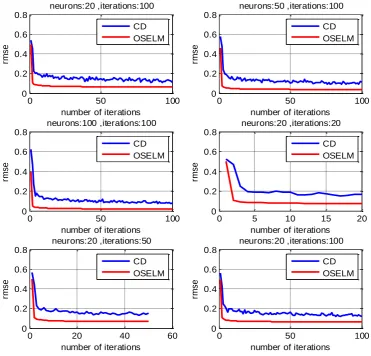
Figure 3 shows the reconstruction accuracy according to the number of iteration for different sizes of the
hidden layer.
0 50 100
0 0.2 0.4 0.6 0.8
number of iterations
rm
se
neurons:20 ,iterations:100
CD OSELM
0 50 100
0 0.2 0.4 0.6 0.8
number of iterations
rm
se
neurons:50 ,iterations:100
CD OSELM
0 50 100
0 0.2 0.4 0.6 0.8
number of iterations
rm
se
neurons:100 ,iterations:100
CD OSELM
0 5 10 15 20
0 0.2 0.4 0.6 0.8
number of iterations
rm
se
neurons:20 ,iterations:20
CD OSELM
0 20 40 60
0 0.2 0.4 0.6 0.8
number of iterations
rm
se
neurons:20 ,iterations:50
CD OSELM
0 50 100
0 0.2 0.4 0.6 0.8
number of iterations
rm
se
neurons:20 ,iterations:100
CD OSELM
Figure: 3. RMSE behaviour during iterative training.
The new training rules clearly enhance tuning paradigms of the RBM by always outperforming the CD
Page 6 of 7
towards stopping criteria in less than five iterations, unlike CD which keeps going towards a deeper end and
obviously it needs more than 100 iterations.
By reducing hyper-parameters number and simplifying the Gibbs sampling, computational time will be
gained during training same as Figure 4 explains.
0 20 40 60 80 100 120
0 1 2 3 4 5 6 7 8 9 10 iterations tr a in in g t im e ,s iterations:101 CD OSELM
Figure: 4. Time consuming results during training.
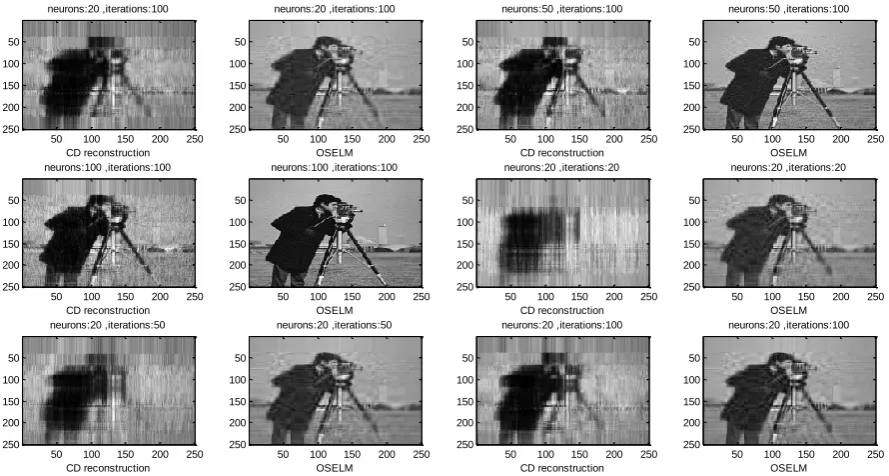
Figure 5 also illustrates and confirms the credibility of the new method compared to CD algorithm.
CD reconstruction neurons:20 ,iterations:100
50 100 150 200 250 50 100 150 200 250 OSELM neurons:20 ,iterations:100
50 100 150 200 250 50 100 150 200 250 CD reconstruction neurons:50 ,iterations:100
50 100 150 200 250 50 100 150 200 250 OSELM neurons:50 ,iterations:100
50 100 150 200 250 50 100 150 200 250 CD reconstruction neurons:100 ,iterations:100
50 100 150 200 250 50 100 150 200 250 OSELM neurons:100 ,iterations:100
50 100 150 200 250 50 100 150 200 250 CD reconstruction neurons:20 ,iterations:20
50 100 150 200 250 50 100 150 200 250 OSELM neurons:20 ,iterations:20
50 100 150 200 250 50 100 150 200 250 CD reconstruction neurons:20 ,iterations:50
50 100 150 200 250 50 100 150 200 250 OSELM neurons:20 ,iterations:50
50 100 150 200 250 50 100 150 200 250 CD reconstruction neurons:20 ,iterations:100
50 100 150 200 250 50 100 150 200 250 OSELM neurons:20 ,iterations:100
50 100 150 200 250 50
100
150 200 250
Figure: 5. Results of image reconstruction using both CD and OS-ELM.
Page 7 of 7
Comparing to old iterative training algorithms such as contrastive divergence or backpropagation, a new fast
and more accurate training algorithm for RBMs is represented in this work. The new given rules which are
inspired from OS-ELM one of ELM variants allow computational costs reduction under less human
intervention during training.
In the current study the proposed approach is evaluated under unsupervised learning paradigms. Therefore,
the aim of future works will focus on studying the effect of OS-ELM during the training of deep belief neural
networks for supervised learning using a stack of the new RBMs.
References
[1] G. Hafeez et al., “A Novel Accurate and Fast Converging Deep Learning-Based Model for Electrical
Energy Consumption Forecasting in a Smart Grid †,”, energies, 2020.
[2] G. E. Hinton, “A practical guide to training restricted boltzmann machines,” Lect. Notes Comput. Sci. (including Subser. Lect. Notes Artif. Intell. Lect. Notes Bioinformatics), vol. 7700 LECTU, pp. 599–619, 2012.
[3] S. Oh, “Entropy , Free Energy , and Work of Restricted Boltzmann Machines,” ,Entropy, pp. 1–14, 2020. [4] G. Bin Huang, “What are Extreme Learning Machines? Filling the Gap Between Frank Rosenblatt’s
Dream and John von Neumann’s Puzzle,” Cognit. Comput., vol. 7, no. 3, pp. 263–278, 2015.
[5] G. Bin Huang, “An Insight into Extreme Learning Machines: Random Neurons, Random Features and Kernels,” Cognit. Comput., vol. 6, no. 3, pp. 376–390, 2014.
[6] G. Bin Huang, Q. Y. Zhu, and C. K. Siew, “Extreme learning machine: A new learning scheme of
feedforward neural networks,” IEEE Int. Conf. Neural Networks - Conf. Proc., vol. 2, no. August, pp. 985–
990, 2004.
[7] G. Huang, N. Liang, H. Rong, P. Saratchandran, and N. Sundararajan, “On-Line Sequential Extreme
Learning Machine Review of Extreme Learning Ma- chine ( ELM ),” Int. Conf. Comput. Intell., no. Ci, 2005.
[8] Hongming Zhou, Guang-Bin Huang, Zhiping Lin, Han Wang, and Yeng Chai Soh, “Stacked Extreme
Learning Machines,” IEEE Trans. Cybern., vol. 45, no. 9, pp. 2013–2025, 2015.
[9] B. Tarek, “Autoencoders,” 2019. [Online]. Available: BERGHOUT Tarek (2019). Autoencoders
(https://www.mathworks.com/matlabcentral/fileexchange/66080-autoencoders), MATLAB Central File
Exchange. Retrieved October 21, 2019.
[10] G. Bin Huang and L. Chen, “Convex incremental extreme learning machine,” Neurocomputing, vol. 70,

![ANALYSIS AND COMPARISON OF ALUMINIUM ALLOY [Al 2024-T6] AND SILUMIN PISTON BY USING FEA P Sreejesh 1& P J Manoj2](data:image/gif;base64,R0lGODlhAQABAIAAAP///wAAACH5BAEAAAAALAAAAAABAAEAAAICRAEAOw==)