THE FIRST 1000 MOST CRITICAL DAYS
Based on Strategic Direction One:
Prevention of Stunting in Children less than two years of age in the
National Food and Nutrition Strategic Plan (NFNSP) 2011-2015
THREE YEAR PROGRAMME
2013-2015
F
IRST
1000 M
OST
C
RITICAL
D
AYS
Distribution of stunting in Zambia
Foreword
The Government of the Republic of Zambia recognizes malnutrition as a serious public health problem. Over one million children under five years and 10 % of women of the reproductive age are malnourished. The common nutrition problems in these children include chronic malnutrition (45%), underweight (15%), wasting (5%) and low birth weight (10%). Micronutrient deficiencies in children under five years include vitamin A (54%) and iron deficiency anaemia (53 %). The impact of chronic malnutrition (stunting) on child cognitive, physical and mental development, irreversible long term effect on health and child mortality, is well documented in the 2008 Lancet Series. Accordingly, the Lancet Series recommends the use of the 1000 most critical days interventions to contribute to the attainment of the Millennium Development Goals 4 and 5. The success in implementing the 1000 days Nutrition actions will require a multi-sectoral approach to addressing the problem of undernutrition particularly among the under five children, pregnant and lactating mothers.
Based on the available evidence, the Government fully endorses the First 1000 Most Critical Days Programme (MCDP) as a national programme. In view of this, all key stakeholders are called upon to fully participate in its implementation in order to adequately reduce malnutrition in Zambia. This programme will explore opportunities to advance the Government's decentralization policy to strengthen coordination structures and systems at national, provincial, districts, and community levels. It is therefore gratifying to note that all stakeholders and cooperating partners have agreed to work together to support this national effort to eliminate all forms of malnutrition for the sake of the young and future generations.
The Government recognizes that investing in well-tested, low-cost and effective nutrition interventions is one of the best effective strategies to save lives and enhance human development. The Government, therefore, welcomes the incorporation of the First 1000 Most Critical Days as a key strategy for scaling up nutrition interventions and the development of the National First 1000 Most Critical Days Programme.
The 1st 1000 MCDP operationalizes the First Strategic Direction of the National Food and Nutrition Strategy 2011-2015 prioritising multi-sectoral, synergistic efforts to strengthen and expand interventions related to “the First 1000 Most Critical Days” to prevent stunting in children less than two years of age. While the 1st 1000 MCDP might seem skewed towards the health sector, its success will depend on the effective contribution of other sectors, especially as regards food security, social protection, water and sanitation, education, and infrastructure. It is, therefore, crucial that the National First 1000 Most Critical Days Programme be supported and fully embraced by these sectors.
The Government is committed to establishing, a National Food and Nutrition Steering Committee at Cabinet level to respond to nutrition problems. The role of this Committee will be to oversee all governance issues in relation to the National Food and Nutrition Policy and the implementation of the National Food and Nutrition Strategic Plan. The Government is also committed to increasing its own resource allocation to nutrition as part of the broader development efforts and to strengthen the National Food and Nutrition Commission to effectively coordinate the national response.
1. Hon. Dr. Joseph Kasonde, MP Minister of Health
Signature………...………
2. Hon. Dr. Joseph Katema, MP
Minister of Community Development Mother and Child Health
Signature………...………
3. Hon. Emmanuel Chenda, MP Minister of Agriculture & Livestock
Signature………...………
4. Hon. Emerine Kabanshi , MP
Minister of Local Government and Housing
Signature………...………
5. Hon. Dr. John Phiri, MP
Minister of Education, Science, Vocational Training & Early Education
Signature………...………
Acknowledgements
st
The development of the National First 1000 Most Critical Days Programme (1 1000 MCDP) owes much to the hard work, dedication, broad consultation and participation of key stakeholders which included: senior government officers in key line ministries and departments, international partners, representatives of non-government organizations, civil societies, academics, faith-based organisations, and the private sector.
The National Food and Nutrition Commission would like to pay special thanks to the following institutions and organizations for their dedication and valuable contributions: - Ministry of Health; Ministry of Agriculture and Livestock; Ministry of Education, Science, Vocational Training & Early Education, Ministry of Community Development, Mother and Child Health; Ministry of Local Government and Housing; United Nations Children's Fund; World Food Programme; United States Aid for International Development (USAID) and the various USAID supported projects - Zambia Integrated System Support Programme, the Communication Support for Health; and Concern Worldwide; too numerous to mention.
st
The preparation of the 1 1000 MCDP ensured inclusiveness, transparency, consensus building, and development of an integrated programme focused on a multi-sectoral approach for the national scale up of high impact health and nutrition interventions. This task was effectively managed by a core team of dedicated international experts. Led by Fiona Duby, the team included Patricia Schwerzel, Dianne Stevens, Gary Gleason and Veronica Vargas who worked with dedicated NFNC senior staff namely -Cassim Masi, Beatrice Kawana, Freddie Mubanga and Mike Mwanza. Kebby Mutale - WFP/NFNC Technical Assistant together with Freddie and Mike coordinated the process of gathering information and designing the program. Special thanks to Fiona for her vision and leadership in undertaking this complex task and compiling the draft document.
The NFNC extends his gratitude to the Permanent Secretaries of MoH and MCDMCH – Dr. Peter Mwaba and Professor Elywin Chomba, for their valuable guidance during the whole process, the Permanent Secretaries in Luapula, Northern, Central and Eastern Provinces for facilitating consultative meetings with staff from the key line Ministry Departments at Provincial and District level, the Deputy Permanent Secretary (Central Province) and the District Commissioner for Kabwe District for providing useful information especially on governance issues in relation to food security, health and nutrition.
In addition, the Commission wishes to thank Dr. Elizabeth Chizema Kawesha - Director Public Health and Research - MoH, Ben Chundu and Henry NKhoma—Director Planning and Director Community Development, respectively in the MCDMCH for their contributions.
The Ministry of Community Development, Mother & Child Health is further acknowledged for providing a venue for the first stakeholder workshop which was held to provide initial feedback by the team and share ideas from local experts and participants. The field-based stakeholders who included health staff in district hospitals and health centres, community health workers, and families living in rural communities in Chongwe and Kabwe districts are appreciated for their input.
From the Nutrition Cooperating Partners, thanks go to UNICEF nutrition specialists – Dominique Brunet and Ruth Siyandi; William Kanweka, Senior Health Advisor – Population Health and
Nutrition and Abeje Zegeye, HIV/AIDS Food and Nutrition Advisor (USAID); Maurice Sadlier, Programme Officer - Irish Aid and Edna Kalaluka- Head of Programmes - WFP.
The NFNC recognizes and extends appreciation to the UK Department for International Development (DFID) who provided financial and technical support for the development of the draft National First 1000 Most Critical Days Programme. Special gratitude goes to Silke Seco-Grutz who guided and coordinated the development of the programme and secured technical and financial assistance on behalf of the NFNC. Finally, NFNC remains indebted to Dr Victor M. Mukonka, former Director Public Health & Research in the Ministry of Health and now senior lecturer and Head of Public Health at Copperbelt University, School of Medicine for facilitating the stakeholders and partners consultative meeting and editing the final National First 1000 Most Critical Days Programme document.
The Cooperating partners' dedication and support to addressing undernutrition in Zambia is critical and appreciated.
Cassim Masi, Ph.D. Executive Director,
National Food and Nutrition Commission of Zambia
Contents
Foreword...ii
Acknowledgements...iv
Acronyms and Abbreviations...ix
Preamble...xi
Executive Summary...xii
The Global Problem...1
Undernutrition in Zambia...2
The evidence for addressing undernutrition...7
Historical National Response to Undernutrition...11
Nutrition Governance and Institutional Architecture...13
Rationale and Way Forward For First 1000 Most Critical Days Programme...16
Section 2: Components of the First 1000 Most Critical Days Programme...17
Approach and Principles...23
Starting the programme: The Inception Period...23
Strategic Area 1: Policy and coordination...23
Strategic Area 2: Priority interventions...25
Intervention Area 1: Development of an integrated Maternal, Infant and Young Child Feeding Operational Strategy...27
Intervention Area 2: Improved Nutrition during Pregnancy...28
Intervention Area 3: Improving nutrition during the first 6 months of infancy...31
Intervention Area 4: Nutrition in early childhood 6–24 months...33
Intervention Area 5: Additional strategies...37
Cross Cutting interventions...45
Strategic Area 3: Institution and Capacity Building, and training...45
Strategic Area 4: Communication and Advocacy...51
Strategic Area 5: Monitoring, Evaluation and Research...56
Social protection & key social development issues...60
Section 3: Financing the First 1000 Most Critical Days Programme...63
Fiduciary risk management...64
Costs of the Programme...67
Section 4: Annexes...75
Annex 1: Monitoring and Evaluation Framework Summary 2013-2015...76
Annex 2: 3 Year Monitoring and Evaluation Framework (2013-2015)...77
Annex 3: Definitions...89
Annex 4: Evidence for management of nutrition-related conditions for the 1st 1000 Most Critical Days...91
Annex 5: Institutional Arrangements for Coordinating the First 1000 MCDP...95
Annex 6: Lessons from Rwanda and Malawi and Peru...103
Annex 7: Line Ministries and their relationship to nutrition...105
The First 1000 Most Critical Days
Tables
Table 1: Cost-effectiveness of Various Nutrition Interventions...10
Table 2: Nutrition objective & strategies in the Sixth National Development Plan (Cross Sectoral)...12
Table 3: First 1000 Most Critical Days Programme stakeholders at national and sub-national Levels...18
Table 4: Strategic Area 1: Policy and Coordination...24
Table 5: Development of integrated MIYCN Operational Strategy...27
Table 6: Pregnancy - roll out of initiatives for improved maternal Nutrition rolled out...30
Table 7: Improving nutrition In infancy 0-6 months...33
Table 8: Improved nutrition in early childhood – 6-24 months...36
Table 9: Additional strategies outside of strategic direction 1 in NFNSP...43
Table 10: The Human Resource Gap...45
Table 11: Number of nutrition professionals in possession of various certificates...46
Table 12: Estimated Zambian needs for professionally qualified degree holding nutritionists...47
Table 13: Output of natural resources development college...48
Table 14: Capacity building, training and education...50
Table 15: To increase nationwide knowledge, awareness, ownership, Participation and support around The First 1000 Most Critical Days National Programme...55
Table 16: Overview of nutrition information generated by different stakeholders and structural levels...57
Table 17: Robust Monitoring, Evaluating and Research to support and inform The First 1000 Most Critical Days Programme...59
Table 18: Key participants and roles...64
Table 19: Interventions, coverage and unit costs...68
Table 20: Summary indicative costs for the First 1000 Most Critical Days Programme Over 3 Years...69
Table 21: Interventions, coverage, and unit costs...71
Table 22: Components, main items and sources of information...72
Table 23: Summary indicative costs for the First MCDP Over 3 Years in Districts with CCT: Kalomo, Chipata, Monze...73
Figures
Figure 1: Causes of mortality for children Under 5 Years...2Figure 2: Trends in nutritional status of children Under 5 Years...2
Figure 3: Framework of the causes of maternal and child undernutrition...3
Figure 4: Trends and targets for Underweight by rural and urban...5
Figure 5: Percent (%) Underweight among Under 5 Years Children by mother's education...6
Figure 6: Percent (%) Dietary Energy Supply by Food Group 2000-2002...7
Figure 7: Nutrition policy context...11
Figure 8: Twin-track approach for inception period...19
Figure 9 : The First 1000 Most Critical Days Concept...25 Figure 10: All interventions and priority interventions selected for
The First 1000 Most Critical Days Programme...39 Figure 11: Proposed Flow Of Information Into And Out Of Nfnc...58 Figure 12 Proposed Nutrition Governance Framework...96 Figure 13: Proposed First 1000 MCDP organization within NFNC and
Acronyms and Abbreviations
AIDS Acquired Immune Deficiency Syndrome ANI African Nutrition Initiative
ART Anti-Retroviral Therapy
BAZ Breastfeeding Association of Zambia BCC Behaviour Change Communication BFHI Baby Friendly Hospital Initiative
BMI Body Mass Index
CAADP Comprehensive African Agricultural Development Program CBO Community Based Organization
CBGMP Community-based Growth Monitoring and Promotion CHAZ Churches Health Association of Zambia
CHWs Child Health Weeks
CSH Communications Support for Health CSO Central Statistical Office
CSOs Civil Society Organisations DES Dietary Energy Supply
DFID Department for International Development
EMILP Essential Medicines Logistic Improvement Programme EPI Expanded Programme for Immunisation
EU European Union
FBO Faith Based Organisation FNDP Fifth National Development Plan GAIN Global Alliance for Improved Nutrition GMP Growth Monitoring and Promotion GRZ Government of the Republic of Zambia HIV Human Immunodeficiency Virus
IBFAN International Baby Food Action Network IMAM Integrated Management of Acute Malnutrition ITNs Insecticide Treated Nets
IYCF Infant and Young Child Feeding LNS Lipid-based nutrition supplement M&E Monitoring and Evaluation
MAL Ministry of Agriculture and Livestock MAM Moderate Acute Malnutrition MCDP Most Critical Days Programme MCH Maternal and Child Health
MCDMCH Ministry of Community Development Mother and Child Health MDGs Millennium Development Goals
MGD Ministry of Gender and Child Development MI Micronutrient Initiative
MICS Multiple Indicator Cluster Survey MIS Malaria Indicator Survey
MLGH Ministry of Local Government and Housing
MNP Micronutrient Powder
MoH Ministry of Health
MUAC Mid Upper Arm Circumference M & E Monitoring and Evaluation
NFNC National Food and Nutrition Commission NFNSP National Food and Nutrition Strategic Plan
OVC Orphans and Vulnerable Children
PMTCT Prevention of Mother to Child Transmission NDP National Development Plan
NFNC National Food and Nutrition Commission
NFNSP National Food and Nutrition Sector Strategic Plan NGO Non-Governmental Organisation
GRZ Government of the Republic of Zambia RUTF Ready to Use Therapeutic Food RDA Recommended Daily Allowances SAM Severe Acute Malnutrition
UN-SCN United Nations - Standing Committee on Nutrition SNDP Sixth National Development Plan
SUN Scaling Up Nutrition
THET Tropical Health Education Trust
UN United Nations
UNDP United Nations Development Programme UNICEF United Nations Children's Fund
USAID United States Aid for International Development VAS Vitamin A Supplementation
WBFTI World Breastfeeding Trends Initiative
WFP World Food Programme
WHO World Health Organisation
ZamNIS Zambia Nutrition Information System ZDHS Zambia Demographic and Health Survey
Preamble
The NFNC is pleased to present the framework for the three-year “First 1000 Most Critical Days Programme (MCDP) in Zambia”. The framework provides in-depth information on the food and nutrition situation in Zambia. This framework is the result of the collective work of senior specialists from the National Food and Nutrition Commission, national and international consultants, over a three week period in March 2012 in country and further consultations held during the period June-August 2012.
The team consulted various stakeholders involved or associated with nutrition programmes in Zambia. These included senior government officials in key line ministries at national, provincial and district levels, donors, senior academics, health and nutrition officers from United Nations organisations, senior staff from national and international NGOs and Faith Based Organisations (FBOs). Consultations were also held with provincial, district staff from key line Ministry departments, health staff in district hospitals and health centres and community health workers. A stakeholder's workshop at national level was held to provide initial feedback from the team and elicit ideas from local experts. While the time was limited, the depth and breadth of information exchange was valuable. Various documents were produced from the consultations during this mission. These include:
1) Overview of the First 1000 MCDP (2013-2015) and one year implementation plan.
2) Communications and Advocacy Strategy for the First 1000 MCDP.
3) Governance Analysis, Institutional Structure and Management Arrangements for the First
1000 MCDP
4) Social Protection and Nutrition: Implications and Opportunities
5) A national capacity building plan
6) Options for financing the First 1000 MCDP Programme including through a Pooled Fund
Mechanism
Executive Summary
The global burden of maternal and child undernutrition remains huge, and is among the greatest constraints facing global development efforts. Surprisingly little effort is being done to tackle this problem particularly in the most affected countries. According to the Lancet Nutrition Series of 2008 on the effects of nutrition interventions, Zambia is among 36 countries with more than 20% stunting.
The WHO's 2009 landscape analysis on nutrition assessed Zambia's nutrition governance as 'medium' and also noted that the country was making 'insufficient progress' towards the First Millennium Development Goal (MDG 1). Stunting affects health, physical and cognitive development capacity as well as productivity in adulthood. It has been estimated that current levels of child stunting of 45% if unchanged in Zambia, will cost over a ten year period (2004-2013),
1 US$775m in productivity .
Renewed political commitment to nutrition has been made at the global level, as manifested by the UN-led Scaling Up Nutrition (SUN) movement which aims to address undernutrition, with a focus on the First 1000 MCDs of the child's life. Zambia, now politically committed to tackling undernutrition is one of the priority countries to implement the First 1000 MCDP as its key strategy to reducing stunting.
Maternal and child undernutrition are caused by multiple factors, and addressing the problems therefore requires the collaboration between a wide range of actors from different sectors,
2
working at all levels from community to national level . The NFNC has developed a three year multi-sectoral programme, focused on the First 1000 MCDs, for all funding and implementing partners.
The First 1000 MCDP aims to strengthen and scale up selected priority interventions
from different sectors based on global and national evidence of cost effectiveness
thereby reducing stunting in children. A review of institutions, systems and human resources capacity related to nutrition was conducted to better understand the context, the players and the challenges that will be associated with this programme. The cumulative information gathered was more than can be incorporated into this framework. Separate reports are available, providing details on institutional, organisational and human capacities and analysis of delivery systems in different sectors that can contribute to the efficiency of the programme and financing options
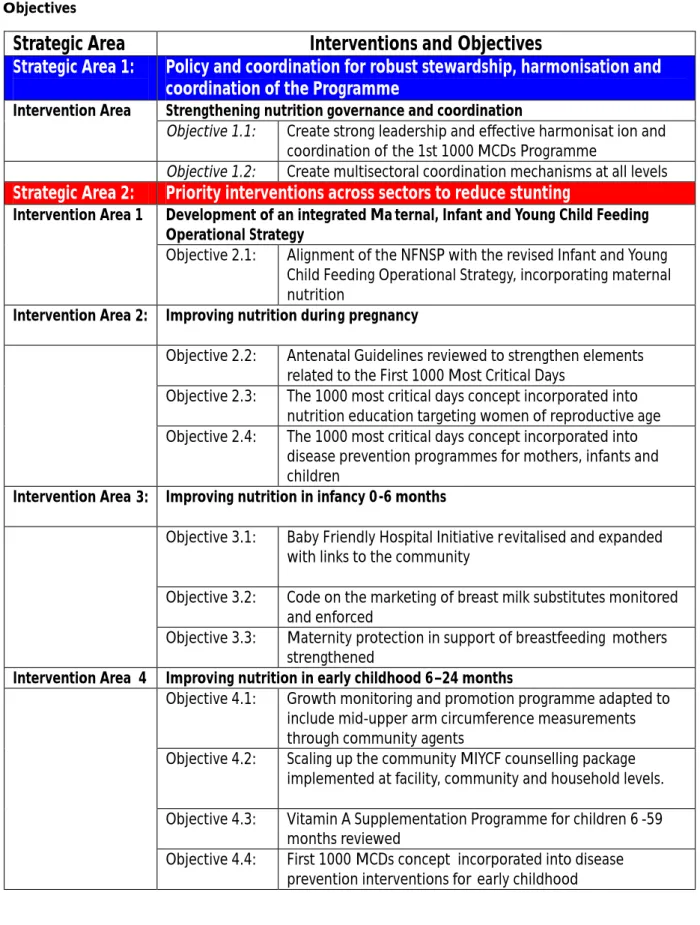
This three-year framework and the draft first-year implementation plan are intended to guide the various stakeholders in undertaking work related to the First 1000 MCDP, set out under the 5 Strategic Areas:
1
NFNC. (2008) Annual Report on the Food and Nutrition Situation in Zambia. , Lusaka, Zambia 2
SCN (2009) Landscape Analysis on Countries' readiness to accelerate action in nutrition. Special Issue of SCN News No. 37 ISSN 1564-3743. http://apps.who.int/nutrition/landscape_analysis/en/index.html
Strategic Area 1
Strategic Area 2:
Strategic Area 3:
Strategic Area 4:
:
Policy and coordination for robust stewardship,
harmonisation and coordination of the Programme
Coordinating a multi-sectoral programme of this complexity and diverse key stakeholders requires a robust stewardship and leadership by the NFNC and commitment from all key sector ministries. In order to minimise duplication and encourage harmonised approaches to reducing stunting, the 'Three Ones' concept similar to the one used for HIV and AIDS programming, will be promoted for the First 1000 MCDP, to ensure effective coordination, harmonisation and programme accountability, greater opportunities for sector linkages and shared responsibilities among the key sectors and players as well as adherence to evidence-based approaches.
Priority interventions across sectors to reduce stunting
The aim is to promote integrated high-impact maternal and child nutrition interventions to be complemented by strong advocacy and communication messages, and a comprehensive monitoring and evaluation plan.Guided by global evidence, documented in the Lancet in 2008 series, the interventions with the greatest impact on child stunting are known. The Government and various stakeholders have agreed on high impact nutrition priority interventions which are likely to reduce and prevent child stunting if strengthened and scaled up. The advocacy and communication strategy as well as the comprehensive M&E plan aim to cover such interventions under the First 1000 MCDs.
Institutional, Organisational and Human resource
Capacity Building
This strategy recognises that institution, organisational and human resource capacity building at various levels of implementation will be needed. Enhanced collaboration and coordination among the sectors, donors and other partners, support from NGOs, M&E as well as use of formal and non-formal media channels will be emphasised. The strategy will also recognise the need for greater community participation.
The institutional, Governance and Capacity needs assessments have set out the anticipated capacity building and training requirements which will be supported under this programme. In addition, Government with support from DFID and other partners are supporting a programme for new academic courses in nutrition at higher institutions of learning.
Communications and Advocacy
Communication and advocacy will be key supporting elements for the First 1000 MCDP. A nationwide campaign around the importance of maternal and child nutrition to prevent stunting, in the context of the first 1000 MCDs, will be disseminated at various levels to reach different audiences, using different messages, channels, and activities.
Advocacy and communication will be critical to generate greater leadership and operational commitment, better cross-sector collaboration and participation, and greater levels of resource commitment from both the Government and development partners.
The advocacy will be evidence-based, drawing primarily on information that will be gained both from relevant research and the comprehensive M&E system for this programme. The NFNC will facilitate and coordinate the overall strategic communication and advocacy under this programme. However each stakeholder will take responsibility for advocacy and communication of respective activities, consistent with the aims of the Programme.
Monitoring, Evaluation and Research
Monitoring and evaluation of the programme is important in order to track progress, identify problems and see how the Programme can be adjusted where needed. Under the First 1000 MCDP, a robust and comprehensive M&E system will be developed and coordinated by the NFNC to capture nutrition information from all stakeholders across the sectors. A first step towards improving information collection and analysis has been the launch of the Zambia Nutrition Information System (ZamNIS) by the NFNC which now needs to become fully operational,
3.
expanded, and supported Research outputs on food and nutrition and other related indicators have not been coordinated, nor used strategically for policy and planning. The programme will build research capacity in NFNC to provide the leadership that will ensure that research is coordinated, prioritised and used effectively.
Financing the Programme
The financing mechanisms for the programme will include: 1) pooled funding; 2) direct programme support to districts or communities, and 3) GRZ funding through approved annual plans and budgets. This approach will provide options to accommodate funding arrangements by different partners intending to support the programme.
The pooled funding mechanism will be established by key donor partners to facilitate greater resource alignment in support of the First 1000 MCD Programme. It will be overseen by a Steering Committee, composed of donors, the NFNC and other government representatives. Management of the Pooled Fund will be awarded through a competitive bidding process. The NFNC will be supported to provide leadership and ensure national priorities are addressed and activities consistent with the National Food and Nutrition Strategic Plan. Line Ministries at all levels and
4
CSOs will be able to submit proposals to support the First 1000 MCDP. A Technical Advisory Group (TAG) will be responsible for assessing proposals against agreed criteria and ensuring that programmatic and geographical priorities are addressed. Details of these mechanisms will be developed and posted on the NFNC website www.nfnc.org.zm after the launch of the
5 programme .
Under the direct funding mechanism institutions will be required to finance the programme based on agreed district annual work plans or approved proposals by the financing agency. This will include GRZ funding which is done through the respective sectors based on approved annual work plan and budgets. Indirect funding through technical and logistical support to the districts and communities will also be part of the funding mechanism.
Strategic Area 5:
3
ZamNIS can be accessed on www.nfnc.org.zm 4
NGOs, FBOs, CBOs, academia, and the media,
5
Section 1: Situation Analysis
The Global Problem
Undernutrition is one of the world's most serious but least addressed health problems. The human and economic costs are enormous, falling hardest on the very poor and on women and children. Nutrition problems are often unnoticed until they reach severe levels. Nearly 200 million children are chronically malnourished. Annually 35% (nearly 3 million) of all deaths among under five children and roughly 20% (nearly 1 million) of all maternal deaths are due to malnutrition globally.
Chronic malnutrition (Stunting), a form of undernutrition affects approximately 195 million or about one in three children under five years of age in the developing world. According to the recent estimates, maternal and child undernutrition contributes to more than one third of child deaths (Figure 1). Twenty-four countries account for more than 80 % of the global burden of chronic undernutrition, as measured by stunting (low height for age). Chronically malnourished children can become locked in a cycle of recurring illnesses and are more likely to be shorter adults and to give birth to low birth weight offspring. Undernutrition can create irreversible damage to
6
growth, development and cognitive abilities . Chronic undernutrition is largely irreversible if not corrected in the first two years of life but is preventable. The factors that contribute to 7 malnutrition are complex, and tackling malnutrition requires the involvement of all sectors . Lessons from other countries, including Bangladesh, Eritrea, Mauritania, Vietnam, Peru, Brazil, Rwanda and Malawi show that progress in reducing malnutrition can be made where there is political commitment, strong leadership and a well-coordinated, multi-sector response.
6 Prado E., Dewey K.. (2012) Nutrition and brain development in early life. A&T Technical Brief . Issue 4, January 7
Figure 1: Causes of mortality for children under 5 years
Source: WHO/Child Health Epidemiology Reference Group (CHERG) estimates presented in The Lancet, June 2010.
Undernutrition in Zambia
With 45% stunting, Zambia has one of the highest rates of childhood (6 to 59 months) undernutrition in the world- higher than the 42%average for Africa. Other forms of
undernutrition in Zambia include wasting or acute malnutrition, with 5% of children under 5 being
8
wasted, and underweight, with15% . In addition 54% of children have vitamin A deficiency and 53% have iron
9
deficiency anaemia and 9.3 % of children are born with low birth-weight, indicating poor maternal
10
nutrition .
Figure 2 below, show the prevalence of child malnutrition children declining from 1992 to 2007. The trends are moving in the right direction but not enough, and unlikely to meet 2015 targets.
8 CSO (2009), MOH, TDRC, UNZA and Macro Inc; Zambia Demographic and Health Survey (ZDHS)-2007, Calverton, Maryland, USA 9
NFNC. (2008) Annual Report on the Food and Nutrition Situation in Zambia. , Lusaka, Zambia
10 CSO (2009), MOH, TDRC, UNZA and Macro Inc; Zambia Demographic and Health Survey (ZDHS)-2007, Calverton, Maryland, USA
Source: Zambia DHS (CSO, 2007)
Globally, more than one third of child death are attributable
to undernutrition others
16% Measles
1%
HIV/AIDS 2%
Injuries 3%
Malaria 8%
Diarrhoea 14%
Pneumonia 14%
Neonatal 41%
If current levels of stunting remain unchanged in Zambia, over the ten year period from 2004-2013, 11
the country is expected to lose US$775million in economic production . Addressing undernutrition is therefore essential to meeting all economic and development targets, attainment of the Millennium Development Goals (MDGs) and protecting the human rights for health and
12
freedom from hunger . Annex 4 provides a detailed profile of nutrition in Zambia.
11
NFNC. (2008) Annual Report on the Food and Nutrition Situation in Zambia. , Lusaka, Zambia . 12
UNICEF (2010). Tracking Progress on Child and Maternal Nutrition.
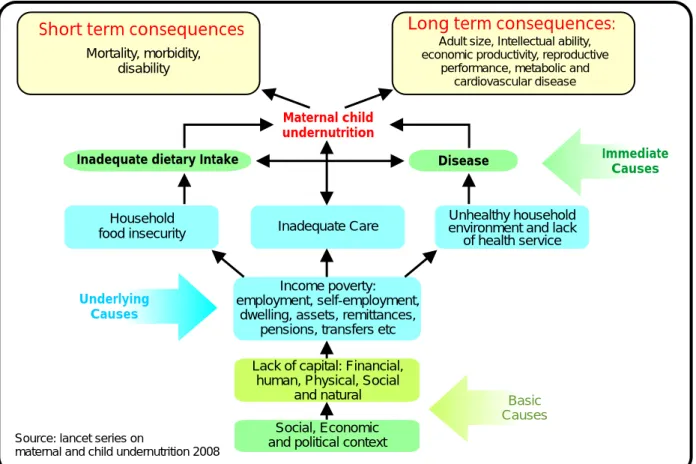
Figure 3: Framework of the causes of maternal and child undernutrition
Addressing the direct and indirect causes of undernutrition
Undernutrition arises from complex, multiple and interactive causes. The immediate causes include inadequate dietary intake and disease. Underlying these are causes operating at household and community levels: household food insecurity, inadequate care for women and children, unhealthy household environments and lack of health services, with income poverty underpinning all three.Therefore, the eradication of extreme poverty and hunger, improving educational levels and maternal nutritional status, family planning and disease prevention among other factors, are inextricably linked to reducing undernutrition. Long term improvements in food and nutrition security at various levels will come from sustained and robust economic growth, macroeconomic and structural policies that promote job creation, economic inclusion, social empowerment and
The First 1000 Most Critical Days
Maternal child undernutrition
Short term consequences
Mortality, morbidity, disability
Adult size, Intellectual ability, economic productivity, reproductive
performance, metabolic and cardiovascular disease
Long term consequences:
Inadequate dietary Intake Disease Immediate
Causes
Household
food insecurity Inadequate Care
Unhealthy household environment and lack
of health service
Underlying Causes
Income poverty: employment, self-employment,
dwelling, assets, remittances, pensions, transfers etc
Lack of capital: Financial, human, Physical, Social
and natural
Social, Economic and political context
Basic Causes
Source: lancet series on
improved investment in the key sectors (Health, Agriculture, Water and Sanitation, Education and 13
Social Protection) as envisaged in the National Development Plan .
If progress in reducing undernutrition is to be sustained, the underlying causes related to poverty, inequity, low maternal education and women's social status must be addressed. These deep-rooted and complex issues cut across sectors: agriculture, water and sanitation, education, gender
14
and social protection. In Zambia, evidence is emerging from the first phase of the Cash and food voucher transfer programmes where benefits to the local economies have resulted in increased food consumption and asset ownership. In Zambia, it has also been estimated that the elimination of iodine deficiency, by 1% point per year and reduction of maternal anaemia by one third (all very
15
achievable) would increase Zambia's productivity by $1.5 billion over the next 10 years. Figure 3 above, provides an overview of the determinants of maternal and child nutrition and the interventions recommended by global institutions for addressing them.
Poverty and nutrition
Nutrition is one of the fundamental drivers of economic growth. However, economic growth on its own does not necessarily translate into economic prosperity and improved nutrition for all
16
individuals. Between 1991 and 2006, Zambia achieved a modest reduction in extreme poverty of 7.5% and progress made in the proportion of people who suffer from hunger. A reduction of only 2% is now required to achieve the 2015 MDG target. Declining inflation and supportive social policies were largely responsible for this. Sustainable social cash and food voucher transfers support for raising smallholder farm and livestock productivity, and food assistance and alternative livelihood support to the nutritionally vulnerable households with pregnant and lactating women
17 and malnourished children are among the interventions recommended to address poverty .
Urban-rural inequality
The 2011 MDG report for Zambia shows significant inequalities in nutritional status with hunger more concentrated in rural areas, where 15.3% of under-five children are underweight, compared to 12.8% in urban areas (Figure 4). Many other factors affect nutrition status such as gender, education, family size and HIV status. It is the poor who are most vulnerable and among these are women and children.
13
CSO (2009), MOH, TDRC, UNZA and Macro Inc; Zambia Demographic and Health Survey (ZDHS)-2007, Calverton, Maryland, USA
14 UNDP (2011). Zambia MDG Report. 15
NFNC 2011, Zambia Nutrition Profiles 2004-2013 16
UNICEF 2011. Tracking Progress. 17
29
27
30.1
22
15.3 14.5
0 5 10 15 20 25 30 35
1992 1996 2002 2004 2007 2015 target
National Rural Urban Figure 4: Trends and targets for underweight by rural and urban
Gender
The socially constructed gender roles of men and women have an impact on the nutrition status of the entire family. Women typically have limited access to land, education, information, health services, credit, technology, and decision making forums. Women's contribution to food and nutrition security, improves visits to health facilities for infants, raises household food security production, food preparation, and child care. The education level of women is a key determinant for childhood nutrition as seen in Figure 5. These elements are all critical for the social and economic development of communities, yet efforts in this direction are hampered by
18, malnutrition . Source: Zambia DHS 2007
18 Based on literature review conducted on the roles and influence of grandmothers and men under the USAID Infant & Young Child Nutrition Project, 2011.
Figure5 : Percent (%) underweight among under 5 years children by mother's education
Source: Zambia DHS 1992-2007
Given this background, it is crucial that the Ministry of Gender and Child Development is oriented on the importance of nutrition and engaged in the First 1000 Most Critical Days Programme.
Food consumption
Available data highlight deficiencies in terms of both dietary frequency but most importantly quality and diversity. Central Statistical Office data (CSO 2004), show that 51% of households can only afford 2 meals per day, 11% afford 1 meal per day and only 36% can afford 3 meals per day. The Zambian diet has an over-reliance on maize, so is not only insufficient to fulfil energy needs but is also insufficiently diverse to provide adequate quantity and quality of protein, and is highly
20, 21
deficient in micronutrients, all of which have serious implications for nutritional wellbeing .
The 2008 National Nutrition Surveillance Survey found that on average, only 4 out of 13 food groups were consumed in a day by households. Commonly consumed food groups included cereals and cereal products (98.9%), dark leafy vegetables (80.0%), oil and fats (60.6%), sugary foods (48.8%) and legumes, nuts and oil seeds (40.7%). Only 1% of the dietary energy supply (DES) is provided by fruit and vegetables. The low supply (5%) of foods of animal origin (meat and offal, milk and eggs, and fish) contribute to iron and protein deficiency. Study results show that 27% to 65% of
22 the population cannot afford a minimum cost of a nutritionally adequate diet .
19 More details on gender and its relationship with nutrition are discussed in the detailed report on
Social Protection and Nutrition: Implications and Opportunities. Mwila Mulumbi. 2012.
20 FAO. Food Insecurity and Vulnerability Information and Mapping Systems. 21 Animal– Nutrition and Consumer Protection Division, FAO, 2009 26 DES 22 WFP/DSM(2010) Cost of Diet analysis in Zambia
More than secondary
Secondary
Primary
Non education
Percentage
Figure 6 : Percent (%) dietary energy supply by food group 2000-2002
Source: FAO Zambia Nutrition country profile
Zambia is experiencing a nutrition transition. Urbanisation and globalisation are responsible for changes in dietary patterns, as consumption is shifting from fresh and minimally processed traditional foods to highly refined foods from which essential minerals and vitamins have been removed in the processing. This is significant with maize, consumed by 90% of the population. Over
23 nutrition, another kind of malnutrition is now a growing trend in both the urban and rural areas .
Chronic food insecurity continues to affect low income groups such as the urban poor
households and small scale farmers. Reliance on maize production can have catastrophic effects for small farmers and their families when crops fail hence the need to promote production and consumption of a variety of foods under this programme.
24
The 2008 Lancet series on nutrition examined evidence from (hundreds of studies in a
variety of countries) and identified a range of efficacious nutrition interventions. A World Bank study in 2009 examined issues of programmatic feasibility and cost-effectiveness identified a more selective package of 13 highly cost-effective interventions, concentrating on the “window of opportunity” for children under two years of age and maternal malnutrition. The study estimated the annual costs of the 13 interventions and 90% of undernutrition of children under five in 36
25 highest burden countries under the Lancet .
The evidence for addressing undernutrition
23
FAO (2009). Zambia Nutrition Profile..
24
Black et al. (2008) Maternal and Child Undernutrition 1: Maternal and child undernutrition: global and regional exposures and health consequences. Lancet Series 2008;www.thelancet.com.
25
Lancet. Ibid
The First 1000 Most Critical Days
Milk and eggs 1% Fish
1% Fruit and vegetables
1% Other 2%
Pulses, nuts, oilcrops 2% Meat and offals 3% Vegetable Oils 5% Vegetable Oils 5% Sweeteners 7%
Starchy roots
14% Cereals (excl. beer)
There is a critical window of opportunity to prevent undernutrition – while a mother is pregnant and during a child's first two years of life – when proven nutrition interventions offer children the best chance to survive and reach optimal growth and development. Improving child and maternal nutrition can be affordable and cost-effective. Reducing undernutrition requires urgent action on both direct nutrition-specific interventions and emphasis placed on a broader multi-sector approach.
Vitamin A supplementation. In the early 1990s meta-analysis showed the importance of
Vitamin A in reducing severity of infection and mortality in children (a 24% reduction in the risk of all-cause mortality seen in Bangladesh and Nepal trials), There is consensus that this intervention
26 should be delivered as part of the primary health care system .
Deworming. This intervention has small positive effects on children's weight and a larger impact
on anaemia in populations with high rates of intestinal helminthiasis. Systematic reviews show that regular de-worming in children could lead to a reduction of anaemia rates of between 4.4% to 21%. 27 Iron deficiency anaemia is estimated to cause 1.6 million DALYs in children under the age of 5 . Best with hand washing and sanitation.
Iron Folate supplementation for pregnant women. Iron deficiency anaemia in women
contributes to maternal deaths. Universal iron and folate supplementation for pregnant women could avert an estimated 84,000 maternal deaths and 2.5 million DALYs. In Zambia, iron folate for
st
pregnant women is provided through ante-natal care. However, although rates for 1 ANC visits are high, this is not the case with follow ANC visits, which explains why 56% of pregnant women do
28 not take iron folate. There are also compliance challenges .
Zinc supplementation. Although maternal zinc supplementation is associated with reduced
prematurity rates, it does not affect maternal health indicators, weight gain or intra-uterine growth restriction. However, children who take zinc supplements have fewer episodes of diarrhoea, persistent diarrhoea, and lower respiratory infections. A meta-analysis of zinc supplementation
28 indicates a 9% reduction in child mortality and a 15-24% reduction in the duration of diarrhoea . In Zambia, zinc supplements are distributed through the Integrated Management of Childhood Illness programme, but with limited coverage as all procurement is donor funded and done through UNICEF. There is a need to include zinc supplements in the essential drugs list and to explore optimal mechanisms for distribution.
Evidence on impact of nutrition sensitive interventions
Nutrition sensitive development involves adjusting and re-designing programmes which have potential to address the causes of undernutrition to explicitly deliver this result. These programmes have multiple objectives and casual chains and are difficult to measure. However, they
Box 1: Evidence on Impact of Nutrition Specific Interventions
26
The Challenge of Hunger and Malnutrition, Copenhagen Consensus, 2008
29
ibid
28
ibid
29
represent a huge untapped potential for reducing undernutrition and may hold the key to much of the remaining 2/3 of the stunting problem. Programmes which offer the greatest scope to improve
30 nutrition include:
Food security and agriculture. Growth in this sector leads to reductions in stunting, especially
when this is concentrated in the rural poor. This relationship is even stronger in food insecure contexts and when increased food availability, access and utilisation results from agricultural growth.
Cash and food voucher transfers. The evidence on benefits to nutrition of cash and food
transfer programmes is mixed. Annual reports on cash transfer from the MCDMCH and the WFP food voucher evaluation report suggest that social cash and food voucher transfers to contribute to overall household income and food consumption and are directed to support education, improved food intake, health and alternative livelihood support--income generation
31 therefore reducing inter-generational poverty .
Water, sanitation and hygiene promotion. There is a strong association between access to
improved sanitation and stunting. The Lancet series looked at the impact of hygiene interventions (hand washing, water quality treatment, sanitation and health education) and concluded that they could contribute to a 2-3% reduction in stunting.
Health. The health sector has a crucial role in addressing ill health which contributes to
undernutrition. Specifically, malaria frequently causes iron deficiency and anaemia; measles and diarrhoeal infections increase the body's Vitamin A requirements and can trigger severe forms of deficiency such as blindness; parasitic infections, particularly hookworm cause iron deficiency and anaemia; and a wide range of infections often reduce appetite and decrease the amount of food that is consumed, leading to weight loss and micronutrient deficiencies. HIV positive individuals have lower resistance to fight other opportunistic infections and are more prone to be malnourished. HIV infection has also shown to increase the energy consumption needs of affected individuals, and ART adherence improves significantly when combined with food and nutrition
32
support . Disease control interventions are estimated to contribute to a 3% reduction in stunting though not all possible interventions were included in this estimation.
In Zambia, it has been estimated that the elimination of iodine deficiency, reduction in stunting by 1% point per year and reduction of maternal anaemia by one third (all very achievable) would
33
increase Zambia's productivity by $1.5 billion over the period 2004 to 2013 . But there are still significant gaps in knowledge around the scale of undernutrition, and the extent and impact of nutrition interventions. A 2012 national food consumption survey undertaken by the NFNC will provide useful information for new nutrition and food security programmes and promote technologies for production of fortified food products for specific nutritionally venerable groups with possible private sector engagement and social marketing strategy in place.
30
Scaling Up Nutrition: The UK's Position Paper on Undernutrition, September 2011
31
Mwila Mulumbi. (2011) Social Protection and Nutrition: Implications and Opportunities..
32
Food Insecurity and HIV/AIDS: Current Knowledge, Gaps and Research Priorities
33 NFNC 2011 Zambian Nutrition Profile 2004 to 2013
Costs and benefits of different options
Global evidence has also demonstrated the economic case for investing in nutrition as many interventions are highly cost-effective. Zambia was included in the key cost-effectiveness study of
34
nutrition interventions for the Lancet meta-analysis so the results are directly relevant. Improved nutrition leads to positive economic impacts in three main ways:
i. Direct gains in productivity arising from improvements in physical stature and strength, as
well as improvements in micronutrient status. Productivity gains at a micro level from improving nutrition are estimated at 10% of lifetime earnings and at a macro level, GDP gains
35 can be as high as 2–3%
ii. Indirect gains arising from links between nutritional status, schooling and cognitive
development, as well as subsequent adult labour productivities, and
iii. Savings of resources currently directed to health care, disease treatment and other
problems associated with undernutrition.
Table 1 provides estimates of the global cost-effectiveness of a range of different nutrition interventions. Although these interventions would likely prove more expensive in Zambia (due to its large size and highly dispersed population), they would, almost certainly still all prove to be highly cost-effective.
Table 1 : Cost-Effectiveness of Various Nutrition Interventions
34
The Lancet, ibid. 35
DFID (2009) Nutrition Evidence Paper
Intervention Cost effectiveness
(US)/DALY
Promotion of breastfeeding 3-11
Zinc in management of diarrhoea 73
Vitamin A fortification 6-12
Vitamin A supplementation 6-12
Universal salt iodisation 34-36
Iron fortification 66-70
Hygiene Promotion 3
Treatment of severe acute malnutrition in Zambia (41)* 225
Source: DFIDNutritionEvidence Paper
Sustained child health & nutrition programme including prenatal care, women's health & nutrition, breastfeeding promotion, complementary feeding, micronutrient supplementation, supplementary feeding with local supplies etc. mix depends on local capacity/conditions
Details on lessons to be learned from other countries which have used the First 1000 Most Critical Days approach to reduce stunting (Rwanda, Malawi and Peru) are provided in Annex 6.
Nutrition Policy
Zambia's approach to food and nutrition historically focused on issues of food production and access, with minimal attention to utilisation. After the passing of the National Food and Nutrition Commission (NFNC) Act of 1967, the NFNC was formed- to coordinate nutrition programme 36 implementation, provide technical advice and food and nutrition training to various sectors . Figure 7 below, illustrates the legal, policy and strategy context for the First 1000 Most Critical Days Programme.
Figure7 : Nutrition policy context
Historical National Response to Undernutrition
National Food & Nutrition Act 1967
National Food and Nutrition Policy 2008
Fifth and Sixth National Development
Plans
GLOBAL 'Scaling Up Nutrition' movement
2010
STRATEGIC DIRECTION 1 First 1000 Most Critical
Days Programme 2012-2015
National Food & Nutrition Strategic Plan 2011-2015
(11 Strategic Directions)
36
Taylor L.(2012) A second chance: Focusing Zambia's nutrition sector in the context of political change. Analysing Nutrition Governance: Zambia Country Report., Institute of Development Studieshttp://www.ids.ac.uk/idsproject/analysing-nutrition-governance
The National Food and Nutrition Policy (2006), launched in March 2008, acknowledged children and adults' right to good nutrition and to services such as micronutrient supplements, fortified foods, food production, preservation, storage and utilization.. It also set out the priorities for a multi-sectoral programme and stated that “in order to ensure that there is proper co-ordination and adequate capacity to undertake nutrition programmes, government shall:
a. Strengthen the NFNC institutional framework to enable it establish strong linkages with
other relevant sector ministries and collaborating partners.
b. Amend the NFNC Act in order respond to the demands of emerging nutrition issues.
c. Amend the National Food and Nutrition Commission Act in order to empower the NFNC to
create any other bodies as they deem necessary for the promotion of food and nutrition activities.
d. Empower the NFNC to adapt to relevant strategic institutional arrangements as they deem
necessary.
e. Strengthen existing and establish new structures for undertaking nutrition activities at
national, provincial, district and community levels; including the private sector.
f. Strengthen partnerships and promote collaboration amongst all stakeholders at national,
provincial, district and community levels.
g. Establish a National Food and Nutrition Steering Committee to coordinate nutrition
37 activities at all levels .”
The Sixth National Development Plan (SNDP) 2011 to 2015 (Table 2), which is intended to accelerating actions towards attainments of MDGs (1, 4 & 5) articulates the links between nutrition and economic development. It indicates that nutrition will be 'mainstreamed' into a programme of Food and Nutrition Coordination and Management, moving away from the more health-focused aspects of the previous national development plan towards ensuring diverse food availability, accessibility and utilisation, social protection, safe water and sanitation. These strategies are intended to contribute to improvements in the overall nutritional status of the population, and to add value to the human capital required for social and economic development.
Table 2 : Nutrition Objective & Strategies in the Sixth National Development Plan (Cross Sectoral)
These changes in approach do not appear to have significantly influenced the actors in nutrition 38
programming . Although nutrition has no budget line despite being mainstreamed as a cross-cutting issue in the SNDP, the current political commitment to nutrition offers an opportunity for allocating more resources to nutrition and priority in the national agenda. To operationalize the National Food and Nutrition Policy, the National Development Plan advocated for development of a multi-sectoral food and nutrition strategic plan. The NFNC with partners and stakeholders have thus developed the multi-sectoral NFNSP 2011-2015, which is aligned to the SNDP 2011-2015. The NFNSP's first strategic direction is focussed on the prevention of stunting in the context of the first 1000 MCDs of life.
Existing Institutional arrangements and inter-sectoral cooperation
40
A recent analysis of Nutrition Governance in Zambia illustrates that three main factors have contributed to insufficient inter-sectoral cooperation around nutrition. These include: a lack of highly qualified staff to accelerate nutrition actions in various sectors, limited NFNC mandate to convene high-level actors and insufficient funding for nutrition activities by the government. These have led to a situation where nutrition is divided into health and food security along sectoral lines. However, the National Food and Nutrition policy framework guides the harmonization and alignment of nutrition strategies and services among the key line Ministries, while the NFNC taking a coordinating and advisory role.
Proposed Institutional and Coordination Framework for NFNSP.
st
The strategic plan and its associated programmes, including the 1 1000 MCDP will be implemented through the existing key sector institutional and coordinating frameworks. NFNC will take the overall responsibility for coordinating and ensuring successful implementation and attainment of the NFNSP objectives and strategies. The Government key line Ministries and departments; the Cooperating Partners on nutrition (CPNs); the UN system; international and local non-state organisations, the private sector; and communities will be involved in programme implementation.
To ensure efficient and effective coordination of the partners the NFNC shall promote inter-sector collaboration and coordination at all levels as well as strengthen the leadership governance systems and structures. This will ensure highest levels of participation, transparency and accountability by all partners.
The NFNSP 2011-15 will be implemented through the development and implementation of medium-term expenditure framework (MTEF) and annual action plans (AAPs) and budgets, based on a bottom-up planning process, as well as funding or technical support mechanisms from other partners .
39
Nutrition Governance and Institutional Architecture
37
Government of Zambia (2006). National Food and Nutrition Policy. 38
IDS report. Ibid 39
A detailed review of governance and institutional arrangements around nutrition and the NFNC in particular has been m a d e , and is provided as a separate annex to this document.
40
Taylor, L. (2012) A second chance; Focusing Zambia's nutrition sector in the context of political change: Analysing Nutrition Governance: Zambia Country Report, 2011/2012. Institute of Development Studies,
Links to other National, Regional and International Policies
The First 1000 MCDs programme has been developed within the context of the overall national development agenda, and forms an integral part of the Sixth National Development Plan 2011 to 2015 (SNDP) and the Vision 2030 strategy, which aims at transforming Zambia into a prosperous middle-income nation by 2030. The programme is also linked to multi-sector policies and strategic frameworks for health, food and nutrition, education, agriculture, social protection and water and sanitation.
At regional and international levels, the programme is linked to various initiatives such as the MDGs, the Scaling Up Nutrition (SUN), Comprehensive African Agriculture Development Programme (CAADP), and Feed the Future Initiatives.
Health Sector Organization and Coordination
The nutrition service delivery in Zambia is liberalised and embraces diverse ownership through the public health sector, through the MOH health facilities and some government line ministries and departments; faith-based health sectors, the private health sector, and other NGOs.
Since 1991, Zambia's public health sector approach has focused on decentralization to the districts, where planning, service delivery and resource management takes place. This approach has also inevitably called for broader participation of all the key stakeholders, particularly the communities, in the governance of the health and nutrition services.
Food and Nutrition Service Delivery Coordination
NFNC is responsible for the overall coordination of the food and nutrition matters in Zambia. This can be achieved through the exiting sector structures at national, provincial, district and community levels. However, to ensure that there is proper co-ordination and adequate capacity to undertake nutrition programmes, the NFNC Act of Parliament No. 41 of 1967 will be reviewed as guided by the National Food and Nutrition Policy on the institutional framework, as well as to address the current emerging developments in nutrition.
Civil society involvement in nutrition has been characterised as donor-driven. Until recently,
41 there have been no alliances, partnerships, or unified efforts to deal with matters of nutrition . Lack of a coordinating structure, an agreed action plan and common monitoring and evaluation system has led to non-regular consultation between CSOs and government. This has resulted in duplication of efforts and conflicts. CSOs working in advocacy have not prioritised nutrition in their efforts due to a lack of resources and insufficient technical capacity for engaging in nutrition issues. The SUN campaign has offered an opportunity for CSOs in Zambia to work with Government on nutrition matters. An alliance of national NGOs and international NGOs working in Zambia was formed in 2011 to lead civil society in the SUN/First 1000 MCDP. The alliance is still in its early stages but plans to support the implementation of the NFNSP 2011-2015 for Zambia
42
and the SUN framework. CSOs are part of the technical working group under the NFNC and there have been a number of consultative meetings to discuss how CSOs generally can collaborate
41
IDS. Ibid. 2012 42
More detailed information on CSOs and nutrition in the report Social Protection and Nutrition: Implications and Opportunities. Mwila Mulumbi. 2012
43
Civil society is defined as: International NGOs, national NGOs, Community Based Organisations (CBOs), Faith-Based Organisations (FBOs), Academia (where non-government), the Media and the Private Sector for profit.
43. with government partners under the NFNSP
The Human Resource Challenge in Nutrition
Zambia has significant human resource gaps both in terms of numbers and competences in nutrition at the national level, but more so at the district and community levels. There are few qualified personnel to effectively coordinate policy and nutrition programmes. Most government Ministries and Departments, as well as NGOs, do not have adequate capacity to plan, implement
44
and monitor nutrition policy and programmes at national, district and community levels . Capacity building, nutrition education and training will be a pivotal component of the NFNSP and of the First 1000 MCDP. (See Strategic Direction 3 for details)
Monitoring, Evaluation and Research
Monitoring and evaluation needs to be well linked with programme decision making and generating evidence for advocacy. The 2008 NFNC Food and Nutrition Situation report is the latest integrated report on progress of nutrition activities in different sectors. The Health Management Information System (HMIS) tracks some nutrition indicators in the health sector. Despite some progress, monitoring and evaluation of nutrition related programmes need substantial improvement and better linkages with others sectors. While the basic framework for monitoring and evaluation is in place in each of the mainline Ministries working on food and nutrition and in the NFNC, most of these units will need to be linked, strengthened and/or expanded. The programme will also improve monitoring and evaluation coordination across
45 sections of relevant Ministries, NGOs and survey coordinators .
The NFNC is mandated to collate, synthesise and disseminate all nutrition-related information for Zambia. While the NFNC has been actively engaged in various national surveys, there is no mechanism for drawing in routine data or research from other sectors or from CSOs. Therefore, under the First 1000 MCDP, the NFNC will need capacity building to coordinate and lead on M&E across sectors by establishing specialist skills, systems and technology to support comprehensive data collection, analysis and dissemination. Information flow from source and feedback will need to be strengthened, and ensure information is used by policy makers, planners and implementers at all levels.
The Nutrition Research Agenda
The nutrition research agenda in Zambia is determined by resource availability. Better allocation of resources, improved coordination, dissemination and technical capacity developed within NFNC, will ensure better prioritization of research studies. The academic institutions will be critical in taking a leadership role in coordinating nutrition research in collaboration with the NFNC, in research capacity building and prioritisation of research projects. The programme will st also explore partnerships with research institutions both regionally and internationally. The 1 1000 MCDP will give emphasis to building capacity in operations research.
44
GRZ (2009) National Food and Nutrition Policy 45
GRZ (2012). National Food and Nutrition Strategic Plan. 2011-2015
Rationale and Way Forward For First 1000 Most Critical Days
Programme
Rolling out a complex, multi-sectoral response to stunting demands strong and effective governance and leadership for effective planning, coordination, efficient service delivery and monitoring at all levels. The programme will be implemented national-wide with rapid but phased implementation approach.
The time is right to launch the NFNSP 2011-2015 and its First Strategic Direction: the First 1000 Most Critical Days Programme because of:
?Clear and compelling evidence on the magnitude of undernutrition and its consequences
well documented.
?Clear and existing evidence concerning cost-effective interventions to prevent
undernutrition during the “window of opportunity”– during a woman's pregnancy and before a child reaches the age of 2 years. These effective interventions need to be implemented at scale without delay, through a harmonised multi-sectoral response.
?Government, interest in reforms to address nutrition problems and a strong National
Development Plan which recognises the importance of multi-sectoral engagement.
?The potential for success is increased because most of the interventions needed to
prevent stunting among children are already being developed and implemented in the country, primarily by the Ministry of Health.
?Strong Provincial, district and community structures in different sectors through which
the programme implementing organisations can provide support.
?The NFNC has a large body of qualified and competent professionals responsive to
support acceleration of actions.
?Donor commitment (e.g. DFID, UNICEF, WFP, Irish Aid, USAID, European Union and
World Bank) to support nutrition Government- led actions.
?Sufficient information on magnitude of the nutrition problem in Zambia from various
studies: the ZDHS reports, NFNC and NGO nutrition survey reports.
Keyissues to address What and how
Political commitment and championing of nutrition at all levels
Leadership and multi-sectoral coordination by NFNC
Repositioning and re-engineering of NFNC Advocacy with sectors for buy -in; improving horizontal coordination at all levels.
Institutional and Capacity building, training and education (NFNC, Line Ministries, Academia, CSOs)
Setting up of academic courses to generate skilled nutritionists; building technical and managerial skills in all related areas Monitoring, evaluation and research to
keep policy and programmes relevant and effective
NFNC to build a comprehensive M&E system at all levels to generate and disseminate information and prioritising research.
Opportunity with government - review of the nutrition policy - increased resources for nutrition; establishment of a national food and nutrition cabinet committee
Section 2: Components of the First 1000 Most
Critical Days Programme
This section describes the approach and principles, the agreed priority interventions for the three years implementation of the first 1000 MCDP, the communication and advocacy needed for its acceptance, promotion, application and the monitoring, evaluation and research needed to measure progress against the targets.
Approach and Principles
The design of the First 1000 MCDP aims to build on a number of key principles: 1) Consistency with the NFNSP (2011 to 2015) and global evidence.
2) Complementary and added value to existing programmes but also looking for innovative approaches in different sectors that can improve nutrition.
3) Appropriate targeting, taking into account needs, demand and equity.
4) Development through consultative processes and implementation through a sector wide approach.
5) Contribution of, and sensitivity to, local experience and culture.
6) Addressing sustainability – giving priority to local, replicable and affordable solutions. 7) Identifying potential to scale up coverage nationally for maximum impact.
Context matters
The choice and design of interventions and delivery strategies that will be strengthened, scaled up or introduced will draw on lessons learned in Zambia and other countries. However, Zambia is culturally, economically and geographically diverse and there are significant differences between provinces districts, communities and families regarding food production, access and consumption patterns. The programme will aim to improve nutrition to reduce stunting with emphasis on regions where the evidence suggests greatest nutrition challenges. The proposed interventions will take into account the different environments and needs. The role of districts and their communities will be important in helping to shape the programme and decide how it will be
46 delivered and monitored .
Partners and participants
The First 1000 MCDP will require strong collaboration among key sectors and other stakeholders at national and the various sub-national levels (see Table 3 below). Districts and communities will be at the “heart” of the Programme. The willingness, readiness and programme ownership by communities will be critical. This will be achieved through strong community and district mobilisation regarding the First 1000 Most Critical Day period.
46
Bryce, J., et al. (2008). Maternal and Child Undernutrition 4: Maternal and child undernutrition: Effective action at national level. Lancet Series.