IMPROVING LOCAL PUBLIC HEALTH CAPACITY THROUGH A HEALTH
INFORAMTION EXCHANGE IN SOUTH TEXAS: POLICY IMPLICATIONS FOR HEALTH LEADERS
Saad Khan
A dissertation submitted to the faculty at the University of North Carolina at Chapel Hill in partial fulfillment of the requirements for the degree of Doctor of Public Health in the Department of Health Policy and Management in the Gillings School of Global Public Health.
Chapel Hill 2014
ii © 2014 Saad Khan
iii ABSTRACT
Saad Khan: Improving Local Public Health Capacity Through a Health Information Exchange in South Texas: Policy Implications for Health Leaders
(Under the direction of Christopher M. Shea)
Three out of four deaths in the state of Texas are caused by chronic diseases with hospital discharges in 2008 alone costing more than $10 billion. Chronic disease surveillance systems are needed for the identification and tracking of diseases in order to target prevention and treatment activities. However, the IOM has reported inconsistencies in surveillance of chronic illnesses caused by a lack of standardized methods for measuring complex attributes and determinants of health along with insufficient public health system resources to perform this function.
The use of health information exchanges (HIE) offer important new and rich potential data sources for public health to improve our ability to monitor and track chronic diseases. But the ability of public health agencies to manage and act on these new electronic data streams has been identified as a challenge due to their limited current capacities.
This study aimed to understand the challenges in using HIE for community level surveillance of chronic diseases and reviewed the capacity of public health departments participating in a Corpus Christi based HIE, Health Information Network of South Texas
(HINSTX). The study used a qualitative approach that combined a survey of health departments and semi-structured key informant interviews of health department, state, and national officials to supplement and provide context for survey data.
iv
v
To my father, Nazakat Ali Khan who taught me the value of knowledge over wealth and to my mother, Sualeha Khan who urged me to selflessly do for those who cannot do for
vi
ACKNOWLEDGEMENTS
The seemingly never ending journey to the doctoral finish line has finally arrived. I’m amazed and glad that it’s over and I have many to thank for helping me get here.
I want to thank my committee chair, Dr. Chris Shea, for guiding me along the research process, providing invaluable insights, and nudging me along the way. I also want to thank the other members of my committee, Mr. Hank Fanberg, Dr. Sue Hobbs, Dr. Niek Klazinga, and Dr. George Pink who provided in depth comments and helped me hone the message. I especially want to thank Hank for the opportunity, as I was just a cold caller who was looking for a HIE to study and he graciously volunteered himself and his organization—I couldn’t have done it without your support and friendship.
I am also indebted to the dedicated public health officials from Nueces County and Health Service Region Eleven, as well as officials from the Texas Health Services Authority, Texas eHealth Alliance, and HHS’s Office of the National Coordinator who formed the foundation for this study and without whom this study would not have been possible.
To my Cohort Seven gang, thanks for letting me play ‘That Guy’ for C7. I hope brown will never be the same for you, the Eifel Tower is more than just a monument in Paris, and you’ll use WWSD as one of your analysis methods in the future. Your brilliance, support, and
vii
To two very special women, Anam Ahmad and Hibah Qudsi, a huge thanks. Your research and administrative support made all the difference when I was overwhelmed and made it possible for me to cross the finish line sooner than I could have ever imagined. I am blessed and proud to have you as my nieces.
Thank you to my children, Amani, Hamiz, Aarim, and Rameesa for your pure love and understanding of my time away to complete my work. Dad’s back and ready to try and make up for lost time.
viii
TABLE OF CONTENTS
LIST OF TABLES ... x
LIST OF FIGURES ... xi
LIST OF ABBREVIATIONS ... xii
CHAPTER 1: INTRODUCTION ... 1
Problem Statement ... 1
Background ... 2
Purpose, Research Question, and Specific Aims ... 5
Significance ... 5
CHAPTER 2: LITERATURE REVIEW ... 8
Literature Review Methods ... 9
Results ... 14
Discussion ... 22
Limitations of the Literature ... 26
Gaps and Implications for Research ... 27
CHAPTER 3: RESEARCH DESIGN AND METHODOLOGY ... 30
Evaluation Framework ... 30
Research Design ... 35
Local Setting ... 40
ix
Data Analysis and Results ... 45
LHD Surveys ... 45
Key Informant Interviews... 45
Aim 1 ... 47
Aim 2 ... 51
CHAPTER 5: DISCUSSION ... 62
Aim 3 ... 63
Recommendations ... 63
Limitations of the Research ... 77
Benefits of the Research ... 79
CHAPTER 6: PLAN FOR CHANGE ... 81
APPENDIX 1 ... 93
APPENDIX 2 ... 99
x
LIST OF TABLES
Table 1 - Key terms and Definitions for Review ... 9
Table 2 - Inclusion/Exclusion Criteria ...12
Table 3 - Summary of Search Strategy ...13
Table 4 - Article Themes ...15
Table 5 - NPCCN’s sentinel events and target groups ...21
Table 6 - Research Design ...36
Table 7 - Summary of HINSTX service area LHD Review ...42
Table 8 - Key People, Process, and Technology Attributes ...48
Table 9 - Themes from Informant Interviews ...53
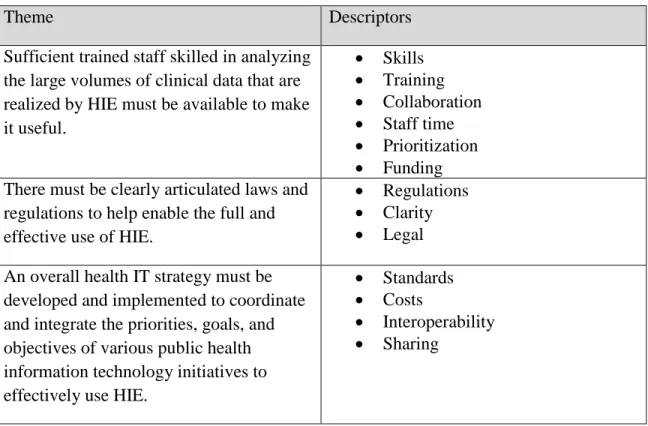
Table 10 - Summary of Themes, Gaps, Informant Quotes, and Key Recommendations ...66
xi
LIST OF FIGURES
xii
LIST OF ABBREVIATIONS
A1c glycated hemoglobin
ARRA American Recovery and Reinvestment Act of 2009 ASTHO Association of State and Territorial Health Officials CDC Centers for Disease Control and Prevention
CMS Centers for Medicare & Medicaid Services CQM clinical quality measures
DSHS Texas Department of State Health Services EA enterprise architecture
ED emergency department EHR electronic health record EMR electronic medical record FTE full-time equivalent
FY fiscal year
GAO Government Accountability Office
HEDIS Healthcare Effectiveness Data and Information Set HHS United States Department of Health and Human Services HHSC Texas State Health and Human Services Commission HIE health information exchange
HINSTX Health Information Network of South Texas HIO health information organization
xiii HIT health information technology
HITECH Health Information Technology for Economic and Clinical Health Act of 2009 IOM Institute of Medicine
IT information technology LHD local public health department
LIMS laboratory information management system
NACCHO National Association of County and City Health Officials NCQA National Committee for Quality Assurance
NEDSS National Electronic Disease Surveillance System NPCCN The Northern Piedmont Community Care Network NPHPSP National Public Health Performance Standards Program NwHIN Nationwide Health Information Network
ONC Office of the National Coordinator for Health Information Technology PHII Public Health Informatics Institute
PHIN Public Health Information Network PHR personal health record
1
CHAPTER 1: INTRODUCTION
Problem Statement
Chronic diseases such as cancer, diabetes, and heart disease have become the leading causes of death and disability around the globe (World Health Organization [WHO], 2005). In the United States, 133 million Americans are affected by these chronic diseases which are responsible for seven out of ten deaths in the US (Centers for Disease Control and Prevention [WHO], 2012). For example, more than 25 million Americans already have diabetes, and another 79 million are pre-diabetic. Nearly 2 million more new cases are diagnosed annually (American Diabetes Association, 2012). The trend has had a substantial impact on US health care and economic costs. In 2007, diabetes alone generated over $115 billion in direct medical costs and almost $60 billion in indirect costs including disability, work loss, and premature mortality (CDC, 2011).
2
attributed to diabetes (Texas Department of State Health Human Services, 2008). It is clear that the number of individuals impacted and the associated consequences are substantial and urgent action is needed.
Background
The identification and tracking of the spread of chronic diseases is imperative in order to target prevention and treatment activities. Public health surveillance systems are needed to inform public health officials, clinicians, policy makers, and the public about approaches to disease management. As defined by the Centers for Disease Control (CDC), “Public health surveillance is the ongoing, systematic collection, analysis, interpretation, and dissemination of data regarding a health-related event for use in public health action to reduce morbidity and mortality and to improve health” (CDC, 2001). For public health, surveillance means identifying and engaging in health promotion and disease prevention activities targeting the major risk factors for disease in the community.
However, the Institute of Medicine (IOM) has reported inconsistencies in surveillance of chronic illnesses. These inconsistencies are caused by a lack of standardized methods for
measuring complex attributes and determinants of health, as well as insufficient resources to perform this function. Furthermore, the IOM has noted that public health systems lack the capacity to effectively take action based on surveillance activities (Institute of Medicine [IOM], 2012).Desai et al. (2003) have echoed that current surveillance systems face key challenges such as maintaining and expanding surveillance capacity, identifying and assessing specific
3
The expanded use of health information technology (IT), triggered in part by recent legislation, including but not limited to Electronic Health Record systems (EHR), offers important new and rich potential data sources to improve our ability to monitor and track diabetes, prevention and care activities. Health Information Exchanges (HIE) in particular offer one of the newest emerging opportunities for public health. Health Information Exchanges are commonly facilitated by third party entities that provide organizational structure, governance, leadership and technical support; and include a range of community stakeholders such as hospitals, ambulatory care offices, labs, pharmacies, and payers (Healthcare Information and Management Systems Society [HIMSS], 2009).
Health Information Exchanges (HIEs) can serve as critical community partners for public health agencies and make readily available a broad set of data cutting across multiple settings. Health Information Exchanges also serve as a neutral convener across what would typically include many competitors and provide the geographic coverage and subsequent volume of population data otherwise not possible (Hill et al., 2007). As such, HIEs have the potential to provide valuable information for chronic disease surveillance and to improve communication for health promotion, prevention and treatment activities.
4
Providing a major stimulus for growing public health interest in HIEs, the “Health
Information Technology for Economic and Clinical Health Act” (HITECH) provisions within the American Recovery and Reinvestment Act of 2009 (ARRA) provided more than $35 billion in funding for nationwide provider adoption and “meaningful use” of interoperable health
information technology like EHRs and HIE. Importantly, “meaningful use” sets specific objectives, including those for population health, which must be met by providers in order to receive incentive payments. Several core criteria for “meaningful use” require electronic information exchange and public health engagement by providers including, electronic data submission to immunization registries, electronic data submission on reportable diseases, and electronic syndromic surveillance data submission, as well as several Clinical Quality Measures (CQM) such as those for chronic conditions (United States Department of Health and Human Services [HHS], 2013; Centers for Medicare & Medicaid Services [CMS], 2003). However, the ability of public health agencies to manage and act on these new electronic data streams has been identified as a challenge due to their limited capacities to meet current demands (Desai et al., 2003; CDC, 2014).Additional challenges include the lack of agreed upon data standards on not only public health surveillance processes but also for clinical care delivery, as the source systems. Health departments must also then provide better timely actionable feedback loops to both educate and guide clinical and other community stakeholders to prevent and control chronic diseases. Critically, public health personnel will need to adapt to the electronic health
5 Purpose, Research Question, and Specific Aims
This study was done to evaluate the capacity of local public health departments (LHD) participating in a Corpus Christi, Texas based HIE, Health Information Network of South Texas (HINSTX) for community level monitoring and tracking of chronic diseases. The overarching research question was:
How can local public health departments participating in the Health Information Network of
South Texas (HINSTX) best use HIE to support community level chronic disease
surveillance?
The specific aims included:
1. To assess the gaps in current surveillance capacity to manage the potential new data streams including available staffing, processes, IT support, and others.
2. Identify the barriers and facilitators to closing the gaps in community level chronic disease monitoring and tracking capacity.
3. Develop strategies to help guide the filling of gaps in local health department’s surveillance capacity.
Significance
The growing care and economic burden of chronic diseases imposes significant
6
effectively manage and monitor chronic disease trends such as fragmented health care systems, a lack of effective action, need for care coordination, and a lack of interoperable information systems.
Against the national backdrop of “wiring” health care, there is an opportune time to study this potential application of public health informatics. Public health informatics has been defined as the systematic application of information and computer science and technology to public health practice, research, and learning (Friede et al., 1995). IOM and others have already highlighted the potential for HIEs to develop and augment chronic disease surveillance and prevention capabilities which were previously impossible (IOM, 2012; Shapiro et al., 2011). However, HIEs and their use for chronic disease and population level monitoring are not well understood.
An evaluation of local public health agencies participating in the Health Information Network of South Texas (HINSTX) surveillance readiness, which brings together regional networks of providers, pharmacists, hospitals, health departments, and other community
7
an opportunity to provide national visibility for public health capacity requirements in the evolving HIE landscape.
While there are a number of public health use cases for HIE, there are very few that are implemented (Grannis et al., 2006; Rirchards et al., 2006; Barthell et al., 2004) and even fewer for chronic conditions (Lobach et al., 2007). Therefore, given the mounting concern of chronic diseases in Texas and in particular diabetes in South Texas, this study focused the evaluation on measures as they pertain to the ability of local public health departments to effectively make use of new data streams offered by the HIE and leverage the information to improve chronic disease monitoring and tracking across entire communities. It was hypothesized that the HIE will ultimately be a key enabler in the public health process for tracking and monitoring chronic diseases and provide the rapid feedback loops to better target treatment and prevention protocols, but the requisite surveillance capacity may not currently exist in local public health departments to effectively utilize the new information streams.
As noted by the CDC (1999), “program evaluation is an essential organizational practice in public health; however, it is not practiced consistently across program areas”. Moreover, HIE projects in particular have been recognized as a critical step in the national effort to use
8
CHAPTER 2: LITERATURE REVIEW
The expanded use of health information technology (IT) offers the potential to improve the quality of care, save money on administrative costs and bolster the public health
infrastructure (Walker et al., 2005). In addition, for clinicians, population health-oriented health IT such as, EHRs and HIEs have the potential to reduce the paperwork burden of public health reporting and provide decision support about community-level trends that aid in diagnosis and treatment choice. Similarly, for national and local institutions, automated reporting will reduce paperwork burdens and data input costs as a trend continues toward more reporting requirements while shortening the feedback on population health status allowing better targeting of scarce resources. For the public, population health-oriented EHRs and HIEs offer increased engagement with the health-care system, more ownership of data, and improved health outcomes (Kukafka et al., 2007).
9 Literature Review Methods
Search Criteria
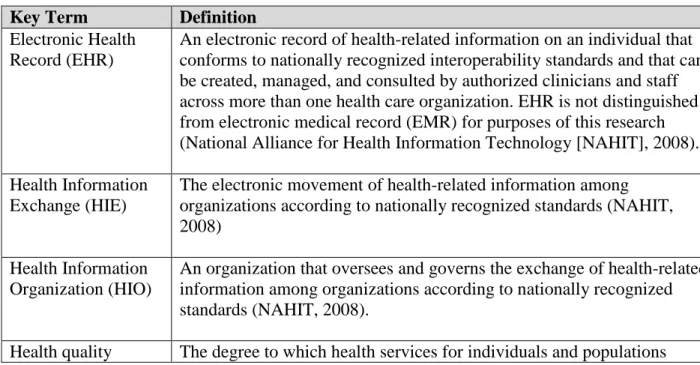
This literature review aimed to examine and assess existing scholarly knowledge related to the use of HIE for public health functions, in particular chronic-disease-related surveillance; however, the vast majority of published literature on HIE was in the health services domain. Given the very limited literature available exploring the use of HIEs for population level health monitoring, the results of the literature review served to not only highlight the dearth of studies related to population health but also identified some barriers and challenges for using HIE for public health where studies did exist. Establishing refined selection criteria was the first step in ensuring that any tangential studies were quickly eliminated in the query process. Central to this step was defining the terminologies which have slightly different meanings from source to source. Therefore, the terms and definitions in Table 1 are meant to describe the lens through which all potential literature was viewed for inclusion.
Table 1: Key terms and Definitions for Review
Key Term Definition
Electronic Health Record (EHR)
An electronic record of health-related information on an individual that conforms to nationally recognized interoperability standards and that can be created, managed, and consulted by authorized clinicians and staff across more than one health care organization. EHR is not distinguished from electronic medical record (EMR) for purposes of this research (National Alliance for Health Information Technology [NAHIT], 2008). Health Information
Exchange (HIE)
The electronic movement of health-related information among organizations according to nationally recognized standards (NAHIT, 2008)
Health Information Organization (HIO)
An organization that oversees and governs the exchange of health-related information among organizations according to nationally recognized standards (NAHIT, 2008).
10
increase the likelihood of desired health outcomes and are consistent with current professional knowledge (IOM, 2013).
Health care quality indicators
Provide a quantitative basis for clinicians, organizations, and planners aiming to achieve improvement in care and the processes by which patient care is provided (Mainz, 2003).
Surveillance The ongoing, systematic collection, analysis, interpretation, and dissemination of data regarding a health-related event for use in public health action to reduce morbidity and mortality and to improve health (IOM, 2012).
Population health measures
1. Aggregate: combine data from individuals, summarized regionally or
nationally, as hypercholesterolemia or heart disease rate
2. Environmental: external to the individual, such as air or water quality,
but can include individual exposure levels
3. Global indexes: no equivalent at the individual level and includes
contextual variables such as policies promoting equity in access to care, or laws restricting smoking in public places (Morgenstern, 1995).
Based on the definitions of terms above, the key criteria for inclusion were studies on the use of HIEs:
A. From a population health perspective with aggregate data level not limited to individual or patient specific. It is understood that HIEs by definition will not be good sources for environmental data and even less likely to have global index information.
11
Only articles written in English were included, but studies did not need to be done in the US. HIEs have been and are being implemented across the globe at national and local levels, in public and private sectors by multi-national vendors and organizations that may provide relevant experiences for US policy makers. Studies on HIEs in other countries were included as long as they were published in peer-reviewed journals.
Building off of the previously noted working definitions and other limitations, the key exclusion criteria were:
A. Studies examining HIEs strictly for health care use and/or health care quality limited only to a single setting, individual or patient level, e.g., specialty consults and chart reviews B. Studies using HIEs only as a data source, e.g., for general clinical research or other
patient care related research, etc.
C. Studies limited to using HIE for other types of public health reporting, e.g., biosurveillance, notifiable diseases, laboratory reporting, etc.
D. Studies limited to general HIE implementation experience, e.g., startup, perceptions, financing, organizing, sustainability, etc.
12 Table 2: Inclusion/Exclusion Criteria
Inclusion criteria Exclusion criteria
Published in English Examining HIEs strictly for health care use and/or health care quality limited to a single setting Population health perspective, aggregate
data level not limited to individual or patient specific
Reviewing public health IT
applications/functionalities are not already an included capability within an HIE such as consults
Peer reviewed for PubMED Use of HIEs only as a data source e.g. for general clinical research or other patient care related research
Use of HIE for other types of public health reporting e.g. biosurveillance, notifiable diseases Reviews limited to general HIE implementation experience e.g. startup, financing, organizing, challenges, perceptions
Sources
While it was expected that there would be limited literature available related to HIE use for population health, the only database used for the initial search was PubMED. This restriction was largely due to extensive previous use for researching similar topics, reliability and quality of available studies, as well as ease and efficiency with which high quality customized searches and drilling can be performed.
Given the very limited number of relevant scholarly articles found through PubMED, other sources were then included. Other databases used were CINAHL and Embase. Other pertinent studies if relevant were reviewed by scanning article references if not found in one of these databases.
13
search approach, eHealth Initiative www.ehealthinitiative.org, National Association of County and City Health Officials (NACCHO) www.naccho.org, and Public Health Informatics Institute www.phii.org.
Search strategy
The search terms were drawn from the research question and working definitions. The keywords were all initially tried in various combinations on search databases and websites. The emphasis was to keep the search as broad as possible given the limited results that were
anticipated. In fact, in a quick query in PubMED on August 9, 2014 on the term, “health
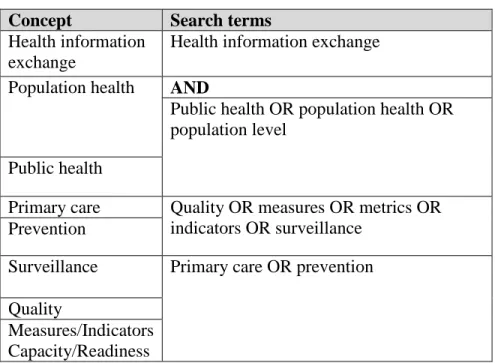
information exchange” only 440 results were returned as compared to 7962 results for a query on “electronic health records”. The general concepts and search term combinations used are listed in Table 3.
Table 3: Summary of Search Strategy
Concept Search terms
Health information exchange
Health information exchange Population health AND
Public health OR population health OR population level
Public health
Primary care Quality OR measures OR metrics OR indicators OR surveillance
Prevention
Surveillance Primary care OR prevention Quality
14
Titles and abstracts were reviewed in first pass to assess fit with inclusion criteria along with articles that were duplicated in successive searches were excluded. Remaining potential studies for inclusion were read in detail with respect to inclusion/exclusion criteria. No other subjective quality ranking or assessment was done of qualified studies beyond the baseline inclusion/exclusion criteria. Given the anticipated lack of scholarly literature, it was deemed unnecessary within the scope of capturing anything possible in light of the already narrow inclusion/exclusion criteria.
Results
The PubMED search yielded 109 articles, CINAHL produced 43 articles, and Embase yielded 198 articles, last updated on July 26, 2012. But scans of the 5 government and non-governmental websites produced no usable reports for analysis. Through a review of titles and abstracts against the inclusion/exclusion criteria (See Table 2) the number of captured articles was reduced to 6 articles. Subsequent full article reviews resulted in a final set of 4 which served as the basis for this analysis. A thorough review of the references for each of these 4 articles was performed including abstract reviews but no additional articles were added to the final sample. Many of the references for these articles are grey in nature and other cited scholarly literature did not relate to or address the topic of this literature review.
There was very limited available literature, and there were no clear themes amongst the scant papers, rather two loose groupings. Three papers essentially provided, “thought
15
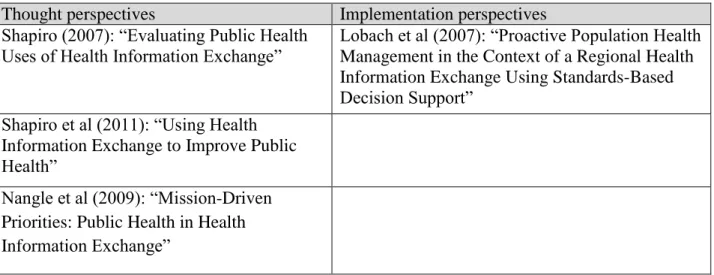
in this review, the potential benefits of HIE/health IT for population health. A summary of study themes is listed in Table 4.
Table 4: Article Themes
Thought perspectives Implementation perspectives Shapiro (2007): “Evaluating Public Health
Uses of Health Information Exchange” Lobach et al (2007): “Proactive Population Health Management in the Context of a Regional Health Information Exchange Using Standards-Based Decision Support”
Shapiro et al (2011): “Using Health Information Exchange to Improve Public Health”
Nangle et al (2009): “Mission-Driven Priorities: Public Health in Health Information Exchange”
Thought Perspectives
Similar to the common themes found in much of the grey literature, these papers
described overarching concepts and potentials for meaningful and usable constructs for HIEs and other health information technology for population health. In essence these articles provided a broad snapshot of possibilities for HIE use in various public health functions of which population level management is one aspect.
16
traditional institutional silos of various community health care stakeholders and provide public health an enhanced capability to monitor quality metrics at the community level.
To evaluate such an HIE use case, a pre- and post-implementation study is suggested. Central to this, would be the use of a standard set of quality measures, which select from the range of sets developed by several organizations (i.e. NCQA HEDIS, CMS Quality Measures). Also, these measures must be evaluated for each HIE implementation and for the target diseases that a local health department wants to monitor.
In addition, Shapiro (2007), notes that early phases of HIE development will likely center around efficiency measures (decreased duplicate tests, decreased LOS, etc.) and costs
(monetization of safety/quality measures noted). Ultimately, as these HIEs spread and are
interoperable the nationwide health information network (NwHIN) will coalesce, and quality and safety effects will then accrue and become measurable. This coalescing, takes the organizational form of health information organizations (HIOs) as Shapiro et al (2011) describes.
Unfortunately, Shapiro et al (2011) note the primary use case for most HIOs is “centered around direct patient care with the primary goals of improving providers’ access to
17
goals has specifically called for the improvement of population health, which in effect recognizes the public health use cases as part of HIE development.
There are very few implementations of these ideas and scant evidence in the literature on the various use cases describing improvements in public health using HIE. Building on Shapiro (2007) a description of 11 potential use cases where HIE can potentially improve public health has been outlined (Shapiro et al., 2011):
1. Mandated reporting of laboratory diagnoses 2. Non-mandated reporting of laboratory data 3. Mandated reporting of physician based diagnoses 4. Mass casualty events
5. Disaster medical response
6. Clinical care in public health clinics 7. Public health alerting: patient level 8. Public health investigation
9. Non-mandatory reporting of clinical data 10. Public health alerting: population level 11. Population level quality monitoring
The Shapiro et al (2011) paper brings in several biosurveillance related use cases. However, for this review the population level quality monitoring use case was of primary interest. Similar to the HIE evaluation paper, the growth of chronic disease prevalence is cited as a key motivator for pursuing use as a means for improving public health HIE. This motivator is further
18
Notably, manual and costly chart reviews or claims based analysis of only insured patients, all of which occurs largely within the confines of closed systems, with neither approach supporting ongoing population level quality monitoring. Public health could potentially leverage HIO infrastructure not only to harness required data elements, but also to link patients across institutions if needed or simply generate summary quality measures for individual institutions.
Benefits aside, Shapiro et al (2011) also note significant concerns about the financial viability of HIOs and notable failures, particularly evolving business models for sustainability.
Nonetheless, there were over 190 HIE projects underway in 48 states from a 2009 survey. While clinical use is the initial motivation for most HIOs, Shapiro et al (2011) advocate for public health’s early involvement in the inception of local HIEs. A variety of technological methods to support the different public health use cases may often be required and public health input is necessary to obtain the benefits from these use cases. In light of the recent unprecedented national investment in health IT, a wealth of new electronic data available is on the horizon. As such, the new HIE infrastructure must also be required to demonstrate the ability to support these public health use cases. Sharing this message, Nangle et al (2009) echo the sentiments and highlight the potential benefits of HIE to various aspects of public health mission and practice.
Nangle et al (2009) have categorized their HIE applications for public health into the “Five P’s” of public health:
1. Protecting citizens from harm due to natural or manmade disasters
2. Preventing unnecessary injury, illness and death through health education
3. Promoting healthy lifestyles and offering information that encourages healthy choices 4. Providing basic primary and preventive health services to disadvantaged and vulnerable
19 5. Participating in healthcare reform
Similar to Shapiro et al (2011), Nangle et al (2009) note the initial goals of HIE are to improve patient care but public health organizations need to identify areas where HIE can be used to improve the public’s health. Nangle et al then provide an informatics perspective on each P and the priority for participating in the HIE for each P.
The Ps of most relevance for this review are Preventing and Promoting and below is a brief summary of the areas. “Preventing,” population level activities are targeted but note that historically prevention measures have been especially effective for maternal, infant, and child health. Subsequently, today there are numerous public health informatics applications dedicated to child and maternal health i.e. newborn screen, heel stick, etc. Beyond child and maternal health, disease registries are highlighted as ripe for HIE inclusion and would provide new venues to connect private providers to public health-managed, population-based clinical information systems.
“Promoting,” programs seek interventions with quantifiable prevention effectiveness and public health informatics has provided critical support for evaluation. Critical to the evaluation has been the development and dissemination of standard indicators for chronic diseases,
environmental health, and others. The personal health record (PHR) is highlighted as a possible new communication channel for targeting subpopulations for health promotion activities.
20
calling for state public health agencies to be accountable for using HIE to enhance public health infrastructure to better the mission areas and to improve population health.
Implementation Perspectives
Moving from thoughts and ideas about the potential applications for HIE, Lobach et al (2007) highlight the practical experience in development of an HIE specifically for the improved management of population and care coordination in a North Carolina community. The Northern Piedmont Community Care Network (NPCCN) is an established Medicaid care management program which brings together five counties, 32 private practices, three federally qualified health centers, four community hospitals, nine government agencies, one academic medical center and two care management teams. Lobach et al (2007) developed an HIE for this group using what was originally a limited care management documentation tool and over seven years converted it into an HIE with full communications and collaboration tools for all team members. Information in the HIE includes:
1. Administrative (demographics and identifiers, services used) 2. Care management (care management encounters, health risk)
3. Clinical (encounters, problem/procures, medications, allergies, lab results) 4. Communication (messages and alerts, referrals, notices)
21
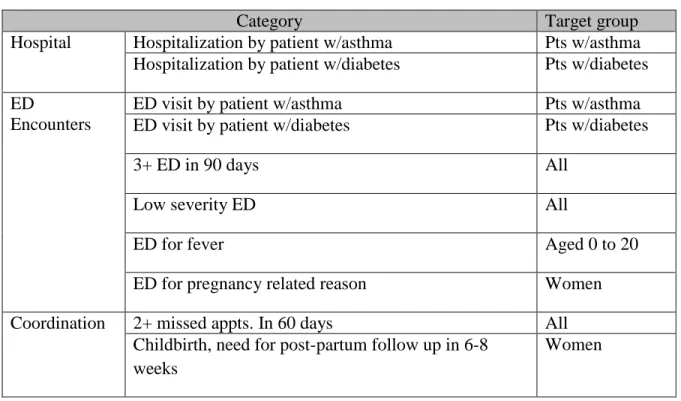
driven off sentinel health events that have been defined and prioritized by NPCCN partners, where care management could potentially provide benefits. Sentinel events and target groups are listed in Table 5 below:
Table 5: NPCCN’s sentinel events and target groups
Category Target group
Hospital Hospitalization by patient w/asthma Pts w/asthma Hospitalization by patient w/diabetes Pts w/diabetes ED
Encounters
ED visit by patient w/asthma Pts w/asthma
ED visit by patient w/diabetes Pts w/diabetes
3+ ED in 90 days All
Low severity ED All
ED for fever Aged 0 to 20
ED for pregnancy related reason Women
Coordination 2+ missed appts. In 60 days All
Childbirth, need for post-partum follow up in 6-8 weeks
Women
The HIE and associated sentinel event algorithm found that patients in the 19 to 64 age group were much more likely receive an alert and have a sentinel event. The same group was also 2 to 5 times more likely to have a sentinel event. It was also noted that Hispanics were approximately 40% less likely to have a sentinel health events.
22
Resolving political issues related to exchange of clinical information and identifying resources to implement the data exchange are often more challenging than technical aspects
Once system exchange information was online for proactive care management—clinical sites became more open to sharing their information to reap the benefits
Components of knowledge could be reused e.g. rule for determining if a patient has diabetes was useful for both notices for hospitalization and ED utilization
Notices of sentinel events had greatest value if they were sent out within a very short time of the actual event
It is often difficult to determine who a patient’s provider is due to regular changes, making it unclear to whom to send the alerts
Notably, Lobach et al (2007) were able to provide this enhanced population health
management through an HIE largely functioning off of billing/claims data as opposed to clinical data from an EHR and note, “this approach is a minimalist view of what could be possible in terms of population health management if a more comprehensive clinical data set were available.”
Discussion
23
capabilities for population level quality reporting would be an important and much needed function as no ability for cross-community monitoring currently exists. Shapiro (2007) does recognize that the nascent nature of HIE itself and the still evolving technology and processes have limited what HIE could be, “…often because a functional HIE network is not yet
available.” Shapiro (2007) recognizes that initial evaluation on HIE will target efficiency
measures, such as decreases in duplicate lab tests, decreases in LOS, etc. Demonstration of these initial benefits may support and fund further development of an HIE which can bring increasing benefits to public health. Almost 3 years later, Shapiro et al (2011) in the HIE for public health reported that progress has been made but is still quite a ways away from having HIEs
maximizing the public health use potential.
To their credit Nangle et al (2007) do provide some examples of HIE projects that have incorporated aspects of the potential benefits of HIE for public health, that Shapiro et al (2011) note. Unfortunately, the applications are of limited scope; while meaningful they do not provide a significant evidence base for the many potential benefits that are being touted for public health. Nonetheless, Nangle et al (2007) do provide an interesting context for public health’s
engagement with HIE, in the form of national health care reform. Specifically, pressing for public health to push for the development of interoperability between the public health information infrastructure and the health care industry. Thereby, public health serving as the catalyst and fulcrum for standardized clinical data exchange among providers to complete the community care continuum, reduce costs, and improve quality.
24
et al (2009) presented feasible concepts, Lobach et al (2007) translated these concepts into practice on a small scale. The study was limited to a Medicaid population across five counties rather than entire communities but the HIE does include the data on nearly 90,000 unique patients as opposed to the smaller subset of approximately 12,000 Medicaid patients.
Lobach et al (2007) were able to detect and track sentinel events for these patients that would require necessary follow-up with prevention and primary care activities. Whereby potentially, the patient benefits with better more proactive care but the health system benefits with lowering costs and reducing expensive ED visits, hospitalizations, missed appointments, and others. Importantly, Lobach et al (2007) demonstrated HIE mediation of captured data points (billing/claims data in this case) and rapid aggregation, analysis, and alerts based on population health level visualization.
The reviewed literature aligns with the broader consensus in the grey literature as well. A generally held belief and position taken by leading authorities in the field that HIE based
population health tracking and measurement is essential for achieving “meaningful use” of health IT. Now, fueled by legislation that provides over $35 billion for health care to adopt these
25
population health, specifically for providers to submit electronic health indicators and for local public health agencies to be able to receive them.
HHS’s “meaningful use” criteria, being developed in three stages over the next 4 years calls for provider’s health IT including certified EHRs to meet specific objectives in order to receive incentive payments. Stage 1 criterion which have been completed and incorporated initial public health requirements (HealthIT.gov, 2013):
Capability to submit electronic data to immunization registries or immunization information systems and actual submission according to applicable law and practice. Capability to submit electronic data on reportable (as required by State or local law)
lab results to public health agencies and actual submission according to applicable law and practice.
Capability to submit electronic syndromic surveillance data to public health agencies and actual submission according to applicable law and practice
26
many years off (Charles et al., 2012; Hsiao et al., 2011). The upshot being a window of opportunity for public health to engage in the national discourse on population health
specifications for health IT, especially for chronic disease surveillance which has not received similar attention. Notably, the studies reviewed here provide the beginnings of an evidence base for realization of the final Stage and ultimate goal of health IT from patient to population.
Limitations of the Literature
This review may not have been exhaustive compared to a systematic review.
Furthermore, public health informatics, and more importantly population health informatics, is a relatively new topic in the profession. This novelty may limit the ability to compare findings with other similar research, especially since there were so few found in the scholarly literature. Lastly, the topic newness may have also confounded the search itself. It is quite possible that a portion of relevant literature may not have been captured due to variation in definitional interpretation resulting in a semantic web that could not capture every shade of meaning for terms used in studies.
27
Further, no formal quality assessment was performed on the final selection of literature. This choice was motivated by several reasons. Given the nascent nature of HIEs and the use of these technologies for population health, precise criteria or even simple concept of operation is largely undefined. While there is general consensus as evidenced by the plethora of grey
literature advocating the development, use, and diffusion of population health functionalities into emerging HIEs, the policy, process, and technology remain largely amorphous. As such, it was unnecessary to apply common quality criteria to subject matter that is still being defined. As was the case, there were limited details on specifics such as indicators, measures, data sources, data linkages, process descriptions, stakeholder descriptions, etc. making it all the more clear a need for more rigorous evaluation of HIE for population level health management.
Also, and as is the case with many applications of health IT, they are typically not generalizable. The value of these studies is not in the specific conceptual or technological approaches used, rather the overarching takeaways which apply more broadly to the process of setting, translating, and achieving business defined goals, in this case population health, into reality. Therefore, the takeaways from these studies serve to provide highlights of the
possibilities but applicability to broader contexts is still on a case by case basis as there is an insufficient evidence base.
Gaps and Implications for Research
28
health, public health, health care, health quality measurement, and population health status. To be clear, HIEs are for all current purposes used for a patient population. A patient population is a subset of the general population which may or may not have had any interaction with the local health providers and systems. Subsequently, the context of population health has to be clearly defined whether patients or broader general population are being referred to.
It is understood that HIEs will not eliminate the need for other more common population health data sources such as administrative databases, surveys, and other common sources held by various private, local, state, and federal authorities. However, this understanding begs the question, that in an ideal state of 100% EHR and HIE penetration for any given
community’s providers, what percentage of the general population are captured as patients within the HIE? Although no community level HIE was used rather point to point provider EHR based HIE to public health, the Department of Health in New York City has shown, the
proportion of patients within the general population is very high—with 2600 providers of the almost 9000 (almost 30%) in New York City using the Department’s EHR, the Department of Health has captured nearly 2.5 million patients of the roughly 8.4 million general population of the city, correlating to almost 30% of the general population (De Leon & Shih, 2011). Naturally, the type and amount of data captured for each individual, relevance, quality, and usability to population health, data linking and aggregation (just to name a few issues) would have to be clarified; but the power and implications of the HIE, as a future foundation and community hub for information- if built appropriately-for population health is enormous.
29
disconnected, and bygone reports that often take 6 to 9 months to produce on chronic disease and health statuses which are not timely enough to allow for proactive population health
management. What is now regarded as clinical data could be transformed into statistical data at population levels. For example, data that are being collected solely for clinical patient
management purposes would also have a high yield for population health monitoring and health care performance measurement. Collection of data at the point of care for patient management improves data quality and completeness, in contrast to data requested or required only for secondary purposes seemingly unrelated or only indirectly related to patient management.
The degree to which existing health information systems can facilitate data collection is, however, constrained by limitations such as the prevalence of data recorded as unstructured narrative or text, lack of standardization for data content, and data access issues due to silos created by legacy systems and organizational boundaries. As such, there are still numerous issues that need to be addressed including, data quality and completeness, use of unique patient
identifiers, privacy, lack of and consistent implementation of standards, and large volume of data analysis, available skilled public health informaticists, amongst many others. If health
30
CHAPTER 3: RESEARCH DESIGN AND METHODOLOGY
Evaluation Framework
As the national landscape evolves to an electronic health information infrastructure, the nature and direction of HIE projects will evolve as well (Dullabh et al., 2011; Rosenfeld et al., 2006). Local HIE projects not only provide a glimpse into the national transition but represent an incremental learning process that can inform both state and national development. However, as evidenced by the literature review, there is very limited scholarly research on public health functions and the use of HIE, and even less on surveillance of chronic diseases, especially as it relates to capacity and readiness. Therefore, to help structure and guide this evaluation, the CDC’s “Updated Guidelines for Evaluating Public Health Surveillance Systems” (2001) was adapted to provide the overall approach for this study. Based on the CDC’s “Framework for Program Evaluation in Public Health,” the guide provides a comprehensive, step-by-step process for guiding the evaluation of public health surveillance systems. Simply put, it serves as a “how-to” guide for surveillance systems evaluations. The guide is broken down into six major sections:
31
2. Describe the Surveillance System to be Evaluated: This section is made up of three sub-sections, description of the importance of the health related event under surveillance; description of the purpose and operation of the surveillance system; and description of resources used to operate the surveillance system.
a. The first sub-section outlines an approach to characterizing the importance of the health event under surveillance and provides some sample indicators such as frequency of cases, severity, disparity, costs, and others to support the case for surveillance.
b. The second sub-section makes explicit the operation of the surveillance system including health events being monitored, where the system resides, legal authority, and system components.
c. The third and final sub-section focuses on the requisite resources to operate the system with funding, personnel, and any other required resources that should be assessed.
3. Focus the Evaluation Design: This section emphasizes the need for clarity and well defined purpose, questions, and outputs from the evaluation.
4. Gather Credible Evidence Regarding the Performance of the Surveillance System: This section provides a list of key metrics to evaluate system performance and includes
elements such as usefulness, simplicity, flexibility, data quality, acceptability, and others.
32
whether the system is addressing an important public health issue and is meeting the objectives.
6. Ensure Use of Evaluation Findings and Share Lessons Learned: A thoughtful strategy for communicating and translating the results of evaluation should be tailored to meet
stakeholder needs so as to avoid missing lessons learned and enabling decision making to move recommendations forward.
33
Figure 1: Generic depiction of chronic disease surveillance process flow
Source: Adapted from CDC, “Updated Guidelines for Evaluating Public Health Surveillance Systems” (2001)
In using the CDC’s guide, it is understood that the HINSTX, and indeed most HIEs, are not public health surveillance systems in and of themselves rather they are the potential
information conduits (as depicted by the arrows in figure 1) that enable the electronic Chronic disease diagnosis Case confirmation Physicians Labs Hospitals Other HC Orgs
Vital records Surveys Schools Other Reporting Sources Primary Level i.e. LHD Secondary Level i.e. state HD Tertiary Level i.e. federal agency Data Recipients Audiences
Chronic condition associated with public health action
Identification by whom and how
Reporting process including separate data entry, automated collection from electronic health records;
34
transmission of relevant clinical and administrative data between partners. For the purposes of this research, the interconnections enabled by the HIE and the characteristics and capacity of the local jurisdictions to leverage this capacity for chronic disease surveillance functions were explored.
The unit of analysis was the local public health agency, one of the key functions of which is to carry out public health surveillance activities. Furthermore, this study was done before HINSTX has become fully operational, and it was to evaluate the current capacity of LHDs to potentially use the new HINSTX data streams for chronic disease tracking and monitoring, and therefore, was not an assessment of an active surveillance system. Subsequently, the CDC’s surveillance evaluation guide was used only as a high level guide to ensure all relevant
categories essential to operating an effective surveillance system were covered, as opposed to a strict adherence to all elements of the evaluation guide. For example, parts two sub-section two, and four of the CDC guide are sections that were not directly usable since metrics such as usefulness, simplicity, flexibility, and data quality, could not be assessed; therefore, prospective capacity or readiness assessment metrics to further augment the surveillance evaluation were used.
35
downstream on organization evolution and community impacts was beyond the scope of this study.
Research Design
To evaluate LHD’s readiness for using HIE for chronic disease tracking and monitoring, the study used a nonexperimental, descriptive approach to review eleven LHDs in the HINSTX service area. In addition, given the nascent nature of HIEs and the limited number of existing studies, a qualitative approach was most appropriate for this evaluation. As noted by Ash and Guappone, since HIE initiatives are immature, formative evaluations using qualitative methods are especially useful because they take into account context and provide rapid feedback to assist with the HIE development effort (Ash & Guappone, 2007). Creswell has further suggested that qualitative design should be selected if a concept needs to be understood (Creswell, 2012).
36 Table 6: Research Design
Research Aim Data Source Analytical Method
To understand the gaps in current surveillance capacity to manage the potential new data streams including available staffing, processes, IT support, and others.
Capacity survey Descriptive documentation of LHDs with varying capacity across the service region
Identify the barriers and facilitators to closing the gaps in community level chronic disease monitoring and tracking capacity.
Key informant interviews Open coding
Develop strategies to help guide filling local health department’s surveillance capacity gaps.
Capacity survey
Key informant interviews
Synthesis of capacity
descriptions with themes and interpretation
This study aimed to examine eleven local health departments that make up the service area for HINSTX with respect to organizational surveillance capacity in three domains: people, process, and technology. Development of the LHD surveillance capacity assessment metrics were adapted from CDC’s National Public Health Performance Standards Program (NPHPSP), “Local Public Health System Performance Assessment Instrument” and Hessler et al’s (2009) survey on the relationship between health information exchanges and public health agencies, both of which provide extensive categories of questions relevant for both overall public health functions and those specific to public health information systems. The NPHPSP assessment instrument is a nationally accepted survey tool based on the framework of the ten Essential Public Health Services. The questions are structured accordingly for each of the ten essential
services:
1. Monitor health status to identify community health problems.
37
3. Inform, educate, and empower people about health issues.
4. Mobilize community partnerships to identify and solve health problems.
5. Develop policies and plans that support individual and community health efforts.
6. Enforce laws and regulations that protect health and ensure safety.
7. Link people to needed personal health services and assure the provision of health care when otherwise unavailable.
8. Assure a competent public and personal health care workforce.
9. Evaluate effectiveness, accessibility and quality of personal and population-based health services.
10. Research for new insights and innovative solutions to health problems.
38
To supplement LHD survey data and provide context, interviews with survey respondent local health directors were done to ensure key themes were captured as well as to build a
complete LHD profile. The interview protocol for health directors is included in Appendix 2. Agencies were selected based on the key inclusion criteria of whether the agency performed disease surveillance activities. We found that only the Nueces County LHD, Region 11 health department and Region 8 health department performed disease surveillance functions with the remaining LHDs in the HINSTX service area not performing disease surveillance and were therefore excluded from the study. However, given the regional similarity in the HINSTX service area and that the Region 11 health department supports ten of the eleven LHDs in the HINSTX service area, the Nueces LHD and Region 11 health departments were selected for interview and represented a mix of agencies with one LHD and one region office providing insights into a low resource area with limited surveillance capacity with respect to people, process, and technology.
The study of HINSTX used the LHDs as the unit of analysis and utilized LHD surveys and LHD, state and national key informant interviews focusing on:
1. Understanding the LHD gaps in current surveillance capacity to manage the potential new data streams including available staffing, processes, IT support, and others. The purpose was to generate a baseline depiction of capacity at the LHD level across the HINSTX service area in the form of capacity profiles outlining readiness differences at LHDs in terms of people, process, and technology.
39
for the potential gaps in readiness, as well as enablers and interest of LHDs for leveraging HIE for chronic disease surveillance and the types of support services, collaborations, and technical infrastructure that LHDs perceive to be helpful for effectively utilizing HIE for public health functions.
There are some limitations related to the data sources used. The sample size was significantly limited because, there is only one full-service LHD in the HINSTX service area, Nueces County Health Department that performs surveillance functions and met the criteria for inclusion, with all other counties largely being covered by the Region 11 health department (see Table 7). However, Directors from both Nueces LHD and the Region 11 health department were asked to recommend additional staff, whose roles involve interactions with other counties in the region and who would be amenable to being interviewed, in order to provide insights into counties not included in the study. In addition, to further augment and gain additional perspectives on local findings, state and national level health officials were interviewed to reflect on challenges and opportunities with HIE for public health use.
40
Texas to enhance clarity. Additionally, respondents were given contact information in order to provide clarifications as needed.
ONC Direct Pilot Project
For this study we selected one of ONC’s Direct Project pilots for the HIE evaluation, HINSTX. The Direct Project was launched in 2010 and is (HHS, 2012):
“…part of the Nationwide Health Information Network, to specify a simple, secure, scalable, standards-based way for participants to send authenticated, encrypted health information directly to known, trusted recipients over the Internet in support of Stage 1 Meaningful Use requirements.
Information transfers supported by Direct Project specifications address core needs, including standardized exchange of laboratory results and transmission of information to public health agencies.”
A key reason for selecting an ONC Direct Project pilot was based on the vetting that these sites have already been through with the ONC application process to confirm commitment, local support by various stakeholders, dedicated funding for the pilot duration, national visibility, and an established feedback structure for providing lessons learned and takeaways from the evaluation to local officials and to national policy makers as well.
Local Setting
41
health services, each county in the state is assigned to one of eleven state designated health service regions as shown in Figure 2 below (Texas Health Institute, 2012).
Figure 2: Map of Texas Health Service Regions
42
County was included in the study for the survey as well as the health service Region 11 health department, which provided the most comprehensive picture of LHD surveillance capacity in the HINSTX service region.
Table 7 below lists the counties in South Texas that will be serviced by HINSTX, population, and classification based on the National Center for Health Statistics (Ingram & Franco, 2012) urban-rural classification system. All eleven counties were reviewed, including contacting LHDs where applicable and contacts with both health service region offices (R8 and R11) to confirm eligibility for inclusion in this study i.e. perform disease surveillance functions. Table 7 below provides a summary of the eleven LHDs.
Table 7: Summary of HINSTX service area LHD Review (Texas State Historical Association, 2013)
County Population
2012
Area (sq. miles)
Classification/Region LHD/Services
Aransas 23,818 528 Medium metro/R11 Yes/Limited
Bee 32,527 880 Micropolitan/R11 Yes/Limited
Brooks 7,161 944 Noncore/R11 No/Limited
Jim Wells 41,754 868 Micropolitan/R11 No/Limited
Karnes 15,233 754 Noncore/R8 No/Limited
Kenedy 431 1,946 Micropolitan/R11 No/Limited
Kleberg 32,025 1,090 Micropolitan/R11 Yes/Limited
Live Oak 11,664 1,079 Noncore/R11 Yes/Limited
Nueces 347,691 1,166 Medium metro/R11 Yes/Full Service
Refugio 7,259 818 Noncore/R11 Yes/Limited
43 Data Collection Plan
Primary data collection was completed in two phases, 1) a survey instrument to collect current LHD surveillance capacity information and 2) semi-structured interviews of key
informants to provide the context for LHD surveillance capacity, especially regarding facilitators and barriers in enabling HIE for improving chronic disease surveillance. For the first phase, the survey instrument was designed to capture current LHD surveillance capacity regarding people, processes, and technology necessary to perform the necessary functions. Survey questions are a combination of fixed and open ended responses that allowed for comments. A pre-test of the survey was performed by the local health department in San Antonio, Texas which was not part of the LHD survey group for HINSTX. Pre-test respondents were asked to identify survey items that were ambiguous, not applicable, subjective or otherwise not clearly answerable and help refine key components of people, process, and technology necessary for surveillance readiness.
44
For the second phase, health department respondents to the survey were contacted for key informant interviews; to build a complete profile of the LHD to include both basic resources and leadership perspectives. Interviews were conducted with health directors and with other key department technical staff to ensure both high-level management and operational perspectives. Interviews with state and national level officials were conducted after both Nueces and Region eleven interviews were completed. These officials included, one senior official from the Texas DSHS responsible for state HIE efforts, one senior official from a state level health IT advocacy group, and two senior federal officials from the HHS’s Office of the National Coordinator responsible for coordinating national health IT efforts. The Executive Director for HINSTX assisted in identification and recruitment of all local, state, and national key informants and provided additional guidance.
45 Data Analysis and Results
The unit of analysis for this research was the LHD. Analysis was performed in two sequential steps. First for Aim 1, the survey data was reviewed to understand LHD resources and capacity along the people, process, and technology dimensions. Second for Aim 2, key informant interview data was summarized by themes. The results of this analysis were then synthesized and interpreted to identify patterns, lessons learned, and to inform recommendations to address Aim 3.
LHD Surveys
Survey responses were compiled in a MAXQDA database, verified and cleansed, and then detailed descriptions generated of current LHD surveillance capacity in regards to people, process, and technology. This analysis was not used to support causal inferences about the effects of more or less LHD capacity in the three domains, but rather was used to describe the pattern of variation in LHD readiness to use HIE for disease surveillance with more or less resources available for people, process, and technology. This descriptive analysis provided a backdrop for health directors’ perceptions about facilitators and barriers for using HIE for chronic disease surveillance and may illustrate some linkages between current LHD surveillance capacity, and perceptions about being ready and able to exploit the capabilities provided by HIE. Key Informant Interviews
46
director. In addition, one state health department official engaged in public health HIE, one state health IT advocacy representative, and two national level officials from HHS’s Office of the National Coordinator were included to provide broader context on state and national efforts and polices to advance HIE for public health. As such, interviews with state and national level officials were asked some similar questions to the LHD officials but were generic and not specific to any one locality, HIE, etc. and more reflective on some of the challenges and opportunities that have been posed by earlier local informants.
After the completion of each interview, initial impressions and observations were noted ensuring that all key questions were covered and any additional comments were included in the analysis. No direct interview subject attributions were made, and numbers were assigned to interviewees to further de-identify informants. Generic statements such as, “a key informant”, and other broad labels were used to provide perspectives on individual opinions. The interviews were transcribed using Nuance Software’s Dragon Naturally Speaking. Digital recordings and transcriptions were all secured in password protected files on an encrypted laptop and backed up on password protected cloud based storage using Microsoft’s secure SkyDrive.1
Issues and themes were then identified and coded using MAXQDA software for qualitative data analysis. The data was then categorized and themes were open coded and tabulated to identify all common threads that emerged from frequent mentions within or across interviews. This process of
categorization was iterative and was followed after each cycle of interviews, between 2 and 3 interviews and the categories and themes were refined as more interviews were done and organized into a final summary of themes.
47
CHAPTER 4: RESULTS
Aim 1
To assess the gaps in current surveillance capacity to manage the potential new data streams including available staffing, processes, IT support, and others.
Survey Responses
One LHD and one region health department provided completed surveys. This delineation was based on our finding that only one LHD performed surveillance functions, Nueces and that Region 11 health department was the main public health support office for the majority of the other counties in the HINSTX service area that only provided limited services. Table 8 below describes key characteristics of Nueces County and Region 11 health departments across the people, process, and technology domains.
Table 8: Key People, Process, and Technology Attributes
Domain Nueces County LHD Region 11 Health
Department
People
Total Staff (FTE) 4-5 161-165
Epi/surv staff 1 - Infectious disease coordinator for
communicable diseases, 1 IT/HIE specialist
5 Birth Defects, 1 immunizations (vaccine-prevention), 3 zoonoses, 6 epidemiologists
IT staff 2-3 2