Perceptions of Body Size in Mothers and Their Young Children in
the Galapagos Islands
Julee B. Waldrop, DNP,
Professor, School of Nursing, The University of North Carolina, CB# 7496, Chapel Hill, NC 27599
Rachel A. Page, MPH, and
The Center for International Understanding, The University of North Carolina, Chapel Hill, NC 27599
Margaret E. Bentley, PhD
Gillings School of Global Public Health, The University of North Carolina, CB# 7400, Chapel Hill, NC 27599
Abstract
Introduction—Little specific information has been published about the health of people who live in the Galapagos Islands. As part of determining the status of the nutrition transition that may be occurring in the islands mothers of young children in the Galapagos perceptions of their child’s body size and therefore health status was evaluated along with actual body size.
Methods—This paper presents data collected as part of a pilot study that used a mixed methods approach to identify and describe health and nutrition issues for mother-child pairs on Isla Isabela in Galapagos, Ecuador. It includes participant anthropometric assessment and self-perception of body size using silhouettes for themselves and one of their children along with open-ended questions to elicit further understanding of body size perceptions. Twenty mothers of children greater than 6 months of age but less than 6 years of age were interviewed.
Results—The women preferred a smaller body size for themselves but a larger body size for their children. Findings of different body size combinations between mothers and children in the same household demonstrated that the island is undergoing or may be post the nutrition transition.
Discussion—This dual burden of body weights (especially overweight or obese mothers) in the same household with underweight, normal and overweight or obese children and the potential nutrition related chronic disease burden in the future will require more educational resources and innovative health services than are currently available for the people of the Galapagos.
Keywords
body size silhouettes; nutrition transition; dual burden; Galapagos Islands
HHS Public Access
Author manuscript
Matern Child Health J
. Author manuscript; available in PMC 2018 March 05.Published in final edited form as:
Matern Child Health J. 2016 October ; 20(10): 2012–2018. doi:10.1007/s10995-016-2022-0.
A
uthor Man
uscr
ipt
A
uthor Man
uscr
ipt
A
uthor Man
uscr
ipt
A
uthor Man
uscr
Introduction
Little specific information has been published about the health of people who live in the Galapagos Islands. The Galapagos Report 2011-2012 includes information on population and migration as it impacts resources but does not specifically address health (Galapagos Report, 2013). A search on PubMed from 1995-April, 2015 revealed only two studies published in English with references to human health in Galapagos (Page, Bentley & Waldrop, 2012; Walsh, McCleary & Heumann, 2010)
The Ecuadorian Province of the Galapagos consists of 14 volcanic islands, and four of them are populated: Santa Cruz, San Cristobal, Isabela and Floreana. Ninety-seven percent of the geographic area is a designated National Park, which leaves a small, and increasingly more populated area available for human habitation (Galapagos Report, 2103; Valle, 2015). In the past few decades, the Galapagos Islands have experienced significant population growth. The 1990 census marked the population at 9,735 and in 2010, an estimated 25,000 people claimed residency (National Bureau of Statistics of Ecuador, 2010).
Improved economic conditions accompanying this expansion make it likely that a nutrition transition is occurring. The nutrition transition posits that as a country experiences economic growth, the population’s diet and lifestyle shifts, resulting in reduced physical activity and increased rates of obesity (Popkin, 2006). Research suggests that as income levels rise, obesity and its co-morbidities, including nutrition related chronic diseases, such as diabetes, cardiovascular disease (CVD), and hypertension will increase among children and young adults (Freedman, Serdula & Khan, 2002; Martinez & Fernandez, 2006; Stein, Thompson & Waters, 2005). Another classic characteristic of the nutrition transition is referred to as “dual burden households” or the co-existence of both under and over nutrition and concomitant related chronic disease (Doak, Adair & Bentley, Monteiro, C. & Popkin, B., 2005; Waters, 2006). In countries undergoing the nutrition transition, consistent associations were found between growth failure in early childhood and overweight in later childhood with increased risk of elevated blood pressure, glucose and lipids in adulthood (Duran, Caballero & de Onis, 2006; Stein et al., 2005). Similarly infants and children in Chile demonstrated that BMI gain in early life, especially between six months and 24 months was positively associated with adiposity and rises in cholesterol levels at four years of age and therefore increased cardiovascular disease risk (Corvalan, Kain, Weisstaub & Uuay, 2009).
Research on perception of body size in developing countries compared to developed countries has been conducted for many years. Body silhouettes have been used to determine variations in perceived body images across cultures. Female self-perception of body size in Latino cultures has been conducted with immigrants to the U.S. demonstrating adaptation to the prevailing cultural norms of a healthy body size (Petti & Cowell, 2011; Contento, Basch & Zybert, 2003). With children, however, the change in perception of healthy size is lagging with mothers perceiving larger child body size as healthy (Contento et al., 2009; Killion, Hughes, Wendt, Pease & Nicklas, 2006; Worobey & Lopez, 2005). In South America research has taken place in Brazil; Columbia and Argentina. Women have a high degree of body size dissatisfaction in urban Brazil (Silva, Nahas, de Sousa, Del Duca, & Peres, 2011) but in rural areas while being aware of the consequences of obesity women lacked
A
uthor Man
uscr
ipt
A
uthor Man
uscr
ipt
A
uthor Man
uscr
ipt
A
uthor Man
uscr
knowledge about the nutritional causes (Lindsay et al., 2009). Conversely there is low correlation between mother’s perception of child body size in obese children in Brazil (Molina et al., 2009). In Colombia, there are similar findings of higher body dissatisfaction among women with higher socioeconomic status and education level (Gilbert-Diamond, Baylin, Mora-Plazas & Villamor, 2009). In Argentina, mothers of overweight and obese preschool children perceived them as normal or thin and that they ate normal or small amounts of food (Hirschler, Gonzalez, Talgham & Jadzinsky, 2006).
An important research question is whether there is also evidence of the nutrition transition, including overweight and obesity and the presence of dual burden households in the Galapagos. Because self perception of body size and perception of child body size may influence obesity rates of future adults and the future health of the people of the Galapagos, it is important to determine how mothers of young children perceive their child’s body size and its relation to health status. This paper describes the current body size of a sample of women with children under 6 years old and includes the women’s perceptions of their own and their children’s body sizes.
Methods
This paper presents data collected as part of an exploratory mixed methods research study to identify and describe health and nutrition issues for women with children under 6 years old on Isla Isabela in Galapagos, Ecuador (Page et al., 2012) conducted in accord with
prevailing ethical principles and approved by the Institutional Review Board. It includes participant anthropometric assessment and self-perception of body size for themselves their youngest child under six years and over 6 months of age.
Participants
One of the two local clinics agreed to share immunization records of all children under 6 years old with an active phone. Caregivers of each child were contacted by the local nurse and asked to participate. Due to disconnected phone numbers, irregular schedules and time limitations; half of the sample was recruited through the clinic, with the remaining half identified through referral from previous participants until a sample size of 20 mothers was reached. Interactions were conducted in Spanish with the participants in their homes (n =18) or at the workplace (n = 2) in June 2010. An incentive of $20.00 was provided upon
completion of the interview (Ecuadorian currency is the U.S. dollar).
Measurements and Tools
Anthropometric measurements—Each mother and the youngest child in the household were weighed and length/height were measured three times and the results were averaged. Body mass index (BMI) was calculated for each woman and classified as normal weight (BMI < 25) overweight (BMI between 25 and 30) or obese (BMI > 30) (World Health Organization [WHO], 2011). The index child’s measurements were analyzed according to the World Health Organization’s growth development charts for z-scores of length/height-for-age, weight-length/height-for-age, weight-for-length/height, and BMI for age (WHO, 2008).
A
uthor Man
uscr
ipt
A
uthor Man
uscr
ipt
A
uthor Man
uscr
ipt
A
uthor Man
uscr
Perception of body size—Female body silhouettes (Body Image Assessment [BIA]) were used with all participants. This tool has demonstrated discriminative validity for current and ideal body size (p<.0001) (Williamson, Davis, Bennett, Goreczny & Gleaves, 1989) and for body size discrepancy (p < .0001) (Williamson, Gleaves, Watkins & Schlundt, 1993). Silhouettes have also demonstrated reliability with interclass correlation coefficient for current body size of 0.92-0.97 and ideal body size from 0.86 to 0.92) in adults in Brazil (Griep, et al., 2012)l(32). In this study the silhouettes were redrawn to have a Latina appearance, with changes to the hairstyle, skin color and garments to make them culturally appropriate; however, body images were not altered (Figure 1). Alteration for cultural congruency was done previously by one of the authors for use with African females with success (Bentley et al., 2005). Mothers were presented nine cards; each one held a different silhouette of an image of a woman ranging from very thin to very large. The cards were shuffled and randomly laid out in a straight line in front of the mother three distinct times. Each time the mothers were asked a sequence of three questions: 1) Which figure most closely looks like you? (Current Body Size); 2) Which figure would you prefer to look like? (Ideal Body Size); and 3) Which figure looks like a healthy woman? (Healthy Body Size). Each card represented a quantitative value ranging from 1 (very thin silhouette) to 9 (very large silhouette) (Bentley et al., 2005).
Young child body images were also assessed using a body silhouette assessment methodology that has demonstrated validity and reliability for young children (Hagar, McGill & Black, 2010) (Figure 2). Concurrent validity for weight-for-length percentile for toddlers was 0.633 (P < 0.001). Inter-rater reliability was 0.787 (Cronbach’s alpha) and intra-rater reliability was 0.855 (P < 0.0001) (Hagar et al., 2010). The seven child silhouette cards with each card represented a quantitative value ranging from 1 (very thin silhouette) to 7 (very large silhouette) were presented to the mothers in the same way as described above but with reference to the child (Bentley et al., 2005).
Data Analysis—Height and weight were used to calculate BMI and women were categorized as normal weight, overweight or obese. Child height and weight and calculated BMI were categorized using the WHO z-scores (WHO, 2008). Descriptive statistics were performed on demographic data. Household summary tables were developed to review the relationship between child z-scores and BMI of the mother.
Body Dissatisfaction (BD) scores were defined as the difference between perceived current body image and ideal body image (Katz et al., 2004). Health Dissatisfaction scores were defined as the difference between perceived current body image and healthy body image (Bentley et al., 200t). A negative or positive score reflects dissatisfaction in body image; a positive score signifies an individual’s desire to be thinner than she currently is and a negative score signifies an individual’s desire to be larger than she currently perceives herself.
Mothers’ answers to questions about the body silhouettes were transcribed (as part of the larger interviews) and entered as a text file into Atlas.ti 5.2 software (Thomas Muhr Scientific Software Development, 2004). Textual data were read and re-read to identify emerging themes and concepts. Responses were extracted and matrices were created to
A
uthor Man
uscr
ipt
A
uthor Man
uscr
ipt
A
uthor Man
uscr
ipt
A
uthor Man
uscr
search for patterns in the data. Comments from mothers were then analyzed for consistency or inconsistency pertaining to perceptions of body size and anthropometric data (Ulin, Robinson & Tolley, 2005)
Results
Participant Characteristics
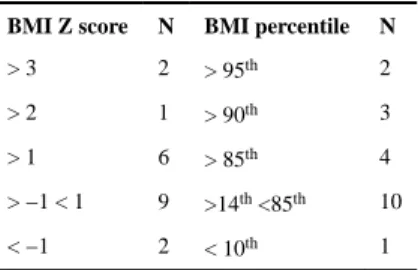
Table 1 shows the demographic characteristics of the participants, indicating diversity in terms of education, occupation, birthplace, and length of time in residence on the island with the exception of marital status. Overweight and obesity were common in this sample, nine women were overweight and five women were obese (Table 2). Nine children had BMIs in the normal range and 9 children were at risk for overweight or obese with one child at less than normal BMI (Table 3).
Mothers’ Perception of Current, Ideal, and Healthy Body Size
In general, women who had higher BMI scores identified larger silhouettes for their perceived current body size (range 4-7), while no one with a BMI less than 25 selected a silhouette greater than 4. Approximately two thirds (n = 13, 65%) of the women selected silhouettes that were thinner for their ideal body size than that of their current image. Overall the body size dissatisfaction score (difference between current perceived body size and ideal body size) was 0.8 and the health dissatisfaction score was 0.5, implying that in general, mothers wanted to be smaller than they perceived themselves. The largest variation between current perceived body size and ideal body size was +/− 2. The majority of the women selected silhouettes 4 and 5 as current, ideal and healthy body sizes. Consistent with ideal body size, approximately two thirds (n = 14, 65%) of the women said they selected the “healthy silhouette” because the woman wasn’t “tan flaca ni tan gorda” (not too skinny or too fat). Sixteen (80%) of the women selected the same silhouette for current body image as for healthy body image (Figure 1). When asked to describe the healthy silhouette, the majority of women responded that being too skinny or too fat can cause health problems. One woman summarized the common response:
“being too fat is bad for you; you get fat from eating too much and this affects your weight, it makes your feet hurt, your legs, it affects your heart, blood pressure; and likewise you cannot be too skinny because you will lose your defense; it affects everything…”. Age 36; 21 months.
Mother’s Perception of Child’s Current, Ideal and Healthy Body Size
The mothers perceived their children differently. Over half the mothers (n = 11) wanted their child to be larger and only two wanted their child to be smaller than their perceived current body size. The average body dissatisfaction score for children (difference between current child image and ideal child image) was −.8 and the health dissatisfaction score was −0.47, implying that in general, mothers wanted their children to be larger than how they perceived them. The largest variation of perceived current child and ideal child was +3 and −2.
Some mothers expressed the limitations of assessing what “healthy” means to them based solely on a visual image. One mother noted:
A
uthor Man
uscr
ipt
A
uthor Man
uscr
ipt
A
uthor Man
uscr
ipt
A
uthor Man
uscr
“I see him [silhouette 4] as normal, not too fat or too skinny, skinny seems like malnourished and to be really fat and over weight (laughs) or you can be fat and still be normal, or you can be skinny and still be normal.” Age 26; child 66 months.
However, when asked to expand upon why they chose a particular silhouette as healthy, mothers commonly responded that although they did not want their children to be fat, they expressed a common theme that being “fuller” and “chubby” was associated with healthier children. One mother explained her selections of healthy as “the little fat one, because she is beautiful like this, chubby.” Age 29; child 23 months
Household Body Size Combinations of Mother and Child
There are a total of nine possible household body size combinations. Within our study six distinct variations of household body size combinations emerged based on anthropometric measures (Table 4). The majority of households included an obese or overweight mother. These women generally felt a smaller size was preferred as the ideal and for health for them selves. One mother expressed this as:
“not skinny or fat; when you are thin you can get sick easier, you don’t have a good defense system and the same when you are fat, it is better to not be either.” Age 36; child 18 months.
Another mother expressed:
“not too skinny or too fat; larger people have problems with cholesterol, diabetes and heart problems.” Age 18; child 38 months.
Conversely this group, as well as most of the mothers in other household combinations consistently desired their children to be larger no matter the child’s current body size. One mother perceived her child’s size as a silhouette 4 and stated this was a healthy size, but still desired her daughter to reflect silhouette 7, the largest child body size.
“not too fat or thin, balanced, or rather not bloated. Some people think that for babies to be obese is ok, I want her to be someone who doesn’t have complications later in life, but not too skinny either, it’s not very attractive either.” Age 36; child 18 months.
Another overweight mother (BMI 27) selected silhouette 6 as the healthiest and associated overweight with healthy because of a stronger defense system, she saw the silhouette as representing “the best fed, it’s chubby and has more defenses.” Age 31; child 15 months
Another mother had these feelings about choosing the largest child body size image as ideal for her child:
“He seems healthier, he is bigger than the others, even though I say one thing, and sometimes those kids that are fat are not healthy….There are children who are too fat and in reality they are sick.” Age 36; child 27 months.
A
uthor Man
uscr
ipt
A
uthor Man
uscr
ipt
A
uthor Man
uscr
ipt
A
uthor Man
uscr
Discussion
To our knowledge, this is the first published study to explore perceptions of body size and health of mothers and their children in the Galapagos Islands. We designed a systematic mixed methods study including the use of anthropometry, body silhouettes, and interviews. The body silhouette cards provided an opportunity to quantify maternal perceptions of current, ideal, and healthy body size. The cards also served as an insightful method to stimulate answering of questions on body size within the home.
As was found in other studies on the nutrition transition, there were households with both under and over nutrition present but more with over nutrition (Doak et al., 2005; Martinez & Fernandez, 2006). Many women were aware of the adverse health issues associated with both underweight and obesity. This is evident in the common (n = 14) verbal expression of a “healthy” image as “ni tan flaca ni tan gorda,” (not too skinny or too fat). This phrasing implies that they understand the duality of malnutrition, which can affect both individuals who are underweight or overweight. Body size does not necessarily indicate health and those who are obese can be nutrient deprived depending on what foods they are eating. Several women stated that women who are too thin often have anemia and that women who are too heavy often have heart problems or diabetes. This information is beneficial to the design of future interventions as it demonstrates that women are aware of health risks from body size, however, we cannot be certain as to what extent they understand the causal relationship between body size and health status. These results are similar to those from women in rural Brazil who participated in a family health development program where mothers had an awareness of the health risks of obesity but poor working knowledge of how nutrition contributed to these risks (Silva et al., 2011).
The finding that most of these mothers prefer smaller sizes for their own bodies is congruent with a more developed or resource rich cultural view of body size (Corvalan et al., 2009) and concurs with results from studies in Latina immigrants to the U.S. (Contento et al., 2003; Petti & Cowell, 2011) women in Brazil (Silva et al., 2011) and Columbia (Gilbert-Diamond et al., 2009). In contrast, mothers wanted their children to be larger than they perceived them to be. Women frequently mentioned their desire for a “chubby baby or child.” These findings are also similar to those found with groups of Latina immigrants to the U.S. (Contento et al., 2003; Petti & Cowell, 2011; Worobey & Lopez, 2005) as well as in Brazil (Lindsay et al. 2009); Molina et al., 2009) and Argentina (Hirschler et al., 2006).
These findings suggest that there is a discrepancy between how the women perceive themselves and their children and their desired size. Body dissatisfaction not only increases the risk of unhealthy dieting behaviors, but has been hypothesized to exacerbate obesity (Haines & Neumark-Sztainer, 2006). Body size dissatisfaction was common among our sample, illuminating the need for further understanding of this phenomenon in the Galapagos Islands and how it affects the health of women and children.
The women’s comments reflected the belief that larger body sizes in children are associated with healthier children. These findings suggest a need to address childhood overweight and obesity among the study population. Culturally relevant interventions must be sensitive to
A
uthor Man
uscr
ipt
A
uthor Man
uscr
ipt
A
uthor Man
uscr
ipt
A
uthor Man
uscr
perceived body size and desired body size and incorporate these differences in the creation of assessments and interventions.
Additional factors that may impact nutrition and health on Isla Isabela are that the markets are limited in food quality and diversity; especially in fresh fruits, vegetables and meat and women lack understanding of what constitutes processed foods (Page et al., 2012). Due to the geographical isolation of the islands and restricted agricultural laws, the diet on the islands will continue to rely heavily upon foods that have an elongated shelf life and can be shipped from the mainland (Galapagos Report, 2013). Ideally, improving the ability of the community to obtain affordable high-quality food year round will be necessary to decrease the impact of nutrition related chronic diseases in the future.
There are several limitations of this study. As a pilot study, the sample size and sampling strategy limits generalization across all mothers and young children on Isla Isabela or even on different islands that are populated in the Galapagos. Women were contacted through the health center or referred by individuals who use the health center. Individuals who live further inland on the island or who seek medical attention at other locations were not recruited. In addition, the constant flux of the economy may have immediate changes upon dietary habits and weight, so the cross sectional nature of the study does not capture this potential variation.
This information adds a unique perspective to understanding health on the Galapagos Islands in terms of the nutrition transition. The presence of several households with an overweight mother and an overweight child identifies that the nutrition transition is already present, and raises concern for the possibility of the islands being in a state of post-nutrition transition. The potential for nutrition related chronic diseases in the future will require far more health services than are currently available or planned for the people of the Galapagos. In addition it will require collaboration between nutrition and healthcare professionals at the disciplines’ educational and practice levels (Amuna & Zotor, 2008). This may require innovative interventions should take into account potential variation among the nutritional needs of the household with differing body size combinations and mother’s perceptions of desired body size for their children in order to most suitably address the local need in the midst of the nutrition transition.
References
Amuna P, Zotor F. The epidemiological and nutrition transition in developing countries: Evolving trends and their impact in public health and human development. Proceedings of the Nutrition Society. 2008; 67:32–90.
Bentley M, Corneli A, Piwoz E, Moses A, Nkhoma J, Carlton-Tohill B, van der Horst C. Perceptions of the role of maternal nutrition in HIV-positive breast-feeding women in Malawi. Journal of Nutrition. 2005; 135:945–949. [PubMed: 15795467]
Contento I, Basch C, Zybert P. Body image, weight, and food choices of Latina women and their young children. Journal of Nutrition Education & Behavior. 2003; 35:236–248. [PubMed: 14521823]
Corvalan C, Kain J, Weisstaub G, Uauy R. Impact of growth patterns and early diet on obesity and cardiovascular risk factors in young children from developing countries. Proceedings of the Nutrition Society. 2009; 68(3):327–337. [PubMed: 19400973]
A
uthor Man
uscr
ipt
A
uthor Man
uscr
ipt
A
uthor Man
uscr
ipt
A
uthor Man
uscr
Doak C, Adair L, Bentley M, Monteiro C, Popkin B. The dual burden household and the nutrition transition paradox. International Journal Obesity. 2005; 29:129–136.
Duran P, Caballero B, de Onis M. The association between stunting and overweight in Latin American Caribbean preschool children. Food & Nutrition Bulletin. 2006; 27:300–305. [PubMed: 17209471] Freedman, D., Serdula, M., Khan, L. The adult health consequences of childhood obesity. In: Chen, C.,
Dietz, W., editors. Obesity in Childhood and Adolescence Nestle Nutrition Workshop Series. Philadelphia, PA: Lippincott Williams & Wilkins; 2002. p. 63-82.
Galapagos Conservancy. People Today. 2015. http://www.galapagos.org/about_galapagos/people-today
(accessed 23 April 2015).
Galapagos National Park Service, Galapagos Council of Galapagos, Charles Darwin Foundation and Galapagos Conservancy. Galapagos Report 2011-2012. Puerto Ayora: Galapagos, Ecuador; 2013. Gilbert-Diamond D, Baylin A, Mora-Plazas M, Villamor E. Correlates of obesity and body image in
Colombian women. Journal of Women’s Health. 2009; 18(8):1145–1151.
Griep R, Aquino E, Chor D, Kakeshita I, Gomes A, Nunes M. Test-retest reliability of the scale silhouettes figures of body image in Brazilian Longitudinal Study of Adult Health. Cadernos de Saude Publica. 2012; 29:1790–1794.
Hager E, McGill A, Black M. Development and validation of a toddler silhouette scale. Obesity. 2010; 18:397–401. [PubMed: 19763093]
Haines J, Neumark-Sztainer D. Prevention of obesity and eating disorders: a consideration of shared risk factors. Health Education Research. 2006; 21(8):770–782. [PubMed: 16963727]
Hirschler V, Gonzalez C, Talgham S, Jadzinsky M. Do mothers of overweight Argentinian preschool children perceive them as such? Pediatric Diabetes. 2006; 7:201–204. [PubMed: 16911006] Katz M, Gordon-Larsen P, Bentley M, Kelsey K, Shields K, Ammerman A. “Does skinny mean
healthy?” perceived ideal, current, and healthy body sizes among African-American girls and their female caregivers. Ethnicity & Disease. 2004; 14(4):533–541. [PubMed: 15724773]
Killion L, Huges S, Wendt J, Pease D, Nickles T. Minority mothers’ perceptions of children’s body size. International Journal of Pediatric Obesity. 2006; 1(2):96–102. [PubMed: 17907321] Lindsay A, Machado M, Sussner K, Hardwick C, Kerr L, Peterson K. Brazilian mothers’ beliefs,
attitudes and practices related to child weight status and early feeding within the context of nutrition transition. Journal of Biosocial Science. 2009; 41:21–37. [PubMed: 18847525] Martinez R, Fernandez A. Child Malnutrition In Latin America and the Caribbean. Challenges. 2006;
2:4–9.
Molina M, deFaria C, Montero P, Cade N. Correspondence between children’s nutritional status and mothers’ preceptions: a population-based study. Cadernos de Saude Publica. 2009; 10:2285–2290. National Bureau of Statistics of Ecuador. Galapagos Census. 2010. http://www.inec.gob.ec/cpv
(accessed 25 April 2015)
Page, R., Bentley, M., Waldrop, J. People Live Here. Maternal and Child Health on Isla Isabela, Galapagos. In: Walsh, S., Menos, C., editors. Science and Conservation in the Galapagos Islands. New York: Springer; 2012.
Petti Y, Cowell J. An assessment of measures of body image, body attitude, acculturation, and weight status among Mexican American women. Journal of the American Academy of Nurse
Practitioners. 2011; 23:84–91. [PubMed: 21281374]
Popkin B. Global nutrition dynamics: the world is shifting rapidly toward a diet linked with noncommunicable diseases. American Journal of Clinical Nutrition. 2006; 84(2):289–98. [PubMed: 16895874]
Silva D, Nahas M, de Sousa T, Del Duca G, Peres K. Prevalence and associated factors with body image dissatisfaction among adults in southern Brazil: A population-based study. Body Image. 2011; 8:427–431. [PubMed: 21768003]
Stein A, Thompson A, Waters A. Childhood growth and chronic disease: evidence from countries undergoing the nutrition transition. Maternal Child Nurtrition. 2005; 1:177–184.
Ulin, P., Robinson, E., Tolley, E. Qualitative Methods in Public Health: A Field Guide for Applied Research. 1st. Sanfrancisco, CA: Jossey-Bass; 2005.
Valle, C. Science and Conservation in the Galapagos Islands. In: Walsh, S., Menos, C., editors. Science and Conservation in the Galapagos Islands. New York: Springer; 2012.
Walsh S, McCleary A, Heumann B. Community Expansion and Infrastructure Development: Implications for Human Health and Environmental Quality in the Galapagos Islands of Ecuador. Journal of Latin American Geography. 2010; 9(3):137–159.
Waters W. Globalization and local response to epidemiological overlap in 21st century Ecuador. Global Health. 2006; 19(2):1–13.
Williamson D, Davis C, Bennet S, Goreczny A, Gleaves D. Development of a simple procedure for assessing body image distortion. Journal of Behavioral Assessment. 1989; 11:431–446.
Williamson D, Gleaves D, Watkins P, Schlundt D. Validation of self-ideal body size discrepancy as a measure of body dissatisfaction. Journal of Psychopathology and Behavioral Assessment. 1993; 15:57–68.
World Health Organization. Obesity and Overweight. Fact Sheet No. 311. Geneva: WHO; 2011. Media Centrehttp://www.int/mediacentre/factsheets/fs311/3n (Accessed April 25 2015).
World Health Organization. Training Course on Child Growth Assessment. Geneva: WHO; 2008.
http://www.who.int/childgrowth/training/module_c_interpreting_indicators.pdf. (Accessed April 25 364 2015).
Worobey J, Lopez M. Perceptions and preferences for infant body size by low-income mothers. Journal of Reproductive and Infant Psychology. 2005; 23(4):303–308.
A
uthor Man
uscr
ipt
A
uthor Man
uscr
ipt
A
uthor Man
uscr
ipt
A
uthor Man
uscr
Significance
Little is known about the health of the people of the Galapagos or the status of the nutrition transition in the islands. This study is the first to evaluate body size and perception of body size related to health in a sample of women with young children. Women preferred a smaller body size for themselves but a larger body size for their children although many were overweight or obese. It is evident from these assessments that the nutrition transition is already present, and raises concern for the possibility of the islands being in a state of post-nutrition transition.
A
uthor Man
uscr
ipt
A
uthor Man
uscr
ipt
A
uthor Man
uscr
ipt
A
uthor Man
uscr
Figure 1.
Body Size Images for Perceived Current, Ideal and Healthy Body Size in Mothers
A
uthor Man
uscr
ipt
A
uthor Man
uscr
ipt
A
uthor Man
uscr
ipt
A
uthor Man
uscr
Figure 2.
Body Size Images for Perceived Current, Ideal and Healthy Body Size for Children
A
uthor Man
uscr
ipt
A
uthor Man
uscr
ipt
A
uthor Man
uscr
ipt
A
uthor Man
uscr
A
uthor Man
uscr
ipt
A
uthor Man
uscr
ipt
A
uthor Man
uscr
ipt
A
uthor Man
uscr
ipt
Table 1
Maternal Characteristics(6)
Characteristics Mean Range N Percentage
Age (years) 28.5 19-37
Time on Island (years) 7.75 1-17
Education: high school or more 13 65
Religion: Catholic 14 70
Employed Full time 8 40
Employed Part time 3 15
Unemployed 9 45
Married or Union Libre* 18 90
*
A
uthor Man
uscr
ipt
A
uthor Man
uscr
ipt
A
uthor Man
uscr
ipt
A
uthor Man
uscr
ipt
Table 2
Women’s Anthropometry(6)
Mean Range N Percentage
Height (cm) 154 142-164.7
Weight (kg) 65.25 47.3-89.1
BMI 27.3 20.3-37.4
Normal 6 30
Overweight 9 45
A
uthor Man
uscr
ipt
A
uthor Man
uscr
ipt
A
uthor Man
uscr
ipt
A
uthor Man
uscr
ipt
Table 3
Children’s Anthropometry
BMI Z score N BMI percentile N
> 3 2 > 95th 2
> 2 1 > 90th 3
> 1 6 > 85th 4
> −1 < 1 9 >14th <85th 10
A
uthor Man
uscr
ipt
A
uthor Man
uscr
ipt
A
uthor Man
uscr
ipt
A
uthor Man
uscr
ipt
Table 4
Dual Burden: Household Body Size Combinations
Type Number
Overweight Mother/Overweight Child 7
Overweight Mother/Normal Weight Child 5
Overweight Mother/Underweight Child 2
Normal Weight Mother/Overweight Child 2
Normal Weight Mother/Normal Weight Child 3
Normal Weight Mother/Underweight Child 1
Underweight Mother/Overweight Child 0
Underweight Mother/Normal weight Child 0