Improving retention in HIV care among
adolescents and adults in low- and
middle-income countries: A systematic review of the
literature
Kate R. Murray1*, Lisa S. Dulli1, Kathleen Ridgeway1, Leila Dal Santo2, Danielle Darrow de Mora2, Patrick Olsen1, Hannah Silverstein3, Donna R. McCarraher1
1 Global Health, Population, & Nutrition, FHI 360, Durham, North Carolina, United States of America, 2 Global Health, Population, & Nutrition, FHI 360, Washington, DC, United States of America, 3 Maternal and Child Health, Gillings School of Global Public Health, University of North Carolina at Chapel Hill, Chapel Hill, North Carolina, United States of America
Abstract
Introduction
Adolescents living with HIV are an underserved population, with poor retention in HIV health care services and high mortality, who are in need of targeted effective interventions. We conducted a literature review to identify strategies that could be adapted to meet the needs of adolescents living with HIV.
Methods
We searched PubMed, Web of Science, Popline, USAID’s AIDSFree Resource Library, and the USAID Development Experience Clearinghouse for relevant studies published within a recent five-year period. Studies were included if they described interventions to improve the retention in care of HIV-positive patients who are initiating or already receiving antiretroviral therapy in low- and middle-income countries. To assess the quality of the studies, we used the NIH NHLBI Study Quality Assessment Tools.
Results and discussion
Of 13,429 potentially relevant citations, 23 were eligible for inclusion. Most studies took place in sub-Saharan Africa. Only one study evaluated a retention intervention for youth (15–24 years); it found no difference in loss to follow-up between a youth-friendly clinic and a family-oriented clinic. A study of community-based service delivery which was effective for adults found no effect for youths. We found no relevant studies conducted exclusively with adolescent participants (10–19 years). Most studies were conducted with adults only or with populations that included adults and adolescents but did not report separate results for ado-lescents. Interventions that involved community-based services showed the most robust evidence for improving retention in care. Several studies found statistically significant a1111111111
a1111111111 a1111111111 a1111111111 a1111111111
OPEN ACCESS
Citation: Murray KR, Dulli LS, Ridgeway K, Dal
Santo L, Darrow de Mora D, Olsen P, et al. (2017) Improving retention in HIV care among adolescents and adults in low- and middle-income countries: A systematic review of the literature.
PLoS ONE 12(9): e0184879.https://doi.org/
10.1371/journal.pone.0184879
Editor: Omar Sued, ARGENTINA Received: May 18, 2017 Accepted: September 3, 2017 Published: September 29, 2017
Copyright:©2017 Murray et al. This is an open access article distributed under the terms of the
Creative Commons Attribution License, which permits unrestricted use, distribution, and reproduction in any medium, provided the original author and source are credited.
Data Availability Statement: All relevant data are
within the paper and its Supporting Information files.
Funding: This publication was made possible by
associations between decentralization, down-referral of stable patients, task-shifting of ser-vices, and differentiated care, and retention in care among adults; however, most evidence comes from retrospective, observational studies and none of these approaches were evalu-ated among adolescents or youth.
Conclusions
Interventions that target retention in care among adolescents living with HIV are rare in the published literature. We found only two studies conducted with youth and no studies with adolescents. Given the urgent need to increase the retention of adolescents in HIV care, interventions that are effective in increasing adult retention in care should be considered for adaptation and evaluation among adolescents and interventions specifically targeting the needs of adolescents must be developed and tested.
Introduction
In order to eliminate new HIV infections by the year 2030, UNAIDS has put forth the 90-90-90 treatment targets where, by 2020, 90-90-90% of people living with HIV (PLHIV) will know their status, 90% of people with a diagnosed HIV infection will receive sustained antiretroviral treat-ment (ART) for HIV, and 90% of those on ART will achieve viral load suppression [1]. How-ever, at each step along the HIV treatment cascade (the sequential steps of medical care for PLHIV)—HIV testing, diagnosis, linkage to health care services, retention in care, ART adher-ence, and viral suppression—substantial proportions of PLHIV are lost to follow-up [2]. Ado-lescents living with HIV are increasingly being recognized as a vulnerable population in need of targeted programs and resources [3–5].
Adolescents experience greater vulnerability to HIV and their performance along the HIV treatment cascade is worse than other age groups. Thirty per cent of new HIV infections occurred among adolescents and youth (15–24 years) in 2014, and HIV is the second leading cause of death among adolescents globally [6,7]. In fact, health outcomes have been worsening among the 2.1 million adolescents, ages 10–19, living with HIV, 82% of whom reside in sub-Saharan Africa [8]. While HIV-related mortality declined in other age groups between 2005 and 2012, adolescents living with HIV (ALHIV) experienced a 50% increase in mortality dur-ing this time [1]. Adolescents are faring poorly along the HIV treatment cascade, with attrition occurring at each step along the cascade [9,10]. A large proportion of adolescents are unaware of their HIV status and once diagnosed, ALHIV experience poor linkage to care [9–11]. Reten-tion in HIV care is substantially lower for adolescents than for other age groups [12–16]. Finally, adolescents have suboptimal adherence and lower rates of viral suppression compared to other ages [17–21].
Retention in HIV health care services is a critical precursor to ART adherence and viral suppression. Clinical visits for patients on ART are essential to initiate ART, ensure continu-ous access to medication, monitor medication side effects, diagnose treatment failure, and, when necessary, switch to second- or third-line ART regimens. Retaining patients in care helps them maintain high medication adherence, thereby achieving viral suppression, improv-ing health outcomes, and reducimprov-ing the risk of horizontal transmission [22,23]. PLHIV who are not retained in care stop or interrupt ART, increasing their risk of drug resistance and mortality [24,25]. Retaining patients in care over time is problematic. A recent systematic
360 and do not necessarily reflect the views of USAID or the United States Government.
Competing interests: The authors have declared
review of 154 adult HIV patient cohorts in low- and middle-income countries (LMIC) found that, on average, 83% of patients had been retained in HIV treatment services after 12 months on ART, but the proportion declined to only 60% after 60 months on ART [26]. Comparable data on long-term retention in care are not available for adolescents or youth. Data from four LMIC, however, show that youth (15–24 years) had 59% higher attrition than adults (25–54 years) one year after initiating ART underscoring the need to develop and test interventions to improve retention that specifically target youth [12]. As countries begin to implement the WHO recommended “Test and Treat” strategy [27], all individuals who test HIV positive will immediately initiate ART, substantially increasing the number on ART. The challenges of retaining patients in care will likely only amplify with as the number of PLHIV on ART increase, in the absence of effective interventions.
Given the limited literature on interventions for adolescents in LMIC, we included litera-ture describing interventions that were conducted with adults to form recommendations for interventions that showed promise for adaptation for adolescents. The objectives of this sys-tematic review were to (1) identify recent interventions that increase retention in care among adults and adolescents, (2) describe the body of literature in both populations, and (3) identify intervention strategies that were successful among adults that may be adapted to adolescent populations. Our intention is that recommendations from this review will inform future research and programming among adolescents living with HIV in LMIC.
Methods
We conducted a systematic review of the peer-reviewed and grey literatures to identify studies describing interventions designed to increase either retention in care or adherence among adult and adolescent PLHIV in LMIC settings. The search strategy was adapted from a system-atic review of service delivery interventions for ALHIV [28] (S1 File). We modified the search strategy to include adults in order to evaluate the evidence for interventions among these two populations. We used this strategy to search PubMed, Web of Science, and Popline. We also identified grey literature using USAID’s AIDSFree Resource Library [29] and the USAID Development Experience Clearinghouse (DEC) [30].
All references from PubMed, Web of Science, and Popline were imported into EndNote. Grey literature references from the two websites were exported into an Excel file and added to EndNote during the full text review stage. After duplicate references were removed, two reviewers (KM, KR) independently examined titles and abstracts for inclusion. Next, the full texts of the remaining studies were obtained and each was independently examined by teams of two reviewers (KM, KR, DRM, DD, LD, PO) for inclusion. We also hand-searched reference lists of articles captured by the searches to identify other studies of potential relevance and no additional references were found. At each stage of the review, discrepancies between reviewers were resolved through discussion and consensus. Summaries of each article were elaborated by single reviewers (KM, KR, LCD, PO, HS) using a standardized form that extracted informa-tion including study design, setting, sample characteristics, sample size, descripinforma-tion of the intervention, and outcome results.
five years in order to capture interventions conducted in the current landscape of HIV pro-grams. This article focuses on interventions to improve retention in care.
We found considerable heterogeneity in the way retention was measured, thus we consid-ered multiple retention outcomes to meet the inclusion criteria, including: retention in care (alive and on ART at a specified timepoint), loss to follow up (LTFU) (not retained in care at a specified timepoint), attrition from care (not retained in care due to death, LTFU or default), and appointment attendance (number of attended appointments out of total possible).
Studies were excluded if they were not available in English or if they were conducted in high-income countries (as defined by the World Bank) [31]. Letters, editorials, conference abstracts, and presentations were not eligible. We also excluded studies tailored to the needs of specific populations (e.g. key populations, patients co-infected with tuberculosis and HIV, or incarcerated populations), pharmaceutical interventions (such as drug regimen changes), post-exposure prophylaxis, HIV testing, linkage to care, and pre-ART care.
The methodological quality of each study was evaluated by a team of six reviewers (KM, KR, PO, LDS, HS, LD) with the aid of the National Institutes of Health National Heart, Lung, and Blood Institute Study Quality Assessment Tools using standardized forms [32]. Two reviewers independently reviewed the quality of each study. Discrepancies in quality assess-ments were discussed and resolved, with additional review by DRM and LD as needed. The studies were assigned a final quality rating of “good”, “fair” or “poor” to describe the risk of bias in the study due to flaws in study design or implementation. A “good” rating has the least risk of bias, “fair” rating indicates that the study is susceptible to some bias but not sufficient to invalidate results, and “poor” rating indicates significant risk of bias.
Results and discussion
A total of 13,429 potentially relevant citations were identified, of which 23 were eligible for inclusion (Fig 1). Most of the included studies were observational. Eleven of the studies were conducted among adults only, 11 were conducted with populations that included adolescents and adults (only one study reported results for youth ages 16–24 years separately), and one study was conducted among youth only (15–24 years). The majority (n = 22) were conducted in sub-Saharan Africa (seven of these in South Africa and six in Kenya) and one study was con-ducted in Papua New Guinea. We identified 18 retrospective cohort studies, two prospective cohort studies, one quasi-experimental study, and two randomized controlled trials. The methodological quality of the studies varied: nine studies were good quality, nine were fair quality, and five were poor quality.
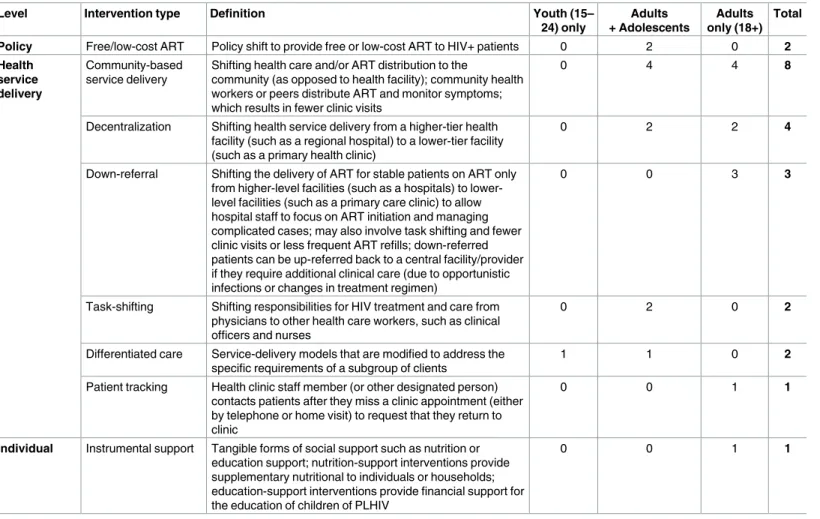
Among the articles reviewed, most interventions acted at the level of health service delivery. Only two articles described an intervention strategy that acted on the policy level (free or low-cost ART) and one focused exclusively on providing instrumental social support at the individ-ual patient level. The most common intervention types were community-based service delivery (n = 8), decentralization of health services (n = 4), and down-referral (n = 3) (Table 1). Other interventions included task-shifting (n = 2), free or low-cost ART (n = 2), differentiated care (n = 2), patient tracking (n = 1), and instrumental support (n = 1). The only intervention that was conducted exclusively with youth was a youth-friendly differentiated care intervention.
In this review, retention in care is defined and measured in a number of ways in LMIC, pre-senting a challenge to summarizing the evidence for the interventions in this review. Retention in care can be measured using appointments attended over time, however, in LMIC, retention is often defined as being “alive and on ART” at a specified timepoint per clinical records [33,
among the studies. Characteristics of the 23 studies presented in this review are summarized in
Table 2and described in detail below.
Community-based service delivery
Interventions involving the delivery of community-based services had the strongest evidence based on the quality and the number of studies. Eight studies examined shifting the delivery of
HIV care and treatment from health facilities to communities [35–42]. These interventions relocated ART distribution to the community and engaged community health workers (CHWs) or peers to distribute ART and monitor symptoms, resulting in fewer patient visits to a clinic. Two community-based service interventions also incorporated directly observed ther-apy (DOT) or counselling [36,38]. Four of the interventions were conducted with adults only and four with populations that included adults and adolescents, of which only one reported results for youth separately from adults. Overall, the results of community-based service inter-ventions were positive: six found positive associations between the interinter-ventions and retention in care, and two found no association.
The best data for community-based service interventions came from five studies of good or fair quality in Rwanda, Kenya, and South Africa. Two observational studies examined commu-nity-based adherence support (CBAS) that consisted of home visits by CHWs who distributed ART and provided psychosocial and health-related support; both showed significant improve-ments in retention in care. In a retrospective cohort study of adolescents and adults in South Africa, CBAS workers conducted weekly home visits for one month to perform adherence checks and provide psychosocial support; stable patients were then visited every three months [37]. Compared to patients who did not receive CBAS, lower LTFU (no visit to a clinic for 180 days) was observed among intervention patients [aHR 0.63 (0.59–0.68)]. A prospective cohort study of adults in their first year on ART in Rwanda found that patients in
community-Table 1. Summary of intervention types and inclusion age of study populations.
Level Intervention type Definition Youth (15–
24) only
Adults + Adolescents
Adults only (18+)
Total
Policy Free/low-cost ART Policy shift to provide free or low-cost ART to HIV+ patients 0 2 0 2 Health
service delivery
Community-based service delivery
Shifting health care and/or ART distribution to the
community (as opposed to health facility); community health workers or peers distribute ART and monitor symptoms; which results in fewer clinic visits
0 4 4 8
Decentralization Shifting health service delivery from a higher-tier health facility (such as a regional hospital) to a lower-tier facility (such as a primary health clinic)
0 2 2 4
Down-referral Shifting the delivery of ART for stable patients on ART only from higher-level facilities (such as a hospitals) to lower-level facilities (such as a primary care clinic) to allow hospital staff to focus on ART initiation and managing complicated cases; may also involve task shifting and fewer clinic visits or less frequent ART refills; down-referred patients can be up-referred back to a central facility/provider if they require additional clinical care (due to opportunistic infections or changes in treatment regimen)
0 0 3 3
Task-shifting Shifting responsibilities for HIV treatment and care from physicians to other health care workers, such as clinical officers and nurses
0 2 0 2
Differentiated care Service-delivery models that are modified to address the specific requirements of a subgroup of clients
1 1 0 2
Patient tracking Health clinic staff member (or other designated person) contacts patients after they miss a clinic appointment (either by telephone or home visit) to request that they return to clinic
0 0 1 1
Individual Instrumental support Tangible forms of social support such as nutrition or education support; nutrition-support interventions provide supplementary nutritional to individuals or households; education-support interventions provide financial support for the education of children of PLHIV
0 0 1 1
Table 2. Character istics of included studies. Author, year Country Study design Target Populatio n Sample size Intervention Compar ison Outcome measure and definitio n Results Fatti et al., 2012 [ 37 ] South Africa Retrospe ctive cohort study HIV-po sitive adult patients 16 years; median age 35.1 years (IQR 29.4– 42.3) for exposed; 34.6 years (IQR 29.3– 41.4) for non-exposed
Exposed (CBAS) n=
19,668; non-expo sed (no CBAS) n = 47,285 Community-b ased adherenc e support (CBAS) workers (CHW) conduct weekly home visits for 1 month to perform adherence checks and to provide psychosoc ial support. Stable patients were visited every 3 months. Patient s who did not receive CBAS LTFU (no visits to clinic for 180 days) Lower LTFU was observed in CBAS patients compared with non-CBAS patients after 5 years in treatmen t [aHR 0.63, 95% CI (0.59, 0.68)]. Franke et al., 2013 [ 38 ] Rwanda Prospecti ve cohort study HIV-po sitive adults initiating ART; median age: 37 years (range: 21–80)
Exposed n=
304;
non-exposed n=
306 Addition of communit y-based accompani ment (CBA) consisting of daily home visits and DOT by a CHW, nutritional support, transportati on stipends, and as-needed socioeco nomic support to facility-base d care Facility -based care only Rate of attrition from treatment [death, LTFU (not returned to clinic for 60 days) or default (stopped treatment for 60 days)]. Retention (alive and not > 60 days since last visit) with viral load suppress ion. Receivi ng CBA was associa ted with a lower rate of attrition in 1st year of ART [aHR 0.17 (95%C I (0.09, 0.35)].CBA patients were more likely to be retained in care with suppresse d viral load at 1 year [aRR 1.15, 95%CI (1.03, 1.27)]. Hickey et al., 2015 [ 39 ] Kenya Quasi- experimen tal two-group pre-test post-test study Patient s enrolling in ART; mean age: 39 years in interventi on; 40 years in control Interventio n n = 153;
control n=
Table 2. (Continued ) Author, year Country Study design Target Populatio n Sample size Intervention Compar ison Outcome measure and definitio n Results Grimsru d et al., 2015 [ 42 ] South Africa Retrospe ctive cohort study HIV-po sitive clinic patients 16 years initiating ART from 2002–20 12; median age: 33.4 years (IQR 28.4–39 .8)
Exposed n=
2,113; non-expo sed n = 6,037 Community-b ased adherenc e clubs (CACs): CACs consisted of 25–30 stable (self-re ported adherenc e to ART, on ART for > 12 months, 2 consecutive suppress ed VL ( < 400 copies/mL), no active opportun istic infections (OIs)) HIV patients who formed a commun ity-based support group led by CHW and supported by nurses. CAC met every 2 months for counsell ing, sympto m screening, and pre-pac kaged ART distribution and conducted one clinical consultation per year. Patients who develop complic ations are referred back to the CHC. Patient s receiving ART at communi ty health centre LTFU (no visit in first 12 weeks of 2014 or censored after last visit if before then) CAC participati on associa ted with 67% reduction in LTFU compared with CHC [aHR 0.33, 95% CI (0.27, 0.40)]. No significa nt difference was found in LTFU for youth (16–24 years old) in CAC vs. CHC [aHR 0.68, 95%CI (0.37–1 .22)]. Igumbor et al., 2011 [ 40 ] South Africa Retrospe ctive cohort study HIV-po sitive patients (0–50 + years) initiating ART; mean age and range not reported Exposed (sites with PA
services) n=
Table 2. (Continued ) Author, year Country Study design Target Populatio n Sample size Intervention Compar ison Outcome measure and definitio n Results McGui re et al., 2012 [ 46 ] Malawi Retrospe ctive cohort study HIV-po sitive adult and adolescen t patients initiating ART (Included all patients at clinics and 80% of patients were > 25 years)
Exposed n=
11,090; non-expo sed n = 4,322 Decentralized HIV care was provided by mobile teams in 10 peripheral health facilitie s starting in 2003. In 2007, nurses at the peripheral health facilitie s began initiating patients on ART and providing clinical monitoring. Hospital -based care Attrition [deaths and LTFU (missed appoint ment by > 2 months)] 2-year attrition lower in decentral ized care compared to hospital-based care [9.9 per 100 person-year s, 95% CI (9.5, 10.4) vs. 20.8 per 100 person-years, 95% CI (19.7, 22.0)]. Das et al., 2014 [ 43 ]
Papua New Guinea
Retrospe ctive cohort study HIV-po sitive adult patients initiating ART; mean age: 32 years for exposed; 35 years for non-exposed
Exposed n=
993;
non-exposed n=
1,464 Care was decentrali zed through PAPUA (Patient and Provide r Unified Approach ) model from regional hospitals to rural health district facilities and coordinate d patient and provider support, including case managemen t and material support to patients and clinical mentorshi p to providers. Standard of care (not decentrali zed) Attrition from care at 12, 24, 36, and 48 months (visit within 90 days of chart review) PAPUA model associa ted with 15% lower rate of attrition during the first 4 years of ART compared to standard of care [HR 0.85, 95% CI (0.74, 0.99)]. Labhard t et al., 2013 [ 45 ] Lesotho Retrospe ctive cohort study HIV-po sitive patients 16 years initiating ART; median age: 38 years (IQR: 31–48)
Exposed n=
2,042; non-expo sed n = 1,705 Care was decentrali zed from hospitals to health centres, ART provision by nurses was scaled up, and lay counsellors were employed to provide HIV counsellin g and testing, adherenc e monitoring , and track patients who were LTFU. Hospital care Three-y ear retention in care (alive on ART and in active follow-up at database closure) Overall 3-year retention in care was 68.8% (95% CI: 65.7, 71.6) in HCs and 64.1% (95% CI: 61.1, 66.9). 3-year retention in care was similar in HCs and hospitals among women [OR 0.89, 95% CI: 0.73, 1.09) and higher retention at HCs among men (OR 1.53, 95% CI (1.20, 1.96)]. Gorman et al., 2015 [ 44 ] Kenya Retrospe ctive cohort study HIV-po sitive patients living in West Pokot access ing care in mobile clinics or regional hospital; mean age: 36.0 years for exposed; 33.5 years for non-exp osed
Exposed n=
124;
non-exposed n=
Table 2. (Continued ) Author, year Country Study design Target Populatio n Sample size Intervention Compar ison Outcome measure and definitio n Results Luque- Fernand ez et al., 2013 [ 50 ] South Africa Retrospe ctive cohort study HIV-po sitive adult patients 18 years; median age: 33 years (IQR: 29– 39)
Exposed n=
502;
non-exposed n=
2,327 Down referral of clinicall y stable (on ART for at least 18 months, CD4 > 200 cells/ μ L in previous 6 months, have sustained viral load suppressio n) patients to a group-based model of care (adherenc e club). Groups of 15–30 patients met at the health clinic outside of busy clinic hours, trained counsellor s led group discussions , conducted health assessme nts and provide d clinic referral as needed. Patients received individuall y packaged medicines, and VL and CD4 tested annually by a nurse. Patient s who received routine nurse-le d care in the health clinic Attrition [Death or LTFU (not having any contact with service in 6 months following analysis closure)] Adherenc e club participan ts had lower odds of attrition [HR 0.43, 95% CI (0.21, 0.91)] between 2007– 2011. Brennan et al., 2011 [ 48 ] South Africa Retrospe ctive matched cohort study Stable HIV-positive patients 18 years; median age: 35.3 years (IQR: 30.8–41 .6)
Exposed n=
693;
non-exposed n=
2,079 Down-referr al of stable (on ART for at least 11 months, no OIs, CD4 > 200 cells/ μ L , stable weigh t ( < 5% loss between last three visits), virally suppressed (two consecutive viral loads < 400 copies/ml)) patients from doctor-man aged treatmen t initiation site to nurse-mana ged primary health clinic. Patients who were down-referre d also received 2 month supplies of ART and clinic visits were held every 2 months. Patient s who remaine d at the doctor-managed treatment initiation site. Eligible patients who were not down-re ferred had either refused or never been offered down-re ferral, but data does not distinguis h between these two. LTFU ( 3 months late for last schedule d visit) LTFU was lower for down-re ferred patients than those who remain ed at treatment initiation site [HR 0.3, 95% CI (0.2, 0.6)] during 12 month follow up. Grimsru d et al., 2014 [ 49 ] South Africa Retrospe ctive cohort study HIV-po sitive adult patients eligible for ART (based on nationa l guidelin es); median age: 34 years (IQR: 29– 40)
Exposed n=
Table 2. (Continued ) Author, year Country Study design Target Populatio n Sample size Intervention Compar ison Outcome measure and definitio n Results Fairall et al., 2012 [ 51 ] South Africa Cluster RCT HIV-po sitive patients 16 years; median age 36 years (IQR 30–43) for interventi on; 38 years (IQR 29– 42) for control) Interventio n n = 5,390;
control n=
3,862 Task shifting through Streamlining Tasks and Roles to Expand Treatment and Care for HIV (STRETCH): education and trainin g for nurses to initiate and re-prescribe ART in order to shift the responsibili ty for ART initiation and management from doctors to primary care nurses. Standard care Program retention (alive and in care, with document ation of clinic visit or lab test in previous 6 months) at 12 months after enrolme nt into the study Program retention higher for patients newly initiating ART in the interventio n group than in the control group (RR 1.10, 95% CI (1.04, 1.16)). No differenc e in program retention was seen for patients who had been on ART for at least six months when the interventio n was introduced . McGui re et al., 2013 [ 52 ] Malawi Retrospe ctive cohort study HIV-po sitive adults > 15 years who had more than 1 follow-up visit after ART initiation; median age: 35.1 years (IQR 29.4–43 .1) Clinical officer
care n=
13,386; nurse care n = 1,901; mixed nurse and clinical officer care n = 4,825 Task shifting: patients received care either from clinical officers ( > 80% of care), nurses ( > 80% of care), or both ( < 80% of care from either nurses or clinical officers). Clinical officers manage d both complicated and uncomplic ated patients. Nurses primarily manage d less complica ted patients. Mixed group (nurses and clinical officers) managed patients according to their evolving clinical status. Clinical officer group Program attrition [LTFU (time period not defined ) and mortality] at 2 years after ART initiation Compared to nurse care group, attrition was higher in clinical officer group [aIRR 3.03, 95% CI (2.56, 3.59)] and lower in mixed care group [aIRR 0.54, 95% CI (0.45, 0.65)] Braitstein et al., 2012 [ 53 ] Kenya Retrospe ctive cohort study HIV-po sitive patients 14 years initiating ART with CD4 counts of < 100 cells/m m 3; mean age: 36 years (IQR 30.5–42 .4) for exposed; 37 years (IQR 30.6– 43.1) for non-exposed
Exposed n=
635;
non-exposed n=
4,323 Differentiated care through High Risk Express Care (HREC) intervention consist ing of weekly or bi-weekly rapid contacts with nurses in addition to routine care for patients initiating ART with low CD4 counts during first 3 months of ART initiation. HREC nurses ask about adherence, conduct pill count, review symptoms, and performs interim clinical assessmen ts, referring patients to clinical officer/ physician if indicated. Routine care consist ing of a clinician visit (clinical officer or physicia n) 2 weeks after initiating treatment , and monthly thereaf ter. LTFU (patient did not return to clinic for > 3 consecu tive months following most recent visit) Patient s in HREC had lower LTFU [aHR 0.62, 95% CI (0.55, 0.70)] compared to patients in routine care. Ojwang et al., 2015 [ 54 ] Kenya Retrospe ctive cohort study HIV-po sitive youth enrolled in HIV care; median age: 20 years (IQR 18– 21; range: 15– 21)
Exposed n=
584;
non-exposed n=
Table 2. (Continued ) Author, year Country Study design Target Populatio n Sample size Intervention Compar ison Outcome measure and definitio n Results Mosoko et al., 2011 [ 56 ] Cameroon Retrospe ctive cohort study HIV-po sitive patients initiating ART; median age: 35 years (range: 6 months-7 3 years)
Exposed n=
1,433; non-expo sed n = 1,482 ART price reduction from $27.40 (monthly) to $5.50 for first-line and $51.20 to $12.80 for second-line treatment regimens (reduct ion was 75–80%) implemen ted Oct 2004 (Oct 2004-D ec 2005) Patient s enrolled prior to Oct 2004 price reduction (Feb 2002-Sept 2004) Active in care (patient contact within 91 days) Probabili ty of remaini ng active in care was not significa ntly different between cohorts enrolled before and after price reduction [HR 1.1, 95% CI (0.9, 1.2)] at 15-month follow-up Djarma et al., 2014 [ 55 ] Chad Retrospe ctive cohort study HIV-po sitive adult patients eligible for ART; median age 32 years (range: 15–76)
Exposed n=
299;
non-exposed n=
210 ART provided free of charge and stock outs eliminated so access to ART was continuou s (Oct 2009-Nov 2011) ART not free-of charge and stockou ts occurred (Apr 2008-Sep t 2009) LTFU ( > 3 months since last schedule d visit) LTFU was 72.3% before continuous free-of-charge access period and 10% during continuous free-of-charge access period (p < 0.001). Nakiwo gga-Muwanga et al., 2015 [ 57 ] Uganda Prospecti ve cohort study HIV-po sitive patients 18 years who had visited clinic in last 90 days and had appointmen t scheduled in next 30 days; age range: 25– 45+ years
Tracked patients n=
139;
patients
who
resumed
care
before tracking started n=
117 Patient tracking for patients who missed appointme nts using phone contact or home visit Patient s who missed appoint ments and returned to care on their own without tracking Retentio n in care (not defined) 39% of traceable patients were retained in care after 18 months follow up, compared with 61% of patients who resumed care before tracking (p = 0.000, as reported by study authors).
Stella- Talisuna et
al., 2014 [ 58 ] Uganda Retrospe ctive cohort study Adult HIV + patients receiving support from Reach Out Mbuya; mean age and range not reported
Education support n=
545;
food
support n=
1637;
dual
support n=
based care had a lower rate of attrition [aHR 0.17 (0.09–0.35)] and were more likely to be retained with a suppressed viral load [aRR 1.15 (1.03–1.27)] one year after initiating ART than were patients in facility-based care [38]. These two studies suggest that CBAS may be useful to improve retention in care, and warrant more rigorous evaluation. A quasi-experimental study of community-based support groups in Kenya—consisting of patient-defined family, friends and other supporters—found that intervention participants had half the rate of clinic absences (90-days) in the 22-month period after ART initiation compared to those in the comparison arm [HR 0.48 (0.25–0.92)] [39]. An RCT in Kenya evaluated LTFU among adult patients who received monthly home visits and ART distribution from PLHIV lay workers compared to standard of care (monthly visits to a clinic) [41]. Lay health workers’ home visits were guided by a personal digital assistant (PDA). In this non-inferiority study, the authors found compara-ble LTFU in the groups over a 12-month period; however, the study was limited by a small sample size and was not powered for this comparison.
Only one study of community-based services evaluated outcomes for youth (16–24 years) separately from adult (25 years) participants. This retrospective cohort study in South Africa observed lower LTFU (no visit in>3 months) among patients involved in “community-based adherence clubs” (groups of stable patients led by CHWs, which met bimonthly for counsel-ling and ART distribution) compared to patients who received care through the community health centre [aHR 0.33 (0.27–0.40)] [42]. In sub-group analyses, youth in the clubs had higher overall LTFU than adults and LTFU for youth was not significantly different in the clubs com-pared to health centres. All told, this intervention may show promise for adults, but provides no evidence to suggest community-based adherence clubs would be useful for youth.
We identified three studies of community-based service interventions that were of poor methodological quality. Of these studies, one found significantly lower non-retention in care for CBAS patients [40] and two found no association with the intervention [35,36]. In terms of quality, one study lacked sufficient detail on study design and methods to judge the risk of bias for the research [35], one study attempted to draw conclusions about the effect of an indi-vidual level intervention based on group-level data (ecological fallacy) [40], and two of the studies lacked adequate measures of exposure and had high rates of missing data [36,40].
Overall, community-based services show promise for improving retention in care among adults based on several consistently positive observational study results. However, evidence from experimental studies is mixed and the lone RCT of this intervention was underpowered to detect an effect on retention. The only study to investigate differential effects according to the participants’ age found that the intervention was not associated with improved retention in care for youth. More rigorous evaluations of these strategies are warranted, particularly evalua-tions that include or target adolescents and youth. The community-based service intervenevalua-tions studied frequently included multiple and differing components so it was not possible to iden-tify which components may be associated with retention in care. Finally, several interventions were conducted only among stable patients who were experienced on ART; a remaining ques-tion is whether this strategy should apply to patients who are newly initiating ART.
Decentralization
results of these studies were mixed; two studies observed that patients in decentralized services had higher retention compared to patients in centralized services, whereas two other studies found no differences.
One study in Malawi compared attrition rates among PLHIV between a district hospital and ten peripheral health facilities [46]. This study observed significantly lower attrition rates for patients two years after ART initiation in decentralized versus centralized services (9.9 per 100 person-years at decentralized vs. 20.8 per 100 person years at centralized). Similar results were found in a study in Papua New Guinea [43]. The PAPUA model decentralized care from regional hospitals to rural health district facilities and coordinated patient and provider sup-port. When compared to the centralized care, patients engaged in the PAPUA model had a 15% lower rate of attrition during the first four years of ART [HR 0.85 (0.74–0.99)]. One important limitation of this study is that few baseline characteristics of study participants are documented, so the extent to which the two study groups were similar or dissimilar on impor-tant characteristics is unknown.
Two other retrospective cohort studies found little or no association between decentralized services and retention in care. A study in Lesotho that compared LTFU among patients fol-lowed in hospitals to those folfol-lowed in primary health centres found no overall differences in LTFU. However, three-year retention was significantly greater among the men who were treated at health centres compared to those who were treated at hospitals [OR 1.53 (1.20– 1.96)] in a stratified analysis [45]. A fourth study, in Kenya, compared retention in HIV treat-ment (the ratio of scheduled monthly visits attended to the number of months in treattreat-ment) between patients who chose to access treatment from semi-mobile clinics and patients who accessed treatment from a district hospital [44]. This study also found no differences in reten-tion between study groups; however, those who chose to obtain care in mobile clinics were older, sicker, and poorer than those that chose hospital-based services.
In conclusion, the evidence of an association between decentralized care and improved retention is mixed and limited to retrospective observational studies. None of the studies pre-sented separate results for adolescents. Additional, more rigorous research is needed to exam-ine the effects of decentralized care on retention among PLHIV, and should investigate possible differential effects across sex and age.
Task shifting and down-referral
Five studies in this review described that shifted health service delivery from higher to lower levels of provider or facility. Task shifting typically involves the delegation of certain compo-nents of health services, usually less complex care, to lower cadre health providers, freeing up higher cadre providers to attend to more complex health issues [47]. Down-referral interven-tions in this review shift the delivery of ART for stable patients from higher-level facilities (such as hospitals) to lower-level facilities (such as primary care clinics), allowing hospital staff to focus on ART initiation and managing complicated cases [48–50]. The down-referral inter-ventions included in the review also often involved task shifting.
referred back to the higher-level facility if they required additional clinical care (e.g. had opportunistic infections). Two studies documented lower LTFU among patients who were down-referred and one study found higher LTFU among down-referred patients compared to those who were not down-referred.
One study compared the retention of ART patients who were down-referred to a group-based model of care (managed by trained counsellors) and patients who received routine nurse-led care in the health clinic [50]. The investigators found that the odds of attrition (LTFU or death) were 57% lower among intervention participants than among clinic-based participants [aHR 0.43 (0.21–0.67)] between 2007 and 2011. A significant association was also observed in a retrospective matched cohort study comparing LTFU between patients who were down-referred to nurse-managed primary health clinics and patients who remained in doctor-managed sites [48]. In this study, LTFU was significantly lower in down-referred patients compared to doctor-managed patients [HR 0.3 (0.2–0.6)] during 12 months of follow-up. However, a third study found that LTFU was higher in patients who were down-referred to nurse-managed services than those in the doctor-managed clinic [aHR 1.36 (1.09–1.69)] [49]. The authors note that the greater LTFU in the down-referral site was associated with male gender, ages 25–34 years, and more advanced HIV disease. LTFU by treatment cohort also increased over time in this study—those who initiated ART in later years were more likely to be lost to follow up than those who initiated ART earlier.
We identified two studies, of good and fair quality, of task shifting interventions that shifted the delivery of HIV treatment and care from physicians or clinical officers to other health care workers, such as nurses [51,52]. Both studies included adolescents and adults in their study populations, but did not report results separately for adolescents.
The first of these studies produced the most robust evidence with a cluster-randomized controlled trial of an intervention that trained nurses to manage HIV care and treatment in South Africa [51]. Program retention was slightly higher after 12 months for patients newly initiating ART in the nurse-care group than it was in the doctor-care group [RR 1.10 (1.04– 1.16)]. However, no difference in program retention was seen for patients who had been on ART for at least six months when the intervention was introduced. The overall retention levels were low in this study—63% in the intervention group and 58% in the control group—which raises questions about the utility of this approach for improving patient retention. The second study, a retrospective cohort study of fair quality, found that patients in Malawi who received joint care from nurses and clinical officers had significantly lower attrition (LTFU and mortal-ity) rates than nurse-managed patients [aIRR 0.54 (0.45–0.65)] [52]. Patients managed by clini-cal officers only had higher attrition rates than nurse-managed patients [aIRR 3.03 (2.56– 3.59)]. However, it is important to note that the type of provider that patients received care from was based on patient clinical characteristics (e.g. clinical officers cared for sicker patients and nurses cared for stable patients).
officer-care alone. Because neither study reported results for adolescents separately, the poten-tial effects of these interventions on retention of ALHIV are unclear.
Differentiated care
Two studies in this review described differentiated care: service-delivery models that are modi-fied to address the specific requirements of a subgroup of clients. A good-quality retrospective cohort study examined an intervention in Kenya that provided differentiated care to patients (14 years) with low CD4 counts who were initiating ART [53]. Patients in the “high risk express care” (HREC) group received frequent, brief contacts with nurses during the first three months of treatment (in addition to routine care) in order to identify comorbidities, complica-tions, and reinforce adherence. Those in routine care attended a clinician visit two weeks after initiating treatment and monthly visits thereafter. The study found that HREC patients had lower LTFU compared to similar patients in routine care after a median follow up time of 11 months [aHR 0.62 (0.55–0.70)]. Although the intervention population included adolescents, the results were not stratified by age. The clinics were selected based on their capacity to imple-ment the intervention, potentially limiting the generalizability of findings to other clinic set-tings. Furthermore, only a subset of the patients who were eligible for HREC was enrolled and the reasons for non-enrolment were not documented. Despite the weaknesses of the study, this approach to differentiated care may hold promise to establish ART adherence and reduce LTFU for patients newly initiating ART. The only study in this review conducted exclusively with youth examined youth-friendly clinic services. This good-quality retrospective cohort study compared LTFU among youths (15–21 years) enrolled in HIV services at a youth-friendly clinic (where 30.4% of the patients were youth) with youths enrolled in care at a fam-ily-oriented clinic (where only 3.4% of the patients were youth) [54]. Overall, LTFU among youth was extremely high: 61% of youth were LTFU at the youth-friendly clinic and 51% were LTFU at the family-oriented clinic. The investigators found no association in adjusted analyses between the type of clinic and LTFU. However, these results may have been confounded by differences between the patient populations at the two clinics and the lack of differentiation between patients on ART and pre-ART patients at each clinic. The characteristics of the youth-friendly clinic were not well-described in this article, so it is unclear what elements of youth-friendly services were employed at this clinic.
Differentiated care is a promising strategy to improve retention in care for specific popula-tions, however the evidence is limited. The two interventions described above are unique from each other, and showed mixed effects. Interventions which provide differentiated care to ado-lescents should be evaluated further. Youth-friendly service interventions are widely recom-mended and warrant further exploration of their effects on retention in care.
Free or low-cost ART
these two descriptive studies leave important questions. More rigorous research is needed to better understand the impact of cost-reductions on retention in care.
Patient tracking
We identified one study on patient tracking. This prospective cohort study compared reten-tion rates at 18 months between two groups of adult patients in Uganda who had returned to care after missing appointments by 8 to 90 days [57]. The first group of patients returned to care after being tracked by the clinic through telephone contacts or home visits. The second group of patients had resumed care on their own without being tracked by the program. Eigh-teen months after returning to care, only 39% of patients who were tracked were retained in care, compared to 61% of the patients who had resumed care on their own. Although this intervention was not effective, the patients in the two groups may have differed simply because one group was motivated to return to care on their own, introducing possible confounding that is not accounted for in the analysis. Further research on patient tracking is needed.
Instrumental support
One study evaluated the effect of providing instrumental support—tangible forms of social support such as financial assistance, goods, or services—to adult PLHIV. This retrospective cohort study in Uganda evaluated an intervention that provided support based on need to adult PLHIV and their families [58]. The intervention provided either: (1) education support for children in the family; (2) food support for food insecure households; or (3) dual support (education and food) for the most vulnerable households. The authors found that LTFU was lowest (12.3%) among beneficiaries who received only education support, followed by dual support beneficiaries (13.7%); LTFU was highest among beneficiaries who received only food support (42.1%). However, the comparison groups likely differed because the patients were allocated to the support groups based on their needs. The implications of the study’s results are unclear because these differences were not measured. Instrumental support is particularly crit-ical for adolescents given that they may not have skills or resources to meet basic needs. There-fore, the effect of this intervention type warrants further investigation.
Limitations of the reviewed literature
In general, evidence supporting intervention strategies to improve retention is severely lack-ing. Although we found a number of good-quality studies in terms of design and implementa-tion, the vast majority used observational designs, most of which were retrospective studies further limited by the availability and potentially the quality of available data. Only three stud-ies employed experimental study designs—one quasi-experimental study and two RCTs. The fair and poor quality studies were plagued by poor descriptions of the designs and methods, dissimilar comparison populations with unadjusted differences, flawed analyses, and inade-quate data reporting. Although 12 studies included adolescents, only two studies reported out-comes for youth and no study reported outout-comes for adolescents. Community-based service interventions often consisted of multiple components that were not evaluated separately, so it was impossible to discern which elements were most effective.
Recommendations
Our review identified a few intervention types that show promise for increasing the retention of patients in HIV care. These interventions were conducted among predominantly adult pop-ulations, and further investigations are needed with adolescent participants. Interventions that involved the delivery of community-based services had the best available evidence base for improving retention in care among adults. Other interventions—decentralization of health
services, down-referral of stable patients, and task-shifting of services—also show some
promise and warrant further research, especially with adolescents. Observational data also indicate that a differentiated care approach may improve retention in care for critical patients and warrants further investigation, though the evidence is limited to a single study and the results were not disaggregated for adolescents. Although this intervention did not target ado-lescents, the approach of differentiating care and more intensively targeting resources toward patients at high risk of poor outcomes early in their care should be considered for adaptation for adolescents. Finally, despite disappointing results from the one study to evaluate
differenti-ated care through youth-friendly services, we believe this intervention merits further
investi-gation due to the fact that the study evaluated here had notable limitations and this intervention is widely recommended and utilized [59,60]. A strength of all of the recom-mended interventions is that they operate at the institutional or health service level, which has the potential for greater impact across a population than individual level interventions.
Free or low cost ART, patient tracking and instrumental support showed mixed
associa-tions with retention in care, but these studies were limited in number, design, and quality, so insufficient evidence exists to recommend these interventions. Many interventions consisted of multiple components that were not measured separately; future evaluations should attempt to disaggregate these components to identify the drivers of effective outcomes.
Conclusion
Despite persistent problems in retaining ALHIV in HIV treatment and care, and international goals to increase the retention of adolescents and youth in care, there is a paucity of interven-tions targeting this subpopulation. Unfortunately, the interveninterven-tions in this review were limited in scope and predominantly targeted health service delivery. There are few interventions tar-geting individual, community or policy level factors to increase retention in care in LMIC, even among adult populations. The strongest evidence, although still limited, supports the delivery of community-based services, but it is unknown if this approach is effective among adolescents. Certain interventions warrant further research with adolescents, such as the decentralization of health services, down-referral of stable patients, task-shifting, and differen-tiated care. Given that adolescents living with HIV represent an extremely vulnerable popula-tion, the results of this review call attention to the huge gap in evidence for interventions that improve their retention in care. The scarcity of interventions being evaluated with adolescent populations and the small number of experimental designs reflects the urgent need for invest-ment and work in this area. Evidence must be generated about whether interventions found to be effective for adults can be scaled up and result in positive outcomes for adolescents and youth. The existing evidence base on retention in care interventions for adolescents is insuffi-cient, and new effective approaches must be identified and tested among adolescents if we are to achieve the 90-90-90 treatment targets in this age group.
Supporting information
S1 File. Search strategy.
S2 File. PRISMA checklist.
(DOC)
Acknowledgments
We would like to thank Carol Manion for assisting with the design of the search strategy and Michael Szpir for editing this manuscript.
Author Contributions
Conceptualization: Kate R. Murray, Lisa S. Dulli, Kathleen Ridgeway, Donna R. McCarraher.
Data curation: Kate R. Murray, Lisa S. Dulli, Kathleen Ridgeway, Leila Dal Santo, Danielle
Darrow de Mora, Patrick Olsen, Hannah Silverstein, Donna R. McCarraher.
Formal analysis: Kate R. Murray, Lisa S. Dulli, Kathleen Ridgeway, Leila Dal Santo, Patrick
Olsen, Hannah Silverstein, Donna R. McCarraher.
Funding acquisition: Donna R. McCarraher.
Methodology: Kate R. Murray, Lisa S. Dulli, Kathleen Ridgeway, Donna R. McCarraher.
Project administration: Kate R. Murray, Kathleen Ridgeway.
Supervision: Lisa S. Dulli, Donna R. McCarraher.
Validation: Kate R. Murray, Lisa S. Dulli, Kathleen Ridgeway, Leila Dal Santo, Patrick Olsen,
Hannah Silverstein, Donna R. McCarraher.
Visualization: Kate R. Murray, Leila Dal Santo.
Writing – original draft: Kate R. Murray, Lisa S. Dulli, Kathleen Ridgeway, Leila Dal Santo,
Donna R. McCarraher.
Writing – review & editing: Kate R. Murray, Lisa S. Dulli, Kathleen Ridgeway, Leila Dal
Santo, Danielle Darrow de Mora, Patrick Olsen, Hannah Silverstein, Donna R. McCarraher.
References
1. UNAIDS. Global Report [http://files.unaids.org/en/media/unaids/contentassets/documents/ epidemiology/2013/gr2013/UNAIDS_Global_Report_2013_en.pdf.
2. Kranzer K, Govindasamy D, Ford N, Johnston V, Lawn SD. Quantifying and addressing losses along the continuum of care for people living with HIV infection in sub-Saharan Africa: a systematic review. Journal of the International AIDS Society. 2012; 15(2):17383.https://doi.org/10.7448/IAS.15.2.17383
PMID:23199799
3. PEPFAR. PEPFAR 3.0 Controlling the Epidemic: Deliving on the Promise of an AIDS-free Generation. 2014.
4. WHO. Consultation on HIV differentiated service delivery models for specific populations and settings: Pregnant and breastfeeding women, children, adolescents and key populations. Geneva, Switzerland: World Health Organization; 2016.
5. UNICEF. For every child, end AIDS—Seventh stakeholding report. New York, NY; 2016. 6. UNAIDS. Core Epidemiology Slides. Geneva, Switzerland2015.
7. Dick B, Ferguson BJ. Health for the world’s adolescents: a second chance in the second decade. J Ado-lesc Health. 2015; 56(1):3–6.https://doi.org/10.1016/j.jadohealth.2014.10.260PMID:25530601
9. Zanoni BC, Archary M, Buchan S, Katz IT, Haberer JE. Systematic review and meta-analysis of the adolescent HIV continuum of care in South Africa: the Cresting Wave. BMJ Glob Health. 2016; 1(3): e000004.https://doi.org/10.1136/bmjgh-2015-000004PMID:28588949
10. Zanoni BC, Mayer KH. The adolescent and young adult HIV cascade of care in the United States: exag-gerated health disparities. AIDS Patient Care STDS. 2014; 28(3):128–35.https://doi.org/10.1089/apc. 2013.0345PMID:24601734
11. WHO. Adolescents: health risks and solutions. Geneva, Switzerland: World Health Organization; 2017. 12. Lamb MR, Fayorsey R, Nuwagaba-Biribonwoha H, Viola V, Mutabazi V, Alwar T, et al. High attrition
before and after ART initiation among youth (15–24 years of age) enrolled in HIV care. AIDS. 2014; 28 (4):559–68.https://doi.org/10.1097/QAD.0000000000000054PMID:24076661
13. Auld AF, Agolory SG, Shiraishi RW, Wabwire-Mangen F, Kwesigabo G, Mulenga M, et al. Antiretroviral Therapy Enrollment Characteristics and Outcomes Among HIV-Infected Adolescents and Young Adults Compared with Older Adults—Seven African Countries, 2004–2013. MMWR Morbidity and mortality weekly report. 2014; 63(47):1097–103. PMID:25426651
14. Mekuria LA, Prins JM, Yalew AW, Sprangers MAG, Nieuwkerk PT. Retention in HIV Care and Predic-tors of Attrition from Care among HIV-Infected Adults Receiving Combination Anti-Retroviral Therapy in Addis Ababa. PLOS ONE. 2015; 10(6):e0130649.https://doi.org/10.1371/journal.pone.0130649PMID:
26114436
15. Mutasa-Apollo T, Shiraishi RW, Takarinda KC, Dzangare J, Mugurungi O, Murungu J, et al. Patient Retention, Clinical Outcomes and Attrition-Associated Factors of HIV-Infected Patients Enrolled in Zim-babwe’s National Antiretroviral Therapy Programme, 2007–2010. PLOS ONE. 2014; 9(1):e86305.
https://doi.org/10.1371/journal.pone.0086305PMID:24489714
16. Brown LB, Havlir DV, Ayieko J, Mwangwa F, Owaraganise A, Kwarisiima D, et al. High levels of reten-tion in care with streamlined care and universal test and treat in East Africa. AIDS. 2016; 30(18):2855– 64.https://doi.org/10.1097/QAD.0000000000001250PMID:27603290
17. Kim SH, Gerver SM, Fidler S, Ward H. Adherence to antiretroviral therapy in adolescents living with HIV: systematic review and meta-analysis. AIDS. 2014; 28(13):1945–56.https://doi.org/10.1097/QAD. 0000000000000316PMID:24845154
18. Bygrave H, Mtangirwa J, Ncube K, Ford N, Kranzer K, Munyaradzi D. Antiretroviral Therapy Outcomes among Adolescents and Youth in Rural Zimbabwe. PLOS ONE. 2012; 7(12):e52856.https://doi.org/10. 1371/journal.pone.0052856PMID:23285204
19. Evans D, Menezes C, Mahomed K, Macdonald P, Untiedt S, Levin L, et al. Treatment outcomes of HIV-infected adolescents attending public-sector HIV clinics across Gauteng and Mpumalanga, South Africa. AIDS Res Hum Retroviruses. 2013; 29(6):892–900.https://doi.org/10.1089/AID.2012.0215
PMID:23373540
20. Nachega JB, Hislop M, Nguyen H, Dowdy DW, Chaisson RE, Regensberg L, et al. Antiretroviral Ther-apy Adherence, Virologic and Immunologic Outcomes in Adolescents Compared With Adults in South-ern Africa. J Acquir Immune Defic Syndr. 2009; 51(1):65–71.https://doi.org/10.1097/QAI.
0b013e318199072ePMID:19282780
21. Ferrand RA, Briggs D, Ferguson J, Penazzato M, Armstrong A, MacPherson P, et al. Viral suppression in adolescents on antiretroviral treatment: review of the literature and critical appraisal of methodological challenges. Trop Med Int Health. 2016; 21(3):325–33.https://doi.org/10.1111/tmi.12656PMID:
26681359
22. Crum NF, Riffenburgh RH, Wegner S, Agan BK, Tasker SA, Spooner KM, et al. Comparisons of causes of death and mortality rates among HIV-infected persons: analysis of the pre-, early, and late HAART (highly active antiretroviral therapy) eras. J Acquir Immune Defic Syndr. 2006; 41(2):194–200. PMID:
16394852
23. Baeten JM, Donnell D, Ndase P, Mugo NR, Campbell JD, Wangisi J, et al. Antiretroviral prophylaxis for HIV prevention in heterosexual men and women. N Engl J Med. 2012; 367(5):399–410.https://doi.org/ 10.1056/NEJMoa1108524PMID:22784037
24. Bangsberg DR, Kroetz DL, Deeks SG. Adherence-resistance relationships to combination HIV antire-troviral therapy. Curr HIV/AIDS Rep. 2007; 4(2):65–72. PMID:17547827
25. Deeks SG, Gange SJ, Kitahata MM, Saag MS, Justice AC, Hogg RS, et al. Trends in multidrug treat-ment failure and subsequent mortality among antiretroviral therapy-experienced patients with HIV infec-tion in North America. Clin Infect Dis. 2009; 49(10):1582–90.https://doi.org/10.1086/644768PMID:
19845473
27. WHO. Prevent HIV, test and treat all: Progress report 2016. Geneva, Switzerland: World Health Orga-nization; 2016.
28. MacPherson P, Munthali C, Ferguson J, Armstrong A, Kranzer K, Ferrand RA, et al. Service delivery interventions to improve adolescents’ linkage, retention and adherence to antiretroviral therapy and HIV care. Trop Med Int Health. 2015; 20(8):1015–32.https://doi.org/10.1111/tmi.12517PMID:25877007
29. AIDSFree Resource Library [internet] [Internet]. [cited cited November 20, 2015].https://aidsfree.usaid. gov/search/resources.
30. Development Experience Clearinghouse [internet] [Internet]. [cited cited November 20, 2015].https:// dec.usaid.gov.
31. World Bank. World Bank Country and Lending Groups 2016 [https://datahelpdesk.worldbank.org/ knowledgebase/articles/906519.
32. NIH National Heart Lung and Blood Institute. NHLBI Study Quality Assessment Tools 2014 [https:// www.nhlbi.nih.gov/health-pro/guidelines/in-develop/cardiovascular-risk-reduction/tools.
33. Horstmann E, Brown J, Islam F, Buck J, Agins BD. Retaining HIV-infected patients in care: Where are we? Where do we go from here? Clin Infect Dis. 2010; 50(5):752–61.https://doi.org/10.1086/649933
PMID:20121413
34. Geng EH, Nash D, Kambugu A, Zhang Y, Braitstein P, Christopoulos KA, et al. Retention in care among HIV-infected patients in resource-limited settings: emerging insights and new directions. Curr HIV/AIDS Rep. 2010; 7(4):234–44.https://doi.org/10.1007/s11904-010-0061-5PMID:20820972
35. Bemelmans M, Baert S, Goemaere E, Wilkinson L, Vandendyck M. Community-supported models of care for people on HIV treatment in sub-Saharan Africa. Tropical Medicine and International Health. 2014; 19(8):968–77.https://doi.org/10.1111/tmi.12332PMID:24889337
36. Estopinal CB, van Dijk JH, Sitali S, Stewart H, Davidson MA, Spurrier J, et al. Availability of volunteer-led home-based care system and baseline factors as predictors of clinical outcomes in HIV-infected patients in rural Zambia. PLOS ONE. 2012; 7(12):e49564.https://doi.org/10.1371/journal.pone. 0049564PMID:23236351
37. Fatti G, Meintjes G, Shea J, Eley B, Grimwood A. Improved survival and antiretroviral treatment out-comes in adults receiving community-based adherence support: 5-year results from a multicentre cohort study in South Africa. Journal of Acquired Immune Deficiency Syndromes. 2012; 61(4):e50–8.
https://doi.org/10.1097/QAI.0b013e31826a6aeePMID:22842842
38. Franke MF, Kaigamba F, Socci AR, Hakizamungu M, Patel A, Bagiruwigize E, et al. Improved retention associated with community-based accompaniment for antiretroviral therapy delivery in rural Rwanda. Clinical Infectious Diseases. 2013; 56(9):1319–26.https://doi.org/10.1093/cid/cis1193PMID:
23249611
39. Hickey MD, Salmen CR, Omollo D, Mattah B, Fiorella KJ, Geng EH, et al. Implementation and Opera-tional Research: Pulling the Network Together: Quasiexperimental Trial of a Patient-Defined Support Network Intervention for Promoting Engagement in HIV Care and Medication Adherence on Mfangano Island, Kenya. J Acquir Immune Defic Syndr. 2015; 69(4):e127–34.https://doi.org/10.1097/QAI. 0000000000000664PMID:25984711
40. Igumbor JO, Scheepers E, Ebrahim R, Jason A, Grimwood A. An evaluation of the impact of a commu-nity-based adherence support programme on ART outcomes in selected government HIV treatment sites in South Africa. AIDS Care. 2011; 23(2):231–6.https://doi.org/10.1080/09540121.2010.498909
PMID:21259136
41. Selke HM, Kimaiyo S, Sidle JE, Vedanthan R, Tierney WM, Shen C, et al. Task-shifting of antiretroviral delivery from health care workers to persons living with HIV/AIDS: clinical outcomes of a community-based program in Kenya. Journal of Acquired Immune Deficiency Syndromes. 2010; 55(4):483–90.
https://doi.org/10.1097/QAI.0b013e3181eb5edbPMID:20683336
42. Grimsrud A, Lesosky M, Kalombo C, Bekker LG, Myer L. Community-based Adherence Clubs for the management of stable antiretroviral therapy patients in Cape Town, South Africa: a cohort study. J Acquir Immune Defic Syndr. 2015.
43. Das S, Carmone A, Franke MF, Frank D, Kiromat H, Kaima P, et al. Retention among ART patients in the Highlands of Papua New Guinea: evaluating the PAPUA model. Journal of Acquired Immune Defi-ciency Syndromes. 2014; 65(2):e67–73.https://doi.org/10.1097/QAI.0b013e3182a14f7ePMID:
23846559
44. Gorman SE, Martinez JM, Olson J. An assessment of HIV treatment outcomes among utilizers of semi-mobile clinics in rural Kenya. AIDS Care. 2015; 27(5):665–8.https://doi.org/10.1080/09540121.2014. 986053PMID:25495796
46. McGuire M, Pinoges L, Kanapathipillai R, Munyenyembe T, Huckabee M, Makombe S, et al. Treatment initiation, program attrition and patient treatment outcomes associated with scale-up and decentraliza-tion of HIV care in rural Malawi. PLOS ONE. 2012; 7(10):e38044.https://doi.org/10.1371/journal.pone. 0038044PMID:23077473
47. WHO. Task shifting: rational redistribution of tasks among health workforce teams: global recommenda-tions and guidelines. Geneva, Switzerland: World Health Organization; 2008.
48. Brennan AT, Long L, Maskew M, Sanne I, Jaffray I, MacPhail P, et al. Outcomes of stable HIV-positive patients down-referred from a doctor-managed antiretroviral therapy clinic to a nurse-managed primary health clinic for monitoring and treatment. AIDS. 2011; 25(16):2027–36.https://doi.org/10.1097/QAD. 0b013e32834b6480PMID:21997488
49. Grimsrud A, Kaplan R, Bekker LG, Myer L. Outcomes of a nurse-managed service for stable HIV-posi-tive patients in a large South African public sector antiretroviral therapy programme. Tropical Medicine and International Health. 2014; 19(9):1029–39.https://doi.org/10.1111/tmi.12346PMID:25041716
50. Luque-Fernandez MA, Van Cutsem G, Goemaere E, Hilderbrand K, Schomaker M, Mantangana N, et al. Effectiveness of patient adherence groups as a model of care for stable patients on antiretroviral therapy in Khayelitsha, Cape Town, South Africa. PLOS ONE. 2013; 8(2):e56088.https://doi.org/10. 1371/journal.pone.0056088PMID:23418518
51. Fairall L, Bachmann MO, Lombard C, Timmerman V, Uebel K, Zwarenstein M, et al. Task shifting of antiretroviral treatment from doctors to primary-care nurses in South Africa (STRETCH): a pragmatic, parallel, cluster-randomised trial. Lancet. 2012; 380(9845):889–98. https://doi.org/10.1016/S0140-6736(12)60730-2PMID:22901955
52. McGuire M, Ben Farhat J, Pedrono G, Szumilin E, Heinzelmann A, Chinyumba YN, et al. Task-sharing of HIV care and ART initiation: evaluation of a mixed-care non-physician provider model for ART deliv-ery in rural Malawi. PLOS ONE. 2013; 8(9):e74090.https://doi.org/10.1371/journal.pone.0074090
PMID:24066099
53. Braitstein P, Siika A, Hogan J, Kosgei R, Sang E, Sidle J, et al. A clinician-nurse model to reduce early mortality and increase clinic retention among high-risk HIV-infected patients initiating combination anti-retroviral treatment. Journal of the International AIDS Society. 2012; 15:7.
54. Ojwang VO, Penner J, Blat C, Agot K, Bukusi EA, Cohen CR. Loss to follow-up among youth accessing outpatient HIV care and treatment services in Kisumu, Kenya. AIDS Care. 2015:1–8.
55. Djarma O, Nguyen Y, Renois F, Djimassal A, Banisadr F, Andreoletti L. Continuous free access to HAART could be one of the potential factors impacting on loss to follow-up in HAART-eligible patients living in a resource-limited setting: N’djamena, Chad. Transactions of the Royal Society of Tropical Med-icine and Hygiene. 2014; 108(11):735–8.https://doi.org/10.1093/trstmh/tru130PMID:25163753
56. Mosoko JJ, Akam W, Weidle PJ, Brooks JT, Aweh AJ, Kinge TN, et al. Retention in an antiretroviral therapy programme during an era of decreasing drug cost in Limbe, Cameroon. Journal of the Interna-tional AIDS Society. 2011; 14:32.
57. Nakiwogga-Muwanga A, Musaazi J, Katabira E, Worodria W, Talisuna SA, Colebunders R. Patients who return to care after tracking remain at high risk of attrition: experience from a large HIV clinic, Uganda. International journal of STD & AIDS. 2015; 26(1):42–7.
58. Stella-Talisuna A, Bilcke J, Colebunders R, Beutels P. Cost-effectiveness of socioeconomic support as part of HIV care for the poor in an urban community-based antiretroviral program in Uganda. Journal of Acquired Immune Deficiency Syndromes. 2014; 67(2):e76–83.
59. WHO. HIV and adolescents: guidance for HIV testing and counseling and care for adolescents living with HIV: recommendations for a public health approach and considerations for policy-makers and man-agers. Geneva, Switzerland: World Health Organization; 2013.