UNDERSTANDING THE SCHOLARLY COMMUNICATION PROCESS THROUGH DIGITAL TRACES: A STUDY OF TWITTER
Shenmeng Xu
A dissertation submitted to the faculty at the University of North Carolina at Chapel Hill in partial fulfillment of the requirements for the degree of
Doctor of Philosophy in the School of Information and Library Science
Chapel Hill 2019
Approved by:
iii
ABSTRACT
Shenmeng Xu: Understanding the Scholarly Communication Process Through Digital Traces: a Study of Twitter
(Under the direction of Bradley M. Hemminger)
Through the lens of the exploratory framework of Digital Trace of Scholarly Acts (DTSA), this dissertation study explored researchers’ activities around scholarly articles on Twitter. Using a mixed-methods design, this study analyzed data collected from a large-scale survey and twenty interviews with researchers on Twitter. The Critical Incident Technique was used as part of the interview study to learn about the full stories behind researchers’ sharing of scholarly articles on Twitter.
There were variations in the researcher’s sentiment of opinions on articles they tweeted, retweeted, replied, and liked, based on their demographics. Despite a general positive tendency, researchers’ Twitter activities were associated with different sentiment due to their different perceptions of these activities. Variations were also found in how sharing scholarly articles on Twitter fit into researchers’ scholarly acts workflow with no monolithic pattern.
This study contributed to a better understanding of the digital traces left by researchers on Twitter by providing richer descriptions and narratives of their activities. Researchers shared scholarly articles on Twitter for a variety of motivations: networking, promoting, disseminating, commenting, communicating with intended users, acknowledgment, and saving for later
iv
Investigating the impact of the articles on the researchers led to a better understanding of what types of articles had a higher premium of sharing by researchers on Twitter. Evidence was found to support both the normative theory and the constructivist theory – the categories of impact included connecting, informing, practice-changing, beyond research, and potential impact. However, more than half of the shared articles examined had no impact on the
v
ACKNOWLEDGEMENTS
This dissertation would not exist without the support of many wonderful people. First and foremost, of course, are my advisor and dissertation committee members. I would like to thank Dr. Brad Hemminger for all his encouragement and guidance throughout my doctoral studies. Dr. Hemminger was the reason why I came to study abroad at Chapel Hill in the first place. Thank you for always encouraging me to explore my interests and pursue my ideas and at the same time keeping me on track. I’m also grateful to my dissertation committee members: Dr. Gary Marchionini, Dr. Javed Mostafa, Dr. Cecelia Brown, and Dr. Cassidy Sugimoto. They have provided invaluable insights and feedback which greatly improved this study despite their busy schedule and commitments. Thank you for inspiring me to think critically, to look at the big picture, and to constantly reflect. I feel extremely fortunate to have Dr. Sugimoto and Dr. Brown as my external committee members. Thank you for being remote experts and the best role models that I could ever hope for.
I would like to thank the wonderful researchers I have met during academic conferences, including ASIS&T, ISSI, and the iConference. I particularly would like to thank Dr. Rodrigo Costas and Dr. Luanne Freund, who provided great thoughts and suggestions for my study at the doctoral colloquiums of ISSI and ASIS&T. I would also like to thank Dr. Costas and
Altmetric.com (Digital Science) for providing data to support this study.
vi
with me. This study also benefited from my second coder, Bogeum Choi, who provided professional help in qualitative coding and validation of my research.
I would like to express my gratitude to Dr. Gigi Taylor and Dr. Becky Butler at the Writing Center. Working with them in the writing groups and dissertation boot camp has greatly enhanced my English skills in the past six years. I would also like to thank Mr. Paul Mihas for providing qualitative analysis methodology suggestions and Dr. Brian Rybarczyk for his help in teaching and professional development. The administrative staff members at SILS were also of great help in my doctoral studies.
I want to thank my doctoral colleagues at SILS, especially my lab mates, Sandeep, Bogeum, Austin, Yuan, Anita, Yinglong; and my cohort, Debbie, Leslie, Heejun, Grace, and Ellie; as well as Wenyuan, Sarah Beth, Kathy, Emily, John, Zekun, Amanda, Angela, Kaitlin, Wan-Ching, Nina, Sami, Sarah, Ashlee, Patrick, and Colin. Your generous support and
inspirations made my doctoral (and studying abroad) journey special. I would also like to thank my best friends Lin, Huiwen, Ning, Yiqi, Jiaoling, Huijuan, Wanming, Araya and John, for always being there for me despite the distances between us.
vii
TABLE OF CONTENTS
LIST OF FIGURES ... xiv
LIST OF TABLES ... xvi
CHAPTER 1: INTRODUCTION ... 1
CHAPTER 2: LITERATURE REVIEW ... 9
2.1 Scholarly Communication in the Digital Age ... 9
2.1.1 Scholarly Activities and Scholarly Communication ... 9
2.1.2 Social Media and Scholarly Communication ... 13
2.1.3 Twitter and Scholarly Communication ... 18
2.2 Citation Theories, Citer Motivation, and the Cited Works ... 21
2.2.1 Citation Theories ... 21
2.2.1.1 The Normative Theory ... 22
2.2.1.2 The Constructivist Theory ... 23
2.2.1.3 The Concept Symbols Theory ... 24
2.2.2 Citing Behavior and the Citer Motivation ... 25
2.2.3 Citing Behavior and the Cited Works ... 29
2.3 Critical Incident Technique ... 31
viii
CHAPTER 4: METHODS ... 37
4.1 Target Survey Audience Identification ... 38
4.2 Survey... 39
4.2.1 Survey Design... 39
4.2.2 Survey Data Collection ... 41
4.2.3 Survey Data Analysis ... 42
4.2.3.1 Kruskal-Wallis Test ... 43
4.2.3.2 t-Distributed Stochastic Neighbor Embedding (t-SNE) ... 44
4.2.3.3 k-means Clustering ... 45
4.2.3.4 Spearman Correlation Analysis ... 46
4.2.3.5 Wilcoxon Signed Rank Test ... 47
4.3 Interview... 47
4.3.1 Interview Design... 47
4.3.2 Interview Data Collection ... 48
4.3.3 Interview Data Analysis ... 50
4.4 Discussions on the Methods ... 52
CHAPTER 5: RESULTS ... 54
5.1 Research Participants Demographics ... 54
5.1.1 Survey Participants Demographics ... 54
ix
5.2 Use of Twitter for Professional Purposes ... 65
5.2.1 Accounts Researchers Follow on Twitter ... 66
5.2.2 Accounts with Which Researchers Interact on Twitter ... 68
5.2.3 Twitter Use for Professional Purposes ... 71
5.2.3.1 Twitter Use for Professional Purposes by Age ... 71
5.2.3.2 Twitter Use for Professional Purposes by Gender ... 72
5.2.3.3 Twitter Use for Professional Purposes by Continent ... 73
5.2.3.4 Twitter Use for Professional Purposes by Education ... 74
5.2.3.5 Twitter Use for Professional Purposes by Position... 74
5.2.3.6 Twitter Use for Professional Purposes by Discipline ... 76
5.3 Twitter Acts and Sentiment of Opinions on Articles ... 77
5.3.1 Sentiment of Opinions on the Scholarly Articles ... 78
5.3.1.1 Sentiment of Opinions on the Scholarly Articles by Age ... 78
5.3.1.2 Sentiment of Opinions on the Scholarly Articles by Gender ... 79
5.3.1.3 Sentiment of Opinions on the Scholarly Articles by Continent ... 80
5.3.1.4 Sentiment of Opinions on the Scholarly Articles by Education ... 82
5.3.1.5 Sentiment of Opinions on the Scholarly Articles by Position ... 83
5.3.1.6 Sentiment of Opinions on the Scholarly Articles by Discipline ... 84
5.3.2 Clusters of Researchers ... 86
x
5.3.2.2 Retweeting ... 90
5.3.2.3 Replying ... 93
5.3.2.4 Liking ... 97
5.3.3 Stories behind Twitter Acts and Sentiment of Opinions on Articles ... 100
5.3.3.1 Tweeting ... 100
5.3.3.2 Retweeting ... 102
5.3.3.3 Replying ... 104
5.3.3.4 Liking ... 106
5.4 Scholarly Acts, Tweeting, and Retweeting ... 108
5.4.1 Scholarly Acts and Tweeting ... 109
5.4.1.1 Scholarly Acts and Tweeting by Age ... 110
5.4.1.2 Scholarly Acts and Tweeting by Gender ... 111
5.4.1.3 Scholarly Acts and Tweeting by Continent ... 111
5.4.1.4 Scholarly Acts and Tweeting by Education ... 112
5.4.1.5 Scholarly Acts and Tweeting by Position ... 113
5.4.1.6 Scholarly Acts and Tweeting by Discipline... 115
5.4.2 Scholarly Acts and Retweeting ... 117
5.4.2.1 Scholarly Acts and Retweeting by Age ... 119
5.4.2.2 Scholarly Acts and Retweeting by Gender ... 120
xi
5.4.2.4 Scholarly Acts and Retweeting by Education ... 121
5.4.2.5 Scholarly Acts and Retweeting by Position ... 122
5.4.2.6 Scholarly Acts and Retweeting by Discipline ... 125
5.4.3 Relationship between the Scholarly Acts ... 127
5.4.3.1 Correlations between the Scholarly Acts ... 127
5.4.3.2 Differences Between the Scholarly Acts Before and After Sharing ... 132
5.4.3.3 Differences Between the Scholarly Acts in Tweeting and Retweeting ... 134
5.4.4 Stories behind Tweeting, Retweeting, and Workflow of Researchers ... 136
5.5 Motivation behind Tweeting and Retweeting ... 141
5.5.1 Building Social Relationships ... 141
5.5.1.1 Networking ... 142
5.5.1.2 Promoting ... 144
5.5.2 Communications ... 146
5.5.2.1 Disseminating ... 146
5.5.2.2 Commenting ... 151
5.5.2.3 Communicating with Intended Users ... 154
5.5.3 Acknowledgement ... 156
5.5.4 Saving for Later Reference ... 157
5.6 Impact of Tweeted and Retweeted Scholarly Articles ... 157
xii
5.6.1.1 Built Knowledge Base ... 158
5.6.1.2 Learned/Improved Research Methods ... 159
5.6.1.3 Supported the Interpretation of Findings ... 160
5.6.1.4 Confirmed Ideas ... 160
5.6.1.5 Inspired Further Ideas ... 160
5.6.2 Connecting ... 161
5.6.2.1 Developed Collaborative Relationships ... 161
5.6.2.2 Maintained Collaborative Relationships ... 162
5.6.3 Practice-Changing ... 162
5.6.4 Beyond Research ... 163
5.6.4.1 Used in Teaching ... 163
5.6.4.2 Used in Mentoring ... 163
5.6.4.3 Used in Practices ... 164
5.6.5 Potential Impact ... 164
CHAPTER 6: DISCUSSION ... 166
6.1 Summary of Findings ... 166
6.1.1 What opinions do researchers have on the scholarly articles they interact with on Twitter? (RQ1) ... 166
6.1.2 How does sharing (tweeting and retweeting) scholarly articles on Twitter fit into researchers’ workflows? (RQ2) ... 169
xiii
6.1.4 Do the scholarly articles shared by researchers on Twitter have an
impact on their own work? (RQ4) ... 175
6.2 Reflections on the Methods ... 177
6.2.1 Using Self-report in the Survey ... 177
6.2.2 Reliability Checking in the Survey Data ... 178
6.3 Other Limitations ... 180
CHAPTER 7: CONCLUSION ... 182
7.1 Theoretical Implications ... 182
7.2 Practical Implications ... 184
Appendix I: SURVEY CONTENT ... 188
Appendix II: SEMI-STRUCTURAL INTERVIEW GUIDE ... 200
Appendix III: PROCEDURES OF PILOT TESTINGS (SURVEY AND INTERVIEW) ... 205
Appendix IV: SURVEY DATA CLEANING ... 207
Appendix V: CODING OF DISCIPLINES IN THE SURVEY ... 211
Appendix VI: CODING SCHEME OF MOTIVATIONS ... 213
Appendix VII: CODING SCHEME OF IMPACT ... 215
xiv
LIST OF FIGURES
Figure 1.1 Framework of the Digital Trace of Scholarly Acts (DTSA) ... 2
Figure 1.2 Citation as a Digital Trace of a Scholarly Act (Citing) ... 3
Figure 1.3 Tweet as a Digital Trace of a Scholarly Act (Sharing on Twitter) ... 6
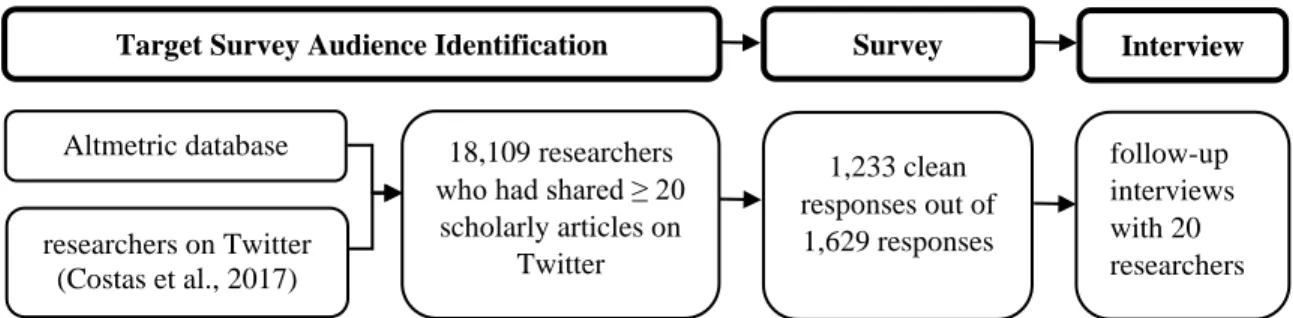
Figure 4.1 Brief Overview of Study Procedure ... 37
Figure 5.1 Distribution of Researchers by Age ... 55
Figure 5.2 Distribution of Researchers by Gender ... 56
Figure 5.3 Distribution of Researchers by Country (log data)... 58
Figure 5.4 Distribution of Researchers by Education ... 59
Figure 5.5 Distribution of Researchers by Position ... 61
Figure 5.6 Distribution of Researchers by Discipline ... 62
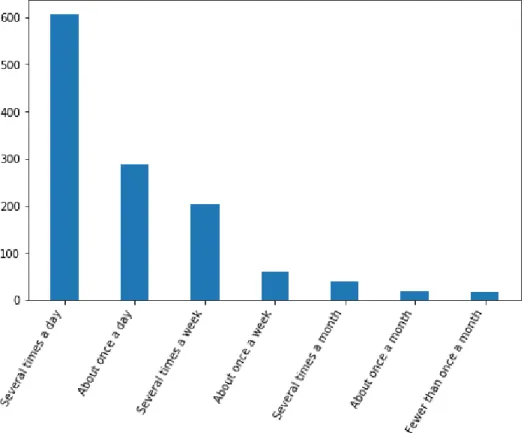
Figure 5.7 Frequency of Twitter Use for Professional Purposes ... 66
Figure 5.8 Categories of Twitter Accounts Followed by Researchers ... 68
Figure 5.9 Categories of Twitter Accounts with Which Researchers Interact ... 70
Figure 5.10 Twitter Use for Professional Purposes by Age... 71
Figure 5.11 Twitter Use for Professional Purposes by Gender ... 72
Figure 5.12 Twitter Use for Professional Purposes by Continent ... 73
Figure 5.13 Twitter Use for Professional Purposes by Education ... 74
Figure 5.14 Twitter Use for Professional Purposes by Position ... 75
Figure 5.15 Twitter Use for Professional Purposes by Discipline ... 76
Figure 5.16 t-SNE Clustering Results (Tweeting) ... 87
Figure 5.17 t-SNE Clusters Radar Chart (Tweeting) ... 89
xv
Figure 5.19 t-SNE Clusters Radar Chart (Retweeting) ... 93
Figure 5.20 t-SNE Clustering Results (Replying) ... 94
Figure 5.21 t-SNE Clusters Radar Chart (Replying) ... 96
Figure 5.22 t-SNE Clustering Results (Liking) ... 97
Figure 5.23 t-SNE Clusters Radar Chart (Liking) ... 99
Figure 5.24 Differences Between the Scholarly Acts Before and After Tweeting ... 133
Figure 5.25 Differences Between the Scholarly Acts Before and After Retweeting... 134
Figure 5.26 Differences Between the Scholarly Acts Before Tweeting and Retweeting ... 135
xvi
LIST OF TABLES
Table 4.1 Rule of Thumb for Interpreting the Size of a Correlation Coefficient ... 46
Table 5.1 Distribution of Researchers by Age ... 54
Table 5.2 Distribution of Researchers by Gender ... 55
Table 5.3 Distribution of Researchers by Country ... 57
Table 5.4 Distribution of Researchers by Continent ... 57
Table 5.5 Distribution of Researchers by Education ... 58
Table 5.6 Distribution of Researchers by Position ... 60
Table 5.7 Distribution of Researchers by Discipline ... 62
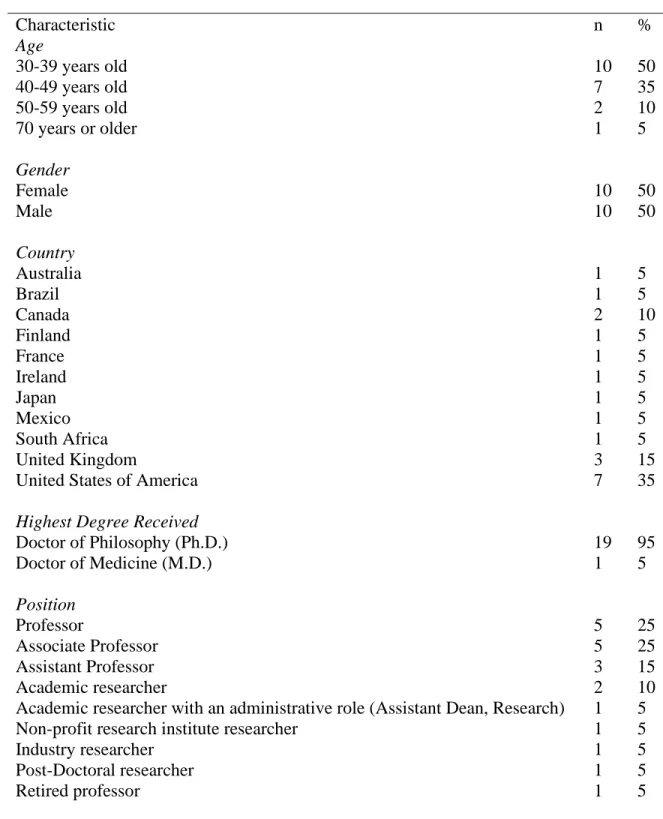
Table 5.8 Interview Participant Characteristics ... 64
Table 5.9 Frequency of Twitter Use for Professional Purposes ... 65
Table 5.10 Categories of Twitter Accounts Followed by Researchers ... 67
Table 5.11 Categories of Twitter Accounts with Which Researchers Interact ... 69
Table 5.12 Kruskal-Wallis Test Results of Opinions by Age ... 79
Table 5.13 Kruskal-Wallis Test Results of Opinions by Gender... 80
Table 5.14 Kruskal-Wallis Test Results of Opinions by Continent... 81
Table 5.15 Kruskal-Wallis Test Results of Opinions by Education ... 83
Table 5.16 Kruskal-Wallis Test Results of Opinions by Position ... 84
Table 5.17 Kruskal-Wallis Test Results of Opinions by Education ... 85
Table 5.18 Sentiment of Opinions on Articles in Tweeting ... 86
Table 5.19 Descriptive Statistics of t-SNE Clustering Results (Tweeting) ... 88
xvii
Table 5.21 Descriptive Statistics of t-SNE Clustering Results (Retweeting) ... 91
Table 5.22 Sentiment of Opinions on Articles in Replying ... 94
Table 5.23 Descriptive Statistics of t-SNE Clustering Results (Replying) ... 95
Table 5.24 Sentiment of Opinions on Articles in Liking ... 97
Table 5.25 Descriptive Statistics of t-SNE Clustering Results (Liking) ... 98
Table 5.26 Acts Before Tweeting a Scholarly Article ... 109
Table 5.27 Acts After Tweeting a Scholarly Article ... 109
Table 5.28 Kruskal-Wallis Test Results of Acts Before and After Tweeting by Age ... 110
Table 5.29 Kruskal-Wallis Test Results of Acts Before and After Tweeting by Gender ... 111
Table 5.30 Kruskal-Wallis Test Results of Acts Before and After Tweeting by Continent ... 112
Table 5.31 Kruskal-Wallis Test Results of Acts Before and After Tweeting by Education ... 113
Table 5.32 Kruskal-Wallis Test Results of Acts Before and After Tweeting by Position ... 114
Table 5.33 Kruskal-Wallis Test Results of Acts Before and After Tweeting by Position ... 117
Table 5.34 Acts Before Retweeting a Scholarly Article ... 118
Table 5.35 Acts After Retweeting a Scholarly Article ... 118
Table 5.36 Kruskal-Wallis Test Results of Acts Before and After Retweeting by Age ... 119
Table 5.37 Kruskal-Wallis Test Results of Acts Before and After Retweeting by Gender ... 120
Table 5.38 Kruskal-Wallis Test Results of Acts Before and After Retweeting by Continent .... 121
Table 5.39 Kruskal-Wallis Test Results of Acts Before and After Retweeting by Education ... 122
Table 5.40 Kruskal-Wallis Test Results of Acts Before and After Retweeting by Position ... 124
Table 5.41 Kruskal-Wallis Test Results of Acts Before and After Retweeting by Position ... 126
Table 5.42 Correlation Matrix of Scholarly Acts Before and After Tweeting ... 128
xviii
Table 5.44 Wilcoxon Signed-rank Test Result (Before vs. After Tweeting) ... 132
Table 5.45 Wilcoxon Signed-rank Test Result (Before vs. After Retweeting) ... 134
Table 5.46 Wilcoxon Signed-rank Test Result (Before Tweeting vs. Retweeting) ... 135
Table 5.47 Wilcoxon Signed-rank Test Result (After Tweeting vs. Retweeting) ... 136
Table A.1 Survey Data Cleaning ... 209
Table A.2 Coding of Disciplines ... 212
Table A.3 Coding Scheme of Motivations ... 213
1
CHAPTER 1: INTRODUCTION
According to the Association of College & Research Libraries (ACRL), division of American Library Association (ALA), scholarly communication is "the system through which research and other scholarly writings are created, evaluated for quality, disseminated to the scholarly community, and preserved for future use" (American Library Association, 2006). In this definition, the scholarly communication process covers a wide range of scholarly activities. Scholarly works being discovered and used are not spelled out, but they are important latent components in the scholarly communication lifecycle, connecting the preservation of scholarly works and the creation of new scholarship.
This dissertation research chooses this definition as the working definition of scholarly communication because the scope of scholarly communication in this dissertation is more than “communicative” activities (Borgman & Furner, 2002, pp. 6). In addition to being “writers”, “linkers”, “submitters”, and “collaborators” (Borgman & Furner, 2002, pp. 6), researchers’ activities in their workflow, such as searching for, obtaining access to, initial evaluation of, reading and sensemaking of, organization and knowledge structuring of scholarly works, are also of importance to be explored.
The term “scholarly act” (Haustein, Bowman, & Costas, 2016) is adopted in this
dissertation to describe scholarly activities occurring in the context of diverse scholarly
2
broadly defined scholarly communication process. By conducting these “scholarly acts,”
researchers leave digital traces online, indicating their engagement with the scholarly objects. In other words, a digital trace is the electronic record of a user-generated scholarly act on a
particular scholarly object, mediated by a particular information service or platform. Digital traces data, accordingly, are collections of individual digital traces captured and recorded for a given period of time.
Figure 1.1 Framework of the Digital Trace of Scholarly Acts (DTSA)
As is shown in Figure 1.1, when an actor conducts an activity on a scholarly object in a
medium, a ternary relationship, act, is created among these three entities. The actor, the scholarly object, and the medium all have their own attributes and information. The act mainly has two
Motivation
Act details: Timestamps, location data, device data… Actor’s
information
Object’s information
Scholarly Object Actor
Medium
Act Medium’s attributes
3
categories of attributes: act details and act content. The act details are the pieces of information associated with the actor, scholarly object, and medium. The content is what an actor generates to describe or comment on the scholarly object, which is also based on the affordances of the medium. These two types of attributes, especially the act details, abound in the digital
environment of researchers’ workflow today. They are regarded as the digital traces of scholarly activities providing evidence in understanding researchers’ interactions with scholarly works. These act details can be viewed as metadata of the acts. However, in this study, the term “act details” is proposed and used to specifically describe the metadata of the scholarly acts instead of using the generic term “metadata.”
Figure 1.2 Citation as a Digital Trace of a Scholarly Act (Citing)
Motivation Bibliographic
information of the citing document Citing author’s
information
Bibliographic information
Cited Article Citing Author
Citing Article
Cite Attribute: scholarly article
4
The type of scholarly trace that has been most thoroughly studied is citations (Bornmann & Daniel, 2008). A citation is created when a citing author cites a previously published
document in a new scholarly document. As is shown in Figure 1.2, similar to what has been depicted in the Framework of the Digital Trace of Scholarly Acts (DTSA) (Figure 1.1), an act of citing is formed through the interaction among a citing author (actor), a cited document
(scholarly object), and a citing document (medium). This trace of a citation can be inverted into this act of citing. These three elements (the citing author, the cited document, and the citing document) are essential in the creation of a citation and have been researched in extensive empirical studies. The attributes of a citation that have been studied in existing works are mainly
citation details (bibliographic information of the citing paper), and citation content (or citation context).
Researchers leave traces of their behavior during many stages of their research process (Cronin, Snyder, Rosenbaum, Martinson, & Callahan, 1998; Marchionini, 2010). Parts of this process were formerly invisible. Now with scholarship moving online, we can access various types of digital traces of researchers’ activities. Twitter, an open platform featured with the quick dissemination of information, sharing beyond peer groups, democratized comments, and largely unfiltered critiques, is one of the platforms that provide the richest data of digital traces around scholarly articles.
5
both the act details and content surrounding the communication of scholarly articles on Twitter (e.g., Na, 2015; Thelwall, Haustein, Larivière, & Sugimoto, 2013; Tsou, Bowman, Ghazinejad, & Sugimoto, 2015). However, while the tweet connects the tweeting author and the article, the intent of the author in sharing the article is often not explicitly clear. The exploration of content has revealed that the majority of tweets do not hold a positive stance or recommendation towards the scholarly articles that are included. For instance, Thelwall et al. (2013) found that more than 95% of the tweets tweeting a collection of journal articles were neutral; Tsou (2015) reported that only around 17% of tweets tweeting a collection of psychology articles revealed the intention of the recommendation of the papers. To complement these findings, in this dissertation, a different approach was used to explore researchers’ sentiment of opinions on scholarly articles. Instead of examining the tweet content, surveys and interviews of the actor, the tweeting user, were used to capture their intent (RQ1, RQ3).
As can be seen in Figures 1.2 and 1.3, the occurrence of a scientific tweet resembles the creation of a scientific citation in nature. However, these two interactions differ from each other in many ways. One of the major differences is that the trace creators on Twitter are not limited to researchers. For instance, around 25.8% of Twitter accounts that have included a link to a
6
and Twitter users. Specifically, this study started with their acts of sharing scholarly articles on Twitter and expanded this to explore how this fits into their other scholarly acts (RQ2).
Figure 1.3 Tweet as a Digital Trace of a Scholarly Act (Sharing on Twitter)
Through the exploration of the motivations behind citations, citation theories including the normative theory (Kaplan, 1965), social constructivist theories (Gilbert, 1977), and concept symbols theory (Small, 1978) have been proposed and discussed. Similarly, a large number of the current altmetric studies were developed from an empirical perspective. However, the digital traces of the scholarly acts can only serve as a post hoc operationalization of user motivations, interests, needs, intentions, or post-act usage that led to the acts (Kurtz & Bollen, 2010). This is
Motivation Tweet details:
Timestamps, location data, device data… Tweeting author’s
information
Object’s information
Scholarly Object Tweeting Author
Share Attribute:
microblogging platform
7
similar to the idea of the semiotic citation theories (Wouters, 1999; Cronin, 2000; Wouters, 2016), which states that the sign of citation is “not a representation of reality, however distorted, but an object in the real world of knowledge making” (Wouters, 2016, pp.87). The low level of reflection on the fundaments of scholarly acts is a barrier that hinders the induction of theoretical development about the nature of these digital traces. Although currently, many types of digital traces can be collected on a large scale, inverting the traces into activities requires further understandings of the meaning of the acts, particularly the motivation of the actors. Sud and Thelwall (2014) discussed the importance of the use of creator motivation interviews or
questionnaires among six methods to evaluate altmetrics. Investigating scholars’ perceptions of the acts, their motivations behind the acts (RQ3), and the impact of these articles on their own works (RQ4) can help provide richer descriptions and narratives of their behaviors. Then, a fuller picture of the acts and digital traces can be mapped.
To sum up, aiming to study researchers’ activities around scholarly articles on Twitter, this study selected only researchers who used Twitter as the subjects of inquiry. By conducting a large-scale survey and follow-up interviews, this study aimed to expand current altmetric
8
9
CHAPTER 2: LITERATURE REVIEW
2.1 Scholarly Communication in the Digital Age
2.1.1 Scholarly Activities and Scholarly Communication
According to Gelfand (2008), the definition of scholarly communication has only been in our standard lexicon since 1992, when Anthony Cummings and colleagues edited the report of
University Libraries and Scholarly Communications (Cummings, 1992). The Association of Research Libraries (ARL) and the American Association of Universities (AAU) then joined forces to address and study the problems identified in the Cummings report. Scientific and technological information was one of the three major topics discussed. Later, the Association of College and Research Libraries (ACRL) Division of the American Library Association (ALA) created a scholarly communication toolkit to assist the academic library community to work with faculty to better understand the key issues, and develop strategies for change that could introduce methods and best practices in scholarly communication. The definition of scholarly
communication for those purposes is:
“Scholarly Communication is the system through which research and other scholarly writings are created, evaluated for quality, disseminated to the scholarly community, and preserved for future use.” (American Library Association, 2006)
Information and Communication Technology (ICT) is playing an increasingly important role in supporting and enhancing modern research and scholarly communication. The use of the Internet, digital libraries, and computing grids has enabled a seamless flow of seeking,
10
research practices to evolve on a larger scale, becoming richer in communication means and patterns, with fewer boundaries in space and time than before (Friedlander, 2009). In this digital age, researchers are able to “ask new questions, create new kinds of scholarly products, and reach new audiences” (Borgman, 2010, pp. xvii).
The Web 2.0 environment takes scholarly communication one step further, featuring the participation of more stakeholders (O'reilly, 2009). Extensive studies have been conducted to explore researchers’ opinions and adoption of social media tools (e.g., Nicholas & Rowlands, 2010; Meyer et al., 2011; Bulger et al., 2011; Harley, Acord, Earl-Novell, Lawrence, & King, 2010). As the continuous improvement of scholarly communication infrastructures, more possibilities are emerging to study the information diffusion (e.g., De Choudhury, Lin, Sundaram, Candan, Xie, & Kelliher, 2010; Chang, 2010) and behaviors of researchers (e.g., Rhodes, Bowie, & Hergenrather, 2003; Mohammadi, Thelwall, Haustein, & Larivière, 2015).
According to Palmer, Teffeau, and Pirmann (2009), the literature on scholarly
information behavior dates back at least to the reports from the 1948 Royal Society Scientific Information Conference and the 1952 Chicago School symposium on specialized information (Egan, 1954). Boyer (1990) discusses four dimensions of scholarship, which are discovery, integration, application, and teaching, indicating the “interdisciplinary, interpretive and integrative” nature of scholarship (Boyer, 1990, pp. 21). Specifically, the discovery dimension broadly refers to scholarly investigation to the unknown and to the gaps in human knowledge, which comes very close to the definition of “research” (He & Jeng, 2016); the integration dimension involves connections across scientific disciplines; the application dimension
11
(Boyer, 1990). Following a similar idea, Unsworth (2000) proposes seven “scholarly primitives,” including discovering, annotating, comparing, referring, sampling, illustrating, and
representing. These primitives are basic functions “common to scholarly activity across disciplines, over time, and independent of theoretical orientation” (Unsworth, 2000, pp. 1). Building on these, Palmer and colleagues (2009) further refine the concept of “scholarly
primitives” in their comprehensive review of scholarly information practices. Specifically, they frame their review around five core scholarly activities, including searching, collecting, reading, writing, and collaborating. In addition, they also include an additional category of “cross-cutting primitives,” which encompasses monitoring, notetaking, translating, and data practices (Palmer et al., 2009, pp. 28).
In Theories of Informetrics and Scholarly Communication: A Festschrift in Honor of Blaise Cronin edited by Sugimoto (2016), Haustein, Bowman and Costas’s chapter (2016) propose a framework of scholarly acts grouped into three categories: accessing, appraising, and applying, with an increasing level of engagement. In this framework, a wide range of scholarly acts is incorporated. According to their definition, accessing includes acts that “involve accessing and showing interest in the research object” (pp.378); appraising includes acts of mentioning the research object on “various platforms such as microblogs, in a social network, in a comment, on a Q&A site, listserv, or rating or voting platforms, as well as in a podcast or video, presentation, review, blog post, Wikipedia article, mainstream media and news, or scientific or policy
12
improvement of a dataset or software, and so on (Haustein et al., 2016). In the same book (Sugimoto, 2016), another important chapter by Moed (2016) conceptualized altmetrics as “traces of the computerization of the research process.” (pp. 362) Particularly, four aspects of the research process were distinguished: 1) the collection of research data and development of research methods; 2) scientific information processing; 3) communication and organization; and 4) research assessment. Moed (2016) built on the notions of Michael Nielsen in his monograph
Reinventing Discovery: The New Era of Networked Science (Nielsen, 2010), and emphasized the importance of conceiving computerization in a broad sense in the digital age.
Publishing platforms and altmetrics data aggregating tools provide the usage and social media mentions data, which reflect slightly different but overall similar sets of scholarly acts. ImpactStory, one of the earliest altmetrics data aggregators, tracked views, saves, discussions, and recommendations (ImpactStory, 2012). A similar classification was proposed by Lin and Fenner (2013) for the Article-Level Metrics in the Public Library of Science (PLoS).
Altmetric.com, currently one of the largest altmetrics data providers (Adie & Roe, 2013), have been tracking various sources of : Scopus and Web of Science citations, social networks (e.g., Twitter, Facebook, Google+, LinkedIn, and Pinterest), multimedia and community platforms (e.g., Youtube, Reddit, and StackOverflow), public policy documents, academic and non-academic blogs, news outlets, online reference managers, research highlights (F1000), post-publication peer review platforms (Pubpeer and Publons), Wikipedia, and the Open Syllabus Project.
13
their bookmarked publications. A work by Didegah, Alperin, and Costas (2018) investigated the path from Mendeley readership to citations. Through matching citing authors in Scopus with Mendeley users, they identified 270 users (about 5%) citing at least one of the articles they saved to their Mendeley libraries. Xu, Brown, and Hemminger (2018) interviewed researchers at two universities in the U.S. on nine groups of forty scholarly acts. In the interviews, participants talked about how much they think the acts indicate the scholarly product involved was of value to them and discussed the common flow of their scholarly acts.
2.1.2 Social Media and Scholarly Communication
Information sharing behavior on social media can be viewed as a process in which the individuals provide useful information reciprocally to all entities who may find it relevant (Gardoni, Spadoni, & Vernadat, 2000), aiming to amplify the value of information or to create new information (Deng, Lin, Liu, Chen, & Li, 2017; Van den Hooff & De Ridder, 2004). Information sharing activities are intertwined with other information practices, such as
information seeking and use (Pilerot & Limberg, 2011). Online information sharing can promote innovation by contributing to the crowdsourcing of knowledge, origination transparency and openness, and the effectiveness of information technology (Fei, 2011). In the sphere of scholarly communication, a wealth of studies has been conducted to explore scientists’ opinions and adoption of social media tools (Meyer et al., 2011; Bulger et al., 2011; Harley et al., 2010; Nicholas & Rowlands, 2010).
14
social media venues are increasingly being studied. For instance, Acord and Harley (2013) examine how the affordances of new digital technologies intersect with disciplinary conventions rooted in contemporary scholarly communication. Gruzd and colleagues (2012) employed the Unified Theory of Acceptance and Use of Technology (UTAUT), a widely adopted technology acceptance theory, to investigate how and why scholars in the field of Information Science and Technology use social media for scholarly communication. There are also studies on researchers’ information behavior on social network services that are specifically targeted at the academic community, for instance, Academia.edu and ResearchGate (Nández & Borrego, 2013; Van Noorden, 2014).
According to Acord and Harley (2013), the communication of the final archival scholarly publications differs from the communication of scholarly information that has a
work-in-progress nature. As scholars formulate, develop and refine their works, they are gradually more willing to share their work with a wider group of colleagues and audiences. Although social media enables a more immediate sharing of ideas, the embryonic discussion with a wider audience occurs not as often as the communication with a smaller group of targeted and trusted colleagues (Acord & Harley, 2013).
In addition to cultural drivers of academic conventions, many factors are found to affect the use of online tools for sharing scholarly information, including not only practical issues such as time, budget, access to resources, and receiving due credit, but also personal issues such as privacy, trust, and ego (Acord & Harley, 2013). The communication climate is found to
15
needs, and perceived extent of social support have a significant influence on an individual’s self-disclosure (Lai & Yang, 2015). The psychological ownership of content also has a positive effect on an individual’s willingness to share information online (Lee, Lee, Lee, Park, & Kim, 2008).
The impact of personality traits on information sharing behavior of individuals in the online environment has been studied extensively. Factors including self-efficacy, personal outcome expectations, perceived enjoyment, individual attitudes towards knowledge sharing are found to be positively related to the motivation of information sharing (Gupta & Dhami, 2015; Lu & Hsiao, 2007; Oh & Syn, 2015; Papadopoulos, Stamati, & Nopparuch, 2013; Thatcher, Loughry, Lim, & McKnight, 2007). In addition, trust, particularly interpersonal trust, is also found to play an important role in online information sharing behavior (Liu, Rau, & Wendler, 2015; Wilson, Straus, & McEvily, 2006), considering that sharing information online entails both human-machine interaction and human-human interaction (Deng et al., 2017). Both trust and personality traits were found to have a significant impact on information sharing behavior on social media, with trust playing a mediating role between personality traits and the sharing behavior (Deng et al., 2017).
16
Some communications theories are also relevant to scholarly communication on social media. Marshall McLuhan (1964) emphasizes the important role of media and the characteristics of the media compared to the content that they carry, based on which he proposes that media is the “Extensions of Man.” Lasswell (1948) proposes the “Principle of 5Ws” in communications as information transmission: “who” refers to the communicator who formulates the message; “what” is the content of message; “whom” describes either an individual recipient or
the audience of mass communication; “in which channel” indicates the medium of transmission; “with what effect” is the outcome of the message. These apply in the transmission of ideas and knowledge on social media. Katz (1957) introduced the notion of opinion leaders and opinion followers and discussed the critical role of opinion leaders in the communication of information. The opinion leader theory is particularly relevant to the Diffusion of Innovation theory (Ryan & Gross, 1943; Rogers, 1962; Toews, 2003), in which adopters receive and accept innovations communicated through certain channels over time.
Also relevant are the Social Information Processing theory and social network theories. The Social Information Processing (SIP) theory was developed by Walther (1992), which described how people develop and manage relationships in a computer-mediated environment without nonverbal cues. Granovetter (1973; 2018) demonstrated the important role of weak ties because they have the potential to bring new ideas, information, and people to their own
17
Sugimoto, Work, Larivière, and Haustein (2017) provide a comprehensive review of the scholarly use of social media. Specifically, social media tools and platforms used by researchers for scholarly purposes were categorized into eight categories (Sugimoto et al., 2017):
1. social networking (e.g., Facebook, LinkedIn, Google+, ResearchGate, Academia.edu) 2. social bookmarking and reference management (e.g., Mendeley, Zotero, CiteULike,
BibSonomy)
3. social data sharing (e.g., Figshare, SlideShare, GitHub, Re3data.org) 4. video (e.g., Youtube, TED Talks)
5. blogging (e.g., ResearchBlogging)
6. microblogging (e.g., Twitter, Sina Weibo, Tumblr) 7. wikis (e.g., Wikipedia)
18
these factors often generated contradictory results given the various populations of investigation and the time of the studies.
2.1.3 Twitter and Scholarly Communication
As a real-time microblogging network, Twitter has been studied extensively in various contexts, among which how scholars use Twitter is an important topic. Zhao and Rosson (2009) described Twitter as a “people-based RSS feed” (pp. 5). In Van Noorden (2014), Twitter was found to be the most “interactive” social media network among researchers. Although Twitter was only used regularly by 13% of the surveyed researchers, half of them reported that they used it to follow discussions on research-related issues, and 40% said that it is a medium for scholarly discussions (compared with 15% on ResearchGate).
There are four major types of activities on Twitter: posting a tweet (also called tweeting), reposting an existing tweet (also called retweeting), replying to a tweet, and liking a tweet. These four types of activities on Twitter are different in nature. Tweeting and retweeting are sometimes accompanied by text input as content from the users, although 80%-95% tweets of scientific articles are found to reflect no obvious opinions on the articles (Thelwall et al., 2013; Na 2015). Retweets are sometimes marked by RT (“retweet”) or MT (“modified tweet”). Sometimes HT (“Heard Through” or “Hat Tip”) is used to indicate that the content of this tweet is not forwarded from the Twitter platform, although it is possible that it is from a Twitter user.
19
science rarely used Twitter. In addition, by combining quantitative and qualitative methods, they observed several differences in the way researchers use Twitter: compared with researchers in the other investigated disciplines, biochemists retweeted the most; economists shared the most links; researchers in digital humanities and cognitive science used Twitter more for
conversations (Holmberg & Thelwall, 2014). In another study that analyzed the thematic orientations of publications mentioned on Twitter, the fields of general medicine and social sciences showed more prominence (Costas, Zahedi, & Wouters, 2015). Overall, the general presence of altmetrics varies across different scientific disciplines (Costas et al., 2015; Haustein, Bowman, Holmberg, Peters, & Larivière, 2016; Holmberg & Thelwall, 2014).
Efforts have been made to identify scientists on Twitter (Ke et al., 2017; Costas, van Honk, & Franssen, 2017). Researchers’ use of Twitter shows some distinct patterns. For instance, researchers tend to share more links and retweet more than the average Twitter users (Holmberg & Thelwall, 2014). Across personal and professional tweets, affordance use on Twitter has been shown to vary based on department, gender, academic age, age, and Twitter activity (Bowman, 2015). In a study of Twitter user profiles, it was reported that users who tweet academic articles describe themselves more factually by emphasizing their occupational
20
(Letierce, Passant, Breslin, & Decker, 2010; Priem & Costello, 2010). However, the content of the tweets tends to be limited to the title, or part of the title of the scientific article being tweeted (Friedrich, Bowman, Stock, & Haustein, 2015; Thelwall et al., 2013).
Twitter affects the dissemination of research papers. Based on the investigation of 4166 articles from 76 Twitter users and 124 non-Twitter users, Ortega (2016) found no significant differences between the citation impact of papers authored by Twitter users and non-Twitter users. However, articles authored by Twitter users are more tweeted than those of non-Twitter users. In addition, the number of followers on Twitter was found to indirectly influence the citation impact (Ortega, 2016). Focusing on the goals, functions, and features of research, Liu and Fang (2017) investigated tweets of the top 100 papers of 2015 on Altmetric.com to explore factors that should be incorporated in using Twitter mentions to evaluate articles. In the study of Priem and Costello (2010), two main reasons for tweeting scientific articles were reported by researchers. First, it fit their workflow better. Second, it helped them get around paywalls to articles.
21
2.2 Citation Theories, Citer Motivation, and the Cited Works
A citation is the linkage between the citing author(s) and the cited work. Through the lens of the framework of Digital Trace of Scholarly Acts (DTSA), it is a trace created by the citing author(s) when they cite the cited work. Accordingly, it can tell us something about both the citing author(s) and the cited work. Borgman and Furner (2002) discussed two approaches to conceptualize the relationship between the citing and the cited documents: an artifact-oriented approach and a person-oriented approach. The person-oriented approach is based on the idea that the linkage can be viewed as the result of human actions. Thus, the motivations of the citer, and the situations that may potentially have an influence on the citer’s “judgment and decision making” are important questions of inquiry (Borgman & Furner, 2002, pp.37).
This section reviews relevant literature on citation theories, citer motivation, and the cited works, aiming to provide a better understanding of the most thoroughly studied DTSA so far – citations.
2.2.1 Citation Theories
Blaise Cronin’s book The Citation Process (1984) provides the first major statement on citation theory. In a more recent book Theories of Informetrics and Scholarly Communication
edited by Sugimoto (2016), Cronin describes the “chameleon nature” of citation as follows (Cronin, 2016, pp.13):
22
2014), or, verging on the poetic, as frozen footprints on the landscape of scholarly achievement (Cronin, 1981)” (Cronin, 2016, pp. 13).
Two principal opposing theories of citing behavior have been developed in past years: the Mertonian normative view and the post-modernist social constructivist view of citing behavior. In this section, these two theories and the concept symbols theory are reviewed.
2.2.1.1 The Normative Theory
The Mertonian normative view is named after the founder of the modern sociology of science, Robert K. Merton (Merton, 1973). Merton (1968) argues that referencing in research is a “moral obligation to acknowledge one’s sources” (1968, pp. 622).
“The reference serves both instrumental and symbolic functions in the transmission and enlargement of knowledge. Instrumentally, it tells us of work we may not have known before, some of which may hold further interest for us; symbolically, it registers in the enduring archives the intellectual property of the acknowledged source by providing a pellet of peer recognition of the knowledge claim, accepted or expressly rejected, that was made in that source” (Merton, 1968, pp. 622).
Citations are considered as part of the academic reward system (Merton, 1968). Merton views citation as the “pellet of peer recognition” (pp. 620), and the citing behavior as a
normative constraint in science as part of the “composite cognitive and moral framework” (pp. 622). As a result, citations can be viewed as indicators of intellectual and cognitive influence, reflecting norms and values of science (Kaplan, 1965). In other words, the normative framework sees evaluative bibliometric analyses as appropriate for the assessment of scientific results.
23
“nontechnical and extended sense of common ownership of goods” (Merton, 1973, pp. 273).
Universalism, as defined by Merton, “finds immediate expression in the canon that truth-claims,
whatever their source, are to be subjected to pre-established impersonal criteria” (Merton, 1973, pp. 210). The disinterestedness norm is described as “a passion for knowledge, idle curiosity, altruistic concern with the benefit to humanity, and a host of other special motives have been attributed to the scientist.” (1973, pp. 276). According to the organized skepticism norm, scientific claims must be exposed to critical scrutiny before being accepted by the scientific community. Haustein and colleagues (2016) additionally pointed to the norm of originality (Ziman, 2000) in their review of citation theories.
Borgman and Furner (2002) point out two assumptions of the normative theory that can be tested by empirical research. First, the analysis of the motivations of the citers can reveal if they are more than professional, scholarship-serving, and rational (rather than personal, self-serving, and political). Second, it can be analyzed if the quality of a document is the most significant factor affecting its citation counts.
2.2.1.2 The Constructivist Theory
The social constructivist view is grounded in the assumption that scientific knowledge and scientific activities are socially constructed (Knorr-Cetina, 1991; Latour, 1987). Because citing is an act embedded in the social dynamics of scientific research, the motivations behind citing are influenced by socially constructed reasons and not necessarily by universalistic reasons. Specifically, these motivations might include to demonstrate their familiarity with the important literature in the field, to appeal to the readers or reviewers of the journal in which the citing document is to be published, to establish the legitimacy of the topic of the citing
24
and so on (Case & Higgins, 2000; Bornmann & Daniel, 2008). For instance, Gilbert (1977) described citing as an aid to persuasion:
“A scientist who has obtained results which he believes to be true and important has to persuade the scientific community (or, more precisely, certain parts of that community) to share his opinions of the value of his work… Accordingly, authors typically show how the results of their work represent an advance on previous research; they relate their particular findings to the current literature of their field; and they provide evidence and argument to persuade their audience that their work has not been vitiated by error, that appropriate and adequate techniques and theories have been employed, and that
alternative, contradictory hypotheses have been examined and rejected” (Gilbert, 1977, pp. 115-116).
Haustein and colleagues (2016) discussed four sources of distortion or biases in their review for a better understanding of this theory: persuasion hypothesis, perfunctory citations, Matthew effect, and negational citations. Because of these social influences, the constructivist theory believes that the intellectual and cognitive content of articles has little influence on how they are received (Bornmann & Daniel, 2008). It opposes the normative theory and questions the validity of evaluative citation analysis.
2.2.1.3 The Concept Symbols Theory
The concept symbols theory was proposed by Henry Small (Small, 1978). This theory considers the citation as symbolic of the idea expressed in the paper and is based on Garfield’s (1964) notion of citations as descriptors in subject indexing (Haustein et al., 2016).
25
By citing a paper, an author is associating particular ideas with the paper that they are working on. Specifically, these ideas could be concepts, statements, methodology, results, or conclusions of other studies (Small, 1978). Small’s (1978) concept symbol theory was particularly discussed in the study of the “sociocognitive location” of scholars (Costas et al., 2012; Moed, 2006) and the field of scientometrics (Guns, 2013).
Drawing on Wouters (1999), Cronin (2000) views citations as signs and citing as a symbolic practice. He provides a semiotic analysis of citations and citation behavior in which the artifact-oriented approach and the person-oriented approach (Borgman & Furner, 2002) may be reconciled.
In 2016, Small (2016) revisited the debate between the normative theory and the constructivist theory, and draw the theories of cooperation and competition from evolutionary biology to explain citing behavior. He suggested using game theory and computer simulation to study cooperation and competition to arrive at a new avenue for research into citation practice and social norms in science (Small, 2016).
2.2.2 Citing Behavior and the Citer Motivation
Eugene Garfield (1962) was among the first to list and categorize citing motives:
• “Paying homage to pioneers.
• Giving credit for related work (homage to peers).
• Identifying methodology, equipment, etc.
• Providing background reading.
• Correcting one’s own work.
• Correcting the work of others.
26 • Substantiating claims.
• Alerting to forthcoming work.
• Providing leads to poorly disseminated, poorly indexed, or uncited work.
• Authenticating data and classes of fact (physical constants, etc.).
• Identifying original publications in which an idea or concept was discussed.
• Identifying original publication or other work describing an eponymic concept or term.
• Disclaiming work or ideas of others (negative claims).
• Disputing priority claims of others (negative homage)” (Garfield, 1962, pp. 85). This list of motives is summed up based on the citations’ observed location in the text, their language content, and their variations, differences, and regularities in patterns of use. Both the normative theory of citing behavior and the constructive views are reflected in this list. This study and another similar classification scheme (Lipetz, 1965) are described as “pioneer work on citing behavior” in the comprehensive review of citing behavior by Bornmann and Daniel (2008, pp.51). In the Scholarly Communication and Bibliometrics review by Borgman and Furner (2002), they comment that this list is rather “more prescriptive of ‘when to cite,’” than “descriptive of the actual motivations of citers in practice” (pp. 22).
A number of subsequent empirical investigations of citing behavior have been conducted. The two major approaches are the content analysis of the citation context (Small, 1978, 1982) and surveys and interviews (Borgman & Furner, 2002).
27
These categories provided insight into the purposes and the type of connectedness of scholarly communication; they also revealed the importance of the cited work to the citing work
(Bornmann & Daniel, 2008). The framework in this study was tested later by Cano (1989) by surveying researchers.
Using a similar method of content analysis, Chubin and Moitra (1975) developed six categories of citations based on research articles in physics, including four affirmative types and two negational types. They reached similar conclusions to Moravcsik and Murugesan (1975): the most frequent citations were Basic Essential, Subsidiary Essential, and Additional
Supplementary, which could reflect the research impact of the cited work on the citing work. Different from Moravcsik and Murugesan (1975), they found lower percentages of Affirmative Perfunctory and Negational citations. In the categorization of Spiegel-Rösing based on citations in Science Studies publications (1977), the most frequent use of cited research was to
substantiate a statement or an assumption made in the citing text or to point out further relevant information (80%). The remaining 20% of the citations could be assigned to 12 other citing categories. Krampen, Becker, Wahner, and Montada (2007) conducted a large-scale citation context analysis of articles published in scientific psychological journals. They developed a mixed categorization considering both the content and the characteristics of the citations.
28
Brooks (1985; 1986) was among the first to systematically and directly ask researchers to state their particular motivations for specific citations. Interviewing researchers from a wide spectrum of departments, Brooks (1985; 1986) classified their citer motivations into three
groups: 1) persuasiveness, positive credit, currency, and social consensus; 2) negative credit; and 3) reader alert and operational information. Vinkler (1987) asked chemists to assess their
motivations for a total of 484 citations in their articles according to predefined categories. There were two major groups of motivations in Vinkler’s categorization scheme: “Professional
Motivations,” which was related to the theoretical and practical content of the cited work; and “Connectional Motivations,” which focused on the social relationships in the scientific
community. As mentioned earlier, Cano (1989) asked researchers in the field of structural engineering to classify their citations based on the scheme developed by Moravcsik and
Murugesan (1975). The results showed that the major citation category used by the scientists was perfunctory (26%), followed by organic (21%) and conceptual (19%).
Bonzi and Snyder (1991) found no significant differences between the citing motivation of self-citations and citations to other works. In Liu (1993), only a few scientists said that more than 80% of their citations were essential; a few even stated their citations were totally non-essential. Liu (1993) concluded that “more often than not, the cited documents were used in a more peripheral than critical manner” (pp. 21). Case and Higgins (2000) surveyed
29
2.2.3 Citing Behavior and the Cited Works
Examination of the citing behavior can also provide insights into the properties or characteristics of the cited works, which are reflected by their perceived “citation worthiness” (Borgman & Furner, 2000, pp. 23).
Content or context analysis has been used to analyze the citers’ attitudes towards the cited artifacts. For instance, in Moravcsik and Murugesan (1975) reviewed in Section 2.2.2, the second category (organic versus perfunctory citations) and the fourth category (confirmative versus negational citations) were related to the citers’ perception of the impact of the cited works. Cole (1975) examined 123 articles that cited Robert K. Merton. The analysis shows that about half of those articles had cited Merton’s work in a “ceremonial” fashion: “In fact, it is the theoretician as an authority that is being utilized rather than substantive theory” (Cole, 1975, pp. 208). Garfield (1978) conducted a content analysis of citations to a highly debated article by Arthur Jensen (1969) published in Harvard Educational Review. Results showed that more than half had cited it negatively or as an example of controversy. In a later study, Garfield and Welljams-Dorof (1990) focused on the publications by Steven E. Breuning, who in 1988 was convicted of scientific fraud. The citation content analysis showed that less than 10% of the citations were positive. Somewhat different results arose from a study of Kochan and Budd (1992) on John Darsee, who was discovered to have fabricated his research data. The content analysis showed that Darsee’s articles were cited predominantly positively in subsequent papers.
30
1962. Citations in both studies were categorized using the same category. The results of the second study showed that 85% of the articles cited Watson and Crick (1953) for historical reasons or background discussion (compared to 58% in the first study). In contrast, whereas in the second study only 13% of the sample were actively using Watson and Crick’s (1953) information (4%), methods (5%), or theory (4%), a greater proportion (28%) of the citations in the first study were made for this purpose (information=1%, methods=11%, theory=16%). Tabatabaei (2013) developed a coding scheme for assessing the contribution of information science to other disciplines, as reflected by the functions of highly-cited Journal of the
Association for Information Science and Technology (JASIST) papers in their citing articles. A coding scheme with five categories, including “applied,” “contrastive,” “supportive,”
“reviewed,” and “perfunctory” (pp.153).
Interviews were also utilized to explore the properties of the cited works. For instance, White and Wang (1997) interviewed agricultural economics researchers and categorized the contributions of the cited articles are as follows: 1) Analogies/Contrasts/Comparisons; 2) Corroboration; 3) Data; 4) Identification of Originator; 5) Justification; 6) Methodology; 7) Tangential/Ceremonial; and 8) Theory, Concepts, Definitions. Overall, the topicality and contents of the cited document were two of the most commonly used criteria on which citation decisions were based (White & Wang, 1997). They noted that their scheme of categories was similar to other schemes derived rationally rather than empirically, for instance, the eight
31
Shadish, Ragsdale, Glaser, and Montgomery (1995) elicited citers’ opinions about their own citing activity, based on which they conducted a factor analysis and a multiple regression analysis to test the relationship between the degree of citedness and citing authors’ perceptions of the cited works. They found that highly-cited papers were perceived by citers as classics and as less creative. To explain the somewhat counter-intuitive lower creativity of highly-cited papers, the authors stated “those articles that are creative in a way that does not fit into existing
conceptual frameworks or into accepted social norms for scholarship in an area. Or they may be so creative that they rapidly become part of the accepted canon, and henceforward are rarely specifically cited.” (Shadish et al.,1995, pp. 485). Case and Higgins (1995) found that while less-cited publications were less-cited more frequently to establish the legitimacy of the citer’s topic, highly-cited works were more frequently cited in order to review prior work in the area.
Additionally, only highly-cited documents were cited because the cited work was authored by a recognized authority in the field; none less-cited document was cited due to this reason. Three factors in predicting citation counts were detected: 1) the perception that the cited work is novel, well known, and represents a genre of studies; 2) the judgment of the citing scientist that citing a prestigious work will promote the cognitive authority of his or her own work; and 3) the
perception that a cited item serves criticism – which could establish the citer as an authoritative, critical thinker (Case and Higgins, 2000).
2.3 Critical Incident Technique
32
proved to be more helpful than the vague descriptions previously used for pilot selection and training. Another important definition is provided by Chell (1998), particularly in regard to the objective of CIT – to “gain understanding of the incident from the perspective of the individual, taking into account cognitive, affective, and behavioral elements” (Chell, 1998, pp. 56). The factual accounts of respondents’ behavior collected using this technique can provide unequivocal understandings regarding their behavior (Flanagan, 1954; Chell, 1998).
The CIT approach has been applied in a wide range of fields, for instance, market research (Grove & Fisk, 1997; Wong & Sohal, 2003; Gremler, 2004), healthcare (Kemppainen, 2000; Bradley, 1992; Arora, Johnson, Lovinger, Humphrey, & Meltzer, 2005), and information seeking behavior research (Auster & Choo, 1994; Wilkinson; 2001; Zach, 2005). Particularly, Tenopir, King, & Bush (2004) employed the CIT method to study the use of scholarly journals by medical faculty.
In the CIT approach, data are normally collected as words through interviewing the subjects to discuss their perspectives about specific incidents that happened to them (Creswell, 1998). Therefore, rich details of firsthand experiences can be collected (Bitner, Booms, and Mohr, 1994), which can be used to provide evidence relevant to the subject matter as an
empirical starting point. Based on these factual accounts of participants’ behavior, it is possible to employ an “interpretive, naturalistic approach” to the subject matter, which is aligned with the overall goal of qualitative research (Denzin & Lincoln, 1994, pp. 2). Edvardsson (1992) has suggested that the CIT technique is inductive in nature.
33
respondents have the opportunity to better recall and provide a detailed account of their experiences (Stauss & Weinlich 1997). Thus, more concrete information regarding the events can be collected compared to a general inquiry on their opinion and behavior.
In the data analysis process, the purpose is to create a categorization scheme that
summarizes and describes the data while at the same time ‘sacrificing as little as possible of their comprehensiveness, specificity, and validity’ (Flanagan, 1954, pp. 344). The incidents
represented complex activities that often contained more than one intention. As a result, it was recommended that categories should not be considered exclusive (Flanagan, 1954).
The CIT technique relies on events being remembered accurately by respondents. Due to the naturally retrospective nature of the interview, the CIT method has been criticized for the possibility to be flawed by recall bias based on respondents’ different retrospective capabilities (Michel 2001). Inaccurate memories might lead the participant to reinterpret the past event when describing and discussing it (Johnston 1995). Therefore, it is critical to evaluate the quality of their descriptions and discussions about the event. If the details are full and precise, the
information can be taken as accurate; whereas if the reports are vague, some of the data may be incorrect (Flanagan, 1954).
34
reliability, although the inter-observer reliability was low. Meanwhile, they obtained satisfactory content validity, construct validity, concurrent validity, and relevance in content.
Based on the strengths and weaknesses of CIT, researchers have suggested using CIT for specific purposes of research. According to Gremler (2004), the CIT technique is especially useful in three scenarios:
1. when the topic being researched has been sparingly documented (Grove and Fisk 1997), 2. as an exploratory method to increase knowledge about a little-known phenomenon, and, 3. when a thorough understanding is needed when describing or explaining a phenomenon
(Bitner, Booms, & Tetreault 1990).
35
CHAPTER 3: RESEARCH QUESTIONS
The overarching research aim of this dissertation is to gain a more comprehensive understanding of researchers’ activities around scholarly articles on Twitter. Specifically, the following four research questions drove this study:
RQ1: What opinions do researchers have on the scholarly articles they interact with
on Twitter? In this research question, the Twitter interactions investigated included tweeting, retweeting, replying, and liking on Twitter. These four acts reflect a comprehensive picture of the researchers’ sentiment of opinions in their interactions with scholarly articles on Twitter.
RQ2: How does sharing (tweeting and retweeting) scholarly articles on Twitter fit
into researchers’ workflows? In this research question, the scholarly acts workflow refers to the common scholarly acts that researchers would conduct around scholarly articles, including 1) skim the article to gain a very basic idea of it; 2) read the article in depth (examining at least some sections/figures/tables in the article very carefully); 3) look at online discussions of the article; 4) search for information about the author(s) of the article; 5) save the article to their computer or reference manager tools; 6) organize the article (such as renaming the article file or categorizing it into a folder); and 7) cite the article (in their working research papers or teaching materials).
RQ3: What are the motivations behind researchers’ sharing of scholarly articles on
36
behind the researchers’ examples of tweets containing scholarly articles were discussed in depth in the interviews.
RQ4: Do the scholarly articles shared by researchers on Twitter have an impact on
37
CHAPTER 4: METHODS
This dissertation research employed a sequential mixed-method approach. This included a large-scale survey and twenty follow-up interviews. In the interviews, questions were designed to not only follow up with the participants on their responses in the survey but also discuss specific examples of scholarly tweets created by the participants earlier. Overall, this study proceeded in three phases.
Phase I: The goal of the first phase was to identify the survey audience of this study.
Phase II: In the second phase, an online survey was conducted. Respondents of the survey were asked if they would like to participant in a follow-up interview. Then, interview participants were identified.
Phase III: The third phase consisted of twenty follow-up interviews with selected survey respondents.
Figure 4.1 Brief Overview of Study Procedure
Altmetric database
researchers on Twitter (Costas et al., 2017)
18,109 researchers who had shared ≥ 20
scholarly articles on Twitter
1,233 clean responses out of 1,629 responses
Target Survey Audience Identification Survey Interview