COMPLEXITY-BUILDING TRANSFORMATIONS
OF SILYL GLYOXYLATES
Daniel Copley Schmitt
A dissertation submitted to the faculty of the University of North Carolina at Chapel Hill in partial fulfillment of the requirements for the degree of Doctor of Philosophy in the
Department of Chemistry.
Chapel Hill 2011
Approved by
Advisor: Jeffrey S. Johnson
Chair: Michael T. Crimmins
Reader: David A. Nicewicz
ii © 2011
iii
ABSTRACT
Daniel Copley Schmitt
Complexity-Building Transformations of Silyl Glyoxylates (Under the direction of Jeffrey S. Johnson)
iv
ACKNOWLEDGEMENTS
I would like to thank my advisor, Jeffrey Johnson. Performing research with Jeff has been an extraordinary experience. His passion for chemistry is infectious. It is hard to imagine a more ideal advisor than Jeff; he is incredibly driven and maintains a hunger for results, but is unwaveringly good-natured. This is a rare and desirable combination in the field of organic chemistry. In addition to chemistry, Jeff has taught me much about leadership, perseverance, and attention to detail. I also thank him for providing me with various exciting projects.
I am grateful to Prof. Michael Crimmins for multiple reasons. During Anne-Marie’s and my postdoc hunt, he was understanding of our two-body problem, and helped us to find positions together. I appreciate Prof. Crimmins’ patience with me when I smashed his ozonator on the brick walkway between Kenan and Caudill. I also appreciate the multiple letters of recommendation Prof. Crimmins has provided me with over the past year. I am also appreciative of my other committee members: Maurice Brookhart, Marcey Waters, and Dave Nicewicz. In particular, I thank Dave for both serving as a reader of this thesis, and for his stellar work on the zaragozic acid project; his experimental results were trustworthy and reproducible, which was a great benefit to Andy and I.
v
[3+2] are greatly appreciated. Her hard-working and eager nature will serve her well as graduate student at Emory.
I would like to express my gratitude to many of my coworkers over the past few years. Kim Steward and Justin Malinowski have continuously brought a high level of intensity from day one. I thank my intramural soccer teammates Michael Corbett and Dung “Lebron James of Soccer” Do; I hope they both continue to excel in the Johnson group and in soccer. In particular, I must thank my fellow silyl glyoxylysts: Steve Greszler, Greg Boyce, and Mike Slade; their independent findings and helpful suggestions had an immense impact on my studies. I also thank Austin Smith for countless thoughtful discussions and the sharing of ideas; his intellectual contributions and friendship are both valued. I am also grateful to former group members Shanina Sanders, Matthew Campbell, Chris Tarr, and Andrew Parsons. I consider it a privilege to have worked with them; they are each talented scientists and have my utmost respect.
vi
I acknowledge Chris Franks for his friendship, which dates back to Woods Hole Day Care Coop circa 1987. Our many scientific studies (including the effects of liquid N2 and tesla coils on spiders, and the design of a chocolate-powered turbo-hopper time
machine) made me want to pursue a scientific career. I am also grateful to Matt “Vlade” Kogut, Dan “Senator” Solworth, Ian “Doctor” Pegg, Garrett “GB” Boyd, Matt “Concussed” Rosene, Randy “Grinder” Dodds, and Guam “Matthew” Salas. My relatively new friends, Dr. Troy Knight, Dr. Nicki Knight, and Prof. Henry Taube Knight are thanked for their roles as golf buddy, chef, and entertainer, respectively.
I thank the 2004 Red Sox for showing me that if you believe in yourself, anything is possible. Growing up a Sox fan, while often traumatic, was valuable in preparing me mentally for graduate school. I am also thankful to the ’07 Sox, ’08 NY Giants, ’09 Terrier hockey, and ’09 Tar Heel basketball for the joy and goodness they have brought to the world.
vii
I would like to thank my in-laws: Charlotte, Randy, and August. I value the time I have spent with you over the past few years. Getting to know them has been a great experience for me. They have made me feel welcome in their family.
My parents have been loving and supportive for my entire life. I’m sure that raising me was no easy task, but they were always patient and kind to me, even when I probably didn’t deserve it. They always encouraged me to ask questions about the world around me, which undoubtedly contributed to my interest in chemistry. Thank you for everything.
viii
ix
TABLE OF CONTENTS
LIST OF TABLES...xii
LIST OF FIGURES AND SCHEMES……….…xiii
LIST OF ABBREVIATIONS...………xvi
CHAPTER 1 TOTAL SYNTHESIS OF ZARAGOZIC ACID C……….1
1.1 Introduction...1
1.1.1 Reactivity of Silyl Glyoxylates...1
1.1.2 The Zaragozic Acids...3
1.1.3 Retrosynthetic Analysis and Multicomponent Coupling...4
1.2 Total Synthesis of Zaragozic Acid C...6
1.2.1 Completion of the Dioxabicyclo[3.2.1]octane Core………6
1.2.2 Completion of (+)-Zaragozic Acid C...10
1.3 Efforts Toward a Second-Generation Synthesis………12
1.3.1 Retrosynthesis Involving a C6 Electrophile………..12
1.3.2 MPV-Initiated Multicomponent Couplings………...14
1.3.3 Enolate-Initiated Multicomponent Couplings………20
1.4 Conclusion...26
1.5 Experimental...27
CHAPTER 2 DEVELOPMENT OF A BROOK/
IRELAND-CLAISEN REARRANGEMENT SEQUENCE…60
2.1 Introduction...60
2.2 Results and Discussion...62
2.2.1 Preparation of Allylic Silyl Glyoxylates………62
2.2.2 Identification of Competent Nucleophiles……….64
2.2.3 Scope and Limitations………....66
2.2.4 Determination of Stereochemistry……….70
2.2.5 Mechanistic Insight...71
2.2.6 Implications of Enolate Geometry……….74
2.3 Conclusion...76
2.4 Experimental...76
2.5 References...98
CHAPTER 3 SYNTHESIS OF TRACHYSPIC ACID DIMETHYL ESTER……….100
3.1 Introduction………..100
3.1.1 Isolation and Biological Activity……….100
3.1.2 Prior Synthetic Approaches to Trachyspic Acid………..101
3.1.3 Retrosynthetic Analysis………...103
3.2 Development of the Tandem Aldol/Michael Three Component Coupling………...106
3.2.1 The Unexpected Byproduct……….106
xi
3.2.3 Scope and Limitations of Three Component
Glycolate Michael Reaction……….…………112
3.3 A Three Component Coupling Approach to Trachyspic Acid Dimethyl Ester………..114
3.3.1 Enone Synthesis………...114
3.3.2 Three Component Coupling with C4-C9 Michael Acceptor…...121
3.3.3 Completion of Trachyspic Acid Dimethyl Ester……….…122
3.3.4 Attempts to Increase the Diastereoselectivity of Spiroketalization………..…128
3.3.5 Asymmetric Three Component Couplings of Chiral Silyl Glyoxylates………...132
3.3.6 Chiral Auxiliary Cleavage………...134
3.4 Conclusion………...137
3.5 Experimental………...………….137
xii
LIST OF TABLES
Table 1-1 Influence of Temperature on MPV-Initiated Cascade ………17
Table 1-2 Optimization of Nucleophilic Esterification ………18
Table 1-3 Tartrate Enolate Initiated Three Component Coupling Attempts ….……23
Table 2-1 Sequenced Brook and Ireland-Claisen Rearrangements ....………..67
Table 2-2 Preparation of Contiguous Quaternary Center .……….70
Table 3-1 Optimization with Reformatsky Nucleophile ...………..110
Table 3-2 Optimization with Various Metal Enolates………..111
Table 3-3 Enol Ether Dipolarophiles in Nitrile-Oxide Cycloaddition ………117
Table 3-4 Identification of Isoxazoline Aromatization Conditions………..…105
Table 3-5 Scope of Enolsilane Dipolarophiles in Nitrile-Oxide Cycloaddition …..119
Table 3-6 Spiroketalization ...………..124
Table 3-7 Methyl Ester Cleavage Attempts……….127
Table 3-8 Enolate Initiated Couplings of Chiral Silyl Glyoxylates with C4-C9 Enone………134
xiii
LIST OF FIGURES AND SCHEMES
Scheme 1-1 General Reaction Scheme Involving Silyl Glyoxylates ...………2
Scheme 1-2 Effective Nucleophile/Electrophile Pairs………2
Figure 1-1 The Glycolic Acid Subunit in Biologically-Active Compounds…………3
Figure 1-2 Zaragozic Acid Structure……….4
Scheme 1-3 Retrosynthetic Plan Incorporating Geminal Diaddition………..5
Scheme 1-4 Multicomponent Coupling ...…...………6
Scheme 1-5 Synthesis of C1-C7 -Lactone ..……….7
Scheme 1-6 Tricyclic Ketalization……….7
Scheme 1-7 Proposed Mechanism of C6 Stereochemical Correction………8
Scheme 1-8 Inversion of C6 and C3 ………10
Scheme 1-9 Benzyl Deprotection Incompatible with Olefin………11
Scheme 1-10 Completion of Zaragozic Acid C ………12
Scheme 1-11 Stereochemistry of Multicomponent Coupling ………13
Scheme 1-12 Second-Generation Retrosynthesis of Zaragozic Acid C ..……….14
Scheme 1-13 Aldol Triggered by Oppenauer Oxidation/MPV Reduction… ………….14
Scheme 1-14 Proposed MPV-Initiated Multicomponent Coupling……….15
Scheme 1-15 Preparation of Tethered Silyl Glyoxylate for Intramolecular Cascade..…18
Scheme 1-16 Nucleophilic Esterification of a Benzylic Dibromide ...………19
Scheme 1-17 Known Stereoselective Aldol with Tartrate Enolate ……….20
Scheme 1-18 Proposed Three Component Coupling with Tartrate Enolate…..……….20
Scheme 1-19 Synthesis of t-Butyl Tartrate Derivatives ………..21
xiv
Scheme 1-21 Umpolung C5-C6 Strategy ……….25
Scheme 1-22 Attempted Couplings of Ketoester with Isobutyraldehyde ………..26
Scheme 2-1 Ireland-Claisen Rearrangement of Allyl Glycolate Esters ………..60
Scheme 2-2 Silyl Glyoxylate Reactivity………61
Scheme 2-3 Proposed Rearrangement Cascade ………62
Scheme 2-4 Allylic Esters Incompatible with Traditional Silyl Glyoxylate Synthesis……….…63
Scheme 2-5 Nucleophilic Esterification of Silyl Glyoxylic Acids………64
Scheme 2-6 Rate Requirements for the Desired Cascade………..65
Figure 2-1 Nucleophiles that Generate Oligomers or Unidentified Products………..65
Scheme 2-7 Successful Ireland-Claisen Rearrangement with MeMgBr ………66
Scheme 2-8 Crotyl Zinc Bromide Generates Three Adjacent Chiral Centers ……….68
Scheme 2-9 Organozinc Bromide Induced Dimerization ……….69
Figure 2-2 Ineffective Silyl Glyoxylates……….69
Scheme 2-10 Product Derivatization for Stereochemical Determination………71
Scheme 2-11 (Z)-Glycolate Enolate Intermediate ………71
Scheme 2-12 FMO Analysis………...……….72
Scheme 2-13 Mechanistic Rationale for Diastereoselectivity Trend………...…73
Scheme 2-14 Lu’s Highly Diastereoselective Couplings via a (Z)-Lithium Enolate…..74
Scheme 2-15 Linghu’s Diastereoselective Aldol via a (Z)-Magnesium Enolate……….75
Scheme 2-16 Greszler’s Couplings via Equilibration to the (E)-Zn Enolate ………….75
Figure 3-1 Compounds Isolated from Talaromyces trachyspermus………..101
Scheme 3-1 Hatakeyama’s Racemic Synthesis of Trachyspic Acid ………102
xv
Scheme 3-3 Three Simple Fragments to Access Trachyspic Acid ……….104
Scheme 3-4 Diastereoselective Spiroketalization………105
Scheme 3-5 Retrosynthetic Analysis ………106
Scheme 3-6 Attempted Three Component Coupling with -Allyl Palladium…….…107
Scheme 3-7 Regioselectivity of Different Michael Acceptors ……….108
Scheme 3-8 Enones Compatible with Tandem Aldol/Michael Reaction ………….113
Scheme 3-9 Potential Applications of Glycolate Michael Coupling ………114
Scheme 3-10 Cyclocondensation Approach to Isoxazole 27b ………115
Scheme 3-11 Regiochemistry of Nitrile-Oxide Cycloadditions………116
Scheme 3-12 Direct Comparison of Enolsilane to Alkyne Dipolarophile ………120
Scheme 3-13 Preparation of C4-C9 Michael Acceptors ……….121
Scheme 3-14 Three Component Coupling with C4-C9 Michael Acceptor …………122
Scheme 3-15 Synthesis of Spiroketalization Precursor ………125
Scheme 3-16 Furan Cleavage and Synthesis of Trachyspic Acid Trimethyl Ester ….125 Figure 3-2 1H NMR Spectral Overlay (DMSO-d6) ………..126
Scheme 3-17 Spiroketal Isomerization………..…128
Scheme 3-18 Selective Hydrolysis with Cu(NO3)2 ………130
Scheme 3-19 Preparation of Enones with Hindered Furans………..130
Scheme 3-20 Spiroketalization with C4 t-Butyl Ester ………131
Scheme 3-21 Diastereoselective Couplings of Chiral Silyl Glyoxylates………...132
Scheme 3-22 Synthesis of Chiral Silyl Glyoxylates ……….133
Scheme 3-23 Preparation of Tertiary Chiral Silyl Glyoxylate ……….136
xvi
LIST OF ABBREVIATIONS AND SYMBOLS
2D-NMR two-dimensional nuclear magnetic resonance
p-ABSA para-acetamidobenzenesulfonyl azide
Ac acetate
AIBN azobisisobutyronitrile
Ar aryl
aq aqueous
atm atmospheres
Bn benzyl
BOC benzyloxycarbonyl
br broad
br s broad singlet
n
Bu normal-butyl
t
Bu tert-butyl
Bz benzoyl
CAN ceric ammonium nitrate
CSA camphorsulfonic acid
13
C NMR carbon nuclear magnetic resonance spectroscopy
C–C carbon-carbon bond
cat catalytic amount or catalyst
conv conversion
COSY correlated spectroscopy
xvii
mCPBA meta-chloroperoxybenzoic acid
d doublet or days
DBU 1,8-diazabicyclo[5.4.0]undec-7-ene DCC N,Nʹ-dicyclohexylcarbodiimide
dd doublet of doublet
DDQ 2,3-dichloro-5,6-dicyanobenzoquinone ddt doublet of doublet of triplets
DEAD diethylazodicarboxylate
DIAD diisopropylazodicarboxylate DIBAL-H diisobutylaluminum hydride
DIEA ethyldiisopropylamine
dq doublet of quartet
DMAP 4-N,N-dimethylaminopyridine
DME dimethoxyethane
DMF N,N-dimethylformamide
DMSO dimethyl sulfoxide
d.r. diastereomeric ratio
dt doublet of triplet
E entgegen
E+ or El electrophile
eq equation
equiv equivalents
xviii
ESI electrospray ionization
Et ethyl
Et2O diethyl ether
EtOAc ethyl acetate
EWG electron withdrawing group
exo exocyclic
FID flame ionization detector
G2 Grubbs’ second generation catalyst
h hour
1
H NMR proton nuclear magnetic resonance spectroscopy
n-hexanal normal-hexanal
HOAc acetic acid
HMDS hexamethyldisilazane
HPLC high performance liquid chromatography HRMS high resolution mass spectroscopy
Hz hertz
ICR Ireland-Claisen Rearrangement
IR infrared spectroscopy
J coupling constant
kcal kilocalorie
L liter or ligand
LA Lewis acid
xix
LDA lithium diisopropylamide
LiHMDS lithium hexamethyldisilazide LRMS low resolution mass spectroscopy
M metal or molarity
m multiplet
Me methyl
MeCN acetonitrile
MeMgBr Methylmagnesium bromide
MeOH methanol
2-MeTHF 2-methyltetrahydrofuran
mg milligram
MHz megahertz
MIB 3-exo-morpholinoisoborneol
min minutes
mL milliliter
mmol millimole
mp melting point
MPV Meerwein-Ponndorf-Verley
n number of atoms or counterions
NBS N-bromosuccinimide
NIS N-iodosuccinimide
nd not determined
xx
NMP N-methylpyrrolidone
nOe nuclear Overhauser enhancement
NOESY nuclear Overhauser enhancement spectroscopy
nr no reaction
Nu nucleophile
OO Oppenauer Oxidation
PCC pyridinium chlorochromate
Ph phenyl
ppm parts per million
i
Pr iso-propyl
q quartet
R substituent
Rf retention factor
rac racemic
RCHO aldehyde
RCM ring-closing metathesis
rt room temperature
s singlet
SFC supercritical fluid chromatography SN2 bimolecular nucleophilic substitution
T temperature
t triplet
xxi
TBAF tetrabutylammonium fluoride
TBS tert-butyldimethylsilyl
TBDPS tert-butyldiphenylsilyl
TBSOTf tert-butyldimethylsilyl trifluoromethanesulfonate
TEA triethylamine
TEMPO tetramethylpiperidine-N-oxide
TES triethylsilyl
TMS trimethylsilyl
Tf trifluoromethanesulfonyl
THF tetrahydrofuran
TLC thin-layer chromatography
TMS trimethylsilyl
Tr trityl or triphenylmethyl
triflate trifluoromethanesulfonate
Ts para-toluenesulfonyl
UV ultraviolet
X anionic ligand, halide, substituent, or number
Xc* chiral auxiliary
Z zusammen
Ǻ Ǻngstrom
[] optical rotation
δ chemical shift or partial charge
CHAPTER 1
TOTAL SYNTHESIS OF ZARAGOZIC ACID C
1.1 Introduction
1.1.1 Reactivity of Silyl Glyoxylates
2
Scheme 1-1. General Reaction Scheme Involving Silyl Glyoxylates
To date, several three component coupling reactions have been developed that rely on silyl glyoxylate to provide molecular complexity from simple, achiral building blocks. Examples of compatible reactants include zinc acetylides or Grignard reagents with aldehydes (a and b, Scheme 1-2),2 vinyl Grignard reagent with nitroolefins (c),3 and Reformatsky reagents with ketones (d).5
Scheme 1-2. Effective Nucleophile/Electrophile Pairs
3
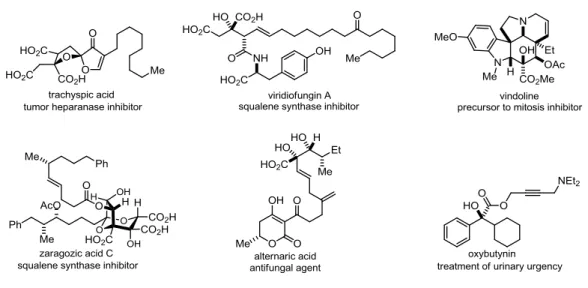
Figure 1-1. The Glycolic Acid Subunit in Biologically-Active Compounds
1.1.2 The Zaragozic Acids
4 Figure 1-2. Zaragozic Acid Structure
Due to their biological activity and novel structure, the zaragozic acids have attracted significant attention from the synthetic community. The six contiguous chiral centers of the core constitute the principal obstacle to synthesis, and have inspired many unique solutions.13-29 The first synthesis of zaragozic acid C was completed by Carreira and Du Bois in 1994, requiring 32 linear steps from commercially available starting materials.14 Prior to our work, the shortest route to zaragozic acid C was reported by the Evans group, involving 23 linear steps from D-tartaric acid.18 Notably, all prior approaches to the zaragozic acids rely on multistep alterations in functionality and oxidation state. In contrast, we aimed to achieve a “self-consistent synthesis”, defined by Hendrickson as a sequence of constructions not requiring any intervening refunctionalizations.30
1.1.3 Retrosynthetic Analysis and Multicomponent Coupling
5
bicyclic ketal by deconstruction into simple synthons reveals a repeating series of glycolic acid fragments (Scheme 1-3). Because silyl glyoxylates serve as geminal dipolar glycolic acid synthons, a trimerization of glycolic acid units represents a reasonable synthetic approach to the zaragozic acid core.
Scheme 1-3. Retrosynthetic Plan Incorporating Geminal Diaddition
David Nicewicz tested the hypothesis that enchainment of multiple equivalents of silyl glyoxylate could assemble most of the zaragozic acid skeleton in one step. Nicewicz found that the addition of one equivalent of vinyl Grignard reagent to two equivalents of 1a at -78 °C initiated the oligomerization process (Scheme 1-4). In the absence of an alternative secondary electrophile, the glycolate enolate intermediate 9
6 Scheme 1-4. Multicomponent Coupling
1.2 Total Synthesis of Zaragozic Acid C
1.2.1 Completion of the Dioxabicyclo[3.2.1]octane Core
Racemic hydroxy ester 12 was subjected to oxidative kinetic resolution providing ()-12 in 90% ee (Scheme 1-5).31 The C3 alcohol was acylated with benzyloxyacetyl chloride to provide glycolate ester 14. Subsequent ozonolysis of the terminal olefin revealed the C6 aldehyde. Kinetic enolization with LDA induced an intramolecular glycolate aldol addition to afford 16 after TMSCl trapping of the aldolate. The aldol reaction created the C6 and C7 stereogenic centers, where C6 was generated with undesired stereochemistry. This result can be rationalized by the closed transition state
7 Scheme 1-5. Synthesis of C1-C7 -Lactone
The C1 alkyl sidechain was introduced by means of a nucleophilic addition of the organolithium 17 to lactone 16 (Scheme 1-6). Treatment of the resulting ketol/lactol mixture with TsOH induced the desired ketalization onto C1; however, a -lactone was also formed, likely as a consequence of the incorrect stereochemistry at C3 and C6. Scheme 1-6. Tricyclic Ketalization
8
resulted in lactone opening as well as epimerization of C6. The mechanism (Scheme 1-7) of this fortuitous transformation may be initiated by alkoxide addition to the C3 lactone (not shown) or deprotonation of the C3 lactone with subsequent ketene formation. The resulting C6 alkoxide could trigger a retro-aldol fragmentation of the C5-C6 bond, producing a C6 aldehyde and a C5 glycolate enolate. Rotation of the C6 aldehyde, followed by aldol closure of the C5-C6 bond would result in the observed stereochemical correction. If C3 ketene formation is involved, aqueous workup would result in C3 carboxylic acid formation. t-Butyl esterification was then performed on the crude mixture to provide triester 21. Notably, this transformation was only possible because the zaragozic acid core had been assembled in the correct oxidation state from the outset of the synthesis.
Scheme 1-7. Proposed Mechanism of C6 Stereochemical Correction
9
Initial efforts involved attempts to reductively cleave the lactone, which could likely be reoxidized to the carboxylic acid. NaBH4 and DIBAL both selectively reduced
methyl esters in preference to the lactone. Borane reducing agents proved to be unreactive. We next investigated conversion of the lactone to a cleavable vinyl ether, with the expectation that the additional carbon atom could be removed through a haloform reaction. However, both Tebbe and Petasis reagents provided only unreacted starting material when exposed to lactone tricycle 19.
10 Scheme 1-8. Inversion of C6 and C3
1.2.2 Completion of (+)-Zaragozic Acid C
11
Scheme 1-9. Benzyl Deprotection Incompatible with Olefin
12 Scheme 1-10. Completion of Zaragozic Acid C
The synthesis of zaragozic acid C was completed in 18 linear steps, constituting the shortest synthesis to date. This was made possible by the rapid buildup of molecular complexity engendered by the silyl glyoxylate multicomponent reaction. Furthermore, the brevity of the sequence is also due in part to its “self-consistent” nature, as there was only one oxidation state modification throughout the synthesis (C6 ozonolysis).
1.3 Efforts Toward a Second-Generation Synthesis
1.3.1 Retrosynthesis Involving a C6 Electrophile
13
Scheme 1-11. Stereochemistry of Multicomponent Coupling
Another improvement would be to utilize an alternative terminal electrophile that would facilitate manipulation of C7 and C1 (an ,-unsaturated aldehyde). To this end, the cascade reaction was tested with cinnamaldehyde as the terminal electrophile, which provided the multicomponent coupling product in usable 40% yield and >10:1 d.r. with correct C6 stereochemistry. At this juncture, we had established the feasibility of assembling C4-C6 in one step with correct stereochemistry; however, we recognized that the use of vinyl Grignard reagent as the nucleophilic initiator would necessitate substantial modification for the installation of C3 functionality. The ideal C3 nucleophile would be prefunctionalized, initiate silyl glyoxylate dimerization, and generate C3, C4, C5, and C6 with proper relative stereochemistry.
Based on this idealized assembly, a revised retrosynthesis was considered. Zaragozic acid C could potentially be accessed by 1,4-reduction and ketalization of enone
14
alcohol 29. Triol 29 could be prepared by asymmetric dihydroxylation and Lindlar reduction of cascade product 30. This direct route hinged on the identification of a proper nucleophilic cascade trigger to constitute C3.
Scheme 1-12. Second-Generation Retrosynthesis of Zaragozic Acid C
1.3.2 MPV-Initiated Multicomponent Couplings
We considered the Meerwein-Ponndorf-Verley (MPV) reduction/aldol sequence developed by former group members Xin Linghu and Andrew Satterfield (eq. 1, Scheme 1-13) as a potential solution to the C3 nucleophile problem.35 Mechanistically, the reaction is proposed to involve Oppenauer oxidation of a magnesium alkoxide (generating aldehyde 31), with concurrent MPV reduction of silyl glyoxylate (generating magnesium alkoxide 32). Subsequent Brook rearrangement generates a glycolate enolate, which undergoes aldol coupling with the aldehyde 31 that was generated in situ
from the alkoxide.
15
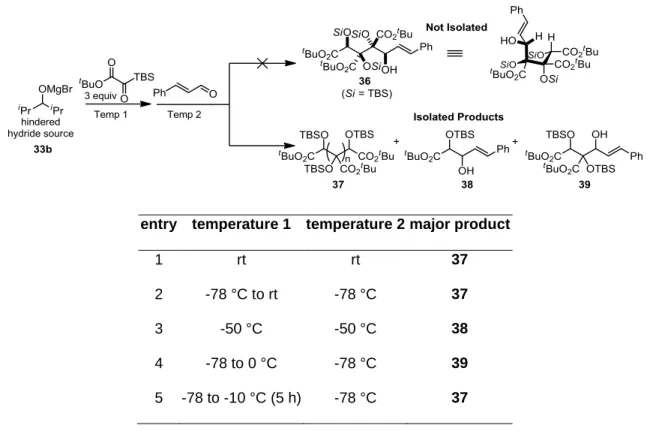
We hypothesized that employing a sterically hindered secondary magnesium alkoxide 33 would permit MPV reduction of the silyl glyoxylate, and would induce aldol addition to a second equivalent of silyl glyoxylate in preference to the sterically hindered ketone 34 (Scheme 1-14). After addition to a second equivalent of silyl glyoxylate 1a
and subsequent Brook rearrangement, enchainment of a third silyl glyoxylate unit would be possible. Finally, a third Brook rearrangement and aldol addition to the terminal electrophile (aldehyde 35) would provide multicomponent coupling product 30.
Scheme 1-14. Proposed MPV-Initiated Multicomponent Coupling
Chemoselectivity could potentially be controlled by stoichiometry and order of reagent addition, but the reaction would need to provide adequate stereoselectivity to be useful. The proposed coupling would install four contiguous stereocenters (C3-C6); while a relevant model for proper establishment of C3 relative stereochemistry was lacking, C4-C6 would preferably be formed with analogous stereochemistry to the parent vinyl Grignard-initiated coupling.
16
17
Table 1-1. Influence of Temperature on MPV-Initiated Cascade
entry temperature 1 temperature 2 major product
1 rt rt 37
2 -78 °C to rt -78 °C 37
3 -50 °C -50 °C 38
4 -78 to 0 °C -78 °C 39
5 -78 to -10 °C (5 h) -78 °C 37
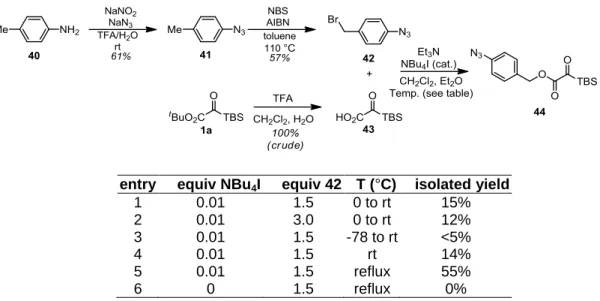
Due to the challenges associated with controlling the degree of oligomerization, we next investigated an intramolecular cascade using tethered silyl glyoxylates. The first objective was to synthesize a compound comprised of three silyl glyoxylate units. Previous studies in our group had revealed that t-butyl silyl glyoxylate could be cleanly modified to the silyl glyoxylic acid by treatment with TFA (Table 1-2, 1a → 43). Subsequent triesterification of glycerol with the silyl glyoxylic acid 43 under either Mukaiyama36 or DCC conditions was unsuccessful, as acylsilane decomposition occurred in each case. Conversion of the silyl glyoxylic acid to the acid chloride was also unsuccessful using oxalyl or thionyl chloride.
18
to its potential for elaboration under mild conditions via Huisgen cycloaddition.37 Initial nucleophilic esterification attempts resulted in poor yields (Table 1-2). However, heating the reaction to reflux (1:1 CH2Cl2:Et2O) resulted in 55% yield of the benzylic ester 44
(entry 5).
Table 1-2. Optimization of Nucleophilic Esterification
entry equiv NBu4I equiv 42 T (°C) isolated yield
1 0.01 1.5 0 to rt 15%
2 0.01 3.0 0 to rt 12%
3 0.01 1.5 -78 to rt <5%
4 0.01 1.5 rt 14%
5 0.01 1.5 reflux 55%
6 0 1.5 reflux 0%
19
Attempts to induce the MPV-initiated intramolecular coupling were met with no success. In order to initiate any reactivity, four equivalents of magnesium alkoxide 33b
were required. This may have been due to coordination of the three triazole moieties to the first three equivalents of magnesium, which would presumably inhibit formation of the six-membered transition state necessary for Oppenauer oxidation/MPV reduction. Nonetheless, using four or more equivalents of the hydride source caused decomposition to occur in each case. The products could not be identified, but may have resulted from multiple MPV reductions of tri-silyl glyoxylate 46. In some cases, attack of the terminal electrophile (cinnamaldehyde) occurred, but the desired coupling product was never isolated.
In order to be successful, the MPV/double intramolecular aldol/intermolecular aldol cascade will likely require a different tether. Intramolecular silyl glyoxylate coupling with triazole 46 would have required formation of two large rings; a more feasible coupling would involve the closure of smaller rings. In an effort to generate a smaller and more rigid tether, esterification of dibromide 47 was performed (Scheme 1-16). Due to the low yield of formation of di-silyl glyoxylate 48, we did not attempt analogous triesterification. In an effort to simplify the multicomponent coupling, we next considered prefunctionalization of the initial nucleophile.
20
1.3.3 Enolate-Initiated Multicomponent Couplings
Evans’ synthesis of zaragozic acid C established the C4C5 bond via an aldol reaction between tartrate silyl ketene acetal 49 and aldehyde 50 (Scheme 1-17).18 The high stereoselectivity at C4 is believed to result from approach of the aldehyde from the less hindered face of the tartrate ketal. We hypothesized that a prefunctionalized nucleophilic initiator, such as 49, would reduce the number of components necessary in the multicomponent coupling.
Scheme 1-17. Known Stereoselective Aldol with Tartrate Enolate
A three component coupling of a protected tartrate enolate (C3 and C4), a silyl glyoxylate (C5), and an aldehyde (C6) could provide the majority of the zaragozic acid core (Scheme 1-18). Ideally, the C6 aldehyde 52 would be oxygenated at both the - (C7) and - (C1) positions, and possess an alkene for installation of the C1 sidechain via cross metathesis. However, for test reactions, benzaldehyde was used.
Scheme 1-18. Proposed Three Component Coupling with Tartrate Enolate
21
prepared according to the Evans procedure: ()-tartaric acid was acylated with chloroacetyl chloride and esterified with condensed isobutylene to furnish tetra-ester
54.18 Deprotection of the secondary alcohols and ketalization with 1,1-dimethoxy cyclopentane provided ketal 49c. Enolization and TMS trapping provided silyl ketene acetal 49. Additionally, furan 49d was prepared with the expectation that the 2-furyl substituent could be ozonolyzed to reveal a carboxylic acid later in the synthesis.38 Beginning with commercially available 3-(2-furyl)acrylic acid 55, furan 49d was synthesized via an esterification, asymmetric dihydroxylation, and ketalization sequence.39
Scheme 1-19. Synthesis of t-Butyl Tartrate Derivatives
22
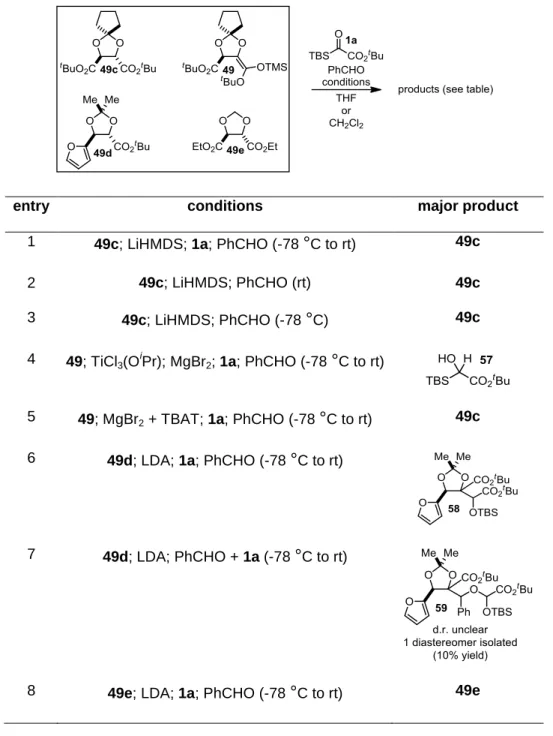
conversion, the unreacted tartrate ketal 49c was the sole identifiable product. Based on this result, we postulated that a retro-aldol reaction was occurring at elevated temperatures, regenerating ketal 49c. However, holding the temperature at -78 °C for the duration of the reaction still resulted in no conversion of ketal 49c. We reasoned that enolate formation was a problem, so silyl ketene acetal 49 was prepared. Using a modification of the Evans conditions (entry 4), alcohol 57 was obtained; this product may be formed by MPV reduction of the silyl glyoxylate by TiCl3(OiPr)3, with no subsequent
23
Table 1-3. Tartrate Enolate Initiated Three Component Coupling Attempts
entry conditions major product
1 49c; LiHMDS; 1a; PhCHO (-78 °C to rt) 49c
2 49c; LiHMDS; PhCHO (rt) 49c
3 49c; LiHMDS; PhCHO (-78 °C) 49c
4 49; TiCl3(Oi
Pr); MgBr2; 1a; PhCHO (-78 °C to rt)
5 49; MgBr2 + TBAT; 1a; PhCHO (-78 °C to rt) 49c
6 49d; LDA; 1a; PhCHO (-78 °C to rt)
7 49d; LDA; PhCHO + 1a (-78 °C to rt)
8 49e; LDA; 1a; PhCHO (-78 °C to rt) 49e
24
1-3). Simultaneous addition of benzaldehyde and silyl glyoxylate to a solution of the enolate of 49d resulted in formation of three component coupling product 59 (entry 7). Initially, this product was believed to be the desired C3-C6 coupling product, as the product’s mass and 1
H NMR spectrum appeared to be correct.
Further analysis confirmed incorrect connectivity: (1) the IR spectrum revealed no OH stretch, and (2) no exchangeable protons were revealed by 1H NMR after stirring with D2O. Additionally, preparation of 59 was possible by treatment of alcohol 60 with
LDA and silyl glyoxylate (Scheme 1-20). This indicated that the three component product resulted from an aldol reaction between the enolate of 49d and benzaldehyde, then alkoxide addition to silyl glyoxylate, Brook rearrangement, and a proton quench. We then conjectured that a less hindered tartrate enolate would be necessary, and prepared the formaldehyde acetal of diethyl tartrate.40 However, treatment of 49e with LDA, silyl glyoxylate, and benzaldehyde resulted in low conversion (entry 8).
Scheme 1-20. Determination of the Connectivity of Three Component Product 59
25
an aldehyde (C6) and ketoester 62 (C3-C5) (Scheme 1-21). In the proposed reaction, a silyl lithium reagent would add to the ketone of 62 and induce Brook rearrangement to form enolate 63. Aldol reaction between enolate 63 and a C6 aldehyde would provide the desired C5-C6 bond.
Scheme 1-21. Umpolung C5-C6 Strategy
Ketoester 62 was prepared by means of an aldol reaction of furan 49d with ethyl glyoxylate followed by Dess-Martin oxidation. Treatment of ketoester 62 with LiSiMe2Ph followed by isobutyraldehyde did not result in any of the desired coupling
product; instead, retro-Claisen fragmentation product 49d was formed (eq. 1, Scheme 1-22). Addition of LiSiMe2Ph to a premixed solution of ketoester 62 and isobutyraldehyde
26
Scheme 1-22. Attempted Couplings of Ketoester with Isobutyraldehyde.
1.4 Conclusion
In summary, a silyl glyoxylate cascade reaction allowed for the synthesis of (+)-zaragozic acid C in 18 linear steps. In addition to the multicomponent coupling, key steps included an intramolecular aldol reaction, and a one-pot lactone opening/retro-aldol/aldol sequence. The minimization of redox chemistry contributed to both the conciseness of the synthesis and to the unexpected solution for correction of C6 stereochemistry. This work further highlights the utility of silyl glyoxylates as geminal dipolar glycolic acid synthons.
27
still interested in an improved synthesis of the zaragozic acids, and the development of new cascade reactions is ongoing.
1.5 Experimental
Materials and Methods: General. Infrared (IR) spectra were obtained using a Nicolet 560-E.S.P. infrared spectrometer. Proton and carbon nuclear magnetic resonance spectra (1H and 13C NMR) were recorded on either a Bruker model Avance 500 (1H at 500 MHz and 13C NMR at 125 MHz), Bruker model Avance 400 (1H NMR at 400 MHz and 13C NMR at 100 MHz), or a Varian Gemini 300 (1H NMR at 300 MHz and 13C at 75 MHz) spectrometer with solvent resonance as the internal standard (1H NMR: CDCl3 at 7.23
ppm; C6D6 at 7.15 ppm and 13C NMR: CDCl3 at 77.0 ppm and C6D6 at 128.62 ppm). 1H
28
for a specific experiment and as a result may differ slightly from those found in the figures, which are averages of at least two experiments. Diethyl ether, tetrahydrofuran, and toluene were dried by passage through a column of neutral alumina under nitrogen prior to use. Unless otherwise noted, reagents were obtained from commercial sources and used without further purification. Triethylamine was freshly distilled from CaH2
under Ar prior to use. Side chains 53 and 30 were prepared according to the literature procedure.34
3-tert-Butoxycarbonyl-2,3-bis-(tert -butyl-dimethyl-silanyloxy)-4-hydroxy-2-vinyl-pentanedioic acid di-tert-butyl ester (12). A solution of 31.7 mL (31.7 mmol, 1.1 equiv) of vinylmagnesium bromide in THF (150 mL) was cooled to -78 °C and a solution of 15 mL (57.7 mmol, 1.1 equiv) of tert-butyl tert-butyldimethylsilyl glyoxylate (1a) in THF (50 mL) was added via cannula down the wall of the flask over 15 min. Once addition of the silyl glyoxylate was complete, the reaction was slowly warmed to -45 °C over 15 min. Once the cooling bath had reached -45 °C, the reaction was again cooled to -78 °C and 4.9 mL (43.3 mmol, 1.5 equiv) of tert-butyl glyoxylate was added via syringe. After stirring for 1 h at -78 °C, the reaction was quenched with 30 mL of saturated aqueous ammonium chloride solution. The two layers were separated and the aqueous layer was extracted with Et2O (3 x 40 mL). The combined organic layers were dried
(MgSO4) and concentrated in vacuo to furnish the crude product which was purified by
flash chromatography (1:2 CH2Cl2: petroleum ether linear gradient to 4:1
29
crystallized slowly (ca. 24 h) from a small amount (ca. 15 mL) of petroleum ether and yielded crystals suitable for X-ray analysis. Analytical data for 12: IR (thin film, cm-1) 3534, 2931, 2856, 1734, 1645, 1472, 1393, 1368, 1248, 1147, 1001; 1H NMR (400 MHz, CDCl3) 6.30 (dd, 18.0, 10.8 Hz, 1H), 5.17 (d, J = 11.6 Hz, 1H), 5.17 (d, J = 16.8, 1H),
4.56 (d, J = 10.4, 1H), 3.64 (d, J = 10.8 Hz, 1H), 1.52 (s, 9H), 1.50 (s, 9H), 1.44 (s, 9H), 0.92 (s, 9H), 0.81 (s, 9H), 0.22 (s, 3H), 0.12 (s, 3H), 0.11 (s, 3H), 0.09 (s, 3H); 13C NMR
(100 MHz, CDCl3) 170.6, 169.2, 169.1, 138.0, 117.2, 83.8, 83.0, 82.1, 77.4, 75.8, 74.7,
28.7, 28.6, 28.4, 26.9, 26.7, 19.7, 19.2, -1.0, -1.1, -1.5, -1.6; TLC (5:95 EtOAc: petroleum ether) Rf 0.33. Anal. Calcd for C32H62O9Si2: C, 59.40; H, 9.66. Found: C,
59.47; H, 9.74.
3-tert-Butoxycarbonyl-2,3-bis-(tert -butyl-dimethyl-silanyloxy)-4-hydroxy-2-vinyl-pentanedioic acid di-tert-butyl ester ()-12. A 50 mL round bottomed flask equipped with a stirbar was purged with O2 and charged with 82.2 mg (0.246 mmol, 0.055 equiv)
of the salen ligand A in dry toluene (11.3 mL) and treated with 53 μL (0.224 mmol, 0.05 equiv) of VO(OiPr)3 under a dry O2 atmosphere. The resultant dark brown solution was
stirred for 30 min. A solution of 2.9 g (4.48 mmol, 1.0 equiv) of racemic alcohol 12 in toluene (11.3 mL) was added via cannula to the catalyst solution. After 48 h, the reaction was passed through a plug of silica gel eluted with 1:9 Et2O:petroleum ether. After
30
ether) to furnish 1.5 g (51%) of alcohol ()-12 (e.r. 90:10). The enantiomer ratio was determined by CSP-SFC analysis of lactone 51.
3,4-Dihydroxy-5-oxo-2-vinyl-tetrahydrofuran-2,3-dicarboxylic acid di-tert-butyl ester (S1). A solution of 150 mg (0.23 mmol, 1.0 equiv) of bis-TBS ether ()-12 in THF (3.0 mL) at -45 °C was treated with 0.51 mL (0.51 mmol, 2.2 equiv) of a 1.0 M solution of tetrabutylammonium fluoride in THF. The solution was warmed to -20 °C and maintained at that temperature. After 1 h, 1.0 mL of H2O was added and the reaction was
extracted with CH2Cl2 (3 x 5 mL). The combined extracts were dried (Na2SO4) and
concentrated in vacuo to furnish the crude diol which was purified by flash chromatography (2:3 EtOAc: petroleum ether), to furnish 63 mg (80%) of the pure diol (S1) as a white foam. Analytical data for S1: IR (Nujol mull, cm-1) 3525, 3439, 2912, 2858, 1801, 1760, 1729, 1458, 1377, 1304, 1258, 1146, 1124; []Na -18.8 (c = 1.09, CH2Cl2); 1H NMR (500 MHz, CDCl3) 6.01 (dd, J = 17.0, 10.5 Hz, 1H), 5.49 (d, J =
17.0 Hz, 1H), 5.31 (d, J = 11.0 Hz, 1H), 4.65 (d, J = 10.5 Hz, 1H), 4.28 (s, 1H), 3.01 (d, J
= 11.0 Hz, 1H), 1.52 (s, 9H), 1.47 (s, 9H); 13C NMR (125 MHz, CDCl3) 171.5, 167.7,
31
3-tert-Butoxycarbonyl-2,3-bis-(tert -butyl-dimethyl-silanyloxy)-4-hydroxy-2-vinyl-pentanedioic acid di-tert-butyl ester (epi-12). To a solution of 750 mg (1.15 mmol, 1.0 equiv) of the alcohol (12) in THF (10 mL) was added 86 μL (0.57 mmol, 0.5 equiv) of
1,8-diazabicyclo[5.4.0]undec-7-ene. After 5 h, 1 mL of saturated aqueous ammonium chloride was added and the layers were separated. The aqueous layer was extracted with Et2O (3 x 8 mL) and the combined organic layers were dried (MgSO4) and concentrated in vacuo. Purification of the crude material (5:95 Et2O: petroleum ether) furnished 551
mg (73%) of the alcohol epi-12 as an oil. Analytical data for epi-12: IR (thin film, cm-1) 3428, 2930, 2857, 1746, 1729, 1713, 1473, 1393, 1369, 1255, 1155; 1H NMR (300 MHz, CDCl3) 6.49 (dd, J = 17.1, 10.8 Hz, 1H), 5.45 (dd, J = 17.1, 1.2 Hz, 1H), 5.10 (dd, J =
10.5, 1.5 Hz, 1H), 4.63 (s, 1H), 4.03 (s, 1H), 1.52 (s, 9H), 1.42 (s, 18H), 0.93 (s, 9H), 0.87 (s, 9H), 0.20 (s, 3H), 0.11 s, 3H), -0.01 (s, 3H), -0.02 (s, 3H); 13C NMR (100 MHz, CDCl3) 170.7, 170.1, 170.0, 137.6, 123.5, 85.5, 83.6, 82.8, 81.4, 74.6, 28.5, 28.2, 26.8,
26.1, 25.8, 19.7, 18.3, -1.8, -2.5, -4.3, -4.5 (two overlapping resonances); TLC (5:95 Et2O: petroleum ether) Rf 0.29. Anal. Calcd for C32H62O9Si2: C, 59.40; H, 9.66. Found:
C, 59.57; H, 9.78.
4-(2-Benzyloxy-acetoxy)-3-tert-butoxycarbonyl-2,3-bis-(tert
32
(1.1 mmol, 1.0 equiv) of the alcohol (12) in Et2O (14 mL) at 0 °C was added 1.3 mL of a
1.0 M EtMgBr solution in THF (1.26 mmol, 1.2 equiv). This solution was warmed to 23 °C and resulted in a thick slurry. Following stirring for 1 h, a solution of 0.32 mL (2.1 mmol, 2.0 equiv) of the acid chloride in Et2O (4 mL) was added via cannula (1 mL rinse).
The reaction was stirred at 23 °C for 18 h, then quenched by the addition of 6 mL of saturated aqueous ammonium chloride solution. After the layers were separated, the aqueous layer was extracted with additional Et2O (3 X 10 mL). The combined organic
layers were dried (MgSO4) and concentrated in vacuo. 1H NMR analysis of the crude
reaction revealed 74% conversion of the starting material. Purification of the crude reaction by flash chromatography (5:95 EtOAc: petroleum ether) yielded 540 mg (65%, 88% based on recovered starting material) of the acylated alcohol (14). Analytical data for 14: IR (thin film, cm-1) 2930, 2855, 1757, 1744, 1725, 1594, 1369, 1250, 1152;
[]Hg -3.8 (c = 2.15, CH2Cl2); 1H NMR (400 MHz, CDCl3) 7.34-7.22 (m, 5H), 6.39
(dd, J = 18.0, 11.2 Hz, 1H), 6.17 (s, 1H), 5.26 (d, J = 10.8 Hz, 1H), 5.23 (d, J = 18.0 Hz, 1H), 4.63 (d, J = 12.0 Hz, 1H), 4.53 (d, J = 11.6, 1H), 4.06 (s, 2H), 1.56 (s, 9H), 1.39 (s, 9H), 1.37 (s, 9H), 0.89 (s, 9H), 0.85 (s, 9H), 0.30 (s, 3H), 0.14 (s, 3H), 0.11 (s, 3H), 0.09 (s, 3H); 13C NMR (100 MHz, CDCl3) 169.3, 168.9, 167.9, 164.7, 137.2, 136.8, 128.7,
128.3, 128.2, 118.4, 87.0, 85.7, 83.9, 83.2, 83.0, 75.7, 73.5, 67.1, 28.7, 28.6, 28.5, 27.5, 26.9, 20.1, 19.4, -0.5, -0.7, -1.4, -1.7; TLC (5:95 EtOAc: petroleum ether) Rf 0.23. Anal.
33
4-(2-Benzyloxy-acetoxy)-3-tert-butoxycarbonyl-2,3-bis-(tert
-butyl-dimethyl-silanyloxy)-2-formyl-pentane dioic acid di-tert-butyl ester (S2). A solution of 646 mg (0.81 mmol, 1.0 equiv) of alkene 14 in 8.9 mL of CH2Cl2/MeOH/pyridine (10:1:1) was
cooled to -78 °C. O3 was bubbled slowly through the solution at -78 °C and the reaction was monitored by TLC. After 1 h (reaction complete by TLC), the reaction was purged with Ar for 15 min. Dimethylsulfide (300 μL, 4.1 mmol, 5.0 equiv) was then added via syringe and the reaction was warmed to ambient temperature and stirred for 2 h. Concentration of the crude reaction in vacuo followed by flash chromatography (5:95 EtOAc: petroleum ether) afforded 550 mg (85%) of the pure aldehyde (S2) as a white foam. Analytical data for S2: IR (thin film, cm-1) 2977, 2929, 2859, 1758, 1745, 1728, 1473, 1394, 1368, 1253, 1152, 1129; []D -6.7 (c = 0.73, CH2Cl2); 1H NMR (400 MHz,
CDCl3) 9.86 (s, 1H), 7.34-7.23 (m, 5H), 6.32 (s, 1H), 4.65 (d, J = 11.6 Hz, 1H), 4.57 (d, J = 12.0 Hz, 1H); 4.07 (d, J = 16.8 Hz, 1H), 4.02 (d, J = 16.8 Hz, 1H), 1.51 (s, 9H), 1.37 (s, 18H), 0.90 (s, 9H), 0.81 (s, 9H), 0.29 (s, 3H), 0.11 (s, 3H), 0.067 (s, 3H), 0.034 (s, 3H); 13C NMR (100 MHz, CDCl3) 193.4, 169.0, 166.8, 166.4, 165.2, 137.1, 128.7,
128.3, 128.2, 87.1, 86.2, 84.4, 84.0, 83.9, 74.9, 73.5, 67.1, 28.4, 28.3, 27.0, 26.7, 1.2, -1.4, -1.9, -2.7 (two overlapping resonances); TLC (1:9 EtOAc: petroleum ether) Rf 0.39.
34
6-Benzyloxy-3,4-bis-(tert -butyl-dimethyl-silanyloxy)-7-oxo-5-trimethylsilanyloxy-oxepane-2,3,4-tricarboxylic acid tri-tert-butyl ester (16). To a solution of 80 μL of diisopropylamine (0.55 mmol, 2.2 equiv) in 2-methyltetrahydrofuran (0.6 mL) at 0 °C under an Ar atmosphere was added 360 μL of a 1.4 M n-butyllithium solution in hexane (0.50 mmol, 2.0 equiv). The LDA solution was stirred for 15 min at 0 °C, then added via cannula to a solution of 200 mg (0.25 mmol, 1.0 equiv) of aldehyde S2 and 87 mg (1.0 mmol, 4.0 equiv) of LiBr in 2-methyltetrahydrofuran (1.0 mL) at -78 °C. Once addition was complete (0.4 mL wash), the yellow solution was warmed slowly (ca. 15 min) to -45°C and maintained at that temperature. After 1 h, 130 μL of chlorotrimethylsilane was added at -45°C. The reaction was stirred for 15 min, then quenched by the addition of saturated aqueous ammonium chloride solution (1.0 mL). The reaction was extracted with Et2O (3 x 8 mL) and the combined extracts were dried (MgSO4) and concentrated in vacuo. The crude material was purified by flash chromatography (1:9 Et2O: petroleum
ether), to afford 145 mg (67%) of the pure aldol (16) as a crystalline solid. Analytical data for 16: IR (thin film, cm-1) 2976, 2929, 2858, 1761, 1733, 1471, 1369, 1252, 1152, 1121, 1004; []D -6.8 (c = 1.06, CH2Cl2); 1H NMR (400 MHz, CDCl3) 7.38-7.24 (m,
5H), 5.24 (s, 1H), 4.92 (d, J = 10.0 Hz, 1H), 4.85 (s, 1H), 4.39 (s, 1H), 4.33 (d, J = 10.0 Hz, 1H), 1.53 (s, 9H), 1.50 (s, 9H), 1.47 (s, 9H), 0.99 (s, 9H), 0.81 (s, 9H), 0.34 (s, 3H), 0.28 (s, 3H), 0.18 (s, 3H), 0.14 (s, 3H), 0.049 (s, 9H); 13C NMR (100 MHz, CDCl3)
35
77.7, 75.0, 72.9, 28.9, 28.4, 28.2, 27.7, 27.6, 20.4, 20.3, 1.5, -0.008, -0.3, -0.6, -0.8; TLC
(1:9 Et2O: petroleum ether) Rf 0.32. Anal. Calcd for C43H76O12Si3: C, 59.41; H, 8.81.
Found: C, 59.64; H, 8.87.
6-Benzyloxy-3,4-bis-(tert -butyl-dimethyl-silanyloxy)-7-oxo-5-hydroxy-oxepane-2,3,4-tricarboxylic acid tri-tert-butyl ester (epi-16). To a solution of 60 mg (0.075 mmol, 1.0 equiv) of lactone 16 in Et2O (1.0 mL) was added 56 μL (0.38 mmol, 5.0 equiv) of DBU.
After 3 h, 0.5 mL of saturated aqueous ammonium chloride was added. The reaction was extracted with Et2O (3 X 3 mL), dried (MgSO4), and concentrated in vacuo to furnish an
85:15 ratio of diastereomers as judged by 1H NMR analysis. Purification of the reaction mixture by flash chromatography (5:95 EtOAc: petroleum ether), afforded 44 mg (73%) of epi-16 as an oil. Analytical data for epi-16: 1H NMR (400 MHz, CDCl3) 7.41-7.23
(m, 5H), 5.16 (d, J = 11.6 Hz, 1H), 4.94 (d, J = 11.6 Hz, 1H), 4.89 (s, 1H), 4.30 (d, J = 9.6 Hz, 1H), 3.91 (dd, J = 9.6, 6.4 Hz, 1H), 3.61 (d, J = 6.0 Hz, 1H), 1.48 (s, 9H), 1.42 (s, 9H), 1.31 (s, 9H), 0.93 (s, 9H), 0.84 (s, 9H), 0.24 (s, 3H), 0.05 (s, 3H), 0.03 (s, 3H), 0.01 (s, 3H); TLC (1:9 EtOAc: petroleum ether) Rf 0.39.
-butyldimethylsilyloxy)-7-hydroxy-5-36
(trimethylsilyloxy)oxepane-2,3,4-tricarboxylate (18). A solution of 94 mg (0.23 mmol, 5.0 equiv) of iodide S334 in Et2O (0.6 mL) was cooled to -78 °C under an Ar atmosphere
and 220 μL of a 1.7 M solution of tBuli (0.368 mmol, 8.0 equiv) was added via syringe. After 5 min, a solution of 40 mg (0.032 mmol, 1.0 equiv) of lactone 16 in Et2O (0.35 mL)
was added via cannula (0.35 mL rinse). After 15 min the reaction was quenched with 1.0 mL of saturated aqueous ammonium chloride. The aqueous layer was extracted with Et2O (3 X 5 mL). The combined extracts were dried dried (MgSO4), and concentrated in vacuo. 1H NMR analysis of the unpurified reaction mixture revealed an isomeric mixture of lactols and ketol. The inseparable isomers were purified by flash chromatography (5:95 EtOAc: petroleum ether), to afford 53 mg (94%) of 18 as a mixture of isomers. Analytical data for 18 (reported as a mixture of lactol and ketol isomers): 1H NMR (400 MHz, CDCl3) 7.39-7.10 (m), 4.85-4.55 (m), 4.54-4.42 (m), 4.12-4.09 (m), 3.31-3.18
(m), 2.88-2.71 (m), 2.40-2.14 (m), 2.12-1.95 (m), 1.95-1.82 (m), 1.58 (s), 1.41 (s), 1.20 (s), 1.03 (s), 0.84 (s), 0.45 (s), 0.36 (s), 0.32 (s), 0.29 (s), 0.25 (s), 0.18 (s), 0.16 (s), 0.14 (s), 0.11 (s). 0.07 (s); TLC (1:9 EtOAc: petroleum ether) Rf 0.29.
37
cool to 23 °C. 5 mL of distilled water was added and the MeOH was removed in vacuo. The resulting aqueous layer was extracted with EtOAc (4 x 5 mL), the combined extracts were dried (Na2SO4), and concentrated in vacuo. The crude material was purified by
flash chromatography (2:8 EtOAc: petroleum ether to 1:1 EtOAc: petroleum ether linear gradient), to afford 10 mg (15%) of silyl-protected lactone (19Si), 29 mg (48%) of -lactone 19, and 9 mg (15%) ofketal (19H). Analytical data for 19Si: IR (thin film, cm-1) 3566, 2954, 2926, 2857, 2359, 1801, 1772, 1747, 1646, 1496, 1365, 1257, 1028; []Na -18.7 (c = 0.05, CH2Cl2); 1H NMR (500 MHz, CDCl3) 7.35-7.24 (m, 12H), 7.17-7.08
(m, 3H), 4.84 (m, 2H), 4.52 (m, 3H), 4.44 (s, 1H), 3.81 (s, 3H), 3.75 (s, 3H), 3.53 (d, J = 7 Hz), 3.25-3.21 (m, 1H), 2.86 (dd, J = 13, 4.5 Hz, 1H), 2.23-2.25 (m, 1H), 2.00-1.92 (m, 2H), 1.69-1.65 (m, 1H), 1.53-1.38 (m, 5H), 1.24-1.22 (m, 1H), 0.84 (s, 9H), 0.81 (d, J
= 7 Hz, 3H), 0.24 (s, 3H), 0.01 (s, 3H); 13C NMR (400 MHz, CDCl3) 171.7, 166.2,
165.5, 141.6, 139.1, 136.6, 129.1, 128.7, 128.4, 128.3, 128.2, 127.7, 127.4, 125.7, 107.0, 90.5, 82.2, 80.3, 74.0, 72.4, 71.6, 53.2, 52.8, 38.6, 37.7, 34.1, 30.3, 25.6, 18.9, 18.4, 14.5, -2.28, -4.04; TLC (3:7 EtOAc: petroleum ether) Rf 0.65. HRMS (ESI) exact mass calculated for C44H56O11Na [M + Na]+ 811.3489. Found: 811.3390.
C4-hydroxy-tricyclic ketal -lactone (19H). 1H NMR (400 MHz, CDCl3) 7.36-7.25
(m, 11H), 7.19-7.10 (m, 4H), 4.90 (d, J = 6.8, 1H), 4.82 (d, J = 12 Hz, 1H), 4.57-4.49 (m, 3H), 4.46 (s, 1H), 4.18 (s, 1H), 3.86 (s, 3H), 3.85 (s,3H), 3.55 (d, J = 6.8, 1H), 3.27-3.24 (m, 1H), 2.93-2.81 (m, 1H), 2.40-2.30 (m, 1H), 2.01-1.98 (m, 2H), 1.70-1.49 (m, 6H), 0.83 (d, J = 6.8 Hz, 3H).
)-1-hydroxy-2-methoxy-2-oxoethyl)-2,7-38
dioxabicyclo[2.2.1]heptane-3,4-dicarboxylate (S5). 1H NMR (300 MHz, CDCl3)
7.35-7.19 (m, 11H), 7.11-7.09 (m, 4H), 5.67 (d, J = 5.1 Hz, 1H), 5.00 (s, 1H), 4.76 (d, J
= 10.5 Hz, 1H), 4.66 (d, J = 4.8 Hz, 1H), 4.56 (d, J = 12 Hz, 1H), 4.47 (d, J = 11.7 Hz, 1 H), 4.32 (d, J = 10.8 Hz, 1H), 3.92 (d, J = 5.4 Hz, 1H), 3.82 (s, 3H), 3.60 (s, 3H), 3.56-3.52 (m, 1H), 3.23-3.19 (m, 1H), 3.07 (s, 3H), 2.90 (dd, J = 13.8, 5.7 Hz, 1H), 2.36-2.32 (m, 1H), 2.05-1.97 (m, 1H), 1.76-1.41 (m, 5H), 0.86 (d, J = 5.1 Hz, 3H).
C4-hydroxy-tricyclic ketal -lactone (19H). To a solution of 16 mg of S5 (0.023 mmol, 1.0 equiv) in 3 mL of methanol, 46 mg of p-toluenesulfonic acid (0.242 mmol, 8.0 equiv) was added. The reaction flask was fitted with a reflux condenser and heated to reflux for 72 h. Heating was discontinued and the reaction was allowed to cool to 23 °C. Distilled water (5 mL) was added and the MeOH was removed in vacuo. The resulting aqueous layer was extracted with EtOAc (4 x 5 mL), the combined extracts were dried (Na2SO4), and concentrated in vacuo. The crude material was purified by flash
39
C4 O-tert-butyldimethylsilyl tricyclic ketal -lactone (19Si): To a solution of 51 mg (0.076 mmol) of tertiary alcohol 19H in 0.75 mL CH2Cl2 at 0 °C under an Ar
atmosphere, was added 42 L (0.308 mmol, 4.0 equiv) of NEt3, and 35 L (0.154 mmol,
2.0 equiv) of TBSOTf. The reaction was warmed to 23 °C. After stirring for 15 min, an additional 42 L (0.308 mmol, 4.0 equiv) of NEt3, and 35 L (0.154 mmol, 2.0 equiv) of
TBSOTf was added. After 1 h, 0.5 mL of saturated NaHCO3 (aq) was added. The
solution was extracted with CH2Cl2 (3 x 5 mL). The combined extracts were dried
(Na2SO4) and concentrated in vacuo, affording the crude silyl ether, which was purified
by flash chromatography (1:5 EtOAc: petroleum ether), to furnish 52 mg (87%) of silyl ether -lactone 19Si (characterization data provided above).
(1S,3R,4S,5R,6R,7R)-3,4-di-tert-butyl 5-methyl 7-(benzyloxy)-1-((4R,5R )-4-
(benzyloxy)-5-methyl-6-phenylhexyl)-4,6-dihydroxy-2,8-dioxabicyclo[3.2.1]octane-3,4,5-tricarboxylate (21). To a solution of 15 mg (0.019 mmol, 1.0 equiv) of lactone
40
concentrated in vacuo, affording the crude dicarboxylic acid. The crude material was dissolved in 1 mL toluene and 88 L (0.367 mmol, 19 equiv) of N,N’-diisopropyl-O-tert -butylisourea 22 was added. The solution was warmed to 75 °C under an Ar atmosphere and stirred at 75 °C. After 2 h the solution was cooled to 23 °C, diluted with diethyl ether and filtered through celite. Concentration in vacuo afforded the crude triester. The crude material was purified by flash chromatography (1:9 EtOAc:petroleum ether to 2:3 EtOAc:petroleum ether, linear gradient), to afford 9.5 mg (63%) of the product as a mixture of esters, and 4.5 mg (27%) of starting material with t-butyl esters. Distribution of products: 6.5 mg (43%) of di-t-butyl ester; 2.0 mg (13%) of tri-t-butyl ester; 1.0 mg of mono-t-butyl ester (7%); 90% yield BRSM. Analytical data for 21: IR (thin film, cm-1) 2922, 2851, 1737, 1635, 1456, 1370, 1262, 1151; []Hg-16.0 (c = 0.135, CH2Cl2); 1H NMR (500 MHz, CDCl3) 7.38-7.29 (m, 9H), 7.26-7.24 (m, 2H), 7.18-7.10 (m, 3H),
5.09 (dd, J = 8.0, 3.5 Hz, 1H), 4.78 (d, J = 12.5 Hz, 1H), 4.66 (d, J = 12.5 Hz, 1H), 4.55 (d, J = 11.5 Hz, 1H), 4.50 (d, J = 11.5 Hz, 1 H), 4.46 (s, 1H), 4.14 (s, 1H), 3.81 (s, 3H), 3.61 (d, J = 3.5, 1H), 3.25 (s, 1H), 2.85 (dd, J = 13.5, 5.0 Hz, 1 H), 2.37 (m, 1H), 2.00-1.93 (m, 2H), 1.80-175 (m, 2H), 1.56 (s, 9H), 1.52 (m, 3H), 1.45 (s, 9H), 1.21 (m, 1H), 0.84 (d, J = 6.5 Hz, 3H); 13C NMR (100 MHz, CDCl3) 169.0, 167.4, 167.2, 141.6,
41
(1S,3S,4S,5R,6R,7R)-tri-tert-butyl 7-(benzyloxy)-1-((4R,5R )-4-(benzyloxy)-5-methyl-6-phenylhexyl)-4,6-dihydroxy-2,8-dioxabicyclo[3.2.1]octane-3,4,5-tricarboxylate
(23). 0.75 mL of a 1 M solution of NaOMe in MeOH (distilled from Mg metal) was added to 14 mg (0.019 mmol, 1.0 equiv) of 21, as a mix of esters, in a shell vial that had been purged with Ar. The solution was stirred for 2 h monitoring by TLC (2:5 EtOAc:petroleum ether) until no starting material remained. The solution was poured into 1 mL of 1 M HCl. The aqueous layer was extracted with EtOAc (3 x 5 mL). The combined extracts were dried (Na2SO4) and concentrated in vacuo, affording the crude
tricarboxylic acid. The crude material was dissolved in 1 mL of toluene and 81 L (0.343 mmol, 18 equiv) of N,N’-diisopropyl-O-tert-butylisourea was added. The solution was warmed to 75 °C under an Ar atmosphere and stirred at 75 °C. After 2 h the solution was cooled to 23 °C, diluted with diethyl ether and filtered through celite. The filtrate was concentrated in vacuo and the residue was purified by flash chromatography (1:5 EtOAc:petroleum ether to 3:10 EtOAc:petroleum ether, linear gradient) to afford 11 mg (69%) of the product as a mixture of epimers (8:1) in favor of the correct C3-(S) configuration. The epimers were separable at the stage of the triacetate 26. Analytical data for 23: IR (thin film, cm-1) 3443, 3031, 2878, 1697, 1616, 1506, 1395, 1367, 1258, 1198, 1149; []Na -12.7 (c = 0.16, CH2Cl2); 1H NMR (500 MHz, CDCl3) 7.33-7.21
42
2.36 (t,J = 9.5 Hz, 1H), 2.00-1.80 (m, 3H), 1.60-1.40 (m, 4H), 1.56 (s, 9H), 1.45 (s, 9H), 1.42 (s, 9H), 1.21 (m, 1H), 0.81 (d, J = 6.5 Hz, 3H); 13C NMR (100 MHz, CDCl3)
169.0, 167.4, 166.6, 141.8, 139.3, 137.3, 129.2, 128.5, 128.3, 128.2, 128.1, 127.7,
127.6, 127.3, 125.5, 104.7, 91.3, 87.7, 84.7, 84.2, 83.0, 82.3, 80.6, 75.3, 74.3, 72.8, 71.5, 39.1, 37.8, 36.2, 34.4, 30.3, 29.7, 28.2, 28.0, 19.5, 14.1; TLC (1:5 EtOAc: petroleum ether) Rf 0.19. HRMS (ESI) exact mass calculated for C48H64O12Na [M+Na]+ 855.4295. Found: 855.4296.
(1S,3R,4R,5R,6R,7S)-tri-tert-butyl 7-(benzyloxy)-1-butyl-4-hydroxy-6-(propionyloxy)-2,8-dioxabicyclo[3.2.1]octane-3,4,5-tricarboxylate (24b). A dry scintillation vial was purged with Ar for 5 minutes and was charged with 10 mg (0.016 mmol, 1 equiv) of 23b, a stir bar, and 1 mL of CH2Cl2. The solution was cooled to 0 °C.
To this solution was added 7 μL (0.05 mmol, 3 equiv) of Et3N dropwise via syringe, 2 mg
(0.016 mmol, 1 equiv) of DMAP and 6 μL (0.05 mmol, 3 equiv) of propionic anhydride dropwise via syringe. The solution was stirred for 3 h. The reaction was quenched with aqueous 1 M KH2PO4 (1 mL). The layers were separated and the aqueous layer was
extracted with CH2Cl2 (3 x 3 mL). The organic layer was dried over Na2SO4 and
concentrated in vacuo. The crude product purified by flash column (1:5 EtOAc: petroleum ether) to yield 7 mg (64%) of 24b as a clear oil. Analytical data for 24b: 1H NMR (500 MHz, CDCl3) δ 7.34 – 7.25 (m, 5H), 6.48 (s, 1H), 5.07 (s, 1H), 4.82 (d, J =
43
1.94 – 1.76 (m, 2H), 1.47 – 1.35 (m, 27H), 1.35 – 1.18 (m, 4H), 1.13 (t, J = 7.5 Hz, 3H), 0.85 (t, J = 7.2 Hz, 3H); TLC (1:5 EtOAc: petroleum ether) Rf 0.27.
(1S,3R,4R,5R,6R,7R)-tri-tert-butyl 1-butyl-4,7-dihydroxy-6-(propionyloxy)-2,8-dioxabicyclo[3.2.1]octane-3,4,5-tricarboxylate (25b). A dry scintillation vial was purged with Ar for 5 minutes and was charged with 4 mg (0.006 mmol, 1 equiv) of 24b, 4 mg (0.012 mmol, 2 equiv) of DDQ, a stir bar, and 0.005 mL of CH3CN. The solution
was then irradiated with a 450 watt 365 nm mercury vapor lamp at a distance of 15 cm for 4 h. To this solution was added 7 μL (0.05 mmol, 3 equiv) of Et3N dropwise via
syringe, 2 mg (0.016 mmol, 1 equiv) of DMAP and 6 μL (0.05 mmol, 3 equiv) of propionic anhydride via syringe. The solution was stirred for 3 h. The reaction was quenched with aqueous saturated NaHCO3 (1 mL). The layers were separated and the
aqueous layer was extracted with CH2Cl2 (3 x 3 mL). The organic layer was dried over
Na2SO4 and concentrated in vacuo. The crude product purified by flash column (1:5
EtOAc: petroleum ether) to yield 3 mg (86%) of 25b as a clear oil. Analytical data for
25b: 1H NMR (500 MHz, CDCl3) δ 5.91 (s, 3H), 4.99 (s, 1H), 3.99 (s, 1H), 2.76 (s, 1H),
44
(1S,3S,4S,5R,6R,7R)-tri-tert-butyl
7-(benzyloxy)-1-butyl-4-hydroxy-6-(((R,E)-6-methyl-9-phenylnon-4-enoyl)oxy)-2,8-dioxabicyclo[3.2.1]octane-3,4,5-tricarboxylate
(24c). A solution of acyl side chain acid (7 mg, 0.030 mmol, 2 equiv) and DCC (6 mg, 0.030 mmol, 2 equiv) in 485 µl of CH2Cl2 was stirred under Ar for 15 minutes. To a
solution of 23b (9.0 mg, 0.015 mmol, 1.0 equiv) and DMAP (4 mg, 0.035 mmol, 2.3 equiv) in CH2Cl2 (1.5 mL,) was added the acyl side chain-DCC solution. The reaction
was stirred at 23 °C under Ar in a sealed vial for 40 h. The reaction was quenched with 1.5 mL of 50% aqueous satd. NaHCO3 solution. The aqueous layer was extracted with
Et2O (4 x 2 mL). The combined extracts were dried (Na2SO4) and concentrated in vacuo,
affording the crude product. The crude material was purified by flash chromatography (1:5 EtOAc:hexanes), to give product 24c as a colorless film 6.0 mg (50%). Analytical data for 24c: IR (thin film, cm-1) 3398 broad, 2929, 2851, 2347, 1724, 1594, 1451, 1377; 1172; 1H NMR (500 MHz, CDCl3) 7.34 – 7.08 (m, 10H), 6.47 (s, 1H), 5.30 (s, 2H),
45
C7 hydroxyl tricyclic ketal -lactone (S6). A scintillation vial was charged with 28 mg (0.064 mmol) of lactone 19b, capped with a rubber septum and purged with Ar for 5 minutes. EtOH (2 mL) was added followed by a spatula tip of 10% Pd/C. The rubber septum was pierced with an 18 gauge needle and the vial was placed in a bomb. The bomb was purged with hydrogen gas 7 times and then pressurized to 750 psi. The reaction was stirred in the bomb at 750 psi for 20 h. The bomb was depressurized and the solution was filtered through celite with diethyl ether. Concentration in vacuo afforded the debenzylated diester. The crude material was purified by flash column (20:1 petroleum ether:EtOAc) to give 22 mg (100%) of S6 as a clear oil. Analytical data for
S6: 1H NMR (400 MHz, CDCl3) δ 4.92 (d, J = 7.2 Hz, 1H), 4.47 (s, 1H), 3.84 (s, 3H),
3.82 (s, 3H), 2.94 (d, J = 11.9 Hz, 1H), 1.98 – 1.89 (m, 1H), 1.81 – 1.70 (m, 1H), 1.56 – 1.40 (m, 2H), 1.40 – 1.26 (m, 2H), 1.21 (dd, J = 8.3, 6.0 Hz, 2H), 0.88 (t, J = 7.3 Hz, 3H); TLC (1:1 EtOAc:petroleum ether) Rf 0.28.