Establishing the Child Health Accountable Care
Collaborative: An Analysis of the Implementation
of a Statewide Pediatric Public Health Program
By: Kiri Bagley
A Master’s Paper submitted to the faculty of the University of North Carolina at Chapel Hill in partial fulfillment of the requirements for the degree
of Master of Public Health in the Public Health Leadership Program
Chapel Hill
2013
__________________________________ Advisor and First Reader
_____________ Date
__________________________________ Second Reader
ii Abstract
Introduction: The Child Health Accountable Care Collaborative (CHACC), funded by a CMS
Innovations grant, aims to improve care for children with complex medical conditions. This paper explores CHACC’s implementation.
Background & Significance: Fragmentation of the U.S. health care system diminishes
efficiency, resulting in potential reductions in quality and affecting cost of health care. This
directly influences the value (quality/cost = value) of health care. Families and home caregivers
for children with complex medical conditions often report disjointed health care, financial
difficulties in part associated with missed work and lost wages, and substantial time spent
coordinating medical care themselves. Lapses in care coordination for these children may
contribute to higher health care expenditures. CHACC provides specialty care coordination
services intending to improve comprehensive care through enhanced communication among
those participating in the care of children with complex medical conditions.
Methods: I conducted 10 in-depth interviews with key elite stakeholders and CHACC staff
members to explore critical components of implementing CHACC. I transcribed each interview
verbatim and coded the transcripts to identify emerging themes.
Findings: The Community Care of North Carolina program, within which CHACC is embedded,
provides an indispensable infrastructure, though also presents challenges for CHACC’s
implementation. Staff members have defined an innovative role as specialty care coordinators
and patient navigators who intend to improve communication between health care professionals involved with the child’s care. Staff members must assess and integrate into current care
management structures. CHACC staff members must pay considerable attention to improving
iii challenge because the program must determine which children with complex medical conditions
would benefit most from enrollment in the program. CHACC leaders, therefore, hope to develop a predictive model to facilitate enrollment decisions; in that model’s absence, however, CHACC
staff members must dedicate substantial time to locating patients to enroll.
Discussion: CHACC is an innovative strategy to improve health care coordination through
embedding care managers and patient coordinators, who work to improve communication among
health care teams, within specialty clinics and hospitals. Dissemination of CHACC’s strategy
and methods may lead to higher value medical care for children with complex illnesses. A
reproducible method to identify patients who will benefit from enrollment in the CHACC
iv Acknowledgements
First, I would like to thank both of my Master’s Paper readers, Dr. Sue Tolleson-Rinehart and
Dr. Alan Stiles, for their support and guidance with both my research project and my paper. Dr.
Tolleson-Rinehart provided invaluable mentorship throughout the many months preceding the
completion of this research project and Master’s Paper, generously offering her time and
resources. She also encouraged me to persevere when challenges arose. I also genuinely
appreciate the time, insight, and advice that Dr. Stiles kindly provided during the
conceptualization of my research project and subsequently during my writing of this paper.
Thank you also to everyone working with the Child Health Accountable Care Collaborative, for
allowing me the privilege of working with you all and the opportunity to witness the ongoing
development of this important program.
v Table of Contents
Abstract……… ii
Acknowledgements………. iv
Table of Contents………. v
List of Tables and Figures..……….vi
Introduction……….. 1
Background and Significance……….. 2
Methods………..11
Findings………..13
Discussion……….. 25
Conclusion………..31
References……….. 33
Tables and Figures………..36
Appendix 1: Systematic Review……… 39
Appendix 2: List of Interview Participants……… 55
vi List of Tables and Figures
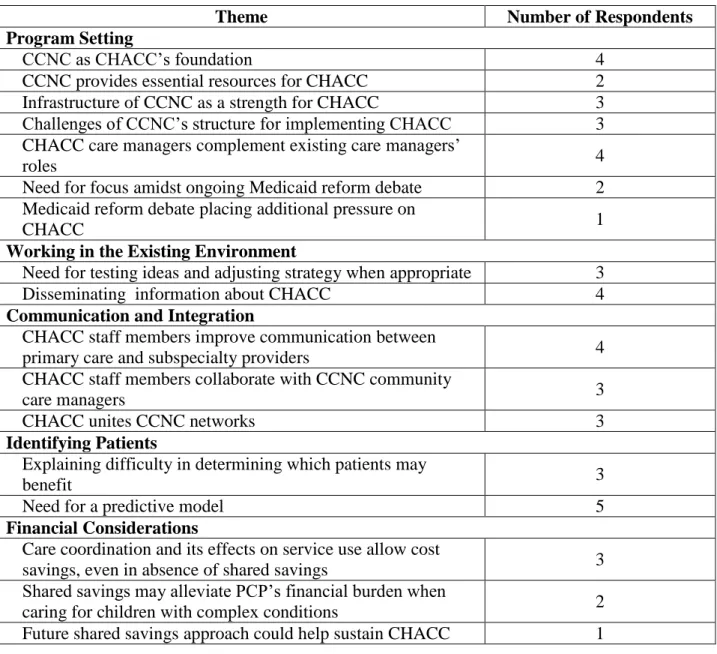
Table 1: Themes arising in interviews with key elite stakeholders………... 37
Introduction
The passage of the Patient Protection and Affordable Care Act (ACA) marked a defining
moment in recent United States history. After many appeals to revamp the health care system,
and numerous attempts to accomplish health care reform, the nation at last seized an opportunity
to enact reform (Berwick, 2002; Gawande, 2009; Oberlander, 2012). Implementing large-scale
health care reform, however, poses challenges on many fronts. Implementation requires
cooperation among policymakers – both state and federal – and important stakeholders, in
addition to contending with reform opponents (Kersh, 2011).
One particular example of implementing this vast policy is a program in the state of
North Carolina, the Child Health Accountable Care Collaborative (CHACC). CHACC intends to
improve care for a vulnerable pediatric population, children with complex medical conditions
("Child Health Accountable Care Collaborative," 2013). Although only five percent of North Carolina’s pediatric Medicaid population (0-21 years of age) meet criteria for children with
special health care needs (CSHCN), these children account for 53 percent of the state’s pediatric
Medicaid expenses ("Child Health Accountable Care Collaborative," 2013). Children with
complex medical conditions, an important subgroup of CSHCN, have medical fragility and
substantial care needs that existing health care systems struggle to meet (Cohen et al., 2011).
Pediatric health practitioners recognize the need to coordinate care for CSHCN, who
require a complex network of medical and community services to ensure comprehensive care
(Stille & Antonelli, 2004). Primary care pediatricians report substantial barriers to care
coordination for CSHCN, however, including insufficient time, office staff, and training in this
area (Gupta, O'Connor, & Quezada-Gomez, 2004). Parents of CSHCN indicate receiving
2 financial difficulties and employment barriers relating to their child’s health, in addition to unmet
medical needs (Kuo, Cohen, Agrawal, Berry, & Casey, 2011; Strickland et al., 2004). The
intensive medical needs, community-based service needs, and technology dependence of
children with complex medical conditions yield a greater need for coordinating care for this
population (Cohen et al., 2011).
As North Carolina’s novel effort to address these problems and make progress toward the
triple goals of more effective treatment, reduced costs, and better patient and family experiences
of care, CHACC provides care coordination services as a tool to foster collaboration among the
providers involved in caring for children with complex medical conditions. CHACC utilizes
care coordination to improve the quality of care children with complex medical conditions
receive. By reducing service duplication, improving adherence to plans of care, and improving
communication among providers, CHACC also targets cost reduction for this population’s care.
In addition, CHACC intends to improve patients’ and families’ experiences by embedding
patient and family advocates in the health care system. This paper explores the process of
implementing CHACC, seeking to elucidate critical components of the program’s
implementation and offer insights for others undertaking similar programs.
Background and Significance
The ACA aspires to reform the current health care system in an effort to reduce health
care expenses while improving quality of care. In one of many resolutions with this goal, the
ACA established the Center for Medicare and Medicaid Innovation within the Centers for
3 models” (Patient Protection and Affordable Care Act, 2010). The Innovation Center provides
rapid and ongoing evaluation of models being tested; using the resulting data, the Secretary of
Health and Human Services may choose to expand promising models (Shrank, 2013). The
Innovation Center must prioritize programs improving service coordination, quality, and
efficiency (Shrank, 2013).
The United States health care system’s insufficient coordination of care has drawn
substantial attention for many reasons. The health care system consists of multiple layers of
care, including outpatient primary care facilities, outpatient specialty care, and various levels of
inpatient care (see Figure 1). Thorough communication between these independent entities is
difficult to ensure, often resulting in incomplete information exchange and disconnected plans of
care. Fragmentation reduces the quality of care that patients receive, creates difficulty for
patients navigating the complex medical system, and leads to costly errors, waste, and service
duplication (Shih et al., 2008). In an analysis of wasteful spending in the U.S. health care
system, Berwick and Hackbarth estimate that in the year 2011, failed coordination of care
resulted in $25 to $45 billion of unnecessary, wasteful health care spending (Berwick &
Hackbarth, 2012).
The necessity for coordinated medical care is particularly significant for CSHCN. The Maternal and Child Health Bureau defines CSHCN as “those who have or are at increased risk
for a chronic physical, developmental, behavioral, or emotional condition and who also require health and related services of a type or amount beyond that required by children generally”
(McPherson et al., 1998). Children with medical complexity are a subset of CSHCN with
medical fragility and substantial health care needs (Cohen et al., 2011).1 In addition to these
1 Children with medical complexity have been referred to by many other terms, including “children with complex
4 medical needs, children with complex medical conditions often have functional limitations that
require technological support, such as feeding tubes or wheelchairs; experience multiple or
prolonged hospitalizations; and may require hospital readmissions because of medical fragility
("Child Health Accountable Care Collaborative," 2013; Berry et al., 2011; Cohen et al., 2011). This population’s medical complexity and fragility, along with their need for multiple health care
providers and other services, lead to a heightened need for care coordination (Cohen et al.,
2011).
Studies examining fragmentation of care for children with complex medical conditions
confirm deficiencies in care coordination that present multiple challenges to caregivers. In one
study, parents of children with complex chronic conditions reported inadequate continuity in their children’s care and related services (e.g., school resources). Parents perceived service
providers in separate institutions as disconnected, and often filled this communication void
themselves; although some parents believed that coordinating care is a necessary responsibility
with which parents should feel comfortable, others found this a difficult and frustrating duty
(Miller et al., 2009). An analysis of the 2005-2006 National Survey of CSHCN examined
hardships among caregivers for more complex CSHCN, a population comparable to children
with medical complexity.2 Coordinating and providing medical care consumed substantial time
for these families; caregivers reported a median of 11 to 20 hours per week providing direct
home care, and a median of two hours per week coordinating care. Families also reported unmet
needs and financial burdens; 48.8% of children experienced unmet medical needs, and in greater
than half of families, a family member ceased work because of the child’s health (Kuo et al.,
2011).
2 Authors defined more complex CSHCN as having at least one chronic condition leading to elevated service needs,
5 One parent’s account of seeking care for her son’s undiagnosed complex condition
illustrates the confusion, stress, and demands on time and energy that a caregiver experiences
when navigating a disconnected medical system. This mother discusses the necessity to learn as many details about her son’s condition as possible, allowing her to communicate effectively and
knowledgeably with her son’s health care providers. Additionally, she describes the struggle to assimilate vast, sometimes inconsistent information about her son’s health care, and to evaluate
treatment recommendations based on this information. She must also coordinate medical records
and procedures, and she attends so many medical appointments that staying abreast of her own
work responsibilities is challenging (Ghose, 2003).
In addition to presenting formidable demands for parents, many studies suggest that
insufficient care coordination results in elevated health care utilization and expense. In one
study, although children with medical complexity comprised less than one percent of all children
in Ontario, their health care expenses constituted nearly one-third of total pediatric health
expenses. Hospitalizations constituted a sizable portion of their medical expenses, and
re-hospitalizations accounted for over one-quarter of the total cost of their care. In this population,
emergency department visits contributed a relatively low proportion of total health care expenses
(0.4%) (Cohen et al., 2012). In a study of U.S. children’s hospital admissions, less than three
percent of children experienced at least four hospital re-admissions within any one-year interval
during the study’s five-year span. This small fraction of the population accounted for nearly
one-quarter of inpatient expenses. More than one-quarter of re-admissions resulted from
problems in the same organ system, leading authors to propose careful re-admission prevention
6 Problems relating to this population’s health care – including lapses in communication,
stress for families, and expense – have driven many interventions to improve care coordination for children with medical complexity. In one example, Arkansas Children’s Hospital launched a
hospital-based multidisciplinary clinic to coordinate care for Medicaid-enrolled children with
medical complexity. Following program enrollment, inpatient care costs declined dramatically,
emergency department costs fell, and overall cost of care for each Medicaid patient decreased
(Casey et al., 2011). Another study evaluated the effects of a hospital-based complex care clinic
on parent and provider perceptions, parental quality of life, and health care utilization. This
initiative demonstrated a reduction in hospital admission days and a rise in outpatient visits.
Satisfaction and quality of life measures indicated improved parental quality of life, increased
parent satisfaction with many aspects of care, and provider approval of the program (Cohen et
al., 2010). To enhance communication among various providers involved in caring for medically
complex children, another program coordinated care among tertiary and primary care providers.
Similarly, following program enrollment, outpatient service use increased while hospital days
and overall health care expense declined. Although the study did not formally evaluate parent
and provider satisfaction, authors observed that both parents and providers indicated program
approval (Gordon et al., 2007).
The state of North Carolina has a long, robust history of fostering communication
between providers, initiating quality improvement strategies, and reducing health care expenses
for its Medicaid population, through the Community Care of North Carolina (CCNC) program
(Steiner et al., 2008). CCNC provides statewide support and infrastructure through 14
locally-operated networks, allowing local implementation tailored to each network’s environment.
7 manage each independent community network, and representatives from each of these entities
serve as network leaders. These individuals make decisions about implementation of quality
improvement initiatives or other programs in the network based on community needs. CCNC
encourages collaboration among community practices and within each network, therefore
allowing local ownership, fostering valuable partnerships, and encouraging active participation
of community organizations. Additionally, CCNC connects each patient to a medical home that
provides care coordination services and improved access to care. Care managers within the medical home use CCNC’s care management software system to view Medicaid claims data,
monitor clients’ health care utilization, and communicate with other care managers (Steiner et
al., 2008).
At a broader, statewide level, CCNC provides support to the local networks in multiple
ways. The CCNC organization offers financial assistance to each network, in addition to
arranging meetings and developing clinical protocols. CCNC generates practice-specific data to
provide feedback to individual practices about clinical performance (e.g., aggregate blood
pressure measurements or lipid levels for all patients of one practice) ("Special Programs and
Initiatives," 2013; Steiner et al., 2008). CCNC also administers a web-based Informatics Center
that allows exchange of health information, including laboratory results, pharmacy and claims
data, and information from patient medical records. Participating health care providers and other
health care team members can visit the Informatics Center for assistance with communication,
care coordination, and monitoring quality of care ("Provider Portal," 2013; "Truth in Numbers,"
2013). In addition to various forms of support, CCNC conducts pilot programs seeking to
improve care or to test new models of care; CCNC may choose to expand successful pilot
8 CCNC offers, the initiatives that CCNC tests and disseminates, and the ability to utilize CCNC
resources and programs in a manner that suits the local environment.
The CMS Innovation Center awarded CCNC a three-year grant to implement CHACC, a
novel service delivery model fitting the Innovation Center’s goals of enhancing quality and
efficiency of care and reducing cost of care. CHACC seeks to promote cooperation among the
health care providers caring for children with complex medical conditions ("Child Health
Accountable Care Collaborative," 2013). These children account for a substantial proportion of North Carolina’s pediatric Medicaid expenses; therefore, CHACC employs several methods to
curb inefficiency in care, improve coordination and quality of care, reduce costs, and enhance
patient and family satisfaction.
Building on CCNC’s infrastructure of primary care medical homes with embedded care
managers, CHACC places care managers within academic medical centers, tertiary hospitals, and
specialty clinics to improve specialty care coordination and shared responsibility among
subspecialists and primary care physicians. The CHACC care manager’s primary role is to
coordinate patients’ medical care. As a significant component of this role, CHACC care
managers work with the health care team to develop comprehensive treatment plans for each
patient. The patient’s treatment plan lists active and inactive diagnoses; outlines medications,
including dosage and frequency; describes a management plan for specific diagnoses, as well as
alarm signs for the related organ system; and lists contact information for different providers
who participate in the child’s care. Additionally, CHACC care managers update the treatment
plan when the patient’s plan of care changes – for instance, during specialist visits or
hospitalizations. CHACC staff members disseminate each patient’s comprehensive treatment
9 personal communication, April 17, 2013), thus improving communication among health care team members about patients’ individual medical needs.
CHACC care managers also work closely with primary care managers to coordinate
patient care and foster communication between members of the patient’s care team. For
example, CHACC care managers collaborate with community-based care managers to ensure
that the comprehensive treatment plan thoroughly addresses patient and family needs. CHACC care managers also work with community care managers to assure that patients’ medical needs
are met effectively; for instance, CHACC staff members may arrange conferences in which
various care managers discuss a particular patient’s plan of care and treatment needs. Similarly,
CHACC staff members facilitate communication between different providers participating in a child’s care to ensure effective information transfer and thorough communication of care plans
between providers. CHACC staff members, for example, distribute the treatment plan to
providers, and also work with community care managers to ensure that primary care physicians
receive from the specialty clinic or hospital all information pertaining to mutual patients' care.
After establishing a comprehensive care plan and effectively coordinating a patient’s
medical care, CHACC care managers may entrust care coordination responsibilities to the patient’s community care manager in a “warm handoff.” Following this warm handoff, CHACC
care managers continue to serve as a resource for community care managers, remaining available
to address questions or needs. CHACC care managers again intervene to coordinate the patient’s
medical care when specialist visits or declining patient status warrant further CHACC assistance
with clarifying and coordinating medical care needs (L. Guerrant, personal communication, April
10 In addition to the CHACC care managers’ role of coordinating medical care, CHACC
promotes coordination of care in multiple ways. CHACC patient coordinators collaborate with care managers to facilitate patients’ and families’ access to services, assisting families in
navigating the complex medical system and associated resources. For example, patient
coordinators may help families schedule medical appointments, secure transportation to
appointments, and obtain durable medical equipment. Thus, CHACC patient coordinators and
care managers work together as a team to meet the comprehensive needs of the patient and
family. Additionally, to enhance provider co-management of mutual patients, a web-based
communication system allows secure information exchange between providers. Providers may
also access a patient’s comprehensive treatment plan using this communication system after
CHACC staff members upload the treatment plan into the system (L. Guerrant, personal
communication, April 17, 2013). Also, CHACC assembles groups of primary care and
subspecialty physicians to develop guidelines for common pediatric chronic conditions, in an
effort to assist primary care providers with managing these conditions without subspecialist
referral, and to more appropriately refer patients to specialists when necessary ("Child Health
Accountable Care Collaborative," 2013).
The writing of this master’s paper occurs during a tumultuous time in North Carolina’s
political arena. Citing a need to reform the current Medicaid system, Governor Pat McCrory recently signed legislation declining to expand the state’s Medicaid program to all individuals
below 138 percent of the federal poverty level, as authorized in the ACA (Frank, 2013). As state
policymakers contemplated and later reached a decision not to expand Medicaid, substantial
controversy developed among health care providers, elected political leaders, and the public
11 with the Governor that North Carolina must reform its current Medicaid system to create a
predictable and sustainable budget, reduce expense, and improve system efficiency; the state’s
current elected leaders have begun efforts to institute Medicaid reform ("Governor Pat McCrory
Announces Joint Effort," 2013). The state’s health policy leaders and health care professionals anxiously await policymakers’ final determination of details for Medicaid reform, especially the
implications of Medicaid reform for CCNC and the possibility of commercial Medicaid managed
care companies entering North Carolina. The CHACC program’s implementation, therefore, builds on CCNC’s adept statewide infrastructure, yet occurs amidst ongoing debate about the
state’s Medicaid system and its fate, potentially jeopardizing both CCNC and CHACC.
Methods
In this paper, I triangulate information from in-depth interviews and a review of the
scientific literature to explore CHACC’s implementation. Because CHACC seeks to improve
patient care, enable more effective use of health care resources, reduce health care costs, as well
as to enhance caregiver satisfaction, I performed a systematic review of the literature to explore
how pediatric Medicaid managed care programs affect parent satisfaction. The methods and
results of this systematic review are presented in Appendix 1.
After receiving notification that the University of North Carolina Institutional Review
Board considered our research study exempt from further review, my advisors and I began
recruiting participants for interviews of CHACC key elite stakeholders and staff members. We
sent a standardized informational email message presenting the research study to seven key elite
stakeholders, six of whom agreed to participate. We also sent a brief email message to 12
12 local networks about the study. Five lead care managers agreed for us to contact their local
networks with more project details. Next, we sent a standardized informational message to those
five lead care managers, in addition to the CHACC staff members within their networks. In total,
we contacted nine CHACC staff members, four of whom agreed to participate in interviews. A
list of interview participants is provided in Appendix 2.
In this research study, I conducted 10 individual telephone interviews, each ranging from
40 to 60 minutes, using standard interview protocols. I conducted all interviews in May or June
2013. Interview participants included four CHACC medical directors, the CHACC program
manager, three CHACC care managers and one CHACC patient coordinator, as well as an
additional key elite stakeholder. I used separate interview protocols for the key elite
stakeholders and the CHACC staff members, customized to their distinct roles and expertise.
Prior to conducting the interview, I read a standard informational notice to introduce myself,
describe the project in detail, and obtain permission to audio-record the interview for later
transcription. I also sought permission to include the respondent’s name and title, as well as to
use direct quotes, in this paper and any publications resulting from the study. I respected
requests for anonymity and for participant approval of direct quotes prior to inclusion in this
paper or resulting publications. The interview protocols, along with the preceding informational
notices, are located in Appendix 3.
After conducting the interviews, I transcribed each interview verbatim and verified the
interview participant’s approval of the accuracy of the transcript. I subsequently coded all
interviews to identify emerging themes. First, I identified variables present within interview
questions as well as in recurrent concepts observed in interviews. Next, using a Microsoft Excel
13 variable, and classifying data for string variables using textual analysis of participant responses.
I used this codebook to analyze the data for common themes and noteworthy confluence or
divergence of participants’ responses.
Findings
Interview findings reveal several underlying themes that clarify elements critical to CHACC’s implementation. These themes arise from recognition of the setting in which the
program evolves, consideration of the environment during the program’s implementation,
integration of the program into care management structures and health care systems, and
identification of suitable patients for enrollment. Finally, because CHACC seeks to reduce
health care expenses by coordinating patient care, I present relevant financial considerations. A
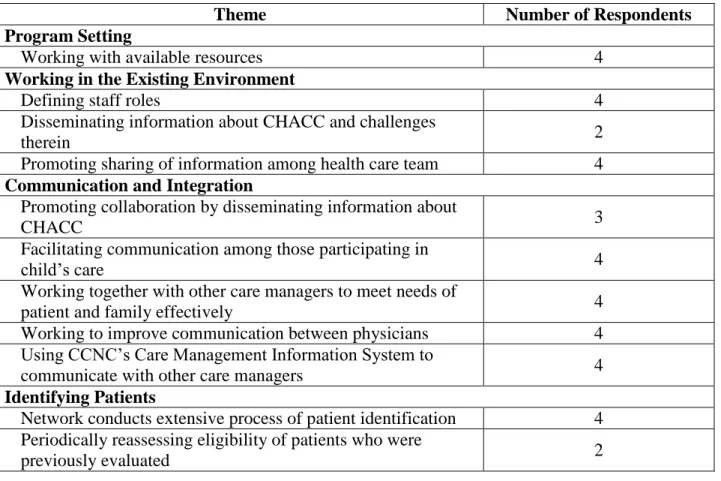
summary of themes is provided in Tables 1 and 2.
Program Setting: Recognizing the State and Local Environment
A majority of interview respondents emphasized the importance of the environmental
context of CHACC’s implementation. Respondents highlighted various specific characteristics
of the environment, including the CCNC networks in which CHACC’s implementation occurs,
the resources CCNC provides to CHACC, outside care coordination groups with whom CHACC
staff members collaborate, and local resources available for families.
Four key elite stakeholders directly emphasized the importance of Community Care of
North Carolina (CCNC) as CHACC’s foundation, although they presented differing interpretations of CCNC’s effects on CHACC. The remaining two key stakeholders each
14 invaluable role in CHACC’s establishment. Three respondents discussed the infrastructure that
CCNC offers for CHACC; Dr. Betsey Tilson, a CCNC network medical director and member of
the CHACC advisory committee, specifically cited CCNC’s “Care Management Information System, and provider portal” as assets for CHACC. Dr. David Tayloe, a pediatrician in eastern
North Carolina who is also a member of CHACC’s advisory committee, also emphasized
CCNC’s infrastructure. Dr. Tayloe said that as a statewide Medicaid program, CCNC provides a
venue to “bring everybody in the state together to focus on a single problem,” in a program such
as CHACC. Two CHACC advisory committee members elaborated on CCNC’s role in uniting
health care providers; in a compelling illustration, Dr. Tayloe described health care providers as “bound into the tradition of Community Care.”
In addition to the benefits of CCNC’s structure, three respondents explained that CCNC’s
structure presents challenges to CHACC’s implementation, as well. Dr. Tilson described
CHACC’s implementation “drawing from the strengths of the networks and the local resources,”
yet also explained that implementing CHACC is “not a very simple, one-size-fits-all” approach.
Because networks enact CHACC autonomously, shaping its program-wide goals to their own
conditions, independent networks benefit from the ability to establish the local organization in a
manner that best suits their environments; however, networks must also devote time and energy
to deciding how CHACC will work best in their particular settings. As three stakeholders explained, separate networks conduct work processes differently, such that CHACC’s
implementation varies from network to network. Operating a unified organization with common
goals and outcomes – but enacting distinct, separate processes in different networks to achieve
15 consolidated report” to allow program-wide evaluation (L. Guerrant, personal communication,
May 22, 2013).
Additionally, each CHACC staff member addressed the critical importance of
recognizing and working within the environment. Each CHACC staff member discussed
working with available community resources and care coordination services for children and
families. Two CHACC staff members explained that by working with another local program
that serves children with complex medical conditions, they have been able to learn about local
community resources. CHACC staff members’ awareness of additional services allows them to
work together efficiently with community-based care coordinators; as one staff member
explained, by gaining insight into other care managers’ roles and developing effective processes
to integrate services, separate care coordinators avoid service duplication.
Four key elite stakeholders discussed how CHACC care managers complement the roles
of existing care managers. Dr. Tilson, for example, described CHACC care managers as “the
care coordinators of the care coordinators” and as the “hub” for coordinating children’s specialty
care. She explained that CHACC care managers should coordinate children’s specialty care,
meanwhile sharing care management responsibilities for those children with community care
managers. Likewise, Ms. Lynn Guerrant, the CHACC program manager, emphasized that CHACC care managers should focus on building relationships with their patients’ community
care managers, working closely with patients’ existing care coordination teams. Interviews with
CHACC staff members provided evidence that they appreciate the necessity to locate and work
with other organizations and are striving to accomplish this task; each staff member discussed
16 When I asked key elite stakeholders whether they felt that the current state environment had affected CHACC’s development and implementation, many described a general sense of
discomfort and tension with respect to the state’s ongoing Medicaid reform debate.
Interestingly, though, no respondent believed that the political controversy had harmed CHACC
directly. Two respondents did discuss a need to remain focused and avoid allowing the Medicaid
debate to introduce distraction from the work at hand, and one respondent stated that the debate
had placed additional pressure on the CHACC program to meet goals for reducing health care
expenses. Overall, although respondents acknowledged the urgency of the state’s political
situation, they also maintained a steadfast determination for CHACC to accomplish its goals and
collective belief in its ability to do so.
Working in the Environment: Defining Roles, Disseminating Information, Engaging Allies
Interview respondents collectively discussed multiple challenges of fulfilling novel roles
within the CHACC program. According to Dr. Marian Earls, a pediatrician in central North
Carolina who has been very active with the national American Academy of Pediatrics, CHACC
staff members have had to “build the role” – the program’s unique, innovative nature required
staff members to determine how they fit in with hospital care managers and network care
managers, defining their particular roles. Each staff member described a process of defining
staff roles within the existing health care team and network, particularly within existing care
management structures. One staff member stated that “getting our process in place… was hard at first,” and described difficulty in establishing “what my role was going to be here… and how
to work together with other care managers.” Likewise, Ms. Bobbitt, a lead care manager in
17 evolving,” explaining that this eliminates “barriers” that individuals often face in making
forward progress, yet also introduces “trial and error” into the process. Another staff member
discussed the necessity to determine where CHACC staff members fit into the current network of
community resources, in order to identify any communication gaps and specific care needs that
CHACC staff members can fulfill. Similarly, three key elite stakeholders underscored the
necessity for the CHACC program to test ideas and adjust strategies accordingly, testing methods to achieve CHACC’s goals and subsequently evaluating their effectiveness. The process of
defining new roles thus presents a striking opportunity amidst potential difficulties.
In addition to recognizing CHACC’s environment, four key elite stakeholders and two
staff members commented on the necessity to alert those outside CHACC of the program’s
existence and goals. Of the four staff members interviewed, two discussed direct efforts to
educate other health care team members about CHACC. Staff members have presented
information about the CHACC program directly to other care managers in their CCNC networks;
to community organizations that offer financial assistance or other resources to patients and
families; and to local health care providers. Additionally, Dr. Steven Wegner, the Chairperson of
the CCNC Board and Principal Investigator of the CHACC demonstration grant, pointed out that
one of CHACC staff members’ roles is to reach out to local physicians. As Ms. Guerrant
explained, each CHACC team may elect to spread information about CHACC in the manner
most appropriate for its particular context. Similarly, two additional key elite stakeholders
discussed the need for outreach to the local networks and communities, helping them understand CHACC’s role. This task, as one of the many components of network-specific implementation,
18 As well as explaining efforts to inform others of CHACC’s purpose and goals, two staff
members also discussed challenges they had encountered throughout this process. Early in CHACC’s implementation, staff members’ attempts to communicate with those outside CHACC
sometimes revealed confusion about the program’s existence and intentions. In one example, a staff member’s early correspondence with other care managers, in which she sought to
collaborate about a potential CHACC patient, precipitated questions about CHACC. Another
staff member explained that receptivity toward CHACC in her local community had been quite
positive, largely because her CHACC group was able to align itself with another local program
serving children with complex medical conditions; she had heard of other CHACC teams,
however, struggling to find their own “niche.”
The nature of the CHACC staff members’ roles requires that health care team members
outside of CHACC agree to collaborate with CHACC staff and subsequently engage in active,
ongoing teamwork with staff members. Each CHACC staff member discussed promoting
information sharing between members of the health care team, including other care managers,
primary care physicians, and subspecialists; for example, each care manager discussed the
creation and dissemination of the CHACC comprehensive treatment plan among the health care
team. Each CHACC staff member described productive, positive relationships with other care
managers, characterized by open communication that facilitates the care managers’
complementary roles. As one key elite stakeholder pointed out, however, conveying CHACC’s
specific goals and assuring other organizations that CHACC seeks to complement – not absorb –
19 Weaving a Fabric: Communication and Integration within the Existing Resource Infrastructure
Interview respondents highlighted the need for communication among those involved in a patient’s care in order for CHACC to improve care, as well as CHACC staff members’ key role
in facilitating this communication. Three CHACC staff members explained how efforts to
inform others about CHACC and collaborate with those outside CHACC fostered teamwork
between CHACC and other organizations. One CHACC staff member discussed the benefits of
her outreach efforts to others, explaining that after she presented the CHACC program to other
care managers, she began to receive referrals from those care managers. Similarly, two CHACC
staff members discussed the benefits of weekly conference calls that they held with other care
managers who worked with CHACC patients to discuss plans for care. One staff member
specifically explained that these conference calls allowed other care managers to understand CHACC’s role and how they could work together with CHACC staff members. Although
different interview respondents emphasized distinct avenues of communication, together their
responses illustrate a rich, multifaceted network in which CHACC staff members seek to ensure
timely, complete, and appropriate information transfer.
The extensive network of individuals contributing to the health care of a child with
complex conditions often includes primary care physicians, pediatric subspecialists, multiple
care coordinators, other health care professionals, and parents or other family members. Each
CHACC staff member discussed her role in facilitating communication among all individuals in
this network. One care manager described her role as a “contact point” for families, ensuring
that all members of the health care team communicate and collaborate on a plan for the child’s
health needs. Each staff member also discussed working together with other care managers to
20 care, or hospital or specialty care. As one staff member explained, her role coordinating
patients’ specialty care effectively complements the roles of other care managers who focus on
coordinating primary care or community resources. Two staff members discussed holding
conference calls with other care managers involved in their patients’ care; in addition to
enhanced familiarity with CHACC among call participants, CHACC staff members also noted
these discussions’ value for enhancing communication among various members of a patient’s
care team.
In addition to communication among the care managers, four key stakeholders
emphasized staff members’ instrumental role in improving communication between primary care
physicians and pediatric subspecialists. Another key stakeholder indirectly indicated the
importance of bolstering this communication between providers, stating that the comprehensive
treatment plan and information sharing were important accomplishments of CHACC. Four
interview respondents noted the substantial time, resources, and expense a primary care practice
must allocate to providing excellent care to a child with complex medical conditions. Moreover, several interview respondents described the primary care physician’s conundrum when a child
with complex conditions presents for care – the primary care clinician must devote significantly
more time to that patient’s appointment than to most other appointments, while meticulously
documenting the extensive visit in order to ensure adequate reimbursement. Patients with later
appointments must then wait longer, potentially upsetting those families.
CHACC intends to address these barriers in multiple ways. Three key elite stakeholders
explained that as staff members identify children eligible for CHACC, they also reach out to
their existing primary care providers. Also, all CHACC staff members discussed their efforts to
21 improving this communication. Each care manager discussed sharing the comprehensive
treatment plan with different physicians caring for an individual patient, and two staff members
discussed assisting with direct communication between physicians. For example, one CHACC
care manager described working with a community care manager to ensure that hospital
physicians spoke with the primary care physician of a shared patient directly, in order to
facilitate communication and discuss any questions the primary care provider had. Four key elite
stakeholders applauded the communication that CHACC staff members foster between primary
care providers and subspecialists, particularly indicating the substantial value of the shared
comprehensive care plan and CHACC’s online communication system. By closing previous
gaps in communication, CHACC staff members facilitate the primary care provider’s
responsibilities in caring for children with complex medical conditions.
Nearly all respondents addressed the necessity of successful integration of CHACC staff
members. Interviews revealed many components of this integration into the system, including
assessing the local CCNC network and incorporating into this arena, evaluating local patient
resources and working with them effectively, and establishing relationships with physicians involved in their patients’ care. The robust CCNC infrastructure fosters integration of CHACC
staff members into existing systems. Three key elite stakeholders explained the importance of
the CCNC community-based care managers, with whom the CHACC staff members collaborate to coordinate patients’ care. In addition, each CHACC staff member discussed using CCNC’s
Care Management Information System to communicate with other care managers.
Additionally, three key elite stakeholders described CHACC’s role in uniting CCNC
networks. According to one key elite stakeholder, CHACC builds on CCNC’s ability to foster
22 Dr. Tilson stated, CHACC seeks to “bridge communication between the hospitals and across networks.” Another key elite stakeholder explained that CHACC is demonstrating CCNC’s
ability to establish a statewide program that crosses local network boundaries. Thus, in addition
to integrating themselves into their local settings and into the fabric of individuals involved in
patient care, CHACC staff members also integrate CCNC’s separate local networks and many
traditionally disjoint health care institutions throughout the state.
Identifying Patients Whom CHACC Can Serve
Each interview respondent discussed the essential nature of locating well-suited patients
to enroll in CHACC; key elite stakeholders pointed to the difficulty of accomplishing this task at
a global level, and CHACC staff members offered insight into the extensive practical duties
necessary to find and enroll patients. One key elite stakeholder explained that any new care
management program experiences challenges consistently identifying patients who will benefit
from program services. Three stakeholders explained that although CHACC has been able to
identify children with complex medical conditions and extensive, costly health care, considerable
difficulty lies in determining which children will benefit most notably from CHACC’s services.
As one pediatrician explained, a child with the most significant technological support and the
most intensive medical needs may not actually benefit from enrollment in CHACC, and CHACC
seeks to determine which groups of children will indeed benefit. Four key elite stakeholders described CHACC’s current effort to develop a predictive model, clarifying which children
enrolled in CHACC have benefitted most from the program in order to assist with future
23 predictive model would help the care management community, even beyond CHACC, to
determine which children could benefit from additional care management support.
Each CHACC staff member described an extensive process, in the absence of that
predictive model, through which staff members identify patients. To locate eligible patients,
CHACC staff members review incoming referrals, examine hospital admission and discharge
lists, evaluate patients in neonatal or pediatric intensive care units, and communicate with care
managers and other health care staff about potential patients. Additionally, two staff members
described a process in which their network periodically reassesses previously reviewed patients’
eligibility, to ensure that patients formerly excluded from the program do not currently need CHACC’s services. One staff member discussed her network’s process of identifying patients,
in which staff members use multiple standard forms to collect data about potential patients,
synthesizing this information to help staff members decide whether to enroll these children.
Staff members thus devote considerable time and effort to the task of identifying the proper
patients for CHACC.
Financial Considerations
By improving patient care through coordinating service delivery, the CHACC program
also seeks to reduce the state’s health care expenses. When I asked key elite stakeholders
whether the absence of shared savings in CHACC would prevent its ability to reduce cost, no
one believed that the absence of shared savings for CHACC would prevent the organization from
reducing health care expenses.
Three key elite stakeholders indicated that CHACC’s promotion of care coordination and
24 said that CHACC’s care coordination would be able to affect service use, thereby reducing cost,
without a shared savings component; another stated that studies of care management services had
demonstrated cost savings, indicating agreement that care coordination in CHACC can similarly
reduce health care expense. Likewise, one individual specifically cited CCNC’s proven ability to
show cost savings as evidence that CCNC’s strategy of coordinating care and providing
performance feedback to practices can reduce health care expenses in the absence of an
associated shared savings mechanism. This individual suggested that CCNC’s strategy
encourages CCNC providers to engage in actively improving patient care.
Two individuals contended that incorporating shared savings into CHACC may allow the
organization to demonstrate greater cost savings for its population, and two individuals said
shared savings would likely reduce the financial burden that primary care physicians incur when
caring for children with complex medical conditions. One individual stated that the
fee-for-service environment limits practices in their ability to provide additional fee-for-services to patients, and
stated that shared savings would provide practices with resources to implement additional
services that a fee-for-service model does not support. Another individual stated that shared
savings would counteract the loss of revenue that providers experience when devoting additional
time to caring for these children. One individual said that CHACC may facilitate the future
introduction of shared savings, because in CHACC providers begin to work together to improve
patient care. Another individual stated that a shared savings approach could help sustain the
CHACC model, although accountable care organizations thus far have been structured to suit
25 Discussion
The interviews I conducted and analyzed reveal many concepts important in CHACC’s
implementation. These concepts include assessing and working within the local environment;
the challenge of defining the novel role CHACC staff members fill; the necessity for complete communication among members of each patient’s health care team; and identification of
appropriate patients. Last, I discuss the potential for disseminating the CHACC strategy to those
undertaking similar programs, and review the implications of North Carolina’s current political environment for CHACC’s implementation.
Evaluating and Integrating into the Local Environment
A strong emphasis on understanding and working within the state and local environment
emerged. The importance of the CCNC program and its infrastructure as CHACC’s foundation
surfaced many times. Also, the necessity to evaluate each local network’s structure and
resources – thus enabling optimal integration of CHACC – arose in many interviews. Many
respondents discussed the benefits and challenges of CCNC’s statewide yet locally administered
infrastructure. The emphasis on examining and working with the environment is not surprising,
considering that CHACC builds on the CCNC program, which fosters broad collaboration
(Steiner et al., 2008). Although interview respondents acknowledged the state’s current political
tension, they voiced a necessity for CHACC to forge ahead and avoid the potential distraction
26 Defining Roles in CHACC
CHACC staff members fill a novel role, which has not previously been defined in North
Carolina’s health care system. Interview respondents emphasized that CHACC staff must
identify an appropriate niche, and ensure that CHACC complements – and does not duplicate –
existing resources. CHACC aims to alleviate fragmentation in the care of children with complex
medical conditions; to reach this goal, CHACC staff members endeavor to ensure seamless communication about patients’ care. The innovative nature of this responsibility requires staff
members to consider how best to fill this role and pursue optimal methods for meeting this goal. After ensuring that individuals outside CHACC understand the organization’s role,
CHACC staff members are able to collaborate with individuals outside CHACC. In fact, as
CHACC care managers and patient coordinators begin to interface with others outside CHACC,
those individuals observe and more thoroughly perceive that CHACC seeks to improve specialty
care coordination and communication. Enhancing others’ awareness of CHACC’s purpose
subsequently advances collaboration between organizations. As CHACC develops, staff members should continue to consider the program’s innovative goals, discuss approaches that
staff members in different networks have found effective, and adapt their approaches to
accomplishing this novel task.
Promoting Communication among the Health Care Team
Another pronounced theme involved the necessity for complete communication.
Interview respondents stressed the critical importance of communication among all members of a patient’s health care team, and pinpointed CHACC staff members’ vital role in facilitating and
27 participating in patients’ care in many ways, including through establishment of unified care
plans and facilitation of direct physician-to-physician conversation.
Neither North Carolina nor the U.S. overall should accept the compromised health care
quality and unnecessary health care expenses that result from insufficient coordination of care.
As CHACC staff members continue the endeavor to close gaps in communication, the CCNC
program may benefit from applying CHACC’s approach to CCNC’s other patient populations,
eradicating barriers preventing communication among providers and institutions for additional
patients.
Identifying Patients Likely to Benefit from CHACC Enrollment
Identifying appropriate patients to enroll in CHACC poses a challenge at multiple levels.
Key elite stakeholders described the difficulty at a conceptual level – understanding which
children CHACC can best serve, and devising methods to determine whether a specific child
would benefit from CHACC enrollment prospectively. Staff members offered a pragmatic view
of work occurring in the field to ensure CHACC locates these patients quickly and efficiently.
Identifying and enrolling proper patients in the organization undoubtedly represents an essential
component of effectively implementing this program, and CHACC’s leaders and personnel
recognize the urgency of successfully accomplishing this task.
The state should continue to develop methods to identify children best served by care
coordination programs, as appropriate patient identification will benefit potential patients as well
as improve program administration and resource utilization. If the CHACC model does spread
28 of predictive tools to identify appropriate patients, allowing reliable use of the model in separate
settings.
Financial Considerations for Implementing the CHACC Program
The prospect of shared savings in CHACC appealed to several interview respondents for
its potential to encourage provider involvement and enhance cost savings. Although respondents
considered shared savings in CHACC an interesting idea with multiple potential benefits, the state’s ongoing Medicaid debate reduces the likelihood of introducing a shared savings
component in the near future. Introducing shared savings for CHACC would require the close
cooperation of several stakeholders, including health care providers and, perhaps most
importantly, the state’s Medicaid administrators.
The CHACC program promotes collaboration among those involved in caring for a
particular population; therefore, although shared savings may introduce additional complexity into CHACC’s implementation, the CHACC program offers a suitable setting in which to
investigate shared savings. As policymakers reconsider health care reimbursement methods,
testing the effects of shared savings in CHACC would provide valuable information for potential
payment structure reform. Also, after the three-year period of federal funding for CHACC,
introducing sharing savings for CHACC may provide a mechanism to encourage providers to
continue working to improve quality of care, coordinate care with other providers, and reduce
29 Disseminating the CHACC Strategy
Reducing fragmentation of care nationwide remains a goal for the U.S. health care
system; fragmentation of care diminishes quality of care for adult as well as pediatric patients.
In response to this fragmentation, CHACC leadership should disseminate information about this
innovative strategy for improving care. Presentation of the CHACC strategy to those in other
states may inspire implementation of similar initiatives to improve care, especially for patients
with heightened, intensive care needs. Although the CHACC program benefits immensely from
its establishment in a state with a strong care coordination infrastructure (i.e., CCNC and its
resources), CHACC does build on specific foundational approaches that other states could adapt
to their specific environments.
First, CHACC builds on an existing statewide infrastructure supporting local networks;
staff members in each local network, however, have had to determine how best to implement
CHACC in their specific setting. When developing similar programs, other states or institutions
should likewise consider how to utilize their own specific context and resources to facilitate
novel program development and implementation.
Second, as a substantial component of their roles, CHACC care managers develop and
disseminate comprehensive treatment plans for each patient. Specialty care managers in other
settings could similarly work with providers and other members of the health care team to
develop treatment plans, thereby offering consistent information and guidance to each individual
caring for particular patients with complex conditions.
Third, the CHACC program benefits from multiple web-based communication systems,
allowing direct secure communication among care managers as well as between providers.
30 portals, simplifying the work necessary for CHACC to institute these systems. Nevertheless,
others seeking to implement similar care coordination initiatives should consider the resources
that may assist in implementing communication systems within their own specific context.
Fourth, CHACC arose, in part, from the knowledge that a small proportion of the state’s
children contributed a substantial fraction of its pediatric health care expenses; others
implementing similar programs should evaluate which patients with complex medical conditions
would benefit from such a program to improve care while reducing cost. Similarly, CHACC has
had to establish extensive methods to identify appropriate patients, and other organizations
seeking to serve similar populations will need to locate or create methods to identify proper
patients, as well.
Additionally, the U.S. Secretary of Health and Human Services has the authority to
expand the scope of promising programs funded by the Innovations Center. If the CHACC
program or other attempts to streamline patient care and reduce fragmentation prove successful,
then the U.S. Secretary of Health and Human Services should also consider expanding the scope
of these programs.
Effective Implementation amidst Political Tension
Finally, the CHACC program’s implementation occurs in the midst of political strife in
the state. As state legislators consider Medicaid reform, the future of CCNC – the organization
on which CHACC was founded – remains undetermined. The CHACC program arises from a
three-year federal grant to CCNC, awarded one year prior to this writing; thus, funding exists to
31 Beyond federal funding, however, the political arena raises concern. CHACC’s
demonstration of improving patient outcomes would gain support for CHACC from additional
stakeholders, including health policy experts and medical professionals. Proponents for CHACC
in these fields would likely advocate for the program.
Considering the state’s turbulent political setting, CHACC will be more likely to thrive if
the program captures the attention of policymakers by achieving its anticipated outcomes,
improving patient care while reducing health care expenditures. Those outcomes are, after all,
also the current state administration’s goals for Medicaid reform, as well as the national administration’s goals for the ACA. Thus, CHACC’s achievement of these goals would fulfill
the hopes of CHACC’s leaders, the goals of the state’s current elected leaders, and the intentions
of the current national administration in enacting its defining health care reform.
Conclusion
The CHACC program is one particular example of carrying out the ACA’s broader goals
to improve quality of care while reducing cost. CHACC intends to improve care for a specific
population, however – pediatric patients with complex medical conditions. The program’s implementation occurs at a turbulent time in North Carolina’s political arena, presenting
potential challenges in CHACC’s implementation, but CHACC does have an appreciable
possibility for success.
CHACC builds on the foundation of CCNC, an organization that has demonstrated its ability to improve patient outcomes while reducing cost. CHACC’s foundation in CCNC, in
addition to the success of other programs that seek to improve care for children with complex
32 CHACC can succeed in its goals to improve care while reducing cost for this population. If
Medicaid reform ultimately threatens CCNC, however, CHACC will likewise experience similar
danger, due to its close connection with CCNC and dependence upon the organization.
In summary, the CHACC program builds on a strong CCNC foundation but evolves in an
unpredictable political environment. CHACC’s goals for health care reform align closely with
those of the ACA as well as the current state administration. The themes identified in this study
suggest that CHACC leaders and staff members have implemented a new strategy for health care
reform, which fills a former void in the health care system and which others undertaking similar
initiatives may also find helpful.
33 References
Berry, J. G., Hall, D. E., Kuo, D. Z., Cohen, E., Agrawal, R., Feudtner, C., . . . Neff, J. (2011). Hospital utilization and characteristics of patients experiencing recurrent readmissions within children's hospitals. JAMA : The Journal of the American Medical Association, 305(7), 682-690. doi:10.1001/jama.2011.122; 10.1001/jama.2011.122
Berwick, D. M. (2002). Escape Fire: Lessons for the future of health care. The Commonwealth Fund.
Berwick, D. M., & Hackbarth, A. D. (2012). Eliminating waste in US health care. JAMA : The Journal of the American Medical Association, 307(14), 1513-1516.
doi:10.1001/jama.2012.362; 10.1001/jama.2012.362
Casey, P. H., Lyle, R. E., Bird, T. M., Robbins, J. M., Kuo, D. Z., Brown, C., . . . Burns, K. (2011). Effect of hospital-based comprehensive care clinic on health costs for Medicaid-insured medically complex children. Archives of Pediatrics & Adolescent Medicine, 165(5), 392-398. doi:10.1001/archpediatrics.2011.5; 10.1001/archpediatrics.2011.5
Child Health Accountable Care Collaborative: Improving care for the state's most vulnerable children. (2013). Retrieved June 20, 2013, from
https://www.communitycarenc.org/emerging-initiatives/child-health-accountable-care-collaborative/
Cohen, E., Berry, J. G., Camacho, X., Anderson, G., Wodchis, W., & Guttmann, A. (2012). Patterns and costs of health care use of children with medical complexity. Pediatrics, 130(6), e1463-70. doi:10.1542/peds.2012-0175; 10.1542/peds.2012-0175
Cohen, E., Friedman, J. N., Mahant, S., Adams, S., Jovcevska, V., & Rosenbaum, P. (2010). The impact of a complex care clinic in a children's hospital. Child: Care, Health and
Development, 36(4), 574-582. doi:2214.2009.01069.x; 10.1111/j.1365-2214.2009.01069.x
Cohen, E., Kuo, D. Z., Agrawal, R., Berry, J. G., Bhagat, S. K., Simon, T. D., & Srivastava, R. (2011). Children with medical complexity: An emerging population for clinical and research initiatives. Pediatrics, 127(3), 529-538. doi:0910; 10.1542/peds.2010-0910
Conover, C. J. (2013, March 27). NC faces a 'Sophie's choice' on Medicaid expansion. The News & Observer. Retrieved July 2, 2013, from
34 Frank, J. (2013, March 6). McCrory signs bill blocking Medicaid expansion. The News &
Observer. Retrieved July 2, 2013, from
http://www.charlotteobserver.com/2013/03/07/3898034/mccrory-signs-bill-blocking-medicaid.html
Gawande, A. (2009, January 26). Getting there from here: How should Obama reform health care? The New Yorker, 26-33.
Ghose, R. (2003). Complications of a medically complicated child. Annals of Internal Medicine, 139(4), 301-302.
Gordon, J. B., Colby, H. H., Bartelt, T., Jablonski, D., Krauthoefer, M. L., & Havens, P. (2007). A tertiary care-primary care partnership model for medically complex and fragile children and youth with special health care needs. Archives of Pediatrics & Adolescent Medicine, 161(10), 937-944. doi:10.1001/archpedi.161.10.937
Governor Pat McCrory announces joint effort to reform Medicaid. (2013). Retrieved June 21, 2013, from http://www.governor.state.nc.us/newsroom/press-releases/20130517/governor-pat-mccrory-announces-joint-effort-reform-medicaid
Gupta, V. B., O'Connor, K. G., & Quezada-Gomez, C. (2004). Care coordination services in pediatric practices. Pediatrics, 113(5 Suppl), 1517-1521.
Kersh, R. (2011). Health reform: The politics of implementation. Journal of Health Politics, Policy and Law, 36(3), 613-623. doi:1271351; 10.1215/03616878-1271351
Kuo, D. Z., Cohen, E., Agrawal, R., Berry, J. G., & Casey, P. H. (2011). A national profile of caregiver challenges among more medically complex children with special health care needs. Archives of Pediatrics & Adolescent Medicine, 165(11), 1020-1026.
doi:10.1001/archpediatrics.2011.172; 10.1001/archpediatrics.2011.172
Leslie, L. (2013). Docs say NC leaders should expand Medicaid. Retrieved June/21, 2013, from
http://www.wral.com/docs-say-nc-leaders-should-expand-medicaid/12093131/
McPherson, M., Arango, P., Fox, H., Lauver, C., McManus, M., Newacheck, P. W., . . . Strickland, B. (1998). A new definition of children with special health care needs. Pediatrics, 102(1 Pt 1), 137-140.
Miller, A. R., Condin, C. J., McKellin, W. H., Shaw, N., Klassen, A. F., & Sheps, S. (2009). Continuity of care for children with complex chronic health conditions: Parents'
35 Oberlander, J. (2012). Unfinished journey--a century of health care reform in the United States.
The New England Journal of Medicine, 367(7), 585-590. doi:10.1056/NEJMp1202111; 10.1056/NEJMp1202111
Patient Protection and Affordable Care Act, sec. 3021U.S.C. Pub. L. No. 111-148 (2010).
Provider portal: About the provider portal. (2013). Retrieved June/25, 2013, from
https://www.communitycarenc.org/informatics-center/provider-portal/
Shih, A., Davis, K., Schoenbaum, S. C., Gauthier, A., Nuzum, R., & McCarthy, D. (2008). Organizing the U.S. health care delivery system for high performance. The Commonwealth Fund,
Shrank, W. (2013). The Center for Medicare and Medicaid Innovation's blueprint for rapid-cycle evaluation of new care and payment models. Health Affairs (Project Hope), 32(4), 807-812. doi:10.1377/hlthaff.2013.0216; 10.1377/hlthaff.2013.0216
Special programs and initiatives: Pilots, demonstrations, and innovative approaches. (2013). Retrieved June/25, 2013, from https://www.communitycarenc.org/emerging-initiatives/
Steiner, B. D., Denham, A. C., Ashkin, E., Newton, W. P., Wroth, T., & Dobson, L. A.,Jr. (2008). Community care of North Carolina: Improving care through community health networks. Annals of Family Medicine, 6(4), 361-367. doi:10.1370/afm.866;
10.1370/afm.866
Stille, C. J., & Antonelli, R. C. (2004). Coordination of care for children with special health care needs. Current Opinion in Pediatrics, 16(6), 700-705.
Strickland, B., McPherson, M., Weissman, G., van Dyck, P., Huang, Z. J., & Newacheck, P. (2004). Access to the medical home: Results of the National Survey of Children with Special Health Care Needs. Pediatrics, 113(5 Suppl), 1485-1492.
36 Figure 1. The “New” Health Care System.