Kevin E. Lanning. Wi-Fi Guest Access: A Struggle For Secure Functionality In Academic Environments. A Master’s Paper for the M.S. in I.S. degree. April, 2007. 59 pages. Advisor: Scott Adams
The rapid growth in the functionality of Wi-Fi networking in recent years has benefited academic environments. Consistent with their role as centers of innovation academic institutions have an interest in facilitating as much mobile, computer networking functionality as possible to parties of varying levels of affiliation, while also assuring confidentiality and integrity of communications. Providing secure yet functional Wi-Fi access to guests and affiliates in an academic environment presents significant
challenges. Academic institutions have taken a wide variety of approaches to this
problem. This study presents and analyzes data gathered from semi-structured telephone interviews with employees focused on computer networking and security in academic environments regarding their institutions’ approaches toward striking a balance between security and functionality. The results are summarized, conclusions are presented, and solutions to common problems are reviewed. Finally, remaining significant research questions are presented and explored.
Headings:
Wireless LANs
IEEE 802.11
Computer Security
by
Kevin E. Lanning
A Master’s paper submitted to the faculty of the School of Information and Library Science of the University of North Carolina at Chapel Hill
in partial fulfillment of the requirements for the degree of Master of Science in
Information Science.
Chapel Hill, North Carolina April 2007
Approved by
Table of Contents
LIST OF FIGURES 2
INTRODUCTION 3
LAW AND REGULATION 6
RELEVANT CORE TECHNOLOGY REVIEW 9
RESEARCH QUESTIONS 13
LITERATURE REVEW 13
RESEARCH METHODOLOGY 21
RESULTS 23
CONCLUSIONS 36
BIBLIOGRAPHY 44
APPENDIX A: RECRUITMENT EMAIL 54
List of Figures
Figure 1: Guest Access by Type 25
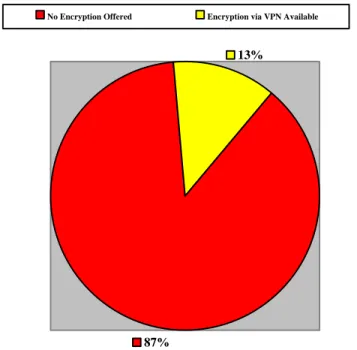
Figure 2: Encryption Available to True Guests 28
INTRODUCTION
Computer networking has enabled significant improvements in communication, collaboration, and productivity. Academic institutions were among the first types of organizations to be enabled for such networking and to benefit from it. However, until mobile networking was designed, deployed, and proven useful highly functional
computer networking necessitated that the end users’ computers be connected via various types of cabling. Mobile networking has enabled more opportunities for academic
pursuits to occur anywhere, any time. The researcher or student who is struck by an innovative idea is able more easily than ever to communicate that idea to a colleague, explore relevant research conducted by others or capture the idea with less location-based restriction when they need to access computing resources.
transfer, and manageability of network resources. Although many types of wireless networking are deployed and more are being developed daily, this paper will deal only with wireless technologies characterized as IEEE 802.11, Wi-Fi and/or WLAN. Such wireless technologies will be referred to in this paper as Wi-Fi.
the traffic can be harvested by an intruder, but it is also relatively simple for such intruders to create antennas which can harvest traffic from significant distances [1].
Consider for a moment two different perspectives on this technology which highlight the balance between security and functionality. Imagine the perspective of a small coffee shop proprietor who decides to offer Wi-Fi to encourage patronage by customers.
Although law and regulation related to Wi-Fi will be addressed only briefly in this paper, some such obligations are imposed on academic institutions by law. Regulation which might have a direct impact on the functionality and security of Wi-Fi networking for guests would include the Health Insurance Portability and Accountability Act (HIPAA) and the Communications for Law Enforcement Act (CALEA).
Data networking and information security professionals in academic environments face the formidable challenge of recommending to their institutional leadership a highly functional yet secure Wi-Fi architecture consistent with the missions of their
organizations. This paper focuses on the decisions such institutions have made regarding their production Wi-Fi computer networks, and more specifically regarding provision of Wi-Fi services to guests. It explores the types of solutions they have deployed to address common problems, reviews problems which have not been solved or perhaps even recognized, and anticipates challenges and potential solutions. Some risk exists that this type of paper could provide information which would be useful to intruders. As a result, the identities of subjects and institutions that participated in the study are not retrievable from the remaining data.
LAW AND REGULATION
that could have an impact on the design and implementation of production Wi-Fi
networks serving guests in academic settings is beyond the scope of this paper. However, two specific areas are being addressed briefly here to give the reader a sense of some challenges involved in balancing security and functionality for Wi-Fi guest access.
Health Insurance Portability and Accountability Act (HIPAA)
The Administrative Simplification provisions of the Health Insurance Portability and Accountability Act (HIPAA) address data security and privacy protections that must be considered to safeguard Protected Health Information (PHI) within the United States of America. Deadlines for compliance were April of 2005 for large entities and April of 2006 for smaller organizations. A large number of complex data security issues are addressed by HIPAA. One example from the Technical Safeguards in the Final Rule on Security Standards is the requirement that PHI be encrypted when the data is
communicated over open networks [2,3].
Communications Assistance for Law Enforcement Act (CALEA)
Disclaimer: The writer is not an attorney and is simply attempting to communicate a
summary understanding of a very complex topic, CALEA. It is possible that the following two paragraph summary is in error in whole or in part. The intent below is not to
interpret the law or regulation based on it but rather to point out the implications of law and regulation on provision of network access to Wi-Fi guest users.
previously available to law enforcement agencies. CALEA required that
telecommunications providers make available similar wire tap functionality previously provided for circuit switched networks, also known as landline telephone connections. In August, 2005, the Federal Communications Commission (FCC) reviewed the legislation in response to requests by the Federal Bureau of Investigation (FBI), the Drug
Enforcement Agency (DEA), and other organizations for clarification regarding whether and, if so, to what extent network providers must comply with such wire taps, otherwise known as lawful interceptions of data traffic. The FCC generally supported the FBI and DEA positions that providers are required to comply with lawful requests to intercept and produce data traffic and make it available in specified formats [4]. The deadline for compliance is currently set at May 14, 2007.
without triggering CALEA obligations [7]. Wi-Fi access on a campus would presumably be intended to benefit primarily academic affiliates. Do urban campuses have an
obligation to prevent connections from adjacent public spaces or may they simply provide guest access to their affiliates and not concern themselves with leakage of signal availability into public spaces [8]?
Construction of antennas that can provide connections to Wi-Fi networks from many times the distances possible with standard equipment on commonly used mobile
equipment is relatively simple. Such antennas can also be purchased. [9,10]. Is the public user who obtains such an antenna to connect to a Wi-Fi network provided by a college or university an intruder or, in such a case, is the academic institution providing access to the public? A strong case could be made that such a user is an intruder but the question alludes to some of the complexities associated with an institution’s decision to provide secure and yet highly available access to guests who visit their physical campus.
RELEVANT CORE TECHNOLOGY REVIEW
Wi-Fi
that could be used to refer to any wireless technology used to facilitate local area networking.
IEEE 802.11
IEEE 802.11 refers to a group of wireless local area networking standards defined by working group 11 of the IEEE LAN/MAN Standards Committee 802 [12].
Several amendments to the original standard are significant to this study. Amendments a, b, and g refer to modulation techniques. Devices consistent with amendment 802.11b, such as wireless access points (WAPs) and wireless network interface cards (NICs), emerged on the market before 802.11g devices and 802.11a devices arrived on the market later. 802.11b and 802.11g equipment utilizes the 2.4 GHz frequency band and shares it with a wide variety of consumer devices such as microwave ovens and cordless landline telephones. Because 802.11g and b equipment is compatible, many implementations of 11g, which has higher data transfer rates (i.e., throughput) than 11b, are also capable of 11b communications. However a problem emerged in the implementation of 11g
and g functionality in one card. Many access points offer 802.11g service with one radio which drops to 11b speeds for all users when any NIC requests 11b service and
additionally an 11a radio as well. Some newer access points offer any of the above three connection types and do not reduce speeds for 11g connections when a NIC connects using the 11b protocol.
Working group 11 subcommittees were also created to agree on standards for wireless security. Wired Equivalent Privacy (WEP) was specified in the original 802.11 standard. It never lived up to its name and was found to have many significant weaknesses
[14,15,16]. Working group 11i was formed to address each of the weaknesses of WEP in a new standard. In the interim, the Wi-Fi Alliance recommended Wi-Fi Protected Access (WPA), which amounted to those 11i specifications that were possible to implement on older hardware as an interim measure until 11i could be ratified and new 11i capable equipment deployed. 802.11i is also referred to often as WPA2. The above
specifications--WEP, WPA and WPA2/11i—address encryption of data, key management and integrity of communications [17].
Virtual Private Networking
According to a definition available at wikipedia.org, “A virtual private network (VPN) is a private communication network often used by companies or organizations, to
properly encrypted. An additional level of security involves encrypting not only the data, but also the originating and receiving network addresses’ [19].
A variety of types of VPN technology may be used in Wi-Fi networks. Some VPNs such as more traditional IPSEC VPNs require installation of software on the client computer. Others utilize software built into the operating system running on devices and others, known as SSL (Secure Sockets Layer) VPNs, utilize security functionality originally built for web browsers to create an encrypted tunnel between devices.
Authentication
An important issue regarding sponsorship of Wi-Fi connectivity is the ability to confirm that the network is only accessed by authorized parties when that is the policy of the institution. A variety of standards and protocols apply to Wi-Fi authentication of guests. Detail regarding authentication protocols commonly used with Wi-Fi is beyond the scope of this paper. However, IEEE 802.1x, RADIUS and EAP are among protocols frequently utilized in Wi-Fi networking. At the most general level, 802.1x [20] specifies an
RESEARCH QUESTIONS
When academic institutions of higher learning have decided to provide Wi-Fi access to guests, what strategies have they used to address the challenges? How do they go about providing highly available access, maintaining the security their affiliates need and remaining compliant with relevant regulations? This qualitative research will provide access to detail regarding a number of strategies chosen by practicing network and security specialists and will help to clarify the extent to which packaged, proprietary, commercial solutions are available versus the degree to which solutions need to be and/or are custom-built. Such information does not appear to be available elsewhere at this time. This paper is also intended to raise issues and expose strategies that might spark further relevant discussion and research in this field.
LITERATURE REVIEW
Use of Wi-Fi Technology on Academic Campuses
Based on research conducted by the Campus Computing Project, wireless networking was accessible from over half of college classrooms in 2006, an increase from 42.7 percent in 2005 and 31.1 percent in 2004. Furthermore, 60.5 percent of colleges and universities increased their Information Technology (IT) budgets for implementation of wireless technology for the 2006 academic year [23].
[24]. Researchers at Dartmouth College logged between 800 and 1000 unique network cards (based on unique media access control identifiers) accessing their Wi-Fi network per day in the Fall of 2001 [25]. As of early 2004, researchers at the same institution were logging 3000 to 3500 unique network cards per day. They concluded that a growing number of users were taking advantage of Wi-Fi and that users were far more active on the Wi-Fi network as well. They also reported a growth in the diversity of traffic types for which Wi-Fi was used from 2001 to 2004. Further, they concluded that Wi-Fi networking has evidently replaced wired connectivity for many academic users despite the limited, shared bandwidth associated with the 802.11b network they studied [26]. In addition to growth in the diversity of traffic types, we are also seeing growth in the types of devices connecting. The Wi-Fi Alliance has recently published documentation that almost 100 telephones have been certified as Wi-Fi compliant [27]. Surely, academic affiliates will want to use the full range of such devices.
Federated Authentication
Naturally, the faculty member with appointments at two related institutions or the student who needs to visit libraries at four separate universities to obtain all the information needed for a research project would benefit from the ability to use the same
authentication credentials on Wi-Fi networks at the various institutions. Certainly, the practice of using the same credentials at different locations is already in place among some commercial vendors of Wi-Fi services. Identity management professionals are aware of such needs. Various standards have been and are being vetted. Committees and working groups are being formed and examples of federated authentication are in
production. Below are a few examples of activities relevant to federated authentication which could have an impact on Wi-Fi networking for academic guests.
Discussions are being held between all types of organizations regarding portability of authentication. An example of discussions occurring in academic circles is the dialog sponsored by EDUCAUSE. EDUCAUSE is “a nonprofit association whose mission is to advance higher education by promoting the intelligent use of information technology” [29]. A quote from the EDUCAUSE website regarding the agenda for their Identity Management workgroup is typical of discussions occurring these days regarding portability of authentication:
Technology, is being applied to an expanding federation of public and private institutions, including a number of campuses. The Identity
Management Working Group will review these and other current activities of interest and chart a path for future action [30].
An example of a well-known, federated authentication initiative is Shibboleth.
Shibboleth is an initiative to develop an open, standards-based solution to the needs for organizations to exchange information about their users in a secure, and privacy-preserving manner. The initiative is facilitated by Internet2 and a group of leading campus middleware architects from member schools and corporate partners. The organizations that may want to exchange information include higher education, their partners, digital content providers, government agencies, etc. The purpose of the exchange is typically to determine if a person using a web browser (e.g., Internet Explorer, Netscape Navigator, Mozilla) has the permissions to access a resource at a target resource based on information such as being a member of an institution or a particular class. The system is privacy preserving in that it leads with this information, not with an identity, and allows users to determine whether to release additional information about themselves. An open solution means both an open architecture and a functioning, open-source implementation. Standards-based means that the information that is exchanged between organizations can interoperate with that from other solutions [31].
Security Assertion Markup Language (SAML) is just one among several examples of a specific, xml-based protocol for exchanging user information to facilitate authentication and authorization [32]. The SAML protocol elements were formulated by the Liberty Alliance, an organization created to promote an open, standards-based approach to sharing information regarding identity in a secure way which assures privacy [33].
“visiting scholar” problem [34]. A related group focusing on the more general challenges of network access on academic campuses is the Salsa-NetAuth Working Group [35].
Adaptive Wireless
Questions are being raised in the literature about when and how cellular and Wi-Fi devices will be capable of utilizing common authentication infrastructures to swap service seamlessly for end users [36]. Such authentication functionality would be easier and more useful if wireless devices were capable of detecting the types of radio
connectivity available at any given time and then using the appropriate wireless protocol at the appropriate time--whether cellular, Wi-Fi or some other type. Cognitive radio is a term used to refer to devices which can detect the types of radio signals available for communications in the real time environment and to originate actions based on that information to meet the requests of end users [37]. Although such functionality may not be available widely in the near future, the potential benefits of federated authentication combined with adaptive radios are easy to envision. Wi-Fi or cellular wireless
Human Information Interaction
A body of literature exists regarding the states of knowledge users bring to information rich environments. Is it the case that most users visiting a college campus know that their ability to complete certain tasks via wireless networking is actually quite different at most universities from the abilities they have when they connect via a home wireless
connection or a wired connection on that same campus? Do users realize that often they will not have access to certain services or do they believe they will have an experience equivalent to wired networking?
Taylor has described the levels of questioning a user who seeks information brings to an information rich environment [38]. Belkin has described “Anomalous States of
Knowledge” in which users recognize that they might need additional information to resolve a problem, “… but precisely because of the inquirer’s lack of knowledge about the problem area, it is impossible to specify what would resolve it” [39]. If users do encounter a lack of functionality with Wi-Fi or suspect that there are limitations on Wi-Fi networking and want to know more, what should the end user do? How do they describe what they need and how do information professionals help these end users understand the facts and accomplish their networking objectives [40, 41]?
What risks are inherent in Wi-Fi networking and are users aware of them? What
Security Threats
Results of a 2006 survey of campus IT officials by the Campus Computing Project suggest that respondents believe, as they have for the third consecutive year of the survey, that security threats will continue to be the single most important technology issue facing their institutions over the next two to three years. This stands in contrast to the most important reported issue from 2000 to 2003, integration of instructional
technology. Although some types of security incidents were believed to be less common in 2006 over 2005, identity theft and security incidents related to social networking sites reportedly increased [42].
Various applications have been created to harvest data as it passes through the air. Many such applications target Wi-Fi networking and are easily obtained through a free
download. Although wireless networking’s risks of interception by intruders are widely known, encryption of wireless traffic is not universal. Although good data is hard to find, many estimates suggest that half or more of wireless networks do not require any type of encryption to connect [43]. RSA, a well-known information security firm, reported that almost 25% of Wi-Fi networks operated by businesses in large cities around the world were found to have no security measures in place at all [44]. A study published by the United States Government Accountability Office in 2005 concluded that, of twenty-four wireless networks studied at government agencies, thirteen did not have any
of captured log-in credentials is maintained on what is known as the “wall of sheep” [46]. This would suggest that even in known high risk environments, end users will accept the risk of letting their log-in information or other sensitive information pass through the air where it is in danger of being intercepted. Although it stands to reason that an end user would seek to perform the same types of activities on a wireless network as on a wired network, the extent to which end users understand the risk associated with wireless networking and are prepared to take the risk is unclear.
Researchers at Saskatchewan University confirmed with network traces that protocols, such as telnet and ftp, which pass authentication information in the clear (i.e.,
unencrypted) were utilized by wireless users in one academic environment [47]. Again, this demonstrates that the end users’ networking needs do not vary when they move from wired networking, which relies on media (i.e., cables) that can be physically secured, to wireless networking, in which the media (i.e., open air space) cannot be secured.
strategy not scale very well in large environments, but it has also become trivial for an intruder to adopt the unique identifier of a known authorized user [49].
RESEARCH METHODOLOGY
Subject Recruitment
Archives of four listservs focusing on computing security and/or Wi-Fi networking in college and university environments were browsed for contributions regarding “wireless guest access” from August of 2006 to March of 2007. In addition to browsing lists for contributions, the following question was posed to the same lists: “What are academic institutions doing regarding wireless guest access and security?” Subjects who had either posted recently to one of the listservs on the topic or who responded to the posted
question were sent a recruitment email (Appendix A). A total of forty-four recruitment email messages were sent. Twenty potential subjects responded via email that they agreed to participate and one additional respondent agreed to participate in a telephone call directly to the investigator. The recruitment email contained information regarding the identity of the researcher, the purpose of the study, plans for data security within the study context, information regarding actions the researcher would take to assure
the institution they represent or they did not believe they had adequate knowledge to participate. In one such case, the potential subject attempted a referral to an expert at the subject institution. When the referral did not succeed, the subject was dropped from the study. For two cases in which the potential subjects claimed to have less than adequate knowledge, the subjects’ telephone comments were supplemented with web-based research and the subjects sought and obtained experts on Wi-Fi networking at their institutions who agreed to participate in the telephone interviews. In the fourth such case, the subject was interviewed and found to have the requisite knowledge to participate in the study. Nineteen subjects (43% of those sent recruitment emails) were retained in the study.
Sample
Nineteen subjects were recruited from listservs which focus on computing security and Wi-Fi networking in college and university environments. All nineteen subjects were interviewed via telephone between March 2, 2007 and March 22, 2007. All subjects were employed by colleges or universities in the United States of America as networking and/or information security professionals or performed similar duties while serving as faculty members. Seven of nineteen institutions represented by respondents (37%) are private and the remaining institutions public.
Consent
regarding the purpose of the study and consent information was reviewed before verbal consent for participation in the research was granted by each subject. No potential subject declined participation once telephone contact had been made and information regarding consent reviewed verbally. All nineteen potential subjects were retained in the study.
Data Collection
Semi-structured interviews were conducted with a base set of open-ended questions regarding wireless guest access (See Appendix B). The questions were intended to offer flexibility and even encouragement for subjects to share any information they thought relevant to security and functionality of Wi-Fi guest access on their campuses.
RESULTS
Guest Access
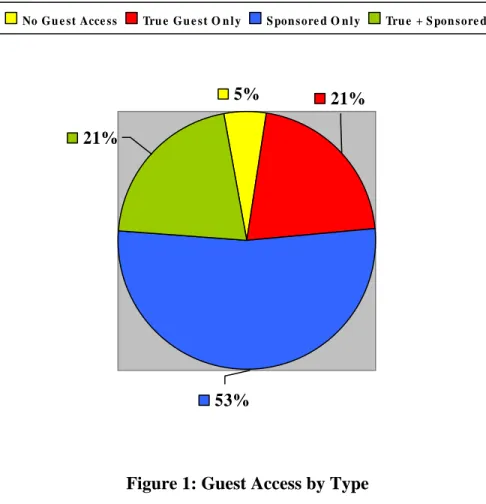
Three distinct types of guest access were identified in the survey:
1. Access for visitors who were located on or physically proximate to the campus but who did not need to demonstrate affiliation with the institution other than being physically present on campus. These users could be referred to as “true guests.”
networking incident involving the guest. An example of such an incident would include a guest’s computer exploiting or attempting to exploit vulnerabilities in other systems.
3. Guest access is made available at times for specific events such as seminars or conferences. Such access might be offered as in the above two scenarios or a single method of access might be provided to all participants of an event, resulting in the ability for systems administrators, networking staff and/or security staff to identify a user as a participant in an event but without the ability to more
specifically identify a user should an incident such as that described above develop. One could refer to this type of access as “event guest” access.
53%
21% 5%
21%
No Gu e st Acce ss Tru e G u e s t O n l y S pon s ore d O n l y Tru e + S pon s ore d
Figure 1: Guest Access by Type
Although this study is not intended to identify specific brands of software or hardware and did not find any one product to be sufficient to meet all Wi-Fi networking, security and/or functionality needs, one specific product brand was identified more frequently than others by respondents in the context of supporting wireless guest access. Six of eighteen institutions (33%) which offer some type of Wi-Fi guest access utilize a product known as Bluesocket to support their wireless guest offerings.
network access at their institutions. An ad hoc connection is one in which a user connects via the wireless card of another user which is essentially acting as a WAP. Guest access provided via ad hoc connections to the equipment of authorized users and rogue access points will not be addressed here.
A small number of respondents referred to kiosk machines in libraries and other public places as an offering of guest access. Because no cases arose in which such kiosks were wireless, detailed information was not gathered. Although the literature regarding
wireless access does include some situations in which academic institutions loan wireless laptops to library patrons or via their help desks, for example, no subject in this study reported such a program as a part of a Wi-Fi guest access program at their institution.
No subject reported using federated authentication for Wi-Fi guest access beyond their own institution; however, three of eighteen respondents (17%) reported that they are investigating such possibilities. A small number of subjects commented that the academic institutions they represent are using distributed methods of authentication which provide the flexibility of a federated environment within their organizations.
True Guest
familiar with the environment. Six of the eight institutions (75%) limit ports/services on outbound connections via access control lists and eighty-eight percent (88%) limit inbound connections in various ways including access control lists. Six of the eight institutions (75%) providing true guest access allow outbound access to ports commonly used to establish VPN connections.
Respondents reported being generally unaware of any true guest access offerings in HIPAA environments and, further, reported that any such access would be heavily secured in a variety of ways. Two of the eight respondents (25%) who indicated that the institution they represent offers true guest access said they are considering eliminating or significantly altering their true guest offerings due to concerns regarding CALEA, but none had made any such changes as of the interview date.
true guest connections. Fifty percent of respondents (four of eight) who indicate that their institution provides true guest access report that some filtering of true guest network traffic is in place for content such as peer-to-peer traffic. Six of eight such institutions (75%) have implemented rate limiting for true guest connections which is more restrictive than throughput rates allowed for other wireless connections.
One of the eight institutions offers a means of encryption from the user’s Wi-Fi device to the network provided by the institution. In that case encryption could be initiated by downloading a VPN client from a captive portal the guest must traverse to gain Wi-Fi access. See Figure 2 for a graphical representation.
13%
87%
No Encryption Offered Encryption via VPN Available
Sponsored Guest
A small number of respondents reported that informal sponsorship of guests occurs at their institutions. This could occur if, for example, a guest was to be “loaned” a login by an authorized user or if an authorized user was able to set up an account or otherwise enable a user without an approved policy regarding such sponsorship at the institution. Only formal, sponsored guest programs endorsed by institutions are included in this study. It is also the case that most academic institutions accommodate long-term affiliates by allowing such guests to demonstrate adequate affiliation to obtain the same type of authentication account used by faculty, staff and/or students. Those situations are not addressed in this study.
Four of fourteen institutions (29%) require that sponsored guest access be initiated by contacting their IT help desk. Two of the fourteen institutions (14%) which offer
sponsored Wi-Fi guest access do not broadcast the SSID for that access. Ten of fourteen institutions (71%) offering sponsored guest access utilize captive web portals (i.e., a browser is forced to a single page) to assist in the management of the service.
Fifty percent (50%) of institutions supporting sponsored guest access for Wi-Fi only allow employees (i.e., faculty, staff and in a few cases student employees) to sponsor guests. Some institutions allow anyone with a campus ID to sponsor a guest. Others have designated administrative staff in various departments who are authorized to sponsor guests. Often these administrative staff members also receive security training in support of such sponsorship responsibilities. Six of fourteen respondents (43%) report that, at the institutions they represent, at least some students can sponsor guest access.
Maximum allowed duration for sponsored guest access varies widely. Nine respondents (64%) of the fourteen which provide sponsored Wi-Fi guest access were able to specify a maximum duration at their institution. The mean, median and mode for maximum
duration were sixty-five (65) days, sixty (60) days, and ninety (90) days respectively. The shortest duration reported was one Wi-Fi session. Thus, in this last case the sponsor must authorize each connection attempt by the guest.
which allow user login information to pass in the clear (e.g., telnet and ftp) were
mentioned as types of traffic blocked. Five of fourteen subjects (36%) reported that their institutions impose more limits on throughput rates for sponsored guest access than for users such as faculty and staff. Six of fourteen subjects (43%) said their institution allows any outbound service/port for sponsored Wi-Fi guests; one indicated that their institution also allows any inbound service/port. The most commonly allowed ports are 80 (WWW), 443 (SSL) and ports associated with VPNs. Most institutions only allow communications on a small number of ports outbound for Wi-Fi guests, including sponsored guests, and deny inbound access.
Subjects were asked to characterize the level of logging they obtain for Wi-Fi sponsored guest access. No scale was used in the question itself and the responses were subjective; however, twelve of fourteen subjects (86%) did answer the question. Seven of fourteen reported that the organization they represent provides only minimal or light logging of such access. Five of fourteen respondents (36%) reported heavy or detailed logging of events related to Wi-Fi sponsored guest access. Log retention times vary widely. Fifty percent of subjects were aware of and shared log retention times. The mean, median and mode of reported times are 365 days, 45 days, and 30 days respectively. The longest log retention time reported was seven years.
Thirteen of fourteen subjects (93%) reported that they believe their networking acceptable use policy (AUP) includes information regarding the limitations on
(36%) could confirm that the sponsor or guest must acknowledge agreement to comply with the policy before being granted access. Subjects were asked if at any point in the process of obtaining sponsored guest access a potential guest is warned about the risks associated with wireless networking as opposed to wired networking. One of fourteen subjects declined to answer questions on this topic. Of the remaining thirteen subjects, three (23%) reported that an effort is made to help sponsored guests understand the risks. Two of the above three handle warning of guests in FAQ (frequently asked question) documents on their websites. However, in only one case out of thirteen (8%) were sponsors or potential guests required to acknowledge the risks before being granted access. In the above single case the sponsor must confirm that they agree to warn the guest about the risks before the sponsor is allowed to complete the sponsorship. Thus no institution studied requires that a guest acknowledge, perhaps with a button on a captive portal page, that they are aware of the risks of Wi-Fi networking and accept those risks before they can connect to sponsored Wi-Fi networking. However, it should be noted that at one institution, sponsored guests can only connect using 802.1x, WPA and EAP, thus significantly reducing the risks of Wi-Fi networking.
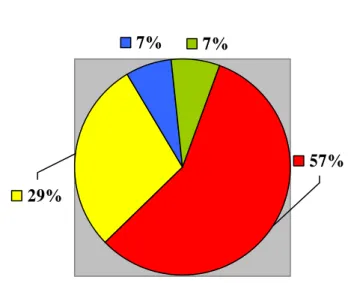
tunnel terminates but not to other networks, likely leaving some traffic unencrypted. Six of fourteen subjects (43%) reported that their institution does have a means of providing encryption to a Wi-Fi sponsored guest. Four of fourteen offer a VPN client download which would secure (i.e., encrypt) traffic from the end user to the campus VPN
server/concentrator/termination. At three of the four institutions, the guest need ask for the VPN download by contacting the help desk. One offers it on the captive portal guests must traverse to connect. One institution offering sponsored Wi-Fi guest access requires a WPA configuration and one offers VPN, WEP, and WPA options to sponsored guests. More specifically, only one institution of fourteen (7%) offering sponsored Wi-Fi guest access was reported to require Extensible Authentication Protocol (in that case, in combination with WPA and 802.1x) for such access. One other institution of fourteen offers WEP or WPA for encryption but only in pre-shared key mode. In pre-shared key mode the same key is used on every system. Pre-shared key mode is less secure and changing the key can be very difficult in implementation because it must be changed on every host. Those subjects who offered comments on this subject volunteered that they believe the software (also known as supplicant software) for coordinating security and functionality between authentication servers and Wi-Fi clients as specified by 802.1x, EAP, and 802.11i, is not yet available for all the operating systems they need to support and that Public Key Infrastructure requirements and other requirements regarding configuration of end user systems are too burdensome at this time to make
7%
29%
57% 7%
No En crypti on O ffe re d VPN 802.11 VPN & 802.11
Figure 3: Encryption Offered for Sponsored Guests
Event Guest
than the authentication information specified for the event. Some event attendees might connect with a sponsored account which gives them additional access privileges beyond those allowed for the ID written on the white board.
CONCLUSIONS
Academic institutions acknowledge the need to provide Wi-Fi access to their guests to enable legitimate use of campus resources and are providing such services.
It is not clear that end users are aware of limitations on the services they are using nor is it clear that such institutions are taking all action possible 1) to make sure that guests are aware of added risks associated with network traffic passing through the air and 2) to enable encryption of that network traffic within the geographic bounds of the campuses on which the Wi-Fi networking occurs. More awareness training for end users, web-based information regarding risks, admonitions and disclaimers regarding risks,
requirements that end users acknowledge the risks, and provision of tools to reduce the risks (e.g., VPNs, 802.11 encryption types, etc.) would all seem to be reasonable
intruders. To what extent the growth of awareness and the skills by academic users to secure their Wi-Fi traffic can be supported or perhaps even integrated into the curriculum by the academic institutions with which users are affiliated remains an open question.
One wonders to what extent port/services limitations seen in this study occur for Wi-Fi users who are not guests? That is, is Wi-Fi networking generally more restricted in academic settings than is wired networking? Are Wi-Fi guest end users aware of the many functionality differences between computing on a home Internet Service Provider (ISP) connection on which most if not all ports/services are allowed or on a campus wired connection (perhaps with a few limitations) as opposed to a Wi-Fi connection. The Wi-Fi guest user who seeks only web (port 80 and 443) access will not encounter a problem with functionality on the Wi-Fi networks studied here, but are the majority of applications secured (perhaps with SSL) such that the application assures encryption of sensitive information? Do end users in academic settings know how to determine whether an application is secured or not such that they can decide not to use an obviously risky application? This research suggests that more sophisticated Wi-Fi guest users will find that many services are not available. To what extent do users want and need more functionality to enable the types of activities appropriate to an academic setting? Some literature suggests that the types of services end users seek via Wi-Fi networking for their academic pursuits are expanding. Will an expansion in the ports/services allowed occur in response? If not, is security the reason? Do expanded needs for Wi-Fi traffic
connect with more privileges? Many important research questions remain in these areas. In some cases log analysis could be valuable in clarifying the opportunities and
challenges.
Guests would likely seek full traffic type/port range/service functionality if given a choice. Some institutions have addressed this by offering multiple types of more and less secure wireless access. In every case, the more secure access also requires more expertise for configuration and troubleshooting. End user awareness of the risks appears to be a prerequisite to a user implementing or seeking to implement encryption or other enhancements to improve the security or functionality of their Wi-Fi connection. Are users aware of the risks? Data collected here suggests that institutions are not providing as much information regarding risks of unencrypted Wi-Fi networking to guest users as would be possible.
The opportunity for additional education of end users to improve security and set the stage for increased functionality emerged from this research in several areas. Helping end users understand risks and offering solutions potentially imposes an additional traffic burden on help desks but also contributes to institutional security of sensitive
information to encourage a free exchange of ideas and information could be enhanced. Is it a reasonable goal to endeavor to communicate to faculty, staff, and student
constituencies that more end user understanding of networking security can help enable more functionality and thus facilitate moving closer to the collaborative ideal sought by most universities? Although wireless networks are reported to be vulnerable to sniffers, does research exist regarding the degree to which end users are aware of both the risks and the tools available to counter those threats?
The security strategy of not broadcasting the SSID is still implemented by a number of institutions even though that strategy is only useful in limiting access by the relatively naïve Wi-Fi user. To the extent this strategy is still used at all, it appears to be used primarily in the true guest environment to prevent connections by users who have no awareness of the true guest configuration. An intruder can easily discover such an SSID with free tools which are widely available.
No case of federated authentication being used across institutional boundaries by colleges and universities to facilitate Wi-Fi guest access was discovered in this study. Are some academic institutions utilizing federated authentication to facilitate guest access and, if so, what efficiencies and challenges can they report? Some respondents offered
subjective comments suggesting an interest in federated authentication and active pursuit of such functionality but additional research is needed.
Some subjects alluded to a distributed information technology organizational model in which departments might implement technologies over which the central IT department has limited influence. Such a model is probably more common in academic than in many other environments. In each case, subjects in this study claimed to be offering
information regarding Wi-Fi access supported by the central information technology (IT) group but acknowledged that rogue access points were difficult to police and that
departmental Wi-Fi implementations which are not a part of the central IT infrastructure do exist. Some respondents reporting such distributed models also reported federated authentication infrastructures. To what extent do rogue access points and ad hoc wireless offer connectivity to academic guests? Do federated authentication models implemented within institutions offer hope that such models can be deployed effectively between institutions? If so, what lessons have been learned?
Many subjects seemed reluctant to offer comments in this area or were not familiar with the relevant polices and practices at their institutions.
Regarding HIPAA, guest Wi-Fi access is less likely to be available in environments subject to HIPAA regulations. When guest access is available, it is much more heavily secured and the networking and security staff who support Wi-Fi in institutions with HIPAA concerns tend to specialize in supporting the HIPAA environment.
Regarding CALEA, a small percentage of respondents reported that their organizations are evaluating their true guest access offering in light of CALEA and may limit such access as a result but none had yet done so. Many subjects reported that they are hoping for more clarity regarding their obligations under CALEA before they take specific steps in response. In direct reference to CALEA concerns, one respondent indicated that their institution is considering contracting with an ISP to provide on-campus guest access, thus potentially transferring responsibilities related to CALEA as well.
indicated they would retire 802.11b radios if given the opportunity. Thirteen of nineteen (68%) indicated that they want to allow users with older cards to continue to connect. The 802.11b network adapters in hosts are not capable of WPA2/802.11i and the oldest are not capable of WPA because manufactures did not make drivers available. Given that many 802.11b cards are and will remain in operation, requiring security based on 802.11i is still not feasible for most institutions. Given the above, VPN encryption options may gain in popularity.
SSL VPN solutions were reported by several subjects to be easy to implement and support. More specifically some institutions are using a captive web portal to facilitate making available and tunneling of Wi-Fi traffic over a virtual private network (VPN) created with a secure socket layer (SSL) connection. Several respondents preferred this method over integration of 802.1x, EAP, and 802.11 security due to the remaining complexities associated with implementing security using 802.x methods. Objections to SSL VPN solutions for securing Wi-Fi traffic included the need to reduce browser security to allow the creation of the encrypted tunnel, some functionality problems on some browser versions, and the support impact on their help desks.
indicate that MAC address-based security is only utilized any longer in the provision of Wi-Fi guest access within academic environments by a small percentage of institutions. Respondents cited the ease with which MAC addresses (unique identifiers for network adapters) can be modified (i.e., spoofed) on modern systems as the reason.
Given the lack of previous research regarding Wi-Fi guest access, it was feasible that this research might have revealed that a majority or even all academic institutions studied utilize a single or only a few vendor-provided solutions or a similar, self-designed approach. In fact, just the opposite appears to be true. It appears that a variety of
composite solutions have been designed and implemented. No institution reported that a single commercial solution provides all the guest functionality they seek. Rather,
combinations of commercial and custom-designed solutions are the norm. Some utilize complex solutions which required considerable programming and others focus on a small number of simple, stand alone web-based or even paper solutions with little or no central authentication. Some offer a very secure level of data encryption, but the majority offers none for Wi-Fi guest access.
NOTES
1
Cam-Winget, N.; Housley, R.; Wagner, D.; & Walker, J. (2003, May). Wireless networking security: Security flaws in 802.11 data link protocols.
Communications of the ACM,46( 5),36.
2
Health insurance portability and accountability act. (2007, March 12). Wikipedia, the free encyclopedia. Retrieved March 18, 2007 from
http://en.wikipedia.org/wiki/HIPAA
3
United States Department of Health and Human Services. (2006, November 2). HHS|Office for Civil Rights| HIPAA. Retrieved March 30, 2007, from
http://www.hhs.gov/ocr/hipaa/
4
Lasar, M. (2006, March 26). “CALEA for broadband? The critics are unanimous.
Lasar’s letter on the FCC and media regulation. Retrieved March 18, 2007, from
http://www.lasarletter.net/drupal/node/71
5
6
AskCALEA—CALEA, The Law. (2006, September 8). Communications Assistance for
Law Enforcement Act—CALEA. Retrieved March 7, 2007, from
http://www.askcalea.net/calea/
7
Gidari, A. (2006, September 6). Communications Assistance For Law Enforcement Act (“CALEA”) and private networks in academia.Educause, 2. Retrieved March 28, 2007, from http://www.educause.edu/ir/library/pdf/CSD4648.pdf
8
Lanning, K.L., (2006, December 9). Wi-Fi security and functionality: A Case Study.
Unpublished paper submitted to Dr. Jeffrey Pomerantz at the UNC-Chapel Hill
School of Information and Library Science.
9
Schneier, B. (2005). Schneier on security: Wireless interception distance records.
schneier.com—security webblog. Retrieved March 30, 2007, from
http://www.schneier.com/blog/archives/2005/08/wireless_interc.html
10
What is the best WiFi antenna for me? Do-it-yourself wireless antennas update. (2007, January 17). BinaryWolf.com. Retrieved March 30, 2007, from
11
Wi-Fi alliance. (2007, February 27).In Wikipedia, the free encyclopedia. Retrieved March 18, 2007 from http://en.wikipedia.org/wiki/Wi-Fi_Alliance
12
Subharanjan (2007, March 18) IEEE 802.11.In Wikipedia, the free encyclopedia.
Retrieved March 18, 2007, from http://en.wikipedia.org/wiki/IEEE_802.11
13
Subharanjan (2007, March 24) IEEE 802.11.In Wikipedia, the free encyclopedia.
Retrieved March 24, 2007, from http://en.wikipedia.org/wiki/IEEE_802.11
14
Stubblefield, A., Ioannidis, J., & Rubin, A. (2004, May). A key recovery attack on the 802.11b wired equivalent privacy protocol (WEP). ACM transactions on
information and system security (TISSEC), 7(2), 319-332.
15
Cam-Winget, N., Housley, R., Wagner, D., & Walker, J. (2003, May). Wireless networking security: security flaws in 802.11 data link protocols.
Communications of the ACM, 46(5), 35-39.
16
Fluhrer , S., Mantin, I., & Shamir, A. (2001, August). Weaknesses in the key
17
The Institute of Electrical and Electronics Engineers. (2004). IEEE Std 802.11i-2004: IEEE standard for information technology- telecommunications and information exchange between systems- local and metropolitan area networks- specific requirements part 11: Wireless LAN medium access control (MAC) and physical layer (PHY) specifications amendment 6: Medium access control (MAC) security enhancements. IEEE Explore. Retrieved March 7, 2007, from
http://ieeexplore.ieee.org
18
Virtual private network. (2007, March 16). In Wikipedia, the free encyclopedia.
Retrieved March 18, 2007, from
http://en.wikipedia.org/wiki/Virtual_private_network
19
Collins, T., Keeley, R., & Waye, D. (2006, January 16). Virtual private network. Retrieved March 18, 2007, from
http://searchnetworking.techtarget.com/sDefinition/0,,sid7_gci213324,00.html
20
The Institute of Electrical and Electronics Engineers. (2004). IEEE 802.1: 802.1x—Port based network access control (2004). Ieee.org. Retreived on March 28, 2007, from http://standards.ieee.org/getieee802/download/802.1X-2004.pdf
21
22
The Internet Society. (2000). Remote authentication dial in user service (RADIUS).
Ietf.org. Retrieved on April 2, 2007, from http://www.ietf.org/rfc/rfc2865.txt
23
Green, K.C. (2006, October). Wireless networks reach half of college classrooms; IT security incidents decline this past year? The campus computing project: The 2006 survey of information technology in US higher education. Retrieved March 13, 2007,from http://www.campuscomputing.net/summaries/2006/index.html
24
Sevtsuk, A., Huang, S., Clabrese, F., & Ratti, C. (2006). Mapping the MIT campus in real time using WiFi. Retrieved March 13, 2007, from
http://www.mit.edu/~asevtsuk/articles/sevtsuk-huang-calabrese-ratti-ispots.pdf
25
Kotz, D., & Essien, K. (2002). Analysis of a campus-wide wireless network. In
Proceedings of the 8th annual international conference on mobile computing and
networking (pp. 107-118). Retrieved March 9, 2007, in PDF format from the ACM Digital Library.
26
Henderson, T., Kotz, D., & Abyzov, I. (2004). The changing usage of a mature
27
Diamond, M. (2007, February 12). WiFi certified ™: Phones total on path to exceed 100 as convergence market gains worldwide momentum. WiFi Alliance. Retrieved March 13, 2007, from
http://www.wifialliance.com/pressroom_overview.php?newsid=403
28
Anderson, C. (2005, October 12). Intel ranks most unwired colleges. Geek.com.
Retrieved March 13, 2007, from
http://www.geek.com/news/geeknews/2005Oct/bpd20051012032710.htm
29
Educause. (2007). What is Educause? Retrieved March 25, 2007, from
http://www.educause.edu/
30
Educause|Net@EDU|Identity Management Working Group. (2007, February 2).
Educause. Retrieved March 22, 2007, from
http://www.educause.edu/content.asp?page_id=11421&bhcp=1&bhhash=1#wg3
31
Shibboleth. (2007, March 22). Internet2.edu. Retrieved March 29, 2007, from
32
Madsen, P., & Maler, E. (2005, April 12). SAML v 2.0 executive overview.
Organization for the advancement of structured information standards (OASIS)
web publication. Retrieved March 22, 2007, from
http://www.oasis-
open.org/committees/download.php/13525/sstc-saml-exec-overview-2.0-cd-01-2col.pdf
33
Liberty Alliance Project. (2007). Retrieved March 22, 2007, from
http://www.projectliberty.org/
34
SALSA-NetAuth Federated Wireless NetAuth Sub-group. (2007). Internet2.edu. Retrieved March 31, 2007, from http://security.internet2.edu/fwna/
35
SALSA-NetAuth Working Group. (2007). Internet2.edu. Retrieved March 31, 2007, from http://security.internet2.edu/netauth/
36
Balachandran, A., Voelker, G., & Bahl, P. (2003, September). Vision & challenges: Wireless hotspots: Current challenges and future directions. In Proceedings of the 1st ACM international workshop on wireless mobile applications and services on
WLAN hotspots WMASH ’03. Retrieved in PDF format March 18, 2007 from the
37
Mitola, J., & Maguire, G. (1999, August). Cognitive radio: making software radios more personal. IEEE Wireless Communications, 6(4), 13–18.
38
Taylor, R. (1968). Question negotiation and information seeking in libraries. College and Research Libraries, 29, 178-189.
39
Belkin, N. J. (1980). Anomalous states of knowledge as a basis for information retrieval. Canadian Journal of Information Science, 5, 137.
40
Nückles, M., & Ertelt, A. (2006). The problem of describing a problem: Supporting laypersons in presenting their queries to the Internet-based helpdesk. International Journal of Human-Computer Studies, 64(8), 648-669.
41
Belkin, N. J. (2000). Helping people find what they don't know. Communications of the ACM,43(8), 58-61.
42
43
Krim, J. (2003, July 27). WiFi is open, free and vulnerable to hackers: Safeguarding wireless networks too much trouble for many users. Washington Post, pp. A01. Retrieved March 30, 2007, from www.washingtonpost.com/ac2/wp-dyn/A51284-2003Jul26?language=printer
44
RSA, the Security Division of EMC. (2006, May 25). Wireless adoption increases, security improves in world’s major cities. Press release. Retrieved March 30, 2007, from http://www.rsa.com/press_release.aspx?id=6870
45
Nicholas, J. (2005, May). Information security: Federal agencies need to improve controls over wireless networks. GAO Report to the Honorable William Lacy
Clay—U.S. House of Representatives. GAO-05-383. Retrieved on March 30,
2007, from http://www.rsa.com/press_release.aspx?id=6870
46
Evers, Joris. (2007, March 1). Your Wi-Fi can tell people a lot about you.
CNETnews.com. Retrieved March 19, 2007, from
http://news.com.com/Your+Wi-Fi+can+tell+people+a+lot+about+you/2100-7355_3-6163666.html
47
48
Berghel, H. (2004). Digital village: Wireless infidelity I: War driving.
Communications of the ACM,47(9),18.
49
Housley, R., & Arbaugh, W. (2003). Security problems in 802.11-based networks.
Appendix A: Recruitment email
Greetings:
I am writing to you related to a posting regarding “wireless guest access” you contributed to a listserv recently. I am interested in this topic and have chosen it for my Master's paper research.
I am wondering if you might be willing to spend a few minutes on the telephone with me in the near future for a brief interview? I'll review some details regarding my research below. If you would be so kind as to respond to this message, I would appreciate it.
Thanks, -- --
Kevin Lanning
School of Information and Library Science UNC--Chapel Hill
lanning at unc.edu
1) I am Kevin Lanning, a Master’s degree candidate in Information Science at UNC-Chapel Hill. My contact information includes (email) lanning at unc.edu and
(telephone) 919-445-9391.
3) Participation in this study is entirely voluntary. You have no obligation to participate in this study and you may withdraw your participation at any time.
4) Information shared by participants will be summarized in handwriting and then entered into a spreadsheet stored on an encrypted volume on a well-secured
workstation on a switched, wired network. The handwritten notes will be stored in a locked drawer in a locked office until entered into the spreadsheet and then will be shredded. The identity of each participant will be deleted before the study is completed and the paper written. No information which would allow identification of a participant will be included in the paper. Approximately 20 subjects will be interviewed. The original spreadsheet will be retained for 90 days after the paper is submitted and then will be securely deleted with no copies retained.
5) A link to the final paper will be sent to the listservs from which the subject’s names were gathered. If any participant objects to this, no such link will be
provided. Rather, if any participant objects, individual participants who would like to see the final product will be sent a link to or the paper.
6) The purpose of the study and its benefit will be to summarize and communicate some commonly implemented solutions to the challenges of offering guest wireless access which is highly available, scales to large numbers of users and which is secure.
Appendix B: Interview Script
1) Does your institution offer wireless guest access? If no guest access, are there any plans to offer this service? If no, exit interview.
2) Types of guest access? Who has authority to register guests? What is the process? Turn around time? Max time before must apply for permanent ID?
3) Total number of wireless access points? 802.11 subcommittee types? How many offer guest?
4) Vendor solutions to guest access or custom designed? Automated or manual?
5) Concerns related to law and regulation such as HIPAA and/or CALEA? Access to proprietary content concerns?
6) Specific SSID for guest and is it broadcast? Diversity of SSIDs?
7) Acceptable Use Policy covers wireless? Guest? How?
9) Type of authentication in place? Future of authentication? Extensible authentication protocol—EAP?
10) What security is in place for wireless guest access? a. Encryption?
i. WEP, WPA, 802.11i. If so, key types? ii. VPN—ipsec, ssl?
b. Extensible Authentication Protocol-type? Supplicants? c. Router or VLAN Access Control Lists? Services allowed? d. Logging of connections? How long logs kept?
e. Content filtering solutions? Rate limiting?
11) Future of Wi-Fi?