A Study of the Need for
Language Interpretation and Translation Services
(LITS) in the
Delivery of Immigrant Settlement Programs
F
F
I
I
N
N
A
A
L
L
R
R
E
E
P
P
O
O
R
R
T
T
S
S
u
u
b
b
m
m
i
i
t
t
t
t
e
e
d
d
t
t
o
o
:
:
C
C
i
i
t
t
i
i
z
z
e
e
n
n
s
s
h
h
i
i
p
p
a
a
n
n
d
d
I
I
m
m
m
m
i
i
g
g
r
r
a
a
t
t
i
i
o
o
n
n
C
C
a
a
n
n
a
a
d
d
a
a
a
a
n
n
d
d
t
t
h
h
e
e
O
O
n
n
t
t
a
a
r
r
i
i
o
o
M
M
i
i
n
n
i
i
s
s
t
t
r
r
y
y
o
o
f
f
C
C
i
i
t
t
i
i
z
z
e
e
n
n
s
s
h
h
i
i
p
p
a
a
n
n
d
d
I
I
m
m
m
m
i
i
g
g
r
r
a
a
t
t
i
i
o
o
n
n
S
S
u
u
b
b
m
m
i
i
t
t
t
t
e
e
d
d
b
b
y
y
:
:
F
F
e
e
b
b
r
r
u
u
a
a
r
r
y
y
2
2
5
5
,
,
2
2
0
0
0
0
9
9
A Study of the Need for
Language Interpretation and Translation Services (LITS)
in the Delivery of Immigrant Settlement Programs
T
T
A
A
B
B
L
L
E
E
O
O
F
F
C
C
O
O
N
N
T
T
E
E
N
N
T
T
S
S
EXECUTIVE SUMMARY...1
GLOSSARY TERMS...3
1.
INTRODUCTION...5
2.
STUDY APPROACH...6
3.
JURISDICTIONAL/SECTORAL REVIEW...7
3.1
Survey...7
3.2
Settlement Sector Consultation – Focus Groups and Interviews...7
4.
REVIEW OF OTHER SECTORS AND JURISDICTIONS
...8
4.1
Legislation/Policy...8
4.2
Administrative Structure...8
4.3
Training/Testing/Standards...9
4.4
Public Education/Information...9
4.5
Funding...10
5.
INTERPRETATION AND TRANSLATION SERVICES CURRENT BUSINESS MODEL
...11
6.
SETTLEMENT PROGRAM NEED FOR LITS
...14
6.1
Newcomer Settlement in Ontario – Trends and Needs for LITS...14
7.
GAPS
...19
7.1
Access to Interpretation...19
7.2
Lack of Funding...20
7.3
Standards...20
7.4
Lack of professional recognition...21
7.5
Lack of provincial legislation, policy or framework...21
7.6
Legal liability has not been defined...21
7.7
Infrastructure...21
8.
OPTIONS FOR IMPROVEMENT
...23
8.1
Legislation and Policy...23
8.2
Administration...23
8.3
Standards/Training and Testing...24
8.4
Funding...25
8.5
Public Education...25
8.6
Infrastructure...25
8.7
Service Delivery...26
9.
RECOMMENDATIONS
...28
9.1
Guiding Principles...28
10.
IMPLEMENTATION STRATEGY
...45
10.1
Getting Started...45
10.2
Implementation Plan – Critical Success Factors...46
10.3
Implementation Plan – A Phased Approach...47
10.4
Risk Identification...51
11.
CONCLUSION
...52
APPENDIX A:
SURVEY OF THE SETTLEMENT SECTOR
...53
APPENDIX B:
FOCUS GROUP ATTENDANCE
...61
APPENDIX C:
LITS ADVISORY COMMITTEE TERMS OF REFERENCE
...64
APPENDIX D:
LITERATURE REVIEW
...67
EXECUTIVE SUMMARY
The Canada Ontario Immigration Agreement (COIA) has resulted in the development of collaborative strategies between the federal and Ontario governments, as well as numerous initiatives and programs to provide settlement and language training services. As a result of the strategies and initiatives, potential service improvements have been identified in a variety of areas, including the need for a comprehensive understanding of the interpretation and translation services for the settlement sector. Citizenship and Immigration Canada (CIC) in partnership with the Ontario Ministry of Citizenship and Immigration (MCI) contracted and provided direction to PSTG Consulting Inc. to carry out this study of language interpretation and translation services (LITS) in settlement services delivery.
The objective of this study is to review interpretation and translation services related to immigrant settlement services in Ontario, and specifically to:
• Identify the current needs for these services across the sector and province; • Study the current delivery of interpretation services at “ISAP” agencies;
• Review practices for the delivery of interpretation and translation services in the health, justice and social service sectors, as well as across jurisdictions;
• Review and list external sources of interpretation services that may be accessed by service providing organizations;
• Identify gaps in the current system; and
• Recommend improvements and/or new service delivery models for interpretation and translation services.
The key project activities were guided by an Advisory Committee comprised of representatives with expertise in settlement or interpretation service delivery, and consisted of:
• A literature review and key informant interviews to document the approach used by other sectors, such as legal, health and social services and other jurisdictions, including Australia, the United States, Great Britain, British Columbia and Quebec;
• A survey of settlement service providers in order to describe the current LITS business delivery model;
• Consultation, through focus groups and interviews, with stakeholders within and outside settlement to assess the current LITS model and to develop options for potential
improvements; and
• Development of recommendations, including implementation considerations for moving forward.
Overall, the study found interpretation to be an emerging service delivery field, with little documented in the way of practice or research. The sector/jurisdiction review indicated that most jurisdictions (e.g., Australia) that are considered to have a progressive and effective approach to LITS have in place:
• Legislation/policy to guide service delivery;
• Coordinated/centralized service delivery/administration/funding, and
• Standards and guidelines for the training, testing and on-going performance management of interpreters.
In comparison, LITS in Ontario can be described as lacking in all these areas: • Neither legislation nor policy have been developed to guide LITS;
• The service delivery system is fragmented, with decisions and delivery systems differing at the organization, regional and provincial levels;
• There lacks a consistent approach to the training and testing of interpreters across the settlement sector due to the lack of a standard province-wide approach to training, testing and using volunteer, staff and paid interpreters.
These gaps result in other system wide deficiencies including: • Access to LITS in rural and urban areas being limited;
• Service providers’ and user’s understanding of the role of interpretation in service delivery being limited, and
• Insufficient information and communication technology to support the effective delivery of LITS.
In order to address these gaps and improve the delivery of LITS in Ontario, the following recommendations are provided.
1. Establish an Interpretation and Translation Unit (ITU), in order to provide focus, direction and targeted resources to:
a. Establish a Provincial Policy Framework; b. Establish Provincial Standards;
c. Implement a standard or common training and testing program;
d. Implement a centralized training and testing service delivery model (Ontario Interpreter Training and Testing Services (OITTS));
e. Implement a coordinated interpreter service delivery mechanism (Ontario Interpretation Services (OIS)); and
f. Develop operational guidelines for the delivery of interpretation for the settlement sector. 2. Enhance the technology supports available at the local level.
3. Develop a translation clearinghouse to routinely identify, translate and make widely accessible key documents required by newcomers.
4. Develop service level agreements with providers from other sectors requiring interpreter services.
5. Develop and implement a performance management system, including development of a common reporting system for collecting and reporting basic data.
6. Pilot a “system navigator” role to address the interpretation needs of new and emerging high risk refugee communities.
7. Develop and implement an interpretation awareness raising and education initiative. The settlement sector was highly engaged and interested in the outcomes of this study. Therefore, this report strongly suggests that a LITS Transition Team comprised of members from CIC, MCI, OCASI, agencies and newcomers be established to determine the path for implementation and ensure that the recommendations are implemented in as timely a fashion as possible. The report also provides a high level implementation strategy with estimated timelines and key milestones. This approach allows CIC/MCI and the sector to gain momentum with high-priority/urgent quick wins and systematically begin the implementation of other
Glossary Terms
COIA Canada Ontario Immigration Agreement
CIC Citizenship and Immigration Canada, Ontario Region MCI Ontario Ministry of Citizenship and Immigration
NSP Newcomer Settlement Program of the Ontario Ministry of Citizenship and Immigration
LITS Language Interpretation and Translation Services
ISAP Federal program which provides funds to agencies to deliver services to immigrants. These services include reception, orientation, translation, interpretation, referral to community resources, para-professional counseling, general informtion and employment related services; they touch on newcomers’ basic needs such as health care, transportation, education, housing and employment.
ITU Interpretation and Translation Unit – a component of the future business model proposed by this study.
OITTS Ontario Interpreter Training and Testing Services – a component of the future business model proposed by this study.
Settlement Services
A generic term used to refer to all programs provided to newcomers and funded by CIC or MCI.
LIS Language Interpreter Services – a program administered by MCI to provide interpretation services to the agencies delivering services to women experiencing violence in Ontario.
ILSAT Interpreter Language and Skills Assessment Tool - is designed to test an individual’s skills in English and another language, as well as the ability to perform competently, at an introductory level, consecutive interpretation and sight translation. It is recognized by MCI as a requirement for qualified interpreters.
CILISAT Cultural Interpreter Language and Interpreter Skills Assessment Tool - is designed to test an individual’s skills in English and another language, as well as the ability to perform competently, at an introductory level, consecutive interpretation and sight translation. It is recognized by MCI as a requirement for qualified interpreters.
OCASI The Ontario Council of Agencies Serving Immigrants – an umbrella organization representing the provinces settlement sector, with a membership of approximately 200 members.
RAP Resettlement Assistance Program - a federal program that provides income support and immediate essential services to eligible refugees and humanitarian cases.
HOST The HOST program funds the recruitment, training, matching, coordination and monitoring of volunteers (individuals or groups) who help newcomers adapt, settle and integrate into Canadian life. It is aimed at creating “matches” between Canadians and newcomers to provide mutual benefits to both. The Canadian volunteers have an opportunity to learn about other cultures while they assist the newcomers in integrating into Canadian society.
ESL English as a Second Language
System Navigator Recommendation # 6 proposes piloting testing a “system navigator” role. This role is intended to provide services to newly arrived, high need refugees where there are limited community members established in the province to support the settlement of the newly arrived group. The system navigator functions as both a “lay” interpreter and settlement worker. The role recognizes that within these communities, community leaders often play the system navigator role, often without appropriate training about the roles and responsibilities of an interpreter (i.e.: boundaries, confidentiality, etc.)
SWIS Settlement Workers in the Schools, a component of ISAP in which settlement workers are placed in schools and refer newcomer families with children in the school to resources in the community.
Peer Interpreter See system navigator
GARS Government Assisted Refugees - three classes of refugees can seek resettlement in Canada: (1) Convention refugees who are outside their country of origin and fear persecution due to race, religion, political opinion, nationality or membership in a particular group; (2) refugees who are outside their country of origin and seriously affected by civil war, armed conflict or massive violation of human rights; and (3) refugees who meet the definition of Convention refugee but are still in their country of citizenship or residency.
MAG Ontario Ministry of the Attorney General
1
. Introduction
The Canada Ontario Immigration Agreement (COIA) outlines federal and provincial roles and responsibilities in immigration and integration. The primary objectives and areas of activity for the agreement are to improve outcomes for newcomers, to increase economic benefits of immigration and to engage municipalities in immigration and integration activities related to their interests. As part of the agreement there was a plan for $920 million of federal funding over five years (2006 to 2010) for settlement and language training services for newcomers to Ontario. COIA has resulted in the development of collaborative strategies of the federal and provincial governments, and numerous initiatives and programs to provide settlement and language training services. As the COIA has progressed, various needs have been identified in a variety of areas, including need for a comprehensive understanding of the interpretation and translation services for the settlement sector, along with identification of improvement opportunities. The settlement sector generally regards the delivery of interpretation and translation services as fragmented and inadequate. Traditionally, and as is still the case, interpretation services have been provided for the most part by settlement agency staff and volunteers who had some knowledge of the language of the newcomer. The newcomer’s family members from time to time fulfill the interpreter role as well. There is a wide range of interpreter standards available ranging from those required to represent an individual at legal proceedings, to the casual explanation of every day situations.
The objective of this study is to review language interpretation and translation services (LITS) related to immigrant settlement services in Ontario, and specifically to:
• Identify the current needs for these services across the sector and province; • Study the current delivery of interpreter services at ISAP agencies;
• Review the interpretation and translation service models used in the health, justice and social service sectors as well as across jurisdictions;
• Review and list external sources of interpreter services that may be accessed by service providing organizations;
• Identify gaps in the current system; and
• Recommend improvements and/or new service delivery models for interpretation and translation services.
Citizenship and Immigration Canada, Ontario Region (CIC) and the Ontario Ministry of
Citizenship and Immigration (MCI) identified interpretation services as the primary focus for the study, more so than translation services. They contracted PSTG Consulting Inc. to perform the study, providing research, consultation and analysis as well as the development and
2. Study
Approach
The approach to this study consisted of:• Acquiring background documentation, context, and project direction from the Project Leads and the Project Advisory Committee;
• Reviewing the approach, activities and possible lessons learned from LITS in other jurisdictions and sectors (e.g.: health, education, legal);
• Assessing the current business delivery model – including services, stakeholders, operations, needs, gaps, etc.;
• Consulting with stakeholders – through a survey, interviews and focus groups; • Developing options for potential improvements; and
• Developing and presenting recommendations, along with implementation considerations. Many of these activities were performed in parallel in order to be efficient with people’s time, and to be able to go back to people and test ideas and options while still collecting data or reviewing jurisdictions.
The development of the business delivery model provides an overall view of how LITS are delivered in Ontario, particularly for the settlement sector. A draft model was produced by synthesizing findings from the literature review, survey and interviews. This was used as a tool for guiding some focus group discussions, and was further refined as focus groups were completed.
In addition we researched how LITS are provided in jurisdictions/sectors regarded as progressive in the delivery of language services. We identified the approaches and models being used, and where available, the lessons learned by these jurisdictions/sectors. Further information on, and findings from the jurisdictions and sectors reviewed can be found in Section 4.
Throughout the study there was frequent interaction with the CIC and MCI project leads, and the Project Advisory Committee. This allowed the PSTG project team to present and validate findings and test ideas throughout the project, and where appropriate, go back to the sector or other sectors and delve into more detail or get more information.
The Project Advisory Committee was made up of representatives of the settlement sector, as well as experts in the delivery of interpreter services from across the province. Its role was to provide the project team with information and documents that would be relevant for the LITS project, and to act as a sounding board, providing feedback on the study approach, findings, options, and recommendations.
3. Jurisdictional/Sectoral
Review
As a first step, the models, practices and processes used to provide interpretation services in other sectors in Ontario and other jurisdictions, both nationally and internationally were studied. A review of the literature was undertaken, utilizing a number of search strategies including:
• A review of scientific journals and articles using keyword bibliographic searches, • A review of Statistics Canada and CIC data , and
• A review of the grey literature, including general internet searches using keywords.
To validate and enhance our understanding of the information obtained through the literature review, several interviews were conducted with experts in the field of interpretation services. In addition, four focus groups were held with representatives from diverse sectors, including legal, health, social services and education to discuss and refine the options proposed for service improvements in the delivery of LITS in settlement. A full copy of the Jurisdictional/Sectoral Review can be found in Appendix E of this report.
3.1 Survey
In order to describe the current service delivery model and understand needs and gaps in the delivery of language interpretation and translation, a survey was developed and distributed to 187 organizations across the province. The survey was designed to investigate the current service delivery environment including standards, operating mechanisms, gaps and priorities for service delivery improvement. The survey was developed using our experience and knowledge of the settlement sector as well as information gleaned from the initial jurisdictional/sectoral review. The survey was reviewed by, and revised based on feedback received from the Advisory Committee, prior to being distributed. The survey was distributed using Survey Monkey to all settlement service providers across the province currently funded by CIC or MCI, using a list of service delivery
agencies from the combined CIC Ontario Immigrant Settlement and Adaptation Program (ISAP) mailing list and the Ontario Council of Agencies Serving Immigrants (OCASI) membership list. The survey was well received, with 98, or 52% of organizations initiating the survey and 69, or 37% of organizations completing the survey. Given that the survey was administered in the summer, the response rate indicates a high level of interest about this issue within the sector. Please refer to Appendix A for a copy of the survey.
3.2 Settlement Sector Consultation – Focus Groups and Interviews
Focus groups and interviews were conducted with settlement service providers in Toronto, Ottawa, London, and Thunder Bay and at the annual OCASI Professional Development Conference at Geneva Park. In addition there was a focus group held with service users (end clients) in Toronto. In total, approximately 100 provider agencies and 12 service users participated in the sessions across the province.
4.
Review of Other Sectors and Jurisdictions
The first step of this study gathered and reviewed information on the models, practices and processes used to provide interpretation and translation services in other sectors in Ontario, and other jurisdictions, both nationally and internationally.
• The sectors reviewed include the Ontario Ministry of Citizenship and Immigration Language Interpreter Services (LIS) serving the Domestic Violence Sector, Social Services,
Legal/Courts, Education, and Health Services.
• The jurisdictions covered include British Columbia, Quebec, Australia, with a focus on Victoria State, the United Kingdom and in the United States, Washington State and Massachusetts. Information from the literature review and interviews was collected, synthesized and analyzed. Key findings were identified and categorized into themes; they are described below.
4.1 Legislation/Policy
The review indicates that the programs regarded as most proactive and effective in delivering interpretation and translations services are those with a legislative or policy framework in place. Australia is an example of a leading jurisdiction in this respect. In June of 1987 the National Policy on Languages (NPL) was adopted by its Cabinet, and since then Australia has led the industry in the delivery of interpretation and translation services.
There is no comparable national or provincial legislation or policy framework in Canada to provide direction, support or coordination for operating policies or programs for LITS. Consequently the approach to legislation and policy is varied and inconsistent. In Ontario, for example, the Ministry of Attorney General, and the Ministry of Education have developed operating policies that address provision of LITS in their specific responsibility areas. British Columbia and Quebec have policy frameworks to assist in the delivery of LITS in health services. Neither CIC, nationally, nor MCI, provincially, have developed a policy framework to support the delivery of LITS in settlement.
4.2 Administrative Structure
The review indicates that a wide range of administrative models are used to support the delivery of LITS. These range from centralized models, whereby a selected one (or few) organization(s) are mandated to coordinate and provide interpretation services for a sector/region to highly decentralized models, whereby the decisions and delivery of LITS are the responsibility of local, individual delivery organizations. There are numerous examples of models that fit somewhere in between the models describes above.
An example of a more centralized administrative model is the Provincial Language Service in British Columbia, a program that delivers interpretation services to health providers across the province. In this model, each of the local health authorities in the province are responsible for providing services in their geographical region. The program also raises awareness about interpretation services in the province and has created standards and training programs. Since its original establishment in the mid-1990s the program has expanded and continues to expand its services to other social service agencies as well as private sector organizations.
Overall, the review indicates that jurisdictions/sectors that employ a more centralized approach to the administration of LITS are also considered to have more effective and consistent LITS services.
4.3 Training/Testing/Standards
There is a lot of discussion in the literature about interpreter training and testing and service standards, as well as the impact of these on service quality. The research on the impact of interpretation on the quality of service delivery is sparse; however, there are studies, particularly in the health field, that document the relationship between lack of training and medical interpretation errors.
The review indicates that there is not a consistent or standardized approach to training and testing across jurisdictions or sectors. For example, MCI’s LIS requires its interpreters to participate in an 80 hour training program, with a focus on the role of the interpreter and interpretation in the legal context. It also requires its interpreters to pass the ILSAT/CILISAT test. The courts system in Ontario, on the other hand, uses a different training program and does not use the same tests. In Australia, the government requires its interpreters and translators to be accredited through a national body. Industry experts consider interpreter training and testing, whether interpreters are paid individuals or volunteers, to be essential. Service users have expectations for good service quality and are increasingly demanding accountability when mistakes happen. The benefits of having trained interpreters in place are substantial and were identified in every jurisdiction as critical for success of the settlement/integration objectives. Jurisdictions and sectors that have a standardized approach to training and testing, including tiered levels (e.g., basic, advanced, sector specific) to meet various service needs, are considered industry leaders.
4.4 Public Education/Information
The review found that, jurisdictions/sectors use a variety of approaches to inform and educate newcomers/the public about available services. Progressive jurisdictions are also engaged in educating and raising awareness among service providers in diverse sectors about the need for LITS, with the aim of increasing the use of interpreters in service delivery.
Examples of notable pubic education initiatives include:
• Victoria, Australia – a Public Interpretation Card that identifies a person’s preferred language of communication and whether or not they speak any other languages; • Quebec - information for the public, and the steps to take if language assistance is
required, is posted on the provincial website;
• British Columbia - the Provincial Language Service actively advertises its service to other sectors in order to grow its business.
In Ontario, it is currently up to individual service provider organizations to promote the
availability of interpreter services to their clients or stakeholders. Service provider awareness raising or education is left to the discretion of individual interpretation service providers.
4.5 Funding
The review found that, funding models, like administrative structures, vary from highly centralized to de-centralized, and further, include diverse approaches and mechanisms, such as payment for service, and incentives for individuals to get trained as interpreters. The LIS provides an example of centralized funding model. The LIS is funded by MCI to recruit, roster, train, test and deliver interpreter services to the domestic violence sector as required. Seven regional offices receive the funds to deliver services to domestic violence agencies, which do not receive any funding for interpretation. An American example of a decentralized funding model can be found in
Massachusetts, where the state provides funding to hospitals, such as the Boston Medical Centre, as part of their overall budget, and the hospitals manages their interpretation program internally.
The report also found that training and testing are not routinely funded by jurisdictions/sectors. Consequently, organizations use various strategies to cover these costs, often charging individuals looking to be trained as interpreters, contracting with volunteer trainers or absorbing the cost of training through other budget lines. Some jurisdictions (e.g., Australia) believe that funding training increases the interpreter labour pool and provide training grants for individuals looking to become interpreters in the specific languages that they are having difficultly recruiting for.
5.
Interpretation and Translation Services Current Business Model
The Language Interpretation and Translation Service Business Model, depicted graphically in Figure 1, outlines how, at a high level, LITS are currently provided in the settlement sector. The model is based on the “Settlement Sector High Level Business Model”, developed by OCASI in 2008. Although it is recognized that numerous sectors interact with newcomers, the focus of the model is the settlement serving sector, and more specifically, ISAP funded agencies, describing the services that they provide and how they interact with other sectors.The business model is used to establish a common framework for the sector and highlights the business processes and information flows that are common across the sector. It is composed of Suppliers, Inputs, Core Services, Outputs and Consumers. The key stakeholders, services and functions performed across the sector are identified and categorized within these five components. The model presents a conceptually linear flow initiated by the supplier, who provides resources, that in addition to specific inputs, enables the delivery of services by agencies which result in outputs for the consumers. The circular arrows indicate the interface between settlement and other sectors that support newcomers.
A draft model was developed, revised and validated for accuracy during a series of focus group meetings undertaken as part of this study. This also helped in the discussions with the focus groups.
Figure 1: Current Interpretation and Translation Services Business Model
There are approximately 200 settlement service providers in the province. The majority, approximately 59% or 163 of these are located in the GTA; 31 or 11% are in non-GTA Central Region; 28 or 10% are located in the Southwest; 49 or 18% are in the East and 5 or 2% are in the North.
Settlement services are delivered by a diverse group of agencies. For example, many are small in size, historically providing services to a specific language newcomer group; others are large, multi-service, multicultural organizations. These deliver a broad range of services (e.g.,
housing, health) to a diverse group of newcomers speaking various languages.
Suppliers
Suppliers are stakeholders that provide the resources required to deliver interpretation services. The suppliers for the delivery of LITS have been identified as staff, volunteers, purchased services (paid interpreters), community organizations, friends & family, and funders and donors. Staff, volunteers, paid interpreters, and friends & family are used in delivering the service. Community organizations indirectly supply the service by providing volunteers or fee-for-service interpreters to organizations. Funders (CIC, MCI) directly provide the settlement organizations with funding for staff or dedicated funding for translation or interpretation.
There are approximately 25 organizations providing fee for service interpretation and/or translation services in the province. The list of these organizations is included in Appendix B. Most interpreters providing services in Ontario are on the roster of one or more of these organizations.
Inputs
The delivery of interpretation and translation services is provided through a number of inputs, including:
• Service standards – each organization may or may not have operational policies. There are no province wide guidelines or standards;
• Training and testing – there are numerous approaches to training and testing in the province. Some settlement providers will use trained and tested interpreters, other organizations may use untrained staff or community members; and
• Information & evidence – agencies may use or may not use information to plan their interpretation service needs.
Services that Require Interpretation and Translation
Although settlement service providers are diverse, the model does capture all the services delivered by the sector and divides these into two areas; CIC ISAP funded services, and other non ISAP services. Internal needs assessment, counselling/case management, orientation, information & referral and assisting services are traditionally ISAP funded services. Many newcomer serving agencies also deliver services to newcomers which historically have been considered outside the scope of settlement, including legal, health, employment & training, shelter & housing, education and social services.
Further, newcomers interact with agencies in other sectors, and require interpretation services to access these services. In the current model, the newcomer does not have consistent access to interpretation as she/he moves within settlement or across sectors. Internally, most settlement agencies use staff or volunteer interpreters to deliver services, and multi-service organizations may provide interpretation to newcomers using some of their programs but not others. Further, settlement organizations struggle to provide interpretation to the clients that they refer to external service
providers in other sectors. Often, the settlement agency is expected to accompany the client to the referring agency to provide interpretation. In many of these situations, volunteers, often without the appropriate training or expense coverage, are called upon to fill a service need that staff cannot, due to internal workload pressures.
Outputs
The outputs in this model, are settlement services that have been translated and/or interpreted. Although interpretation and translation are services used daily to support the delivery of settlement services, they are not routinely identified as distinct service events, and limited statistical information was available to understand current interpretation or translation service levels, costs, etc.
Consumers
Consumers are those that receive the outputs, in the settlement sector these are clients & their families, funders & donors, agencies and the community. Consumers that benefit directly from the service are clients & their families, agencies and the community. Indirectly, funders and donors benefit because without interpretation their programs would not be accessible to some newcomers.
Process to Manage Interpretation and Translation
The business model identified three such processes that serve as the foundation for the
management and delivery of quality interpretation and translation services in the settlement sector: operational & administration, management & human resources and planning & evaluation. They currently are not standardized across the sector, and with the lack of provincial direction or monitoring, each organization applies different processes and mechanisms. Overall the management processes are fragmented and inconsistent.
6.
Settlement Program Need for LITS
Identifying the need for LITS and associated issues in the Ontario settlement sector is a key objective of this study. LITS needs were identified through numerous study activities including: a review of immigrant data from Statistics Canada and CIC, the stakeholder survey, the
interviews and focus groups, as well as through discussions held with CIC, MCI and the Project Advisory Committee. This section provides an overview of the magnitude, as well as key language characteristics, of newcomers to Ontario.
As a result of trying to obtain data for this analysis, it was found that there is a need for
improved LITS related data from the settlement sector. Direct data on, for example, number of hours spent providing interpretation services, languages used at agencies, etc., is not available. This makes it difficult for CIC and MCI to evaluate current operations and develop future
business plans.
6.1 Newcomer Settlement in Ontario – Trends and Needs for LITS
The Canada Ontario Immigration Agreement (COIA) identified the lack of proficiency in English or French as a key barrier that has contributed to the increasing economic disparities facing immigrants to Ontario. Language interpretation and translation services are a strategy for supporting newcomer access to the broadest range of settlement services available in the province.
Ontario’s population is projected to experience a robust growth over the next two decades, mostly with immigration. It is projected to grow by over 30% or nearly 4 million people by 2031. The most recent historical data of newcomer landings in Ontario provides clear basis for the projections, as outlined in Figure 2. There were over 600,000 newcomers in the five years leading up to 2006, at reasonably consistent levels.
Figure 2: Landings to Ontario between 2002 and 2006 (MCI, 2007) Province 2002 2003 2004 2005 2006 Total
2002 – 2006
% of Landings in Canada Ontario 134,000 120,000 125,000 141,000 126,000 645,000 54 %
Figure 3: Distribution of Landings throughout Ontario (MCI, 2007)
Figure 4: Countries of Birth (MCI, 2007)
Figure 3 shows the Central area of the province receives the most newcomers, almost 86% of the province’s total newcomers. Figure 4 shows that over the recent five year span nearly a third of newcomers were from India and China. The other two thirds come from a wide variety of countries.
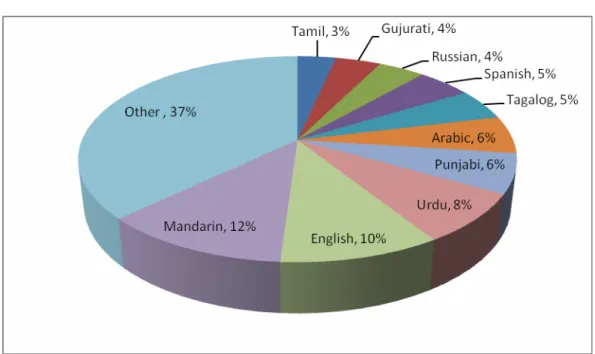
Figure 5: % of Landings by Native Language (MCI, 2007)
Figure 6: Official Language Ability of Newcomers (MCI, 2007)
Official Language Ability 2001 – 2006 Total Landings % of Landings to Ontario
English 365,000 57 %
Neither 252,000 39 %
Both French and English 22,000 3 %
French 6,000 1 %
Total Landings to Ontario 645, 000 100 %
The 2006 Census indicates that 98% of Canadians speak either French or English. The experience among newcomers in Ontario is very different; with only 61% having official language ability.
Out of the 126,000 newcomers settling in Ontario in 2006: • 50% were economic immigrant class;
• 35% were family class; and • 15% were refugees.
Newcomers from the family and refugee classes tend to have lower first language literacy rates and more frequently lack proficiency in either official language.
Based upon the information presented above, 39%, or just over 50,000 newcomers per year, report that they do not have the capability to speak in French or English. This indicates a significant demand for interpretation and translation services in Ontario.
Figure 7: Number of CIC Program Users (CIC, 2008) NATIONAL 2006 ONTARIO 2006 NATIONAL 2007 ONTARIO 2007 NATIONAL 2008 ONTARIO 2008 RAP 5108 1946 5136 1906 3178 1083 ISAP 66309 55155 70191 57828 77800 66114
ISAP - YOUTH & FAMILY 397 0 1298 312 4362 1231
ISAP - JOB SEARCH 5170 5127 5153 5124 4420 4403
HOST 3997 2756 4559 3114 3878 2477
TOTAL 80981 64984 86337 68284 93638 75308
Figure 7 shows that almost 10,000 (or 12%) additional new clients per year accessed settlement services in Ontario between 2006 and 2008. Further, we know from the survey administered as part of this study that 93% of settlement service providers use interpretation to deliver services to clients.
Further, based on the experience of other sectors and programs, as well as the increase in numbers accessing settlement services, the need for language interpretation is increasing.
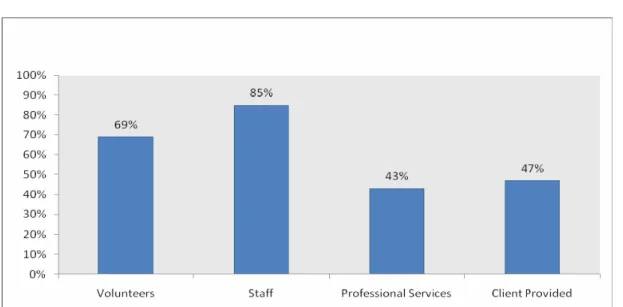
Most agencies (85%) rely primarily upon staff to deliver interpreter services, as indicated in Figure 8. Due to a lack of funding to pay for qualified interpreters, agencies use a combination of staff,
volunteers, paid interpreters and client provided interpreters (i.e. family, friends) to deliver interpretations services.
Figure 8: Interpretation Provider Type
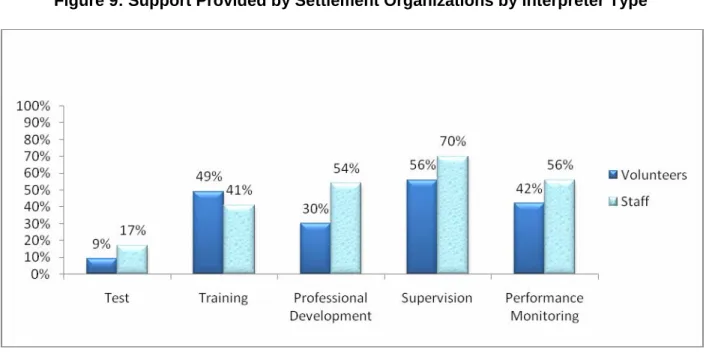
Figures 9 and 10 indicate that there is not a consistent approach to training and testing staff or volunteer interpreters or translators within agencies across the settlement sector. Traditionally settlement agencies have relied upon staff to deliver services in the same language as clients. Changes in funding, immigration trends and hiring practices have resulted in increasing use of interpretation within the sector, yet limited capacity for training and testing.
Figure 9: Support Provided by Settlement Organizations by Interpreter Type
7. Gaps
There are a number of gaps currently existing in the delivery of language interpretation and translation services in the settlement services in Ontario. These gaps were identified in the survey and research, and clarified and validated through the focus groups and interviews. The gaps outlined below have been categorized for clearer presentation but have not been
prioritized.
7.1 Access to Interpretation
7.1.1 Outside of the GTA
Most newcomers (82%) are choosing to settle in the GTA. Access to interpretation is more readily available due to the sheer number of newcomers available to provide the service in a wide range of languages. Outside of the GTA and particularly in northern and rural
communities, access (through face-to-face or by phone) to interpretation and translation is limited. This can be due to funding, technology, program management, practices, and capacity.
7.1.2 For newcomers from new and emerging language groups
Larger and more established newcomer groups have established the capacity to respond to language needs. Smaller and newer communities do not have access to trained interpreters. When these communities are located outside the GTA, access to interpretation is further limited.
7.1.3 For clients who require external referrals, e.g., education
While settlement programs provide critical services for newcomer settlement and integration, they do not operate independently of other key services that newcomers require. Consequently, newcomers and settlement workers regularly interface with other sectors, such as health, legal, education and social services. From a newcomer’s perspective, seamless and continuous access to service is preferred. In reality, clients do not have easy access to interpretation services as they navigate these different systems, and settlement agencies struggle to provide interpretation for clients they refer. Other sectors do not have a consistent approach to the delivery of interpretation. For example, while some hospitals are committed to providing interpretation services for all client appointments and visits, others are not.
7.1.4. Delivered by trained and tested interpreters
One of the strongest findings to emerge from this study is the lack of access to trained and tested interpreters for the provision of settlement services. As mentioned, most agencies use staff and volunteer interpreters, often untrained to provide interpretation. Agencies unanimously prefer to pay for interpreters that have been trained and tested, but lack the funding to do so. Agencies are concerned with the quality of interpretation provided by untrained and untested
interpreters and potential for errors that could seriously impact the newcomer’s settlement process.
7.1.5. Demand for service, e.g., timely, volume
Access to interpretation when the client needs it was identified by the sector as a gap. This could be as a result of inefficient systems for meeting client needs in a timely manner or, a gap between demand and supply. Service providers expressed interest in the use of technology that could quickly connect the provider, client and interpreter, be it by telephone or web
conferencing. This appears to be more acceptable and in current use with providers in the north and rural areas.
7.2 Lack of Funding
Historically settlement agencies were ethno-specific and staff spoke the same language as the service user. CIC did not typically fund interpretation as part of the operating budget. In recent years a shift is occurring to hire staff for their settlement skills as opposed to language and therefore the need for specific interpretation resources has presented itself.
However, the lack of funding available to use trained and tested interpreters is identified as a gap by settlement agencies to help in making the transition to separate interpreters. While they prefer to hire tested and trained interpreters, they do not have the funds available to them in their operating budgets. Nor do they have sufficient funds to provide training for the staff and volunteers that they rely upon to provide interpretation. Agencies that have been able to recruit trained volunteers lack funding to compensate them for expenses such as travel.
7.3 Standards
7.3.1 Inconsistent training, testing, and performance monitoring for interpreters
The lack of a consistent approach to training and testing interpreters across the settlement sector was clearly identified as a significant gap in the current settlement service delivery system. Stakeholders suggested that a standardized provincial approach to training, testing and using volunteer, staff and paid interpreters would enhance the quality of settlement services provided to newcomers. They also suggested that a standardized training and testing program could be adapted to meet local needs and could be efficiently administered by organizations recognized as “experts” in interpreter training and testing.
7.3.2. Lack of sector specific knowledge (legal, health, etc) by interpreters
The lack of interpreter training and testing becomes a more critical issue given the significant interface between settlement and other sectors. Stakeholders believe that interpreters,
although recruited to provide interpretation for settlement agencies, do provide interpretation for clients accessing a broad range of services and there is a need for sector specific training, particularly for clients using health and legal services.
7.4 Lack of professional recognition
The lack of professional recognition for interpretation was identified as a gap which may contribute to the lack of standards governing interpretation services across the province. No single organization is recognized provincially or nationally as empowered to “certify” or “accredit” interpreters. Further, most interpreters are freelance and operate independently, without a professional body to whom they are accountable, which sets professional guidelines regarding code of conduct, quality, professional development, training, testing, etc.
7.5 Lack of provincial legislation, policy or framework
The lack of a provincial framework for the delivery of interpretation was recognized as a gap by the sector. A provincial framework would provide a common vision, set of values and key operating principles for the sector. It could promote standards for training, testing and service delivery. It could include a core program for interpretation and translation services and also promote service quality through ongoing monitoring, evaluation and research of interpretation and translation services.
7.6 Legal liability has not been defined
The settlement sector is increasingly concerned with the legal liability associated with the delivery of interpretation by volunteers, staff or paid interpreters in the absence of a standard approach to training, testing or professionalization. More newcomers understand their right to quality services and several past and current high profile legal cases related to interpretation errors will increase the need for legal liability to be clearly defined.
7.7 Infrastructure
7.7.1 Information technology – limited use of IT for interpretation delivery, and administration
The settlement sector has limited access to or knowledge of the information technology tools available to efficiently deliver interpretation services. For remote, northern and rural
communities this is a critical gap. Good teleconferencing and web conferencing equipment could facilitate access to trained interpreters regardless of where they are physically located. This could support improved interpretation services in a more cost effective manner than adding direct one-on-one personal interpreters.
7.7.2 There is limited evaluation of, and research on, the role and impact of interpretation on settlement service delivery
Through the review of the literature, it became apparent that there has been no evaluation of or research on the role and impact of the interpretation and translation on the delivery of
settlement services. Numerous research and evaluation questions present themselves: • What is the impact to interpretation on the quality of settlement services delivered?
• What are the core competencies required to interpret in the settlement sector?
• What percentage of settlement service users require interpretation; for what duration; for what kinds of settlement services?
• How should interpretation service align with and support ESL training programs?
7.7.3 Lack of base data for management and planning
Throughout this study, the lack of easy access to basic settlement data frustrated the
information collection process and the ability to develop options or informed decisions. There is not a common provincial reporting system, which enables organizations to easily retrieve their data and produce reports.
8.
Options for Improvement
Based on information collected and consolidated through the jurisdictional/sectoral review, the survey and the focus groups, a number of options for the future delivery of interpretation and translation in the settlement sector present themselves.
8.1 Legislation and Policy
8.1.1 Develop a provincial framework to guide the delivery of interpretation services in Ontario. This will help develop, outline, and communicate a vision of what and how LITS will be provided in Ontario in the future. The framework can also include:
• Underlying values and principles;
• Standards for training and testing interpreters;
• Operating standards (when to use volunteers; how to manage external referrals); • Core policies; and
• Core programs.
8.1.2 Engage in a discussion to identify what services are or are not within the scope of ‘settlement’ in order to develop criteria for access to Citizenship and Immigration (CIC) funded language interpretation services. Given the interplay between settlement and numerous other sectors, this is an important discussion. Key questions include the following.
• Is there a time limit to the settlement period?
• What is the range of services provided and funded by CIC (regardless of location)? • What are roles and responsibilities of other sectors regarding newcomer service
delivery?
• Who is a settlement client (eligibility)?
8.1.3 Engage with other sectors that settlement commonly engages with to clarify
responsibility (one, the other, and/or shared) for the delivery of interpretation services. This could include CIC negotiating with other federal/provincial ministries to deliver interpretation services on a fee for service basis, thereby, from a client perspective, ensuring continuity and consistency in service delivery.
8.2 Administration
8.2.1 Develop a centralized approach to the delivery of LIS in Ontario. For example, CIC could partner with Ministry of Citizenship and Immigration (MCI) to extend the Language Interpreter Services (LIS) model to the delivery of settlement services. This program would be mandated to recruit, train, test and match interpreters to meet local needs. This option would require a significant investment of resources as outlined in the table below:
% of all settlement service users requiring LIS
Total # of settlement service users requiring
LIS
Investment
25% 18,827 $8,230,000
50% 37,654 $16,450,000
75% 56,481 $24,683,000
This investment is based on the annual cost per client of $437 (based on LIS program costs), and includes interpretation service delivery costs and administration. Additional funds would be required to pay for training and testing fees assuming that the agency will subsidize these fees in part. Training/testing costs average approximately $1500 per individual. At the same time consideration of a program rollout of this magnitude could present opportunities for significant cost efficiencies. A business case and program design, possibly consisting of a pilot study, would best determine these opportunities.
8.2.2 Alternatively, CIC can fund each individual service provider to recruit, train and test interpreters and to provide interpretation services for clients. This option may not be a feasible long term solution as it; will create competition among local providers to secure interpreters, is duplication of administrative structures, and is not structured for the most efficient utilization and delivery of interpretation resources.
8.2.3 Establish a language access subcommittee for each Local Integration Partnership (LIP) in Ontario to act as a clearinghouse for language access issues. Principles for future interpretation service delivery should be client centered, flexible and responsive to local needs. Local language access committees could be one strategy for promoting a standardized yet locally responsive approach to language access issues.
8.2.4 Review eligibility restrictions (refugees and Canadian citizens). A significant distinction between provincially and federally funded settlement services is the different eligibility criteria. In order to determine the true cost of interpretation and translation services, the eligibility criteria should be clarified and ideally, within organizations, consistent.
8.3 Standards/Training and Testing
8.3.1 Develop a standard/common interpreter training and testing model for the settlement services sector including:
• A single training curriculum that is module based (role, ethics, sector specific, staff, volunteers) and comprised of levels (basic, advanced);
• A single testing program /process.
8.3.2 Centralize/regionalize the delivery of interpretation training and testing (for example, identify regional interpretation service providers who are responsible for recruiting training and testing interpreters). Testing and training are specialized skills and
this expertise. Leveraging existing infrastructure may be cost effective and administratively efficient.
8.3.3 Promote the training and testing of settlement staff engaged in the delivery of
interpretation services (using a consistent provincial training and testing program, e.g., LIS), as part of the staff professional development program. This may be most
appropriate for staff who speak the language of a well established newcomer community, and where up front investment makes sense in the long term.
8.4 Funding
8.4.1 Provide core funding for interpreter services directly to settlement service providers, including Settlement Workers in Schools (SWIS). One option for CIC to consider is including funding for interpretation within the current operating budgets of all its service delivery providers. Each settlement provider would need to submit a request for interpretation funding based on its anticipated needs.
8.4.2 Alternatively, CIC could set up and fund a centralized/regional interpreter services program that would be responsible for meeting the interpretation needs in its mandated region. Although we know how many newcomers used settlement services over the past two years, we do not know how many require interpretation, nor do we know what volume of interpretation is required per client. However, we do know that the LIS costs $437 per client per year. This is a high risk population that probably represents the high end of demand and cost for the service.
8.5 Public Education
8.5.1 Develop and implement a public education program for settlement service providers and allied sectors regarding the role of the interpreter. Even in jurisdictions where there is a strong policy/legislative framework in place to support the delivery of interpreter services, service providers need to be supported to understand the role of the interpreter and to use the interpreter role appropriately.
8.5.2 Develop and implement a public education program for newcomers regarding their access to language interpretation, in various relevant languages.
8.6 Infrastructure
8.6.1 Invest in Information Technology in order to enable more effective and efficient delivery of language interpretation service (for example, call centre, websites, resource and provider lists, common and frequent translated document repository).
8.6.2 Generation of and access to data required for planning (prioritization) and management, e.g., number of clients requiring interpretation, number of hours, what settlement or associated services are used, timelines, cost, etc. This would enable the quantification of the cost of investing in options and subsequent prioritization on an ongoing basis.
8.6.3 Develop a performance measurement system for evaluating the impact of investing resources in language interpretation services. Quantitative data to capture includes: units of service provided per client, # of clients using services, length of service
appointment, nature (phone, in-person). Outcome or impact measures should also be developed.
8.6.4 Invest in information technology and appropriate training at service providing agencies to enhance their capacity to deliver interpretation such as teleconferencing or web
conferencing equipment.
8.7 Service Delivery
8.7.1 Develop a “peer interpreter” or “system navigator” role and training program for volunteer interpreters in new and emerging/high need communities (i.e., Government Assisted Refugees (GARS)). There is recognition in the sector that a single model or approach to interpretation service delivery does not provide the flexibility required for a sector that needs to quickly mobilize for address the language needs of new and emerging immigrant communities. Recruiting community leaders as volunteers to support the resettlement of peers is one example of a strategy that was suggested for addressing language access issues, particularly for high need refugee groups. Volunteers
participate in a short but focused training program that has common yet different features from the standard interpreter training program, particularly in the approach to addressing issues such as boundaries, communication and conflict management. 8.7.2 Set up a “common call number” for service providers across the province to access
emergency interpretation services. This would enhance settlement service providers timely to interpretation services.
8.7.3 Develop operational guidelines for the consistent delivery of interpretation in Ontario through:
• Phone/web interpretation; • Legal liability;
• Lexicon of terms for the settlement sector; and • Referral procedures.
8.7.4 Identify and translate key documents into diverse languages. This option would also entail ongoing monitoring of the new resources and documents that would need to be translated over time. Translated documents should be made available to newcomers via venues already accessed and used by newcomers.
8.7.5 Building on the previous option, CIC should partner with existing service providers such as a “common call number:, settlement.org, and others to make websites more
linguistically accessible and therefore the appropriate repository for translated documents and resources.
9. Recommendations
This section outlines the recommendations as developed from the synthesis, assessment and refinement of the options. The recommendations have been detailed in order to provide a clear understanding of what the impact of the proposed changes will be. Each of the recommendation descriptions provides a summary of the challenge that will be addressed, key benefits,
implementation and cost considerations, and a high level cost/benefit overview.
The high level cost/benefit overview provided for each recommendation is intended to provide an understanding of cost (capital cost, operational cost, impact) and benefits (service effectiveness, efficiency, impact). Figure 11 outlines the values for the overview.
The recommendations that have been developed from the options have been notionally prioritized with the use of evaluation criteria identified in the table below.
9.1 Guiding Principles
In addition to the evaluation criteria described above, the recommendations strive to reflect the principles that the sector articulated through the consultation process as important to any future LITS business model. These include:
• LITS need to be client-centered and responsive; providing seamless services • Different service models may be needed in different parts/regions of the province • Different service models may be needed for different newcomer groups
• Settlement stakeholders should be involved in the development and implementation of LITS improvement initiatives
• Future business models should be open to new technologies and delivery mechanisms • Future LITS business models need to reflect the interface between settlement and other
newcomer serving sectors
• Solutions should promote collaboration between the federal/provincial and municipal levels of government
• Solutions should be cost effective
Criteria Description
1 Effectiveness of benefit Actions that can be implemented to improve service delivery resulting in benefit to newcomers.
2 Timeliness of implementation
Actions that can be implemented in the short term for fastest positive impact.
3 Cost to CIC/MCI and/or
Settlement Agencies The cost of the action does not outweigh potential benefits. 4 Support from settlement
community
Actions would be well received by newcomers, settlement providers, as well as other sectors that interface with settlement service providers.
5 Alignment with COIA Strategies
Actions could further the implementation of COIA strategies.
• Performance management is a critical component of good management for a future LITS business model
9.2 Future LITS Business Model
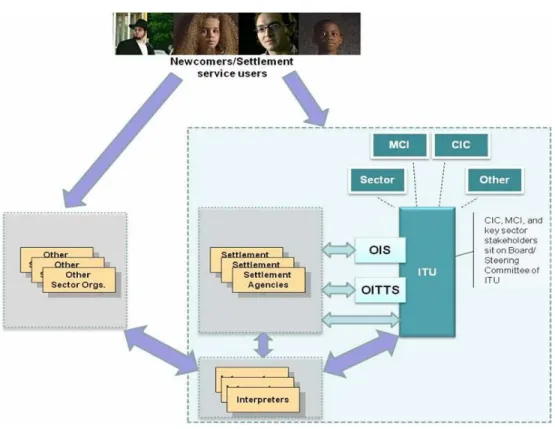
Figure 12, below, visually presents the future business model for the delivery of LITS in Ontario. It is representative of the recommendations that follow it. It proposes that a body which we refer to as the ITU be established to oversee the planning, delivery and monitoring of LITS in the province. Specifically, the ITU would be responsible for two other entities. The LITS would be governed by a multi-stakeholder group made up of representatives from CIC, MCI and
settlement sector representatives.
The first, Ontario Interpreter Services (OIS), would develop, implement and monitor a
centralized approach to the delivery of interpretation services across the province. This could include the development of a single roster of trained/tested interpreters that could be accessed by the sector; a single or a group of regional call centres to match rostered interpreters to local requests and a system that utilizes technology (telephony, web conferencing) to deliver
interpretation in a timely, efficient manner.
The second, Ontario Interpreter Training and Testing Services (OITTS) is responsible for a centralized approach to the delivery of interpreter training and testing across the province. This could include a single or a group of regional training centres that utilizes technology (web based training) to deliver training and testing in a timely, efficient manner.
Both clients and interpreters would be able to access the LITS system through the UTI managed services or through local settlement service providers.
Recommendation #1 Priority: A
Establish an Interpretation and Translation Unit (ITU) Key Challenge
This recommendation addresses the overarching need identified in this study for a consistent and coordinated approach to the planning and delivery of interpreter services across Ontario. An ITU is recommended to centrally plan, implement and monitor interpretation and translation services for Ontario’s settlement sector.
Recommendation Details
Outline:
The ITU would be newly established to plan, implement and monitor the delivery of
interpretation and translation services in the province of Ontario. The ITU could be located in CIC, MCI or setup as a separate organization. A separate organization would have a number of benefits over an internal department of one of the governments including; possibly easier to develop and implement, governance that truly incorporates all key stakeholders (e.g., Board of Directors made up of representatives from CIC, MCI, settlement sector, newcomers, and possibly others), easier mechanisms to share the costs, and a good approach to assist with sector support and involvement.
The mandate for the ITU visualized at this time is for it to provide direction, planning and, coordination. It would oversee and possibly provide, where needed, services that are common across the province and most effectively and efficiently provided on a centralized basis, e.g., a central service for requesting an interpreter for an emergency or when not available in a particular community or region.
The interpretation and translation services will continue to be delivered on a local basis. But policy, standards, training, and testing, will be planned and developed by the ITU with
involvement of the sector, providing a coordinated and integrated governance and delivery of LITS across the province, communities, languages, and delivery mechanisms.
The ITU is seen as a small unit that makes effective use of the settlement sector resources and community. It will develop the standards, policy, training, testing, etc. through a combination of internal policy, project management, and external resources.
Key Tasks:
• Develop Business Case – including governance, initial mandate, detailed organization and operational design, costing, and rationale.
Primary Impact
The ITU would provide leadership in policy, program management and coordination in the area of LITS for newcomers. The program would be responsible for policy development, the
identification of standards, implementing a coordinated and standardized approach to training and testing, service delivery management, monitoring the overall delivery of interpretation services across the province, and monitoring and responding to future trends.
Cost Considerations
Investment:
Capital – Low Unit set up
Operating – Medium
Ongoing staffing and operational budget required.
Key Benefits
• Consistent policy across the province.
• More effective sharing of information and resources. • Better coordination of program development and
service delivery.
• Improved performance management system. • Implementation of consistent standards, training and
testing. Implementation Considerations:
• The opportunity to implement this unit exists in the context of the COIA, specifically strategies # 1, 3, 4.
• Start-up and operating funding is potentially available through COIA.