Study on Energy-Efficiency for Data Center
Resource Management
E. Nancy Fernando N. Lakshminarasimman
PG Student Head of the Department
Department of Computer Science and Engineering Department of Computer Science and Engineering K.L.N College of Engineering, TamilNadu, India K.L.N College of Engineering, TamilNadu, India.
Abstract
Clients require several real time cloud services while on the move. Providing such services should cope up with issues like delay and delay jitter. Data centers should be designed in such a way that energy efficiency is their primary concerns. In order to provide such services efficiently we make use of several new technologies. One of them being networked fog centres comprising of fog nodes. Energy efficiency is the primary motive of developing such fog nodes. Resource scheduling comes in hand for managing energy efficiency in these nodes. In this paper, several resource scheduling mechanisms on data centers as well as fog centers are studied and their energy efficiencies are compared.
Keywords: Data center, Energy-efficiency, Fog computing, Networked fog centres, Resource scheduling
________________________________________________________________________________________________________
I. INTRODUCTION
In todays world,cloud computing is an emerging paradigm that provides enormous benefits to various kinds of users. It can be stated as an on-demand service model that is remotely available to users, is highly scalable, provide broad network access and allocates resources to the users in pay as-you-go manner. Cloud computing consists of four deployment models. 1). Public cloud 2). Private cloud 3). Hybrid cloud 4). Community cloud. Public cloud provides services for any type of users over the internet. Private cloud is generally run by some private organization for their private users. Hybrid cloud is combination of public cloud and private clouds. Community cloud is a kind of private cloud which is usually run by some group of people having common motives. Despite of the benefits that cloud computing has, it also suffers from some issues. To overcome some of the inefficiencies of cloud computing, a new paradigm called fog computing, comes into place.
With the growing number of devices on cloud computing, getting data in and out of cloud has become harder. the time has now come where we need to stop focusing on storing and retrieving from cloud but to process the massive amount of data somewhere close to the device or on the device itself. This is where fog computing comes into place. It is generally deployed between end user and the cloud data centers. Some of the features of fog computing are edge location, location awareness, geographical deployment, mobility, wireless access and low energy consumption .A significant amount of energy gets wasted when each of the processing needs to be done on a cloud. Fog nodes reduce such energy consumption by using batteries that work on solar power. By using fog nodes ,the requirement for bandwidth to access the actual cloud is low, thus delay and delay jitter issues can be overcome. In order to obtain maximum efficiency from the fog nodes resource scheduling needs to be done.
Significance of Resource Allocation:
Resource scheduling is the systematic way of allocating available resources according to the need of the client . the resource allocation should be optimal in all aspects. This includes the time and energy spent in scheduling the resources. The problems like over-provisioning and under-provisioning also needs to be overcome .In this paper we have made a comparative study on Resource
management based on Scalability, Energy efficiency and scheduling methodologies.
In section II we focus on works related to the topic. In section III, we have illustrated various resource scheduling methodologies. In section IV we give the summary of our work. At last we give the conclusion.
II. LITERATURE SURVEY
as well as distributed implementation.
Mohammad Aazam et al [13] proposed a system termed as Cloud of Things(CoT) that provides ease of managing data from ubiquitous computing and resource management. The recent focus has been on pervasive computing devices which require the combined usage of wireless sensors networks, internet of things and cloud computing. Burdening the cloud with all required services has come to an end with the introduction of Fog computing. It resides between the edge network and the actual cloud. Fog computing does an effective resource management taking into account, resource prediction, and reservation, advance reservation, customer type based resource estimation and pricing for new and existing IoT customers depending upon their characteristics
Rong Yu et al [12] proposed that vehicles being connected in the modern era of internet of things, the components in the internet of things require various measures to improve safety, make ways to significantly reduce traffic congestion and air pollution in order to provide comfortable driving. This is turn leads to large amount of data collection needs posed on the internet. Cloud computing is integrated into vehicular network in order to make this work out. Cloud computing offers resources for compute,storage and bandwidth. In this work [12] three types of cloud are used namely vehicular cloud ,roadside cloud and a central cloud. The cloud based vehicular network is then used to perform effective resource management and virtual machine migration.The approach used here is apparently named as game-theoretical approach to allow optimal allocation of resources. mobility related issues are also monitored based on resource reservation scheme.
III. SCHEDULING METHODOLOGIES
A brief summary of the different methodologies used for scheduling is illustrated in this section. The different methodologies include
1) Adaptive resource scheduler based on intra-fog virtualization 2) Lyapunov optimization based Data Center Control Algorithm (DCA) 3) NetDC scheduler
4) Fog-Based CoT resource management model 5) Game-Theoretical model for resource scheduling
Adaptive resource scheduler based on intra-fog virtualization:
A new scheduler is developed for minimizing the energy consumption induced by computing, communication and reconfiguration costs in internet based virtualized fog centers that utilize end-to-end TCP/IP mobile energy constrained connections.
The scheduler performs
1) Dynamic load balancing 2) Online job decomposition
The model operates at the middleware layer and Software as a Service is the provided service mode. The fog center includes M servers and each physical server is equipped with a virtual machine manager and hosts multiple virtual machines. Input/output limited-capacity buffer controls the load dispatcher before and after cloud processing is done. Each Road side Unit (RSU) acts as a fog node and may play the role of a relay node or a cloudlet. According to the assumption the clients can change their positions and time division multiplexing is used to cope up with this issue. The goal is to effectively cope with the congestion and mobility induced fluctuations of the bandwidth offered.
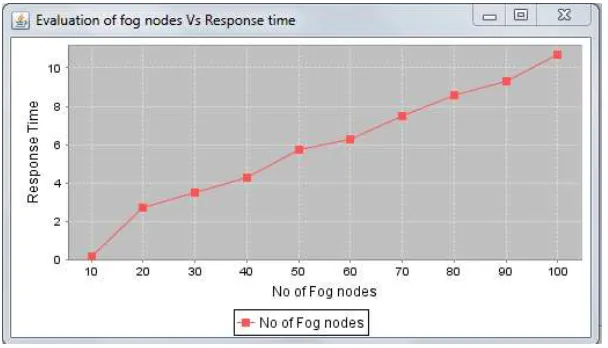
Fig. 1: No. Of fog nodes Vs Response time
Lyapunov optimization based Data Center Control Algorithm (DCA):
An input parameter is chosen as a control parameter to the algorithm which acts as a control probe allowing the system administrator to tradeoff average delay or total average utility . Suitable choice of this parameter is always dependent on the particular system and the required tradeoff between performance and cost incurred on power as well as time constraints. At each slot, the DCA algorithm makes joint Admission Control, Routing and Resource Allocation decisions by using the backlog values in that slot. The changes occurring due to the backlog values evolving depending on the dynamics are monitored and control decisions are made by the DCA. This decision is purely based on the current backlog values and not on any prediction. The queue backlogs are generally taken as Lagrange multipliers that are capable of stochastic optimization.
The operation of DCA algorithm is as follows:
1) Admission Control: for every application the number of new requests to be allowed are chosen. This generates a solution based on a simple threshold. There is also possibility for admission control to be performed separately for every application. 2) Routing and Resource Allocation: Taking into account the number of active servers in the current frame routing and resource allocation are performed. Since this allows only an active server set the routing strategy allowed is based on Join the Shortest queue policy. The decisions taken are based on the queue backlog information. Resource allocation is then done on the max-weight problem which uses the service max-weight calculation using current backlog information. Thus we can obtain optimal solution to the problem by allocating resources that satisfy the maximum service rate policy.
NetDC scheduler:
The NetDc scheduler is capable of the following,
1) Enable low consumption of both communication and consumption energies in delay and bandwidth-constrained data centers. 2) Form a suitable solution to the constrained optimization problem called Computing and Communication Optimization
Problem(CCOP)
3) Admits a optimality-preserving closed form solution to CCOP by splitting into , the Communication Optimization Problem (CMOP) and the Computing Optimization Problem (CPOP).
4) develop analytical conditions for its feasibility;
5) capable of developing a fully autonomic resource scheduler, to quickly adapt to the a priori unknown offered workload’s time-variations without considering future workload
Fog-Based CoT Resource Management Model:
Fog computing is capable of serving requests from various customers owning Iot devices and also from sensors. It not only provides ad-hoc services but also helps in resource provisioning and management. This in turn creates efficiency in resource scheduling. The considered Fog-Based CoT model works as follows,
1) The devices operating at client side send requests to the Fog
2) The users behaviour and the probability of future resource requests are taken into account and pre-allocation of resources is done
3) Pricing and billing parameters are also taken into account.
4) As there are random consumption of services, Fog takes into account only the utilized services and provides an appreciation index.
IV. SUMMARY
The following table provides the comparison of various parameters in the considered works and their advantages and disadvantages.
S.NO SCHEDULING METHODOLOGY
PERFORMANCE
METRICS ENVIRONMENT
AVERAGE ENERGY SAVINGS
ADVANTAGES DISADVANTAGES
1
Adaptive resource scheduler based on
intra-fog virtualization
Energy efficiency,QoS
constraints
CloudSim,Matlab 60-75%
Performs joint adaptive tuning of
input and output traffic Minimizes the overall energy consumed
Unpredictable time varying nature of
states Inefficient delay-tolerant session based
services
2
Lyapunov optimization based Data Center Control
Algorithm (DCA)
Energy efficiency,
Power management CloudSim 40-50%
Dynamically scales up/down the sizes of the
VM’s task Scaling of processing rates by exploiting available queue information
Relies on inherent execution delay-vs-utility tradeoff Does not allow hard deadline on execution
times
3 NetDC scheduler
Energy efficiency, Dynamic load
balancing
Netbeans/CloudSim 40-42%
The scheduler is adaptive Guarantees bounded per-job
execution times
Does not consider mobile clients No resource consolidation 4 Fog-Based CoT Resource Management Model Resource management,service provisioning
Netbeans/CloudSim 55%-60%
Considers customer traits in
resource allocation Applicable in different scenarios
Does not consider client mobility Lack of heterogeneous
services implementation
5
Game-Theoretical model for resource
scheduling
Resource management,virtual
machine migration
cloudAnalyst 38-40%
Significant reduction of service dropping rate Effective resource reservation for virtual machine migration Fluctuations in blocking rate Live migration of VMs
to achieve additional energy savings is not
done.
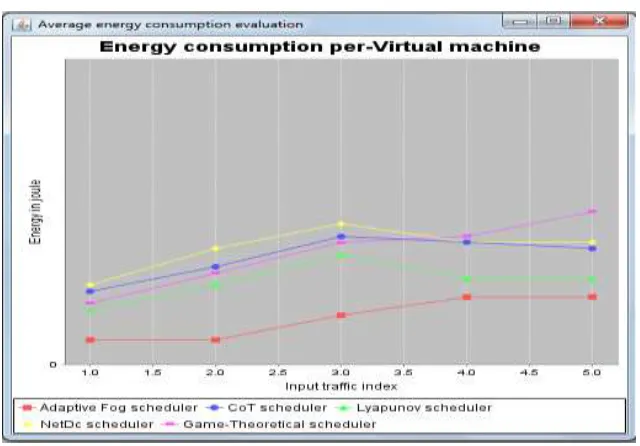
Fig. 2: Average energy consumption evaluation
V. CONCLUSION
In this paper we have analysed various resource scheduling techniques and their advantages and disadvantages. Fog computing based schedulers were also discussed. The advantages of using dynamic scheduling for resource management and providing energy efficiency were summarized. According to the analysis we have concluded that the adaptive resource scheduler based on fog-virtualization is more efficient compared to other type of schedulers based on the evaluated constraints.
REFERENCES
[1] Mohammad Shojafar,Nicola Cordeschi,Enzo Baccarelli, ”Energy efficient adaptive resource management for real-time vehicular cloud services”,IEEE Transactions on cloud computing,vol pp,no. 99,1-14,april 2016.
[2] M. Shojafar, N. Cordeschi, D. Amendola, and E. Baccarelli,“Energy-saving adaptive computing and traffic engineering for real-time-service data centers,” in Proceedings of IEEE ICCW’15,vol pp.1800–1806 , 2015.
[3] C.M.Wu, R.-S. Chang,and H.-Y. Chan, “A green energy-efficient scheduling algorithm using the dvfs technique for cloud datacenters,”Future Generation Computer Systems, vol 37, pp,141–147,2014.
[4] N.Cordeschi,M. Shojafar, and E. Baccarelli, “Energy- saving self configuring networked data centers,” Computer Networks, vol 57,no. 17, pp,3479–3491, 2013.
[5] R. Urgaonkar, U. C. Kozat, K. Igarashi, and M. J. Neely, “Dynamic resource allocation and power management in virtualized data centers,” in Proceedings of IEEE NOMS,vol pp,479–486, 2010.
[6] J. Song, Y. Cui, M. Li, J. Qiu, and R. Buyya, “Energy-traffic tradeoff cooperative offloading for mobile cloud computing,” in Proc. Of 22nd IEEE Int. Symp. of Quality of Service, pp. 284–289, 2014.
[7] A. P. Miettinen and J. K. Nurminen, “Energy efficiency of mobile clients in cloud computing,” in Proc. of 2nd USENIX conference on Hot topics in cloud computing, pp, 4–11, 2010.
[8] Mohammad Shojafar, Claudia Canali, Riccardo Lancellotti and Enzo Baccarelli, ”Minimizing Computing-plus-Communication Energy Consumptions in Virtualized Networked Data Centers”, IEEE Symposium on Computers and Communication,pp, 1137-1144, 2016.
[9] Haris Pervaiz, Leila Musavianqiang Ni, And Zhiguo Ding,” Energy and Spectrum Efficient TransmissionTechniques Under QoS Constraints Toward Green heterogeneous Networks”, IEEE ACCESS, Vol 3,1655-1671, October 2, 2015.
[10] Zhefeng jiang, and shiwen mao,”Energy Delay Tradeoff in Cloud Offloading for Multi-Core Mobile Devices” IEEE Access,Vol 3,2306 – 2316,November 2015.
[11] Swati Agarwal,Shashank Yadav,Arun Kumar Yadav,”An Efficient Architecture and Algorithm for Resource Provisioning in Fog Computing”,MECS,Vol 1,48-61,January 2016.
[12] Rong Yu, Yan Zhang, Stein Gjessing, Wenlong Xia, Kun Yang,”Toward cloud-based vehicular networks with efficient resource management”,IEEE Network,Vol 27,Issue5, 48 – 55,october 2013