An experimental study of the failure mode of ZnO varistors under multiple lightning stroke
Chunlong ZHANG1,2,3,4, Hongyan XING1,2,3,*, Pengfei LI4, Chunying LI4, Dongbo LV4,
and Shaojie YANG4
1 Collaborative Innovation Center on Forecast and Evaluation of Meteorological Disasters,
Nanjing University of Information Science & Technology, Nanjing, 210044, China
2 Jiangsu Key Laboratory of Meteorological Observation and Information Processing, Nanjing
University of Information Science & Technology, Nanjing, 210044, China
3 School of Atmospheric Physics, Nanjing University of Information Science & Technology,
Nanjing, 210044, China
4 Meteorological Disaster Prevention Technology Center of Heilongjiang Province, Harbin,
150030, China
*Corresponding author
Collaborative Innovation Center on Forecast and Evaluation of Meteorological Disasters, Nanjing
University of Information Science & Technology, Nanjing 210044, China.
ABSTRACT: In this study, in order to explore the failure mode of ZnO varistors under multiple
lightning stroke, a 5-pulse 8/20 μs nominal lightning current with pulse intervals of 50 ms was
applied to the ZnO varistors. Scanning electron microscopy (SEM) and X-ray diffractometry
(XRD) were used to analyze the microstructure of the material. The failure processes of ZnO
varistors caused by multiple lightning impulse current were described. The performance changes
of ZnO varistors after multiple lightning impulses were analyzed from macro and micro
perspectives. According to the results of this study’s experiments, the macroscopic failure mode of
the ZnO varistors after multiple lightning impulse was that the electrical parameters deteriorate
rapidly with the increase of the number of impulse groups, and finally destroyed by side-corner
cracking. The microstructural examination indicated that after the multiple lightning strokes, the
proportion of Bi in the several crystal phases had been converted, the grain size of ZnO varistors
became smaller, and the white intergranular phase (Bi-rich grain boundary layer) increased
significantly. The failure mechanism was thermal damage and grain boundary structure damage
caused by temperature gradient thermal stress generated by multiple lightning current.
1 Introduction
The installations of surge protective device are one of the most economical and effective means for
power distribution systems to avoid or reduce lightning impulse. The core component of a surge
protective device is a ZnO varistor, which has many advantages. These include a good nonlinear
property, small normal leakage current, low level of residual pressure, and no follow current. ZnO
varistors have been widely applied for the protection of electronic and electrical equipment from
lightning [1–2]. However, after a natural lightning strike, ZnO varistors often have varying
degrees of failure.
Impulse test is the most direct means to study its performance. Currently, an 8/20 μs single
pulse waveform had been adopted for the impulse test of ZnO varistors [3–4]. A host of studies
have been presented in regard to the performance changes in ZnO varistors under single pulse
lightning impulses [5–8]. However, the modern lightning observations and artificial triggered
lightning acquisition data have shown that two-thirds of the lightning events in natural settings are
multi-pulse processes. According to the statistical data, nearly 70% of cloud-to-ground lightning
strikes involve 2 up to 20 strikes, with an average number of between 3 and 5, and the time
duration between strikes was 15 ms to 150 ms. There is a significant difference between the
single-pulse lightning waveform and the multiple lightning strikes of natural lightning [9–10], and
the total time and energy of a multi-pulse is several times that of a single pulse. Therefore,
lightning single pulse test methods have been unable to simulate the subsequent damages caused
by lightning [11]. Darveniza et al. [12] pointed out that multiple lightning impulse currents could
potentially cause severe damage to the lightning protection devices protecting equipment in power
distribution systems. The previous research results have shown that 6-pulse lightning current
inconclusion in the lightning protection test standard. Lee et al. [13–14] found that ZnO varistors
degraded when subjected to multiple impulse currents, and their life mainly depended on the
amplitude of the lightning surge. Haryono et al. [15–16] analyzed the damage effects of ZnO
varistors undergoing multiple lightning impulse current from the perspective of energy absorption.
At the present time, the research regarding the performances of ZnO varistors undergoing multiple
lightning impulse current has been mainly based on the analysis of the macroscopic electrical
properties [17–19]. However, few research studies have been conducted to investigate the damage
failure mechanisms under multi-pulse continuous impulses, especially in regard to the changes in
microstructures.
Therefore, in this study, the samples were applied to a 5-pulse current with a time interval of
50 ms. The actual lightning strike of the ZnO varistors in practical applications was simulated as
realistically as possible, and the macroscopic damage form and static parameter variation
characteristics were monitored. At the same time, the ZnO varistors before and after the impulse
were analyzed by scanning electron microscopy (SEM) and X-ray diffractometry (XRD). It was
expected that we would investigate the ZnO varistors’ failure mode during natural lightning strikes
from the perspective of macroscopic and microscopic bonding. Some experimental data regarding
the performance of ZnO varistors under multiple lightning impulse current are shown here. The
failure modes of the ZnO varistors undergoing multiple lightning impulse currents are discussed
on the basis of the results of thermal effect. It was believed that this was particularly important for
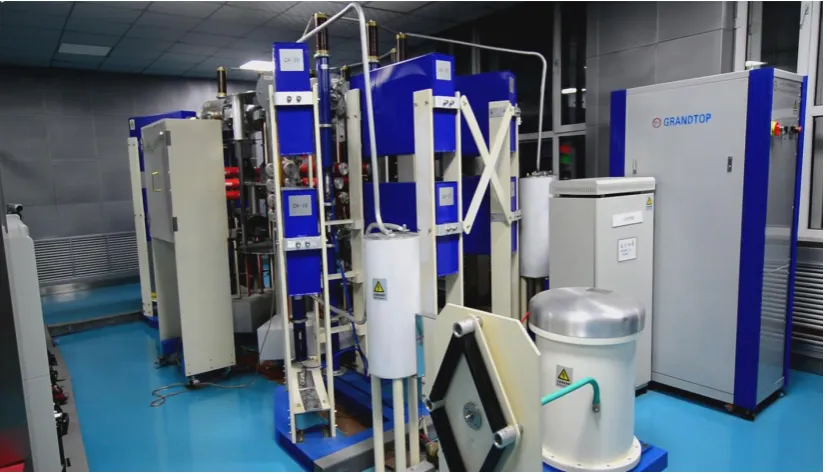
The multiple lightning impulse equipment used in this experiment was a 20-pulse lightning
impulse current generator, as shown in Fig. 1. Multi-channel discharge technology was adopted to
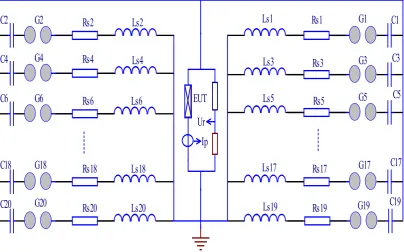
simulate multiple lightning stroke processes. The waveform generator circuit diagram is shown in
Fig. 2, where C is the capacitor, G is the impact gap, Rs is the resistor, and Ls is the inductor. With
the impulse test end as the axis, there are 10 trigger channels at each end. When the primary current
is fully triggered, 20 high-voltage pulses can be generated, and the time interval can be changed
from 1 ms to 999 ms.
Fig. 2 Multiple lightning impulse current generator circuit diagram.
In this study, section 1 of IEC 62305-1 Lightning Protection: General Rule [20] provides a
special definition for the multiple lightning. Lightning with an average of 3 to 4 impulses, and
intervals of approximately 50 ms, was defined as multiple lightning. Therefore, the multiple
lightning strikes in this test were represented by a group of multiple impulse currents that was used,
which included five consecutive impulse currents, each of which had 8/20 μs waveforms, the time
between two consecutive pulses was 50 ms, and the pulse amplitudes were the nominal discharge
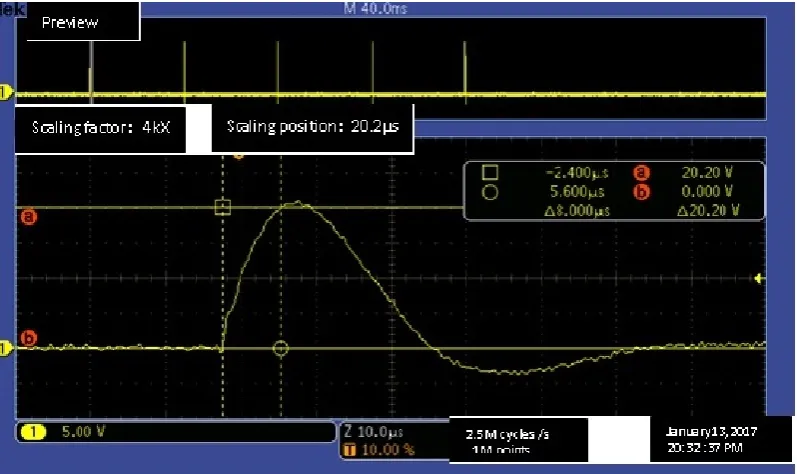
currents of the selected ZnO varistors. The waveform diagram is shown in Fig. 3, where the five
yellow vertical lines represent the five pulses, and the following 8/20 μs waveform denotes the full
waveform figure of a single pulse.
C2 Rs2 Ls2
C4 Rs4 Ls4
C6 Rs6 Ls6
C18 Rs18 Ls18
C20 Rs20 Ls20 Rs19 C19
Fig. 3 5-pulse lightning waveform diagram.
2.2 Sample preparation
In this study, the same type of ZnO varistors that were used in this experiment were provided by
the same manufacturer. The basic parameters of these samples were nominal discharge current In
= 20 kA, maximum continuous operation voltage Uc = 385 V, and the static parameters (varistor
voltage and leakage current) were as shown in Table 1. The varistor voltage is a voltage
corresponding to a current of the varistor of 1 mA, and is a standard of a voltage whose current
rapidly rises with voltage, and the voltage is expressed by U1mA. The leakage current refers to the
current flowing through the varistor at a specified temperature and maximum DC voltage,
generally expressed by Iie. Under the premise of approaching U1mA, the smaller the Iie was, the
better the voltage limiting performance of the varistor would be. In this study, 7 ZnO varistor
blocks, with the majority approaching the static parameters, were selected as the samples, and
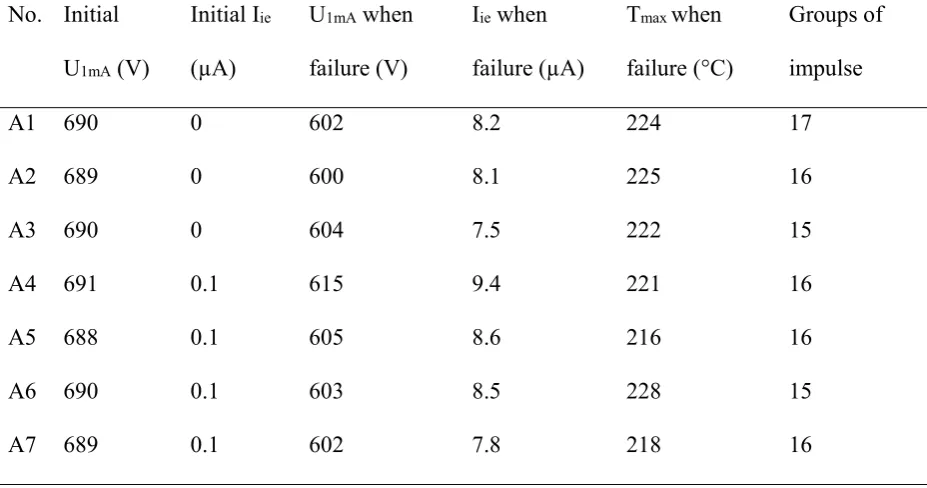
Table 1 Changes in the electrical parameters before and after the impulse of ZnO varistors
No. Initial
U1mA (V)
Initial Iie
(µA)
U1mA when
failure (V)
Iie when
failure (µA)
Tmax when
failure (°C)
Groups of
impulse
A1 690 0 602 8.2 224 17
A2 689 0 600 8.1 225 16
A3 690 0 604 7.5 222 15
A4 691 0.1 615 9.4 221 16
A5 688 0.1 605 8.6 216 16
A6 690 0.1 603 8.5 228 15
A7 689 0.1 602 7.8 218 16
2.3 Experimental procedure
Fig. 4 Flowchart of the experimental procedure.
(1) Initial measurements: The samples are characterized with the U1mA, Iie and photographs at
the beginning of the test.
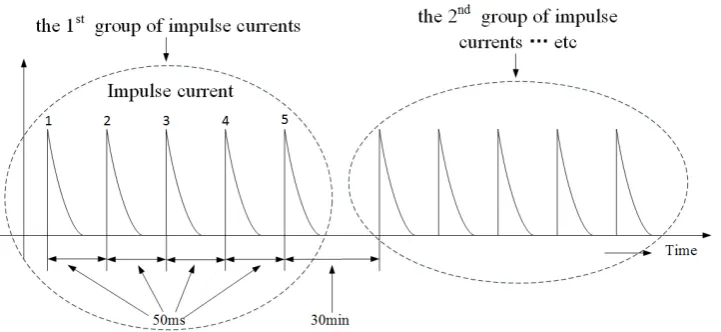
(2) Impulse test: We adjusted the charging voltage of the generator to output the demand
impulse currents. Then, multiple lightning impulse currents were applied to the ZnO varistors. The
time between the application of one group of impulse current to a ZnO varistor block and that of
the next group of impulse current was 30 minutes; with such long duration of time, we were able to
amplitude of the U1mA reached beyond ±10% of the original, the Iie exceeded 20 µA, or direct
damage occurred, the ZnO varistors were judged as having failed. Subsequently, the impulse test
was ceased, and the data were recorded.
Fig. 5 Groups of impulse current applied to ZnO varistors.
(3) We measured the surface temperatures, varistor voltage U1mA and leakage current Iie of the
ZnO varistors after each impulse. Then we checked the surface of the ZnO varistors for flashover
or puncture, and took photographs of the damaged ZnO varistors.
(4) We used scanning electron microscopy (SEM) and X-ray diffractometer (XRD) on the
ZnO varistor block before and after the impulse in order to observe the microscopic structures of
the ZnO varistors.
that the U1mA showed a trend of decreasing-stable-decreasing with the increases of impulse groups,
which was observed to drop after the first group of impulse and the last group of impulse with an
average decline rate as high as 4%. The Iie all showed increasing trends with larger rising rates,
with an average growth rate of 0.66 µA/a group. Following the 16 groups of impulse, it was
observed that the U1mA fell sharply, with an average drop rate of more than 10% of the original
U1mA. This resulted in failures occurring in the ZnO varistors. Then, after another group of
impulses, the ZnO varistor blocks became damaged.
0 1 2 3 4 5 6 7 8 9 10 11 12 13 14 15
580 590 600 610 620 630 640 650 660 670 680 690 0 1 2 3 4 5 6 7 8 9 10 11 U1mA(V) Iie(uA)
Fig. 6 Varistor voltage U1mA and leakage current Iie variation diagrams of the ZnO varistors under
multiple lightning impulse current.
As shown in Table 1, under the five-pulse lightning current, the ZnO varistor blocks A1 to A7
were able to withstand an average of 16 groups of impulse. When the U1mA had fallen by more than
10% of the initial value, the appearance of damages occurred in the cases of a maximum of 1 to 2
groups of impulses. Figure 7(b) shows the damage forms of the ZnO varistor block A2 during its
7(c), the damage forms of the ZnO varistor blocks A1 to A4 in the different codes were observed to
be highly consistent.
(a) (b) (c)
Fig. 7 Appearance state diagram of the ZnO varistors before and after the multiple lightning
impulse current. (a) State diagram of Sample A2 before impulse. (b) Damage state diagram of
Sample A2. (c) Damage diagrams of Samples A1 to A4.
3.2 Microscopic property
Figure 8 details the SEM images of the ZnO varistors prior to the impulses with a resolution of 10
µm. It can be seen from the figure that the internal structure of the ZnO varistor was mainly
composed of four types of gray matter, marked as +1, +2, +3, and +4, respectively. Through this
study’s EDS analysis, it was determined that the main components of +1 in the white area were O,
Zn, and Bi; those of +2 in the gray area were O and Zn; those of +3 at the white-gray junction were
O, Zn, and Bi, and those of +4 in the deep black region were O and Zn. The proportion of elements
zinc oxide grain. It was found that the cell distributions of the ZnO varistor were not uniform, and
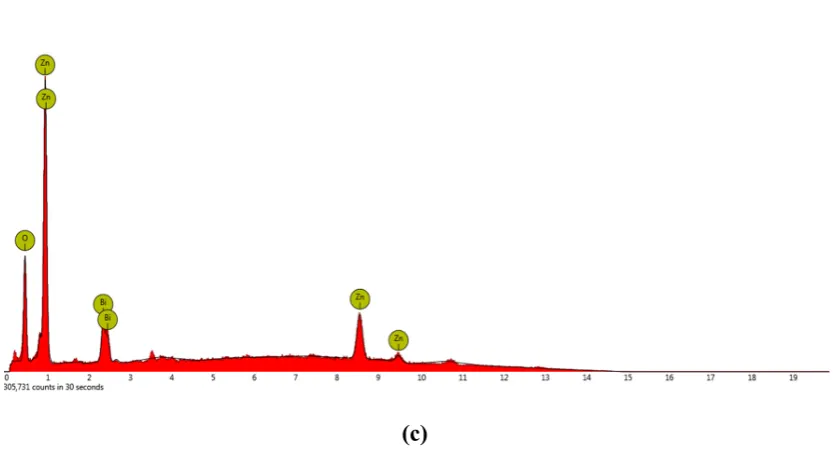
the rich-Bi phase was concentrated in a certain region. Map analysis at +1 position of the ZnO
varistors was shown in Fig. 8(c).
(a)
(c)
Fig. 8 (a) SEM images of the ZnO varistors (resolution of 10 µm). (b) EDS analysis results of the
ZnO varistors. (+1, +2, +3, +4). (c) Map analysis at +1 position of the ZnO varistors.
Figures 9(a) and 9(b) shows the XRD diffraction pattern of the ZnO varistors before and after
the impulses. It can be seen in the figure that the crystal phase compositions mainly included four
parts as follows: Zincite, syn; Manganese Oxide; Bismuth oxide; Bismite, syn. Through the
analysis of the figures, it was determined that the proportion of Bi in the several crystal phases
before the impulse test was 0.9%, 0.8%, and 0.6%, respectively. The proportion after the impulse
test was 0.0%, 1.0%, and 1.3%, respectively. The proportion of Bi in several crystal phases has
(a)
(b)
Fig. 9 XRD diffraction results of the ZnO varistors before (a) and after (b) the impulses.
20 30 40 50 60 70
Counts
0 10000
20000 B Zincite, syn 84.9 % Manganese Oxide 12.9 % Manganese Bismuth Oxide 0.9 % Bismuth Oxide 0.8 %
Bismite, syn 0.6 %
Peak List
04-008-7114; Zn O; Zincite, syn; Hexagonal
04-006-0218; Mn3 O4; Cubic
04-001-9929; Mn0.5 Bi12.5 O20; Cubic
04-008-4464; Bi2 O3; Tetragonal
04-011-1986; Bi2 O3; Bismite, syn; Monoclinic
20 30 40 50 60 70
Counts
0 10000 20000
C
Zincite, syn 84.4 % Manganese Oxide 13.1 % Manganese Bismuth Oxide 0.0 % Bismuth Oxide 1.0 %
Bismite, syn 1.3 %
Peak List
04-008-7114; Zn O; Zincite, syn; Hexagonal
04-006-0218; Mn3 O4; Cubic
04-001-9929; Mn0.5 Bi12.5 O20; Cubic
04-008-4464; Bi2 O3; Tetragonal
Figures 10(a) and 10(b) illustrate the SEM images of the ZnO varistors before and after the
impulses with a resolution of 80 µm. It was observed that, after the impulses, the grain sizes
became smaller, while the white areas increased. The differences in the microstructures of the ZnO
varistors’ material indicated that the multiple lighting impulse currents had led to the ZnO grains
becoming smaller along with the grain boundary growth.
(a) (b)
Fig. 10 SEM images of the ZnO varistors (resolution of 80 µm). (a) Before the impulses. (b) After
the impulses.
3.3 Failure mechanism
The appearance of the ZnO varistors resembles layers of insulation coating. When a single impulse
current passes the ZnO varistors in the time of a subtle order of magnitude, the pulse intervals are
varistors, the surface temperature rose to over 200°C, and the average temperature was 223°C, as
shown in Table 1. According to Eq. (1), in the cases of the injected energy equivalent, the
temperature rises of the ZnO varistors units with the intake of energy could be directly determined
by the thermal physical property parameters ρ and Cp of the ZnO varistors. However, during the
production process of the ZnO varistors, the absolute equality of the material mixing uniformity
could not be achieved. As viewed from the SEM images of the ZnO varistor block, the
microstructures showed the inhomogeneities of the internal material distribution, which were
observed to have led to significant differences in the thermal physical properties of the same ZnO
varistors at different parts. For example, inhomogeneities existed in the thermal physical
properties of the ZnO varistor block. It was determined in this study that the ρ and Cp differences
at different parts led to different adiabatic temperature rises. Furthermore, the infrared imaging
measurement results showed different temperature rises in the different locations of ZnO varistor
block after absorbing the impulse energy. Figure 11 shows the temperature distribution diagram of
the ZnO varistor block A1 and A4 following the impulses. It can be seen in the figure that there
were considerable differences observed in the temperature rises at different parts. The energy at
the local hot spot occurred too late to pass around, which led to a large temperature gradient
between the hot spot and the surrounding area. Thermal stress to the temperature gradient occurred
in the interior of the ZnO varistor block. When the thermal stress reached a certain value, it caused
(a) (b)
Fig. 11 Temperature distribution map of the ZnO varistor after impulses. (a) Varistor block A1. (b)
Varistor block A4.
The adiabatic temperature rises of the ZnO varistor units after the absorption of energy W
(unit: J) were as follows:
ρ
Δ Δ
Δ p
W T =
V c (1)
In Fig. 11, ΔV is the volume of the ZnO varistors unit; ρ is the proportion of the ZnO
varistors with an average of 5,600 kg/m3; and Cp is the constant-pressure heat capacity of the
ZnO varistors units, which was approximately 500 J/kg·°C at 20°C.
If the temperature rises of the adjacent two units were ΔT1 and ΔT2, respectively, then the
thermal stress f under the effects of the temperature gradient was as follows:
1 2
a
1 μ
= Δ Δ
− ( - )
E
f T T
exceeded the thermal stress threshold during the rupture failure of the ZnO varistors material, it
could potentially lead to the destruction of the ZnO varistors.
The experimental phenomenon in which the varistor voltage presented a declining trend
could be explained by the microstructure characteristics of the ZnO varistors. As shown in Fig.
10, the SEM images confirmed that the interiors of the ZnO varistors were composed of many
zinc-oxide grains, and the distances between various grains were fixed. Meanwhile, transverse
and longitudinal capacitances were formed between the grains, which displayed a vertical
distribution.
The microanalysis showed that the grain sizes of the ZnO varistors became smaller, while
the area of the grain boundary layer increased, which led to the increases in the capacitance of the
grain boundary layer as follows:
4
S Q
C
kd V
ε π
= =
(3)
In Eq. (3), C represents the capacitance; ε is the dielectric constant; S is the cross-sectional
area; k denotes the electrostatic force constant; d is the anode-to-cathode distance; Q represents
the charge quantity; and V is the voltage.
It can be seen from the above equation that, as the number of impulse groups increased, the
capacitance of the grain boundary layer increased, while the varistor voltage gradually
decreased.
Following the ZnO varistors under the multiple lightning impulse current, the leakage
current value gradually increased. This was due to the fact that after several impulse groups, the
ZnO varistors absorbed the impulse energy, and the temperatures rose. This speeded up the rates
4 Conclusions
In this study, the experiments were conducted to investigate the microstructure and macroscopic
properties of the ZnO varistors under multiple lightning impulse current.
(1) The macroscopic failure mode of ZnO varistors under multiple lightning impulse could be
described as the electrical parameters deterioration rapidly with the increase of the number of
impulse groups, and finally destroyed by side-corner bursting. Under a five-pulse lightning
current, the ZnO varistors were able to withstand an average of 16 groups impulse.
(2) The microstructural examination indicated that after the multiple lightning strokes, the
proportion of Bi in the several crystal phases has been converted, the grain size of the ZnO
varistors became smaller, and the white intergranular phase (Bi-rich grain boundary layer)
increased significantly.
(3) The ZnO varistors undergoing multiple lightning impulse currents presented adiabatic
temperature rises. It was observed that, due to the unevenness of the material, the ZnO varistors
displayed local temperature rises after absorbing impulse heat. The failure mechanism is thermal
damage and grain boundary structure damage caused by temperature gradient thermal stress
generated by multiple lightning currents.
Acknowledgements
This study is financially supported by the National Nature Science Foundation of China (NSFC
Grants No. 61671248) and Open Foundation of Jiangsu Key Laboratory of Meteorological
Observation and Information Processing (KDXS1603) and A Project Funded by the Priority
References
[1] He J H, Liu J, Hu J, et al. Development of ZnO varistors in metal oxide arrestors utilized in
ultra high voltage systems. High Voltage Engineering, 2011, 37(3): 634–643
[2] He J, Yuan Z, Wang S, et al. Effective protection distances of low-voltage SPD with
different voltage protection levels. IEEE Transactions on Power Delivery, 2010, 25(1):
187–195
[3] British Standards Document. Low-voltage surge protective devices. Surge protective
devices connected to low-voltage power systems. Requirements and test methods. 2011,
IEC61643-11
[4] Ringler K G, Kirkby P, Erven C C, et al. The energy absorption capability and
time-to-failure of varistors used in station-class metal-oxide surge arresters. IEEE
Transactions on Power Delivery, 1997, 12(1): 203–212
[5] Takada M, Yoshikado S. Effect of SnO2 addition on electrical degradation of ZnO
varistors. Key Engineering Materials, 2007, 350: 213–216
[6] de Salles C, Martinez M L B, de Queiroz A A A. Ageing of metal oxide varistors due to
surges. In: 2011 International Symposium on Lightning Protection: IEEE, 2011, 171–176
[7] Tsukamoto N. Study of degradation by impulse having 4/10µs and 8/20µs waveform for
MOVs (metal oxide varistors). In: 2014 International Conference on Lightning Protection
(ICLP): IEEE, 2014, 620–623
[8] Bassi W, Tatizawa H. Early prediction of surge arrester failures by dielectric
[9] Matsumoto Y, Sakuma O, Shinjo K, et al. Measurement of lightning surges on test
transmission line equipped with arresters struck by natural and triggered lightning. IEEE
Transactions on Power Delivery, 1996, 11(2): 996–1002
[10] Zhang Q L, Qie X S, Kong X Z, et al. Comparative analysis on return stroke current of
triggered and natural lightning flashes. Proceedings of the CSEE, 2007, 27(6): 67–71
[11] Heidler F, Zischank W, Flisowski Z, et al. Parameters of lightning current given in IEC
62305-background, experience and outlook. In: 29th International Conference on
Lightning Protection, Uppsala, Sweden, 2008, 26
[12] Darveniza M, Tumma L R, Richter B, et al. Multipulse lightning currents and metal-oxide
arresters. IEEE Transactions on Power Delivery, 1997, 12(3): 1168–1175
[13] Lee B-H, Kang S-M. Properties of ZnO varistor blocks under multiple lightning impulse
voltages. Current Applied Physics, 2006, 6(5): 844–851
[14] Lee B-H, Kang S-M, Pak K-Y, et al. Effect of multiple lightning impulse currents on Zinc
oxide arrester blocks. In: Proceedings of the 27th International Conference on Lightning
Protection, Avignon, France: The Korean Institute of Electrical Engineers, 2004, 634–639
[15] Haryono T, Sirait K T, Tumiran T, et al. The damage of ZnO arrester block due to multiple
impulse currents. TELKOMNIKA (Telecommunication Computing Electronics and
Control), 2011, 9(1): 171
[16] Haryono T, Sirait K T, Tumiran T, et al. Effect of multiple lightning strikes on the
performance of ZnO lightning arrester block. High Voltage Engineering, 2011, 37(11):
[17] Vahidi B, Cornick K, Greaves D. Effects of multiple stroke on ZnO surge arresters. In:
Proceedings of the 24th International Conference on Lightning Protection, Binningam,
England, 1998, 960–963
[18] Heinrich C, Wagner S, Richter B, et al. Multipulse tests on surge arresters for medium and
low voltage systems. In: Proceedings of the 24th International Conference on Lightning
Protection, Birmingham, England, 1998, 790–794
[19] Munukutla K, Vittal V, Heydt G T, et al. A practical evaluation of surge arrester placement
for transmission line lightning protection. IEEE Transactions on Power Delivery, 2010,
25(3): 1742–1748
[20] International Electrotechnical Commission. Protection against lightning – Part 1: General
priciples. 2006, BS EN/IEC 62305-1
[21] Darveniza M, Mercer D R. Laboratory studies of the effects of multipulse lightning
currents on distribution surge arresters. IEEE Transactions on Power Delivery, 1993, 8(3):
1035–1044
[22] Wu W H, He J L, Gao Y M. Impact damage principle of metal oxide valve plates. In:
Properties and Applications of Nonlinear Metal Oxide, Varistors, 5nd ed. Beijing, China: