Commerce Divison Discussion Paper No. 95
A CRITICAL EVALUATION OF
COMPETENCY DEVELOPMENT
IN A PROFESSIONAL ACCOUNTING
PROGRAMME
Elizabeth Rainsbury Sidney Weil* Peter Oyelere
March 2002
Commerce Division PO Box 84 Lincoln University
CANTERBURY
Telephone No: (64) (3) 325 2811 Fax No: (64) (3) 325 3847 E-mail: [email protected]
Elizabeth Rainsbury, Department of Accountancy, Law and Finance, UNITEC, Private Bag 92025, Auckland, New Zealand.
Acknowledgements
Abstract
Contents
List of Tables i
List of Figures ii
1. Introduction 1
2. Background and Literature Review 2
2.1 Development of the PAS/PCE 2 Programme 6
3. Research Design and methodology 10
3.1 Hypotheses Development and Statement 10
3.2 Data Collection 12
3.3 Data Analysis 14
4. Discussion of Results 14
4.1 Big 5 Versus non-Big 5 19
4.2 Gender-based Differences 20
5. Summary and Conclusion 22
Endnotes 24
References 25
List of Tables
1. Professional Competence Programme – Development and Assessment 4
2. PAS/PCE 2 Competencies 9
3. Profile of Respondents 13
4. Candidates’ Perceived Importance and Ranking of Competencies 15
5. Mann Whitney U Test of Differences in Candidates’ Perceived Pre- and
Post-PAS Competency Levels 18
6. Mann Whitney U Test of Firm Size-Based Differences in Candidates’
Perceived post-PAS Competency Levels 19
7. Mann Whitney U Test of Gender-Based Differences in Candidates” Perceived
List of Figures
1. Introduction
Over the last fifteen years, there have been increasing debates about the type and levels of competencies required for entry to the accounting profession. While most of these debates originated in the United States of America (USA) (AAA 1986; Perspectives 1989; AECC 1990; AICPA 1999; IFAC 1998; IFAC 2001), similar discussions and reviews have also taken place in New Zealand and Australia (Marrian and Lothian 1992; Birkett 1993). As a consequence of this review process, a new method of examining and admitting prospective chartered accountants to the profession in New Zealand was instituted in 1998. Known as the Professional Accounting School/Professional Competence Examination 2 (PAS/PCE 2), the programme was designed to infuse candidates with certain competencies identified as essential for chartered accountants. This paper describes the background to, and provides an overview of the development of, the programme and assesses the efficacy of the PAS component of the programme in developing the specified competencies in candidates. In particular, the study measures, and reports on candidates' perceptions about the perceived development of their competencies by the PAS programme.
Data for the study were collected by means of questionnaires administered to the candidates at the commencement and conclusion of the PAS programme. Nonparametric tests were applied to test the hypotheses developed for the study. The results of the analysis indicate that candidates perceive significant improvements in their levels of competence as a result of the PAS programme. These improvements are similarly observable across cognitive and behavioural classes of skills.
Statistically significant differences were also found in the post-PAS levels of competence of male and female candidates, mainly in the cognitive skills area, with male candidates perceiving themselves to be better-skilled than their female counterparts. Differences in the post-PAS levels of competence of Big Five candidates, on the one hand, and their non-Big Five counterparts, on the other, were not strongly visible in this study.
findings are of use to other institutions wishing to implement competency-based techniques as part of their accounting admission requirements.
The rest of this paper is structured as follows. The background to the study is described next, along with a review of relevant literature on the subject. This is followed by a presentation of the research design and methodology. The results of the study are then reported and discussed, followed by a summary and conclusion. Suggestions for further research are included in the summary and conclusion.
2.
Background and Literature Review
In 1998, a new professional examination system for accountants was introduced in New Zealand. Known as PAS/PCE 2, the new system was the latest stage in the ongoing development of the accounting examination system in New Zealand. PAS/PCE 2 replaced the Final Qualifying Examination (FQE), which had been introduced in 1989. The FQE, in itself, had been subject to numerous changes since its inception (Hay and Maltby, 1997).
Prior to the introduction of the FQE, a university graduate with a recognised degree (or equivalent), that met certain requirements, and three years of acceptable professional experience, could become an Associate Chartered Accountant (ACA) without further examination. The introduction of the FQE in 1989 was in response to a call for a uniform final examination for admission to the accounting profession (NZSA, 1984). The 1984 study - known as the Horizon 2000 study - "recommended a uniform final examination in order to provide a "final check" on the quality of new accountants, and make New Zealand admission requirements more consistent with those of other countries" (Hay and Maltby, 1997, p. 171).
The process of focusing on conceptual and controversial issues was encouraged and facilitated by the FQE's two 3-hour examinations being restricted open book in nature1. This new direction of accounting education in New Zealand was described by Walker and McClelland (1994) as a model consistent with many changes called for in the USA, saying that, partly because of the FQE:
"The accounting education programs in New Zealand emphasize the development of conceptual understanding, which in turn fosters the life-long learning process" (p. 346).
In 1992, the New Zealand Society of Accountants2 (NZSA) commissioned a review of its Admissions Policy, including the FQE. The review was critical of the admission requirements, concluding that they represented "a series of soft, undemanding hurdles" and that:
"The FQE falls well short of the aims and standards required by both society and the international professional accounting community, and if allowed to continue in its present form will condemn the New Zealand Society [of Accountants] to the second division of professional accounting bodies" (Marrian and Lothian, 1992, p. 26).
The Marrian and Lothian report (1992) recommended that more technical material be included in the FQE and that the examination should test professional competence. The NZSA, after careful consideration of the report, and appropriate consultation, developed a new Admission Policy (NZSA, 1994a). The Policy created an additional professional level - a chartered accountant (CA) - to be distinct from that of an ACA. To attain the level of a CA would require passing a further professional examination, to be known as Professional Competence Examination 2 (PCE 2). The existing FQE examination - modified appropriately to take account of the Marrian and Lothian 1992 report - was to be retained and renamed Professional Competence 1 (PCE 13). By providing for two levels of chartered accountants, the NZSA (1994a) envisaged accommodating both those not actively involved in providing accounting services (ACAs), as well as those involved in providing accounting services and who would require international recognition (CAs).
on the acquisition of certain specified competencies, that is, "on testing analytical and interpretive skills in a context similar to the "real world" working environment, and the application of theoretical knowledge and professional attitudes to practical problems likely to be encountered in the business environment" (NZSA, 1994b, cited in Hay and Maltby, 1997, p. 173). Candidates would only be eligible to sit PCE 2, however, if they had previously attended and passed a professional accounting school (PAS), which would develop and assess certain specified competencies, deemed to be required for admission to the profession.
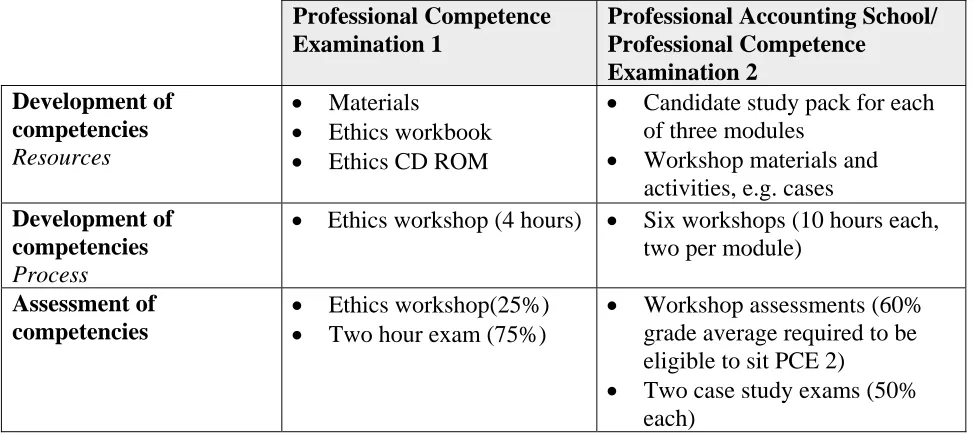
Graduates wishing to qualify as a chartered accountant are required to complete the PAS/PCE 24 programme, as well as a practical experience component, with an approved training organisation (ATO), to facilitate the further development of competencies in the work place. Certification as a chartered accountant in New Zealand thus complies with the three components of the qualifying process identified by IEG # 9 (IFAC 1996) of academic study, practical experience and tests of professional competence, via PAS/PCE 2. The resources and processes for the development of professional competencies and the methodology of assessing these competencies are summarised in Table 1.
Table 1
Professional Competence Programme – Development and Assessment
Professional Competence Examination 1
Professional Accounting School/ Professional Competence Examination 2 Development of competencies Resources • Materials
• Ethics workbook
• Ethics CD ROM
• Candidate study pack for each of three modules
• Workshop materials and activities, e.g. cases Development of
competencies
Process
• Ethics workshop (4 hours) • Six workshops (10 hours each, two per module)
Assessment of competencies
• Ethics workshop(25%)
• Two hour exam (75%)
• Workshop assessments (60% grade average required to be eligible to sit PCE 2)
• Two case study exams (50% each)
numerous aspects of accounting and accounting education in the USA, concluding that major changes were needed in accounting education to prepare accountants for an expanding and changing profession. Key educational recommendations in the report included accountants acquiring, maintaining and continuously enhancing higher levels of competence to meet increasingly diverse demands for services, and pursuing lifelong learning as a means of adjusting to change (AAA, 1986). With respect to the teaching process, the report noted that "many accounting graduates do not know how to communicate, cannot reason logically, and have limited problem-solving ability" (AAA, 1986, p. 177). The report attributes these deficiencies primarily to the then predominant teaching method of lectures together with routine-problem solving, neither of which is conducive to creative thinking. The report recommends that in order to develop students' abilities to use knowledge analytically and in creative and innovative ways, teaching methods need to be supplemented by active learning techniques, such as discussions of concepts and the use of cases.
The recommendations of the Bedford Report were given added impetus by the release by the Big Eight5 accounting firms of a White Paper titled "Perspectives on Education: Capabilities for Success in the Accounting Profession"(Perspectives, 1989). Supporting the main theme of the Bedford Report (AAA 1986), the White Paper stated that "education for the accounting profession must produce graduates who have a broad array of skills and knowledge" (Perspectives, 1989, p. 5). The key skills enumerated by the firms were: (1) the ability to use critical thinking and creative problem-solving techniques on unstructured problems in diverse and unfamiliar settings, (2) an understanding of interpersonal and group dynamics, (3) the ability to communicate, both orally and in writing, and (4) the facility to manage change.
The academic community responded to the Bedford Committee Report and the Big Eight White Paper by establishing the Accounting Education Change Commission (AECC, 1990). The AECC specified that "accounting programs should prepare students to become
information. They should identify and solve unstructured problems…. Working in groups should be encouraged" (AECC, 1990, p. 309). Needles and Powers (1990) endorse the need to adopt teaching approaches such as "the use of small group activities, case analyses, written assignments, class presentations…" (p.264) to achieve these outcomes.
More recently, the American Institute of Certified Public Accountants (AICPA) Core Competency Framework for Entry into the Accounting Profession (AICPA 1999) restated, as well as expanded9 the list of competencies required for professional accountants that were identified by the Big Eight (Perspectives, 1989) and the AECC (1990). The Framework also specifies additional teaching strategies and classroom techniques for the attainment of the competencies. Such strategies and techniques include problem-based learning, by the use of cases, and group learning, by the use of teamwork and cooperative learning (AICPA, 1999). Further impetus to the development of competence-based approaches to the education and training of professional accountants has been provided by the recent release of an exposure draft discussion document by the IFAC (2001).
2.1 Development of the PAS/PCE 2 Programme
The PAS/PCE 2 programme incorporates many of the principles proposed in the Bedford Report (AAA 1986), the White Paper (Perspectives 1989), the AECC (1990), the AICPA (1999) and the IFAC (2001). These principles include the competency-based approach and the extensive use of case studies and study groups.
The original specification by ABEL to UNITEC for the development of the PAS programme comprised the development of three modules10, namely:
• Business Environment (covering strategy and aspects of the external business
environment, which provide the context in which accounting decisions are made),
• Compliance (covering external reporting, auditing and taxation), and
• Financial Management (covering management accounting, as well as financial
management).
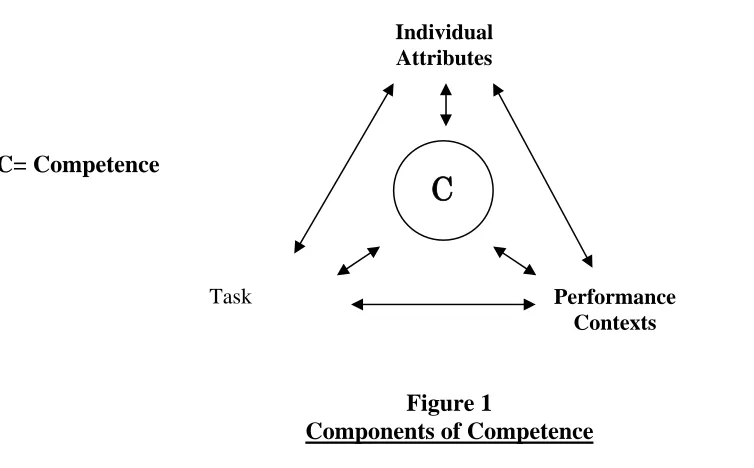
knowledge. The identification and incorporation of competencies into the PAS/PCE 2 programme is based largely on a study by Birkett (1993), which was commissioned by the Institutes of Chartered Accountants in Australia and New Zealand. Birkett (1993) states that competency “relates to the way in which individual attributes (knowledge, skills and attitudes) are drawn on in performing tasks in particular work contexts (job performance).11 Neither contextual task performance nor individual attributes constitute competence; it is the relation between the two that does” (Birkett, 1993, p.4). This link is shown diagrammatically by Birkett in Figure 1:
C= Competence
Figure 1
Components of Competence
Adapted from Birkett, W. P. (1993). Competency based standards for professional
accountants in Australia and New Zealand. Sydney: Institute of Chartered Accountants in Australia and the New Zealand Society of Accountants.
C
Individual AttributesTask Performance
Competencies,12 or individual attributes, as described by Birkett (1993), consist of:
• cognitive skills, knowledge and abilities, which are a function of the job requirements,
and
• behavioural skills or personal characteristics (principles, attitudes, values and motives)
which are a function of an individual's personality.
Birkett (1993) specifies that successful workplace performance will require the utilisation of both cognitive and behavioural skills. He developed a taxonomy of cognitive and behavioural skills. Cognitive skills comprise knowledge application skills (competent usage of specialised knowledge), analytical/constructive skills (problem identification and the development of solutions), and appreciative skills (evaluating complicated situations and making creative and complex judgements). Behavioural skills comprise personal skills (how one responds to and handles various situations), interpersonal skills (securing outcomes through interpersonal relationships), and organisational skills (securing outcomes through organisational networks).
Birkett (1993) orders each category of skills in terms of complexity. The skills are considered to be cumulative in that they would build upon each other. Birkett also recognises that skills development occurs over a period of time, with appreciative and organisational skills developed at an advanced stage of a professional career.
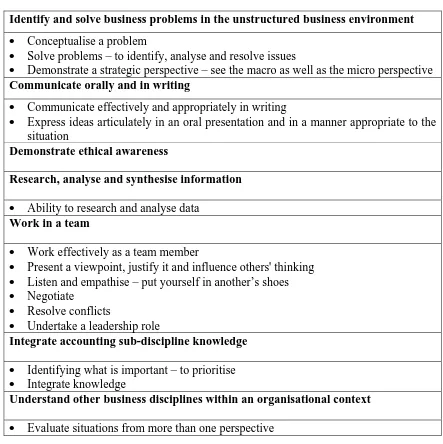
Table 2
PAS/PCE 2 Competencies
Identify and solve business problems in the unstructured business environment
• Conceptualise a problem
• Solve problems – to identify, analyse and resolve issues
• Demonstrate a strategic perspective – see the macro as well as the micro perspective Communicate orally and in writing
• Communicate effectively and appropriately in writing
• Express ideas articulately in an oral presentation and in a manner appropriate to the situation
Demonstrate ethical awareness
Research, analyse and synthesise information
• Ability to research and analyse data Work in a team
• Work effectively as a team member
• Present a viewpoint, justify it and influence others' thinking
• Listen and empathise – put yourself in another’s shoes
• Negotiate
• Resolve conflicts
• Undertake a leadership role
Integrate accounting sub-discipline knowledge
• Identifying what is important – to prioritise
• Integrate knowledge
Understand other business disciplines within an organisational context
• Evaluate situations from more than one perspective
3.
Research Design and Methodology
The main aim of the study is to determine the efficacy of the PAS programme14 in developing specified competencies in ICANZ candidates. Secondary to this main objective, the study is designed to observe and report on:
1. possible practice firm size-based (Big 5 versus non-Big 5) differentials in the candidates' perceptions of improvement in levels of competence; and
2. possible gender-based differentials in the candidates' perceptions of improvements in levels of competence.
3. To achieve these aims, three hypotheses were developed.
3.1 Hypotheses Development and Statement
Hypothesis 1: Assessment of Programme Outcomes
The assessment of the impact of PAS programme on candidates’ competency level is the primary aim of this study. The programme’s purpose is stated as the development of “higher level professional competencies in order that those admitted to the College [of Chartered Accountants] have an enhanced ability to address complex accounting and financial management issues and form judgements relating to those, given a range of business contexts”, (Advanced Business Education Ltd. (ABEL), 1999, p.1). McCourt-Larres and Oyelere (1999) and Albrecht (1995) provide evidence of a positive impact of carefully-designed training programmes on the development of certain skills in accountants and accounting students. Each training programme, or teaching technique is, however, unique and programme-specific reviews are required before conclusions can be drawn about a particular programme's efficacy. For the purpose of assessing the impact of ICANZ’s PAS programme on candidates' competency development, a null hypothesis is stated as follows:
H01: There were no improvements in candidates’ perceived level of competence
after undergoing the PAS programme.
similar extents during the programme. To observe the extent of development of each of these two classes of skills, subsidiary hypotheses are stated, in their null forms, as:
H01a: Candidates’ perceived cognitive skills did not improve significantly as a result
of the PAS programme.
H01b: Candidates’ perceived behavioural skills did not improve significantly as a
result of the PAS programme.
Hypothesis 2: Improvements in candidates’ levels of competence - the “Big 5” versus others
One of the secondary aims of this study is to assess possible differences in the impact of the PAS programme on candidates from the “Big 5” practising firms on the one hand, and those from all other (non-Big 5) organisations15, on the other. Arnold and Mackenzie Davey (1994) report that the most frequently mentioned reasons for graduates selecting a particular employer are “the long-term prospects and the training offered”. The PAS programme, however, is designed for candidates irrespective of their employment affiliation and practice firm-based differentials in levels of improvement are not expected. To test this proposition, a null hypothesis is stated as:
H02: There were no differences in the perceived levels of competence of candidates
from Big 5 firms and those from non-Big 5 firms after the PAS programme.
Similar to the main hypothesis of this study (H01), H02 is sub-categorised to test for possible
differences between the two subgroups of candidates with specific reference to cognitive skills (H02a) and behavioural skills (H02b). These subsidiary hypotheses are stated as follows:
H02a: Big 5 candidates’ perceived cognitive skills are not significantly different from
those of non-Big 5 candidates after the PAS programme.
H02b: Big 5 candidates’ perceived behavioural skills are not significantly different
from those of non-Big 5 candidates after the PAS programme.
Hypothesis 3: Gender-based differences in candidates’ levels of competence
their performance, whereas females' self-assessments are close to the assessment of employers (Rainsbury, Hodges, Sutherland and Barrow, 1998; Strebler, 1997) and superiors (Stybel and Peabody, 1998). It could be suggested from the findings of these studies that females would rate their performance lower than males. Not all research findings, however, are consistent with this hypothesis (see, for example, Daley and Naff, 1998). To observe possible differences in the candidates’ perceived levels of competency on the basis of gender, a null hypothesis is stated as follows:
H03: There were no differences in the perceived levels of competence of male and
female candidates after the PAS programme.
H03 is also sub-categorised to investigate possible differences in levels of cognitive (H03a)
and behavioural (H03b) skills of male and female candidates. The two sub-hypotheses are
stated as follows:
H03a: Female candidates’ perceived cognitive skills were not significantly different
from those of male candidates after the PAS programme.
H03b: Female candidates’ perceived behavioural skills were not significantly
different from those of male candidates after the PAS programme.
3.2 Data Collection
Data were collected by means of a survey questionnaire administered twice to all candidates enrolled in the PAS/PCE 2 programme in 1999. The candidates were initially surveyed at the first workshop, which was held in the second week of the programme, during February. A similar survey was administered at the end of PAS, at the sixth workshop, held about three weeks before the PCE 2 examination in October. On both occasions, the questionnaire was completed as part of a workshop activity in which candidates focused on their personal development.
personal profiles, such as age, gender and work experience. Question 7 questioned candidates on their perception of the importance of each of the skills and competencies identified in this study. Candidates were required to indicate the level of importance for a qualified chartered accountant of each skill on a Likert-like scale of 1 (not important) to 5 (important). Candidates were also asked to identify any other competency that they considered to be important, but which was excluded from the list (Question 8). Question 9 was designed to collect data on the candidates’ perception of their level of competence in each of the listed skills prior to completing the PAS programme. A Likert-like scale was again used, candidates being required to choose a response from 1 (I do not meet the competence requirement) to 5 (I significantly exceed the competency requirement).
With the exception of Question 9, which required candidates to rate their perceived level of competency after completing the PAS programme, the post-PAS survey instrument was similar to the pre-PAS questionnaire. Candidates were also asked to assess the contributions made by the PAS programme to the development of the listed skills (Question 11) and which of the two elements of PAS (Workshops or Candidates' study pack) contributed more to their development of those skills (Question 10).16
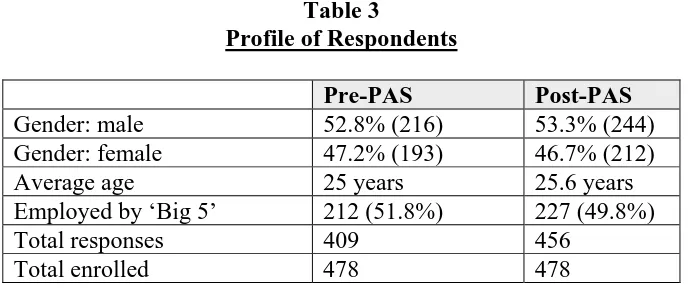
A total of 409 candidates completed the pre-PAS questionnaire, while 456 completed the post-PAS one. This represents a usable response rate of 85.6 per cent (Pre-PAS) and 95.4 per cent (Post-PAS), respectively, relative to the number of candidates (478) enrolled for the 1999 programme. The respondents’ profile is presented in Table 3.
Table 3
Profile of Respondents
Pre-PAS Post-PAS
Gender: male 52.8% (216) 53.3% (244)
Gender: female 47.2% (193) 46.7% (212)
Average age 25 years 25.6 years
Employed by ‘Big 5’ 212 (51.8%) 227 (49.8%)
Total responses 409 456
Total enrolled 478 478
pre-PAS questionnaire (post-pre-PAS 50%). The average age of respondents to the pre-pre-PAS survey was 25 years (post-PAS = 25.6 years).
3.3 Data Analysis
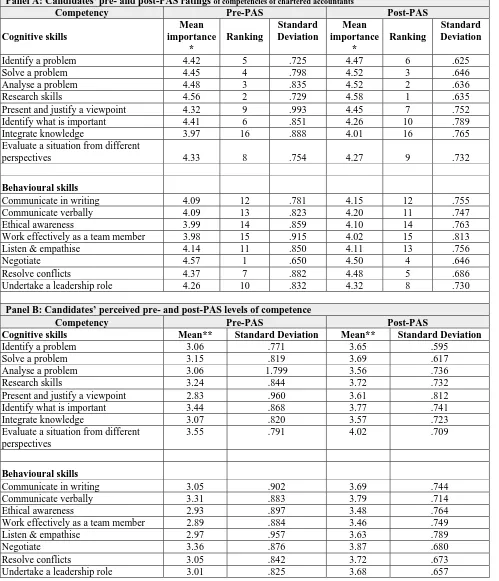
Given the categorical nature of the data collected for this study, nonparametric statistical techniques were considered the most appropriate (Siegel and Castellan, 1988) and were employed for analysing the data. For each competency17, the mean rating by candidates of the competency's perceived importance for a chartered accountant was determined. These mean ratings - both Pre- and Post-PAS, together with the ranking of each competency, are presented in Table 4 (Panel A).
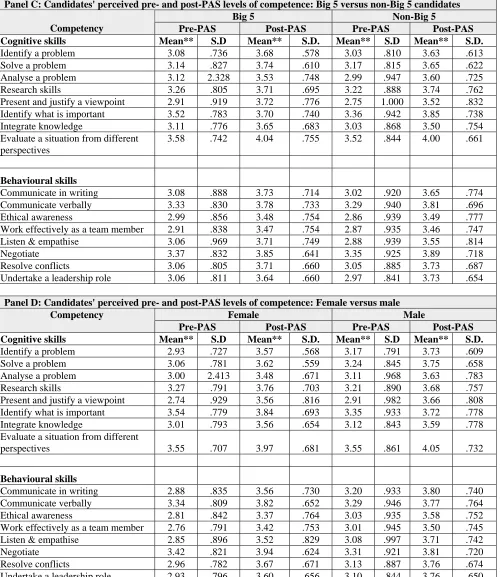
The mean of candidates’ perceived level of their competence for each of the specified competencies was also determined for pre-PAS and post-PAS responses. These are reported in Panel B of Table 4. The same statistics are reported in Panels C and D of Table 4, on the basis of Big 5 versus non-Big 5 organisations' and gender classifications respectively.
The Mann-Whitney U test, a nonparametric version of the independent sample t-test, was employed to test the hypotheses in this study. The results of the test are reported in Tables 5 to 7.
4.
Discussion of Results
Table 4
Candidates' Perceived Importance and Ranking of Competencies
Panel A: Candidates' pre- and post-PAS ratings of competencies of chartered accountants
Competency Pre-PAS Post-PAS
Cognitive skills Mean importance * Ranking Standard Deviation Mean importance * Ranking Standard Deviation
Identify a problem 4.42 5 .725 4.47 6 .625
Solve a problem 4.45 4 .798 4.52 3 .646
Analyse a problem 4.48 3 .835 4.52 2 .636
Research skills 4.56 2 .729 4.58 1 .635
Present and justify a viewpoint 4.32 9 .993 4.45 7 .752
Identify what is important 4.41 6 .851 4.26 10 .789
Integrate knowledge 3.97 16 .888 4.01 16 .765
Evaluate a situation from different
perspectives 4.33 8 .754 4.27 9 .732
Behavioural skills
Communicate in writing 4.09 12 .781 4.15 12 .755
Communicate verbally 4.09 13 .823 4.20 11 .747
Ethical awareness 3.99 14 .859 4.10 14 .763
Work effectively as a team member 3.98 15 .915 4.02 15 .813
Listen & empathise 4.14 11 .850 4.11 13 .756
Negotiate 4.57 1 .650 4.50 4 .646
Resolve conflicts 4.37 7 .882 4.48 5 .686
Undertake a leadership role 4.26 10 .832 4.32 8 .730
Panel B: Candidates’ perceived pre- and post-PAS levels of competence
Competency Pre-PAS Post-PAS
Cognitive skills Mean** Standard Deviation Mean** Standard Deviation
Identify a problem 3.06 .771 3.65 .595
Solve a problem 3.15 .819 3.69 .617
Analyse a problem 3.06 1.799 3.56 .736
Research skills 3.24 .844 3.72 .732
Present and justify a viewpoint 2.83 .960 3.61 .812
Identify what is important 3.44 .868 3.77 .741
Integrate knowledge 3.07 .820 3.57 .723
Evaluate a situation from different perspectives
3.55 .791 4.02 .709
Behavioural skills
Communicate in writing 3.05 .902 3.69 .744
Communicate verbally 3.31 .883 3.79 .714
Ethical awareness 2.93 .897 3.48 .764
Work effectively as a team member 2.89 .884 3.46 .749
Listen & empathise 2.97 .957 3.63 .789
Negotiate 3.36 .876 3.87 .680
Resolve conflicts 3.05 .842 3.72 .673
Table 4 (cont.): Candidates' perceived importance and ranking of competencies
Panel C: Candidates' perceived pre- and post-PAS levels of competence: Big 5 versus non-Big 5 candidates
Big 5 Non-Big 5
Competency Pre-PAS Post-PAS Pre-PAS Post-PAS
Cognitive skills Mean** S.D Mean** S.D. Mean** S.D Mean** S.D. Identify a problem 3.08 .736 3.68 .578 3.03 .810 3.63 .613 Solve a problem 3.14 .827 3.74 .610 3.17 .815 3.65 .622 Analyse a problem 3.12 2.328 3.53 .748 2.99 .947 3.60 .725
Research skills 3.26 .805 3.71 .695 3.22 .888 3.74 .762
Present and justify a viewpoint 2.91 .919 3.72 .776 2.75 1.000 3.52 .832 Identify what is important 3.52 .783 3.70 .740 3.36 .942 3.85 .738 Integrate knowledge 3.11 .776 3.65 .683 3.03 .868 3.50 .754 Evaluate a situation from different
perspectives
3.58 .742 4.04 .755 3.52 .844 4.00 .661
Behavioural skills
Communicate in writing 3.08 .888 3.73 .714 3.02 .920 3.65 .774 Communicate verbally 3.33 .830 3.78 .733 3.29 .940 3.81 .696 Ethical awareness 2.99 .856 3.48 .754 2.86 .939 3.49 .777 Work effectively as a team member 2.91 .838 3.47 .754 2.87 .935 3.46 .747 Listen & empathise 3.06 .969 3.71 .749 2.88 .939 3.55 .814
Negotiate 3.37 .832 3.85 .641 3.35 .925 3.89 .718
Resolve conflicts 3.06 .805 3.71 .660 3.05 .885 3.73 .687
Undertake a leadership role 3.06 .811 3.64 .660 2.97 .841 3.73 .654 Panel D: Candidates' perceived pre- and post-PAS levels of competence: Female versus male
Female Male
Competency
Pre-PAS Post-PAS Pre-PAS Post-PAS Cognitive skills Mean** S.D Mean** S.D. Mean** S.D Mean** S.D. Identify a problem 2.93 .727 3.57 .568 3.17 .791 3.73 .609 Solve a problem 3.06 .781 3.62 .559 3.24 .845 3.75 .658 Analyse a problem 3.00 2.413 3.48 .671 3.11 .968 3.63 .783
Research skills 3.27 .791 3.76 .703 3.21 .890 3.68 .757
Present and justify a viewpoint 2.74 .929 3.56 .816 2.91 .982 3.66 .808 Identify what is important 3.54 .779 3.84 .693 3.35 .933 3.72 .778 Integrate knowledge 3.01 .793 3.56 .654 3.12 .843 3.59 .778 Evaluate a situation from different
perspectives 3.55 .707 3.97 .681 3.55 .861 4.05 .732 Behavioural skills
Communicate in writing 2.88 .835 3.56 .730 3.20 .933 3.80 .740 Communicate verbally 3.34 .809 3.82 .652 3.29 .946 3.77 .764 Ethical awareness 2.81 .842 3.37 .764 3.03 .935 3.58 .752 Work effectively as a team member 2.76 .791 3.42 .753 3.01 .945 3.50 .745 Listen & empathise 2.85 .896 3.52 .829 3.08 .997 3.71 .742
Negotiate 3.42 .821 3.94 .624 3.31 .921 3.81 .720
Resolve conflicts 2.96 .782 3.67 .671 3.13 .887 3.76 .674
Undertake a leadership role 2.93 .796 3.60 .656 3.10 .844 3.76 .650
* On a Likert-like scale of 1 to 5, where 1 = not important and 5 = important.
Generally, candidates attach a high level of importance to all of the 16 skills, with perceived pre-PAS mean importance ranging from 3.97 to 4.57 on a Likert-like scale of 1 (not important) to 5 (very important). This range improved slightly (4.01 to 4.58) post-PAS. In both surveys, candidates appear to attach a greater level of importance to cognitive skills, as against behavioural skills, with the exception of negotiation (classified as a behavioural skill), which was ranked highest pre-PAS and fourth highest post-PAS. The high ranking of negotiation skills may be due to negotiation being deemed to comprise elements of both cognitive and behavioural skills. Candidates in both surveys appear to place a lot of emphasis on research skills (a cognitive skill), which were ranked second pre-PAS and first post-PAS. Other cognitive skills that consistently received high ranking were problem analysis, problem solving and problem identification. Knowledge integration, a cognitive skill, was ranked lowest (out of 16) by candidates in both surveys. This is an interesting finding, suggesting perhaps that candidates perceive chartered accountants as working in a specialised environment, in which knowledge integration is not an essential competency for success.
Further, candidates were asked in the pre- and post-PAS surveys to indicate their perceived levels of competence. Preliminary analysis, as presented in Panel B of Table 4, indicates that on a scale of 1 (do not meet requirement) to 5 (significantly exceed requirement), pre-PAS candidates’ responses ranged between 2.83 (for present and justify a viewpoint) and 3.55 (evaluate a situation from different perspectives). Of the sixteen competencies, only four received a mean of below 3 out of 5, which is the grade average required to pass PAS. The candidates' responses improved to a range of between 3.46 (work effectively as a team member) and 4.02 (evaluate a situation from different perspective) post-PAS.
Candidates’ responses were segregated by firm size and gender. The preliminary results of their perceived pre- and post-PAS levels of competence are respectively presented in Panels C and D of Table 4. Substantive tests were undertaken to test the hypotheses developed for this study. The results of the tests are presented in Tables 5 to 7.
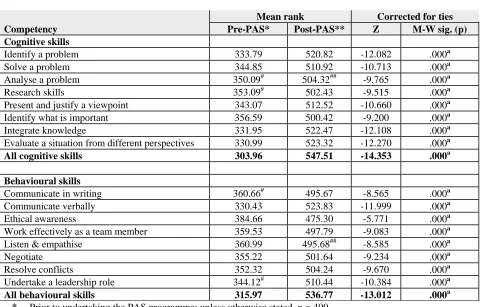
Null hypothesis 1, which anticipated no improvements in the level of competence of candidates after undergoing the PAS programme, is rejected with respect to all of the 16 skills investigated in this study. The results of the test of H01 (presented in Table 5) indicate that
undertaking the PAS programme. This applies similarly across the two broad classes of skills (cognitive and behavioural), leading to the rejection of both H01a and H01b as well.
Candidates believe that both their cognitive and behavioural skills have improved significantly as a result of the PAS programme.
Table 5
Mann Whitney U Test of Differences in Candidates' Perceived Pre- and Post-PAS Competency Levels
Mean rank Corrected for ties
Competency Pre-PAS* Post-PAS** Z M-W sig. (p)
Cognitive skills
Identify a problem 333.79 520.82 -12.082 .000a
Solve a problem 344.85 510.92 -10.713 .000a
Analyse a problem 350.09# 504.32## -9.765 .000a
Research skills 353.09# 502.43 -9.515 .000a
Present and justify a viewpoint 343.07 512.52 -10.660 .000a Identify what is important 356.59 500.42 -9.200 .000a
Integrate knowledge 331.95 522.47 -12.108 .000a
Evaluate a situation from different perspectives 330.99 523.32 -12.270 .000a
All cognitive skills 303.96 547.51 -14.353 .000a
Behavioural skills
Communicate in writing 360.66# 495.67 -8.565 .000a
Communicate verbally 330.43 523.83 -11.999 .000a
Ethical awareness 384.66 475.30 -5.771 .000a
Work effectively as a team member 359.53 497.79 -9.083 .000a Listen & empathise 360.99 495.68## -8.585 .000a
Negotiate 355.22 501.64 -9.234 .000a
Resolve conflicts 352.32 504.24 -9.670 .000a
Undertake a leadership role 344.12# 510.44 -10.384 .000a
All behavioural skills 315.97 536.77 -13.012 .000a
* Prior to undertaking the PAS programme; unless otherwise stated, n = 409. ** After undertaking the PAS programme; unless otherwise stated, n = 456.
# n = 408. ## n = 455
a indicates that differences are significant at the 1% level.
It is possible to conclude, from the result of the test of the main hypothesis of this study, that the PAS programme is perceived by candidates as being highly effective in improving their levels of competence of the 16 core skills identified and examined in the study.
4.1 Big 5 Versus non-Big 5
A secondary aim of this study is to compare post-PAS levels of perceived competence of candidates from the Big-5 firms with those from non-Big 5 firms. The results of a MW-U test (Table 6) indicate differences in 5 of the 16 skills investigated in the study. Big 5 candidates believe they possess greater post-PAS skills in the areas of research, verbal communication and undertaking a leadership role. Their superior verbal communication skills are statistically significantly different from those of non-Big 5 candidates at the 1% level, while their perceived ability to undertake leadership roles and research skills are significantly superior at the 5% level. Non-Big 5 candidates, on the other hand, have greater post-PAS skills in evaluating situations from different perspectives and perceive themselves to be more ethically aware. With regards to the remaining 11 areas of competency, there are no statistically significant differences between Big 5 and non-Big 5 candidates.
Table 6
Mann Whitney U Test of Firm Size-Based Differences in Candidates' Perceived Post-PAS
Competency Levels
Mean rank Corrected for ties
Competency Big 5* Non-Big 5* Z M-W sig. (p)
Cognitive skills
Identify a problem 232.16 224.87 -0.681 .496
Solve a problem 233.91 223.14 -1.004 .315
Analyse a problem 221.83 234.14# -1.104 .270
Research skills 240.34 216.76 -2.121 .034b
Present and justify a viewpoint 232.27 224.76 -0.668 .504 Identify what is important 224.33 232.63 -0.765 .444
Integrate knowledge 226.08 230.90 -0.438 .661
Evaluate a situation from different perspectives 218.77 238.15 -1.767 .077c
All cognitive skills 229.09 227.91 -0.096 .924
Behavioural skills
Communicate in writing 224.79 232.18 -0.658 .511
Communicate verbally 245.32 211.83 -2.911 .004a
Ethical awareness 215.04 241.84 -2.366 .018b
Work effectively as a team member 234.18 222.87 -1.043 .297
Listen & empathise 224.59 231.39# -0.616 .538
Negotiate 225.57 231.40 -0.515 .606
Resolve conflicts 226.97 230.02 -0.271 .786
Undertake a leadership role 240.98 216.13 -2.183 .029b
All behavioural skills 229.32 227.69 -0.133 .894
* Unless otherwise stated, n (Big 5) = 227 and n (Non-Big 5) = 229
# n = 228.
The two subsidiary hypotheses (H02a and H02b), which predict no differences in the levels of
cognitive and behavioural skills respectively, of Big 5 and Non-Big 5 candidates, cannot be rejected in this study. No significant differences were found between the two groups when the 16 areas of competency were classed and aggregated under these two broad types of skills.
4.2 Gender–based Differences
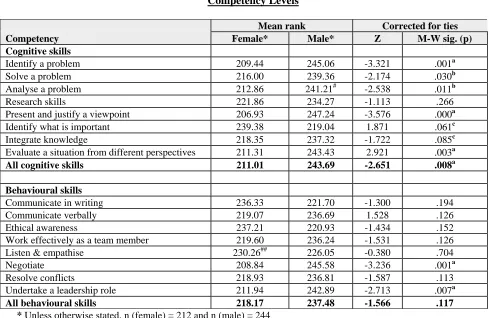
The results of a test of hypothesis 3 (Table 7) reveal statistically significant differences between male and female candidates’ perceived levels of competence at the end of the PAS programme. Male candidates perceive themselves to be better skilled than female candidates in eight of the sixteen areas of competence investigated in this study, while female candidates perceive themselves to possess greater competence only in their ability to “identify what is important”. This perceived superiority by female candidates is demonstrated at the 10% level of significance. Areas in which male candidates perceive themselves to be better-skilled than their female counterparts include their ability to “identify a problem”, “present and justify a viewpoint”, “evaluate a situation from different perspectives”, “negotiate” and “undertake a leadership role”, the differences being statistically significant at the 1% level. The differences between male and female ability to analyse and solve problems were statistically significant at the 5% level, while male candidates perceive themselves to be more competent at integrating knowledge at the 10% level.
Further gender-based analyses reveal that the significant divergence between the perceived levels of competence of male and female candidates is largely restricted to the cognitive skills. The test of subsidiary Hypothesis H03a indicates statistically significant differences in
the post-PAS cognitive skills of members of the two genders, with male candidates perceiving themselves to be better skilled at the 1% level of significance. This is in contrast to the results of a test of H03b, where statistically insignificant differences were found in the
Table 7
Mann Whitney U Test of Gender-Based Differences in Candidates' Perceived Post-PAS
Competency Levels
Mean rank Corrected for ties
Competency Female* Male* Z M-W sig. (p)
Cognitive skills
Identify a problem 209.44 245.06 -3.321 .001a
Solve a problem 216.00 239.36 -2.174 .030b
Analyse a problem 212.86 241.21# -2.538 .011b
Research skills 221.86 234.27 -1.113 .266
Present and justify a viewpoint 206.93 247.24 -3.576 .000a Identify what is important 239.38 219.04 1.871 .061c
Integrate knowledge 218.35 237.32 -1.722 .085c
Evaluate a situation from different perspectives 211.31 243.43 2.921 .003a
All cognitive skills 211.01 243.69 -2.651 .008a
Behavioural skills
Communicate in writing 236.33 221.70 -1.300 .194
Communicate verbally 219.07 236.69 1.528 .126
Ethical awareness 237.21 220.93 -1.434 .152
Work effectively as a team member 219.60 236.24 -1.531 .126
Listen & empathise 230.26## 226.05 -0.380 .704
Negotiate 208.84 245.58 -3.236 .001a
Resolve conflicts 218.93 236.81 -1.587 .113
Undertake a leadership role 211.94 242.89 -2.713 .007a
All behavioural skills 218.17 237.48 -1.566 .117
* Unless otherwise stated, n (female) = 212 and n (male) = 244
# n = 243. ## n = 211
5.
Summary and Conclusion
This study investigated the efficacy of the ICANZ PAS programme in developing and improving a set of competencies in candidates. Candidates' pre-PAS perceptions of their levels of competence in 16 skill areas were assessed and compared to determine the contribution of the PAS programme to their improvement. The 16 competencies were also broadly classified into two classes, cognitive and behavioural, to examine whether improvements, if any, were equal and similar for the two classes of skills. Secondary to the main objective of this study, the post-PAS levels of competence of candidates were also assessed across size of firm (Big 5 versus non-Big 5) and gender.
The results of the study indicate that the PAS programme has greatly improved candidates' perceptions of their competence in the 16 skills investigated in this study. Candidates perceived that both their cognitive and behavioural skills benefitted from their participation in the PAS programme. Based on the results of this study, the perceived efficacy of the ICANZ programme by candidates is proven, with regards to improving certain important competencies in candidates.
A measure of differences was found in the competence of male and female candidates. These differences were mainly in the area of cognitive skills, with male candidates, in most cases, perceiving themselves to be better skilled than their female counterparts. Comparatively fewer such differences were found between candidates from Big 5 firms compared with those from non-Big 5 organisations.
is made to the programme as a result of the findings of this study will be of great benefit to future candidates in their competency development. Other professional accounting bodies with similar programmes may also benefit by reviewing the results of this study. The results, however, should be interpreted with caution, given that each programme of this nature is unique and needs to be treated as such. Hence, future studies may consider replicating this study using data collected on other similar programmes. The results of such studies may then be compared, possibly across national boundaries, to enrich the existing knowledge of the international dynamics of accounting education.
This study has focused on candidates' perceptions. It should be noted, however, that the use of candidate perceptions is just one facet in the evaluation of the efficacy of a programme. A comprehensive programme review may be expected to include all relevant stakeholders, including candidates' employers, supervisors, clients and the relevant professional body. Furthermore, the study has not examined whether, and the extent to which, the teaching techniques employed in the PAS programme - study groups and case studies - have facilitated the development of professional competencies. These issues are subjects for possible further studies.
ENDNOTES
1 Candidates were permitted to refer to the Institute's Member's Handbook, containing Financial Reporting Standards and the Institute's Code of Ethics.
2
The NZSA was renamed the Institute of Chartered Accountants of New Zealand (ICANZ, or the Institute) in 1996.
3 PCE 1 would focus primarily on ethics and the authority and structure of the profession.
4 The Professional Competence Programme is administered by Advanced Business Education Ltd (ABEL), a wholly owned subsidiary of the Institute. The resource materials for the PAS/PCE 2 programme are prepared by UNITEC, New Zealand.
5 The Big Eight firms have since been reduced to the Big Five as a result of mergers.
6 Examples of communication skills include "the ability to present, discuss, and defend views effectively through formal and informal, written and spoken language" (AECC, 1990, p. 311).
7 Examples of intellectual skills include:
• "capacities for inquiry, abstract logical thinking, inductive and deductive reasoning and critical analysis", and
• ability to identify and solve unstructured problems in unfamiliar settings and to apply problem-solving skills in a consultative process" (AECC, 1990, p. 311).
8 Examples of interpersonal skills include:
• "ability to work with others, particularly in groups, to influence them, to lead them, to organize and delegate tasks, to motivate and develop people, and to withstand and resolve conflict", and
• "ability to interact with culturally and intellectually diverse people" (AECC, 1990, p. 311).
9 Additional competencies identified include "professional demeanour, interaction and leadership" (AICPA 1999).
10 The modules were completed in sequence over three ten-week periods between February and October. For each module, candidates attended two workshops – one at the beginning and one at the end of each ten-week period. On achieving a 60% grade average or better in PAS, successful candidates sat the two case study-based examinations, which comprise PCE 2. A candidate with a grade average of 60% or greater in PCE 2 passes PAS/PCE 2.
11 Birkett's (1993) definition is similar to that of the IFAC (1993), namely, that "Competency is being able to perform a work role to a defined standard with reference to real working environments" (p. 13). Other possible definitions of competency relevant to this study are those by Spencer and Spencer (1993) and IFAC (2001).
12 Also called "capabilities" in the IFAC (2001) exposure draft discussion paper.
13 Ethical awareness subsequently feature prominently as a core competency in AICPA (1999) and IFAC (1996 and 2001) publications.
14 As this study focused solely on the PAS programme, candidates' perceptions of the PCE 2 examination were not investigated.
15 "Big 5" firms are referred to as "Top five" chartered accountancy firms in the questionnaire. The "non-Big 5" category includes candidates from all other organisations.
16 The last two pages of the post-PAS questionnaire, which constitute the main difference from the Pre-PAS one, are included as Appendix 2.
References
Accounting Education Change Commission (AECC) (1990). Objectives of Education for Accountants: Position Statement no. 1. Issues in Accounting Education, 5 (2), 307-312.
Advanced Business Education Ltd. (1999). Professional Accounting School and Professional Competence Examination 2, 1999 programme. Christchurch.
Albrecht, W. D. (1995). A Financial Accounting and Investment Simulation Game. Issues in Accounting Education, 10 (1), 127-141.
American Accounting Association (AAA), Committee on the Future Structure, Content and Scope of Accounting Education (the Bedford Committee). (1986). Future Accounting Education: Preparing for the Expanding Profession. Issues in Accounting Education, 1 (1), 168-195.
American Institute of Certified Public Accountants (AICPA) (1999). Core Competency Framework for Entry into the Accounting Profession. New York, NY: AICPA.
Arnold, J. and K. Mackenzie Davey (1994). Evaluating Graduate Development: Key Findings from the Graduate Development Project. Leadership & Organisation Development Journal, 15 (8), 9-15.
Birkett, W. P. (1993). Competency Based Standards for Professional Accountants in Australia and New Zealand. Sydney: Institute of Chartered Accountants in Australia and the New Zealand Society of Accountants.
Bonner, S. E. (1999). Choosing Teaching Methods Based on Learning Objectives: an Integrative Framework. Issues in Accounting Education,14 (1), 11-39.
Caldwell. M. B. Weishar. J. and G. W. Glezen (1996). The Effect of Cooperative Learning on Student Perceptions of Accounting in the Principles Courses. Journal of Accounting Education, 14 (1), 17-36.
Campbell, J. E. and W. F. Lewis (1991). Using Cases in Accounting Classes. Issues in Accounting Education,6 (2), 276-283.
Daley, D. M. and K.C. Naff (1998). Gender Differences and Managerial Competencies.
Review of Public Personnel Administration, 18 (21), 41-56.
Hay, D. and H. Maltby (1997). A New Approach to Accounting Examinations: the Final Qualifying Examination in New Zealand. Journal of Accounting Education, 15 (2), 169-179.
Hite. P. A. (1996). An Experimental Study of the Effectiveness of Group Exams in an Individual Income Tax Class. Issues in Accounting Education, 11 (1), 61-75.
International Federation of Accountants (IFAC) (1998). Competence-based Approaches to the Professional Preparation of Accountants. Discussion Paper.
International Federation of Accountants (IFAC) (2001). Competence-Based Approaches to the Preparation and Work of Professional Accountants. Exposure Draft Discussion Paper.
Knechel, W. R. (1992). Using the Case Method in Accounting Instruction. Issues in Accounting Education, 7 (2), 205-217.
Marrian, N. and I. Lothian (1992). New Zealand Society of Accountants International Review of Admission Policy. Wellington: NZSA.
McCourt Larres, P. and P. Oyelere (1999). Practical PC Skills of Newly Qualified Chartered Accountants: a Study of the Training Programme of the Institute of Chartered Accountants in Ireland. Irish Accounting Review, 6 (1), 79-100.
Needles, B. E. Jr. and M. Powers (1990). A Comparative Study of Models for Accounting Education. Issues in Accounting Education, 5 (2), 250-267.
New Zealand Society of Accountants (NZSA) (1984). Horizon 2000 - and Beyond.
Wellington: NZSA.
New Zealand Society of Accountants (NZSA) (1994a). 1995 Information Book for the Final Qualifying Examination. Wellington: NZSA.
New Zealand Society of Accountants (NZSA) (1994b). Admissions Policy. Wellington: NZSA.
Perspectives on Education: Capabilities for Success in the Accounting Profession (The White Paper) (1989). Arthur Andersen & Co., Arthur Young, Coopers & Lybrand, Deloitte Haskins & Sells, Ernst & Whinney, Peat Marwick Main & Co., Price Waterhouse, and Touche Ross. New York, NY.
Rainsbury, E, Hodges, D., Sutherland, J. and M. Barrow (1998). Academic, Employer and Student Collaborative Assessment in a Work-based Co-operative Education Course.
Assessment and Evaluation in Higher Education. 23 (3), 313-324.
Ravenscroft. S. P. Buckless. F. A. and T. Hassall (1999). Cooperative Learning - a Literature Guide. Accounting Education 8 (2): 163-176.
Saudagaran, S. M. (1996) The First Course in Accounting: An Innovative Approach. Issues in Accounting Education,(Spring), 83-94.
Siegel, S. and N. J. Castellan (1988) Nonparametric Statistics for the Behavioural Sciences, 2nd edition, New York: McGraw-Hill.
Spencer, L. and S. Spencer (1993). Competence at Work. New York: Wiley & Sons.
Stybel, L.J., and M. Peabody (1998). Increasing the Future Potential of Women HR Executives, Compensation and Benefits Management, 14, 4.
Walker, K. and L. McClelland (1994). Accounting Education in New Zealand: a Model for Reforming the American System. Journal of Accounting Education, 12 (4),343-357.
Weil, S., Laswad, F., Frampton, C. and J. Radford (1999) Cultural and Other Influences on Student Perceptions of the Use of case Studies and Study Groups in Management Accounting. Discussion Paper No. 62, Commerce Division, Lincoln University, New Zealand.
Appendix: Pre-PAS questionnaire
Professional Accounting School
Candidate Survey
Questionnaire
Personal Profile
1. Gender: θ Female θ Male
2. Age: θ 20 – 24 θ 25 - 29 θ 30+
3. How many years of equivalent full-time work experience have you completed since leaving high school?
……… years
4. Is English your first language?
θ Yes θ No
5. Please indicate the total number of employees in your organisation: θ Fewer than 100 θ More than 100
6. Please indicate the nature of your organisation’s core business:
θChartered Accountancy (“Top five” firm) θ Chartered Accountancy (Other)
θCorporate
θ Public Service/Local government
θ Other (please specify) _________________________________________
7. Please rate your perception of the IMPORTANCE to a qualified chartered accountant of each of the competencies listed below:
(Please circle the level of IMPORTANCE that you consider applies for each competency)
Competency Level of Importance
Not Important Important
1 5
Problem Solving: Identify a problem - distinguish between cause and effect in an unstructured business situation Analyse a problem - ability to identify information relevant to a particular issue by distinguishing the relevant from the irrelevant Solve a problem - consider alternative solutions and apply judgement 1 2 3 4 5
1 2 3 4 5
1 2 3 4 5
Communication: Communicate effectively and appropriately in writing Express ideas articulately in an oral presentation and in a manner appropriate to the situation 1 2 3 4 5
1 2 3 4 5
Ethical awareness: Demonstrate an awareness and application of professional and ethical standards - demonstrate an ability to apply one’s own values 1 2 3 4 5
Research skills: Research and analyse data - apply methods of gathering, summarising and analysing business and financial data 1 2 3 4 5
Teamwork: Work effectively as a team member - understand interpersonal and group dynamics Present a viewpoint, justify it and influence others’ thinking Listen and empathise - put yourself in another’s shoes Negotiate Resolve conflicts Undertake a leadership role – possess the ability to build a group sense of purpose 1 2 3 4 5
1 2 3 4 5
1 2 3 4 5
1 2 3 4 5
1 2 3 4 5
1 2 3 4 5
Integration of knowledge: Identify what is important - prioritise Integrate knowledge – possess the ability to relate accounting work to other business functions and activities Evaluate situations from different perspectives 1 2 3 4 5
1 2 3 4 5
1 2 3 4 5
9. Before completing the Professional Accounting School, please indicate what you perceive to be YOUR LEVEL OF COMPETENCE, expressed in terms of the competencies listed:
Rating scale:
1 I do not meet the competency requirement 2 I almost meet the competency requirement 3 I meet the competency requirement
4 I more than meet the competency requirement
5 I significantly exceed the competency requirement
(Please circle the level of achievement that applies for each competency)
Competency Level of Competence
Do not Significantly meet requirement exceed requirement 1 5 Problem solving:
Identify a problem – distinguish between cause and effect in an unstructured business situation
Analyse a problem - ability to identify information relevant to a particular issue by distinguishing the relevant from the irrelevant Solve a problem - consider alternate solutions and apply Judgement
1 2 3 4 5
1 2 3 4 5
1 2 3 4 5
Communication:
Communicate effectively and appropriately in writing
Express ideas articulately in an oral presentation and in a manner appropriate to the situation
1 2 3 4 5 1 2 3 4 5
Ethical awareness:
Demonstrate an awareness and application of professional and ethical standards - demonstrate an ability to apply one’s own values
1 2 3 4 5
Research skills:
Research and analyse data - apply methods of gathering, summarising and analysing business and financial data
1 2 3 4 5
Teamwork:
Work effectively as a team member - understand interpersonal and group dynamics
Present a viewpoint, justify it and influence others’ thinking Listen and empathise - put yourself in another’s shoes Negotiate
Resolve conflicts
Undertake a leadership role – possess the ability to build a group sense of purpose
1 2 3 4 5
1 2 3 4 5 1 2 3 4 5 1 2 3 4 5 1 2 3 4 5 1 2 3 4 5
Integration of knowledge:
Identify what is important – prioritise
Integrate knowledge – possess the ability to relate accounting work to other business functions and activities
Evaluate situations from different perspectives
1 2 3 4 5 1 2 3 4 5
Appendix 2: Post-PAS questionnaire
Professional Accounting School
Candidate Survey
9. Now that you have completed the Professional Accounting School, please indicate what you perceive to be YOUR LEVEL OF COMPETENCE expressed in terms of the competencies listed below: Rating scale:
1 I do not meet the competency requirement 2 I almost meet the competency requirement 3 I meet the competency requirement
4 I more than meet the competency requirement 5 I significantly exceed the competency requirement
(Please circle the level of achievement that applies for each competency)
Competency Level of Competence
Do not Significantly meet requirement exceed requirement 1 5 Problem solving:
Identify a problem – distinguish between cause and effect in an unstructured business situation
Analyse a problem - ability to identify information relevant to a particular issue by distinguishing the relevant from the irrelevant Solve a problem - consider alternate solutions and apply Judgement
1 2 3 4 5
1 2 3 4 5
1 2 3 4 5
Communication:
Communicate effectively and appropriately in writing
Express ideas articulately in an oral presentation and in a manner appropriate to the situation
1 2 3 4 5 1 2 3 4 5
Ethical awareness:
Demonstrate an awareness and application of professional and ethical standards - demonstrate an ability to apply one’s own values
1 2 3 4 5
Research skills:
Research and analyse data - apply methods of gathering, summarising and analysing business and financial data
1 2 3 4 5
Teamwork:
Work effectively as a team member - understand interpersonal and group dynamics
Present a viewpoint, justify it and influence others’ thinking Listen and empathise - put yourself in another’s shoes Negotiate
Resolve conflicts
Undertake a leadership role – possess the ability to build a group sense of purpose
1 2 3 4 5
Integration of knowledge:
Identify what is important – prioritise
Integrate knowledge – possess the ability to relate accounting work to other business functions and activities
Evaluate situations from different perspectives
1 2 3 4 5 1 2 3 4 5
1 2 3 4 5
10. Which elements of the Professional Accounting School contributed most to the development of the competencies listed in question 9?
θ Workshops θ Candidate learning pack Please make any comments here:
11. Please indicate the contribution of the Professional Accounting School towards the development of the competencies listed in question 9:
Level of Contribution Did not Contributed
contribute significantly
Professional Accounting School
1 2 3 4 5 Please make any comments here: