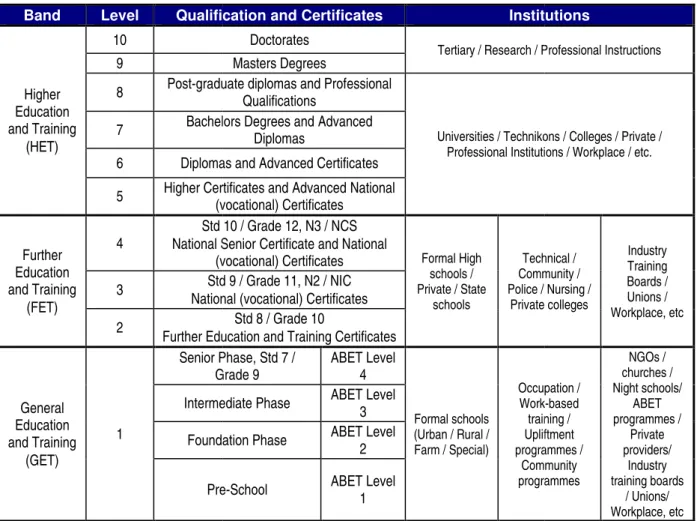
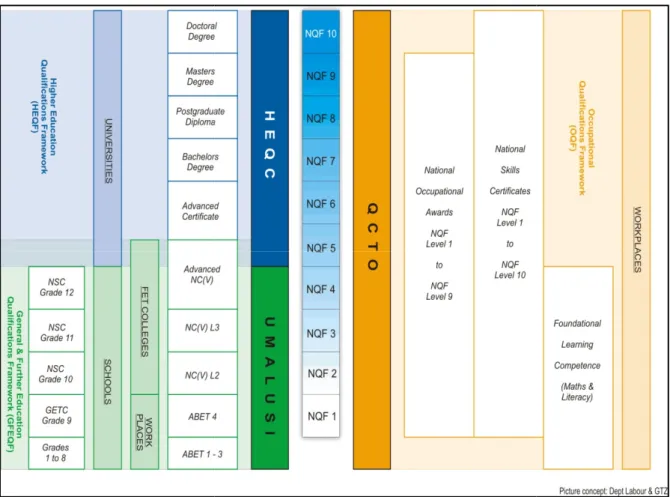
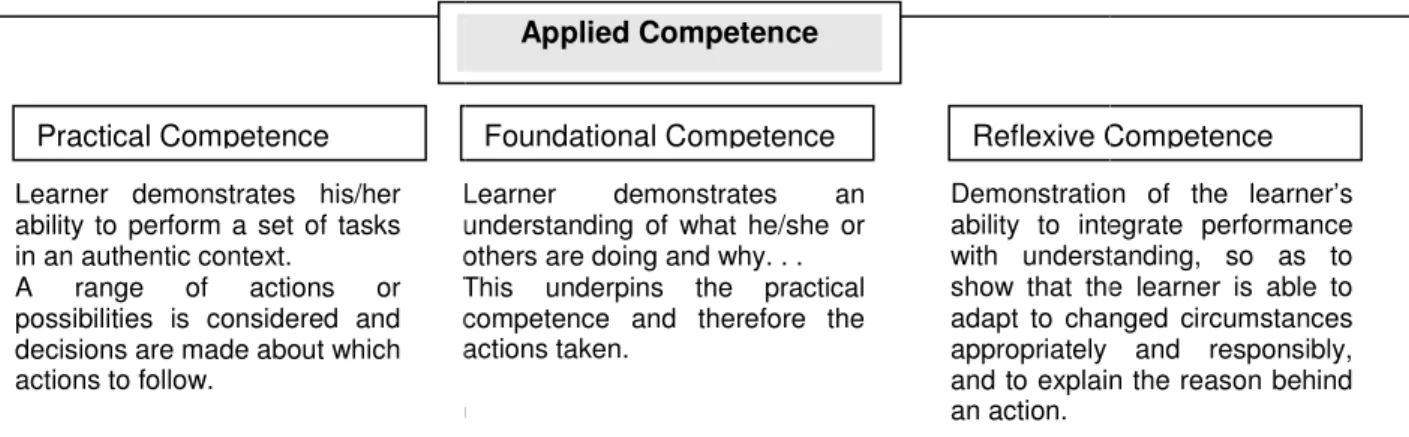
The Role of the Skills
Development Facilitator
and New Developments
in Skills Development
May 2011
Facilitated by Fasset
Table of Contents
TABLE OF CONTENTS ... TABLE OF ACRONYMS ... INTRODUCTION ...
SECTION 1: DEVELOPING THE STRATEGIC ROLE
1. SKILLS DEVELOPMENT FACILITATOR
1.1 Appointment of an SDF
1.2 Function of an SDF ... 1.3 Roles of an SDF ... 1.4 SDF unit standards ... 1.5 The training committee
SECTION 2: UNDERSTANDING LEGISLATION AND 2. LEGISLATION ...
2.1 Skills Development Act (1998) 2.2 Skills Development Levies Act (1999) 2.3 Establishment of Setas
2.4 Fasset Seta ...
2.5 The SAQA Act (1995) and the NQF Act (2008) 2.6 The NQF ...
2.7 Quality assurance ... 2.8 Fasset’s quality assurance model 2.9 Fasset accreditation statuses
2.10 Professional bodies and professional designations 2.11 The Occupational Learning System (OLS)
2.12 Standards-setting ... 2.13 Interpreting legislation
2.14 Way forward … ... SECTION 3: ASSESSMENT AND THE NQF
3.1 Introduction to assessment and the NQF 3.2 Qualifications and unit standards
3.3 Foundational Learning Competence (FLC) 3.4 Learning Programmes Matrix (LPM)
3.5 Programmes identified in the QCTO: Emerging landscape 3.6 Defining assessment...
3.7 What is Recognition of Prior Learning (RPL)? 3.8 Way forward … ...
SECTION 4: UNDERSTANDING LEARNERSHIPS 4.1 What is a learnership?
4.2 Benefits of learnerships 4.3 Tax deduction ... 4.4 Learnerships vs. apprenticeships 4.5 How to participate in a learnership? 4.6 Learnerships available
4.7 Other Seta learnerships
4.8 Fasset learnerships ... 4.9 Embarking on a learnership
SECTION 5: DEVELOPING SECTION 6: SCARCE SKILLS
SECTION 7: LEVIES, GRANTS AND FASSET SECTION 8: REFERENCES ... SECTION 9: HANDY RESOURCES
...
...
...
G THE STRATEGIC ROLE OF THE SDF... ACILITATOR (SDF) ... Appointment of an SDF ... ... ... ... aining committee ...
DING LEGISLATION AND STRUCTURES ...
...
Skills Development Act (1998) ... Skills Development Levies Act (1999) ...
Establishment of Setas ... ...
(1995) and the NQF Act (2008) ... ...
... Fasset’s quality assurance model ... Fasset accreditation statuses ... Professional bodies and professional designations ... The Occupational Learning System (OLS)...
... preting legislation ...
...
T AND THE NQF ... Introduction to assessment and the NQF ...
Qualifications and unit standards ... Foundational Learning Competence (FLC) ...
Learning Programmes Matrix (LPM) ... Programmes identified in the QCTO: Emerging landscape ...
...
What is Recognition of Prior Learning (RPL)? ... ... DING LEARNERSHIPS ... What is a learnership? ... nefits of learnerships ... ... Learnerships vs. apprenticeships... How to participate in a learnership? ... Learnerships available ...
Other Seta learnerships ...
... Embarking on a learnership ...
CTION 5: DEVELOPING AND IMPLEMENTING TRAINING ... ILLS... RANTS AND FASSET-FUNDED INTERVENTIONS
... HANDY RESOURCES ... ... 1 ... 2 ... 5 ... 6 ... 6 ... 6 ... 6 ... 6 ... 7 ... 8 ... 12 ... 12 ... 12 ... 14 ... 14 ... 17 ... 20 ... 23 ... 27 ... 28 ... 29 ... 30 ... 30 ... 31 ... 32 ... 33 ... 34 ... 34 ... 34 ... 40 ... 40 ... 42 ... 42 ... 44 ... 46 ... 47 ... 47 ... 47 ... 48 ... 48 ... 48 ... 49 ... 49 ... 49 ... 55 ... 60 ... 63 FUNDED INTERVENTIONS ... 65 ... 75 ... 76
Table of acronyms
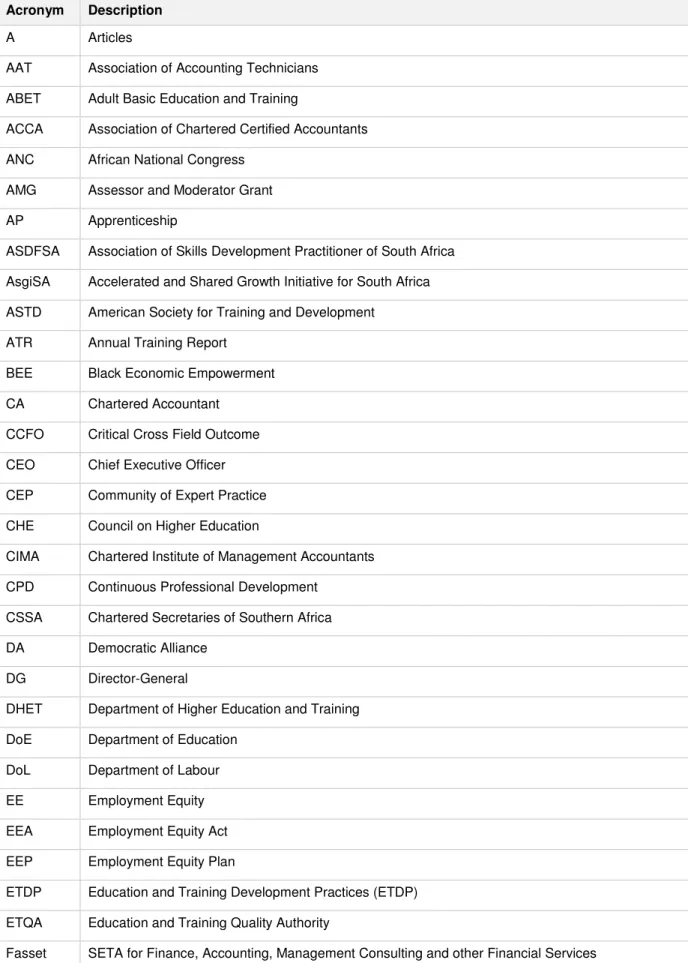
Acronym Description
A Articles
AAT Association of Accounting Technicians ABET Adult Basic Education and Training
ACCA Association of Chartered Certified Accountants
ANC African National Congress
AMG Assessor and Moderator Grant
AP Apprenticeship
ASDFSA Association of Skills Development Practitioner of South Africa AsgiSA Accelerated and Shared Growth Initiative for
ASTD American Society for Training and Development
ATR Annual Training Report
BEE Black Economic Empowerment
CA Chartered Accountant
CCFO Critical Cross Field Outcome
CEO Chief Executive Officer
CEP Community of Expert Practice
CHE Council on Higher Education
CIMA Chartered Institute of Management Accountants
CPD Continuous Professional Development
CSSA Chartered Secretaries of Southern Africa
DA Democratic Alliance
DG Director-General
DHET Department of Higher Education and
DoE Department of Education
DoL Department of Labour
EE Employment Equity
EEA Employment Equity Act
EEP Employment Equity Plan
ETDP Education and Training Development Practices (ETDP) ETQA Education and Training Quality Authority
Fasset SETA for Finance, Accounting, Management Consulting and other Financial Services Association of Accounting Technicians
Adult Basic Education and Training
Association of Chartered Certified Accountants African National Congress
Assessor and Moderator Grant
Association of Skills Development Practitioner of South Africa Accelerated and Shared Growth Initiative for South Africa American Society for Training and Development
Annual Training Report Black Economic Empowerment
Critical Cross Field Outcome Chief Executive Officer Community of Expert Practice Council on Higher Education
Chartered Institute of Management Accountants Continuous Professional Development
Chartered Secretaries of Southern Africa
Department of Higher Education and Training Department of Education
Employment Equity Act Employment Equity Plan
Education and Training Development Practices (ETDP) Education and Training Quality Authority
SETA for Finance, Accounting, Management Consulting and other Financial Services SETA for Finance, Accounting, Management Consulting and other Financial Services
Acronym Description
FassetQA Fasset Quality Assurance Authority
FET Further Education and Training
FLC Foundational Learning Competence
GET General Education and Training
GFETQF General and Further Education and Training Qualifications Framework
GIA General Internal Auditor
HEQC Higher Education Quality Committee HEQF Higher Education Qualifications Framework
HET Higher Education and Training
HR Human Resources
I Internship
IAC Institute of Administration and Commerce ICB Institute of Certified Bookkeepers
ICSA Institute of Chartered Secretaries and Administrators IIA Institute of Internal Auditors
IPFA Institute of Public Finance and Auditing
IST Inter-Seta Transfer
LCG Learnership Cash Grant
LS Learnership
MOU Memorandum of Understanding
NLP Non Levy Payer
NLRD National Learner Record Database
NPI National Productivity Institute
NQF National Qualifications Framework
NSA National Skills Authority
NSB National Standards Bodies
NSDS National Skills Development Strategy
NSF National Skills Framework
OFO Organising Framework for Occupations
OLS Occupational Learning System
OQF Occupational Qualifications Framework
P Placement
PAYE Pay as you Earn
PD Professional Degree
Fasset Quality Assurance Authority Further Education and Training Foundational Learning Competence General Education and Training
Further Education and Training Qualifications Framework General Internal Auditor
Higher Education Quality Committee Higher Education Qualifications Framework Higher Education and Training
Institute of Administration and Commerce Institute of Certified Bookkeepers
Institute of Chartered Secretaries and Administrators Institute of Internal Auditors
Institute of Public Finance and Auditing
Learnership Cash Grant
Memorandum of Understanding
National Learner Record Database National Productivity Institute National Qualifications Framework National Skills Authority
Standards Bodies
National Skills Development Strategy National Skills Framework
Organising Framework for Occupations Occupational Learning System
Acronym Description
PG Pivotal Grant
QAP Quality Assurance Partner
QC Quality Council
QCTO Quality Council for Trades and Occupations
RPL Recognition of Prior Learning
SA South Africa
SABPP South African Board of Personnel Practitioners SAICA South African Institute of Chartered Accountants SAIPA South African Institute of Professional Accountants SAQA South African Qualifications Authority
SARS South African Revenue Service
SC Short Courses
SDA Skills Development Act
SDF Skills Development Facilitator
SDL Skills Development Levy
SDLA Skills Development Levies Act
SETA Sector Education and Training Authority
SGB Standards Generating Body
SIC Standard Industrial Classification SMME Small, Medium and Micro Enterprise
SP Skills Programme
SSP Sector Skills Plan
TC Technical Certificate
TDe Technical Degree
TDi Technical Diploma
WSP Workplace Skills Plan
Quality Assurance Partner
Quality Council for Trades and Occupations Recognition of Prior Learning
South African Board of Personnel Practitioners African Institute of Chartered Accountants South African Institute of Professional Accountants South African Qualifications Authority
South African Revenue Service
Skills Development Act Skills Development Facilitator Skills Development Levy Skills Development Levies Act
Sector Education and Training Authority Standards Generating Body
Standard Industrial Classification Small, Medium and Micro Enterprise
Introduction
The 2011 update of the Fasset Skills Development Facilitator (SDF) training course will reflect a number of changes which have occurred in the skills development environment
workshop.
Set at an intermediate level for SDFs, the
an overview of all aspects pertinent to the SDF and will cover the following topics and new developments:
• Developing the strategic role of the SDF
• Structures, relationships and skills development legislation • Assessment and the National Qualifications Framework (NQF) • Understanding learning programmes
• Developing and implementing a Workplace Skills Plan (WSP) • Levies, grants and Fasset
update of the Fasset Skills Development Facilitator (SDF) training course will reflect a number of changes which have occurred in the skills development environment
for SDFs, the handbook and corresponding workshop
an overview of all aspects pertinent to the SDF and will cover the following topics and new
Developing the strategic role of the SDF
Structures, relationships and skills development legislation nt and the National Qualifications Framework (NQF) Understanding learning programmes
Developing and implementing a Workplace Skills Plan (WSP) Levies, grants and Fasset-funded Interventions
update of the Fasset Skills Development Facilitator (SDF) training course will reflect a number of changes which have occurred in the skills development environment since the May 2010
workshop slides will provide an overview of all aspects pertinent to the SDF and will cover the following topics and new
Section 1: Developing the Strategic Role of the SDF
1.
Skills Development Facilitator
A Skills Development Facilitator (SDF) is responsible for the planning, implementation and reporting of training in an organisation, with Seta
1.1 Appointment of an SDF
In larger organisations, a currentlappointed as an internal SDF. In smaller organisations there is often no dedicated training or HR professional fulfilling this role, and so a manager or company owner will assume the responsibility The role can also be outsourced to a professional external SDF (Rainbow SA, The National Skills Development Handbook).
1.2 Function of an SDF
The functions of an SDF are to:• Assist the employer and employees to develop a Workplace Skills Plan (WSP) which c with the requirements of the Seta
• Submit the WSP to the relevant Seta
• Advise the employer on the implementation of the WSP
• Assist the employer to draft an Annual Training Report (ATR) on the implementation of the WSP.
• Advise the employer on the
• Act as a contact person between the employer and the Seta • Serve as a resource with regard to all aspects of skills development • Communicate Seta initiatives, grants and benefits to the employer
• Communicate with branch offices, and all employees in the main office and branch offices, concerning events and grants being offered at the Seta
1.3 Roles of an SDF
The employer must provide the the functions set out above.An SDF is a:
• Facilitator: To facilitate the development of an employer’s skills development strategy
• Expert: To serve as an expert resource for accrediting the employer as a training provider and for the implementation of
Developing the Strategic Role of the SDF
Skills Development Facilitator (SDF)
A Skills Development Facilitator (SDF) is responsible for the planning, implementation and reporting of training in an organisation, with Seta-related duties.
Appointment of an SDF
In larger organisations, a currently employed training or Human Resources (HR) manager may be appointed as an internal SDF. In smaller organisations there is often no dedicated training or HR professional fulfilling this role, and so a manager or company owner will assume the responsibility The role can also be outsourced to a professional external SDF (Rainbow SA, The National Skills
Assist the employer and employees to develop a Workplace Skills Plan (WSP) which c with the requirements of the Seta.
Submit the WSP to the relevant Seta.
Advise the employer on the implementation of the WSP.
Assist the employer to draft an Annual Training Report (ATR) on the implementation of the
Advise the employer on the quality assurance requirements set by the Seta Act as a contact person between the employer and the Seta.
Serve as a resource with regard to all aspects of skills development. initiatives, grants and benefits to the employer.
with branch offices, and all employees in the main office and branch offices, concerning events and grants being offered at the Seta.
The employer must provide the SDF with the resources, facilities and training necessary to perform
: To facilitate the development of an employer’s skills development strategy
: To serve as an expert resource for accrediting the employer as a training provider and for the implementation of appropriate learnerships and skills programmes
Developing the Strategic Role of the SDF
A Skills Development Facilitator (SDF) is responsible for the planning, implementation and reporting of
y employed training or Human Resources (HR) manager may be appointed as an internal SDF. In smaller organisations there is often no dedicated training or HR professional fulfilling this role, and so a manager or company owner will assume the responsibility. The role can also be outsourced to a professional external SDF (Rainbow SA, The National Skills
Assist the employer and employees to develop a Workplace Skills Plan (WSP) which complies
Assist the employer to draft an Annual Training Report (ATR) on the implementation of the
quality assurance requirements set by the Seta.
with branch offices, and all employees in the main office and branch offices,
with the resources, facilities and training necessary to perform
: To facilitate the development of an employer’s skills development strategy
: To serve as an expert resource for accrediting the employer as a training provider and appropriate learnerships and skills programmes
• Administrator: To complete and submit the
• Advisor: To advise the employers and employees on the National Skills Development Strategy (NSDS) and on the implementation of the WSP
• Education and needs evaluator
• Mediator: To serve as a contact person between the employer and the relevant Seta
1.4 SDF unit standards
The South African Board of Personnel Practitioners (SABPP) and the E Development Practices (ETDP)
(ETQAs) for seven SDF unit standards. There is currently no full qualification for has been in the pipeline for some time. These unit
including:
• National Certificate: Occupationally Directed Education, Training and Development Practices (50331)
• National Diploma: Human Resources Management and Practices The seven SDF unit standards are:
• Develop an organisational training and development plan
• Conduct an analysis to determine outcomes of learning for skills development and other purposes. (15218)
• Provide information and advice regarding skills development and related issues • Promote a learning culture in the organisation
• Conduct skills development administration in an organisation
• Advise on the establishment and implementation of a quality management system for skills development practices in an
• Coordinate planned skills development interventions in an organisation
It is not a requirement that a SDF has to have any formal training to practice as an SDF. Some Setas however have enforced SDFs should have some training and show competence against
standards, and retain the right to reject the
It is important for SDFs to remain up
1.4.1
Association of Skills De
The Association of Skills Development Facilitators of South Africa
association representing SDFs and their professional development, across sectors and ASDFSA views skills development facilitation as a strategic business func
professionals and aim to support these individuals.
: To complete and submit the WSP and ATR
: To advise the employers and employees on the National Skills Development Strategy (NSDS) and on the implementation of the WSP
evaluator: To assess the skills development needs of the organisation : To serve as a contact person between the employer and the relevant Seta
The South African Board of Personnel Practitioners (SABPP) and the Education and Seta are the accredited Education and Training Quality for seven SDF unit standards. There is currently no full qualification for
has been in the pipeline for some time. These unit standards fall under a number of qualifications,
National Certificate: Occupationally Directed Education, Training and Development
National Diploma: Human Resources Management and Practices (61592)
ds are:
Develop an organisational training and development plan. (15217)
Conduct an analysis to determine outcomes of learning for skills development and other
Provide information and advice regarding skills development and related issues Promote a learning culture in the organisation. (15222)
Conduct skills development administration in an organisation. (15227)
Advise on the establishment and implementation of a quality management system for skills development practices in an organisation. (15228)
Coordinate planned skills development interventions in an organisation. (15232)
It is not a requirement that a SDF has to have any formal training to practice as an SDF. Some Setas should have some training and show competence against
retain the right to reject the SDFs grant submissions.
It is important for SDFs to remain up-to-date with the latest developments in the field.
Association of Skills Development Facilitators of South Africa (ASDFSA)
Association of Skills Development Facilitators of South Africa ASDFSA is anassociation representing SDFs and their professional development, across sectors and s development facilitation as a strategic business func
professionals and aim to support these individuals.
: To advise the employers and employees on the National Skills Development
: To assess the skills development needs of the organisation : To serve as a contact person between the employer and the relevant Seta
ducation and Training raining Quality Authorities for seven SDF unit standards. There is currently no full qualification for SDFs although this standards fall under a number of qualifications,
National Certificate: Occupationally Directed Education, Training and Development
(61592)
Conduct an analysis to determine outcomes of learning for skills development and other
Provide information and advice regarding skills development and related issues. (15221)
Advise on the establishment and implementation of a quality management system for skills
(15232)
It is not a requirement that a SDF has to have any formal training to practice as an SDF. Some Setas should have some training and show competence against relevant unit
developments in the field.
velopment Facilitators of South Africa (ASDFSA)
ASDFSA is an independent association representing SDFs and their professional development, across sectors and Setas. The s development facilitation as a strategic business function and SDFs asFurther information about registration with contacting:
• Gill Connellan, Cell: 082
1.4.2
South African Board of Personnel Practitioners (SABPP)
The South African Board of Personnel Practitioners (the quality assurance body for human resource and stature of human resources in South Africa
• through evaluation and registration
• a continued professional development standard • a code of conduct and disciplinary procedures
• obtaining personal commitments to professionalism and ethics • accrediting HR providers
• registering HR Assessors and Moderators
Practicing SDFs are welcome to register as HR practitioners with this association.
1.4.3
American Society for Training and Development (ASTD)
The South African chapter of the‘assist organisations to achieve a competitive advantage in a global economy by providing members with professional advice, benchmarking opportunities, process facilitation, workshops, local and international conferences, network forums and annual research in the field of Trainin
Resource Development.’ The association organises local sessions conferences are organised.
For further information please see their website • Robin Probart, Cell: 082 894 6932
1.4.4
Fasset requirements for SDFs
Fasset does not prescribe minimum standards for SDF registration and no minimum requirements have been prescribed in regulations to the
legislation. SDFs are encouraged to pursue formal qualifications and lifelong learning in support of their role.
1.5 The training committee
It is strongly recommended thatis established for the purposes of consultation on training matters
reflect the interests of employees from all occupational categories in the organisation's workforce registration with this association is available at www.asdfsa.co.za
ell: 082 853 3778, e-mail: [email protected] or [email protected]
South African Board of Personnel Practitioners (SABPP)
South African Board of Personnel Practitioners (SABPP) is the registering body for HR as well as human resource qualifications. They endeavour to raise the standards and stature of human resources in South Africa:
through evaluation and registration
a continued professional development standard a code of conduct and disciplinary procedures
obtaining personal commitments to professionalism and ethics accrediting HR providers
registering HR Assessors and Moderators
racticing SDFs are welcome to register as HR practitioners with this association.
American Society for Training and Development (ASTD)
The South African chapter of the American Society for Training and Developmentachieve a competitive advantage in a global economy by providing members with professional advice, benchmarking opportunities, process facilitation, workshops, local and international conferences, network forums and annual research in the field of Trainin
The association organises local sessions, national and international
For further information please see their website www.astd.co.za or contact: Cell: 082 894 6932
Fasset requirements for SDFs
Fasset does not prescribe minimum standards for SDF registration and no minimum requirements have been prescribed in regulations to the Skills Development Act (SDA)
SDFs are encouraged to pursue formal qualifications and lifelong learning in support of
The training committee
that for organisations with more than 50 employees,
s of consultation on training matters. This committee, as a whole, should reflect the interests of employees from all occupational categories in the organisation's workforce
www.asdfsa.co.za or by
is the registering body for HR as well as hey endeavour to raise the standards
racticing SDFs are welcome to register as HR practitioners with this association.
American Society for Training and Development (ASTD) aims to: achieve a competitive advantage in a global economy by providing members with professional advice, benchmarking opportunities, process facilitation, workshops, local and international conferences, network forums and annual research in the field of Training and Human , national and international
Fasset does not prescribe minimum standards for SDF registration and no minimum requirements or other applicable SDFs are encouraged to pursue formal qualifications and lifelong learning in support of
a training committee his committee, as a whole, should reflect the interests of employees from all occupational categories in the organisation's workforce.
A consultative forum should be established or an existing forum used if this is
example, an existing diversity committee, affirmative action or employment equity forum utilised.
1.5.1
Composition of the training committee
All stakeholders should be included in this forum,• Representative trade unions
• Employee representatives from designated groups, non
categories and levels, and senior management, including the managers assigned with responsibility
This forum should engage in proper consultation.
• The opportunity to meet and report back to employees and management
• Reasonable opportunity for employee representatives to meet with the employer • The request, receipt and consideration of relevant information
• Adequate time being allowed for each
Ongoing interaction with and accessibility to senior management with regard to workplace skills issues is critical to the success of this process.
The frequency of consultative forum meetings will vary from employer to employer depend
sophistication, existing levels of diversity, and what has already been accomplished in the workplace with regard to skills development
time off for these meetings.
1.5.2
Role of the training committee
The role of a training committee is to:• Drive and direct the skills development process
• Ensure that representative consultation takes place regarding up • Authorise and sign off the
• Ensure that the SDF is leading the way with the SD process • Support the SDF in the efforts of
A consultative forum should be established or an existing forum used if this is
example, an existing diversity committee, affirmative action or employment equity forum
Composition of the training committee
All stakeholders should be included in this forum, for example:epresentative trade unions
mployee representatives from designated groups, non-designated groups, all occupational categories and levels, and senior management, including the managers assigned with
This forum should engage in proper consultation. Proper consultation includes: he opportunity to meet and report back to employees and management easonable opportunity for employee representatives to meet with the employer he request, receipt and consideration of relevant information
dequate time being allowed for each of the above steps
Ongoing interaction with and accessibility to senior management with regard to workplace skills issues is critical to the success of this process.
The frequency of consultative forum meetings will vary from employer to employer depend
sophistication, existing levels of diversity, and what has already been accomplished in the workplace with regard to skills development. Meetings should take place regularly and employers should allow
training committee
The role of a training committee is to:direct the skills development process.
Ensure that representative consultation takes place regarding up-skilling of employees Authorise and sign off the grant application to the Seta.
nsure that the SDF is leading the way with the SD process.
Support the SDF in the efforts of ‘spreading the word’ regarding training and up
A consultative forum should be established or an existing forum used if this is appropriate. For example, an existing diversity committee, affirmative action or employment equity forum may be
designated groups, all occupational categories and levels, and senior management, including the managers assigned with
easonable opportunity for employee representatives to meet with the employer
Ongoing interaction with and accessibility to senior management with regard to workplace skills issues
The frequency of consultative forum meetings will vary from employer to employer depending on size, sophistication, existing levels of diversity, and what has already been accomplished in the workplace take place regularly and employers should allow
skilling of employees.
Figure 1.1: Role of the training committee
1.5.3
Constitution of the training committee
A training committee must haveperformance-driven to ensure commitment
The committee should, aside from its legal obligations in terms of the Employment Equity recommendations of the Skills Development Act,
• Improving the quality of life of all workers, their prospects of work and mobility, • Improving productivity in the workplace and the competitiveness of the • Increasing the levels of investment in educati
investment.
A training committee should represent the interests of all sectors of its workforce and on the implementation and monitoring of its skills development plans in terms of the releva the organisation’s requirements.
1.5.4
Scope and objectives
The scope of the committee comprises the activities in the
in consultation with staff, as identified and described in the E recommended in the SDA and the
codes of good practice, directives and administrative guidelines published in terms of the Figure 1.1: Role of the training committee
Constitution of the training committee
ust have a constitution in place with the given mandate and driven to ensure commitment.
aside from its legal obligations in terms of the Employment Equity Skills Development Act, be committed to:
Improving the quality of life of all workers, their prospects of work and mobility, Improving productivity in the workplace and the competitiveness of the organisation
Increasing the levels of investment in education and training and improving the return on that
represent the interests of all sectors of its workforce and on the implementation and monitoring of its skills development plans in terms of the releva
and objectives of a training committee
The scope of the committee comprises the activities in the organisation, as these have been decided in consultation with staff, as identified and described in the Employment Equity
and the Skills Development Levies Act (SDLA) (1999) codes of good practice, directives and administrative guidelines published in terms of the
a constitution in place with the given mandate and should be
aside from its legal obligations in terms of the Employment Equity Act and
Improving the quality of life of all workers, their prospects of work and mobility, organisation,
on and training and improving the return on that
represent the interests of all sectors of its workforce and should consult on the implementation and monitoring of its skills development plans in terms of the relevant Acts and
as these have been decided mployment Equity Act (EEA), (1999) and any regulations, codes of good practice, directives and administrative guidelines published in terms of these Acts.
The committee is responsible for making recommendations to the
example the Management Board, Chief Executive Officer (CEO) or Managing Partner
The training committee is not responsible for the implementation of its re
responsible for monitoring of the implementation of the goals and objectives of the forum.
the training committee may not be utilised as a forum in which to raise grievances and or demands not related to its scope and objectives.
The first objective of the committee is to promote the objectives of the
• Promoting skills development, by assisting and advising on the development of competency levels of employees so that individual and team performance can be improved, and the objectives of the Employment Equity
• Proposing actions to cont process and structural changes • Developing a WSP.
• Monitoring and reporting on the progress made in implementing the • Facilitating employee mo
• Assisting employees in utilising the opportunity to use workplace skills development as a mechanism to achieve nationally recognised unit standards and qualifications
• Enhancing the organisation’s • Addressing the organisation’s
• Contributing to the personal development of learners • Optimising the levy rebates
Although not in the mandate of the SDA, where the training committee and employment equity committee are combined, the second
the EEA within the organisation by:
• Conducting analyses of its employment policies, practic
environment, in order to identify employment barriers which adversely affect people from designated groups.
• Developing of an employment equity plan which will achieve reasonable progress towards employment equity in the
• Giving input into the preparation and compilation of the reports required to be submitted to the Director-General (DG) of the Department of Labour
Education and Training (DHET)
• Assisting with the internal procedures to resolve any dispute about the interpretation or implementation of the EEP
The committee is responsible for making recommendations to the leadership of the organisation example the Management Board, Chief Executive Officer (CEO) or Managing Partner
The training committee is not responsible for the implementation of its recommendations responsible for monitoring of the implementation of the goals and objectives of the forum.
he training committee may not be utilised as a forum in which to raise grievances and or demands not ctives.
objective of the committee is to promote the objectives of the SDA within the
Promoting skills development, by assisting and advising on the development of competency levels of employees so that individual and team performance can be improved, and the objectives of the Employment Equity Plan (EEP) realised.
Proposing actions to continuously enhance the skills level of employees so that technology, process and structural changes can be effectively implemented.
Monitoring and reporting on the progress made in implementing the WSP Facilitating employee mobility through outcomes-based education and training
Assisting employees in utilising the opportunity to use workplace skills development as a mechanism to achieve nationally recognised unit standards and qualifications
organisation’s quality of education and training. organisation’s past discrimination and imbalances. Contributing to the personal development of learners.
the levy rebates, incentives and interventions funded by the Seta
of the SDA, where the training committee and employment equity second objective of the committee could be to promote the objectives of
by:
Conducting analyses of its employment policies, practices, procedures and the working environment, in order to identify employment barriers which adversely affect people from
Developing of an employment equity plan which will achieve reasonable progress towards employment equity in the organisation’s workforce.
Giving input into the preparation and compilation of the reports required to be submitted to the of the Department of Labour (DoL) and the Department of Higher Education and Training (DHET).
e internal procedures to resolve any dispute about the interpretation or EEP.
of the organisation, for example the Management Board, Chief Executive Officer (CEO) or Managing Partner.
commendations. It is responsible for monitoring of the implementation of the goals and objectives of the forum. In addition, he training committee may not be utilised as a forum in which to raise grievances and or demands not
within the organisation by:
Promoting skills development, by assisting and advising on the development of competency levels of employees so that individual and team performance can be improved, and the
inuously enhance the skills level of employees so that technology,
WSP i.e. the ATR. based education and training.
Assisting employees in utilising the opportunity to use workplace skills development as a mechanism to achieve nationally recognised unit standards and qualifications.
the Seta.
of the SDA, where the training committee and employment equity to promote the objectives of
es, procedures and the working environment, in order to identify employment barriers which adversely affect people from
Developing of an employment equity plan which will achieve reasonable progress towards
Giving input into the preparation and compilation of the reports required to be submitted to the (DoL) and the Department of Higher
Section 2: Understanding
2.
Legislation
The 2011 update of the Fasset Skills Development Facilitator (SDF) training course will ref number of changes which have occurred in the skills development environment
to legislation, the establishment of occupations, and the introduction of new
2.1 Skills Development Act
Central to the skills development environment is the
describes the purpose of the legislation and creates the institutional infrastructure for implementation of the legislation.
2.1.1 Purpose of the Skills Development Act (1998)
The stated purpose of the Skills Development Act (SDA) 1998a) to develop the skills of the South African workforce
i to improve the quality of life of workers, their prospects of work and la
ii to improve productivity in the workplace and the competitiveness of employers iii to promote self-employment; and
iv to improve the delivery of social services
b) to increase the levels of investment in education and training in the labour market to improve the return on that investment
c) to encourage employers
i to use the workplace as
ii to provide employees with the oppor
iii to provide opportunities for new entrants to the labour market to and
iv to employ persons who find it difficult to be employed d) to encourage workers to participate in learnership
e) to improve the employment prospects of persons previously disadvantaged by unfair discrimination and to redress those disadvantages through training and education f) to ensure the quality of education and training in and for the workplace
g) to assist
i work-seekers to find work ii retrenched workers iii employers to find qualifie
iv to provide and regulate employment services.
Understanding legislation and structures
update of the Fasset Skills Development Facilitator (SDF) training course will ref number of changes which have occurred in the skills development environment. T
to legislation, the establishment of a quality council to register and quality assure trades and occupations, and the introduction of new occupational classification system.
Skills Development Act (1998)
Central to the skills development environment is the Skills Development Act (SDA) 1998
describes the purpose of the legislation and creates the institutional infrastructure for implementation
Skills Development Act (1998)
of the Skills Development Act (SDA) 1998 is:to develop the skills of the South African workforce
to improve the quality of life of workers, their prospects of work and la
to improve productivity in the workplace and the competitiveness of employers employment; and
to improve the delivery of social services
to increase the levels of investment in education and training in the labour market to improve the return on that investment
to use the workplace as an active learning environment
to provide employees with the opportunities to acquire new skills
to provide opportunities for new entrants to the labour market to gain work experience
to employ persons who find it difficult to be employed
to encourage workers to participate in learnerships and other training programmes to improve the employment prospects of persons previously disadvantaged by unfair
ation and to redress those disadvantages through training and education to ensure the quality of education and training in and for the workplace
seekers to find work
retrenched workers to re-enter the labour market employers to find qualified employees; and to provide and regulate employment services.
structures
update of the Fasset Skills Development Facilitator (SDF) training course will reflect a These changes relate a quality council to register and quality assure trades and
Skills Development Act (SDA) 1998, which describes the purpose of the legislation and creates the institutional infrastructure for implementation
to improve the quality of life of workers, their prospects of work and labour mobility to improve productivity in the workplace and the competitiveness of employers
to increase the levels of investment in education and training in the labour market and
gain work experience;
and other training programmes to improve the employment prospects of persons previously disadvantaged by unfair
2.1.2
Purpose of the Skills Development Act (SDA) as Amended (2010)
In 2008 the SDA was amended. TTo amend the Skills Development Act, 1998, so as to define certain expressions and amend certain definitions; to extend the functions of the National Skills Authority; to change the composition of the National Skills Authority; to extend the Minister’s pow respect of SETAs; to provide anew for the obligations of SETAs in respect of financial management; to require SETAs to conclude service level agreements with the Director General; to ensure that the membership of SETAs are representative of designat groups; to empower the Minister to make regulations regarding learnership agreements; to regulate private employment service agencies; to allow the use of money in the National Skills Fund for the administration of the Fund; to provide anew for budgetin respect of training by national and provincial public entities; to empower the Minister to establish and promote a national standard to promote good practice in skills development; to extend the Minister’s power to make regulations; and to amend Sched 2; to effect consequential amendments to the Mine Health and Safety Act, 1996: and to provide for matters connected therewith.
The amended SDA as resulted in the following changes: • to provide new and amend existing definitions • to empower the Minister
practice in skills development
2.1.3 Institutions of the SDA
The SDA is to be achieved through the establishment of the following institutions: a) establishing an institutional and financial framework c
i the National Skills Authority (NSA) ii the National Skills Fund (NSF) iii a skills development levy
Development Levies Act
iv Sector Education and Training Authorities (Setas) v provincial offices of the
vi labour centres of the Department vii accredited trade test centres viii skills development institutes
ix the Quality Council for Trades and Occupations x a skills development forum for each province xi a national artisan moderation body
xii Productivity South
Purpose of the Skills Development Act (SDA) as Amended (2010)
The introduction to the amended legislation states:To amend the Skills Development Act, 1998, so as to define certain expressions and amend certain definitions; to extend the functions of the National Skills Authority; to change the composition of the National Skills Authority; to extend the Minister’s pow respect of SETAs; to provide anew for the obligations of SETAs in respect of financial management; to require SETAs to conclude service level agreements with the Director General; to ensure that the membership of SETAs are representative of designat groups; to empower the Minister to make regulations regarding learnership agreements; to regulate private employment service agencies; to allow the use of money in the National Skills Fund for the administration of the Fund; to provide anew for budgetin respect of training by national and provincial public entities; to empower the Minister to establish and promote a national standard to promote good practice in skills development; to extend the Minister’s power to make regulations; and to amend Sched 2; to effect consequential amendments to the Mine Health and Safety Act, 1996: and to provide for matters connected therewith.
The amended SDA as resulted in the following changes: to provide new and amend existing definitions
to empower the Minister to establish and promote a national standard to promote good practice in skills development
Institutions of the SDA
to be achieved through the establishment of the following institutions: establishing an institutional and financial framework comprising
the National Skills Authority (NSA) the National Skills Fund (NSF)
a skills development levy-financing scheme as contemplated in the Skills Development Levies Act
Sector Education and Training Authorities (Setas) provincial offices of the Department
labour centres of the Department accredited trade test centres skills development institutes
the Quality Council for Trades and Occupations a skills development forum for each province a national artisan moderation body, and Productivity South Africa
Purpose of the Skills Development Act (SDA) as Amended (2010)
he introduction to the amended legislation states:To amend the Skills Development Act, 1998, so as to define certain expressions and amend certain definitions; to extend the functions of the National Skills Authority; to change the composition of the National Skills Authority; to extend the Minister’s powers in respect of SETAs; to provide anew for the obligations of SETAs in respect of financial management; to require SETAs to conclude service level agreements with the Director-General; to ensure that the membership of SETAs are representative of designated groups; to empower the Minister to make regulations regarding learnership agreements; to regulate private employment service agencies; to allow the use of money in the National Skills Fund for the administration of the Fund; to provide anew for budgeting in respect of training by national and provincial public entities; to empower the Minister to establish and promote a national standard to promote good practice in skills development; to extend the Minister’s power to make regulations; and to amend Schedule 2; to effect consequential amendments to the Mine Health and Safety Act, 1996: and to
to establish and promote a national standard to promote good
b) encouraging partnerships between the public and private sectors of the economy to provide education and training in and for the workplace; and
c) co-operating with the South African Qualifications Authority
2.2 Skills Development Levies Act (
The principal aim of the Skills Development Levies Act ( programmes by way of a compulsory levy system the threshold set for the annual payroll
as calculated for Pay as You Earn (PAYE) Development Levy (SDL).
The SDLA (1999) did have an effect as expenditure on training increased on training, as a percentage of payroll,
is a much higher proportion than medium and small enterprises spending in large enterprises is simila
with enterprise size (Labour Market Review 2005)
2.3 Establishment of Setas
The SDA allows for the establishment of Setas The legislation states that the Minister may establish with a constitution, for any national economic sector
Twenty-five (25) Setas were established in March 2000 in terms of the to cover all sectors in South Africa, including government
various industries. In 2005 the number of Setas was reduced to twenty number of Setas was further reduced to
2.3.1
Functions of the Setas
The Seta functions were governed by the functions outlined in
a) develop a sector skills plan within the framework of the national skills development strategy
b) implement its sector skills plan by i establishing learnerships ii approving workplace skills plans
iii allocating grants in the prescribed manner to employers, education and training providers and workers; and
iv monitoring education and training in the sector c) promote learnerships by
i identifying workplaces for practical work experience
encouraging partnerships between the public and private sectors of the economy to provide education and training in and for the workplace; and
operating with the South African Qualifications Authority (SAQA)
Skills Development Levies Act (1999)
Skills Development Levies Act (SDLA) 1999 is to finance skills development programmes by way of a compulsory levy system. Based on the Act, every organisation
the threshold set for the annual payroll (currently this threshold is R 500,000 total payroll per annum), calculated for Pay as You Earn (PAYE), has to pay one percent (1%) of their total payroll as a Skills
did have an effect as expenditure on training increased. The
payroll, in 2002/2003, was 2.1%. Large enterprises spent 2.8%, which is a much higher proportion than medium and small enterprises. This pattern of higher levels of similar internationally, where expenditure on training usually increases with enterprise size (Labour Market Review 2005).
Establishment of Setas
for the establishment of Setas, a structure which may be amended from time that the Minister may establish a Sector Education and Training Authority for any national economic sector.
were established in March 2000 in terms of the Skills Development Act (SDA) to cover all sectors in South Africa, including government, and to serve the training needs of the
In 2005 the number of Setas was reduced to twenty-three (23). of Setas was further reduced to twenty-one (21).
Functions of the Setas
he Seta functions were governed by the functions outlined in the legislation. These were stated as: develop a sector skills plan within the framework of the national skills development
implement its sector skills plan by establishing learnerships approving workplace skills plans
allocating grants in the prescribed manner to employers, education and training providers and workers; and
monitoring education and training in the sector
places for practical work experience
encouraging partnerships between the public and private sectors of the economy to
is to finance skills development organisation that exceeds hreshold is R 500,000 total payroll per annum), of their total payroll as a Skills
The average expenditure arge enterprises spent 2.8%, which his pattern of higher levels of , where expenditure on training usually increases
, a structure which may be amended from time-to-time. Sector Education and Training Authority (Seta)
Skills Development Act (SDA), to serve the training needs of the three (23). In 2010, the
These were stated as: develop a sector skills plan within the framework of the national skills development
ii supporting the development of learning materials iii improving the facilitation of learning; and
iv assisting in the conclusion of learnership agreements d) register learnership agreements
e) perform any functions delegated to it b Occupations (QCTO)
f) collect and disburse the skills development levies in its sector g) liaise with the National Skills Authority on
i the national skills development policy
ii the national skills development strategy; and iii its sector skills plan
h) report to the Director-General on
i any budgets, reports and financial statements on its income and expenditure that it is required to prepare in terms of the Public Finance Management Act
ii strategic plans and reports on the implementat
i) liaise with the provincial offices and labour centres of the Department and any education body established under any law regulating education in the Republic to improve information
i about employment opportunities
ii between education and training providers and the labour market iii liaise with the skills development forums established in each province j) appoint staff necessary for the performance of its functions; and
i promote the national standard established ii liaise with the QCTO
k) perform any other duties imposed by this Act or consistent with the purposes of this Act.
In summary, the Setas have four main functions:
• To disburse grants in terms of the levy grant scheme • To register learners on learnerships
• To register providers, assessors, moderators and verifiers of education and training • To support the sector to meet skills needs
2.3.2
Ministry-In-Charge
The governing ministry for the SetasSince 1 November 2009, the Setas report to the Department of Higher Education and Training (DHET).
Following the April 2009 national elections, t and further education and training)
supporting the development of learning materials improving the facilitation of learning; and
assisting in the conclusion of learnership agreements register learnership agreements
perform any functions delegated to it by the Quality Council for
collect and disburse the skills development levies in its sector liaise with the National Skills Authority on
the national skills development policy
the national skills development strategy; and its sector skills plan
General on
any budgets, reports and financial statements on its income and expenditure that it is required to prepare in terms of the Public Finance Management Act
strategic plans and reports on the implementation of its service level agreement liaise with the provincial offices and labour centres of the Department and any education body established under any law regulating education in the Republic to
about employment opportunities
education and training providers and the labour market liaise with the skills development forums established in each province appoint staff necessary for the performance of its functions; and
promote the national standard established
liaise with the QCTO regarding occupational qualifications
perform any other duties imposed by this Act or consistent with the purposes of this
, the Setas have four main functions:
To disburse grants in terms of the levy grant scheme learnerships
To register providers, assessors, moderators and verifiers of education and training To support the sector to meet skills needs
Charge
The governing ministry for the Setas, up to 31 October 2009, was the Department of Labour
, the Setas report to the Department of Higher Education and Training
Following the April 2009 national elections, the DHET was created to address the and training) needs, and related institutions in South Africa.
ouncil for Trades and
any budgets, reports and financial statements on its income and expenditure that it is required to prepare in terms of the Public Finance Management Act
ion of its service level agreement liaise with the provincial offices and labour centres of the Department and any education body established under any law regulating education in the Republic to
liaise with the skills development forums established in each province
perform any other duties imposed by this Act or consistent with the purposes of this
To register providers, assessors, moderators and verifiers of education and training
was the Department of Labour (DoL). , the Setas report to the Department of Higher Education and Training
The DHET scope includes the following domain that was previously the Department of Education (DoE):
• The NQF
• Adult Basic Education and Training (ABET) • Further Education and Training
• Setas • The NSF • The NSA • Indlela
• Higher Education and Training The DoL retains control of employment National Productivity Institute (NPI).
2.3.3
Twenty-one Setas
Twenty-one (21) Setas were announced on 8 April 2011 by Minister Blade Nzimande, as well as the independent Chairpersons of Seta Boards
1) Agri SETA – Prof. Gilingwe. Mayende 2) Bank SETA – Mr. Martin Mahosi
3) Construction SETA – Mr. Themba Mhambi (Under Administration) 4) CHIETA – Ms. Nolitha Fakude
5) Energy and Water SETA
6) ETDP SETA – Ms. Shirley Mabusela 7) FASSET – Ms. Tsakani Matshazi
8) Fibre Processing and Manufacturing SETA 9) FOODBEV SETA – Mr. Fankie Komape 10) H&W SETA – Ms. Nozipho January 11) INSETA – Mr. Mzimkhulu Msiwa 12) LG SETA – Mr. Duma Nkosi
13) MERSETA – Ms. Phindile Nzimande
14) Media Information and Communications Technology (MICT) SETA Mbhele
15) Mining Qualifications Authority 16) PSETA – Ms. Koko Mokgalong 17) SASSETA – Mr. Abbey Witbooi 18) Services SETA – Dr. Sihle Moon 19) Transport SETA (TETA)
20) Tourism and Hospitality SETA (THETA) 21) Wholesale and Retail SETA (W&R)
The DHET scope includes the following domain that was previously the domain of the DoL or the
Adult Basic Education and Training (ABET) Further Education and Training (FET)
Higher Education and Training (HET) institutions
employment services, labour centres, Productivity SA (previously the (NPI).
Setas were announced on 8 April 2011 by Minister Blade Nzimande, as well as the independent Chairpersons of Seta Boards
Prof. Gilingwe. Mayende Mr. Martin Mahosi
Mr. Themba Mhambi (Under Administration) Ms. Nolitha Fakude
Energy and Water SETA – Mr. Senzeni Zokwana Ms. Shirley Mabusela
Ms. Tsakani Matshazi
Fibre Processing and Manufacturing SETA – Mr. Sipho Ngidi Mr. Fankie Komape
Ms. Nozipho January-Bardill Mr. Mzimkhulu Msiwa
Mr. Duma Nkosi
Ms. Phindile Nzimande
Media Information and Communications Technology (MICT) SETA –
Mining Qualifications Authority – Mr. Thabo Gazi Ms. Koko Mokgalong- Mashego
Mr. Abbey Witbooi Dr. Sihle Moon
Transport SETA (TETA) – Mr. June Dube
Tourism and Hospitality SETA (THETA) – Ms. Brenda Madumisa Wholesale and Retail SETA (W&R) – Dr. Thami Mazwai
domain of the DoL or the
, labour centres, Productivity SA (previously the
Setas were announced on 8 April 2011 by Minister Blade Nzimande, as well as the
Setas cover specific sectors, for example BANK industries, whereas the Agri SETA services
The law stipulates that employers must register with the Seta whose scope includes the main business activity of the registrant
Industrial Classification (SIC) codes, which describe specific business activities for each of the Setas can be found
describing the relevant business activity that falls under the relevant Seta
Fasset is the Seta for Finance, Accounting, Management Consulting and other Financial Services The members of a Seta include employers, trade unions, professional bodies, government departments and bargaining councils, where relevant, from each industrial sector.
Before 2000, when Setas were being conceptualised corresponding to the 27 possible Setas
Setas were established in 2000, only 25 were established however the Seta numbering and Seta codes e.g. 01 for Fasset, remained
still ranges from 1 to 27.
2.3.4
Quality Assurance of Education by the Seta
As a result of their function in monitoring of education and training providers Setas acted as quality assurance
qualifications designated in their scope by SAQA
SAQA, as the body that is responsible for the development and implementation of the NQF, designates a number of Quality Councils (QC’s)
the education and training process i.e assessors and moderators of training
With the implementation of the NQF Act (2008), the 31 into three QCs which were responsible for standards
in terms of the NQF Act (2008) delegate quality assurance functions qualifications, the QCTO, once operational (
assurance functions to Setas, should they deem this appropriate
2.4 Fasset Seta
Fasset is a statutory body established through the Skills Development Act
stakeholders to advance the national and global position of the industry for finance, accounting, management consulting and other financial services.
Setas cover specific sectors, for example BANK SETA services the banking and microfinance SETA services the primary and secondary agriculture sectors
The law stipulates that employers must register with the Seta whose scope includes the main strant. The scope of each Seta includes a specific set of Standard Industrial Classification (SIC) codes, which describe specific business activities. A list of all SIC codes for each of the Setas can be found at www.fasset.org.za. This list can be used to select the SIC code describing the relevant business activity that falls under the relevant Seta.
for Finance, Accounting, Management Consulting and other Financial Services include employers, trade unions, professional bodies, government departments and bargaining councils, where relevant, from each industrial sector.
being conceptualised, the DoL created twenty-seven (
corresponding to the 27 possible Setas. This explains the numbering of the Setas from 1 to 27
Setas were established in 2000, only 25 were established however the Seta numbering and Seta 01 for Fasset, remained. Even though there are only 23 Setas at present, the numbering
Quality Assurance of Education by the Seta
monitoring of education and training providers designated by the SDA as quality assurance bodies for education and training in their sector
qualifications designated in their scope by SAQA.
is responsible for the development and implementation of the NQF, Quality Councils (QC’s) whose responsibility it is to quality assure parties to the education and training process i.e. providers of training (both theoretical and workplace providers), assessors and moderators of training.
With the implementation of the NQF Act (2008), the 31 previously operating ETQA’s which were responsible for standards-setting and quality assurance
in terms of the NQF Act (2008) delegate quality assurance functions. The QC for occupational QCTO, once operational (this was expected in 2010), may delegate quality
, should they deem this appropriate.
Fasset is a statutory body established through the Skills Development Act
ers to advance the national and global position of the industry for finance, accounting, management consulting and other financial services.
the banking and microfinance the primary and secondary agriculture sectors.
The law stipulates that employers must register with the Seta whose scope includes the main The scope of each Seta includes a specific set of Standard A list of all SIC codes This list can be used to select the SIC code
for Finance, Accounting, Management Consulting and other Financial Services. include employers, trade unions, professional bodies, government departments and bargaining councils, where relevant, from each industrial sector.
seven (27) Seta codes This explains the numbering of the Setas from 1 to 27. When Setas were established in 2000, only 25 were established however the Seta numbering and Seta re are only 23 Setas at present, the numbering
designated by the SDA, for education and training in their sector and in terms of
is responsible for the development and implementation of the NQF, ose responsibility it is to quality assure parties to providers of training (both theoretical and workplace providers),
previously operating ETQA’s were centralized setting and quality assurance. These QCs may, The QC for occupational expected in 2010), may delegate quality
Fasset is a statutory body established through the Skills Development Act (1998) to enable its ers to advance the national and global position of the industry for finance, accounting,
2.4.1
Seta members and constitution
The members of a Seta include employers, trade unions, professional bodies, departments and bargaining councils, where relevant, from each industrial sector
The role of the Seta Management Board is to provide strategic leadership for Fasset and to provide assurance to all stakeholders that Fasset is fulfilling its obligations in terms of the constitution and the SDA.
The Minister has introduced a number of m
• The introducing of Independent Chairpersons
• Limiting the number of Board meetings to a reasonable number • Reducing the size of Boards
• Participation of the government and Ministerial appointment to the SETA Boa • Having a standard remuneration rate for Board and committee members
• Holding accountable Board members who do not carry out their duties as required
• The Minister and Cabinet’s participation in the appointment of SETA CEOs, in line with similar practices in other public entities.
• Ensuring the members of the Board and the management of a SETA do not participate in any tender processes where they may have an interest.
The Minister of Higher Education and Training has approved the constitutions of almost a
and has finalized the appointments to the new Seta Accounting Authorities, including the new independent chairpersons. All Setas are now certified to function for the next five years, from 1 April 2011 until 31 March 2016. NSDS
2.4.2
Vision of Fasset
The vision of Fasset is to:Influence the effective operation of the labour market, through effective skills development, so as to ensure the appropriate supply of competent labour necessary to compete in the global economy.
2.4.3
Mission of Fasset
The mission of Fasset is:• To improve the competence of employees and potential employees, thereby enhancing productivity in the sector
• To increase the level of investment in education and training in this sector and to optimis return of this investment
• To encourage employers and employees to adopt a culture of life
and constitution
The members of a Seta include employers, trade unions, professional bodies, departments and bargaining councils, where relevant, from each industrial sector.
The role of the Seta Management Board is to provide strategic leadership for Fasset and to provide assurance to all stakeholders that Fasset is fulfilling its obligations in terms of the constitution and the
The Minister has introduced a number of measures to improve Seta governance. These are: The introducing of Independent Chairpersons
Limiting the number of Board meetings to a reasonable number Reducing the size of Boards
Participation of the government and Ministerial appointment to the SETA Boa Having a standard remuneration rate for Board and committee members
Holding accountable Board members who do not carry out their duties as required
The Minister and Cabinet’s participation in the appointment of SETA CEOs, in line with similar in other public entities.
Ensuring the members of the Board and the management of a SETA do not participate in any tender processes where they may have an interest.
The Minister of Higher Education and Training has approved the constitutions of almost a
and has finalized the appointments to the new Seta Accounting Authorities, including the new independent chairpersons. All Setas are now certified to function for the next five years, from 1 April
NSDS III was released in January 2011.
Influence the effective operation of the labour market, through effective skills development, so as to ensure the appropriate supply of competent labour necessary to
economy.
To improve the competence of employees and potential employees, thereby enhancing productivity in the sector
To increase the level of investment in education and training in this sector and to optimis return of this investment
To encourage employers and employees to adopt a culture of life-long learning
The members of a Seta include employers, trade unions, professional