Pepperdine Digital Commons
Pepperdine Digital Commons
Theses and Dissertations
2017
An exploratory study of the role of the human resource
An exploratory study of the role of the human resource
information system professional
information system professional
Sapora L. BradleyFollow this and additional works at: https://digitalcommons.pepperdine.edu/etd Recommended Citation
Recommended Citation
Bradley, Sapora L., "An exploratory study of the role of the human resource information system professional" (2017). Theses and Dissertations. 874.
https://digitalcommons.pepperdine.edu/etd/874
This Dissertation is brought to you for free and open access by Pepperdine Digital Commons. It has been accepted for inclusion in Theses and Dissertations by an authorized administrator of Pepperdine Digital Commons. For more information, please contact [email protected] , [email protected].
Pepperdine University
Graduate School of Education and Psychology
AN EXPLORATORY STUDY OF THE ROLE OF THE HUMAN RESOURCE INFORMATION SYSTEM PROFESSIONAL
A dissertation submitted in partial satisfaction of the requirements for the degree of Doctor of Education in Learning Technologies
by
Sapora L. Bradley September, 2017
Sapora L. Bradley
under the guidance of a Faculty Committee and approved by its members, has been submitted to and accepted by the Graduate Faculty in partial fulfillment of the requirements for the degree of
DOCTOR OF EDUCATION
Doctoral Committee:
Kay Davis, Ed.D., Chairperson Barbara Mather, Ph.D.
© Copyright by Sapora L. Bradley (2017) All Rights Reserved
Page LIST OF TABLES ... vi DEDICATION ... vii ACKNOWLEDGMENTS ... viii VITA ... ix ABSTRACT ... x
Chapter 1: Study Introduction ... 1
HRIS and the Projected Future of Work ... 3
Statement of the Problem ... 6
Statement of the Purpose ... 7
Conceptual Framework ... 8
Research Questions ... 9
Significance of the Study ... 9
Overview of the Research Design... 10
Definition of Key Terms ... 10
Assumptions ... 12
Summary ... 12
Chapter 2: Review of Literature ... 14
Overview ... 14
HR Competencies ... 15
The Strategic Positioning of HR ... 23
Managing Human Capital ... 26
Human Resources Technology ... 31
The HRIS Professional ... 36
HRIS Metrics and Analytics ... 40
Summary ... 45
Chapter 3: Research Methodology... 47
Research Design and Rationale ... 47
Population and Sampling Procedures ... 48
Data Collection Procedures... 50
Interview Protocol ... 51
Data Analysis ... 53
Human Subject Considerations ... 55
Page
Chapter 4: Results ...57
Research Questions ... 57
Participant Descriptions ... 58
Findings... 60
Category One: Data Management ... 61
Category Two: HR/IT Intersection ... 76
Category Three: HRIS Emergence ... 83
Category Four: Business Intelligence ... 92
Category Five: Professional Identity ... 100
Category Six: Job Satisfaction ... 120
Summary ... 123
Chapter 5: Study Conclusions ... 125
Conceptual Framework ... 125
Methods... 126
Discussion of Key Findings ... 126
Study Conclusions and Implications ... 130
Recommendations for Practice and Scholarship... 133
Limitations of the Study and Internal Study Validity ... 134
Closing Remarks ... 135
REFERENCES ... 136
APPENDIX A: Call for Participants... 153
APPENDIX B: Informed Consent ... 154
APPENDIX C: IRB Approval ... 157
LIST OF TABLES
Page
Table 1. Diverse Functional Areas of the Human Resources Profession ... 15
Table 2. HRCI Certification Exams ... 18
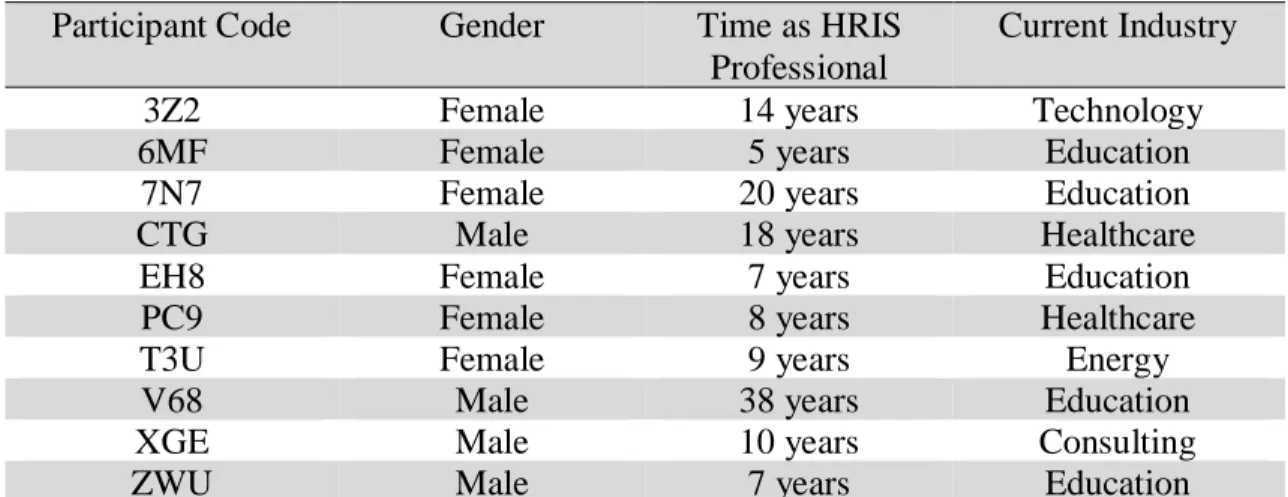
Table 3. Interviewee Demographics ... 58
Table 4.Thematic Categories with Themes ... 61
Table 5.Data Management with Themes and Sub-themes... 61
Table 6.HR/IT Intersection with Themes and Sub-themes ... 77
Table 7.HRIS Emergence with Themes and Sub-themes ... 84
Table 8.Business Intelligence with Themes and Sub-themes ... 93
Table 9.Professional Identity with Themes and Sub-themes ... 100
DEDICATION
To my family, for always encouraging me to try. Thank you for believing in me when at times I didn’t believe in myself.
ACKNOWLEDGMENTS
A very special thank you to my dissertation chair, Dr. Kay Davis. Your expertise, guidance, and patience will never be forgotten. Many thanks to my committee members, Dr. Barbara Mather and Dr. Maria Brahme, for your interest in this project encouraged me to seek answers and rediscover what research means to me. Finally, I would also like to extend my gratitude to everyone who has ever wished me luck in my academic endeavors. Thank you.
VITA
Education
Pepperdine University Class of 2017
Doctor of Education: Learning Technologies
University of North Texas Class of 2012
Master of Arts: Radio, Television, and Film
Baylor University Class of 2008
Bachelor of Arts: Telecommunications
Certification
HR Certification Institute
Professional in Human Resources (PHR) 2012 - present
Society for Human Resource Management
Certified Professional (CP) 2015 - present
Professional
Pepperdine University
Teaching Assistant, Dissertation Success 2015 - 2017
Pepperdine University
Credential Specialist 2012 - 2016
University of North Texas
Assistant Manager, Videoconferencing 2008 - 2012
Powerhouse Animation Studio
2D Animator 2008
XM Satellite Radio
Customer Care Representative 2007
El Paso Community College
Production Assistant to the Media Producer 2006
El Paso Community College
Camera Operator 2006
Mix 92.9
Production Intern 2005
Theoretical Entertainment
ABSTRACT
The increasing implementation of technology applications into the workplace has substantiated the need for adept professionals who can manage HR technology for employees and provide data about the organization. For some companies, these professionals are found within the human resources department. These information systems professionals combine HR knowledge and technology skills to procure applications that improve work processes and HR outcomes.
This qualitative study focused on exploring the role delineation of human resource information systems (HRIS) professionals to better understand the advantageous aspects of the role’s focus in HR technology and analytics. Specifically, the study aimed to describe how the HRIS professional role supports the functions of HR and transformation of HR activities within organizations. Additionally, the research sought to uncover how HRIS professionals described their responsibilities and competencies in response to the significance of data analytics, as well as how the HRIS professionals described the outlook of their professional role.
Ten, semi-structured interviews were conducted with HRIS professionals who reported having progressive HRIS experience within U.S. based organizations. The results included HRIS professionals’ beliefs about their tasks, competencies, and job outlook and thematic analysis resulted in six categories: data management, HR/IT intersection, HRIS emergence, business intelligence, professional identity, and job satisfaction. The conclusions drawn from the research findings indicated that: HRIS professionals encourage HR technology integration to improve workplace processes; HRIS professionals manage data integrity and support the safeguarding of employee information; HRIS professionals run data inquiries and provide reports that influence decision making related to workforce and business outcomes; and HRIS professionals are enthusiastic about emergent job responsibilities in the design and coding of systems.
Recommendations for practice include executive consideration toward improving the visibility of HRIS contributions as a way of strengthening relationships between HRIS professionals and the stakeholders they support. Recommendations also include further investigation into the utilization of analytics in the workplace. This study contributes to the existing literature by providing insight into the opinions of HRIS professionals about their role and interactions within their organizations and recognizes that HRIS professionals consider both people and data when it comes to HR technology implementation.
Chapter 1: Study Introduction
The widespread usage of computerized systems for human resource management (HRM) began in the mid-1960s in response to landmark labor laws regarding equal opportunity
employment and occupational safety and health (Hendrickson, 2003). These decisions required organizations to engage in extensive data entry to remain compliant with laws that required the reporting of employee demographic information. HR technology now provides software solutions to previously costly and time-consuming tasks, including recruitment, onboarding, benefits, and succession planning (Marler, 2009). However, this is a limited scope. Consideration should also be given to the impact that technology has on strategic HR practices.
With the accelerated workflow that technology delivers, HR departments can engage in more meaningful management tasks and strategic planning for the organization. To achieve this, HR generalists and specialists should have access to and be trained on the proper, enterprise grade, platforms that allow them to complete a wide range of HR activities, whenever and wherever. A workforce evaluation by the Society of Human Resource Management (SHRM, 2016d) indicated that organizations are continuously challenged to transform their HR
department to maximize operational improvements. Employee data is of particular importance because this information can draw attention to gaps in an organization’s human capital
performance (Shen, 2011). Bersin (2016) suggests that organizations partake in feedback systems to assess the maturity of various processes. For example, a pro-digital culture can continuously develop technology and communication tools, which organizations can utilize in alignment with business goals. The HR department needs to be aware of the organization’s goals and have the capability to innovate on behalf of the organization in order to make measurable progress toward defined business objectives. Human resources would therefore benefit from a
role dedicated to promoting HR as an essential business asset, an asset aided by technology solutions and predictive analytics.
HR practitioners are discussing the crucial need to add technology expertise to the umbrella functions of the profession. Organizations are urged to uncover important information about their business and take that information to make data-driven decisions about important human capital factors such as hiring, productivity, and talent retention. Since the HR department is responsible for human capital management (HCM) it is arguably the organization’s best functional and divisional entity to collect employee data for analysis. Thus, data collection and metrics are a way for HR to put an organization’s HCM efforts into numerical figures that translate to business and finance acumen (Schein, 2012). Such information is often expressed in the form of an analysis where organizational and industry strengths, weaknesses, opportunities, and threats (SWOT) are assessed in the current workforce climate. Tools such as data reports and rater feedback are then analyzed and become predictors of future organizational needs (Fitz-enz, & Mattox, 2014). In order for HR to take on the role of strategic partner and influence
organizational decision making the department must prove what gains can be made through upgrades to various HR functions.
Several consulting and market research organizations offer HR professionals resources and information on current and projected trends. The Sierra-Cedar HR System Survey (Sierra-Cedar, 2014) sought to identify organizations that gathered the most data for analytical
evaluation of business and management practices. They characterized companies that invested heavily in HR technologies as being “quantified organizations” (Sierra-Cedar, 2014, p. 3), where managers’ access to HR analytics had a significant impact on the organizational return on equity (ROE). Return on equity refers to the profits a company makes on specific capital allocations,
such as allocations toward technology. Quantified organizations saw higher revenue per employee, higher profit per employee, and a 79% greater ROE than organizations that were considered not quantified. Of particular interest are globally structured companies that rated highest in efficiency factors and innovation factors within their organizations. The association between technology adoption and financial gains is demonstrated through the ROE chain; which states that technology influences improved HRM outcomes, which leads to improved business standing within the market and eventually improved financial gains in the form of ROE (CedarCrestone, 2013). Return on equity has been statistically linked to the adoption of HR technology, although this relationship is indirect and not causal (Marler & Fisher, 2013).
HRIS and the Projected Future of Work
Research by Capgemini Consulting (2013) suggested that by 2015, 90% of job positions would require technology skills, especially as new applicants’ first area of contact with potential employers is through the online recruiting and application process. The changing nature of life and work is often attributed to the rapid rate of change in technology. Human resources
managers should be concerned with the increased use of Internet and electronic communication by employees, which should lead to new policies and best practices often outlined by HR departments. By 2020 nearly 75% of the global workforce will be comprised of millennial employees, those often considered to be the most technologically fluent generation who are expecting up-to-date digital services (Bennett, Pitt, & Price, 2012; Deloitte Consulting, 2014). Jobvite (2015), a recruiting platform, found that surveyed Millennials also prefer flexible work, including the opportunity to work from mobile devices. This is also noted in job searches, as 86% of job searches were performed on mobile devices. Organizations are valued through their employees and for demonstrating proficiency in adapting to fluctuations of talent and skillsets
within the workforce. However, the Workforce 2020 survey found that many companies lack the insight to understand the opportunities that emerging generations present, as well as the
increased rate of technology usage and self-efficacy among older generations (Bersin, 2015; Oxford Economics, 2014).
As technology resources becomes an increasing concern for organizational development and employee performance it will be important for companies to take an effective stance on the ways in which employees interact with technology in the workplace, as well as the ways in HR can utilize technology solutions in order to support business goals. Understanding HR
technology, software evaluations, and metrics have never been an explicit competency for HR professionals, but a recent update to the HR Body of Knowledge has suggested an increased emphasis on analytics. Department staffing in HR represents a median ratio of 1.1 full-time employees per 100 organization employees, so difficulty can arise when managing the exponential growth of employee information (Bloomberg BNA, 2015; Zielinski, 2012). The software market has responded by providing talent management support. Now employee self-service (ESS) and manager self-self-service (MSS) applications allow for self-reporting and the handling of other tasks such as those related to benefits and performance reviews. Employees are given access to computer-based applications for the purposes of inputting their personal data into a management system, which assembles data for storage and processing. These services include cloud-based functions that allow employees to engage with the system through various devices and from various locations. Over 30% of core HR functions are now maintained through cloud computing (Bersin, 2013). Organizations produce an enormous amount of content and the information technology (IT) department oversees data storage. However, the relevance of
employee data to the HR department demonstrates the need for collaboration between the HR and IT divisions in order to speed organizational innovativeness.
Talent acquisition is also transforming as employees are leveraging networked and social media recruiting and e-marketing to attract candidates. Similarly, data is being used for talent analytics and future workforce planning by using metrics to estimate and predict trends in hiring, compensation, telework, and retention. Although skills in analytics will be increasingly needed in the next several years only one-third of companies consider themselves to have made good or significant progress in meeting workforce goals (Oxford Economics, 2014). A lack of knowledge about quantifiable metrics, for the purpose of benchmarking, can inhibit HR from developing appropriate business strategies. Additionally, insufficient information may preclude HR’s ability to influence board-level strategy concerning new workplace initiatives and adoptions. For example, between 2012 and 2013 mobile-enabled work increased by 67% (CedarCrestone, 2013). While this is an opportune avenue for improved employee engagement smaller companies have reported that they have no plans for mobile work infrastructure (Sierra-Cedar, 2016).
Hendrickson (2003) defined the human resource information system (HRIS) as various solutions integrated together to gather, store, and analyze organizational information. Therefore, an HRIS professional is the technology point-of-contact for the HR department; a
technologically fluent individual highly invested in the HR mission (Zeidner, 2012). A review of HRIS job postings, sourced from daily Google alerts, for analysts and managers revealed a similarity in typical duties within the following realms: administration, project management, and analytics. Concerning the administrative function, HRIS professionals are in charge of collecting data and maintaining it in standardized formats. With respect to project management, HRIS professionals are tasked with preparing upgrades and enhancements to HRM systems, leading
user testing, and making recommendations for technology policies. Responsibilities surrounding analytics encompass evaluating workflows for improvement opportunities, running queries and reports for the business function, and utilizing mathematical models to interpret raw data and make predictions about human capital needs (Dussert, 2014). A survey by the Information Services Group sought to identify goals of HRIS managers in various organizations. Objectives included speedy implementation of new systems, improved user experience with technology, and identification of data shortfalls in the current organizational design (Sivak & Card, 2014). The HR function can therefore benefit from the HRIS professional, a stakeholder invested in
technology solutions that can enhance organizational procedures and outcomes. However, further discussion is needed concerning why the HRIS professional should calculate people analytics, and why organizations should take predictive analytics into serious consideration.
Statement of the Problem
Upwards of 2.7 million individuals will voluntarily leave their jobs, whereas one in four people will change jobs if they think they can get a better workflow experience at another
organization (Bureau of Labor Statistics, 2016; Deloitte University Press, 2013). This confidence is highest in the technology industry, as two-thirds believe they can find a better experience in 60 days (Universum, 2015). This is an important consideration when a company’s budget is
primarily spent on human capital in the form of recruitment, wages, and turnover costs. Yet, some organizations fail to invest resources to gather and analyze data about their employees as a means to improve HCM decision making. Deloitte Consulting (2014) found that 86% of
surveyed organizations assessed that they did not have analytic capabilities specific to their HR function. Human resource leaders specifically expressed that they often lack resources and qualified team members to make the most meaningful impact on business outcomes.
The report on Human Resources Competency (SHRM, 2012) found that although being a proponent of technology was considered a desirable trait, the perceived impact on HR
effectiveness was only 12%, while the perceived impact of technology on business performance measured 18%. Additionally, the report on Global Human Capital Trends revealed that only 21% of respondents believed that there was a sense of urgency surrounding the trend of HR
technology (Deloitte Consulting, 2014). The intersection between IT and HR can pose problems when IT is not particularly invested in HR solutions. To earn support from executives and other functional areas, a demonstrated need must occur concerning the role of HRIS and its
importance. When HR is unable to defend a technological business strategy with metrics and analytics investment is denied and allocated to other departments within the organizational (Higgins, 2014).
Statement of the Purpose
The purpose of this study is to explore the role delineation of HRIS professionals as contributors to the HCM process. The study considers the evolution of the HRIS professional’s role and responsibilities when implementing technology solutions, specific to the needs of the organization, and their continuing use of organizational and workforce analytics will be
discussed among the study participants. The emphasis of the study is how the HRIS professional represents an IT expert assigned to transform HR departments by expanding the technological efficiency of HCM. As significant contributors to the 21st century HR department, participants from this study will consider technology and analytics as HR competencies and address how the role of the HRIS professional is best implemented within organizations.
Conceptual Framework
This dissertation will address the purpose by looking at practitioner-driven intervention within organizational development through organizational role theory and delineation
(Cummings & Worley, 2015). Specifically, role theory will examine how formally and
informally defined characteristics of HRIS professionals affect their knowledge and capacity to participate actively in use-inspired applications of HR technology. Formally defined
responsibilities are often predetermined and available in the form of posted job descriptions; while informally defined responsibilities can be attributed to the modeling and social interactions that occur within the organizational culture (Biddle, 1986). Within organizations is it important to justify technology spending through curiosity-driven inquiry and mission-oriented research (Stokes, 1997). Accordingly, this study will examine the characteristics of HRIS professionals in the areas of information gathering, planning, analysis, and evaluation. Results will then be
reviewed to comment on the trajectory of the HRIS profession toward use-inspired research. This framework will be useful in determining the characteristics of an expert HRIS professional. For example, the professional can demonstrate high knowledge but fail to carry out action plans. Similarly, a professional who is highly active in implementing applications can see projects fail and resources wasted if they are lacking in professional knowledge and research.
Additionally, Marler’s application of strategic HCM theory will be considered (Sierra-Cedar, 2014). Strategic HCM theory links an organization’s human capital to its competitive advantage. Marler found that when HR is aligned with the business strategy business outcomes will improve. The theory specifically states that the adoption of HR technology is indirectly related to improved business outcomes because of an increased return on equity (ROE). The study participants, HRIS professionals in charge of HR technology, will demonstrate if their
knowledge and activities attest to the HRIS specialty as being an instrumental force in human capital strategy by discussing their past and current experiences within their organizations.
Research Questions
This exploratory study seeks the opinions of HR specialists to forecast the benefits HRIS professionals bring to organizations in order to remain competitive and relevant in the global market. This study posed the following central question and two sub-questions:
• How does the HRIS professional role support the functions of HR and transformation of HR activities within organizations?
• How do HRIS professionals describe the responsibilities and competencies of the role in response to the emergence of big data?
• How do HRIS professionals describe the outlook of their professional role within organizations and the HR profession?
Significance of the Study
A study by McKinsey and Company (2015) found that 31% of executives surveyed found that leadership and talent was limited when it came to digital projects and the speed of digital adoption. This is perhaps an indication of the under representation of the significance of HR technology competency and leadership as being necessary for organizational strategy. HR technology selection and implementation for workplace analytics and strategic planning was low across various industries in comparison to typical technologies for basic automation tasks
(CedarCrestone, 2013).
Sierra-Cedar (2016) expressed that change management represented a challenge within organizations, with only 27% of responding organizations claiming that they promote a culture of change. The field is lacking in rigorous research featuring HRIS professionals discussing
technology concerns. This study will engage HRIS experts in dialogue about how utilizing HR technology and metrics benefit the bottom line. There are publications about how a new system becomes implemented within a particular organization, but there is little guidance about who should lead, maintain, and be a part of the drive for future HR innovations to keep up with continuously evolving technologies. This study aims to fill a gap in the literature concerning the importance of HRIS professionals.
Overview of the Research Design
This study seeks the opinion of HR experts in order to explore the role delineation of the HRIS professional and forecast the benefits to organizations in the competitive market. Semi-structured interviews were conducted with 10 HRIS professionals. Additional details about the methodology and procedures are discussed in Chapter 3.
Definition of Key Terms
The following HR terminology is defined in order to provide clarification for the reader: • Analytics: The examination of data as to deduce relationships from HR metrics into
predictive indicators (Kavanagh, Thite, & Johnson, 2015).
• Big data: Growing volumes of complex information in either unstructured or structured formats, which may be analyzed for patterns and trends (Berman, 2013).
• Competency: Efficient and effective behavior within a specialized domain (Swanson & Holton, 2009).
• Employee/Manager self-service systems (ESS/MSS): Web-based service bundles of enterprise software that allow employees to engage with applications for activities such as updating individual records, submitting timesheets, or accessing training materials (Florkowski & Olivas-Luján, 2006).
• Human capital management (HCM): Processes including recording and analyzing the value of employees as assets within an organization. Organizations can harness the knowledge and skill-sets that employee bring and utilize them in a productive way to reach organizational goals. This also includes measuring employee needs and fulfilling those needs (Baron & Armstrong, 2007).
• Human resource information system (HRIS): A coordinated effort to collect, store, and analyze HR data about an organization. In addition to explicit technology concerns, HRIS influences decisions about HCM for the purposes of strategic planning (Hendrickson, 2003).
• Information technology (IT): As IT infuses into the field of HR it is important to establish the differences in order to eliminate confusion. For the purposes of this study IT
represents the maintenance and integration of specific hardware and software used to transmit data (Taylor, 2004).
• Metrics: Quantifiable measurements related to organizational strengths and weaknesses such as costs, revenue, employee performance, and turnover. Utilized for HR analytics (Fitz-enz, 2009).
• Quantified organizations: Derived from the term quantified-self, which describes using tools to achieve personal goals, quantified organizations are those companies that invest in innovations and regularly analyze metrics to examine their current landscape and to plan for the future (Sierra-Cedar, 2014).
• Software as a service (SaaS): Refers to on-demand applications that run on a cloud interface. (Castro-Leon & Harmon, 2016).
• Strategic planning: Implementation of workplace changes in order to support organizational goals (Pynes, 2013).
• Workforce: Refers to the collection of individuals available for employment. The workforce is especially influenced by social and economic factors, which impact talent (Savitz & Weber, 2013).
Assumptions
A crucial assumption about this study is the need to have HR technology managed by the HR function rather than the IT function. This stance is based on the researcher’s own experience at organizations without dedicated HRIS staff, where technology solutions were heavily
influenced by IT workload and stake in new projects. It is therefore assumed that technology is at the intersection of IT and HR, signaling that a difference exists concerning the perceived
importance of HCM. This study also assumes that HRIS is a necessary component for all organizations regardless of size and industry. It is the researcher’s intent to utilize the interview data to uncover professional opinions about how the participants are applying HRIS principles within various organizational landscapes.
Summary
Demonstrated need for more emphasis on HR technology in the workplace has led to the emergence of the HRIS professional. This exploratory study will examine the duties of HRIS professionals and the future trajectory of the specialty. Chapter 2 presents a review of
organizational literature concerning HR competency, strategic HCM, HR technology, HRIS design, and HR analytics. Chapter 3 provides an in-depth discussion about this study’s research design and data collection procedures. Chapter 4 reports the results of a qualitative study through
interview data. Finally, Chapter 5 provides conclusions based on the research findings and proposes recommendations for future scholarship and practice.
Chapter 2: Review of Literature Overview
HR is continuously described as an occupation in transition. The profession has begun to shift its focus from the transactional activity to the strategic activity (Fitz-Enz, 2010). This evolution relies heavily on information technology because many transactional activities have been characterized as ideal for automation (Bersin, 2017). Efforts and resources can be spent on forecasting and implementing change rather than simply reacting to change. Higher level activities, such as problem identification and data analysis, influence organizational decision making (Bell, Lee, and Yeung, 2006). This demonstration of business intelligence has great potential for keeping HR departments relevant and essential to an organization. Specifically, harnessing the power of technology and employee metrics promotes the strategic positioning of the HR department as an advising entity.
This literature review examines published works concerning the role of HR professionals in advancing technological competency within the occupation. The literature reveals a shift in understanding when it comes to the evolving role of HR and the urgency to utilize new
technologies within the changing work environment. This includes a discussion of the evolution of the HR generalist and recent implications of HR specialties. Noted will be the gap in literature as it pertains to published studies about HRIS professionals as technology specialists. The
chapter begins with a review of HR competencies currently observed within the industry and is followed by discussions pertaining to: strategic positioning, human capital management, HR technology trends, and the benefits of analytics.
HR Competencies
HR generalists are often described as being knowledgeable to the point of providing overall guidance on several functional areas, while specialists develop an in-depth understanding of one particular functional area (Deloitte Consulting, 2016; SHRM, 2016b). SHRM (2017b) described common functional areas of HR and the elements of each. Table 1 summarizes these common functional areas.
Table 1
Diverse Functional Areas of the Human Resources Profession
Human Resources Functions Elements/Responsibilities
Employee benefits Insurance and retirement funds
Business leadership Short and long term organizational goals
Payroll Base pay, incentives, and overtime
Consulting External provider of HR management
Diversity Open and inclusive company values
Employee relations Employer-employee mediation
Ethics and corporate responsibility Sustainability and philanthropy
Global HR Global workforce interaction
Labor relations Unions and contracts
Organization and employee development Change management and succession planning Risk management Safety, security, and loss prevention
Staffing management Recruitment, hiring, and retention
Technology Vendor selection and solution implementation
A study conducted by Cornell University defined a profession as being a full-time career, with a body of knowledge, a national professional association, a credentialing body, and a code of ethics (HR Certification Institute, 2013a). The American Society of Personnel Administration (ASPA), a professional organization, used the aforementioned criteria to establish the profession of HR management and in 1972 formulated the ASPA Accreditation Institute (AAI), which was tasked with compiling a body of knowledge and certification exam pertinent to the HR
Competency models are frameworks that identify necessary capabilities and attributes that a professional should possess, as they are commonly demonstrated capabilities of those who have been identified as high performers (Ulrich, Brockbank, Johnson, & Younger, 2010).
Additionally, competencies can be used as benchmarks when conducting performance evaluation of employees. This drives professional development opportunities so that the professional is aligned with the practice. An examination of research studies reveals attempts to establish HR competency models addressing the areas of HR knowledge, skills, and abilities. For example, Ulrich et al. (2010) stipulated that competencies represented agreed upon industry standards of performance. Brockbank (1999) advocated two concepts for competency, the operational work habit and the strategic business driver. Birchfield (2003) recognized several crucial
responsibilities for the HR professional. These included leadership through management skills, expertise in business intelligence, and the performance management of business outcomes through the use of metrics and analysis. Ramlall (2006) found that strategic contribution, personal credibility, HR delivery, business knowledge, and HR technology were important considerations in the discussion of HR competencies. Ramlall characterized the HR profession as being highly receptive to research and stressed that research be done continuously in order to enhance the practice.
Two recognizable HR competency models include one established by the HR Certification Institute (HRCI) and one established by the Society for Human Resource Management (SHRM). Both have developed a body of knowledge, which is a collection of concepts, skills, and tasks that are regarded as being unique to the professional practice. For the purposes of this dissertation we will understand HR competency based on the HRCI and SHRM list of competencies. SHRM (2017b) states competencies attributed to the profession as
including those that cover functional or practical knowledge and those that cover behavioral characteristics. Whereas practical knowledge encompasses knowledge and policies specific to the tradition of HR, and behavioral characteristics contribute to effective job performance which can be applied to any profession. When the HR practice changes in a meaningful way, the body of knowledge should be updated to reflect new focus. These models indeed strengthen the HR practice, but greater emphasis on HR technology competency and proficiency in analytics would further the profession’s positioning as a strategic partner.
HRCI competency model. The HR Certification Institute (HRCI), formerly the AAI, initiated six functional standards committees to define the body of knowledge for: employment and personnel planning; training and development; compensation and benefits; risk management; employee and labor relations; and management practices (HR Certification Institute, 2013a). Examinations covering these areas were first administered in 1976 (HR Certification Institute, 2013b). The accreditation program continues today with over 500,000 professionals certified worldwide (HRCI, 2017b). Emphasis is placed on high professional distinction and career commitment, as certification requires documented HR experience, formal education,
examination, and ongoing professional development. The exams are designed to distinguish mastery of HR practices and policies for use in real-world applications. The National Commission for Certifying Agencies, an accrediting body of the Institute for Credentialing Excellence, granted accreditation to the HRCI’s examinations based on the Standards for Accreditation of Certification Programs (HR Certification Institute, 2013c). HRCI (2017a) describes current HRCI Certification Exams. Table 2 lists the available certifications from the HRCI.
Table 2
HRCI Certification Exams
HR Certification Exam Focus
Associate Professional in Human Resources (aPHR)
Knowledge of foundational Human Resources Professional in Human Resources (PHR) Technical and operational aspects of HR
management and program implementation Professional in Human Resources –
California (PHRca)
Laws, regulations, and HR management practices unique to the state of California Senior Professional in Human Resources
(SPHR)
Strategic and policy-making aspects of HR management
Global Profession in Human Resources (GPHR)
Multinational HR, including strategies of globalization growth and development Professional in Human Resources –
International (PHRi)
Professional-level competency for internationally based practitioners Senior Professional in Human Resources –
International (SPHRi)
Senior-level principles in strategy and policy for internationally based professionals HRCI (2017a) states that the body of knowledge covering HRCI certification is revised every five years. To remain in good standing HRCI recertification is required every three years through reexamination or demonstrated professional development through: continuing education, job activities, research and publishing, instruction, and leadership. The weighting of the exam, by functional area, is as follows by the most commonly earned certifications, the PHR and SHPR respectively (a) Workforce Planning and Employment (24% and 17%), (b) Employee and Labor Relations (20% and 14%), (c) Compensation and Benefits (19% and 13%), (d) Human Resource Development (18% and 19%), (e) Business Management and Strategy (11% and 30%), and (f) Risk Management (8% and 7%). The SPHRi certification is unique in that it is the only HRCI certification with a designated functional area specific to employee performances measures (a) HR as a Business Leader (32%), (b) People Development and Talent Management (29%), (c) HR Service Delivery (23%), (d) and Measurement (16%).
SHRM competency model. The Society for Human Resource Management (SHRM) is a professional member association founded in 1948 as the American Society for Personnel
Administration (SHRM, 2016a). It is the largest HR membership organization with over 275,000 members worldwide. SHRM provides members with both professional development and
networking opportunities. The society also engages in research to advance the profession in response to the evolution of the business environment. In 2010, SHRM developed an evidence-based competency model grounded in data from university research initiatives and corporate assessments. The model identifies the foundational skills that HR professionals need for business success. The model was published in association with the American National Standards Institute and the International Organization for Standardization in order to establish professional HR standards (SHRM, 2016c). The model applies to all HR professionals and is inclusive of career level, job function, and industry. The model emphasizes eight behavioral attributes: business acumen, critical, evaluation, global and cultural effectiveness, leadership and navigation,
consultation, communication, relationship management, and ethical practice as skills that all HR professionals need (SHRM, 2012). Knowledge about specific HR polices was also identified in the model as functional expertise.
In 2012, a content validation study was conducted to confirm the SHRM Competency model. Over 32,000 HR professionals, deemed subject matter experts, completed the surveyed. The respondents selected their career level (entry, mid, senior, executive) and were then asked to rate the importance of each competency and its requirement upon entry into the practice.
Respondents were also grouped by: (a) the size of their organization, specifically, small,
medium, or large; (b) the sector, whether not-for-profit, non-profit, public, or private; and (c) the operation, whether domestic or multinational. The ratings scale (not important, minor
importance, important, critical) established if the competency was effective to HR job
performance. The requirement for entry (not required at time of hire, required at time of hire) established if the competency was an essential characteristic of a new hire.
Through this study SHRM identified a sub-competency, or an expanded definition, concerning business acumen. Specifically, the study found that technology usage to solve
business problems was rated as being important, but it was not rated as being a requirement for entry into the profession. The results of the content validation study found that the majority of the participants rated all nine competencies as important or critical to the success of HR
professionals and that each was required for entry into the profession. There was no significant difference in the ratings across organization size or industry. This combined with the large sample supports the applicability of the model to the entire HR profession.
A criterion validation study of the model was also conducted by SHRM (2014). The sample included more than 1,500 HR professionals and their supervisors for the purpose of establishing that being proficient in the identified competencies indeed lead to successful job performance. The results found that the eight behavioral competencies were better indicators of successful job performance than the functional competency of HR knowledge. The competency model and subsequent content and criterion validation studies informed the SHRM Body of Competency and Knowledge resource. This resource outlines the framework for SHRM
sponsored professional certification. Two competency-based examinations are available as a way for professionals to demonstrate high-level knowledge and skills in order to obtain certification. These certifications were implemented in 2015. The Certified Professional and SHRM-Senior Certified Professional examinations test knowledge items and evaluate situational judgment. The knowledge items assess the professional’s understating of factual HR
information, while the situational items assess decision making skills, drawing heavily from the behavioral competencies. The weight of each competency varies between the certified
professional and senior certified professional distinction. Whereas certified professionals are recognized as those performing operational HR functions, and senior certified professionals are characterized as those HR leaders who lead the practice by developing strategies to align the function with organizational goals. As of 2017, SHRM has certified over 100,000 professionals (SHRM, 2017a). Exams are updated several times a year to reflect changes in HR law. SHRM plans to conduct a new competency survey to update their 2012 competency model and body of knowledge resource.
Human resource competency study. The Human Resource Competency Study (HRCS) reports on areas of inquiry that the HR profession should direct its focus toward. Most recently the HRCS has noted stakeholder concerns over technology developments, globalization, and workforce demographics. Initiated by the RBL Group (2015), the HRCS surveyed over 30,000 respondents from over 1,5000 organizations around the world. These stakeholders were
identified as HR associates and non-associates. The goal of the study was to define what it means to be a high performing HR professional, and what strengths HR could promote among its
professionals to propel HR into the future as an asset to business performance. This global study surveyed stakeholders including external customers, investors, communities, regulators, line managers, and employees, to identify competencies that their HR professional should possess. The survey is unique in that the value of HR professionals is realized through stakeholder opinions about HR expertise, accumulated knowledge, and behavioral traits which contribute to business success.
Seeing the HR professional and their activity as representative of the entire department, stakeholders were asked to evaluate the activities of their HR point-of-contact. Evaluation of four activity domains included (a) employee performance: HR responsibilities that engage employees in professional development, (b) integration: HR activities that support strategic innovations to business problems, (c) information management: HR’s ability to manage information flow into
the organization for business decisions, and (d) analytics: HR’s ability to keep metrics and report
findings to the stakeholder. The study revealed that although all competencies were important for HR professionals to possess, some competencies where not as revered by certain stakeholders. The study found that integration practices had the most influence on value creation for
stakeholders within the organization, while information management had the most influence on value creation for external stakeholders, such as investors and customers of the organization.
The studied emphasized nine competencies that added to the business value of HR. The seventh iteration of this HR competency model empirically defined the characteristics of the HR professional and their impact on business performance, as seen through the stakeholder’s
determination of value that the HR professional brings to the stakeholder’s activities. The researchers are keeping track of the changes in perceived competency per iteration of the study. A noted focus of the seventh round concerned how HR enabled organizational capabilities involving information, collaboration, innovation, risk management, strategic clarity, talent, and change. Additionally, there was a search for cause and effect indicators between HR practices and business performance metrics.
Nine key traits were identified (a) strategic positioner, (b) culture and change champion, (c) human capital curator, (d) total rewards steward, (e) credible activist, (f) technology and media integrator, (g) analytics designer and interpreter, (h) compliance manger, and (i) paradox
navigator (RBL Group, 2015). The model identifies three core competencies and six HR
enablers. These enablers were competencies that either drove the business strategy (organization enablers) or helped to deliver strategy (delivery enablers). The study found that stakeholders viewed HR professionals as having the dual role of being knowledgeable about the
organization’s business activities, while also focusing attention on managing employees through the proper employment practices. HR professionals were to audit organizational activities and respond to necessary changes by taking appropriate internal actions in order to serve employees.
Two new competencies identified in this iteration of the study where the traits of being a credible activist and paradox navigator. In order to solve business problems a credible activist needed to successfully reconcile an organization’s capacity for change with an appropriate rate of change. This capacity building entailed strengthening skills, processes, and resources, that the organization needed to adapt. The understanding of the internal and external influences of technology offered a significant opportunity to achieve such capacity building. Finally, the
paradox navigator was identified as an HR professional’s ability to address tensions within the
business as it relates to the organizational structure, operations, and mission. The professional should be able to offer solutions to overcome such challenges.
The Strategic Positioning of HR
The HR profession is concerned with the ways in which to expand the view of HR departments as being value centers instead of costly service centers. Ulrich, Younger, and Brockbank (2008) insisted that the HR department is not a separate business entity within the organization but actually works to complement the business department. For example, by presenting the executive body with ways in which to increase profits, decrease costs, focus investments, and impact efficiency and productivity from employees. Additionally, the hierarchy
of HR activities was defined. First, basic operations and day-to-day tasks associated with administrative activities that can be automated, such as payroll and benefits. Next, general operations, such as the development of information systems, compliance, and regulatory guidelines. Lastly, strategic activities such as talent management and development.
Bersin (2013) defines strategic outcomes as achieving improvements in end-results such as operational efficiency, improved employee engagement and satisfaction, retention, and branding. Before this emphasis toward strategic partnership, HR was often reacting to change instead of predicting change concerning 21st century nuances in culture, technology, economy, and workforce demographics. Smaller organizations and startups are mostly concerned with daily operational needs. As organizations expand they become more reliant on strategy and require a responsive HR department to deliver results. Unfortunately, some HR departments allocate less than 15% of its efforts to strategic activities. Those HR departments that do leverage strategy achieve the most value. Strategy is useful for all organizations regardless of corporation size and industry, but smaller organizations do run the risk of being stuck in the operational stage.
Transitioning from operational duties to strategic activities has been a major
consideration for the HR practice (Vosburgh, 2003). This includes integrating those day-to-day activities into the strategic vision so that HR elevates to a high-impact profit center that
contributes to the organization’s bottom line (Mercer, 2002). However, HR is not measured in the monetary and therefore it can be difficult for the executive body to recognize HR’s value (Righemer, 2002). Instead, HR is about advocating for an organization’s greatest assets, its employees. Evidence suggests that a relationship exists between employee development and organizational strategy. Key components of HR strategy therefore include identifying the
training and development needs for employees so that the organization’s workforce is kept current. This requires that HR department to be agile and adaptive.
Rowden (1999) stressed that strategy and business competency is imperative to managing business uncertainties. Collins (2001) assessed that strategy must be considered in order to elevate an organization to a high-level of sustainability and competitive advantage. Through this vision the role of HR has become supportive and representative of the organization’s mission and culture, which encompasses the values and desired behaviors of the organization and employee engagement and satisfaction. The argument for HR to transform into a strategic partner is also supported by the opinion that everything which occurs in executive meetings relates to the HR function and not having a seat at the corporate table becomes a disservice to the organization (Ulrich, Schiemann, & Sartain, 2015).
HR departments can struggle to be seen as valuable and often face criticism concerning an inability to handle human capital concerns (Bersin, 2015). Organizational opinion about HR is tied to the current economic conditions and when conditions are bad HR is not seen as being particularly business savvy. If this continues HR could loose credibility as a strategic partner due to the failure of aligning HR activities with business goals which support the business’s
competitive advantage (Lawler, & Mohrman, 2003).
In an attempt to demystify the negative opinion that executives and employees hold against the HR department Ulrich (2012) proposed four steps toward strategic transformation and fluency: (a) assessment of the organization’s current state and understanding why the
environment is the way it is; (b) visualization of a future state by defining desired outcomes; (c) formulation of HR redesign, including technology redesign, for improved work processes; and (d) execution of the strategy and further adjustments to achieve desired outcomes. Further, the
effectiveness of an organization ultimately depends on talent and knowledge management to curate information, change management to battle uncertainty, and capability building to remain competitive within an industry. Professionals who can set the strategy agenda and properly
execute those activities into action are known as strategic positioners (RBL Group, 2015). Kotter (2012) expressed that credibility as a champion of change was essential to getting people
invested in the transformation. Credibility is related to trust and is necessary for influence when trying to alter behavior, especially when it comes to human capital curation.
Managing Human Capital
Information management literature has found that there is indeed value with aligning human capital capabilities with the organizational strategy in order to achieve desired business outcomes (Manuti, 2014). Within organizations, human capital is valuable but is ever changing and the management of information and distribution remains ongoing. Manuti described human capital as a foundational component of an organization, a resource that is difficult to replicate. Whereas human capital is defined as the knowledge, habits, and personality attributes that employees bring into their organization. Human capital is also characterized as networked knowledge, where the large amounts of captured data provide a visual representation of how knowledge is distributed, scalable, organized, and adaptive. Nahapiet and Ghoshal (1998) reinforced the notion of networked knowledge by characterizing it as social capital, where the value of personal connections affects the dissemination of knowledge and influence. This cross-departmental information sharing is a way to improve organizational efficiency when
stakeholders share complementary business goals. It is essential to understand that HR controls the human capital that comes into an organization and that HR is responsible for what happens next. Human capital management (HCM) is a strategic business function impacting employee
performance as it relates to information collection, dissemination, and creation (Feng, Chen, & Liou, 2004).
In 2014, half of the top 50 companies were talent based, verifying the shift in the business environment from a manufacturing economy to a knowledge based economy (Martin, 2014). Literature has cited employee talent as a significant resource to organizations. This reimagining of employees as commodities and assets, rather than costs, supports an understanding that human capital has a unique influence on an organization’s bottom-line. The investment in human capital does consist of various costs for wages, benefits, training, technology, and outsourcing.
However, these costs should be considered an investment toward enhancing the value of the employees.
Firestone and McElroy (2003) suggest three levels of knowledge management within organizations. Level one represents a platform for e-document storage and retrieval. Level two allows for the creation of new knowledge sources among employees. While the third level
represents an embedded process of knowledge management that the entire enterprise depends on. Rosenberg (2001) identified knowledge management activities to include the creation, archiving, and sharing of information throughout the organization. An important question for organizations to answer is whether or not knowledge is transparent within the organization. Information systems arrange knowledge in such a way that can easily accessed by employees. Knowledge capital is thus the asset of information and is an essential component of human capital. Organization behavior theories identify knowledge management as a positive organizational behavior (Luthans, Youssef, & Avolio, 2007).
Firestone and McElroy (2003) also stated that knowledge management occurs at two levels: micro (individual employees) and macro (organization/enterprise). It benefits the
organization to take stake in their employees’ knowledge and determine the best mechanisms, formal or informal, toward learning. Rosenberg (2001) classifies learning within organizations as the acquisition of knowledge and new skills in order to enhance job performance. Concerning knowledge creation, HR should use performance measures to identify the type of talent that is missing from the organization as well as determine deficiencies in knowledge. Further, it has been accepted that a conclusive relationship exists between an individual’s job performance and the overall performance of the organization. Therefore, HR should take the lead in implementing targeted professional development trainings and reward incentives. Bower (2007) described how this talent strategy affords HR departments the option to customize how training content is delivered to employees for enhanced learning, such as through an on online platform where learning and development is centralized, otherwise known as a learning management system (LMS). Learning modules, online simulations and demos, as well as synchronous and asynchronous webinars also contribute to knowledge management. Additionally, social networking and online spaces where employees can collaborate and have discussions are mechanisms to keep employees engaged in learning. Deloitte Consulting (2014) found that organizations which are good at encouraging learning have higher employee retention. The Corporate Executive Board reported that 1 in 3 organizations identified their talent strategy as effective, while only 1 in 10 organizations identified their talent strategy as mature and
integrated (Orler, 2015).
Knowledge management is not a single event but an ongoing process that occurs throughout a professional’s employment lifecycle from recruitment, to retention, to the employee’s exit for the organization (Ulrich et al., 2015). The transfer of knowledge among employees occurs through: training/cross-training; mentoring/shadowing programs; skills
transition/succession planning; multigenerational work teams; diverse work teams, and the knowledge base. The knowledge base being a database where end-users can access documents and learning for problem solving (Hendrickson, 2003). Learning management is thus enabled through a successful system of delivery.
Argyris (1977) presented a definition for organization learning as the detection and correction of error. Senge (1990) found that teams within organizations learn through innovative and coordinated action, as well as through disseminated learning by being members of multiple teams and sharing knowledge. Senge also discussed the nuance between what it means to engage in organizational learning and being defined as a learning organization. The learning
organization is sprouted when organizational learning is structured and collaborative and creation is a common activity and continuously expansive. Easterby-Smith (1997) reconciled theory versus practice by stating that organizational learning concerns how organizations learn as a collective, while knowledge management asks how organizations can harness this learning to improve business outcomes. Garvin, Edmondson, and Gino (2008) further explained that the desired outcome of organizational learning was for companies to become learning organizations. Where a learning organization is capable of the acquisition, creation, and transference of
knowledge and essentially becomes quick enough to modify its behavior and processes as needed. In order to achieve performance improvement, HR must manage the quality of knowledge being shared (Martin, 2014). Unfortunately, organizations can experience “brain drain,” the loss of knowledge and experience due to the loss of employees (Deloitte Consulting, 2014, p. 76). Retirement, job change, and downsizing, all lead to gaps in knowledge.
Discrepancies between organizational goals and the current results is an indicator that change needs to occur. Bhattacharya and Wright (2005) addressed the phenomenon of a valuable
human capital asset that becomes inherently unsustainable due to poor HCM practices. Research literature has questioned the ways in which HR can fulfill gaps concerning learning management. Paré and Tremblay (2007) discussed that high-involvement HR practices mediates high-turnover. However, this is dependent on establishing a sense of urgency about intervention. In general, organizational development is centered around responding to the business environment and leads to incremental shifts in organizational behavior, while change management is strategic and value centered concerning the people within the organization (Kotter, 2012). The principle of change management introduced intervention practices to address big picture shortcomings of traditional organizational development practices. Strategy associated with change management impacts the system and structure leading to major shifts.
Literature stresses that human capital needs to be measured and further analyzed so that the organization is aware of what is occurring and can gain control over unprofitable situations. This analysis includes assessing the return on investment into human capital solutions
(Bhattacharya & Wright, 2005; Fitz-enz, 2010). The innovative use of knowledge management platforms leads to the diffusion of information and increased job performance, and is therefore a profitable business outcome. Gardner Research found that the largest gaps in the HCM process are strategic HR skills transformation and HCM technology (Lindquist, 2015). However, top organizations and high-performing companies are already using HCM technology. Additionally, 71% high preforming companies use analytics, while only 49% of average performing
organizations use analytics (Clements, O’Connor, & Schramm, 2015).
Organizational change remains an ongoing topic for investigation for the HR profession. Since HR must support its customers (i.e., the employees) conversations need to be raised about how organizations succeed or fail at promoting learning. Additionally, HR should be considered
a high-value asset for organizations since they are responsible for the overall human capital asset. Ultimately, the organizational culture will identify the collective interests shared between employers and employees. The organization accomplishes its goals, while the employee gains valuable skills and experience.
Human Resources Technology
The SHRM Foundation (2015) gauged that HRM is increasingly more technology based due to the need to streamline procedures in order to reduce administrative and compliance costs. When operational activities are automated HR can focus on advanced work, such as devising new HR strategy and revamping organizational practices. Research supports that organizations achieve a competitive business advantage when they adopt an appropriate HR technology structure. Researchers also emphasized that effective HR technology solutions will provide a return on investment. Concerning the current state of HR technology, a report from TSCIU (2015), an HCM software vendor, reported that 59% of mid-sized firms surveyed planned on investing in HR technology during 2015. Market Research Media (2014) predicts that the HR software market will be worth $9.2 billion by 2020. As the average iteration of HR technology is nearly 5 years old, it is predicted that organizations are currently in the market to upgrade and expand their technology.
An inventory of all HR software and hardware currently used within an organization aids in the evaluation of the features offered and known limitations of these technology solutions (Orler, 2015). New technologies and applications are to be scrutinized for the ways in which they improve the current workflow, while current solutions need to be evaluated for adaptability and expansion capabilities in order to address future needs. These considerations allow for the overwhelming number of application options to be narrowed. Similarly, consideration must be
made concerning the type of HR technology adopted within an organization. The organization might be in need of a single product, such as a talent acquisition software which allows potential hires to apply online and lets hiring managers quickly identify compatible hires. Or the
organization might be in need of a comprehensive HRM/HRIS product, which offers a software suite of solutions that includes base applications for HR functions (e.g., Administration, Payroll, Benefits, ESS/MSS, and Recruitment).
A review of popular HR software reveals three general categories of supported functions: basic core, general strategic, and integrated. Daily operational and core activities include the curation of employee and manager self-service systems (ESS and MSS) through software such as Kronos for time keeping, or ImageNow for content and documentation management
(Florkowski, & Olivas-Luján, 2006). These systems allow employees to input and edit their own information, such as demographic and tax information, electronically. The automation of HR tasks translates to less time spent on overseeing minimal tasks. Strategic HR activities are related to employee management and include applicant tracking and onboarding. These activities are supported by such software as Taloe and PeopleSoft. Other strategic tasks include tracking learning and development and performance. These next generation HR software solutions emphasize human capital management. Finally, integrated information technology applications allow for the exchange of information throughout the enterprise and aid in providing solutions for major concepts such as resource planning, knowledge management, and group
communication (Barua, Ravindran, & Whinston, 2007). Marketed as HRMS or HRIS packages these integrated applications offer a complete, end-to-end solution. Various departments within an organization can have different IT software systems and technology hardware to satisfy functional needs, however this can be challenging for knowledge management when various
departments are using different, or incompatible solutions. A homogenous system, (i.e., HRIS) is more beneficial in order to manage inconsistencies between technologies and applications. The planning and design of a HRIS considers all levels of end-users and offers close to real-time efficiencies in the workplace.
Most recently, conversations about collaborative efforts of virtual and global work teams has influenced the increased adoption of mobility tools. Where social learning includes the utilization of collaboration technology within the organization to promote sharing and feedback, while mobile applications help workforce productivity. Matos (2015) cites that work has become flexible, moving from the office, to home, and now to wherever the employee chooses to be. Additionally, 67% of employees engage in occasional telework, while 38% engage in regular telework. Workplace flexibility has become an attractive advantage that top talent considers when searching for employers.
The need for better employee engagement has led to other unique solutions. For example, in recent years a growing interest in the gamification of HR tech has impacted employee
engagement (Larkin, 2017). Upwards of 2,000 organizations already utilize a gamified
application in the workplace (Meister, 2012). This includes the digital badge phenomenon for job skill recognition. Additionally, when it comes to employee benefits and compensation HR can issue health and wellness challenges, through digital engagement, that reduce overall insurance costs for the organization.
Concerning technology adoption among employees, literature addresses an organization’s need to innovate or perish. Organizational behavior theories indicate strong responses to external threat factors within the business landscape that result from vendor promotion, government policies, and competitive pressure within the industry (Silverstein, Samuel, & DeCarlo, 2012).