Enclosure G
Kingston Hospital NHS Foundation Trust – Trust Board – Part 1 – March 2014
Operational Plan 2014/15 – 2015/16 Trust Board Meeting
Part 1
Item: 8.1
26th March 2014 Enclosure: G
Purpose of the Report: To present the Operational Plan 2014/15 – 2015/16 for approval prior to submission to Monitor by 4th April 2014
FOR: Information Assurance Discussion and input Decision/approval
Sponsor (Executive Lead): Rachel Benton
Author: Rachel Benton
Angela Clarke
Author Contact Details: [email protected]
Tel 020 8934 2880
Risk Implications – Link to Assurance Framework or Corporate Risk Register:
N/A
Link to Relevant Corporate Objective: N/A
Document Previously Considered By:
Annual Planning Steering Group – 17th February 2014
Executive Management Committee – 19th February 2014
Finance & investment Committee – 27th February 2014
Council of Governors Strategy Group – 4th March 2014
Council of Governors Committee - 11th March 2014
Recommendation& Action required by the Trust Board :
1) To approve the Operational Plan 2014/15 – 2015/16 prior to submission to Monitor 2)
Operational Plan
2014/15-2015/16
Operational Plan for 2014-16
This document completed by (and Monitor queries to be directed to):
The attached Operational Plan is intended to reflect the Trust’s business plan over the
next two years. Information included herein should accurately reflect the strategic and
operational plans agreed by the Trust Board.
In signing below, the Trust is confirming that:
The Operational Plan is an accurate reflection of the current shared vision of the Trust Board having had regard to the views of the Council of Governors and is underpinned by the strategic plan;
The Operational Plan has been subject to at least the same level of Trust Board scrutiny as any of the Trust’s other internal business and strategy plans;
The Operational Plan is consistent with the Trust’s internal operational plans and provides a comprehensive overview of all key factors relevant to the delivery of these plans; and
All plans discussed and any numbers quoted in the Operational Plan directly relate to the Trust’s financial template submission.
Approved on behalf of the Board of Directors by:
Name
(Chair)
Sian Bates
Signature
Approved on behalf of the Board of Directors by:
Name
(Chief Executive)
Kate Grimes
Signature
Approved on behalf of the Board of Directors by:
Name
(Finance Director)
Simon Milligan
Signature
Name Rachel Benton
Job Title Director of Strategic Development
e-mail address [email protected]
Tel. no. for contact 0208 9342880
4 | P a g e Contents 1. Executive summary ... 6 Strategic context ... 9 2. 2.1 National context ... 9
2.2 Local health economy ... 9
2.3 Local commissioning intentions ... 10
2.4 Summary of challenges ... 12
Overview of strategy and key plans ... 13
3. 3.1 Vision and service strategy ... 13
3.2 Strategic objectives and supporting plans ... 14
Quality plans ... 16
4. 4.1 Quality strategy ... 16
4.2 London Quality Standards ... 16
4.3 Dementia strategy ... 17
4.4 Performance ... 17
4.5 Francis, Berwick and Keogh ... 19
4.6 Patient and public involvement ... 19
4.7 Board assurance ... 19
Operational requirements and capacity ... 21
5. 5.1 Demand Pressures and Activity Forecasts ... 21
5.2 Physical capacity ... 22
5.3 Demand risks and management plans ... 23
Productivity, efficiency and CIPs ... 24
6. 6.1 Overview of the Trust’s productivity programme ... 24
6.2 Governance ... 24
6.3 Cost improvement programme profile ... 25
6.4 Transformational schemes ... 26
6.5 Enablers ... 27
6.6 Quality Impact ... 27
Financial Plan ... 28
7. 7.1 Income and expenditure projections ... 28
7.2 Costs ... 31
7.3 Capital plans ... 33
7.4 Balance sheet two year projections ... 34
7.5 Liquidity ... 35
5 | P a g e
7.7 Downside risks and mitigations... 35
Workforce ... 36 8. 8.1 Strategy ... 36 8.2 Workforce Plan ... 36 8.3 Workforce challenges ... 37 Glossary of Terms ... 38 9.
6 | P a g e
1. Executive summary
Kingston Hospital is a single site, medium sized DGH, located within Kingston-Upon-Thames in South West London. The Trust provides services to approximately 320,000 people locally on behalf of its main commissioners, including Kingston, Richmond, Wandsworth, Merton and Sutton Clinical Commissioning Groups (CCGs) in South West London and Surrey Downs CCG (East Elmbridge locality) in Surrey. In the last year the Trust saw over 113,000 patients in A&E, undertook 355,000 outpatient appointments and cared for 65,000 admitted patients with consistently low mortality rates. The Trust has a popular maternity unit delivering nearly 6,000 babies per annum and rated best in London by mothers again this year in the CQC maternity survey. As well as delivering services from the main hospital base, the Trust delivers ambulatory services at a range of community locations in partnership with GPs and community providers.
The Trust aims to be at the leading edge of the changes that are necessary for DGHs to be successful in the future. It plans to deliver innovative models of care to provide high quality treatment 24/7 for acutely unwell patients, with core acute services increasingly delivered by consultants, ensuring mortality rates remain in the top 10% of the best performing comparable sized hospitals nationally. Through implementation of the Trust’s dementia strategy it will become an exemplar site for dementia care over the next 5 years, responding to the age profile of the local population.
The Trust will also deliver planned services, providing care for those patients whose illness requires more intervention than can be provided by a GP but who do not require specialist care. Services will be high throughput with low complexity and variability. Planned care will be provided in the most appropriate hospital setting, with more activity being undertaken on a day-case and outpatient procedure basis.
Integrated community services will require the Trust to support primary and community care to ensure that patients are treated closer to home where possible. A key vehicle for this will be the Better Care Fund. The Trust will also continue to develop hospital outreach services at a variety of sites, including new sites such as Raynes Park and Surbiton Health Centres.
This strategy will be underpinned by strong partnerships, with the Trust working in networks to deliver seamless care to patients across organisational boundaries and working closely with all partners on pathway redesign to transform care so that it is truly integrated. It will also be underpinned by the use of IT with the Trust maximising the use of technology to enhance the quality of service provision and communications across hospital departments and with GPs and patients.
The Trust’s vision is underpinned by four strategic objectives. Key plans to support the delivery of these objectives over the next two years are summarised below:
Our Vision:
‘To be the hospital of choice for our local community, recognised for excellent and innovative emergency, surgical, acute medicine and maternity services, delivered by caring and valued staff’.
7 | P a g e Strategic Objective 1: To ensure that all care is rated amongst the top 20% nationally for patient safety, clinical outcomes and patient experience
The Trust will focus on achieving delivery of the London Quality Standards. Over the past two years the Trust has made significant progress and is now close to achieving the standards in most areas. This follows investment in A&E consultants, acute care physicians, an additional general surgeon, enhanced consultant cover in maternity and formalisation of interventional radiology and endoscopy out of hours rotas. These actions have significantly improved the level of care available to patients out of hours which will be strengthened by further consultant appointments, the roll out of clinical documentation and e-prescribing and continued focus on improving the quality of care on the wards across all hours of the day and days of the week. Whilst the Trust will continue to move towards the delivery of the standards in maternity, changes in the configuration of services across SW London will be required to enable these to be fully achieved at any site.
The Trust intends to be an exemplar site for dementia care, responding to the demographic needs of its local population. Following extensive stakeholder engagement during 2013 the Trust has developed an aspirational strategy to reshape the way it cares for dementia patients, working with patients, carers, staff and other partners to provide consistently high quality dementia care focusing on five key priorities: early diagnosis, excellent clinical treatment and care; positive relationships of care; involved and supported carers, active days and calm nights and; environments of care.
Another way in which the Trust will improve the quality of care for patients is through the implementation of its estates strategy. This will significantly enhance patient experience through refurbishment of outpatients, expansion of A&E, replacement of windows and refurbishment of ICU and theatres in Esher Wing, expansion of the Sir William Rous Unit and the redesign of the main entrance. The implementation of the estates strategy will also enable the Trust to respond to any future changes to the configuration of services in the local health economy, through the expansion of A&E and the creation of a future development site in the centre of the hospital campus following the relocation of services from the command centre.
The Trust also plans to improve patient engagement, including more use of electronic mechanisms and increased availability of information to patients and the public, particularly in relation to staffing.
Strategic Objective 2: To have a committed, skilled and highly engaged workforce who feel valued, supported and developed and who work together to care for our patients One of the Trust’s key plans in support of this objective is the embedding of Service Line Management, introduced in 2013, to strengthen the engagement of staff across the organisation.
The Trust will also develop and deliver training to support administrative staff to provide excellence in customer care, with improvements in Friends and Family Test results and reduced complaints about staff attitude or behaviour
A reduced need for agency staff will be achieved by strengthening the bank and reducing turnover.
8 | P a g e Strategic Objective 3: To work creatively with our partners (NHS, commercial and community) to consolidate develop sustainable high quality care as part of a thriving health economy for the future
The Trust will work closely with partners in the local health economy to develop the five year plan for South West London. The Trust is well positioned to facilitate solutions given its track record on quality and its ability to expand services if required.
The Trust will continue working with commissioners and other providers to develop further and deliver the Better Care Fund plan, including the implementation and development of plans in Kingston for multi-provider teams working across organisational boundaries to provide co-ordinated assessment and care to defined populations with the highest care needs.
There will be continued focus on the pursuit of opportunities for growth to support future sustainability, including the further development of outreach services, responding to tender opportunities such as the provision of services at the Nelson Hospital in West Merton and the refreshing of the private patient strategy with BMI.
Partnership working with other providers to deliver benefits to patients and support sustainability will continue, including the implementation of new arrangements for the delivery of pathology services across Kingston, St George’s and Croydon Hospitals from April 2014.
The Trust will also continue to develop and embed the full involvement of the community in the running of the hospital through members’ events and engagement and through the delivery of the volunteering and fundraising strategies.
Strategic Objective 4: To deliver sustainable, well managed, value for money services The Trust will build on the consistent and strong financial performance of recent years and is planning to achieve a surplus of £2.6m (1.1%) for 2014/15. The level of surplus reduces to £1.5m in 2015/16 as a result of the additional challenges posed by the Better Care Fund, the re-procurement of CRS which requires revenue funding and the start of the additional interest charges from the loan to support the estates strategy. The Trust’s plans for 2016/17 are to increase the surplus back up to at least the 1% level.
To support the expenditure plan the Trust will need to deliver a Cost Improvement Programme (CIP) of £9.0m in 2014/15 and £10.2m in 2015/16 and plans have been developed to support this requirement and ensure resilience, particularly in 2015/16 which will be a challenging year for all NHS Trusts. The Trust has a track record of successful CIP delivery over the past five years, demonstrating capability and readiness to meet the challenges of future years.
The Trust is planning basic capital expenditure of £7.2m for 2014/15 and £7.5m for 2015/16, in line with depreciation. In addition, it is planning a further £9.2m of capital investment in 2014/15 and £4.8m in 2015/16 to deliver the key initiatives outlined in the recently agreed estate strategy. The Trust is working up the individual schemes underpinning the strategy and discussing the financing options with the Foundation Trust Financing Facility (FTFF).
Cash remains broadly stable at £8m over this period. This level of surplus combined with other metrics maintains a Continuity of Service Rating (COSR) of 3.
The Trust will also be refreshing its five year strategic plan during 2014/15, developing plans for longer term sustainability.
9 | P a g e
Strategic context
2.
2.1
National context
Operating Framework
A provider efficiency requirement of 4% for 2014/15 and 4.5% 2015/16 has been identified. CCG uplifts have been notified with the Trust’s main CCGs receiving the following: Kingston CCG 3.7%, Richmond CCG 2.83% and Surrey Downs 2.14%. These factors have been taken into account, alongside commissioner QIPP and the Better Care Fund plans, in determining the productivity challenge at the Trust over the next two years, with a CIP requirement of at least 5.9% identified for each year.
Education procurement changes
There are changes proposed to the rate of education placement funding through Multi Professional Education & Training (MPET) and the number of medical training places commissioned overall is expected to reduce nationally. The Trust has therefore assumed a 2.5% reduction in education training income in its planning. There is a potential upside if fewer posts are lost and payment per placement proceeds as planned in which case the Trust would gain income per placement.
2.2
Local health economy
Kingston Hospital is a single site, medium sized DGH, located within Kingston-Upon-Thames in South West London. The Trust provides services to approximately 320,000 people locally on behalf of its main commissioners, including Kingston, Richmond, Wandsworth, Merton and Sutton Clinical Commissioning Groups (CCGs) in South West London and Surrey Downs CCG (East Elmbridge locality) in Surrey. Further information is shown at figure 1 below:
10 | P a g e All CCGs in South West London are in a reasonable financial position other than Croydon CCG which has legacy problems from issues that arose in 2011/12. Less than 0.5% of the Trust contract is with Croydon CCG. Surrey Downs CCG is in a reasonable financial position and looking to outturn at break-even at the end of this financial year.
Of the three other acute Trusts in South West London, St Georges are forecasting to hit a >1% surplus, whilst Epsom & St Helier and Croydon Trusts are forecasting to each achieve a loss of c£7m.
Over the next ten years the population is predicted to grow by 7% in South West London and 5% in East Elmbridge, with the greatest growth in the oldest age bands (70+). Benchmarking has shown that due to the long life expectancy and low rate of early deaths locally, the Trust has 50% more 80+ year old admissions than London or England averages, and twice as many 90+ year old admissions. As a consequence, there are around twice as many emergency admissions with dementia at the Trust when compared with the average for London or England hospitals. The average emergency length of stay increases by around four days with every ten years of age. The Trust generally compares favourably with neighbouring trusts, with a consistently strong relative performance across a range of indicators including waiting times, mortality, readmissions, control of MRSA, delivery of the financial plan and efficiency measures including length of stay, outpatient follow up rates and reference cost indices. The Trust also compares well on Care Quality Commission (CQC) surveys, performing better than competitors in the 2013 maternity survey (highest scores in London), the 2013 inpatient survey (one of the five best performing Trusts in London) and the 2013 staff survey (one of the sixth best in London for scores in the top 20% and overall engagement score above average). With regard to the Friends and Family Test the Trust performs in line with the average for the UK and ranks 3rd place in our peer group of neighbouring Trusts. Our Inpatient scores are in the lower quartile of the national scoring and we are below average for our peer group.
The Trust’s market share for key commissioners has been stable over recent years, with small recent increases in Merton and Surrey Downs. At specialty-level, the Trust has seen recent increases in a number of areas, including dermatology, orthopaedics, and pain management. The Trust has developed plans to protect and in some areas increase market share over the next two years, through a number of initiatives, including the development of outreach services, active management of capacity available on Choose and Book and continuing to strengthen the GP and patient experience. Prudent assumptions have been made in the Trust’s financial plans including a modest further increase in market share for Merton and Surrey as a result of the provision of new outreach services.
2.3
Local commissioning intentions
Strategic Reviews
In SW London the Better Service, Better Value (BSBV) programme proposals, to reduce from five to three major acute sites at St George’s, Kingston and Croydon hospitals by 2018, are not proceeding following the withdrawal of Surrey Downs CCG. However, the same challenges still exist around sustaining high quality services and in February 2014 SW London CCG Chairs announced that they are planning to develop a new five year strategy that will be informed by the clinical case for change from BSBV. They plan to announce this strategy in June 2014. They want services to be commissioned against London Quality Standards which cover critical care, emergency department, fractured neck of femur pathway, maternity services and paediatric
11 | P a g e emergency services. If this means service change in the sector, which they think is likely, this will be subject to public consultation. The Trust is already close to delivering these standards in a number of areas and has plans to close the gap in all areas where this is within the Trust’s control as discussed further at section 4.3 below.
Alongside this, Monitor, the Trust Development Agency and NHS England have announced that they are intending to provide intensive support for strategic planning to the local health economy in South West London due to the BSBV gap.
The discontinuation of BSBV does not impact on the Trust’s base case plans as changes were only reflected in the upside modelling due to the degree of uncertainty. The Trust will continue to contribute to the strategic development of South West London, working with the new mechanisms and will remain flexible in responding to emergent changes in demand as a result of any future changes to services elsewhere. Significant change to the configuration of services in South West London is not expected ahead of the general election in 2015 and therefore unlikely to impact on this two year plan.
In North West London, during 2013, the Joint Committee of Primary Care Trusts agreed the recommendations put forward by the Shaping a Healthier Future programme including a reduction down to four major acute sites across North West London with effect from 2017/18. There are expected to be very modest increases in activity at Kingston Hospital as a result of changes proposed at Charing Cross Hospital and these can be accommodated within existing capacity. Changes at Ealing Hospital will result in increased demand for services at West Middlesex Hospital which could potentially result in increased flows to Kingston Hospital but this is uncertain and not reflected in Trust plans at this stage. Shaping a Healthier Future plans are progressing but post judicial review further examination of the proposed provision of emergency care at Ealing Hospital and Charing Cross Hospital is being undertaken.
In the meantime Chelsea and Westminster NHS Foundation Trust has been selected as the preferred partner for West Middlesex University Hospital NHS Trust which has declared that it does not have a viable future as an independent organisation.
QIPP and Better Care Fund
Local commissioners are required to make significant savings in both 2014/15 and 2015/16. In 2014/15 these follow the QIPP programs which have been in place for some years. Savings are planned to be achieved by preventing avoidable attendances and admissions, and shifting clinically appropriate A&E and outpatient activity to cheaper community settings.
The Better Care Fund (formerly the Integration Transformation Fund) was announced by the Government in the June 2013 spending round, to ensure a transformation in integrated health and social care. The Better Care Fund (BCF) is a single pooled budget to support health and social care services to work more closely together in local areas. Impacts (if any) in 2014/15 will be small, but they will be significant in 2015/16, and the effect will be to reduce spending in acute care and increase spending community and social care. Measures of success will include metrics such as delayed transfers of care and avoidable emergency admissions. In practice, it is not yet clear how Better Care Fund transfers of care will be delivered. KHFT are working with both Richmond and Kingston CCG to develop their Better Care Fund plans, which are reviewed along with Surrey Downs plans at the Whole System Transformation Board.
12 | P a g e Community provision
The Trust provides outreach services at a range of community sites as described at figure 1. Commissioners are keen to see further transfer of clinically appropriate activity into community settings and during 2013 the Trust opened new services at the Raynes Park Health Centre in Merton, the Surbiton Health Centre in Surbiton and took over the running of a range of outpatient services in Surrey previously provided by Epsom and Dorking Independent Care Services (EDICS).
Further opportunities are anticipated during 2014/15 including a tender for the provision of services at the newly rebuilt Nelson Hospital and several smaller tenders for the provision of discrete services at community locations in Surrey and Wandsworth. The end of the Central London diagnostics contract in 2013/14 has also brought a number of AQP contracts on to the market.
2.4
Summary of challenges
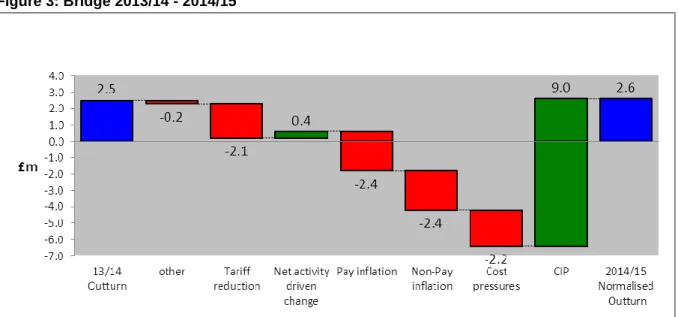
The Trust faces a significant challenge over the next two years. The culmination of tariff deflation, inflation pressures, quality pressures and commissioner QIPP and Better Care Fund Plans results in a requirement for a CIP of £9.0m in 2014/15 and £9.3m in 2015/16 to ensure sustainability. Structural change across the local health economy to support sustainability is unlikely in the short term, but could impact on mid-long term planning.
Whilst the challenge is significant the Trust is well placed to respond. It has a track record of successful CIP delivery over the past five years, demonstrating capability and readiness to meet the challenges of future years. It has developed strong and generative partnerships to support the delivery of quality improvements and increased efficiency. Service Line Management has been developed to encourage local clinical ownership. A strong IT platform has been created from which to exploit opportunities for innovation. The Trust has developed strong relationships across the local health economy and through the Whole System Transformation Board, encompassing commissioners, GPs and community providers, has created a strategic forum to plan and deliver service improvement across the local health economy. This collaborative approach is strengthened further by the joint work involved in developing the Better Care Fund plans and the development of joint CQUINs. Further details of the Trust’s plans in response to the challenges described are outlined in the sections that follow.
13 | P a g e
Overview of strategy and key plans
3.
3.1
Vision and service strategy
The Trust’s Vision for the next five years is to:
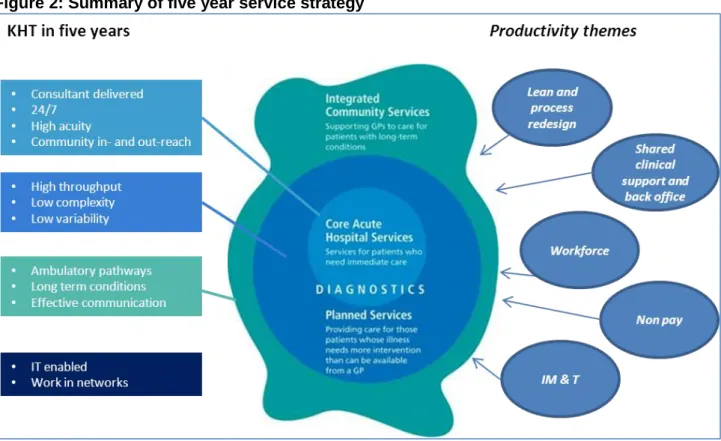
Underpinning this vision is delivery of the Trust’s service strategy which is summarised below:
Figure 2: Summary of five year service strategy
At the heart of the strategy is the delivery of core acute services, including A&E, maternity and intensive care services, supported by acute medical and surgical services and diagnostics. The Trust will work towards the delivery of 24/7 consultant delivered care, including the development of sustainable consultant rotas for acute medicine and surgery, gastrointestinal bleeding and interventional radiology. It will also work towards the delivery of London Emergency Care Standards covering critical care, emergency department, fractured neck of femur pathway, maternity services and paediatric emergency services.
Increased scale will be required to sustain viable consultant rotas to support 24/7 working and delivery of the London Emergency Care Standards and the Trust will seek to pursue growth strategies and accommodate flows from strategic reviews in North West London and South West London as required. Through implementation of the Trust’s dementia strategy it will become an exemplar site for dementia care over the next 5 years, responding to the age profile of the local population.
‘To be the hospital of choice for our local community, recognised for excellent and innovative emergency, surgical, acute medicine and maternity services, delivered by
14 | P a g e The Trust will also provide planned services, providing care for those patients whose illness requires more intervention than can be provided by a GP but who do not require specialist care. Services will be high throughput with low complexity and variability. Planned care will be provided in the right hospital setting, with more undertaken on a day-case and outpatient procedure basis. Integrated community services will require the Trust to support primary and community care to ensure that patients are treated closer to home where possible. A key vehicle for this will be the Better care Fund. The Trust will also continue to develop hospital outreach services at a variety of sites, including new sites such as Raynes Park and Surbiton Health Centres.
This strategy will be underpinned by strong partnerships, with the Trust working in networks to deliver seamless care to patients across organisational boundaries and working closely with all partners on pathway redesign to transform care so that it is truly integrated. It will also be underpinned by the use of IT with the Trust maximising the use of technology to enhance the quality of service provision and communications across hospital departments and with GPs and patients.
3.2
Strategic objectives and supporting plans
To realise the vision the Trust has identified four strategic objectives for delivery by 2018/19. Supporting corporate objectives have been set for 2014/15. A summary of each strategic objective and the key plans to support these in the short term are summarised below:
Table 2: Key plans
Strategic Objective 1: To ensure that all care is rated amongst the top 20% nationally for patient safety, clinical outcomes and patient experience
Key plans include:
Delivery of the London Quality Standards in areas where this is entirely within the control of the Trust
Improving the quality of care on the wards across all hours of the day and days of the week, including delivery of CQC standards, a 10% reduction in pressure ulcers and falls per 1000 bed days against 2013/14 outturn and strengthened out of hours working
Developing and implementing proposals to improve patient engagement and experience, including electronic mechanisms for engagement, improved patient experience with the discharge process, more virtual clinics and increased information on staffing available to patients and the public
Implementing the dementia strategy to support the Trust becoming an exemplar site for dementia care, with initial actions including improvement in the environment to reflect the needs of those with dementia, the initiation of a a programme of therapeutic activities for inpatients and improved levels of information for carers
Implementing the estates strategy, addressing key issues impacting on safety and patient experience, through critical backlog maintenance, expansion of A&E and the Sir William Rous cancer unit, replacement of windows in Esher Wing, refurbishment of outpatients, theatres and ICU and dementia friendly improvements. Plans also include the refurbishment of the old nurses home to consolidate office accommodation, enabling the cessation of offsite leases and the sale of Regent Wing. The expansion of A&E and the creation of a future development site in the centre of the hospital campus, following the relocation of services from the command centre, will also provide flexibility for expansion as required
Developing an Electronic patient Record underpinned by further deployment of the Care Records Service (CRS) programme, involving the implementation of e-prescribing and clinical documentation. The Trust will also start to implement device integration and increase electronic links with GPs
15 | P a g e Strategic Objective 2: To have a committed, skilled and highly engaged workforce who feel valued, supported and developed and who work together to care for our patients Key plans include:
Embedding Service Line Management to strengthen the engagement of staff across the organisation. It is planned for 80% of service lines to be functioning autonomously by March 2015 and 100% by March 2016
Developing and delivering training to support administrative staff to provide excellence in customer care, with improvements in Friends and Family Test results and reduced complaints about staff attitude or behaviour
Reducing the need for agency staff by strengthening the bank and reducing turnover
Strategic Objective 3: To work creatively with our partners (NHS, commercial and community) to consolidate and develop sustainable high quality care as part of a thriving health economy for the future
Key plans include:
Working with partners in the local health economy to develop the five year plan for South West London
Working with commissioners and other providers to develop further and deliver the Better Care Fund plan, including the implementation and development of plans in Kingston for multi-provider teams working across organisational boundaries to provide co-ordinated assessment and care to defined populations with the highest care needs
Implementing the Trust’s commercial strategy to support growth, including the further development of outreach services, responding to tender opportunities such as the provision of services at the Nelson Hospital in West Merton and the refreshing of the private patient strategy with BMI
Partnership working with other providers to deliver benefits to patients, including the implementation of new arrangements for the delivery of pathology services across Kingston, St George’s and Croydon Hospitals from April 2014
Developing and embedding the full involvement of the community in the running of the hospital through members events and engagement and through the delivery of the volunteering and fundraising strategies
Strategic Objective 4: To deliver sustainable, well managed, value for money services Key plans include:
Delivery of the Trust’s financial plans, including delivery of the Trust’s productivity programme that supports delivery of a long term financial plan for the Trust (further detail at sections 6 and 7)
Updating the Trust’s five year strategic plan
Strengthening of information to support the effective adoption of Service Line Management by developing further the balanced scorecards for each service line and fully developing recharging mechanisms for indirect costs and overheads
16 | P a g e
Quality plans
4.
4.1
Quality strategy
The Trust’s Quality Strategy, published in March 2012, describes how it will enhance the safety and effectiveness of care whilst continuing to improve performance against a background of financial constraints.
The Trust’s approach to quality relies upon having the right culture throughout the organisation to enable staff to deliver high quality care. The Trust has engaged staff in developing the core values: caring, safe, responsible and valuing each other. The quality vision is to create the right environment for all staff to deliver the most appropriate care for patients.
The Trust has defined quality goals within the three domains of quality; safety, experience and effectiveness which reflect national and local priorities. These are shown in the table below:
Table 3: Quality Goals
Quality Domain Quality Goal Themes of measures of success
Patient Safety Prevent Harm
This means ensuring the environment is safe and clean, reducing avoidable harm such as drug errors or healthcare
associated infections.
Clinical Effectiveness
Improve Clinical Outcomes
This includes clinical measures such as mortality or survival rates, complication rates and measures of clinical
improvement.
Patient Experience
Listen and respond to patients concerns
This means how “personal” care is – the compassion, dignity and respect with which patients are treated.
Each year the Trust develops specific measures of success for its quality goals with stakeholders including patients, public and clinical commissioners. The 2014/15 Quality Account priorities are due for approval in May 2014. Each quality goal has a measure of success as a quality account priority with KPIs, and further organisational level measures of success. These are tracked monthly in the clinical quality report to the Trust Board. Local quality goals and measures of success are identified at departmental level to reflect local priorities.
4.2
London Quality Standards
Over the past two years the Trust has made significant progress and is now close to achieving the London Quality Standards in most areas. This follows investment in A&E consultants, acute care physicians, an additional general surgeon, enhanced consultant cover in maternity and formalisation of interventional radiology and endoscopy out of hours rotas. These actions have significantly improved the level of care available to patients out of hours which will be strengthened by further consultant appointments, the roll out of clinical documentation and e-prescribing and continued focus on improving the quality of care on the wards across all hours of the day and days of the week. Through these actions it is anticipated that the Trust will meet all standards where this is completely within its control. Whilst the Trust will continue to move towards the delivery of the standards in maternity, changes in the configuration of services across SW London will be required to enable this to be fully achieved at any site.
17 | P a g e
4.3
Dementia strategy
As discussed at section 2 dementia is a condition that affects Kingston Hospital more than most other hospitals due to the age profile of its population. To respond to this a dementia strategy has been created to help reshape the way the Trust cares for patients and support the Trust’s aspiration to become an exemplar site for dementia care. The strategy sets out how the Trust will work with patients, carers, staff and partners across the health economy to provide consistently high quality dementia care, focusing on five key priorities:
Early diagnosis, excellent clinical treatment and care
Positive relationships of care
Involved and supported carers
Active days and calm nights
Environments of care
Good progress has already been made with additional funding secured for training, 70 dementia champions across the Trust and clear identification of patients with dementia through the ‘forget me not’ scheme.
4.4
Performance
The Care Quality Commission (CQC) visited the Trust in the summer of 2013 to carry out a full compliance visit as part of their routine schedule of planned reviews. Whilst on site, they reviewed the Trust’s compliance with 8 of the 16 essential standards of quality and safety. The Trust was found to be fully compliant with the 7 of outcomes reviewed and required improvement in outcome 4 – care and welfare of people for our medical wards.
The Dr Foster Hospital Guide 2013 highlighted that the Trust has lower than expected mortality rates which means less people die in its care. This has been further endorsed by the Health and Social Care Information Centre, which in January 2013 identified Kingston Hospital as one of 11 Trusts in England having consistently lower than expected mortality rates over a two year period for both elective and emergency patients. Kingston Hospital has also recently been named in the CHKS Top 40 Hospital’s list for the thirteenth year running.
Whilst the Trust demonstrated a generally strong performance against quality targets in 2013/14, there are some areas where further action is required and plans are described below:
Falls
During 2013/14 the number of patient falls per 1000 bed days has been just above the national Patient Safety Agency benchmark. The Trust is committed to reducing the number of patient falls and this objective is reflected in the 2013/14 Quality Account. Actions to improve performance have concentrated on:
Providing patients with adequate information on falls prevention
Embedding the falls care bundle across all clinical areas
Improving targeted reduction activities based on incident reporting
The Trust will continue to focus on this area in 2014/15 and has set itself a target of a 10% reduction per 1000 bed days against 2013/14 outturn.
Clostridium difficile
In 2013/14 the Trust had 22 cases (at month 10) of hospital acquired clostridium difficile against an annual threshold which had been set at 15 cases. The root cause analysis of each case
18 | P a g e identified 4 cases could have resulted in being assigned as non-trust apportioned due to a delay in stool sampling, and up to 6 cases which may have been avoided through improved infection control, antibiotic use or diagnosis.
The Trust has taken a number of measures to reduce the number of cases, which have included the mandatory training and assessment of all nursing staff, introduction of probiotics, and increased infection control provision. In response to increased cases the Trust commissioned an external review in December 2013. This indicated no major areas of concern, and praised the antimicrobial prescribing practice at the Trust. Some areas for strengthening were identified including improving the guidance for diarrhoea management and further prescribing work across the wider healthcare economy.
Pressure ulcers
After two years of reduction in patients experiencing pressure sores the Trust has achieved a low steady state which compares well against peers but does not meet the Trust’s own aspirations. In 2013/14, the Trust had 9 grade 3-4 pressures sores and 49 grade 2 pressures sores (at month 10). To reduce the incidence in 2014/15 the following actions are in place:
Focussed training in A&E and the Acute Assessment Unit ensuring patients are always assessed promptly on admission
Continuation of focussed training for staff
Review of Trust performance and prevention of grade 2-3 ulcers to aid learning at monthly Skin High Impact Action Group multi-disciplinary team meetings
Extension of the Skin High Impact Action Group to include community partners
Audit of the pressure area management bundle
The Trust will continue to focus on this area in 2014/15 and has set itself a target of a 10% reduction per 1000 bed days against 2013/14 outturn.
Friends and Family Test (FFT)
Within the Trust FFT results are being published on the ward, in departments and on the website. The A&E score has been average when compared nationally over 2013/14. Locally, the Trust ranks third best performing out of the eight neighbouring Trusts.
Inpatient scores have been in the bottom quartile nationally and in the bottom 50% of local Trusts during 2013/14 and a number of actions are in place to improve the position. Scores are included in the ward performance scorecard and ward sisters review feedback weekly and key themes are analysed to determine areas for specific focus. The Trust is also planning to introduce screens on wards to provide more information for patients, visitors and staff in a range of areas.
A number of improvements have already been made in response to feedback gathered via the FFT and other sources. These include the launch of a new Visitors Policy, which extends visiting times to the morning and welcomes relatives wishing to assist at mealtimes. The Trust is also implementing a dining companion’s project to assist patients requiring help at mealtimes, with non-clinical staff and public volunteers encouraged to adopt a ward and participate in a rota. This has proven popular with staff and patients and is integral to the care of frail elderly patients. The Trust will continue to use the FFT feedback to make further improvements across the range of services that it provides.
19 | P a g e
4.5
Francis, Berwick and Keogh
Following the publication of the above reports the Trust undertook and series of engagement events and a gap analysis to identify the areas to focus on for improvement. An action plan was developed and is being regularly reviewed to track progress. The key themes are staff (levels and skill), leadership, learning from complaints, use of information, external relationships and fundamental care standards (dignity, continence and nutrition). Of the 37 areas for action identified in the plan, 28 have been completed and plans are in place to deliver the remainder.
4.6
Patient and public involvement
The Trust is committed to involving patients and the public in the development and improvement of its services. A Patient and Public Involvement (PPI) Strategy was developed in partnership with patients, Healthwatch, staff, governors, local stakeholders and the Patient Assembly and was approved at the Trust Board in July 2013. The Trust’s vision for PPI is that Kingston Hospital will be an organisation that delivers care with people rather than to them.
The Trust also has a Patient Assembly that meets every two months. The group consists of 13 members who volunteer their time to partner the Trust in improving patient experience and who represent the voice and views of patients and members of the public. Members of the Assembly also attend other forums and committees at the Trust and participate in a number of service improvement projects and events. A Healthwatch Forum has also been established where representatives of Healthwatch organisations meet with senior Trust staff quarterly to discuss a range of issues.
In January 2014 the Trust approved a 3 year strategy for volunteers and volunteering which recognises and builds on the hugely important contribution that volunteers make to the hospital, enhancing the experiences of people using the hospital and strengthening the Trust’s contribution to the life of the local community.
4.7
Board assurance
The Trust Board has undertaken a number of self-assessments against Monitor’s Quality Governance Framework since October 2011. The Trust has confirmed a quality governance self-assessment score of 2.5 in January 2014, with no area being entirely red rated. The Trust has an action plan to continuously improve the score and will review the self-assessment at least annually.
The Trust Board has established robust mechanisms to ensure that it is aware of risks to quality. The Risk Management Strategy sets out the Trust's approach and mechanisms for comprehensive risk identification, assessment and control and for gaining assurance on the effectiveness of controls. These include a high level structure for reviewing risks (Trust Board and Trust Board sub-committees) which are all chaired by Non-Executive Directors and a Compliance and Risk Committee chaired by the Deputy Chief Executive.
The Compliance and Risk Committee monitors the Board Assurance Framework operationally. Principle risks are scrutinised at the relevant Board sub committees and the Board Assurance Framework is scrutinised by the Audit Committee and the Quality Assurance Committee and received at each Board meeting. It identifies risks to corporate objectives, mitigating actions and controls in place
The risk identification, assessment and risk register procedure describes the responsibilities, mechanisms and processes used to identify, escalate and manage risk. The Corporate Risk
20 | P a g e Register is influenced by internal and external risks. There is a process for escalation of risks onto the Corporate Risk Register from service line risk registers and local corporate department risk registers. The Corporate Risk Register is reviewed by the Board quarterly and links to the Board Assurance Framework. Service line risk registers are managed locally and are presented to the Compliance and Risk Committee.
The Trust has mechanisms to capture staff concerns which include: i) a whistleblowing policy, with evidence of its use reported annually to the Trust Board, ii) non-executive and executive director walkabouts focusing on safety and iii) Team Briefing, with some divisions also holding open forums
The Board has established mechanisms to ensure that quality is not impacted by CIPs and this is discussed further at section 5. The Trust Board is assured that it has, and will keep in place, effective arrangements for the purpose of monitoring and continually improving quality of care.
21 | P a g e
Operational requirements and capacity
5.
5.1
Demand Pressures and Activity Forecasts
Key Factors Driving Demand
The Trust’s two year plan incorporates growth rates supplied by local CCGs which have been used to inform their planning. These equate to growth of 2.5% p.a. reflecting both demographic and non-demographic growth.
Within South West London and Surrey, local QIPP plans have been brought together to inform Commissioning Strategy Plans. The latest QIPP assumptions from Kingston and Richmond CCG’s finance plans have been incorporated into the Trust’s two year plan, with similar savings applied for other commissioners in line with their allocations.
There are small schemes in 2014/15 to reduce A&E attendances at the trust, and reduce planned admissions in cardiology, orthopaedics and oral surgery. However, the bulk of the QIPP schemes are concerned with shifting outpatient attendances to a cheaper setting, and avoiding emergency admissions. Kingston CCG’s outpatient priorities are an integrated gynaecology service, community cardiology, an MSK project streamlining rheumatology, pain, orthopaedics and physiotherapy, and risk stratified cancer pathways, reducing follow-ups, and increasing discharges and self-management. Richmond CCG plan to review pathways in diabetes, neurology, cardiology and chronic obstructive pulmonary disease (COPD), and the provision of anti-coagulation monitoring in secondary care. Surrey Downs CCG are planning pathway redesign in MSK, diabetes and ophthalmology.
In terms of avoiding emergency admissions, Kingston CCG’s priorities are the Kingston at Home programme, enhancement of end of life care, assessment bays at Surbiton Health Centre, and increased levels of patient self-management. Richmond CCG will continue to develop their community ward, community independent living service, and community paediatric nursing. Surrey Downs CCG plan to expand their virtual ward, rapid response service, and use of step down beds in community hospitals and nursing homes.
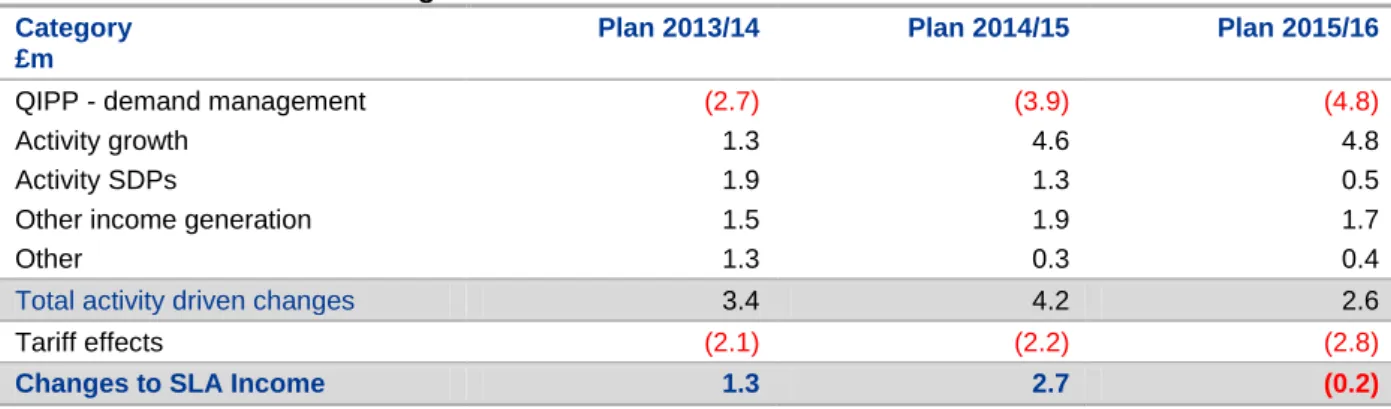
All local commissioners plan the development of an Urgent Care Centre (UCC) in their Commissioning Strategy Plans. Kingston CCG expects its UCC to be situated at the Trust in due course, however, there is no local solution identified at present. Local commissioners are also planning walk in centres, minor injuries units, and re-procurement of out of hours GP services. The net effect of QIPP in 2014/15 is planned to be in the region of -£3.9m.
As discussed at section 2, in 2015/16 the Better Care Fund starts to have a significant impact and effectively replaces commissioner QIPP plans. In line with assumptions provided by commissioners, the plan assumes further losses of activity from the Trust and it has been assumed that commissioners achieve this by avoiding less complex emergency admissions within a group of conditions including diabetes, cellulitis, flu and urinary tract infections. The total assumed impact in 2015/16 is -£4.7m. Whilst this approach has been adopted for planning purposes at this stage, in practice further work is required to work up the impact of Better Care Fund schemes. Through working together with providers we expect to be involved in providing care across a range of organisational settings, and recoup some income in this way, although it would not be our activity.
22 | P a g e Activity Forecasts
Table 4 below provides a breakdown of forecast activity in the base case for 2013/14, 2014/15 and 2015/16 by point of delivery, reflecting the assumptions outlined above.
Table 4: Activity Forecasts 2013/14 – 2015/16
2013/14 2014/15 + / - 2015/16 + / - Daycase/ RDA 26,578 27,785 5% 28,806 4% Elective IP 4,682 4,980 6% 5,165 4% Elective total 31,260 32,765 5% 34,874 6% Emergency 53,568 53,268 -1% 50,963 -4% Inpatient total 84,828 86,034 1% 85,836 0% New OP 128,105 132,844 4% 136,777 3% Follow-up OP 220,977 224,800 2% 229,598 2% Outpatient total 349,083 357,643 2% 366,375 2% A&E 112,083 114,512 2% 117,629 3%
Data for 2013/14 reflects forecast outturn. This is based on month 1-6, with adjustments for part year items such as outreach work at Raynes Park Health Centre and sites in Surrey.
Modelling for 2014/15 aligns as far as possible with the emergent Service Level Agreement (SLA). This is not yet fully agreed with commissioners, but will incorporate the headline items from South West London modelling such as growth and QIPP.
Elective admissions increase into 2014/15. This is mostly growth, but also as a result of new market share from the Merton area via the Raynes Park Health Centre, and a small increase in elective surgical work enabled by consultant appointments to meet the London Quality Standards. It is also assumed that some elective inpatients are shifted to daycase, and some daycase work is shifted to an outpatient setting. Emergency admissions decrease slightly in 2014/15, despite growth, due to QIPP schemes avoiding emergency admission.
Outpatient attendances increase at less than the growth rate due to commissioner QIPP schemes shifting work to cheaper settings.
A&E activity grows at just over 2% p.a., but QIPP assumptions around attendance avoidance in 2014/15 reduce this slightly.
Increases of elective spells, outpatients and A&E activity into 2015/16 are due to growth, and a small further increase in elective surgical work enabled by consultant appointments to meet the London Quality Standards. Emergency activity falls, despite growth, due to admission avoidance under the Better Care Fund plan.
5.2
Physical capacity
The Trust has modelled bed and theatre requirements to meet anticipated demand over the next two years as set out table 4 above. These also reflect performance improvements including:
improvements in length of stay through improved patient flow and reflecting movement from upper quartile to best in peer (London acute trusts)
23 | P a g e
more efficient use of operating time
This analysis indicates that the Trust has sufficient capacity to deliver demand requirements and should be able to deliver efficiency savings as discussed at section 6.
5.3
Demand risks and management plans
The Trust has modelled demand which is consistent with commissioner assumptions in relation to growth, QIPP and the Better Care Fund. However, activity could be greater or lesser than forecast. In this section the impact on capacity of demand being higher than anticipated has been considered. Three key ways in which activity and therefore operational requirements could be higher than forecasted in the base case are: i) growth is higher than anticipated ii) QIPP schemes do not materialise and iii) BCF schemes do not materialise.
If QIPP schemes did not materialise, the most challenging impact would be on outpatient capacity. However, the Trust is developing several outreach sites and there will be significant opportunity for shifting clinically and geographically appropriate outpatient activity to these sites if required.
If growth is higher than anticipated or Better Care Fund schemes do not materialise, the most challenging impact would be on emergency bed requirements. An additional 0.5% of growth would require an additional four beds, on average each year. 100% achievement of Better Care Fund over the next two years, as we understand it, currently represents closing 15 beds in 2015/16. These beds could be accommodated within the existing estate.
24 | P a g e
Productivity, efficiency and CIPs
6.
6.1
Overview of the Trust’s productivity programme
A five year productivity programme was developed between 2010 and 2012 as part of the Trust’s Foundation Trust application. The 2014/15 and 2015/16 element of the programme was revisited and refreshed in the autumn of 2013 to take account of changes in the health economy and commissioning environment. As with the original programme, this refresh involved a bottom-up process involving many staff, ensuring local clinical and management ownership and leadership of the emerging programme. Individual service lines and corporate areas were set a revised stretch target of 7% of costs for Year 1. Commercial and benchmarking information was shared across the organisation to identify productivity opportunities over and above those already explored.
Each clinical division was supported by an Executive Director in developing their cost improvement plans as part of the annual planning and budget setting process. Three detailed challenge sessions were held with each service line before schemes were approved. The on-going development of the programme was monitored by the Trust’s Executive Management Committee in order to ensure that there was appropriate cross-service line and cross-divisional scrutiny of the various aspects of the programme, and that all potential impacts of individual schemes had been considered in the context of the wider Trust plans for 2014/15 -2015/16. Schemes were then presented by Divisional Directors to the Trust Board as part of a development session.
6.2
Governance
The Trust has delivered a successful cost improvement programme since 2010-11. This track record has enabled it to achieve its planned levels of surplus over this timeframe, and a robust programme is now in place under the leadership of a Director of Productivity and an established Programme Management Office (PMO).
The Trust has learned and embedded into its programme design important lessons to support programme delivery, including:
• The need for robust and achievable plans, with granular information at an early stage subject to a detailed challenge process
• The importance of building plans into signed-off budgets from the outset, with service line staff held accountable for schemes which are understood, owned and achievable
• The need for clinicians to be closely involved in the planning to generate both realistic and deliverable schemes
• The need for an understanding of demand and capacity to provide clarity on how many staff are required to deliver the services expected within the Trust’s plans
• The value of building in contingency through the setting of an additional stretch target for which granular plans are developed and which service lines are expected to deliver – thus providing a buffer in case of slippage
• The importance of having detailed plans available for future years, some of which can be pulled forward as mitigating actions if there is slippage experienced in-year
• The role to be played by the PMO in tracking key milestones and providing assurance about future delivery and emerging risks – early enough for successful mitigating action to be agreed and taken
25 | P a g e The PMO has developed comprehensive documentation to underpin the productivity programme, designed to ensure clarity about its constituent schemes, the responsibility and timescales for their delivery, associated risks and impacts, and mitigation plans required to manage these. Documentation includes a Quality and Equality Impact Assessment (QEIA), and a one page worksheet for each scheme. This one pager notes the scheme owner, rationale, anticipated ease of implementation, financial detail and key milestones with responsible owner. The one pagers also note the key actions required by whom and by when, and the impact of the CIP at budget/account code level to enable robust monitoring of implementation.
At a local level, delivery of the schemes is monitored via service line meetings and monthly performance reviews. The Trust has clear central structures and processes both to manage in-year delivery of CIPs as well as to ensure delivery of milestones to support the larger cross-cutting schemes. These include:
• An established PMO which provides a dedicated resource to assist service lines and corporate directorates in the design and delivery of their savings schemes. The PMO, under the Productivity Director, monitors progress on delivery of the productivity programme as well as assisting with scoping opportunities and developing new savings plans
• A Commercial and Productivity Project Monitoring Group, chaired jointly by the Director of Productivity and Director of Strategic Development and reporting to the Executive Management Committee. The group monitors the progress of larger schemes, those with a commercial element, or schemes which cut across the organisation. This includes identifying and removing barriers which may arise that would hinder delivery of the overall programme, and ensuring schemes are appropriately resourced to enable delivery
• Regular reports are sent to the Finance and Investment Committee and to the Trust Board to allow progress on the delivery of existing schemes to be monitored. This includes performance against key quality indicators, which are also monitored through the Quality Assurance Committee chaired by a Non-Executive Director
• Project documentation where necessary, agreed through the PMO, which tracks the delivery of key milestones to ensure plans will be achieved in full
• A named project manager, executive sponsor and, wherever appropriate, an accountable clinical lead for each scheme
• Annual review of the following years’ schemes through budget challenge sessions
6.3
Cost improvement programme profile
Over the next two years, the Trust’s CIP programme continues to develop the three themes discussed with Monitor as part of the Trust’s 5 year IBP:
• Developing strong and generative partnerships – e.g. working with other providers to
strengthen the urology on call rota across the sector, developing a joint pathology service across south west London to save significant non-pay and managerial costs, further developing the cancer partnership with the Royal Marsden to ensure more patients are seen closer to home, or working with private providers to develop a commercial pharmacy opportunity
• IT enabled productivity – e.g. upgrading our Picture Archiving and Communication
System (PACS) to enable more flexible reporting in Radiology, implementing e-Prescribing to reduce the risk and associated cost of medicines incidents, rolling out text
26 | P a g e reminders to reduce DNAs, or rolling out BoardPad to reduce time and money wasted on printing meeting papers
• Encouraging service line management – e.g. encouraging local responsibility for stock
control to reduce spend on theatre consumables, or increasing day surgery rates and outpatient procedures to enable the closure of a main theatre
In addition, significant savings are anticipated to come from better procurement. This includes working with service lines to reduce wastage, and work across the organisation to reduce variation, drive prices down and use cheaper stock. The Trust is participating in the London-wide procurement improvement work to take advantage of greater pricing benefits.
The breakdown for 2014/15 and 2015/16 is provided in the table below:
Table 5: Breakdown of CIP schemes for 2014/15 and 2015/16:
2014/15 2015/16
£’m % £’m %
Patient care income 1.9 21% 1.7 19%
Other income 0.8 9% 0.9 10%
Service Line schemes
Pay 1.4 15% 1.8 18%
Non-pay 2.3 26% 3.1 31%
Trust-wide schemes
Flow through the hospital 1.0 11%
Increasing theatre efficiency 1.0 11%
SWL Pathology 0.5 6% 1.5 15%
Patient pathway co-ordinator 0.3 3% 0.3 3%
Procurement partnerships 0.4 4% 1.0 10%
Contingency (0.5) (6%) (0.1) (1%)
Total 9.0 10.2
6.4
Transformational schemes
Our key transformational schemes are described below. All of these are anticipated to deliver over a two year timeframe, and several will deliver across our full five year planning horizon.
The Productive Operating Theatre (£1.0m 2014/15; £0.7m (other income) 2015/16) - Using the NHS Institute programme as a template, the Trust is seeking to maximise the productivity of main theatres, the day surgery unit and the Royal Eye Unit theatres. By improving scheduling and communications, and streamlining assessment, admission and discharge processes, less theatre time will be wasted in over-runs, under-runs and DNAs. This will enable cost reduction savings in 2014-15, as well as the potential for private patient income generation schemes in 2015-16 onwards. This scheme impacts across the whole organisation, including the wards to make sure patient flow out of recovery is smooth. A launch was held in January 2014 and a project manager maintains robust project documentation across all The Productive Operating Theatre (TPOT) work streams to ensure the plan delivers as anticipated.
Patient Pathway Co-ordinator (£0.3m 2014/15; £0.3m 2015/16) - This scheme transforms the way that patient-focused administrative services are provided. Instead of disparate teams managing different elements of the patient pathway, from bookings to typing discharge letters, one patient pathway co-ordinator will be allocated to each consultant to manage patients across the whole of their journey through the hospital. As well as significant benefits to patient experience, this scheme will generate by more efficient use of a number of staff groups. Significant work has been undertaken in 2013-14 to pilot the scheme, with a dedicated project manager and a multi-disciplinary steering group to co-ordinate all operational aspects, including staff consultation. This robust project management will be continued as the project rolls out across the Trust over the next two years.