Zurich Open Repository and Archive University of Zurich Main Library Strickhofstrasse 39 CH-8057 Zurich www.zora.uzh.ch Year: 2017
Rethinking microfinance: towards a multi-stakeholder framework of responsible microfinance
Landolt, Simone
Abstract: Microfinance aims to better the livelihoods of the bottom of the pyramid by providing them with financial services. However, recent studies show that microfinance can have adverse effects, leading clients into over-indebtedness. This dissertation argues that microfinance clients are by default vulnerable and offers ways to rethink microfinance as client-centered, presuming a responsibility for client protection. Part I discusses the vulnerability of clients and the centrality of their protection. Part II analyzes the causes and consequences of over-indebtedness and suggests state regulations, financial literacy programs, and soft law standards for its mitigation. Part III introduces the concept of responsible microfinance, which claims that not only microfinance institutions but also other stakeholders, such as states and transnational and international organizations, have a responsibility to protect microfinance clients. Part IV accepts that over-indebtedness has to be addressed from several angles and considers how public and private actors may enhance its alleviation and develops an encompassing multi-stakeholder framework of responsible microfinance. Developing this framework includes a thorough evaluation of the suitability of ten novel strategies, such as behaviorally informed consumer protection regulations, educational soap op-eras, and Smart Campaign’s Client Protection Principles, to further the mitigation of over-indebtedness. Mikrofinanz ermöglicht ärmeren Bevölkerungsschichten in Entwicklungs- und Schwellenländern den Zu-gang zu Finanzprodukten und beabsichtigt inkludierend und armutsbekämpfend zu wirken. Studien zeigen jedoch, dass Mikrofinanz auch negative Effekte haben kann. Ein zentrales Thema in dieser De-batte ist die Überschuldung. Diese Dissertation argumentiert, dass Mikrofinanz-Klienten aufgrund ihrer Verwundbarkeit eines besonderen Schutzes vor Überschuldung bedürfen. Von dieser Annahme ausgehend bietet diese Arbeit Anknüpfungspunkte um Mikrofinanz dahingehend zu überdenken, dass Mikrofinanz Institutionen klientenzentriert operieren und ihre Verantwortung, Klienten zu schützen, wahrnehmen sollen. Teil I diskutiert die Verwundbarkeit der Klienten und die Schlüsselfunktion des Klientenschutzes. Teil II beleuchtet die Ursachen und Auswirkungen von Überschuldung und schlägt Regulierungen, Mass-nahmen zur Förderung des Finanzwissens und Soft Law Standards zu deren Minderung vor. Teil III führt das Konzept Responsible Microfinance ein, welches eine Verantwortung der Mikrofinanz Institutio-nen und weiteren Stakeholdern im Bereich Klientenschutz annimmt. Teil IV entwickelt ein umfassendes Multi-Stakeholder Rahmenkonzept für Responsible Microfinance. Dabei werden zehn neuere Strate-gien öffentlicher und privater Akteure, wie z.B. verhaltensorientierte Regulierungen, bildungsstiftende Seifenopern und Smart Campaigns Klientenschutz Prinzipien auf ihre Eignung, Überschuldung zu ver-mindern, geprüft.
Posted at the Zurich Open Repository and Archive, University of Zurich ZORA URL: https://doi.org/10.5167/uzh-141887
Originally published at:
Landolt, Simone. Rethinking microfinance: towards a multi-stakeholder framework of responsible micro-finance. 2017, University of Zurich, Faculty of Arts.
R
ETHINKING
M
ICROFINANCE
T
OWARDS A
M
ULTI
-S
TAKEHOLDER
F
RAMEWORK OF
R
ESPONSIBLE
M
ICROFINANCE
Thesis
presented to the Faculty of Arts and Social Sciences of the University of Zurich
for the degree of Doctor of Philosophy
by Simone Landolt
Accepted in the fall semester 2016
on the recommendation of the doctoral committee: Prof. Dr. Francis Cheneval (main supervisor)
Prof. Dr. Markus Huppenbauer
Abstract
Microfinance aims to better the livelihoods of the bottom of the pyramid by providing them with financial services. However, recent studies show that microfinance can have adverse effects, leading clients into over-indebtedness. This dissertation argues that microfinance clients are by default vulnerable and offers ways to rethink microfinance as client-centered, presuming a responsibility for client protection. Part I discusses the vulnerability of clients and the centrality of their protection. Part II analyzes the causes and consequences of over-indebtedness and suggests state regulations, financial literacy programs, and soft law standards for its mitigation. Part III introduces the concept of responsible microfinance, which claims that not only microfinance institutions but also other stakeholders, such as states and transnational and international organizations, have a responsibility to protect microfinance clients. Part IV accepts that over-indebtedness has to be addressed from several angles and considers how public and private actors may enhance its alleviation and develops an encompassing multi-stakeholder framework of responsible microfinance. Developing this framework includes a thorough evaluation of the suitability of ten novel strategies, such as behaviorally informed consumer protection regulations, educational soap operas, and Smart Campaign’s Client Protection Principles, to further the mitigation of over-indebtedness.
Zusammenfassung
Mikrofinanz ermöglicht ärmeren Bevölkerungsschichten in Entwicklungs- und Schwellenländern den Zugang zu Finanzprodukten und beabsichtigt inkludierend und armutsbekämpfend zu wirken. Studien zeigen jedoch, dass Mikrofinanz auch negative Effekte haben kann. Ein zentrales Thema in dieser Debatte ist die Überschuldung. Diese Dissertation argumentiert, dass Mikrofinanz-Klienten aufgrund ihrer Verwundbarkeit eines besonderen Schutzes vor Überschuldung bedürfen. Von dieser Annahme ausgehend bietet diese Arbeit Anknüpfungspunkte um Mikrofinanz dahingehend zu überdenken, dass Mikrofinanz Institutionen klientenzentriert operieren und ihre Verantwortung, Klienten zu schützen, wahrnehmen sollen. Teil I diskutiert die Verwundbarkeit der Klienten und die Schlüsselfunktion des Klientenschutzes. Teil II beleuchtet die Ursachen und Auswirkungen von Überschuldung und schlägt Regulierungen, Massnahmen zur Förderung des Finanzwissens und Soft Law Standards zu deren Minderung vor. Teil III führt das Konzept Responsible Microfinance ein, welches eine Verantwortung der Mikrofinanz Institutionen und weiteren Stakeholdern im Bereich Klientenschutz annimmt. Teil IV entwickelt ein umfassendes Multi-Stakeholder Rahmenkonzept für Responsible Microfinance. Dabei werden zehn neuere Strategien öffentlicher und privater Akteure, wie z.B. verhaltensorientierte Regulierungen, bildungsstiftende Seifenopern und Smart Campaigns Klientenschutz Prinzipien auf ihre Eignung, Überschuldung zu vermindern, geprüft.
ACKNOWLEDGEMENTS
I
INTRODUCTION
1
1
INCLUSIVE DEVELOPMENT STRATEGIES, MICROFINANCE, AND
OVER-INDEBTEDNESS
1
2
RETHINKING MICROFINANCE: CONNECTING RECENT
DEVELOPMENTS AND INSIGHTS TO EXPLORE NEW AVENUES
4
3
RESEARCH DESIGN
6
3.1
I
NTRODUCING THER
ESEARCHQ
UESTIONS AND THES
TRUCTURE OF THISR
ESEARCHP
ROJECT6
3.2
M
ETHODS15
3.3
G
ENERALD
ISCUSSION OFA
VAILABILITY OFD
ATA ANDL
ITERATURE15
3.4
S
EPARATED
ISCUSSION OFR
ESEARCHO
UTLINE OFP
ARTIV
16
3.4.1
C
ASES
ELECTION17
3.4.2
A
VAILABILITY OFD
ATA17
3.5
G
OALS OF THISR
ESEARCHP
ROJECT ANDP
OTENTIALC
ONTRIBUTION18
PART I – MICROFINANCE: ADDING A NEW DIMENSION
19
4
BRINGING FINANCIAL SERVICES TO THE POOR
19
4.1
N
OI
NFORMATION,
N
OC
OLLATERAL,
N
OB
USINESS?
22
4.2
F
ROMP
ROMISES TOR
EALITY:
C
LIENTP
ROTECTION AS AP
RESSINGI
SSUEW
HENP
ROVIDINGF
INANCIALS
ERVICES TO THEB
OP
24
5
MICROFINANCE: AN OVERVIEW
27
5.1
A
C
URRENTD
EFINITION OFM
ICROFINANCE27
5.3
M
ICROFINANCEP
ROVIDERS ANDC
REDIT31
5.3.1
D
IFFERENTT
YPES OFMFI
S31
5.3.2
M
ICROFINANCEP
RODUCTS32
5.3.2.1 C
REDIT33
5.3.2.1.1 HOW TO OVERCOME THE PROBLEM OF ASYMMETRIC INFORMATION AND
UNCOLLATERALIZED CREDIT 33
5.3.2.1.1.1 ADVERSE SELECTION 34
5.3.2.1.1.2 MORAL HAZARD 36
5.3.2.1.1.3 GROUP- AND INDIVIDUAL LENDING METHODOLOGIES 37
6
EXTENDING THE DEFINITION OF MICROFINANCE
41
6.1
T
HEV
ULNERABILITY OFM
ICROFINANCEC
LIENTS43
6.2
T
HES
OCIALM
ISSIONI
NHERENT TOM
ICROFINANCE46
6.3
O
VER-I
NDEBTEDNESSC
RISES46
7
THE EXTENDED DEFINITION OF MICROFINANCE: ADDING A
HOW-DIMENSION
47
8
CONCLUSION
49
PART II – OVER-INDEBTEDNESS AS THE CORE PROBLEM OF
MICROFINANCE
51
9
OVER-INDEBTEDNESS AND MICROFINANCE
51
9.1
T
HEF
UNGIBILITY OFM
ONEY53
9.2
I
NDEBTEDNESS ANDD
EBTS
TRESS55
10 OVER-INDEBTEDNESS
55
10.1 O
VER-I
NDEBTEDNESS:
C
AUSES ANDC
ONSEQUENCES59
10.1.1
C
AUSES OFO
VER-I
NDEBTEDNESS61
10.1.1.1 C
AUSES:
E
XTERNALF
ACTORS61
10.1.1.2.1 COMPETITION IN AND SATURATION OF MICROFINANCE MARKETS 63
10.1.1.2.2 LACK OF POOLED INFORMATION ABOUT CREDIT RECORDS 65 10.1.1.2.3 INAPPROPRIATE MICROFINANCE PRODUCTS 66
10.1.1.3 C
AUSES:
C
LIENTL
EVEL67
10.1.1.3.1 PSYCHOLOGICAL AND COGNITIVE BIASES 68
10.1.1.3.2 SOCIOLOGICAL INFLUENCE FACTORS 70 10.1.1.3.3 SOCIO-DEMOGRAPHIC AND ECONOMIC FACTORS 71
10.1.2
C
AUSES OFO
VER-I
NDEBTEDNESS:
R
ESULTS72
10.1.3
C
ONSEQUENCES OFO
VER-I
NDEBTEDNESS73
10.1.3.1 C
ONSEQUENCES ON THEI
NDIVIDUALL
EVEL73
10.1.3.1.1 MATERIAL CONSEQUENCES 73
10.1.3.1.2 SOCIOLOGICAL,PSYCHOLOGICAL, AND PHYSICAL CONSEQUENCES 74 10.1.3.1.3 CONSEQUENCES FOR CLIENTS HANDLING THEIR DEBT WELL 75
10.1.3.2 C
ONSEQUENCES ON THEI
NSTITUTIONALL
EVEL75
10.1.3.2.1 CONSEQUENCES FOR THE FINANCIAL SUSTAINABILITY OF MFIS 76 10.1.3.2.2 REPUTATIONAL LOSS AS A CONSEQUENCE 77
10.1.3.3 C
ONSEQUENCES ON THES
YSTEMICL
EVEL78
10.2 R
ESULTS ANDI
MPLICATIONS79
10.2.1
E
XTERNALF
ACTORSH
YPOTHESIS ANDI
MPLICATION81
10.2.2
I
NSTITUTIONAL ANDS
YSTEMICP
ERSPECTIVEH
YPOTHESES ANDI
MPLICATIONS81
10.2.3
C
LIENTP
ERSPECTIVEH
YPOTHESES ANDI
MPLICATIONS83
10.3 T
HREEA
PPROACHES TOM
ITIGATEO
VER-I
NDEBTEDNESS85
11 CONCLUSION
86
PART III – TOWARDS A FRAMEWORK OF RESPONSIBLE
MICROFINANCE
88
12 FROM THE EXTENDED DEFINITION TO A FRAMEWORK OF
13 RESPONSIBLE MICROFINANCE: A DEFINITION AND ITS THREE
DEMANDS
90
14 THE OVERALL DEMAND FOR RESPONSIBILITY IN RESPONSIBLE
MICROFINANCE
96
14.1 S
OURCES ANDC
ONSEQUENCES OFR
ESPONSIBILITY98
14.2 D
ISCUSSINGR
ESPONSIBILITY ANDC
ORPORATEA
CTORS102
14.3 W
HATA
REC
ORPORATEA
GENTS?
105
14.4 H
OLDINGR
ESPONSIBLE:
W
HATD
OES ITM
EAN?
105
14.5 A
REC
ORPORATEA
GENTSF
IT TOB
EH
ELDR
ESPONSIBLE?
107
14.5.1
F
IRSTC
ONDITION–
V
ALUER
ELEVANCE108
14.5.2
S
ECONDC
ONDITION–
V
ALUEJ
UDGMENT113
14.5.3
T
HIRDC
ONDITION–
V
ALUES
ENSITIVITY113
14.6 I
NDIVIDUAL VERSUSC
ORPORATER
ESPONSIBILITY115
14.7 A
PPLICABILITY OFP
ETTIT’
ST
HEORY OFC
ORPORATER
ESPONSIBILITY TOTHE
R
ESPONSIBLEM
ICROFINANCEF
RAMEWORK117
15 CONCLUSION
118
PART IV – ENFORCING AND ENABLING RESPONSIBLE
MICROFINANCE
119
16 THE THREE PILLARS OF RESPONSIBLE MICROFINANCE
119
17 PILLAR ONE: STATE REGULATIONS
126
17.1 C
ASEI:
B
EHAVIORALLYI
NFORMEDC
ONSUMERP
ROTECTIONR
EGULATION127
17.2 C
ASEII:
C
REDITB
UREAUS132
17.3 C
ASEIII:
P
RIVATEI
NSOLVENCYS
YSTEMS134
18 PILLAR TWO: FINANCIAL LITERACY PROGRAMS
137
18.1 C
ASEIV:
T
HEF
INANCIALL
ITERACYP
ROGRAM OFSEWA
B
ANK139
18.2 C
ASEV:
M
AKUTANOJ
UNCTION:
A
K
ENYANS
OAPO
PERA145
18.3 C
ASEVI:
T
HEG
AMIFICATION OFF
INANCIALL
ITERACY148
18.4 I
NTERIMC
ONCLUSION–
F
INANCIALL
ITERACYE
NDEAVORS150
19 PILLAR THREE: SOFT LAW STANDARDS
152
19.1 T
HEA
NALYTICALF
RAMEWORK OFC
OMMONI
NTERESTR
EGULATION155
19.1.1
I
NSTITUTIONALS
UPPLY-S
IDEC
ONDITIONS159
19.1.2
S
OCIETALD
EMAND-S
IDEC
ONDITIONS162
19.2 C
ASEVII:
UN
G
UIDELINES FORC
ONSUMERP
ROTECTION:
F
INANCIALS
ERVICESC
HAPTER166
19.3 C
ASEVIII:
UN
G
UIDINGP
RINCIPLES ONB
USINESS ANDH
UMANR
IGHTS170
19.4 C
ASEIX:
S
MARTC
AMPAIGN’
SC
LIENTP
ROTECTIONP
RINCIPLES ANDC
ERTIFICATIONP
ROGRAM176
19.5 C
ASEX:
T
HES
OCIALP
ERFORMANCET
ASKF
ORCE’
SU
NIVERSALS
TANDARDS FORS
OCIALP
ERFORMANCEM
ANAGEMENT184
19.6 A
NALYSIS OF THEC
ASESA
GAINST THEB
ACKDROP OF THEC
OMMONI
NTERESTR
EGULATIONT
HEORY191
19.7 I
NSTITUTIONALS
UPPLY OF THEF
OURC
ASES193
19.8 S
OCIETALD
EMAND INR
EGARD TO THEF
OURC
ASES199
19.9 C
ATEGORIZING THEF
OURC
ASESW
ITHIN THEA
NALYTICALF
RAMEWORK OFC
OMMONI
NTERESTR
EGULATION204
19.10 A
PPLICABILITY TO THER
ESPONSIBLEM
ICROFINANCEF
RAMEWORK206
19.11 I
NTERIMC
ONCLUSION–
S
OFTL
AWS
TANDARDS210
CONCLUSION
217
21 DISCUSSION OF THE RESULTS, OVERALL CONTRIBUTION, AND
IMPLICATIONS
217
21.1 C
ONCLUDINGR
EMARKS ANDR
ESULTS218
21.2 O
VERALLC
ONTRIBUTION224
21.3 I
MPLICATIONS FORP
RACTICE ANDD
IRECTION FORF
UTURER
ESEARCH225
APPENDIX
229
L
IST OF
F
IGURES
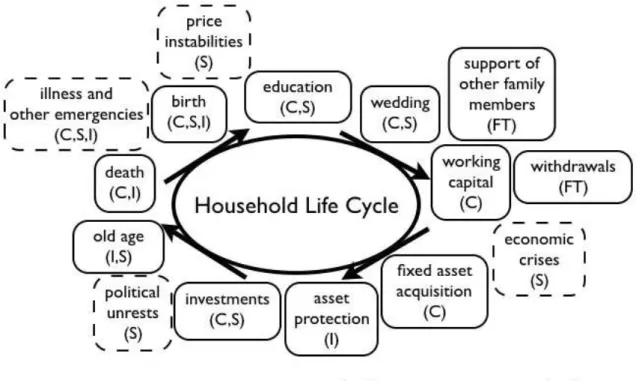
Figure 1: Financial Needs in a Household Life Cycle (adapted from
Landolt 2009, 15) 44
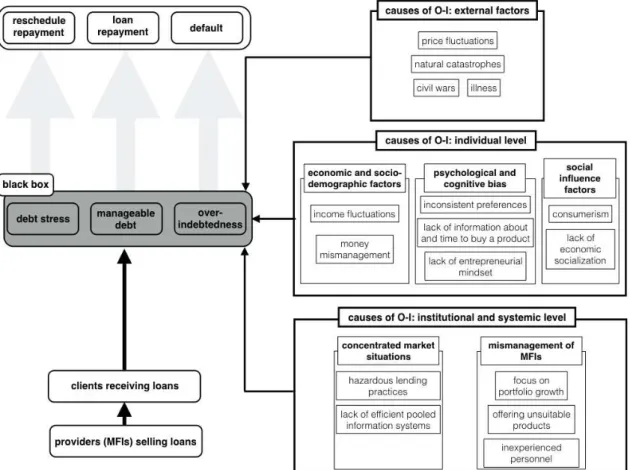
Figure 2: Within the Black Box – Manageable Debt, Debt Stress,
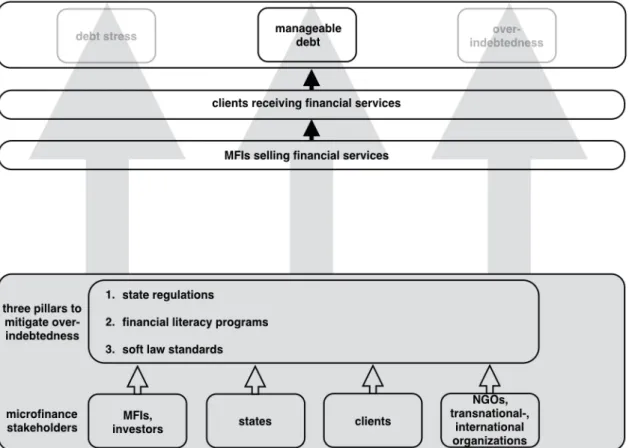
Over-Indebtedness (O-I) (own figure) 54 Figure 3: The Causes of Over-Indebtedness (O-I) (own figure) 72 Figure 4: The Multi-Stakeholder Framework of Responsible
Microfinance (revised and updated from
Responsible Finance Forum 2011) 120 Figure 5: Capital Formation Life-Graph (own figure) 141 Figure 6: Regulatory Outcomes (adapted from Mattli and
Woods 2009, 16) 158
Figure 7: Regulatory Outcomes of the Four Analyzed
Cases (own figure) 205
Figure 8: Multi-Stakeholder Framework of Responsible
Microfinance Including Practical Strategies to Mitigate O-I 213 Figure 9: Financial In- and Outflows of MFIs (Landolt 2009, 8) 232
L
IST OF
T
ABLES
Table 1: Extent of Institutional Supply: UN Guidelines on
Consumer Protection 193
Table 2: Extent of Institutional Supply: UN Guiding Principles on
Business and Human Rights 194 Table 3: Extent of Institutional Supply: Smart Campaign’s Client
Protection Principles and Certification Program 196 Table 4: Extent of Institutional Supply: SPTF’s Universal Standards for
L
IST OF
A
BBREVIATIONS
APR Annual Percentage Rate BoP Bottom of the Pyramid
CGAP Consultative Group to Assist the Poor CFI Center for Financial Inclusion
CI Consumers International
DFID Department of International Development ECJ European Court of Justice
ECOSOC UN Economic and Social Council ESG Environmental, Social, Governance EU European Union
GAO U.S. Government Accountability Office GNI Gross National Income
ILO International Labour Organization IMF International Monetary Fund IO International Organization MFI Microfinance Institution
NGO Non-Governmental Organization NCP National Contact Point
OECD Organization for Economic Co-operation and Development OHCHR Office of the High Commissioner for Human Rights
O-I Over-Indebtedness PAR Portfolio at Risk
ROI Return on Investment
ROSCAs Rotating Savings and Credit Associations RQ Research Questions
SC Smart Campaign
SEBI Securities and Exchange Board of India SMEs Small to Medium Size Enterprises SPTF Social Performance Task Force WTO World Trade Organization UN United Nations
UNCTAD UN Conference on Trade and Development UNDESA UN Department for Economic and Social Affaires UNGPBHR UN Guiding Principles on Business and Human Rights UNPCP UN Guidelines for Consumer Protection
A
CKNOWLEDGEMENTS
This thesis would not have been possible without the support and inputs of a number of dear friends, family, colleagues, and my supervisors. I would like to express my gratitude and appreciation to all of them for being part of this not only wonderful but at times also challenging journey.
I would like to thank the advisors that helped me during the course of this research. I am indebted to my main supervisor Francis Cheneval, who provided guidance and advice at every stage of the project. As his teaching and research assistant at the Center for Ethics at the University of Zurich, I was given the opportunity to follow my research interests, teach, and organize and manage interdisciplinary events in the field of impact investing. During three years these events provided me with a valuable network of individuals to discuss and debate my research. Also I would like to thank Markus Huppenbauer for his support during this project. His cluster meetings on economic and corporate responsibility were a source of inspiration and knowledge.
Thanks are also due to my colleagues at the Center for Ethics and the Department of Political Science at the University of Zurich, which made my doctoral studies, my writing, and working hours pleasant and fun. Especially, I would like to thank Martin Beckstein, Lineo De Vecchi, Alice El-Wakil, Christoph Laszlo, Julia Meyer, Michael Räber, Johan Rochel, and Franziska Spörri for their help and comments on various parts of this book. I am also deeply indebted to my friends and family that endured patiently my dissertation talk.
I would like to express my gratitude to my dear friend and colleague Antoinette Scherz, who contributed greatly to this project. She was a constant source of support and gave me helpful advice on this book as a whole. I am beyond thankful to Annette Krauss for having confidence in my work. She was always willing to discuss ideas and share her broad knowledge of microfinance. Also I am indebted to Susanne Post my dearest sparring partner. Ever happy to debate conceptual questions, structure, and
the project as a whole, I cannot thank her enough for her contribution to and support for this book. Also I would like to thank Beverly Weiss for proofreading this research.
Over the course of this project, I have accumulated a large debt of gratitude to my husband Robert Loosli. I am thankful for the confidence he put in this project and me. During this time he was nothing less but encouraging, patient, and loving.
I
NTRODUCTION
1
Inclusive Development Strategies, Microfinance,
and Over-Indebtedness
With his statement that development strategies should aim for „build[ing] development around people rather than people around development” and that they should target the „productivity of the poor”, Ul Haq’s book The Poverty Curtain – Choices for the Third World heralded the start of a new perception that development strategies should be inclusive and orient themselves to the needs of the poor (1976, 28)1. The introductory paragraphs in the first United Nations (UN) Human Development Report of 1990 elucidated this novel perception further.
This Report is about people - and about how development enlarges their choices. […] No one can guarantee human happiness, and the choices people make are their own concern. But the process of development should at least create a conducive environment for people, individually and collectively, to develop their full potential and to have a reasonable chance of leading productive and creative lives in accord with their needs and interests. (Ul Haq 1990, 1)
Microfinance, as a prominent example of an inclusive development strategy, tries to provide this conducive environment for the Bottom of the Pyramid (BoP)2 to lead productive lives. Described as the process of
1 His claims resonate with the later developed approaches known as the Capability
Approach (Sen 2000a) or the Human Development Approach (Nussbaum 2011).
2
„The term base or bottom of the pyramid [BoP] describes a consumer profile, as well as a portion of the financial market and financial services and products directed at this consumer profile. The consumer profile is characterized by a number of related and overlapping potential vulnerabilities including low or variable incomes, lower levels of financial literacy and capability, and limited access to or experience with formal financial services. Often, these characteristics correlate with other factors, such as lower education levels, illiteracy, language differences, minority racial or ethnic status, and longer distances from major population centers” (M. Chapman and Mazer 2013, 1). The term bottom of the pyramid (BoP) was first coined by Prahalad and Hart (2002; see also Prahalad 2010).
microfinance institutions (MFIs)3 providing the BoP with different financial services, microfinance furthers financial inclusion4 and eventually aims to lift the BoP out of poverty. Financial inclusion has gained momentum in recent years, and has become a considerably important subject for academia, policy makers and a wide array of stakeholders involved in development cooperation (Tilman et al. 2013, The World Bank 2014). Serving as a poverty reduction vehicle, financial inclusion is seen as an inclusive development strategy which aims to enhance the distribution of income by means of generating opportunities in the economic as well as in the social sphere (Chibba 2011, 78–79). The goal of financial inclusion is to widen and facilitate the poor’s access to financial services.
Microfinance is one of the key strategies to enhance financial inclusion5 and the object of this study. However, there is nothing trivial about furthering financial inclusion with microfinance. Microfinance, if not conducted responsibly, may bring about unintended and often adverse effects. One of the key messages of the Global Financial Development Report 2014 for Financial Inclusion is „[i]f inclusion is to have positive effects, it needs to be promoted responsibly. Financial inclusion does not mean credit for all at all costs” (The World Bank 2014a, 14). Microfinance was long perceived as a cure-all to reduce poverty in low- and middle-income countries in order to increase the poor’s access to financial markets. Microfinance would enable the BoP to start or expand (mostly self-employed) businesses with a loan and become profitable. By means of
3
The term microfinance institutions (MFIs) is henceforth used interchangeably with the term microfinance providers.
4
Financial inclusion is the opposite of financial exclusion. The latter refers to the process where people are prevented from „gaining access to the financial system” (Leyshon and Thrift 1995, 312). Over the past decades, financial exclusion has increasingly come to the attention of governments and international and transnational organizations, as a dimension to be taken into account in the fight against poverty and social exclusion (Dangi 2012, 70). The term social exclusion was coined by René Lenoir secretary of the social security
department in France under the presidency of Valéry Giscard d'Estaing in the 1970s (see Lenoir 1974). Social exclusion can be understood as an umbrella term and includes financial exclusion. It is presented as one of the major problems today’s development strategies attempt to fight. Sen (2000b, 1–2) provides a good overview of the usage of the concept of social exclusion and how it connects to and has taken root in the discourse about poverty and capability deprivation over the past 40 years.
5
Other financial inclusion endeavors comprise financial literacy programs, promoting private-sector development, and regulatory and legislative support from governments.
microfinance the poor should also be able to smooth fluctuations in consumption as well as invest in education and health (Karlan and Zinman 2010, 436; Collins et al. 2011; Armendáriz and Morduch 2010). Especially the years 2005 and 2006 were important for the exceptional growth of microfinance markets. The Secretary General of the UN stated referring to the ‘year of microcredit’ in 2005:
[O]nce the poor were commonly seen as passive victims, microfinance recognizes that the poor people are remarkable reservoirs of energy and knowledge. And while the lack of financial services is a sign of poverty, today it is also understood as an untapped opportunity to create markets, bring people in […] and give them the tools […] to help themselves. (Kofi Annan, UN, Geneva Symposium, 10/10/2005)
One year later as Muhammad Yunus, the founder of the renowned ‘Grameen Bank’ in Bangladesh, was awarded the Nobel Peace Prize, microfinance saw another boost and was identified as effective development assistance6.
6
Further reasons for the growing importance and the increased growth of microfinance for the past four decades are: First, empirical evidence from the field, despite its limitations in regard to generalization, suggests that microfinance has a positive impact on economic self-sufficiency (Karlan and Zinman 2010, 453). Setboonsarng and Parpiev argue, for example, that microfinance helps reaching the Millennium Development Goals (MDGs), especially the goal to half the number of people living on less than US$ 1 a day (2008, 1).
Second, interest stems from an economic point of view. The fact that globally 50 percent of the adult population lacks a bank account, translates into an untouched market of 2.5 billion unbanked individuals (Demirgüç-Kunt and Klapper 2012, 2).
2
Rethinking Microfinance: Connecting Recent
Developments and Insights to Explore New
Avenues
After years of concentrating on growth and outreach of microfinance academics as well as individuals and groups of the private and public sector have started to evaluate the assets and drawbacks of microfinance more critically. Recent experimental studies have found that microfinance in fact has a limited impact on health, education and income (Banerjee, Duflo, and Kinnan 2015, 25–26). Furthermore, over-indebtedness as a pressing issue within microfinance has been prominently discussed in the media and especially in the case of the over-indebtedness crises in Andra Pradesh, India. Microfinance clients had taken up too much debt and had slid into over-indebtedness. Scholars have lately started to analyze the causes and adverse and wide-ranging effects over-indebtedness has not only on microfinance clients, but also on MFIs’ financial sustainability, and the stability of microfinance markets. Additionally, they have investigated how over-indebtedness could be minimized.
Two research topics, however, have been widely left untouched. First,
over-indebtedness as the most mediatized and as one of the pressing issues in microfinance showed the wide-ranging impact it has had on clients, MFIs, and markets to a wider public. While many authors investigate the phenomenon of over-indebtedness, no paper or publication, to the best of my knowledge, has yet addressed whether the devastating effects of over-indebtedness crises in combination with the other two core premises of microfinance, namely to follow a social mission, and to provide financial services to vulnerable clients, implies a rethinking of the current understanding and definition of microfinance. Arguing that microfinance clients should be protected from harmful practices and claiming that the connection between the current understanding of microfinance and the protection of its clients is a much more direct one, I advocate and propose an extended definition of microfinance including a quality-dimension demanding MFIs to abide by client protection standards. Second, although
scholars propose ways to mitigate over-indebtedness from different angles and with different microfinance stakeholders (McKee, Lahaye, and Koning 2011; Guérin, Morvant-Roux, and Villarreal 2014; Brix and McKee 2010; Schicks 2010; Schicks 2011b; Schicks 2012; Kappel, Krauss, and Lontzek 2010; Johnson 2014; Hummel 2014; Guérin 2013; Guérin et al. 2014; Schicks and Rosenberg 2011; Wampfler, Bouquet, and Ralison 2014) the implications made in these publications had been seldom connected to and presented within an encompassing framework of coordinated and cooperated action to fight over-indebtedness. McKee, Lahaye, and Koning (2011) are among the few who make this connection. They propose a framework of responsible finance within which over-indebtedness can be mitigated from different angles and stakeholders. However and this holds for the few publications connecting responsible finance with microfinance, they do not clarify what ‘responsible’ or ‘responsibility’ in this context means. In the course of this research project, I advocate working towards a ‘multi-stakeholder framework of responsible microfinance’ that constitutes a specification of the broader and fuzzier framework of responsible finance. In doing so, I primarily elaborate the possible functions responsibility could have in such a framework. Thereafter, I present a framework of responsible microfinance including three pillars (i.e. state regulations, financial literacy programs, soft law standards) and analyze three to four cases for each pillar. These cases constitute tangible strategies to alleviate over-indebtedness among microfinance clients. The two overarching research questions of this study are therefore: On what grounds can an extension of the current definition of microfinance by a dimension accounting for how microfinance products should be delivered be advocated? And, what could a framework of responsible microfinance look like, and what are the potential functions ‘responsibility’ could take in such a framework?
In the succeeding chapter, I present the research design of this study, starting by introducing all of the research questions arising throughout this research project, briefly summarizing the arguments of the four parts it entails, and addressing the research methods used. I conclude by
presenting the main goals this research project pursues and what contributions it could potentially make.
3
Research Design
This research endeavor is concerned with the overarching questions of what grounds there are to extend the current definition of microfinance, and how over-indebtedness, having serious and far reaching consequences not only for clients but also for MFIs and microfinance markets, can be mitigated. Additionally, there are further research questions that arise throughout the course of this research project. All the research questions are introduced below. Please note that in each of the four parts of this study the corresponding research questions will be separately introduced once more and a short literature review will be presented. In order to provide possible answers to the following research questions, my arguments are based on theories, insights, and empirical evidence from the fields of political science and philosophy, economics, behavioral economics, psychology, law, and ethics.
3.1
Introducing the Research Questions and the
Structure of this Research Project
Hereafter, I briefly elaborate on all research questions that arise throughout this research project and provide a summary of the arguments brought forward in each of the four parts constituting this study.
RQ I Although the main premise of microfinance is to be financially profitable and to help clients better their livelihoods, recent studies have shown that microfinance in fact also could have adverse effects that may leave microfinance clients over-indebted. Scholars and practitioners alike call for enhanced protection of microfinance beneficiaries. This demand is so
comprehensive that the question arises whether protecting microfinance clients from harmful practices is so substantial that the current definition of microfinance should be revised and extended by the requirement to adhere to client protection standards (i.e. quality-dimension). The first research question, which is discussed in Part I of this study is the following: On what grounds can an extension of the current definition of microfinance by a dimension accounting for how microfinance products should be delivered be advocated?
RQ II Assuming that there are grounds to extend the microfinance definition by a quality-dimension accounting for the better protection of microfinance beneficiaries when provided with financial services, Part II demonstrates that due to the manifold and intertwined reasons for over-indebtedness, it is not sufficient to ‘only’ require MFIs to abide by client protection standards. Rather the question arises whether there is a range of approaches that could contribute to the lasting mitigation of over-indebtedness, MFIs delivering a certain quality of products being just one of them. The second research question, which is discussed in Part II of this research project, is: What are the causes and consequences of over-indebtedness and what approaches could be suited to mitigate over-indebtedness from different angles?
RQ III The analysis of Part II reveals that there are mainly three approaches to fight over-indebtedness: state regulations, financial literacy programs, and soft law standards. The main goal of Part III is to argue that the extended definition developed in Part I in combination with the three approaches deduced from the over-indebtedness
analysis in Part II could be connected to an encompassing multi-stakeholder framework of responsible microfinance. However, responsible microfinance is a young and fuzzy concept that still lacks a common definition and literature further neglects to concretize what ‘responsibility’ in the context of microfinance could mean. The third research question, which is discussed in Part III of this research project, is therefore: What is responsible microfinance and how could responsibility be interpreted in this context?
RQ IV & V Defining and concretizing the concept of responsible microfinance facilitates the development of a multi-stakeholder framework of responsible microfinance, which stands on three pillars (e.g. state regulation, financial literacy programs, soft law standards). In Part IV, I explore and elaborate on practical cases that mitigate over-indebtedness in regard to each pillar to illustrate how responsible microfinance could be enhanced and enforced. The fourth and fifth research question, which are discussed in Part IV of this study, are as follows: What could a framework of responsible microfinance look like? What are the possible actors involved and which practical strategies to mitigate over-indebtedness could they further?
Short Summary of Argument – Part I
MFIs are extending credit to low- to zero-income clients, who cannot show any collateral. Therefore, MFIs have to use a business model accounting for the risks of providing uncollateralized loans, and at the same time manage the information asymmetries underlying traditional loan contracts. Having no securities in case of a defaulting client requires MFIs to use specific group- and individual lending methodologies, which help MFIs to prevent their clients from defaulting.
In the 1990s, microfinance markets registered unprecedented growth and soon microfinance was talked about being the most encouraging poverty reduction vehicle. However, MFIs started to ease their lending practices in order to enlarge the outreach and profitability of their business, which eventually led to clients taking on more debt than they could manage. These developments peaked in a few microfinance markets suffering over-indebtedness crises7, which served as a demonstration showing that after all the ‘microfinance promise’ of the 1990s did not hold true. The failed microfinance promise and the realization that clients suffered greatly from over-indebtedness made scholars and practitioners alike demand enhancing the protection of microfinance beneficiaries. Accounting for this call the question whether the protection of microfinance clients is so substantial that extending the current definition of microfinance becomes necessary to be investigated. To substantiate that in fact the definition of microfinance should be extended in such a way that microfinance should not only be defined in regard to what kind of products microfinance entails, who the target group is and who provides the services, but also how they are supplied or which quality they have, three arguments are brought forward.
I. The Vulnerability of Clients
People living at the BoP are much more vulnerable to seemingly normal life events and to external shocks than people living above a certain income level. By discussing the dichotomy between average and vulnerable clients, it surfaces that microfinance clients are by default vulnerable clients and need „a higher level of protection” (Benöhr 2013, 17).
7
Microfinance markets that underwent repayment crises were Bolivia (1998-1999), Colombia (1999-2000), South Africa (1999-2002), Morocco (early 2008), Bosnia and Herzegovina (2008), Pakistan (late 2008), Nicaragua (2009-2010), India (2010) and Chile (2010-2011) (Chen, Rasmussen, and Reille 2010, 1; Davel 2013, 12).
II. The Social Mission of MFIs
The social mission of microfinance is the cornerstone of this business model. Since the early days of microfinance the double bottom line8 has been the constitutive element of microfinance. Owing to their social mission MFIs should therefore apply certain measures to protect their clients from harmful practices.
III. Over-Indebtedness Crises
The causes triggering over-indebtedness crises are diverse and intertwining. Contrasting with the beliefs of the 1980s and 1990s, academics as well as individuals and groups in the private and public sector started realizing that microfinance may in fact produce adverse effects and they have recently commenced to assess the advantages and disadvantages of microfinance more critically. One special focus has been directed at the causes and consequences of over-indebtedness and what promising ways there are to minimize the probability of getting over-indebted. The principal suggestion from scholars is to increase the protection of microfinance clients.
On the grounds of these three arguments, I advocate a rethinking of what microfinance defines in such a way that a quality- or how-dimension9 is included into the current definition of microfinance. The extension of the definition of microfinance creates a general understanding that microfinance ought to be carried out within certain boundaries, to which I refer in Part I as consumer or client protection. Encouraging that microfinance products should be provided in accordance with client protection standards, I set a benchmark how the quality-dimension could be evaluated. Justifying that the adherence of MFIs to client protection standards while supplying financial products is a fundamental feature of microfinance is the main goal of Part I.
8
Helping the BoP out of poverty by providing them with financial services and at the same time aiming for profitability is known as the double bottom line of microfinance.
Short Summary of Argument – Part II
In Part II of this research endeavor further implications of the extended definition of microfinance are elaborated. Starting from the assumption that the reasons for microfinance clients struggling with too much debt cannot be solely accounted to the malpractices of MFIs, a detailed analysis of the causes and consequences of over-indebtedness, not only on the MFI but also on the client and market level, helps to assess whether including the quality-dimension into the definition of microfinance lastingly protects clients from the risk of unmanageable debt or if there is need for a more comprehensive and protective framework. Accounting for the many causes and wide-ranging consequences that over-indebtedness has and brings along, it is recommended that microfinance stakeholders could alleviate over-indebtedness from various perspectives. The analysis reveals that there are three promising approaches suitable to counter over-indebtedness: state regulation, financial literacy programs, and soft law standards. To protect microfinance clients effectively from over-indebtedness, it is insufficient to extend the current definition of microfinance. Analyzing the causes and consequences of over-indebtedness in Part II suggests working towards and conceptualizing a broader framework, which includes all relevant microfinance stakeholders and calls upon them to take the responsibility necessary when doing business with the BoP. Such a framework will be developed in Part III and further discussed in Part IV.
The in-depth analysis of the manifold and intertwined causes and consequences of indebtedness emphasizes the centrality over-indebtedness takes in microfinance and gives leeway to thinking about connecting the extended definition of microfinance, which requires MFIs to protect their clients from harmful practices, to an encompassing multi-stakeholder oriented framework including tangible strategies to fight over-indebtedness.
Short Summary of Argument – Part III
In Part III, I connect the extended definition of microfinance with the comprehensive and multi-stakeholder oriented framework of responsible microfinance. The concept of responsible microfinance has only surfaced in the past few years and presupposes that due to the vulnerability of microfinance clients, microfinance’s social mission, and the threats over-indebtedness pose to the client’s well-being, the MFI’s financial sustainability and the systemic stability, microfinance stakeholders have a responsibility to mitigate over-indebtedness. What this responsibility could mean, however, is neglected by literature. The possible functions which responsibility could take within a framework of responsible microfinance are left undefined. Therefore, the aim of Part III is to further define and concretize the concept of responsible microfinance, and to underpin the framework with an approach to responsibility to spark a debate about how narrow or wide this responsibility shall be interpreted in the context of responsible microfinance.
Responsible microfinance is developed as having an overall demand for enhanced responsibility when doing business with vulnerable clients. Additionally, responsible microfinance has three more specific demands: MFIs balance their financial and social performance (1), stakeholders should contribute to enabling and enforcing responsible microfinance (2), and MFIs should hold themselves responsible for their social mission (3). Whereas the first two demands will be elucidated in Part IV, Part III is concerned with the overall demand for responsibility within microfinance and the specific claim that MFIs should hold themselves responsible for attaining their social mission. In Part III a definition of responsible microfinance is developed and a definition of ‘responsibility’ is provided. Furthermore, a main focus is put on the question whether MFIs as group agents can be held responsible.
The concept of responsible microfinance is still in its infancy and needs more work, nevertheless concretizing and defining how responsibility could be interpreted in this context contributes to the discussion about how responsible microfinance might evolve and further develop. In Part III, by defining and putting into context what responsibility could mean I aim to
provide responsible microfinance with a foundation. Having an approach to responsibility narrows down the interpretational range of what responsible microfinance is. A common understanding of responsible microfinance would lead to translating a fuzzy practical into a definable concept, which might also be used in more theoretical work.
Short Summary of Argument – Part IV
Whereas Part III focuses on the overall demand for responsibility in responsible microfinance, Part IV is concerned with elaborating on the remaining two demands of responsible microfinance calling for balancing the financial and social performance, and enabling and enforcing responsible microfinance. Therefore, I explore and elucidate on the three pillars of responsible microfinance (i.e. state regulations, financial literacy programs, soft law standards). Analyzing three to four practical cases for each pillar provides the framework with tangible strategies to alleviate over-indebtedness among microfinance clients.
I. State Regulations
Three cases in the realm of state regulations that potentially mitigate over-indebtedness and enable and enforce responsible microfinance are explored. First, I elaborate on behaviorally informed consumer protection regulations with a focus on disclosure requirements, fair treatment and recourse mechanisms (Case I). Second, credit bureaus and their potential to prevent cross-borrowing are explored (Case II).
Third, I dwell on the widely neglected topic of how private insolvency systems could help to provide over-indebted microfinance clients with a ‘fresh start’ (Case III).
II. Financial Literacy Endeavors
Three cases of how financial literacy programs can enable and enforce responsible microfinance and therefore mitigate over-indebtedness are discussed. First, the financial literacy program of SEWA Bank (India), which uses in-depth knowledge about their
clients to assess their financial situation and financial literacy level, is presented (Case IV). Second, ‘Makutano Junction’, a Kenyan soap opera, is introduced as a way to educate microfinance clients and raise awareness of and thereby have the potential to mitigate over-indebtedness among viewers (Case V). Third, digital games as a possibility to educate clients about the risks and costs of microfinance products are addressed (Case VI).
III. Soft Law Standards
Four cases of how soft law standards enable and enforce responsible microfinance and prevent over-indebtedness are analyzed. First, the UN Guidelines for Consumer Protection with a specific focus on the newly added financial services chapter are elucidated (Case VII).
Second, the UN Guiding Principles on Business and Human Rights are
discussed (Case VIII). Third, Smart Campaign’s Client Protection Principles and Certification Program, which is specifically aimed at protecting microfinance clients from over-indebtedness, is analyzed (Case IX). Fourth, The Social Performance Task Force’s Universal Standards of Social Performance Management, which are the most encompassing soft law standards targeted at microfinance as well as the most demanding ones, are addressed (Case X).
In Part IV of this research project, I develop and present a comprehensive multi-stakeholder framework of responsible microfinance within which individual, as well as institutional and systemic risks connected to over-indebtedness among microfinance clients, can be alleviated. I analyze ten cases that represent practical strategies of how responsible microfinance as a coordinated and cooperative effort of multiple microfinance stakeholders can be enabled and enforced.
3.2
Methods
Extending the definition of microfinance by adding a quality-dimension and connecting this understanding of microfinance to an encompassing multi-stakeholder framework of responsible microfinance I break new ground and contribute to and concretize a conception of microfinance that orients itself to the well-being of its vulnerable clients. This research area is understudied and therefore also the research method is largely explorative. Insights and results from explorative studies that use less structured methods are limited in regard to generalization. Generally, explorative studies trade generalizability and comparability for an in-depth and contextual understanding of the studied phenomena and higher internal validity (Maxwell 2013, 88).
In order to elaborate on the research questions in Part I to III, I conduct a secondary source analysis. Hence, I consider secondary sources, such as qualitative, quantitative, and theoretical publications, and draw inferences in regard to the current research questions. To investigate the research questions of Part IV, especially when analyzing the ten cases to enhance and enforce responsible microfinance, I mainly use primary sources. Primary sources that are examined in this regard are, for example, documents, presentations, reports, minutes, soft law standards, covenants, regulations, and working group transcripts. If there are secondary sources discussing the same, or similar primary sources, I refer to them to substantiate my conclusions.
3.3
General Discussion of Availability of Data and
Literature
As discussed in other microfinance publications, data availability in the field of microfinance is an issue, especially in regard to the topic of over-indebtedness (see for example Kappel, Krauss, and Lontzek 2010, 2). This is mostly due to small sample sizes preventing the possibility of generalizing results. Furthermore, there are only a few academic research papers
discussing over-indebtedness in microfinance (see for example Guérin, Morvant-Roux, and Villarreal 2014; Morvant-Roux et al. 2014; Schicks 2012). Most of the literature debating and analyzing over-indebtedness in microfinance include policy papers and reports commissioned by international or advocacy organizations (see for example Ardic, Ibrahim, and Mylenko 2011; Brix and McKee 2010; Forster et al. 2010; CGAP 2012; Chen, Rasmussen, and Reille 2010). In regard to responsible microfinance there are, to the best of my knowledge, no academic research papers so far and only a few policy papers and reports (McKee, Lahaye, and Koning 2011; Chien 2012; Koning and McKee 2011; Koning and Wardle 2014; Responsible Finance Forum 2011; Haebig and Gross 2012). The scarcity of secondary and primary sources has challenged this research project insofar as the generalizability and the comparability of the results of this study are very limited.
In the following, I separately discuss the research outline, case selection, and data quality and availability for Part IV where I analyze ten practical cases of how over-indebtedness can be mitigated within a framework of responsible microfinance.
3.4
Separate Discussion of Research Outline of
Part IV
Part IV explores practical cases for each of the three pillars of the multi-stakeholder framework of responsible microfinance (i.e. state regulations, financial literacy programs, soft law standards). For Pillar I and II, I present three cases and for Pillar III, I present four cases that shall illustrate practical strategies to mitigate over-indebtedness among microfinance clients. By means of a thick description, I conduct ten single case studies. Whereas I discuss the Cases I to VI of the first and second pillar in detail, I put an in-depth focus on the Pillar III (i.e. soft law standards).
The four soft law standards that I analyze in Pillar III have one common characteristic, namely that they all have established part or all of their
standards by consulting with an array of stakeholders. Resonating with the introductory paragraphs at the beginning of this research project, advocating an understanding of microfinance that should be oriented towards the client, and elaborating more on the consultative and participatory elements of soft law standard setting, I evaluate four hard cases of soft law standards against the common interest regulation theory by Mattli and Woods (2009) (see Chapter 19).
3.4.1
Case Selection
The main goal of Part IV is to analyze ten practical cases that contribute to the mitigation of over-indebtedness. The chosen cases should offer data available to analyze their impact on the alleviation of over-indebtedness. Optimally, the cases are well documented and secondary but especially primary sources are available. Furthermore, the selected cases have to be of „practical relevance and social importance” (Blatter and Haverland 2012, 102). All of the ten cases are hard cases due to their importance, pioneering role, or uniqueness in regard to their contribution to the mitigation of over-indebtedness.
3.4.2
Availability of Data
Cases I to VI are well documented and there are secondary and primary sources available for a detailed description. As the focus lies on the soft law standard cases (Cases VII-X) also the data availability in this regard is crucial. Cases VII to X – the UN Guidelines for Consumer Protection, the UN Guiding Principles on Business and Human Rights, the Smart Campaign’s Client Protection Principles and Certification Program, and the Social Performance Task Force’s (SPTF) Universal Standards of Social Performance Management – are very well documented and there is substantial information about the stakeholders involved. There is furthermore a delineation of who is actually taking decisions and thus involved in the
decision-making processes. In order to conduct the case studies I will mainly draw on primary data sources.
Although data availability is good, there is mainly one challenge to face throughout this research endeavor. Microfinance is still a young, ever-growing, and changing field of research. During the research period, internet resources, such as minutes, datasets, reports, and policy papers were not accessible any longer under the same title or URL address not only due to updates but also because certain websites were not online anymore.
3.5
Goals of this Research Project and Potential
Contribution
The main goals and contributions of this research project are twofold. First
and foremost, I develop and concretize a framework of responsible microfinance that presents tangible strategies of how to fight over-indebtedness from different angles. The second contribution is that the proposition of such a framework however presupposes the rethinking of what elements actually define microfinance. Without an understanding of microfinance, which accounts for the vulnerability of microfinance clients, the social mission of MFIs, the reaction to over-indebtedness crises of late, and therefore the demand that microfinance be conducted in certain boundaries (i.e. quality-dimension), the framework of responsible microfinance would lose a part of its foundation.
In the concluding Chapter 21, the goals of this study are recapitulated, the study’s results and its overall contribution are discussed, and its implications and direction for future research are addressed.
P
ART
I
–
M
ICROFINANCE
:
A
DDING A
N
EW
D
IMENSION
4
Bringing Financial Services to the Poor
Microfinance includes the provision of small-scale financial services to individuals living at the BoP. In the optimal case, microfinance presents us with a win-win situation. On the one hand, microfinance has a social mission aiming to empower its clients in different respects and may eventually enable them to permanently escape poverty. On the other hand, MFIs earn money by providing the BoP with financial services that may grow and expand their businesses. This might ultimately have positive effects on the economic growth of a region or a country as a whole. However, recent over-indebtedness crises in microfinance markets have revealed that positive impact does not always materialize and that reality greatly differs from the often-suggested optimal case. As will be later discussed in greater detail, microfinance markets in Bolivia, Colombia, South Africa, Morocco, Bosnia and Herzegovina, Pakistan, Nicaragua, India and Chile were seriously shaken or collapsed entirely (Chen, Rasmussen, and Reille 2010, 1; Davel 2013, 12). Crises were caused by aggressive commercialization of the microfinance sector combined with not only abusive lending practices, concentrated market competition, political interferences but also non-repayment movements. These were the main triggers that led microfinance clients into over-indebtedness. Seemingly it is the potentially vulnerable microfinance clients that have to notice and bear the detriments of such crises the most.
Since microfinance crises imply wide-ranging and devastating consequences, especially on the client-level, scholars and practitioners alike called upon an array of stakeholders to combating the various causes of over-indebtedness mainly through increasing consumer and client
protection10 (Guérin, Morvant-Roux, and Villarreal 2014; Schicks 2011a; Schicks 2011b; Schicks 2012; Schicks 2010; Chien 2012; Brix and McKee 2010). Recent over-indebtedness crises revealed two pressing issues.
Firstly, microfinance clients are rather vulnerable than average clients and need to be better protected from harm. Secondly and despite microfinance providers’ social mission, over-indebtedness crises revealed malpractices on the providers’ side letting clients slide more easily into over-indebtedness. In the light of past over-indebtedness crises and accounting for the demand for enhanced client protection it is questionable whether the current definition of microfinance captures these recent developments. On what grounds could an extension of the current definition of microfinance by a dimension accounting for how microfinance products should be provided be advocated?
The first part of this research project pursues two goals. First, a general overview of microfinance and its workings is presented (Chapter 4 and 5).
Second, the current definition of microfinance as introduced in Chapter 5.1 will be challenged and extended (Chapter 6 and 7).
Part I is structured as follows: Providing financial services to the BoP is no simple task. Chapter 4.1 explains the difficulties of investing into low-income countries in general and what specific problems (e.g. information asymmetries, no collateral) microfinance providers face when trying to invest into micro businesses. Chapter 4.2 entails a short outline of the evolvement of microfinance, discussing how different initiatives for improved protection of microfinance clients developed and gained importance after the ‘microfinance promise’ of the 1990s did not hold true.
For a general understanding of microfinance and its vocabulary, which is a prerequisite for every part of this research project, and particularly to appreciate the centrality of client protection in microfinance, it is key to have knowledge about the functions and difficulties of microfinance. Chapter 5 therefore provides an overview of what microfinance currently defines, what it entails, and who its providers are. A particular focus is
10
Henceforth, I will use the terms client protection and consumer protection interchangeably.
given to the most common product of microfinance, which is credit. Credit relationships between clients and microfinance providers are always characterized by asymmetric information. Referring to the problems of adverse selection and moral hazard, it is explained how microfinance providers overcome these information asymmetries by applying specific lending methodologies. This knowledge later serves as a foundation to understand that specific lending methodologies might not be sufficient to protect microfinance clients effectively from over-indebtedness.
Chapter 6 presents the arguments to extend the current definition of microfinance by a quality-dimension. Three points are particularly important in order to advocate the extension of the definition of microfinance: the vulnerability of microfinance clients (1), the inherent social mission of microfinance (2), and recent over-indebtedness crises (3). These three arguments stand for the importance of how microfinance products should be provided and all three bear implications for how a microfinance provider should actually supply its financial products to the BoP. The extended definition is presented in Chapter 7 and against the backdrop of the three arguments demands microfinance providers building client protection into all of their services. The extended definition therefore considers client protection as essential to the definition of microfinance.
4.1
No Information, No Collateral, No Business?
To argue that banking cannot be done with the poor because they do not have collateral to offer, is the same as arguing that men cannot fly because they do not have wings. Men have the singular distinction, among all animals, of beingextra-ordinarily innovative. Until the
recent past in history nobody ever believed that men will really fly. Today not only do they fly, they fly at a speed and to a distance, which boggles anybody’s mind. Now to argue that this
innovative animal cannot design a
banking system, which does not rely on collateral is simply an insult to human ingenuity. (Yunus 1992a, 75)
Basic economics teaches that a relatively poor entrepreneur is able to make significantly higher returns on her invested capital than a richer entrepreneur. Therefore, she will be also able to pay higher interest rates on loaned money than richer entrepreneurs. The concept is simple: If an entrepreneur invests more money in her business, she has higher returns on her invested capital. However, every time she invests more capital into her business the marginal return on capital will diminish. A street vendor taking out a loan to sell her own fruit needs for example to buy a simple scale in order to weigh the fruit and calculate the price. Besides the scale she might have to invest some of that money in seeds, fertilizer and a rake. After some time she wants to expand her business. She engages a carpenter to build her a small, colorful booth that is lockable and where she can store fruit. The booth attracts a lot of customers and after six months she is ready to hire her first employee. With every investment, she expands her business and also earns more money, but she produces less gains on the money invested. An entrepreneur just starting her business will always have a higher marginal return to the capital invested than an entrepreneur owning a business that has already reached a certain size. Following this logic, poor entrepreneurs should not have any problems to fund their