RFID DATA RELIABILITY OPTIMISER BASED ON
TWO DIMENSIONS BLOOM FILTER
SITI SALWANI BINTI YAACOB
i
RFID DATA RELIABILITY OPTIMIZER BASED ON TWO DIMENSIONS BLOOM FILTER
SITI SALWANI BINTI YAACOB
A thesis submitted in
fulfillment of the requirement for the award of the Degree of Master of Information Technology
Faculty of Computer Science and Information Technology Universiti Tun Hussein Onn Malaysia
In the name of Allah, Most Gracious, The Most Merciful
All praises to Allah SWT, May Allah sends His peace and blessings upon the beloved Messenger, Prophet Muhammad S.A.W and upon his companions, his
family, and all who follow his guidance until the Day of Judgement.
I would like to give a special dedication to my parent,
Hj. Yaacob Bin Md Saat and Hjh. Salipah Binti Kamran, my siblings, Shamsol Yazlie Yaacob, Yuszaimi Yaacob and Ismail Yaacob, my sisters in law,
my nieces and nephew.
Thank you for your love, your encouragement, supports, prayers, everything since this journey started until the final stages. All of you are the main reason for me to
always strive to give the best.
iv
ACKNOWLEDGEMENT
Alhamdulillah, all praises to Allah for the strengths and His blessings in completing this thesis. First and foremost, I would like to express my special appreciation to my supervisor, Dr Hairulnizam Bin Mahdin for his guidance, patience and constant supports since this master journey started until the final stage. His invaluable help of constructive comments and suggestion throughout the experiment and thesis work have contributed to the success of this research. I also would like to take this opportunity to sincerely acknowledge the Universiti Tun Hussein Onn Malaysia (UTHM) for providing financial assistance under the Exploratory Research Grant Scheme (ERGS) who supported me to perform my work conveniently.
I also would like to express my appreciation to the Center for Graduate Studies (CGS) and Research, Innovation, Commercialization and Consultancy Office (ORICC) for their hospitality and supports toward my postgraduate affairs. Not to forget, the team member of the Microsoft Imagine Cup Malaysia and mentor, Prof. Madya Dr. Rathiah Binti Hashim for their motivation, constant support and encouragements.
ABSTRAK
vi
ABSTRACT
TABLE OF CONTENTS
DECLARATION ii
DEDICATION iii
ACKNOWLEDGEMENT iv
ABSTRAK v
ABSTRACT vi
TABLE OF CONTENTS vii
LIST OF TABLES xi
LIST OF FIGURES xii
LIST OF ALGORITHMS xiv
viii
CHAPTER 1 INTRODUCTION 1
1.1 Introduction 1
1.2 Problem Statement 2
1.3 Aim 3
1.4 Research Objectives 3
1.5 Scope of Research 4
1.6 Significance of Research 4
1.7 Research Organizations 5
CHAPTER 2 LITERATURE REVIEW 6
2.0 Introduction 6
2.1 RFID System Architecture 7
2.1.1 Tag 9
2.1.2 Reader 10
2.1.3 Middleware 11
2.1.4 Application 11
2.2 Characteristic of RFID 11
2.3 RFID Challenges and Issues 12
2.4 Fundamental Concept of Data Filtering 15
2.5 RFID Data Filtering Approaches 16
2.5.1 Window Based Approach 17
2.5.2 Bloom Filter Approach 18
2.5.3 Decision Support Model Approach 23
CHAPTER 3 RESEARCH METHODOLOGY 29
3.1 Introduction 29
3.2 Data Preparation 30
3.3 Experimental Design 30
3.4 Filtering Strategy 32
3.5 Two Dimensions Bloom Filter Algorithm (2BF) 32
3.6 Chapter Summary 39
CHAPTER 4 ANALYSIS AND FINDINGS 40
4.1 Introduction 40
4.2 Performance Analysis Algorithms with Different Arrival Rate
41
4.2.1 Time Performance Analysis 41
4.2.2 Duplicate Readings Rate Analysis 42
4.2.3 False Positive Rate Analysis 23
4.3 Performance Analysis Algorithms with Different Noise Ratio
44
4.3.1 Time Performance Analysis 44
4.3.2 Duplicate Readings Rate Analysis 45
4.3.3 False Positive Rate Analysis 46
4.4 Analysis Summary 47
x
CHAPTER 5 CONCLUSIONS AND FUTURE WORK 49
5.1 Introduction 49
5.2 Novelties and Research Contributions 50
5.3 Recommendations and Future Works 51
REFERENCES
VITA
52
LIST OF TABLES
2.1 Comparison of Active, Passive and Semi-Passive Tag 10
2.2 Type of Readings in RFID Data Stream 16
2.3 Majority Voting Table 25
3.1 RFID Tag Readings With Time 36
4.1 Comparison of Time Execution of The Algorithms Under Different Arrival Rate
42
4.2 Comparison of Duplicate Data Filtered Under Different Arrival Rate
43
4.3 Comparison of False Positive Filtered Under Different Arrival Rate
44
4.4 Comparison of Time Execution of The Algorithms Under Different Noise Ratio
45
4.5 Comparison of Duplicate Readings Filtered Under Different Noise Ratio
46
4.6 Comparison of False Positive Readings Filtered Under Different Noise Ratio
47
xii
LIST OF FIGURES
2.1 A RFID Architecture 8
2.2 A RFID-Enabled System 8
2.3 RFID Tag Object 10
2.4 EPC Structure 96-Bit 11
2.5 RFID Data Streams 14
2.6 Noise Data Filtering and Duplicate Data Filtering 17
2.7 (a) Sliding window, and (b) Landmark Window 18
2.8 Noise and Duplicate Filtering Approach 19
2.9 Basic Structure of Bloom Filter 20
2.10 The Operation of Bloom Filter 21
2.11 Local Duplicates and Global Duplicates 22
2.12 Two-Layer Filtering Approach 23
2.13 The Structure of Chain-Llinked Counting Bloom Filter Algorithm
24
2.14 Cluster Based Framework 27
2.15 The Flowchart of Smooth Filtering 28
3.1 2 Dimension Bloom Filter Flowchart 34
4.1 Time Execution Under Different Arrival Rate 42 4.2 Percentage of Duplicate Data Filtered Under Different
Arrival Rate
43
4.3 Percentage of Noise Detected Data Under Different Arrival Rate
44
4.4 Time Execution Under Different Noise Ratio 45
4.5 Percentage of Duplicate Readings Filtered Different Noise Ratio
46
4.6 Percentage of False Positive Readings Filtered Under Noise Ratio
xiv
LIST OF ALGORITHMS
LIST OF SYMBOLS AND ABBREVIATIONS
RFID Radio Frequency Identification 1
LF Low Frequency 8
HF High Frequency 8
UHF Ultra-High Frequency 8
CMOS Complementary Metal Oxide Semi-Conductor 10
EPC Electronic Product Code 11
DTSW Dynamic Threshold Sliding Window 18
DDSW Denoise Duplicate Sliding Window 19
HTB Hash Table Approach 19
DUBF Duplicate Removing Bloom Filter 21
LGBF Local Global Bloom Filter 21
TIBF Time Bloom Filter 23
LGBF 2 Layer Local Global Bloom Filter 24
CCBF Counting-Chain Bloom Filter 24
DUP_FA Duplicate Filter 25
TTTR Three Tags Two Readers Model 25
CBA Cluster Based Framework 27
SFA Smooth Filtering Approach 27
2BF Two Bloom Filter 33
DBF Duplicate Bloom Filter 33
CHAPTER 1
INTRODUCTION
1.1 Introduction
Radio Frequency Identification (RFID) technologies has been broadly applied in
many applications such as supply chain management (Yan et al., 2015), healthcare
management system (Hu et al., 2014), public transport system (Frick, 2014), and
library management system (Kushal et al., 2012). RFID is a technology that uses
radio waves to transfer detecting information between reader and tagged object from
a distance without line of sight. Through radio frequency waves, readers can read
tags in a short range of time.
A typical RFID system consist of tag, reader, middleware and application
(Kour et al., 2014). A tag is a package that can be attached to the physical object.
While reader, also known as interrogator will communicate with the tag by
transmitting radio waves. The tag then sends the radio signal back to the reader and
sends to the server for further analysis and processing of data. The RFID data is
generally in the form of reader_id, tag_id and timestamp (Hu, Li, & Lu, 2013).
As the tag is unique, the readers are able to detect the information of RFID tag
items from a certain location at different times. While for RFID data are generated
quickly and automatically (Zhong et al., 2014), it can be used for real-time
al., 2013), or accumulated for object tracking (Cheng, Ni, & Li, 2014; Chung, Chu,
& Li, 2014; Han et al.,2014).
Since the advancement of RFID technology has been broadened in many
applications, RFID system still suffers from several problems that prevent it being
implemented by the industry. The crucial part by implementing RFID system is to
deal with the flood of data generated by the reader (Kwon et al., 2014). For example,
the Coca-Cola Company produced more than a billion bottles per day. An effective
retail in-store logistics at Coca-Cola Company is necessary to ensure high product
availability at minimum operating cost (Metzger et al., 2013). The unreliable data
reading such as noise, duplicate reading that were produced by RFID reader has
become the primary factor limiting the widespread adoption of this technology.
In that case, it is compulsory to filter the original data to maintain its reliability
of data reading for business process. This is because, a small decrease of effective
read rate will reduce the accuracy and reliability of further data process (Liu et al.,
2014). Therefore, it is necessary to implement filtering technique to provide quality
RFID data.
1.2 Problem Statement
Despite all the promises surrounding RFID, the technology's potential has yet to be
fully realized. The problem of existing data such as data redundancy and noise data
causing raw RFID data become unreliable (Wang et al., 2014; Zhang, Li, & Chen,
2011). These have become an issue and it requires filtering technology capable to
determine which data is important and which data is unimportant to maintain the
reliability of data.
Data redundancy or duplicate readings occurred when the similar RFID data
readings generates repeatedly due to multiple readings cycle and multiple readers
implemented to cover specific area (Mahdin, 2014). The duplicate readings problem
is recognized as a serious issue in RFID and sensor networks (Vahdati, Javidan, &
Farrahi, 2010). For example, in a storage room in the supermarket, readers will
generate hundreds of useless readings that are useless in the enterprise application. In
a real process, we are only interested in the reading that indicates the occurrence of
3
Noise data happens when reader detects a tag, but it is not in the reader’s field
(Ma et al., 2014). This happens because of tag collisions (Fritz et al., 2011) and
reader collisions (Zhang et al., 2013). Reader collision occurs when the signals from
two or more readers overlap. Tag collision occurs when many tags are present in a
small area. Although the occurrence of noise reading is low (Bai, Wang, & Liu,
2006), noise reading can mislead important business decision-making.
In the previous research on RFID data filtering, most of the approaches treated
duplicate reading issue and noise reading issue in separate problem. In this research,
a new single approach is proposed to solve these problems together to enhance the
efficiency in order to get a reliable data in RFID data stream. It is important to
preserve correct data in the database as it will consume the space of the storage and it
can mislead the decision making especially in supply chain management. Therefore,
to maintain the reliability of data, it is necessary to ensure only accurate data are
stored in the data center.
1.3 Aim
The aim of this study is to provide novel solution to address the above-mentioned
issues and propose reliable method to filter noise and duplicate readings that will
enhance RFID data reliability.
1.4 Research Objectives
In order to investigate the research aim, several specific objectives are set as follows:
(i) To propose a new algorithm that filters noise readings and duplicate readings in
RFID data streams.
(ii) To simulate the algorithm that filter duplicate readings and noise readings.
(iii) To evaluate the performance of the proposed algorithm with existing methods
1.5 Scope of Research
The research will be focusing on noise and duplicate data filtering problem, which is
a common issue in RFID system. In the literature, both issues often are treated as
separate problems. It is paramount to have a new single approach to solve these
problems together in order to minimize effort done to get a clean data stream.
Therefore the research objectives are clearly relevant to the above criteria, which aim
to develop a new approach to established research topic.
1.6 Significance of Research
Although RFID systems are vastly emerging as a primary object identification
mechanism, the raw data collected by RFID readers are inherently unreliable. Since
data unreliability would lead to inaccurate decisions or responses, it is imperative
that the data is cleaned before being sent to the backend system for use by RFID
applications. There are several factors that lead to RFID data unreliability: noise and
duplicate readings. For example, a noise reading at one’s checkout point will trigger
false alarms to a customer who has paid for the purchased items. The system here
can be considered not reliable and useless because it cannot detect the purchased
item correctly. The system should be able to filter noise readings completely to avoid
such thing from happening.
Another factor that caused the unreliability of the RFID data is due to duplicate
readings. A reading is said to be duplicated when multiple readings of the same
tagged object are observed simultaneously due to multiple readers or by a single
reader over a period of time. For instance, in the items replenishment example,
multiple RFID readers are needed to achieve shelf replenishment. However, multiple
readers could generate duplicate readings. The duplicate reading would represent in
the incorrect quantity of items on the shelf. For instance, the system will have views
that the shelf still have enough quantity of items and does not need replenishment
5
1.7 Research Organisation
The research consists of five (5) main chapters. The chapters are as follows:
(i) Chapter 1: Introduction
This chapter consists of introduction to research, problem statement, aim,
research objectives, scope of research, significance of research, research
organisation and summary of the chapter.
(ii) Chapter 2: Literature Review
Chapter 2 discussed a brief overview of RFID and issues of data unreliability.
This chapter also presents the relevant background information regarding the
previous approaches in RFID data filtering approach.
(iii) Chapter 3: Research Methodology
Chapter 3 discussed a brief steps and strategy on how to filter noise reading
and duplicate reading in RFID data streams.
(iv) Chapter 4: Results and Findings
This chapter presents the result and analysis of the simulation proposed
algorithm. The proposed algorithm was tested to measure data reliability based
on the RFID data criteria as discussed in Chapter 3. Comparison result of
proposed algorithm with other algorithm is also discussed in Chapter 4.
(v) Chapter 5: Conclusion and Recommendations
Chapter 5 concludes the research study and some recommendations were given
for future works in order to improve system efficiency and data reliability in
CHAPTER 2
LITERATURE REVIEW
2.0 Introduction
RFID technologies in industries has been significantly implemented in large scale and distributed network especially for inventory checking (Qu et al. 2012) and object tracking (Zhong et al. 2013). Despite the benefits that has been discussed in Chapter 1, there were many issues arises that needs solution before the benefits can be realised. This chapter provides the theoretical perspective of RFID system and architecture.
7
2.1 RFID System and Architecture
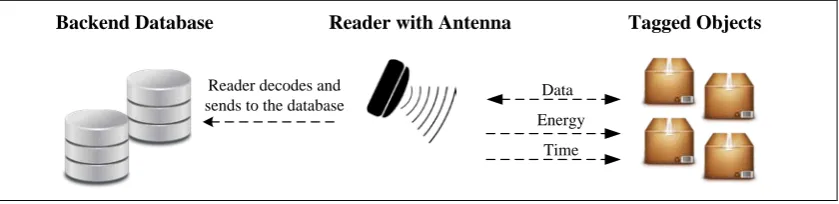
[image:22.595.117.524.252.401.2]This section outlines the architecture of an RFID based solution, typical components and the functional usage of each component. Figure 2.1 shows the typical components of RFID system architecture. There are four main functional components; tags, reader, middleware and database and application (Wu, Cheng, & Chang, 2013). Each of these components provides specific functions and these components integrate to form RFID-enabled system as in Figure 2.2.
Figure 2.1: RFID Architecture
Tags are the most fundamental components in RFID system (Good and Benaissa 2013). RFID tags that contain tagged data are physically attached to the objects. The tags will generates a signal containing respective information that is read by the RFID reader as in Figure 2.2. The RFID reader will create radio waves to detect tag information at the tagged object. Then reader query tags to obtain data and forward the data information through the middleware to the backend database and application servers.
Reader with Antenna
Backend Database Tagged Objects
Data
Energy
Time Reader decodes and
sends to the database
Figure 2.2: RFID-Enabled System
RFID Tag Objects RFID Hardware RFID Middleware Database & Application
[image:22.595.111.531.599.701.2]RFID system can be classified based on the frequency band the system operates. There are three types of RFID systems (Zhu, Mukhopadhyay, & Kurata, 2012); low frequency (LF), high frequency (HF), and ultra-high frequency (UHF). Frequency refers to the size of waves that is used to communicate between reader and tagged object. Each frequency has its own sensitivity and operates differently based on type of frequency.
(i) Low Frequency (LF)
The LF band covers frequencies from 125 – 150 kHz (Bonter and Bridge 2011). This frequency band provides a short read range of 10 cm. The LF band has slower read speed than the higher frequencies, but is not sensitive to radio wave interference. This LF RFID application system includes access control (Kaur et al., 2011) and livestock tracking (Barge et al., 2013).
(ii) High Frequency (HF)
The HF has range frequencies 13.56 MHz. This frequency provides read ranges between 10 cm and 1 m (Koskinen, Rajagopalan, and Rahmat-Samii 2011). HF systems experience moderate sensitivity to harsh environment (Fritz et al. 2011). HF RFID is commonly used for identification, ticketing, and payment system (Menghin et al. 2013).
(iii) Ultra-High Frequency (UHF)
9
2.1.1 Tag
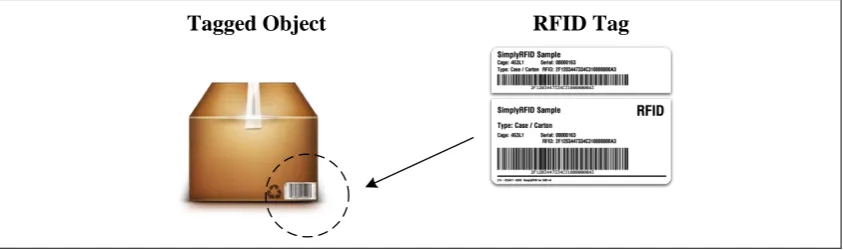
[image:24.595.109.531.116.241.2]Tagged Object RFID Tag
Figure 2.3: RFID Tag Object
Figure 2.3 shows tag that is attached at the object to track its location and information sent using radio waves. The RFID tag was made up of antenna, a wireless transducer and encapsulating material (Reig and Avila-Navarro 2014). There are several types of tags that commonly used in RFID (Wang et al., 2014); active tag, passive tag and semi-passive tag. These tags are categorised based on their power source.
[image:24.595.100.529.667.753.2]Active tag and semi passive tag requires internal power source, usually a low volt current. While passive tags do not need internal power source because it will only become active when a reader is near to re-energize the tags. Active tags usually larger and expensive as it need power source. Generally, active tags are more reliable and accurate, as the tags will broadcast their signal to the reader. Passive tags have no internal power source and rely on the RFID reader to transmit data. Small amounts of electric current is received through radio waves by the RFID antenna, and triggers the complementary metal oxide semi-conductor (CMOS) in the tag to power up and transmit a response (Nilsson and Svensson 2013). Semi-passive tags are similar to active tags as it has its own internal power source. But it does not broadcast the signal until the RFID reader transmits.
Table 2.1: Comparison of Active, Passive and Semi-Passive Tag
Type of Tag Power Source Responsiveness Cost Example
Active Required Broadcast Expensive • Container tracking
Passive Not required Response only Cheaper • EPC
• Credit card
Semi-passive Required Response only Expensive • Electronic toll
Inside tag layer contains the Electronic Product Code (EPC), which is globally unique identifier for the object being tagged (Chen et al., 2015). There are numbers of different encoding formats. These formats can be specific to each individual asset of the company. Usage for every particular tag depends on the tagged object.
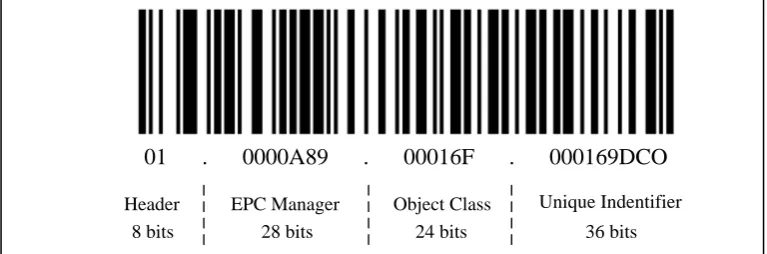
[image:25.595.114.498.331.458.2]To guarantee that each EPC code is unique, the organization driving standards for EPC allocates each company a unique number (GLOBAL 2008). The code is standard and follow universal numbering scheme for physical objects. The EPC identifies each tag individually and it has standard structure as Figure 2.4. The first field in the header defines the coding schemes in operation with the remaining bits providing the actual product code. The manager field is responsible for identifying the product manufacturer. The object class defines the product class itself. The serial number is unique for an individual product class.
Figure 2.4: EPC Structure 96-Bit
2.1.2 Reader
RFID reader is a scanning device that consists of antenna, transceiver and decoder (Irfan, Yagoub, & Hettak, 2012). The function of reader is to send and receive radio frequency data to and from the tag via antennas. A reader may have multiple antennas that are responsible for sending and receiving radio waves.
There are two types of RFID reader: fixed and mobile (Deking, Iyer, & Pappu, 2014). Fixed RFID reader is mounted at specific area or location to read object passing by. It is also can be mounted on moving object such as forklifts to read the object that the forklifts carrying. Mobile RFID reader is a handheld device that usually used to read fixed tag. It can be carried around to read tags in a larger area that needs number of fixed reader to do that.
01 . 0000A89 . 00016F . 000169DCO
Header EPC Manager Object Class Unique Indentifier
11
2.1.3 Middleware
RFID middleware is the interface that operates between the RFID hardware and RFID applications. It focuses on processing the massive RFID data before it is routed to the specific applications. The middleware functions to collects and processes the readings from readers for the use of enterprise applications and enterprise database. The process such as filtering, logic and aggregation transform raw data into the required format for the application.
2.1.4 Application
Application or enterprise applications and database is the topmost layer of components in RFID architecture. In this layer, it actually interacts with user as it consists graphical user interface. The readings that have been filtered into required format are sent to this layer. This layer converts the data from middleware into meaningful information. It then delivers information to other application system or database.
2.2 Characteristic of RFID
RFID is an automatic data capturing technology that generally used in large distributed systems (Zhu et al.,, 2014). RFID has many valuable operations (Leema, Sudhakar, & Hemalatha, 2013) such as, it is contactless and able to detect tagged objects at distance in a short range of time. Besides, mobile tracking can be either reused or disposed depends on the operation requirement of RFID. RFID is readily deployable in harsh environment. RFID technology is a low maintenance cost technology and it does not require human interaction. Some of RFID are able to store data, exchange data, in tag objects during data processing.
(i) Uniform data.
The RFID data generated from the RFID reader is in uniform view (Chen et al., 2014).
(ii) RFID data is massive.
The biggest challenge of RFID is the system generates large data volumes (Chen, Mao, & Liu, 2014). Thus, to deal with such big data is a challenging task.
(iii) Real time RFID data.
The RFID data are generated in real time (Li et al., 2015; Qin, Feng, & Dong, 2015; Zhang et al., 2015; Zhong et al., 2015). This real time data is used for different purpose in RFID such as when identifying existing items captured in store.
(iv) RFID data contains defects data.
The massive data generated contains defects data (Zhu et al., 2014). Defects data exists because of the collision between readers. The RFID system has parallel transponders and receivers, thus information generated every second may not be reliable. Sometimes, it is combined with other tag values or other environmental hindrances.
2.3 RFID Challenges and Issues
Despite of various advantages of RFID system, there are issues and challenges in data management level. RFID system generates massive amount of data, which often contains errors and unimportant readings (Liu et al., 2015). These errors can be classified into three types of error readings that caused by hardware in RFID system (Leema & Hemalatha, 2013); noise reading, missed reading and duplicate reading.
13
2013). Besides tag collisions, the presence of environmental interferences such as water and metal generates unexpected data especially by implementing UHF RFID systems (Bong, Chang, & Oh, 2014).
Another error that caused by the reader is missed reading. The missed read error is one of the factor that makes the widespread adoption of RFID technology become limited. It is because the readers are unable to detect the tagged objects while the tags are actually exist in the vicinity of readers. There are 30-40% missed reading rate in real world RFID deployment and there is higher drop rate probability in other particular environment (Hu et al., 2013).
Duplicate readings happened when several readers read several tags at the same time. It can also occurs when the tag remains in the same vicinity of reader for a long period of time and has been captured several times. The impact of duplicate readings can cause huge loads at the centre server (Zhu et al., 2012). This implication makes the database growing larger in size storing the unimportant anomalies.
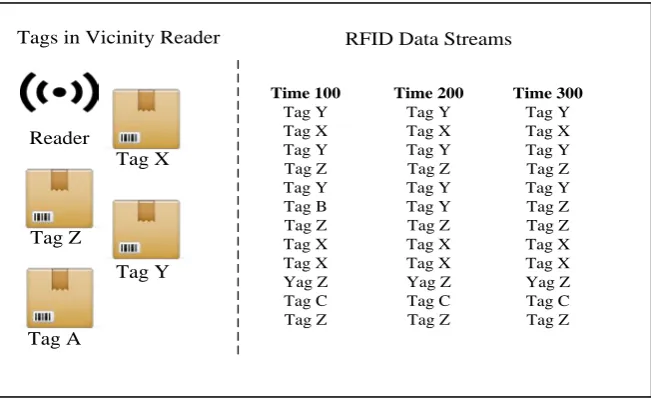
[image:28.595.157.483.505.705.2]Based on these issues, there are several types of readings that the reader encounters (Leema & Hemalatha, 2013); true positive reading, true negative reading, false positive reading, false negative reading and duplicate reading. Figure 2.5 below shows the condition of readings the reader encounter based on the characteristics and issues of RFID.
Figure 2.5: RFID Data Streams Tag X
Tag Y Tag Z
Reader
Tags in Vicinity Reader RFID Data Streams
(i) True Positive Reading
(a) This reading refers to the case where the reader identifies the tagged object to be present while it is in the vicinity of the reader. This represents Tag X, Tag Y and Tag Z in Figure 2.5.
(ii) True Negative Reading
(a) This reading refers to the case where the reader is reading the tag as being absent and it is truly not in the vicinity of the reader.
(iii) False Negative Reading
(a) The tag is considered to be absent when it indeed is present in the vicinity of reader. Based on Figure 2.5, Tag A is unable to be detected by the reader while it is actually in the vicinity of the reader. This scenario represents as missed read in RFID data streams.
(iv) False Positive Readings
(a) The tag is considered to be present by the reader when it is really not in the vicinity of the reader or the reader accidentally reads a distant tag. Refer to Figure 2.5, Tag B is unexpectedly exist in the data stream while it is not actually exist in the vicinity of the reader. This situation considered as noise where it accidentally recorded in the data streams.
(v) Duplicate Reading
(a) The same tag generates repeatedly are considered as duplicate readings. Based on Figure 2.5, Tag X, Tag Y and Tag Z in the data streams consider as duplicate readings as it is repeatedly occurred in the data streams.
15
[image:30.595.125.516.166.253.2]duplicate readings. These incorrect data such as false negative readings and false positive readings in RFID data stream needs to be filtered before it is sent to the applications and databases.
Table 2.2: Type of Readings in RFID Data Stream
Readings Acceptance Description
True Positive True Tag is being identified True Negative True Tag is not being identified
False Positive False Tag being identified but reported as inaccurate data
False Negative False Tag is not being identified but it is in the vicinity of reader
Duplicate Readings True Multiple readers
2.4 Fundamental Concept of Data Filtering
As RFID data arrives rapidly and in high capacity, RFID readers play critical role in order to filter out incorrect RFID data readings. It has been the major limitation for RFID to be implemented in large-scale as it can caused 30% of incorrect data reading (Aggarwal & Han, 2013). Its detection usually demands efficient processing, especially for those real time monitoring. Such data cannot be used directly by applications unless they are filtered and cleaned.
As the process of data filtering takes place at RFID middleware, there are two types of filtering discovered: (i) low level data filtering (Wu et al., 2013) and (ii) semantic data filtering (Wu, Sheng, & Zeadally, 2013). At low-level data filtering, it cleans raw RFID data streams. For example, removing duplicate and noise readings from the data streams. The semantic data filtering filters data based on demand of applications such as list of soft drinks sold in a specific month.
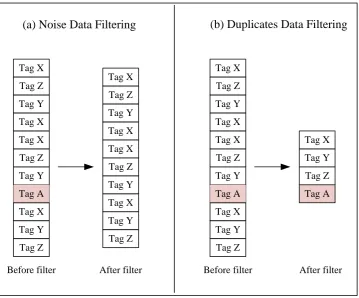
Figure 2.6: Noise Data Filtering and Duplicate Data Filtering
The problem of noise data filtering in (A), is when noise Tag A has been removed the duplicate readings of Tag X, Tag Y and Tag Z are still exist in the data stream. The same scenario occurred in (B), where the noise reading is still exist as the duplicate readings Tag X, Tag Y and Tag Z has been removed.
2.5 RFID Data Filtering Approaches
The methodologies for improving RFID data reliability proposed in previous research can be divided into three categories (Massawe, Vermaak, & Kinyua, 2012); physical solutions, middleware solutions, and deferred solution. Physical solution focusses on improving hardware performance to improve the reliability data such as to minimize tag collisions to prevent the occurrence of noise readings. While middleware solution focusses on the development of the algorithms such as an algorithm to remove noise readings and duplicate readings in the data streams. The deferred solution is a solution that proposed an intelligent technique to correct data in the data storage. This research focusses on middleware solution that is to discover
Tag X Tag Z Tag Y Tag X Tag X Tag Z Tag Y Tag A Tag X Tag Y Tag Z Tag X Tag Z Tag Y Tag X Tag X Tag Z Tag Y Tag X Tag Y Tag Z Tag X Tag Z Tag Y Tag X Tag X Tag Z Tag Y Tag A Tag X Tag Y Tag Z Tag X Tag Y Tag Z Tag A
17
techniques and approaches that used to filter noise readings and duplicate readings in the data streams.
2.5.1 Window Based Approach
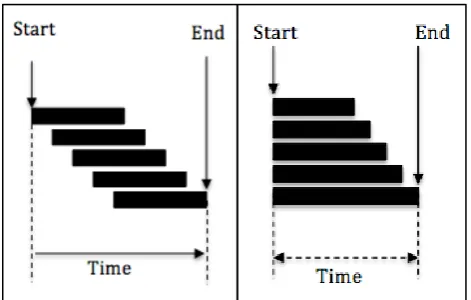
[image:32.595.188.424.299.449.2]One of the approaches that used to filter data is by implementing sliding window technique. There are two types of window-based approach discovered; sliding window and landmark window (Rui, Guoqiong, & Guoqiang, 2014). Based on Figure 2.7, a sliding window is a window with certain, size that moves with specific time. While landmark window is a window that move with time.
Figure 2.7: (a) Sliding window, and (b) Landmark Window
Bai et al. (2006) has conducted a research that focuses on reducing noises, false positive readings, false positive readings and duplicate readings. To overcome noise problems, they have proposed a technique where any tag below the threshold value will be discard. Else, if the number of the readings with the same tag EPC values appears equal to or above threshold, then the EPC value is not noise and need to be forward for further processing. While in the duplicate elimination process, they proposed a technique by keeping a sliding window of size exist another reading in the window with the same key, then it issue (max_distance) in time from the previous reading with the same key, then this reading is considered a new reading.
technique to inspect data format of RFID and associate values such as header information by introducing CheckEPCHeader(). After recognizing data as a tag, CheckEPCHeader() will inspects all tags whether it is a real tag or it is a noise.
[image:33.595.114.525.268.377.2]Mahdin & Abawajy (2009) proposed an approach denoise and duplicate elimination algorithm (DDSW) to filter noise and duplicate readings in one algorithm that make one filter. This approach used number of occurrence per time as the basis of filtering data in the data stream. Figure 2.8 portrays how the filtering works in order to filter noise and duplicate readings in one algorithm. Thus, eliminating one of the filters reduces the time required to filter duplicate readings
Figure 2.8: Noise and Duplicate Filtering Approach
Then the author focuses their works to filter duplicate reading filtering in RFID data stream (Mahdin & Abawajy, 2010). However, this approach has low false positive rates, which illustrates the improved correctness of the filtering process. It is more efficient in terms of time and memory usage.
Hu et al. (2013) has proposed HTB algorithm as a solution to filter noise data in RFID data streams based on hash table approach. They solve the problem of sliding window when the size of data getting bigger, the RFID reading has not been outputted until it expires in sliding window. Although the research focuses on filtering on false positive reading, they are actually filtering the duplicate reading by applying time tolerance threshold in hash table technique.
2.5.2 Bloom Filter Approach
19
0 1 0 0 1 0 1 0 0 1 0 0 1 1 0 Bits Array
Tag X Tag Y
Tag Z Add
Test
It represents data in its bit array of size m using k number of hash functions. Whenever the data has been hashed, all bits in array that are initially set to 0 will be substitute to 1.
Tag X
k k k
[image:34.595.139.491.176.290.2]Bits Array (m)
Figure 2.9: Basic Structure of Bloom Filter
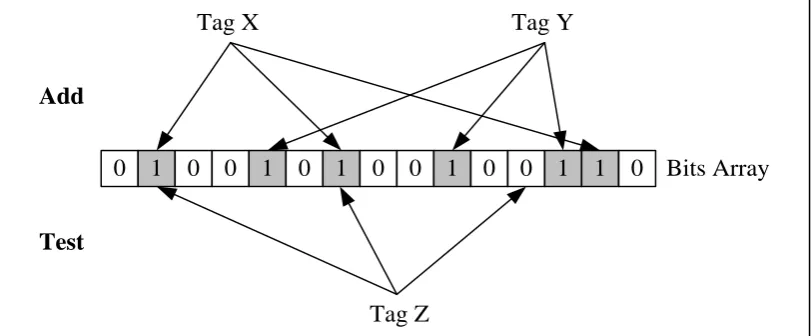
The basic bloom filter supports two operations: test and add (Dillinger and Manolios 2004). Test is used to check whether a given element is in the set or not. If it returns false, then the element is definitely not in the set. If it returns true, the element is probably in the set. The false positive rate is a function of the bloom filter’s size and the number of independence hash functions used. Add, simply adds an element to the set. To add an item to the bloom filter, we feed it to the k different hash functions and set the bits at the resulting result. To test if an item is stored in the filter, again we feed it to the same k hash function. If one or more of these bits is not set then the queried element is definitely not present in the filter. The more data are added to the bloom filter, the higher the probability to filter false positives.
[image:34.595.109.515.559.727.2]Figure 2.10 visualizes how a bloom filter operates. The bloom filter simply adds data such Tag X and Tag Y in the bloom filter. If any of the bits are zero (0), for example Tag Z, then the string definitely does not exist in the filter. If all of the bits are 1, there is probability that the string exists in the filter. Generally, bloom-filter has been used to filter duplicate data. Removal and deletion is not allowed in normal bloom filter. This is for the reason that a single counter in bloom-filter can be hashed number of times by different data. Turning counter to 0 will disturb other data that is not involved in the deletion.
Previous research shows that bloom filter has been extended to allow deletion and implemented many research in order to filter duplicate readings and noise in RFID data streams. In this research, we will discuss various researches that used bloom filter as a technique to filter RFID data stream in chronological order. (Deng & Rafiei, 2006) has proposed an algorithm (DUBF) using bloom filter approach to eliminate duplicate data in the data stream applications. The bits in the regular bloom filter are change into cells consisting one or more bits. In order to eliminate old data, each cell is set to the maximum value and decrease the values of randomly selected cells whenever data arrives. However, this approach is still producing false positive errors and false negative errors.
21
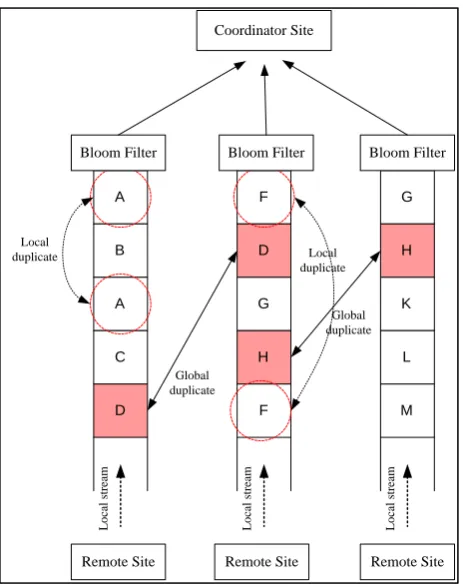
Figure 2.11: Local Duplicates and Global Duplicates
Figure 2.11 shows that there are remote sites and coordinator site. Each remote site, the duplicate data readings are filtered by using bloom filter technique and then send clean data to the coordinator site. Each local stream has both local duplicates and global duplicates. Each local filtering can only filter all local duplicates but not global duplicates. In order to filter both local and global duplicates, each remote site must maintain the history of stream because each remote site can only communicate with the coordinator site. The remote site must share global history via the coordinator site. To share the global history, the coordinator site must update its filter with the new reading and sent it to the other remote site. If the same reading being produced again at any of the remote sites, it will be ignored because it has been inserted in the filter. As RFID generates flood of data, this approach is not suitable because it need to update the coordinator site each time new reading is entered. This process can cause bottleneck as data at the remote site need to be filtered before send clean data to the coordinate remote for querying process.
Mahdin & Abawajy (2011) has proposed an approach to filter duplicate readings in RFID based on Bloom filter. The proposed approach stores the information such as time of tag detected in the filter units to compare which reader a
A B A C D F D G H F G H K L M
Local stream Local stream Local stream Local duplicate Local duplicate Global duplicate Global duplicate
Bloom Filter Bloom Filter Bloom Filter Coordinator Site
tag belong to. However, the algorithm might complicate the selection reading cycle and the time of clearing data in the filter. Thus, the algorithm may delete the true reading and cannot be used in the filter.
[image:37.595.226.440.390.596.2]Lee & Chung (2011) has extends original bloom filter to support sliding window and proposed time bloom filter algorithm (TIBF) in order to detect duplicate data reading on RFID data streams. As the process of filtering duplicates were takes place at the server side, a lot of bandwidth wasted during transferring the duplicates. Hence, three algorithms; bloom filter, time bloom filter and time interval bloom filter were proposed to eliminate each duplicates data arrive. Time interval bloom filter were used in fault detection and elimination and this algorithm need more space than the time bloom filter. In this research, the time interval bloom filter need more space compared to time bloom filter. Time bloom filter depends on time information to check whether the data duplicates or not. Even though it does not create false negative errors, the major problem of this technique is bottleneck will occurs, as the data has to pass through this module in the server side.
Figure 2.12: Two-Layer Filtering Approach
READER READER
TAGS GLOBAL DUPLICATE FILTERING MODULE
APPLICATION
SERVER
23
grape
apple
orange
1
0
2
0
3
grape
grape apple
grape apple
orange
Input Counter Position Dynamic Chain
[image:38.595.115.524.285.469.2]Jiang, Wang, & Zhang (2012) proposed two-layer filtering approach by introducing local and global bloom filter algorithm (2LGBF) to eliminate the local duplicates at the reader level then detecting the global duplicates in the server side as in Figure 2.12. The two-layer approach is proposed in order to reduce network bandwidth. However, this approach produce small error rate and caused latency at the reader level as it need to clean the duplicate reading before it have to pass through to global duplicate filtering. Yongsheng & Zhijun (2013) proposed a data filtering approach to detect and eliminates duplicates data reading in RFID. They proposed a technique that used counting bloom filters algorithm (CCBF) with the dynamic chain lists to detect and removed duplicates reading at the data level.
Mezzi & Akaichi, (2013) has proposed an algorithm that detects and removes duplicates reading (DUP_FA) in data streams in order to store into data warehouse to enhance the decision making for supply chain. They proposed a technique to detect and eliminate the duplicate by looking at the difference of time of the flow detection and the time of the previous stream detection. However, the technique is not suitable to process massive data of RFID. The data has to process with the difference of time to detect and eliminate the duplicates of data. This will slow down the process of filtering and it will disturb the efficiency of decision making for supply chain.
2.5.3 Decision Support Model Approach
[image:39.595.115.530.608.724.2]Decision support model is a structured process where it consists of several parts of manageable processes to filter RFID data stream. For example, majority-voting approach and smooth filtering approach are examples of decision support model where each technique consists of several parts of process to filter data. Majority-voting is an approach to determine whether the tag object is present. Tu & Piramuthu (2011) believed that by using majority-voting approach would reduce low false read rates in supply chain. The purpose of majority-voting is to detect false negative reading by identifying the presence of data reading in the data stream. They proposed Three Tag-Two Readers Model (TTTR) where all three tags are embedded in their object of interest. Each reader will identify either the presence of the object of interest whether it is present or absent. Table 2.3 shows the basic technique of majority-voting technique. There are several rules that have to be followed in order to detect the presence of the object of interest.
Table 2.3: Majority-Voting Table
Reader 1 Reader 2 Indicator
Rule 1 Present Present Present Present Present Present 1 Absent Absent Absent Absent Absent Absent 0
Rule 2 Present Present Present 1
Absent Absent Absent 0
52
REFERENCES
Aggarwal, C. C., & Han, J. (2013). A Survey of RFID Data Processing. In C. C.
Aggarwal (Ed.), Managing and Mining Sensor Data (pp. 349–382). Springer
US. Retrieved from
http://link.springer.com/chapter/10.1007/978-1-4614-6309-2_11
Bai, Y., Wang, F., & Liu, P. (2006). Efficiently filtering rfid data streams. In In
CleanDB Workshop (pp. 50–57).
Barge, P., Gay, P., Merlino, V., & Tortia, C. (2013). Radio frequency identification
technologies for livestock management and meat supply chain traceability.
Canadian Journal of Animal Science, 93(1), 23–33.
Bloom, B. H. (1970). Space/time trade-offs in hash coding with allowable errors.
Communications of the ACM, 13(7), 422–426.
Bong, G. H., Chang, Y. S., & Oh, C. H. (2014). A practical algorithm for
reliability-based RFID event management considering warehouse operational
environment. International Journal of Advanced Logistics, 3(3), 100–108.
Bonter, D. N., & Bridge, E. S. (2011). Applications of radio frequency identification
(RFID) in ornithological research: a review. Journal of Field Ornithology,
82(1), 1–10.
Cheng, H., Ni, W., & Li, N. (2014). A systematic scheme for designing RFID
systems with high object detection reliability. In Information Science,
Electronics and Electrical Engineering (ISEEE), 2014 International
Conference on (Vol. 3, pp. 1521–1526). IEEE. Retrieved from
http://ieeexplore.ieee.org/xpls/abs_all.jsp?arnumber=6946175
Chen, M., Mao, S., & Liu, Y. (2014). Big data: A survey. Mobile Networks and
Applications, 19(2), 171–209.
Chen, M., Mao, S., Zhang, Y., & Leung, V. C. (2014). Big Data Generation and
Acquisition. In Big Data (pp. 19–32). Springer. Retrieved from
Chen, Y.-C., Kuo, S.-P., Tseng, C.-W., & Huang, C.-H. (2015). Simulation of
Supply Chain Management Based on the EPCglobal Enterprise Network.
American Journal of Computer Science and Information Engineering, 2(2),
7–14.
Chigozirim, A., & others. (2013). Radio Frequency Identification Detection Collision
Mitigation Technique. International Journal, 4(8). Retrieved from
http://www.researchgate.net/profile/Oreoluwa_Adesegun/publication/241068
514_Radio_Frequency_Identification_Detection_Collision_Mitigation_Tech
nique/links/0046351c8107113e84000000.pdf
Choosri, N., Yu, H., & Atkins, A. (2013). Practical aspects of using passive UHF
RFID technology for vehicle tracking. International Journal of Agile Systems
and Management, 6(1), 43–65.
Chung, K. K.-T., Chu, C. T.-W., & Li, J. J. (2014). Object monitoring, locating, and
tracking system and method employing RFID devices. Google Patents.
Retrieved from https://www.google.com/patents/US8686861
Deking, A. L., Iyer, P., & Pappu, R. S. (2014). Object recognition and localization
service using RFID. Google Patents. Retrieved from
https://www.google.com/patents/US8725777
Deng, F., & Rafiei, D. (2006). Approximately Detecting Duplicates for Streaming
Data Using Stable Bloom Filters. In Proceedings of the 2006 ACM SIGMOD
International Conference on Management of Data (pp. 25–36). New York,
NY, USA: ACM. http://doi.org/10.1145/1142473.1142477
Dillinger, P. C., & Manolios, P. (2004). Bloom filters in probabilistic verification. In
Formal Methods in Computer-Aided Design (pp. 367–381). Springer.
Retrieved from
http://link.springer.com/chapter/10.1007/978-3-540-30494-4_26
Forbes, C., Evans, M., Hastings, N., & Peacock, B. (2011). Statistical distributions.
John Wiley & Sons. Retrieved from https://books.google.com.my/books?
hl=en&lr=&id=YhF1osrQ4psC&oi=fnd&pg=PT10&dq=Poisson+distributio
n+gives+the+random+number+of+independent&ots=UOk0apZmSp&sig=zU
54
Frick, J. (2014). Improving Transport and Accessibility through New
Communication Technologies. In Advances in Production Management
Systems. Innovative and Knowledge-Based Production Management in a
Global-Local World (pp. 572–578). Springer. Retrieved from
http://link.springer.com/chapter/10.1007/978-3-662-44736-9_69
Fritz, G., Beroulle, V., Nguyen, M. D., Hély, D., & others. (2011). RFID System
On-line Testing based on the evaluation of the Tags Read-Error-Rate. Journal of
Electronic Testing, 27(3), 267–276.
GLOBAL, E. (2008). EPCglobal Tag Data Standard. Versión, 1, 339.
Good, T., & Benaissa, M. (2013). A holistic approach examining RFID design for
security and privacy. The Journal of Supercomputing, 64(3), 664–684.
Han, J., Qian, C., Wang, X., Ma, D., Zhao, J., Zhang, P., … Jiang, Z. (2014). Twins:
Device-free object tracking using passive tags. In INFOCOM, 2014
Proceedings IEEE (pp. 469–476). IEEE. Retrieved from
http://ieeexplore.ieee.org/xpls/abs_all.jsp?arnumber=6847970
Hotte, D., Siragusa, R., Tedjini, S., & Duroc, Y. (2014). A new concept of UHF
RFID tag for metallic object tracking with embedded cavity. In RFID
Technology and Applications Conference (RFID-TA), 2014 IEEE (pp. 237–
240). IEEE. Retrieved from http://ieeexplore.ieee.org/xpls/abs_all.jsp?
arnumber=6934235
Hu, K., Li, L., & Lu, Z. (2013). A cleaning method of noise data in RFID data
streams. In 2013 3rd International Conference on Consumer Electronics,
Communications and Networks (CECNet) (pp. 1–4). http://doi.org/10.1109
/CECNet.2013.6703256
Hu, L., Ong, D. M., Zhu, X., Liu, Q., & Song, E. (2014). Enabling RFID technology
for healthcare: application, architecture, and challenges. Telecommunication
Systems, 1–13.
Irfan, N., Yagoub, M. C., & Hettak, K. (2012). Design of a Microstrip-Line-Fed
Inset Patch Antenna for RFID Applications. IACSIT International Journal of
Engineering and Technology, 4(5), 558–561.
Jiang, W., Wang, Y., & Zhang, G. (2012). A Two-Layer Duplicate Filtering
Approach for RFID Data Streams. In Y. Wang & X. Zhang (Eds.), Internet of
Things (Vol. 312, pp. 226–233). Springer Berlin Heidelberg. Retrieved from
Kaur, M., Sandhu, M., Mohan, N., & Sandhu, P. S. (2011). RFID technology
principles, advantages, limitations & its applications. International Journal of
Computer and Electrical Engineering, 3(1), 151–157.
Koskinen, T. V., Rajagopalan, H., & Rahmat-Samii, Y. (2011). A thin multi-slotted
dual patch UHF-band metal-mountable RFID tag antenna. Microwave and
Optical Technology Letters, 53(1), 40–47.
Kour, R., Karim, R., Parida, A., & Kumar, U. (2014). Applications of radio
frequency identification (RFID) technology with eMaintenance cloud for
railway system. International Journal of System Assurance Engineering and
Management, 5(1), 99–106.
Kranzfelder, M., Zywitza, D., Jell, T., Schneider, A., Gillen, S., Friess, H., &
Feussner, H. (2012). Real-time monitoring for detection of retained surgical
sponges and team motion in the surgical operation room using
radio-frequency-identification (RFID) technology: a preclinical evaluation. Journal
of Surgical Research, 175(2), 191–198.
Kushal, K. S., Kadal, H. M., Chetan, S., & others. (2012). Design and
Implementation of a RFID Based Prototype SmArt LibrARY (SALARY)
System Using Wireless Sensor Networks. In Advances in Computer Science,
Engineering & Applications (pp. 499–505). Springer. Retrieved from
http://link.springer.com/chapter/10.1007/978-3-642-30111-7_47
Kwon, K., Kang, D., Yoon, Y., Sohn, J.-S., & Chung, I.-J. (2014). A real time
process management system using RFID data mining. Computers in Industry,
65(4), 721–732.
Lee, C.-H., & Chung, C.-W. (2011). An approximate duplicate elimination in RFID
data streams. Data & Knowledge Engineering, 70(12), 1070–1087.
http://doi.org/10.1016/j.datak.2011.07.007
Leema, A. A., & Hemalatha, M. (2013). Proposed prediction algorithms based on
hybrid approach to deal with anomalies of RFID data in healthcare. Egyptian
Informatics Journal, 14(2), 135–145.
Leema, A. A., Sudhakar, P., & Hemalatha, M. (2013). CBADE: Hybrid Approach
for Duplication Detection and Elimination. In N. Chaki, N. Meghanathan, &
D. Nagamalai (Eds.), Computer Networks & Communications (NetCom) (pp.
737–750). Springer New York. Retrieved from
56
Li, L., Pan, F., Tan, J., Shi, T., & Liu, J. (2015). Pricing and ordering decision for
perishable food supply chain with RFID technology. Information
Management and Management Engineering, 94, 459.
Liu, L.-L., Yuan, Z.-L., Liu, X.-W., Chen, C., & Wang, K.-S. (2014). RFID
unreliable data filtering by integrating adaptive sliding window and
Euclidean distance. Advances in Manufacturing, 2(2), 121–129.
http://doi.org/10.1007/s40436-014-0080-3
Liu, Y., Fawang, H. A. N., Jun, T. A. N., & ZHANG, H. (2015). An Efficient RFID
Data Cleaning Method Based on Wavelet Density Estimation. Journal of
Digital Information Management, 13(1), 11.
Mahdin, H. (2014). A Review on Bloom Filter Based Approaches for RFID Data
Cleaning. In T. Herawan, M. M. Deris, & J. Abawajy (Eds.), Proceedings of
the First International Conference on Advanced Data and Information
Engineering (DaEng-2013) (Vol. 285, pp. 79–86). Springer Singapore.
Retrieved from http://dx.doi.org/10.1007/978-981-4585-18-7_9
Mahdin, H., & Abawajy, J. (2009). An Approach to Filtering RFID Data Streams. In
Parallel Architectures, Algorithms, and Networks, International Symposium
on (Vol. 0, pp. 742–746). Los Alamitos, CA, USA: IEEE Computer Society.
http://doi.org/10.1109/I-SPAN.2009.124
Mahdin, H., & Abawajy, J. (2010). An Approach to Filtering Duplicate RFID Data
Streams. In T. Kim, J. Ma, W. Fang, B. Park, B.-H. Kang, & D. Ślęzak
(Eds.), U- and E-Service, Science and Technology (Vol. 124, pp. 125–133).
Springer Berlin Heidelberg. Retrieved from
http://dx.doi.org/10.1007/978-3-642-17644-9_14
Mahdin, H., & Abawajy, J. (2011a). An Approach for Removing Redundant Data
from RFID Data Streams. Sensors, 11(12), 9863–9877.
http://doi.org/10.3390/s111009863
Mahdin, H., & Abawajy, J. (2011b). An Approach for Removing Redundant Data
from RFID Data Streams. Sensors, 11(12), 9863–9877.
http://doi.org/10.3390/s111009863
Ma, J., Sheng, Q. Z., Xie, D., Chuah, J. M., & Qin, Y. (2014). Efficiently managing
uncertain data in RFID sensor networks. World Wide Web, 1–26.
Massawe, L. V., Vermaak, H., & Kinyua, J. D. (2012). An adaptive data cleaning
scheme for reducing false negative reads in RFID data streams. In RFID
(RFID), 2012 IEEE International Conference on (pp. 157–164). IEEE.
Retrieved from http://ieeexplore.ieee.org/xpls/abs_all.jsp?arnumber=6193044
Menghin, M., Druml, N., Steger, C., Weiss, R., Bock, H., & Haid, J. (2013). Using
field strength scaling to save energy in mobile HF-band RFID-systems.
EURASIP Journal on Embedded Systems, 2013(1), 1–16.
Metzger, C., Thiesse, F., Gershwin, S., & Fleisch, E. (2013). The impact of
false-negative reads on the performance of RFID-based shelf inventory control
policies. Computers & Operations Research, 40(7), 1864–1873.
http://doi.org/10.1016/j.cor.2013.02.001
Mezzi, N., & Akaichi, J. (n.d.). Supply chain Duplicate transportation RFID data
stream Filtering. Retrieved from
http://ijaiem.org/Volume2Issue5/IJAIEM-2013-05-27-068.pdf
Nilsson, E., & Svensson, C. (2013). Ultra low power wake-up radio using envelope
detector and transmission line voltage transformer. Emerging and Selected
Topics in Circuits and Systems, IEEE Journal on, 3(1), 5–12.
Papapostolou, A., & Chaouchi, H. (2011). RFID-assisted indoor localization and the
impact of interference on its performance. Journal of Network and Computer
Applications, 34(3), 902–913.
Qin, L., Feng, S., & Dong, G. (2015). A Study on Real-Time Monitoring and
Accident Emergency Rescue Decision Support System Based on Cloud
Computing in Chemical Industry Park. In LISS 2014 (pp. 1505–1511).
Springer. Retrieved from
http://link.springer.com/chapter/10.1007/978-3-662-43871-8_216
Qu, T., Yang, H. D., Huang, G. Q., Zhang, Y. F., Luo, H., & Qin, W. (2012). A case
of implementing RFID-based real-time shop-floor material management for
household electrical appliance manufacturers. Journal of Intelligent
Manufacturing, 23(6), 2343–2356.
Reig, C., & Avila-Navarro, E. (2014). Printed Antennas for Sensor Applications: A
58
Rui, W., Guoqiong, L., & Guoqiang, D. (2014). Filtering Redundant RFID Data
Based on Sliding Windows. In Management of Commerce and
e-Government (ICMeCG), 2014 International Conference on (pp. 187–191).
IEEE. Retrieved from http://ieeexplore.ieee.org/xpls/abs_all.jsp?arnumber
=7046915
Sarac, A., Absi, N., & Dauzere-Peres, S. (2015). Impacts of RFID technologies on
supply chains: a simulation study of a three-level supply chain subject to
shrinkage and delivery errors. European Journal of Industrial Engineering,
9(1), 27–52. http://doi.org/10.1504/EJIE.2015.067452
Sarkka, S., Viikari, V. V., Huusko, M., & Jaakkola, K. (2012). Phase-based UHF
RFID tracking with nonlinear Kalman filtering and smoothing. Sensors
Journal, IEEE, 12(5), 904–910.
Tang, Lin, Hui Cao, Li Zheng, and Ningjian Huang. (2015). Value-driven
uncertainty-aware data processing for an RFID-enabled mixed-model
assembly line. In International Journal of Production Economics, 165,
273-281.
Tu, Y.-J., & Piramuthu, S. (2011). A decision-support model for filtering RFID read
data in supply chains. Systems, Man, and Cybernetics, Part C: Applications
and Reviews, IEEE Transactions on, 41(2), 268–273.
Tyagi, S., Ansari, A. Q., & Khan, M. A. (2010). Dynamic threshold based
sliding-window filtering technique for RFID data. In Advance Computing
Conference (IACC), 2010 IEEE 2nd International (pp. 115–120).
http://doi.org/10.1109/IADCC.2010.5423025
Vahdati, F., Javidan, R., & Farrahi, A. (2010). A new method for data redundancy
reduction in RFID middleware. In 2010 5th International Symposium on
Telecommunications (IST) (pp. 175–180). Retrieved from
http://doi.org/10.1109/IS010.5734020
Vahdati, F., Javidan, R., & Farrahi, A. (2010). A new method for data redundancy
reduction in rfid middleware. In Telecommunications (IST), 2010 5th
International Symposium on (pp. 175–180). IEEE. Retrieved from
http://ieeexplore.ieee.org/xpls/abs_all.jsp?arnumber=5734020
Wang, L., Da Xu, L., Bi, Z., & Xu, Y. (2014). Data cleaning for RFID and WSN
Wang, L., Gu, T., Xie, H., Tao, X., Lu, J., & Huang, Y. (2014). A wearable RFID
system for real-time activity recognition using radio patterns. In Mobile and
Ubiquitous Systems: Computing, Networking, and Services (pp. 370–383).
Springer. Retrieved from
http://link.springer.com/chapter/10.1007/978-3-319-11569-6_29
Wang, Q., Wang, H., Bennett, N., & Filip, M. (2014). A Framework of Integrating
an RFID-enabled Communication System into an Automated Storage and
Retrieval Mechanism. Retrieved from http://seekdl.org/upload/files
/20140624_112553.pdf
Wang, X., Zhang, Q., & Jia, Y. (2008). Efficiently Filtering Duplicates over
Distributed Data Streams. In 2008 International Conference on Computer
Science and Software Engineering (Vol. 4, pp. 631–634).
http://doi.org/10.1109/CSSE.2008.1367
Wang, Z., Fang, S., Fu, S., & Jia, S. (2011). Single-fed broadband circularly
polarized stacked patch antenna with horizontally meandered strip for
universal UHF RFID applications. Microwave Theory and Techniques, IEEE
Transactions on, 59(4), 1066–1073.
Wilson, A. D., & Olwal, A. (2014). Fusing RFID and vision for surface object
tracking. Google Patents. Retrieved from https://www.google.com/patents
/US8847739
Wu, C.-M., Cheng, S.-S., & Chang, R.-S. (2013). A data filtering strategy using
cluster architecture in radio frequency identification system. International
Journal of Radio Frequency Identification Technology and Applications,
4(2), 149–161. http://doi.org/10.1504/IJRFITA.2013.054662
Wu, L., Barker, R. J., Kim, M. A., & Ross, K. A. (2013). Navigating Big Data with
High-throughput, Energy-efficient Data Partitioning. In Proceedings of the
40th Annual International Symposium on Computer Architecture (pp. 249–
260). New York, NY, USA: ACM. http://doi.org/10.1145/2485922.2485944
Wu, Y., Sheng, Q. Z., & Zeadally, S. (2013). RFID: Opportunities and Challenges.
In N. Chilamkurti, S. Zeadally, & H. Chaouchi (Eds.), Next-Generation
Wireless Technologies (pp. 105–129). Springer London. Retrieved from
http://link.springer.com/chapter/10.1007/978-1-4471-5164-7_7
Yan, P., Yang, W., Tan, B., & Yu, B. (2015). RFID Solution to Improving
60
Springer. Retrieved from
http://link.springer.com/chapter/10.1007/978-3-642-40660-7_174
Yongsheng, H. A. O., & Zhijun, G. E. (2013). Redundancy Removal Approach for
Integrated RFID Readers with Counting Bloom Filter. Journal of
Computational Information Systems, 9(5), 1917–1924.
Zhang, C., Li, Y., & Chen, Y. (2011). Application oriented data cleaning For RFID
middleware. In 2011 IEEE International Conference on Systems, Man, and
Cybernetics (SMC) (pp. 1544–1549). http://doi.org/10.1109/ICSMC.2011.
6083890
Zhang, L., Gandino, F., Ferrero, R., Montrucchio, B., & Rebaudengo, M. (2013).
Trade-off between maximum cardinality of collision sets and accuracy of
RFID reader-to-reader collision detection. EURASIP Journal on Embedded
Systems, 2013(1), 1–14.
Zhang, Y., Jiang, P., Huang, G., Qu, T., Zhou, G., & Hong, J. (2012). RFID-enabled
real-time manufacturing information tracking infrastructure for extended
enterprises. Journal of Intelligent Manufacturing, 23(6), 2357–2366.
Zhang, Y., Zhang, G., Du, W., Wang, J., Ali, E., & Sun, S. (2015). An optimization
method for shopfloor material handling based on real-time and multi-source
manufacturing data. International Journal of Production Economics.
Retrieved from http://www.sciencedirect.com/science/article/pii/S0925527
31400423X
Zhong, R. Y., Dai, Q. Y., Qu, T., Hu, G. J., & Huang, G. Q. (2013). RFID-enabled
real-time manufacturing execution system for mass-customization
production. Robotics and Computer-Integrated Manufacturing, 29(2), 283–
292.
Zhong, R. Y., Huang, G. Q., Dai, Q. Y., & Zhang, T. (2014). Mining SOTs and
dispatching rules from RFID-enabled real-time shopfloor production data.
Journal of Intelligent Manufacturing, 25(4), 825–843.
Zhong, R. Y., Huang, G. Q., Lan, S., Dai, Q. Y., Chen, X., & Zhang, T. (2015). A
big data approach for logistics trajectory discovery from RFID-enabled
production data. International Journal of Production Economics, 165, 260–
272.
Zhu, J., Huang, J., He, D., Leng, Y., & Xiao, S. (2014). The Design of RFID
W. Wang, Q. Liang, & Y. Pi (Eds.), The Proceedings of the Second
International Conference on Communications, Signal Processing, and
Systems (Vol. 246, pp. 859–867). Springer International Publishing.
Retrieved from http://dx.doi.org/10.1007/978-3-319-00536-2_99
Zhu, X., Mukhopadhyay, S. K., & Kurata, H. (2012). A review of RFID technology
and its managerial applications in different industries. Journal of Engineering
and Technology Management, 29(1), 152–167.
Zhu, Y., Jiang, W., Zhang, Q., & Guan, H. (2014). Energy-Efficient Identification in
Large-Scale RFID Systems with Handheld Reader. IEEE Transactions on
Parallel and Distributed Systems, 25(5), 1211–1222. http://doi.org/10.1109
/TPDS.2013.175
Zhu, Z., Tan, J., Ren, H., Ni, W., & Guan, Q. (2012). RFID application in
manufacturing: A case study on a pilot RFID project in household appliance
production. International Journal of Computer Integrated Manufacturing,