Journal of Chemical and Pharmaceutical Research, 2015, 7(10):942-947
Research Article
CODEN(USA) : JCPRC5
ISSN : 0975-7384
The design and application of cat swarm optimized fuzzy controller
Haipeng Pan, Dongbin Jin* and Jia Ren
Institute of Automation, Zhejiang Sci-Tech University, Hangzhou
_____________________________________________________________________________________________
ABSTRACT
In the design process of fuzzy controller, its parameters’ setting and adjustments mainly rely on the experience of the designer, so traditional fuzzy controller design method has great limitations and uncertainties. In this paper, a new fuzzy controller design method based on cat swarm optimization (CSO_FC) is proposed. CSO_FC method is realized below: Firstly, weighting factor is introduced to initialize query table. Then, cat swarm optimization is used to optimize relative parameters of the controller, such as weighting factor and quantification factors .With the Optimized parameters, desired output is obtained. Finally, on the platform of the MATLAB software, taking temperature of the reactor as the controlled object, the proposed CSO_FC is simulated. The simulation result shows that it has good following performance and control precision.
Key words: fuzzy controller, cat swarm optimization, weighting factor, temperature of the reactor.
_____________________________________________________________________________________________
INTRODUCTION
The design of fuzzy controller is based on experts ' experience, for its independence with the model of the controlled object, which can be used to effectively control over the objects with characteristics of nonlinear, large time delay and uncertainties . The performance of fuzzy controller is mainly determined by the control rules, quantitative factors and membership functions [1]. For the conventional fuzzy controller, the relative parameters in the process of fuzzification and defuzzification are mainly to rely on the designer's experience and trial and error. Especially, when the controlled object’ characteristics are changed, the parameters and control rules of the fuzzy controller cannot be adjusted online, which influence the effect of control for its poor adaptability .
Based on the above-mentioned problems, in [2-3], the variable universe fuzzy controllers are proposed, which introduce the contraction-expansion factor combined with relevant optimization algorithms, for universe’ adjusting, to improve the dynamic and static performances of the system. Through designing static and dynamic coupling of distributed fuzzy adaptive control law, [4] proposes a distributed fuzzy adaptive control approach based on Lyapunov theory with proving its stability. [5] elaborates a new sliding mode fuzzy control (SMFC), a kind of sliding mode fuzzy control(SVM) combined with space vector modulation (SVM) technology.[6] study the design
of the controller of T-S fuzzy system with unknown parameters, and promotes to combine the Lyapunov theory with T-S fuzzy system, which could ensure accuracy and stability of the system. [7-8],with the problem of limited control precision and self-adaptive ability of the traditional fuzzy control, optimizes the relevant parameters or rules of the controller with the particle swarm optimization, which improves the robustness and control precision.
Although, these studies improve the effect of fuzzy control in certain areas, still there are some issues, such as control rules not be on-line adjusted, poor real-time performance and so on.
could avoid the error in the process of fuzzification due to subjective setting. Then, for the strong global searching ability and the local search capability of cat swarm optimization algorithm, CSO is used to optimize the key parameters, such as weighting factor and quantification factors, to obtain the desired output. Finally, on the platform of the MATLAB software, taking temperature of the reactor as the controlled object, the proposed CSO_FC is simulated to verify its feasibility.
THE STRUCTURE OF THE CSO_FC
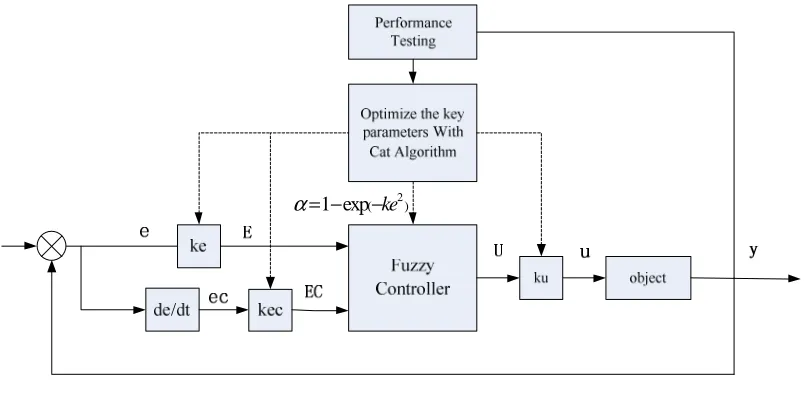
[image:2.595.91.494.178.377.2]The structure of the CSO_FC is illustrated as the Fig.1
Fig. 1 the structure of the CSO_FC
e is the error, Ke is the quantization factor of error, E is the linguistic variable of error after fuzzification; ec is the Error rate , Kec is the quantization factor of error rate, EC is the linguistic variable of deviation change rate after fuzzification,
α
is the weighted factor; E and EC is the input parameters of the fuzzy controller, U is the output parameter of the fuzzy controller, Ku is the quantization factor of U,u
is the output control parameter after defuzzification.In this paper, the universes of E, EC and U are made as:
{
-6, 5, 4, 3, 2, 1,0, 1, 2, 3, 4, 5, 6− − − − − + + + + + +}
; the output of the fuzzy queries could be summarized as a function of the error e and the weighted factorα
. Theoretically,α
should be a function of error e. When e is large, the controller should eliminate the deviations immediately, so the value of correspondingα
should be increased accordingly, In contrast, when error e is small, the output is close to the set value, correspondingα
should be a smaller value. In this paper, by applying the nonlinear function, the concept of fuzzy objective G is promoted.Objective G: make the error e be close to the zero value. The membership function is described as follows:
2 ( ) exp( )
G e ke
µ = − (1)
When the error is large, it is far from the fuzzy objective G, so the values of membership degree is small; when the error is small, it is near the fuzzy objective G, so the values of membership degree is big. Hence, we choose the
weighted factor
α
as:2 1 exp( ke )
α
= − − (2)
k is a constant ,it is obtained by cat swarm optimization algorithm . In the meantime, the output, which be calculated through the evaluation function, could be the input of module of the cat swarm optimization algorithm. So,
α
, Ke, Kec and Ku , these four parameters can be optimized, through making a feedback loop to the fuzzy controller.2
( )
1 exp ke
CAT SWARM OPTIMIZATION ALGORITHM REALIZATION
Cat Swarm Optimization (CSO) is proposed by the Chu and Tsai , who get inspiration from observing the cat behaviors in daily life. In CSO, the cats’ behaviors can be divided into two modes, tracing mode and seeking mode [9-12]. CSO is implemented by the following general steps:
Step 1 Initialize the cat swarm with N cats in D dimensions
Step2 Assign random values as the velocity v( )d
( )
t i toth
i
catWhich is in current positionx( )d
( )
ti , where d represents dimension index.
Step3 Randomly assign MR percentage of cats from the population to tracing mode and the rest to seeking mode Where MR represents the mixture ratio of cats in tracing mode to seeking mode
Step 4 Assess the fitness value of each cat and store the location of the best cat in memory Step 5 Update position of cats as per the mode they are in
Step 6 Check stopping criteria, if true then exit, else go to step-3
Seeking mode
Seeking mode, in which cats do not move. They just stay in a certain position and sense for the next best move, thus having only state and not velocity [13-14]. Some of the essential factors related to this mode are defined.
Seeking memory pool (SMP): the number of copies of cat to be produced in seeking mode.
Seeking range of the selected dimension (SRD): the range to be varied for a selected dimension.
Counts of dimension to change (CDC): the number of dimensions to be mutated.
The steps involved in the seeking mode are as follow.
Step 1 Copy its location. Generate J copies of its location, and then put into SMP. The size of memory is J. Step 2 Execute the mutation operator. Execute the mutation operator on the replicated copies based on SRD and CDC, which could make each copies reach a new location.
Step 3 Calculate the fitness values of all the copies in seeking memory pool.
Step 4 Execute the selection operator. Select the position of best fitness value and move the cat to the location.
Tracing mode
Tracing mode is a model established under the condition that cat is tracking target, which use the
speed-displacement model to move the value of every dimension. x( )d
( )
tk is every cat's current position;
1 2 3
{v , v , v ,
v }
Li i i i i
V
=
⋅⋅⋅
is every cat's current velocity;x
best( )d( )
t
is the best position of all cat population.The steps involved in this mode are as follows
Step 1 To update the velocity. Every cat is based on the (3) to update its velocity.
( )
( )
(
( )
( )
)
( ) ( ) ( ) ( )
1 1 , 1, 2, , L
d d d d
vk t+
=
vk t + c ×rand xbest t −xk t d = ⋅ ⋅ ⋅ (3)C is a constant, whose value need to be determined according to different problems; rand is the random number
between 0 and 1.
Step 2 Determine whether the velocity change is over range. If the range is exceeded, it needs to be set to the given boundary value.
Step3 Update the location. According to the (4), cat's location is changed
(
)
( )( )
( )(
)
1 d d 1
d
x t x t v t
k + = k + k +
(4)
CONTROLLER IMPLEMENTATION STEPS OF CSO_FC
Optimization Algorithm to optimize the weighting factor, let the output close to the set value of the system. Implementation steps of CSO_FC are as follows:
Step 1:Separately identify the fuzzy universe of
E
,EC
andU
, and initialize the weighting factor of the fuzzycontroller and related quantitative factors Ke, Kec and Ku.
Step 2: Optimize the Ke, Kec and Ku with CSO, which of four steps:
1) Initialize the population of cats, the maximum number of iterations, mixture ratio of two modes, initial position and initial velocity, seeking memory pool, seeking range of the selected dimension, counts of dimension to change
and best value
x
best( )
t
.2) Update the position and velocity of cat group and calculate the fitness value of each cat,
according to equation (3) and (4), choose the ITAE index as the fitness function of parameter selection .such as (5):
0
(k )
k
n
K
ITAE
e
T
T
T
=
=
∑
×
×
(5)T is sampling period, k is sampling time, e(k )T is the error of the sampling time. The smaller value of the ITAE is, the better control effect of the fuzzy control will be
3) Separately calculate the fitness value of each cat
x
k( )d( )
t
of two modes, search and record the current bestposition.
4) Update the global optimal solution
x
best( )
t
, after completing once search.
Step 3: Determine if current output is desired or not. If so, output the global optimal solutions; otherwise, return to Step 2 to continue.
THE SIMULATION OF THE CSO_FC
In this paper, based on MATLAB software, it optimizes relevant parameters of fuzzy controller by Cat Swarm Optimization (CSO). The parameters of CSO algorithm are set as follows: the population of cat group is 80, the maximum number of iterations, 50; mixture ratio of two modes is 0.1; seeking range of the selected dimension is 0.2; memory pool size is 10.
The temperature of the reactor has the characteristics of nonlinear, large time delay and uncertainties .Through modeling and analysis; it makes the temperature of the reactor as a control object, approximately a first order lag process with dead time:
( )
1K G s
Ts
s
e
τ
= +
− ⋅
(6)
Where, the parameter scaling factorK =1.2, time constantT =80, delay factor
τ
=
120
THE ANALYSIS OF CONTROL EFFECT OF CSO_FC
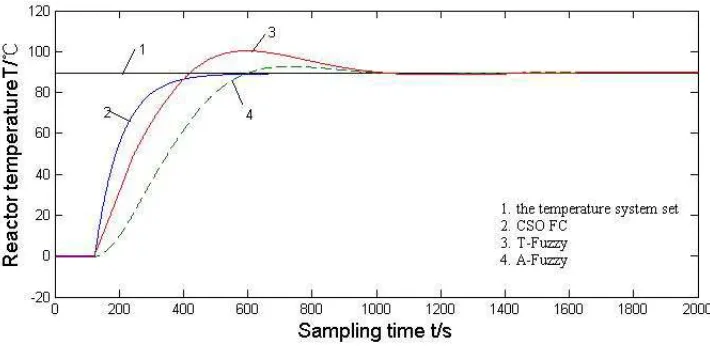
Fig. 2 the curves of the temperature of three controllers
Tab. 1 the compare of three controllers
From Fig.2 and Tab 1, we could get the conclusion: Compared with the traditional fuzzy control and traditional adaptive fuzzy control, CSO_FC has the least overshoot, shortest regulation time and best performance.
CONCLUSION
In this paper, it proposes a new CSO_FC controller, simplifying the design of the fuzzy controller, and optimizes the relevant parameters through CSO, which has the strong global searching ability and the local search capability, and overcomes the disadvantage of lacking of systematic methods in the process of the design, and poor adaptive capacity etc. on the platform of the MATLAB software, the proposed CSO_FC is simulated. Its results indicate that this method can improve the precision of the system, shorten the time of regulation and improve the dynamic performance of the system, which have a high practical application value.
Acknowledgments
This paper is supported by National Natural Science Foundation of China (Grant No. 61203177).
REFERENCES
[1] Öztürk N, Çelik E. International Journal of Electrical Power & Energy Systems, 2012, 43(1): 889-898..
[2] Tong, S. W., Qian, D. W., Fang, J. J., & Li, H. X. International Journal of Electrochemical Science, 2013, 8(3): 3636-3652.
[3] DONG Hai-ying1,WEI Zhan-hong1,ZHAO Xiang-gui1,LI Xiao-qing1,CAO Li-xin2, Control Engineering
of China, 2014, 21(2): 182-188.
[4] WANG Wei, WANG Dan, PENG Zhou-hua. Control and Decision, 2014, 29(3): 437-442. [5] Allaoua B, Laoufi A. Energy Procedia, 2013, 36: 120-129.
[6] WU Xiao, SHEN Jiong, LI Yiguo. Proceedings of the CSEE, 2011, 31(11): 106-112
[7] YANG Zhi,CHEN Zhi-tang,FAN Zhen-ping,LI Xiao-dong. Control Theory & Applications, 2011, 31(11): 106-112
[8] WU Haitao,SUN Yize,MENG Chuo. Proceedings of the CSEE, 2011, 31(6): 52-57.
[9] Tsai P W, Istanda V. Review on cat swarm optimization algorithms[C]//Consumer Electronics, Communications and Networks (CECNet), 2013 3rd International Conference on. IEEE, 2013: 564-567.
[10] Santosa B, Ningrum M K. Cat swarm optimization for clustering[C]//Soft Computing and Pattern Recognition, 2009. SOCPAR'09. International Conference of. IEEE, 2009: 54-59.
[11] Pradhan P M, Panda G. Expert Systems with Applications, 2012, 39(3): 2956-2964. [12] Saha S K, Ghoshal S P, Kar R, et al. ISA transactions, 2013, 52(6): 781-794.
[14] Santosa B, Ningrum M K. Cat swarm optimization for clustering[C]//Soft Computing and Pattern Recognition,