BIROn - Birkbeck Institutional Research Online
Grubert, Anna and Eimer, Martin (2014) Does visual working memory
represent the predicted locations of future target objects? An event-related
brain potential study. Brain Research 1626 , pp. 258-266. ISSN 0006-8993.
Downloaded from:
Usage Guidelines:
Please refer to usage guidelines at or alternatively
Does visual working memory
represent the predicted locations of future target objects? An event-related brain potential study
Anna Grubert and Martin Eimer
Department of Psychological Sciences, Birkbeck College, University of London,
Malet Street, London WC1E 7HX, UK
Corresponding author: Martin Eimer
Phone: 0044 20 76316358
Fax: 0044 20 76316312
Email: [email protected]
Abstract
During the maintenance of task-relevant objects in visual working memory, the contralateral delay activity (CDA) is elicited over the hemisphere opposite to the visual field where these objects are presented. The presence of this lateralised CDA component demonstrates the existence of position-dependent object representations in working memory. We employed a change detection task to investigate whether the represented object locations in visual working memory are shifted in preparation for the known location of upcoming comparison stimuli. On each trial, bilateral memory displays were followed after a delay period by bilateral test displays. Participants had to encode and maintain three visual objects on one side of the memory display, and to judge whether they were identical or different to three objects in the test display. Task-relevant memory and test stimuli were located in the same visual hemifield in the no-shift task, and on opposite sides in the horizontal shift task. CDA components of similar size were triggered contralateral to the memorized objects in both tasks. The absence of a polarity reversal of the CDA in the horizontal shift task demonstrated that there was no preparatory shift of memorized object location towards the side of the upcoming comparison stimuli. These results suggest that visual working memory represents the locations of visual objects during encoding, and that the matching of memorized and test objects at different locations is based on a comparison process that can bridge spatial translations between these objects.
Keywords: working memory, selective attention, event-related brain potentials,
1. Introduction
The concept of working memory refers to the cognitive and neural processes that
are responsible for the active retention of task-relevant information when this information
is not currently available to sensory perception. Working memory plays a central role in
many task contexts, and is also particularly important when task performance is controlled
by expectations about upcoming target events. For example, when observers have to find a
known target object among task-irrelevant distractors in visual search, a representation of
target-defining features (attentional template; Duncan & Humphreys, 1992; Olivers, Peters,
Houtkamp, & Roelfsema, 2011) can be activated in working memory even before targets
and distractors are presented. Such preparatory attentional templates bias visual processing
in a goal-selective fashion and guide attention towards the location of target objects (see
Eimer, 2014, for details). The role of attentional templates in the control of selective
attention illustrates the fact that working memory is essential for predictive mechanisms
that are activated during the preparation for upcoming sensory events.
Classic models of working memory (e.g., Baddeley, 1992; see also Baddeley, 2012,
for a recent update) postulate a central executive system and separate verbal and
visual-spatial storage buffers as the core cognitive components of working memory. At the neural
level, it is often assumed that lateral prefrontal cortex (PFC) plays a critical role in the
storage and maintenance of visual information. In line with this view, monkey single-neuron
recording studies have demonstrated that PFC neurons are activated in a sustained fashion
during the delay period of working memory tasks (e.g., Fuster & Alexander, 1971). While
such observations suggest that PFC might be the primary locus for the temporary storage of
task-relevant information for future use (e.g., Goldman-Rakic, 1990), more recent studies
have cast doubt on this hypothesis (see Postle, 2006; D’Esposito, 2007, for reviews). Human
neuroimaging studies have found sustained delay activity during visual working memory
tasks in brain regions outside PFC, and in particular in higher-level visual areas in inferior
temporal cortex (e.g., Ranganath, Cohen, Dam, & D’Esposito, 2004). Such findings suggest
that posterior cortical regions that are activated during the perception of visual objects are
also responsible for the active retention of visual information. This emerging “sensory
recruitment” hypothesis of visual working memory (Awh & Jonides, 2001; Jonides, Lacey, &
D’Esposito, 2014) assumes that the maintenance functions of working memory are primarily
implemented in sensory-perceptual areas, and that PFC is mainly responsible for the
top-down control aspects of working memory, such as the activation of goals or task sets, the
inhibition of distracting information, or response preparation (see Postle, 2006, for a more
detailed discussion).
If the maintenance of information in visual working memory takes place in posterior
visual regions that are also responsible for the perceptual analysis of incoming visual signals,
it is important to consider the fact that visual information is represented in a
position-dependent retinotopic or spatiotopic fashion in these regions (e.g., Kravitz et al., 2013). If
visual cortex is involved in the maintenance of task-relevant objects, working memory
representations in visual areas should also show some degree of position-dependence.
Evidence for this comes from ERP studies of visual working memory (e.g., Vogel &
Machizawa, 2004; McCollough, Machizawa, & Vogel, 2007). These studies employed a
change detection paradigm where a bilateral memory display containing coloured objects in
the left and right visual hemifield is preceded by a precue that instructs participants which
side of this memory display they have to remember. After a delay period, a test display is
shown that is either identical to the memory display or contains one different colour on the
to-be remembered side. Participants’ task is to make a same-different judgement on each
trial. ERPs recorded at lateral posterior electrodes during the delay period of this change
detection task revealed a sustained enhanced negativity at electrodes contralateral to the
to-be-remembered display side. This contralateral delay activity (CDA) started around 250
ms after memory array onset, and persisted throughout the retention interval.
The observation that CDA components increased with memory load (i.e., the number
of objects that have to be remembered on a trial), and the fact that CDA amplitudes were
linked to individual differences in working memory capacity (Vogel & Machizawa, 2004)
provide strong evidence that this component is a direct electrophysiological correlate of
visual working memory maintenance (see also Katus, Grubert, & Eimer, in press, for an
analogous tactile CDA component that is elicited during the maintenance of tactile stimuli in
somatosensory working memory). Importantly, the fact that CDA components are elicited
contralateral to the side where task-relevant objects appeared in memory displays
demonstrates that the spatial layout of to-be-remembered sensory information is retained
CDA does not rule out the possibility that other working memory representations code
task-relevant visual information in a position-independent fashion. Because the CDA is computed
by comparing ERP waveforms at electrodes contralateral and ipsilateral to the memorized
visual stimuli, such location-invariant representations will not be reflected by lateralised
CDA components.
If visual representations in working memory reflect the position of visual objects
during encoding, this may have important consequences for memory-based visual object
recognition processes. In many task contexts, the position occupied by memorized objects
when they are initially encountered often differs from the position of the same objects
during a later perceptual episode when they have to be recognized. Because visual object
recognition is based on matching incoming perceptual information and stored
representations of visual objects, this matching process might be impaired when a
memorized object that appeared in one hemifield during encoding then has to be matched
with a perceptual object that is located in the opposite hemifield. There is indeed some
evidence for such hemifield switch costs during object recognition. Hornak, Duncan, and
Gaffan (2002) found that observers were less accurate in identifying previously seen objects
when these objects appeared in opposite visual hemifields during study and test phases. In
contrast, vertical position changes in the same hemifield had no detrimental effect. Such
observations suggest that visual object memories are represented in the hemifield that was
activated during the perceptual encoding of these objects (see also Gratton, Corballis, &
Jain, 1997, for similar results and analogous interpretations). However, because the study
and test phases in the experiments by Hornak et al. (2002) and Gratton et al. (1997) were
separated by minutes rather than seconds, these conclusions might apply mainly to
long-term memory and not necessarily to the short-long-term retention of objects in working
memory.
To investigate whether visual working memory performance shows hemifield switch
costs that are similar to those observed for long-term memory, Woodman, Vogel, and Luck
(2012) employed variations of the standard change detection task. Memory and test arrays
were always presented on the same side in some blocks, and always appeared in opposite
visual hemifields in other blocks. Task performance was essentially unaffected by horizontal
translations between memory and test arrays, even when the relative position of individual
transformations were combined (i.e., when test objects appeared on the opposite side and
in different positions relative to memory arrays). Woodman et al. (2012) interpreted these
results as evidence that visual working memory representations can flexibly adapt to spatial
transformations between memory and test displays. One possibility is that the represented
locations of visual objects in working memory can be shifted in order to match the known
position of upcoming task-relevant test objects, analogous to the mental rotation of visual
objects (Shepard & Metzler, 1971). Alternatively, visual working memory representations
may retain the spatial location of objects as they were encountered during encoding, but
the process of matching working memory and perceptual representations may be
sufficiently flexible to bridge spatial transformations between memory and test arrays.
The aim of the present experiment was to investigate these alternative possibilities.
If location representations in visual working memory can be shifted in order to match the
predicted location of test stimuli in the same versus the opposite hemifield, these
preparatory shifts should be reflected by the CDA component that emerges during memory
maintenance. There are several reasons to assume the existence of such prediction-based
shifts of represented object locations in working memory. Predictive spatial shifts have been
demonstrated for visual neurons in the lateral intraparietal area (Duhamel, Colby, &
Goldberg, 1992) and in earlier extrastriate visual cortex (Nakamura & Colby, 2002). The
receptive fields of these neurons are remapped prior to and during saccadic eye movements
to match the new locations of visual stimuli during the next fixation. More generally, the
existence of preparatory spatial remapping processes in visual working memory would also
be in line with the widely held view that visual working memory representations can be
flexibly manipulated in a way that is adaptive for the control of goal-directed behaviour
(e.g., D’Esposito, 2007).
The procedures used in this experiment were similar to previous ERP research that
employed the change detection paradigm (e.g., Vogel & Machizawa, 2004). On each trial,
bilateral memory arrays that contained a set of three differently coloured objects in the left
visual field and another set in the right visual field were followed after a 900 ms delay
period by bilateral test arrays (see Figure 1). An arrow cue presented at the start of each
trial signalled that either the left or the right set of objects in the memory array had to be
maintained during the delay period. Working memory load was kept constant, with three
experiment, participants compared the three memorized objects that were presented on
the cued side of the memory display with three test objects that appeared on the same side
in the test display. On 50% of all trials, these two sets of objects were identical. On the other
half of all trials, one of the colours on the relevant side of the test array was changed
relative to the memory array. In the critical new “horizontal shift” task, participants were
instructed to compare the memorized objects on the cued side of the memory display with
the set of objects that appeared on the opposite side of the test display. No-shift and
horizontal shift instructions were given in different blocks, so that participants always knew
in advance whether they had to compare the memorized objects from the first display with
the three test display objects in the same hemifield or in the opposite hemifield.
In the no-shift task, a CDA component was expected to emerge during the delay
period at posterior electrodes contralateral to the side of the task-relevant memorized
objects, similar to previous findings (e.g., Vogel & Machizawa, 2004). The critical question
was whether the size and polarity of this CDA component would be different in the
horizontal shift task. If participants were able to shift the represented location of the
memorized objects to the contralateral hemifield in preparation in this task, the CDA
component should change polarity during the delay period. Such a polarity reversal would
indicate that memorized objects were initially represented contralaterally to the side of the
cued visual objects in the memory display, and that a new working memory representation
of these objects was then activated in the opposite hemisphere, in anticipation of
task-relevant test display objects that project to this hemisphere. A partial preparatory shift of
represented stimulus locations in visual working memory might be reflected not by a
polarity reversal, but by an attenuation of CDA amplitudes in the horizontal shift task
relative to the no-shift task. Alternatively, it is possible that the represented location of
memory display objects during the delay period consistently reflects the location of these
objects during encoding, irrespective of any knowledge about the position of the relevant
test display objects. In this case, there should be no systematic differences between the CDA
components elicited in the no-shift and horizontal shift tasks.
2.1. Behavioural performance
Reaction times (RTs) in the change detection task were faster for the no-shift task
relative to the horizontal shift task (714 ms versus 789 ms; t(11) = 3.0, p < .02). Participants
missed fewer colour changes in the no-shift task (6.3% versus 9.0%; t(11) = 2.3, p < .05).
There was no reliable difference between these two tasks in the percentage of incorrectly
reported colour changes on no-change trials (6.8% versus 8.5% in the no-shift and horizontal
shift task, respectively, t(11) = 1.5, p = .15). These error rates were used to estimate
participants’ working memory capacity (K), using the formula K = (hit rate + correct rejection
rate − 1) × N (N = memory set size), as described by Cowan (2001). Working memory
capacity K was reliably higher in the no-shift task than in the horizontal shift task (2.6 versus
2.5; t(11) = 2.8, p < .02).
2.2. ERP results
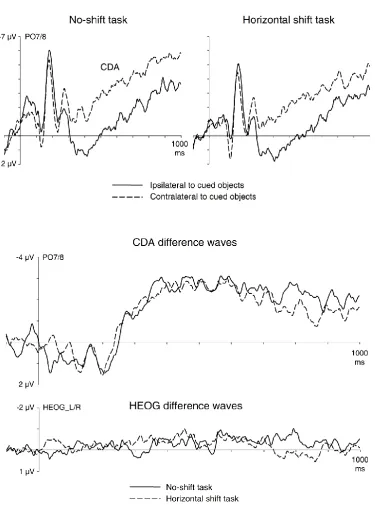
Figure 2 (top panel) shows grand-averaged ERPs measured in the delay interval
between the memory and test displays at lateral posterior electrodes PO7/8 contralateral
and ipsilateral to the cued objects in the memory display, separately for the no-shift task
(left) and the horizontal shift task (right). As expected, a sizable CDA component was elicited
during working memory maintenance in the no-shift task. Critically, this component was
also present in the horizontal shift task, and there was no evidence for a polarity reversal of
the CDA during the delay period. This is further illustrated in Figure 2 (middle panel), which
shows difference waveforms obtained by subtracting ERPs at ipsilateral electrodes from
contralateral ERPs. A contralateral negativity emerged at the same point in time in both
tasks, and remained present throughout the delay period. The HEOG difference waveforms
shown in Figure 2 (bottom panel) were computed by subtracting ipsilateral from
contralateral HEOG waveforms (after artefact rejection). In these HEOG difference waves,
eye movements towards the cued side of the memory display would be reflected by
negative-going deflections, and eye movements towards the anticipated side of the
task-relevant objects in the test displays would trigger HEOG deflections of opposite polarity in
the no-shift and horizontal shift tasks. There were no systematic differences in eye position
The presence of the CDA component in both tasks was substantiated by a statistical
analysis of ERP mean amplitudes measured at lateral posterior electrodes PO7/8 in the
250-1000 ms interval after memory display onset for the factors task (no-shift versus horizontal
shift task) and laterality (electrode contralateral versus ipsilateral to the cued items in the
memory display). A main effect of laterality (F(1,11) = 23.6, p < .001) confirmed the
presence of reliable CDA components. Critically, there was no interaction between task and
laterality (F(1,11) = 2.0, p = .189), indicating that the polarity and size of the CDA did not
differ between the two tasks. Analyses conducted separately for each task confirmed that a
reliable CDA component was triggered contralateral to the memorized objects in the
memory display not only in the no-shift task (t(11) = 5.3, p < .001), but also in the horizontal
shift task (t(11) = 4.2, p = .001). While there was clearly no polarity reversal of the CDA
component in the horizontal shift task, Figure 2 suggests that CDA amplitudes may be
smaller in this task relative to the no-shift task, in particular during the final 400 ms of the
delay period. To assess this possibility, an additional analysis was conducted on ERP mean
amplitudes measured in the 600-1000 ms interval after memory display onset. There was a
main effect of laterality (F(1,11) = 23.8, p < .001), but the interaction between task and
laterality failed to reach significance (F(1,11) = 3.8, p = .076).
Figure 2 also shows that early visual ERP components elicited by the memory display,
and in particular the P1, differed between contralateral and ipsilateral posterior electrodes,
with larger P1 amplitudes at electrodes contralateral to the side of the cued objects in the
memory display. Similar contralateral P1 enhancements have been observed in previous
studies that manipulated the focus of spatial attention within bilateral stimulus displays
(e.g., Luck, Heinze, Mangun, & Hillyard. 1990). An analysis of P1 mean amplitudes measured
during the 110-140 ms post-stimulus interval did indeed find a main effect of laterality
(F(1,11) = 10.5, p = .008) that did not interact with task (F(1,11) = 1.7, p = .220), thus
confirming that larger visual P1 components were triggered contralateral relative to
ipsilateral to the cued to-be-memorized objects in both tasks.
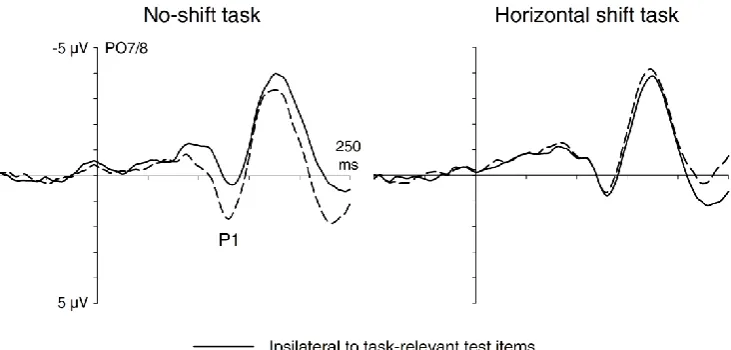
Figure 3 shows early visual ERP components elicited by the test displays in both tasks
at electrodes PO7/8 contralateral and ipsilateral to the response-relevant items. ERPs are
shown separately for both tasks, and are plotted relative to a 100 ms pre-stimulus baseline.
Analogous to the results observed for memory displays in the no-shift task, P1 amplitude
enhancement was present in the horizontal shift task. This was confirmed by an analysis of
P1 mean amplitudes for the 110-140 ms post-stimulus interval, which revealed an
interaction between task and laterality (F(1,11) = 17.5, p = .002). Follow-up analyses
confirmed that a contralateral P1 enhancement was present in the no-shift task (t(11) = 6.3,
p = .004), but not in the horizontal shift task (t(11) < 1).
3. Discussion
The aim of the current study was to test whether position-dependent working
memory representations can be flexibly adjusted in line with expectations about the
location of upcoming task-relevant visual events. Can observers shift the represented
locations of memorized visual objects during the delay period of a change detection task in
order to match them with the predicted locations of subsequent test stimuli? To answer this
question, we measured CDA components in a standard no-shift version of a change
detection task where visual objects on one side of a memory display had to be compared to
objects on the same side in a test display, and in a new horizontal shift task where observers
had to compare memory and test stimuli on opposite sides. If position-dependent
representations in working memory can be shifted towards the side where task-relevant
test stimuli are known to appear, this should be reflected by a polarity reversal of the CDA
component during the delay period of the horizontal shift task.
Our ERP data provided no evidence for such prediction-based changes in the
represented location of memorized visual objects during their maintenance in the horizontal
shift task. CDA components of similar size where observed in both tasks, and there was no
evidence for any polarity reversal of this component when observers knew that the
memorized objects had to be compared with test objects in the opposite visual field. Even
though CDA amplitudes were slightly reduced during the final 400 ms in the horizontal shift
task relative to the no-shift task (see Figure 2), this difference did not reach statistical
significance. If participants had moved the represented position of visual objects in working
memory to the opposite side in preparation for their comparison with test stimuli in the
partial shift of position-dependent working memory representations should have resulted in
a much stronger attenuation of the CDA in the horizontal shift task relative to the no-shift
task. The observation that CDA amplitudes did not differ significantly between these two
tasks is inconsistent with this scenario. It suggests that object representations in visual
working memory retain the spatial layout of these objects as it was encountered during
encoding, and cannot be easily transformed in preparation for upcoming memory
comparison processes. This conclusion is surprising, because it contrasts with the fact that
the receptive fields of visual neurons are spatially remapped during saccadic eye
movements (Duhamel et al., 1992; Nakamura & Colby, 2002), and is also inconsistent with
the general idea that visual working memory representations can be flexibly transformed in
line with task demands to facilitate adaptive goal-directed behaviour (e.g., D’Esposito,
2007).
Even though change detection performance was remarkably good in the horizontal
shift task, there were still small but significant performance costs relative to the no-shift
task. RTs were 75 ms slower in the horizontal shift task, and the percentage of missed colour
changes was about 3% higher in this task as compared to the no-shift task. The performance
differences between the two tasks resulted in a higher estimate of visual working memory
capacity (K) in the no-shift task, although this difference between the two tasks was very
small (2.6 versus 2.5). A similar small reduction in change detection accuracy with horizontal
shifts between memory and test displays was also observed by Woodman et al. (2012). The
fact that this difference was not statistically reliable is most likely due to the lower number
of trials for each participant in this earlier study. If working memory maintenance processes,
as reflected by the CDA component, do not differ between the two tasks, other factors must
be responsible for the small but reliable performance costs observed for the horizontal shift
task.
There was in fact one notable ERP difference between these two tasks, which was
revealed by comparing the sensory-evoked ERP components elicited in response to the test
stimulus displays (see Figure 3). In the no-shift task, the early visual P1 component was
larger contralateral to the side where the task-relevant objects in the memory display had
been presented. Essentially the same contralateral P1 enhancement was also observed in
response to memory displays in both tasks (see Figure 2). A larger contralateral P1
one side of the visual field before stimuli are presented bilaterally on the attended and
unattended side (e.g., Luck et al., 1990). This effect is assumed to reflect the spatially
selective facilitation of early sensory processing stages for currently attended visual stimuli
(e.g., Hillyard & Anllo-Vento, 1998). The presence of enhanced P1 components at electrodes
contralateral to the cued objects in the memory displays is in line with this interpretation, as
participants are likely to have allocated their attention towards the task-relevant side that
was indicated by the cue prior to the presentation of the memory display. Along similar
lines, a contralaterally enhanced P1 component was observed in response to test stimulus
displays in the no-shift condition. Although this effect was not explicitly predicted, it
strongly suggests that spatial attention was still focused on this task-relevant side when the
test displays were presented. This post-hoc interpretation is in line with previous ERP
studies (e.g., Awh, Anllo-Vento, & Hillyard, 2000), which have demonstrated that the
maintenance of objects in visual working memory is mediated by focal spatial attention. If
memorizing objects on the cued side of a memory display during the delay period requires a
sustained focus of spatial attention on that side, task-relevant objects in the test display will
be located on the side that is already attended in the current no-shift task. In the horizontal
shift task, these test display objects will appear on the side that was unattended during the
delay period.
The presence of contralateral P1 enhancements in response to test stimulus displays
in the no-shift task, and the absence of such an effect in the horizontal shift task, is thus
likely to reflect systematic differences in the distribution of spatial attention at the point in
time where test stimulus displays are presented. In the no-shift task, the focus of attention
on the previously cued side is maintained during and after the presentation of the test
display. In the horizontal shift task, where participants know that task-relevant test stimuli
will always be located on the opposite side, the spatial focus of attention that was active
during the maintenance period needs to be shifted to the other visual field. The absence of
any spatially selective attentional P1 modulations in response to test displays in this task
suggests that this attentional re-alignment was still incomplete at the point in time when
the test display was presented. It is possible that the non-significant trend towards reduced
CDA components during the later phase of the delay period in the horizontal shift task as
compared to the no-shift task (see Figure 2) is linked to an anticipatory re-allocation of
These observations suggest that the performance differences observed between the
no-shift and horizontal shift tasks of the present study are not directly related to differences
in working memory maintenance, but instead to differences in the subsequent attentional
processing of test stimulus displays. If spatial attention is already focused on the relevant
side of the test display in the no-shift task but not in the horizontal shift task, the sensory
processing of task-relevant test objects should be enhanced in the former task. This should
facilitate the comparison between memory and test displays in the no-shift task, and thus
result in better change detection performance, as was indeed observed in this study. These
considerations have important implications for the interpretation of the differences in
working memory capacity (measured as K) between the two tasks. Although K is usually
interpreted as an index of the number of visual representations that can be simultaneously
maintained in working memory (Cowan, 2001), K is computed on the basis of behavioural
change detection task performance, and this performance can be affected by processes that
are not directly related to working memory maintenance. In our study, performance
differences between the no-shift and horizontal shift tasks are likely to be linked to
differences in the spatial distribution of attention during the early sensory processing of test
displays, that is, to processes that occur after the maintenance of task-relevant information
during the delay period. Along similar lines, Awh, Barton, and Vogel (2007) have argued that
lower working memory capacity estimates for more complex objects (e.g., Alvarez &
Cavanagh, 2004) do not reflect a reduction in the number of objects that can be
simultaneously maintained, but instead an increased probability of errors during the
comparison between memory and test display objects when these objects are more
complex. These considerations suggest that performance-derived indices of working
memory capacity such as K should be interpreted with caution, as change detection tasks
performance can be affected by capacity-unrelated factors.
Overall, the results of this study have shown that object representations in visual
working memory reflect the locations of these objects during encoding, regardless of
whether they have to be compared to test stimuli at the same location or in the opposite
visual field. Even though participants knew that task-relevant memory and test stimuli
would always be presented on opposite sides in the horizontal shift task, we found no ERP
evidence that this had resulted in preparatory shifts of the represented location of
absence of any evidence for a CDA polarity shift in this task suggests that the successful
matching of remembered and perceived visual objects across horizontal translations
between memory and test displays (e.g., Woodman et al., 2012) does not depend on
anticipatory adjustments of position-dependent working memory representations. Instead,
this remarkable ability is likely to be based on a flexible comparison mechanism that can
bridge spatial discrepancies between perceptual and working memory representations of
4. Experimental Procedures
4.1. Participants
Twelve volunteers (aged 26-39 years; mean age 31.6 years, 5 female, 2 left-handed)
were paid to participate in this study. All had normal or corrected-to-normal vision and
normal colour vision (as verified by the Ishihara colour vision test; Ishihara, 1972).
4.2. Stimuli and procedure
Stimuli were presented on a 22’’ Samsung wide SyncMaster 2233 LCD monitor (100
Hz refresh rate; 16 ms black-to-white-to-black response time, as verified with a photodiode),
against a black background. Each trial started with the presentation of a central left-pointing
or right-pointing arrow cue that subtended a visual angle of 0.4°, and specified which side of
the subsequent memory display had to be encoded and maintained. This cue was presented
above fixation for 200 ms, and was followed after a variable interstimulus interval of
300-500 ms by a bilateral stimulus array (memory display) that contained three squares in three
different colours on the left side and three squares in three other different colours on the
right side. The size of each square was 0.5° of visual angle. One of the squares in each visual
field appeared above the horizontal meridian, and the other two below the horizontal
meridian (see Figure 1). The total area covered by the three coloured squares on either side
was 1.25°, and their horizontal eccentricity (measured relative to the centre of the
three-square stimulus set) was 3° of visual angle. The three-squares could appear in one of seven
possible colours (red, green, blue, yellow, grey, cyan, magenta). All colours were
equiluminant (~ 11.8 cd/m2), and all stimuli were presented against a black background. On
each trial, six of these seven colours were selected, and each of these colours was randomly
assigned to one of the six squares in the memory display.
Each memory display was presented for 100 ms, and was followed after a 900 ms
delay period by a test array, which was presented for 2000 ms. Participants’ task was to
encode and memorize the three coloured squares on the cued side of the memory display,
and to compare them to the three coloured squares on the task-relevant side of the
subsequent test display, in order to decide whether one of these three items appeared in a
different colour in the test array (change trials), or whether there was no colour change
the test display. In the standard no-shift task, participants were instructed at the start of
each block to compare the coloured squares on the cued side of the memory display to the
coloured squares on the same side in the test display. On repetition trials, this test display
was identical to the memory display on the same trial. On change trials, the colour of one of
the three squares on the cued side was different in the test display relative to the memory
display. This square was randomly selected, and its original colour was changed to the
colour that was not present in any of the other five items in the memory array. This was
done to ensure that both memory and test displays would always include six items in six
different colours. In the new horizontal shift task, participants were instructed at the start of
each block to compare the cued coloured squares in the memory display to the coloured
squares on the opposite side in the test display. In this condition, test displays on repetition
trials contained the same two sets of three coloured squares that were present in the
preceding memory display, except that the left set of squares now appeared in the right
visual field, and the right set in the left visual field (see Figure 1). On change trials, the colour
of one of the three squares on the task-relevant side of the test display (i.e., the side
opposite to the cued side in the memory display) was changed to the colour that was not
present in the memory display.
The experiment included six blocks. The no-shift and horizontal-shift tasks were each
run in three successive blocks, with task order counterbalanced across participants. Each
block contained 60 trials, with 15 trials per block for each combination of trial type (change
versus repetition trials) and cued side (left versus right). The interval between the offset of
the test display on the preceding trial and the onset of the cue on the next trial was 1500
ms. Participants were instructed to maintain central fixation, and to signal the presence or
absence of a colour change on the relevant side of the test display relative to the memory
display with a left-hand or right-hand button press on two vertically aligned response keys.
The assignment of response hand to present- versus absent-responses was counterbalanced
across participants. One practice block preceded the experimental blocks in both tasks.
4.3. EEG recording and data analyses
EEG was DC-recorded from 23 scalp electrodes mounted in an elastic cap at standard
positions of the extended 10/20 system at sites Fpz, Fz, F3, F4, F7, F8, FC5, FC6, Cz, C3, C4,
rate of 500 Hz, with a digital low-pass filter of 40 Hz. All electrodes were online referenced
to the left earlobe and re-referenced offline to the average of both earlobes. No further
filters were applied after EEG acquisition. For the main CDA analyses, trials were segmented
from 100 ms before to 1000 ms after the onset of the memory display. Trials with eye
movement and other artefacts (HEOG exceeding ±20 µV; Fpz ±60 µV; all other electrodes
±80 µV; resulting in an exclusion of 38% and 36% of all trials in the no-shift and the
horizontal shift condition, respectively) during this interval, or with incorrect or missing
responses to test displays were excluded from all further analyses.
EEG was averaged for all combinations of task (no-shift versus horizontal shift task)
and cued side (left versus right side of the memory display) relative to a 100 ms pre-stimulus
baseline. CDA components to target-colour arrays were quantified on the basis of ERP mean
amplitudes obtained at lateral posterior electrodes PO7 and PO8 during the delay interval
between 250 ms and 1000 ms after memory display onset. An additional analysis of CDA
amplitudes was conducted for the later part of the delay period (600-1000 ms after memory
display onset). Furthermore, the amplitude of the visual P1 component to memory displays
was quantified on the basis of ERP mean amplitudes at PO7/8 in the 110-140 ms
post-stimulus time window. To assess any differences between the two tasks in the attentional
processing of the test displays, P1 amplitudes were also measured in response to these
displays. EEG was segmented from 100 ms prior to 250 ms after test display onset and was
averaged for all combinations of task and side of the relevant test objects (left versus right
side of the test display) relative to a 100 ms pre-stimulus baseline. Again, trials with artifacts
(11% and 12% of all trials in the no-shift and the horizontal shift condition, respectively), and
trials with incorrect or missing responses were excluded from analysis.
References
Alvarez, G. A., & Cavanagh, P. (2004). The capacity of visual short-term memory is set both
by visual information load and by number of objects. Psychological Science, 15,
106-111.
Awh, E., Anllo-Vento, L., & Hillyard, S. A. (2002). The role of spatial selective attention in
working memory for locations: Evidence from event-related potentials. Journal of
Cognitive Neuroscience, 12, 840-847.
Awh, E., Barton, B., & Vogel, E. K. (2007). Visual working memory represents a fixed number
of items, regardless of complexity. Psychological Science, 18, 622-628.
Awh, E., & Jonides, J. (2001). Overlapping mechanisms of attention and spatial working
memory. Trends in Cognitive Sciences, 5, 119-126.
Baddeley, A. (1992). Working memory. Science, 255, 556-559.
Baddeley, A. (2012). Working memory: theories, models, and controversies. Annual Review
of Psychology, 63, 1-29.
Cowan, N. (2001). The magical number 4 in short-term memory: a reconsideration of mental
storage capacity. Behavioral and Brain Sciences, 24, 87-114.
D'Esposito, M. (2007). From cognitive to neural models of working memory. Philosophical
Transactions of the Royal Society of London B, 362, 761-772.
Duhamel, J.R., Colby, C. L., & Goldberg, M. E. (1992). The updating of the representation of
visual space in parietal cortex by intended eye movements. Science, 255, 90-92.
Duncan, J. & Humphreys, G. (1992). Beyond the search surface: Visual search and
attentional engagement. Journal of Experimental Psychology: Human Perception and
Performance, 18, 578-588.
Eimer, M. (2014). The neural basis of attentional control in visual search. Trends in
Cognitive Sciences. Online publication; DOI: 10.1016/j.tics.2014.05.005.
Fuster, J. M., & Alexander, G. E. (1971). Neuron activity related to short-term memory.
Science, 173, 652-654.
Goldman-Rakic, P. S. (1990). Cellular and circuit basis of working memory in prefrontal
cortex of nonhuman primates. Progress in Brain Research, 85, 325-335.
Gratton, G., Corballis, P. M., Jain, S. (1997). Hemispheric organization of visual memories.
Harrison, S. A., & Tong, F. (2009). Decoding reveals the contents of visual working memory
in early visual areas. Nature, 458, 632-635.
Hillyard, S. A., & Anllo-Vento, L. (1998). Event-related brain potentials in the study of visual
selective attention. Proceedings of the National Academy of Sciences, 95, 781-787.
Hornak, J., Duncan, J., & Gaffan, D. (2002), The role of the vertical meridian in visual
memory for objects. Neuropsychologia, 40, 1873-1880.
Ishihara, S. (1972). Tests for color-blindness. Tokyo: Kanehara Shuppan.
Jonides, J., Lacey, S. C., & Nee, D.E. (2005). Processes of working memory in mind and brain.
Current Directions in Psychological Science, 14, 2-5.
Katus, T., Grubert, A., & Eimer, M. (in press). Electrophysiological evidence for a sensory
recruitment model of somatosensory working memory. Cerebral Cortex.
Kravitz, D. J., Saleem, K. S., Baker, C. I., Ungerleider, L. G., & Mishkin, M. D.J. (2013). The
ventral visual pathway: an expanded neural framework for the processing of object
quality. Trends in Cognitive Sciences, 17, 26-49.
Luck, S. J., Heinze, H. J., Mangun, G. R., & Hillyard, S. A. (1990). Visual event-related
potentials index focused attention within bilateral stimulus arrays. II. Functional
dissociation of P1 and N1 components. Electroencephalography and Clinical
Neurophysiology, 75, 528-542.
McCollough, A. W, Machizawa, M. G, & Vogel, E. K. (2007). Electrophysiological measures of
maintaining representations in visual working memory. Cortex. 43, 77–94.
Nakamura, K., & Colby, C. L. (2002). Updating of the visual representation in monkey striate
and extrastriate cortex during saccades. Proceedings of the National Academy of
Sciences, 99, 4026-4031.
Olivers, C. N. L., Peters, J., Houtkamp, R. & Roelfsema, P.R. (2011). Different states in visual
working memory: when it guides attention and when it does not. Trends in Cognitive
Sciences, 15, 327-334.
Postle, B. R. (2006). Working memory as an emergent property of the mind and brain.
Neuroscience, 139, 23-38.
Ranganath, C., Cohen, M. X., Dam, C., & D'Esposito, M. (2004). Inferior temporal, prefrontal,
and hippocampal contributions to visual working memory maintenance and
Shepard, R., & Metzler, J. (1971). Mental rotation of three dimensional objects. Science, 171,
701-703.
Sreenivasan, K. K, Curtis, C. E., & D’Esposito, M. (2014). Revisiting the role of persistent
neural activity during working memory. Trends in Cognitive Sciences, 18, 82-89.
Vogel, E. K., & Machizawa, M. G. (2004). Neural activity predicts individual differences in
visual working memory capacity. Nature, 428, 748–751.
Woodman, G. F., Vogel, E. K., & Luck, S. J. (2012). Flexibility in visual working memory:
Accurate change detection in the face of irrelevant variations in position. Visual
Figure Legends
Figure 1. Schematic illustration of single trials in the no-shift and horizontal shift tasks. In both tasks, a precue indicated the to-be-remembered side of an upcoming memory display.
These displays contained two sets of three squares in six different colours on the left and
right side. Participants had to memorize the three objects on the cued side during a 900 ms
delay period, to compare them to three objects in the test display, and to report whether
these objects were identical (repeat trials) or whether one of them changed colour between
the memory and test display (change trials). In the no-shift task, cued memory items had to
be compared to test items on the same side. In the horizontal shift task, memorized objects
had to be compared to objects that appeared on the opposite side of the test display. The
Figure shows a change trial in the no-shift task (left), and a repeat trial in the horizontal shift
task (right).
Figure 2. Top panel: Grand-average event-related potentials (ERPs) measured in the delay period between the memory and the test array at lateral posterior electrodes PO7/8
contralateral and ipsilateral to the cued objects in the memory display, separately for the
no-shift task (left) and the horizontal shift task (right). Middle panel: Difference waveforms
obtained by subtracting the ipsilateral from contralateral ERPs, shown separately for both
tasks. Bottom panel: HEOG difference waveforms obtained by subtracting HEOGs recorded
ipsilaterally to the cued side of the memory display from contralateral HEOG waveforms. In
these difference waves, eye movements towards the cued side of the memory display
would trigger negative-going HEOG deflections.
Figure 3. Grand-average ERPs elicited by test displays at electrodes PO7/8 contralateral and ipsilateral to the side of the task-relevant objects in these displays during the 250 ms after
test display onset. ERPs are shown separately for the no-shift task (left panel) and horizontal
No-shift task Horizontal shift task
Change trial Repeat trial
Memory display
Test display
> >
Cue display
200 ms
300-500 ms 100 ms
900 ms 2000 ms
1500 ms