Siddiqi, N and Robinson, L and Stokes, G and Wallace, D (2016) Evaluating the effectiveness
and cost-effectiveness of Dementia Care Mapping
TMto enable person-centred care for people with
dementia and their carers (DCM-EPIC) in care homes: study protocol for a randomised controlled
trial. Trials, 17:300. ISSN 1745-6215 DOI: https://doi.org/10.1186/s13063-016-1416-z
Link to Leeds Beckett Repository record:
http://eprints.leedsbeckett.ac.uk/2797/
Document Version:
Article
Creative Commons: Attribution 4.0
The aim of the Leeds Beckett Repository is to provide open access to our research, as required by
funder policies and permitted by publishers and copyright law.
The Leeds Beckett repository holds a wide range of publications, each of which has been
checked for copyright and the relevant embargo period has been applied by the Research Services
team.
We operate on a standard take-down policy.
If you are the author or publisher of an output
and you would like it removed from the repository, please
contact us
and we will investigate on a
case-by-case basis.
S T U D Y P R O T O C O L
Open Access
Evaluating the effectiveness and
cost-effectiveness of Dementia Care
Mapping
™
to enable person-centred care
for people with dementia and their carers
(DCM-EPIC) in care homes: study protocol
for a randomised controlled trial
Claire A. Surr
1*, Rebecca E. A. Walwyn
2, Amanda Lilley-Kelly
2, Robert Cicero
2, David Meads
3, Clive Ballard
4,
Kayleigh Burton
2, Lynn Chenoweth
7, Anne Corbett
4, Byron Creese
4, Murna Downs
6, Amanda J. Farrin
2,
Jane Fossey
5, Lucy Garrod
5, Elizabeth H. Graham
2, Alys Griffiths
1, Ivana Holloway
2, Sharon Jones
6, Baber Malik
1,
Najma Siddiqi
8, Louise Robinson
9, Graham Stokes
10and Daphne Wallace
6Abstract
Background:Up to 90 % of people living with dementia in care homes experience one or more behaviours that
staff may describe as challenging to support (BSC). Of these agitation is the most common and difficult to manage. The presence of agitation is associated with fewer visits from relatives, poorer quality of life and social isolation. It is
recommended that agitation is treated through psychosocial interventions. Dementia Care Mapping™(DCM™) is an
established, widely used observational tool and practice development cycle, for ensuring a systematic approach to providing person-centred care. There is a body of practice-based literature and experience to suggests that
DCM™is potentially effective but limited robust evidence for its effectiveness, and no examination of its cost-effectiveness,
as a UK health care intervention. Therefore, a definitive randomised controlled trial (RCT) of DCM™in the UK is urgently
needed.
Methods/design:A pragmatic, multi-centre, cluster-randomised controlled trial of Dementia Care Mapping (DCM™) plus Usual Care (UC) versus UC alone, where UC is the normal care delivered within the care home following a minimum level of dementia awareness training. The trial will take place in residential, nursing and dementia-specialist care homes across West Yorkshire, Oxfordshire and London, with residents with dementia. A random sample of 50 care homes will be selected within which a minimum of 750 residents will be registered. Care homes will be randomised in an allocation ratio of 3:2 to receive either intervention or control. Outcome measures will be obtained at 6 and 16 months following randomisation. The primary outcome is agitation as measured by the Cohen-Mansfield Agitation Inventory, at 16 months post randomisation. Key secondary outcomes are other BSC and quality of life. There will be an integral cost-effectiveness analysis and a process evaluation.
(Continued on next page)
* Correspondence:[email protected]
1Faculty of Health and Social Sciences, Leeds Beckett University, Leeds LS1 3HE, UK
Full list of author information is available at the end of the article
(Continued from previous page)
Discussion:The protocol was refined following a pilot of trial procedures. Changes include replacement of a
questionnaire, whose wording caused some residents distress, to an adapted version specifically designed for use in care homes, a change to the randomisation stratification factors, adaption in how the staff measures are collected to encourage greater compliance, and additional reminders to intervention homes of when mapping cycles are due, via text message.
Trial registration: Current Controlled Trials ISRCTN82288852. Registered on 16 January 2014.
Full protocol version and date: v7.1: 18 December 2015.
Keywords: Agitation, Care homes, Cluster-randomised controlled trial, Dementia, Dementia Care Mapping,
Person-centred care
Background
A third of people who have dementia reside in a care home [1] and at least two thirds of people living in care homes have dementia [2]. Of the people living with dementia, up to 90 % experience one or more behav-iours that staff may describe as ‘challenging’ to support (BSC), during the course of their condition. BSC include behaviours such as agitation, aggression, restlessness, hallucinations, delusions, depression, anxiety and apathy [3]. The most common of these, with reported preva-lence rates of over 60 % in nursing home residents with dementia, is agitation [4, 5], which includes a cluster of extremely problematic behaviours such as aggressive and physically non-aggressive behaviours and verbal agitation [6]. The presence of agitation in a person with dementia is associated with fewer visits from relatives, poorer quality of life [7] and social isolation [8]. Furthermore, it puts the person who is agitated at risk of triggering responses from other residents [9], causing potential serious risk of harm not only to the person who is agitated, but to other residents and staff. Agitation and other BSC are not an inevitable consequence of dementia, they reflect an expression of unmet needs by a person with dementia in response to poor qual-ity care [10–12]. It is recognised that the presence of agitation in individuals with dementia in care home settings is associated with poorer levels of organi-sational aspects of care and the care culture [11]. It is, therefore, recommended that agitation is treated through the use of psychosocial interventions that address the quality of care practice [10, 13].
Person-centred care is an effective psychosocial approach in dementia care [14] and is considered a best practice method for reducing agitation and other BSC [13]. Person-centred care means providing a supportive social environment within a care setting where people with dementia are valued, treated as individuals, and staff are encouraged to see the world from the person’s perspective [13, 15]. Raising staff knowledge, skills and confidence levels around person-centred ways of working
with BSC is, therefore, a national priority area [16–18]. Training staff in person-centred approaches has been found to be effective in improving the delivery of centred care [19, 20]. However, whilst effective person-centred care training can produce immediate practice benefits, evidence suggests that alone it might not sustain change over time [19–22] and additional support is required in order to facilitate sustained benefits [23] over an extended period of time [24].
To date there are only five published studies that examine the benefits of using DCM™ for improving clinical outcomes. A Dutch pilot study [37] utilising a One-Group Pretest-Posttest design found DCM™, used alone, reduced verbal agitation and anxiety in people with dementia and improved care staff feelings of connection with clients. An Australian pilot study [38] in three care homes, employing a Pretest-Posttest design, found improvements in the quality of staff interactions and reductions in agitation and depres-sion through the use of DCM™. There are three full RCTs of the effectiveness of DCM™ published to date. A cluster RCT conducted in 15 care homes with 289 residents (loss to follow-up of 18 % at 10 months) in Australia [14] (UC = 5, UC + person-centred care training = 5, UC + DCM = 5), found that at 10 months post randomisation, DCM™, when used alone was associated with significantly reduced agitation and falls among residents with dementia compared to UC. A Norwegian cluster RCT [39] in 15 care homes (5 = control group, 5 = person-centred care framework implementation, 5 = DCM) and with 446 residents (loss to follow-up of 29 % at 10 months) found a significant reduction in neuropsychiatric symptoms as measured by the Neuropsychiatric Inventory (NPI) and on the NPI sub-scales of agitation and psychosis compared to controls. It also found a significant improvement in quality of life, compared to controls after 10-month follow-up. However, both the Norwegian and the Australian study had a follow-up period of only 10 months, limiting the potential for impact given the length of time that changes within practice can take to imple-ment and thus potential benefits to be observed. Add-itionally, both trials had explanatory designs involving researcher-led cycles of DCM™ with variable degrees of input from trained care home staff. This restricts generalisability of the results to usual implementation of DCM™ in care practice, which is practitioner-led. A cluster RCT study in 34 units, from 11 care homes in the Netherlands [40], with 434 residents (loss to follow-up 35 % at 12 months) found no difference in residents’ agitation between the DCM™ intervention and control homes. However, staff in the intervention group reported significantly fewer negative emotional reactions and significantly more positive reactions towards people with dementia over time. This trial reported potential intervention fidelity issues in the DCM™ care homes, indicating less than desirable im-plementation of the intervention in some of the clusters. A limitation of all three RCT studies is that they were exploratory studies and each only included two full cycles of DCM™ before final follow-up, redu-cing the time for potential change and impact to be realised.
Despite their limitations, these studies provide promi-sing data on the effectiveness of DCM™ in Australian, Norwegian and Dutch care home settings. They do not provide, however, a robust evaluation of effectiveness of DCM™in UK settings. In particular, the Australian study used DCM™ alone rather than alongside person-centred care training, which is recommended in DCM imple-mentation guidelines [41]. This reflects the Australian context at the time of the study, where staff access to person-centred care training was the exception rather than assumed good practice, but it highlights the lack of comparability of Usual Care between UK and non-UK care homes. In addition, there are distinct funding models of dementia care across countries and, therefore, the economic evaluation data from these RCTs are not directly applicable to a UK context. Therefore, a defini-tive RCT of DCM™ in the UK, building on previous work, is needed to inform the delivery of person-centred dementia care within UK care homes. The additional knowledge to be gained from this trial, beyond that within research conducted to date, is that:
It will reflect conditions of DCM™implementation in usual practice, being a pragmatic trial, compared to the explanatory designs of previous trials; in particular with care home staff rather than researcher led cycles of DCM™ implementation. The study design, size and statistical power will permit definitive conclusions to be drawn regarding the efficacy of DCM™ as an intervention in care home settings Three cycles of the DCM™intervention will be
implemented and follow-up will be over a period of 16 months; considerably longer than in previous trials where follow-up has been a maximum of 10 months. This is beneficial since some practice changes, for example to underlying care culture, are likely to require time to implement and, therefore, a longer follow-up period is necessary to investigate any such effects
This trial will conduct a full economic evaluation utilising a pragmatic trial design and, therefore, will be able to offer a definitive position on cost-effectiveness. Only one of the previous trials conducted an economic evaluation and given its explanatory design, these findings cannot be confidently generalised
The trial design builds on that of the three previous explanatory trials, meaning its design is optimal for assessing efficacy of DCM™as an intervention in care home settings
Aims and objectives
compared to UC alone for people with dementia living in care homes in the UK.
Primary objective
To determine if DCM™ plus UC (i.e. the intervention) is (1) more effective in reducing agitation as measured by the total Cohen-Mansfield Agitation Inventory (CMAI) score and (2) more cost-effective than UC alone (i.e. the control), 16 months following randomisation of care homes.
Secondary objectives
Secondary objectives are to investigate the effectiveness of the intervention at 6 and 16 months post randomi-sation in: (1) reducing BSC in residents over time as measured by the CMAI and the NPI, (2) reducing the use of antipsychotic and other psychotropic drugs, (3) improving resident mood and quality of life, (4) impro-ving staff well-being and role efficacy, and (5) improimpro-ving the quality of staff/resident interactions over time, as measured by the Quality of Interactions Schedule (QUIS). It will also explore (6) the safety profile of the intervention as assessed by the number and types of adverse events, (7) any differential predictors of the effects of an intervention, and (8) the process, challenges, benefits and impact of implementing the intervention.
Methods/design
Design
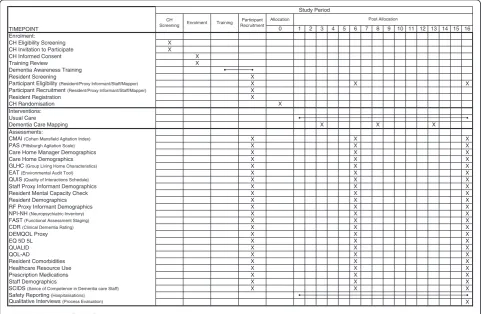
This trial has been designed to be a pragmatic, multi-centre, cluster-randomised controlled trial of DCM™plus UC versus UC alone. There will be four types of trial participants: care homes, residents, their relative/friend and care home staff members. The trial will take place in residential, nursing and dementia UK care homes across West Yorkshire, Oxfordshire and London. From these areas, 50 care homes will be recruited from a random sample, within which 750 residents, their relative/friend (where eligible) and all eligible, consented, care home staff will be registered. Following participant identification and consent, baseline assessments will be undertaken and then the care homes will be randomised in a ratio of 3:2 to receive intervention or control. Outcome measures will be obtained at 6 and 16 months following randomisation. Additional to the primary analysis, there will be an integral cost-effectiveness analysis and a process evaluation. Figure 1 outlines the schedule for all trial activities.
Inclusion and exclusion criteria Care home criteria
A care home meeting all of the following criteria at screening will be eligible for this trial:
Has a sufficient number of permanent dementia (based on a formal diagnosis or Functional Assessment Staging of Alzheimer’s Disease (FAST) [42] score of 4+) residents eligible to participate in the study in order to achieve a minimum of 10 residents registered to take part
Has a manager or nominated person agreeing to sign up to the trial protocol as research lead for the duration of the project?
Agrees to release staff for DCM™training and subsequent mapping processes
Is within the catchment area
A care home meeting any of the following criteria will not be eligible for this trial:
In the view of the research team, is not suitable for inclusion due to being subject to Care Quality Commission enforcement notices, admission bans or relevant moderate or major Care Quality Commission compliance breaches
Is receiving other special support for specific quality concerns, such as being currently subject to, or have pending, any serious safeguarding investigations, or receiving voluntary or compulsory admissions bans, is in receipt of local commissioning special support due to quality concerns
Has used DCM™as a practice development tool within the 18 months prior to randomisation or is planning to use DCM™over the course of trial involvement
Is taking part, has recently taken part in, or is planning to take part, in another trial that conflicts with DCM™or with the data collection during the course of their involvement in the trial
Resident criteria
Residents meeting all of the following criteria at screening will be eligible for this trial:
Is a permanent resident within the care home – defined as a person residing in the care home and not present for receipt of respite or day-care only
Has a formal diagnosis of dementia or score 4+ on FAST [42] as rated by the home manager or another experienced member of staff
Is appropriately consented (in accordance with the Mental Capacity Act [43] and clinical trial guidance on informed consent [44–46])
Has an allocated member of staff willing to provide proxy data
Residents meeting any of the following criteria will not be eligible for this trial:
Is known by the care home manager and/or relevant senior staff member to be terminally ill, e.g. formally admitted to an end of life care pathway
Is permanently bed-bound/cared for in bed
Staff criteria
1. Proxy informant: to be eligible to provide proxy data staff must meet all of the following criteria:
Be a permanent or contracted member of staff Know the resident well, as assessed by their key
worker status and/or the judgement of the home manager
Staff are ineligible if they meet any of the following criteria:
Working in the home as agency or bank staff Have consented to be one of the home’s trained
DCM™mappers
Have acted as a nominated consultee for any residents in the trial
2. Provision of staff measures: staff meeting all of the following criteria will be eligible to provide data on the staff measures:
Is a permanent, contracted, agency or bank member of staff at time of data collection Provides consent to providing data for the trial
through return of the Staff Measures booklet Has sufficient proficiency in English to contribute
to the data collection required for the research Staff meeting the criterion below will not be eligible to provide data on the staff measures for this trial:
Be acting as a nominated consultee for any residents participating in the trial
3. Dementia Care Mapper: to be eligible to undertake this role staff must:
Be a permanent or contracted member of staff Have the right skills and qualities to be a mapper
as assessed by the home manager in accordance with guidance provided by the research team, and Provide consent to becoming a mapper, to
implementing the DCM™process as per the research protocol and to participate fully in the process evaluation
Staff who meet any of the following criteria are not eligible to be a mapper:
Work in the home as agency or bank staff Have acted as a nominated consultee for any
residents participating in the trial
Provide proxy data for any residents participating in the trial
Relative/friend criteria
To be eligible to provide proxy data about a resident, relatives/friends must:
Have visited the resident on a regular basis over the past month (i.e. at least once per week)
Be willing to provide data at a time convenient to them
Have sufficient proficiency in English to contribute to the data collection required for the research
Eligibility waivers to inclusion and exclusion criteria are not permitted.
Recruitment
Care home recruitment
Recruitment will begin with an initial eligibility scree-ning (24 beds or larger in order to ensure that minimum cluster size is likely to be achieved and providing care to older people) of all care homes in the recruitment hub areas (West Yorkshire, Oxfordshire, London) via publicly available information, after which care homes will be approached from those deemed eligible using two-stage sampling. In the first stage, catchment areas within each recruitment hub, defined by postcode prefix for West Yorkshire, boroughs for London and geographical area for Oxfordshire, will be selected in rotation. In the second stage, all the care homes within catchment areas will be randomly ordered and, at each rotation, a batch of 12 care homes from the catchment area will be sent invitation information by post. This method ensures geographical closeness of care homes approached for recruitment at the same time, which will support mul-tiple short recruitment visits to be undertaken with minimised travel. Sampling and care home approach will be staggered across the recruitment period.
Researchers will contact homes invited to participate by telephone after sending an initial postal invitation. For interested care homes, the researcher will complete initial eligibility screening via telephone and then visit the care home to determine full eligibility and complete the recruitment process. Once all the care homes within a catchment area batch have been contacted and a decision regarding participation made, the researcher will move onto the next batch from the next catchment area until sufficient homes have been recruited. In this way, it is intended that the care home sample will be representative of the entire region sampled, and that any deviations from this will be known and can be adjusted for. The target is for four homes to be recruited per month across the whole trial.
the research team. This will ensure that each home in the trial meets at least minimum dementia training levels defined in terms of both content of the training and proportion of staff trained (minimum 20 % of direct care staff ). If the training audit finds that a home has not provided staff with a minimum level of dementia awareness training, staff will be provided with a half-day dementia awareness course. Based on existing published data [45], we expect up to 20 % of homes to require this dementia awareness package.
Resident recruitment
Following the training audit, the researcher will meet with the care home manager and/or relevant senior staff member to identify all eligible residents to be approached to take part in the trial. All residents will be reviewed for eligibility by the researcher through discussions with the manager, whilst maintaining anonymity. All eligible resi-dents will then be approached to participate. It is expected that approximately 15 residents will be recruited at each participating care home. Reasons for ineligibility will be recorded.
Staff recruitment
Care home staff can be recruited into four roles: (1) as proxy informants, providing data about resident partici-pants, (2) as a staff participant providing data about him or herself, (3) as a mapper who will be responsible for implementing the intervention, and (4) as a nominated consultee (see informed consent). Role 4 is mutually exclusive from all other roles, so any staff member recruited as a nominated consultee will not be permitted to undertake any other role within the trial. Roles 1 and 3 are also mutually exclusive, so staff recruited as mappers will not be permitted to act as proxy infor-mants. Recruitment to all staff roles will occur at baseline and at subsequent time points where necessary due to withdrawal. For role 2, recruitment will take place at baseline and at each further data collection point, due to the expected annual turnover rates of staff in each care home.
Relative/friend recruitment
The resident (where possible), or the care home manager, will be asked to identify a relative or close friend of the resident, who visits at least once per week, to be approached to provide proxy data for the trial. The relative/friend will be contacted by post with information about the trial and asked to return a signed consent form to the care home if they agree to take part. The person providing proxy data may differ from the residents’ personal consultee, where one is appointed (see informed consent).
Intervention
Dementia Care Mapping (DCM™)
DCM™ will be implemented according the standard procedures identified in the DCM™ 8 User’s Manual [26]. The intervention comprises training two care home staff in use of DCM™ followed by implemen-tation of three full mapping cycles. Two eligible staff members will be identified as mappers in all homes prior to randomisation and will be consented at base-line. After completion of the standard 4-day DCM™ training course, the mappers will run briefing sessions 1–2 weeks prior to undertaking the mapping observa-tions. During the briefing session, mappers will con-sult with staff about selection of appropriate residents to be mapped. Residents chosen for inclusion in mapping observations do not have to be trial participants and verbal consent from residents to be observed will be gained by the mappers ahead of mapping observations commencing. Mapping involves the mappers continuously observing between two and five people with dementia, over a period of four to six consecutive hours, in com-munal living areas only. The mappers will then analyse the data they collect and present it in a report that will be fed back to the staff team. During the feedback session, an action plan will be produced in collaboration with the staff team, which will detail areas that the home aims to improve, based on the DCM™ data. Progress on these actions is monitored during the next mapping cycle. The first cycle should be completed by approximately 3 months post randomisation and the second and third cycles at approximately 8 months and 13 months post randomisation, respectively. An expert mapper, who is a practitioner experienced in the implementation of DCM™, will provide support to each care home during completion of their first cycle of mapping in order to maximise inter-vention fidelity across all homes. Telephone/email support for DCM™ implementation will be available to all care homes thereafter through the DCM™ lead for the trial, if required. Mappers will be asked to complete and return data on mapping practice for all three mapping cycles including: information on numbers of staff in the care home receiving DCM™ briefing; number of hours of mapping; number of residents mapped; num-ber of staff attending feedback sessions and numnum-ber of action plans developed. Mappers will be provided with a standard reporting template to gather this information.
Usual Care
additional development or training as part of UC, with the exception of control arm homes being required not to implement DCM™ during their trial involvement period. Person-centred care is considered best practice within dementia care [13] and as such care homes are expected to provide staff with appropriate training to deliver care of this type [47].
Registration and randomisation
Residents will be registered centrally with the Clinical Trials Research Unit (CTRU) at the University of Leeds after care home recruitment, the care home training audit, confirmation of eligibility, informed consent and collection of resident baseline data.
Once all residents within a care home have been registered, care homes will be randomised centrally at the CTRU to receive DCM™+ UC or UC, leading to two sources of clustering: cluster-randomisation and DCM™ treatment provision. The former occurs at randomi-sation (care homes are nested within treatment arms), the latter afterwards (care homes are partially nested within arms) so we anticipated that the clustering effect will vary across arms, and assumed a higher design effect in the intervention arm. Care homes will be randomised on a 3:2 basis. A computer-generated minimisation programme incorporating a random element will be used to ensure treatment arms are balanced for the following care home characteristics: (1) home/unit type (general residential/nursing, specialise in dementia care), (2) size (large at least 40, medium/small fewer than 40), and (3) provision of dementia awareness training by research team (yes, no), (4) recruitment hub (West Yorkshire, Oxfordshire, London). The latter was chan-ged from prior use of DCM™ in the last 5 years as balancing the intervention across recruitment hubs was considered more important. Following randomisa-tion, a member of the research team will inform the care home manager of their allocation and for those homes allocated to DCM™+ UC, the staff consented to take on the role of mappers will also be informed, so arrangements for attendance at DCM™ training can be made.
Data assessments
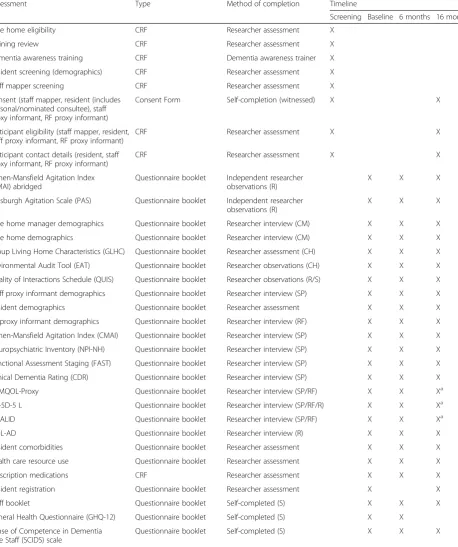
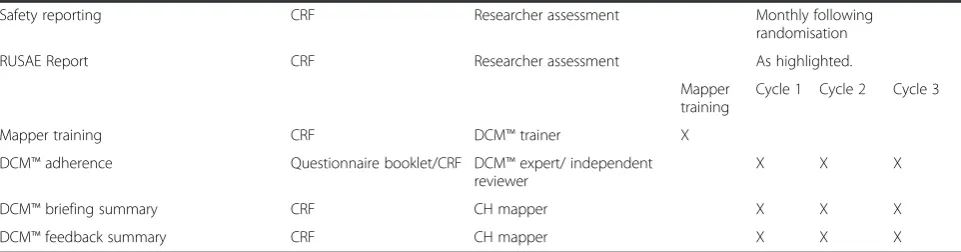
Assessments will be undertaken at screening (prior to consent); baseline (prior to resident registration); 6 months post randomisation and 16 months post randomisation. Baseline data collection visits will be conducted over approximately 3 weeks in each home and follow-up visits over a 1–2-week period. Required data, assessment tools, collection time points and processes are summarised in Table 1.
Outcomes
The primary outcome is agitation at 16 months follo-wing randomisation. The primary measure of agitation is the Cohen-Mansfield Agitation Inventory (CMAI) [48] rated by a staff member who knows the resident well. The Pittsburgh Agitation Scale (PAS) [49] and an adapted CMAI (see below), rated by an independent researcher not involved in any other data collection within that care home and blinded to allocation, will provide concurrent validity. This addresses the issue of potential bias of staff responses, based on the inability to blind them to allocation status.
There are a number of secondary outcomes each rela-ting to residents, staff or care homes. Secondary out-comes at 6 and 16 months post randomisation relating to residents are: Neuropsychiatric Inventory (NPI) [50]; DEMQOL-Proxy, Quality of Life in Late Stage Dementia (QUALID) [51]; QOL-AD [52], EuroQol five dimen-sions, five levels (EQ-5D-5 L) [53]; the prescription and use of psychotropics, memantine, benzodiazepines and anti-depressants; and, safety reporting (serious adverse events (SAEs)). Secondary endpoints at 6 and 16 months post randomisation relating to staff are: General Health Questionnaire (GHQ-12) [54] and Sense of Competence in Dementia care Staff (SCIDS) scale [55]. Secondary endpoints relating to homes are: intervention fidelity (at 16 months) and Quality of Interactions Schedule (QUIS) [56] at 6 and 16 months.
Outcome measures
Resident-related outcome measures
Agitation Cohen-Mansfield Agitation Inventory (CMAI) [6, 48]:
The CMAI measures 29 agitated or aggressive beha-viours [57] on frequency, using a seven-point scale (1–7) ranging from ‘never’to ‘several times an hour’based on behaviours over the previous 2 weeks. A total score is obtained by summing the 29 individual frequency scores (range 29–203). It has good psychometric properties [58] including construct validity and factor structure [59], concurrent validity [60] reliability [61] and test-retest reliability [62] in care home settings. There are also available data on expected change in points from previous similar studies supporting the sample size calculation. The CMAI will be completed in accordance with the CMAI
Manual [48] via staff proxy report in the context of an interview with a trained researcher.
Pittsburgh Agitation Scale [49]:
Table 1Summary of assessments
Assessment Type Method of completion Timeline
Screening Baseline 6 months 16 months
Care home eligibility CRF Researcher assessment X
Training review CRF Researcher assessment X
Dementia awareness training CRF Dementia awareness trainer X
Resident screening (demographics) CRF Researcher assessment X
Staff mapper screening CRF Researcher assessment X
Consent (staff mapper, resident (includes personal/nominated consultee), staff proxy informant, RF proxy informant)
Consent Form Self-completion (witnessed) X X
Participant eligibility (staff mapper, resident, staff proxy informant, RF proxy informant)
CRF Researcher assessment X X
Participant contact details (resident, staff proxy informant, RF proxy informant)
CRF Researcher assessment X X
Cohen-Mansfield Agitation Index (CMAI) abridged
Questionnaire booklet Independent researcher observations (R)
X X X
Pittsburgh Agitation Scale (PAS) Questionnaire booklet Independent researcher observations (R)
X X X
Care home manager demographics Questionnaire booklet Researcher interview (CM) X X X
Care home demographics Questionnaire booklet Researcher interview (CM) X X X
Group Living Home Characteristics (GLHC) Questionnaire booklet Researcher assessment (CH) X X X
Environmental Audit Tool (EAT) Questionnaire booklet Researcher observations (CH) X X X
Quality of Interactions Schedule (QUIS) Questionnaire booklet Researcher observations (R/S) X X X
Staff proxy informant demographics Questionnaire booklet Researcher interview (SP) X X X
Resident demographics Questionnaire booklet Researcher assessment X X X
RF proxy informant demographics Questionnaire booklet Researcher interview (RF) X X X
Cohen-Mansfield Agitation Index (CMAI) Questionnaire booklet Researcher interview (SP) X X X
Neuropsychiatric Inventory (NPI-NH) Questionnaire booklet Researcher interview (SP) X X X
Functional Assessment Staging (FAST) Questionnaire booklet Researcher interview (SP) X X X
Clinical Dementia Rating (CDR) Questionnaire booklet Researcher interview (SP) X X X
DEMQOL-Proxy Questionnaire booklet Researcher interview (SP/RF) X X Xa
EQ-5D-5 L Questionnaire booklet Researcher interview (SP/RF/R) X X Xa
QUALID Questionnaire booklet Researcher interview (SP/RF) X X Xa
QOL-AD Questionnaire booklet Researcher interview (R) X X X
Resident comorbidities Questionnaire booklet Researcher assessment X X X
Health care resource use Questionnaire booklet Researcher assessment X X X
Prescription medications CRF Researcher assessment X X X
Resident registration Questionnaire booklet Researcher assessment X X
Staff booklet Questionnaire booklet Self-completed (S) X X X
General Health Questionnaire (GHQ-12) Questionnaire booklet Self-completed (S) X X
Sense of Competence in Dementia care Staff (SCIDS) scale
period (between 10.00 and 17.00 hours), on consented residents within communal areas.
Adapted CMAI [48]:
The adapted CMAI is a researcher-completed, direct observational tool, which records observed levels of agitation over a single observation period, on a single day. It was adapted specifically for the purpose of this trial since the original CMAI scale considers proxy reported behaviours over the previous 2 weeks and is not suitable for direct observational use on a single day. Adaption in-cluded changing the CMAI’s seven-point scale related to the previous 2 weeks to a four-point scale (‘never’to‘ sev-eral times an hour’) appropriate for observations on a sin-gle day. In this trial, data collection will be standardised to observations of consented residents within communal areas between 10.00 and 17.00 hours.
Behaviours that staff may find challenging to support Neuropsychiatric Inventory-Nursing Home (NPI-NH) [50]:
The NPI-NH is a validated 12-item measure with good reported reliability, that records a range of BSC including, delusions, hallucinations, agitation/aggression, depression/dysphoria, anxiety, elation/euphoria, apathy/ indifference, disinhibition, irritability/lability, aberrant motor behaviour, sleep and night-time behaviour disor-ders and appetite/eating disordisor-ders [50]. It will be com-pleted via staff proxy report in the context of an interview with a trained researcher.
Quality of life
Multiple quality of life measures have been imple-mented since no one measure was identified that could provide the required sensitivity to quality of life in this participant group, and which could facilitate participant self-report in those with severe dementia.
DEMQOL-Proxy [63]:
The DEMQOL-Proxy is a quality of life measure with 32 items covering mood, behavioural symptoms,
cognition and memory, physical and social functioning and general health that are administered by an inter-viewer. It is completed by a carer of the person with dementia and administered by an interviewer. It has acceptable psychometric properties for measuring quality of life in dementia [64] and has been valued to enable the derivation of preference based indices (utility values) [65] and will thus be employed in the secondary cost-utility analyses. It will be completed via staff proxy report in the context of an interview with a trained researcher. The relative/friend proxy will also complete the DEMQOL-Proxy where available to provide complimentary additional data.
EQ-5D-5 L/EQ-5D-5 L Proxy [53]:
EQ-5D is a standardised measure of health outcome that provides a single index value for health status [66, 67]. It has five items covering: usual activities, self-care, mobility, pain and anxiety/depression, each with five response op-tions (no problems, slight problems, moderate problems, severe problems and unable to do task). It will be com-pleted via staff proxy report in the context of an interview with a trained researcher. The resident will complete the EQ-5D-5 L when able via interview with the researcher and the relative/friend proxy, where recruited, will complete the EQ-5D-5 L Proxy to provide complimentary additional data.
Quality of Life in Late Stage Dementia (QUALID) [51]:
[image:10.595.57.538.101.227.2]The QUALID is an 11-item proxy completed scale that rates the presence and frequency of quality of life-related behaviours over the previous 7 days. It is reliable and valid for rating quality of life in people with moder-ate to severe dementia and has good internal consistency, test-retest reliability and inter-rater reliabil-ity. It will be completed via staff proxy report in the con-text of an interview with a trained researcher. The relative/friend proxy will also complete the QUALID where available to provide complimentary additional data.
Table 1Summary of assessments(Continued)
Safety reporting CRF Researcher assessment Monthly following
randomisation
RUSAE Report CRF Researcher assessment As highlighted.
Mapper training
Cycle 1 Cycle 2 Cycle 3
Mapper training CRF DCM™trainer X
DCM™adherence Questionnaire booklet/CRF DCM™expert/ independent reviewer
X X X
DCM™briefing summary CRF CH mapper X X X
DCM™feedback summary CRF CH mapper X X X
Key:CRFCase Report Form,CHcare home observations,CMcare home manager,DEMQOL-ProxyDementia Quality of Life measure–proxy version,EQ-5D-5 L EuroQol five dimensions, five levels,QUALIDQuality of Life in Late-Stage Dementia,QOL-ADQuality of Life in Alzheimer’s disease measure,Rresident,RFrelative/ friend proxy informant,RUSAERelated Unexpected Serious Adverse Event,Sstaff,SPstaff proxy informant, Xa–
QOL-AD [68]:
The QOL-AD is a 13-item self-report questionnaire. It has good reported internal reliability, test-retest relia-bility and convergent validity [68]. It is reported to be reliable for use with people with mild to moderate dementia (11 or greater on the MMSE [69] and more severe dementia (MMSE of >2)) [70, 71]. It will be completed by the resident in the context of an interview with a trained researcher.
Use of health care services Health care resource use measure:
This measure is adapted from one that has recently been piloted in a care home feasibility trial [72]. It cap-tures primary (e.g. general practitioner and nurse visits) and secondary (Accident and Emergency Department and other hospital visits) health care usage. This will be completed by the researcher from care home records.
Dementia severity Clinical Dementia Rating Scale (CDR) [73]:
The CDR is a standardised scale for rating the severity of dementia from no cognitive impairment to severe or advanced dementia [74] and is completed by a trained assessor via informal interview/conversation with the person or a proxy. It will be completed by the researcher in discussion with the staff proxy.
Functional Assessment Staging in Alzheimer’s Dis-ease (FAST) [42]:
The FAST is a scale designed to capture the functional severity of dementia. It is particularly designed for use in more moderate to severe dementia. It is completed by proxy report from a caregiver. This will be completed by the researcher with information from a staff informant.
Staff-related outcome measures
Staff measures are distributed by the researcher or care home manager and returned in a sealed envelope either directly to the researcher or posted into a secure locked box located within the care home during data collection visits. Alternatively, staff may return the measures direct to the CTRU using a pre-paid envelope.
Work stress General Health Questionnaire 12-item (GHQ-12) [54]:
The GHQ-12 is a measure of stress/psychological well-being and is used with the general population. It has good reported psychometric properties [75].
Job or role efficacy Sense of Competence in Dementia care Staff (SCIDS) scale [55]:
The SCIDS is a self-complete 17-item scale that measures staffs’ sense of their own competence with regard to delivery of dementia care across four
sub-scales (professionalism, building relationships, care challenges, sustaining personhood). It has acceptable internal consistency and test-retest reliability [55].
Care home-related outcome measures
Care quality Quality of Interactions Schedule (QUIS) [56]:
The QUIS is an observational measure of the quality of interactions between staff and people with dementia, which has reported adequate inter-rater reliability and sensitivity [76]. The QUIS is administered via researcher observations, using a time-sampling approach [56, 77]. Data are amalgamated to provide a rating of the quality and quantity of interactions at the care home. In this trial, observations will be undertaken by a researcher for 15-minute periods, in communal areas in the care home, during two 2-h observations (one a.m. and one p.m.) during a 7-day period.
Care home environment, context and organisation Environmental Audit Tool (EAT) [78]:
The EAT is a valid and reliable instrument that can be used to differentiate between the quality of environ-mental design in various types of dementia care facilities [78]. It is completed by the researcher through obser-vation and with information from a senior staff member.
Care home context and organisational questionnaire Information about the care home context and orga-nisation will be gathered using a specially designed ques-tionnaire asking questions about the home (size, type, ownership, geography, staff turnover, staff ratios, resident demographics, etc.), manager (qualifications, length of time in post, leadership style, etc.) and staff (qualifica-tions, length of time in post, English as first language, etc.) demographics. It is completed by the researcher with information from a senior staff member.
Group Living Home Characteristics Questionnaire (GLHC) [79]:
This is a measure of the style of care being delivered in the home. It examines how ‘home-like’ the care delivered is. It is completed by the researcher with in-formation from a senior staff member.
Bias and blinding
independently by staff. To ensure reliability and to restrict the potential for researcher bias, intra-rater reliability will be achieved for all researchers at train-ing. Effort will be made to blind all trial researchers to allocation status. The researcher conducting the observations for the PAS and abridged CMAI will be independent and will remain blind. Any unblinding will be recorded and unblinded researchers will not conduct any further follow-up data collection in those care homes.
Sample size
The sample size calculations were based on assumptions of an average of 40 residents in each care home, and that at least 60 % of these would meet the eligibility criteria and 65 % of those eligible would be willing to provide informed consent (i.e. 15 residents recruited from each care home). Calculations were based on a normally distributed outcome: the mean difference in CMAI scores between arms at 16 months. Fifty care homes, each recruiting 15 residents, will result in 750 residents overall and provide 90 % power to detect a clinically important difference of 3 CMAI points (standard deviation (SD) 7.5 points) with a two-sided 5 % significance level. This allows for 25 % loss to follow-up (cluster size of 11 residents available for analysis) based on Chenoweth et al. [14] leading to an inflation factor of 2.0 (intracluster corre-lation coefficient (ICC) no greater than 0.1). The ass-umption that the ICC will be no larger than 0.1 was based on an ICC for CMAI reported by Fossey et al. [27] when evaluating effectiveness of a psychosocial inter-vention on antipsychotic use in nursing home residents with dementia.
Methodological improvements building on previous studies
Through correspondence with the authors of all three previous trials on the efficacy of DCM™, we were able to identify key study design strengths, challenges and diffi-culties encountered. Key methodological developments in the EPIC trial include:
Adoption of a pragmatic trial design. This enables generalisation of the treatment effects to practice in the UK and important data to be collected on cost-effectiveness
Use of an independent researcher assessment of the primary outcome at each time point, permitting assessment of any bias that may be caused by being unable to blind study participants to intervention allocation
Collection of quality of life data from three sources where available–staff-proxy, self-report and relative proxy
Collection of quality of life data using three measures, permitting, use of measures we believe to be most sensitive for use in this population (QUALID), quality-adjusted life years (QALYs) to be calculated (DEMQOL-Proxy) and self-report in as many residents as possible (QOL-AD)
Randomisation of sites at a care home rather than unit level so there is a significantly reduced chance of control contamination in care home sites where one or more units may be participating but may be randomised to the intervention separately
Inclusion of a process evaluation including in-depth intervention fidelity assessment and qualitative examination of implementation issues
Statistical analysis
A single final analysis is planned when all follow-up data have been collected and the primary analyses will be carried out on an intention-to-treat basis, utilising all available follow-up data, comparing treatments as allocated. It is expected that a sizeable proportion of residents will be missing from the main analyses, and that missing data can be predicted by known variables, hence the principal method for handling missing scale data will be multiple imputation under the Missing at Random (MAR) assumption. Sensitivity analyses will be carried out to assess the impact of the choice of imputation model and of assuming data are Missing Not at Random (MNAR) as appropriate.
The impact of cluster randomisation is expected to be equal across arms but that of treatment provision is not. As such, the principal method for handling clustering effects will be to fit a multilevel model that allows care home- and resident-level variances to differ across arms. A sensitivity analysis will be conducted fitting a random intercept model assuming equal total variances. The resident-level primary outcome of agitation (continuous CMAI score) will be analysed at 16 months post randomisation using a linear two-level heteroscedastic regression model [70], adjusting for design factors, with a contrast for intervention and control. The model will be adjusted for the following fixed effects: care home (level 2) covariates (home type and size, provision of dementia awareness training and hub) and resident (level 1) covariates (severity of dementia, age and baseline CMAI score). Unadjusted and adjusted ICCs, treatment effect estimates and corresponding 95 % con-fidence intervals will be presented.
Secondary outcome measures will be analysed using a similar modelling strategy as described for the primary analysis. Where outcomes are continuous, linear models will be fitted; where binary, logistic models will be fitted. Change in primary and secondary outcomes over time (6 and 16 months) will be analysed with three-level multilevel models with contrasts for treatment, time and the treatment-by-time interaction, in which outcomes are nested within residents and care homes. A similar correlation structure will be assumed for care homes and residents, but correlation over time will also be considered at the outcome level.
A number of exploratory subgroup analyses are planned which will be specified in detail in the Statistical Analysis Plan. These will include care home- and resident-level factors such as type of care home, severity of dementia and NPI subgroup clusters.
Health economic evaluation
The proposed primary endpoint and methods for the economic evaluation follow the reference case set out by the National Institute for Health and Care Excel-lence (NICE) [80]. The primary economic analysis will be a cost-utility analysis over 16 months presenting incremental cost-effectiveness ratios (ICER) for interven-tion (UC + DCM™) versus control (UC), with effects expressed in terms of quality-adjusted life years (QALY). The analysis will adopt the health care and personal social services perspective. Analysis of the uncertainty surroun-ding the ICER will be undertaken using non-parametric bootstrap simulation (10,000 simulations) and presented on a cost-effectiveness plane and a Cost-Effectiveness Acceptability Curve (CEAC) [81]. A net benefit regression approach will also be employed using the model selected for the clinical effectiveness analysis [82]. Where Net Monetary Benefit (NMB) = (£20,000 × QALYs)−Costs NMB regression will enable covariate control and clustered analysis. There will be no modelling forward of benefits and discounting (at 3.5 %) will be con-ducted for values post 12 months. We will use the NICE willingness to pay per incremental QALY threshold range (lambda [λ] = £20,000-£30,000) to de-termine cost-effectiveness.
Effects
Utility values will be captured using the EQ-5D-5 L (primary) and DEMQOL-Proxy-U [83] (secondary). Residents will self-report where able on the EQ-5D-5 L or the EQ-5D-Proxy will be used. Resident- and proxy-reported data will be reported and analysed separately. However, given that only a proportion of residents will be able to complete the questionnaires, we will explore whether it is valid to use one source of data as a substitute for the other.
Costs
The total cost of DCM™ will incorporate the costs of training staff and staff time spent delivering the inter-vention as well as travel costs and any other expenditure (e.g. on training materials). The assumption for the analysis will be that the local authority pays for the provision of care home care for residents. We will include a sensitivity analysis where a proportion of residents are considered to pay toward their care home costs. Researchers will collect health care resource use data for each resident participating in the trial at baseline, 6 and 16 months using individual care home records and care plans. This will be supplemented by care home-level data collection, which will enable some validation of individual-level data. Unit costs for health service staff and resources will be obtained from national sources such as the Personal Social Services Research Unit, theBritish National Formularyand NHS reference cost database.
Trial governance
The Trial Management Group, comprising the chief investigator, CTRU team, co-investigators and researchers will be assigned responsibility for the clinical set-up, on-going management, promotion of the trial, and for the interpretation of results. An independent Data Monitoring and Ethics Committee will be established to review the safety and ethics of the trial. An independent Trial Stee-ring Committee will be established to provide overall supervision of the trial, including trial progress, adherence to protocol, resident safety, and consideration of new information. The trial sponsor will ensure responsibility and accountability for trial conduct and procedures asso-ciated with the protocol. Individual care homes remain responsible for participant care as usual. Trial researchers will have the opportunity to highlight any safeguarding issues of concern with the Trial Steering Committee and to individual care homes, in line with relevant guidance from the local authority, care home, and the trial team.
Public and Patient Involvement
and appropriate dissemination of information at the end of the trial.
Discussion
Pilot phase
A pilot was built into the trial to pilot trial procedures to inform modification to, and streamlining of, research processes for the remaining care homes. Two care homes (one in West Yorkshire, one in London), were recruited to the pilot 2 months ahead of start of the planned recruitment phase. Three review periods followed: the first focussed on care home screening and recruitment processes, the second assessed trial burden to participants, and the third adherence to determine if data collection needed to be adapted or reduced. The trial procedures described above were followed, and expe-riences reviewed by the trial team. The changes made are summarised below. Pilot homes will be included in the final analysis.
Screening and recruitment review
One change made as a result of this review was impro-vement to the Case Report Forms (CRFs). Changes to the content and structure of some CRFs and creation of new forms ensured that all CRFs reflected actual
[image:14.595.58.540.426.707.2]processes and procedures that the researchers needed to follow to accurately complete the complex screening and recruitment process. A second change was made to care home eligibility criteria. Originally, the criteria stated that to be eligible a care home should have a minimum of 24 permanent residents of whom at least 60 % were estimated to have dementia. However, this did not always ensure that recruited care homes would be able to provide an adequate number of trial partici-pants. For example, large residential homes where the general resident population did not include many people with dementia, but contained a smaller special-ist dementia unit failed to reach the threshold of 60 % of residents with dementia within the care home overall but could still achieve a viable cluster size of residents with dementia within the specialist unit. Likewise, in smaller homes, an adequate cluster of eligible residents was not always available when both the 24 permanent residents and the‘60 % of residents with dementia’ cri-teria were met, due to eligibility exclusions based on other, resident-level, criteria. This was particularly the case for nursing homes where residents had a range of significant additional physical health problems. On the other hand, the criteria also led to the exclusion of some smaller dementia-specialist care homes that would
Table 2Summary of burden assessment
Questionnaire Completed by Number of data points Mean time taken (min) Modal time taken (min) Range (min)
CMAI Staff proxy 24 07 10 (02–15)
NPI-NH Staff proxy 16 15 20 (08–24)
FAST Staff proxy 24 04 03 (02–14)
CDR Staff proxy 23 06 05 (03–12)
DEMQOL Staff proxy 24 09 05 (04–17)
EQ-5D Staff proxy 24 03 03 (02–07)
QUALID Staff proxy 24 07 07 (04–20)
Total Staff proxy 53 67 (34–74)
EQ-5D Resident 21 06 05 (02–28)
QOL-AD Resident 22 13 10 (05–20)
Total Resident 18 15 (12–30)
Visit details Relative/friend 8 02 01 (01–06)
DEMQOL Relative/friend 9 10 10 (01–30)
EQ-5D Relative/friend 9 04 05 (01–12)
QUALID Relative/friend 9 08 05 (01–20)
Total Relative/friend 26 22 (04–68)
Current comorbidities Researcher 24 05 02 (02–15)
Resource Use Form Researcher 22 10 10 (05–20)
Total Researcher 15 15 (07–30)
have been able to provide an adequate cluster size despite having less than 24 permanent residents in total. As a result, care home eligibility criteria were replaced with the following:
•Has a sufficient number of permanent residents with dementia (based on a formal diagnosis or Functional Assessment Staging of Alzheimer’s Disease (FAST) score of 4+) eligible to participate in the study in order to achieve a minimum of 10 residents registered to take part prior to care home randomisation
Burden review
The burden review was undertaken shortly after the return of the baseline measures. Researchers and rela-tives/friends were asked to provide details of the time taken to collect each of the measures. A review of the mean, mode and range of time taken to complete each questionnaire was completed (see Table 2). The number of returned relative/friend measures was low and the data on time taken to completion was varied and incon-sistent. Therefore, it was not possible to reach a mea-ningful conclusion regarding the data collection burden on relatives/friends based on the pilot review alone.
The burden placed on staff completing proxy mea-sures was of initial concern, given the upper completion time of 74 minutes. However, the researchers advised that proxy measures could be completed with a staff member in multiple sessions of 15–20 min over one or more days and longer completion times were often asso-ciated with staff choosing to provide detailed responses to measure items. Therefore, given the necessity of each of the individual measures within the trial, it was not possible to identify a suitable way to reduce this burden in any meaningful way.
Adherence
Only two residents of a possible 26 (7.7 %) did not complete self-report measures; one declined to answer any of the item questions at all and one stopped half way through the administration of the first questionnaire. It was judged that the burden on the residents was not overly demanding and that the measures used were likely to be completed by a majority of trial participants. There-fore, no changes were made to the number of measures administered with residents. The researchers identified two questions in the QOL-AD that appeared to be causing anxiety/distress to some residents and were leading to
Allocation
0 1 2 3 4 5 6 7 8 9 10 11 12 13 14 15 16 Enrolment:
CH Eligibility Screening X CH Invitation to Participate X CH Informed Consent X
Training Review X
Dementia Awareness Training • •
Resident Screening X
Participant Eligibility (Resident/Proxy Informant/Staff/Mapper) X X X Participant Recruitment (Resident/Proxy Informant/Staff/Mapper) X
Resident Registration X
CH Randomisation X
Interventions:
Usual Care • •
Dementia Care Mapping X X X
Assessments:
CMAI (Cohen Mansfield Agitation Index) X X X
PAS (Pittsburgh Agitation Scale) X X X
Care Home Manager Demographics X X X
Care Home Demographics X X X
GLHC (Group Living Home Characteristics) X X X
EAT (Environmental Audit Tool) X X X
QUIS (Quality of Interactions Schedule) X X X
Staff Proxy Informant Demographics X X X
Resident Mental Capacity Check X X X
Resident Demographics X X X
RF Proxy Informant Demographics X X X
NPI-NH (Neuropsychiatric Inventory) X X X
FAST (Functional Assessment Staging) X X X
CDR (Clinical Dementia Rating) X X X
DEMQOL Proxy X X X
EQ 5D 5L X X X
QUALID X X X
QOL-AD X X X
Resident Comorbidities X X X
Healthcare Resource Use X X X
Prescription Medications X X X
Staff Demographics X X X
SCIDS (Sence of Competence in Dementia care Staff) X X X
Safety Reporting (Hospitalisations) • •
Qualitative Interviews (Process Evaluation) X
* If required - based upon Training Review
Post Allocation Study Period
TIMEPOINT
CH
Screening Enrolment Training Participant Recruitment
[image:15.595.57.539.394.708.2]missing data on these items. The items related to a ques-tion about satisfacques-tion with management of their own finances (which the resident may no longer be in control of) and relationship with the residents spouse (who may no longer be alive). Thus, a modified version of the QOL-AD [84] specifically designed for use with people with dementia in care homes was identified and implemented. It excludes the two questions causing distress and includes four additional questions on relationships with staff, ability to live with others, taking care of yourself and the ability to make choices in your life.
Other changes to the protocol implemented following the pilot include a modification to the randomisation stratification criteria which originally included ‘use of DCM™ in the home over the last 18 months to 5 years’ and replacing it with‘recruitment hub’to ensure spread of intervention homes across the three hubs, removing a possible regional effect. The staff measures collection process has been adapted to include the option for staff to post their questionnaires directly back to the CTRU, as some staff stated they felt uncomfortable leaving their replies in the care home where other members of staff might have access to them. Lastly, an additional process of reminding intervention homes of an upcoming mapping cycle by text message was implemented, in addition to sending of newsletters and intervention paperwork via the post, to increase potential intervention implementation.
To conclude, the pilot proved valuable for the researchers to implement proposed trial processes and documentation and to suggest adaptations, which have been implemented in a timely manner. This has been important in ensuring smooth running of the trial once recruitment rates have increased.
Trial status
This is the protocol of a current trial; recruitment of participants is on-going.
Additional notes
A Standard Protocol Items: Recommendations for Inter-ventional Trials (SPIRIT) checklist is included for this protocol (see Fig. 1).
Trial sponsor
Leeds Beckett University University Research Office James Graham Building Headingley Campus Leeds Beckett University Leeds
LS6 3QS
Additional file
Additional file 1:Schedule of enrolment, interventions and assessments. (PDF 122 kb)
Abbreviations
BSC, behaviours that staff may find challenging to support; CDR, Clinical Dementia Rating Scale; CMAI, Cohen-Mansfield Agitation Inventory; CRF, Case Report Form; CTRU, Clinical Trials Research Unit; DCM™, Dementia Care Mapping™; DEMQOL-Proxy, Dementia Quality of Life measure–proxy version; EAT, Environmental Audit Tool; FAST, Functional Assessment Staging of Alzheimer’s Disease; GHQ-12, General Health Questionnaire–12-item; GLHC, Group Living Home Characteristics; ICC, intracluster correlation coefficient; ICER, Incremental cost-effectiveness ratio; MAR, Missing at Random; MNAR, Missing Not at Random; NICE, National Institute for Health and Care Excellence; NMB, Net Monetary Benefit; NPI, Neuropsychiatric Inventory; PAS, Pittsburgh Agitation Scale; PPI, Patient and Public Involvement; QALY, quality-adjusted life year; QOL-AD, Quality of Life in Alzheimer’s disease measure; QUALID, Quality of Life in Late-Stage Dementia; QUIS, Quality of Interactions Schedule; RCT, randomised controlled trial; SAE, serious adverse event; SCIDS, Sense of Competence in Dementia Care Staff scale; UC, Usual Care
Acknowledgements
This project was funded by the National Institute for Health Research Health Technology Assessment programme (project number 11/15/13). The views and opinions expressed therein are those of the authors and do not necessarily reflect those of the HTA, NIHR, NHS or the Department of Health. We would like to thank the following people who have contributed to the set up and pilot of the trial or who have contributed to editing this paper: Emily Granger, Madeline Harms, Alison Fergusson, Sue Fortescue, Stephanie Jones, Harriet Maunsell, Kirsty Nash, Luisa Rabanal, Bina Sharma, Emily Smeaton, Alyma Somani and Ingelin Testad. CB, BC and AC thank the National Institute for Health Research (NIHR) Mental Health Biomedical Research Centre and Dementia Unit at South London and Maudsley NHS Foundation Trust and Institute of Psychiatry, King’s College London for supporting their time for this work.
Authors’contributions
CS, RW, AL-K, RC and DM drafted this paper. CB, LC, AC, BC, AF, MD, JF, EG, SJ, NS, LR, GS and DW contributed to study design and protocol revisions and to editing the paper. KB, BC, LG, AG, IH, and BM participated in the trial pilot and revisions to the protocol and contributed to editing this paper. All authors have read and approved the manuscript.
Competing interests
The authors declare that they have no competing interests.
Consent for publication
All eligible residents, staff and relatives/friends will be approached to take part by one of the trial researchers. Written informed consent will be gained from those who agree to take part. All residents will be assumed to have capacity to consent unless assessed to lack capacity, in accordance with Mental Capacity Act 2005 guidance [43].
Ethics approval and consent to participate
The study was granted ethical approval by the NHS Health Research Authority, NRES Committee Yorkshire and The Humber–Bradford reference 13/YH/0016. The right of participants (and consultees) to refuse participation, without giving reasons, will be respected. Participants will remain free to withdraw at any time from the trial without giving reasons and without prejudicing their care or continued involvement of residents or other staff members. All information collected during the course of the trial will be kept strictly confidential. It will be held securely on paper and electronically at the CTRU. A review of resident safety and withdrawal requests will be conducted on a monthly basis following resident recruitment and care home randomisation. As the trial intervention confers minimal risk to residents safety reporting will only collect adverse events serious in nature.
Author details 1
Faculty of Health and Social Sciences, Leeds Beckett University, Leeds LS1 3HE, UK.2Leeds Institute for Clinical Trials Research, University of Leeds, Leeds LS2 9PH, UK.3Leeds Institute of Health Sciences, University of Leeds, Leeds LS2 9LJ, UK.4Wolfson Centre for Age Related Diseases, Kings College London, London, UK.5Psychological Services, Oxford Health NHS Foundation Trust, Oxford OX3 7JX, UK.6School of Dementia Studies, University of Bradford, Bradford BD7 1DP, UK.7University of Technology, Sydney NSW 2007, Australia.8Bradford District Care Foundation Trust, Bradford, UK. 9
Institute for Aging and Health, University of Newcastle, Newcastle upon Tyne NE1 7RU, UK.10Bupa, London, UK.
Received: 1 December 2015 Accepted: 24 May 2016
References
1. Knapp M, Prince M, Albanese E, Banerjee S, Dhanasiri S, Fernandez JL, et al. Dementia UK: Report to the Alzheimer’s Society. London: Alzheimer’s Society; 2007.
2. National Audit Office. Improving services and support for people with dementia. London: The Stationary Office; 2007.
3. Ballard C, Corbett A. Management of neuropsychiatric symptoms in people with dementia. CNS Drugs. 2010;24(9):729–39.
4. Ballard C, Margallo-Lana M, Fossey J, Reichelt K, Myint P, Potkins D, et al. A 1-year follow-up study of Behavioral and psychological symptoms in dementia among people in care environments. J Clin Psychiatry. 2001;62(8):631–6.
5. Margallo-Lana M, Swann A, O’Brien J, Fairburn A, Reichelt K, Potkins D, et al. Prevalence and pharmacological management of behavioural and psychological symptoms amongst dementia sufferers living in care environments. Int J Geriatr Psychiatry. 2001;16(1):39–44.
6. Cohen-Mansfield J, Marx MS, Rosenthal AS. A description of agitation in a nursing home. J Gerontol. 1989;44(3):M77–84.
7. Banerjee S, Smith SC, Lamping DL, Harwood RH, Foley B, Smith P, et al. Quality of life in dementia: more than just cognition. An analysis of associations with quality of life in dementia. J Neurol Neurosurg Psychiatry. 2006;77(2):146–8. 8. Cohen-Mansfield J. Agitated behavior in persons with dementia: the
relationship between type of behavior, its frequency, and its disruptiveness. J Psychiatr Res. 2008;43:64–9.
9. Hindley N, Gordon H. The elderly, dementia, aggression and risk assessment. Int J Geriatr Psychiatry. 2000;15:254–9.
10. All-Party Parliamentary Group on Dementia. Always a last resort. Inquiry into the prescription of antipsychotic drugs to people with dementia living in care homes. London: The Stationary Office; 2008.
11. Testad I, Auer S, Mittelman M, Ballard C, Fossey J, Donabauer Y, et al. Nursing home structure and association with agitation and use of psychotropic drugs in nursing home residents in three countries: Norway, Austria and England. Int J Geriatr Psychiatry. 2010;25:725–31.
12. Stokes G. Challenging behaviour: a psychological approach. In: Woods RT, editor. Handbook of the clinical psychology of ageing. Chichester: Wiley; 1996. p. 601–28.
13. NICE/SCIE. Dementia. Supporting people with dementia and their carers in health and social care. NICE clinical guideline 42. London: British Psychological Society and Royal College of Psychiatrists; 2006.
14. Chenoweth L, King MT, Jeon YH, Brodaty H, Stein-Parbury J, Haas M, et al. Caring for Aged Dementia Care Resident Study (CADRES) of person-centred
dementia care, dementia-care mapping, and usual care in dementia: a cluster-randomised trial. Lancet Neurol. 2009;8:317–25.
15. Brooker D. What is person centred care for people with dementia? Rev Clin Gerontol. 2004;13(3):215–22.
16. Department of Health. Living well with dementia: A National Dementia Strategy. London: Department of Health; 2009.
17. MAGDR. Final report from the MAGDR Subgroup 1 on priority topics in dementia research: available online from http://www.netscc.ac.uk/hsdr/files/ adhoc/dtc-magdr-report.pdf. Accessed 20 June 2016.
18. All-Party Parliamentary Group on Dementia. Prepared to care. Challenging the dementia skills gap. London: The Stationary Office; 2009.
19. Moniz-Cook E, Agar S, Silver M, Woods RT, Wang M, Elston C, et al. Can staff training reduce behavioural problems in residential care for the elderly mentally ill? Int J Geriatr Psychiatry. 1998;13:149–58.
20. Chrzescijanski C, Moyle W, Creedy D. Reducing dementia-related aggression through a staff education intervention. Dementia. 2007;6(2):271–86.
21. Lintern T, Woods RT, Phair L. Training is not enough to change care practice. J Dementia Care. 2000;8(2):15–7.
22. Kuske B, Hanns S, Luck T, Angermeyer MC, Behrens J, Riedel-Heller SG. Nursing home staff training in dementia care: a systematic review of evaluated programmes. Int Psychogeriatr. 2007;19(5):818–41. 23. Visser SM, McCabe MP, Hudgson C, Buchanan G, Davison TE,
George K. Managing behavioural symptoms of dementia: effectiveness of staff education and peer support. Aging Ment Health.
2008;12(1):47–55.
24. Ballard C, Powell I, James I, Reichelt K, Myint P, Potkins D, et al. Can psychiatric liaison reduce neuroleptic use and reduce health service utilization for dementia patients residing in care facilities. Int J Geriatr Psychiatry. 2002;17:140–5.
25. Bradford Dementia Group. Evaluating dementia care. The DCM Method. 7th ed. Bradford: University of Bradford; 1997.
26. Bradford Dementia Group. DCM 8 User’s Manual. Bradford: University of Bradford; 2005.
27. Fossey J, Ballard C, Juszczak E, James I, Alder N, Jacoby R, et al. Effect of enhanced psychosocial care on antipsychotic use in nursing home residents with dementia: cluster randomised controlled trial. BMJ. 2006;332(7544):756–8.
28. Jacques I. Evaluating care services for people living with dementia. Elder Care. 1996;8(3):10–3.
29. Innes A. Changing the culture of dementia care. A systematic exploration of the process of culture change in three care settings. Bradford: University of Bradford; 2000.
30. Innes A, Surr C. Measuring the well-being of people with dementia living in formal care settings: the use of Dementia Care Mapping. Aging MentHealth. 2001;5(3):258–68.
31. Wylie K, Madjar I, Walton JA. Dementia Care Mapping. A person-centred, evidence-based approach to improving the quality of care in residential care settings. Geriaction. 2002;20(2):5–9.
32. Mansah M, Coulon L, Brown P. A mapper’s reflection on Dementia Care Mapping with older residents living in a nursing home. Int J Older People Nurs. 2008;3:113–20.
33. Beavis D, Simpson S, Graham I. A literature review of Dementia Care Mapping: methodological considerations and efficacy. J Psychiatr Ment Health Nurs. 2002;9:725–36.
34. Brooker D. Dementia Care Mapping: a review of the research literature. Gerontologist. 2005;45(Special Issue 1):11–8.
35. Brooker D, Foster N, Banner A, Payne M, Jackson L. The efficacy of Dementia Care Mapping as an audit tool: report of a 3-year British NHS evaluation. Aging Ment Health. 1998;2(1):60–70.
36. Martin GW, Younger D. Person-centred care for people with dementia: a quality audit approach. J Psychiatr Ment Health Nurs. 2001;8:443–8. 37. Kuiper D, Dijkstra GJ, Tuinstra J, Groothoff JW. The influence of Dementia
Care Mapping (DCM) on behavioural problems of persons with dementia and the job satisfaction of caregivers: a pilot study. Tijdschr Gerontol Geriatr. 2009;40(3):102–12.
38. Chenoweth L, Jeon YH. Determining the efficacy of dementia Care Mapping as an outcome measure and process for change: a pilot study. Aging Ment Health. 2007;11(3):237–45.
neuropsychiatric symptoms and enhance quality of life in nursing home patients: a 10-month randomized controlled trial. Dement Geriatr Cogn Disord. 2013;36:340–53.
40. van de Ven G, Drasovic I, Adang EMM, Donders R, Zuidema S, Koopmans RTCM, et al. Effects of Dementia-Care Mapping on residents and staff of care homes: a pragmatic cluster-randomised controlled trial. PLoS One. 2013;8(7), e67325. 41. BSI. PAS 800:2010. Use of Dementia Care Mapping for improved
person-centred care in a care provider organization. Guide. London: BSI; 2010. 42. Reisberg B. Functional assessment staging (FAST). Psychopharmacol Bull.
1988;24:653–9.
43. Mental Capacity Act. London: HMSO; 2005 (c.9).
44. Medical Research Council. MRC guidelines for good clinical practice in clinical trials. London: Medical Research Council; 1998.
45. University of Leicester, University of Bristol. Adults lacking capacity toolkit. 2010. Available on-line from https://connect.le.ac.uk/alctoolkit/. Accessed 20 June 2016.
46. Department of Hea